# Innermost Healthcare
> Private Medical and Pregnancy Clinic
> Generated by All in One SEO Pro v5.0.3, this is an llms-full.txt file, used by LLMs to index the site.
## Posts
### [Understanding Breech Presentation in Pregnancy](https://innermosthealthcare.com/understanding-breech-presentation-in-pregnancy/)
**Published:** July 18, 2024
**Author:** Bryan Beattie
**Content:**
# Understanding Breech Presentation in Pregnancy
## Understanding breech presentation in pregnancy is crucial for maternal and fetal health. Learn about the incidence, limitations of palpation versus 36-week ultrasound, implications of missed breech, ECV, Caesarean section, and the importance of DDH hip scan for the baby.
### [Breech presentation](https://www.nhs.uk/pregnancy/labour-and-birth/what-happens/if-your-baby-is-breech/), a condition where a baby is feet or buttocks first in the womb, can complicate the birthing process. Understanding the intricacies of breech presentation is vital for expecting mothers and healthcare providers to ensure safe delivery and optimal outcomes for both mother and baby.
## What is Breech Presentation?
Breech presentation occurs when the baby is positioned with its bottom or feet down in the uterus. There are several types of breech presentation:
– Frank Breech: Baby’s buttocks are aimed at the birth canal with legs extended straight up in front of the body.
– Complete Breech: Baby is in a cross-legged position.
– Footling Breech: One or both feet are positioned to deliver first.
Understanding the specific type of breech presentation is crucial for determining the safest delivery method.
## Incidence of Breech Presentation
Breech presentations are relatively common early in pregnancy but become less so as the pregnancy progresses. By full term (37-40 weeks), approximately 3-4% of all pregnancies are breech. Various factors can influence these statistics, including maternal characteristics and fetal conditions.
## Risk Factors for Breech Presentation
Several maternal and fetal factors increase the likelihood of a breech presentation:
– Maternal Factors: Previous breech deliveries, uterine anomalies, high parity (having given birth multiple times), and polyhydramnios (excessive amniotic fluid).
– Fetal Factors: Premature birth, multiple pregnancies (twins, triplets), fetal anomalies, and placental issues.
Identifying these risk factors can help in anticipating and managing breech presentations effectively.
## Diagnosing Breech Presentation
Clinical Examination:
Healthcare providers often diagnose breech presentation through physical examination, feeling the baby’s position through the mother’s abdomen.
## Techniques:
– Leopold Manoeuvres: A series of abdominal palpations used to determine fetal position.
– Digital Vaginal Examination: May confirm the position if labor has begun.
However, clinical examination alone may not always be accurate, leading to the need for more definitive diagnostic methods and up to a third of breech babies can be missed on clinical examination.
## Palpation vs. 36-Week Ultrasound
Accuracy:
– Palpation: While useful, palpation can sometimes fail to detect a breech position, especially in cases of maternal obesity or excessive amniotic fluid.
– 36-Week Ultrasound: Offers a more accurate assessment of fetal position. Ultrasound can provide precise imaging, ensuring no breech presentation goes undetected. Ensuring the baby is cephalic (head first) is a key factor for planning a vaginal birth especially if at home or a midwifery led unit.
## Benefits and Limitations:
– Palpation: Non-invasive and immediate but less reliable.
– Ultrasound: Highly accurate but may require additional resources and scheduling.
## Implications of Missed Breech Presentation
Missing a breech presentation can lead to several complications:
– For the Mother: Increased risk of prolonged labor, emergency Caesarean section, and birth trauma.
– For the Baby: Higher chances of birth injuries, oxygen deprivation, and complications requiring neonatal intensive care.
Timely diagnosis and intervention are critical to avoid these risks.
## External Cephalic Version (ECV)
Procedure:
ECV is a technique where the healthcare provider manually tries to turn the baby to a head-down position through the mother’s abdomen.
Success Rates:
– Success rates vary but can be as high as 50-60%.
– Factors influencing success include the amount of amniotic fluid, the baby’s position, and the experience of the practitioner.
Risks:
While generally safe, ECV can occasionally cause complications such as fetal distress, preterm labor, or placental abruption.
## Caesarean Section for Breech Presentation
Indications:
When ECV is unsuccessful or not feasible, a planned Caesarean section is often recommended to ensure the safest delivery for breech babies.
Procedure:
– Performed under regional or general anesthesia.
– Incision made in the lower abdomen and uterus to deliver the baby.
Recovery:
Post-operative care includes managing pain, monitoring for complications, and supporting the mother’s physical and emotional recovery.
## Vaginal Breech Delivery
Criteria:
Vaginal breech delivery can be considered if certain criteria are met, including:
– The baby is in frank or complete breech position.
– The mother has an adequately sized pelvis.
– The healthcare team is experienced in breech deliveries.
Risks and Considerations:
Vaginal breech delivery carries higher risks of complications for both mother and baby compared to a planned Caesarean section.
## Preparation for Breech Delivery
Preparing for a breech delivery involves:
– Medical Support: Close monitoring and readiness for emergency intervention.
– Emotional Support: Counseling and support groups to help the mother cope with anxiety and fear.
## Postnatal Care for Breech Babies
Immediate Care:
Breech babies might need extra monitoring for birth-related injuries or complications.
Long-Term Care:
Regular check-ups to monitor growth and development, and addressing any issues promptly.
## Importance of DDH Hip Scan for Breech Babies
Early Detection: Developmental dysplasia of the hip (DDH) is more common in breech babies. Early hip scans can detect abnormalities early.
Treatment:
Timely intervention with harnesses or surgery can correct hip dysplasia, ensuring normal hip development.
## Parental Concerns and Support
Parents of breech babies often have numerous concerns. Providing clear information, addressing their fears, and offering support resources can help them feel more confident and prepared.
## Case Studies and Real-Life Experiences
Real-life stories and testimonials from other parents who have gone through breech deliveries can provide valuable insights and reassurance.
## Future Research and Developments
Ongoing research aims to improve the management of breech presentations, including advancements in ECV techniques and safer delivery methods.
## Myths and Misconceptions About Breech Presentation
There are many myths surrounding breech presentation, such as the belief that it is always caused by maternal actions. Education and awareness can help debunk these myths.
## Global Perspectives on Breech Delivery
Practices and recommendations for breech delivery vary globally. Understanding these differences can provide a broader perspective on managing breech presentations.
## Conclusion
Breech presentation presents unique challenges but with proper diagnosis, planning, and care, both mother and baby can have positive outcomes. Understanding the nuances of breech presentation helps in making informed decisions for a safe delivery.
## FAQs
How common is breech presentation?
Breech presentation occurs in about 3-4% of full-term pregnancies.
What are the risks of a missed breech diagnosis?
Missed breech presentation can lead to complications such as prolonged labor and increased risk of birth injuries.
What is External Cephalic Version (ECV)?
ECV is a procedure where a healthcare provider attempts to turn the baby to a head-down position from outside the mother’s abdomen.
When is a Caesarean section recommended for breech babies?
A Caesarean section is recommended when ECV is unsuccessful or not feasible, ensuring the safest delivery method for breech babies.
Why is a DDH hip scan important for breech babies?
DDH hip scans are crucial for early detection and treatment of developmental dysplasia of the hip, which is more common in breech babies.
Can breech babies be delivered vaginally?
Yes, under certain conditions and with experienced medical professionals, vaginal breech delivery is possible but carries higher risks compared to a planned Caesarean section.
[Click here to go to our website page on Birth Plan Scan](https://innermosthealthcare.com/product/birth-plan-scan-consultant/)

Bryan Beattie Lead Consultant in Fetal Medicine
Dr Robert Bryan Beattie MB BCh BAO MD FRCOG Dr Beattie qualified in 1983 from Queen’s University Belfast and is sub-specialty trained in Fetal and Maternal Medicine. He also holds the RCOG/RCR Joint Diploma in Obstetric Ultrasound. He was a founder member of the British Maternal and Fetal Medicine Society and is an internationally recognised pregnancy expert who is regularly called upon to speak at conferences and events. Dr Beattie is the founding Chairman and Trustee of the Innermost Academy, a registered charity dedicated to improving education in pregnancy care. [See Full Bio](https://innermosthealthcare.com/author/bryanbeattie/)
[Facebook](https://www.facebook.com/bryan.beattie.75/)
**Categories:** Knowledge Hub, Pregnancy
**Tags:** Breech, Caesarean, eecv
---
### [Understanding How To Prepare for IVF (In Vitro Fertilisation)](https://innermosthealthcare.com/understanding-how-to-prepare-for-ivf/)
**Published:** July 29, 2024
**Author:** Bryan Beattie
**Content:**
# Understanding How to Optimise Conception and Pregnancy: A Comprehensive Guide to Preparing for IVF
## Preparing for IVF? Learn effective strategies to optimize conception and ensure a healthy pregnancy. Discover essential tips and expert advice in our comprehensive guide.
### In vitro fertilization (IVF) offers hope to many couples struggling with infertility. Preparing thoroughly for IVF can significantly enhance the chances of a successful conception and a healthy pregnancy. This comprehensive guide will walk you through essential steps to optimize your IVF journey.
## Understanding IVF
[IVF](https://www.nhs.uk/conditions/ivf/) is a complex series of procedures used to assist with the conception of a child. It involves the extraction of eggs, retrieval of a sperm sample, and manual combination of an egg and sperm in a laboratory dish. The embryo(s) are then transferred to the uterus. Understanding the process can help manage expectations and prepare you for each stage.
## The Importance of Preparation
Preparation is crucial in ensuring the best possible outcome for IVF. Proper preparation can improve egg quality, improve the uterine environment, and enhance overall health, contributing to a higher success rate.
## Physical Preparation
### Healthy Diet and Nutrition
A balanced diet rich in vitamins and minerals supports reproductive health. Incorporate fruits, vegetables, whole grains, lean proteins, and healthy fats. Specific nutrients like folic acid, iron, and omega-3 fatty acids are particularly beneficial for fertility.
### Exercise and Fitness
Regular moderate exercise can improve overall health and increase fertility. Activities like walking, swimming, and yoga are excellent choices. Avoid high-intensity workouts that can adversely affect ovulation.
### Medical Check-Ups
Routine medical check-ups ensure you are in optimal health. Address any underlying health issues, such as thyroid problems or diabetes, that could impact fertility and pregnancy.
### Managing Chronic Conditions
Effective management of chronic conditions like PCOS, endometriosis, or hypertension is vital. Work closely with your healthcare provider to control these conditions before starting IVF.
## Mental and Emotional Preparation
### Stress Management
Stress can negatively impact fertility. Techniques such as mindfulness, meditation, and acupuncture can help manage stress levels. Consider professional help if you find stress overwhelming.
### Psychological Counselling
Counselling can provide emotional support and coping strategies during the IVF process. It helps address any anxiety or depression and prepares you mentally for the journey ahead.
## Lifestyle Changes
### Avoiding Alcohol and Tobacco
Eliminate alcohol and tobacco use, as they can impair fertility and harm fetal development. Both partners should avoid these substances for optimal reproductive health.
### Reducing Caffeine Intake
Limit caffeine consumption to improve fertility. High caffeine intake is associated with reduced fertility and increased risk of miscarriage.
### Enhancing Sleep Quality
Adequate sleep is crucial for hormonal balance and overall health. Aim for 7-8 hours of quality sleep each night and maintain a regular sleep schedule.
### Supplements and Medications
Essential Vitamins
Take prenatal vitamins containing folic acid, vitamin D, and iron. These nutrients support reproductive health and fetal development.
## Prescribed Medications
Follow your doctor’s instructions regarding any medications. Some medications may be prescribed to regulate ovulation or enhance fertility.
## Timing and Monitoring
Understanding Ovulation
Knowing your ovulation cycle is essential. Use ovulation predictor kits or track basal body temperature to identify your fertile window.
## Monitoring Fertility
Regular monitoring through ultrasounds and blood tests helps track follicle development and hormone levels. This ensures timely interventions and adjustments in treatment.
## Partner’s Role
Support and Communication
The partner’s support is crucial throughout the IVF process. Open communication helps in managing stress and emotional challenges together.
## Healthy Lifestyle Choices
The partner should also adopt a healthy lifestyle, including a balanced diet, regular exercise, and avoiding harmful substances, to improve sperm quality.
## Financial Planning
### Budgeting for IVF
IVF can be expensive. Create a budget that includes all potential costs, from initial consultations to medications and procedures.
### Insurance and Financing Options
Explore insurance coverage and financing options. Some insurance plans cover part of the IVF cost, and there are loans or grants available for fertility treatments.
## Building a Support System
Family and Friends
Informing close family and friends can provide emotional and practical support. They can offer encouragement and help alleviate stress.
Support Groups
Joining support groups connects you with others undergoing similar experiences. Sharing stories and advice can be comforting and informative.
## Choosing the Right Clinic
### Researching Clinics
Select a clinic with a high success rate and experienced specialists. Look for reviews, ask for recommendations, and check credentials.
### Consulting with Specialists
Consult with fertility specialists to understand your options and develop a tailored treatment plan. Second opinions can also be valuable.
### Post-IVF Care
Early Pregnancy Care
Follow your doctor’s advice for early pregnancy care. Regular check-ups and adhering to prescribed medications are crucial during this period.
### Ongoing Health Monitoring
Continue monitoring your health and pregnancy progress. Stay in touch with your healthcare provider for any concerns or complications.
## Common Challenges and Solutions
### Managing Expectations
Realistic expectations help manage disappointment. Understand that multiple cycles may be needed, and success rates vary.
### Coping with Setbacks
Setbacks are common in IVF. Develop coping strategies, seek support, and stay positive. Counselling can be particularly helpful during tough times.
## FAQs
### How long should I prepare before starting IVF?
It’s advisable to start preparing at least three to six months before the IVF process begins. This includes improving diet, exercise, and overall health.
### Can stress affect IVF success?
Yes, high stress levels can negatively impact fertility and IVF success. Implementing stress management techniques is beneficial.
### Are there any specific foods that improve IVF success?
A diet rich in antioxidants, folic acid, and omega-3 fatty acids can improve fertility. Include leafy greens, nuts, seeds, and fatty fish in your diet.
### What should the male partner do to prepare for IVF?
The male partner should adopt a healthy lifestyle, avoid harmful substances, and maintain good nutrition to improve sperm quality.
### Is it necessary to join a support group?
While not necessary, joining a support group can provide emotional support and practical advice from others with similar experiences.
### What happens if the first IVF cycle fails?
If the first cycle fails, your doctor will review the process and suggest adjustments for future cycles. It’s common for couples to undergo multiple cycles before achieving success.
## Conclusion
Preparing for IVF involves a holistic approach, including physical, emotional, and financial readiness. By following these comprehensive steps, you can improve your chances of conception and ensure a healthier pregnancy journey. Remember, each IVF journey is unique, and staying informed and prepared can make a significant difference.
[Click here to access our web pages on our Trying to Conceive Service!](https://innermosthealthcare.com/trying-to-conceive/ "Trying to Conceive")

Bryan Beattie Lead Consultant in Fetal Medicine
Dr Robert Bryan Beattie MB BCh BAO MD FRCOG Dr Beattie qualified in 1983 from Queen’s University Belfast and is sub-specialty trained in Fetal and Maternal Medicine. He also holds the RCOG/RCR Joint Diploma in Obstetric Ultrasound. He was a founder member of the British Maternal and Fetal Medicine Society and is an internationally recognised pregnancy expert who is regularly called upon to speak at conferences and events. Dr Beattie is the founding Chairman and Trustee of the Innermost Academy, a registered charity dedicated to improving education in pregnancy care. [See Full Bio](https://innermosthealthcare.com/author/bryanbeattie/)
[Facebook](https://www.facebook.com/bryan.beattie.75/)
**Categories:** Knowledge Hub, Trying To Conceive
---
### [Understanding Antiphospholipid Syndrome (APS) and Thrombophilia Test Results](https://innermosthealthcare.com/understanding-antiphospholipid-antibody-and-thrombophilia-tests/)
**Published:** December 12, 2024
**Author:** Bryan Beattie
**Content:**
**APS and thrombophilia test results can be difficult to understand.**
You may receive results containing terms such as DRVVT, lupus anticoagulant, anticardiolipin antibodies, beta-2 glycoprotein antibodies, Factor V Leiden, prothrombin mutation, MTHFR, Protein C, Protein S or antithrombin and understandably wonder what they mean for your health, miscarriage risk or future pregnancy.
The most important point is that an abnormal thrombophilia result does not automatically mean that it caused a miscarriage, that you have antiphospholipid syndrome, or that you need aspirin or heparin.
This guide explains the common APS and thrombophilia results, what an abnormal result may mean and when repeat testing or specialist interpretation may be appropriate.
[Read about Specialist Miscarriage Consultation at Innermost Healthcare](https://innermosthealthcare.com/miscarriage/)
[Read: Understanding Recurrent Miscarriage](https://innermosthealthcare.com/understanding-recurrent-miscarriage/)
## APS and inherited thrombophilia are not the same thing
This distinction is important.
Antiphospholipid syndrome (APS) is an acquired autoimmune condition associated with blood clots and recognised pregnancy complications, including recurrent miscarriage.
Inherited thrombophilias are genetic conditions that alter the body’s tendency to form blood clots. Examples include:
- Factor V Leiden
- prothrombin G20210A mutation
- Protein C deficiency
- Protein S deficiency
- antithrombin deficiency.
These inherited conditions are primarily important because of their association with venous thromboembolism, including deep vein thrombosis (DVT) and pulmonary embolism (PE).
Their association with recurrent early miscarriage is much less clear.
RCOG does not recommend routine inherited-thrombophilia testing for every woman with recurrent early miscarriage, whereas testing for APS is an established part of recurrent miscarriage assessment.
[RCOG: Recurrent Miscarriage – Patient Information](https://www.rcog.org.uk/for-the-public/browse-our-patient-information/recurrent-miscarriage/)
[ESHRE: Recurrent Pregnancy Loss Guideline](https://www.eshre.eu/Guidelines-and-Legal/Guidelines/Recurrent-pregnancy-loss)
## Quick guide to common APS and thrombophilia results
| Result | What it usually means | Important point |
|---|---|---|
| DRVVT / lupus anticoagulant positive | May indicate a lupus anticoagulant | Does not diagnose APS on its own |
| Anticardiolipin IgG/IgM raised | An antiphospholipid antibody is present | Level, persistence and clinical history matter |
| Beta-2 glycoprotein I antibody raised | Another APS-associated antibody | Persistent positivity is more important than one isolated result |
| Factor V Leiden heterozygous | One copy of the Factor V Leiden variant | Mainly affects VTE risk; does not prove a cause of miscarriage |
| Factor V Leiden homozygous | Two copies of the variant | Greater thrombosis risk than heterozygosity |
| Prothrombin G20210A heterozygous | One copy of the prothrombin variant | Primarily relevant to thrombosis risk |
| MTHFR variant | A common genetic polymorphism | Usually not clinically useful for miscarriage or thrombosis decisions |
| Protein S low | Reduced Protein S activity or level | Protein S normally falls during pregnancy |
| Protein S high | Level above laboratory range | Usually not considered a thrombophilia |
| Protein C low | May indicate reduced Protein C activity | Illness, thrombosis and some medicines can alter results |
| Protein C high | Level above laboratory range | Usually not clinically significant as a thrombophilia |
| Antithrombin low | May indicate antithrombin deficiency | A genuinely persistent low result can be clinically important |
Reference ranges vary between laboratories, so numerical results should always be interpreted using the reference range on your own laboratory report.
## What does a positive DRVVT mean?
DRVVT stands for dilute Russell’s viper venom time.
It is one of the laboratory tests used to detect a lupus anticoagulant.
Despite the name, having a lupus anticoagulant does not mean that you have lupus.
A DRVVT result is usually interpreted as part of a sequence of laboratory testing involving:
- a screening test
- mixing studies
- phospholipid confirmation
- the overall laboratory ratio or interpretation.
A prolonged screening result by itself is therefore not enough to diagnose a lupus anticoagulant.
The laboratory will usually report the overall pattern as something such as:
- lupus anticoagulant not detected
- lupus anticoagulant detected
- indeterminate or borderline.
### Does a positive DRVVT mean I have APS?
No.
A positive lupus anticoagulant is one of the laboratory criteria used when assessing APS, but APS is a clinical diagnosis, not simply a blood-test result.
The diagnosis requires:
1. an appropriate clinical history; and
2. persistent antiphospholipid antibodies.
In recurrent miscarriage assessment, RCOG advises that positive antiphospholipid antibody results should be confirmed on two occasions at least 12 weeks apart, with testing performed at least 6 weeks after a miscarriage.
Anticoagulant medicines can also interfere with lupus-anticoagulant testing, particularly direct oral anticoagulants and, depending on the assay, heparin.
[Innermost Healthcare: Lupus Anticoagulant / DRVVT Test](https://innermosthealthcare.com/product/drvvt-lupus-anticoagulant/)
## What do raised anticardiolipin antibodies mean?
Anticardiolipin antibodies are antiphospholipid antibodies usually measured as:
- IgG anticardiolipin
- IgM anticardiolipin.
A raised result means that one of these antibodies has been detected.
However, interpretation depends upon:
- whether IgG or IgM is positive
- the level of positivity
- whether the result remains positive when repeated
- whether other antiphospholipid antibodies are present
- the person’s clinical history.
A weakly or transiently positive result is not the same as persistent clinically significant APS.
Antibodies can occasionally become temporarily positive following infection or inflammation.
This is why one abnormal anticardiolipin result should not automatically be labelled APS.
[Innermost Healthcare: Anticardiolipin Antibody Test](https://innermosthealthcare.com/product/anticardiolipin-antibodies/)
## What do raised beta-2 glycoprotein antibodies mean?
Anti-beta-2 glycoprotein I antibodies are another recognised group of antiphospholipid antibodies.
They are commonly measured as:
- IgG anti-beta-2 glycoprotein I
- IgM anti-beta-2 glycoprotein I.
As with anticardiolipin antibodies, their clinical significance depends upon level, persistence and clinical history.
Someone who repeatedly tests positive for several antiphospholipid antibodies may have a different risk profile from someone with a single low-level result.
[Innermost Healthcare: Beta-2 Glycoprotein Antibody Test](https://innermosthealthcare.com/product/b2-glycoprotein-antibodies/)
## What does “triple-positive APS” mean?
You may hear the term triple positivity.
This means that all three principal antiphospholipid antibody groups are persistently positive:
- lupus anticoagulant
- anticardiolipin antibodies
- anti-beta-2 glycoprotein I antibodies.
Triple positivity is generally considered a higher-risk antiphospholipid antibody profile than isolated low-level positivity.
Interpretation and treatment should therefore be based upon the whole clinical picture rather than simply whether a result is marked abnormal on a laboratory report.
## What does heterozygous Factor V Leiden mean?
Factor V Leiden is an inherited change in the Factor V gene.
The term heterozygous means that you have:
- one copy of the Factor V Leiden variant; and
- one normal copy of the gene.
Factor V Leiden produces resistance to activated Protein C, one of the body’s natural anticoagulant mechanisms.
Is heterozygous Factor V Leiden dangerous?
Most people who are heterozygous for Factor V Leiden will never develop a blood clot.
However, it increases the risk of venous thrombosis compared with someone who does not carry the variant.
The actual risk depends upon other factors such as:
- previous DVT or pulmonary embolism
- family history
- pregnancy
- Caesarean birth
- obesity
- immobility
- surgery
- oestrogen-containing medication
- other thrombophilias.
### Does heterozygous Factor V Leiden cause miscarriage?
Factor V Leiden has been extensively studied in pregnancy, but an association does not necessarily mean causation.
Current recurrent miscarriage guidance does not recommend routine Factor V Leiden testing simply because a woman has experienced recurrent early miscarriage.
A heterozygous Factor V Leiden result should therefore primarily be considered in terms of maternal thrombosis risk, rather than automatically being labelled as the cause of miscarriage.
### What does homozygous Factor V Leiden mean?
Homozygous means that both copies of the Factor V gene carry the Factor V Leiden variant.
This is much less common than heterozygous Factor V Leiden and is associated with a greater risk of venous thrombosis.
Pregnancy management may therefore differ considerably from someone who is heterozygous.
Specialist assessment is appropriate because the decision about thromboprophylaxis depends upon the individual’s complete risk profile.
## What does Activated Protein C Resistance mean?
Activated Protein C Resistance — often abbreviated APCR — means that Factor V is less responsive than expected to the anticoagulant effect of activated Protein C.
The commonest inherited cause is Factor V Leiden.
An abnormal APCR screen may therefore prompt genetic Factor V Leiden testing.
However, APCR assays can be affected by other laboratory and clinical factors, so interpretation depends upon the testing method used.
## What does a prothrombin G20210A mutation mean?
The prothrombin G20210A variant is an inherited genetic change associated with increased prothrombin production and a higher risk of venous thrombosis.
Most people identified with the variant are heterozygous, meaning that they have one affected and one normal copy.
As with Factor V Leiden, the finding is primarily relevant to blood-clot risk.
It does not by itself prove that a previous miscarriage was caused by thrombophilia.
The significance depends upon previous thrombosis, family history and other risk factors.
## What does an MTHFR result mean?
MTHFR stands for methylenetetrahydrofolate reductase.
The MTHFR gene is involved in folate and homocysteine metabolism.
Two commonly reported variants are:
- C677T
- A1298C.
Reports may describe someone as:
- heterozygous
- homozygous
- compound heterozygous.
### Is MTHFR a thrombophilia?
Common MTHFR polymorphisms are not regarded as clinically useful inherited thrombophilias in modern thrombosis guidance.
They are common in the general population.
Being heterozygous or homozygous for an MTHFR variant does not by itself establish:
- increased thrombosis risk
- a cause of miscarriage
- infertility
- implantation failure
- a need for aspirin
- a need for heparin.
### What about homocysteine?
Certain MTHFR variants can influence homocysteine metabolism, particularly in the presence of nutritional factors such as folate deficiency.
If there is a genuine clinical concern about homocysteine, it can be measured directly.
The presence of an MTHFR variant by itself is considerably less informative than the person’s actual clinical and biochemical picture.
### Do I need methylfolate because I have MTHFR?
Not simply because an MTHFR variant has been identified.
Most women should follow established preconception and pregnancy recommendations for folic acid unless there is a separate clinical indication for a different dose or preparation.
An MTHFR result alone is not a reason to start anticoagulation.
## What does low Protein S mean?
Protein S is one of the body’s natural anticoagulants.
It works as a cofactor for activated Protein C.
A genuinely reduced Protein S level can occur in inherited Protein S deficiency and may increase venous-thrombosis risk.
However, Protein S is one of the most difficult thrombophilia results to interpret during pregnancy.
### Is low Protein S normal in pregnancy?
Protein S levels normally fall during pregnancy.
Therefore, a low Protein S result during pregnancy does not necessarily mean that you have inherited Protein S deficiency.
Protein S can also be affected by:
- oestrogen
- acute illness
- recent thrombosis
- liver disease
- vitamin K status
- anticoagulant medication
- the timing of the test.
If inherited Protein S deficiency is suspected, repeat testing at an appropriate time outside pregnancy may be required.
### What does high Protein S mean?
A Protein S result above the laboratory reference range is generally not regarded as a thrombophilic disorder.
In clinical thrombophilia assessment, concern is usually about deficiency, not an elevated Protein S level.
A high Protein S value by itself does not normally indicate a need for treatment.
## What does low Protein C mean?
Protein C is another natural anticoagulant.
Persistently reduced Protein C activity can indicate inherited Protein C deficiency, which is associated with an increased risk of venous thrombosis.
However, Protein C levels can also be reduced by acquired factors.
These include:
- warfarin therapy
- severe illness
- liver disease
- vitamin K deficiency
- disseminated intravascular coagulation
- recent thrombosis in some circumstances.
An unexpected low result may therefore require repeat testing when these factors are no longer present.
### What does high Protein C mean?
A Protein C result above the laboratory reference range is generally not considered a thrombophilia.
High Protein C levels are usually much less clinically important than a persistently low level.
A high result alone would not normally indicate anticoagulant treatment.
## What does low antithrombin mean?
Antithrombin is an important natural anticoagulant that inhibits thrombin and other activated clotting factors.
True inherited antithrombin deficiency is uncommon but can carry a significant risk of venous thrombosis.
For that reason, a persistently low antithrombin result can be more clinically significant than some of the more common low-risk thrombophilia findings.
However, antithrombin can also fall because of:
- acute thrombosis
- heparin therapy
- severe illness
- liver disease
- nephrotic syndrome
- disseminated intravascular coagulation.
A low result should therefore be interpreted in context and may require confirmation.
A persistently low antithrombin level, particularly in someone with previous thrombosis or a strong family history, warrants specialist assessment.
### What does high antithrombin mean?
A high antithrombin level is generally not regarded as a thrombophilic disorder.
As with Protein C and Protein S, clinical concern is primarily focused on significant deficiency rather than values above the reference range.
### Can pregnancy affect thrombophilia results?
Yes.
Pregnancy changes the haemostatic system considerably.
Some tests are unaffected by pregnancy because they assess DNA. These include:
- Factor V Leiden
- prothrombin G20210A
- MTHFR.
Other tests can change during pregnancy, particularly:
- Protein S
- some coagulation assays.
The timing of thrombophilia testing is therefore important.
Where the result is not urgently required, repeat testing outside pregnancy may sometimes provide more reliable information.
## Can blood-thinning medication affect the results?
Yes.
Anticoagulants can interfere with some thrombophilia tests.
This is particularly important for lupus anticoagulant testing.
Potentially interfering medicines include:
- low-molecular-weight heparin
- unfractionated heparin
- warfarin
- rivaroxaban
- apixaban
- dabigatran
- other anticoagulants.
Always tell your clinician and the laboratory which medication you are taking.
Do not stop prescribed anticoagulant medication simply to obtain a blood test without medical advice.
## Does an abnormal thrombophilia result mean I need aspirin?
Not necessarily.
Aspirin is an antiplatelet medication rather than an anticoagulant.
It has important evidence-based uses in pregnancy, including:
- treatment regimens for appropriate women with APS
- prevention of pre-eclampsia in women who meet established risk criteria.
However, finding heterozygous Factor V Leiden, an MTHFR variant or a borderline Protein S result does not automatically mean that aspirin is required.
Treatment should be based upon the diagnosis and overall clinical risk.
## Does an abnormal result mean I need heparin?
Again, not necessarily.
Heparin may be recommended for different reasons.
These include:
- APS associated with recurrent miscarriage
- previous venous thrombosis
- certain higher-risk inherited thrombophilias
- combinations of thrombosis risk factors during pregnancy or after delivery.
For inherited thrombophilia, the purpose of heparin may be to protect the mother from venous thrombosis, rather than to prevent miscarriage.
That distinction is important.
Does thrombophilia cause recurrent miscarriage?
This depends upon which condition is being discussed.
### APS
APS has an established association with recurrent miscarriage and other pregnancy complications.
For women who fulfil diagnostic criteria for APS and recurrent miscarriage, treatment with low-dose aspirin and heparin can improve pregnancy outcome.
### Inherited thrombophilia
### The relationship between inherited thrombophilias and recurrent early miscarriage is considerably less clear.
Current RCOG and ESHRE guidance does not recommend routine hereditary thrombophilia testing simply because someone has recurrent early pregnancy loss.
[Read: Understanding Recurrent Miscarriage](https://innermosthealthcare.com/understanding-recurrent-miscarriage/)
## What if more than one thrombophilia result is abnormal?
The significance of combined abnormalities can be different from an isolated low-risk result.
Examples include:
- Factor V Leiden together with prothrombin G20210A
- an inherited thrombophilia plus previous DVT
- multiple persistent antiphospholipid antibodies
- antithrombin deficiency plus a strong family history.
This is one reason why thrombophilia reports should be interpreted as a whole profile rather than as individual red or green laboratory values.
## When should I have my results reviewed?
Specialist review may be particularly useful if you have:
- a positive lupus anticoagulant or DRVVT
- persistently raised anticardiolipin antibodies
- persistently raised beta-2 glycoprotein antibodies
- Factor V Leiden homozygosity
- more than one inherited thrombophilia
- low antithrombin
- persistently low Protein C or Protein S
- a previous DVT or pulmonary embolism
- a strong family history of thrombosis
- recurrent miscarriage
- a previous later pregnancy loss
- severe or early placental complications
- uncertainty about whether aspirin or heparin is appropriate.
## Understanding your results at Innermost Healthcare
At Innermost Healthcare, APS and thrombophilia results can be reviewed alongside your complete clinical and pregnancy history.
We can discuss:
- what each result actually means
- whether an abnormal result is likely to be clinically significant
- whether repeat testing is required
- whether pregnancy or medication may have affected the result
- whether the result changes your thrombosis risk
- whether it is relevant to previous pregnancy loss
- whether treatment is indicated
- what should happen in a future pregnancy.
[Specialist Miscarriage Consultation at Innermost Healthcare](https://innermosthealthcare.com/miscarriage/)
[Miscarriage and Recurrent Miscarriage Care](https://innermosthealthcare.com/miscarriage/)
## APS and thrombophilia tests available at Innermost Healthcare
Individual tests and broader profiles are available depending upon the clinical question.
APS testing
[Lupus Anticoagulant / DRVVT](https://innermosthealthcare.com/product/drvvt-lupus-anticoagulant/)
[Anticardiolipin Antibodies](https://innermosthealthcare.com/product/anticardiolipin-antibodies/)
[Beta-2 Glycoprotein Antibodies](https://innermosthealthcare.com/product/b2-glycoprotein-antibodies/)
[Extended thrombophilia testing](https://innermosthealthcare.com/product/antiphospholipid-syndrome-aps-apls-test/)
[Extended Thrombophilia Screen](https://innermosthealthcare.com/product/thrombophilia-screen-extended-inc-mthfr/)
A broad thrombophilia screen is not necessarily the most appropriate investigation for every person with recurrent miscarriage.
Where there is uncertainty, clinical assessment can help identify which investigations are likely to provide useful information.
## Frequently asked questions about APS and thrombophilia results
#### Is heterozygous Factor V Leiden serious?
It increases venous-thrombosis risk compared with not carrying Factor V Leiden, but many heterozygous carriers never develop a blood clot.
Its significance depends upon your personal and family history and other thrombosis risk factors.
#### Does heterozygous Factor V Leiden mean I need heparin in pregnancy?
Not automatically.
RCOG regards isolated heterozygous Factor V Leiden as a lower-risk thrombophilia. Treatment decisions depend upon the complete VTE risk assessment rather than the genetic result alone.
#### Does MTHFR cause miscarriage?
Common MTHFR variants are not considered an established cause of recurrent miscarriage.
An MTHFR result alone does not indicate aspirin or heparin treatment.
#### Is MTHFR a clinically important thrombophilia?
Current thrombophilia guidance does not recommend MTHFR genetic testing as part of routine thrombophilia assessment.
#### What does low Protein S in pregnancy mean?
Protein S normally falls during pregnancy.
A low result during pregnancy therefore does not necessarily mean that you have inherited Protein S deficiency.
#### Is high Protein C or Protein S dangerous?
Usually not.
Thrombophilia assessment is primarily concerned with significant deficiency of these natural anticoagulants rather than elevated levels.
#### What does a positive DRVVT mean?
A positive DRVVT may support the presence of a lupus anticoagulant.
It does not by itself diagnose APS, and interpretation can be affected by anticoagulant medication.
#### Does a positive DRVVT mean I have lupus?
No.
The term lupus anticoagulant describes a laboratory phenomenon. Many people with a lupus anticoagulant do not have systemic lupus erythematosus.
#### Does one positive anticardiolipin result mean I have APS?
No.
APS requires the appropriate clinical history together with persistent laboratory positivity.
#### If my APS test is positive, when should it be repeated?
In recurrent miscarriage assessment, RCOG advises confirmation on two occasions at least 12 weeks apart, with testing at least 6 weeks after miscarriage.
#### Can APS be treated in pregnancy?
Yes.
For women with recurrent miscarriage who fulfil diagnostic criteria for APS, treatment with low-dose aspirin and heparin can improve pregnancy outcome.
#### Should everyone with recurrent miscarriage have a full thrombophilia screen?
No.
APS testing is an established part of recurrent miscarriage investigation. Routine inherited-thrombophilia screening is not recommended for every woman with recurrent early miscarriage.
## Key points
APS and inherited thrombophilia are not the same thing.
APS is an acquired autoimmune thrombophilia and has an established association with recurrent miscarriage.
A positive DRVVT, anticardiolipin or beta-2 glycoprotein result does not by itself diagnose APS.
APS laboratory abnormalities need to be persistent and interpreted alongside the clinical history.
Heterozygous Factor V Leiden mainly affects venous-thrombosis risk and does not automatically explain recurrent miscarriage.
Homozygous Factor V Leiden and antithrombin deficiency generally carry greater thrombotic significance and warrant appropriate specialist assessment.
MTHFR polymorphisms are common and are not considered useful routine thrombophilia tests for miscarriage or VTE assessment.
Low Protein S can be physiological during pregnancy.
Persistently low Protein C, Protein S or antithrombin results require interpretation in the context of pregnancy, medication, illness and previous thrombosis.
High Protein C, Protein S or antithrombin values are generally not considered thrombophilic abnormalities.
An abnormal thrombophilia result does not automatically mean that aspirin or heparin is required.
The most useful interpretation comes from considering the laboratory result together with your complete medical and pregnancy history.
## Further information
### For independent evidence-based guidance:
[RCOG: Recurrent Miscarriage – Patient Information](https://www.rcog.org.uk/for-the-public/browse-our-patient-information/recurrent-miscarriage/)
[RCOG Green-top Guideline No. 17: Recurrent Miscarriage](https://www.rcog.org.uk/guidance/browse-all-guidance/green-top-guidelines/recurrent-miscarriage-green-top-guideline-no-17/)
[RCOG Green-top Guideline No. 37a: Reducing the Risk of Venous Thromboembolism during Pregnancy and the Puerperium](https://www.rcog.org.uk/guidance/browse-all-guidance/green-top-guidelines/reducing-the-risk-of-venous-thromboembolism-during-pregnancy-and-the-puerperium-green-top-guideline-no-37a/)
[ESHRE: Guideline on Recurrent Pregnancy Loss](https://www.eshre.eu/Guidelines-and-Legal/Guidelines/Recurrent-pregnancy-loss)
[British Society for Haematology: Guidelines for Thrombophilia Testing](https://b-s-h.org.uk/guidelines/guidelines/guidelines-for-thrombophilia-testing)
### For Innermost Healthcare:
[Understanding Recurrent Miscarriage](https://innermosthealthcare.com/understanding-recurrent-miscarriage/)
[Miscarriage Care and Specialist Miscarriage Consultation](https://innermosthealthcare.com/miscarriage/)
[Lupus Anticoagulant / DRVVT Test](https://innermosthealthcare.com/product/drvvt-lupus-anticoagulant/)
[Anticardiolipin Antibody Test](https://innermosthealthcare.com/product/anticardiolipin-antibodies/)
[Beta-2 Glycoprotein Antibody Test](https://innermosthealthcare.com/product/b2-glycoprotein-antibodies/)
[Extended Thrombophilia Screen](https://innermosthealthcare.com/product/thrombophilia-screen-extended-inc-mthfr/)
Written and medically reviewed by Dr Bryan Beattie MD FRCOG, Consultant in Fetal and Maternal Medicine.
Last medically reviewed: August 2026.
This information is intended to support rather than replace individual medical assessment. APS and thrombophilia results should be interpreted in the context of your medical history, pregnancy history, medication, thrombosis risk and the reference ranges used by the laboratory.

Bryan Beattie Lead Consultant in Fetal Medicine
Dr Robert Bryan Beattie MB BCh BAO MD FRCOG Dr Beattie qualified in 1983 from Queen’s University Belfast and is sub-specialty trained in Fetal and Maternal Medicine. He also holds the RCOG/RCR Joint Diploma in Obstetric Ultrasound. He was a founder member of the British Maternal and Fetal Medicine Society and is an internationally recognised pregnancy expert who is regularly called upon to speak at conferences and events. Dr Beattie is the founding Chairman and Trustee of the Innermost Academy, a registered charity dedicated to improving education in pregnancy care. [See Full Bio](https://innermosthealthcare.com/author/bryanbeattie/)
[Facebook](https://www.facebook.com/bryan.beattie.75/)
**Categories:** General Health, Knowledge Hub, Pregnancy, Trying To Conceive
**Tags:** abruption, Antiphospholipid antibody, apls, Aps, Miscarriage, Preeclampsia, Stillbirth, Thrombophilia
---
### [Understanding Antiphospholipid Antibody Syndrome (APLS or APS)](https://innermosthealthcare.com/understanding-antiphospholipid-antibody-syndrome-apls-or-aps/)
**Published:** August 11, 2024
**Author:** Bryan Beattie
**Content:**
# Understanding Antiphospholipid Antibody Syndrome (APLS or APS): Essential Guide to Diagnosis, Fertility, and Treatment
## Explore Antiphospholipid Antibody Syndrome (APLS or APS), its diagnosis, UK guidelines, fertility, pregnancy implications, and effective treatments. Comprehensive insight for better management.
Antiphospholipid Antibody Syndrome (APLS) or Antiphospholipid Syndrome (APS) is a complex autoimmune disorder that significantly impacts various aspects of health, from blood clotting to pregnancy outcomes. Recognising the symptoms, getting a proper diagnosis, and adhering to established guidelines are crucial steps for effective management. This article dives deep into APS, exploring its implications for fertility, pregnancy, and general health, while also outlining the available treatment options.
[Click link to go to our web page on Pregnancy Services!](https://innermosthealthcare.com/pregnancy/)
[Click here to book an APS Test](https://innermosthealthcare.com/product/antiphospholipid-syndrome-aps-apls-test/ "Antiphospholipid Syndrome (APS / APLS) Test")
Antiphospholipid Antibody Syndrome (APLS) or Antiphospholipid Syndrome (APS) is an autoimmune condition characterised by the presence of antiphospholipid antibodies in the blood, which mistakenly target proteins attached to the phospholipids of cell membranes. This abnormal immune response leads to an increased risk of blood clots (thrombosis) in veins and arteries, which can cause serious complications such as deep vein thrombosis (DVT), stroke, and pregnancy-related issues like recurrent miscarriages.
## Diagnosis of Antiphospholipid Antibody Syndrome (APLS or APS)
Diagnosing APS can be challenging due to the variability in symptoms and the overlap with other conditions. The diagnosis is typically based on a combination of clinical criteria and laboratory tests. Patients who have a history of blood clots or pregnancy complications are usually tested for antiphospholipid antibodies.
Laboratory Tests: The diagnosis involves detecting at least one of the following antibodies on two or more occasions, at least 12 weeks apart:
– Lupus Anticoagulant (LA)
– Anti-Cardiolipin Antibodies (aCL)
– Anti-Beta-2 Glycoprotein I Antibodies (aβ2GPI)
Clinical Criteria: The presence of a history of thrombosis or pregnancy-related complications is essential for diagnosis. A patient must have experienced one or more episodes of arterial, venous, or small vessel thrombosis, or at least one of the following pregnancy-related complications:
– One or more unexplained deaths of a morphologically normal fetus at or beyond the 10th week of gestation.
– One or more premature births of a morphologically normal neonate before the 34th week of gestation due to eclampsia, severe preeclampsia, or placental insufficiency.
– Three or more unexplained consecutive spontaneous abortions before the 10th week of gestation.
## UK Guidelines on Antiphospholipid Antibody Syndrome (APS or APLS)
The UK’s guidelines for the management of APS are set by the [British Society for Rheumatology](https://www.rheumatology.org.uk/) and [British Haematology Society](https://b-s-h.org.uk/guidelines/guidelines/guidelines-on-the-investigation-and-management-of-antiphospholipid-syndrome). They emphasise the importance of early detection and a multidisciplinary approach to treatment, particularly for women of childbearing age and those with a history of thrombotic events.
Key points include:
– Regular monitoring of patients with APS, particularly if they are pregnant or planning to become pregnant.
– Long-term anticoagulation therapy for patients with a history of thrombosis, typically using warfarin.
– Use of low-dose aspirin in patients with a history of pregnancy complications related to APS.
– Close collaboration between rheumatologists, haematologists, and obstetricians to ensure comprehensive care.
## Implications for Fertility and Miscarriage
APS can have a significant impact on fertility, primarily through its association with recurrent miscarriages and other pregnancy-related complications. Women with APS may face challenges in achieving and maintaining a pregnancy due to the risk of blood clots in the placenta, which can interfere with the supply of nutrients to the fetus.
Recurrent Miscarriages: APS is a leading cause of recurrent miscarriages, particularly after the first trimester. The presence of antiphospholipid antibodies increases the risk of thrombosis in the placental blood vessels, leading to miscarriage.
Fertility Treatments: Women with APS undergoing fertility treatments such as in vitro fertilisation (IVF) may require additional care, including the use of anticoagulants like heparin or low-dose aspirin, to reduce the risk of clotting and improve pregnancy outcomes.
## Implications for Pregnancy
Pregnancy poses additional challenges for women with APS due to the increased risk of thrombotic events and pregnancy complications. However, with proper management, many women with APS can have successful pregnancies.
High-Risk Pregnancy: Women with APS are considered high-risk during pregnancy and require close monitoring by a specialist team. This includes frequent ultrasounds to monitor fetal growth and the use of anticoagulants to prevent blood clots.
Preeclampsia: APS increases the risk of preeclampsia, a serious condition characterised by high blood pressure and damage to organ systems, particularly the liver and kidneys. Preeclampsia can lead to premature birth and other complications if not managed properly.
Placental Insufficiency: Due to the increased risk of clotting in the placenta, women with APS are at higher risk of placental insufficiency, where the placenta cannot deliver enough oxygen and nutrients to the fetus, potentially leading to growth restrictions or stillbirth.
## Implications for General Health
Beyond its effects on fertility and pregnancy, APS can have broad implications for general health due to its association with thrombotic events and other autoimmune conditions.
Thrombosis: The most significant health risk associated with APS is thrombosis, which can occur in any blood vessel. This includes deep vein thrombosis (DVT), pulmonary embolism, and arterial thrombosis, which can lead to heart attack or stroke.
Associated Autoimmune Conditions: APS is often associated with other autoimmune disorders, such as lupus, rheumatoid arthritis, and Sjögren’s syndrome. Patients with APS may need to be monitored for the development of these conditions and may require treatment for them as well.
Management of Thrombosis Risk: Patients with APS are typically prescribed long-term anticoagulation therapy to reduce the risk of thrombosis. This may involve the use of warfarin, direct oral anticoagulants (DOACs), or low-dose aspirin, depending on the patient’s individual risk factors and medical history.
## Treatments and Management of Antiphospholipid Antibody Syndrome
Effective management of APS requires a tailored approach that considers the patient’s thrombotic history, pregnancy plans, and other health factors. Treatment primarily focuses on preventing blood clots and managing complications during pregnancy.
Anticoagulation Therapy: Long-term anticoagulation therapy is the cornerstone of treatment for APS. Warfarin is commonly used, although DOACs may be considered in some cases. For pregnant women, heparin is often preferred due to its safety profile during pregnancy.
Aspirin: Low-dose aspirin is frequently recommended for patients with APS, particularly those with a history of pregnancy complications. Aspirin helps to prevent blood clots by inhibiting platelet aggregation.
Hydroxychloroquine: Originally used to treat malaria, hydroxychloroquine has shown promise in reducing the risk of thrombosis in patients with APS. It is particularly useful for those with coexisting lupus or other autoimmune conditions.
Lifestyle Modifications: Patients with APS are advised to make lifestyle changes to reduce their risk of thrombotic events. This includes maintaining a healthy weight, avoiding smoking, and staying active. Regular monitoring and medical check-ups are also essential to adjust treatment as needed.
Multidisciplinary Care: Given the complexity of APS, a multidisciplinary approach to care is often required. This involves coordination between rheumatologists, haematologists, obstetricians, and other specialists to manage the various aspects of the disease.
# FAQs
What are the main symptoms of Antiphospholipid Antibody Syndrome?
The main symptoms of APS include blood clots, recurrent miscarriages, and other pregnancy complications. Some patients may also experience migraines, seizures, or a rash known as livedo reticularis.
How is Antiphospholipid Antibody Syndrome diagnosed?
APS is diagnosed through a combination of clinical criteria (such as a history of thrombosis or pregnancy complications) and laboratory tests that detect antiphospholipid antibodies in the blood.
Can Antiphospholipid Antibody Syndrome affect men?
Yes, APS can affect both men and women. While it is more commonly diagnosed in women due to its association with pregnancy complications, men with APS are at risk for blood clots and other related health issues.
Is there a cure for Antiphospholipid Antibody Syndrome?
There is currently no cure for APS, but the condition can be managed effectively with medications like anticoagulants and aspirin, as well as lifestyle modifications.
Can women with Antiphospholipid Antibody Syndrome have successful pregnancies?
Yes, many women with APS can have successful pregnancies with proper management. This often involves the use of anticoagulants, close monitoring, and collaboration with a specialist healthcare team.
What lifestyle changes can help manage Antiphospholipid Antibody Syndrome?
Lifestyle changes that can help manage APS include maintaining a healthy weight, avoiding smoking, staying physically active, and attending regular medical check-ups to monitor the condition and adjust treatment as needed.
# Conclusion
Antiphospholipid Antibody Syndrome is a serious but manageable condition. With proper diagnosis, adherence to UK guidelines, and a multidisciplinary approach to treatment, individuals with APS can lead full, healthy lives. For women, understanding the implications of APS on fertility and pregnancy is crucial for planning and ensuring the best possible outcomes. Early detection and ongoing management are the keys to mitigating the risks associated with this complex autoimmune disorder.
\#miscarriage
\#apls
\#antiphospholipidsyndrome

Bryan Beattie Lead Consultant in Fetal Medicine
Dr Robert Bryan Beattie MB BCh BAO MD FRCOG Dr Beattie qualified in 1983 from Queen’s University Belfast and is sub-specialty trained in Fetal and Maternal Medicine. He also holds the RCOG/RCR Joint Diploma in Obstetric Ultrasound. He was a founder member of the British Maternal and Fetal Medicine Society and is an internationally recognised pregnancy expert who is regularly called upon to speak at conferences and events. Dr Beattie is the founding Chairman and Trustee of the Innermost Academy, a registered charity dedicated to improving education in pregnancy care. [See Full Bio](https://innermosthealthcare.com/author/bryanbeattie/)
[Facebook](https://www.facebook.com/bryan.beattie.75/)
**Categories:** General Health, Knowledge Hub, Pregnancy, Trying To Conceive
**Tags:** apls, Aps, Fertility, heparin, Miscarriage
---
### [Understanding NAD+: The Key to Unlocking Health and Longevity](https://innermosthealthcare.com/understanding-nad-the-key-to-unlocking-health-and-longevity/)
**Published:** December 27, 2024
**Author:** Bryan Beattie
**Content:**
# Understanding NAD+: The Key to Unlocking Health and Longevity
What if one molecule (NAD+) could transform your health, slow down aging, and supercharge your energy?
Meet Nicotinamide Adenine Dinucleotide (NAD+), a molecule so essential that life wouldn’t exist without it. This tiny powerhouse fuels our cells, repairs DNA, and regulates hundreds of vital processes. However, as we age, NAD+ levels decline—leading to fatigue, accelerated aging, and a host of chronic diseases. The exciting news? You can replenish these levels and harness the extraordinary benefits of NAD+ supplementation. Let’s dive into this health revolution.
[Click here to learn more about Vaion Pen and NAD+ ](https://innermosthealthcare.com/product/vaion-nad-injector-pen/)
## The Superhero of Cellular Health
NAD+ works tirelessly behind the scenes in every single cell. It’s your body’s MVP (Most Valuable Player) for:
1.Energy production – powering up mitochondria to keep you going all day.
2.DNA repair – fixing the damage caused by stress, pollution, and time.
3.Cellular communication – ensuring your body works harmoniously.
The catch? NAD+ levels naturally drop by up to 50% as early as your 40s. This decline is linked to fatigue, slower metabolism, cognitive decline, and even wrinkles. But science has uncovered a way to fight back: NAD+ supplementation.
## Why You Need NAD+: A Life-Changing Investment in Your Health
Imagine feeling energised, looking younger, and living disease-free longer. NAD+ supplementation isn’t just another wellness trend—it’s a scientifically-backed tool for transforming your health.
### 1. More Energy Than Ever Before
Feel like your batteries are always running low? NAD+ boosts mitochondrial efficiency, ensuring your cells generate the energy you need to power through life. Whether it’s a demanding career, fitness goals, or just keeping up with family, NAD+ helps you feel unstoppable.
### 2. The Fountain of Youth
Aging is inevitable, but NAD+ supplementation offers a chance to age gracefully. By activating sirtuins—proteins that repair DNA and regulate aging—it slows the cellular wear and tear that leads to wrinkles, sagging skin, and even diseases. Look younger, feel better, and stay active longer.
### 3. A Shield for Your Brain
Imagine a future where Alzheimer’s, Parkinson’s, and memory loss are less of a concern. NAD+ protects your brain by supporting neurons, reducing inflammation, and fighting oxidative stress. Clinical trials suggest improved cognitive function and a reduced risk of neurodegenerative diseases.
### 4. A Natural Metabolism Reset
NAD+ is the metabolic powerhouse you didn’t know you needed. It improves insulin sensitivity, regulates glucose levels, and fights obesity—all while helping your body burn fat more efficiently. It’s like hitting the reset button on your metabolism.
### 5. Supercharged Immunity
In a world of pandemics and persistent health challenges, NAD+ enhances your immune system’s ability to fight off infections. Post-COVID fatigue? Chronic inflammation? NAD+ supplementation has been shown to improve recovery and boost resilience.
### 6. Healthy Heart, Vibrant Life
Your heart works hard, so why not give it the support it needs? NAD+ reduces oxidative stress, enhances blood vessel function, and protects against cardiovascular diseases. The result? A stronger heart and a healthier, longer life.
### 7. Clear Vision, Radiant Skin
Say goodbye to tired-looking skin and hello to a brighter complexion. NAD+ improves skin elasticity and hydration while slowing age-related macular degeneration (AMD) and glaucoma, ensuring you look and see better for longer.
### 8. Recovery Like Never Before
Whether you’re a weekend warrior or battling chemotherapy side effects, NAD+ helps you bounce back faster. It repairs tissue damage, reduces inflammation, and protects your organs, giving you a second wind in your recovery.
## How to Boost NAD+ Levels
The easiest way to restore NAD+ levels is through supplementation. The most popular options include:
• Nicotinamide Mononucleotide (NMN): Quickly converted into NAD+, making it the gold standard for boosting levels.
• Nicotinamide Riboside (NR): Known for its neuroprotective benefits, NR is another effective NAD+ precursor.
Which should you choose? If you’re seeking rapid results, NMN is highly effective. If brain health and cognitive function are priorities, NR may be your best bet.
Real Stories: How NAD+ Changes Lives
## Here’s what the science says:
• Better Energy: NAD+ precursors like NMN improved energy levels in older adults, enabling them to stay active and independent. [Full Text Reference](https://www.sciencedirect.com/science/article/pii/S0891584924010207)
• Skin Transformation: Clinical trials showed remarkable skin improvements, with reduced wrinkles and increased hydration. [Full Text Reference](https://cdn.nutrition.org/article/S2475-2991(24)00161-6/fulltext)
• Brain Protection: Research revealed that NAD+ supplementation alleviates brain dysfunction and reduces the risk of Alzheimer’s. [Full Text Reference](https://www.sciencedirect.com/science/article/pii/S0006295224002557)
## Safe, Simple, and Effective
Is it safe? Absolutely. NAD+ supplementation is well-tolerated by most people, with minimal side effects like mild nausea. Scientists worldwide are exploring its potential for reversing aging, fighting chronic diseases, and improving overall vitality.
## Take Charge of Your Health Today
NAD+ isn’t just a molecule; it’s the future of health and longevity. By restoring NAD+ levels, you can reclaim energy, protect your brain, and stay vibrant and youthful. With science on your side, there’s never been a better time to take control of your health journey.
## Dive Deeper into the Research
1.Decoding NAD+ Metabolism for Recovery
[Read Full Text](https://www.preprints.org/frontend/manuscript/ea5609a3bd2fac8c5dbbdf5558826b69/download_pub)
2.Skin Benefits of NAD+ Precursors
[Read Full Text](https://cdn.nutrition.org/article/S2475-2991(24)00161-6/fulltext)
3.Neuroprotective Effects of NAD+
[Read Full Text](https://www.sciencedirect.com/science/article/pii/S0006295224002557)
4.NAD+ and Diabetes Prevention
[Read Full Text](https://www.mdpi.com/1422-0067/25/2/1102/pdf)
It’s time to unlock your full potential. Start your journey to better health with NAD+ today. Feel younger, live longer, and thrive like never before.

Bryan Beattie Lead Consultant in Fetal Medicine
Dr Robert Bryan Beattie MB BCh BAO MD FRCOG Dr Beattie qualified in 1983 from Queen’s University Belfast and is sub-specialty trained in Fetal and Maternal Medicine. He also holds the RCOG/RCR Joint Diploma in Obstetric Ultrasound. He was a founder member of the British Maternal and Fetal Medicine Society and is an internationally recognised pregnancy expert who is regularly called upon to speak at conferences and events. Dr Beattie is the founding Chairman and Trustee of the Innermost Academy, a registered charity dedicated to improving education in pregnancy care. [See Full Bio](https://innermosthealthcare.com/author/bryanbeattie/)
[Facebook](https://www.facebook.com/bryan.beattie.75/)
**Categories:** General Health, Knowledge Hub
**Tags:** Fitnesss, health, NAD
---
### [Understanding Advanced Maternal Age in Pregnancy](https://innermosthealthcare.com/understanding-advanced-maternal-age-in-pregnancy/)
**Published:** October 27, 2024
**Author:** Bryan Beattie
**Content:**
# Understanding Advanced Maternal Age in Pregnancy
Understanding Advanced Maternal Age in Pregnancy: UK Guidelines on Risks, Including Miscarriage, Infertility, Stillbirth, Pre-eclampsia, Gestational Diabetes, Caesarean Section, Preterm Delivery and Chromosomal Abnormalities
In the UK, an increasing number of women are choosing to delay motherhood, with pregnancies at age 35 and above considered advanced maternal age (AMA). While AMA pregnancies can be healthy and successful, they also come with higher risks. UK guidelines from NICE and RCOG offer detailed recommendations for managing these risks, including miscarriage, infertility, stillbirth, pre-eclampsia, preterm delivery, and chromosomal abnormalities.
Advanced maternal age is defined as women >35 years old. Very advanced maternal age (VAMA) and extremely advanced maternal age (EAMA) are defined as women >40 and >45 years old, respectively.
## Fertility Challenges and Infertility with Advanced Maternal Age
With increasing age, [fertility](https://innermosthealthcare.com/understanding-infertility/) declines naturally, particularly for women over 35, due to reduced egg quantity and quality. NICE advises women over 35 who haven’t conceived within six months to seek fertility assessment and support, as opposed to the typical 12-month timeframe for younger women. Assisted reproductive technologies (ART), like IVF, offer viable options, though success rates decline with age, especially for women over 40. [Click here to read more!](https://www.gov.uk/government/statistics/child-and-maternal-health-profiles-may-2024-update/child-and-maternal-health-profiles-may-2024-update-statistical-commentary)
## Miscarriage and Pregnancy Loss with Advanced Maternal Age
Older age is associated with a heightened risk of [miscarriage](https://innermosthealthcare.com/understanding-recurrent-miscarriage/), increasing from around 10% for women under 30 to over 50% by age 45, largely due to chromosomal abnormalities. UK guidelines recommend that women with recurrent miscarriages be referred to specialist care to explore potential causes and treatments .
## Risk of Stillbirth with Advanced Maternal Age
Stillbirth remains a serious risk in AMA pregnancies. For women over 40, the stillbirth rate increases to approximately 8.1 per 1,000 births, compared to younger age groups where the rate is lower. To mitigate this risk, NICE and RCOG recommend closer monitoring, particularly in the third trimester, to detect fetal health issues early. [Click here to read more from Tommys.](https://www.tommys.org/research/research-topics/stillbirth-research/older-mothers-and-risk-stillbirth)
## Risk of Pre-eclampsia with Advanced Maternal Age
[Pre-eclampsia](https://innermosthealthcare.com/understanding-preeclampsia-in-pregnancy/) is a pregnancy complication characterised by high blood pressure and organ damage, with risks rising significantly for older mothers. This condition can have severe effects on both mother and child, leading to complications such as preterm birth and increased stillbirth risk. NICE recommends regular blood pressure and urine checks to detect early signs of pre-eclampsia, particularly for women over 35. A [Uterine Artery Doppler Scan](https://innermosthealthcare.com/pregnancy/second-trimester/uterine-artery-scan/) at 20 to 24 weeks will help identify which pregnancies are at greatest risk.
## Risk of Preterm Delivery with Advanced Maternal Age
Preterm delivery, defined as birth before 37 weeks of gestation, is another concern with AMA. Women aged 35 and above are more likely to deliver preterm, with rates around 12-13% by age 35-39 and increasing to 20-25% for women over 45. Risks of preterm delivery increase with other factors common in older pregnancies, such as gestational hypertension and pre-eclampsia. Guidelines recommend careful monitoring for early signs of preterm labour, especially in older mothers .
## Risk of Chromosomal Abnormalities
[Chromosomal abnormalities](https://innermosthealthcare.com/common-genetic-conditions/), such as Down syndrome, become more likely with age due to decreased egg quality. The risk rises from about 1 in 1,500 for women under 30 to 1 in 50 for women 45 and older. Non-invasive prenatal testing (NIPT) and other screening options are recommended by the NHS to identify potential chromosomal abnormalities, especially for women over 35 .
## Health Risks and Maternal Outcomes
In addition to the specific risks listed, advanced maternal age is also associated with higher rates of [gestational diabetes](https://innermosthealthcare.com/understanding-gestational-diabetes-gdm/) and caesarean section due to factors like uterine flexibility and placental abnormalities. NICE suggests that women over 35 receive a tailored approach to antenatal care, which may include more frequent scans and tests. This may also include a [Glucose Tolerance Test (GTT)](https://innermosthealthcare.com/product/glucose-tolerance-test/)
## Emotional and Psychological Considerations
Pregnancy and fertility challenges can be emotionally taxing, especially for older women. Resources like the Miscarriage Association and Fertility Network UK provide valuable support to help individuals navigate the emotional aspects of these experiences .
## Conclusion
UK guidelines emphasise that while AMA pregnancies come with increased risks, proactive and personalised care can help manage these risks effectively. With early intervention, routine screening, and emotional support, older mothers can have successful pregnancies and healthy outcomes, making informed decisions about their reproductive health. [Click here for Tommys information on pregnancy over 40](https://www.tommys.org/pregnancy-information/im-pregnant/ask-a-midwife/what-happens-if-im-pregnant-over-age-40)

Bryan Beattie Lead Consultant in Fetal Medicine
Dr Robert Bryan Beattie MB BCh BAO MD FRCOG Dr Beattie qualified in 1983 from Queen’s University Belfast and is sub-specialty trained in Fetal and Maternal Medicine. He also holds the RCOG/RCR Joint Diploma in Obstetric Ultrasound. He was a founder member of the British Maternal and Fetal Medicine Society and is an internationally recognised pregnancy expert who is regularly called upon to speak at conferences and events. Dr Beattie is the founding Chairman and Trustee of the Innermost Academy, a registered charity dedicated to improving education in pregnancy care. [See Full Bio](https://innermosthealthcare.com/author/bryanbeattie/)
[Facebook](https://www.facebook.com/bryan.beattie.75/)
**Categories:** Genetics, Knowledge Hub, Pregnancy, Trying To Conceive
**Tags:** chromosomal, down syndrome, Fertility, Gestational Diabetes, Infertility, IVF, NIPT, pre-eclampsia
---
### [Understanding Newborn Screening in the UK: Heel Prick Test, NIPE and Baby Health Checks](https://innermosthealthcare.com/understanding-newborn-screening-and-nipe/)
**Published:** October 27, 2024
**Author:** Bryan Beattie
**Content:**

Bryan Beattie Lead Consultant in Fetal Medicine
Dr Robert Bryan Beattie MB BCh BAO MD FRCOG Dr Beattie qualified in 1983 from Queen’s University Belfast and is sub-specialty trained in Fetal and Maternal Medicine. He also holds the RCOG/RCR Joint Diploma in Obstetric Ultrasound. He was a founder member of the British Maternal and Fetal Medicine Society and is an internationally recognised pregnancy expert who is regularly called upon to speak at conferences and events. Dr Beattie is the founding Chairman and Trustee of the Innermost Academy, a registered charity dedicated to improving education in pregnancy care. [See Full Bio](https://innermosthealthcare.com/author/bryanbeattie/)
[Facebook](https://www.facebook.com/bryan.beattie.75/)
**Categories:** Knowledge Hub, Pregnancy
**Tags:** Blood Spot, DDH, heart defects, Heel Prick, hio scan, metabolic disorders, Newborn screening
---
### [Understanding Probiotics In Pregnancy and Fertility](https://innermosthealthcare.com/understanding-probiotics-in-pregnancy-and-fertility/)
**Published:** November 20, 2024
**Author:** Bryan Beattie
**Content:**
# Understanding Probiotics in Pregnancy and Fertility: A Comprehensive Guide
It is important to consider the role of probiotics in pregnany and fertility. Probiotics are live bacteria and yeasts that promote a healthy gut microbiome, have gained increasing attention for their potential health benefits, including during pregnancy for mum and baby and in fertility. This guide explores the value of probiotics, compares sources like supplements and fermented foods, and examines their impact on both male and female fertility.
## The Benefits of Probiotics During Pregnancy
Probiotics can support overall health during pregnancy in the following ways:
1\. Digestive Health: Probiotics help maintain a balanced gut microbiome, alleviating common pregnancy-related digestive issues like constipation and bloating.
2\. Immune Support: A healthy gut microbiome plays a crucial role in supporting the immune system, which is vital during pregnancy.
3\. Allergy Prevention: Research suggests that taking probiotics during pregnancy may lower the risk of allergies such as eczema in infants.
4\. Potential Impact on Pregnancy Outcomes: Emerging studies indicate that probiotics may reduce the risk of complications such as preeclampsia, gestational diabetes, and preterm birth by improving maternal gut health and immune function.
## Probiotics and Fertility
### Female Fertility
Probiotics may enhance female fertility by promoting a healthy vaginal microbiome, which is critical for conception. A balanced vaginal environment reduces the risk of infections like bacterial vaginosis and supports sperm viability and implantation. Strains like Lactobacillus crispatus and Lactobacillus gasseri are particularly beneficial in maintaining optimal vaginal health.
### Male Fertility
For men, probiotics can positively influence sperm quality and overall reproductive health. A balanced gut microbiome may reduce oxidative stress and inflammation, factors that can impair sperm motility and morphology. Strains such as Lactobacillus reuteri have been shown to improve testosterone levels and reduce inflammation in the reproductive tract.
## Probiotics Sources: Supplements vs. Fermented Foods
### Fermented Foods
Pros:
• Rich in natural probiotics and nutrients like vitamins and minerals.
• Affordable and easy to incorporate into meals.
• Provide diverse strains of beneficial bacteria.
Examples: Yogurt with live cultures, kefir, sauerkraut, kimchi, miso, and kombucha.
Cons:
• The exact dose and strains of probiotics are variable and not always specified.
• Some people may not enjoy the taste or tolerate certain fermented foods well.
### Probiotics Supplements
Pros:
• Provide precise doses and specific strains tailored to health needs.
• Convenient for those who do not consume fermented foods.
• Offer strain-specific benefits for targeted health concerns (e.g., Lactobacillus rhamnosus for immune support).
Cons:
• Can be expensive, especially high-quality options.
• Supplements are not as strictly regulated as medications, so quality can vary.
• Lack the additional nutrients found in fermented foods.
## Probiotics Impact on Pregnancy and Fertility: What the Research Says
The British Dietetic Association (BDA) confirms that probiotics are generally safe for pregnant women and individuals of all ages. They can be particularly beneficial in reducing the risk of pregnancy complications and improving fertility outcomes. However, the NHS highlights the challenge of verifying the exact bacterial content in supplements and fermented foods due to variability in manufacturing processes.
Studies also suggest that a balanced microbiome supported by probiotics can enhance fertility for both men and women. In women, it may reduce the risk of conditions like endometriosis and polycystic ovary syndrome (PCOS), which can negatively impact fertility. In men, it may improve sperm quality and reduce inflammation-related reproductive issues.
## Recommendations
1\. For Pregnancy:
• Consider incorporating fermented foods like yogurt or kefir into your daily diet.
• If you need targeted support or precise dosages, choose a high-quality probiotic supplement after consulting your healthcare provider.
2\. For Fertility:
• Women should focus on maintaining a healthy vaginal and gut microbiome through probiotics to support conception.
• Men may benefit from supplements with specific strains like Lactobacillus reuteri to improve sperm health and reduce inflammation.
3\. General Advice:
• Always consult a healthcare professional before starting a new supplement, especially during pregnancy.
• Probiotics should complement, not replace, a healthy and balanced diet.
## Conclusion
Probiotics offer a range of health benefits for pregnancy and fertility. While fermented foods provide natural and nutrient-rich sources, supplements can deliver targeted strains for specific health needs. A combination of both approaches, tailored to individual health goals, may provide the greatest benefits. Whether you are pregnant or trying to conceive, supporting your microbiome with probiotics can positively influence your health and reproductive outcomes.
## References
Probiotics are live microorganisms that, when administered in adequate amounts, confer health benefits to the host. Their role during pregnancy has been the subject of various studies and guidelines. Below is a list of references supporting the information presented in the article:
1.[NHS – Probiotics](https://www.nhs.uk/conditions/probiotics/?utm_source=chatgpt.com): This resource provides an overview of probiotics, their potential health benefits, and considerations for use.
2.[BabyCentre UK – Probiotics and Prebiotics in Pregnancy](https://www.babycentre.co.uk/a1025252/probiotics-and-prebiotics-in-pregnancy?utm_source=chatgpt.com): This article discusses the safety and potential benefits of consuming probiotics and prebiotics during pregnancy.
3.[Patient.info – Should You Take Probiotics for Pregnancy?](https://patient.info/news-and-features/should-you-take-probiotics-for-pregnancy?utm_source=chatgpt.com): This resource explores the evidence surrounding probiotic use during pregnancy and its potential effects on maternal and infant health.
4.[British Dietetic Association (BDA) – Probiotics and Gut Health](https://www.bda.uk.com/resource/probiotics.html?utm_source=chatgpt.com): This article provides insights into the role of probiotics in gut health and considerations for their use.
5.[Food Standards Agency – Probiotic Supplementation in Pregnancy, Lactation and/or Infancy, and Outcomes](https://www.food.gov.uk/sites/default/files/media/document/fs305005cprobiotics.pdf?utm_source=chatgpt.com): This systematic review examines the effects of probiotic supplementation during pregnancy and lactation on allergic outcomes in infants.
6.[Mother&Baby – Probiotics in Pregnancy: Are They Good for You and Baby?](https://www.motherandbaby.com/pregnancy/health-and-wellness/probiotics-during-pregnancy/?utm_source=chatgpt.com): This article discusses the potential benefits and safety of taking probiotics during pregnancy.
7.[Optibac Probiotics – Can I Take Probiotics During Pregnancy?](https://www.optibacprobiotics.com/uk/learning-lab/in-depth/womens-health/taking-probiotics-during-pregnancy?utm_source=chatgpt.com): This resource explores the safety and potential benefits of probiotic supplementation during pregnancy.
8.BMC Pregnancy and Childbirth – Pregnancy Outcomes in Women Taking Probiotics or Prebiotics: A Systematic Review: This systematic review assesses the impact of probiotic and prebiotic supplementation on pregnancy outcomes.
9.[European Journal of Obstetrics & Gynecology and Reproductive Biology – Probiotics Properties: A Focus on Pregnancy Outcomes](https://www.ejog.org/article/S0301-2115%2822%2900238-X/pdf?utm_source=chatgpt.com): This article reviews the properties of probiotics and their potential effects on pregnancy outcomes.
These references provide comprehensive information on the role of probiotics during pregnancy, supporting the benefits and considerations discussed in the article.
## Further Information
[Click here to read about Understanding Vitamins in Pregnancy](https://innermosthealthcare.com/understanding-vitamins-and-supplements-in-pregnancy-and-fertility/)
[Click here to read about Understanding Omega-3 in Pregnancy](https://innermosthealthcare.com/understanding-omega-3-in-pregnancy/)
[Click here to read about Understanding Choline in Pregnancy](https://innermosthealthcare.com/understanding-choline-in-pregnancy/)
[Click here to read more about Diet an Nutrition in Pregnanc](https://innermosthealthcare.com/understanding-diet-and-nutrition-in-pregnancy/)y
## **Book a Consultation**
[Click here to book a consultation with a medical consultant expert on food and nutrition](https://innermosthealthcare.com/product/consultation-other/)

Bryan Beattie Lead Consultant in Fetal Medicine
Dr Robert Bryan Beattie MB BCh BAO MD FRCOG Dr Beattie qualified in 1983 from Queen’s University Belfast and is sub-specialty trained in Fetal and Maternal Medicine. He also holds the RCOG/RCR Joint Diploma in Obstetric Ultrasound. He was a founder member of the British Maternal and Fetal Medicine Society and is an internationally recognised pregnancy expert who is regularly called upon to speak at conferences and events. Dr Beattie is the founding Chairman and Trustee of the Innermost Academy, a registered charity dedicated to improving education in pregnancy care. [See Full Bio](https://innermosthealthcare.com/author/bryanbeattie/)
[Facebook](https://www.facebook.com/bryan.beattie.75/)
**Categories:** General Health, Knowledge Hub, Pregnancy, Trying To Conceive
**Tags:** Fertility, Lactobacillus, Pregnancy, probiotics
---
### [Understanding Vitamins and Supplements in Pregnancy and Fertility](https://innermosthealthcare.com/understanding-vitamins-and-supplements-in-pregnancy-and-fertility/)
**Published:** November 20, 2024
**Author:** Bryan Beattie
**Content:**
# Understanding Vitamin Supplements in Pregnancy and Fertility: Supporting Health for Mum, Baby, and Reproductive Outcomes
Vitamins and supplements play a crucial role in pregnancy and fertility, ensuring the health of both mother and baby while enhancing reproductive outcomes. While a balanced diet is the ideal source of vitamins, supplements can help fill nutritional gaps. This article explores the benefits of vitamin supplementation, provides guidance for selecting the right vitamins, and examines their impact on fertility and long-term health. You can also [read more about Vitamins and Mineral Supplements on the NHS Direct Website.](https://www.nhs.uk/conditions/vitamins-and-minerals/)
## Vitamins and Pregnancy
During pregnancy, a woman’s nutritional needs increase to support the growth and development of her baby. Key vitamins can:
1.Support Fetal Development: Essential vitamins like folic acid (vitamin B9) and vitamin D are critical for healthy fetal growth. Folic acid prevents neural tube defects, while vitamin D supports bone development.
2.Boost Maternal Health: Vitamins such as iron (often paired with vitamin C for better absorption) prevent anaemia, and vitamin C supports the immune system.
3.Reduce Pregnancy Complications: Adequate intake of vitamins, such as B6, can alleviate nausea, while omega-3 fatty acids, often found in prenatal supplements, reduce the risk of preeclampsia and preterm birth.
## Vitamins and Fertility
### Female Fertility
Certain vitamins play a critical role in supporting female fertility:
• Folic Acid: Helps prepare the body for pregnancy by supporting egg health and cell division.
• Vitamin D: Deficiency has been linked to irregular ovulation and difficulties conceiving.
• Antioxidants (Vitamins C and E): Reduce oxidative stress, which can negatively affect egg quality.
### Male Fertility
For men, vitamins can improve sperm health:
• Vitamin E: An antioxidant that protects sperm from oxidative damage, improving motility and quality.
• Vitamin D: Linked to improved testosterone levels and sperm count.
• Zinc and Selenium: Often included in male fertility supplements, these nutrients enhance sperm production and overall reproductive health.
## Key Vitamins for Pregnancy and Fertility
1.Folic Acid: Recommended at least three months before conception and during the first trimester to prevent neural tube defects in the baby.
2.Vitamin D: Supports bone health for both mother and baby; supplementation is crucial in regions with limited sunlight, such as the UK.
3.Iron: Prevents anaemia, supporting oxygen delivery to the baby.
4.Vitamin B6: Helps manage nausea and supports brain development in the fetus.
5.Omega-3 Fatty Acids: Essential for brain and eye development in the baby.
6.Vitamin C: Enhances iron absorption and boosts the immune system.
## Supplements vs. Food Sources
### Food Sources
Getting vitamins from food is ideal because they are naturally balanced with other nutrients. Examples include:
• Folic Acid: Leafy greens, legumes, and fortified cereals.
• Vitamin D: Fatty fish, eggs, and fortified milk.
• Iron: Red meat, spinach, and lentils.
### Vitamin Supplements
Supplements are especially important for individuals with dietary restrictions or specific health conditions.
Pros:
• Ensure you meet the recommended daily allowances (RDAs).
• Provide targeted support, such as prenatal vitamins tailored to pregnancy needs.
• Convenient for those with morning sickness or poor dietary intake.
Cons:
• Risk of over-supplementation if not taken as directed (e.g., excessive vitamin A can be harmful during pregnancy).
• Quality and efficacy can vary between brands.
Recommendation: For most women, a prenatal supplement containing folic acid, vitamin D, and other essential nutrients is ideal. Always consult your GP or midwife to ensure you’re taking the right supplements for your needs.
## Long-Term Benefits for Babies
The benefits of maternal vitamin supplementation extend beyond pregnancy:
1.Brain and Cognitive Development: Omega-3s and vitamins like B6 and folate contribute to optimal brain development, improving cognitive function later in life.
2.Bone Health: Vitamin D and calcium lay the foundation for strong bones in childhood and adulthood.
3.Reduced Chronic Disease Risk: Adequate vitamin intake during pregnancy can reduce the risk of certain chronic conditions, such as diabetes and cardiovascular disease, in the baby’s later life.
## Impact on Pregnancy Outcomes
In the UK, healthcare guidelines recommend specific vitamins during pregnancy:
• Folic Acid: 400 micrograms daily before conception and during early pregnancy.
• Vitamin D: 10 micrograms daily throughout pregnancy and breastfeeding.
• Iron and Omega-3s: Often included in prenatal supplements to meet increased needs.
The NHS advises against high-dose supplements of vitamin A during pregnancy, as this can harm the baby.
## Conclusion
Vitamin supplements play a vital role in supporting maternal health, enhancing fertility, and ensuring optimal fetal development. A combination of nutrient-rich foods and carefully selected supplements can help meet the increased demands of pregnancy and improve fertility outcomes.
By prioritising proper nutrition and supplementation, you can set the foundation for a healthy pregnancy and baby.
## References
Vitamins play a crucial role in supporting maternal health, enhancing fertility, and ensuring optimal fetal development. The following references provide comprehensive information on the importance of vitamin supplementation during pregnancy and its impact on fertility:
1.[NHS – Vitamins and Supplements in Pregnancy](https://www.nhs.uk/start-for-life/pregnancy/vitamins-and-supplements-in-pregnancy/?utm_source=chatgpt.com): This resource outlines the essential vitamins recommended during pregnancy, including folic acid and vitamin D, and provides guidance on supplementation.
2.[Mayo Clinic – Prenatal Vitamins: Why They Matter, How to Choose](https://www.mayoclinic.org/healthy-lifestyle/pregnancy-week-by-week/in-depth/prenatal-vitamins/art-20046945?utm_source=chatgpt.com): This article discusses the significance of prenatal vitamins, key nutrients to look for, and tips for selecting the right supplement.
3.[Verywell Health – Supplements for Fertility: What to Take When Trying to Get Pregnant](https://www.verywellhealth.com/supplements-for-fertility-8401444?utm_source=chatgpt.com): This resource explores various supplements that may support fertility, including folic acid, vitamin D, and other essential nutrients.
4.[Healthline – Fertility Vitamins to Take When Trying to Conceive](https://www.healthline.com/health/fertility/fertility-vitamins?utm_source=chatgpt.com): This article provides an overview of vitamins and minerals that can enhance fertility for both men and women.
5.[Holland & Barrett – What Vitamins Do You Need for Fertility?](https://www.hollandandbarrett.com/the-health-hub/conditions/womens-health/fertility/what-vitamins-do-you-need-for-fertility/?utm_source=chatgpt.com): This guide details the vitamins and minerals important for fertility, including their roles and recommended intake.
6.[HiPP – Guide to Conception Vitamin](https://www.hipp.co.uk/pregnancy-baby-toddler-advice/expert-articles/guide-to-conception-vitamins/?utm_source=chatgpt.com)s: This resource offers insights into essential vitamins and minerals to consider when planning for pregnancy.
7.Mumsnet – 10 Best Prenatal Vitamins for Conception and Pregnancy: This article reviews top prenatal vitamins, highlighting their benefits and key ingredients.
8.[Verywell Health – How Vitamin B6 Can Play an Essential Role in Improving Your Health](https://www.verywellhealth.com/vitamin-b6-benefits-and-nutrition-profile-8744947): This article discusses the importance of vitamin B6 in health, including its role in pregnancy and fertility.
9.[The Times – How the Fortification of Flour with Folic Acid Will Affect Your Health](https://www.thetimes.co.uk/article/folic-acid-deficiency-side-effects-benefits-cons-kw5jlkbz6): This article explores the impact of folic acid fortification and its significance for pregnancy health.
10.[The Scottish Sun – The 9 Cheap Supplements to Take in Each Decade of Life](https://www.thescottishsun.co.uk/health/13866836/cheap-supplements-to-take-each-decade-of-life/): This resource provides information on affordable supplements beneficial at different life stages, including pregnancy.
These references offer valuable insights into the role of vitamins in pregnancy and fertility, supporting the information presented in the article.
## Further Information
[Click here to read about Understanding Omega-3 in Pregnancy and Fertility](https://innermosthealthcare.com/understanding-omega-3-in-pregnancy/)
[Click here to read about Understanding Probiotics in Pregnancy and Fertility](https://innermosthealthcare.com/understanding-probiotics-in-pregnancy-and-fertility/)
[Click here to read about Understanding Diet and Nutrition in Pregnancy](https://innermosthealthcare.com/understanding-diet-and-nutrition-in-pregnancy/)
[Click here to read about Understanding Choline in Pregnancy](https://innermosthealthcare.com/understanding-choline-in-pregnancy/)
## **Book a Consultation**
[Click here to book a consultation with a medical consultant expert on food and nutrition](https://innermosthealthcare.com/product/consultation-other/)
\#Vitamins #Supplements #HealthTips #Wellbeing #HealthyLiving #PregnancyHealth #MumToBe #ParentingTips #BabyHealth #FertilityJourney #TryingToConceive #FertilityHealth #MaleFertility #FemaleFertility #HealthyPregnancy #ImmuneSupport #PrenatalCare #NutritionMatters #HealthyMumHealthyBaby #FamilyHealth #VitaminBenefits #WellnessJourney #NutritionSupport #NaturalHealth #BabyWellbeing

Bryan Beattie Lead Consultant in Fetal Medicine
Dr Robert Bryan Beattie MB BCh BAO MD FRCOG Dr Beattie qualified in 1983 from Queen’s University Belfast and is sub-specialty trained in Fetal and Maternal Medicine. He also holds the RCOG/RCR Joint Diploma in Obstetric Ultrasound. He was a founder member of the British Maternal and Fetal Medicine Society and is an internationally recognised pregnancy expert who is regularly called upon to speak at conferences and events. Dr Beattie is the founding Chairman and Trustee of the Innermost Academy, a registered charity dedicated to improving education in pregnancy care. [See Full Bio](https://innermosthealthcare.com/author/bryanbeattie/)
[Facebook](https://www.facebook.com/bryan.beattie.75/)
**Categories:** General Health, Knowledge Hub, Pregnancy, Trying To Conceive
**Tags:** folic acid, iron, nutrition, Vitamin, Vitamin D
---
### [Understanding Hashimotos Thyroiditis in Pregnancy and Fertility](https://innermosthealthcare.com/understanding-hashimotos-thyroiditis-in-pregnancy-and-fertility/)
**Published:** November 27, 2024
**Author:** Bryan Beattie
**Content:**
# [](https://innermosthealthcare.com/wp-content/uploads/2024/11/thyroid-pregnancy-planning.png)
# Understanding Hashimoto’s Thyroiditis, Fertility, Miscarriage & Pregnancy
## A Consultant Guide to Optimising Thyroid Health Before, During and After Pregnancy
## Introduction
Being diagnosed with Hashimoto’s thyroiditis can raise many questions, particularly if you are planning a pregnancy, experiencing fertility difficulties or have suffered one or more miscarriages.
Perhaps you have been told your thyroid blood tests are “normal” despite testing positive for thyroid antibodies. You may have read conflicting advice online about [levothyroxine](https://www.nhs.uk/medicines/levothyroxine/), selenium, iodine or dietary changes. Alternatively, you may already be taking thyroid medication and want to know whether your dose should change before or during pregnancy.
These are common concerns. Although Hashimoto’s thyroiditis is the most frequent cause of [hypothyroidism](https://www.nhs.uk/conditions/underactive-thyroid-hypothyroidism/) in countries with adequate iodine intake, its effects on fertility and pregnancy are often misunderstood. Research continues to evolve, and recommendations have become increasingly nuanced. Not every woman with thyroid antibodies requires treatment, but equally, some women benefit from careful monitoring and optimisation before conception.
At Innermost Healthcare, we believe that management should be individualised. Rather than relying on a single blood test, we assess the wider clinical picture, including thyroid function, thyroid antibody status, symptoms, reproductive history, previous pregnancy outcomes and other factors that may influence fertility or miscarriage risk.
This guide brings together current evidence, national and international guidance, and our experience in consultant-led maternal medicine to explain what Hashimoto’s thyroiditis is, how it may affect fertility and pregnancy, and how women can be monitored and supported before, during and after pregnancy.
## Thyroid Gland Anatomy and Hormones
[](https://innermosthealthcare.com/wp-content/uploads/2024/11/thyroid-anatomy.png)
#### The thyroid gland produces two principal hormones:
• Thyroxine (T4)
• Triiodothyronine (T3)
#### These hormones regulate almost every organ in the body, influencing:
• metabolism
• energy production
• brain function
• cardiovascular health
• menstrual cycles
• fertility
• fetal development
• growth and development during pregnancy.
When thyroid hormone production falls, the pituitary gland responds by increasing secretion of thyroid stimulating hormone (TSH) in an attempt to stimulate the thyroid.
## What is Hashimoto’s Thyroiditis?
[](https://innermosthealthcare.com/wp-content/uploads/2024/11/hashimotos-thyroiditis.png)
*Simple thyroid illustration with immune cells attacking the thyroid gland.*
Hashimoto’s thyroiditis is an autoimmune condition in which the body’s immune system mistakenly recognises components of the thyroid gland as foreign and produces antibodies against them. Over time, this chronic inflammatory process may gradually damage thyroid tissue and reduce its ability to produce thyroid hormones.
The condition was first described by the Japanese physician Dr Hakaru Hashimoto in 1912 and remains the commonest cause of hypothyroidism in the UK and many other developed countries.
Unlike infections, autoimmune conditions are not contagious. They arise because the immune system becomes dysregulatedand targets the body’s own tissues.
## What are Anti-TPO Antibodies?
The hallmark of Hashimoto’s thyroiditis is the presence of antibodies directed against proteins within the thyroid gland.
The most important are:
• Anti-thyroid peroxidase antibodies (anti-TPO)
• Anti-thyroglobulin antibodies (anti-Tg)
Thyroid peroxidase is an enzyme essential for producing thyroid hormones. Anti-TPO antibodies target this enzyme and are found in the majority of individuals with Hashimoto’s thyroiditis.
Importantly, having anti-TPO antibodies does not necessarily mean that thyroid function is abnormal.
Many women have:
• positive anti-TPO antibodies
• completely normal thyroid hormone levels
• no symptoms at all.
Conversely, others gradually develop hypothyroidism over months or years.
This distinction is particularly important when counselling women planning pregnancy because the presence of thyroid antibodies alone does not automatically mean treatment is required. Instead, thyroid function, symptoms and reproductive history all need to be considered together.
## How Common is Hashimoto’s Thyroiditis?
#### Hashimoto’s thyroiditis is one of the commonest autoimmune conditions worldwide.
It is estimated that:
• approximately 5–10% of women have detectable thyroid autoantibodies
• prevalence increases with age
• women are affected around 7–10 times more frequently than men
• many people remain undiagnosed because early disease causes few or no symptoms.
The condition is particularly common in women of reproductive age, making it highly relevant to fertility and pregnancy care.
## Why Does Hashimoto’s Develop?
No single cause has been identified. Instead, Hashimoto’s thyroiditis appears to result from an interaction between genetic susceptibility and environmental triggers.
#### Factors associated with increased risk include:
• family history of autoimmune thyroid disease
• female sex
• increasing age
• previous pregnancy
• other autoimmune conditions such as type 1 diabetes or coeliac disease
• excessive iodine intake in susceptible individuals
• genetic predisposition.
Research continues into other possible contributors, including vitamin D status, selenium, viral infections and alterations in the gut microbiome, although evidence for many proposed factors remains incomplete.
## Common Symptoms
One challenge with Hashimoto’s thyroiditis is that symptoms develop gradually and often overlap with those experienced during everyday life or pregnancy.
#### Women may report:
• persistent fatigue
• reduced exercise tolerance
• feeling unusually cold
• weight gain
• constipation
• dry skin
• hair thinning or hair loss
• low mood
• reduced concentration or “brain fog”
• heavy or irregular menstrual periods
• reduced fertility
• recurrent miscarriage.
However, symptoms are not specific to Hashimoto’s thyroiditis, and many women with positive thyroid antibodies feel entirely well. Blood tests remain essential when assessing thyroid function.
## How is Hashimoto’s Diagnosed?
Diagnosis usually combines clinical assessment with laboratory investigations.
#### Initial blood tests commonly include:
• TSH
• Free T4
• Anti-TPO antibodies
• Anti-thyroglobulin antibodies (when indicated).
A thyroid ultrasound may also be useful, particularly if there is:
• thyroid enlargement
• nodules
• uncertainty about the diagnosis
• asymmetry of the gland.
Ultrasound typically demonstrates a gland that appears diffusely heterogeneous with reduced echogenicity, reflecting chronic autoimmune inflammation. However, ultrasound findings alone are not diagnostic and should always be interpreted alongside clinical history and blood test results.
## Why “Normal” Blood Tests Can Still Be Important
A common source of confusion is that many women with Hashimoto’s thyroiditis initially have normal thyroid hormone levels.
This occurs because the immune system may begin attacking the thyroid years before sufficient tissue damage has occurred to reduce hormone production.
Consequently, thyroid antibodies can be detected long before TSH or free T4 become abnormal.
For women planning pregnancy, this distinction is important. While thyroid function may currently be normal, pregnancy places increased demands on the thyroid gland, and some women develop hypothyroidism during pregnancy if thyroid reserve is limited.
Careful monitoring, rather than immediate treatment for everyone, is therefore often the most appropriate approach.
## Why Hashimoto’s Matters in Pregnancy
Pregnancy produces profound hormonal and immunological changes.
### During early pregnancy:
• maternal thyroid hormone requirements increase
• human chorionic gonadotrophin (hCG) influences thyroid function
• the developing fetus depends entirely on maternal thyroid hormone during the first trimester.
Untreated overt hypothyroidism is associated with increased risks including:
• miscarriage
• pre-eclampsia
• preterm birth
• fetal growth restriction
• placental complications
• impaired fetal neurodevelopment.
The management of women with normal thyroid function but positive anti-TPO antibodies is less straightforward. Although thyroid autoimmunity has been associated with miscarriage and some adverse pregnancy outcomes, research continues to explore whether thyroid antibodies themselves contribute directly or whether they are markers of a broader underlying autoimmune process.
Understanding this distinction is central to evidence-based care and will be explored in the next section
## Hashimoto’s Thyroiditis and Fertility
[](https://innermosthealthcare.com/wp-content/uploads/2024/11/trusted-care.png)
*A couple planning pregnancy with subtle thyroid illustration or fertility consultation scene.*
One of the commonest questions women ask after being diagnosed with Hashimoto’s thyroiditis is:
“Will this stop me becoming pregnant?”
The answer is reassuring for most women.
Many women with Hashimoto’s thyroiditis conceive naturally and go on to have healthy pregnancies. However, autoimmune thyroid disease can affect fertility through several different mechanisms, particularly if thyroid hormone production becomes impaired.
Importantly, fertility is influenced by far more than thyroid function alone. Age, ovarian reserve, body weight, lifestyle, male factors, uterine abnormalities and other hormonal conditions all contribute. For this reason, thyroid disease should always be assessed as part of a broader fertility evaluation rather than in isolation.
## Why Thyroid Hormones Matter
#### Thyroid hormones influence almost every stage of reproduction.
They affect:
• development of ovarian follicles
• ovulation
• corpus luteum function
• endometrial development
• embryo implantation
• placental development
• early fetal growth.
#### Even relatively mild hypothyroidism can alter reproductive physiology.
Women may experience:
• longer menstrual cycles
• irregular ovulation
• luteal phase abnormalities
• reduced fertility
• increased time to conception.
Fortunately, correcting overt hypothyroidism usually restores normal fertility in many women.
## Can Hashimoto’s Affect Egg Quality?
This remains an area of active research.
Current evidence suggests that thyroid hormones contribute to normal follicular maturation within the ovary. Women with untreated hypothyroidism may have impaired follicular development, although the precise relationship between thyroid autoimmunity and egg quality remains uncertain.
Studies examining women with normal thyroid function but positive anti-TPO antibodies have produced mixed results. Some suggest slightly reduced ovarian reserve or poorer IVF outcomes, whereas others demonstrate little or no independent effect once age and thyroid function are taken into account.
Overall, thyroid hormone deficiency appears more important than antibody positivity alone.
## Does Hashimoto’s Affect Implantation?
Successful implantation depends upon a healthy endometrium, normal embryo development and complex immune interactions within the uterus.
Researchers have proposed several mechanisms whereby autoimmune thyroid disease could influence implantation:
• altered immune regulation
• increased inflammatory cytokines
• reduced endometrial receptivity
• shared autoimmune mechanisms
• subtle thyroid hormone insufficiency despite “normal” laboratory values.
However, direct evidence remains limited.
Current guidance does not support routine immunological treatments solely because anti-TPO antibodies are present.
## Anti-TPO Antibodies and Miscarriage
This is one of the most studied—and most misunderstood—areas in reproductive medicine.
Over the last two decades, many observational studies have reported that women with thyroid autoantibodies appear more likely to experience miscarriage than women without thyroid antibodies.
Several meta-analyses have demonstrated an association between thyroid autoimmunity and pregnancy loss.
However, an association does not necessarily prove causation.
This distinction is fundamental.
Women with thyroid antibodies may differ from antibody-negative women in many ways, including age, underlying autoimmune predisposition and subtle thyroid dysfunction that is not fully reflected by a single blood test.
Consequently, researchers continue to debate whether thyroid antibodies directly contribute to miscarriage or whether they simply identify women who have a higher baseline risk.
### Possible Mechanisms
Several theories have been proposed.
#### 1. Progressive thyroid insufficiency
The thyroid gland may be functioning adequately before pregnancy but unable to meet the increased hormonal demands once pregnancy begins.
Even small reductions in available thyroid hormone during early placental development could theoretically contribute to pregnancy loss.
#### 2. Autoimmune activation
Rather than directly attacking the pregnancy, thyroid antibodies may indicate a broader disturbance in immune regulation.
Women with one autoimmune condition are statistically more likely to develop others.
This has prompted investigation into shared pathways between thyroid autoimmunity and recurrent miscarriage.
#### 3. Placental effects
Some researchers have suggested that thyroid autoimmunity may influence placental development or trophoblast invasion.
Evidence supporting this mechanism remains limited.
#### 4. Co-existing autoimmune disease
Women with Hashimoto’s thyroiditis have increased rates of other autoimmune conditions including:
• coeliac disease
• type 1 diabetes
• pernicious anaemia
• autoimmune gastritis.
These associated conditions may independently influence reproductive outcomes.
## What Does the Evidence Show?
[](https://innermosthealthcare.com/wp-content/uploads/2024/11/thyroid-evidence-at-a-glance.png)
Overall, evidence suggests that:
• thyroid antibodies are associated with increased miscarriage risk
• women with thyroid antibodies have a higher prevalence of recurrent miscarriage than the general population
• the magnitude of risk varies considerably between studies
• antibody positivity alone does not reliably predict pregnancy outcome.
Most importantly:
The majority of women with anti-TPO antibodies will still have successful pregnancies.
This is an essential message during counselling.
Positive antibodies should never be interpreted as meaning miscarriage is inevitable.
## Should Everyone with Positive Anti-TPO Antibodies Receive Levothyroxine?
This question has transformed clinical practice over the past decade.
Historically, many clinicians prescribed levothyroxine to women with positive thyroid antibodies in the hope of reducing miscarriage.
More recent large randomised controlled trials have challenged this approach.
The TABLET Trial, conducted in the United Kingdom, evaluated euthyroid women with thyroid antibodies who were attempting conception or undergoing fertility treatment.
Levothyroxine did not significantly improve live birth rates compared with placebo.
Other high-quality studies have reached similar conclusions.
Consequently, current guidelines no longer recommend routine levothyroxine treatment solely because thyroid antibodies are present if thyroid function is normal.
However, this does not mean levothyroxine is never appropriate.
Treatment may still be considered in selected women, particularly when:
• TSH is elevated
• hypothyroidism develops
• previous thyroid disease exists
• pregnancy increases thyroid hormone requirements.
Management should therefore be individualised.
## Hashimoto’s and Recurrent Miscarriage
Recurrent miscarriage is usually defined as three or more consecutive pregnancy losses, although many specialist clinics begin investigation after two miscarriages, particularly when maternal age is increasing.
At Innermost Healthcare, thyroid assessment forms one component of a comprehensive recurrent miscarriage evaluation.
This may include:
• thyroid function
• anti-TPO antibodies
• antiphospholipid antibodies
• parental chromosome analysis where indicated
• diabetes screening
• coeliac disease screening when appropriate
• uterine assessment
• lifestyle factors
• review of previous pregnancy history.
Importantly, thyroid antibodies rarely represent the sole explanation for recurrent miscarriage.
Comprehensive assessment helps identify potentially treatable contributing factors while avoiding unnecessary interventions.
## IVF and Assisted Reproduction
Thyroid function is particularly important before assisted conception.
Most fertility clinics aim to optimise thyroid function before commencing IVF.
Women already taking levothyroxine often require careful dose adjustment before embryo transfer.
Current evidence suggests:
• overt hypothyroidism should always be corrected
• subclinical hypothyroidism may warrant treatment depending on TSH level and individual circumstances
• routine levothyroxine for euthyroid anti-TPO positive women has not consistently improved IVF live birth rates.
Consequently, thyroid optimisation should be personalised rather than protocol-driven.
## Should Anti-TPO Antibodies Be Tested Before Pregnancy?
There is no recommendation for universal thyroid antibody screening in all women planning pregnancy.
However, testing may be appropriate when women have:
• previous thyroid disease
• symptoms suggestive of thyroid dysfunction
• recurrent miscarriage
• infertility
• another autoimmune condition
• strong family history of thyroid disease
• persistently abnormal TSH.
Testing should always be interpreted alongside thyroid function rather than in isolation.
## Pre-Pregnancy Optimisation
For women known to have Hashimoto’s thyroiditis who are planning pregnancy, pre-conception assessment offers an opportunity to optimise health before conception occurs.
Key areas include:
✓ Review of thyroid function
✓ Assessment of levothyroxine dose
✓ Optimisation of TSH where appropriate
✓ Folic acid supplementation
✓ Review of vitamin D status
✓ General nutritional assessment
✓ Review of other medications
✓ Smoking cessation
✓ Weight optimisation
✓ Assessment for associated autoimmune conditions when indicated
## Key Facts
Women with Hashimoto’s thyroiditis should not assume that pregnancy will be difficult or unsuccessful.
Current evidence supports a balanced and reassuring approach:
• Most women conceive naturally.
• Most women have healthy pregnancies.
• Overt hypothyroidism should always be treated.
• Positive anti-TPO antibodies alone do not necessarily require levothyroxine.
• Individual assessment is more important than following a single blood test or antibody result.
• Careful monitoring before and during pregnancy is often the most appropriate strategy.
## Pregnancy Management, Monitoring and Treatment
### Planning Pregnancy with Hashimoto’s Thyroiditis
[](https://innermosthealthcare.com/wp-content/uploads/2024/11/thyroid-health-in-pregnancy-consultation.png)
*Pregnancy planning consultation with thyroid health illustration.*
The ideal time to optimise thyroid health is before conception. Many of the critical events in fetal development occur during the first few weeks of pregnancy, often before a woman knows she is pregnant.
For women with known Hashimoto’s thyroiditis, a pre-pregnancy consultation provides an opportunity to review thyroid function, optimise medication where required and discuss appropriate monitoring during pregnancy.
This proactive approach aims to minimise the risk of untreated hypothyroidism during early pregnancy while avoiding unnecessary treatment in women whose thyroid function remains normal.
### Pre-Conception Assessment
At Innermost Healthcare, assessment is tailored to the individual but may include:
Clinical Review
• Previous thyroid history
• Current symptoms
• Family history
• Previous pregnancies
• Previous miscarriages
• Fertility history
• Previous IVF treatment
• Current medication
• Dietary supplements
• Other autoimmune conditions
### Blood Tests
### Recommended investigations may include:
| Investigation | Why it is Important |
|---|---|
| TSH | Primary assessment of thyroid function |
| Free T4 | Assesses circulating thyroid hormone |
| Anti-TPO antibodies | Confirms thyroid autoimmunity |
| Anti-thyroglobulin antibodies | Helpful in selected cases |
| Vitamin D | Deficiency is common in the UK |
| Ferritin | Iron deficiency may contribute to fatigue |
| Vitamin B12 | Autoimmune gastritis may coexist |
| Folate | Essential before conception |
Where clinically indicated, further investigations may also be appropriate.
### Target TSH Before Pregnancy
Although recommendations vary slightly between professional organisations, many endocrinologists aim for a TSH below 2.5 mIU/L before conception in women receiving levothyroxine.
This target provides a margin of safety because thyroid hormone requirements frequently increase soon after pregnancy begins.
It is important to recognise that TSH targets should always be interpreted alongside free T4 levels, symptoms and the individual clinical context.
## What Happens to the Thyroid During Pregnancy?
Pregnancy places unique physiological demands upon the thyroid gland.
Several hormonal changes occur simultaneously.
### Human Chorionic Gonadotrophin (hCG)
The pregnancy hormone hCG has a weak thyroid-stimulating effect.
During early pregnancy this may temporarily lower TSH concentrations.
### Oestrogen
Rising oestrogen increases production of thyroid-binding globulin.
As more thyroid hormone becomes protein-bound, the thyroid gland must produce additional hormone to maintain adequate free hormone levels.
### Placental Metabolism
The placenta metabolises maternal thyroid hormones, further increasing maternal requirements.
### Increased Iodine Requirement
Pregnancy increases renal iodine loss while simultaneously increasing thyroid hormone production.
Adequate—but not excessive—iodine intake therefore becomes increasingly important.
## Why the First Trimester is So Important
One of the most important concepts in obstetric medicine is that the developing fetal thyroid gland is not fully functional during early pregnancy.
During approximately the first trimester, the fetus relies almost entirely upon maternal thyroid hormone.
Adequate maternal thyroxine supports:
• brain development
• spinal cord development
• nervous system maturation
• normal fetal growth
• placental development.
This explains why untreated overt hypothyroidism early in pregnancy can have important consequences.
### Women Already Taking Levothyroxine
Women who are already receiving levothyroxine before pregnancy usually require an increase in dosage once pregnancy is confirmed.
Professional guidance generally recommends contacting the healthcare professional responsible for thyroid management promptly after a positive pregnancy test.
Many endocrinologists advise increasing the weekly levothyroxine dose immediately while arranging repeat thyroid function testing.
Dose adjustment should always be individualised.
### Women Not Receiving Levothyroxine
Women with positive thyroid antibodies but normal thyroid function often require monitoring rather than immediate treatment.
During pregnancy thyroid reserve may become insufficient.
For this reason, periodic thyroid function testing is usually recommended throughout pregnancy.
Treatment decisions should be guided primarily by thyroid function rather than antibody positivity alone.
## Monitoring During Pregnancy
[](https://innermosthealthcare.com/wp-content/uploads/2024/11/thyroid-pregnancy-timeline.png)
*Pregnancy monitoring timeline.*
### First Trimester
Objectives:
• Confirm thyroid function
• Review symptoms
• Optimise levothyroxine if required
• Assess pregnancy viability
• Early dating ultrasound
Blood tests:
• TSH
• Free T4
Repeat testing is commonly recommended every four to six weeks during the first half of pregnancy when medication changes are most likely.
### Second Trimester
As pregnancy progresses, thyroid hormone requirements usually stabilise.
Management focuses upon:
• maintaining appropriate thyroid function
• reviewing medication
• monitoring fetal growth where clinically indicated.
### Third Trimester
Later pregnancy assessment concentrates upon:
• maternal wellbeing
• medication review
• planning postnatal management
• preparation for possible reduction in levothyroxine after delivery.
### Ultrasound During Pregnancy
Hashimoto’s thyroiditis itself is not an indication for additional fetal ultrasound examinations if thyroid function remains normal and there are no obstetric concerns.
However, women with overt hypothyroidism or other pregnancy complications may require additional surveillance depending upon the wider clinical picture.
Ultrasound assessment should therefore always be individualised.
### Selenium
Selenium is an essential trace element involved in thyroid hormone metabolism.
Several studies have investigated whether selenium supplementation reduces thyroid antibody concentrations.
Some trials demonstrate modest reductions in anti-TPO antibody levels.
However:
• evidence regarding improved pregnancy outcomes remains limited
• long-term benefit has not been conclusively demonstrated
• excessive selenium intake may cause adverse effects.
Current UK guidance does not recommend routine selenium supplementation for all women with Hashimoto’s thyroiditis.
Nevertheless, ensuring an adequate dietary intake is sensible.
Good dietary sources include:
• Brazil nuts (in moderation)
• fish
• eggs
• poultry
• whole grains.
### Vitamin D
Vitamin D deficiency is common throughout the UK.
Several observational studies have reported an association between vitamin D deficiency and autoimmune thyroid disease.
However, whether supplementation alters progression of Hashimoto’s thyroiditis remains uncertain.
Women planning pregnancy should nevertheless maintain adequate vitamin D levels because supplementation is recommended more broadly during pregnancy for maternal and fetal bone health.
### Iodine
Iodine deserves special consideration.
Adequate iodine intake is essential for thyroid hormone production.
However, excessive iodine intake may exacerbate autoimmune thyroid disease in susceptible individuals.
For most women:
• a normal balanced diet
• standard pregnancy vitamins containing appropriate iodine
are sufficient.
High-dose iodine supplements should generally be avoided unless specifically advised by an experienced clinician.
### Iron
Iron deficiency deserves particular attention because:
• it commonly coexists with thyroid disease
• symptoms overlap considerably
• thyroid peroxidase is itself an iron-dependent enzyme.
Correcting iron deficiency may improve overall wellbeing even when thyroid function is stable.
### Folic Acid
Women planning pregnancy should continue standard folic acid recommendations.
Higher doses (5 mg daily) may be appropriate for women with additional recognised indications, such as certain medical conditions or medications, in accordance with national guidance.
### Lifestyle Measures
Although no diet has been proven to cure Hashimoto’s thyroiditis, several lifestyle measures support general health.
These include:
• maintaining a healthy weight
• regular physical activity
• smoking cessation
• adequate sleep
• balanced nutrition
• avoiding unnecessary supplements promoted without evidence.
Patients should be cautious about claims made on social media or commercial websites regarding “reversing” autoimmune thyroid disease through restrictive diets or expensive supplements.
Current scientific evidence does not support many of these claims.
### Is a Gluten-Free Diet Helpful?
This remains a common question.
Women with confirmed coeliac disease should follow a strict gluten-free diet.
However, routine gluten avoidance for everyone with Hashimoto’s thyroiditis is not currently recommended by major professional organisations.
Research continues, but evidence demonstrating improved fertility or pregnancy outcomes in women without coeliac disease remains insufficient.
### Multidisciplinary Care
Management is often most effective when different healthcare professionals work together.
Depending upon individual circumstances this may include:
• General Practitioner
• Consultant Endocrinologist
• Consultant Obstetrician
• Fertility Specialist
• Specialist Midwife
• Dietitian.
The degree of specialist involvement depends upon the severity of thyroid disease, previous pregnancy history and associated medical conditions.
## Key Messages
• Optimising thyroid health before conception is preferable whenever possible.
• Most women taking levothyroxine require dose adjustment during pregnancy.
• Women with positive thyroid antibodies but normal thyroid function usually require monitoring rather than automatic treatment.
• Selenium, vitamin D and iodine all have important physiological roles, but supplementation should remain evidence-based rather than routine.
• Pregnancy management should be individualised and based on thyroid function, symptoms and overall obstetric risk.
Part 4 – After Delivery, Long-Term Care, Frequently Asked Questions and References
### Life After Pregnancy
[](https://innermosthealthcare.com/wp-content/uploads/2024/11/thyroid-life-after-pregnancy.png)
*Mother holding newborn with subtle thyroid illustration.*
For most women, thyroid care does not end when the baby is born. Pregnancy places significant physiological demands on the thyroid gland, and hormone requirements often change rapidly after delivery.
Women with Hashimoto’s thyroiditis should therefore continue to have appropriate follow-up after birth to ensure thyroid function remains well controlled and medication is adjusted if necessary.
The postpartum period is also a time when new thyroid problems may first become apparent.
### Postpartum Thyroiditis
Postpartum thyroiditis is a separate autoimmune condition that occurs in approximately 5–10% of women after pregnancy. The risk is substantially higher in women with positive anti-thyroid antibodies, particularly anti-TPO antibodies.
The condition usually develops within the first year after delivery and may follow one of several patterns:
• a short phase of overactive thyroid function (thyrotoxicosis)
• followed by temporary hypothyroidism
• recovery to normal thyroid function
• or progression to permanent hypothyroidism.
Not every woman experiences all phases.
### Symptoms
Symptoms vary depending upon the stage of the condition.
#### Thyrotoxic phase
Women may experience:
• anxiety
• palpitations
• heat intolerance
• tremor
• weight loss
• irritability.
Because these symptoms may overlap with the normal demands of caring for a newborn, postpartum thyroiditis may initially be overlooked.
#### Hypothyroid phase
Later symptoms may include:
• fatigue
• poor concentration
• constipation
• depression
• dry skin
• cold intolerance
• weight gain.
Again, these symptoms overlap with normal postnatal recovery and postnatal depression, highlighting the importance of appropriate thyroid testing when symptoms are persistent or severe.
### Breastfeeding
Women frequently ask whether levothyroxine is safe while breastfeeding.
The answer is yes.
Levothyroxine is considered compatible with breastfeeding and should be continued whenever clinically indicated.
Maintaining normal maternal thyroid function benefits both maternal wellbeing and successful breastfeeding.
Women should not stop levothyroxine after delivery unless advised by the clinician managing their thyroid condition.
### Reducing Levothyroxine After Delivery
Many women who increased their levothyroxine dose during pregnancy require dose reduction after birth.
The timing and extent of adjustment depends upon:
• pre-pregnancy dose
• thyroid function during pregnancy
• postpartum thyroid function
• symptoms
• breastfeeding
• previous thyroid disease.
Repeat thyroid function testing is therefore recommended following delivery, with subsequent dose adjustment based upon clinical assessment rather than a predetermined schedule.
## Future Pregnancies
Women with Hashimoto’s thyroiditis who are planning another pregnancy should ideally undergo reassessment before conception.
This allows:
• review of medication
• optimisation of thyroid function
• discussion of previous pregnancy outcomes
• planning of monitoring during subsequent pregnancies.
Women who required levothyroxine dose increases during one pregnancy often require similar adjustments in future pregnancies.
### Long-Term Outlook
The long-term prognosis for Hashimoto’s thyroiditis is generally excellent.
Although autoimmune damage to the thyroid gland usually progresses slowly, modern treatment with levothyroxine is highly effective when hypothyroidism develops.
Most women lead entirely normal lives, have successful pregnancies and remain healthy with appropriate monitoring.
## Frequently Asked Questions
### Can I become pregnant if I have Hashimoto’s thyroiditis?
Yes.
Most women with Hashimoto’s thyroiditis conceive naturally and have healthy pregnancies.
The most important consideration is ensuring thyroid function is appropriately monitored and treated when necessary.
### Will Hashimoto’s cause infertility?
Not usually.
Untreated hypothyroidism can reduce fertility, but most women with well-controlled thyroid function conceive successfully.
### Do positive anti-TPO antibodies mean I will miscarry?
No.
Although thyroid autoimmunity is associated with an increased risk of miscarriage, most women with positive anti-TPO antibodies will have successful pregnancies.
Positive antibodies should never be interpreted as meaning miscarriage is inevitable.
### Should everyone with anti-TPO antibodies take levothyroxine?
No.
Current evidence does not support routine levothyroxine treatment for all euthyroid women with positive anti-TPO antibodies.
Treatment decisions should be individualised.
### Should my TSH be below 2.5 before pregnancy?
For women receiving levothyroxine, many clinicians aim for a TSH below approximately 2.5 mIU/L before conception.
However, treatment decisions should always consider the complete clinical picture.
### Can Hashimoto’s harm my baby?
When thyroid function is appropriately monitored and treated where necessary, the outlook is generally excellent.
Untreated overt hypothyroidism carries greater risks than autoimmune thyroid disease itself.
### Is selenium recommended?
Routine selenium supplementation is not currently recommended for all women with Hashimoto’s thyroiditis.
A healthy balanced diet usually provides adequate selenium.
### Should I avoid gluten?
Only if you have coeliac disease or another recognised medical indication.
Routine gluten-free diets are not currently recommended solely because Hashimoto’s thyroiditis is present.
### Can Hashimoto’s be cured?
There is currently no cure for Hashimoto’s thyroiditis.
However, hypothyroidism can usually be managed very effectively with levothyroxine when treatment is required.
### Will I always need medication?
Not necessarily.
Some women remain euthyroid for many years despite positive thyroid antibodies.
Others gradually develop hypothyroidism requiring lifelong treatment.
Regular monitoring helps determine when treatment becomes appropriate.
## Key Take-Home Messages
[](https://innermosthealthcare.com/wp-content/uploads/2024/11/thyroid-key-facts.png)
#### Key Facts at a Glance
• Hashimoto’s thyroiditis is the commonest cause of hypothyroidism in iodine-sufficient countries.
• Many women have positive thyroid antibodies while maintaining normal thyroid function.
• Most women with Hashimoto’s thyroiditis conceive naturally.
• Most pregnancies are uncomplicated when thyroid function is appropriately monitored.
• Overt hypothyroidism should always be treated.
• Levothyroxine is safe during pregnancy and breastfeeding.
• Positive anti-TPO antibodies alone do not automatically require treatment.
• Individualised care is preferable to a one-size-fits-all approach.
• Pre-pregnancy optimisation and regular monitoring are key.
• Most women can expect healthy pregnancies and healthy babies.
### Consultant-Led Assessment at Innermost Healthcare
At Innermost Healthcare, we provide consultant-led assessment for women with thyroid disease before, during and after pregnancy.
Our approach may include:
• Comprehensive medical and reproductive history.
• Detailed review of previous pregnancy outcomes.
• Interpretation of thyroid function and antibody results.
• Assessment of fertility and recurrent miscarriage where appropriate.
• Individualised advice regarding levothyroxine treatment.
• Guidance on supplements and lifestyle measures.
• Pregnancy planning and optimisation.
• Early pregnancy monitoring.
• Ongoing consultant-led care throughout pregnancy where required.
Every woman is different, and recommendations should be tailored to her medical history, reproductive goals and laboratory findings.
## References
This article is based on current evidence and established professional guidance, including:
1. American Thyroid Association (ATA) Guidelines for the Diagnosis and Management of Thyroid Disease During Pregnancy and the Postpartum.
2. British Thyroid Association guidance.
3. NICE guidance relating to thyroid disease and pregnancy where applicable.
4. Royal College of Obstetricians and Gynaecologists (RCOG) guidance.
5. Endocrine Society Clinical Practice Guidelines.
6. Dhillon-Smith RK et al. TABLET Trial (New England Journal of Medicine).
7. Lazarus JH and colleagues—maternal thyroid disease and pregnancy.
8. Recent systematic reviews and meta-analyses examining thyroid autoimmunity, fertility and miscarriage.
## Conclusion
Hashimoto’s thyroiditis is common, and for many women it is diagnosed at a time when they are planning a family or seeking answers after fertility difficulties or pregnancy loss. Although thyroid autoimmunity is associated with an increased risk of certain reproductive complications, it is important to place these risks in context. Most women with Hashimoto’s thyroiditis conceive successfully and go on to have healthy pregnancies.
Modern management focuses on identifying women who will benefit from treatment, avoiding unnecessary interventions in those who remain euthyroid, and providing appropriate monitoring throughout pregnancy and after delivery. Evidence continues to evolve, and management should be guided by current research, professional recommendations and individual clinical circumstances rather than antibody status alone.
If you have Hashimoto’s thyroiditis and are planning a pregnancy, experiencing fertility problems or have suffered recurrent miscarriage, consultant-led assessment can help clarify your thyroid status, discuss the latest evidence and develop a personalised management plan.

Bryan Beattie Lead Consultant in Fetal Medicine
Dr Robert Bryan Beattie MB BCh BAO MD FRCOG Dr Beattie qualified in 1983 from Queen’s University Belfast and is sub-specialty trained in Fetal and Maternal Medicine. He also holds the RCOG/RCR Joint Diploma in Obstetric Ultrasound. He was a founder member of the British Maternal and Fetal Medicine Society and is an internationally recognised pregnancy expert who is regularly called upon to speak at conferences and events. Dr Beattie is the founding Chairman and Trustee of the Innermost Academy, a registered charity dedicated to improving education in pregnancy care. [See Full Bio](https://innermosthealthcare.com/author/bryanbeattie/)
[Facebook](https://www.facebook.com/bryan.beattie.75/)
**Categories:** Hormones, Knowledge Hub, Pregnancy, Trying To Conceive
**Tags:** Hashimoto, T3, T4, Thyroid, Thyroxine, TPO, TSH
---
### [Understanding Carrier Screening](https://innermosthealthcare.com/understanding-carrier-screening/)
**Published:** November 28, 2024
**Author:** Bryan Beattie
**Content:**
# Understanding Carrier Screening
[Carrier screening](https://innermosthealthcare.com/pre-pregnancy/carrier-screening/) is a vital component of genetic healthcare, enabling individuals and couples to understand their risk of passing on autosomal recessive conditions to their offspring. This article delves into the principles of autosomal recessive inheritance, the prevalence of common autosomal recessive conditions in the UK, the likelihood of a child being affected, available screening options, conditions screened at birth, high-risk groups, and the benefits of carrier screening.
## Autosomal Recessive Inheritance
Autosomal recessive conditions occur when an individual inherits two pathogenic variants of a gene, one from each parent. Individuals with only one variant are carriers; they typically do not exhibit symptoms but can pass the variant to their children. If both parents are carriers of the same autosomal recessive condition, each child has a:
• 25% chance of being affected (inheriting both pathogenic variants)
• 50% chance of being a carrier (inheriting one pathogenic variant)
• 25% chance of being neither affected nor a carrier (inheriting no pathogenic variants)
This pattern of inheritance affects males and females equally and is more common in consanguineous families. 
## Prevalence of Common Autosomal Recessive Conditions in the UK
Several autosomal recessive conditions are observed in UK clinics. Some of the more common ones include:
1\. [Cystic Fibrosis](https://www.nhs.uk/conditions/cystic-fibrosis/): Caused by variants in the CFTR gene, leading to thick mucus in the lungs and digestive system.
2\. [Sickle Cell Disease](https://www.nhs.uk/conditions/sickle-cell-disease/): Resulting from variants in the HBB gene, causing abnormal haemoglobin and sickle-shaped red blood cells.
3\. [Spinal Muscular Atrophy](https://www.nhs.uk/conditions/spinal-muscular-atrophy-sma/): Linked to variants in the SMN1 gene, leading to progressive muscle weakness.
4\. [Phenylketonuria (PKU)](https://www.nhs.uk/conditions/phenylketonuria/): Due to variants in the PAH gene, affecting the metabolism of the amino acid phenylalanine.
5\. [Tay-Sachs Disease:](https://www.nhs.uk/conditions/tay-sachs-disease/) Caused by variants in the HEXA gene, leading to the accumulation of harmful substances in nerve cells.
6\. [Thalassaemia](https://www.nhs.uk/conditions/thalassaemia/): Resulting from variants affecting haemoglobin production, leading to anaemia.
7\. Galactosaemia: Due to variants in the GALT gene, affecting the metabolism of galactose.
8\. Glycogen Storage Diseases: A group of disorders affecting glycogen metabolism.
9\. Wilson’s Disease: Caused by variants in the ATP7B gene, leading to copper accumulation.
10\. Albinism: Resulting from variants affecting melanin production, leading to reduced pigmentation.
The incidence of these conditions varies, with some being more prevalent in certain ethnic groups.
## Likelihood of a Baby Having an Autosomal Recessive Condition
For a child to be affected by an autosomal recessive condition, both parents must be carriers of the same condition. In such cases, there is a 25% chance that the child will inherit both pathogenic variants and be affected. The likelihood of both parents being carriers depends on the prevalence of the specific condition within their ethnic or familial background.
The overall chance of a newborn in the UK having an autosomal recessive condition is estimated to be approximately 1 in 250 to 1 in 500, depending on the prevalence of specific conditions within the population and ethnic background. This risk arises from both parents being carriers of the same genetic condition, with a 1 in 4 chance of passing the condition to the child if both parents are carriers. Usually this is more than the chance that the baby has Down Syndrome especially for women under 35 years old
## Comparison with Down Syndrome
In the UK, the risk of a baby being born with Down Syndrome is strongly age-dependent, with an average risk across all maternal ages being approximately 1 in 1,000 births. However, this risk increases significantly with maternal age:
- At age 20, the risk is about 1 in 1,500.
- At age 35, the risk is about 1 in 350.
- At age 40, the risk is about 1 in 100.
- By age 45, the risk rises to approximately 1 in 50.
## Carrier Screening Options
- Carrier screening can be conducted either before conception (pre-pregnancy) or during pregnancy:
- Pre-Pregnancy Screening: Allows couples to understand their carrier status before conceiving, enabling informed reproductive choices
- Antenatal Screening: In the UK, all pregnant women are offered screening for Sickle Cell Disease and Thalassaemia. If a woman is identified as a carrier, the biological father is also offered screening. This approach helps identify couples at risk of having an affected child.
- Any couple can however choose to have comprehensive pre-pregnancy or early pregnancy carrier screening.
## Conditions Screened at Birth
The [NHS Newborn Screening Programme (Blood Spot Screening)](https://www.nhs.uk/conditions/baby/newborn-screening/blood-spot-test/) screens newborn babies for several conditions, including:
• Sickle Cell Disease: Early detection allows for prompt management to prevent complications.
• Cystic Fibrosis: Early treatment can improve quality of life and outcomes.
• Phenylketonuria (PKU): Early dietary interventions can prevent intellectual disability.
These screening tests aim to identify affected infants early to initiate appropriate interventions.
## High-Risk Groups Who Should Consider Carrier Screening
Certain populations have a higher carrier frequency for specific autosomal recessive conditions:
• Sickle Cell Disease: More common in individuals of African or Caribbean descent.
• Thalassaemia: Higher prevalence in individuals from Mediterranean, South Asian, and Middle Eastern backgrounds.
Identifying high-risk groups enables targeted screening and counselling.
## Benefits of Carrier Screening
Carrier screening offers several advantages:
- Informed Reproductive Choices: Couples can understand their risk and consider options such as prenatal diagnosis, preimplantation genetic diagnosis, or the use of donor gametes.
- Prenatal Testing: if a couple are carriers for a specific condition such as Cystic Fibrosis then there is a 1 in 4 chance of an affected baby and the couple can choose to have an amniocentesis during pregnancy to see if their baby is affected.
- Early Intervention: Identifying carrier status allows for early monitoring and management if a child is affected and allows newborn testing to see if the baby is affected. This is important as many conditions are not screened for after the baby is born.
- Family Planning: Provides information that can be valuable for future pregnancies and informs extended family members of potential risks.
## What are my Carrier Screening Options?
[Click here to learn more about the carrier screening options that we can offer!](https://innermosthealthcare.com/pre-pregnancy/carrier-screening/)
## Conclusion
By understanding carrier status, individuals and couples can make proactive decisions regarding family planning prior to pregnancy, preimplantation genetic diagnosis (PIGD), prenatal testing by CVS and amniocentesis and newborn extended screening.
In conclusion, carrier screening is a crucial tool in modern healthcare, empowering individuals and couples with the knowledge to make informed decisions about their reproductive health and to take proactive steps in managing potential genetic conditions on their babies.

Bryan Beattie Lead Consultant in Fetal Medicine
Dr Robert Bryan Beattie MB BCh BAO MD FRCOG Dr Beattie qualified in 1983 from Queen’s University Belfast and is sub-specialty trained in Fetal and Maternal Medicine. He also holds the RCOG/RCR Joint Diploma in Obstetric Ultrasound. He was a founder member of the British Maternal and Fetal Medicine Society and is an internationally recognised pregnancy expert who is regularly called upon to speak at conferences and events. Dr Beattie is the founding Chairman and Trustee of the Innermost Academy, a registered charity dedicated to improving education in pregnancy care. [See Full Bio](https://innermosthealthcare.com/author/bryanbeattie/)
[Facebook](https://www.facebook.com/bryan.beattie.75/)
**Categories:** Genetics, Knowledge Hub, Pregnancy, Trying To Conceive
**Tags:** Amniocentesis, Carrier screening, cystic fibrosis, Newborn screening, PIGD, PKU, Sickle Cell, Thalassaemia
---
### [Understanding How To Reduce Biological Ageing](https://innermosthealthcare.com/understanding-how-to-reduce-biological-ageing/)
**Published:** December 6, 2024
**Author:** Bryan Beattie
**Content:**
# Understanding How to Reduce Biological Ageing: A Comprehensive Guide
## What is Biological Ageing?
Biological ageing refers to the gradual decline in the function of cells, tissues, and organs caused by factors such as genetics, lifestyle, and environment. Unlike chronological ageing (your age in years), biological ageing reflects how well your body is functioning. While ageing is inevitable, several strategies can reduce biological ageing and slow its effects, improve health, and enhance vitality.
This guide explores practical lifestyle changes, scientifically supported therapies, and advanced interventions available in the UK to help reduce biological ageing.
## Key Strategies to Reduce Biological Ageing
### 1. Lifestyle Modifications
Lifestyle changes are the foundation of any anti-ageing plan. These accessible and affordable interventions deliver significant benefits over time.
#### Exercise Regularly:
• Follow NHS guidelines of 150 minutes of moderate aerobic activity per week, along with strength training to preserve muscle mass and bone density.
• Benefits: Improves cardiovascular health, reduces inflammation, and supports mitochondrial function.
#### Adopt a Balanced Diet:
• Focus on a Mediterranean-style diet with fruits, vegetables, whole grains, lean protein, and healthy fats (e.g., olive oil).
• Avoid processed foods, added sugars, and trans fats.
• UK Guidance: Visit the NHS Eatwell Guide at <https://www.nhs.uk/live-well/eat-well/>.
#### Manage Stress:
• Chronic stress accelerates biological ageing by increasing inflammation and oxidative stress.
• Techniques like mindfulness, meditation, and yoga can help.
• UK Resources: Free mindfulness resources are available at <https://www.nhs.uk/conditions/stress-anxiety-depression/mindfulness/>.
#### Prioritise Sleep:
• Adults should aim for 7–9 hours of quality sleep per night.
• Benefits: Sleep promotes cellular repair and hormonal balance.
• Tips: Stick to a consistent sleep schedule and avoid screens before bedtime.
### 2. NAD+ Therapy
#### What is NAD+?
Nicotinamide Adenine Dinucleotide (NAD+) is a molecule crucial for cellular energy production, DNA repair, and maintaining cellular function. NAD+ levels decline with age, contributing to fatigue, reduced resilience, and age-related diseases.
• Benefits of NAD+ Therapy:
• Enhances mitochondrial function and energy production.
• Supports DNA repair and slows cellular ageing.
• Improves cognitive function and reduces inflammation.
#### Methods of Administration:
**Oral Supplements:** NAD+ precursors such as NMN (Nicotinamide Mononucleotide) or NR (Nicotinamide Riboside).
**IV Infusions**: Delivered directly into the bloodstream for immediate effects.
**Topical Creams**: Used for localised benefits.
**Subcutaneous Injections:** Administered under the skin for a direct boost in NAD+ levels. Dosages typically range from 20–100 mg per injection. Seek guidance from a healthcare professional for tailored dosing. Subcutaneous NAD+ Injections are convenient for self-administration, offering a less invasive alternative to IV infusions. It boosts NAD+ levels directly in the bloodstream and supports cellular health. Mild side effects may include nausea or fatigue. Sometimes however injected substances can cause an anaphylactic reaction so we advise the first dose is taken in a proper medical clinic setting.
[VAION+ Pen: A novel auto-injector designed for self-administering NAD+](https://innermosthealthcare.com/product/vaion-nad-injector-pen/).
Easy-to-use, compact design.Reduces injection pain with micro-needles targeting the fatty layer under the skin.Ensures precise dosing. Availability from Innermost Healthcare in the UK: The VAION+ Pen is available online, starting at approximately £350 for a one-month supply. Each kit includes NAD+ vials, micro-needles, alcohol wipes, and a sharps bin.
Visit <https://vaion.io/> to go to the manufacturers website for further details.
### 3. Antioxidants
Antioxidants protect cells by neutralising free radicals, reducing oxidative stress, which accelerates ageing. These can be obtained naturally through diet or supplements.
Natural Sources of Antioxidants:
• Fruits:
• Berries (blueberries, blackberries): Rich in vitamin C and flavonoids.
• Citrus fruits (oranges, lemons): High in vitamin C.
• Vegetables:
• Leafy greens (spinach, kale): Contain carotenoids like lutein.
• Cruciferous vegetables (broccoli, cauliflower): Provide sulforaphane.
• Other Sources:
• Green tea (rich in EGCG), dark chocolate (70% cocoa or higher), nuts, and seeds.
Antioxidant Supplements:
• Vitamin C: Boosts collagen production and immune health.
• Vitamin E: Protects cell membranes.
• Coenzyme Q10 (CoQ10): Improves mitochondrial energy.
• Polyphenols:
• Resveratrol (from red wine): Supports heart health.
• Quercetin (from onions, apples): Reduces inflammation.
Caution: Avoid high doses of supplements without consulting a healthcare professional. Reputable UK suppliers must comply with MHRA standards (<https://www.gov.uk/government/organisations/medicines-and-healthcare-products-regulatory-agency>).
### 4. Advanced Therapies
For those looking for cutting-edge interventions, advanced therapies offer promising solutions:
#### Intermittent Fasting (IF):
• Restricts eating to specific time windows, promoting autophagy (cellular “clean-up”).
• Benefits: Reduces oxidative stress and improves insulin sensitivity.
• UK Guidance: Visit <https://www.nhs.uk/live-well/eat-well/8-tips-for-healthy-eating/>.
#### Senolytics:
• These drugs eliminate damaged (senescent) cells to improve tissue function.
• Currently experimental and not widely available in the UK.
#### Metformin:
• A diabetes drug with anti-ageing properties, improving insulin sensitivity and reducing inflammation.
• Off-label use for ageing requires medical oversight.
• Rapamycin:
• Slows cellular ageing by inhibiting the mTOR pathway.
• Requires supervision due to potential immunosuppressive effects.
## Monitoring Progress:
Tracking your biological age helps assess the effectiveness of your interventions.
• [Biological Age Tests:](https://innermosthealthcare.com/health-wellness/biological-age-body-clock-test/)
• [Epigenetic Testing: Measures DNA methylation patterns.](https://innermosthealthcare.com/product/clock-foundation-epigentic-age-test/)
• Telomere Testing: Assesses the length of telomeres, which shorten with age.
• UK kits are available at <https://www.chronomics.com/>.
• Regular NHS or Private Health Check-ups:
• Adults aged 40–74 in England can access free NHS Health Checks every five years. Visit <https://www.nhs.uk/conditions/nhs-health-check/>.
## Action Plan:
#### 1.Adopt Core Habits:
• Follow a balanced diet, exercise regularly, and prioritise sleep.
#### 2.Incorporate NAD+ Therapy:
• Consider NAD+ subcutaneous injections or the [VAION+ Pen](https://innermosthealthcare.com/product/vaion-nad-injector-pen/) for convenience.
#### 3.Monitor Progress:
• Use biological age tests and NHS check-ups to track improvements.
#### 4.Seek Professional Guidance:
• Consult a GP or a specialist in anti-ageing medicine before starting advanced therapies.
For further advice, visit the British Society of Lifestyle Medicine (<https://bslm.org.uk/>) or speak with a healthcare provider to create a personalised anti-ageing plan or call us to arrange a consultation to discuss how you could monitor and reduce biological ageing.
## Conclusions:
Reducing biological ageing requires a combination of healthy lifestyle habits, targeted therapies, and advanced interventions. With consistent effort and guidance, you can enhance your health, vitality, and longevity.

Bryan Beattie Lead Consultant in Fetal Medicine
Dr Robert Bryan Beattie MB BCh BAO MD FRCOG Dr Beattie qualified in 1983 from Queen’s University Belfast and is sub-specialty trained in Fetal and Maternal Medicine. He also holds the RCOG/RCR Joint Diploma in Obstetric Ultrasound. He was a founder member of the British Maternal and Fetal Medicine Society and is an internationally recognised pregnancy expert who is regularly called upon to speak at conferences and events. Dr Beattie is the founding Chairman and Trustee of the Innermost Academy, a registered charity dedicated to improving education in pregnancy care. [See Full Bio](https://innermosthealthcare.com/author/bryanbeattie/)
[Facebook](https://www.facebook.com/bryan.beattie.75/)
**Categories:** General Health, Knowledge Hub
**Tags:** biological age, Biological Ageing, eigenetic, VAION
---
### [Understanding Lipids and Cholesterol](https://innermosthealthcare.com/understanding-lipids-and-cholesterol/)
**Published:** January 1, 2025
**Author:** Bryan Beattie
**Content:**
# Understanding Lipids and Cholesterol: A Comprehensive Guide
Lipids, including cholesterol, are essential biological molecules involved in numerous physiological processes such as energy storage, cell membrane integrity, and hormone synthesis. However, dysregulated lipid levels, particularly elevated cholesterol, are closely associated with cardiovascular diseases (CVD) and other metabolic disorders. Understanding lipid metabolism, blood tests, and methods for optimising lipid levels is crucial for maintaining health.
## Lipids and Cholesterol: An Overview
Types of Lipids
Lipids include a variety of molecules, but in the context of blood tests, the key focus is on:
•Triglycerides: The primary form of fat stored in the body, derived from dietary fats and carbohydrates.
•Cholesterol: A waxy substance vital for cellular structures and hormone production. Cholesterol is transported in the blood via lipoproteins, primarily:
•Low-density lipoprotein (LDL): Often referred to as “bad cholesterol” because high levels can lead to plaque build-up in arteries.
•High-density lipoprotein (HDL): Known as “good cholesterol,” as it helps transport cholesterol away from the arteries to the liver for removal.
## Functions of Cholesterol
Cholesterol plays a critical role in:
•Synthesising hormones (e.g., oestrogen, testosterone, cortisol).
•Producing bile acids for digestion.
•Supporting cell membrane integrity.
## Lipid Blood Tests and Reference Ranges
Blood lipid levels are evaluated using a fasting or non-fasting lipid profile test, which includes:
1\. Total Cholesterol
•Measures the overall cholesterol in the blood.
•Reference Range:
•Desirable: <5 mmol/L.
•Borderline: 5–6.4 mmol/L.
•High: >6.4 mmol/L.
2\. LDL Cholesterol
•High levels are associated with atherosclerosis and cardiovascular disease.
•Reference Range:
•Optimal: <3 mmol/L.
•Near-optimal: 3–4 mmol/L.
•High: >4 mmol/L.
3\. HDL Cholesterol
•Higher levels are protective against CVD.
•Reference Range:
•Optimal: >1 mmol/L for men, >1.2 mmol/L for women.
•Low: <1 mmol/L.
4\. Triglycerides
•Elevated levels are linked to metabolic syndrome and increased CVD risk.
•Reference Range:
•Normal: <1.7 mmol/L.
•Borderline: 1.7–2.2 mmol/L.
•High: >2.2 mmol/L.
5\. Total Cholesterol-to-HDL Ratio
•A useful predictor of cardiovascular risk.
•Reference Range:
•Ideal: <4.0.
•Higher ratios indicate greater risk.
## Impact of Abnormal Lipids on Health
Cardiovascular Diseases
High LDL levels and low HDL levels contribute to:
•Atherosclerosis: The build-up of plaques in arterial walls.
•Increased risk of myocardial infarction (heart attack) and stroke.
Metabolic Syndrome
•A cluster of conditions, including elevated triglycerides, abdominal obesity, and insulin resistance, increasing the risk of type 2 diabetes and CVD.
Non-alcoholic Fatty Liver Disease (NAFLD)
•Excess triglycerides can accumulate in the liver, leading to inflammation and liver damage.
## NAD+ and Its Role in Lipid Metabolism
Nicotinamide adenine dinucleotide (NAD+) is a vital coenzyme involved in metabolic processes, including lipid metabolism. Its levels decline with age, which may impair lipid regulation and contribute to metabolic diseases.
Impact of NAD+ on Lipid Metabolism
1.Fatty Acid Oxidation:
•NAD+ is essential for β-oxidation, the process by which fatty acids are broken down to generate energy.
•Declining NAD+ levels can impair this process, leading to fat accumulation.
2.Cholesterol Regulation:
•NAD+-dependent enzymes, such as sirtuins, play a role in modulating cholesterol synthesis and transport.
3.Anti-inflammatory Effects:
•NAD+ helps reduce inflammation in the arterial walls, a key factor in atherosclerosis.
4.Potential Therapeutics:
•NAD+ precursors (e.g., nicotinamide riboside, nicotinamide mononucleotide) are being studied for their ability to improve lipid profiles and reduce CVD risk.
## Ways to Improve Lipid Profiles
1.Dietary Interventions:
•Reduce saturated and trans fats.
•Increase omega-3 fatty acids (e.g., fish, flaxseed).
•Consume more fibre (e.g., fruits, vegetables, whole grains).
2.Physical Activity:
•Regular exercise improves HDL levels and reduces LDL and triglycerides.
3.Weight Management:
•Losing excess weight can significantly improve lipid levels.
4.Medications:
•Statins: Lower LDL cholesterol.
•Fibrates: Target elevated triglycerides.
•PCSK9 Inhibitors: Reduce LDL cholesterol levels significantly.
5.NAD+ Boosting Strategies:
•Supplementation with NAD+ precursors (e.g., nicotinamide riboside).
•Caloric restriction and intermittent fasting to naturally increase NAD+ levels.
## Conclusion
Lipid and cholesterol management is essential for preventing cardiovascular diseases and maintaining overall health. Regular lipid profile testing helps monitor levels and assess risk. Combining a healthy lifestyle with medical interventions, where necessary, can effectively manage dyslipidaemia. Emerging research on NAD+ suggests its potential to revolutionise lipid metabolism and improve metabolic health, paving the way for novel therapeutic approaches.
## References
1.NHS. “Cholesterol Levels.” Available at: <https://www.nhs.uk>
2.European Society of Cardiology (ESC). “Dyslipidaemia Guidelines.” Available at: <whttps://www.escardio.org>
3.Trammell, S. A. J., & Brenner, C. (2019). “NAD+ and its Precursors in Ageing and Disease.” Cell Metabolism.
4.WHO. “Cardiovascular Diseases (CVDs).” Available at: <https://www.who.int>

Bryan Beattie Lead Consultant in Fetal Medicine
Dr Robert Bryan Beattie MB BCh BAO MD FRCOG Dr Beattie qualified in 1983 from Queen’s University Belfast and is sub-specialty trained in Fetal and Maternal Medicine. He also holds the RCOG/RCR Joint Diploma in Obstetric Ultrasound. He was a founder member of the British Maternal and Fetal Medicine Society and is an internationally recognised pregnancy expert who is regularly called upon to speak at conferences and events. Dr Beattie is the founding Chairman and Trustee of the Innermost Academy, a registered charity dedicated to improving education in pregnancy care. [See Full Bio](https://innermosthealthcare.com/author/bryanbeattie/)
[Facebook](https://www.facebook.com/bryan.beattie.75/)
**Categories:** General Health, Knowledge Hub
**Tags:** cholesterol, Lipids
---
### [Understanding Antioxidants in Pregnancy](https://innermosthealthcare.com/understanding-antioxidants-in-pregnancy/)
**Published:** January 4, 2025
**Author:** Bryan Beattie
**Content:**
# Antioxidants in Pregnancy
Antioxidants in pregnancy are impoortant for mother and baby. Antioxidants are vital compounds that neutralise free radicals—unstable molecules that can cause cellular damage. During pregnancy, oxidative stress increases due to heightened metabolic activity, making antioxidants crucial for both maternal and fetal health. This guide explores the role of antioxidants in pregnancy, specific antioxidants studied for their benefits, dietary sources, commercially available supplements in the UK, and safety considerations.
[Click here for a more general guide to Understanding Diet and Nutrition in Pregnancy!](https://innermosthealthcare.com/understanding-diet-and-nutrition-in-pregnancy/?amp=1)
## The Role of Antioxidants in Pregnancy
During pregnancy, the body undergoes significant physiological changes, including increased metabolic activity and oxygen consumption. These changes can lead to elevated production of free radicals, resulting in oxidative stress. Excessive oxidative stress has been linked to complications such as [preeclampsia](https://innermosthealthcare.com/understanding-preeclampsia-in-pregnancy/), [gestational diabetes mellitus (GDM)](https://innermosthealthcare.com/understanding-gestational-diabetes-gdm/), and [preterm birth](https://www.nhs.uk/pregnancy/labour-and-birth/signs-of-labour/premature-labour-and-birth/). Antioxidants may help mitigate these risks by neutralising free radicals, thereby protecting cells and supporting a healthy pregnancy.
## Research on Specific Antioxidants in Pregnancy
Research has identified several antioxidants that offer potential benefits during pregnancy:
### 1. [Vitamin C (Ascorbic Acid)](https://www.nhs.uk/conditions/vitamins-and-minerals/vitamin-c/)
• Benefits: Supports immune function, enhances iron absorption, and contributes to collagen synthesis, essential for the developing foetus.
• Dietary Sources: Citrus fruits, strawberries, bell peppers, and broccoli.
• Supplementation: Available in various forms, including tablets and effervescent powders.
### 2. [Vitamin E (Alpha-Tocopherol)](https://www.nhs.uk/conditions/vitamins-and-minerals/vitamin-e/)
• Benefits: Protects cell membranes from oxidative damage and supports immune function.
• Dietary Sources: Nuts, seeds, spinach, and vegetable oils.
• Supplementation: Available as capsules or included in prenatal multivitamins.
### 3. [Selenium](https://www.nhs.uk/conditions/vitamins-and-minerals/others/)
• Benefits: Essential for thyroid function and protects against oxidative stress. Adequate selenium levels are associated with a reduced risk of preeclampsia.
• Dietary Sources: Brazil nuts, seafood, eggs, and whole grains.
• Supplementation: Often included in prenatal vitamins.
### 4. [Zinc](https://www.nhs.uk/conditions/vitamins-and-minerals/others/)
• Benefits: Supports immune function, DNA synthesis, and cell division. Zinc deficiency during pregnancy can lead to adverse outcomes, including low birth weight.
• Dietary Sources: Meat, shellfish, legumes, and seeds.
• Supplementation: Available as standalone supplements or in combination with other minerals.
### 5. [Beta-Carotene (Provitamin A)](https://www.nhs.uk/conditions/vitamins-and-minerals/others/)
• Benefits: Acts as an antioxidant and is a precursor to vitamin A, essential for foetal development.
• Dietary Sources: Carrots, sweet potatoes, and leafy greens.
• Supplementation: Typically included in prenatal vitamins as beta-carotene, a safer form of vitamin A during pregnancy.
### 6. [Coenzyme Q10 (CoQ10)](https://en.m.wikipedia.org/wiki/Coenzyme_Q10)
• Benefits: Involved in energy production and has antioxidant properties. Some studies suggest CoQ10 supplementation may reduce the risk of preeclampsia.
• Dietary Sources: Meat, poultry, fish, and whole grains.
• Supplementation: Available in capsule form; consult a healthcare provider before use during pregnancy.
## Commercially Available Antioxidants as Supplements in the UK
Several antioxidant supplements are available in the UK that may be suitable during pregnancy. Here are some options:
### Pregnacare Plus Omega-3
A comprehensive prenatal supplement containing vitamins C and E, zinc, and selenium, along with omega-3 fatty acids. Designed to support all-round health during pregnancy.
### Solgar Prenatal Nutrients
Provides a range of essential vitamins and minerals, including antioxidants like vitamins C and E, to support maternal health and foetal development.
### Seven Seas Pregnancy Multivitamin
Contains 21 vitamins and minerals, including vitamin C, vitamin E, and zinc, to support the health of mother and baby during pregnancy.
### BioCare Pregnancy Multinutrient
A comprehensive formula providing vitamins C and E, zinc, and selenium, tailored to support pregnancy and breastfeeding.
### Nature’s Best Pregnancy Multi
Offers a blend of essential nutrients, including antioxidants like vitamins C and E, to support the nutritional needs of pregnant women.It’s important to note that while these supplements are widely available, their suitability can vary based on individual health needs. Always consult with a healthcare provider before starting any new supplement during pregnancy.
## Safety Considerations for Antioxidants in Pregnancy
• Consultation: Always consult with a healthcare provider before starting any antioxidant supplements during pregnancy to ensure they are necessary and safe.
• Dosage: Avoid exceeding the recommended daily allowances, as excessive intake of certain antioxidants can have adverse effects.
• Balanced Diet: Prioritise obtaining antioxidants from a varied and balanced diet rich in fruits, vegetables, nuts, and whole grains.
## Conclusion
Antioxidants play a crucial role in supporting maternal and foetal health by combating oxidative stress during pregnancy. Incorporating antioxidant-rich foods into your diet and considering supplementation, when appropriate, can contribute to a healthy pregnancy. Always seek personalised advice from a healthcare provider before making any changes to your supplement regimen during pregnancy.
## References
1.Kharb, S. (2000). Antioxidants and pregnancy outcomes. Medical Hypotheses, 55(2), 155–159.
2.Conde-Agudelo, A., et al. (2019). Antioxidant supplementation and preeclampsia prevention. American Journal of Obstetrics & Gynecology, 221(3), 219.e1–219.e18.
3.Mistry, H. D., et al. (2013). Selenium in pregnancy and its association with miscarriage. Antioxidants, 2(3), 292–307.
4.Rumbold, A., et al. (2015). Vitamin E supplementation in pregnancy: Systematic review and meta-analysis. The Cochrane Database of Systematic Reviews, 7:CD004069.
5.Suresh, K., et al. (2016). Polyphenols and cardiovascular health during pregnancy. Journal of Nutrition Research, 36(5), 437–445.
6.Buhimschi, I. A., et al. (2009). Lycopene decreases oxidative stress markers in preeclampsia. American Journal of Obstetrics & Gynecology, 201(6), 620.e1–620.e8.
7.King, J. C. (2000). Zinc and pregnancy outcomes. American Journal of Clinical Nutrition, 71(5), 1334S–1343S.
This Definitive Guide on Antioxidants in Pregnancy combines scientific research, dietary recommendations, and information on commercially available products in the UK. Whether through a healthy diet or carefully selected supplements, antioxidants can significantly contribute to maternal and foetal health. Always seek tailored advice from a healthcare provider to ensure your choices align with your pregnancy needs.
[Click here to book a consultation with a Consultant Expert on diet and nutrition to optimise your Pregnancy!](https://innermosthealthcare.com/product/consultation-other/)

Bryan Beattie Lead Consultant in Fetal Medicine
Dr Robert Bryan Beattie MB BCh BAO MD FRCOG Dr Beattie qualified in 1983 from Queen’s University Belfast and is sub-specialty trained in Fetal and Maternal Medicine. He also holds the RCOG/RCR Joint Diploma in Obstetric Ultrasound. He was a founder member of the British Maternal and Fetal Medicine Society and is an internationally recognised pregnancy expert who is regularly called upon to speak at conferences and events. Dr Beattie is the founding Chairman and Trustee of the Innermost Academy, a registered charity dedicated to improving education in pregnancy care. [See Full Bio](https://innermosthealthcare.com/author/bryanbeattie/)
[Facebook](https://www.facebook.com/bryan.beattie.75/)
**Categories:** General Health, Knowledge Hub, Pregnancy
**Tags:** antioxidants
---
### [Understanding Probiotics in Pregnancy](https://innermosthealthcare.com/understanding-probiotics-in-pregnancy/)
**Published:** January 4, 2025
**Author:** Bryan Beattie
**Content:**
# Understanding Probiotics in Pregnancy: A Definitive Guide
[Probiotics](https://www.nhs.uk/conditions/probiotics/) are live microorganisms that provide health benefits when consumed in adequate amounts. During pregnancy, maintaining a healthy balance of gut bacteria is crucial for both maternal and foetal health. This comprehensive guide explores the microbiome, the role of probiotics in pregnancy, specific strains studied for their benefits, dietary sources, commercially available probiotics in the UK, and safety considerations.
[Click here for a more general guide to Understanding Diet and Nutrition in Pregnancy!](https://innermosthealthcare.com/understanding-diet-and-nutrition-in-pregnancy/)
## Understanding the Microbiome and Probiotics
The microbiome refers to the collection of microorganisms residing in and on the human body, particularly in the gut. This ecosystem plays a vital role in digestion, immunity, and hormonal regulation. During pregnancy, the microbiome undergoes changes to meet the growing needs of the mother and baby.
Probiotics are beneficial bacteria that support and restore a healthy microbiome. These live microorganisms are found in fermented foods and dietary supplements, and specific strains have been shown to offer unique health benefits.
## Benefits in Pregnancy
Research has shown that probiotics can play a significant role in supporting maternal and fetal health:
### 1.Digestive Health
Probiotics help alleviate common gastrointestinal issues during pregnancy, such as constipation, bloating, and diarrhoea, by improving gut motility and reducing inflammation.
### 2.[Prevention of Gestational Diabetes Mellitus (GDM)](https://innermosthealthcare.com/understanding-gestational-diabetes-gdm/)
Certain probiotic strains enhance insulin sensitivity and reduce inflammation, lowering the risk of GDM.
• Reference: A 2016 study by Luoto et al. found probiotics reduced GDM incidence.
3.Reduced Risk of Preeclampsia and Preterm Birth
Probiotics may lower inflammation and oxidative stress, which are associated with preeclampsia and preterm birth.
• Reference: A meta-analysis by Lassi et al. (2022) indicated probiotics’ potential in reducing these risks.
### 4.Allergy Prevention in Infants
Probiotics consumed during pregnancy and breastfeeding, such as Lactobacillus rhamnosus GG, have been linked to a reduced risk of eczema and allergies in infants.
• Reference: Kalliomäki et al. (2001) reported reduced atopic eczema in infants whose mothers consumed probiotics.
### 5.Enhanced Immune Function
Probiotics strengthen maternal immunity, reducing infections and enhancing overall health.
## Specific Probiotics Studied in Pregnancy
### 1. Lactobacillus rhamnosus GG (LGG)
• Benefits: Reduces the risk of GDM, supports gut health, and prevents allergies in infants.
• Sources: Yoghurt, fermented milk, and probiotic supplements.
### 2. Lactobacillus acidophilus
• Benefits: Reduces risk of getting bacterial vaginosis (BV), improves lactose digestion, and relieves bloating.
• Sources: Fermented dairy products and supplements.
### 3. Bifidobacterium lactis
• Benefits: Enhances immunity, improves bowel regularity, and reduces inflammation.
• Sources: Yoghurt, kefir, and probiotic supplements.
### 4. Saccharomyces boulardii
• Benefits: Helps protect against diarrhoea and improves gut health.
• Sources: Probiotic supplements and fermented beverages like kombucha.
### 5. Lactobacillus reuteri
• Benefits: Supports oral health, helps alleviate bloating, and reduces inflammatory markers.
• Sources: Supplements and fermented foods.
## Commercially Available Probiotics in the UK
Here are some popular probiotic supplements available in the UK, suitable for pregnancy:
### 1.Optibac Probiotics For Pregnancy
• Contains Lactobacillus rhamnosus HN001 and Bifidobacterium lactis BB-12, researched for pregnancy benefits.
### 2.Bio-Kult Pregnéa
• A multi-strain probiotic with six strains of beneficial bacteria and essential vitamins for pregnancy.
### 3.ProVen Probiotics Pregnancy
• Contains friendly bacteria alongside nutrients to support gut health and immunity during pregnancy.
### 4.Symprove Live & Active Bacteria
• A water-based probiotic that delivers live bacteria to the gut microbiome, enhancing digestion and gut health.
### 5.BioCare Pregnancy BioFlora
• Features probiotics such as Lactobacillus salivarius and Bifidobacterium bifidum, as well as prebiotic fibres like fructooligosaccharides (FOS).
## Prebiotics: Supporting Probiotic Activity
Prebiotics are non-digestible fibres that feed probiotics, enhancing their effectiveness. Common sources of prebiotics include:
• Fruits: Bananas, apples, and berries.
• Vegetables: Garlic, onions, leeks, and asparagus.
• Whole Grains: Oats, barley, and wheat bran.
• Legumes: Lentils, chickpeas, and beans.
Prebiotic-rich foods or supplements are especially useful for boosting probiotic activity and maintaining a balanced microbiome during pregnancy.
## Sources of Probiotics
1.Natural Sources:
• Fermented foods like yoghurt, kefir, sauerkraut, kimchi, and miso.
2.Supplements:
• Capsules, powders, or tablets containing clinically studied strains. Dosages typically range from 1–10 billion CFUs per day.
## Safety and Considerations
[In general probiotics and prebiotics are safe in pregnancy.](https://pmc.ncbi.nlm.nih.gov/articles/PMC8308823/#:~:text=Probiotic%20and%20prebiotic%20products%20are,reuteri.)
1.Consultation: Always consult a healthcare provider before starting probiotics during pregnancy.
2.Product Quality: Choose products with clinically studied strains, clearly labelled CFU counts, and no unnecessary additives.
3.Potential Side Effects: Minor side effects like bloating may occur initially but typically subside as the gut adjusts.
## Conclusion
Probiotics are a valuable addition to maternal nutrition during pregnancy. By supporting gut health, reducing inflammation, and enhancing immunity, probiotics offer a range of benefits for both mother and baby. Incorporating probiotics through foods or supplements—paired with prebiotics for optimal effectiveness—can help achieve a healthier pregnancy.
Always consult your healthcare provider to tailor probiotic use to your individual needs.
## References
1.Kalliomäki, M., et al. (2001). Probiotics in the prevention of atopic disease: A randomised placebo-controlled trial. The Lancet, 357(9262), 1076-1079.
2.Luoto, R., et al. (2016). Impact of probiotics on gestational diabetes mellitus. Journal of Nutrition, 146(2), 223-230.
3.Lassi, Z. S., et al. (2022). Role of probiotics in preventing preterm birth: A meta-analysis. The Lancet Global Health, 10(5), e676-e686.
4.Reid, G., et al. (2013). Probiotics for vaginal health in pregnancy. Best Practice & Research Clinical Obstetrics & Gynaecology, 27(1), 27-34.
5.Cryan, J. F., et al. (2019). The gut microbiome in pregnancy: A potential role in maternal mood and behaviour. Nature Reviews Neuroscience, 20(2), 69-81.
6.Ouwehand, A. C., et al. (2002). Probiotic and other functional microbes: From markets to mechanisms. Current Opinion in Biotechnology, 13(5), 483-487.
[Click here to book a consultation with a Consultant Expert in diet and nutrition to Optimise your pregnancy!](https://innermosthealthcare.com/product/consultation-other/)

Bryan Beattie Lead Consultant in Fetal Medicine
Dr Robert Bryan Beattie MB BCh BAO MD FRCOG Dr Beattie qualified in 1983 from Queen’s University Belfast and is sub-specialty trained in Fetal and Maternal Medicine. He also holds the RCOG/RCR Joint Diploma in Obstetric Ultrasound. He was a founder member of the British Maternal and Fetal Medicine Society and is an internationally recognised pregnancy expert who is regularly called upon to speak at conferences and events. Dr Beattie is the founding Chairman and Trustee of the Innermost Academy, a registered charity dedicated to improving education in pregnancy care. [See Full Bio](https://innermosthealthcare.com/author/bryanbeattie/)
[Facebook](https://www.facebook.com/bryan.beattie.75/)
**Categories:** General Health, Knowledge Hub, Pregnancy
**Tags:** Gut bacteria, Lactobacilus, microbiome, prebiotics, probioitcs
---
### [Understanding Carpal Tunnel Syndrome in Pregnancy](https://innermosthealthcare.com/understanding-carpal-tunnel-syndrome-in-pregnancy/)
**Published:** March 22, 2025
**Author:** Bryan Beattie
**Content:**
# Understanding Carpal Tunnel Syndrome in Pregnancy
## What is Carpal Tunnel Syndrome?
[Carpal Tunnel Syndrome](https://www.nhs.uk/conditions/carpal-tunnel-syndrome/) (CTS) is a common condition that affects the hand and wrist. It occurs when the median nerve – which runs through a narrow passage in the wrist called the carpal tunnel – becomes compressed.
This nerve controls sensation and movement in parts of the hand, and when compressed, can lead to discomfort, numbness, and weakness.
## How Common is Carpal Tunnel in Pregnancy?
CTS is relatively common in pregnancy, affecting approximately 2% to 5% of pregnant women. It usually develops in the second or third trimester, but symptoms can occur at any time. In most cases, symptoms resolve after childbirth, typically within a few weeks to months.
## What Causes Carpal Tunnel During Pregnancy?
During pregnancy, hormonal changes can cause fluid retention, which may lead to swelling in the tissues. This swelling can increase pressure within the carpal tunnel, compressing the median nerve.
Other risk factors include:
• Repetitive hand or wrist movements
• Obesity
• Multiple pregnancy (e.g. twins)
• Pre-existing diabetes or [gestational diabetes](https://innermosthealthcare.com/understanding-gestational-diabetes-gdm/)
• Family history of Carpal Tunnel Syndrome
## What Are the Symptoms of Carpal Tunnel Syndrome
Common symptoms include:
• Tingling, burning or numbness in the fingers (especially the thumb, index, middle, and half of the ring finger)
• Pain in the wrist, hand, or forearm
• Weak grip or clumsiness
• Symptoms that are worse at night or when waking up
## Diagnosis of Carpal Tunnel Syndrome
Diagnosis is usually based on your symptoms and a physical examination. In most pregnant women, no further tests (like nerve conduction studies) are needed unless symptoms persist after pregnancy or are severe.
## Management and Treatment
### 1. Non-Medical (Conservative) Management
These measures often help reduce symptoms:
• Wrist splints: Wearing a neutral-position wrist splint, especially at night, can relieve pressure on the median nerve.
• Activity modification: Avoid activities that worsen symptoms, such as repetitive wrist movements or prolonged gripping.
• Elevation: Elevating the hands and avoiding sleeping on them may reduce swelling.
• Hand exercises: Gentle stretching and nerve-gliding exercises may help in some cases.
### Hand Exercises
Here are some gentle stretching and nerve gliding exercises that can help relieve symptoms of Carpal Tunnel Syndrome in pregnancy. These are safe, low-impact exercises that aim to reduce pressure on the median nerve and improve mobility and circulation:
#### 1. Wrist Flexor Stretch
Purpose: Stretches the muscles and tendons in the forearm and wrist.
How to do it:
• Extend your arm in front of you with the palm facing up.
• Use your other hand to gently pull your fingers back towards the floor.
• Hold for 15–30 seconds, then relax.
• Repeat 2–3 times on each hand.
#### 2. Wrist Extensor Stretch
Purpose: Stretches the top of the forearm and wrist.
How to do it:
• Extend your arm in front of you with the palm facing down.
• Use your opposite hand to gently pull the back of your hand towards your body.
• Hold for 15–30 seconds.
• Repeat 2–3 times on each hand.
#### 3. Median Nerve Glide (“Nerve Flossing”)
Purpose: Helps the median nerve move more freely through the carpal tunnel.
How to do it:
1\. Start with your arm by your side, elbow bent, palm facing your body.
2\. Slowly extend your arm outward to the side, at shoulder height, palm still facing forward.
3\. Then extend the wrist back slightly and gently tilt your head away from the outstretched arm.
4\. Return to the starting position.
• Repeat 5–10 times on each side.
• Go slowly and stop if you feel tingling or increased discomfort.
#### 4. Tendon Gliding Exercise
Purpose: Improves movement of the tendons through the carpal tunnel.
How to do it:
Start with your fingers straight, then move through the following positions:
1\. Straight hand (fingers extended)
2\. Hook fist (bend only middle and end joints)
3\. Full fist (make a gentle fist)
4\. Tabletop (bend at knuckles, keeping fingers straight)
5\. Straight fist (bend fingers into palm, keeping knuckles straight)
Hold each position for 5 seconds, then return to start.
Repeat the full sequence 5–10 times per hand.
#### Tips for Doing These Exercises:
• Do them daily, or as advised by your midwife or physiotherapist.
• Stop if symptoms worsen.
• Avoid over-stretching or any painful movements.
### 2. Medical Treatment
• Pain relief: Paracetamol is generally safe during pregnancy and may help with discomfort.
• Corticosteroid injection: In cases with persistent or more severe symptoms, a local steroid injectioninto the carpal tunnel may be considered. This is usually safe in pregnancy and can provide effective relief.
Discuss with your healthcare provider before taking any medications or having an injection.
### 3. Surgical Treatment
Surgery (Carpal Tunnel Release) is rarely required during pregnancy. However, it may be considered if:
• Symptoms are severe and disabling
• There is muscle wasting or persistent numbness
• Symptoms do not improve after conservative treatment and continue after childbirth
Surgery involves cutting the ligament over the carpal tunnel to relieve pressure on the median nerve. It is usually a minor, day-case procedure with local anaesthetic.
## What Happens After Birth?
In most cases, CTS improves significantly or resolves within a few weeks after delivery as swelling reduces. If symptoms persist beyond 6 to 12 weeks postpartum, further assessment or treatment may be needed.
## When to Seek Help
Contact your midwife, GP, or maternity unit if:
• Your symptoms worsen or become constant
• You experience weakness or loss of hand function
• You are concerned about your symptoms affecting your daily life
## Summary
• Carpal Tunnel Syndrome is common in pregnancy and usually resolves after birth.
• Conservative measures such as splinting and avoiding aggravating activities are usually effective.
• Steroid injections may be used in moderate to severe cases.
• Surgery is rarely needed during pregnancy.
If you have any concerns, please speak to your midwife or GP for further advice.
## Further Information
NHS: <https://www.nhs.uk/conditions/carpal-tunnel-syndrome/>
Royal College of Obstetricians and Gynaecologists: [https://www.rcog.org.uk](https://www.rcog.org.uk/)

Bryan Beattie Lead Consultant in Fetal Medicine
Dr Robert Bryan Beattie MB BCh BAO MD FRCOG Dr Beattie qualified in 1983 from Queen’s University Belfast and is sub-specialty trained in Fetal and Maternal Medicine. He also holds the RCOG/RCR Joint Diploma in Obstetric Ultrasound. He was a founder member of the British Maternal and Fetal Medicine Society and is an internationally recognised pregnancy expert who is regularly called upon to speak at conferences and events. Dr Beattie is the founding Chairman and Trustee of the Innermost Academy, a registered charity dedicated to improving education in pregnancy care. [See Full Bio](https://innermosthealthcare.com/author/bryanbeattie/)
[Facebook](https://www.facebook.com/bryan.beattie.75/)
**Categories:** Knowledge Hub, Pregnancy
**Tags:** Carpal, Carpal Tunnel, Carpal Tunnel Syndrome, splint
---
### [Understanding Advanced Paternal Age and Pregnancy](https://innermosthealthcare.com/understanding-advanced-paternal-age-and-pregnancy/)
**Published:** March 28, 2025
**Author:** Bryan Beattie
**Content:**
# Understanding Advanced Paternal Age and Pregnancy
## Advanced Paternal Age and Pregnancy: What You Need to Know
As people increasingly choose to have children later in life, it’s important to understand how age may affect pregnancy—not only for the mother, but also for the father. This leaflet explains how paternal age (the age of the biological father) may influence pregnancy, the baby’s development, and overall outcomes.
### What Is Considered ‘Older’ Paternal Age?
While there is no universal definition, many studies consider 40 years or older as a threshold where certain risks start to increase. It is important to remember that most babies born to older fathers are healthy, but understanding these risks can help guide your choices.
### How Advanced Paternal Age Can Affect Pregnancy and the Baby
Research suggests that as men age, there is a small but measurable increase in certain risks to the baby. This includes a slightly higher risk of miscarriage, particularly when combined with older maternal age. There is also an increased chance of new (de novo) mutations in the father’s sperm, which can result in single-gene disorders in the baby.
These single-gene conditions are often autosomal dominant, meaning they can arise from a single altered gene copy. Unlike inherited conditions, these mutations typically occur spontaneously at the time of conception. Examples include [Achondroplasia](https://en.wikipedia.org/wiki/Achondroplasia) (a form of [dwarfism](https://www.nhs.uk/conditions/restricted-growth/)), thanatophoric dysplasia, Apert syndrome, and [Noonan](https://www.nhs.uk/conditions/noonan-syndrome/) syndrome. These conditions can affect a baby’s growth, development, and in some cases, survival.
Advanced paternal age may also slightly increase the risk of structural abnormalities detected on ultrasound, such as heart defects or skeletal differences.
There is also evidence from large population studies suggesting a small increase in the likelihood of neurodevelopmental and psychiatric conditions in the children of older fathers. For example, the risk of having a child with [autism spectrum disorder (ASD)](https://www.nhs.uk/conditions/autism/) or [schizophrenia](https://www.nhs.uk/mental-health/conditions/schizophrenia/) is slightly higher. These conditions are still uncommon and most children born to older fathers do not develop them, but the association is consistent across studies.
### More About Autosomal Dominant Disorders
Autosomal dominant conditions occur when a mutation in just one copy of a gene is sufficient to cause the disorder. These mutations often happen for the first time in the sperm of an older father, rather than being inherited from either parent. Because sperm cells divide continuously throughout a man’s life, the chance of a random error (mutation) increases with age.
Conditions such as achondroplasia, [Apert syndrome](https://en.wikipedia.org/wiki/Apert_syndrome), and certain syndromes that affect facial development and the heart (such as [Noonan](https://www.nhs.uk/conditions/noonan-syndrome/) Syndrome or Cardiofaciocutaneous syndrome) are more likely to occur in the children of older fathers. Some of these conditions can be identified during pregnancy through ultrasound or genetic testing.
### What Tests Can Screen for Single Gene Disorders?
Tests like [VeraGene](https://innermosthealthcare.com/product/medicover-veragene-nipt-test/) from Medicover and [Vistara](https://innermosthealthcare.com/product/vistara-single-gene-nipt-test/) from Natera can screen for some single gene disorders.
### Reassurance and Support
Most babies born to older fathers are healthy. The risks associated with paternal age are generally low in absolute terms. However, if you have concerns, you can speak with your midwife or doctor. They may offer additional screening or refer you for genetic counselling to help assess any potential risks.
### Where to Get Help
If you or your partner are concerned about age-related risks, speak to your midwife, GP, or consultant obstetrician. You may also be referred to a genetic counsellor, especially if:
– The father is aged 40 or older
– There is a family history of genetic conditions
– A scan or test raises concern about the baby’s development

Bryan Beattie Lead Consultant in Fetal Medicine
Dr Robert Bryan Beattie MB BCh BAO MD FRCOG Dr Beattie qualified in 1983 from Queen’s University Belfast and is sub-specialty trained in Fetal and Maternal Medicine. He also holds the RCOG/RCR Joint Diploma in Obstetric Ultrasound. He was a founder member of the British Maternal and Fetal Medicine Society and is an internationally recognised pregnancy expert who is regularly called upon to speak at conferences and events. Dr Beattie is the founding Chairman and Trustee of the Innermost Academy, a registered charity dedicated to improving education in pregnancy care. [See Full Bio](https://innermosthealthcare.com/author/bryanbeattie/)
[Facebook](https://www.facebook.com/bryan.beattie.75/)
**Categories:** Genetics, Knowledge Hub, Pregnancy
**Tags:** Achondroplasia, Noonan, Paternal, paternal age
---
### [Understanding Intrahepatic Cholestasis of Pregnancy (ICP)](https://innermosthealthcare.com/understanding-intrahepatic-cholestasis-of-pregnancy-icp/)
**Published:** April 16, 2025
**Author:** Bryan Beattie
**Content:**
# Understanding Intrahepatic Cholestasis of Pregnancy (ICP)
## What is Intrahepatic Cholestasis of Pregnancy (ICP)?
ICP, also known as intrahepatic cholestasis of pregnancy or obstetric cholestasis (OC) is a liver condition that occurs during pregnancy. It affects the flow of bile acids from the liver, causing them to build up in the body. It typically appears in the third trimester and resolves after birth.
What are the symptoms?
• Itching (often severe), especially on the hands and feet
• Itching may be worse at night
• Occasionally, dark urine or pale stools
• Jaundice (yellowing of skin or eyes) in some cases
Note: There is usually no rash. If you have a rash, it may be due to another cause.
## How is Intrahepatic Cholestasis of Pregnancy (ICP) diagnosed?
Diagnosis is based on symptoms and blood tests:
• Liver function tests (LFTs)
• Serum bile acids
These tests are repeated regularly to monitor the condition.
Why is ICP important?
ICP can increase the risk of:
• Preterm birth (spontaneous or induced)
• Meconium-stained liquor
• Stillbirth (especially when bile acid levels are high)
The risk of stillbirth is greatest when bile acid levels are ≥100 µmol/L.
## How is Intrahepatic Cholestasis of Pregnancy (ICP) managed during pregnancy?
• Regular blood tests (LFTs and bile acids) – frequency depends on severity
• Ursodeoxycholic acid (UDCA) may be prescribed to reduce bile acids and relieve itching
• Vitamin K supplements may be given if your clotting levels are affected
• CTG monitoring (baby’s heartbeat) may be offered from around 37 weeks
• Early delivery is often planned (typically between 37–39 weeks), depending on bile acid levels
## What happens after birth?
• ICP usually resolves within a few days after birth
• Your liver tests should return to normal
• It does not affect long-term liver health in most women
• You may be offered a postnatal blood test to ensure levels have normalised
## What is the risk of recurrence of Intrahepatic Cholestasis of Pregnancy (ICP)?
ICP has a high recurrence rate:
• It returns in 60–90% of future pregnancies
• It may occur earlier and be more severe in subsequent pregnancies
## Monitoring for Intrahepatic Cholestasis of Pregnancy (ICP) in future pregnancies
If you’ve had ICP before, your pregnancy will be monitored more closely:
• Early referral to obstetric care
• Baseline LFTs and bile acids around 12–16 weeks gestation
• Repeat tests if symptoms appear, particularly itching
• Routine bile acid testing from 28 weeks, even if you are asymptomatic
• Weekly or fortnightly monitoring of bile acids and LFTs if ICP recurs
• Delivery planning based on severity – often around 37 weeks, earlier if bile acids ≥100 µmol/L
You should inform your midwife and GP as soon as you become pregnant again.
## Can I do anything to prevent Intrahepatic Cholestasis of Pregnancy (ICP)?
There is currently no proven way to prevent ICP. However, early monitoring and planning can significantly reduce risks to you and your baby.
## Learn More
[Royal College of Obstetricians and Gynaecologists (RCOG) – ICP Guidance](https://www.rcog.org.uk/guidance/browse-all-guidance/green-top-guidelines/intrahepatic-cholestasis-of-pregnancy-green-top-guideline-no-43/)
[ICP Support charity](https://www.icpsupport.org/)
## When to seek urgent help
Contact your midwife or maternity unit if:
• You develop itching, especially on hands and feet
• Your itching worsens
• You notice dark urine, pale stools, or jaundice
• You feel reduced baby movements
You may also be referred to a specialist NHS maternal medicine team for more complex care.
[Click here to book a Bile Acids Test !](https://innermosthealthcare.com/product/bile-acids/)
[Click here to book a consultation with a Fetal Medicine Consultatnt!](https://innermosthealthcare.com/product/consultation-obstetrics/)

Bryan Beattie Lead Consultant in Fetal Medicine
Dr Robert Bryan Beattie MB BCh BAO MD FRCOG Dr Beattie qualified in 1983 from Queen’s University Belfast and is sub-specialty trained in Fetal and Maternal Medicine. He also holds the RCOG/RCR Joint Diploma in Obstetric Ultrasound. He was a founder member of the British Maternal and Fetal Medicine Society and is an internationally recognised pregnancy expert who is regularly called upon to speak at conferences and events. Dr Beattie is the founding Chairman and Trustee of the Innermost Academy, a registered charity dedicated to improving education in pregnancy care. [See Full Bio](https://innermosthealthcare.com/author/bryanbeattie/)
[Facebook](https://www.facebook.com/bryan.beattie.75/)
**Categories:** Knowledge Hub, Pregnancy
**Tags:** bile acids, Cholestasis, ICP, LFTs, Liver function Tests, Obstetric cholestasis, OC, Stillbirth, UDCA, Ursodeoxycholic acid
---
### [Understanding Pregnancy Safety At Home And In The Garden](https://innermosthealthcare.com/understanding-pregnancy-safety-at-home-and-in-the-garden/)
**Published:** June 10, 2025
**Author:** Bryan Beattie
**Content:**
Tips on safety for you and your baby at home and in the garden. During pregnancy, especially in the early weeks, your baby’s development is highly sensitive to environmental exposures. Everyday products—such as cleaning sprays, cosmetics, insect repellents and garden chemicals—can contain substances that may not be ideal in pregnancy. This safety guide will help you understand which products to use with care, avoid, or safely substitute, so you can feel confident in your home environment.
## Cleaning Products Safety
Safe to use (with precautions):
• • Mild detergents, washing-up liquids, and diluted white vinegar
• • Bicarbonate of soda for deodorising
• • Antibacterial wipes without bleach or ammonia
Use with caution:
• • Bleach: Use in well-ventilated areas, wear gloves, and never mix with ammonia or other cleaners
• • Disinfectant sprays with strong fumes (e.g. pine, citrus solvents)
• • Products labelled “antibacterial” may contain triclosan or quats—limited human pregnancy data
Avoid:
• • Undiluted ammonia or strong oven cleaners
• • Aerosolised sprays or any product that causes you to feel dizzy or unwell on use
Tips:
✔ Open windows or use extractor fans
✔ Wear gloves
✔ Avoid direct inhalation or skin contact
## Personal Care & Toiletries
Safe to continue:
• • Toothpaste, shampoos, body washes from reputable brands
• • Moisturisers and soaps labelled fragrance-free or “for sensitive skin”
• Use with care:
• • Hair dye (especially in first trimester – opt for ammonia-free or highlights)
• • Nail polish and remover – use in well-ventilated space, avoid frequent use
• • Self-tanners (DHA is considered low risk, but absorption varies)
Avoid or limit:
• • Products with retinoids (e.g. retinol, tretinoin)
• • Salicylic acid in high concentrations (check acne treatments)
• • Essential oils applied directly to skin unless approved by a healthcare provider
## Gardening & Outdoor Chemicals Safety
Generally safe with gloves and hygiene:
• • Organic compost, soil, mulch
• • Manual weeding and watering
• Use with caution:
• • Weedkillers and insecticides: If essential, choose natural formulations and use only when necessary. Avoid glyphosate-based products
• • Fertilisers: Wear gloves and avoid skin contact
Avoid:
• • Applying chemical pesticides, slug pellets or fungicides without PPE
• • Any products with unclear labelling
Tips:
✔ Wash hands thoroughly after gardening
✔ Avoid handling cat litter or unwashed produce (toxoplasmosis risk)
✔ Wear a mask if spraying anything outdoors
## Insect Repellents
Safe options for [insect repellants](https://www.medicinesinpregnancy.org/leaflets-a-z/insect-repellents/) in pregnancy (including malaria areas):
• • DEET up to 50% – considered safe in all trimesters by NHS and WHO
• • Icaridin (Picaridin) – low skin absorption and safe for use
• • Citriodiol (lemon eucalyptus oil derivative) – safe if labelled for pregnancy use
Avoid:
• • Products with high ethanol content in aerosol form
• • Homemade oil blends unless cleared by a health professional
## Hobbies and DIY
Watch out for:
• • Paints (especially oil-based or those with solvents – use water-based alternatives)
• • Varnishes and paint strippers – avoid inhalation, use masks
• • Glues, epoxies and strong adhesives – check safety data
Safe alternatives:
• • Watercolours, air-drying clays, pregnancy-safe craft kits
## Final Safety Tips
• Always read product labels for pregnancy warnings
• When in doubt, choose the least fragranced, most natural option
• Wash hands after any exposure and avoid eating or drinking during use of any chemicals
## Food Safety
[Click here to read about Food Safety](https://innermosthealthcare.com/understanding-food-safety-in-pregnancy/?amp=1)
[Click here to read about Health and Safety Executive advice on industrial hazards](https://www.hse.gov.uk/coshh/essentials/direct-advice/index.htm)
\#PregnancyTips #SafeHomePregnancy #PregnancyCareUK #InnermostHealthcare

Bryan Beattie Lead Consultant in Fetal Medicine
Dr Robert Bryan Beattie MB BCh BAO MD FRCOG Dr Beattie qualified in 1983 from Queen’s University Belfast and is sub-specialty trained in Fetal and Maternal Medicine. He also holds the RCOG/RCR Joint Diploma in Obstetric Ultrasound. He was a founder member of the British Maternal and Fetal Medicine Society and is an internationally recognised pregnancy expert who is regularly called upon to speak at conferences and events. Dr Beattie is the founding Chairman and Trustee of the Innermost Academy, a registered charity dedicated to improving education in pregnancy care. [See Full Bio](https://innermosthealthcare.com/author/bryanbeattie/)
[Facebook](https://www.facebook.com/bryan.beattie.75/)
**Categories:** Knowledge Hub, Pregnancy
**Tags:** insecticide, Pregnancy safety, safety, weedkiller
---
### [Understanding Flying With A Baby](https://innermosthealthcare.com/understanding-flying-with-a-baby/)
**Published:** June 20, 2025
**Author:** Bryan Beattie
**Content:**
Travelling by air with a baby under one year old may seem daunting, but with proper planning, it can be smooth and safe. This guide includes NHS-backed advice, UK-specific airline links, and practical tips for flying with your baby.
Is My Baby Old Enough to Fly?
• Most UK airlines allow babies to fly from around 1 to 2 weeks old, but always check individual airline policies.
• For premature babies or those with recent illness, speak to your GP or health visitor before travelling.
• NHS guidance advises waiting until your baby is a few weeks old, especially if they were unwell or premature.
More info: <https://www.nhs.uk/conditions/pregnancy-and-baby/travelling-with-children/>
Booking the Flight
• Infants under 2 years usually travel on an adult’s lap with a reduced fare, but can have their own seat with an approved car seat.
• Request a bassinet seat early for long-haul flights – limited availability and weight restrictions apply (typically under 12kg).
Useful airline policies:
– British Airways: https://www.britishairways.com/en-gb/information/family-travel/travelling-with-children
– EasyJet: https://www.easyjet.com/en/help/preparing-to-fly/flying-with-children
– Ryanair: https://www.ryanair.com/gb/en/useful-info/help-centre/travel-documentation/children-travelling
Passports and Consent
• All babies, even newborns, need their own passport to travel internationally.
• Apply early: https://www.gov.uk/get-a-child-passport
• If one parent is travelling alone with the baby, check if a letter of parental consent is needed at border control (varies by country).
Travel Insurance
• Ensure your travel insurance policy covers your baby, especially for medical care and emergency repatriation.
Which? family insurance advice: https://www.which.co.uk/money/insurance/travel-insurance/travel-insurance-for-families-a22s63w6f45v
Security and Baggage
• You may carry baby food, sterilised water, breast milk and formula over 100ml – they may be screened separately.
• Expressed breast milk (up to 2 litres) is allowed in hand luggage.
• Most airlines allow pushchairs and car seats to be checked in for free or taken to the gate.
Gov info: https://www.gov.uk/hand-luggage-restrictions/baby-food-and-baby-milk
In-Flight Tips
• Feed (breast or bottle) or offer a dummy during take-off and landing to relieve ear pressure.
• Dress baby in layers – cabin temperatures can vary.
• Bring nappies, wipes, spare clothing, snacks, toys and a blanket in your carry-on.
Medical Considerations
• Avoid flying if your baby has a recent cold, ear infection, or breathing difficulty.
• Babies with chronic health conditions (e.g. cardiac or respiratory problems) may need medical clearance.
Travel health advice: https://www.fitfortravel.nhs.uk/advice/general-travel-health-advice/travelling-with-children
Checklist Before You Fly
Here is a suggested timeline to help you prepare:
| Task | Recommended Timing |
|---|---|
| Apply for baby’s passport | 4–6 weeks before travel |
| Book bassinet and seats | When booking your ticket |
| Arrange travel insurance for baby | Same time as booking flights |
| Discuss travel with GP if premature/unwell | 3–4 weeks before flying |
| Pack hand luggage for baby | Day before travel |

Bryan Beattie Lead Consultant in Fetal Medicine
Dr Robert Bryan Beattie MB BCh BAO MD FRCOG Dr Beattie qualified in 1983 from Queen’s University Belfast and is sub-specialty trained in Fetal and Maternal Medicine. He also holds the RCOG/RCR Joint Diploma in Obstetric Ultrasound. He was a founder member of the British Maternal and Fetal Medicine Society and is an internationally recognised pregnancy expert who is regularly called upon to speak at conferences and events. Dr Beattie is the founding Chairman and Trustee of the Innermost Academy, a registered charity dedicated to improving education in pregnancy care. [See Full Bio](https://innermosthealthcare.com/author/bryanbeattie/)
[Facebook](https://www.facebook.com/bryan.beattie.75/)
**Categories:** Knowledge Hub, Pregnancy
**Tags:** Air Travel, Flying
---
### [Understanding NIPT and Sex Chromosome Aneuploidy](https://innermosthealthcare.com/understanding-nipt-and-sex-chromosome-aneuploidy/)
**Published:** July 29, 2025
**Author:** Bryan Beattie
**Content:**
# Understanding NIPT and Sex Chromosome Aneuploidy
## What is Sex Chromosome Aneuploidy?
Sex chromosome aneuploidy (SCA) refers to conditions where there are too many or too few sex chromosomes (X or Y) in a baby’s cells. Normally, females have two X chromosomes (XX) and males have one X and one Y (XY). Changes in the number of sex chromosomes can lead to conditions with varying effects on development, fertility, learning, and physical features.
## How is SCA Detected?
Some [non-invasive prenatal tests (NIPT)](https://innermosthealthcare.com/nipt-tests/) include optional screening for sex chromosome aneuploidies. This is done using a sample of the mother’s blood to analyse placental DNA fragments. While NIPT is highly accurate for common conditions like Down syndrome, the accuracy for detecting SCA is lower.
## Common Sex Chromosome Aneuploidies
| Condition | Karyotype | Estimated Frequency | Possible Features |
|---|---|---|---|
| [Turner Syndrome](https://www.nhs.uk/conditions/turner-syndrome/) | 45,X | 1 in 2,000–2,500 girls | Short stature, infertility, heart/kidney problems |
| [Klinefelter Syndrome](https://www.nhs.uk/conditions/klinefelters-syndrome/) | 47,XXY | 1 in 600 boys | Learning difficulties, infertility, tall stature |
| [Triple X Syndrome ](https://en.wikipedia.org/wiki/Trisomy_X) or Trisomy X | 47,XXX | 1 in 1,000 girls | Often no symptoms; sometimes learning/behavioural difficulties |
| [XYY Syndrome ](https://contact.org.uk/conditions/xyy-syndrome/) or Jacob Syndrome | 47,XYY | 1 in 1,000 boys | Taller than average, some may have learning difficulties |
## Should I Screen for SCA?
Many people with SCA live healthy lives and may not be diagnosed until adulthood — or not at all.
It’s important to understand that a ‘high risk’ result from NIPT for a sex chromosome condition often causes significant anxiety, but frequently turns out to be a false alarm. This is especially true when ultrasound scans are completely normal.
What are the Limitations of NIPT for SCA?
• These conditions are often mild or silent, and do not always require medical intervention.
• Positive Predictive Value (PPV) is low — false positives are common.
• Mosaicism and confined placental differences can affect results.
• Follow-up invasive tests may be offered to confirm the result — which carry a small risk.
## What Happens If a Sex Chromosome Aneuploidy is Suspected?
If NIPT suggests a possible SCA:
1\. You will be offered counselling to explain the result and its uncertainty.
2\. Diagnostic testing (CVS or amniocentesis) may be offered.
3\. A review of the baby’s scan will help determine if any features support the finding.
## Summary: What You Should Know
| Key Fact | What It Means |
|---|---|
| SCAs are not rare | But often have mild or no symptoms |
| NIPT is less reliable for SCAs | High false positive rate |
| Low PPV | Many ‘high risk’ results are not confirmed on testing |
| May cause anxiety | Important to consider emotional impact |
| Scans may be normal | No visible abnormalities often present |
## Final Advice
Before choosing to screen for sex chromosome conditions, consider whether knowing this information will help your decision-making. If there is no family history and the scans are normal, many parents choose not to screen for SCAs, especially due to the high false positive rate and uncertainty involved.
As with all prenatal screening, making an informed decision is the most important step.

Bryan Beattie Lead Consultant in Fetal Medicine
Dr Robert Bryan Beattie MB BCh BAO MD FRCOG Dr Beattie qualified in 1983 from Queen’s University Belfast and is sub-specialty trained in Fetal and Maternal Medicine. He also holds the RCOG/RCR Joint Diploma in Obstetric Ultrasound. He was a founder member of the British Maternal and Fetal Medicine Society and is an internationally recognised pregnancy expert who is regularly called upon to speak at conferences and events. Dr Beattie is the founding Chairman and Trustee of the Innermost Academy, a registered charity dedicated to improving education in pregnancy care. [See Full Bio](https://innermosthealthcare.com/author/bryanbeattie/)
[Facebook](https://www.facebook.com/bryan.beattie.75/)
**Categories:** Genetics, Knowledge Hub, Pregnancy
**Tags:** 47XYY, Kleinfelter, SCA, Turner, X0
---
### [Understanding NIPT and Microdeletions](https://innermosthealthcare.com/understanding-nipt-and-microdeletions/)
**Published:** July 29, 2025
**Author:** Bryan Beattie
**Content:**
# Understanding NIPT and Microdeletions
## What are Microdeletions?
Microdeletions are very small missing pieces of DNA on a chromosome. While large chromosomal differences like Down syndrome involve entire chromosomes, microdeletions affect much smaller regions. Depending on which genes are affected, they can sometimes cause learning difficulties, developmental delays, or other health issues — but this varies widely.
## How Are Microdeletions Detected?
Some [non-invasive prenatal tests (NIPT)](https://innermosthealthcare.com/nipt-tests/) include optional screening for a limited number of microdeletion syndromes. This is done by analysing fragments of placental DNA in the mother’s blood.
Although NIPT is very accurate for detecting common conditions like Down syndrome, it is much less accurate for rare conditions such as microdeletions.
## What Microdeletions Can Be Screened?
| Condition | Region Affected | Approximate Frequency | Associated Features |
|---|---|---|---|
| [22q11.2 deletion (DiGeorge)](https://www.nhs.uk/conditions/digeorge-syndrome/) | Chromosome 22 | 1 in 4,000 | Heart defects, immune problems, learning difficulties |
| [1p36 deletion syndrome](https://en.wikipedia.org/wiki/1p36_deletion_syndrome) | Chromosome 1 | 1 in 5,000–10,000 | Developmental delay, seizures |
| [Cri-du-chat syndrome](https://en.wikipedia.org/wiki/Cri_du_chat_syndrome) | Chromosome 5p15 | 1 in 20,000–50,000 | Cat-like cry, intellectual disability |
| [Wolf–Hirschhorn syndrome](https://en.wikipedia.org/wiki/Wolf%E2%80%93Hirschhorn_syndrome) | Chromosome 4p16 | 1 in 50,000 | Facial features, severe delays |
| [Prader–Willi](https://www.nhs.uk/conditions/prader-willi-syndrome/) / [Angelman](https://www.nhs.uk/conditions/angelman-syndrome/) | Chromosome 15q11–13 | 1 in 10,000–20,000 | Feeding problems, behaviour differences |
Not all NIPT providers screen for every microdeletion listed here — and some only include them as optional add-ons.
## Why Is Screening for Microdeletions Controversial?
• These conditions are extremely rare.
• The tests are prone to false positives.
• Positive Predictive Value (PPV) is low.
• This causes real distress for families.
## Should I Screen for Microdeletions?
If you are considering NIPT, you may be offered the option to include microdeletion screening — but it’s worth pausing to consider the pros and cons carefully.
**Ask yourself:**
“If a test says my baby is at high risk of a rare condition, but there’s a very low chance it’s true – and the ultrasound scan looks completely normal – how will that make me feel?”
For many families, a ‘high risk’ microdeletion result leads to significant stress and anxiety, with invasive testing needed to confirm or exclude the diagnosis. In most cases, the baby turns out to be perfectly healthy.
**Unless there is:**
– a known family history of a specific microdeletion syndrome,
– or a structural abnormality seen on ultrasound,
…many women choose not to screen for microdeletions, especially given the low accuracy, low PPV, and high emotional burden.
## What Happens If a Microdeletion is Suspected?
If your NIPT result suggests a possible microdeletion:
1\. You will be referred for counselling with a specialist or genetic counsellor.
2\. Further testing such as CVS or amniocentesis may be offered to check the baby’s chromosomes directly.
3\. A detailed scan will be reviewed to look for structural abnormalities that may support or challenge the finding.
## Summary: What You Should Know
| Key Fact | What It Means |
|---|---|
| Microdeletions are rare | Most pregnancies are unaffected |
| NIPT is less reliable for microdeletions | Results often need confirmation |
| High false positive rate | Many ‘high risk’ results are wrong |
| Low PPV | Even if your result is high risk, baby is very likely to be healthy |
| Testing can cause anxiety | Consider the emotional impact before deciding |
| Scans are important | A normal ultrasound reduces the chance of a true condition even further |
## Final Advice
Before deciding to include microdeletions in your NIPT, it’s worth speaking to your healthcare provider. Think about:
– Your personal or family history
– Whether you’d want further tests if a result came back ‘high risk’
– How you might feel managing uncertainty during pregnancy
You are always in control — and making an informed choice is what matters most.

Bryan Beattie Lead Consultant in Fetal Medicine
Dr Robert Bryan Beattie MB BCh BAO MD FRCOG Dr Beattie qualified in 1983 from Queen’s University Belfast and is sub-specialty trained in Fetal and Maternal Medicine. He also holds the RCOG/RCR Joint Diploma in Obstetric Ultrasound. He was a founder member of the British Maternal and Fetal Medicine Society and is an internationally recognised pregnancy expert who is regularly called upon to speak at conferences and events. Dr Beattie is the founding Chairman and Trustee of the Innermost Academy, a registered charity dedicated to improving education in pregnancy care. [See Full Bio](https://innermosthealthcare.com/author/bryanbeattie/)
[Facebook](https://www.facebook.com/bryan.beattie.75/)
**Categories:** Genetics, Knowledge Hub, Pregnancy
**Tags:** 22q, Di George, Microdeletion
---
### [Understanding Sperm DNA Fragmentation (SDF) and Karyotyping](https://innermosthealthcare.com/understanding-sperm-dna-fragmentation-sdf-and-karyotyping/)
**Published:** July 31, 2025
**Author:** Bryan Beattie
**Content:**
# Understanding Sperm DNA Fragmentation (SDF) and Karyotyping in Recurrent Pregnancy Loss and Adverse Pregnancy Outcomes
## Sperm DNA Fragmentation (SDF)
This article explains the importance of sperm DNA fragmentation (SDF) testing and karyotyping in couples affected by RPL, infertility, and genetic conditions in pregnancy. It also explores the impact of lifestyle and age-related male factors on reproductive outcomes and summarises current UK and European guidance.
Recurrent pregnancy loss (RPL), poor pregnancy outcomes, and fetal genetic abnormalities are commonly investigated through maternal factors. However, there is now increasing recognition that male factors, particularly sperm DNA integrity and paternal chromosomal abnormalities, may play a significant role.
Male Factor Contribution to Pregnancy Loss and Subfertility
Although historically under-investigated, male factors are now believed to contribute to:
– Up to 40–50% of couples experiencing infertility
– 20–40% of cases of unexplained recurrent pregnancy loss
A standard semen analysis only evaluates sperm count, motility, and morphology. However, it does not assess DNA integrity, which is essential for normal fertilisation, embryo development, and fetal genetic stability.
## What Is Sperm DNA Fragmentation (SDF)?
Sperm DNA fragmentation (SDF) refers to structural damage in the DNA carried by sperm. High levels of fragmentation have been associated with:
– Increased risk of recurrent miscarriage
– Reduced embryo quality
– Failed implantation after IVF or ICSI
– Possible increased risk of fetal genetic abnormalities
## Causes of Increased Sperm DNA Fragmentation
SDF can be caused by several factors:
– Advanced paternal age
– Smoking
– Obesity
– Excessive alcohol use
– Varicoceles
– Exposure to heat or toxins
– Genital tract infections
– Oxidative stress
## What Does SDF Testing Involve?
Sperm DNA fragmentation can be assessed using several laboratory techniques, including:
– TUNEL assay
– SCSA (Sperm Chromatin Structure Assay)
– COMET assay
– SCD (Sperm Chromatin Dispersion)
These tests provide a DNA fragmentation index (DFI) or equivalent score. A high DFI is associated with an increased risk of pregnancy loss, particularly when no female cause is found.
## The Importance of Karyotyping
[Karyotype testing](https://innermosthealthcare.com/product/chromosomes-per-person/) or chromosome testing is a laboratory test that analyses the number and structure of chromosomes. Structural rearrangements such as balanced translocations, inversions, or sex chromosome abnormalities in either partner can significantly increase the risk of miscarriage or fetal anomalies. Reporting time is typically around 3 weeks.
In couples with recurrent miscarriage, chromosomal abnormalities are found in around 2–6% of cases, more commonly in those with three or more losses.
Karyotyping is especially recommended when:
– There is a history of multiple pregnancy losses
– There has been a pregnancy affected by a chromosomal anomaly
– Embryo development has repeatedly failed or arrested
– There is a personal or family history of genetic conditions
## Paternal Age
[Advanced paternal age (>40 years)](https://innermosthealthcare.com/understanding-advanced-paternal-age-and-pregnancy/) has been linked with:
– Increased sperm DNA fragmentation
– Higher risk of de novo genetic mutations
– Increased miscarriage rates
– Higher risk of neurodevelopmental conditions such as autism and schizophrenia
## Lifestyle and Environmental Factors
Lifestyle factors can affect sperm quality and DNA integrity. These include:
Smoking – Increases DNA damage and oxidative stress
Obesity – Disrupts hormone balance and increases ROS
Alcohol – Affects sperm structure and motility
Poor Diet – Reduces antioxidant defences
Stress – Disrupts hormonal regulation
Heat/chemical exposure – Can damage DNA
## The Role of Antioxidants in Sperm DNA Fragmentation (SDF)
As oxidative stress is a major contributor to DNA fragmentation, antioxidants are frequently used as a treatment strategy. Common supplements studied include:
– Vitamin C and E
– Zinc and selenium
– L-carnitine
– Coenzyme Q10
– N-acetylcysteine
Cochrane Review (2019) suggests antioxidants may modestly improve live birth and clinical pregnancy rates in subfertile men.
Current Clinical GuidanceRoyal College of Obstetricians and Gynaecologists (RCOG)
Green-top Guideline No. 17: Recurrent Miscarriage (2023 update)
– Recommends parental karyotyping when there are three or more miscarriages
– Notes emerging evidence for sperm DNA damage, not yet recommended for routine use
Full text: [http://www.rcog.org.uk/media/mqpkob5r/gtg\_17.pdf](http://www.rcog.org.uk/media/mqpkob5r/gtg_17.pdf)
European Society of Human Reproduction and Embryology (ESHRE)
– Advises parental karyotyping for unexplained RPL
– SDF testing may be considered where no female cause is found
Full text: <https://www.eshre.eu/Guidelines-and-Legal/Guidelines/Recurrent-Pregnancy-Loss.aspx>
## Summary Table
Investigation \| Purpose \| When to Offer
————-\|———\|—————
Sperm DNA Fragmentation Test: Evaluates hidden DNA damage in sperm. Consider if Recurrent miscarriage, poor embryo quality, IVF failure
Karyotype: Detects structural chromosome anomalies. Consider if Recurrent loss, fetal anomalies, infertility
Lifestyle Review: Identifies modifiable risk factors: Consider if All male partners in fertility workup
Antioxidants: May reduce oxidative sperm damage. Consider if High DNA fragmentation, poor semen parameters
## Conclusion
Male factors are often under-recognised contributors to reproductive failure and genetic conditions. Sperm DNA fragmentation and chromosomal abnormalities may play a role in up to 40% of RPL cases and are increasingly considered in modern fertility evaluation.
At Innermost Healthcare, we offer:
– Parental karyotyping
– Sperm DNA fragmentation (SDF) testing (by arrangement)
– Personalised male fertility assessments
– Support with lifestyle optimisation and antioxidant supplementation
For more information, visit: https://innermosthealthcare.com

Bryan Beattie Lead Consultant in Fetal Medicine
Dr Robert Bryan Beattie MB BCh BAO MD FRCOG Dr Beattie qualified in 1983 from Queen’s University Belfast and is sub-specialty trained in Fetal and Maternal Medicine. He also holds the RCOG/RCR Joint Diploma in Obstetric Ultrasound. He was a founder member of the British Maternal and Fetal Medicine Society and is an internationally recognised pregnancy expert who is regularly called upon to speak at conferences and events. Dr Beattie is the founding Chairman and Trustee of the Innermost Academy, a registered charity dedicated to improving education in pregnancy care. [See Full Bio](https://innermosthealthcare.com/author/bryanbeattie/)
[Facebook](https://www.facebook.com/bryan.beattie.75/)
**Categories:** Knowledge Hub, Pregnancy, Trying To Conceive
**Tags:** Karyotype, Miscarriage, paternal age, SDF, sperm DNA fragmentation
---
### [Understanding Recurrent Miscarriage: Causes, Tests, Treatment and Support](https://innermosthealthcare.com/understanding-recurrent-miscarriage/)
**Published:** July 1, 2024
**Author:** Bryan Beattie
**Content:**
## Understanding Recurrent Miscarriage: Causes, Tests, Treatment and Support
Recurrent miscarriage means experiencing repeated pregnancy losses. The Royal College of Obstetricians and Gynaecologists (RCOG) defines recurrent miscarriage as three or more first-trimester miscarriages, although investigation may be appropriate after two miscarriages in some circumstances.
Causes can include chromosome abnormalities, antiphospholipid syndrome (APS), differences in the uterus and, particularly following later miscarriage, problems involving the cervix.
Importantly, many cases remain unexplained and the chance of a future successful pregnancy is often good.
Recurrent miscarriage is also sometimes called recurrent pregnancy loss (RPL).
At Innermost Healthcare, our approach is to review your individual pregnancy history, identify investigations that may genuinely be useful, discuss treatments supported by evidence and make an appropriate plan for your next pregnancy.
[Find out about Miscarriage Care and Specialist Miscarriage Consultation at Innermost Healthcare](https://innermosthealthcare.com/miscarriage/)
## What is recurrent miscarriage?
Different professional organisations use slightly different definitions.
The Royal College of Obstetricians and Gynaecologists (RCOG) defines recurrent miscarriage as three or more first-trimester miscarriages. They do not have to occur consecutively and successful pregnancies may occur between miscarriages.
Importantly, RCOG also recommends using clinical judgement and considering investigation after two first-trimester miscarriages where there is concern that the losses may have an underlying cause rather than occurring sporadically.
The European Society of Human Reproduction and Embryology (ESHRE) considers recurrent pregnancy loss after two or more pregnancy losses.
In practice, assessment should therefore be individualised rather than simply waiting for an arbitrary number of miscarriages.
[RCOG: Recurrent Miscarriage – Patient Information](https://www.rcog.org.uk/for-the-public/browse-our-patient-information/recurrent-miscarriage/)
[ESHRE: Recurrent Pregnancy Loss Guideline](https://www.eshre.eu/Guidelines-and-Legal/Guidelines/Recurrent-pregnancy-loss)
## Early and late miscarriage are different
The timing and circumstances of a miscarriage can provide important information about its possible cause.
Most miscarriages occur during the first trimester. Chromosome abnormalities in the pregnancy are particularly important at this stage.
A miscarriage during the second trimester may require somewhat different assessment. Depending upon the circumstances, possible factors include the shape of the uterus, antiphospholipid syndrome, infection and problems involving the cervix.
This is why recurrent miscarriage assessment should consider what actually happened during each pregnancy rather than simply counting the number of miscarriages.
## How common is miscarriage?
Miscarriage is common. Most miscarriages are isolated events and are followed by a successful pregnancy.
Recurrent miscarriage is much less common, with approximately 1 in 100 women experiencing three or more miscarriages.
One of the strongest factors affecting the chance of miscarriage is maternal age.
## How does age affect the chance of miscarriage?
Chromosome abnormalities in eggs and embryos become increasingly common with maternal age. This is one of the main reasons miscarriage becomes more common as women become older.
RCOG provides the following population estimates:
| Maternal age | Approximate chance of miscarriage |
|---|---|
| Under 35 | 11–15% |
| 35–39 | 25% |
| 40–44 | 51% |
| 45 and over | 93% |
These are population estimates rather than an individual’s precise chance of miscarriage.
Your personal chance also depends upon your previous pregnancy history and other clinical factors.
Importantly, increasing maternal age predominantly increases miscarriage through an increasing frequency of sporadic chromosome abnormalities in the pregnancy. It does not necessarily mean that a woman experiencing recurrent miscarriage has an underlying medical condition.
[RCOG: Recurrent Miscarriage and Age](https://www.rcog.org.uk/for-the-public/browse-our-patient-information/recurrent-miscarriage/)
## Why do recurrent miscarriages happen?
There is rarely a single simple explanation.
For many couples, appropriate investigation does not identify a definite cause. This can be frustrating, but an unexplained result does not mean that another miscarriage is inevitable.
### Chromosome abnormalities in the pregnancy
Chromosome abnormalities are the commonest recognised cause of miscarriage.
RCOG reports that approximately 1 in 2 miscarriages (50%) occur because the pregnancy has developed with abnormal chromosomes.
Most of these abnormalities occur by chance when the egg, sperm or embryo is formed. Usually, both parents have entirely normal chromosomes.
Their frequency increases particularly with increasing maternal age.
Could one of the parents have a chromosome abnormality?
Occasionally.
A healthy person can carry a balanced chromosome rearrangement, such as a balanced translocation.
The carrier is usually completely healthy because they still have the correct overall amount of genetic material. However, some eggs or sperm may contain an unbalanced amount of chromosome material, potentially resulting in miscarriage or, less commonly, a baby with a chromosome condition.
RCOG reports that in approximately 6 in 100 couples who have experienced three miscarriages, one parent may have a chromosome rearrangement.
Parental chromosome testing – called a karyotype – can therefore be appropriate in selected circumstances.
[Innermost Healthcare: Chromosome/Karyotype Testing](https://innermosthealthcare.com/product/chromosomes-per-person/)
Where pregnancy tissue is available, genetic testing of the pregnancy itself can sometimes provide more direct information about whether a chromosome abnormality contributed to that particular miscarriage.
[Innermost Healthcare: Genetic Testing Following Pregnancy Loss](https://innermosthealthcare.com/product/natera-anora-pregnancy-loss-bioarray_miscarriage-genetic-test/)
### Antiphospholipid Syndrome (APS)
Antiphospholipid syndrome (APS) is one of the most important recognised and potentially treatable causes of recurrent miscarriage.
APS is an acquired autoimmune condition associated with abnormal blood clotting and pregnancy complications.
Testing usually includes:
- lupus anticoagulant
- anticardiolipin antibodies
- anti-beta-2 glycoprotein I antibodies.
An isolated positive blood test does not necessarily mean that someone has APS.
Diagnosis requires the appropriate clinical history together with persistently abnormal laboratory results. Confirmatory antibody tests need to be positive on two occasions at least 12 weeks apart, with testing performed at least 6 weeks after a miscarriage.
[Innermost Healthcare: Understanding Antiphospholipid Syndrome (APS)](https://innermosthealthcare.com/understanding-antiphospholipid-antibody-syndrome-apls-or-aps/)
[Innermost Healthcare: Blood Tests including APS Testing](https://innermosthealthcare.com/blood-tests/)
Can APS be treated?
Yes.
For women with recurrent miscarriage who fulfil the diagnostic criteria for APS, treatment during pregnancy with low-dose aspirin and heparin can improve pregnancy outcome.
This is different from routinely prescribing aspirin or heparin to everybody who has experienced recurrent miscarriage.
### The shape of the uterus
Differences in the development or shape of the uterus can sometimes contribute to pregnancy loss.
These include congenital uterine differences such as a septate or bicornuate uterus.
Fibroids, polyps and intrauterine adhesions can also sometimes be relevant, depending particularly upon their size and position.
A good-quality pelvic ultrasound examination is therefore an important part of recurrent miscarriage assessment.
More specialised imaging may occasionally be recommended depending upon the findings.
### What about the cervix and later miscarriage?
The cervix – the neck of the womb – becomes particularly important when a pregnancy has been lost during the second trimester.
In some women the cervix can shorten and begin to open too early, sometimes with relatively little pain or warning. This is commonly described as cervical insufficiency or cervical weakness and can contribute to late miscarriage or very premature birth.
This is different from the usual causes of an early first-trimester miscarriage.
It is particularly important to tell your clinician if you have had:
- a previous miscarriage after 16 weeks
- a previous spontaneous premature birth
- waters breaking early in a previous pregnancy
- previous cervical surgery such as a cone biopsy or some LLETZ procedures
- a previous cervical stitch
- a known difference in the shape of your uterus.
Depending upon your history, you may be offered transvaginal ultrasound scans to measure the length of your cervix during the second trimester.
If the cervix becomes short, options in appropriate circumstances may include:
- a cervical stitch (cerclage)
- vaginal progesterone
- continued specialist cervical surveillance.
A planned cervical stitch may sometimes be recommended on the basis of the previous pregnancy history without waiting for the cervix to shorten.
[RCOG: Cervical Stitch – Patient Information](https://www.rcog.org.uk/for-the-public/browse-our-patient-information/cervical-stitch/)
### Thyroid conditions
Thyroid function is relevant to pregnancy and miscarriage.
RCOG recommends assessment of:
- thyroid function
- thyroid peroxidase (TPO) antibodies.
Having thyroid antibodies does not automatically mean that treatment is required. The result needs to be interpreted alongside actual thyroid function and the individual’s clinical circumstances.
### Diabetes and other medical conditions
Poorly controlled diabetes can increase the chance of miscarriage and other pregnancy complications.
Where clinically appropriate, HbA1c can be used to assess longer-term glucose control.
Other endocrine investigations may be useful when suggested by the clinical history, for example abnormal menstrual cycles or symptoms suggesting a prolactin disorder.
This is one reason why recurrent miscarriage assessment should start with a careful consultation rather than simply ordering the largest possible panel of blood tests.
### What about inherited thrombophilia?
Inherited thrombophilias are different from APS.
Routine inherited thrombophilia testing is not recommended for every woman with recurrent early miscarriage, because the evidence linking inherited thrombophilias with recurrent first-trimester miscarriage is considerably weaker than for APS.
There are circumstances in which thrombophilia investigation may nevertheless be appropriate, particularly according to the type and gestation of previous pregnancy losses and someone’s personal or family history of thrombosis.
Testing should therefore be considered individually.
### What about immune tests and Natural Killer (NK) cells?
The relationship between the maternal immune system, implantation and miscarriage remains an area of considerable research.
However, outside established conditions such as APS, many proposed immune markers have not been shown to reliably identify the cause of recurrent miscarriage or select treatments that improve the chance of a live birth.
Tests involving Natural Killer cells, cytokines and other immune markers should therefore be considered separately from established recurrent miscarriage investigations and discussed with an understanding of the limitations of the available evidence.
Similarly, treatments such as steroids, intralipids and other immune therapies are not standard evidence-based treatments for unexplained recurrent miscarriage.
### What about infection and chronic endometritis?
An acute infection can occasionally contribute to an individual pregnancy loss, but routine screening for a large number of infections is not normally recommended simply because someone has experienced recurrent miscarriage.
Chronic endometritis is an area of continuing research.
Investigation may be considered in selected circumstances, but it should not currently be regarded as an established explanation for a large proportion of recurrent miscarriages.
### Does stress cause miscarriage?
Women frequently look back after a miscarriage and wonder whether something they did caused it.
They may worry about working, exercise, travelling, sexual intercourse, lifting something or experiencing a stressful event.
In the overwhelming majority of cases, nothing the woman did caused the miscarriage.
There is no good evidence that ordinary emotional stress is a direct cause of recurrent miscarriage.
Recurrent pregnancy loss can itself cause considerable anxiety, grief and psychological distress, and emotional and practical support are therefore important components of care.
## What tests should I have after recurrent miscarriage?
There is no single “recurrent miscarriage test” suitable for everybody.
A good assessment starts with your pregnancy history.
We would normally review:
- the number of previous pregnancies
- the gestation of each miscarriage
- whether each pregnancy was confirmed by ultrasound
- previous live births
- any previous premature births
- previous pregnancy complications
- results of genetic testing of pregnancy tissue, if performed
- maternal age
- menstrual and fertility history
- medical and surgical history
- medications
- family history
- personal or family history of thrombosis
- previous investigation results.
Depending upon this assessment, investigations may include:
- antiphospholipid antibody testing
- thyroid function and thyroid antibodies
- HbA1c where appropriate
- pelvic ultrasound assessment of the uterus
- selected reproductive hormone investigations
- parental chromosome testing where appropriate
- genetic testing of pregnancy tissue where available
- other targeted investigations according to the individual history.
[Find out about a Specialist Miscarriage Consultation at Innermost Healthcare](https://innermosthealthcare.com/miscarriage/)
The aim is not simply to perform as many tests as possible. It is to identify which investigations are most likely to provide useful information for you.
## What happens at a recurrent miscarriage consultation?
If possible, it is helpful to bring or provide copies of previous:
- ultrasound reports
- hospital or clinic letters
- blood-test results
- genetic or chromosome results
- laboratory results from pregnancy tissue
- relevant medical records.
At the consultation, we review each pregnancy individually rather than simply counting the number of miscarriages.
We can then discuss:
- whether further investigation is appropriate
- which tests are most likely to be useful
- which investigations are unlikely to change your care
- the significance of results you have already received
- your individual chance of a successful future pregnancy
- treatment where appropriate
- a plan for your next pregnancy.
[Innermost Healthcare: Specialist Miscarriage Consultation](https://innermosthealthcare.com/miscarriage/)
## Can recurrent miscarriage be treated?
There is no single treatment for recurrent miscarriage.
Treatment depends upon whether a clinically significant factor has been identified.
#### Antiphospholipid syndrome
Low-dose aspirin and heparin can improve pregnancy outcome in women with recurrent miscarriage who meet diagnostic criteria for APS.
#### Thyroid conditions and diabetes
Recognised medical conditions should be appropriately treated and optimised before and during pregnancy.
#### Uterine abnormalities
Some differences in uterine anatomy require no treatment. Selected structural abnormalities may warrant further specialist assessment and occasionally surgery.
#### Cervical insufficiency
Following an appropriate late miscarriage or premature birth history, management may include cervical-length surveillance, progesterone or cervical cerclage.
#### Parental chromosome rearrangements
Genetic counselling can help explain the chance of future miscarriage and the available reproductive options.
## Does progesterone prevent miscarriage?
Progesterone is frequently discussed following previous miscarriage, but the evidence needs to be interpreted carefully.
Current NICE guidance recommends vaginal micronised progesterone 400 mg twice daily for women who:
1. have had at least one previous miscarriage;
2. develop vaginal bleeding during their current early pregnancy; and
3. have an intrauterine pregnancy confirmed by ultrasound.
If a fetal heartbeat is subsequently confirmed, NICE recommends continuing treatment until 16 completed weeks of pregnancy.
Current evidence does not support routinely giving progesterone to every asymptomatic woman solely because she has previously experienced recurrent miscarriage.
[NICE NG126: Ectopic Pregnancy and Miscarriage – Diagnosis and Initial Management](https://www.nice.org.uk/guidance/ng126)
## Does aspirin prevent miscarriage?
Not for everybody.
Aspirin has important evidence-based uses during pregnancy, including in the management of APS and prevention of pre-eclampsia in women meeting appropriate risk criteria.
However, taking aspirin simply because someone has previously miscarried is not the same as treating an identified cause of recurrent miscarriage.
Its use should therefore be considered individually.
## Does IVF prevent recurrent miscarriage?
Usually not.
IVF is an important treatment for infertility, but IVF itself is not a general treatment for unexplained recurrent miscarriage.
Preimplantation genetic testing can have a role in particular circumstances, especially where one parent carries certain chromosome rearrangements.
For other couples, natural conception may continue to offer a good prospect of a successful pregnancy without IVF.
## What happens if all my recurrent miscarriage tests are normal?
This is very common.
A substantial proportion of recurrent miscarriage remains unexplained despite appropriate investigation.
This does not necessarily mean that something important has been missed.
Because chromosome abnormalities can arise sporadically in individual eggs and embryos, it is possible to experience several miscarriages and subsequently conceive a chromosomally normal pregnancy.
## What are my chances of having a successful pregnancy?
For many women, they remain good.
There is no single percentage that applies to everybody.
Your individual chance depends particularly upon:
- maternal age
- the number of previous miscarriages
- previous live births
- the gestation and characteristics of previous losses
- whether an underlying condition has been identified.
RCOG emphasises that even when recurrent miscarriage remains unexplained, most women still have a good chance of a successful future pregnancy.
Your individual pregnancy history is therefore much more informative than applying a single population statistic to everybody.
## Care in your next pregnancy
Becoming pregnant again following miscarriage can be both exciting and extremely anxiety-provoking.
Medical treatment is only one component of good recurrent miscarriage care.
Support during another pregnancy may include:
- early access to an experienced clinician
- early ultrasound to confirm that the pregnancy is within the uterus
- confirmation of fetal heartbeat and appropriate development
- further reassurance ultrasound where appropriate
- prompt assessment if pain or bleeding develops
- progesterone when NICE criteria are met
- treatment of any condition identified by previous investigations
- cervical surveillance where indicated following a previous late miscarriage or premature birth.
## Emotional support after recurrent miscarriage
Recurrent miscarriage can have a profound emotional impact.
Women and their partners may experience grief, anxiety, sadness, anger, guilt, difficulty sleeping or fear about trying for another pregnancy. Partners can also be significantly affected, sometimes in different ways and at different times.
Pregnancy after miscarriage can bring further anxiety. Milestones such as approaching the gestation of a previous loss, waiting for an ultrasound scan or experiencing symptoms that occurred in a previous pregnancy can be particularly difficult.
These reactions are understandable, and emotional support is an important part of recurrent miscarriage care.
### Where can I find support?
Several UK organisations provide specialist information and support following pregnancy loss.
#### The Miscarriage Association
The Miscarriage Association provides information and support for anyone affected by miscarriage, including partners and family members. Support includes information, a helpline, online support and resources for pregnancy after miscarriage.
[Miscarriage Association – Pregnancy Loss Support](https://www.miscarriageassociation.org.uk/)
#### Tommy’s
Tommy’s provides evidence-based information about miscarriage and pregnancy complications together with support and resources for people affected by pregnancy loss.
[Tommy’s – Miscarriage Information and Support](https://www.tommys.org/baby-loss-support/miscarriage-information-and-support)
#### Sands
Sands provides support following pregnancy and baby loss, including bereavement support, a helpline, online communities and local support.
[Sands – Pregnancy and Baby Loss Support](https://www.sands.org.uk/support-you)
#### Petals
Petals provides specialist counselling following pregnancy and baby loss and may be particularly helpful for women and couples who feel they would benefit from professional psychological support.
[Petals – Pregnancy and Baby Loss Counselling](https://www.petalscharity.org/)
#### Support from your GP and healthcare team
If grief, anxiety or low mood is becoming difficult to manage, please discuss this with your GP, midwife or another healthcare professional.
Some people benefit from formal counselling or psychological therapy, particularly following repeated losses or a traumatic pregnancy experience.
Importantly, seeking psychological support does not mean that your emotional symptoms caused your miscarriages. Emotional distress is frequently a consequence of pregnancy loss and deserves appropriate recognition and support.
### BabyReAssure – support during your next pregnancy
Following previous miscarriage, waiting between appointments during another pregnancy can be particularly difficult.
At Innermost Healthcare, BabyReAssure provides regular early pregnancy ultrasound and support for women who would value additional reassurance following previous pregnancy loss.
This can include weekly early pregnancy scans from approximately 7 to 13 weeks, depending upon individual circumstances.
An ultrasound scan cannot prevent a miscarriage caused by a chromosome abnormality, but supportive care can confirm appropriate development, provide reassurance and allow concerns to be assessed promptly.
[Find out about BabyReAssure and Innermost Healthcare Miscarriage Care](https://innermosthealthcare.com/miscarriage/)
## When should I consider a recurrent miscarriage consultation?
You do not necessarily need to wait until you have experienced three miscarriages before discussing your history.
A specialist consultation may be particularly useful following two or more pregnancy losses, or earlier where there are particular concerns such as:
- a later pregnancy loss
- a previous premature birth
- an unusual pattern to previous miscarriages
- relevant medical or family history
- previous abnormal investigation results
- a known chromosome rearrangement
- concern about APS
- concerns about the uterus or cervix
- uncertainty about which investigations are appropriate
- planning another pregnancy following previous losses.
At Innermost Healthcare, our Specialist Miscarriage Consultation is consultant-led.
The purpose is to review what has happened, consider whether further investigation is appropriate, interpret investigations you have already had and formulate an individual plan for another pregnancy.
[Find out about Specialist Miscarriage Consultation at Innermost Healthcare](https://innermosthealthcare.com/miscarriage/)
## Frequently asked questions about recurrent miscarriage
#### Are two miscarriages considered recurrent miscarriage?
ESHRE considers recurrent pregnancy loss after two or more pregnancy losses.
RCOG formally defines recurrent miscarriage as three or more first-trimester miscarriages but recommends considering investigation after two where there is concern that the losses may have an underlying cause.
#### What is the most common cause of miscarriage?
Chromosome abnormalities in the pregnancy are the commonest recognised cause.
Most occur sporadically rather than because either parent has a chromosome abnormality.
What blood tests are done for recurrent miscarriage?
Evidence-based assessment commonly includes testing for antiphospholipid syndrome and thyroid function, with other investigations selected according to the woman’s pregnancy and medical history.
#### Can I have recurrent miscarriage tests after two miscarriages?
Yes. Investigation may be reasonable after two miscarriages depending upon maternal age, the gestation and characteristics of the losses and your individual clinical history.
#### Does recurrent miscarriage mean I cannot have a baby?
No.
Even when recurrent miscarriage remains unexplained, many women subsequently have a successful pregnancy.
#### Does progesterone prevent recurrent miscarriage?
Progesterone is not routinely recommended for every woman simply because she has previously miscarried.
NICE recommends vaginal micronised progesterone for women with previous miscarriage who develop bleeding in a subsequent ultrasound-confirmed intrauterine pregnancy.
#### Should I take aspirin after recurrent miscarriage?
Not automatically.
Aspirin and heparin have an established role for women meeting diagnostic criteria for APS. Aspirin also has other uses during pregnancy, but previous miscarriage alone does not mean that everyone should take it.
#### Can a weak cervix cause miscarriage?
Cervical insufficiency can contribute to second-trimester miscarriage or very premature birth, but it is not a typical explanation for recurrent early first-trimester miscarriage.
#### Does miscarriage become more common with age?
Yes.
RCOG estimates miscarriage rates of approximately 11–15% under 35, 25% at 35–39, 51% at 40–44 and 93% from age 45.
#### When should I see a recurrent miscarriage specialist?
Specialist advice may be appropriate following two or more miscarriages, a miscarriage after 16 weeks, previous premature birth, abnormal test results or where there are particular medical, genetic, uterine or cervical concerns.
#### When should I seek urgent medical advice?
If you are currently pregnant, seek urgent medical assessment if you experience symptoms such as:
- heavy vaginal bleeding
- severe or worsening abdominal or pelvic pain
- shoulder-tip pain
- dizziness, fainting or collapse
- fever or feeling significantly unwell.
Depending upon the circumstances and stage of pregnancy, contact your local Early Pregnancy Assessment Unit, maternity service, NHS 111 or emergency services.
Call 999 for severe symptoms or an emergency.
## Further information and support
For independent evidence-based information:
[Royal College of Obstetricians and Gynaecologists (RCOG): Recurrent Miscarriage](https://www.rcog.org.uk/for-the-public/browse-our-patient-information/recurrent-miscarriage/)
[RCOG Green-top Guideline No. 17: Recurrent Miscarriage](https://www.rcog.org.uk/guidance/browse-all-guidance/green-top-guidelines/recurrent-miscarriage-green-top-guideline-no-17/)
[RCOG: Cervical Stitch (Cerclage)](https://www.rcog.org.uk/for-the-public/browse-our-patient-information/cervical-stitch/)
[ESHRE: Recurrent Pregnancy Loss Guideline](https://www.eshre.eu/Guidelines-and-Legal/Guidelines/Recurrent-pregnancy-loss)
[NICE NG126: Ectopic Pregnancy and Miscarriage](https://www.nice.org.uk/guidance/ng126)
[Miscarriage Association](https://www.miscarriageassociation.org.uk/)
[Tommy’s](https://www.tommys.org/baby-loss-support/miscarriage-information-and-support)
[Sands](https://www.sands.org.uk/support-you)
[Petals](https://www.petalscharity.org/)
## For Innermost Healthcare assessment and care:
[Miscarriage and Recurrent Miscarriage Consultation](https://innermosthealthcare.com/miscarriage/)
[Antiphospholipid Syndrome (APS)](https://innermosthealthcare.com/understanding-antiphospholipid-antibody-syndrome-apls-or-aps/)
[Blood Tests including APS Testing](https://innermosthealthcare.com/blood-tests/)
[Chromosome/Karyotype Testing](https://innermosthealthcare.com/product/chromosomes-per-person/)
[Genetic Testing Following Pregnancy Loss](https://innermosthealthcare.com/product/natera-anora-pregnancy-loss-bioarray_miscarriage-genetic-test/)
[BabyReAssure and Early Pregnancy Support](https://innermosthealthcare.com/miscarriage/)
Written and medically reviewed by Dr Bryan Beattie MD FRCOG, Consultant in Fetal and Maternal Medicine.
Last medically reviewed: August 2026.
This information is intended to support rather than replace individual medical assessment. The investigations, treatment and pregnancy surveillance appropriate for you will depend upon your pregnancy history, age, medical history and previous investigation results.

Bryan Beattie Lead Consultant in Fetal Medicine
Dr Robert Bryan Beattie MB BCh BAO MD FRCOG Dr Beattie qualified in 1983 from Queen’s University Belfast and is sub-specialty trained in Fetal and Maternal Medicine. He also holds the RCOG/RCR Joint Diploma in Obstetric Ultrasound. He was a founder member of the British Maternal and Fetal Medicine Society and is an internationally recognised pregnancy expert who is regularly called upon to speak at conferences and events. Dr Beattie is the founding Chairman and Trustee of the Innermost Academy, a registered charity dedicated to improving education in pregnancy care. [See Full Bio](https://innermosthealthcare.com/author/bryanbeattie/)
[Facebook](https://www.facebook.com/bryan.beattie.75/)
**Categories:** Knowledge Hub, Pregnancy, Trying To Conceive
**Tags:** Miscarriage, Miscarriage clinic, recurrent miscarriage, recurrent pregnancy loss
---
### [Understanding Thyroid Function](https://innermosthealthcare.com/understanding-thyroid-function/)
**Published:** August 15, 2024
**Author:** Bryan Beattie
**Content:**
# Understanding Thyroid Function in Reproductive Health, Fertility, Miscarriage, and Pregnancy
### The thyroid gland, a small, butterfly-shaped organ located at the base of the neck, plays a crucial role in regulating many of the body’s vital processes. It produces hormones, mainly triiodothyronine (T3) and thyroxine (T4), which are essential for metabolism, energy production, and the overall hormonal balance of the body.
The pituitary gland, situated at the base of the brain, controls the production of these hormones through the release of thyroid-stimulating hormone (TSH).
Thyroid hormones are fundamental to numerous physiological functions, including heart rate regulation, temperature control, and metabolic processes. However, their influence extends beyond these roles, affecting reproductive health, fertility, pregnancy, and the risk of miscarriage. For women of childbearing age, understanding how the thyroid functions and how it can affect these aspects of health is vital.
## The Thyroid Gland and Reproductive Health
The link between thyroid function and reproductive health is significant. Thyroid hormones directly influence the menstrual cycle, ovulation, and the overall ability to conceive. Proper thyroid function is essential for maintaining regular menstrual cycles, a key indicator of reproductive health.
When thyroid function is disrupted, it can lead to irregular menstrual cycles or anovulation (the absence of ovulation), both of which can significantly impair fertility. Additionally, thyroid hormones interact with sex hormones such as oestrogen and progesterone, which play critical roles in reproductive health. Any imbalance in thyroid hormones can disturb this delicate interaction, potentially leading to infertility or difficulties in sustaining a pregnancy.
## Thyroid Disorders and Fertility
Thyroid disorders, including [hypothyroidism (underactive thyroid)](https://www.nhs.uk/conditions/underactive-thyroid-hypothyroidism/) and [hyperthyroidism (overactive thyroid)](https://www.nhs.uk/conditions/overactive-thyroid-hyperthyroidism/), are relatively common and can have a profound impact on fertility. These conditions can affect ovulation, hormone levels, and overall reproductive health, making it more difficult for women to conceive.
Hypothyroidism and Fertility
Hypothyroidism occurs when the thyroid gland does not produce enough thyroid hormones. This deficiency can lead to a range of symptoms, including fatigue, weight gain, and depression. For women trying to conceive, hypothyroidism can pose a significant challenge. Low levels of thyroid hormones can interfere with the release of eggs from the ovaries (ovulation), making it harder to become pregnant. Moreover, hypothyroidism is linked to elevated levels of prolactin, a hormone that can disrupt the menstrual cycle and further reduce fertility.
In the UK, the National Institute for Health and Care Excellence (NICE) recommends that women with hypothyroidism receive appropriate treatment before and during pregnancy to improve their chances of conception and reduce the risk of complications. Treatment typically involves daily administration of levothyroxine, a synthetic form of thyroxine (T4), to normalise thyroid hormone levels.
Hyperthyroidism and Fertility
Hyperthyroidism, on the other hand, occurs when the thyroid gland produces too much thyroid hormone. This condition can also affect fertility by disrupting the menstrual cycle and causing symptoms such as anxiety, weight loss, and irregular periods. Women with untreated hyperthyroidism may find it more difficult to conceive, and if pregnancy occurs, there is an increased risk of complications.
In cases of hyperthyroidism, treatment options in the UK may include anti-thyroid medications, radioactive iodine therapy, or surgery, depending on the severity of the condition. It is essential to manage hyperthyroidism effectively before attempting to conceive, as the condition can lead to pregnancy complications such as pre-eclampsia, premature birth, and low birth weight.
## Thyroid Function and Miscarriage
Thyroid disorders are also associated with an increased risk of miscarriage, particularly if left untreated. The relationship between thyroid function and miscarriage risk is complex, involving the intricate balance of hormones that support a healthy pregnancy.
Hypothyroidism and Miscarriage
Women with untreated or poorly managed hypothyroidism are at a higher risk of miscarriage, especially in the early stages of pregnancy. This increased risk is due to the crucial role thyroid hormones play in early fetal development. Insufficient thyroid hormone levels can lead to impaired development of the placenta and the fetus, increasing the likelihood of pregnancy loss.
NICE guidelines recommend that women with known thyroid disorders be monitored closely during pregnancy, with thyroid function tests conducted regularly to ensure hormone levels remain within a healthy range. Early detection and treatment of hypothyroidism are key to reducing the risk of miscarriage.
Hyperthyroidism and Miscarriage
Similarly, hyperthyroidism can also increase the risk of miscarriage. The excess thyroid hormone can lead to complications such as uncontrolled hypertension and pre-eclampsia, both of which can threaten the viability of a pregnancy. Moreover, untreated hyperthyroidism can result in fetal growth restriction, further increasing the risk of pregnancy loss.
Management of hyperthyroidism during pregnancy requires careful monitoring and adjustment of treatment to maintain thyroid hormone levels within a safe range. The aim is to minimise risks to both the mother and the developing baby.
## Thyroid Function In Pregnancy
Pregnancy places additional demands on the thyroid gland, as the body’s need for thyroid hormones increases to support the developing fetus. This increased demand can exacerbate existing thyroid conditions or lead to new thyroid-related issues.
Hypothyroidism in Pregnancy
In pregnant women with hypothyroidism, the condition can lead to complications such as anaemia, pre-eclampsia, low birth weight, and developmental delays in the baby. It is, therefore, critical for hypothyroidism to be diagnosed and treated early in pregnancy. Regular monitoring and adjustment of levothyroxine doses are usually required throughout pregnancy to ensure that thyroid hormone levels remain optimal.
The Royal College of Obstetricians and Gynaecologists (RCOG) advises that thyroid function tests be conducted regularly in pregnant women with hypothyroidism to prevent complications and ensure a healthy pregnancy.
Hyperthyroidism in Pregnancy
Hyperthyroidism during pregnancy can be challenging to manage due to the potential risks associated with treatment options. Anti-thyroid drugs, commonly used to control hyperthyroidism, must be carefully monitored as some medications can cross the placenta and affect fetal development. In some cases, beta-blockers may be prescribed to manage symptoms such as rapid heart rate and anxiety.
The RCOG recommends that pregnant women with hyperthyroidism receive specialist care to ensure that both the mother and baby are closely monitored, and treatment is adjusted as necessary to maintain thyroid hormone levels within a safe range.
## Screening and Monitoring Thyroid Function
Given the significant impact of thyroid function on reproductive health and pregnancy outcomes, screening and monitoring are essential. In the UK, it is recommended that women who are planning to conceive or who are in the early stages of pregnancy undergo thyroid function tests, especially if they have a history of thyroid disorders or are experiencing symptoms suggestive of thyroid dysfunction.
NICE guidelines support routine screening of thyroid function in pregnant women with known thyroid disease, those with a family history of thyroid disorders, or those experiencing symptoms such as extreme fatigue, weight changes, or menstrual irregularities. Early detection and appropriate management of thyroid disorders can significantly improve pregnancy outcomes and reduce the risk of complications.
## Treatment of Thyroid Disorders in Reproductive Health
Treatment of thyroid disorders in women of reproductive age aims to normalise thyroid hormone levels and minimise the impact on fertility and pregnancy. The approach to treatment depends on the specific condition and its severity.
– Hypothyroidism is typically treated with levothyroxine, which is safe for use during pregnancy and is effective in restoring normal thyroid hormone levels.
– Hyperthyroidism may require more complex management, especially during pregnancy. Anti-thyroid drugs such as propylthiouracil (PTU) or carbimazole are commonly used, but their use must be carefully monitored due to potential risks to the fetus.
In all cases, close monitoring by a healthcare provider is essential to ensure that thyroid hormone levels remain within a healthy range, thereby reducing the risk of complications related to reproductive health and pregnancy.
## The Role of Endocrinologists and Reproductive Specialists
For women with thyroid disorders who are trying to conceive or who are already pregnant, consulting with an endocrinologist or a reproductive specialist can be invaluable. These healthcare professionals specialise in the management of hormonal disorders and can provide tailored advice and treatment plans to optimise thyroid function and improve reproductive outcomes.
In the UK, women with complex thyroid disorders or those who have experienced recurrent miscarriages may be referred to a reproductive endocrinologist, who can offer specialised care and support throughout the conception and pregnancy journey.
## Lifestyle and Thyroid Health
Lifestyle factors play an essential role in maintaining thyroid health. A balanced diet, regular exercise, and stress management can all contribute to optimal thyroid function. Nutritional factors, such as adequate intake of iodine and selenium, are particularly important for thyroid health. Iodine is a key component of thyroid hormones, while selenium supports thyroid hormone metabolism and protects the thyroid gland from oxidative stress.
In the UK, iodine deficiency is rare, but it is still recommended that women who are planning to conceive or who are pregnant ensure they have sufficient iodine intake, either through diet or supplements, as advised by their healthcare provider.
## Frequently Asked Questions (FAQs)
How does thyroid function affect fertility?
Thyroid function is closely linked to reproductive health. Both hypothyroidism and hyperthyroidism can disrupt the menstrual cycle, affect ovulation, and reduce fertility. Proper management of thyroid conditions is crucial for improving the chances of conception.
Can thyroid problems cause miscarriage?
Yes, untreated or poorly managed thyroid disorders, particularly hypothyroidism and hyperthyroidism, can increase the risk of miscarriage, especially in the early stages of pregnancy. Regular monitoring and appropriate treatment are essential to reduce this risk.
Is it safe to get pregnant with a thyroid condition?
With proper management and medical care, most women with thyroid conditions can have safe and healthy pregnancies and successful pregnancies. However, it is crucial to work closely with your healthcare provider, ideally an endocrinologist or a reproductive specialist, to ensure that your thyroid hormone levels are well-controlled before and during pregnancy.
What are the symptoms of thyroid problems that could affect my fertility?
Symptoms of thyroid disorders that may impact fertility include irregular menstrual cycles, heavy or light periods, unexplained weight changes, fatigue, hair loss, and difficulty conceiving. If you experience any of these symptoms, it is important to seek medical advice and have your thyroid function tested.
Can thyroid medications affect my baby during pregnancy?
Thyroid medications, when prescribed and monitored correctly, are generally safe during pregnancy and are essential for maintaining healthy thyroid function. Levothyroxine, used to treat hypothyroidism, is safe and necessary for preventing complications. Anti-thyroid medications for hyperthyroidism require careful monitoring to balance the treatment’s benefits for the mother with potential risks to the baby. Your healthcare provider will adjust the medication dose as needed to ensure the best outcomes for both you and your baby.
Should I be screened for thyroid problems if I’m planning to get pregnant?
If you have a history of thyroid disorders, symptoms suggestive of thyroid dysfunction, or a family history of thyroid disease, it is advisable to have your thyroid function tested before trying to conceive. Early screening can identify any issues that need to be addressed, improving your chances of a healthy pregnancy.
Can thyroid problems develop during pregnancy even if I’ve never had them before?
Yes, some women may develop thyroid problems for the first time during pregnancy. This is known as gestational thyroid dysfunction and can include both hypothyroidism and hyperthyroidism. The increased demands on the thyroid gland during pregnancy can sometimes reveal an underlying thyroid issue. Regular monitoring during pregnancy is important to detect and manage any thyroid problems that arise.
## Conclusion
Thyroid health plays a vital role in reproductive health, fertility, and pregnancy outcomes. Whether you are planning to conceive, are currently pregnant, or have experienced difficulties such as miscarriage, understanding and managing your thyroid function is essential. In the UK, guidelines from NICE and the Royal College of Obstetricians and Gynaecologists provide a clear framework for the screening, monitoring, and treatment of thyroid disorders in women of childbearing age.
By working closely with your healthcare team, including endocrinologists and reproductive specialists, you can ensure that your thyroid function is optimised, reducing the risk of complications and supporting your overall reproductive health. Maintaining a healthy lifestyle, including a balanced diet rich in iodine and selenium, also contributes to thyroid health, helping you achieve the best possible outcomes for your fertility and pregnancy.
\#thyroid
[Click here to book or learn more about having a Thyroid Function Test!](https://innermosthealthcare.com/product/thyroid-function-tsh-tsh/)

Bryan Beattie Lead Consultant in Fetal Medicine
Dr Robert Bryan Beattie MB BCh BAO MD FRCOG Dr Beattie qualified in 1983 from Queen’s University Belfast and is sub-specialty trained in Fetal and Maternal Medicine. He also holds the RCOG/RCR Joint Diploma in Obstetric Ultrasound. He was a founder member of the British Maternal and Fetal Medicine Society and is an internationally recognised pregnancy expert who is regularly called upon to speak at conferences and events. Dr Beattie is the founding Chairman and Trustee of the Innermost Academy, a registered charity dedicated to improving education in pregnancy care. [See Full Bio](https://innermosthealthcare.com/author/bryanbeattie/)
[Facebook](https://www.facebook.com/bryan.beattie.75/)
**Categories:** Hormones, Knowledge Hub
**Tags:** T3, T4, Thyroid, Thyroxine, TSH
---
### [NIPT and Me Cardiff Life Magasine](https://innermosthealthcare.com/nipt-and-me-cardiff-life-magasine/)
**Published:** November 29, 2022
**Author:** Bryan Beattie
**Content:**
# NIPT AND ME (Cardiff life Magasine Article)
## LEARN MORE ABOUT YOUR PREGNANCY
Planning a pregnancy and being pregnant is an important time but also a time of uncertainty and anxiety for many. INNERMOST HEALTHCARE are here to help…
Although many pregnancies are unplanned, there is an opportunity prior to getting pregnant for women to optimise their health and the likelihood of a healthy pregnancy and a healthy baby. Consider issues such as stopping smoking and alcohol consumption, adopting a healthy diet and managing your weight, taking folic acid, checking your blood pressure and talking to your GP about any health issues like diabetes, epilepsy etc.
PRENATAL SCREENING IN THE UK.
Currently in the UK all pregnant women are offered an ultrasound scan and a hormone blood test (Combined Test) around 11-13 weeks of pregnancy to screen for Down Syndrome, Edward Syndrome and Patau Syndrome. These are genetic conditions due to an extra copy of a chromosome e.g. chromosome 21 in Down Syndrome (Trisomy 21). These conditions are associated with learning difficulties, heart and structural developmental problems, miscarriage and stillbirth. They are also more likely to occur in babies born to older pregnant women. Those with an increased risk are then offered a blood test called NIPT which can analyse DNA from the pregnancy which is circulating in the mother’s blood stream. If this shows a high chance of the baby having the condition then amniocentesis would be offered.
DIAGNOSTIC TESTING.
This is a diagnostic test based on a sample of fluid taken from the pregnancy sac. This test, however, carries a 0.5 per cent risk of miscarriage. This approach to screening can only identify about 85 per cent of pregnancies where the baby has one of these conditions.
NIPT TEST
Some people will choose to have NIPT directly as it is a more reliable test than the Combined Test with a 99 per cent detection rate for Down Syndrome, Edward Syndrome and Patau Syndrome. PANORAMA NIPT can be done from nine weeks of pregnancy and works for twins. Another advantage of the PANORAMA NIPT test is it can screen for a wider range of genetic conditions and identify the sex of both the baby or babies if twins. Not only can it identify the chance of having extra chromosomes but also the chance of having certain missing parts of a chromosome (microdeletions). One of the common microdeletions is due to a missing part of chromosome 22 called Di George Syndrome. Babies with this condition have an increased risk of heart defects, cleft palate, immune problems, seizures and learning difficulties. Not all NIPT tests are the same and some of the more advanced tests such as PANORAMA use artificial intelligence and advanced laboratory testing to analyse the results making them even more accurate and allowing them to identify a wider range of conditions. They can also identify some pregnancies at higher risk of placental problems, miscarriage and poor growth in later pregnancy that may benefit from closer monitoring.
THINKING ABOUT TESTING
When thinking about screening in pregnancy, people often consider how frequently the condition occurs, how it will affect the baby and what it would mean for them and their families. It also helps them to make specific plans of care for babies who might need them. For more information about NIPT and our testing services, please get in touch or [CLICK THIS LINK](https://innermosthealthcare.com/info-for-you/first-trimester/panorama/)
INNERMOST HEALTHCARE
Ashtree Medical Clinic, 3 Ashtree Court, Woodsy Close, Cardiff, CF23 8RW Email clinic@innermosthealthcare.com Tel: 03331217121 Clinic, 3 Ashtree Court, Woodsy Close, Cardiff, CF23 8RW Email clinic@innermosthealthcare.com Tel: 03331217121

Bryan Beattie Lead Consultant in Fetal Medicine
Dr Robert Bryan Beattie MB BCh BAO MD FRCOG Dr Beattie qualified in 1983 from Queen’s University Belfast and is sub-specialty trained in Fetal and Maternal Medicine. He also holds the RCOG/RCR Joint Diploma in Obstetric Ultrasound. He was a founder member of the British Maternal and Fetal Medicine Society and is an internationally recognised pregnancy expert who is regularly called upon to speak at conferences and events. Dr Beattie is the founding Chairman and Trustee of the Innermost Academy, a registered charity dedicated to improving education in pregnancy care. [See Full Bio](https://innermosthealthcare.com/author/bryanbeattie/)
[Facebook](https://www.facebook.com/bryan.beattie.75/)
**Categories:** Knowledge Hub
**Tags:** NIPT
---
### [Understanding Hay Fever in Pregnancy](https://innermosthealthcare.com/understanding-hay-fever-in-pregnancy/)
**Published:** August 6, 2024
**Author:** Bryan Beattie
**Content:**
# Understanding Hay Fever in Pregnancy: Effective and Safe Treatments
## Learn about hay fever in pregnancy, including symptoms, diagnosis, and safe treatments. Explore the safety of topical and systemic treatments to manage hay fever symptoms effectively while expecting.
### Hay fever, also known as allergic rhinitis, is a common condition that can be particularly challenging during pregnancy. Understanding how to safely manage hay fever symptoms is crucial for the health and well-being of both the mother and the developing baby. This article will explore the various treatments available for hay fever in pregnancy, focusing on their safety and effectiveness.
## What is Hay Fever?
[Hay fever](https://www.nhs.uk/conditions/hay-fever/) is an allergic reaction to airborne substances such as pollen, dust mites, or pet dander. Common symptoms include sneezing, runny or blocked nose, itchy eyes, and throat. These symptoms occur when the immune system overreacts to harmless particles, releasing histamines that cause inflammation and irritation.
[Click this link to go to our web page on Pregnancy Services!](https://innermosthealthcare.com/pregnancy/)
[Click link to read about the Alex2 Allergy Explorer Blood Test!](https://innermosthealthcare.com/product/alex2-allergy-explorer-test/)
## Hay Fever and Pregnancy
Pregnancy can worsen hay fever symptoms due to hormonal changes and an altered immune response. These changes can make pregnant women more sensitive to allergens, leading to more severe symptoms or the onset of hay fever in those who have never experienced it before.
## Symptoms of Hay Fever in Pregnancy
The symptoms of hay fever during pregnancy are like those experienced by non-pregnant individuals. However, the severity may vary due to the increased sensitivity and immune changes. Symptoms include:
– Persistent sneezing
– Nasal congestion or runny nose
– Itchy, watery eyes
– Itchy throat or ears
## Diagnosis of Hay Fever in Pregnancy
Accurate diagnosis is essential for effective management. Pregnant women should consult their healthcare provider if they suspect hay fever. Diagnosis typically involves a detailed medical history and may include skin prick tests or specific IgE blood tests to show the allergens causing the symptoms.
## Impact of Hay Fever on Pregnancy
While hay fever itself does not directly harm the pregnancy, severe symptoms can lead to discomfort and poor sleep, affecting the overall well-being of the mother. In rare cases, untreated severe allergic reactions could potentially impact fetal development, although this is uncommon.
## Non-Medication Treatments
For pregnant women, non-medication treatments are often the first line of defense against hay fever. These include:
– Lifestyle Changes: Avoiding known allergens, such as staying indoors during high pollen seasons or using air purifiers.
– Home Remedies: Using saline nasal sprays, taking warm showers to clear nasal passages, and keeping windows closed to prevent pollen from entering.
– Environmental Control: Regularly cleaning the home to reduce dust mites and pet dander and using allergen-proof bedding.
## Topical Treatments for Hay Fever
Topical treatments are applied directly to the affected area and include:
– Nasal Sprays: Saline or corticosteroid nasal sprays can help reduce inflammation and congestion.
– Eye Drops: Antihistamine or lubricating eye drops can alleviate itchy, watery eyes.
– Saline Solutions: Rinsing nasal passages with saline solutions can clear allergens and reduce symptoms.
### Safety of Topical Treatments
Topical treatments are considered safe during pregnancy. However, it’s essential to use them under medical supervision to avoid potential risks:
– Saline Nasal Sprays: Safe and effective for reducing nasal congestion.
– Corticosteroid Nasal Sprays: Considered safe in low doses; consult a healthcare provider for specific recommendations.
– Antihistamine Eye Drops: Limited data on safety; prefer lubricating drops unless otherwise advised by a doctor.
## Systemic Treatments for Hay Fever
Systemic treatments work throughout the body and include:
– Antihistamines: These medications block histamines to reduce allergic reactions.
– Steroids: Oral or injectable steroids can reduce severe inflammation.
– Immunotherapy: Gradual exposure to allergens to build tolerance.
### Safety of Systemic Treatments
Not all systemic treatments are safe for pregnant women. It’s crucial to choose options with a proven safety profile:
– Antihistamines: Some are safe, while others should be avoided. Always consult a healthcare provider before use.
– Steroids: Safe when used in low doses and for short periods. Prolonged use requires careful monitoring.
– Immunotherapy: Typically safe but should be continued only if started before pregnancy and under strict medical supervision.
### Antihistamines in Pregnancy
Antihistamines are commonly used to treat hay fever, but not all are safe for pregnant women. Safe options include:
– Loratadine and Cetirizine: Non-drowsy antihistamines considered safe during pregnancy.
– Chlorpheniramine: May be used but can cause drowsiness.
Avoid first-generation antihistamines like diphenhydramine unless specifically recommended by a healthcare provider.
### Steroid Use in Pregnancy
Steroids can effectively reduce severe hay fever symptoms but must be used cautiously:
– Benefits: Reducing inflammation and severe allergic reactions.
– Risks: Potential for affecting fetal development if used in high doses or for prolonged periods.
– Safe Application: Low-dose, short-term use under medical supervision is typically safe.
### Immunotherapy During Pregnancy
Immunotherapy involves gradually increasing exposure to allergens to build tolerance. It’s generally safe during pregnancy if started beforehand:
– When to Consider: For severe, persistent hay fever not controlled by other treatments.
– Benefits: Long-term reduction in hay fever symptoms.
– Potential Risks: Rare allergic reactions; must be managed by a specialist.
## Alternative Therapies
Some pregnant women prefer alternative therapies to avoid medication:
– Herbal Remedies: Some herbs may help, but safety and efficacy vary widely.
– Acupuncture: Can provide relief for some symptoms, but scientific evidence is limited.
– Efficacy and Safety: Always consult a healthcare provider before trying alternative therapies to ensure safety for both mother and baby.
## Preventing Hay Fever in Pregnancy
Preventive measures can significantly reduce hay fever symptoms:
– Avoiding Triggers: Stay indoors during high pollen counts, use pollen filters in the home and car.
– Preventive Strategies: Regular cleaning, using air purifiers, and washing hands and face after outdoor activities.
– Seasonal Adjustments: Planning activities to minimise exposure during peak pollen seasons.
## Living with Hay Fever During Pregnancy
Managing hay fever during pregnancy involves a combination of treatments and lifestyle adjustments:
– Coping Mechanisms: Using saline sprays, staying hydrated, and resting as needed.
– Support Systems: Seeking support from family and friends, joining support groups for pregnant women with allergies.
– Mental Health: Addressing stress and anxiety related to hay fever symptoms through relaxation techniques and professional support.
## Consulting Healthcare Providers
Professional guidance is crucial for managing hay fever safely during pregnancy:
– Importance of Professional Advice: Ensuring treatments are safe and effective.
– Regular Check-ups: Monitoring symptoms and adjusting treatment plans as necessary.
– Personalised Treatment Plans: Developing a plan tailored to the individual’s needs and health status.
## Frequently Asked Questions
Can hay fever harm my baby during pregnancy?
While hay fever itself is not harmful, severe symptoms can lead to discomfort and poor sleep for the mother, which indirectly affects the baby.
What are safe treatments for hay fever during pregnancy?
Safe treatments include saline nasal sprays, certain antihistamines (like loratadine and cetirizine), and short-term use of low-dose steroids under medical supervision.
Are topical treatments safer than systemic treatments during pregnancy?
Topical treatments are considered safer as they target specific areas without systemic effects. However, medical.
\#hayfever
\#hayfeverpregnancy

Bryan Beattie Lead Consultant in Fetal Medicine
Dr Robert Bryan Beattie MB BCh BAO MD FRCOG Dr Beattie qualified in 1983 from Queen’s University Belfast and is sub-specialty trained in Fetal and Maternal Medicine. He also holds the RCOG/RCR Joint Diploma in Obstetric Ultrasound. He was a founder member of the British Maternal and Fetal Medicine Society and is an internationally recognised pregnancy expert who is regularly called upon to speak at conferences and events. Dr Beattie is the founding Chairman and Trustee of the Innermost Academy, a registered charity dedicated to improving education in pregnancy care. [See Full Bio](https://innermosthealthcare.com/author/bryanbeattie/)
[Facebook](https://www.facebook.com/bryan.beattie.75/)
**Categories:** Knowledge Hub, Pregnancy
**Tags:** antihistamine, Nasal spray, Steroids
---
### [Understanding Asthma in Pregnancy](https://innermosthealthcare.com/understanding-asthma-in-pregnancy/)
**Published:** August 6, 2024
**Author:** Bryan Beattie
**Content:**
## Understanding Asthma in Pregnancy: A Comprehensive Guide to Managing Symptoms
### Discover everything you need to know about asthma in pregnancy, including symptoms, management strategies, and the impact on maternal and fetal health. Stay informed with our expert guide.
Understanding [Asthma in Pregnancy](https://www.nhs.uk/pregnancy/related-conditions/existing-health-conditions/asthma/): A Comprehensive Guide to Managing Symptoms
Asthma is a chronic respiratory condition that can have significant implications during pregnancy. Managing asthma effectively is crucial for the health and well-being of both the mother and the developing fetus. This comprehensive guide provides an in-depth look at the various aspects of asthma in pregnancy, including symptoms, causes, diagnosis, and management strategies.
Asthma is a condition characterised by inflammation and narrowing of the airways, leading to difficulty in breathing. It affects millions of people worldwide, including pregnant women. During pregnancy, asthma can pose unique challenges due to the physiological changes that occur. Understanding asthma and its prevalence during pregnancy is essential for effective management.
[Click link to go to our web page on Pregnancy Services!](https://innermosthealthcare.com/pregnancy/)
[Click link to read about the Alex2 Allergy Explorer Blood Test!](https://innermosthealthcare.com/product/alex2-allergy-explorer-test/)
## Symptoms of Asthma in Pregnancy
Asthma symptoms during pregnancy are similar to those experienced by non-pregnant individuals but can be more pronounced. Common symptoms include shortness of breath, wheezing, chest tightness, and coughing. It is important to differentiate these from normal pregnancy symptoms like shortness of breath caused by the growing uterus. Pregnant women should seek medical help if they experience severe symptoms or if their usual asthma symptoms worsen.
## Causes and Triggers
Asthma triggers can vary widely among individuals. Common triggers include allergens, respiratory infections, smoke, and stress. Hormonal changes during pregnancy can also exacerbate asthma symptoms. Environmental factors, such as exposure to pollutants, can further trigger asthma attacks. Identifying and avoiding these triggers is crucial for managing asthma during pregnancy.
## Diagnosis and Monitoring
Diagnosing asthma in pregnancy involves a thorough medical history and physical examination. Pulmonary function tests, such as spirometry, are commonly used to assess lung function. Regular monitoring of asthma symptoms and lung function is vital to ensure effective management. Pregnant women should have frequent check-ups with their healthcare provider to adjust their treatment plan as needed.
## Impact on Pregnancy
Asthma can affect both maternal and fetal health. Poorly controlled asthma increases the risk of complications such as preeclampsia, gestational diabetes, and preterm birth. For the fetus, risks include low birth weight and intrauterine growth restriction. Proper asthma management is essential to minimise these risks and ensure a healthy pregnancy.
## Asthma Management During Pregnancy
Effective asthma management during pregnancy involves a combination of medication and non-medical strategies. It is important to use asthma medications that are safe for both the mother and the baby. Inhalers are commonly used as they deliver medication directly to the lungs with minimal systemic absorption. Non-medical management strategies include avoiding triggers, using air purifiers, and practicing breathing exercises.
### Lifestyle Modifications
Adopting a healthy lifestyle can significantly improve asthma control during pregnancy. A balanced diet rich in fruits, vegetables, and omega-3 fatty acids can reduce inflammation. Regular exercise, such as walking or swimming, can improve lung function and overall health. Managing stress through relaxation techniques, such as yoga and meditation, is also beneficial.
### Asthma Action Plan
Developing an asthma action plan with a healthcare provider is crucial for managing asthma during pregnancy. This plan should include daily management strategies, instructions for using medications, and emergency measures. Pregnant women should communicate any changes in their symptoms to their healthcare provider promptly.
## Medications and Treatments
Several asthma medications are considered safe for use during pregnancy. These include inhaled corticosteroids, short-acting beta-agonists, and leukotriene receptor antagonists. It is important to avoid medications that can harm the fetus, such as certain oral corticosteroids. Alternative treatments, such as acupuncture and herbal remedies, should be used with caution and under medical supervision.
In the UK, managing asthma during pregnancy involves using medications that are safe for both the mother and the fetus. The primary goal is to maintain optimal asthma control to prevent exacerbations, which can be harmful to both the mother and the baby. The following medications are commonly used:
1\. Short-acting beta-agonists (SABAs):
– Salbutamol (Ventolin): Used for quick relief of asthma symptoms. Considered safe during pregnancy.
2\. Inhaled corticosteroids (ICS):
– Beclometasone (Qvar), Budesonide (Pulmicort): These are the first-line preventive treatments for maintaining asthma control and are considered safe during pregnancy.
3\. Long-acting beta-agonists (LABAs):
– Formoterol, Salmeterol: Often used in combination with inhaled corticosteroids for long-term control. Considered safe when used in combination with ICS.
4\. Leukotriene receptor antagonists:
– Montelukast (Singulair): May be considered if the patient was well controlled on it before pregnancy. Its safety profile is less well-established than ICS and LABAs, but it is not contraindicated.
5\. Oral corticosteroids:
– Prednisolone: Used for acute exacerbations or severe asthma. Short courses are considered safe during pregnancy, but long-term use requires careful consideration due to potential side effects.
## UK Guidance
The management of asthma in pregnancy is guided by various guidelines, including those from the British Thoracic Society (BTS) and the National Institute for Health and Care Excellence (NICE). Key points include:
1\. Maintenance of Good Asthma Control:
• Regular monitoring and adjustment of treatment to maintain optimal control.
• Continued use of inhaled corticosteroids and bronchodilators as needed.
• Avoiding triggers that can worsen asthma.
2\. Management of Acute Exacerbations:
• Early and aggressive treatment of asthma exacerbations with oral corticosteroids if necessary.
• Hospital admission for severe exacerbations.
3\. Monitoring and Follow-up:
• Regular antenatal visits to monitor asthma control and fetal well-being.
• Education on the importance of adherence to asthma medication and the risks of poor asthma control during pregnancy.
4\. Pre-conception Counseling:
• Advising women with asthma to seek pre-conception counseling to optimize asthma control before becoming pregnant.
5\. Delivery and Postpartum Care:
• Planning for asthma management during labor and delivery.
• Postpartum follow-up to adjust asthma treatment as needed.
Overall, the focus is on maintaining good asthma control with the safest medications to minimise risks to both the mother and the fetus.
## Role of Healthcare Providers
Choosing the right healthcare provider is essential for managing asthma during pregnancy. Women should seek care from providers experienced in managing asthma in pregnant patients. Regular visits to the healthcare provider ensure that the asthma management plan is effective and adjusted as needed.
## Preventive Measures
Preventing asthma attacks during pregnancy involves avoiding known triggers and maintaining good overall health. This includes staying away from allergens, avoiding smoke and pollutants, and getting vaccinated against flu and whooping cough. Regular monitoring and early intervention can prevent severe asthma attacks and complications.
## Research and Developments
Ongoing research continues to improve our understanding of asthma in pregnancy. Recent studies have focused on the safety of asthma medications, the impact of maternal asthma on fetal development, and new treatments. Innovations in asthma management, such as biologic therapies, offer hope for better control of the condition.
## Impact of Untreated Asthma
Untreated asthma can have serious consequences for both the mother and the baby. For the mother, risks include severe asthma attacks, respiratory failure, and complications during labor. For the baby, risks include low birth weight, preterm birth, and long-term respiratory problems. It is essential to manage asthma effectively to prevent these outcomes.
## Postpartum Care
Managing asthma does not end with delivery. Postpartum care involves monitoring asthma symptoms and adjusting the treatment plan as needed. Breastfeeding is generally safe for women with asthma, but certain medications may need to be avoided. Postpartum check-ups ensure that both the mother and the baby remain healthy.
## Support Systems
Having a strong support system is crucial for managing asthma during pregnancy. Family and friends can provide emotional support and practical help. Support groups and counselling services offer a space for pregnant women to share experiences and receive advice. Effective communication with healthcare providers is also essential.
## Emergency Situations
Recognising and responding to severe asthma symptoms is crucial for preventing emergencies. Symptoms such as severe shortness of breath, bluish lips or face, and confusion require immediate medical attention. Emergency treatment options include high-dose inhalers, oxygen therapy, and hospitalisation. Swift action can save lives and prevent complications.
## Myths and Misconceptions
There are many myths and misconceptions about asthma in pregnancy. Common myths include the belief that asthma medications are harmful to the baby and that asthma improves during pregnancy. Dispelling these myths with accurate information is essential for proper asthma management. Reliable sources of information include healthcare providers and reputable medical websites.
## Living with Asthma
Living with asthma during pregnancy requires careful planning and management. Daily management involves taking medications as prescribed, avoiding triggers, and monitoring symptoms. Long-term health depends on maintaining good asthma control and following a healthy lifestyle. Balancing the demands of pregnancy and asthma can be challenging but achievable with the right support and strategies.
## Case Studies
Real-life experiences of women with asthma during pregnancy offer valuable insights. Case studies highlight the challenges and successes of managing asthma while expecting. Lessons learned from these experiences can help other pregnant women with asthma navigate their journey. Success stories provide hope and encouragement.
## FAQs on Asthma in Pregnancy
How common is asthma in pregnancy?
Asthma affects approximately 8% of pregnant women. It is important to manage asthma effectively to ensure a healthy pregnancy.
Can asthma worsen during pregnancy?
Asthma can worsen, improve, or remain unchanged during pregnancy. Regular monitoring and management are essential to handle any changes.
What are safe asthma medications during pregnancy?
Inhaled corticosteroids, short-acting beta-agonists, and leukotriene receptor antagonists are generally considered safe for use during pregnancy.
Can asthma affect the baby?
Poorly controlled asthma can increase the risk of complications such as low birth weight, preterm birth, and respiratory issues for the baby. Effective management is crucial to minimise these risks.
Is it safe to use an inhaler during pregnancy?
Yes, using an inhaler is generally safe during pregnancy as it delivers medication directly to the lungs with minimal systemic absorption, reducing the risk to the baby.
What should I do if I have a severe asthma attack during pregnancy?
In case of a severe asthma attack, seek immediate medical attention. Follow your asthma action plan, use your rescue inhaler, and contact your healthcare provider or go to the nearest emergency room.
## Conclusion
Understanding asthma in pregnancy is crucial for ensuring the health and well-being of both the mother and the baby. Proper management involves recognizing symptoms, identifying triggers, adhering to safe medication protocols, and making necessary lifestyle modifications. Regular check-ups and an effective asthma action plan are essential for mitigating risks and preventing complications. With the right support and strategies, women with asthma can experience healthy pregnancies and successful deliveries.
Effective asthma management during pregnancy can significantly improve outcomes for both the mother and the baby. By staying informed, communicating with healthcare providers, and following a comprehensive management plan, expectant mothers with asthma can navigate their pregnancies with confidence and optimism.
\#pregnancyasthma
\#AsthmaPregnancy

Bryan Beattie Lead Consultant in Fetal Medicine
Dr Robert Bryan Beattie MB BCh BAO MD FRCOG Dr Beattie qualified in 1983 from Queen’s University Belfast and is sub-specialty trained in Fetal and Maternal Medicine. He also holds the RCOG/RCR Joint Diploma in Obstetric Ultrasound. He was a founder member of the British Maternal and Fetal Medicine Society and is an internationally recognised pregnancy expert who is regularly called upon to speak at conferences and events. Dr Beattie is the founding Chairman and Trustee of the Innermost Academy, a registered charity dedicated to improving education in pregnancy care. [See Full Bio](https://innermosthealthcare.com/author/bryanbeattie/)
[Facebook](https://www.facebook.com/bryan.beattie.75/)
**Categories:** Knowledge Hub, Pregnancy
---
### [Understanding Diet and Nutrition in Pregnancy](https://innermosthealthcare.com/understanding-diet-and-nutrition-in-pregnancy/)
**Published:** July 22, 2024
**Author:** Bryan Beattie
**Content:**
# Understanding Diet and Nutrition in Pregnancy
## Discover the essentials of diet and nutrition in pregnancy to ensure a healthy journey for both mother and baby. Learn about crucial nutrients, meal planning tips, and common FAQs answered.
### Pregnancy is a transformative period that places unique diet and nutrition demands on a woman’s body. Understanding the importance of diet and nutrition during this time is crucial for the health of both mother and baby. Proper nutrition supports fetal development, helps manage pregnancy symptoms, and prepares the mother’s body for the demands of childbirth and breastfeeding.
[Click here to go to our website page on Pregnancy Services!](https://innermosthealthcare.com/pregnancy/ "Pregnancy")
## Essential Nutrients for Pregnant Women
During pregnancy, certain nutrients become especially important. These include macronutrients, which provide energy, and micronutrients, which support various bodily functions and fetal development. A balanced intake of these nutrients helps ensure optimal health outcomes.
## Macronutrients in Pregnancy
### -Carbohydrates
Carbohydrates are the body’s primary energy source. Pregnant women should focus on complex carbohydrates, such as whole grains, fruits, and vegetables, which provide sustained energy and essential fibre.
### -Proteins
Protein is vital for the growth and repair of tissues, both for the mother and the developing baby. Good sources include lean meats, eggs, dairy products, legumes, and nuts.
### -Fats
Healthy fats are essential for brain development and hormone production. Sources of healthy fats include avocados, nuts, seeds, and olive oil. Omega-3 fatty acids, found in fish, are particularly important.
### -Vitamins Essential for Pregnancy
Vitamin A
Important for vision and immune function, vitamin A can be found in carrots, sweet potatoes, and leafy greens. Pregnant women should avoid excessive intake from supplements, as it can be harmful.
B-Complex Vitamins
These vitamins, including B6 and B12, support energy production and brain development. Sources include whole grains, meat, eggs, and fortified cereals.
Vitamin C
Vitamin C aids in tissue repair and immune function. Citrus fruits, strawberries, and bell peppers are excellent sources.
Vitamin D
Essential for calcium absorption and bone health, vitamin D can be obtained from sunlight, fortified dairy products, and fatty fish.
Vitamin E
This vitamin supports immune function and skin health. Nuts, seeds, and green leafy vegetables are good sources.
Vitamin K
Important for blood clotting and bone health, vitamin K is found in green leafy vegetables and fermented foods.
## Key Minerals for Pregnancy
-Iron
Iron is crucial for the production of haemoglobin, which carries oxygen in the blood. Iron-rich foods include red meat, poultry, beans, and fortified cereals. Vitamin C enhances iron absorption.
-Calcium
Calcium supports the development of the baby’s bones and teeth. Dairy products, fortified plant-based milks, and leafy greens are good sources.
-Magnesium
Magnesium helps with muscle function and energy production. Nuts, seeds, and whole grains are rich in magnesium.
-Zinc
Zinc is important for immune function and cell division. Meat, shellfish, legumes, and seeds are good sources.
-Iodine
Iodine supports thyroid function and brain development. It is found in iodised salt, dairy products, and seafood.
## Hydration During Pregnancy
Staying hydrated is vital for overall health and can help manage common pregnancy symptoms such as constipation and swelling. Pregnant women should aim to drink at least 8-10 glasses of water daily. Hydrating foods like fruits and vegetables also contribute to fluid intake.
## Healthy Eating Guidelines
Maintaining a balanced diet is essential during pregnancy. This includes:
– Variety: Incorporate a wide range of foods to ensure all nutrient needs are met.
– Portion Control: Manage portions to avoid excessive weight gain.
– Regular Meals: Eat regular, small meals to keep energy levels stable and manage nausea.
### Foods to Avoid During Pregnancy
Certain foods can pose risks during pregnancy. These include:
– Raw or Undercooked Meats: These can harbour harmful bacteria.
– Certain Fish: High-mercury fish like shark, swordfish, and king mackerel should be avoided.
– Unpasteurised Dairy: These products can contain Listeria, which is dangerous for pregnant women.
– Caffeine and Alcohol: Limit caffeine and avoid alcohol to reduce risks to the baby.
## Managing Common Pregnancy Symptoms with Diet
Diet can play a significant role in alleviating common pregnancy symptoms:
#### [Morning Sickness](https://innermosthealthcare.com/understanding-hyperemesis/)
– Eat small, frequent meals.
– Incorporate ginger and lemon into the diet.
– Avoid spicy and fatty foods.
#### [Constipation](https://innermosthealthcare.com/understanding-constipation-in-pregnancy/)
– Increase fibre intake through fruits, vegetables, and whole grains.
– Drink plenty of water.
– Engage in regular physical activity.
#### [Heartburn](https://innermosthealthcare.com/understanding-indigestion-and-heartburn-in-pregnancy/)
– Avoid large meals and spicy foods.
– Eat slowly and chew thoroughly.
– Stay upright after eating.
## Vegetarian and Vegan Diets in Pregnancy
Vegetarian and vegan diets can be healthy during pregnancy with careful planning:
– Protein Sources: Include beans, lentils, tofu, tempeh, and quinoa.
– Supplements: Consider B12, iron, and omega-3 supplements as needed.
– Balanced Diet: Ensure a variety of foods to meet all nutritional needs.
## Dealing with Food Cravings
Food cravings are common during pregnancy. Understanding and managing them can help maintain a healthy diet:
– Healthy Alternatives: Find nutritious substitutes for unhealthy cravings.
– Moderation: Indulge in cravings occasionally but in moderation.
– Balanced Diet: A well-balanced diet can help reduce the intensity of cravings.
## The Role of Supplements in Pregnancy
While a balanced diet is the best source of nutrients, supplements can be necessary in some cases:
– Prenatal Vitamins: Often recommended to ensure adequate intake of essential nutrients.
– Iron and Folate: Critical for preventing anaemia and supporting fetal development.
– Consult a Healthcare Provider: Always consult with a healthcare provider before starting any supplements.
## Meal Planning for Pregnant Women
Effective meal planning can help ensure nutritional needs are met:
– Sample Meal Plans: Incorporate a variety of foods from all food groups.
– Grocery Shopping Tips: Plan ahead and create a shopping list to avoid impulse buys.
– Meal Preparation Strategies: Prepare meals in advance to save time and ensure healthy choices.
## Understanding Weight Gain in Pregnancy
Healthy weight gain is a normal part of pregnancy:
– Healthy Ranges: Vary depending on pre-pregnancy weight and other factors. [Click here to read more about Understanding a high BMI in Pregnancy](https://innermosthealthcare.com/understanding-high-bmi-in-pregnancy/)
– Tracking Progress: Regular check-ins with a healthcare provider can help monitor weight gain.
– Addressing Concerns: Seek advice if concerned about weight gain or loss.
## Exercise and Nutrition in Pregnancy
Combining exercise in pregnancy with proper nutrition supports overall health:
– Safe Exercises: Walking, swimming, and prenatal yoga are generally safe.
– Balanced Diet: Ensures the energy needed for exercise and supports recovery.
– Benefits: Regular exercise can help manage weight, reduce stress, and improve mood.
## Special Dietary Needs in Pregnancy
### Diabetes
Managing [diabetes during pregnancy](https://innermosthealthcare.com/understanding-gestational-diabetes-gdm/) requires careful monitoring and dietary adjustments to maintain blood sugar levels within a healthy range. Key strategies include:
– Monitoring Carbohydrates: Keep track of carbohydrate intake and spread it out evenly throughout the day to avoid spikes in blood sugar.
– Balanced Meals: Focus on balanced meals that include protein, healthy fats, and fiber to help regulate blood sugar levels.
– Frequent Check-ups: Regularly consult with a healthcare provider to adjust dietary plans as needed and ensure optimal blood sugar control.
### Hypertension
For pregnant women with hypertension, dietary modifications can help manage blood pressure and reduce associated risks:
– Reduce Sodium Intake: Limit salt and sodium-rich foods to help manage blood pressure.
– Heart-Healthy Foods: Incorporate foods rich in potassium, magnesium, and fiber, such as fruits, vegetables, whole grains, and lean proteins.
– Hydration: Stay well-hydrated to support overall cardiovascular health.
### Allergies
Managing food allergies during pregnancy involves ensuring that all essential nutrients are obtained while avoiding allergenic foods:
– Alternative Sources: Find alternative sources of key nutrients, such as calcium from fortified plant milks or protein from legumes and nuts.
– Label Reading: Carefully read food labels to avoid allergens and ensure safe food choices.
– Dietitian Support: Work with a dietitian to develop a balanced meal plan that accommodates allergies.
### Postpartum Nutrition
Nutrition remains crucial after childbirth to support recovery, energy levels, and breastfeeding:
– Nutritional Needs After Birth: Focus on a diet rich in proteins, healthy fats, vitamins, and minerals to aid in postpartum recovery and healing.
– Breastfeeding Diet: Ensure sufficient calorie and nutrient intake to support milk production and provide necessary nutrients to the baby.
– Recovery Foods: Incorporate foods that promote healing, such as lean proteins, leafy greens, whole grains, and plenty of fluids.
## Cultural Influences on Pregnancy Diets
Cultural beliefs and traditional foods can significantly influence dietary practices during pregnancy:
– Traditional Foods: Embrace nutrient-rich traditional foods while ensuring they meet modern nutritional guidelines.
– Cultural Beliefs: Respect and balance cultural dietary practices with evidence-based nutritional advice.
– Combining Traditions: Find ways to incorporate traditional foods into a balanced diet that supports both cultural heritage and health needs.
## Professional Guidance and Support
Seeking professional guidance can help ensure a healthy pregnancy diet:
– Consulting with a Nutritional Therapist: A registered nutritional therapist can provide personalized nutrition advice and meal plans.
[Joanne Crovini Cardiff Nutritional Therapist \| Home (cardiffnutritionist.co.uk)](https://www.cardiffnutritionist.co.uk/)
– Reliable Resources: Utilise reputable sources for information on pregnancy nutrition, such as government health websites and medical institutions.
– Support Groups: Join pregnancy and parenting support groups for shared experiences and advice on maintaining a healthy diet.
## Frequently Asked Questions
#### What foods should I avoid during pregnancy?
Avoid raw or undercooked meats, high-mercury fish, unpasteurised dairy products, and limit caffeine and alcohol intake to reduce risks to the baby.
#### How much weight should I gain during pregnancy?
Healthy weight gain varies depending on pre-pregnancy weight and individual factors. Generally, a weight gain of 25-35 pounds is recommended for women with a normal BMI.
#### Can I follow a vegetarian or vegan diet during pregnancy?
Yes, with careful planning. Ensure adequate intake of protein, iron, calcium, vitamin B12, and omega-3 fatty acids, and consider supplements as needed.
#### How can I manage morning sickness through diet?
Eat small, frequent meals, avoid spicy and fatty foods, and incorporate ginger and lemon to help alleviate nausea.
#### Is it safe to exercise during pregnancy?
Yes, regular exercise such as walking, swimming, and prenatal yoga is generally safe and beneficial. Consult with your healthcare provider before starting any new exercise routine.
#### What are the benefits of prenatal vitamins?
Prenatal vitamins help ensure adequate intake of essential nutrients such as folic acid, iron, and calcium, which are critical for fetal development and maternal health.
## Conclusion
Understanding diet and nutrition during pregnancy is essential for the health and well-being of both mother and baby. By focusing on a balanced intake of essential nutrients, managing common pregnancy symptoms, and seeking professional guidance, pregnant women can support their health and the development of their baby. Remember, every pregnancy is unique, so it’s important to consult with healthcare providers to tailor dietary plans to individual needs and circumstances.
## Further UK Information
Visit the NHS page on [Healthy Eating in Pregnancy](https://www.nhs.uk/pregnancy/keeping-well/foods-to-avoid/) or consult the British Dietetic Association’s advice on [Omega-3 and Pregnancy](https://www.bda.uk.com/).
Disclaimer: This leaflet is intended for informational purposes and should not replace professional medical advice. Always consult a healthcare professional before making dietary changes or starting new supplements.
## Further Information
[Click here to read about Understanding Vitamins in Pregnancy and Fertility](https://innermosthealthcare.com/understanding-vitamins-and-supplements-in-pregnancy-and-fertility/)
[Click here to read about Choline in Pregnancy](https://innermosthealthcare.com/understanding-choline-in-pregnancy/)
[Click here to read more about Omega-3 in Pregnancy and Fertility](https://innermosthealthcare.com/understanding-omega-3-in-pregnancy/)
[Click here to read more about Probiotics in Pregnancy and Fertility](https://innermosthealthcare.com/understanding-probiotics-in-pregnancy-and-fertility/)
[Click here to read more about Antioxidants in Pregnancy and Fertility ](https://innermosthealthcare.com/understanding-antioxidants-in-pregnancy/ "Understanding Antioxidants in Pregnancy")
## **Book a Consultation**
[Click here to book a consultation with a medical consultant expert in Food and Nutrition](https://innermosthealthcare.com/product/consultation-other/)
[\#nutrition](https://www.facebook.com/hashtag/nutrition?__eep__=6&__cft__%5B0%5D=AZVQyTp-izFX23dvcy0cU8h6WJRfJXcqJoCzymnWDzLyfL1qkIm2YJsmArMEDJ5BGXanfqTzmhHGIZvCiIIqcYhjjwng7XDkF7Uselvm0EOrMH-ZHu5N1SFWr1O5_19nrF9iBc0nQx65xsy8PuUg51ZAdzQVMYQ-aab4ETOkheHPNw&__tn__=%2ANK-R)
[\#pregnancynutrition](https://www.facebook.com/hashtag/pregnancynutrition?__eep__=6&__cft__%5B0%5D=AZVQyTp-izFX23dvcy0cU8h6WJRfJXcqJoCzymnWDzLyfL1qkIm2YJsmArMEDJ5BGXanfqTzmhHGIZvCiIIqcYhjjwng7XDkF7Uselvm0EOrMH-ZHu5N1SFWr1O5_19nrF9iBc0nQx65xsy8PuUg51ZAdzQVMYQ-aab4ETOkheHPNw&__tn__=%2ANK-R)
[\#pregnancynutritiontips](https://www.facebook.com/hashtag/pregnancynutritiontips?__eep__=6&__cft__%5B0%5D=AZVQyTp-izFX23dvcy0cU8h6WJRfJXcqJoCzymnWDzLyfL1qkIm2YJsmArMEDJ5BGXanfqTzmhHGIZvCiIIqcYhjjwng7XDkF7Uselvm0EOrMH-ZHu5N1SFWr1O5_19nrF9iBc0nQx65xsy8PuUg51ZAdzQVMYQ-aab4ETOkheHPNw&__tn__=%2ANK-R)
\#FolicAcid
\#HealthyPregnancy
\#PrenatalCare
\#NeuralTubeDefects
\#PregnancyHealth,
\#ExpectingMums
\#BabyHealth
\#NutritionForPregnancy
\#PregnancyTips

Bryan Beattie Lead Consultant in Fetal Medicine
Dr Robert Bryan Beattie MB BCh BAO MD FRCOG Dr Beattie qualified in 1983 from Queen’s University Belfast and is sub-specialty trained in Fetal and Maternal Medicine. He also holds the RCOG/RCR Joint Diploma in Obstetric Ultrasound. He was a founder member of the British Maternal and Fetal Medicine Society and is an internationally recognised pregnancy expert who is regularly called upon to speak at conferences and events. Dr Beattie is the founding Chairman and Trustee of the Innermost Academy, a registered charity dedicated to improving education in pregnancy care. [See Full Bio](https://innermosthealthcare.com/author/bryanbeattie/)
[Facebook](https://www.facebook.com/bryan.beattie.75/)
**Categories:** General Health, Knowledge Hub, Pregnancy, Trying To Conceive
---
### [Understanding NIPT in Pregnancy](https://innermosthealthcare.com/understanding-nipt-in-pregnancy/)
**Published:** September 1, 2024
**Author:** Bryan Beattie
**Content:**
# Understanding Non-Invasive Prenatal Testing (NIPT) in the UK: A Comprehensive Guide
In recent years, prenatal care has advanced significantly, offering expectant parents diverse options to check their unborn child’s health including the option of non invasive prenatal testing blood test (NIPT). Non-Invasive Prenatal Testing (NIPT) is a screening method that has gained popularity for its ability to detect certain genetic conditions early in pregnancy with minimal risk. This guide explores what NIPT is, how it works, its benefits, how it compares with the traditional Combined Test, and provides brief notes on several common chromosomal and genetic conditions.
## What is NIPT?
Non-Invasive Prenatal Testing (NIPT) is a screening test that analyses small fragments of fetal DNA circulating in a pregnant woman’s blood.
Unlike invasive procedures such as amniocentesis or chorionic villus sampling (CVS), which carry a small risk of miscarriage, NIPT only needs a blood sample from the mother. This makes it a safer choice for screening for chromosomal abnormalities like Down syndrome (Trisomy 21), Edwards syndrome (Trisomy 18), and Patau syndrome (Trisomy 13).
## How Does NIPT Work?
NIPT works by examining cell-free fetal DNA (cffDNA) that originates from the placenta and is present in the mother’s bloodstream. This DNA can be extracted and tested for chromosomal abnormalities. The test is usually done between the 10th and 14th weeks of pregnancy, with results available within one to two weeks.
It is crucial to remember that NIPT is a screening test, not a diagnostic one. While it can indicate the likelihood of certain conditions, it cannot confirm a diagnosis. Positive results from NIPT are usually followed by diagnostic tests such as amniocentesis or CVS to confirm the findings.
## NIPT vs. The Combined Test
The [Combined Test](https://www.nhs.uk/pregnancy/your-pregnancy-care/screening-for-downs-edwards-pataus-syndrome/) is a traditional first-trimester screening method that is offered on the NHS and assesses the risk of chromosomal abnormalities. It combines a blood test measuring levels of certain proteins and hormones in the mother’s blood with an ultrasound scan that measures the nuchal translucency (the fluid at the back of the baby’s neck). The Combined Test is typically performed between the 11th and 14th weeks of pregnancy and can identify 85% of pregnancies affected by Down Syndrome, Edward Syndrome and Patau Syndrome. It won’t screen for anything else.
While both NIPT and the Combined Test are used to screen for conditions like Down syndrome, there are significant differences between them:
– **Accuracy**: NIPT is more accurate than the Combined Test, with a detection rate of over 99% for Down syndrome, compared to around 85-90% for the Combined Test.
– **Risk**: NIPT is non-invasive and poses no risk to the fetus, while the Combined Test, although non-invasive, may lead to a higher chance of further invasive testing if results indicate a higher risk.
– **Timing and Procedure**: NIPT can be done as early as 10 weeks and involves just a blood test, while the Combined Test is done later and requires both a blood test and an ultrasound scan.
– **Scope**: The Combined Test provides a general risk assessment, while NIPT specifically analyses fetal DNA, making it more targeted.
## Who Should Consider NIPT?
NIPT is often recommended for women considered at higher risk for chromosomal abnormalities. This includes:
– Women aged 35 or older
– Those with a family history of genetic disorders
– Pregnancies identified as high-risk due to abnormal ultrasound findings
– Women with a previous pregnancy affected by a chromosomal condition
However, NIPT is increasingly available to all pregnant women who seek additional reassurance about their baby’s health and may be helpful in pregnancies with abnormal scan findings.
## The Benefits of NIPT
NIPT’s non-invasive nature is its most significant benefit, posing no risk to the fetus. Its accuracy is another advantage, particularly for detecting Down syndrome, with a detection rate surpassing 99%. Furthermore, NIPT allows for early detection, giving parents more time to consider their options and prepare for the arrival of a child with special needs if necessary. In some cases it may be [combined with carrier testing to provide an even wider range of screening – See Medicover Veragene Test](https://innermosthealthcare.com/product/medicover-veragene-nipt-test/)
## Limitations and Considerations
Despite its benefits, NIPT has limitations. It is a screening test and cannot provide a definitive diagnosis. False positives and negatives, while rare, can occur, necessitating follow-up diagnostic tests for confirmation.
NIPT also does not cover all genetic conditions, focusing mainly on common chromosomal abnormalities. Parents should discuss with their healthcare provider what conditions the test will screen for and consider the potential emotional impact of the results. Counselling and support are essential for parents facing positive results or difficult decisions about their pregnancy.
## Common Chromosomal and Genetic Conditions Detected by NIPT
NIPT and other prenatal screening methods can help identify the likelihood of several chromosomal and genetic conditions. Below is a brief overview of some of these conditions:
1\. Down Syndrome (Trisomy 21)
Down Syndrome is the most common chromosomal condition, occurring in about 1 in 700 births. It is caused by an extra copy of chromosome 21 and is associated with intellectual disability, characteristic facial features, and a higher risk of certain health problems such as heart defects and respiratory issues. Early intervention and supportive care can help individuals with Down syndrome lead fulfilling lives.
2\. Edwards Syndrome (Trisomy 18)
Edwards Syndrome, or Trisomy 18, occurs in approximately 1 in 5,000 live births and is caused by an extra copy of chromosome 18. It is associated with severe developmental delays, congenital heart defects, and other life-threatening organ abnormalities. Unfortunately, many infants with Edwards Syndrome do not survive beyond the first year of life.
3\. Patau Syndrome (Trisomy 13)
Patau Syndrome, or Trisomy 13, is a rare condition occurring in about 1 in 16,000 live births, caused by an extra copy of chromosome 13. This condition results in severe intellectual disabilities, heart defects, and physical abnormalities such as cleft palate and extra fingers or toes. Like Edwards Syndrome, Patau Syndrome often leads to a very short life expectancy.
4\. Turner Syndrome (Monosomy X)
Turner Syndrome occurs in females when one of the X chromosomes is missing or partially missing, affecting about 1 in 2,500 female births. It is characterized by short stature, delayed puberty, infertility, and sometimes heart defects or learning difficulties. With proper medical care and hormone therapies, individuals with Turner Syndrome can live healthy lives.
5\. 22q11.2 Deletion Syndrome (DiGeorge Syndrome)
22q11.2 Deletion Syndrome, also known as DiGeorge Syndrome, occurs when a small piece of chromosome 22 is missing. This condition affects about 1 in 4,000 live births and can cause a wide range of symptoms, including heart defects, immune system deficiencies, cleft palate, and developmental delays. The severity of symptoms varies, and early diagnosis and intervention can significantly improve outcomes.
6\. Triploidy
Triploidy is a rare and usually fatal condition in which a baby has three sets of chromosomes instead of the usual two, resulting in 69 chromosomes instead of 46. This condition is typically found in early pregnancy and often leads to miscarriage. If the pregnancy continues to term, the baby is usually born with severe abnormalities and does not survive long after birth. Only the Panorama NIPT Test can screen for Triploidy.
## **EXPRESS** – TDL Veriseq Express NIPT (UK)
[](https://innermosthealthcare.com/wp-content/uploads/2024/11/IMG_1664.png)
Non-invasive prenatal testing (NIPT) screens for the presence of specific chromosome disorders in the developing fetus. The [TDL Veriseq Express NIPT](https://www.tdlpathology.com/specialties/genetics/non-invasive-prenatal-testing-nipt/) analyses fragments of DNA in maternal plasma that have been released from both maternal and placental cells with results in 2-4 days.
TDL Versieq express NIPT requires a single blood draw, which poses no threat to the fetus, and can be done as early as 10 weeks’ gestation. By analysing the proportions of DNA fragments derived from different chromosomes or chromosome regions, NIPT can screen for the presence or absence of specific chromosome disorders.
NIPT is more accurate than first trimester maternal serum screening and ultrasound in identifying pregnancies with or without these disorders.
DNA from the fetus circulates in the mother’s blood. Cell-free DNA (cfDNA) results from the natural breakdown of fetal cells (presumed to be mostly placental) and clears from the maternal system within hours of giving birth.
During a pregnancy, cfDNA can be tested to give the most accurate screening approach in estimating the risk of a fetus having a common chromosome condition sometimes called a trisomy. This occurs when there are three copies of a particular chromosome instead of the expected two. The test looks to detect the following conditions:
- Trisomy 21 is the most common trisomy at the time of birth. Also called Down syndrome, it is associated with moderate to severe intellectual disabilities and may also lead to digestive disease, congenital heart defects and other malformations.
- Trisomy 18 (Edwards syndrome) and Trisomy 13 (Patau syndrome) are associated with a high rate of miscarriage. These babies are born with severe brain abnormalities and often have congenital heart defects as well as other birth defects. Most affected individuals die before or soon after birth, and very few survive beyond the first year of life.
- Sex chromosome conditions occur when there is a missing, extra, or incomplete copy of the X or Y chromosomes. The NIPT test with sex chromosome aneuploidy panel option can assess risk for XXX, XYY, XXY (Klinefelter syndrome), and a missing X chromosome in a girl (Turner syndrome).
In addition, NIPT can assess fetal sex. This is optional (no additional cost).
NIPT does not screen for non-chromosome disorders, familial mutations, malformations, fetal growth or fetal viability.
### What will it screen for?
- Down syndrome/trisomy 21
- Edwards Syndrome/Trisomy 18
- Patau Syndrome/Trisomy 13
- Sex chromosome aneuploidies
- Turner syndrome/monosomy X
- Klinefelter Syndrome/XXY
- Triple X/XXX Syndrome
- Jacobs Syndrome/XYY
- Gender information
[Click here to learn more about the TDL Veriseq Express NIPT Test!](https://www.tdlpathology.com/specialties/genetics/non-invasive-prenatal-testing-nipt/)
## CORE – Natera Panorama NIPT Test (UK)
[](https://innermosthealthcare.com/wp-content/uploads/2024/11/IMG_1649.webp)
The [Natera Panorama NIPT Test](https://innermosthealthcare.com/first-trimester/panorama/) by Natera is one of the most widely recognized NIPT options. It is unique in that it analyzes both maternal and fetal DNA, which may enhance the test’s accuracy. Panorama is capable of screening for a broad range of chromosomal conditions, including common trisomies, microdeletions such as 22q11.2 deletion syndrome, triploidy, and sex chromosome aneuploidies.
Features of the Panorama Test
– Accuracy: Panorama offers over 99% sensitivity and specificity for Down syndrome and other common trisomies.
– SNP Technology: Panorama uses single nucleotide polymorphism (SNP) technology to differentiate between maternal and fetal DNA more accurately, potentially improving detection rates.
– Broad Screening: Panorama can screen for a range of conditions, including microdeletions and sex chromosome abnormalities, providing a more comprehensive analysis than some other NIPT options.
### What will it screen for?
- Down syndrome/trisomy 21
- Edwards Syndrome/Trisomy 18
- Patau Syndrome/Trisomy 13
- Sex chromosome aneuploidies
- Turner syndrome/monosomy X
- Klinefelter Syndrome/XXY
- Triple X/XXX Syndrome
- Jacobs Syndrome/XYY
- Di George Syndrome / 22q11.2 deletion
- Triploidy
- Gender information
[Click here to learn more about the Natera Panorama NIPT Test!](https://innermosthealthcare.com/product/panorama-test-natera/)
## COMPREHENSIVE – Medicover VERAgene NIPT Test with Carrier Screening (UK)
[](https://innermosthealthcare.com/wp-content/uploads/2024/10/IMG_1637.png)
The [Medicover VERAgene NIPT Test](https://medicover-genetics.com/our-genetic-tests/reproductive-health/nipt/nipt-veragene/) by Medicover is the only non-invasive prenatal test that can simultaneously screen for aneuploidies (Down Syndrome, Edward Syndrome and Patau Syndrome) , microdeletions and single gene diseases. The diseases screened by VERAgene are associated with moderate to severe impact on the baby’s health and development with significant impact on the quality of life.
By combining detection of aneuploidies and microdeletions with the screening of monogenic diseases, VERAgene provides a comprehensive solution to prospective parents. The test requires a maternal blood sample and a cheek swab (buccal swab) from the baby’s dad. The test will work for single and twin pregnancies, IVF including donor egg pregnancies and vanishing twin.
Click the link to learn more about the [VERAgene 100 Single Gene Diseases Panel](https://innermosthealthcare.com/wp-content/uploads/2024/11/VERAgene_Panels.pdf) which includes Cystic Fibrosis, Sickle Cell Disease, B-Thalassaemia.![]()
VERAgene needs a maternal blood sample, and a buccal swab sample from the biological father. The maternal blood contains cell-free DNA from both the mother and the fetus. This cell-free DNA is isolated and analysed along with the father’s DNA sample for any potential genetic mutations using next generation sequencing. Sophisticated bioinformatics algorithms are then used to compute the risk of the fetus having a monogenic disease. In short it combines an NIPT Test with a Carrier Screen.
### What will it screen for?
- Down syndrome/trisomy 21
- Edwards Syndrome/Trisomy 18
- Patau Syndrome/Trisomy 13
- Sex chromosome aneuploidies
- Turner syndrome/monosomy X
- Klinefelter Syndrome/XXY
- Triple X/XXX Syndrome
- Jacobs Syndrome/XYY
- Di George Syndrome / 22q.11.2 deletion
- Additional 100 single gene disorders like cystic fibrosis, Sickle Cell Disease, B-Thalassaemia
- Gender information
[Click here to learn more about the Medicover VERAgene NIPT Test!](https://innermosthealthcare.com/product/medicover-veragene-nipt-test/)
![]()![]()
## PREMIUM – GenePlanet Lumipeek Premium NIPT ad GenePlanet Pro NIPT Test (UK)
[](https://innermosthealthcare.com/wp-content/uploads/2024/11/IMG_1647.png)
[GenePlanet Lumipeek Premium NIPT Test](https://innermosthealthcare.com/product/geneplanet-advanced-nipt-test/) and [GenePlanet Pro NIPT Test](https://innermosthealthcare.com/product/geneplanet-pro-nipt-test/) are the only genome-wide Non-Invasive Prenatal Test (NIPT) in the UK that provides near karyotype level information. Most NIPTs, such as Harmony, [Panorama](https://innermosthealthcare.com/product/panorama-test-natera/) focus on a limited number of specific chromosomes such as chromosome 13, 18 21 and the two sex chromosomes to screen for conditions like Down Syndrome, Edward Syndrome, Patau Syndrome and Turner Syndrome and some may also detect specific microdeletions like 22q11 deletion, (Di George Syndrome) and other rare abnormalities in other chromosomes. Unlike most NIPTs, the [GenePlanet Lumipeek Premium NIPT Test](https://innermosthealthcare.com/product/geneplanet-advanced-nipt-test/) and [GenePlanet Pro NIPT Test](https://innermosthealthcare.com/product/geneplanet-pro-nipt-test/) analyse EACH chromosome in the baby to detect extra or missing parts ([duplications, deletions](https://blog.nipt-geneplanet.com/en/deletion-and-duplication-syndromes/)) or whole chromosome changes. It has > 99% proven detection rate for most common trisomies based on a [study of nearly 147,000 pregnancies](https://obgyn.onlinelibrary.wiley.com/doi/10.1002/uog.14792) and globally more than 10,000,000 pregnant women all over the world have already had the NIPT by GenePlanet test.
### What will it screen for?
- Down syndrome/trisomy 21
- Edwards Syndrome/Trisomy 18
- Patau Syndrome/Trisomy 13
- Sex chromosome aneuploidies
- Turner syndrome/monosomy X
- Klinefelter Syndrome/XXY
- Triple X/XXX Syndrome
- Jacobs Syndrome/XYY
- Di George Syndrome / 22q.11.2 deletion
- Additional 92 Deletion and Duplication Syndromes
- Gender information
[Click here to learn more about the GenePlanet Lumipeek Premium NIPT Test from Illumina!](https://innermosthealthcare.com/product/geneplanet-advanced-nipt-test/)
[Click here to read more about the GenePlanet Pro NIPT Test from BGI](https://innermosthealthcare.com/product/geneplanet-pro-nipt-test/)
## PREMIUM – Labcorp Maternit Genome Test (USA)
As of September 2024 the [Maternit Genome](https://innermosthealthcare.com/first-trimester/maternit-genome-nipt-labcorp/) test by Labcorp is no longer available in the UK.
The MaterniT Genome test is one of the most advanced NIPT options currently available in the USA. This test provides comprehensive screening for common trisomies, sex chromosome abnormalities, and other genetic conditions, including microdeletions. It is the one of the few NIPT tests in USA that screens ALL the chromosomes and will detect about 30% more genetic conditions than any other NIPT Test. In the UK the [GenePlanet Lumipeek Premium NIPT Test](https://innermosthealthcare.com/product/geneplanet-advanced-nipt-test/) and [GenePlanet Pro NIPT Test](https://innermosthealthcare.com/product/geneplanet-pro-nipt-test/) is similar.
## Conclusion
Non-Invasive Prenatal Testing is a significant advancement in prenatal care, offering expectant parents a safer and more accurate choice than traditional methods like the Combined Test for screening chromosomal abnormalities. However, it is vital to understand its limitations and to use it in conjunction with professional medical advice.
Both NIPT and the Combined Test have their roles in prenatal care, and the choice of which to use should be made based on individual circumstances, risk factors, and personal preferences. Through informed discussions with healthcare providers, parents can make the best decision for themselves and their unborn child, fully aware of the conditions that can be detected and the implications of those findings.
The [TDL Veriseq Express NIPT](https://www.tdlpathology.com/specialties/genetics/non-invasive-prenatal-testing-nipt/) test provides rapid and accurate screening for the most common chromosomal abnormalities such as Down Syndrome, Edward Syndrome, Patau Syndrome. Sex Chromosome Aneuploidy and optionally includes the gender.
The [Natera Panorama NIPT Test](https://innermosthealthcare.com/first-trimester/panorama/) is an ideal screening test for most pregnancies and can detect Triploidy and can distinguish between maternal and fetal DNA so very useful in twins.
The [Medicover VERAgene NIPT Test](https://medicover-genetics.com/our-genetic-tests/reproductive-health/nipt/nipt-veragene/) is currently one the best general screening tests in the UK as it screens for Down Syndrome, Edward Syndrome, Patau Syndrome. Sex Chromosome Aneuploidy, microdeletions such as 22q Deletion Syndrome and 100 single gene disorders including Cystic Fibrosis, Sickle Cell Disease and B-Thalassaemia.
The [GenePlanet Lumipeek Premium NIPT Test](https://innermosthealthcare.com/product/geneplanet-advanced-nipt-test/) and [GenePlanet Pro NIPT Test](https://innermosthealthcare.com/product/geneplanet-pro-nipt-test/)[ ](https://innermosthealthcare.com/product/geneplanet-pro-nipt-test/)are however the most comprehensive NIPT tests currently available in the UK at present as they screen for duplications and deletions in ALL the chromosomes down to a resolution similar to a karyotype ie better than 7mb.
\#NIPT #nipttest #downsyndrome #edwardsyndrome #Patausyndrome #Natera #panoramatest
\#GenePlanet #Lumipeek #Genometest #Medicover #VERAgene

Bryan Beattie Lead Consultant in Fetal Medicine
Dr Robert Bryan Beattie MB BCh BAO MD FRCOG Dr Beattie qualified in 1983 from Queen’s University Belfast and is sub-specialty trained in Fetal and Maternal Medicine. He also holds the RCOG/RCR Joint Diploma in Obstetric Ultrasound. He was a founder member of the British Maternal and Fetal Medicine Society and is an internationally recognised pregnancy expert who is regularly called upon to speak at conferences and events. Dr Beattie is the founding Chairman and Trustee of the Innermost Academy, a registered charity dedicated to improving education in pregnancy care. [See Full Bio](https://innermosthealthcare.com/author/bryanbeattie/)
[Facebook](https://www.facebook.com/bryan.beattie.75/)
**Categories:** Knowledge Hub, Pregnancy
**Tags:** Combined Test, down syndrome, Edward Syndrome, geneplanet, Genome, Labcorp, medicover, Natera, NIPT, PAnorama, Patau Syndrome, VERAgene
---
### [Understanding AMH (Anti Mullerian Hormone)](https://innermosthealthcare.com/understanding-amh-anti-mullerian-hormone/)
**Published:** August 11, 2024
**Author:** Bryan Beattie
**Content:**
# Understanding AMH and Ovarian Reserve: The Role of AMH in Fertility
Discover how AMH (Anti Mullerian Hormone) levels and ovarian reserve are crucial indicators of fertility. Learn about UK guidance, reference values for AMH, and how follicle counts impact fertility.
When it comes to fertility, understanding one’s ovarian reserve is paramount. The Anti Mullerian Hormone (AMH) serves as a key marker in assessing a woman’s reproductive potential, making it a critical aspect of fertility evaluation. AMH levels, in conjunction with antral follicle count (AFC), offer invaluable insights into a woman’s ovarian reserve, helping to predict fertility outcomes, particularly in the context of assisted reproductive technologies (ART). This article delves into the significance of AMH and ovarian reserve, referencing UK guidelines, and provides reference values for AMH and follicle count to aid in understanding fertility potential.
[Click here to book an AMH blood test!](https://innermosthealthcare.com/product/amh-ovarian-reserve-blood-test/)
## What is AMH?
Anti Mullerian Hormone (AMH) is a glycoprotein hormone produced by the granulosa cells of the ovarian follicles. Unlike other reproductive hormones that fluctuate during the menstrual cycle, AMH levels remain stable, making it a reliable marker for assessing ovarian reserve at any point in the cycle.
AMH plays a crucial role in the development of follicles in the ovaries, specifically in regulating the recruitment of primordial follicles into the growing pool. It is typically used as an indicator of the number of antral follicles, which are the small follicles in the ovaries that have the potential to develop into a mature egg during ovulation.
## Why is AMH Important for Fertility?
AMH is one of the best indicators of a woman’s ovarian reserve, which is the capacity of the ovaries to provide eggs that are capable of fertilisation leading to a healthy and successful pregnancy. Ovarian reserve naturally declines with age, leading to a decrease in fertility potential as women get older. By measuring AMH levels, healthcare providers can estimate how many viable eggs a woman has left, thus aiding in the assessment of her fertility potential.
## Role in Fertility Treatment
AMH levels are often measured in women who are undergoing fertility treatments, such as in vitro fertilisation (IVF). Women with low AMH levels may have fewer eggs available for retrieval during IVF, which can affect the success rates of these treatments. Conversely, high AMH levels may show a condition called polycystic ovary syndrome (PCOS), which is associated with a higher number of eggs but often poorer quality, complicating fertility treatment.
## Understanding Ovarian Reserve
Ovarian reserve refers to the number and quality of eggs present in a woman’s ovaries at any given time. It is a critical factor in fertility, as it determines the ability to conceive naturally or through assisted reproductive technology. Ovarian reserve declines with age, with a significant reduction seen after the age of 35.
## Factors Influencing Ovarian Reserve
Several factors can influence ovarian reserve, including:
– Age: The most significant factor, with a marked decline in both quantity and quality of eggs after the mid-30s.
– Genetic Factors: Family history can play a role in determining ovarian reserve.
– Lifestyle: Smoking, obesity, and environmental toxins can negatively impact ovarian reserve.
– Medical Conditions: Conditions like endometriosis and PCOS can also affect ovarian reserve.
## Assessment of Ovarian Reserve
Ovarian reserve can be assessed using several methods, with AMH levels and antral follicle count (AFC) being the most common.
## AMH Levels: What Do They Mean?
AMH levels are measured through a simple blood test, and the results can provide insight into a woman’s ovarian reserve. The reference values for AMH can vary slightly depending on the laboratory, but in general, the following ranges are considered standard:
– High AMH (Greater than 4.0 ng/mL or 28.6 pmol/L): May indicate PCOS, which can complicate fertility treatments due to the risk of ovarian hyperstimulation.
– Normal AMH (1.0–4.0 ng/mL or 7.1-28.6 pmol/L): Indicates a good ovarian reserve with a favorable response to fertility treatments.
– Low AMH (0.5–1.0 ng/mL or <3.5 -7.1 pmol/L: Suggests reduced ovarian reserve, which may require more aggressive fertility treatment strategies.
– Very Low AMH (Less than 0.5 ng/mL or <3.5 pmol/L Indicates a significantly diminished ovarian reserve, often associated with poor response to fertility treatments and a lower chance of natural conception.
## Antral Follicle Count (AFC) and Its Role in Fertility
Antral follicle count (AFC) is an ultrasound-based method used to assess ovarian reserve. It involves counting the number of antral follicles, which are small, fluid-filled sacs containing immature eggs, present in the ovaries at the start of a woman’s menstrual cycle.
### AFC Reference Values
The following reference values are typically used to interpret AFC results:
– High AFC (More than 20 follicles): Often associated with PCOS, showing a high number of follicles but potential issues with egg quality.
– Normal AFC (6–20 follicles): Suggests a healthy ovarian reserve, with a good number of eggs available for ovulation or retrieval during fertility treatments.
– Low AFC (Less than 6 follicles): Indicates diminished ovarian reserve, which can be a sign of approaching menopause or a potential challenge in achieving pregnancy.
## UK Guidance on AMH and Ovarian Reserve
In the UK, the National Institute for Health and Care Excellence (NICE) provides [guidance on the use of AMH testing and the assessment of ovarian reserve in fertility treatments](https://www.nice.org.uk/guidance/cg156/chapter/recommendations#investigation-of-fertility-problems-and-management-strategies). According to NICE, AMH testing is a recommended tool for predicting ovarian response in women undergoing assisted reproductive technologies (ART), such as IVF.
### **Key Points from NICE Guidance:**
– AMH testing should be part of the initial assessment for women experiencing infertility, especially those over the age of 35.
– AMH levels are useful in predicting ovarian response to stimulation in IVF, helping to tailor treatment protocols and minimise the risk of ovarian hyperstimulation syndrome (OHSS).
– Women with very low AMH levels should be counselled about the potential for a poor response to IVF treatment and the possibility of considering alternative fertility options.
## Comparing AMH and FSH in Assessing Ovarian Reserve
Traditionally, Follicle Stimulating Hormone (FSH) was used to assess ovarian reserve. However, AMH has replaced FSH in modern fertility practice due to several advantages:
– Stability of AMH: Unlike FSH, which fluctuates throughout the menstrual cycle, AMH remains relatively constant, providing a more reliable measure of ovarian reserve.
– Predictive Value: AMH offers a better prediction of ovarian response in fertility treatments compared to FSH.
– Convenience: AMH can be measured at any time during the menstrual cycle, while FSH needs to be tested on a specific day (usually day 3) of the cycle.
## AMH and Ovarian Reserve: Age-Related Changes
As women age, both AMH levels and ovarian reserve decline. This decline begins in the late 20s and accelerates after the age of 35, leading to reduced fertility and a higher risk of miscarriage.
### **Impact of Age on AMH Levels**
– 20s: AMH levels are typically at their peak, reflecting a robust ovarian reserve.
– 30s: AMH levels start to decline, with a more noticeable drop in the mid-to-late 30s.
– 40s: AMH levels are usually low, indicating a diminished ovarian reserve and a decreased likelihood of natural conception.
### Fertility Implications of Age-Related Decline in AMH
As AMH levels drop, the number of viable eggs also decreases, leading to a decline in fertility. Women with lower AMH levels may have fewer eggs available for retrieval during IVF, which can affect the success rates of fertility treatments.
## The Role of AMH in Predicting Menopause
AMH can also be used to predict the onset of menopause. As a woman approaches menopause, AMH levels decline until they are undetectable, signalling the end of ovarian function.
### AMH and Menopause Prediction
While AMH is not a precise predictor of the exact timing of menopause, low levels in younger women may indicate an earlier onset, particularly in those with a family history of early menopause.
## AMH, Ovarian Reserve, and IVF Outcomes
In IVF, AMH levels are used to tailor stimulation protocols and predict the number of eggs that can be retrieved. Women with higher AMH levels generally respond better to stimulation, producing more eggs, which can improve the chances of successful fertilisation and pregnancy.
### Customising IVF Protocols Based on AMH
– High AMH: May require lower doses of stimulation drugs to prevent ovarian hyperstimulation.
– Normal AMH: Standard stimulation protocols are usually effective.
– Low AMH: May need higher doses of stimulation drugs, and fewer eggs may be retrieved, potentially requiring multiple IVF cycles.
## AMH and Polycystic Ovary Syndrome (PCOS)
Women with PCOS often have elevated AMH levels due to an increased number of small antral follicles. While this may seem beneficial in terms of ovarian reserve, the eggs produced may be of poorer quality, complicating fertility efforts.
### Managing PCOS in Fertility Treatments
– Monitoring AMH: Regular monitoring of AMH levels can help in adjusting treatment protocols to avoid ovarian hyperstimulation.
– Lifestyle Modifications: Weight management, dietary changes, and exercise can improve ovulatory function and enhance fertility outcomes in women with PCOS.
## Low AMH Levels: What Do They Mean for Fertility?
Low AMH levels are often a source of concern for women trying to conceive, as they indicate a diminished ovarian reserve. However, low AMH does not necessarily mean that pregnancy is impossible. It is crucial to understand what low AMH levels signify and how they can be managed in the context of fertility.
## Implications of Low AMH for Natural Conception
While lower AMH levels suggest fewer eggs remaining in the ovaries, they do not provide direct information about egg quality. Women with low AMH may still have healthy, viable eggs capable of leading to a successful pregnancy. However, it may take longer to conceive naturally, and the window of opportunity for successful pregnancy might be shorter.
## Low AMH and IVF Success Rates
In the context of IVF, low AMH levels can predict a reduced response to ovarian stimulation, meaning that fewer eggs may be retrieved during an IVF cycle. This can lower the chances of successful fertilisation and embryo development. However, IVF can still be successful with low AMH, particularly when individualized treatment protocols are employed.
## Strategies for Managing Low AMH
– Early Intervention: For women with low AMH, seeking fertility advice early is essential. Starting fertility treatment sooner rather than later can improve the chances of success.
– Tailored IVF Protocols: Adjusting the dose of ovarian stimulation drugs and improving the timing of egg retrieval can help maximise the number of eggs retrieved.
– Egg Freezing: For women not ready to conceive but concerned about low AMH, egg freezing can be a viable option to preserve fertility for the future.
## How to Improve Ovarian Reserve: Is It Possible?
While ovarian reserve naturally declines with age and cannot be fully restored, certain lifestyle changes and medical interventions can help improve fertility potential, even with low AMH levels.
## Lifestyle Modifications
– Healthy Diet: A diet rich in antioxidants, vitamins, and minerals can support overall reproductive health. Foods high in omega-3 fatty acids, such as fish and flaxseed, may also improve egg quality.
– Regular Exercise: Moderate exercise can enhance blood flow to the reproductive organs, supporting ovarian function.
– Stress Management: Chronic stress can negatively affect hormonal balance. Techniques such as yoga, meditation, and mindfulness can help reduce stress and support fertility.
– Avoiding Smoking and Alcohol: Smoking is known to accelerate the decline of ovarian reserve, while excessive alcohol consumption can impair fertility. Quitting smoking and limiting alcohol intake can help preserve ovarian health.
### Medical Interventions
– Supplements: Coenzyme Q10 (CoQ10), DHEA (dehydroepiandrosterone), and certain antioxidants have been studied for their potential to improve ovarian function and egg quality, particularly in women with low AMH.
– Hormone Therapy: In some cases, hormone therapies may be recommended to improve ovarian response in fertility treatments.
– Fertility Treatments: IVF remains a viable option for women with low AMH. Personalised treatment protocols and close monitoring can improve outcomes.
## AMH, Ovarian Reserve, and Egg Quality
While AMH is an excellent marker for the quantity of eggs, it does not directly measure egg quality. Egg quality declines with age, which is an important consideration in fertility.
Understanding Egg Quality
Egg quality refers to the genetic integrity of the egg. High-quality eggs have the correct number of chromosomes, which is critical for successful fertilisation and embryo development. As a woman ages, the proportion of chromosomally normal eggs decreases, which can lead to increased rates of miscarriage and genetic abnormalities.
Improving Egg Quality
– Antioxidant Supplements: Antioxidants, such as CoQ10 and melatonin, may help protect eggs from oxidative stress, potentially improving their quality.
– Healthy Lifestyle: A diet rich in fruits, vegetables, and healthy fats, combined with regular exercise, can support overall reproductive health and potentially improve egg quality.
– Minimising Toxins: Reducing exposure to environmental toxins, such as BPA (found in plastics) and pesticides, may help preserve egg quality.
1.Polycystic Ovary Syndrome (PCOS): Women with PCOS often have elevated AMH levels due to an increased number of small antral follicles. High AMH in this context is often used as a marker for diagnosing PCOS, as it suggests an abundance of immature follicles.
2.Ovarian Hyperstimulation Risk: In fertility treatments, women with high AMH levels may be at a higher risk of ovarian hyperstimulation syndrome (OHSS) if treated with fertility medications, as their ovaries may respond excessively.
3.Good Ovarian Reserve: On the positive side, a high AMH level often indicates a strong ovarian reserve, meaning there are plenty of eggs, which may be beneficial for women seeking to conceive. However, this is context-dependent and doesn’t always correlate with egg quality.
## High AMH Levels
- Polycystic Ovary Syndrome (PCOS): Women with PCOS often have elevated AMH levels due to an increased number of small antral follicles. High AMH in this context is often used as a marker for diagnosing PCOS, as it suggests an abundance of immature follicles.
- Ovarian Hyperstimulation Risk: In fertility treatments, women with high AMH levels may be at a higher risk of ovarian hyperstimulation syndrome (OHSS) if treated with fertility medications, as their ovaries may respond excessively.
- Good Ovarian Reserve: On the positive side, a high AMH level often indicates a strong ovarian reserve, meaning there are plenty of eggs, which may be beneficial for women seeking to conceive. However, this is context-dependent and doesn’t always correlate with egg quality.
## AMH Testing: When Should You Get Tested?
AMH testing can be valuable at various stages of a woman’s reproductive life, particularly when planning for pregnancy or considering fertility preservation.
- For Women Planning Pregnancy
Women in their 30s or those with a family history of early menopause may benefit from AMH testing to assess their ovarian reserve. This information can guide decisions about when to start trying to conceive or whether fertility treatments or preservation strategies should be considered.
- Before Fertility Treatments
AMH testing is routinely performed before starting fertility treatments such as IVF. It helps in tailoring the treatment protocol to the individual’s ovarian response, increasing the chances of a successful outcome.
- For Fertility Preservation
Women who are not yet ready to conceive but are concerned about declining fertility due to age may consider AMH testing as part of their decision-making process. If AMH levels are low, egg freezing might be recommended to preserve fertility for the future.
## Frequently Asked Questions
What is considered a good AMH level for fertility?
A good AMH level for fertility typically ranges from 1.0 to 4.0 ng/mL. This range suggests a healthy ovarian reserve, with a favourable response to fertility treatments.
Can you have a normal AMH level but still have fertility problems?
Yes, it is possible to have normal AMH levels but still face fertility challenges. AMH reflects ovarian reserve but does not account for other factors such as egg quality, tubal patency, or male factor infertility, all of which can impact fertility.
Is there a way to increase AMH levels?
Currently, there is no proven method to significantly increase AMH levels. However, maintaining a healthy lifestyle, managing stress, and taking certain supplements might support overall ovarian health.
How does AMH differ from FSH in fertility testing?
AMH provides a direct measure of ovarian reserve, while FSH (Follicle Stimulating Hormone) reflects how hard the body needs to work to stimulate the ovaries. Unlike FSH, which fluctuates during the menstrual cycle, AMH levels remain stable, making it a more reliable marker.
Can low AMH levels predict early menopause?
Low AMH levels can indicate a reduced ovarian reserve, which might suggest a higher likelihood of early menopause. However, AMH alone cannot precisely predict the timing of menopause.
Should women with low AMH consider egg donation?
Egg donation can be an option for women with very low AMH who have not had success with their own eggs through IVF. This decision should be made after thorough consultation with a fertility specialist.
## Conclusion
AMH and ovarian reserve are vital components of fertility assessment, providing critical insights into a woman’s reproductive potential. While AMH levels offer valuable information about the quantity of eggs remaining in the ovaries, they should be considered alongside other factors such as age, egg quality, and overall reproductive health.
Understanding your AMH levels and ovarian reserve can help guide fertility decisions, whether you are planning to conceive now or considering fertility preservation for the future. With the right information and support from fertility specialists, women can make informed choices about their reproductive health, maximising their chances of achieving a successful pregnancy.
[Click here to find out more about measuring ovarian reserve or to book an AMH test at our Cardiff Clinic or anywhere in the UK and Northern Ireland.](https://innermosthealthcare.com/pre-pregnancy/body-clock-test-ovarian-reserve/)
\#AMH
\#ovarianreserve
\#antralfolliclecount
\#pcos
\#menopause
\#IVF
\#follicles

Bryan Beattie Lead Consultant in Fetal Medicine
Dr Robert Bryan Beattie MB BCh BAO MD FRCOG Dr Beattie qualified in 1983 from Queen’s University Belfast and is sub-specialty trained in Fetal and Maternal Medicine. He also holds the RCOG/RCR Joint Diploma in Obstetric Ultrasound. He was a founder member of the British Maternal and Fetal Medicine Society and is an internationally recognised pregnancy expert who is regularly called upon to speak at conferences and events. Dr Beattie is the founding Chairman and Trustee of the Innermost Academy, a registered charity dedicated to improving education in pregnancy care. [See Full Bio](https://innermosthealthcare.com/author/bryanbeattie/)
[Facebook](https://www.facebook.com/bryan.beattie.75/)
**Categories:** Hormones, Knowledge Hub, Trying To Conceive
**Tags:** AMH, Anti Mullerian Hormone, Antral, follicle, ovarian reserve
---
### [Understanding Testosterone](https://innermosthealthcare.com/understanding-testosterone/)
**Published:** August 12, 2024
**Author:** Bryan Beattie
**Content:**
# Understanding Testosterone: A Comprehensive Guide to Its Role in Health, Fertility, and Ageing
## Explore the role of testosterone in men’s and women’s health, its importance in fertility, PCOS, and menopause. Understand the impact of testosterone across different life stages.
Testosterone is often misunderstood as a hormone solely related to male health. However, its significance extends beyond gender, influencing various aspects of both men’s and women’s health. In this article, we’ll dive into the complexities of testosterone, exploring its functions, impact on [fertility](https://innermosthealthcare.com/understanding-infertility/), its role in conditions like infertility, [PCOS](https://innermosthealthcare.com/understanding-pcos-polycystic-ovary-syndrome-pcos/) and [menopause](https://innermosthealthcare.com/understanding-menopause/), and why understanding this hormone is crucial for overall mental and physical health and well-being.
[Click here to book a Testosterone blood test! ](https://innermosthealthcare.com/product/testosterone/)
## Understanding Testosterone
### What is Testosterone?
Testosterone is a steroid hormone primarily associated with the development of male characteristics. It belongs to a class of hormones known as androgens and is produced in both men and women, albeit in significantly different amounts. In men, testosterone is primarily produced in the testes, while in women, it is produced in smaller quantities by the ovaries and adrenal glands.
This hormone plays a vital role in various bodily functions, influencing everything from physical development and reproductive health to mood regulation and cognitive abilities.
### How Testosterone is Produced
Testosterone production is controlled by the brain through a series of hormonal signals. In men, the hypothalamus releases gonadotropin-releasing hormone (GnRH), which prompts the pituitary gland to produce luteinising hormone (LH). LH then stimulates the testes to produce testosterone.
In women, the production process is similar but occurs at a much lower level, with the ovaries and adrenal glands contributing to the hormone’s production. The balance of testosterone and other hormones like oestrogen and progesterone is crucial for maintaining overall health.
### Functions of Testosterone
#### Role in Muscle and Bone Health
Testosterone is crucial for the development and maintenance of muscle mass and bone density. It stimulates the production of proteins that are essential for muscle growth and repair. This hormone also plays a significant role in bone mineralisation, helping to maintain bone strength and reduce the risk of osteoporosis, particularly in ageing men.
#### Impact on Mood and Cognitive Function
Testosterone’s influence extends beyond physical attributes to mental health and cognitive function. Adequate levels of testosterone have been associated with better mood regulation, improved focus, and cognitive abilities. Low testosterone levels can contribute to mood disorders, such as depression and anxiety, and may affect memory and concentration.
## Testosterone in Men’s Health
### Importance in Male Reproductive Health
Testosterone is fundamental to male reproductive health. It is responsible for the development of male genitalia during foetal development and plays a key role in the production of sperm, libido, and sexual function throughout a man’s life. Healthy testosterone levels are necessary for the maintenance of male fertility and overall sexual health.
### Effects of Low Testosterone in Men
Low testosterone levels in men, a condition known as hypogonadism, can lead to a range of symptoms, including reduced libido, erectile dysfunction, decreased muscle mass, fatigue, and irritability. Chronic low testosterone can also increase the risk of developing conditions like osteoporosis, obesity, and metabolic syndrome.
Yes, there is guidance in the UK on the measurement and treatment of testosterone, particularly in the context of diagnosing and managing testosterone deficiency, often referred to as hypogonadism. This guidance is provided by several bodies, including the British Society for Sexual Medicine (BSSM) and the National Institute for Health and Care Excellence (NICE).
### Measurement of Testosterone in Men
• Indications for Testing: Testosterone measurement is typically recommended in men with symptoms suggestive of testosterone deficiency. These symptoms might include low libido, erectile dysfunction, fatigue, depression, loss of muscle mass, or osteoporosis.
• Timing of Measurement: Testosterone levels should be measured in the morning, ideally between 7:00 and 11:00 AM, when levels are highest. At least two measurements should be taken on separate occasions to confirm low testosterone levels.
• Total vs. Free Testosterone: The BSSM suggests that total testosterone levels should be measured first. If total testosterone is borderline low, then calculating free testosterone might be necessary, especially if symptoms persist.
### Treatment of Testosterone Deficiency in Men
Indications for Treatment: Treatment is generally recommended for men with consistent low testosterone levels and significant symptoms of testosterone deficiency. The decision to treat should be based on the presence of symptoms as well as confirmed low testosterone levels.
Treatment Options: Testosterone replacement therapy (TRT) is the mainstay of treatment. Options include:
• Topical gels: Applied daily to the skin.
• Intramuscular injections: Administered every 2 to 12 weeks, depending on the preparation.
• Transdermal patches: Applied daily.
• Buccal tablets: Placed against the gum.
• Oral preparations: Less commonly used due to potential liver toxicity.
Monitoring: Patients receiving TRT should be regularly monitored. This includes:
• Testosterone levels: To ensure they are within the normal range.
• Haematocrit: To monitor for polycythaemia.
• Prostate health: Including PSA levels, especially in older men.
• Lipid profile and liver function: If oral preparations are used.
Safety and Risks: The BSSM and NICE both stress the importance of weighing the benefits of treatment against potential risks, such as cardiovascular events and prostate cancer, though the evidence on these risks is still evolving.
### Specific Guidance Documents
BSSM Guidelines: <https://www.bssm.org.uk/publications/>
The BSSM provides detailed guidelines on the diagnosis and management of testosterone deficiency, including when and how to measure testosterone and the various treatment options available.
NICE Guidelines: <https://www.nice.org.uk/guidance>
NICE has broader guidelines that touch on testosterone management in the context of various conditions, such as hypogonadism and late-onset hypogonadism. The NICE guidelines focus more on the general principles of treatment rather than specific testosterone replacement protocols.
BAUS Guidleines: <https://www.baus.org.uk/>
British Association of Urological Surgeons (BAUS) provide additional resources and guidelines on urological conditions, including testosterone deficiency.
These guidelines aim to ensure that testosterone deficiency is properly diagnosed and treated while minimising risks associated with testosterone replacement therapy. For the most up-to-date and specific recommendations, healthcare professionals typically refer to the latest versions of these guidelines.
## Testosterone in Women’s Health
### Role of Testosterone in Female Physiology
Though often overshadowed by oestrogen and progesterone, testosterone is equally important for women. It contributes to muscle strength, bone density, and overall energy levels. Additionally, testosterone plays a role in libido and sexual satisfaction.
### Symptoms of Low Testosterone in Women
Low testosterone in women can lead to symptoms such as fatigue, depression, reduced libido, and muscle weakness. While less common than in men, testosterone deficiency in women can significantly impact quality of life, especially during periods of hormonal transition like menopause.
## Testosterone and Fertility
### Influence on Male Fertility
Testosterone is crucial for the production and maturation of sperm. Adequate levels are necessary for maintaining sperm count, motility, and overall reproductive health. Low testosterone can lead to reduced sperm production, which can negatively impact male fertility.
### Influence on Female Fertility
In women, testosterone plays a role in the regulation of ovarian function and is involved in the production of oestrogen. Balanced testosterone levels are essential for maintaining healthy menstrual cycles and overall reproductive health. Imbalances in testosterone, such as those seen in conditions like PCOS, can affect fertility.
## Testosterone and PCOS
### Understanding PCOS
Polycystic ovary syndrome (PCOS) is a common hormonal disorder among women of reproductive age. It is characterised by irregular menstrual cycles, high levels of androgens like testosterone, and the presence of multiple cysts on the ovaries.
### Role of Testosterone in PCOS
In women with PCOS, elevated testosterone levels can lead to symptoms such as excessive hair growth (hirsutism), acne, and irregular periods. The imbalance in testosterone and other hormones contributes to the challenges with ovulation and fertility that many women with PCOS experience.
## Testosterone and Menopause
### Changes in Testosterone Levels During Menopause
During menopause, a woman’s oestrogen and progesterone levels decline, but testosterone levels also decrease, albeit more gradually. This reduction can contribute to symptoms such as decreased libido, mood changes, and a decline in muscle mass and bone density.
### Managing Testosterone Deficiency in Menopausal Women
Testosterone therapy is sometimes considered for menopausal women to help manage symptoms like reduced sexual desire and energy levels. However, this approach is controversial and must be carefully managed by healthcare professionals due to the potential risks and side effects.
## Testing and Diagnosing Testosterone Levels
### Types of Testosterone Tests
Testing for testosterone typically involves a blood test to measure the total testosterone level. In some cases, free testosterone (the fraction of testosterone not bound to proteins) may also be measured, as it can provide a more accurate assessment of hormonal balance.
### Understanding Normal Testosterone Ranges
Normal testosterone levels can vary widely depending on age, sex, and other factors. In men, normal levels range between 10 to 30 nanomoles per litre (nmol/L), while in women, they are typically between 0.5 to 3 nmol/L. It’s important to interpret these ranges within the context of individual health and symptoms.
## Treating Low Testosterone
### Testosterone Replacement Therapy (TRT)
For individuals with clinically low testosterone levels, testosterone replacement therapy (TRT) may be recommended. TRT can be administered via injections, patches, gels, or implants. It aims to restore testosterone to normal levels, alleviating symptoms associated with deficiency.
### Risks and Benefits of TRT
While TRT can offer significant benefits, such as improved energy, libido, and muscle mass, it is not without risks. Potential side effects include increased risk of heart disease, sleep apnoea, and prostate issues in men. Women undergoing TRT must be closely monitored due to the risk of masculinising side effects.
### Natural Ways to Boost Testosterone
- Diet and Nutrition
A balanced diet rich in vitamins and minerals is essential for maintaining healthy testosterone levels. Nutrients such as zinc, magnesium, and vitamin D are particularly important. Foods like lean meats, nuts, seeds, and leafy greens can support testosterone production.
- Exercise and Lifestyle Changes
Regular exercise, particularly strength training and high-intensity interval training (HIIT), has been shown to boost testosterone levels. Additionally, maintaining a healthy weight, reducing stress, and getting adequate sleep are all critical factors in supporting hormonal health.
## Testosterone Myths and Misconceptions
### Debunking Common Myths
There are many myths surrounding testosterone, such as the belief that it solely drives aggression or that only men are affected by its levels. These misconceptions can lead to misunderstanding and stigma surrounding testosterone-related issues.
## Understanding the Risks of Misusing Testosterone
The misuse of testosterone, particularly in the context of bodybuilding or athletic performance enhancement, poses significant health risks. Unregulated use of testosterone supplements or anabolic steroids can lead to severe side effects, including liver damage, heart disease, mood swings, and irreversible changes in reproductive health. Additionally, excessive testosterone can cause behavioural changes, including increased aggression and risk-taking behaviours, which further underscores the importance of using this hormone responsibly and under medical supervision.
## FAQs on Testosterone
Can women benefit from testosterone therapy?
Yes, women can benefit from testosterone therapy, particularly in cases where they experience low libido, fatigue, or muscle weakness due to testosterone deficiency. However, testosterone therapy in women is a delicate balance and must be closely watched to avoid potential side effects like unwanted hair growth or voice deepening.
Is testosterone therapy safe?
Testosterone therapy can be safe when prescribed and monitored by a healthcare professional. It is essential to have regular check-ups and blood tests to ensure that testosterone levels are within a healthy range and to monitor for any potential side effects. Self-administered or unregulated use of testosterone supplements can be dangerous.
How does testosterone affect ageing?
Testosterone plays a significant role in ageing, particularly in men. As testosterone levels decline with age, men may experience symptoms such as reduced muscle mass, decreased energy levels, and a decline in sexual function. Maintaining healthy testosterone levels can help mitigate some of the effects of ageing, but therapy should be considered carefully.
Can low testosterone affect mental health?
Yes, low testosterone levels can significantly impact mental health. Symptoms may include depression, irritability, anxiety, and cognitive difficulties such as poor concentration and memory loss. Addressing testosterone deficiency through appropriate treatments can improve mood and mental well-being.
What are the signs of testosterone imbalance?
Signs of testosterone imbalance include fatigue, mood swings, reduced libido, muscle loss, weight gain, and difficulty concentrating. In men, symptoms might also include erectile dysfunction and reduced sperm count, while in women, it could manifest as irregular periods or excessive hair growth.
Can lifestyle changes improve testosterone levels?
Yes, lifestyle changes can positively affect testosterone levels. Regular physical activity, particularly strength training, a balanced diet rich in essential nutrients, adequate sleep, and stress management are all critical factors that can help maintain or boost natural testosterone levels. Avoiding excessive alcohol consumption and smoking can also support healthy hormone levels.
## Conclusion
Testosterone is a hormone that plays a critical role in both men’s and women’s health. From supporting muscle and bone health to influencing mood and cognitive function, its effects are far-reaching. Understanding testosterone’s role in fertility, its impact on conditions like PCOS and menopause, and how to manage its levels through both medical and natural means is essential for maintaining overall well-being.
While testosterone therapy can offer benefits, it’s important to approach it with caution and under the guidance of a healthcare professional. Whether you’re dealing with symptoms of low testosterone or simply looking to understand more about this vital hormone, knowledge is the first step toward better health.
Click on the link below to go to learn more about checking testosterone levels!
> [Testosterone](https://innermosthealthcare.com/product/testosterone/)
\#testosterone
\#testosteronedeficiency

Bryan Beattie Lead Consultant in Fetal Medicine
Dr Robert Bryan Beattie MB BCh BAO MD FRCOG Dr Beattie qualified in 1983 from Queen’s University Belfast and is sub-specialty trained in Fetal and Maternal Medicine. He also holds the RCOG/RCR Joint Diploma in Obstetric Ultrasound. He was a founder member of the British Maternal and Fetal Medicine Society and is an internationally recognised pregnancy expert who is regularly called upon to speak at conferences and events. Dr Beattie is the founding Chairman and Trustee of the Innermost Academy, a registered charity dedicated to improving education in pregnancy care. [See Full Bio](https://innermosthealthcare.com/author/bryanbeattie/)
[Facebook](https://www.facebook.com/bryan.beattie.75/)
**Categories:** Hormones, Knowledge Hub
**Tags:** Menopause, PCOS, Testosterone
---
### [Understanding Prolactin](https://innermosthealthcare.com/understanding-prolactin/)
**Published:** August 8, 2024
**Author:** Bryan Beattie
**Content:**
## Understanding Prolactin: A Comprehensive Guide
### Discover everything you need to know about prolactin, its implications for general health, ovulation, fertility, prolactinoma, hyperprolactinaemia, reference ranges, and treatments, with insights on UK guidelines and support groups.
Prolactin is a vital hormone produced by the pituitary gland, playing a crucial role in various bodily functions. This article delves into prolactin’s implications for general health, its effects on ovulation and fertility, conditions like prolactinoma and hyperprolactinaemia, and offers guidance on reference ranges and treatment options. We will also explore UK-specific guidelines and support resources.
[Click here to go to our web page on Trying to Conceive Care!](https://innermosthealthcare.com/trying-to-conceive/)
[Click this link to go to book a Prolactin blood test](https://innermosthealthcare.com/product/prolactin/)
## What is Prolactin?
Prolactin is a hormone known for its role in lactation. It is essential to produce breast milk in postpartum women. However, prolactin also affects over 300 other functions in the body, including regulation of the immune system, metabolism, and reproductive health.
## Implications for General Health
Prolactin affects various bodily systems beyond lactation. Elevated or reduced prolactin levels can influence:
• Metabolism: It helps regulate metabolic processes.
• Immune System: Prolactin has immunoregulatory functions.
• Mental Health: Abnormal levels can affect mood and overall mental well-being.
## Prolactin’s Role in Ovulation and Fertility
Prolactin plays a critical role in the reproductive system:
• Ovulation: High prolactin levels can inhibit the secretion of gonadotropin-releasing hormone (GnRH), which is necessary for ovulation.
• Fertility: Elevated prolactin can lead to anovulation (lack of ovulation) and irregular menstrual cycles, affecting fertility in women and potentially leading to infertility.
## Prolactinoma: Understanding the Condition
A prolactinoma is a benign tumour of the pituitary gland that produces excessive amounts of prolactin. Symptoms may include:
• For Women: Irregular menstrual periods, galactorrhea (milk production not associated with childbirth or nursing), and infertility.
• For Men: Erectile dysfunction, decreased libido, and infertility.
## Hyperprolactinaemia: Causes and Symptoms
Hyperprolactinaemia is the condition of having higher-than-normal levels of prolactin in the blood. Causes can include:
• Prolactinomas
• Medications: Antipsychotics, antidepressants, and certain blood pressure medications.
• Hypothyroidism
• Chest Wall Trauma or Surgery
Symptoms are similar to those of prolactinoma and include menstrual disturbances, galactorrhea, and infertility.
## What is Macroprolactin?
Macroprolactin – Biologically inactive immunoglobulin-bound-prolactin (macroprolactin) can cross react in the prolactin assay causing false hyperprolactinaemia. Usually the laboratory will routinely screen for macroprolactin on every first raised (>700 IU/L) prolactin seen in an individual patient. The presence of macroprolactin is not pathological itself; if present, an estimation of bioactive prolactin is reported with interpretation to guide further investigations.
## UK and Global Reference Ranges and Testing
### Normal Reference Ranges for Prolactin
1\. UK Women UK: 4.8–23.3 ng/mL
2\. Women Global: Normal Range: 2 to 29 ng/mL or approximately 40 to 580 mU/L .
1\. Men UK: 4.0–15.2 ng/mL
3\. Men Global: Normal Range: 2 to 18 ng/mL or approximately 40 to 360 mU/L (mU/L) .
### Prolactin Levels During Pregnancy and Postpartum
During Pregnancy:
• First Trimester:
Prolactin levels begin to rise significantly. Typical levels can range from 10 to 209 ng/mL (200 to 4180 mU/L).
• Second Trimester:
Levels continue to increase, usually ranging from 50 to 300 ng/mL (1000 to 6000 mU/L).
• Third Trimester:
Prolactin levels peak, typically ranging from 100 to 400 ng/mL (2000 to 8000 mU/L).
These elevated levels are crucial for preparing the breasts for lactation .
Postpartum (During Lactation):
Immediately After Delivery:
Prolactin levels remain high to support milk production, typically in the range of 100 to 300 ng/mL (2000 to 6000 mU/L).
With Regular Breastfeeding:
Levels can fluctuate significantly depending on the frequency and duration of breastfeeding sessions. During active breastfeeding, levels may remain elevated but stabilise between 50 to 200 ng/mL (1000 to 4000 mU/L).
If Not Breastfeeding:
Prolactin levels usually decrease to pre-pregnancy levels within a few weeks postpartum, often normalising to less than 20 ng/mL (400 mU/L) .
## Classification of Elevated Prolactin Levels
Mild Hyperprolactinemia:
• Men and Non-Pregnant Women:
• Mildly Elevated: 20 to 50 ng/mL (400 to 1000 mU/L).
• These levels may be asymptomatic or related to physiological causes such as stress, exercise, or minor disruptions in the prolactin regulatory pathway .
Moderate Hyperprolactinemia:
• Moderately Elevated: 50 to 200 ng/mL (1000 to 4000 mU/L).
• These levels are more likely to be associated with pathological causes such as medications, hypothyroidism, or pituitary adenomas .
Severe Hyperprolactinemia:
• Severely Elevated: Greater than 200 ng/mL (4000 mU/L).
• Levels above 200 ng/mL strongly suggest a prolactin-secreting pituitary tumour (prolactinoma). Levels greater than 5000 mU/L are almost certainly due to a prolactinoma or other significant pituitary pathology .
Testing involves a blood test usually taken in the morning when prolactin levels are highest. If high levels are detected, further tests like MRI scans may be needed to check for prolactinomas.
## Treatment Options
Treatment for elevated prolactin levels includes:
– Medications: Dopamine agonists like bromocriptine and cabergoline are commonly prescribed to lower prolactin levels.
– Surgery: For prolactinomas that do not respond to medication or are causing significant symptoms.
– Radiotherapy: In rare cases where medication and surgery are ineffective.
## UK Guidelines for Managing High Prolactin Levels
The management of hyperprolactinemia in the UK generally follows these steps:
1\. Initial Evaluation:
Confirm Elevated Levels: If an initial blood test shows elevated prolactin levels, a repeat test should be conducted to confirm the result. It’s crucial to consider physiological causes like stress, exercise, and pregnancy that can transiently elevate prolactin.
Identify the Cause: Common causes include medications (especially antipsychotics and antiemetics), hypothyroidism, and pituitary tumours (prolactinomas).
2\. Further Diagnostic Testing:
MRI Scan: An MRI of the pituitary gland is indicated if prolactin levels are significantly elevated (typically >5000 mU/L), or if there are symptoms suggesting a pituitary tumour, such as visual disturbances or severe headaches.
Visual Field Testing: This is recommended if a pituitary tumour is identified on the MRI, especially if the tumour is near the optic chiasma.
3\. Treatment:
Dopamine Agonists: Medications like cabergoline or bromocriptine are the first line of treatment. They are effective in reducing prolactin levels and shrinking prolactinomas.
Surgery: Indicated if there is a prolactinoma that does not respond to medical treatment or if the tumour is causing significant symptoms.
Addressing Underlying Causes: Treating hypothyroidism with thyroid hormone replacement or discontinuing causative medications under medical supervision.
## Support Groups in the UK
For support and resources, patients can reach out to various organisations:
The Pituitary Foundation: Provides support and information for patients with pituitary disorders, including hyperprolactinemia.
Website: <https://www.pituitary.org.uk/>
Endocrine Patient Support Group: Offers resources and community support for those with endocrine disorders.
Website: <https://www.endocrine.org/patient-engagement/endocrine-patient-support-groups>
Hyperprolactinemia UK Facebook Group: An online community for sharing experiences and advice.
Website: https://www.facebook.com/groups/hyperprolactinemiauk/
These resources provide valuable support and information for patients managing high prolactin levels.
## FAQs
What causes elevated prolactin levels?
Elevated prolactin can be caused by prolactinomas, medications, hypothyroidism, and chest wall trauma or surgery.
How is hyperprolactinaemia treated?
Treatment often involves dopamine agonists, surgery, or radiotherapy, depending on the underlying cause and severity.
Can high prolactin levels affect fertility?
Yes, high prolactin levels can inhibit ovulation and cause irregular menstrual cycles, leading to fertility issues.
What are the symptoms of a prolactinoma?
Symptoms include irregular menstrual periods, galactorrhea, erectile dysfunction, decreased libido, and infertility.
How are prolactin levels tested?
A blood test is used to measure prolactin levels, typically done in the morning. Elevated levels may prompt further testing like MRI scans.
Where can I find support in the UK for prolactin-related issues?
The Pituitary Foundation and the Prolactinoma Support Group UK offer resources and peer support for individuals with prolactin-related conditions. (See links above)
## Conclusion
Understanding prolactin’s role in the body and its impact on health is crucial for diagnosing and treating related disorders. Whether dealing with fertility issues, mental health concerns, or specific conditions like prolactinomas, staying informed and seeking appropriate treatment can lead to better health outcomes. Always consult healthcare professionals for advice tailored to your specific circumstances.

Bryan Beattie Lead Consultant in Fetal Medicine
Dr Robert Bryan Beattie MB BCh BAO MD FRCOG Dr Beattie qualified in 1983 from Queen’s University Belfast and is sub-specialty trained in Fetal and Maternal Medicine. He also holds the RCOG/RCR Joint Diploma in Obstetric Ultrasound. He was a founder member of the British Maternal and Fetal Medicine Society and is an internationally recognised pregnancy expert who is regularly called upon to speak at conferences and events. Dr Beattie is the founding Chairman and Trustee of the Innermost Academy, a registered charity dedicated to improving education in pregnancy care. [See Full Bio](https://innermosthealthcare.com/author/bryanbeattie/)
[Facebook](https://www.facebook.com/bryan.beattie.75/)
**Categories:** General Health, Hormones, Knowledge Hub, Trying To Conceive
**Tags:** galactorrhoea, hyperprolactinaemia, Prolactin, prolactinoma
---
### [Understanding hCG (human Chorionic Gonadotrophin)](https://innermosthealthcare.com/understanding-hcg-human-chorionic-gonadotrophin/)
**Published:** August 8, 2024
**Author:** Bryan Beattie
**Content:**
# Understanding hCG in Pregnancy: UK Guidance, Reference Ranges in Normal Pregnancy, Ectopic Pregnancy, and Trophoblast Disease
## Discover the role of hCG in pregnancy, including UK guidance, reference ranges, ectopic pregnancy identification, and its significance in trophoblast disease.
Human chorionic gonadotropin (hCG) is a hormone crucial to pregnancy, playing a significant role in its early detection and monitoring. This comprehensive guide delves into various aspects of hCG, including UK guidelines, gestation-specific reference ranges, its use in identifying ectopic or failed pregnancies, and its significance in persistent trophoblast disease.
Human chorionic gonadotropin (hCG) is a vital hormone in pregnancy, influencing various physiological processes. Understanding hCG’s role and significance can provide valuable insights into pregnancy health, complications, and management.
[Click the link to go to our web page on Pregnancy Services!](https://innermosthealthcare.com/pregnancy/)
[Click this link to go to book a B-hCG blood test](https://innermosthealthcare.com/product/b-hcg/)
## What is hCG?
[Human chorionic gonadotropin](https://en.m.wikipedia.org/wiki/Human_chorionic_gonadotropin), commonly known as hCG, is a glycoprotein hormone produced primarily during pregnancy. It consists of alpha and beta subunits, with the beta subunit being unique to hCG and used in pregnancy tests. hCG supports the corpus luteum, thereby maintaining progesterone production critical for sustaining the uterine lining and the early stages of pregnancy.
## How hCG is Produced
hCG is produced by the syncytiotrophoblast cells of the placenta, beginning shortly after the embryo implants into the uterine lining. This production is crucial for the maintenance of the corpus luteum, which secretes progesterone during the first trimester until the placenta can produce sufficient progesterone independently.
## Role in Early Pregnancy
In early pregnancy, hCG ensures the corpus luteum continues to produce progesterone, preventing menstruation and supporting the endometrial lining. This hormone is also involved in the development of fetal organs and may play a role in immunotolerance, helping the mother’s body accept the fetus.
## hCG Levels in Pregnancy
hCG levels vary significantly throughout pregnancy. They typically double every 48-72 hours in early pregnancy, peaking around 8-11 weeks of gestation before gradually declining. Factors influencing hCG levels include the method of measurement, the individual’s physiology, and the presence of multiple fetuses.
## UK Guidance
The National Institute for Health and Care Excellence (NICE) provides comprehensive guidelines on the use of human chorionic gonadotropin (hCG) measurements in the management of early pregnancy, particularly for conditions such as ectopic pregnancy and miscarriage. These guidelines emphasize the role of hCG measurements in diagnosing and managing early pregnancy complications.
For instance, in cases of suspected ectopic pregnancy, NICE recommends measuring serum hCG levels to aid in diagnosis and management. Serial hCG measurements, taken 48 hours apart, can help determine the viability of the pregnancy and guide further management decisions. [This approach](https://www.nice.org.uk/guidance/ng126/chapter/recommendations) is crucial for pregnancies of unknown location and for monitoring the effectiveness of expectant management in ectopic pregnancies.
Additionally, NICE guidelines suggest that for women undergoing medical management of miscarriage, hCG levels should be monitored to ensure complete resolution of the pregnancy. If the hCG levels do not decrease as expected, further evaluation and management may be necessary . https://www.bmj.com/content/367/bmj.l6283.full
For more detailed information, you can refer to the full NICE guidelines on ectopic pregnancy and miscarriage [here](https://www.nice.org.uk/guidance/ng126).
## Gestation-Specific Reference Ranges
Gestation-specific reference ranges for hCG levels are essential for accurate pregnancy monitoring. These ranges can vary, but typical values in a singleton pregnancy are as follows:
– 3 weeks: 5-50 mIU/mL
– 4 weeks: 5-426 mIU/mL
– 5 weeks: 18-7,340 mIU/mL
– 6 weeks: 1,080-56,500 mIU/mL
– 7-8 weeks: 7,650-229,000 mIU/mL
– 9-12 weeks: 25,700-288,000 mIU/mL
These ranges help healthcare providers determine the health and progression of a pregnancy.
## Monitoring hCG Levels
Monitoring hCG levels involves serial measurements, typically taken 48-72 hours apart. Consistent increases in hCG levels are indicative of a healthy pregnancy, while abnormal patterns can suggest complications such as ectopic pregnancy or miscarriage.
### Low Levels
Low hCG levels may indicate several conditions, including miscalculation of pregnancy dates, potential miscarriage, or ectopic pregnancy. Healthcare providers will often conduct additional tests, such as ultrasounds, to diagnose the cause of low hCG levels accurately.
### High Levels
Elevated hCG levels can be due to multiple pregnancies (e.g., twins or triplets), molar pregnancy, or miscalculation of gestational age. High levels warrant further investigation to rule out any potential complications and ensure appropriate pregnancy management.
## hCG and Multiple Pregnancies
In cases of multiple pregnancies, hCG levels are higher than in singleton pregnancies. These elevated levels are due to the increased production of hCG by multiple placentas. Monitoring these levels helps in the early identification and management of multiple pregnancies.
Identifying Ectopic Pregnancy
Ectopic pregnancy occurs when the fertilized egg implants outside the uterine cavity, often in the fallopian tubes. hCG levels in ectopic pregnancies typically rise more slowly than in normal pregnancies. A combination of hCG measurements and ultrasound findings is used to diagnose ectopic pregnancies accurately.
## hCG in Failed Early Pregnancy
In cases of failed early pregnancy or miscarriage, hCG levels may plateau or decline rather than increase. This pattern is a key diagnostic marker, prompting further evaluation to confirm the status of the pregnancy and plan appropriate medical or surgical management.
Significance in Persistent Trophoblast Disease
Persistent trophoblast disease (PTD) refers to the continued presence of trophoblastic tissue after a molar pregnancy or other gestational trophoblastic diseases. Monitoring hCG levels is crucial in diagnosing and managing PTD, as elevated or plateauing hCG levels can indicate residual trophoblastic tissue that may require treatment.
## Testing Methods
hCG levels can be measured using blood or urine tests. Blood tests are more sensitive and can detect lower levels of hCG earlier in pregnancy. Urine tests, commonly used in home pregnancy tests, are convenient but may be less accurate in early pregnancy.
### hCG Home Pregnancy Tests
Home pregnancy tests detect hCG in urine. These tests are highly accurate when used correctly and at the right time, usually a few days after a missed period. However, factors such as diluted urine or testing too early can lead to false-negative results.
## Clinical Applications of hCG Testing
Beyond pregnancy detection, hCG testing is used in fertility treatments to monitor the success of interventions such as in vitro fertilization (IVF). Regular hCG measurements help assess pregnancy viability and detect potential complications early.
## hCG and Molar Pregnancy
A molar pregnancy involves abnormal trophoblast growth, leading to high hCG levels. This condition can be complete (no normal fetal tissue) or partial (some normal tissue). Monitoring hCG levels post-molar pregnancy is critical to ensure all molar tissue has been removed and to detect persistent trophoblast disease.
## Advancements in hCG Research
Research on hCG continues to evolve, with recent studies exploring its roles beyond pregnancy, such as in cancer detection and treatment. Understanding hCG’s broader implications could lead to new diagnostic and therapeutic applications.
## FAQs on hCG in Pregnancy
What is the normal range of hCG levels in early pregnancy?
Normal hCG levels can vary, but they typically range from 5 to 426 mIU/mL at 4 weeks of gestation.
How often should hCG levels be monitored in early pregnancy?
hCG levels are usually monitored every 48-72 hours in early pregnancy, especially in cases of suspected complications.
Can low hCG levels still result in a healthy pregnancy?
Yes, low hCG levels can sometimes still result in a healthy pregnancy, especially if there was a miscalculation of gestational age.
What can cause high hCG levels?
High hCG levels can be caused by multiple pregnancies, molar pregnancy, or miscalculation of gestational age.
How is ectopic pregnancy diagnosed with hCG levels?
Ectopic pregnancy is diagnosed by observing abnormally slow increases in hCG levels, often confirmed with ultrasound findings.
Why is monitoring hCG important in trophoblast disease?
Monitoring hCG is crucial in trophoblast disease to detect residual trophoblastic tissue and guide appropriate treatment.
## Conclusion
Understanding hCG’s role in pregnancy is essential for accurate diagnosis and management of various pregnancy-related conditions. From early detection to monitoring potential complications, hCG provides a vital indicator of pregnancy health. Its levels can reveal critical information about the status of the pregnancy, helping healthcare providers make informed decisions. Staying informed about hCG and its implications allows for timely interventions, ensuring the best possible outcomes for both mother and baby.
By adhering to UK guidelines and understanding the gestation-specific reference ranges, individuals and healthcare professionals can effectively monitor and manage pregnancy. Whether it’s identifying an ectopic pregnancy, diagnosing a miscarriage, or managing persistent trophoblast disease, hCG plays a pivotal role. Ongoing research continues to shed light on new aspects of hCG, promising advancements in reproductive health and beyond.
[Click here to go to our web page on the hCG blood test!](https://innermosthealthcare.com/product/b-hcg/)
\#ectopic
\#miscarriage
\#hcg
\#trophoblast
\#earlypregnancy

Bryan Beattie Lead Consultant in Fetal Medicine
Dr Robert Bryan Beattie MB BCh BAO MD FRCOG Dr Beattie qualified in 1983 from Queen’s University Belfast and is sub-specialty trained in Fetal and Maternal Medicine. He also holds the RCOG/RCR Joint Diploma in Obstetric Ultrasound. He was a founder member of the British Maternal and Fetal Medicine Society and is an internationally recognised pregnancy expert who is regularly called upon to speak at conferences and events. Dr Beattie is the founding Chairman and Trustee of the Innermost Academy, a registered charity dedicated to improving education in pregnancy care. [See Full Bio](https://innermosthealthcare.com/author/bryanbeattie/)
[Facebook](https://www.facebook.com/bryan.beattie.75/)
**Categories:** Hormones, Knowledge Hub, Pregnancy
**Tags:** ectopic, ectopic pregnancy, hCG, Miscarriage
---
### [Understanding Progesterone](https://innermosthealthcare.com/understanding-progesterone/)
**Published:** August 9, 2024
**Author:** Bryan Beattie
**Content:**
# Understanding Progesterone: Implications for Menstrual Cycle, Ovulation, Infertility, and Pregnancy
## Explore the critical role of progesterone in the menstrual cycle, ovulation, infertility, and pregnancy. Understand its significance in early pregnancy bleeding and insights from the PRISM study.
### Progesterone is a hormone that plays a pivotal role in a woman’s reproductive health. Often referred to as the “pregnancy hormone,” progesterone is essential for regulating the menstrual cycle, facilitating ovulation, supporting early pregnancy, and maintaining fertility. Its importance extends to various aspects of reproductive health, including the management of infertility and complications during pregnancy, such as bleeding in early pregnancy.
The PRISM study has shed new light on the use of progesterone in cases of early pregnancy bleeding, providing critical insights that have influenced clinical practices. In this article, we will delve into the multifaceted role of progesterone, its implications for reproductive health, and what the PRISM study reveals about its use in early pregnancy.
[Click this link to go to our web page on Pregnancy Services](https://innermosthealthcare.com/pregnancy/)
[Click this link to go to book a progesterone blood test](https://innermosthealthcare.com/product/progesterone/)
## The Role of Progesterone
Progesterone is a steroid hormone produced primarily by the corpus luteum in the ovaries after ovulation and, to a lesser extent, by the adrenal glands and the placenta during pregnancy. It plays a crucial role in preparing the body for conception, maintaining pregnancy, and regulating the menstrual cycle. Progesterone is essential for creating a suitable environment in the uterus for a fertilised egg to implant and develop.
As a vital component of the female reproductive system, progesterone’s primary function is to ensure that the endometrial lining of the uterus is ready to support pregnancy. Without sufficient levels of progesterone, the uterine lining would not be thick enough to sustain a pregnancy, leading to difficulties in conception and increased risks of miscarriage.
## Progesterone and the Menstrual Cycle
The menstrual cycle is a complex interplay of hormones, with progesterone being a key player. After ovulation, the corpus luteum begins to produce progesterone, which helps thicken the uterine lining in preparation for a potential pregnancy. If fertilisation does not occur, progesterone levels drop, leading to the shedding of the uterine lining, known as menstruation.
Progesterone’s role in the menstrual cycle is not only to prepare the uterus for pregnancy but also to regulate the timing of the cycle. It works in conjunction with oestrogen to maintain the cycle’s regularity and ensure the proper sequence of events. Any disruption in progesterone levels can lead to irregular menstrual cycles, which can be a sign of underlying health issues or hormonal imbalances.
## Progesterone’s Role in Ovulation
Ovulation is a critical phase in the menstrual cycle, during which an egg is released from the ovary, making it available for fertilisation. Progesterone plays a significant role in this process by supporting the maturation and release of the egg. After ovulation, progesterone levels rise to support the uterine lining, which is crucial for implantation if fertilisation occurs.
Progesterone’s impact on ovulation also extends to its influence on the body’s basal body temperature (BBT). After ovulation, the rise in progesterone causes a slight increase in BBT, which can be tracked as a fertility indicator. This rise in temperature reflects the hormone’s role in preparing the body for pregnancy and is used by many women to track their fertility cycles.
## Progesterone and Fertility
Fertility is intricately linked to the proper functioning of progesterone. Adequate levels of this hormone are necessary for the successful implantation of a fertilised egg and the maintenance of early pregnancy. Progesterone helps ensure that the uterine lining is receptive to the embryo, creating the best environment for its development.
For women experiencing infertility, low levels of progesterone can be a contributing factor. Progesterone insufficiency, also known as luteal phase defect, can lead to difficulties in conceiving and maintaining a pregnancy. In such cases, progesterone supplements or treatments may be prescribed to support fertility and increase the chances of a successful pregnancy.
## Progesterone in Early Pregnancy
Once pregnancy is established, progesterone continues to play a crucial role in its maintenance. During the first trimester, progesterone levels rise significantly, which is essential for supporting the developing embryo and preventing uterine contractions that could lead to miscarriage. The hormone also promotes the development of the placenta, which takes over progesterone production as the pregnancy progresses.
In early pregnancy, progesterone’s role is to sustain the pregnancy by maintaining the uterine lining and preventing its shedding. This is why progesterone is often referred to as the “hormone of pregnancy.” Without sufficient progesterone, the risk of miscarriage or pregnancy loss increases, highlighting the hormone’s importance during the critical early stages of pregnancy.
## Progesterone and Pregnancy Complications
Pregnancy complications, such as miscarriage, preterm birth, and ectopic pregnancy, are often linked to abnormal progesterone levels. Insufficient progesterone during pregnancy can lead to the failure of the uterine lining to support the embryo, resulting in miscarriage. Progesterone therapy is commonly used to prevent such complications, especially in women with a history of recurrent pregnancy loss.
In cases of threatened miscarriage in women who have had a prior miscarriage or multiple miscarriages, where there is vaginal bleeding during early pregnancy, progesterone supplements are advised to support the pregnancy and reduce the risk of miscarriage. The PRISM study has offered valuable insights into the effectiveness of this treatment, particularly in women who have experienced bleeding in early pregnancy.
## Understanding Early Pregnancy Bleeding
Early pregnancy bleeding is a common concern that affects many women. It can be caused by a variety of factors, including implantation bleeding, cervical irritation, and in more severe cases, threatened miscarriage. While not all cases of early pregnancy bleeding result in pregnancy loss, it is a significant cause of anxiety and concern for expecting mothers.
The role of progesterone in managing early pregnancy bleeding is crucial. As progesterone helps maintain the uterine lining and prevents its shedding, supplementing progesterone in cases of bleeding may help sustain the pregnancy. Understanding the causes and implications of early pregnancy bleeding is essential for determining the appropriate course of treatment.
## The PRISM Study: An Overview
The [PRISM (Progesterone in Spontaneous Miscarriage) Study](https://www.tommys.org/about-us/charity-news/prism-trial-bleeding-early-pregnancy-and-miscarriage) was a large, randomised clinical trial conducted to evaluate the effectiveness of progesterone in preventing miscarriage in women who experience early pregnancy bleeding. The study involved over 4,000 women and sought to decide whether progesterone supplementation could reduce the risk of pregnancy loss in this group.
The results of the PRISM study have had a significant impact on clinical practices and guidelines for managing early pregnancy bleeding. The study’s findings have provided clarity on the role of progesterone in pregnancy and have informed the development of new treatment protocols for women at risk of miscarriage due to early pregnancy bleeding.
### The Use of Progesterone in Early Pregnancy
According to the PRISM study, progesterone supplementation in women with early pregnancy bleeding can reduce the risk of miscarriage, particularly in those who have had previous miscarriages. The study found that women with a history of recurrent pregnancy loss benefited the most from progesterone treatment, with a significant reduction in the rate of miscarriage observed in this group.
The PRISM study’s findings suggest that progesterone should be considered as a treatment option for women who present with early pregnancy bleeding, especially if they have experienced previous miscarriages. This has led to a change in clinical guidelines, with many healthcare providers now recommending progesterone supplementation for women at risk of miscarriage.
## Progesterone Supplements and Treatments
Progesterone supplementation is available in various forms, including oral capsules, vaginal gels, and injections. The choice of treatment depends on the individual’s needs and the specific circumstances of their pregnancy. Vaginal progesterone is often preferred in cases of early pregnancy bleeding due to its direct effect on the uterus.
In cases where oral or injectable forms of progesterone are used, the hormone is absorbed into the bloodstream and exerts its effects systemically. The choice of administration route may also depend on the patient’s comfort and the healthcare provider’s recommendation.
1\. Vaginal Progesterone: Often considered the most effective for maintaining pregnancy, particularly in cases of early bleeding, vaginal progesterone is absorbed directly by the uterine lining, providing a concentrated effect where it is most needed.
2\. Oral Progesterone: This form is convenient but can be less effective in some cases because it metabolised by the liver before it reaches the uterus. However, it is still widely used, particularly in hormone replacement therapy (HRT).
3\. Progesterone Injections: Administered intramuscularly, these injections provide a sustained release of progesterone into the bloodstream. They are often used in assisted reproductive technology (ART) like in vitro fertilisation (IVF) to support the luteal phase.
4\. Progesterone Creams: These are often used for general hormonal balance and not typically recommended for sustaining pregnancy because the absorption rate can be variable and lower than other methods.
## How Progesterone Supports Pregnancy
Progesterone’s role during pregnancy cannot be overstated. It not only helps prepare the endometrial lining for implantation but also supports the placenta, the organ that nourishes the fetus throughout pregnancy. During the early weeks, before the placenta is fully functional, the corpus luteum (the temporary structure formed after ovulation) is responsible for producing progesterone.
As pregnancy progresses, the placenta takes over progesterone production, ensuring that levels remain high enough to prevent uterine contractions that could lead to preterm labour. Additionally, progesterone helps to suppress the mother’s immune response, preventing her body from rejecting the developing fetus, which is genetically distinct from her.
## UK Guidance and Reference Ranges
In the UK, guidance on progesterone levels and its management is often aligned with broader endocrinological and obstetric guidelines. Progesterone is a key hormone involved in regulating the menstrual cycle and maintaining pregnancy. Here’s a general overview of progesterone levels during the menstrual cycle and pregnancy:
### Menstrual Cycle:
• Follicular Phase (Day 1-14): Progesterone levels are generally low, typically less than 1 ng/mL (3.18 nmol/L).
• Ovulation (Around Day 14): Just before ovulation, progesterone levels begin to rise slightly.
• Luteal Phase (Day 14-28): Progesterone levels increase significantly after ovulation, reaching a peak in the mid-luteal phase. Levels typically range from 5 to 20 ng/mL (15.9 to 63.6 nmol/L). This rise supports the potential implantation of an embryo.
• Menstruation: If pregnancy does not occur, progesterone levels drop, leading to the shedding of the uterine lining.
### Pregnancy:
Progesterone levels continue to rise throughout pregnancy to support the developing fetus and prevent uterine contractions.
• First Trimester: Levels typically range from 11.2 to 90 ng/mL (35.6 to 286 nmol/L). The rise in progesterone supports early pregnancy and is produced by the corpus luteum until the placenta takes over.
• Second Trimester: Levels range from about 25.6 to 89.4 ng/mL (81.2 to 284.7 nmol/L), as the placenta becomes the primary source of progesterone.
• Third Trimester: Progesterone levels peak, ranging from 48.4 to 422.5 ng/mL (154.1 to 1340 nmol/L), preparing the body for labour and delivery.
## UK Guidance on Progesterone Treatment:
In the UK, the use of progesterone in clinical practice, particularly during pregnancy, is guided by evidence-based protocols. The National Institute for Health and Care Excellence (NICE) provides guidelines on the use of progesterone for various indications, including:
• Preventing Miscarriage: NICE guidelines recommend considering progesterone supplementation for women with early pregnancy bleeding and a history of recurrent miscarriages.
• Luteal Phase Support: Progesterone is also used in assisted reproductive technologies (ART) to support the luteal phase after embryo transfer.
• Preterm Birth Prevention: Progesterone is sometimes used for women at risk of preterm birth, based on specific risk factors like a short cervix.
It is important to note that these levels and uses can vary depending on individual circumstances, and clinical decisions should always be guided by a healthcare professional.
## Progesterone Levels Throughout Pregnancy
Monitoring progesterone levels during pregnancy is essential, especially in high-risk pregnancies. Low progesterone levels in early pregnancy can indicate a risk of miscarriage, and supplemental progesterone may be prescribed to prevent this. Typically, progesterone levels continue to rise throughout pregnancy, peaking in the third trimester.
1\. First Trimester: Progesterone levels are crucial during the first trimester, as the hormone is responsible for maintaining the uterine lining and supporting the early stages of placental development.
2\. Second Trimester: Progesterone levels continue to rise as the placenta takes over production. During this period, the hormone helps regulate the function of the placenta and prepares the mother’s body for the demands of pregnancy.
3\. Third Trimester: Progesterone reaches its peak levels, helping to prevent preterm labour by maintaining uterine quiescence (a state of rest). Toward the end of pregnancy, the balance of progesterone and oestrogen shifts, contributing to the onset of labour.
## Progesterone and IVF
In the context of in vitro fertilisation (IVF), progesterone plays a critical role in the success of embryo implantation. After the retrieval of eggs and their fertilisation in the lab, the body may not produce enough progesterone naturally due to the stimulation protocols used during IVF. As a result, progesterone supplementation is routinely administered to ensure that the uterine lining is adequately prepared to receive the embryo.
This support is crucial during the “luteal phase” of the IVF cycle, the period following egg retrieval and embryo transfer. Progesterone supplements help create an environment conducive to implantation and early pregnancy, significantly increasing the chances of success in ART procedures.
## Progesterone Deficiency and Infertility
Progesterone deficiency, often referred to as a luteal phase defect, is a common cause of infertility. In such cases, the corpus luteum does not produce enough progesterone after ovulation, leading to an inadequately prepared endometrial lining that cannot sustain an implanted embryo. Women with a luteal phase defect may experience irregular menstrual cycles, difficulty conceiving, or repeated early pregnancy loss.
Treatments for progesterone deficiency often include lifestyle changes, dietary supplements, and direct progesterone supplementation to boost levels during the critical luteal phase. Addressing this deficiency can significantly improve the chances of conception and maintaining a healthy pregnancy.
## Progesterone and Preterm Birth
Preterm birth, defined as delivery before 37 weeks of gestation, is a significant concern in obstetrics due to its association with increased neonatal morbidity and mortality. Progesterone has been identified as a key hormone in preventing preterm birth by maintaining uterine quiescence and preventing early contractions.
Research has shown that progesterone supplementation, particularly in women with a history of preterm birth, can reduce the risk of recurrence. This preventive strategy is often recommended for women who have experienced preterm labour in previous pregnancies, highlighting progesterone’s protective role in extending pregnancy to full term.
## Progesterone as a Hormonal Therapy
Beyond its role in reproduction, progesterone is also widely used in hormone replacement therapy (HRT) for menopausal women. As women age, their natural production of progesterone decreases, leading to symptoms such as hot flashes, mood swings, and an increased risk of osteoporosis.
In HRT, progesterone is often combined with oestrogen to alleviate these symptoms and protect against oestrogen-related risks, such as endometrial cancer. The addition of progesterone helps to balance the effects of oestrogen on the uterine lining, reducing the risk of hyperplasia (excessive growth) and cancer.
### Risks and Side Effects of Progesterone Therapy
While progesterone therapy is generally safe and effective, it can have side effects, particularly when used in high doses or over extended periods. Common side effects include:
– Mood changes: Some women may experience mood swings, depression, or irritability.
– Breast tenderness: Progesterone can cause breast tenderness or swelling, similar to what is experienced during the menstrual cycle.
– Bloating and weight gain: Hormonal changes can lead to fluid retention and weight gain.
– Headaches: Some women report headaches or migraines related to progesterone therapy.
– Dizziness or fatigue: These are less common but can occur, particularly with oral progesterone.
It’s essential for women considering or undergoing progesterone therapy to discuss the potential risks and benefits with their healthcare provider to ensure that the treatment aligns with their individual health needs and reproductive goals.
## Progesterone and Women’s Health
Progesterone’s influence extends beyond reproductive health. It plays a critical role in maintaining overall hormonal balance, influencing mood, cognitive function, and bone health. As women age, maintaining adequate progesterone levels becomes increasingly important for preventing conditions such as osteoporosis and heart disease.
In addition to its use in HRT, progesterone is being studied for its potential neuroprotective effects, particularly in the context of traumatic brain injury and neurodegenerative diseases. This broad spectrum of effects underscores progesterone’s significance in women’s health across the lifespan.
## FAQs About Progesterone
What role does progesterone play in early pregnancy?
Progesterone is essential for maintaining the uterine lining and supporting the early stages of pregnancy. It prevents uterine contractions and helps the embryo implant and grow.
Can low progesterone cause infertility?
Yes, low progesterone levels can lead to infertility by causing a luteal phase defect, which means the uterine lining is not sufficiently prepared for implantation.
Is progesterone supplementation safe during pregnancy?
Progesterone supplementation is generally considered safe during pregnancy and is often prescribed to prevent miscarriage, especially in women with a history of early pregnancy loss.
What are the side effects of progesterone therapy?
Common side effects include mood changes, breast tenderness, bloating, weight gain, headaches, and fatigue. It’s important to discuss these with your healthcare provider.
How is progesterone monitored during pregnancy?
Progesterone levels are typically monitored through blood tests, especially in high-risk pregnancies or in women with a history of miscarriage. Regular monitoring helps ensure that levels are adequate to support the pregnancy.
What did the PRISM study conclude about progesterone use in early pregnancy?
The PRISM study concluded that progesterone supplementation could reduce the risk of miscarriage in women with early pregnancy bleeding, particularly those with a history of recurrent miscarriage.
## Conclusion
Progesterone is a cornerstone of reproductive health, playing vital roles in the menstrual cycle, ovulation, fertility, and pregnancy. Its importance is especially pronounced during the early stages of pregnancy, where it supports the uterine environment necessary for embryo implantation and growth. The insights gained from the PRISM study have further highlighted progesterone’s role in managing early pregnancy complications, offering hope and solutions for women at risk of miscarriage.
As research continues to unfold, progesterone’s applications in reproductive medicine and beyond will expand, offering new therapeutic avenues for women’s health. Whether addressing infertility, preventing preterm birth, or supporting women through menopause, progesterone remains a key player in the complex and fascinating world of hormones.
#### Keywords
#### \#progesterone
\#miscarriage
\#PRISMstudy
\#luteal
\#IVF
\#ectopicpregnancy

Bryan Beattie Lead Consultant in Fetal Medicine
Dr Robert Bryan Beattie MB BCh BAO MD FRCOG Dr Beattie qualified in 1983 from Queen’s University Belfast and is sub-specialty trained in Fetal and Maternal Medicine. He also holds the RCOG/RCR Joint Diploma in Obstetric Ultrasound. He was a founder member of the British Maternal and Fetal Medicine Society and is an internationally recognised pregnancy expert who is regularly called upon to speak at conferences and events. Dr Beattie is the founding Chairman and Trustee of the Innermost Academy, a registered charity dedicated to improving education in pregnancy care. [See Full Bio](https://innermosthealthcare.com/author/bryanbeattie/)
[Facebook](https://www.facebook.com/bryan.beattie.75/)
**Categories:** Hormones, Knowledge Hub, Pregnancy, Trying To Conceive
**Tags:** PRISM, Progesterone
---
### [Understanding Sexually Transmitted Infections (STIs) in Pregnancy](https://innermosthealthcare.com/understanding-sexually-transmitted-infections-stis-in-pregnancy/)
**Published:** October 14, 2024
**Author:** Bryan Beattie
**Content:**
# Understanding Sexually Transmitted Infections (STIs) in Pregnancy and Breastfeeding: A Comprehensive Guide
## Sexually Transmitted Infections (STIs) are infections passed from one person to another through sexual contact. During pregnancy, these infections can have significant implications for both the mother’s health and the baby’s development. This guide will help you understand the risks of STIs in pregnancy, how they affect fertility, miscarriage, and congenital infections, and whether it’s safe to breastfeed if you have an STI.
## What Are Sexually Transmitted Infections (STIs)?
Sexually Transmitted Infections (STIs) are infections spread through sexual contact, including vaginal, anal, or oral sex. Some of the most common STIs are:
• Chlamydia
• Gonorrhoea
• Syphilis
• HIV
• Herpes (HSV)
• Human Papillomavirus (HPV)
• Trichomoniasis
Many STIs can occur without symptoms, making regular screening essential, especially during pregnancy.
## How Can STIs Affect Pregnancy?
STIs can cause various complications during pregnancy if untreated, including:
• Miscarriage or Stillbirth: Infections like syphilis and herpes increase the risk of miscarriage (before 24 weeks) or stillbirth (after 24 weeks).
• Preterm Labour: Infections like gonorrhoea and trichomoniasis can cause premature birth, which can lead to additional health risks for the baby.
• Congenital Infections: Some infections, such as HIV, syphilis, and herpes, can be passed from the mother to the baby during pregnancy or childbirth, leading to congenital infections. These can cause serious health problems for the baby, including developmental delays, blindness, or hearing loss.
## Congenital Infections and Their Impact on the Baby
A congenital infection occurs when a mother passes an infection to her baby during pregnancy or delivery. Some of the risks associated with congenital infections include:
• Birth Defects: Syphilis can cause congenital anomalies, such as bone deformities or organ damage.
• Low Birth Weight: Babies born to mothers with untreated STIs are at higher risk for low birth weight, which may lead to other health issues.
• Long-Term Health Problems: Some infections, like HIV, can lead to long-term health complications for the baby.
## STIs and Infertility
Untreated STIs can affect a woman’s fertility, causing long-term damage to the reproductive system. The two most common consequences are:
• Pelvic Inflammatory Disease (PID): Infections like chlamydia and gonorrhoea can cause PID, which can lead to blocked fallopian tubes and increase the risk of infertility.
• Ectopic Pregnancy: Some STIs increase the likelihood of an ectopic pregnancy, where the embryo implants outside the womb, usually in the fallopian tube, a condition that requires emergency medical attention.
## STIs and Miscarriage
Some STIs, such as syphilis and herpes, are associated with an increased risk of miscarriage or stillbirth. Treating these infections promptly during pregnancy is crucial for reducing these risks.
## Diagnosing and Treating STIs During Pregnancy
In the UK, routine screening for certain STIs, such as HIV, syphilis, and hepatitis B, is part of antenatal care. Depending on your risk factors, you may also be offered tests for chlamydia and gonorrhoea. Most STIs can be treated safely during pregnancy with antibiotics or antiviral medications. You can also arrange a [blood test](https://innermosthealthcare.com/product/blood-test-sti/) and [urine test](https://innermosthealthcare.com/product/urine-pcr-7-sti-screen/) for you and your partner to screen for the most common forms of STI which might impact on your pregnancy.
## Preventing STIs in Pregnancy
Here are ways to reduce the risk of contracting an STI during pregnancy:
• Use Condoms: Using condoms during sex can help prevent STIs.
• Limit Sexual Partners: Having fewer sexual partners reduces the risk of exposure to infections.
• Regular Testing: If you or your partner are at risk, regular STI screenings are essential, especially if you are planning a pregnancy or are already pregnant.
## Breastfeeding and STIs: Is It Safe?
Whether it’s safe to breastfeed if you have an STI depends on the type of infection. Here’s a breakdown of the most common STIs and their impact on breastfeeding:
### HIV (Human Immunodeficiency Virus)
• Transmission through breast milk: Yes, HIV can be passed to your baby through breast milk.
• Guidance: In the UK, mothers with HIV are advised not to breastfeed and to use formula milk instead to avoid any risk of transmitting the virus. Antiretroviral therapy (ART) during pregnancy and postpartum can reduce transmission risks significantly, but breastfeeding is generally discouraged unless formula feeding is not safe or accessible.
### Hepatitis B
• Transmission through breast milk: No, Hepatitis B is not transmitted through breast milk.
• Guidance: It is safe to breastfeed if your baby receives the Hepatitis B vaccine at birth, which is standard practice in the UK for babies born to mothers with the virus.
### Hepatitis C
• Transmission through breast milk: No, Hepatitis C is not passed through breast milk.
• Guidance: It is generally safe to breastfeed, but if you have cracked or bleeding nipples, you should avoid breastfeeding from that breast until it heals, as the virus may be present in blood.
### Herpes (HSV)
• Transmission through breast milk: No, herpes is not passed through breast milk.
• Guidance: If you have active lesions on or near your nipples, avoid breastfeeding from the affected breast until the sores have healed to prevent passing the virus to your baby through direct contact. You can pump and discard the milk from the affected breast or use the unaffected breast.
### Syphilis
• Transmission through breast milk: No, syphilis is not transmitted through breast milk.
• Guidance: It is safe to breastfeed unless there are active sores on the breast or nipple. If there are sores, wait until they heal before breastfeeding.
### Gonorrhoea and Chlamydia
• Transmission through breast milk: No, neither gonorrhoea nor chlamydia is passed through breast milk.
• Guidance: You can breastfeed safely if you are being treated for these infections with antibiotics that are safe for breastfeeding.
### Human Papillomavirus (HPV)
• Transmission through breast milk: No, HPV is not passed through breast milk.
• Guidance: Breastfeeding is safe if you have HPV, as the virus typically spreads through skin-to-skin contact, not through breast milk.
## General Breastfeeding Precautions for Mothers with STIs
• Follow Medical Advice: Ensure any medications you’re taking for your STI are safe for breastfeeding.
• Hand Hygiene: Wash your hands before breastfeeding, especially if you have any open sores or lesions.
• Avoid Breastfeeding with Active Lesions: If you have any sores on your breast (e.g., from herpes or syphilis), avoid feeding from that breast until it heals.
## Emotional Support and Wellbeing
Coping with an STI during pregnancy and breastfeeding can be stressful, but support is available. Talk to your GP, midwife, or a counsellor if you’re feeling anxious. Support groups and charities, such as the Terrence Higgins Trust and FPA UK, can also offer advice and emotional support.
## Key Takeaways
• STIs can pose risks to both mother and baby during pregnancy, including infertility, miscarriage, and congenital infections.
• Most STIs can be safely treated during pregnancy with medications that protect both mother and baby.
• Breastfeeding is generally safe with most STIs, though HIV-positive mothers are advised to avoid breastfeeding to prevent transmission through breast milk.
• Early screening, treatment, and regular antenatal care can greatly reduce the risks associated with STIs in pregnancy.
## Further Resources:
• NHS Sexual Health Clinics: For confidential advice, testing, and treatment, visit your local clinic or use the [NHS clinic finder](https://www.nhs.uk/service-search/sexual-health/find-a-sexual-health-clinic).
• NHS STI Guidance: Learn more about STIs and pregnancy at [NHS UK](https://www.nhs.uk).
For personalised advice, speak to your healthcare provider or visit your local sexual health clinic. With the right care and support, you can ensure a safe and healthy pregnancy and breastfeeding journey.
This guide is based on current UK recommendations and clinical guidelines to help you navigate pregnancy and breastfeeding while managing an STI.
## Book a Test
[Click here to book a Urine 7 STI (Chlamydia, Gonorrhoea, Trichomonas, Ureaplasma, Gardnerella, Herpes Simplex I/II)](https://innermosthealthcare.com/product/urine-pcr-7-sti-screen/)
[Click here to book a Blood 5vSTI Test (Syphilis, Hepatitis B, Hepatitis C, HIV 1, HIV 2)](https://innermosthealthcare.com/product/blood-test-sti/)

Bryan Beattie Lead Consultant in Fetal Medicine
Dr Robert Bryan Beattie MB BCh BAO MD FRCOG Dr Beattie qualified in 1983 from Queen’s University Belfast and is sub-specialty trained in Fetal and Maternal Medicine. He also holds the RCOG/RCR Joint Diploma in Obstetric Ultrasound. He was a founder member of the British Maternal and Fetal Medicine Society and is an internationally recognised pregnancy expert who is regularly called upon to speak at conferences and events. Dr Beattie is the founding Chairman and Trustee of the Innermost Academy, a registered charity dedicated to improving education in pregnancy care. [See Full Bio](https://innermosthealthcare.com/author/bryanbeattie/)
[Facebook](https://www.facebook.com/bryan.beattie.75/)
**Categories:** General Health, Knowledge Hub, Pregnancy
**Tags:** Chlamydia, gonorrhoea, Hepatitis B, Hepatitis C, hiv, hpv, Sexually transmitted infections, STI, STIs, syphilis
---
### [Understanding Choline in Pregnancy](https://innermosthealthcare.com/understanding-choline-in-pregnancy/)
**Published:** August 13, 2024
**Author:** Bryan Beattie
**Content:**
# Understanding Choline in Pregnancy.
## Taking choline during pregnancy has been a topic of interest due to its potential benefits and some considerations.
Here’s a breakdown of the pros and cons of taking [Choline in Pregnancy](https://www.ncbi.nlm.nih.gov/pmc/articles/PMC10709661/)
## Pros of Taking Choline in Pregnancy:
1\. Neurodevelopmental Benefits:
– Choline plays a crucial role in fetal brain development. Adequate choline intake is associated with better cognitive function and memory in children. It supports the formation of the hippocampus, which is vital for memory.
2\. Prevention of Neural Tube Defects:
– While folic acid is well-known for preventing neural tube defects (NTDs), choline also contributes to reducing the risk of NTDs. It is involved in the methylation process, which is crucial for DNA synthesis and repair.
3\. Placental Function:
– Choline supports proper placental function, which is essential for nutrient transfer and waste removal between the mother and the fetus.
4\. Reduction of Pregnancy Complications:
– Some studies suggest that choline can reduce the risk of pregnancy complications such as preeclampsia and preterm birth. It may also help regulate homocysteine levels, which are linked to these complications.
5\. Epigenetic Effects:
– Choline has epigenetic effects, meaning it can influence gene expression. This may have long-term benefits for the child’s health, potentially reducing the risk of chronic diseases later in life.
## Cons of Taking Choline in Pregnancy:
1\. Adequacy in Diet:
– Most women may already get enough choline from their diet, especially if they consume eggs, meat, fish, and dairy. Taking supplements in addition to dietary sources may not be necessary for everyone.
2\. Potential for Overconsumption:
– Excessive choline intake can lead to side effects such as fishy body odor, vomiting, and hypotension (low blood pressure). The recommended daily intake of choline during pregnancy is around 450 mg/day. Exceeding this amount through supplements without medical advice could lead to these issues.
3\. Limited Research on High Doses:
– While there is evidence supporting the benefits of choline, high-dose choline supplementation during pregnancy hasn’t been extensively studied. The long-term safety of high-dose supplementation is not well established.
4\. Cost and Accessibility:
– Depending on where you live, choline supplements might not be readily available, or they could be costly. This could be a barrier for some pregnant women.
## UK Guidance
In the UK, there is increasing awareness of the importance of choline during pregnancy, though it’s not as emphasised as other nutrients like folic acid. Here are some references and points to consider based on UK guidelines and research:
1\. NHS Guidelines
– The NHS does not specifically highlight choline in its pregnancy dietary recommendations but emphasises a balanced diet that includes a variety of nutrients. Foods rich in choline like eggs, lean meats, fish, and dairy are generally encouraged as part of a healthy pregnancy diet.
2\. [British Nutrition Foundation (BNF)](https://www.nutrition.org.uk/)
– The British Nutrition Foundation mentions choline as an essential nutrient for overall health, including during pregnancy. However, it does not specifically recommend choline supplementation unless dietary intake is inadequate. The BNF supports the inclusion of choline-rich foods in the diet to meet nutritional needs.
3\. [Scientific Advisory Committee on Nutrition (SACN)](https://www.gov.uk/government/groups/scientific-advisory-committee-on-nutrition)
– The SACN, which provides advice to the UK government on nutrition and related health issues, acknowledges the importance of choline but has not established a specific recommendation for choline intake during pregnancy, beyond suggesting a balanced diet.
4\. Research Studies
– Some UK-based studies have investigated choline’s role in foetal development and pregnancy outcomes. For instance, research published in The British Journal of Nutrition has explored choline’s role in foetal brain development, supporting its inclusion in a prenatal diet.
5\. UK Government Dietary Guidelines
– The UK government generally promotes the importance of a balanced diet during pregnancy, with an emphasis on key nutrients like folic acid, vitamin D, iron, and calcium. Choline is often consumed adequately through a typical balanced diet, and explicit supplementation is not commonly advised unless dietary intake is insufficient.
Practical Advice:
In the UK, the emphasis is typically on ensuring a balanced diet rich in all necessary nutrients, with choline being one part of that. Pregnant women are usually encouraged to consume choline-rich foods rather than supplements, unless advised by a healthcare provider.
If considering choline supplementation, it is important to consult with a healthcare provider, especially since the official UK guidelines do not currently recommend widespread supplementation.
These sources and organisations provide a good overview of how choline is viewed in the context of pregnancy in the UK. For more personalised advice, it’s always best to consult with a healthcare professional familiar with current UK practices.
## Conclusion:
For most pregnant women, getting choline from a balanced diet is sufficient, but in some cases, supplementation may be recommended, particularly if there is a concern about dietary insufficiency or specific health conditions. It’s essential to consult with a healthcare provider before starting any supplementation to ensure it aligns with individual health needs and to avoid potential side effects from overconsumption.
## Further Information
[Click here to read about Understanding Vitamins in Pregnancy and Fertility](https://innermosthealthcare.com/understanding-vitamins-and-supplements-in-pregnancy-and-fertility/)
[Click here to read about Understanding Diet and Nutrition in Pregnancy](https://innermosthealthcare.com/understanding-diet-and-nutrition-in-pregnancy/)
[Click here to read more about Omega-3 in Pregnancy and Fertility](https://innermosthealthcare.com/understanding-omega-3-in-pregnancy/)
[Click here to read more about Probiotics in Pregnancy and Fertility](https://innermosthealthcare.com/understanding-probiotics-in-pregnancy-and-fertility/)
## **Book a Consultation**
[Click here to book a consultation with a medical consultant expert on food and nutrition](https://innermosthealthcare.com/product/consultation-other/)
\#Choline

Bryan Beattie Lead Consultant in Fetal Medicine
Dr Robert Bryan Beattie MB BCh BAO MD FRCOG Dr Beattie qualified in 1983 from Queen’s University Belfast and is sub-specialty trained in Fetal and Maternal Medicine. He also holds the RCOG/RCR Joint Diploma in Obstetric Ultrasound. He was a founder member of the British Maternal and Fetal Medicine Society and is an internationally recognised pregnancy expert who is regularly called upon to speak at conferences and events. Dr Beattie is the founding Chairman and Trustee of the Innermost Academy, a registered charity dedicated to improving education in pregnancy care. [See Full Bio](https://innermosthealthcare.com/author/bryanbeattie/)
[Facebook](https://www.facebook.com/bryan.beattie.75/)
**Categories:** Knowledge Hub, Pregnancy
---
### [Understanding Omega-3 in Pregnancy and Fertility](https://innermosthealthcare.com/understanding-omega-3-in-pregnancy/)
**Published:** October 26, 2024
**Author:** Bryan Beattie
**Content:**
# Understanding Omega-3 in Pregnancy and Fertility
## Omega-3 fatty acids are essential fats that play a crucial role in maintaining overall health and particularly during pregnancy for both maternal health and fetal development.
Omega-3 in Pregnancy and Fertility: A Guide to Benefits for Mum, Baby, and Reproductive Health
Omega-3 fatty acids, often referred to as “good fats,” are essential nutrients that play a vital role in overall health. During pregnancy and for fertility, omega-3s provide critical support for maternal wellbeing, foetal development, and reproductive outcomes for both men and women. This article explores the benefits of omega-3, its role in fertility, and how it contributes to long-term health for babies.
## Omega-3 and Pregnancy
Omega-3 fatty acids, particularly DHA (docosahexaenoic acid) and EPA (eicosapentaenoic acid), are crucial for pregnancy. They help:
1.Support Fetal Brain and Eye Development: DHA is a key component of the baby’s brain, nervous system, and retina, contributing to cognitive function and vision.
2.Reduce Risk of Pregnancy Complications: Omega-3s have been shown to lower the risk of preeclampsia, preterm labour, and low birth weight.
3.Promote Maternal Mental Health: Omega-3s can reduce the risk of perinatal depression by supporting brain function and mood regulation.
4.Aid in Healthy Birth Outcomes: Adequate omega-3 intake has been associated with a reduced likelihood of caesarean sections and postnatal complications.
Omega-3 supplementation is supported by health guidelines in the UK. The NHS recommends consuming two portions of fish weekly, including one oily fish, as part of a balanced diet. For individuals who avoid fish, omega-3 supplements derived from algae are an excellent alternative.
Studies suggest that omega-3s contribute to lower rates of preterm birth, healthy birth weights, and improved postnatal outcomes for both mother and baby.
## Omega-3 and Fertility
### Female Fertility
Omega-3s play a critical role in female fertility by:
• Regulating Hormones: They help balance reproductive hormones, improving ovulation and menstrual regularity.
• Enhancing Egg Quality: Omega-3s protect eggs from oxidative stress, increasing the likelihood of successful fertilisation.
### Male Fertility
Omega-3s are equally important for male reproductive health:
• Improving Sperm Quality: DHA is a major component of sperm membranes, contributing to sperm motility and morphology.
• Reducing Inflammation: Omega-3s help lower inflammation in the reproductive tract, improving overall sperm health.
## Omega-3 and Newborn Babies
1.Brain Development: Omega-3s, particularly DHA, are essential for the development of the baby’s brain and nervous system. Studies suggest that higher maternal DHA levels are linked to better cognitive and behavioural outcomes in children.
2.Vision Health: DHA contributes to the formation of the retina, supporting visual acuity in the baby.
3.Reduced Risk of Allergies: Omega-3s can help lower the risk of allergies, eczema, and asthma in infants by modulating the immune system.
4.Metabolic Health: Omega-3 intake during pregnancy may reduce the risk of obesity and metabolic disorders in children later in life.
## Omega-3 and Long-Term Benefits for Babies
Omega-3 intake during pregnancy provides benefits that extend well beyond birth:
1.Cognitive Function: Higher maternal DHA levels have been linked to better problem-solving, memory, and attention span in children.
2.Improved Immunity: Omega-3s help reduce the risk of inflammatory conditions and support a strong immune system.
3.Healthy Birth Weight: Omega-3s are linked to reduced risk of preterm birth and low birth weight.
4.Healthy Weight Management: Children born to mothers with adequate omega-3 intake are less likely to experience obesity or metabolic syndromes like diabetes.
## Sources of Omega-3
Omega-3 fatty acids are not produced by the body, meaning we must obtain them from our diet or supplements. The primary types of Omega-3s beneficial in pregnancy are:
• DHA (Docosahexaenoic Acid): Important for the development of the baby’s brain, eyes, and nervous system.
• EPA (Eicosapentaenoic Acid): Supports DHA absorption and has anti-inflammatory properties.
### Natural Food Sources
Omega-3s are found in a variety of foods:
• Fatty Fish: Salmon, mackerel, sardines, and herring are rich in DHA and EPA.
• Plant-Based Sources: Flaxseeds, chia seeds, walnuts, and algae are good sources of ALA (alpha-linolenic acid), a precursor to DHA and EPA.
### Omega-3 Supplements
Supplements are especially useful for individuals who do not consume fish or have dietary restrictions.
Pros:
• Provide consistent and concentrated amounts of DHA and EPA.
• Fish oil or algal oil supplements are widely available and safe for pregnancy.
• Convenient for meeting daily requirements.
Cons:
• Quality can vary between brands; look for purified and mercury-free options.
• Over-supplementation can cause side effects, such as gastrointestinal discomfort or excessive bleeding.
Recommendation: Pregnant women are often advised to take 200-300 mg of DHA daily, either from supplements or food sources. Always consult your healthcare provider before starting any supplement.
## UK Guidance on Omega-3 in Pregnancy
According to the NHS and UK dietary guidelines:
• Oily Fish Intake: Limit oily fish to no more than two portions a week due to potential pollutants. This provides a balance between receiving adequate Omega-3 and avoiding excessive exposure to environmental contaminants.
• Fish Oil Supplements: Choose supplements specifically formulated for pregnancy, avoiding cod liver oil, which can contain high levels of vitamin A. The NHS advises pregnant women to eat 1-2 servings of oily fish per week to support Omega-3 intake. However, avoid fish high in mercury, such as swordfish and marlin.
## How Much Omega-3 Do You Need?
While there is no official daily requirement for Omega-3s in the UK, experts suggest:
• DHA: 200-300 mg per day during pregnancy.
• EPA: Often taken in a 2:1 ratio with DHA but is less critical than DHA.
## Frequently Asked Questions
Q: Can I get Omega-3s from vegetarian sources?
A: Yes, but plant-based sources provide ALA, which must be converted into DHA and EPA. Consider an algae-based Omega-3 supplement as it directly provides DHA and is suitable for vegetarians and vegans.
Q: Can Omega-3s affect labour?
A: Omega-3 intake is associated with reduced risk of early preterm birth. However, more research is needed to confirm any direct impact on labour duration or experience.
Q: Are there any risks associated with Omega-3s?
A: Consuming too much Omega-3 from supplements or fish can have risks due to contaminants. Following NHS guidelines on fish consumption and consulting a healthcare provider before taking supplements can help you avoid potential risks.
## Conclusion
Omega-3 fatty acids are essential for a healthy pregnancy, optimal fertility, and the long-term wellbeing of babies. Whether through food or supplements, ensuring adequate intake of omega-3s can improve maternal health, support reproductive outcomes, and provide lifelong benefits for children.
For personalised advice, consult your GP or midwife to determine the best way to incorporate omega-3 into your diet or supplementation routine. With omega-3, you can support your health and your baby’s future.
## References
Omega-3 fatty acids are essential nutrients that play a significant role in pregnancy and fertility. Their benefits are well-documented in various studies and health guidelines. Below is a list of references supporting the information presented in the article:
1.[American Pregnancy Association](https://americanpregnancy.org/healthy-pregnancy/pregnancy-health-wellness/omega-3-fish-oil-and-pregnancy/?utm_source=chatgpt.com): This resource details the importance of Omega-3 fish oil during pregnancy, highlighting its role in neurological and visual development of the baby.
2.[BabyCenter](https://www.babycenter.com/getting-pregnant/how-to-get-pregnant/is-it-safe-to-take-an-omega-3-supplement-when-im-trying-to-c_10337000?utm_source=chatgpt.com): An article discussing the safety and benefits of Omega-3 supplements when trying to conceive, including their positive effects on ovulation and hormone production.
3.[HealthShots](https://www.healthshots.com/healthy-eating/nutrition/omega-3-during-pregnancy/?utm_source=chatgpt.com): This source outlines the benefits, sources, and potential side effects of Omega-3 during pregnancy, emphasising its importance for both mother and baby.
4.[BabyCentre UK](https://www.babycentre.co.uk/x541094/is-it-safe-to-take-fish-oil-supplements-in-pregnancy?utm_source=chatgpt.com): An article exploring the safety of fish oil supplements in pregnancy and their potential to reduce the risk of premature birth.
5.[Omega3 Innovations](https://omega3innovations.com/blog/the-fertility-boosting-benefits-of-omega-3-fatty-acids/?utm_source=chatgpt.com): This blog post discusses the fertility-boosting benefits of Omega-3 fatty acids, including their role in reducing inflammation and supporting reproductive health.
6.[What to Expect](https://www.whattoexpect.com/pregnancy/your-health/omega-3-fish-oil-during-pregnancy?utm_source=chatgpt.com): An article explaining the importance of Omega-3 fatty acids during pregnancy, including their role in supporting brain and eye development in babies.
7.[Aptaclub UK](https://www.aptaclub.co.uk/pregnancy/diet-and-nutrition/key-vitamins-and-nutrients/understanding-lcps.html?utm_source=chatgpt.com): This resource provides information on Omega-3 fatty acids during pregnancy, emphasizing their importance for both maternal and fetal health.
8.[Amanda Redford](https://www.amandaredford.com/the-essential-role-of-omega-3-fatty-acids-in-fertility-and-pregnancy-health/?utm_source=chatgpt.com): A blog post exploring the essential role of Omega-3 fatty acids in fertility and pregnancy health, highlighting their benefits for both men and women.
9.[MadeForMums](https://www.madeformums.com/pregnancy/all-about-omega-3-in-pregnancy/?utm_source=chatgpt.com): An article discussing the benefits of Omega-3 fats in pregnancy and breastfeeding, including their role in reducing the risk of allergies in babies.
10.[Fertility and Sterility Journal](https://www.fertstert.org/article/S0015-0282%2811%2901162-9/fulltext?utm_source=chatgpt.com): A study examining the association between Omega-3 fatty acid intake and ovulatory function, suggesting potential links to improved fertility.
11.[Midwife.org](https://www.midwife.org/ACNM/files/ccLibraryFiles/Filename/000000000652/Omega-3%20Fatty%20Acids%20During%20Pregnancy.pdf?utm_source=chatgpt.com): A document outlining the importance of Omega-3 fatty acids during pregnancy, including recommendations for intake.
12.[South Eastern Sydney Local Health District](https://www.seslhd.health.nsw.gov.au/sites/default/files/groups/Royal_Hospital_for_Women/Mothersafe/documents/omega3updateaug19.pdf?utm_source=chatgpt.com): A resource discussing Omega-3 fats in pregnancy and breastfeeding, including dietary recommendations and potential benefits.
13.[Human Reproduction Journal](https://academic.oup.com/humrep/article/37/5/1037/6526801?utm_source=chatgpt.com): A study investigating the effects of Omega-3 fatty acid supplementation on fecundability, suggesting potential benefits for women trying to conceive.
14.[Aptaclub IE](https://www.aptaclub.ie/pregnancy/diet-and-nutrition/key-vitamins-and-nutrients/understanding-lcps.html?utm_source=chatgpt.com): An article providing information on Omega-3 and Omega-6 fatty acids during pregnancy, emphasizing their importance for maternal and fetal health.
15.[Reproductive BioMedicine Online Journal](https://www.rbmojournal.com/article/S1472-6483%2818%2930586-8/fulltext?utm_source=chatgpt.com): A study exploring the role of Omega-3 polyunsaturated fatty acids in IVF treatment, suggesting potential benefits for reproductive outcomes.
16.[American Pregnancy Association:](https://americanpregnancy.org/healthy-pregnancy/pregnancy-health-wellness/omega-3-fatty-acids-faqs/?utm_source=chatgpt.com) A FAQ page on Omega-3 fatty acids, discussing their importance during pregnancy and providing recommendations for intake.
17.[American Journal of Obstetrics and Gynecology](https://www.ajog.org/article/S0002-9378%2822%2900250-2/fulltext?utm_source=chatgpt.com): A study examining the intake of Omega-3 fatty acids and their food sources in relation to fertility, suggesting potential benefits for reproductive health.
18.[GoodRx](https://www.goodrx.com/conditions/pregnancy/omega-3-supplements-pregnancy?utm_source=chatgpt.com): An article discussing Omega-3 supplements during pregnancy, including dosing, safety, and frequently asked questions.
19.[Fertility First UK](https://fertilityfirstuk.org/2021/06/13/the-role-of-omega-3-fish-oils-in-fertility-and-conception/?utm_source=chatgpt.com): A blog post exploring the role of Omega-3 fish oils in fertility and conception, highlighting their benefits for both men and women.
20.[New Health Advisor](https://www.newhealthadvisor.org/omega-3-during-pregnancy.html?utm_source=chatgpt.com): An article discussing the benefits of Omega-3 during pregnancy, including its role in maintaining hormonal balance and supporting fetal development.
These references provide comprehensive information on the importance of Omega-3 fatty acids in pregnancy and fertility, supporting the benefits discussed in the article.
## Further UK Information
Visit the NHS page on [Healthy Eating in Pregnancy](https://www.nhs.uk/pregnancy/keeping-well/foods-to-avoid/) or consult the British Dietetic Association’s advice on [Omega-3 and Pregnancy](https://www.bda.uk.com/).
Disclaimer: This leaflet is intended for informational purposes and should not replace professional medical advice. Always consult a healthcare professional before making dietary changes or starting new supplements.
## Further Information
[Click here to read about Understanding Vitamins in Pregnancy](https://innermosthealthcare.com/understanding-vitamins-and-supplements-in-pregnancy-and-fertility/)
[Click here to read about Understanding Choline in Pregnancy](https://innermosthealthcare.com/understanding-choline-in-pregnancy/)
[Click here to read more about Diet an Nutrition in Pregnanc](https://innermosthealthcare.com/understanding-diet-and-nutrition-in-pregnancy/)y
## **Book a Consultation**
[Click here to book a consultation with a medical consultant expert in Food and Nutrition](https://innermosthealthcare.com/product/consultation-other/)

Bryan Beattie Lead Consultant in Fetal Medicine
Dr Robert Bryan Beattie MB BCh BAO MD FRCOG Dr Beattie qualified in 1983 from Queen’s University Belfast and is sub-specialty trained in Fetal and Maternal Medicine. He also holds the RCOG/RCR Joint Diploma in Obstetric Ultrasound. He was a founder member of the British Maternal and Fetal Medicine Society and is an internationally recognised pregnancy expert who is regularly called upon to speak at conferences and events. Dr Beattie is the founding Chairman and Trustee of the Innermost Academy, a registered charity dedicated to improving education in pregnancy care. [See Full Bio](https://innermosthealthcare.com/author/bryanbeattie/)
[Facebook](https://www.facebook.com/bryan.beattie.75/)
**Categories:** General Health, Knowledge Hub, Pregnancy, Trying To Conceive
**Tags:** Oily fish, Omega 3, Omega-3. Omega3
---
### [Understanding Travel Abroad in Pregnancy](https://innermosthealthcare.com/understanding-travel-abroad-in-pregnancy/)
**Published:** July 28, 2024
**Author:** Bryan Beattie
**Content:**
# Understanding Travel Abroad in Pregnancy
## Discover essential tips for understanding travel abroad in pregnancy, including DVT prevention, flying safety, travel insurance and vaccination guidelines. Ensure a safe and enjoyable journey with our comprehensive guide.
Air travel abroad or a cruise while pregnant can be an exciting yet challenging experience. It’s essential to understand the precautions and guidelines to ensure a safe and enjoyable trip when you travel. This article covers various aspects of traveling during pregnancy, including deep venous thrombosis / DVT prevention, flying tips, vaccination requirements, and general safety measures.
[Click here for UK Government information for when you travel abroad](https://www.gov.uk/browse/abroad/travel-abroad)
## Understanding Travel Abroad in Pregnancy
### Preparing for Your Trip
Traveling during pregnancy requires careful planning and preparation. Here are some essential steps to take before embarking on flying or cruising. Check out the extensive information and advice at [NHS Information on Travel Abroad](https://www.fitfortravel.nhs.uk/home)
### Consult Your Healthcare Provider
Before making any travel plans, consult your healthcare provider to discuss your travel itinerary and ensure it’s safe for you and your baby. They can provide personalized advice based on your pregnancy stage and health condition.
### Choose the Right Time to Travel
The best time to travel during pregnancy is usually during the second trimester (weeks 14 to 27). This period is often considered the safest and most comfortable for pregnant women.
### Research Your Destination
Make sure your destination is safe for pregnant travellers. Research the availability of medical facilities, local healthcare standards, and any travel advisories or health risks such aa Malaria, Zika or Yellow Fever.
## Air Travel and Cruises
In the UK, airline and cruise company policies regarding travel abroad during pregnancy can vary significantly, but there are general guidelines around the gestational age after which travel is typically discouraged or restricted:
### Airline Travel Abroad
Most airlines allow pregnant women to travel up to the 36 weeks of pregnancy for single pregnancies and the 32 weeks for multiple pregnancies (e.g., twins). However, most airlines require a medical certificate from a doctor or midwife from around 28 weeks, stating that the pregnancy is uncomplicated and confirming the expected due date.
### Cruise Travel Abroad
Cruise lines often have more restrictive policies than airlines. Many cruise companies do not allow pregnant women to travel after the 24 weeks of pregnancy. This policy is due to the limited medical facilities available on board and the distance from specialised medical care in case of premature labour or other complications.
### Recommendations:
These policies are designed to ensure the safety and well-being of pregnant travellers and to minimise the risk of facing serious medical issues while away from home.
· Check Specific Policies: Always check the specific policies of the airline or cruise line as they can differ. Some may have stricter requirements or require more detailed medical information.
· Travel Insurance: Ensure that travel insurance covers pregnancy-related conditions and care needed abroad, as well as potential trip cancellation.
· Medical Certificate: Obtain a “Fit To Fly” medical certificate if traveling during the later stages of pregnancy, typically from 28 weeks onwards for air travel and earlier for cruises. You may wish to make a copy and keep it safe for your return journey.
· Consult Healthcare Providers: Discuss travel plans with healthcare providers to assess any personal risks or considerations based on individual health status and pregnancy progression.
## Flying Tips While Pregnant
### **Airline Policies for Travel Abroad**
Check with your airline regarding their policies for pregnant travellers. Some airlines have specific guidelines and restrictions for flying during pregnancy, especially in the later stages.
### **In-Flight Tips**
· Choose an Aisle Seat: This makes it easier to get up and move around.
· Buckle Up: Use the seatbelt below your belly and ensure it’s comfortable but secure.
· Stay Active: Perform simple in-seat exercises to keep your blood flowing.
## **Deep Venous Thrombosis (DVT) in Pregnancy if you Travel Abroad**
Deep venous thrombosis is a condition where blood clots form in deep veins, usually in the legs. Pregnant women are at a higher risk due to increased blood volume and hormonal changes, especially during long-haul travel (over four hours). The risk applies not only to air travel but coach and car journeys when leg room is restricted.
### **Preventive Measures if you Travel Abroad**
· Mobility: Walk around every 30 minutes if possible. If space is tight, stretch and flex your legs to improve circulation.
· Hydration: Drink plenty of water to stay hydrated and avoid caffeine and alcohol, which can lead to dehydration.
· Compression Stockings: Wear properly fitted compression stockings (graduated compression stockings) which can significantly reduce the risk of DVT by improving blood flow.
· Seating Position: When booking flights, try to choose seats with more legroom to facilitate easier movement.
· Avoid Tight Clothing: Wear loose, comfortable clothing to avoid restricting blood flow.
### **Consultation Before Travel Abroad**
Discuss travel plans with a healthcare provider, especially if there are any existing health concerns or previous experiences with DVT. It’s advisable for pregnant women to consult with their healthcare providers or a travel medicine specialist to tailor advice based on personal health conditions and the specifics of the intended destination.
## Vaccination Guidelines for Travel Abroad
**Essential Vaccinations**
Certain vaccinations are crucial for pregnant travellers to protect against diseases. Consult your healthcare provider to determine which vaccines are safe and necessary.
**Vaccinations for Pregnant Women who Travel Abroad**
· Routine Vaccinations: Ensure routine vaccinations are up-to-date, including the flu and whooping cough vaccines, which are particularly recommended during pregnancy.
· Inactivated Vaccines: Generally safe during pregnancy (e.g., influenza vaccine).
· Live Vaccines: Usually not recommended during pregnancy (e.g., measles, mumps, and rubella).
· Destination-specific Vaccines: Consult a healthcare provider about vaccines needed for specific destinations. Some vaccines, like yellow fever, may not be recommended during pregnancy due to potential risks.
· Timing: Vaccines should ideally be administered at least a month before travel to ensure effectiveness and manage any side effects.
[Click here to read about vaccinations in pregnancy!](https://innermosthealthcare.com/understanding-vaccinations-in-pregnancy/)
## Health Insurance for Travel Abroad
Ensure you have comprehensive health insurance that covers pregnancy-related issues abroad. Check if it includes emergency evacuation for you and your baby if needed.
## Medication
Carry a sufficient supply of your prescribed medications and a copy of your prescriptions. Check if any medications are restricted in your destination country. If carrying syringes or injectable medication, ensure you have a prescription or doctors letter to show it is a prescribed medication.
## Food and Water Safety if you Travel Abroad
· Avoid Tap Water: Drink bottled or purified water to avoid waterborne diseases.
· Food Hygiene: Choose well-cooked food and avoid raw or undercooked dishes.
## What happens if I travel abroad and deliver my baby prematurely abroad
You may have to pay for maternity and neonatal care which can run to tens of thousands of pounds. Even if the baby is stable enough to bring back to the UK, the cost of flying a baby requiring medical evacuation (BME) in an incubator from Europe to the United Kingdom can vary widely based on several factors including the specific medical needs of the baby, the distance traveled, the type of aircraft used, and the level of medical support required during the flight. This service is typically provided by specialised medical evacuation (Medevac) services or air ambulance companies. Rough estimates for air ambulance services from Europe to the UK generally start around £15,000 and can go up to £25,000 or more depending on the specific circumstances and needs.
**Factors Influencing Cost**
· Distance and Origin: Flights from closer European countries like France or Belgium might cost less than those from further away like Greece or Finland due to shorter flight times and lower fuel costs.
· Type of Aircraft: The cost can differ based on whether a turbo-prop, jet, or commercial aircraft with medical modifications is used.
· Medical Requirements: The level of medical care required during the flight, including the need for specialised medical personnel like neonatologists or nurses, and the amount of medical equipment like incubators.
· Urgency and Timing: Costs may increase if the transport needs to happen urgently or during peak travel times.
· Logistics and Permissions: Arranging appropriate permissions and logistics for international medical transport also adds to the cost.
**Recommendations**
· Get Multiple Quotes: Contact several air ambulance services for precise quotes. Each company will assess the situation and provide a cost based on the medical needs and logistical requirements.
· Consult with Insurance: If you have insurance, check whether it covers medical evacuations and what specific conditions or documentation are required for reimbursement.
· Consult Hospitals and Healthcare Providers: Both the sending and receiving hospitals can provide guidance and possibly assist with the arrangements, including negotiating costs or recommending service providers.
For an accurate estimate and safe transport arrangement, directly consulting with specialised service providers and medical professionals is crucial. They can evaluate the specific needs and provide a tailored service.
## FAQs
### Can I travel abroad during my first trimester?
Yes, but the second trimester is often the safest and most comfortable period for travel.
### What should I do if I feel unwell while traveling?
Seek medical attention immediately and inform your healthcare provider back home.
### Are there any destinations I should avoid while pregnant?
Avoid areas with high risk of diseases like Zika virus or destinations with poor healthcare infrastructure.
### Is it safe to go through airport security scanners while pregnant?
Yes, airport security scanners are generally considered safe for pregnant women.
### What are the signs of DVT I should watch out for?
Look for symptoms like swelling, pain, and redness in the legs. Seek medical help if you experience these symptoms.
### Can I receive travel vaccinations during pregnancy?
Some vaccines are safe, while others are not recommended. Consult your healthcare provider for advice.
## Conclusion
Travel abroad during pregnancy can be a safe and enjoyable experience with proper planning and precautions. By understanding the risks and taking preventive measures, you can ensure a memorable journey whether flying or cruising while safeguarding your health and that of your baby.
[Click here to go to our web page on Pregnancy Care!](https://innermosthealthcare.com/pregnancy/)

Bryan Beattie Lead Consultant in Fetal Medicine
Dr Robert Bryan Beattie MB BCh BAO MD FRCOG Dr Beattie qualified in 1983 from Queen’s University Belfast and is sub-specialty trained in Fetal and Maternal Medicine. He also holds the RCOG/RCR Joint Diploma in Obstetric Ultrasound. He was a founder member of the British Maternal and Fetal Medicine Society and is an internationally recognised pregnancy expert who is regularly called upon to speak at conferences and events. Dr Beattie is the founding Chairman and Trustee of the Innermost Academy, a registered charity dedicated to improving education in pregnancy care. [See Full Bio](https://innermosthealthcare.com/author/bryanbeattie/)
[Facebook](https://www.facebook.com/bryan.beattie.75/)
**Categories:** Knowledge Hub, Pregnancy
**Tags:** DVT, malaria, travel, Travel abroad, Vaccinations, yellow fever
---
### [Understanding Food Safety in Pregnancy](https://innermosthealthcare.com/understanding-food-safety-in-pregnancy/)
**Published:** August 23, 2024
**Author:** Bryan Beattie
**Content:**
# Understanding Food Safety During Pregnancy: Risks of Raw Meat and Rare Meat, Caesar Salad, and Shellfish
## During pregnancy, paying close attention to food safety is essential to prevent [food poisoning, infections](https://innermosthealthcare.com/understanding-gastroenteritis-in-pregnancy/) and other health risks that could affect both the mother and the developing baby.
Certain foods, such as raw or undercooked meats, shellfish, and Caesar salad with raw eggs, carry specific food safety concerns. Here is a comprehensive guide to the risks associated with these foods and how to safely consume them during pregnancy, including references to UK guidelines.
## 1. Raw Meat and Rare Meat and Food Safety in Pregnancy
### Risk of Infections:
– Toxoplasmosis: Caused by Toxoplasma gondii, a parasite that can be present in undercooked or raw meats, particularly pork, lamb, and venison. Infection during pregnancy can result in serious complications, including miscarriage, stillbirth, or congenital infections that may cause long-term health problems in the baby. The NHS recommends that pregnant women avoid eating raw or undercooked meat to reduce the risk of toxoplasmosis.
– Listeriosis: Listeria monocytogenes is a bacterium found in raw or undercooked meats and other foods. Infection with listeria can cause listeriosis, which can lead to miscarriage, preterm birth, or severe illness in newborns. The NHS recommends ensuring that all meats are cooked thoroughly to reduce the risk of listeriosis.
– Other Food-borne Illnesses: Bacteria such as Salmonella, E. coli, and Campylobacter can contaminate raw or rare meat, leading to gastrointestinal infections that may cause dehydration and other pregnancy complications.
Safety Recommendations:
– Well-Done Meat: Cook all meats thoroughly. The NHS recommends that meat should be cooked until steaming hot, with no pink meat left and any juices running clear. Ground meats and burgers should reach an internal temperature of at least 71°C, while whole cuts of beef, pork, and lamb should be cooked to at least 63°C and allowed to rest for three minutes.
– Avoid Rare or Raw Meat: The consumption of raw or rare meat is discouraged due to the elevated risk of infections. Well-done meat is the safest choice during pregnancy.
## 2. Shellfish and Food Safety in Pregnancy
### Risk of Contamination:
– Mercury Exposure: Some shellfish can contain mercury, which is harmful to the developing nervous system of the fetus. However, most consumed shellfish like prawns, crab, and scallops are low in mercury and considered safe to eat in moderation.
– Food-borne Illnesses: Raw or undercooked shellfish, particularly oysters, clams, and mussels, can harbour harmful bacteria, viruses, or parasites such as Vibrio, norovirus, and hepatitis A. These infections can be especially severe during pregnancy and could potentially harm the fetus.
Safety Recommendations:
– Well-Cooked Shellfish: The [NHS recommends](https://www.nhs.uk/live-well/eat-well/food-types/fish-and-shellfish-nutrition/) that shellfish should only be eaten if thoroughly cooked. Shellfish should be cooked until steaming hot, with an internal temperature of at least 63°C, and any shells should open during cooking (discard any that do not open).
– Avoid Raw Shellfish: To minimise the risk of food-borne illnesses, pregnant women should avoid consuming raw shellfish such as oysters, clams, and sushi containing raw shellfish.
– Moderate Consumption: The NHS recommends limiting the intake of shellfish to two portions per week as part of a balanced diet, focusing on low-mercury options.
## 3. Caesar Salad with Raw Egg Food Safety in Pregnancy
### Risk of Salmonella:
– Salmonella Infection: Traditional Caesar salad dressing often contains raw egg, which can be contaminated with Salmonella. Infection with salmonella can cause severe gastrointestinal distress and, in rare cases, more serious complications for pregnant women. According to UK guidance, raw eggs should be avoided unless they are produced under the British Lion Code of Practice, which guarantees that the eggs are pasteurised and safe for consumption during pregnancy.
Safety Recommendations:
– Use Pasteurised Eggs: Caesar dressings made with pasteurised eggs, which are heated to kill harmful bacteria without cooking the egg, are safe to consume during pregnancy. Most commercially prepared dressings use pasteurised eggs.
– Consider Egg-Free Alternatives: Egg-free Caesar dressings or those made with pasteurised substitutes like mayonnaise are good options to avoid the risks associated with raw eggs.
– Check Labels: When buying store-bought Caesar dressing, ensure that it is made with pasteurised eggs or egg substitutes, as per UK food safety recommendations.
## Conclusion
During pregnancy, it is vital to be vigilant about food safety to protect both the mother and the developing baby. Avoiding raw or undercooked meats, shellfish, and foods having raw eggs, such as traditional Caesar salad dressing, can significantly reduce the risk of infections and complications. Following UK guidance on cooking and choosing safe alternatives allows pregnant women to enjoy a varied and nutritious diet without unnecessary risks.
\#pregnancyshellfish
\#pregnancyrawmeat
\#pregnancytoxoplasmosis
\#toxoplasmosispregnancy
\#salmonellapregnancy

Bryan Beattie Lead Consultant in Fetal Medicine
Dr Robert Bryan Beattie MB BCh BAO MD FRCOG Dr Beattie qualified in 1983 from Queen’s University Belfast and is sub-specialty trained in Fetal and Maternal Medicine. He also holds the RCOG/RCR Joint Diploma in Obstetric Ultrasound. He was a founder member of the British Maternal and Fetal Medicine Society and is an internationally recognised pregnancy expert who is regularly called upon to speak at conferences and events. Dr Beattie is the founding Chairman and Trustee of the Innermost Academy, a registered charity dedicated to improving education in pregnancy care. [See Full Bio](https://innermosthealthcare.com/author/bryanbeattie/)
[Facebook](https://www.facebook.com/bryan.beattie.75/)
**Categories:** Knowledge Hub, Pregnancy
**Tags:** Caesar salad, food posioning, Food safety, rare meat, raw egg, Salmonella
---
### [Understanding Gastroenteritis in Pregnancy](https://innermosthealthcare.com/understanding-gastroenteritis-in-pregnancy/)
**Published:** October 24, 2024
**Author:** Bryan Beattie
**Content:**
# Understanding Gastroenteritis in Pregnancy
## What is Gastroenteritis?
Gastroenteritis is an infection of the stomach and intestines that causes symptoms such as diarrhoea, vomiting, abdominal pain, and fever. It is commonly referred to as the “stomach flu”, although it is not related to the flu virus. Gastroenteritis is usually caused by viruses, bacteria, or parasites, and can occur at any time, including during pregnancy.
## Is Gastroenteritis Common in Pregnancy?
Gastroenteritis can happen to anyone, and pregnant women are not immune to it. However, during pregnancy, it is especially important to take extra precautions to ensure the safety of both you and your baby. The condition itself is not usually harmful to the baby, but the resulting dehydration and inability to eat or drink properly can affect your health, and in turn, your baby’s well-being.
## Symptoms of Gastroenteritis
The main symptoms of gastroenteritis include:
– Diarrhoea
– Nausea and vomiting
– Stomach cramps or abdominal pain
– Fever or chills
– Tiredness and fatigue
If you are pregnant and experience these symptoms, it is essential to stay hydrated and seek medical advice if symptoms are severe or prolonged.
## Causes of Gastroenteritis
Gastroenteritis can be caused by:
1\. Viruses (e.g., [Norovirus](https://www.nhs.uk/conditions/norovirus/), Rotavirus): These are the most common causes.
2\. Bacteria (e.g., Salmonella, Campylobacter, E. coli): Usually contracted through contaminated food or water.
3\. Parasites (e.g., Giardia): Less common but can be transmitted via contaminated food or water.
## Is Gastroenteritis Harmful in Pregnancy?
In most cases, gastroenteritis is not directly harmful to the baby. However, it is important to avoid dehydration and loss of nutrients, which can affect your overall health and your baby’s development. Severe cases, particularly those involving high fever or prolonged vomiting and diarrhoea, may require medical treatment to prevent complications.
Dehydration can be more serious in pregnancy, so it is vital to monitor your symptoms closely.
## What Should I Do if I Have Gastroenteritis During Pregnancy?
1\. Stay Hydrated: Drink plenty of fluids, ideally oral rehydration solutions (e.g., Dioralyte), to replace lost fluids and electrolytes. Sipping small amounts frequently can help if you’re struggling to keep fluids down.
2\. Rest: Give your body time to recover by resting as much as possible.
3\. Eat Lightly: When you feel able to eat, start with bland foods like toast, rice, bananas, or plain crackers.
4\. Seek Medical Advice: Contact your GP, midwife, or NHS 111 if:
• Your symptoms are severe (e.g., blood in stools, high fever).
• You are unable to keep fluids down for more than 12 hours.
• You have signs of dehydration, such as dark urine, dizziness, or dry mouth.
• You have concerns about the baby’s movements.
5\. Avoid Spreading Infection: Wash your hands regularly, especially after using the toilet or before eating, to prevent spreading the illness to others. Gastroenteritis can be highly contagious.
## When to Seek Emergency Medical Help
It is crucial to seek emergency help if you experience any of the following symptoms:
• Persistent high fever (above 38°C)
• Severe abdominal pain
• Reduced or absent baby movements
• Signs of severe dehydration (e.g., not urinating for more than 8 hours, very dry mouth, confusion)
• Bloody diarrhoea or vomiting
If you are concerned, do not hesitate to contact your healthcare provider for advice.
## Can Gastroenteritis Affect My Baby?
Most mild cases of gastroenteritis do not directly affect the baby. However, dehydration can reduce blood flow to the placenta, which can impact the baby’s growth and development. Keeping yourself hydrated and nourished is essential.
If gastroenteritis is caused by food poisoning (such as from Salmonella or Listeria), there is a potential risk to the baby, and medical advice should be sought immediately.
Treatment Options
1\. Fluids: The most important treatment is to replace lost fluids. Water, oral rehydration salts (ORS), or diluted fruit juice can help maintain hydration levels.
2\. Diet: Start with simple, easily digestible foods once you feel better. Avoid dairy products and fatty or spicy foods until your stomach has settled.
3\. Medications: Paracetamol is generally safe during pregnancy to reduce fever, but always check with your doctor before taking any medications, including over-the-counter remedies for diarrhoea or nausea.
## Preventing Gastroenteritis
Here are some tips to reduce your risk of gastroenteritis during pregnancy:
• Wash your hands regularly with soap and water, especially before eating and after using the toilet.
• Avoid raw or undercooked food, especially meat, eggs, and seafood.
• Only drink clean, treated water.
• Be cautious with food hygiene: refrigerate leftovers promptly and ensure food is cooked thoroughly.
• Avoid unpasteurised milk, cheeses, and juices.
## Conclusion
Gastroenteritis can be unpleasant, but with proper care, most pregnant women recover quickly without any complications. Focus on staying hydrated, resting, and seeking medical advice if your symptoms worsen or you are concerned about your baby.
If you have any concerns, always feel free to reach out to your GP, midwife, or NHS 111 for advice.
For more information:
• NHS Website: www.nhs.uk
• NHS 111: Call 111 for non-urgent advice
This leaflet is based on current UK guidelines as of 2024. Please consult your healthcare provider for personalised advice.
TAGS
\#Gastroenteritis
\#StomachFlu
\#TummyBug

Bryan Beattie Lead Consultant in Fetal Medicine
Dr Robert Bryan Beattie MB BCh BAO MD FRCOG Dr Beattie qualified in 1983 from Queen’s University Belfast and is sub-specialty trained in Fetal and Maternal Medicine. He also holds the RCOG/RCR Joint Diploma in Obstetric Ultrasound. He was a founder member of the British Maternal and Fetal Medicine Society and is an internationally recognised pregnancy expert who is regularly called upon to speak at conferences and events. Dr Beattie is the founding Chairman and Trustee of the Innermost Academy, a registered charity dedicated to improving education in pregnancy care. [See Full Bio](https://innermosthealthcare.com/author/bryanbeattie/)
[Facebook](https://www.facebook.com/bryan.beattie.75/)
**Categories:** Knowledge Hub, Pregnancy
**Tags:** Gastroenteritis
---
### [Understanding Rhesus Disease and Anti-D in Pregnancy](https://innermosthealthcare.com/understanding-rhesus-disease-and-anti-d-in-pregnancy/)
**Published:** October 22, 2024
**Author:** Bryan Beattie
**Content:**
# Understanding Rhesus Disease and Anti-D in Pregnancy
During pregnancy, your healthcare team will carry out a variety of tests to ensure the health and safety of both you and your baby. One of the critical tests you’ll undergo is to determine your blood type, specifically your Rhesus factor (Rh) status. This leaflet explains the importance of understanding Rhesus disease, how it can affect pregnancy, the role of anti-D treatment, and how Non-Invasive Prenatal Testing (NIPT) can help in managing this condition.
## What is Rhesus Disease?
Rhesus disease, also known as haemolytic disease of the fetus and newborn (HDFN), occurs when there is an incompatibility between the blood types of a mother and her unborn baby. This usually happens when the mother is Rhesus negative (RhD-), and the baby is Rhesus positive (RhD+).
The Rhesus factor is a protein found on the surface of red blood cells. If you have this protein, you’re considered RhD positive. If you don’t, you’re RhD negative.
If an RhD-negative mother carries an RhD-positive baby, her immune system may see the baby’s RhD-positive blood cells as foreign. This can happen if some of the baby’s blood cells cross into the mother’s bloodstream, which can occur during:
• Childbirth
• Miscarriage
• Ectopic pregnancy
• Trauma to the abdomen
• Certain medical procedures like amniocentesis or external cephalic version (ECV)
The mother’s immune system might then produce antibodies against the baby’s blood cells. These antibodies can cross the placenta and destroy the baby’s red blood cells, leading to Rhesus disease, which can cause severe anaemia, jaundice, heart failure, or even stillbirth in the baby.
## Why Is Anti-D Important in Rhesus Disease?
To prevent Rhesus disease, most women who are RhD-negative are given an injection of anti-D immunoglobulin (commonly referred to as anti-D). Anti-D is a blood product that works by stopping your immune system from developing antibodies that could attack your baby’s red blood cells if they are RhD positive.
## Anti-D is highly effective in preventing Rhesus disease and is usually given:
• Prophylactically around 28 weeks of pregnancy (routine [antenatal anti-D prophylaxis](https://innermosthealthcare.com/product/anti-d-raddp/)).
• After any potentially sensitising events, such as miscarriage, trauma, [CVS](https://innermosthealthcare.com/first-trimester/chorionic-villus-sampling/), [amniocentesis](https://innermosthealthcare.com/pregnancy/second-trimester/amniocentesis/), or medical procedures.
• Within 72 hours after giving birth if the baby is confirmed to be RhD-positive.
## Prophylactic Anti-D to prevent Rhesus Disease: What You Need to Know
Prophylactic anti-D is offered to all RhD-negative pregnant women because it’s unknown if the baby is RhD-positive or RhD-negative during pregnancy. Administering anti-D before any sensitisation occurs significantly reduces the risk of developing Rhesus disease in future pregnancies.
Without prophylactic anti-D, a RhD-negative mother may become sensitised, meaning she produces antibodies against RhD-positive blood cells. Once sensitised, the immune response cannot be reversed, and subsequent RhD-positive pregnancies are at risk.
Key Points:
• Anti-D is safe and well tolerated, with very few side effects.
• It is given as an injection into the muscle, usually in the upper arm.
• Even if you had anti-D in a previous pregnancy, you will still need it in future pregnancies if your RhD status remains negative and your baby’s RhD status is positive.
## Non-Invasive Prenatal Testing (NIPT) for Fetal Blood Group
An exciting advance in prenatal care is Non-Invasive Prenatal Testing (NIPT) for fetal blood group determination. This test can detect the baby’s RhD status by analysing small amounts of the baby’s DNA found in the mother’s blood. This test is safe, as it requires only a sample of the mother’s blood, and poses no risk to the baby.
In the UK, NIPT for fetal RhD status is offered to all RhD-negative mothers on the NHS as part of routine antenatal care. If NIPT shows that your baby is RhD-negative, you may not need prophylactic anti-D injections, as there is no risk of Rhesus disease in this case.
## Advantages of NIPT:
• It can help avoid unnecessary anti-D injections if the baby is RhD-negative.
• Reduces exposure to blood products, which is beneficial for those who prefer to limit such exposure for personal or medical reasons.
• The test is non-invasive, simple, and poses no risk to you or your baby.
## What Happens After Delivery?
After your baby is born, a sample of the baby’s blood will be tested to determine their RhD status:
• If your baby is RhD-positive: You will receive another dose of anti-D within 72 hours of birth to protect future pregnancies.
• If your baby is RhD-negative: No further anti-D is needed.
If Rhesus disease develops despite precautions, your healthcare team will monitor and treat the baby. Treatments may include blood transfusions while the baby is still in the womb or shortly after birth to manage anaemia or other complications.
## Key Takeaways
• Rhesus disease can occur if you are RhD-negative and your baby is RhD-positive, leading to serious health problems for the baby.
• Anti-D injections prevent your immune system from attacking your baby’s red blood cells.
• Routine anti-D injections are given during pregnancy and after childbirth to RhD-negative mothers carrying RhD-positive babies.
• NIPT for fetal blood group can identify the baby’s RhD status early, potentially avoiding unnecessary anti-D injections if the baby is RhD-negative.
## Frequently Asked Questions
Q: Is anti-D safe during pregnancy?
A: Yes, anti-D is very safe. It has been used for decades with no known serious side effects. The injection is derived from human plasma and is thoroughly screened and processed.
Q: What if I’ve already developed antibodies?
A: If sensitisation has occurred, you will be closely monitored throughout your pregnancy to ensure the health of your baby. Special treatments and monitoring will be available if needed.
Q: Can Rhesus disease affect future pregnancies?
A: Yes, once sensitised, your body will continue to produce antibodies, which can impact future RhD-positive pregnancies. This is why anti-D is so important in preventing sensitisation.
Q: Does NIPT replace all anti-D injections?
A: NIPT can determine if your baby is RhD-negative, in which case you wouldn’t need anti-D injections. However, if your baby is RhD-positive, you’ll still need anti-D as part of your care plan.
## Where Can I Find More Information?
• Speak to your midwife, obstetrician, or GP for further advice.
• Visit the NHS website or the RCOG (Royal College of Obstetricians and Gynaecologists) for detailed resources on Rhesus disease and anti-D.
This leaflet aims to help you understand Rhesus disease and the available treatments to protect you and your baby. Always discuss any concerns or questions with your healthcare team, as they can provide personalised advice tailored to your pregnancy.
## References
NHS Information on Rhesus Disease <https://www.nhs.uk/conditions/rhesus-disease/>
NHS Information on Anti-D Immunoglobulin Anti-D – NHS
Royal College of Obstetricians and Gynaecologists (RCOG) – Rhesus Disease Information
NHS Blood and Transplant – Anti-D Prophylaxis
[https://www.nhsbt.nhs.uk/what-we-do/clinical-services/anti-d-prophylaxis](https://www.nhsbt.nhs.uk/what-we-do/clinical-services/anti-d-prophylaxis/)[/](https://www.nhsbt.nhs.uk/what-we-do/clinical-services/anti-d-prophylaxis/)
NICE Rhesus Disease – RhD Negative – Antenatal Management
<https://www.nice.org.uk/guidance/dg25/resources/clinical-guideline-rhesus-rhd-negative-antenatal-management-bristol-university-hospital-pdf-4368966308>
**TAGS**\#RhesusDisease #AntiD #PregnancyCare #RhNegative #FetalHealth #PregnancyTesting #NIPT #BloodTypeAwareness #PregnancyHealth #HealthyPregnancy #RhesusNegative #MaternityCare #PrenatalCare #Motherhood #PregnancyTips #BabyHealth #WomenHealth #HealthAwareness #PregnancyJourney #ExpectingMothers #BirthPreparation

Bryan Beattie Lead Consultant in Fetal Medicine
Dr Robert Bryan Beattie MB BCh BAO MD FRCOG Dr Beattie qualified in 1983 from Queen’s University Belfast and is sub-specialty trained in Fetal and Maternal Medicine. He also holds the RCOG/RCR Joint Diploma in Obstetric Ultrasound. He was a founder member of the British Maternal and Fetal Medicine Society and is an internationally recognised pregnancy expert who is regularly called upon to speak at conferences and events. Dr Beattie is the founding Chairman and Trustee of the Innermost Academy, a registered charity dedicated to improving education in pregnancy care. [See Full Bio](https://innermosthealthcare.com/author/bryanbeattie/)
[Facebook](https://www.facebook.com/bryan.beattie.75/)
**Categories:** Knowledge Hub, Pregnancy
**Tags:** Anaemia, Anti-D, Haemolytic Disease, HDN, Immunoglobulin, Jaundice, Rhesus
---
### [Understanding Semen Analysis Tests and Timing of Intercourse for Conception](https://innermosthealthcare.com/understanding-semen-analysis-tests-and-timing-of-intercourse-for-conception/)
**Published:** October 21, 2024
**Author:** Bryan Beattie
**Content:**
# Understanding Semen Analysis Tests and Timing of Intercourse for Conception
Information on semen analysis tests and timing of intercourse for conception. The semen analysis test also known as a sperm test, is a common laboratory test that assesses male fertility by examining the quality and quantity of sperm in a sample. If you’re trying to conceive or investigating possible causes of infertility, your healthcare provider may request this test. Understanding what’s involved in semen analysis can help ease concerns and ensure you are well-informed about the process and results.
## Why is a Semen Analysis Done?
A semen analysis is primarily conducted to evaluate male fertility. It helps to identify any potential issues with sperm production or function that could make it harder for a couple to conceive. It is also used for:
• Post-vasectomy testing – to confirm the success of the procedure.
• Investigation of male infertility – part of the fertility assessment process if pregnancy has not occurred after one year of trying.
## How to Provide a Sample
You will need to provide a semen sample for the analysis, which can be done at home or in a clinic, depending on the instructions given by your healthcare provider. If the sample is collected at home, it should be delivered to the laboratory within one hour to ensure accurate results. It’s important to:
• Abstain from sexual activity for 2–7 days before the test to achieve the most accurate result.
• Avoid alcohol, caffeine, or recreational drugs in the days leading up to the test, as they can affect sperm quality.
## What Does the Semen Analysis Measure?
Semen analysis measures several key factors related to male fertility. These include:
1\. Sperm Count (Concentration):
This is the number of sperm in a millilitre of semen. A normal sperm count is generally considered to be 15 million sperm per millilitre or more.
2\. Sperm Motility:
This assesses how well sperm move. Healthy sperm should move in a forward direction, as this is important for reaching and fertilising an egg. At least 40% of sperm in the sample should be moving.
3\. Sperm Morphology:
This refers to the size and shape of sperm. A healthy sperm has a well-formed head and tail. The World Health Organisation (WHO) guidelines suggest that 4% or more of the sperm should have a normal shape.
4\. Semen Volume:
This is the total amount of semen produced in one ejaculation. A normal volume ranges from 1.5 to 5 millilitres.
5\. Semen Liquefaction:
This checks how long it takes for the semen to change from a gel-like state to a more liquid state. This typically occurs within 15–30 minutes after ejaculation.
6\. pH Level:
Semen should be slightly alkaline, with a normal pH range of 7.2–8.0. A lower or higher pH may indicate infection or other issues.
## What Do the Results Mean?
Your results will provide detailed information about your sperm health. It’s important to understand that one abnormal result does not necessarily mean you are infertile. Sperm production is a complex process, and several factors can influence the results, such as stress, illness, or even how the sample was collected. Your healthcare provider may recommend further tests or ask for additional samples to confirm the findings.
## Results are generally classified as follows:
• Normal: All key parameters (count, motility, and morphology) fall within the normal range.
• Oligospermia: A lower-than-normal sperm count.
• Asthenospermia: Poor sperm motility.
• Teratospermia: Abnormal sperm shape.
• Azoospermia: No sperm are present in the semen.
Here is a table summarising the normal values for semen analysis based on the World Health Organisation (WHO) guidelines:
Parameter Normal Value
Sperm Count (Concentration) ≥ 15 million sperm per millilitre
Sperm Motility ≥ 40% of sperm moving
Sperm Morphology ≥ 4% normal-shaped sperm
Semen Volume 1.5 to 5 millilitres
Semen Liquefaction Time 15 to 30 minutes
pH Level 7.2 to 8.0
For further details, please refer to the World Health Organisation’s reference values for semen analysis [WHO Laboratory Manual for the Examination and Processing of Human Semen (2010)](https://www.who.int/publications/i/item/9789241547789).
## Factors That Can Affect Sperm Quality
Sperm quality can be affected by lifestyle factors, medical conditions, and environmental exposure. Key factors include:
• Smoking, alcohol, and drug use – these can reduce sperm count and motility.
• Obesity – being overweight can negatively affect hormone levels and sperm production.
• Testicular temperature – exposure to high temperatures (e.g., hot tubs or saunas) can impair sperm production.
• Medications – certain medications can impact fertility.
• Infections or trauma – infections like mumps or injuries to the testicles can affect sperm health.
## What Can You Do to Improve Your Sperm Quality?
If your semen analysis results show abnormalities, there are steps you can take to improve your sperm quality. These include:
• Maintaining a healthy lifestyle – eat a balanced diet, exercise regularly, and reduce stress.
• Avoiding smoking, excessive alcohol, and recreational drugs.
• Managing weight – a healthy weight improves hormonal balance and sperm production.
• Reducing exposure to environmental toxins – such as pesticides or chemicals.
• Seeking treatment for infections or hormonal imbalances if needed.
## What is the Optimal Timing and Frequency for Intercourse to Achieve a Pregnancy?
The optimal timing and frequency for sexual intercourse to maximise chances of conception revolve around a woman’s ovulation period, as this is when she is most fertile. Here are some key guidelines:
### 1. Timing Around Ovulation
• Ovulation is the process where an ovary releases an egg, and it typically happens around mid-cycle, approximately 14 days before the start of the next menstrual period for women with a regular 28-day cycle.
• The fertile window spans about 5-6 days, including the day of ovulation and the five days leading up to it. This is because sperm can live in the female reproductive system for up to five days, while the egg remains viable for around 12–24 hours after ovulation.
• To determine ovulation, you can track:
• Menstrual cycle (ovulation typically occurs around day 14 of a 28-day cycle).
• Ovulation predictor kits that detect a surge in luteinising hormone (LH), which occurs just before ovulation.
• Basal body temperature or cervical mucus changes.
### 2. Frequency of Intercourse
• For couples trying to conceive, it’s often recommended to have sexual intercourse every 1–2 days during the fertile window, particularly in the days leading up to ovulation. This ensures there is a healthy supply of sperm present in the reproductive tract when the egg is released.
• If intercourse every day is difficult, studies suggest that having sex every 2–3 days throughout the cycle, especially around the fertile period, can be just as effective.
### 3. Other Factors
• Avoid long gaps: Having sex too infrequently (e.g., once a week or less) may reduce sperm quality. Regular intercourse helps maintain sperm health and motility.
• Lifestyle considerations: Reducing stress, maintaining a healthy weight, and avoiding smoking, alcohol, and drugs can positively influence fertility.
## Summary of Optimal Timing:
• Track ovulation and aim for intercourse every 1-2 days during the 5-6 day fertile window.
• The most fertile days are the 2 days before ovulation and the day of ovulation.
For further guidance, couples can consult their GP or a fertility specialist if conception hasn’t occurred after 12 months of regular unprotected sex (or 6 months for women over 35). The NHS offers additional information and guidance on fertility and conception [here](https://www.nhs.uk/conditions/infertility/).
## When to Seek Medical Help
If your semen analysis shows abnormal results, your healthcare provider will discuss potential causes and next steps. In some cases, repeat tests may be recommended to confirm the results. If you are diagnosed with a fertility issue, treatments may be available, including lifestyle changes, medications, or assisted reproductive techniques such as in vitro fertilisation (IVF).
## Further Information and Support
For more detailed information, you can consult the following resources:
• NHS (National Health Service): Provides guidance on male fertility testing and treatment options. Visit: [NHS Fertility Tests](https://www.nhs.uk/conditions/infertility/)
• Human Fertilisation and Embryology Authority (HFEA): Offers information about assisted reproductive treatments and clinics. Visit: [HFEA](https://www.hfea.gov.uk/)
## Conclusion
A semen analysis is a straightforward test that provides valuable insight into male fertility. Understanding the results and working closely with your healthcare provider can help you take steps toward improving fertility and achieving your reproductive goals.
For couples trying to conceive, it’s often recommended to have sexual intercourse every 1–2 days during the fertile window, particularly in the days leading up to ovulation. This ensures there is a healthy supply of sperm present in the reproductive tract when the egg is released.
If you have any questions or concerns, please call us on 0345 2303386

Bryan Beattie Lead Consultant in Fetal Medicine
Dr Robert Bryan Beattie MB BCh BAO MD FRCOG Dr Beattie qualified in 1983 from Queen’s University Belfast and is sub-specialty trained in Fetal and Maternal Medicine. He also holds the RCOG/RCR Joint Diploma in Obstetric Ultrasound. He was a founder member of the British Maternal and Fetal Medicine Society and is an internationally recognised pregnancy expert who is regularly called upon to speak at conferences and events. Dr Beattie is the founding Chairman and Trustee of the Innermost Academy, a registered charity dedicated to improving education in pregnancy care. [See Full Bio](https://innermosthealthcare.com/author/bryanbeattie/)
[Facebook](https://www.facebook.com/bryan.beattie.75/)
**Categories:** Trying To Conceive
**Tags:** semen analysis, Sperm test
---
### [Understanding Robertsonian Balanced Translocation](https://innermosthealthcare.com/understanding-robertsonian-balanced-translocation/)
**Published:** October 16, 2024
**Author:** Bryan Beattie
**Content:**
# Understanding Robertsonian Balanced Translocation
## What is a Robertsonian Balanced Translocation?
[Robertsonian balanced translocation](https://en.wikipedia.org/wiki/Robertsonian_translocation) is a type of genetic condition where two chromosomes join together in an unusual way. Normally, humans have 46 chromosomes (23 pairs), which carry all the genetic material needed for our growth and development. In a Robertsonian translocation, two of the chromosomes from pairs 13, 14, 15, 21, or 22 fuse together. Despite this, the person still has all the necessary genetic material and usually doesn’t experience health problems. This is why it’s called a “balanced” translocation.
## How is it Diagnosed?
A Robertsonian translocation is often discovered during genetic testing usually as a [karyotype blood test](https://innermosthealthcare.com/product/chromosomes-per-person-bioarray/). This can occur during investigations into fertility problems, recurrent miscarriages, or when testing a family member with a known genetic issue.
## What are the Personal Implications?
Many individuals with a Robertsonian balanced translocation live their lives without ever knowing they have the condition, as it typically doesn’t cause any health issues. However, there are some important considerations:
• Carrier Status: Although you may not have any symptoms, you are a carrier of a translocation location. This means you may pass it on to your children.
• Increased Risk of Miscarriage: The translocation may cause issues during the formation of sperm or eggs, which can lead to an increased risk of miscarriage.
• Possible Learning or Developmental Issues in Children: In some cases, the unbalanced transmission of the translocation to a child can result in conditions such as Down’s syndrome (if chromosome 21 is involved) or other chromosomal disorders.
## Reproductive Implications
If you have a Robertsonian balanced translocation and are considering having children, it’s important to understand the potential implications for your offspring:
• Balanced Inheritance: Your child could inherit the same balanced translocation, just like you, and lead a normal life without symptoms.
• Unbalanced Inheritance: Your child could inherit an unbalanced version of the translocation, which could lead to miscarriage, stillbirth, or developmental and health problems in the child.
• Normal Inheritance: There is also a chance that your child could inherit a normal set of chromosomes.
## Family Planning Options
If you’re planning to have children, it’s a good idea to seek advice from a genetic counsellor. They can help you understand your options and risks:
• Prenatal Testing: If you are pregnant, there are tests like chorionic villus sampling (CVS) or amniocentesis that can check whether your baby has inherited a translocation.
• Preimplantation Genetic Diagnosis (PGD): If you are undergoing in vitro fertilisation (IVF), PGD can be used to select embryos that don’t have unbalanced translocations.
• Adoption or Donor Gametes: Some families choose to adopt or use sperm or egg donors to reduce the risk of passing on a translocation.
## Emotional and Psychological Impact
Learning that you have a Robertsonian translocation may feel overwhelming, especially if you are concerned about your reproductive future. It’s common to feel a mix of emotions such as worry, frustration, or confusion. Speaking with a genetic counsellor or support groups can help you process these feelings and give you the space to discuss your options and concerns.
## Conclusion
A Robertsonian balanced translocation is a genetic condition that often doesn’t cause health problems but can have implications for reproduction. It’s important to be informed about your risks and options. If you have concerns, seek advice from healthcare professionals such as genetic counsellors who can guide you through the available options and help you make informed decisions.
For more information, please contact your healthcare provider or visit reputable genetic information websites.
Sources of Support and Information:
• Your local Genetic Counselling Service
• Genetic Disorders UK: \[Website\]
• British Fertility Society: \[Website\]

Bryan Beattie Lead Consultant in Fetal Medicine
Dr Robert Bryan Beattie MB BCh BAO MD FRCOG Dr Beattie qualified in 1983 from Queen’s University Belfast and is sub-specialty trained in Fetal and Maternal Medicine. He also holds the RCOG/RCR Joint Diploma in Obstetric Ultrasound. He was a founder member of the British Maternal and Fetal Medicine Society and is an internationally recognised pregnancy expert who is regularly called upon to speak at conferences and events. Dr Beattie is the founding Chairman and Trustee of the Innermost Academy, a registered charity dedicated to improving education in pregnancy care. [See Full Bio](https://innermosthealthcare.com/author/bryanbeattie/)
[Facebook](https://www.facebook.com/bryan.beattie.75/)
**Categories:** Genetics, Knowledge Hub, Pregnancy
**Tags:** Chromosomes, Karyotype, robertsonian, translocation
---
### [Understanding Vaccinations in Pregnancy](https://innermosthealthcare.com/understanding-vaccinations-in-pregnancy/)
**Published:** August 1, 2024
**Author:** Bryan Beattie
**Content:**
## Understanding Vaccinations in Pregnancy: Comprehensive Guide
### Learn about vaccinations in pregnancy, including pertussis, RSV, COVID-19, and flu and tetanus vaccines. Understand their benefits, risks, and which vaccinations to avoid during pregnancy.
[Vaccinations in pregnancy](https://www.nhs.uk/pregnancy/keeping-well/vaccinations/) are a crucial part of prenatal care, safeguarding both the mother and the developing baby from various infectious diseases. However, understanding which vaccinations are safe and beneficial during pregnancy, and which ones should be avoided, can be complex. This comprehensive guide will delve into the specifics of vaccinations during pregnancy, focusing on pertussis, RSV, COVID-19, and flu vaccines and vaccines for travel abroad, while also exploring the general benefits and risks associated with these immunisations. Additionally, we’ll provide advice on other vaccinations that are not advisable during pregnancy.
## Importance of Vaccinations During Pregnancy
Vaccinations and Maternal Immunity
Vaccinations play a pivotal role in enhancing maternal immunity, thereby providing dual protection for both the mother and the unborn child. During pregnancy, a woman’s immune system undergoes changes, making her more susceptible to certain infections. Immunisations help bolster her immune defences, reducing the risk of severe illness.
Safety and Efficacy of Vaccinations in Pregnancy
The safety and efficacy of vaccinations during pregnancy have been extensively studied. Vaccines like those for pertussis, flu, and COVID-19 have been shown to be safe and effective for pregnant women. These vaccines not only protect the mother but also confer passive immunity to the newborn, safeguarding them in the early months of life.
## Pertussis Vaccination in Pregnancy
What is Pertussis?
Pertussis, commonly known as whooping cough, is a highly contagious respiratory disease that can be particularly dangerous for infants. Vaccination during pregnancy is a crucial step in preventing this infection.
Why is Pertussis Vaccination Important?
The pertussis vaccine, typically administered as the TDAP (tetanus, diphtheria, and pertussis) vaccine, is recommended during pregnancy to protect newborns from this potentially life-threatening disease. Infants are particularly vulnerable to pertussis in the first few months of life, before they can receive their own vaccinations.
Optimal Timing for Pertussis Vaccination
The optimal time for receiving the TDAP vaccine is between 27 and 36 weeks of pregnancy. This timing ensures that the mother produces enough antibodies to pass on to her baby, providing protection during the early months of life.
# RSV Vaccination in Pregnancy
What is RSV?
Respiratory Syncytial Virus (RSV) is a common virus that can cause serious respiratory illness, particularly in young babies. It can lead to conditions such as bronchiolitis and pneumonia, especially in infants under six months of age.
Why is RSV vaccination important in pregnancy?
Receiving the RSV vaccine during pregnancy helps protect your newborn from severe RSV infection during their early months. The antibodies you develop from the vaccine pass to your baby through the placenta, offering them protection until their immune system matures.
Who should get the RSV vaccine?
The latest UK guidelines recommend the RSV vaccine for pregnant women. It is ideally given during the third trimester, between 32 and 36 weeks of pregnancy. The vaccine is safe and effective, offering significant protection for your baby during the peak RSV season.
Benefits of RSV Vaccination:
• Lowers the risk of severe RSV infection in your newborn.
• Helps reduce hospital admissions due to respiratory issues in babies.
• Provides early protection while your baby’s immune system is still developing.
## COVID-19 Vaccination During Pregnancy
Why COVID-19 Vaccination Matters
COVID-19 poses significant risks to pregnant women, including severe illness and complications. Vaccination is a key measure to reduce these risks and protect both mother and baby.
Safety of COVID-19 Vaccines in Pregnancy
COVID-19 vaccines have been deemed safe for pregnant women, with extensive data supporting their use. Studies have shown no increased risk of adverse pregnancy outcomes, making the vaccine a critical tool in managing COVID-19 risks during pregnancy.
Types of COVID-19 Vaccines Recommended
Both mRNA vaccines (Pfizer-BioNTech and Moderna) are recommended for pregnant women. These vaccines have been shown to provide robust protection against COVID-19, with benefits far outweighing any potential risks.
## Flu Vaccination and Pregnancy
The Risks of Influenza During Pregnancy
Influenza, or the flu, can be particularly severe during pregnancy, leading to complications such as pneumonia, preterm labour, and hospitalisation. Pregnant women are at higher risk for severe flu illness due to changes in their immune system, heart, and lungs.
Benefits of the Flu Vaccine
The flu vaccine is safe and effective during pregnancy. It reduces the risk of flu-related complications and also protects the newborn in their early months through the transfer of maternal antibodies.
Timing of the Flu Vaccination
The flu vaccine can be administered at any time during pregnancy. It is typically given during the flu season, which varies depending on the region but generally spans from fall to spring.
## Tetanus Vaccination in Pregnancy
Tetanus vaccine is often given after a deep or penetrating cut, especially if the wound is contaminated with dirt, faeces, or saliva, or if the person has not been vaccinated within the last 10 years. If the individual has never been vaccinated or their vaccination history is unknown, a tetanus immune globulin (TIG) may also be administered along with the vaccine to provide immediate protection. This is because Clostridium tetani, the bacteria that causes tetanus, can be introduced into the body through such wounds, leading to a potentially serious infection if not promptly addressed. If a pregnant woman sustains a deep or penetrating wound and has not received a tetanus booster in the past 10 years, it is generally advised to receive the tetanus vaccine to prevent tetanus infection. Tetanus vaccination is considered safe during pregnancy.
## Vaccinations for Travel Abroad
During pregnancy, certain vaccinations are generally not advised due to potential risks to the fetus. These typically include live vaccines. Routine travel vaccinations that are usually avoided in pregnancy are:
- Live Attenuated Influenza Vaccine (LAIV): This is the nasal spray form of the flu vaccine.
- Measles, Mumps, and Rubella (MMR): This vaccine is a live attenuated virus vaccine.
- Varicella (Chickenpox): Another live attenuated vaccine.
- Yellow Fever: This is a live attenuated virus vaccine and is usually avoided unless travel to an area with ongoing yellow fever transmission is unavoidable.
- Oral Typhoid Vaccine: This live vaccine is typically avoided during pregnancy.
It is important for pregnant women to consult with their healthcare provider before receiving any vaccines to weigh the benefits and risks and to determine the best course of action based on their specific travel itinerary and health needs.
## Advantages of Vaccinations During Pregnancy
Protecting the Mother
Vaccinations help protect pregnant women from potentially severe infectious diseases, reducing the likelihood of complications and hospitalisations.
Protecting the Baby
Through the transfer of antibodies, vaccinations provide newborns with early protection against diseases like pertussis and influenza, which they are particularly vulnerable to in the first months of life.
## Risks of Vaccinations During Pregnancy
Assessing Vaccine Safety
While most vaccines are safe during pregnancy, it is essential to consider potential risks. Vaccines containing live viruses, such as the MMR (measles, mumps, and rubella) vaccine, are generally not recommended due to the theoretical risk to the developing fetus.
Common Side Effects
Vaccines may cause mild side effects such as soreness at the injection site, mild fever, or fatigue. Severe side effects are rare and are carefully monitored by healthcare providers.
Vaccinations Not Advisable During Pregnancy
Live Attenuated Vaccines
Live attenuated vaccines, such as the MMR vaccine, are typically avoided during pregnancy due to the risk of transmitting the live virus to the fetus.
Vaccines with Insufficient Safety Data
Some vaccines lack sufficient safety data for use during pregnancy. It is crucial to consult with healthcare providers to understand which vaccines are safe and necessary.
## General Advice for Pregnant Women Regarding Vaccinations
Consulting Healthcare Providers
Pregnant women should always consult their healthcare providers before receiving any vaccinations. Providers can offer personalized advice based on individual health needs and the latest medical guidelines.
Staying Informed
Staying informed about recommended vaccinations and their schedules can help pregnant women make educated decisions about their prenatal care.
## FAQs
What vaccines are recommended during pregnancy?
Vaccines such as TDAP (pertussis), flu, and COVID-19 are recommended during pregnancy to protect both the mother and the baby.
Can I get the COVID-19 vaccine while pregnant?
Yes, COVID-19 vaccines are safe and recommended during pregnancy. They protect against severe illness and complications.
Why is the pertussis vaccine important during pregnancy?
The pertussis vaccine protects newborns from whooping cough, which can be severe and life-threatening in the early months of life.
Is the flu vaccine safe during pregnancy?
Yes, the flu vaccine is safe and recommended for pregnant women. It protects against severe flu illness and complications.
Are there any vaccines I should avoid during pregnancy?
Live attenuated vaccines, such as the MMR vaccine, are generally not recommended during pregnancy due to potential risks to the fetus.
How can I ensure I receive the right vaccinations during pregnancy?
Consult with your healthcare provider to understand which vaccinations are necessary and safe for you during pregnancy.
[Click here to go to our web page on Pregnancy Services!](https://innermosthealthcare.com/pregnancy/ "Pregnancy")
## Conclusion
Understanding vaccinations during pregnancy is crucial for the health and safety of both the mother and the baby. Vaccines like pertussis, COVID-19, and flu offer significant benefits, protecting against severe illness and providing early immunity to newborns. However, it is essential to consult with healthcare providers and stay informed about which vaccinations are advisable during pregnancy. By making informed decisions, pregnant women can ensure optimal protection for themselves and their babies.

Bryan Beattie Lead Consultant in Fetal Medicine
Dr Robert Bryan Beattie MB BCh BAO MD FRCOG Dr Beattie qualified in 1983 from Queen’s University Belfast and is sub-specialty trained in Fetal and Maternal Medicine. He also holds the RCOG/RCR Joint Diploma in Obstetric Ultrasound. He was a founder member of the British Maternal and Fetal Medicine Society and is an internationally recognised pregnancy expert who is regularly called upon to speak at conferences and events. Dr Beattie is the founding Chairman and Trustee of the Innermost Academy, a registered charity dedicated to improving education in pregnancy care. [See Full Bio](https://innermosthealthcare.com/author/bryanbeattie/)
[Facebook](https://www.facebook.com/bryan.beattie.75/)
**Categories:** Knowledge Hub, Pregnancy
**Tags:** Covid, Diptheria, Flu, TADP, Tetanus
---
### [Understanding Bowel Cancer](https://innermosthealthcare.com/understanding-bowel-cancer/)
**Published:** October 7, 2024
**Author:** Bryan Beattie
**Content:**
# Understanding Bowel Cancer
## Bowel cancer, also known as colorectal cancer, is a type of cancer that begins in the large bowel, which includes the colon and rectum.
This bowel cancer guide is designed to provide clear, detailed information for patients and their families, incorporating UK-specific guidelines to ensure accurate, localised information.
## 1. Introduction to Bowel Cancer
What is Bowel Cancer?
Bowel cancer is a general term for cancer that starts in the large bowel, which is part of the digestive system. Depending on where it begins, bowel cancer is either classified as colon cancer or rectal cancer. Most cases start as small, non-cancerous clumps of cells called polyps that over time can develop into cancer.
Anatomy of the Bowel
The bowel is a long tube that carries food and waste through the body. It is divided into two main parts:
• Small bowel (small intestine) – absorbs nutrients from food.
• Large bowel – includes the colon and rectum, where water is absorbed from waste, forming stool.
## 2. Types of Bowel Cancer
Colon Cancer
Colon cancer develops in the colon, the first part of the large intestine. This is where the body absorbs water and nutrients from digested food.
Rectal Cancer
Rectal cancer occurs in the last several inches of the large intestine, where the body stores stool before it passes out of the body.
Rare Types of Bowel Cancer
Some rarer types of bowel cancer include:
• Gastrointestinal stromal tumours (GISTs): Start in specialised cells in the bowel wall.
• Neuroendocrine tumours: Develop in hormone-producing cells of the bowel.
## 3. Symptoms of Bowel Cancer
Common Symptoms
The most common symptoms of bowel cancer include:
• A persistent change in bowel habits, such as diarrhoea or constipation.
• Blood in the stool.
• Unexplained weight loss.
• Fatigue or weakness.
• Abdominal pain, cramping, or bloating.
Advanced Stage Symptoms
In more advanced stages, symptoms may include:
• Severe abdominal pain.
• Lump in the abdomen.
• Bowel obstruction, which can lead to vomiting and constipation.
## 4. Causes and Risk Factors
Genetic Factors
Some individuals have a higher risk of developing bowel cancer due to inherited genetic conditions such as:
• Familial adenomatous polyposis (FAP): A rare disorder causing hundreds of polyps in the colon.
• Lynch syndrome: Increases the risk of bowel cancer as well as other cancers.
Lifestyle-Related Risk Factors
Several lifestyle choices are associated with an increased risk of bowel cancer:
• Diet: A diet high in red or processed meats can increase risk.
• Obesity: Being overweight or obese raises the likelihood of developing bowel cancer.
• Sedentary lifestyle: Lack of physical activity is a contributing factor.
• Smoking and alcohol consumption are also known to elevate risk.
## 5. How Bowel Cancer is Diagnosed
Screening Programmes in the UK
In the UK, bowel cancer screening is offered to individuals aged 60-74 through the NHS. The Faecal Immunochemical Test (FIT) is sent to your home, where you provide a stool sample that is then tested for blood, which may indicate cancer.
Liquid Biopsy
A liquid biopsy is a cutting-edge diagnostic tool that offers a non-invasive method to detect cancer through a simple blood sample, rather than requiring traditional tissue biopsies. One example is the TrueCheckr Intelli test, a type of liquid biopsy designed to identify genetic mutations and biomarkers associated with cancer, including early-stage cancers like bowel cancer. This test works by detecting circulating tumour DNA (ctDNA) or other cancer-related molecules in the bloodstream, which are released by cancer cells. The [TrueCheck Intelli](https://innermosthealthcare.com/trucheck-intelli-multi-cancer-screening-test/ "Trucheck Intelli Multi Cancer Screening Test") test can offer earlier detection compared to some traditional methods, providing critical insights into a patient’s cancer status, monitoring treatment effectiveness, and assessing the risk of recurrence. Its convenience, accuracy, and ability to be repeated without invasive procedures make it a promising development in personalised cancer care.
Diagnostic Tests and Procedures
• Colonoscopy: A tube with a camera is inserted into the bowel to check for abnormal growths.
• CT Colonography: A virtual colonoscopy using CT scans to create images of the bowel.
• Biopsy: A small sample of tissue is taken from the bowel to look for cancerous cells.
## 6. Stages of Bowel Cancer
Early-Stage Cancer
• Stage 1: Cancer is only in the inner lining of the bowel and has not spread.
Locally Advanced Bowel Cancer
• Stage 2 and 3: Cancer has grown through the wall of the bowel and may have spread to nearby lymph nodes but not to other organs.
Metastatic Bowel Cancer
• Stage 4: Cancer has spread to other organs, such as the liver or lungs. This is known as secondary or advanced bowel cancer.
## 7. Treatment Options for Bowel Cancer
Surgery
Surgery is often the first line of treatment for bowel cancer. Depending on the stage, it may involve removing part of the bowel (a procedure called a resection) and re-joining the healthy parts.
Chemotherapy
Chemotherapy involves using drugs to destroy cancer cells. It’s commonly used after surgery to kill any remaining cancer cells or to treat advanced cancer.
Radiotherapy
Radiotherapy uses high-energy rays to target and destroy cancer cells. It’s often used for rectal cancer before surgery to shrink the tumour.
Targeted Therapy
Targeted therapy involves drugs that specifically target the changes in cancer cells that help them grow. These treatments are usually for advanced stages.
Immunotherapy
This treatment helps the immune system fight cancer. It is not standard for bowel cancer but is being explored in clinical trials.
## 8. Living with Bowel Cancer
Managing Symptoms
People with bowel cancer may experience pain, changes in bowel habits, and fatigue. Medications, dietary changes, and rest can help manage these symptoms.
Coping with Side Effects
Treatments like chemotherapy and radiotherapy can cause side effects such as nausea, hair loss, and diarrhoea. Supportive care can improve quality of life.
Emotional and Psychological Support
A diagnosis of bowel cancer can be overwhelming. It’s important to seek emotional support through counselling, support groups, or speaking with loved ones.
## 9. Aftercare and Follow-Up
Regular Check-Ups
After treatment, patients need regular follow-up appointments, including physical exams, blood tests, and scans, to monitor for recurrence.
Long-Term Effects of Treatment
Surgery or chemotherapy can have long-lasting effects, such as bowel function changes or fatigue. It’s important to discuss these with your healthcare team.
Preventing Recurrence
Making lifestyle changes, such as adopting a healthy diet and exercising regularly, can reduce the chances of bowel cancer returning.
## 10. Diet and Lifestyle Changes Post-Diagnosis
Dietary Recommendations
Eating a high-fibre, low-fat diet with plenty of fruits, vegetables, and whole grains can support recovery and general health.
Physical Activity
Regular exercise can improve bowel function, reduce fatigue, and support mental health.
Smoking and Alcohol
Quitting smoking and reducing alcohol intake can improve overall health and lower the risk of cancer recurrence.
For more information on quitting smoking, see the NHS Smokefree Support Page.
## 11. Bowel Cancer in Younger People
While bowel cancer is more common in people over 50, there has been an increase in cases among younger adults. Possible reasons for this trend include genetics, changes in diet, and lifestyle factors.
Genetic Predispositions
Conditions like Lynch syndrome and Familial adenomatous polyposis (FAP) are inherited and significantly increase the risk of bowel cancer in younger people. If you have a family history of these conditions, genetic testing and earlier screening may be recommended.
For more on genetics and bowel cancer, visit Cancer Research UK – Inherited Bowel Cancer.
## 12. Support for Families and Carers
Caring for a loved one with bowel cancer can be both physically and emotionally challenging. It’s important for carers to seek support for themselves as well.
Providing Care and Emotional Support
Carers may need to help with daily activities, manage medication, and provide emotional support. Organisations like Macmillan Cancer Support and Carers UK offer resources and support for families and carers.
Financial and Practical Assistance
Carers and families may be entitled to financial support, including Carer’s Allowance, and practical help such as respite care. You can explore available options through the NHS Carer Support Page.
## 13. Understanding Survival Rates
Survival rates for bowel cancer have improved significantly over the years due to early detection and advances in treatment.
Survival Statistics in the UK
According to Cancer Research UK, around 57% of people diagnosed with bowel cancer survive for at least 10 years. Early diagnosis greatly improves survival rates, with over 90% of people diagnosed at an early stage surviving for five or more years.
Factors Affecting Prognosis
Several factors influence survival rates, including:
• The stage of cancer at diagnosis.
• The location of the tumour (colon or rectum).
• The patient’s age and overall health.
## 14. Clinical Trials and Research in the UK
Ongoing research is critical to improving bowel cancer treatment and understanding. Participating in clinical trials may give patients access to new treatments that aren’t widely available yet.
Latest Developments in Bowel Cancer Research
UK research institutions, such as Cancer Research UK and the National Institute for Health Research (NIHR), are actively working on projects to develop new treatments and improve early diagnosis.
For more information on clinical trials, visit Cancer Research UK’s Clinical Trials Information.
Accessing Clinical Trials
To find out if you are eligible to participate in a clinical trial, discuss options with your oncologist or visit the NIHR Clinical Trials Gateway: NIHR Clinical Trials.
## 15. UK-Specific Guidelines and Resources
NICE Guidelines for Bowel Cancer
The National Institute for Health and Care Excellence (NICE) provides evidence-based guidelines for the diagnosis, management, and treatment of bowel cancer in the UK. Healthcare professionals follow these guidelines to ensure patients receive the best possible care.
You can access the full guidelines here: NICE Bowel Cancer Guidelines.
NHS Resources
The NHS offers extensive information and services for bowel cancer patients, including advice on diagnosis, treatment, and aftercare. For more detailed resources, visit the NHS Bowel Cancer Information.
UK Charities and Support Groups
Several UK-based organisations provide support, information, and advice for bowel cancer patients and their families:
• Cancer Research UK: Provides up-to-date information on symptoms, treatment, and research. Cancer Research UK.
• Macmillan Cancer Support: Offers support for both patients and carers, including financial advice and emotional counselling. Macmillan Cancer Support.
• Bowel Cancer UK: A dedicated charity offering support, awareness, and information. Bowel Cancer UK.
• Beating Bowel Cancer: Provides practical and emotional support for patients, families, and carers. Beating Bowel Cancer.
## Frequently Asked Questions (FAQs)
1\. What age should I start screening for bowel cancer?
In the UK, bowel cancer screening is typically offered from the age of 60 to 74, though in some areas screening starts at 50. You can request a test kit through the NHS.
2\. How is bowel cancer diagnosed?
Bowel cancer is usually diagnosed through a colonoscopy, where a camera is used to examine the bowel. Other tests, such as a CT colonography or biopsy, may also be used.
3\. What are the survival rates for bowel cancer in the UK?
The 5-year survival rate for bowel cancer in the UK is around 60%, but it’s higher (over 90%) when detected early.
4\. Can lifestyle changes reduce the risk of bowel cancer recurrence?
Yes, adopting a healthy diet, increasing physical activity, and avoiding smoking and excessive alcohol can lower the risk of recurrence.
5\. What support is available for carers of bowel cancer patients?
Organisations like Macmillan Cancer Support and Carers UK offer emotional, practical, and financial support for carers.
6\. Can younger people develop bowel cancer?
Yes, although it is more common in people over 50, cases among younger adults have been increasing. Genetic factors can contribute to early onset.
Acknowledgement: ahref link <https://bit.ly/MTSPromptsLibrary>

Bryan Beattie Lead Consultant in Fetal Medicine
Dr Robert Bryan Beattie MB BCh BAO MD FRCOG Dr Beattie qualified in 1983 from Queen’s University Belfast and is sub-specialty trained in Fetal and Maternal Medicine. He also holds the RCOG/RCR Joint Diploma in Obstetric Ultrasound. He was a founder member of the British Maternal and Fetal Medicine Society and is an internationally recognised pregnancy expert who is regularly called upon to speak at conferences and events. Dr Beattie is the founding Chairman and Trustee of the Innermost Academy, a registered charity dedicated to improving education in pregnancy care. [See Full Bio](https://innermosthealthcare.com/author/bryanbeattie/)
[Facebook](https://www.facebook.com/bryan.beattie.75/)
**Categories:** Cancer, Knowledge Hub
**Tags:** Bowel cancer, Cancer, colon, colorectal
---
### [Innermost healthcare Staff Page - Stay In Touch!](https://innermosthealthcare.com/everything-you-need-to-know-about-flying-when-pregnant/)
**Published:** August 3, 2020
**Author:**
**Content:**
Welcome to our staff page at the Innermost Intranet. Stay in touch with what’s happening and read the latest bulletins and briefings; browse our documents and policies and find links to CPD and training for your personal portfolio.

[See Full Bio](https://innermosthealthcare.com/author/)
**Categories:** Knowledge Hub
---
### [Understanding Hyperemesis](https://innermosthealthcare.com/understanding-hyperemesis/)
**Published:** July 4, 2024
**Author:** Bryan Beattie
**Content:**
# Understanding Hyperemesis Gravidarum: Effective Medical and Non-Medical Treatments
### Hyperemesis Gravidarum (HG) is a severe form of nausea and vomiting in pregnancy that can significantly impact a woman’s health and daily life. Unlike typical morning sickness.
Hyperemesis Gravidarum (HG) often requires medical intervention and comprehensive management strategies. This article delves into understanding Hyperemesis Gravidarum, including its symptoms, causes, and the range of treatments available to manage this challenging condition.
## What is Hyperemesis Gravidarum?
Hyperemesis Gravidarum is a condition characterised by extreme, persistent nausea and vomiting in pregnancy. Unlike the more common morning sickness, HG can lead to severe dehydration, weight loss, and electrolyte imbalances, necessitating medical attention.
## Symptoms and Diagnosis
Symptoms of HG include severe nausea, frequent vomiting, inability to keep food down, weight loss exceeding 5% of pre-pregnancy weight, and dehydration. Diagnosis typically involves a physical examination, review of symptoms, and various tests to rule out other causes of severe nausea and vomiting.
## Causes and Risk Factors
The exact cause of HG is not well understood, but it is believed to be related to hormonal changes during pregnancy. Risk factors include a history of HG in previous pregnancies, carrying multiples, obesity, and certain medical conditions like thyroid disorders.
## The Impact of Hyperemesis Gravidarum on Pregnancy
· Physical Effects
Physically, HG can lead to severe dehydration, malnutrition, and weight loss, which can affect both the mother and the developing baby. The constant vomiting can cause electrolyte imbalances, which can be dangerous if not properly managed.
· Emotional and Psychological Effects
The constant sickness and the physical toll of HG can lead to significant emotional and psychological stress. Many women with HG experience anxiety, depression, and a sense of isolation due to the severity of their symptoms.
## Medical Treatments for Hyperemesis Gravidarum
· Anti-Nausea Medications
Doctors often prescribe anti-nausea medications to help manage the symptoms of HG. These can include antihistamines, dopamine antagonists, and serotonin antagonists, which can help reduce nausea and vomiting. Typically this involves a cascade of treatment from Cyclizine to Ondansetron to Xonvea to Prednisolone to Mirtazepine.
· Intravenous (IV) Therapy
IV therapy is often necessary for women with HG to address severe dehydration and nutritional deficiencies. Fluids, electrolytes, and sometimes nutrients are administered intravenously to ensure the mother and baby receive adequate hydration and nutrition.
· Hospitalisation and Inpatient Care
In severe cases, hospitalisation may be required to provide intensive treatment, including IV fluids, medications, and monitoring. Inpatient care ensures that the mother receives the necessary support and treatment to stabilize her condition.
## Non-Medical Treatments for Hyperemesis Gravidarum
· Dietary Adjustments
Making dietary adjustments can help manage HG symptoms. Eating small, frequent meals and avoiding foods and smells that trigger nausea can be beneficial. Some women find that bland, easy-to-digest foods like crackers and toast are more tolerable.
· Hydration Strategies
Staying hydrated is crucial for managing HG. Sipping water throughout the day, using oral rehydration solutions, and consuming hydrating foods like fruits and vegetables can help maintain fluid balance.
· Herbal Remedies and Supplements
Some women find relief with herbal remedies and supplements, such as ginger, peppermint, and vitamin B6. However, it is important to consult with a healthcare provider before using any supplements to ensure they are safe during pregnancy.
## Lifestyle Changes to Manage Hyperemesis Gravidarum
Rest and Relaxation Techniques
Rest and relaxation are essential for managing the symptoms of HG. Practices like prenatal yoga, meditation, and deep breathing exercises can help reduce stress and promote relaxation.
Stress Management Strategies
Effective stress management techniques, such as mindfulness and cognitive-behavioural therapy (CBT), can help women cope with the emotional and psychological stress of HG.
Exercise and Physical Activity
While vigorous exercise may not be feasible, gentle physical activity like walking or prenatal yoga can help improve overall well-being and manage stress.
## Support Systems and Resources
Family and Friends
Support from family and friends is invaluable for women with HG. They can assist with daily tasks, provide emotional support, and help with childcare and household responsibilities.
Support Groups and Counselling
Joining support groups and seeking counselling can provide a sense of community and understanding. Sharing experiences with others who have faced HG can be incredibly comforting and validating. For further information and support go to the [Pregnancy Sickness Support UK](https://pregnancysicknesssupport.org.uk/ "Pregnancy Sickness Support UK") website or the [Tommys website](https://www.tommys.org/pregnancy-information/im-pregnant/early-pregnancy/morning-sickness "Tommys website") or the [HER Foundation website](https://www.hyperemesis.org/ "HER Foundation website")
Online Communities and Forums
Online communities and forums offer additional support and resources for women with HG. These platforms provide a space to share experiences, seek advice, and find information on managing the condition.
## Long-Term Outlook for Women with Hyperemesis Gravidarum
Recovery and Postpartum Care
Recovery from HG can take time, and postpartum care is crucial. Women may need ongoing medical support to address nutritional deficiencies and emotional recovery from the pregnancy experience.
## Impact on Future Pregnancies
Women who have experienced HG in one pregnancy are at a higher risk of experiencing it in future pregnancies. However, early intervention and management strategies can help mitigate the severity of symptoms.
## Frequently Asked Questions (FAQs)
### What are the first signs of Hyperemesis Gravidarum?
The first signs of HG include severe, persistent nausea and vomiting, inability to keep food down, and significant weight loss.
### How is Hyperemesis Gravidarum different from morning sickness?
HG is much more severe than typical morning sickness, involving constant nausea, frequent vomiting, and often requiring medical intervention.
### Can Hyperemesis Gravidarum affect the baby?
While HG primarily affects the mother, severe cases can impact the baby’s growth and development if the mother is unable to maintain proper nutrition and hydration.
### What are some natural remedies for Hyperemesis Gravidarum?
Natural remedies for HG include ginger, peppermint, and vitamin B6 supplements. However, it’s important to consult a healthcare provider before using these remedies.
### How long does Hyperemesis Gravidarum last?
HG symptoms often improve by the second trimester, but for some women, they can persist throughout the pregnancy.
### Is it safe to take medication for Hyperemesis Gravidarum during pregnancy?
Yes, certain medications are considered safe for treating HG during pregnancy. It’s important to follow a healthcare provider’s recommendations.
## Conclusion
Understanding and managing Hyperemesis Gravidarum is crucial for the health and well-being of both the mother and the baby. With a combination of medical treatments, non-medical strategies, and robust support systems, women can navigate this challenging condition more effectively. Early intervention and comprehensive care are key to ensuring the best possible outcomes for those affected by HG.
Click here to read more about an [Click here to read more about an Obstetric Consultation](https://innermosthealthcare.com/product/consultation-obstetrics/ "Click here to read more about an Obstetric Consultation") (in person or as a teleconsultation) with a UK Fetal Medicine Consultant to help manage Hyperemesis Gravidarum

Bryan Beattie Lead Consultant in Fetal Medicine
Dr Robert Bryan Beattie MB BCh BAO MD FRCOG Dr Beattie qualified in 1983 from Queen’s University Belfast and is sub-specialty trained in Fetal and Maternal Medicine. He also holds the RCOG/RCR Joint Diploma in Obstetric Ultrasound. He was a founder member of the British Maternal and Fetal Medicine Society and is an internationally recognised pregnancy expert who is regularly called upon to speak at conferences and events. Dr Beattie is the founding Chairman and Trustee of the Innermost Academy, a registered charity dedicated to improving education in pregnancy care. [See Full Bio](https://innermosthealthcare.com/author/bryanbeattie/)
[Facebook](https://www.facebook.com/bryan.beattie.75/)
**Categories:** Knowledge Hub, Pregnancy
**Tags:** Cyclizine, Hyperemesis, Hyperemesis Gravidarum, Mertazepine, Nausea, Ondansetron, Prednisolone, Vomiting
---
### [Understanding Cervical Incompetence](https://innermosthealthcare.com/understanding-cervical-incompetence/)
**Published:** July 19, 2024
**Author:** Bryan Beattie
**Content:**
# Understanding Cervical Incompetence in Pregnancy
## Understanding cervical incompetence in pregnancy is crucial for expecting mothers. Learn about its causes, diagnosis, treatment options, and outcomes to ensure a safe pregnancy journey.
### Cervical incompetence, also known as cervical insufficiency, is a condition where the cervix begins to dilate and efface prematurely during pregnancy, often without pain or contractions. This can lead to late miscarriage, preterm birth or pregnancy loss, posing significant risks to both the mother and the baby. Understanding the nuances of cervical incompetence is crucial for expecting mothers and healthcare providers to manage and mitigate these risks effectively.
[Click here to go to our website page on Cervical Incompetence](https://innermosthealthcare.com/pregnancy/second-trimester/cervical-scan/)
## What is Cervical Incompetence?
Cervical incompetence occurs when the cervix, which normally remains closed during pregnancy, weakens and starts to open prematurely. This condition can lead to the second trimester’s loss or early preterm birth, making it a critical concern for obstetric care.
## Incidence of Cervical Incompetence in Pregnancy
Cervical incompetence affects approximately 1 in 100 pregnancies. It is a significant cause of second-trimester miscarriages and early preterm births. Early identification and management are key to improving outcomes for affected pregnancies.
## Causes of Cervical Incompetence
The exact cause of cervical incompetence is often unclear, but several factors may contribute to its development:
1\. Congenital Conditions: Some women are born with a weaker or shorter cervix.
2\. Trauma or Injury: Previous cervical surgeries, such as cone biopsy or loop electrosurgical excision procedure (LEEP), LLETZ can weaken the cervix.
3\. Hormonal Factors: Hormonal imbalances during pregnancy can affect cervical strength.
4\. Anatomical Abnormalities: Structural abnormalities of the uterus or cervix can predispose a woman to cervical incompetence.
## Risk Factors for Cervical Incompetence
Certain risk factors increase the likelihood of developing cervical incompetence, including:
1\. History of Second Trimester Miscarriage: Women with a history of second-trimester miscarriages or preterm births are at higher risk.
2\. Multiple Pregnancies: Carrying multiples, such as twins or triplets, increases the stress on the cervix.
3\. Previous Cervical Surgery: Past surgical procedures on the cervix can lead to cervical weakening.
4\. Congenital Cervical Abnormalities: Inherent cervical abnormalities can contribute to the condition.
## Symptoms of Cervical Incompetence
Cervical incompetence may present with subtle or no symptoms. However, some signs to watch for include:
1\. Pelvic Pressure: Feeling of heaviness or pressure in the pelvis.
2\. Back Pain: Unexplained lower back pain can be a warning sign.
3\. Vaginal Discharge: Changes in vaginal discharge, especially if it becomes watery or mucus-like.
4\. Spotting or Light Bleeding: Light spotting or bleeding in the second trimester.
## Diagnosing Cervical Incompetence
Diagnosis typically involves a combination of medical history, physical examination, and imaging techniques:
1\. Medical History: Review of previous pregnancies, miscarriages, and any cervical procedures.
2\. Transvaginal Ultrasound: Measurement of cervical length and assessment of cervical changes.
3\. Pelvic Exam: Examination of the cervix for signs of dilation or effacement.
4\. Cervical Monitoring: Frequent monitoring in high-risk pregnancies to detect early changes.
## Treatment Options for Cervical Incompetence
Several treatment options are available to manage cervical incompetence and improve pregnancy outcomes:
1\. Cervical Cerclage: A surgical procedure where a stitch is placed around the cervix to keep it closed.
2\. Progesterone Therapy: Administration of progesterone to help strengthen the cervix and prevent premature labor.
3\. Pessary: A device inserted into the vagina to provide support to the cervix.
4\. Bed Rest: In some cases, bed rest may be recommended to reduce pressure on the cervix.
## Outcomes and Prognosis
With appropriate diagnosis and treatment, many women with cervical incompetence can carry their pregnancies to term or near term. Early detection and proactive management are crucial to improving outcomes and ensuring the health and safety of both mother and baby.
## Preventive Measures
Preventive strategies may help reduce the risk of cervical incompetence:
1\. Regular Prenatal Care: Early and consistent prenatal care allows for timely identification of risks.
2\. Avoidance of Cervical Trauma: Minimising unnecessary cervical procedures can help preserve cervical strength.
3\. Monitoring in High-Risk Pregnancies: Close monitoring of cervical length in women with a history of cervical incompetence or preterm birth.
## Living with Cervical Incompetence
Living with cervical incompetence requires close collaboration with healthcare providers. Regular check-ups, adherence to treatment plans, and lifestyle adjustments play a critical role in managing the condition.
## What are the guidelines in the UK?
The Royal College of Obstetricians and Gynaecologists (RCOG) provides detailed guidelines for the diagnosis and treatment of cervical incompetence, primarily through their Green-top Guideline No. 75.
### Diagnosis
– Clinical History: Diagnosis often involves reviewing the patient’s obstetric history, particularly focusing on previous second-trimester miscarriages or preterm births without contractions.
– Ultrasound Assessment: Transvaginal ultrasound is used to measure cervical length. A cervical length of less than 25 mm before 24 weeks gestation is indicative of cervical incompetence.
– Physical Examination: Sometimes, a physical examination may reveal a soft, short, or dilated cervix during the second trimester.
### Treatment
1\. Cervical Cerclage:
– History-Indicated Cerclage: Recommended for women with three or more previous preterm births or second-trimester losses.
– Ultrasound-Indicated Cerclage: Considered if cervical length is less than 25 mm before 24 weeks in women with a history of preterm birth.
– Rescue Cerclage: Performed when significant cervical dilation occurs in the second trimester.
2\. Progesterone Therapy:
– Vaginal progesterone is recommended for women with a short cervix (less than 25 mm) identified on ultrasound before 24 weeks.
3\. Pessary:
– The use of a cervical pessary as an alternative or adjunctive treatment for women with a short cervix is also considered, although evidence is still emerging.
4\. Monitoring and Follow-Up:
– Regular monitoring of cervical length via ultrasound is crucial for women diagnosed with cervical incompetence.
– Postpartum follow-up includes assessing the need for future interventions in subsequent pregnancies and counseling about the risk of recurrence.
5\. Other Interventions:
– Bed rest and activity modification are not routinely recommended due to a lack of strong evidence supporting their efficacy.
These guidelines are designed to provide evidence-based recommendations for the management of cervical incompetence to prevent preterm birth and second-trimester losses. For more detailed information, refer to the full [RCOG Green-top Guideline No. 75 on Cervical Cerclage](https://www.rcog.org.uk/for-the-public/browse-our-patient-information/cervical-stitch/) .
## FAQs
What is cervical incompetence?
Cervical incompetence is a condition where the cervix weakens and opens prematurely during pregnancy, increasing the risk of preterm birth or miscarriage.
What causes cervical incompetence?
Causes include congenital cervical weaknesses, trauma from previous surgeries, hormonal imbalances, and anatomical abnormalities.
How is cervical incompetence diagnosed?
Diagnosis involves reviewing medical history, performing pelvic exams, and using transvaginal ultrasound to measure cervical length.
What treatments are available for cervical incompetence?
Treatments include cervical cerclage, progesterone therapy, pessary insertion, and bed rest.
Can cervical incompetence be prevented?
While not always preventable, regular prenatal care, avoiding unnecessary cervical trauma, and close monitoring can reduce risks.
What is the prognosis for women with cervical incompetence?
With proper treatment and management, many women can carry their pregnancies to term or near term.
## Conclusion
Understanding cervical incompetence in pregnancy is essential for ensuring the health and well-being of both mother and baby. Early detection, effective treatment, and preventive measures can significantly improve outcomes. By staying informed and working closely with healthcare providers, expecting mothers can navigate this challenging condition with confidence.

Bryan Beattie Lead Consultant in Fetal Medicine
Dr Robert Bryan Beattie MB BCh BAO MD FRCOG Dr Beattie qualified in 1983 from Queen’s University Belfast and is sub-specialty trained in Fetal and Maternal Medicine. He also holds the RCOG/RCR Joint Diploma in Obstetric Ultrasound. He was a founder member of the British Maternal and Fetal Medicine Society and is an internationally recognised pregnancy expert who is regularly called upon to speak at conferences and events. Dr Beattie is the founding Chairman and Trustee of the Innermost Academy, a registered charity dedicated to improving education in pregnancy care. [See Full Bio](https://innermosthealthcare.com/author/bryanbeattie/)
[Facebook](https://www.facebook.com/bryan.beattie.75/)
**Categories:** Knowledge Hub, Pregnancy
**Tags:** Cervical incompetence, Cervix, preterm birth
---
### [Understanding Ovulation Induction with Clomid or Letrozole](https://innermosthealthcare.com/understanding-ovulation-induction-with-clomid-or-letrozole/)
**Published:** October 2, 2024
**Author:** Bryan Beattie
**Content:**
# Understanding Ovulation Induction with Clomid or Letrozole
## This leaflet provides comprehensive information on the use of Clomid (clomiphene citrate) and Letrozole for ovulation induction, following National Institute for Health and Care Excellence (NICE) guidelines. Ovulation induction is a common treatment for women struggling to conceive due to anovulation or irregular ovulation. These medications stimulate the ovaries to release eggs, increasing the likelihood of pregnancy.
The following sections cover how Clomid and Letrozole work for ovulation induction, how treatment is monitored, the risks, benefits, and potential side effects, and when to consider alternative fertility treatments such as in vitro fertilisation (IVF). This leaflet also includes advice on timing intercourse for conception, the impact of maternal age on fertility, and the risk of ovarian cancer with prolonged use of these medications.
### For more detailed guidance, you can refer to the official NICE guidelines on fertility treatments: [NICE Fertility Problems: Assessment and Treatment](https://www.nice.org.uk/guidance/cg156).
## 1. Understanding Ovulation and Infertility
Ovulation is a key part of the reproductive cycle, where the ovary releases an egg that can be fertilised by sperm. For those experiencing anovulation (no ovulation) or irregular ovulation, fertility treatments may be necessary. Conditions such as Polycystic Ovary Syndrome (PCOS), hormonal imbalances, and issues like being underweight or overweight can interfere with regular ovulation.
Causes of Anovulation
• PCOS: The most common cause of anovulation.
• Hormonal Imbalances: Including thyroid disorders or high prolactin.
• Weight Issues: Both obesity and being underweight can impact ovulation.
• Stress: High levels of stress can also affect reproductive hormones.
According to NICE guidelines, women under the age of 40 who have been trying to conceive for at least two years, or who have had six unsuccessful cycles of intrauterine insemination (IUI), are eligible for ovulation induction treatments.
## 2. What Are Clomid and Letrozole?
Clomid (Clomiphene Citrate)
Clomid stimulates ovulation by blocking oestrogen receptors in the brain, leading to an increase in the production of follicle-stimulating hormone (FSH) and luteinising hormone (LH). These hormones trigger the ovaries to develop and release an egg.
Letrozole
Letrozole is an aromatase inhibitor primarily used in breast cancer treatment but is also effective for ovulation induction. By reducing oestrogen production, it indirectly boosts FSH levels, stimulating the ovaries to release an egg.
Both Clomid and Letrozole are taken for 5 days, typically starting on days 2 to 6 of the menstrual cycle.
## 3. How Do Clomid and Letrozole Work for Ovulation Induction?
Both medications increase the production of FSH, stimulating the growth and release of eggs from the ovaries.
• Clomid: Works by blocking ooestrogen, leading to higher FSH and LH levels.
• Letrozole: Lowers ooestrogen production, which also increases FSH, promoting ovulation.
Ovulation typically occurs 5-10 days after the last dose of the medication.
## 4. Procedure for Ovulation Induction and Monitoring
Ovulation induction requires careful monitoring to maximise success and reduce risks.
Initial Consultation
Before starting treatment, your fertility specialist will assess your medical history, perform blood tests ideally to include AMH to ensure there is normal ovarian reserve, and conduct an ultrasound to ensure that ovulation induction is the right approach.
Day 8-12 Follicle Tracking Scan
An ultrasound between day 8 and day 12 of your cycle checks the growth of ovarian follicles. This helps:
• Measure follicle size and number. The follicles usually grow at 1-2mm a day and ovulation usually occurs at 18-22mm.
• Determine the best time for intercourse or IUI.
• Monitor for overstimulation (which could lead to multiple pregnancies).
Day 21-23 Progesterone Test
A blood test between day 21 and day 23 measures progesterone levels. A rise in progesterone above about 30 pmol/L confirms ovulation. If levels are low, it may indicate that ovulation has not occurred, and treatment plans may need to be adjusted.
## 5. The Impact of Maternal Age on Conception
Fertility naturally declines with age due to a decrease in both the number and quality of eggs.
• Under 35: Most women have a good chance of conception, particularly with ovulation induction.
• 35-40: Fertility begins to decline, but ovulation induction remains effective for many women.
• Over 40: The likelihood of success decreases significantly, even with treatment, due to poorer egg quality.
NICE guidelines recommend starting fertility treatment sooner for women over 35 if conception has not occurred within six months.
## 6. Risks and Benefits of Ovulation Induction
Benefits
• Increased Ovulation: Clomid and Letrozole significantly increase the chances of ovulation for women who do not ovulate regularly.
• Non-Invasive: These medications are taken orally, making them less invasive than treatments like IVF.
• Cost-Effective: Ovulation induction is a more affordable fertility treatment option compared to IVF.
Risks
• Multiple Pregnancies: There is a 5-10% chance of conceiving twins or multiples, which poses additional risks during pregnancy. Twins and high order multiple pregnancies have a higher chance of pregnancy loss.
• Ovarian Hyperstimulation Syndrome (OHSS): Rarely, ovaries may become overstimulated, causing bloating, abdominal pain, and in severe cases, hospitalisation.
• Ovarian Cancer Risk: Prolonged use of ovulation-inducing medications, particularly beyond 12 cycles, may slightly increase the risk of ovarian cancer. Your doctor will monitor treatment cycles closely to minimise this risk.
For more information on the risks associated with fertility treatments, see the NICE fertility guidelines: [NICE Fertility Problems: Risks](https://www.nice.org.uk/guidance/cg156/chapter/Key-priorities-for-implementation).
## 7. Side Effects of Clomid and Letrozole
Clomid Side Effects
• Hot Flushes: A common side effect due to oestrogen receptor blocking.
• Mood Swings: Emotional fluctuations and irritability.
• Headaches and Dizziness: Mild but frequent side effects.
• Visual Disturbances: Some women experience blurred vision.
• Ovarian Cysts: Clomid may occasionally cause ovarian cysts to form.
Letrozole Side Effects
• Fatigue: Some women report feeling tired while taking Letrozole.
• Joint Pain: Mild joint pain or stiffness.
• Dizziness: Light-headedness may occur in some cases.
• Hot Flushes: Reduced ooestrogen levels may trigger hot flashes.
Both medications are generally well tolerated, but any severe or unusual symptoms should be reported to your healthcare provider immediately.
## 8. Success Rates of Ovulation Induction
The success of ovulation induction varies depending on individual factors such as age, the cause of infertility, and the response to treatment:
• Clomid: Roughly 70-80% of women will ovulate with Clomid, and about 15-25% will conceive per cycle.
• Letrozole: Has similar ovulation rates to Clomid but is often more effective for women with PCOS.
If ovulation does not occur after 3-6 cycles, your fertility specialist may suggest moving on to injectable fertility treatments or IVF.
## 9. When to Consider IVF
In certain cases, ovulation induction with Clomid or Letrozole may not be effective, and IVF (in vitro fertilisation) may be recommended. According to NICE guidelines, IVF should be considered when:
• Ovulation induction fails after 6 cycles: If you have not ovulated or conceived after six cycles of Clomid or Letrozole, your doctor may recommend moving on to IVF.
• Fallopian tube issues: If there are structural issues with your fallopian tubes, such as blockages, IVF may be more appropriate than ovulation induction.
• Severe male factor infertility: If sperm quality is significantly impaired, IVF may be a more effective option than timed intercourse or IUI. A semen analysis would be advised.
• Maternal age over 40: Women over 40 have lower success rates with ovulation induction, and IVF may offer a better chance of conception. NICE guidelines recommend offering IVF to women aged 40-42 who have been trying for two years or have had six failed IUI cycles.
For more details on IVF recommendations, see the NICE guidelines on fertility: [NICE Fertility Treatment Pathway](https://www.nice.org.uk/guidance/cg156/chapter/Recommendations#ovulation-disorders).
## 10. Optimal Timing and Frequency of Intercourse
To increase the chances of conception, intercourse should be timed during the fertile window, which is the six days leading up to and including ovulation. For a regular 28-day cycle, ovulation usually occurs around day 14. The fertile window is therefore from day 10 to day 14.
Frequency of Intercourse
• Every 1-2 days during the fertile window is recommended. Alternate daily intercourse is optima. This ensures that sperm is available to fertilise the egg when ovulation occurs.
In a 28-day cycle, the optimal days for intercourse are day 10 to day 14, with ovulation typically occurring around day 14. Sperm can live in the female reproductive tract for up to 5 days, so having regular alternate daily intercourse during this period maximises the chances of sperm meeting the egg.
## 11. Frequently Asked Questions (FAQs)
1\. How long should I try Clomid or Letrozole before considering IVF?
Most doctors recommend trying 3-6 cycles of Clomid or Letrozole. If ovulation induction is unsuccessful after this period, your doctor may recommend moving on to IVF or injectable fertility medications.
2\. Are there risks with prolonged use of Clomid or Letrozole?
Yes, prolonged use (more than 12 cycles) may increase the risk of ovarian cancer. This is why fertility specialists carefully monitor treatment duration and typically limit it to 6 cycles.
3\. Can Clomid or Letrozole cause multiple pregnancies?
Yes, there is a 5-10% chance of multiple pregnancies, usually twins, due to the stimulation of more than one follicle. Multiple pregnancies can increase the risk of complications during pregnancy.
4\. What happens if I don’t ovulate on Clomid or Letrozole?
If ovulation does not occur after the first cycle, your doctor may increase the dosage. If ovulation induction is still unsuccessful after multiple cycles, alternative treatments such as gonadotropin injections or IVF may be recommended.
5\. Is IVF my next step if Clomid or Letrozole don’t work?
Yes, IVF may be recommended if ovulation induction fails after 6 cycles. IVF is often suggested for women with other fertility challenges, such as blocked fallopian tubes or severe male factor infertility.
6\. Is it safe to use Clomid or Letrozole if I have PCOS?
Yes, both Clomid and Letrozole are commonly used to treat PCOS. Letrozole is often preferred due to its higher success rate in women with PCOS and fewer side effects compared to Clomid.
## 12. Conclusion
Clomid and Letrozole are effective treatments for ovulation induction, helping many women who struggle with anovulation or irregular ovulation to conceive. However, these medications require close monitoring to optimise their effectiveness and reduce risks, such as multiple pregnancies or ovarian hyperstimulation.
If you have been trying to conceive without success after 3-6 cycles of Clomid or Letrozole, your fertility specialist may recommend moving on to more advanced treatments, such as IVF, particularly if you are over 35 or have other fertility issues.
For further information, you can consult the official NICE fertility guidelines:
• [NICE Fertility Problems: Assessment and Treatment](https://www.nice.org.uk/guidance/cg156)
• [NICE Fertility Treatment Pathway](https://www.nice.org.uk/guidance/cg156/chapter/Recommendations#ovulation-disorders)
Always consult your fertility specialist for personalised advice regarding your treatment options and next steps.

Bryan Beattie Lead Consultant in Fetal Medicine
Dr Robert Bryan Beattie MB BCh BAO MD FRCOG Dr Beattie qualified in 1983 from Queen’s University Belfast and is sub-specialty trained in Fetal and Maternal Medicine. He also holds the RCOG/RCR Joint Diploma in Obstetric Ultrasound. He was a founder member of the British Maternal and Fetal Medicine Society and is an internationally recognised pregnancy expert who is regularly called upon to speak at conferences and events. Dr Beattie is the founding Chairman and Trustee of the Innermost Academy, a registered charity dedicated to improving education in pregnancy care. [See Full Bio](https://innermosthealthcare.com/author/bryanbeattie/)
[Facebook](https://www.facebook.com/bryan.beattie.75/)
**Categories:** Knowledge Hub, Trying To Conceive
**Tags:** Clomid, Clomifene, Letrozole, Ovulation, ovulation induction
---
### [Understanding Prostate Cancer](https://innermosthealthcare.com/understanding-prostate-cancer/)
**Published:** August 27, 2024
**Author:** Bryan Beattie
**Content:**
# Understanding Prostate Cancer
Understand the Signs, Symptoms, Screening and Treatment of Prostate Cancer and the PSA (prostate specific antigen), Stockholm3 and Proclarix tests.
## 1. Introduction to Prostate Cancer
Prostate cancer is one of the most common types of cancer affecting men, particularly those over the age of 50. It occurs when abnormal cells develop in the prostate gland, a small organ that plays a crucial role in male reproductive health. Despite its prevalence, prostate cancer is highly treatable, especially when detected early. Understanding the symptoms, signs, and screening options is vital for early diagnosis and successful treatment.
## 2. Anatomy of the Prostate Gland
The prostate gland is a walnut-sized organ located just below the bladder and in front of the rectum. It surrounds the urethra, the tube that carries urine and semen out of the body. The primary function of the prostate is to produce fluid that nourishes and transports sperm. As men age, the prostate tends to enlarge, which can sometimes lead to urinary problems.
## 3. What is Prostate Cancer?
Prostate cancer begins when cells in the prostate start to grow uncontrollably. Most prostate cancers are adenocarcinomas, which develop in the glandular cells responsible for producing prostate fluid. Some prostate cancers grow slowly and may never cause serious harm, while others are more aggressive and can spread quickly to other parts of the body.
## 4. Risk Factors for Prostate Cancer
Several factors increase the risk of developing prostate cancer:
– Age: The risk of prostate cancer increases significantly after the age of 50.
– Ethnicity: Prostate cancer is more common in men of African or Caribbean descent.
– Family History: Men with a family history of prostate cancer are at a higher risk.
– Diet and Lifestyle: A diet high in red meat and low in fruits and vegetables may increase the risk.
## 5. Importance of Family History
Family history plays a crucial role in the risk of developing prostate cancer. Men with a father or brother who has had prostate cancer are twice as likely to develop the disease. Genetic mutations such as BRCA1 and BRCA2, which are also linked to breast cancer, can increase the risk of prostate cancer. Understanding your family history can help you and your healthcare provider make informed decisions about screening and prevention.
## 6. Symptoms and Signs of Prostate Cancer
Prostate cancer in its early stages often has no symptoms. However, as the cancer progresses, it may cause:
– Frequent urination, especially at night
– Difficulty starting or stopping urination
– Weak or interrupted urine flow
– Pain or burning during urination
– Blood in urine or semen
– Erectile dysfunction
– Painful ejaculation
In more advanced cases, prostate cancer can cause pain in the lower back, hips, or pelvis, indicating that the cancer has spread beyond the prostate.
## 7. National Guidance
7a. NHS – Prostate Cancer Screening:
– The NHS provides information about prostate cancer and the use of the PSA test in the UK. They emphasise the importance of informed decision-making for men considering the test. The NHS does not have a national screening program for prostate cancer, but it offers a PSA test to men over 50 who request it, following a discussion of the risks and benefits.
– \[NHS Prostate Cancer Screening Information\](<https://www.nhs.uk/conditions/prostate-cancer/>)
7b. American Cancer Society (ACS) – Prostate Cancer Early Detection:
– The ACS outlines its guidelines for prostate cancer screening and recommends that men make an informed decision with their doctor about whether to be screened for prostate cancer.
– \[American Cancer Society Prostate Cancer Screening Guidelines\](<https://www.cancer.org/cancer/prostate-cancer/early-detection.html>)
7c. U.S. Preventive Services Task Force (USPSTF) – Prostate Cancer Screening Recommendations:
– The USPSTF provides evidence-based recommendations on prostate cancer screening, including the benefits and risks for different age groups. They suggest that men aged 55 to 69 years make an individualised decision about screening after a conversation with their clinician. Routine screening is not recommended for men 70 years and older.
– \[USPSTF Prostate Cancer Screening Recommendation\](<https://www.uspreventiveservicestaskforce.org/uspstf/recommendation/prostate-cancer-screening>)
7d. Prostate Cancer UK – PSA Test:
– Prostate Cancer UK offers detailed guidance on the PSA test, including how it works, what the results mean, and how it fits into overall screening strategies.
– \[Prostate Cancer UK PSA Test Information\]([https://prostatecanceruk.org/prostate-information/diagnosis/psa-test](https://prostatecanceruk.org/prostate-information-and-support/prostate-tests/psa-blood-test))
## 8. The Role of PSA in Prostate Cancer Screening
Prostate-Specific Antigen (PSA) is a protein produced by both normal and malignant cells of the prostate gland. PSA levels are measured with a blood test and can be an early indicator of prostate cancer. However, elevated PSA levels do not always mean cancer; they can also be caused by benign prostatic hyperplasia (BPH) or prostatitis.
Understanding what these levels mean is essential:
– Age-Specific Ranges: PSA levels can vary based on age, with higher levels considered normal in older men.
– Factors Affecting PSA Levels: Other than cancer, factors such as prostate enlargement, infection, and even recent ejaculation can affect PSA levels.
– Interpreting Results: A high PSA does not necessarily mean cancer, and a low PSA does not guarantee the absence of cancer. Further testing is often required.
PSA Reference Ranges
– Normal PSA Levels: Typically, a PSA level of 4.0 ng/mL or lower is considered normal. However, “normal” can vary depending on age.
– Borderline PSA Levels: PSA levels between 4.0 and 10.0 ng/mL are considered borderline and may warrant further investigation.
– High PSA Levels: PSA levels above 10.0 ng/mL are considered high and are more likely to indicate the presence of prostate cancer.
## 9. Other Screening Options
While the PSA test is widely used, it is not the only method of screening for prostate cancer:
– Digital Rectal Exam (DRE): A healthcare provider manually examines the prostate through the rectum to detect abnormalities.
– MRI: Magnetic Resonance Imaging can provide detailed images of the prostate and help identify suspicious areas.
– Biopsy: If cancer is suspected, a biopsy involves taking a small sample of prostate tissue for examination under a microscope.
## 10. Stockholm3 Test
[Stockholm3](https://innermosthealthcare.com/product/stockholm3-prostate-cancer-test/) is a blood test for the early detection of prostate cancer in men with a PSA between 1.5 – 20 ng/mL. It measures the levels of 5 protein markers, 101 genetic SNPs, clinical data and PSA in an algorithm. The result is a risk score that indicates the risk of aggressive prostate cancer. With elevated risk, a referral to a urologist for further examination is recommended and with low or normal risk a new test within two to six years. Studies show that 30-50% of all aggressive prostate cancers are found in men with normal PSA results (below 3ng/ml), therefore Stockholm3 identifies many men at high risk of prostate cancer that PSA would miss. It can also rule out prostate cancer in men whose PSA is elevated for other reasons.
### Who should be recommended for Stockholm3?
- All men aged 45-74 with PSA between 1.5 and 20 ng/mL (Proclarix can be used where the PSA is between 2-10ng/mL)
- Men with family history and PSA between 2-10ng/mL may prefer to use Stockholm3 instead of Proclarix, due to the genetic
indication in Stockholm3
NPV = 83.6% (up to 99% in other studies) ; Specificity = 32.6% ; Sensitivity = ~94% . (when using ST3 as a screener with cutoff 11%, and where
outcome is the detection of clinically significant prostate cancer)
(<https://www.europeanurology.com/article/S0302-2838(17)31096-5/fulltext>)
## 11. Proclarix Test
[Proclarix](https://innermosthealthcare.com/product/proclarix-prostate-cancer-test/) is an advanced prostate cancer biomarker test, used for screening, early detection of aggressive prostate cancer to triage for MRI, or for those with an indeterminate MRI to triage for biopsy. It analyses total and free PSA, protein biomarkers and age in an algorithm to assess the risk of aggressive prostate cancer, in those with a PSA in the “grey area” between 2 and 10 ng/mL. Proclarix can help identify prostate cancer in men with a normal PSA, and rule out prostate cancer in those with elevated PSA for other reasons. It gives a more accurate and specific assessment of risk of prostate cancer than PSA. A low-risk score rules out prostate cancer with 95% accuracy.
### Who should be recommended for Proclarix?
- All men with a PSA between 2-10ng/mL
NPV = 93.8% ; Specificity = 26.7% ; Sensitivity = 97.4% (when using Proclarix as a screener, and where outcome is the detection of clinically significant prostate cancer)
(<https://www.ncbi.nlm.nih.gov/pmc/articles/PMC8987145/>)
## 12. Diagnosis of Prostate Cancer
If prostate cancer is suspected based on PSA levels, DRE, or other tests, a biopsy is typically performed. The biopsy involves removing small samples of prostate tissue to be examined under a microscope. If cancer is detected, the Gleason score is used to assess the aggressiveness of the cancer, and imaging tests such as CT scans or bone scans may be used to determine if the cancer has spread.
## 13. Treatment Options for Prostate Cancer
Treatment for prostate cancer depends on the stage of the disease, the Gleason score, PSA levels, and the patient’s overall health. Options include:
– Active Surveillance: Regular monitoring without immediate treatment, suitable for slow-growing cancers.
– Surgery: Removal of the prostate gland (prostatectomy) is often recommended for localized cancer.
– Radiation Therapy: High-energy rays are used to kill cancer cells, either externally or by placing radioactive seeds inside the prostate.
– Hormonal Therapy: Used to lower testosterone levels, which can help slow the growth of cancer.
## 14. Managing Side Effects of Treatment
Prostate cancer treatments can have significant side effects, including:
– Urinary Incontinence: Loss of bladder control, which may improve over time or require management strategies.
– Erectile Dysfunction: Difficulty achieving or maintaining an erection, common after surgery or radiation therapy.
– Emotional and Psychological Impact: Anxiety, depression, and changes in self-esteem can occur, necessitating support from mental health professionals.
## 15. The Importance of Early Detection
Early detection of prostate cancer significantly improves treatment outcomes. When caught early, prostate cancer is often confined to the prostate and is highly treatable. Regular screening, particularly for those at higher risk, can help detect the disease before it progresses to a more advanced stage.
## 16. Living with Prostate Cancer
Living with prostate cancer involves managing both the physical and emotional challenges that come with the disease. Support from family, friends, and support groups can be invaluable. Maintaining a healthy lifestyle, staying informed about the disease, and having regular follow-ups with your healthcare provider are key to managing prostate cancer effectively.
## 17. Preventative Measures
While there is no guaranteed way to prevent prostate cancer, certain lifestyle choices may help reduce the risk:
– Diet: A diet rich in fruits, vegetables, and whole grains and low in red and processed meats may reduce the risk of prostate cancer. Foods high in antioxidants, such as tomatoes, berries, and leafy greens, are particularly beneficial.
– Exercise: Regular physical activity helps maintain a healthy weight, which is associated with a lower risk of developing prostate cancer. Exercise also improves overall health and well-being.
– Avoid Smoking: Smoking has been linked to a higher risk of aggressive prostate cancer. Quitting smoking can improve overall health and reduce the risk of various cancers.
– Regular Health Check-ups: Routine check-ups and screenings are crucial, especially if you have risk factors such as a family history of prostate cancer.
## 18. The Future of Prostate Cancer Screening
The field of prostate cancer screening is evolving, with ongoing research aimed at improving the accuracy and effectiveness of tests. The Stockholm3 test is one such advancement, offering a more nuanced approach to screening that could reduce unnecessary biopsies and better identify aggressive cancers. Other developments include the use of artificial intelligence to analyse imaging results and the identification of new biomarkers that could provide more reliable indicators of prostate cancer risk.
Emerging Technologies and Research
– Genomic Testing: Advances in genomic testing can help identify genetic mutations associated with higher prostate cancer risk, allowing for personalized screening strategies.
– Liquid Biopsies: Research is underway into the use of liquid biopsies, which involve detecting cancer cells or DNA in the blood, as a less invasive way to diagnose and monitor prostate cancer.
– Targeted Therapies: New treatments targeting specific genetic mutations or pathways involved in prostate cancer are being developed, offering hope for more effective and less toxic therapies.
## 19. FAQs on Prostate Cancer
1\. What are the early symptoms of prostate cancer?
Early-stage prostate cancer often has no symptoms. When symptoms do appear, they may include difficulty urinating, frequent urination, especially at night, and a weak urine flow.
2\. How often should I get screened for prostate cancer?
Men at average risk should discuss screening with their healthcare provider around age 50. Those at higher risk, such as men with a family history of prostate cancer or of African descent, may need to start screening earlier, around age 45.
3\. What does a high PSA level mean?
A high PSA level can indicate the presence of prostate cancer, but it can also be caused by benign conditions like prostate enlargement or infection. Further tests are needed to figure out the cause.
4\. What is the Gleason score?
The Gleason score is a grading system used to assess the aggressiveness of prostate cancer. It ranges from 6 to 10, with higher scores indicating more aggressive cancer.
5\. Can prostate cancer be cured?
Prostate cancer is highly treatable, especially when detected early. Treatment options vary based on the stage and aggressiveness of the cancer, but many men are cured or have long periods of remission.
6\. How does the Stockholm3 test differ from the PSA test?
The Stockholm3 test combines PSA levels with other biomarkers and clinical data to provide a more accurate assessment of prostate cancer risk. It aims to reduce unnecessary biopsies and better identify aggressive cancers.
## 20. Conclusion
Prostate cancer is a significant health concern, particularly for older men and those with a family history of the disease. Understanding the symptoms, signs, and available screening options is crucial for early detection and effective treatment. The PSA test, while valuable, is just one tool in a growing arsenal of diagnostic methods. Advances like the Stockholm3 test offer promising new avenues for more accurate screening and early detection.
The importance of early detection cannot be overstated, as it increases the chances of successful treatment and long-term survival. By staying informed about your risk factors, maintaining a healthy lifestyle, and undergoing regular screenings, you can take proactive steps to protect your health. If you have concerns about prostate cancer, don’t hesitate to speak with your healthcare provider about the best screening and prevention strategies for you.
Call us on 0345 2303386 to learn more about having a PSA test or the Proclarix Test anywhere in the UK or click the links below:
PSA Test: <https://innermosthealthcare.com/product/psa-prostate-cancer-screen/>
Proclarix Test:
The ProClarix Prostate Cancer Test is a next generation blood test from UK based Cambridge Clinical Laboratories to diagnose prostate cancer without the need to have an invasive biopsy. Ideal for those with a Prostate Specific Antigen (PSA) of 2-10 ng/ml
> [ProClarix Prostate Cancer Test](https://innermosthealthcare.com/product/proclarix-prostate-cancer-test/)

Bryan Beattie Lead Consultant in Fetal Medicine
Dr Robert Bryan Beattie MB BCh BAO MD FRCOG Dr Beattie qualified in 1983 from Queen’s University Belfast and is sub-specialty trained in Fetal and Maternal Medicine. He also holds the RCOG/RCR Joint Diploma in Obstetric Ultrasound. He was a founder member of the British Maternal and Fetal Medicine Society and is an internationally recognised pregnancy expert who is regularly called upon to speak at conferences and events. Dr Beattie is the founding Chairman and Trustee of the Innermost Academy, a registered charity dedicated to improving education in pregnancy care. [See Full Bio](https://innermosthealthcare.com/author/bryanbeattie/)
[Facebook](https://www.facebook.com/bryan.beattie.75/)
**Categories:** Cancer, Knowledge Hub
**Tags:** proclarix, prostate cancer, Psa, stockholm3
---
### [Understanding Cold, Cough or Flu During Pregnancy](https://innermosthealthcare.com/understanding-pregnancy-cold-cough-or-flu/)
**Published:** August 18, 2024
**Author:** Bryan Beattie
**Content:**
# Understanding Cold, Cough or Flu in Pregnancy: A Comprehensive Guide
## Pregnancy is a delicate period that requires extra caution, especially when it comes to illnesses such as a cough, cold or the flu.
Whilst a cold, cough or flu may be common and often harmless for the general population, they can pose unique challenges for pregnant women.
## 1. The Immune System During Pregnancy
During pregnancy, a woman’s immune system undergoes significant changes. This immune modulation is essential to protect the developing fetus while maintaining the mother’s health. However, these changes can make pregnant women more susceptible to infections like a cough, cold or the flu.
## 2. Recognising Symptoms of a Cough, Cold or Flu
2.1 Symptoms of a Common Cold
– Runny or blocked nose
– Sore throat
– Sneezing
– Mild cough
– Mild fever
– Headache
– General malaise
2.2 Symptoms of the Flu (Influenza)
– Sudden high temperature (fever)
– Chills
– Persistent dry cough
– Sore throat
– Aching muscles and joints
– Fatigue
– Headache
– Loss of appetite
– Nausea and vomiting (sometimes)
2.3 Differentiating Between a Cold and the Flu
While both conditions can cause similar symptoms, the flu generally has a more sudden onset, is more severe, and can lead to complications, particularly in pregnancy.
## 3. Risks of a Cough, Cold or Flu During Pregnancy
Pregnant women are at higher risk of developing complications from the flu, such as pneumonia or bronchitis, which can lead to hospitalization. Additionally, a high fever during the first trimester has been linked to an increased risk of certain birth defects.
## 4. Safe Medical Treatments for a Cough, Cold or Flu in Pregnancy
4.1 Paracetamol (Acetaminophen)
Paracetamol is generally considered safe during all stages of pregnancy and can be used to reduce fever and relieve mild pain. However, it should be used at the lowest effective dose for the shortest possible time.
4.2 Antiviral Medications
In the UK, antiviral medications such as oseltamivir (Tamiflu) and zanamivir (Relenza) may be prescribed for pregnant women at risk of flu complications. These medications are most effective when taken within 48 hours of symptom onset.
4.3 Avoidance of Non-Steroidal Anti-Inflammatory Drugs (NSAIDs)
NSAIDs, including ibuprofen and aspirin, are not recommended during pregnancy due to the potential risks to the fetus, especially in the third trimester.
## 5. Non-Medical Treatments and Symptomatic Relief
5.1 Rest and Hydration
Getting plenty of rest and staying well-hydrated are crucial for recovery. Water, herbal teas (without caffeine), and clear broths are good choices.
5.2 Steam Inhalation
Inhaling steam can help relieve nasal congestion. A bowl of hot water with a towel over the head to trap the steam can be effective. Adding a few drops of menthol or eucalyptus oil can provide additional relief, but use essential oils with caution and consult a healthcare provider.
5.3 Saline Nasal Sprays
Saline nasal sprays are safe during pregnancy and can help clear a blocked nose. These sprays can be used as needed and do not contain medication.
5.4 Honey and Lemon
A traditional remedy, honey and lemon in warm water can soothe a sore throat and suppress a cough. Honey should be used with caution and avoided if the pregnant woman has gestational diabetes.
5.5 Humidifiers
Using a humidifier in the room can keep the air moist and may help reduce coughing and nasal congestion.
5.6 Warm Baths
A warm (not hot) bath can help soothe aching muscles and provide some comfort. Adding Epsom salts may help relieve muscle pain.
## 6. Preventive Measures
6.1 Flu Vaccination
The NHS strongly recommends that all pregnant women receive the [Flu Vaccine](https://www.nhs.uk/vaccinations/flu-vaccine/ "Flu Vaccine"), regardless of the stage of pregnancy. The vaccine is safe and can protect both the mothers and baby from the flu and its complications.
6.2 Hand Hygiene
Frequent hand washing with soap and water is crucial to prevent the spread of infections. Alcohol-based hand sanitizers are also effective when soap and water are not available.
6.3 Avoiding Contact with Sick Individuals
Pregnant women should avoid close contact with anyone who is sick, especially during flu season.
6.4 Healthy Diet and Prenatal Vitamins
Maintaining a balanced diet and taking prenatal vitamins can support the immune system during pregnancy.
## 7. When to Seek Medical Attention
7.1 Severe or Worsening Symptoms
If symptoms of a cold or flu become severe or do not improve after a few days, it’s essential to seek medical advice. Symptoms like difficulty breathing, chest pain, persistent fever, or reduced fetal movements require immediate attention.
7.2 High Fever
A high fever that does not respond to paracetamol, or that persists for more than 24 hours, should be evaluated by a healthcare provider.
7.3 Suspected Complications
Signs of complications, such as pneumonia or dehydration, necessitate prompt medical evaluation.
## 8. Understanding UK Guidance on Treating a Cough, Colds or Flu in Pregnancy
The NHS and the Royal College of Obstetricians and Gynaecologists (RCOG) provide clear guidelines on managing coughs, colds, and flu during pregnancy. The focus is on safe practices, avoiding certain medications, and ensuring that pregnant women have access to the flu vaccine.
8.1 NHS Advice on Medications
The NHS advises against the use of most over-the-counter cold and flu medications during pregnancy due to the potential risks they pose to the baby. Only medications deemed safe, like paracetamol, should be used.
8.2 RCOG Recommendations
RCOG emphasizes the importance of flu vaccination and provides guidance on the safe use of antiviral drugs for pregnant women with flu.
## **9. Common Myths About Coughs, Colds, and Flu During Pregnancy**
9.1 Myth: Flu Vaccination Is Unsafe During Pregnancy
Fact: The flu vaccine is safe and recommended during pregnancy. It does not contain live virus and cannot cause the flu.
9.2 Myth: Herbal Remedies Are Always Safe During Pregnancy
Fact: Not all herbal remedies are safe during pregnancy. Some can have potent effects on the body or interact with other medications, so it’s important to consult with a healthcare provider before use.
9.3 Myth: Cold Weather Causes Colds
Fact: Colds are caused by viruses, not cold weather. However, people tend to spend more time indoors in close proximity during cold weather, which can facilitate the spread of viruses.
## 10. Supporting a Pregnant Woman with a Cold or Flu
10.1 Emotional Support
Pregnancy can be an anxious time, and being unwell can add to that stress. Offering reassurance and emotional support is crucial.
10.2 Practical Help
Assisting with household chores, shopping, or other tasks can help a pregnant woman rest and recover more quickly.
## 11. Conclusion
While coughs, colds, and flu are common and usually mild illnesses, they can present particular challenges during pregnancy. Understanding the symptoms, risks, and safe treatment options is vital for ensuring the health and well-being of both mother and baby. By following UK guidelines, taking preventive measures, and seeking appropriate care, pregnant women can navigate these illnesses safely and comfortably.
\#FluVacc
\#pregnancycold
\#pregnancyflu
\#pregnancycough

Bryan Beattie Lead Consultant in Fetal Medicine
Dr Robert Bryan Beattie MB BCh BAO MD FRCOG Dr Beattie qualified in 1983 from Queen’s University Belfast and is sub-specialty trained in Fetal and Maternal Medicine. He also holds the RCOG/RCR Joint Diploma in Obstetric Ultrasound. He was a founder member of the British Maternal and Fetal Medicine Society and is an internationally recognised pregnancy expert who is regularly called upon to speak at conferences and events. Dr Beattie is the founding Chairman and Trustee of the Innermost Academy, a registered charity dedicated to improving education in pregnancy care. [See Full Bio](https://innermosthealthcare.com/author/bryanbeattie/)
[Facebook](https://www.facebook.com/bryan.beattie.75/)
**Categories:** Knowledge Hub, Pregnancy
**Tags:** cold, Cough, coughs, Flu, Flu vaccine, influenzA
---
### [Understanding Breast Changes in Pregnancy and Breastfeeding](https://innermosthealthcare.com/understanding-breast-changes-in-pregnancy-and-breastfeeding/)
**Published:** October 1, 2024
**Author:** Bryan Beattie
**Content:**
# Understanding Breast Changes in Pregnancy and Breastfeeding: A Comprehensive Guide
## Pregnancy brings a whirlwind of changes to a woman’s body including significant breast changes. Understanding these breast changes can help expectant mothers feel more prepared and informed as they navigate through the different stages of pregnancy especially those intending breastfeeding.
This guide provides an in-depth look into breast tenderness in early pregnancy, how the breasts change throughout pregnancy, late-stage breast changes prior to delivery, the benefits of expressing milk before birth and breastfeeding. It also references relevant UK guidelines.
### 1. Early Breast Tenderness in Pregnancy
One of the first signs of pregnancy for many women is breast tenderness. This can occur as early as a week or two after conception, driven by hormonal shifts, particularly increases in oestrogen and progesterone. These hormones play a critical role in preparing the body for pregnancy, causing the breast tissues to swell, resulting in tenderness or discomfort.
Why Do Breasts Become Tender Early in Pregnancy?
The body undergoes significant hormonal changes as soon as pregnancy begins. Oestrogen increases the size of the milk ducts, while progesterone helps develop the milk-producing glands (lobules). These changes are essential for breastfeeding but often lead to increased sensitivity and tenderness. The discomfort may also be due to increased blood flow to the breast area.
Symptoms of Early Pregnancy Breast Tenderness:
• Swollen or heavier breasts
• Tingling or a prickling sensation
• Sensitivity to touch, especially around the nipples
Coping with Breast Tenderness
While breast tenderness can be uncomfortable, there are a few practical steps that can ease the discomfort:
• Supportive Bra: Wearing a supportive, well-fitted bra, particularly during the night, can alleviate some of the pressure on the breasts.
• Soft Fabrics: Avoiding rough fabrics or tight clothing around the chest can reduce irritation.
• Warm or Cool Compresses: Some women find relief by applying warm or cool compresses to soothe the tenderness.
### 2. Changes During Pregnancy
As the pregnancy progresses, the breasts continue to evolve. These changes are largely driven by the body’s preparation for breastfeeding.
• Growth and Size Changes
During the first trimester, many women notice an increase in breast size. By the second trimester, the breasts may continue to grow as the milk ducts expand. Some women will go up a full cup size, while others may notice only a slight increase.
By the third trimester, the breasts may be significantly larger as the body prepares for lactation. The weight of the breasts can increase considerably, sometimes leading to back discomfort.
• Changes in the Nipples and Areolas
The nipples and areolas (the dark area around the nipple) undergo significant changes:
Darkening of the Areolas: This is caused by increased melanin production due to hormonal changes. The darkening helps newborns locate the nipple for breastfeeding.
Montgomery Glands: These small bumps on the areolas become more pronounced. They secrete an oily substance that helps keep the nipples moisturised and protected during breastfeeding.
• Veins and Skin Changes
As the breasts prepare to produce milk, they require an increased blood supply. This can cause veins in the breast to become more visible through the skin. Additionally, the skin may stretch, leading to the appearance of stretch marks on the breasts.
• Leaking Colostrum
Some women may begin to notice small amounts of fluid leaking from their nipples as early as the second trimester. This fluid, known as colostrum, is the “first milk” that a baby will consume in the first few days of life. Colostrum is rich in nutrients and antibodies, essential for the baby’s early development.
### 3. Late-Stage Breast Changes Before Delivery
As the due date approaches, the breasts undergo final changes to prepare for milk production.
• Colostrum Production
In the final weeks of pregnancy, the breasts become fully capable of producing colostrum. Some women may experience increased leakage of this yellow, thick fluid. Others may not notice any leakage at all, which is perfectly normal.
• Increased Sensitivity
In the days leading up to delivery, the breasts may feel even more sensitive or swollen. This is because the milk ducts are gearing up to produce milk in larger quantities after the birth. Some women report a feeling of fullness or heaviness in the breasts.
• Braxton Hicks and Breast Sensations
Braxton Hicks contractions, often referred to as “practice contractions,” can cause a tightening sensation in the abdomen and may also result in brief tingling sensations in the breasts. This is the body’s way of preparing for labour and milk production.
### 4. Benefits of Expressing Breast Milk Before Birth
Expressing colostrum before birth, also known as antenatal expression, can be beneficial for some women, particularly those who may have medical conditions that could affect breastfeeding, such as gestational diabetes.
What is Antenatal Expression?
Antenatal expression involves manually expressing colostrum from the breasts in the final weeks of pregnancy and storing it for the newborn. This practice is often recommended in specific situations where it might be challenging to breastfeed immediately after delivery.
Advantages of Antenatal Expression
• Helps Mothers with Gestational Diabetes: Babies born to mothers with gestational diabetes may have difficulty maintaining their blood sugar levels. Having expressed colostrum on hand can help ensure the baby receives the essential nutrients and energy they need shortly after birth.
• Boosting Milk Supply: For some women, expressing milk before birth may stimulate milk production, ensuring a more abundant milk supply postpartum.
• Reduces Early Feeding Stress: Mothers who have colostrum readily available can reduce the stress associated with early breastfeeding challenges, especially if the baby has difficulty latching.
UK Guidelines on Antenatal Expression
In the UK, antenatal expression is typically recommended for women with specific risk factors, such as gestational diabetes or a planned C-section. The NHS suggests starting at 37 weeks of pregnancy and collecting colostrum in sterile syringes to store in the freezer. However, it’s important to consult a midwife or healthcare provider before beginning antenatal expression, as it may not be suitable for all pregnancies.
### 5. Caring for Your Breasts During Pregnancy
Taking care of your breasts throughout pregnancy is essential to reduce discomfort and prepare for breastfeeding.
• Wear a Supportive Bra
As breast size increases, a well-fitting bra can offer much-needed support and prevent back pain. Many women find that a maternity bra with wider straps and no underwire provides the most comfort.
• Moisturise Regularly
To prevent stretch marks, moisturise the breast area regularly with a gentle, non-scented lotion or oil. This helps to maintain skin elasticity as the breasts expand.
• Breast Pads for Leaking
If you experience leakage of colostrum during pregnancy, using breast pads inside your bra can keep you dry and comfortable. Opt for reusable cotton pads or disposable pads, depending on your preference.
### 6. FAQs on Breast Changes in Pregnancy
Can breast tenderness come and go during pregnancy?
Yes, breast tenderness can fluctuate throughout pregnancy due to hormonal changes. It may be more intense during the first trimester and subside later on, though some women experience tenderness throughout the entire pregnancy.
Is it normal for only one breast to grow during pregnancy?
Breast growth can vary between the two breasts, which is completely normal. Many women notice one breast growing slightly larger than the other during pregnancy.
When will my breasts stop leaking colostrum?
Leaking of colostrum typically stops after the baby is born and the breasts begin producing mature milk. However, some women may continue to leak small amounts of colostrum until breastfeeding is fully established.
Should I express breast milk before my baby is born?
In some cases, antenatal expression of colostrum can be beneficial, particularly if you have gestational diabetes or other medical concerns. Always consult with your healthcare provider before starting.
Can I prevent stretch marks on my breasts during pregnancy?
While stretch marks are largely determined by genetics, moisturising your breasts regularly and staying hydrated can help maintain skin elasticity, potentially reducing the appearance of stretch marks.
What should I do if I notice lumps in my breasts during pregnancy?
Breast lumps can be normal during pregnancy as milk ducts expand and the breasts prepare for lactation. However, if you notice a persistent or concerning lump, it’s essential to speak to your healthcare provider for further evaluation.
### 7. Preparing for Breastfeeding After Delivery
Breastfeeding is a natural continuation of the changes your breasts have undergone during pregnancy. However, like many aspects of motherhood, it can come with its own challenges. Being prepared and informed about what to expect after delivery can set the foundation for a successful breastfeeding journey.
First Breastfeeding Moments: The Importance of Skin-to-Skin Contact
Right after birth, skin-to-skin contact is highly encouraged. This practice helps regulate the baby’s body temperature and heart rate and also stimulates their natural instinct to latch onto the breast. During the first hour after delivery, known as the “golden hour,” babies are often most alert, making it the ideal time to initiate breastfeeding.
The Role of Colostrum in the Early Days
Colostrum, the nutrient-packed first milk, is produced in small quantities but is precisely what your newborn needs in the first few days. It is rich in antibodies and high in protein, which helps protect the baby from infections. Even if you aren’t producing a lot of colostrum, rest assured that the small amounts are sufficient for your baby’s tiny stomach.
Transitioning to Mature Milk
Around the third to fifth day after delivery, most women experience their “milk coming in.” This is when mature milk production begins, which can cause the breasts to feel engorged and much fuller than before. Engorgement can be uncomfortable, but breastfeeding frequently helps alleviate the pressure and encourages the flow of milk. If your baby struggles to latch due to engorgement, hand-expressing or using a breast pump for a few minutes before nursing can help soften the areola and make it easier for the baby to latch on.
### 8. Recognising Common Breastfeeding Challenges
While breastfeeding is a natural process, it doesn’t always come naturally to everyone. Some mothers may face challenges, particularly in the early days after birth. Understanding what to expect and how to manage these challenges can make the experience smoother.
Latching Issues
Some babies may have trouble latching onto the breast correctly, which can lead to frustration for both mother and baby. A poor latch can also cause nipple soreness and even damage. In these cases, consulting a lactation specialist or midwife can be invaluable for learning proper positioning and techniques that encourage a good latch.
Nipple Pain and Cracking
Nipple pain is common in the early weeks of breastfeeding, but ongoing severe pain or cracked nipples might indicate problems with the baby’s latch or feeding position. Applying a lanolin-based cream and allowing the nipples to air-dry between feedings can help heal cracked skin. Persistent problems should be discussed with a healthcare professional to prevent further damage and ensure effective breastfeeding.
Engorgement
When your milk first comes in, engorgement can cause the breasts to become overly full, hard, and painful. Feeding frequently or expressing milk can relieve this discomfort. In some cases, applying cold compresses between feedings may also help reduce swelling and discomfort.
Blocked Milk Ducts and Mastitis
Occasionally, milk ducts can become blocked, leading to a hard lump in the breast and localised pain. Left untreated, this can develop into mastitis, an infection of the breast tissue that causes flu-like symptoms such as fever, chills, and general malaise, in addition to breast pain. It’s important to continue breastfeeding or expressing milk to help clear the blockage, and if you suspect mastitis, consult a healthcare provider as antibiotics may be needed.
### 9. UK Guidelines and Support for Breastfeeding Mothers
In the UK, there are extensive guidelines and support systems to assist women throughout their breastfeeding journey. The NHS and the National Institute for Health and Care Excellence (NICE) recommend exclusive breastfeeding for the first six months of a baby’s life. After six months, it’s encouraged to continue breastfeeding alongside the introduction of solid foods, ideally until the baby is at least one year old.
Support Available for Breastfeeding Mothers
The NHS provides free breastfeeding support through midwives, health visitors, and breastfeeding specialists (lactation consultants). Many hospitals also offer breastfeeding workshops and support groups to help new mothers navigate the early days of breastfeeding and address any difficulties they may encounter.
Additionally, the National Breastfeeding Helpline (0300 100 0212) offers confidential advice to women who are breastfeeding or expressing milk.
### 10. Antenatal Breastfeeding Classes
Attending antenatal breastfeeding classes is a great way to prepare for breastfeeding. These classes offer practical advice on proper positioning, latching techniques, and how to express milk if needed. They also provide guidance on what to expect in the early days after birth, how to recognise common breastfeeding challenges, and how to manage them.
### 11. Expressing Breast Milk: Understanding the Different Methods
Expressing breast milk can be done either by hand or with the assistance of a breast pump. Some mothers choose to express milk to increase their milk supply, relieve engorgement, or store milk for times when they are away from their baby.
Hand Expression
Hand expression is a useful technique to learn, especially in the early days when only small amounts of colostrum are being produced. This method involves using your hands to massage and gently squeeze the breasts to stimulate the release of milk.
Manual and Electric Breast Pumps
For mothers who need to express larger quantities of milk, manual or electric breast pumps are often used. Manual pumps require hand operation, while electric pumps provide a more efficient, hands-free option. Electric pumps are particularly useful for mothers who need to express milk frequently or are returning to work while continuing to breastfeed.
Storage Guidelines for Expressed Milk (According to UK NHS Guidelines)
• At room temperature: Freshly expressed milk can be stored for up to 6 hours at room temperature (25°C or lower).
• In the fridge: It can be stored in the fridge (at 4°C or lower) for up to 5 days.
• In the freezer: Milk can be stored for up to 6 months in the freezer, though 3 months is recommended for optimal freshness.
### 12. Managing Breast Health Postpartum
After giving birth and establishing breastfeeding, it’s important to continue caring for your breast health. This includes monitoring for any changes in your breasts or nipples and addressing any discomfort or pain early on.
Dealing with Postpartum Engorgement
Once your milk supply is established, you may still experience engorgement as your breasts adjust to your baby’s feeding schedule. Feeding on demand is one of the best ways to prevent and manage engorgement. If you experience excessive fullness between feeds, hand-expressing or using a breast pump can help relieve pressure and avoid blocked ducts.
Breast Care While Weaning
If you decide to wean your baby, it’s important to do so gradually to avoid engorgement and other complications. Gradual weaning allows your milk supply to naturally decrease. During this time, hand expressing small amounts of milk or applying cold compresses can help alleviate discomfort.
### 13. Emotional Aspects of Breast Changes and Breastfeeding
Pregnancy and breastfeeding involve significant emotional, as well as physical, changes. Some women may feel overwhelmed by the rapid changes to their bodies, or anxious about breastfeeding and the challenges it can bring. Others may struggle with the pressures to breastfeed, especially if they face difficulties.
Body Image and Breast Changes
After breastfeeding, your breasts may not return to their pre-pregnancy shape or size, which can affect how you feel about your body. These changes are a natural part of motherhood, and it’s important to give yourself grace during this transition. Seeking support from family, friends, or even a professional counsellor can help if you’re feeling particularly self-conscious about your body image.
Breastfeeding and Emotional Bonding
Breastfeeding helps form a unique bond between mother and baby, largely due to the release of oxytocin, the “love hormone.” Oxytocin promotes feelings of relaxation, attachment, and affection. However, not all women find breastfeeding to be a positive experience, and this is completely normal. If you feel overwhelmed or upset by the process, don’t hesitate to seek support and explore alternative feeding options that work best for you and your baby.
#### 14. Importance of Postnatal Check-Ups for Breast Health
Postnatal care in the UK includes a check-up six weeks after birth, during which a healthcare provider will review your overall physical and emotional health, including breast health. If you have any ongoing issues with breastfeeding, nipple pain, or notice lumps in your breasts, this is a great time to address them with your midwife or GP.
Breast Self-Examinations
Even after pregnancy and breastfeeding, it’s crucial to perform regular breast self-examinations. This helps you become familiar with your breasts and allows you to detect any unusual changes, such as lumps, which should be promptly evaluated by a healthcare provider.
#### 15. Support
Here’s a list of UK breast care and breast feeding support resources:
– NHS
Website: [NHS.uk](<https://www.nhs.uk>)
[Start4Life](https://[www.nhs.uk/start4life/baby/breastfeeding/](http://www.nhs.uk/start4life/baby/breastfeeding/))
– NCT (National Childbirth Trust)
Website: [NCT.org.uk](<https://www.nct.org.uk>)
Helpline: 0300 330 0700
– La Leche League GB
Website: [LaLeche.org.uk](<https://www.laleche.org.uk>)
Helpline: 0345 120 2918
– Breastfeeding Network
Website: [BreastfeedingNetwork.org.uk](<https://www.breastfeedingnetwork.org.uk>)
– Tommy’s
Website: [Tommys.org](<https://www.tommys.org>)
Helpline: 0800 0147 800
– Association of Breastfeeding Mothers (ABM)
Website: [ABM.me.uk](<https://abm.me.uk>)
Helpline: 0300 330 5453
– Best Beginnings
Website: [BestBeginnings.org.uk](<https://www.bestbeginnings.org.uk>)
Baby Buddy App: Available for download
– BabyCentre UK
Website: [BabyCentre.co.uk](<https://www.babycentre.co.uk>)
– Mumsnet
Website: [Mumsnet.com](<https://www.mumsnet.com>)
– Breast Cancer Now
Website: [BreastCancerNow.org](<https://breastcancernow.org>)
– Netmums
Website: [Netmums.com](<https://www.netmums.com>)
### 16. Conclusion
Breast changes during pregnancy and after birth are part of the body’s natural preparation for motherhood. From early tenderness to the potential benefits of antenatal milk expression, understanding these changes helps women feel empowered and informed. By following UK guidelines, seeking advice from midwives and healthcare providers, and preparing for breastfeeding ahead of time, mothers can embrace the breastfeeding journey with confidence.
Remember, every woman’s experience is unique, and it’s perfectly okay to seek help or guidance whenever you need it.

Bryan Beattie Lead Consultant in Fetal Medicine
Dr Robert Bryan Beattie MB BCh BAO MD FRCOG Dr Beattie qualified in 1983 from Queen’s University Belfast and is sub-specialty trained in Fetal and Maternal Medicine. He also holds the RCOG/RCR Joint Diploma in Obstetric Ultrasound. He was a founder member of the British Maternal and Fetal Medicine Society and is an internationally recognised pregnancy expert who is regularly called upon to speak at conferences and events. Dr Beattie is the founding Chairman and Trustee of the Innermost Academy, a registered charity dedicated to improving education in pregnancy care. [See Full Bio](https://innermosthealthcare.com/author/bryanbeattie/)
[Facebook](https://www.facebook.com/bryan.beattie.75/)
**Categories:** Knowledge Hub, Pregnancy
**Tags:** Breast, Breast changes, breast feeding, breast tenderness, breastfeeding
---
### [Understanding Fetal Movements in Pregnancy](https://innermosthealthcare.com/understanding-fetal-movements-in-pregnancy/)
**Published:** September 28, 2024
**Author:** Bryan Beattie
**Content:**
# **Understanding Fetal Movements in Pregnancy: A Comprehensive Guide**
## Fetal movements are one of the most exciting and reassuring aspects of pregnancy. Feeling your baby move inside your womb is not only a unique bonding experience but also an important indicator of fetal wellbeing. Understanding what to expect in terms of fetal movements, how they change over time, and when to seek medical advice is vital for every expectant parent.
In this guide, we will delve into the details of fetal movements, what they signify, the patterns to look for, and when it might be necessary to seek help from a healthcare professional, especially according to UK guidelines.
## Table of Contents
1\. What Are Fetal Movements?
2\. When Do Fetal Movements Start?
3\. Types of Fetal Movements
4\. What Do Fetal Movements Indicate About Baby’s Health?
5\. Normal Patterns
6\. Changes as Pregnancy Progresses
7\. Monitoring Fetal Movements: The Kick Count
8\. What Can Affect the Perception of Fetal Movements?
9\. UK Guidance
10\. When to Seek Medical Advice?
11\. Common Concerns: Decreased Fetal Movement
12\. Emergency Situations: What to Do When Movements Change
13\. Reassurance and Tests Your Healthcare Provider May Offer
14\. Fetal movements in Late Pregnancy
15\. Fetal Movements and Labour: What to Expect
16\. FAQs About Fetal Movements
## 1. What Are Fetal Movements?
Fetal movements refer to the physical activity of the baby inside the womb. These movements can range from gentle flutters, which some mothers describe as feeling like gas bubbles or butterflies, to more pronounced kicks, rolls, and turns as the pregnancy advances. These movements signify that the baby is active and developing muscles and bones, a crucial aspect of their growth and health.
## 2. When Do Fetal Movements Start?
For most expectant mothers, fetal movements start to be noticeable between 16 and 24 weeks of pregnancy. However, this can vary based on several factors such as the mother’s body type, the position of the placenta, and whether it is a first or subsequent pregnancy.
First-time mothers often notice movements slightly later, around 20 to 22 weeks, while those who have had a baby before may recognise them earlier.
## 3. Types of Fetal Movements
Fetal movements change in nature as pregnancy progresses. The early movements, often described as fluttering, evolve into stronger kicks, jabs, and rolls. Types of movements include:
– Kicks: Sudden, sharp movements.
– Rolls: A slower, smoother feeling as the baby turns or shifts position.
– Hiccups: Rhythmic, repetitive movements lasting a few minutes.
– Stretches: Gentle pushing or extending, especially as the baby grows larger.
## 4. What Do Fetal Movements Indicate About Baby’s Health?
Regular fetal movement is an indicator that the baby is healthy. Active movements typically suggest a good oxygen supply and proper functioning of the baby’s muscles and nerves. A sudden or sustained decrease in fetal movements can sometimes signal potential problems, such as reduced oxygen levels, and should not be ignored.
## 5. Normal Patterns of Fetal Movements
Most babies establish a consistent pattern of movement by 24 weeks. This pattern tends to reflect the baby’s natural rhythm of wakefulness and sleep. Babies often have more active periods, typically in the evening or after meals. Each baby is different, and the key is to recognise what is normal for your own pregnancy.
The Royal College of Obstetricians and Gynaecologists (RCOG) advises that, from 28 weeks onward, pregnant women should feel their baby move regularly, though there is no fixed number of movements considered “normal.” Instead, mothers should become familiar with their baby’s individual routine.
## 6. Changes in Fetal Movement as Pregnancy Progresses
As the pregnancy advances, especially after 32 weeks, the nature of the movements may change. While the baby has less room to move, kicks may become less frequent, but stretches and rolls should remain prominent. A sudden and significant change, however, should always be assessed by a healthcare provider.
## 7. Monitoring Fetal Movements: The Kick Count
One method to monitor fetal movements is through a kick count, where the mother counts how many movements she feels within a certain timeframe, usually over an hour. Though this method is sometimes recommended, UK guidance emphasises trusting the mother’s intuition and being familiar with her baby’s pattern of movements rather than focusing strictly on numbers.
## 8. What Can Affect the Perception of Fetal Movements?
Several factors can affect how or when you feel your baby’s movements:
– Position of the Placenta: If the placenta is positioned at the front (anterior placenta), it can cushion movements, making them harder to feel.
– Mother’s Activity: Movements may be less noticeable if the mother is busy or distracted.
– Gestational Age: As mentioned, early movements are often subtle and harder to detect.
## 9. UK Guidance on Fetal Movements
According to the NHS and RCOG guidelines, fetal movements are one of the primary indicators of a baby’s well-being. The NHS stresses that pregnant women should feel their baby move from around 16 to 24 weeks and continue regularly until birth. Any significant change in fetal movements, particularly after 28 weeks, should be reported to a midwife or healthcare professional immediately.
## 10. When to Seek Medical Advice?
It’s important to contact your healthcare provider if:
– You notice a significant reduction in fetal movements.
– The baby stops moving altogether for a prolonged period.
– The movements suddenly become very different from their usual pattern.
The NHS advises not to wait until the next day if you’re worried—contact your maternity unit for immediate advice.
## 11. Common Concerns: Decreased Fetal Movement
A decrease in fetal movements can be alarming. Some common reasons for decreased movements include:
– Sleep Cycles: Babies have sleep cycles that can last up to 90 minutes.
– Position of the Baby: If the baby turns to face inward, their kicks may be harder to feel.
– Hydration Levels: Dehydration in the mother can sometimes lead to a temporary reduction in movements.
Regardless, always contact a healthcare provider if you are concerned, as reduced movement could indicate a problem such as fetal distress or reduced amniotic fluid.
## 12. Emergency Situations: What to Do When Movements Change
If you are over 28 weeks pregnant and feel no movement or fewer movements than usual, the RCOG advises:
1\. Lie on your side.
2\. Pay attention to the movements for the next two hours.
If you still feel fewer than 10 movements during that time, or if the movements are significantly reduced, you should immediately contact your healthcare team.
## 13. Reassurance and Tests Your Healthcare Provider May Offer
If you report decreased fetal movement, your midwife or doctor may:
– Monitor the baby’s heart rate using a Cardiotocography (CTG).
– Perform an [ultrasound wellbeing scan](https://innermosthealthcare.com/pregnancy/third-trimester/wellbeing-scans/) to check for amniotic fluid levels and the baby’s health.
– Offer further tests depending on the findings.
These tests are designed to provide reassurance and ensure the baby is healthy.
## 14. Fetal movements in Late Pregnancy
Fetal movements can feel different in late pregnancy, but they should not reduce in frequency. As the baby grows larger and space inside the womb becomes more restricted, the nature of the movements may change from sharp kicks to more rolling or stretching motions. However, the baby should continue to move regularly throughout the day, even up until labour.
According to UK guidelines, such as those from the NHS and Royal College of Obstetricians and Gynaecologists (RCOG), it’s important to keep track of your baby’s typical movement pattern, as it is a key indicator of their well-being. If there is a noticeable reduction in movements, it could signal potential complications, and immediate medical attention is recommended.
Late Pregnancy Movement Tips:
– Babies may have more pronounced movements at specific times of day, particularly in the evening or after eating.
– Movements should not stop or significantly decrease at any point in pregnancy, including late stages. If this happens, it’s important to lie on your side, monitor movements for 2 hours, and contact your maternity unit if movements remain reduced.
In summary, while movements may feel different in late pregnancy, they should not reduce in frequency. Always seek advice from a healthcare professional if you’re concerned about decreased movements.
## 15. Fetal Movements and Labour: What to Expect
As you approach labour, fetal movements may feel different due to the baby’s larger size and limited space. However, your baby should continue to move throughout labour. A noticeable reduction in movements during this time warrants medical attention.
## 16. FAQs About Fetal Movements
Q1: Can certain foods make my baby move more?
Yes, eating something sweet or drinking cold water can sometimes stimulate fetal movements.
Q2: Do babies move less before labour starts?
Not necessarily. Movements may change, but they should not stop.
Q3: Is it normal to feel more movements at night?
Yes, many babies are more active in the evening or at night when the mother is more relaxed.
Q4: Can stress affect fetal movements?
Severe stress might influence fetal movement, though it varies from case to case.
Q5: Do all babies have the same movement pattern?
No, each baby develops their own routine. Knowing your baby’s normal pattern is key.
Q6: Can I feel fewer movements if I have an anterior placenta?
Yes, an anterior placenta can cushion movements, especially early in pregnancy.
## Conclusion
Understanding fetal movements is crucial for monitoring the well-being of your baby. It is important to stay aware of your baby’s normal movement patterns and seek advice if anything seems unusual. Read more at [Kicks Count](https://www.kickscount.org.uk/). Following the [information and guidelines provided by the NHS and RCOG](https://www.nhs.uk/pregnancy/keeping-well/your-babys-movements/) ensures that both you and your baby remain healthy throughout the pregnancy.

Bryan Beattie Lead Consultant in Fetal Medicine
Dr Robert Bryan Beattie MB BCh BAO MD FRCOG Dr Beattie qualified in 1983 from Queen’s University Belfast and is sub-specialty trained in Fetal and Maternal Medicine. He also holds the RCOG/RCR Joint Diploma in Obstetric Ultrasound. He was a founder member of the British Maternal and Fetal Medicine Society and is an internationally recognised pregnancy expert who is regularly called upon to speak at conferences and events. Dr Beattie is the founding Chairman and Trustee of the Innermost Academy, a registered charity dedicated to improving education in pregnancy care. [See Full Bio](https://innermosthealthcare.com/author/bryanbeattie/)
[Facebook](https://www.facebook.com/bryan.beattie.75/)
**Categories:** Knowledge Hub, Pregnancy
**Tags:** Fetal movements
---
### [Understanding Reflexology in Pregnancy](https://innermosthealthcare.com/understanding-reflexology-in-pregnancy/)
**Published:** September 3, 2024
**Author:** Bryan Beattie
**Content:**
# Understanding Reflexology in Pregnancy: Safety, Effectiveness and UK Guidance
Reflexology is gaining popularity as a complementary therapy for managing the physical and emotional changes that occur during pregnancy.
## 1. Introduction to Reflexology in Pregnancy
In the UK, more expectant mothers are turning to reflexology to alleviate common pregnancy discomforts, support overall well-being, and prepare for labour. However, the use of reflexology during pregnancy raises important questions regarding safety, effectiveness, and adherence to UK guidelines. This comprehensive guide aims to explore reflexology’s role in pregnancy, assess its benefits, and provide insights into the regulations and standards governing its practice in the UK.
## 2. Understanding Reflexology
2.1. Definition and Origin of Reflexology
Reflexology is a non-invasive therapy that involves applying pressure to specific points on the feet, hands, or ears. These points are believed to correspond to different organs and systems in the body. The practice of reflexology dates back thousands of years, with roots in ancient Chinese, Egyptian, and Indian cultures. Today, it is widely recognised as a complementary therapy that supports overall health and well-being.
2.2. How Reflexology Works
The underlying principle of reflexology is that specific reflex points on the feet and hands are connected to various organs and systems in the body through energy pathways. By applying pressure to these reflex points, a reflexologist can help release blockages, stimulate the body’s natural healing processes, and restore balance. During pregnancy, this practice is thought to help alleviate physical discomforts and promote relaxation.
2.3. Common Misconceptions About Reflexology
Despite its growing popularity, reflexology is often misunderstood. One common misconception is that reflexology can cure medical conditions; however, it should be noted that reflexology is not a cure but a complementary therapy that works alongside conventional medical treatment. Another misconception is that reflexology is unsafe during pregnancy, which we’ll explore in detail in the following sections.
## 3. The Role of Reflexology in Pregnancy
3.1. Overview of Reflexology in Pregnancy
Reflexology can play a supportive role during pregnancy by helping to alleviate common discomforts such as nausea, fatigue, back pain, and stress. The therapy focuses on promoting relaxation and enhancing overall well-being, which can be particularly beneficial for expectant mothers experiencing the physical and emotional changes associated with pregnancy.
3.2. Potential Benefits During Pregnancy
Many women report numerous benefits from reflexology during pregnancy, including reduced stress and anxiety, relief from back and pelvic pain, improved sleep, and better digestion. Reflexology may also help manage symptoms of morning sickness and reduce swelling in the feet and ankles.
3.3. Common Pregnancy Ailments Addressed by Reflexology
– Nausea and Morning Sickness: Reflexology can help reduce the severity and frequency of nausea during pregnancy.
– Swelling and Oedema: Pressure on specific reflex points can help improve circulation and reduce swelling.
– [Back and Pelvic Pain](https://innermosthealthcare.com/understanding-back-pain-in-pregnancy/): Reflexology may alleviate discomfort in the lower back and pelvic area, which are common in the later stages of pregnancy.
– Insomnia: By promoting relaxation, reflexology can improve sleep quality, helping expectant mothers to rest more comfortably.
## 4. Safety of Reflexology in Pregnancy
4.1. General Safety Considerations
Reflexology is generally considered safe during pregnancy when performed by a qualified practitioner who is experienced in working with pregnant women. However, certain precautions should be taken, particularly during the first trimester when the risk of miscarriage is higher.
4.2. UK Guidance on Reflexology During Pregnancy
In the UK, reflexology is widely accepted as a complementary therapy, but it is essential to follow professional guidelines to ensure the safety of both the mother and the baby. The NHS recommends that pregnant women consult with their healthcare provider before starting any complementary therapy, including reflexology. Practitioners should be trained and preferably registered with a recognised body such as the [Association of Reflexologists (AoR)](https://www.aor.org.uk/) or the [Complementary and Natural Healthcare Council (CNHC)](https://www.cnhc.org.uk/).
4.3. Conditions Where Reflexology Might Not Be Advisable
While reflexology is safe, it is not advisable for women with certain conditions, such as:
– High-Risk Pregnancy: Women with conditions like pre-eclampsia, placenta praevia, or severe hypertension should avoid reflexology unless approved by a healthcare provider.
– History of Miscarriage: Caution is advised, especially during the first trimester.
– Infections or Open Wounds on the Feet: Reflexology should be avoided in these cases to prevent further complications.
## 5. UK Guidance and Regulation on Reflexology in Pregnancy
5.1. Overview of UK Regulatory Bodies
In the UK, complementary therapies, including reflexology, are regulated by professional bodies such as the Complementary and Natural Healthcare Council (CNHC) and the Association of Reflexologists (AoR). These organisations ensure that practitioners adhere to high standards of practice and provide safe and effective treatments.
5.2. Guidelines from the NHS on Complementary Therapy During Pregnancy
The NHS acknowledges the role of complementary therapies like reflexology during pregnancy but advises that such treatments should be undertaken with caution. The NHS emphasises the importance of consulting with a midwife or doctor before starting reflexology to ensure it is appropriate for the individual’s specific circumstances. Pregnant women are also encouraged to seek out practitioners who are registered with a recognised professional body and have experience in treating pregnant clients.
5.3. Professional Reflexology Standards in the UK
In the UK, reflexologists who practice on pregnant women are expected to adhere to strict professional standards. The Association of Reflexologists (AoR) and the Complementary and Natural Healthcare Council (CNHC) provide guidelines and codes of conduct that practitioners must follow. These standards ensure that reflexologists keep up-to-date knowledge and skills, particularly concerning the safety and well-being of pregnant clients. Practitioners must also hold proper insurance coverage and provide informed consent before beginning treatment.
## 6. Effectiveness of Reflexology in Pregnancy
6.1. Research and Studies on Reflexology During Pregnancy
Several studies have explored the effectiveness of reflexology in pregnancy, with mixed but positive results. Research suggests that reflexology can help reduce stress, alleviate pain, and improve overall well-being during pregnancy. For instance, a study published in Midwifery found that reflexology could significantly reduce pain and anxiety in pregnant women. However, while promising, more rigorous clinical trials are needed to conclusively figure out the effectiveness of reflexology in pregnancy.
6.2. Anecdotal Evidence and Patient Testimonials
In addition to scientific research, anecdotal evidence from pregnant women who have undergone reflexology often highlights the therapy’s benefits. Many women report feeling more relaxed, experiencing reduced pain, and finding it easier to cope with the physical and emotional demands of pregnancy. Testimonials frequently mention improved sleep and a greater sense of well-being after reflexology sessions.
6.3. Reflexology Compared to Other Complementary Therapies
Reflexology is often compared to other complementary therapies such as acupuncture, massage, and aromatherapy. While each therapy has its own benefits, reflexology is unique in its focus on specific reflex points, which can provide targeted relief for common pregnancy symptoms. Compared to massage, which primarily focuses on muscle relaxation, reflexology is more holistic, aiming to balance the body’s overall energy flow. Some women prefer reflexology over acupuncture due to its non-invasive nature and the absence of needles.
## 7. Reflexology Techniques for Pregnant Women
7.1. Key Reflex Points Relevant to Pregnancy
Certain reflex points on the feet and hands are particularly relevant during pregnancy. For example, reflex points corresponding to the uterus, ovaries, and lower back are often targeted to alleviate pregnancy-related discomforts. The pituitary gland reflex, found on the big toe, is also significant as it can help regulate hormones and manage stress levels during pregnancy.
7.2. Techniques for Reducing Common Pregnancy Discomforts
Reflexologists use various techniques to address specific pregnancy discomforts:
– Swelling and Oedema: Gentle pressure on the kidney and lymphatic reflex points can help reduce fluid retention and swelling.
– Back Pain: Stimulating the reflex points corresponding to the lower back and spine can provide relief from back pain.
– Digestive Issues: Reflex points related to the stomach and intestines are targeted to improve digestion and alleviate symptoms such as heartburn and constipation.
7.3. Self-Help Reflexology Tips for Expectant Mothers
While professional reflexology sessions are recommended, pregnant women can also practice self-help reflexology techniques at home:
– Foot Massage: Using gentle pressure, focus on the reflex points on the arches of the feet to relieve lower back pain.
– Hand Reflexology: Applying pressure to the thumb and palm can help reduce stress and promote relaxation.
– Hydration and Rest: Drinking plenty of water before and after self-massage can enhance the detoxifying effects of reflexology.
## 8. Choosing a Qualified Reflexologist in the UK
8.1. What to Look for in a Reflexologist
When choosing a reflexologist during pregnancy, it is essential to ensure that the practitioner is qualified and experienced in treating pregnant women. Look for reflexologists who are members of recognised professional bodies such as the AoR or CNHC. These organisations require practitioners to meet rigorous training and ethical standards.
8.2. Questions to Ask Your Reflexologist
Before beginning treatment, consider asking your reflexologist the following questions:
– Are you experienced in treating pregnant clients?
– Which professional body are you registered with?
– What precautions do you take to ensure the safety of pregnant women?
– Can you provide references or testimonials from other pregnant clients?
– What are your fees, and how many sessions do you recommend?
8.3. Finding a Reflexologist Through the Professional Standards Authority (PSA)
The Professional Standards Authority (PSA) in the UK oversees accredited registers of health and care professionals, including reflexologists. The PSA ensures that registered practitioners meet high standards of practice. Pregnant women can use the PSA’s online directory to find a qualified reflexologist in their area, ensuring they receive safe and professional care.
## 9. The Experience of a Reflexology Session During Pregnancy
9.1. What to Expect During a Session
During a reflexology session, you will typically be seated or lying down in a comfortable position. The reflexologist will begin by gently massaging your feet, hands, or ears, focusing on specific reflex points. The session is usually relaxing, with many women feeling a sense of calm and well-being. The practitioner will adjust the pressure to ensure your comfort, especially if you are in the later stages of pregnancy.
9.2. Typical Duration and Frequency of Sessions
A typical reflexology session lasts about 45 to 60 minutes. The frequency of sessions can vary depending on your needs and the stage of pregnancy. Some women may benefit from weekly sessions, while others might prefer less frequent visits. It is important to discuss your goals and any concerns with your reflexologist to develop a suitable treatment plan.
9.3. Post-Session Care and Considerations
After a reflexology session, it’s common to feel relaxed and even a bit sleepy. Drinking plenty of water is recommended to help flush out toxins released during the session. Some women may experience a slight increase in symptoms like nausea or fatigue as their body adjusts, but these effects are usually temporary. It’s also advisable to avoid strenuous activities immediately after the session to maximise the benefits.
## 10. Common Myths and Misunderstandings About Reflexology in Pregnancy
10.1. Debunking Common Myths
There are several myths surrounding reflexology, particularly during pregnancy. One common myth is that reflexology can induce labour. While reflexology can support the body in preparing for labour, there is no scientific evidence to suggest that it can directly trigger contractions. Another myth is that reflexology is unsafe during the first trimester; however, when performed by a qualified practitioner, reflexology can be safe throughout pregnancy, though practitioners often exercise added caution in the first trimester.
10.2. Clarifying Misunderstandings Around Reflexology and Labour
Some believe that reflexology should be avoided close to the due date due to concerns about inducing labour. However, reflexology is not known to cause early labour and can be a valuable tool in preparing the body for the birthing process. Reflexologists may use specific techniques to support labour readiness, but these are applied only when a woman is full-term or overdue.
10.3. The Role of Reflexology in the Third Trimester
In the third trimester, reflexology can help alleviate the common discomforts associated with the final weeks of pregnancy. It can also aid in reducing anxiety and preparing the body for labour. Techniques used during this period often focus on promoting relaxation, improving circulation, and relieving pressure on the back and pelvic area.
## 11. Reflexology in Labour Preparation
11.1. Can Reflexology Induce Labour?
While reflexology is sometimes believed to induce labour, there is no conclusive evidence to support this claim. Reflexology may help stimulate the body’s natural processes and promote relaxation, which can be beneficial in the lead-up to labour. However, it should not be relied upon as a method to induce labour. Pregnant women should consult with their healthcare provider before using reflexology or any other complementary therapy to influence labour.
11.2. Supporting a Natural Birth Through Reflexology
Reflexology can be part of a holistic approach to support a natural birth. By reducing stress, managing pain, and improving sleep, reflexology can help prepare the body and mind for the challenges of labour. Some women find that regular reflexology sessions in the weeks leading up to their due date help them feel more balanced and ready for childbirth.
11.3. Case Studies on Reflexology During Labour
There are several anecdotal case studies where women have used reflexology during labour with positive results. These cases often highlight how reflexology helped manage pain, reduce anxiety, and promote a smoother labour experience. However, it’s important to note that results can vary, and reflexology should be used as a complementary therapy alongside conventional medical care.
## 12. Reflexology Post-Pregnancy: Supporting the Postnatal Period
12.1. Postpartum Reflexology Benefits
Postpartum reflexology can be beneficial for new mothers as they recover from childbirth. Reflexology can help manage stress, alleviate symptoms of postnatal depression, and support the body’s return to its pre-pregnancy state. It can also aid in balancing hormones, improving sleep, and reducing fatigue during the demanding postnatal period.
12.2. Addressing Postnatal Depression and Anxiety
Reflexology may offer emotional support during the postnatal period by helping to reduce anxiety and depressive symptoms. The therapy’s relaxing nature can provide new mothers with a sense of calm and improve their mental well-being, which is crucial during the postnatal period when many women are adjusting to the demands of caring for a newborn. Reflexology can help to stabilise mood by stimulating the reflex points associated with the endocrine system, which regulates hormones. Some women report that regular reflexology sessions have helped them manage feelings of overwhelm and sadness, making the transition into motherhood smoother.
12.3. Reflexology for Recovery After Caesarean Section
For women who have undergone a Cesarean section, reflexology can be a valuable part of the recovery process. It can help reduce post-surgical pain, improve circulation, and promote healing by stimulating the reflex points related to the reproductive organs and abdominal area. Additionally, reflexology may assist in reducing the stress and anxiety that often accompany surgical recovery, making it easier for new mothers to bond with their babies and adjust to their new routines.
## 13. Legal and Ethical Considerations in the UK
13.1. Informed Consent and Reflexology
In the UK, obtaining informed consent is a crucial aspect of ethical reflexology practice, especially when treating pregnant women. Reflexologists are required to fully explain the nature of the therapy, what the client can expect during sessions, and any potential risks involved. This process ensures that the client makes an informed decision about undergoing treatment. Pregnant women should be encouraged to ask questions and discuss any concerns they may have before consenting to reflexology.
13.2. Insurance and Legal Requirements for Reflexologists in the UK
Reflexologists in the UK must carry professional indemnity insurance to practice legally. This insurance protects both the practitioner and the client in the event of any issues arising from the treatment. Reflexologists who work with pregnant women should ensure that their insurance covers this specific aspect of their practice. Additionally, practitioners must comply with UK laws related to data protection, client confidentiality, and record-keeping.
13.3. Ethical Practice in Reflexology During Pregnancy
Ethical practice in reflexology includes respecting the client’s autonomy, providing non-judgmental care, and ensuring that the treatment is in the client’s best interest. Reflexologists should be honest about the limitations of reflexology and never claim that it can replace medical treatment. It is also important for reflexologists to refer clients to other healthcare professionals when necessary, especially if they encounter symptoms or conditions that fall outside their scope of practice.
## 14. Reflexology as Part of a Holistic Pregnancy Care Plan
14.1. Integrating Reflexology with Other Prenatal Care Practices
Reflexology can be effectively integrated into a broader prenatal care plan that includes regular check-ups with a midwife or obstetrician, proper nutrition, exercise, and other complementary therapies like yoga or acupuncture. By combining these approaches, pregnant women can achieve a well-rounded care plan that supports their physical and emotional health throughout pregnancy. It’s important for reflexologists to communicate with other healthcare providers involved in the client’s care to ensure a coordinated approach.
14.2. Collaboration Between Reflexologists and Midwives
Collaboration between reflexologists and midwives can enhance the care provided to pregnant women. Midwives who understand the benefits of reflexology may refer clients to qualified practitioners, while reflexologists can share relevant information about the client’s progress and any concerns that arise during treatment. This collaboration ensures that the client receives comprehensive care that addresses all aspects of their well-being.
14.3. Case Studies of Holistic Pregnancy Care in the UK
There are numerous case studies where holistic pregnancy care, including reflexology, has led to positive outcomes for both mother and baby. For example, women who integrated reflexology into their prenatal care often report fewer complications, shorter labours, and faster recovery times postpartum. These case studies underscore the potential benefits of a holistic approach that includes both conventional medical care and complementary therapies.
## 15. FAQs About Reflexology in Pregnancy
15.1. Is Reflexology Safe for All Pregnant Women?
Reflexology is safe for most pregnant women when performed by a qualified practitioner. However, it may not be suitable for those with certain high-risk conditions, such as pre-eclampsia or a history of miscarriage. It is essential to consult with a healthcare provider before starting reflexology during pregnancy.
15.2. When Is the Best Time to Start Reflexology During Pregnancy?
Women can start reflexology at any point during their pregnancy, although many practitioners exercise caution during the first trimester. The second and third trimesters are often ideal times to begin treatment to help manage discomforts and prepare for labour.
15.3. How Does Reflexology Support Mental Well-being During Pregnancy?
Reflexology supports mental well-being by promoting relaxation, reducing stress, and helping to balance hormones. The therapy can alleviate anxiety and improve sleep, which are crucial for maintaining mental health during pregnancy.
15.4. Can Reflexology Help With Swelling and Oedema?
Yes, reflexology can help reduce swelling and oedema by improving circulation and encouraging the elimination of excess fluids from the body. Reflexologists target specific reflex points on the feet and legs to achieve this effect.
15.5. What Should I Discuss with My Healthcare Provider Before Starting Reflexology?
Before starting reflexology, discuss your overall health, any pregnancy-related complications, and any specific symptoms you hope to address. Your healthcare provider can advise you on whether reflexology is appropriate for your situation and help you find a qualified practitioner.
15.6. How Can Reflexology Support a Stress-Free Pregnancy?
Reflexology supports a stress-free pregnancy by providing regular opportunities for relaxation and self-care. The therapy helps to manage common pregnancy symptoms that can cause stress, such as pain, nausea, and sleep disturbances, contributing to a more comfortable and peaceful pregnancy experience.
## Conclusion
Reflexology offers a gentle, non-invasive way to support the health and well-being of pregnant women. When practiced by a qualified and experienced reflexologist, it can provide relief from common pregnancy discomforts, promote relaxation, and prepare the body for labour. In the UK, the practice is governed by professional standards that ensure the safety and effectiveness of treatments. As part of a holistic pregnancy care plan, reflexology can play a valuable role in enhancing the overall pregnancy experience.

Bryan Beattie Lead Consultant in Fetal Medicine
Dr Robert Bryan Beattie MB BCh BAO MD FRCOG Dr Beattie qualified in 1983 from Queen’s University Belfast and is sub-specialty trained in Fetal and Maternal Medicine. He also holds the RCOG/RCR Joint Diploma in Obstetric Ultrasound. He was a founder member of the British Maternal and Fetal Medicine Society and is an internationally recognised pregnancy expert who is regularly called upon to speak at conferences and events. Dr Beattie is the founding Chairman and Trustee of the Innermost Academy, a registered charity dedicated to improving education in pregnancy care. [See Full Bio](https://innermosthealthcare.com/author/bryanbeattie/)
[Facebook](https://www.facebook.com/bryan.beattie.75/)
**Categories:** General Health, Knowledge Hub, Pregnancy
**Tags:** Back Pain, insomnia, oedema, pelvic pain, Reflexology
---
### [Understanding Pain in Early Pregnancy](https://innermosthealthcare.com/understanding-pain-in-early-pregnancy/)
**Published:** August 23, 2024
**Author:** Bryan Beattie
**Content:**
# Understanding Pain in Early Pregnancy: A Comprehensive Guide
## Pregnancy is an extraordinary time in a woman’s life, marked by excitement, anticipation, and a fair amount of concern. One of the most common issues that women may face is pain in early pregnancy.
Whether it is mild cramping, sharp twinges, or persistent discomfort, understanding the nature and causes of pain in early pregnancy is crucial for expectant mothers.
This article aims to provide a comprehensive guide on the various types of pain experienced in early pregnancy, what they might show, and when it is essential to seek medical advice. Additionally, we will explore UK-specific guidelines and recommendations for managing and understanding pain during this critical period.
## What Constitutes Early Pregnancy?
Early pregnancy refers to the first trimester, which encompasses the initial 12 weeks following conception. This period is crucial as it marks the formation and development of the foetus. It is also a time when many women experience a range of symptoms, including nausea, fatigue, and varying degrees of pain. Understanding what is normal during this stage can help alleviate concerns and ensure that any issues are addressed promptly.
## The Importance of Monitoring Pain
Pain during early pregnancy can be a normal part of the process, often related to the body adjusting to the growing foetus. However, it can also be a sign of complications. Therefore, it’s important for pregnant women to monitor their pain and seek medical advice if something feels amiss. Early intervention can make a significant difference in managing potential complications.
—
## Types of Pain in Early Pregnancy
Mild Cramping
Mild cramping is one of the most common types of pain experienced in early pregnancy. Often likened to period pains, these cramps are usually mild and can be felt in the lower abdomen. They are typically due to the uterus stretching and expanding to accommodate the growing embryo.
Sharp or Stabbing Pains
Some women report experiencing sharp or stabbing pains, particularly on one side of the abdomen. These pains can be alarming, but they are often due to the ligaments stretching as the uterus grows. However, persistent or severe pain should always be evaluated by a healthcare provider to rule out more serious conditions.
Persistent Lower Abdominal Pain
Persistent lower abdominal pain is less common but can occur. This type of pain may be constant and could indicate a more serious issue, such as an infection, miscarriage, or an ectopic pregnancy. Persistent pain warrants immediate medical attention.
Back Pain
Back pain is another common complaint in early pregnancy. As the body’s centre of gravity shifts and the ligaments loosen in preparation for childbirth, it’s not uncommon to experience discomfort in the lower back. While this is typically mild, severe back pain should be discussed with a healthcare provider.
—
## Common Causes of Pain in Early Pregnancy
Implantation Cramping
Implantation cramping occurs when the fertilised egg attaches itself to the uterine lining. This can cause mild cramping and spotting around the time of the expected menstrual period. Implantation cramps are generally harmless and a normal part of early pregnancy.
Uterine Growth
As the uterus begins to expand to make room for the growing foetus, it can cause a sensation of stretching or mild discomfort. This is a normal part of pregnancy, but if the pain becomes severe, it’s essential to seek medical advice.
Round Ligament Pain
The round ligaments support the uterus and stretch during pregnancy. This stretching can cause sharp, stabbing pains in the lower abdomen or groin area, especially when changing positions. Round ligament pain is common and typically harmless, but persistent or severe pain should be evaluated.
Gas and Bloating
Hormonal changes during pregnancy can slow down digestion, leading to gas and bloating. This can cause discomfort and cramping in the abdomen. Drinking plenty of water, eating small, frequent meals, and avoiding foods that trigger gas can help alleviate these symptoms.
—
## Pain as a Symptom of Miscarriage
Recognising Miscarriage Pain
Miscarriage is a devastating event, and it’s important to recognise the signs early. Pain associated with miscarriage is often described as severe cramping, similar to strong menstrual cramps, and may be accompanied by heavy bleeding.
Differences Between Normal Cramping and Miscarriage Pain
While mild cramping is common in early pregnancy, miscarriage pain is usually more intense and persistent. The presence of bleeding alongside cramping is a significant red flag. If you experience these symptoms, it is crucial to contact a healthcare provider immediately.
When to Contact a Healthcare Professional
If you experience severe pain, especially if it is accompanied by heavy bleeding, dizziness, or a feeling of faintness, seek medical help right away. In the UK, the NHS advises contacting your midwife, GP, or nearest Early Pregnancy Assessment Unit (EPAU) for guidance.
—
## Ectopic Pregnancy: A Serious Concern
Symptoms of Ectopic Pregnancy
An ectopic pregnancy occurs when the fertilised egg implants outside the uterus, most commonly in one of the fallopian tubes. Symptoms can include sharp, intense abdominal pain, pain in the shoulder tip, and light to heavy vaginal bleeding.
The Importance of Early Detection
Ectopic pregnancy is a medical emergency that requires prompt treatment. Early detection is critical to prevent complications, such as fallopian tube rupture, which can be life-threatening. Women who experience symptoms of an ectopic pregnancy should seek emergency medical care.
UK Guidelines for Ectopic Pregnancy Management
In the UK, NICE guidelines recommend that women with suspected ectopic pregnancy receive an ultrasound scan and hCG blood tests to confirm the diagnosis. Treatment options may include medication, laparoscopic surgery, or expectant management, depending on the stage and severity of the pregnancy.
—
## Managing Pain in Early Pregnancy
Safe Pain Relief Options
Paracetamol is considered safe for pain relief in early pregnancy. However, non-steroidal anti-inflammatory drugs (NSAIDs) like ibuprofen are not recommended as they may increase the risk of complications. Always consult your GP or midwife before taking any medication.
Lifestyle Changes to Alleviate Pain
Simple lifestyle changes can help manage pain in early pregnancy. Regular, gentle exercise such as walking or prenatal yoga can strengthen the muscles and alleviate discomfort. Additionally, getting plenty of rest and avoiding strenuous activities can prevent exacerbating pain.
Relaxation Techniques
Relaxation techniques, such as deep breathing exercises, meditation, and prenatal massage, can help reduce stress and ease pain. These methods can also promote a sense of well-being, which is beneficial for both the mother and the baby.
The Role of Hydration and Diet
Staying hydrated is crucial during pregnancy, as dehydration can worsen cramping. Additionally, eating a balanced diet rich in fibre can prevent constipation, which is a common cause of discomfort. Small, frequent meals can help maintain energy levels and reduce bloating.
—
## When to Seek Medical Attention
Red Flags in Early Pregnancy Pain
While mild discomfort is common, certain symptoms require immediate medical attention. These include severe abdominal pain, heavy bleeding, dizziness, fainting, or sharp shoulder pain. These could indicate serious conditions like miscarriage or ectopic pregnancy.
UK NHS Guidelines on Seeking Help
The NHS advises that women experiencing severe or unusual pain should contact their GP, midwife, or the nearest EPAU. For out-of-hours support, the NHS 111 service can provide advice and direct you to appropriate care.
NHS 111 and Emergency Services
The NHS 111 service is available 24/7 for non-emergency medical advice. If you’re unsure whether your symptoms require immediate attention, calling 111 can help find the best course of action. For symptoms that suggest an emergency, such as severe pain or heavy bleeding, it is crucial to call 999 or go directly to your nearest A&E department. Timely medical intervention can be vital for both your health and the health of your pregnancy.
—
## Non-Pregnancy Related Causes of Pain
Gastrointestinal Issues
Digestive problems like gas, bloating, and constipation are common in early pregnancy due to hormonal changes and the growing uterus pressing on the intestines. These issues can cause significant discomfort but are typically harmless. Dietary adjustments, such as increasing fibre intake and staying hydrated, can alleviate these symptoms.
Urinary Tract Infections
Pregnant women are more prone to urinary tract infections (UTIs), which can cause pain and a burning sensation during urination, along with lower abdominal discomfort. UTIs should be treated promptly to prevent complications. If you suspect a UTI, contact your GP for a urine test and proper treatment, usually with pregnancy-safe antibiotics.
Musculoskeletal Pain
As pregnancy progresses, the body undergoes various changes that can lead to musculoskeletal pain, particularly in the lower back and pelvis. This type of pain is often due to the relaxation of ligaments in preparation for childbirth and changes in posture. Gentle exercises, proper posture, and the use of supportive pillows while sleeping can help manage musculoskeletal discomfort.
—
## The Emotional Impact of Pain in Early Pregnancy
Anxiety and Stress Management
Experiencing pain during early pregnancy can be anxiety-inducing, especially if it’s your first pregnancy or if you have had complications in the past. It’s important to address these feelings, as chronic stress can negatively affect both maternal and foetal health. Techniques such as mindfulness, meditation, and talking through your concerns with a trusted friend or healthcare provider can help manage anxiety.
Support Systems and Counselling
Having a strong support system is essential during pregnancy. This can include your partner, family, friends, or support groups specifically for expectant mothers. In the UK, your midwife can also provide referrals to counselling services if needed, ensuring you have access to emotional support throughout your pregnancy.
## The Importance of Communication with Healthcare Providers
Open and honest communication with your healthcare providers is crucial. If you are experiencing pain, do not hesitate to discuss it with your GP or midwife. They can offer reassurance, investigate the cause of the pain, and suggest safe and effective ways to manage it. Regular antenatal appointments are an opportunity to raise any concerns and ensure that your pregnancy is progressing smoothly.
—
## UK-Specific Guidelines on Pain in Early Pregnancy
NICE Guidelines Overview
The National Institute for Health and Care Excellence (NICE) provides detailed guidelines on the management of pain and other symptoms during pregnancy. According to NICE, it is essential for healthcare providers to offer clear information and support to women experiencing pain in early pregnancy. This includes advising on when to seek help, managing common discomforts, and addressing any potential risks.
Accessing Support Through the NHS
The NHS provides comprehensive support for pregnant women, including access to midwives, GPs, and specialist services such as Early Pregnancy Assessment Units (EPAUs). If you experience pain or other symptoms that cause concern, you can contact your midwife or GP, who will provide guidance or refer you to the appropriate service.
Maternity Care Pathways in the UK
In the UK, maternity care is structured to ensure that all women receive timely and appropriate care throughout their pregnancy. The care pathway typically involves regular check-ups with your midwife or GP, with added services such as scans and specialist consultations provided as needed. If pain becomes an issue, you will be guided through the necessary steps to manage it safely and effectively, ensuring both your well-being and that of your baby.
Click link to go to NHS Guidance on Abdominal Pain in Pregnancy –
—
## Frequently Asked Questions (FAQs)
What is the difference between normal cramping and miscarriage pain?
Normal cramping in early pregnancy is usually mild and feels similar to period pains, occurring as the uterus expands. Miscarriage pain, on the other hand, is typically more intense, often accompanied by heavy bleeding, and may involve sharp, stabbing pains. If you experience any bleeding or severe pain, it is important to contact your healthcare provider immediately.
Can stress cause pain in early pregnancy?
Yes, stress can contribute to physical symptoms, including pain. When you’re stressed, your body produces hormones that can cause muscle tension and exacerbate any existing discomfort. It is important to manage stress through relaxation techniques, adequate rest, and seeking support when needed.
What over-the-counter pain relief is safe during early pregnancy?
Paracetamol is considered safe for pain relief during early pregnancy. However, it’s advisable to avoid NSAIDs like ibuprofen unless prescribed by a healthcare provider. Always consult your GP or midwife before taking any medication during pregnancy.
How can I prevent or reduce pain in early pregnancy?
To prevent or reduce pain, focus on following a healthy lifestyle. This includes staying hydrated, eating a balanced diet, engaging in regular gentle exercise, and practising good posture. Avoiding heavy lifting and getting adequate rest are also key strategies. If pain persists, consult your healthcare provider for further advice.
When should I be worried about abdominal pain in early pregnancy?
You should be concerned about abdominal pain in early pregnancy if it is severe, persistent, or accompanied by other symptoms such as heavy bleeding, dizziness, or fainting. These symptoms could indicate a serious issue such as miscarriage or ectopic pregnancy, requiring immediate medical attention.
What should I do if I suspect an ectopic pregnancy?
If you suspect an ectopic pregnancy, seek immediate medical care. Ectopic pregnancy is a medical emergency, and symptoms include sharp abdominal pain, vaginal bleeding, and pain in the shoulder tip. Early diagnosis and treatment are crucial to prevent complications.
—
## Conclusion
Summarising Key Points
Pain in early pregnancy is a common experience and can often be attributed to normal physiological changes. However, it is important to be aware of the types of pain that may indicate a more serious issue, such as miscarriage or ectopic pregnancy. Understanding the differences and knowing when to seek medical help are vital steps in ensuring a healthy pregnancy.
Encouraging Open Dialogue with Healthcare Providers
Communication with your healthcare providers is essential. Don’t hesitate to discuss any concerns or symptoms you are experiencing, no matter how minor they may seem. Early intervention can prevent complications and provide peace of mind during your pregnancy journey.
Final Thoughts on Pain Management in Early Pregnancy
Pregnancy is a time of significant physical and emotional changes. While some pain is to be expected, understanding its causes and knowing how to manage it effectively can make this time more comfortable. Rely on the support of your healthcare team and the resources available through the NHS to navigate any challenges that arise, ensuring a safe and healthy pregnancy.
Click link to go to our web oage on Pregnancy Services!
> [Pregnancy](https://innermosthealthcare.com/pregnancy/)
\#miscarriage
\#ectopic
\#pregnancypain

Bryan Beattie Lead Consultant in Fetal Medicine
Dr Robert Bryan Beattie MB BCh BAO MD FRCOG Dr Beattie qualified in 1983 from Queen’s University Belfast and is sub-specialty trained in Fetal and Maternal Medicine. He also holds the RCOG/RCR Joint Diploma in Obstetric Ultrasound. He was a founder member of the British Maternal and Fetal Medicine Society and is an internationally recognised pregnancy expert who is regularly called upon to speak at conferences and events. Dr Beattie is the founding Chairman and Trustee of the Innermost Academy, a registered charity dedicated to improving education in pregnancy care. [See Full Bio](https://innermosthealthcare.com/author/bryanbeattie/)
[Facebook](https://www.facebook.com/bryan.beattie.75/)
**Categories:** Knowledge Hub, Pregnancy
**Tags:** ectopic, Miscarriage, Pain
---
### [Understanding Vaginal Candidiasis in Pregnancy](https://innermosthealthcare.com/understanding-vaginal-candidiasis-in-pregnancy/)
**Published:** August 21, 2024
**Author:** Bryan Beattie
**Content:**
# Understanding Vaginal Candidiasis: UK Guidance on Pregnancy, Diagnosis, and Treatment Options
## Vaginal candidiasis, commonly known as a “thrush” or a “yeast infection”, is a condition affecting many women at some point in their lives especially in pregnancy. It is caused by an overgrowth of Candida yeast Candida Albicans, which naturally exists in the vaginal flora.
When this yeast grows uncontrollably, it can lead to uncomfortable symptoms, such as itching, burning, and abnormal discharge. This article explores the guidance on vaginal candidiasis in the UK, with particular emphasis on its occurrence during pregnancy, methods of diagnosis, and both medical and non-medical treatment options.
## Understanding Vaginal Candidiasis
[Vaginal Candidiasis](https://www.nhs.uk/pregnancy/related-conditions/common-symptoms/thrush/) is primarily caused by Candida albicans, a fungus that thrives in warm, moist environments. While it is naturally present in the body, certain conditions can lead to an imbalance, allowing the fungus to multiply excessively. This imbalance can result from numerous factors, including antibiotic use, hormonal changes, or a weakened immune system.
## Symptoms of Vaginal Candidiasis
Typical symptoms of vaginal candidiasis include:
– Intense itching and irritation in the vaginal area
– A thick, white, and odourless discharge resembling cottage cheese
– Redness and swelling of the vulva
– A burning sensation, especially during urination or intercourse
Risk Factors
Several factors can increase the risk of developing vaginal candidiasis, such as:
– Pregnancy: Hormonal changes during pregnancy can disrupt the natural balance of yeast and bacteria in the vagina, making pregnant women more susceptible.
– Antibiotic Use: Antibiotics can kill the healthy bacteria that control yeast growth, leading to an overgrowth of Candida.
– Diabetes: High blood sugar levels can promote yeast growth.
– Weakened Immune System: Conditions like HIV or the use of immunosuppressive drugs can reduce the body’s ability to fight off infections, including yeast infections.
## Vaginal Candidiasis During Pregnancy
Pregnancy is a time of significant hormonal changes, which can predispose women to developing vaginal candidiasis. Increased levels of oestrogen during pregnancy can lead to a higher production of glycogen in the vaginal tissue, which in turn creates a more conducive environment for yeast growth.
### Symptoms in Pregnant Women
The symptoms of vaginal candidiasis in pregnant women are similar to those in non-pregnant women but may be more severe due to the body’s altered hormonal state. These include increased vaginal discharge, severe itching, and discomfort.
### Risks to the Baby
While vaginal candidiasis does not pose a significant threat to the baby during pregnancy, it is possible for the infection to be passed to the baby during vaginal delivery. This can lead to oral thrush in newborns, which is treatable but may cause feeding difficulties.
## UK Guidance on Treatment of Vaginal Candidiasis During Pregnancy
In the UK, the National Institute for Health and Care Excellence (NICE) provides clear guidelines for the treatment of vaginal candidiasis during pregnancy. Pregnant women are advised to avoid oral antifungal medications like fluconazole due to potential risks to the developing baby. Instead, treatment typically involves the use of topical antifungal creams or pessaries containing clotrimazole, miconazole, or econazole. These treatments are considered safe for use during pregnancy and are effective in managing symptoms.
Self-Care Tips During Pregnancy
In addition to medical treatments, pregnant women can take certain precautions to reduce the risk of vaginal candidiasis:
– Wear Loose, Cotton Underwear: This helps to keep the vaginal area dry and reduces the chances of yeast growth.
– Avoid Scented Products: Perfumed soaps, sprays, and douches can disrupt the natural balance of bacteria in the vagina.
– Maintain a Balanced Diet: Reducing sugar intake can help prevent the overgrowth of yeast.
– Practice Good Hygiene: Regular washing with water and mild soap can keep the vaginal area clean without disrupting its natural flora.
## Diagnosis of Vaginal Candidiasis
Accurate diagnosis of vaginal candidiasis is essential for effective treatment. In the UK, diagnosis typically involves a combination of symptom assessment and laboratory testing.
### Clinical Examination
During a clinical examination, a healthcare provider will review the patient’s symptoms and medical history. They may also conduct a pelvic examination to check for signs of infection, such as redness, swelling, and discharge.
### Laboratory Tests
If necessary, a vaginal swab may be taken to confirm the presence of Candida yeast. The swab is usually analysed in a laboratory, where the yeast is cultured to determine the specific strain of Candida causing the infection. This information can be particularly useful in cases where the infection is recurrent or resistant to standard treatments.
## Medical Treatment Options for Vaginal Candidiasis
Once diagnosed, the treatment of vaginal candidiasis in the UK generally follows NICE guidelines, which recommend a range of antifungal treatments depending on the severity and frequency of the infection.
### Topical Antifungal Treatments
For uncomplicated vaginal candidiasis, topical antifungal treatments are the first line of defence. These include creams, pessaries, and vaginal tablets containing antifungal agents such as clotrimazole, miconazole, or econazole. These treatments are available over the counter in pharmacies and are generally effective within a week.
### Oral Antifungal Treatments
For more severe or recurrent infections, oral antifungal medications like fluconazole may be prescribed. However, as mentioned earlier, these are generally avoided during pregnancy due to potential risks. Oral treatments are usually effective after a single dose, but in cases of recurrent infections, a longer course may be necessary.
## Managing Recurrent Vaginal Candidiasis Infections
Recurrent vaginal candidiasis, defined as four or more episodes within a year, may require a more aggressive treatment approach. This might include:
– Long-Term Antifungal Therapy: A prolonged course of topical or oral antifungal treatment over several weeks or months.
– Combination Therapy: Using both topical and oral treatments to tackle the infection from different angles.
## When to See a Specialist
If infections are persistent or do not respond to standard treatments, a referral to a specialist, such as a gynaecologist, may be necessary. Further testing might be conducted to rule out other conditions or to identify less common strains of Candida.
## Non-Medical Treatment Options
In addition to conventional medical treatments, there are several non-medical approaches that can be considered for managing and preventing vaginal candidiasis.
### Probiotics
Probiotics, particularly those containing Lactobacillus species, are thought to help maintain the natural balance of bacteria in the vagina. While the evidence is mixed, some studies suggest that probiotics can be beneficial in preventing recurrent infections. They are available in various forms, including oral supplements and vaginal capsules.
### Dietary Changes
Dietary adjustments may also play a role in managing vaginal candidiasis. Reducing sugar intake can help since yeast thrives on sugar. Incorporating foods that support a healthy immune system, such as those rich in vitamins A, C, and E, as well as zinc, may also be beneficial.
### Hygiene Practices
Proper hygiene is crucial in preventing the recurrence of vaginal candidiasis. This includes:
– Wearing Breathable Fabrics: Opt for cotton underwear and avoid tight-fitting clothing that can trap moisture.
– Avoiding Irritants: Steer clear of scented hygiene products and harsh soaps that can disrupt the vaginal flora.
– Regular Washing: Gently clean the vaginal area with water and mild soap, and ensure it is thoroughly dried afterward.
### Natural Remedies
Some women choose to explore natural remedies for vaginal candidiasis. While medical professionals do not typically endorse these due to limited evidence, some common approaches include:
– Tea Tree Oil: Known for its antifungal properties, tea tree oil is sometimes used in diluted form as a topical treatment.
– Coconut Oil: This oil is believed to have antifungal effects and can be applied externally to the affected area.
– Garlic: Garlic is known for its antimicrobial properties and is sometimes used as a natural remedy, either through diet or as a topical treatment.
Caution: It’s important to consult a healthcare professional before using any natural remedies, especially during pregnancy, as some substances may not be safe.
## Conclusion
Vaginal candidiasis is a common and treatable condition, but it requires proper management to prevent discomfort and complications. In the UK, guidelines recommend a range of treatment options, tailored to the needs of the individual, with special considerations for pregnant women. Medical treatments, such as topical antifungals, are effective in most cases, while non-medical options can provide additional support in preventing recurrence. By following the recommended guidance and taking preventive measures, women can manage vaginal candidiasis effectively and support their vaginal health.
## FAQs
1\. Can vaginal candidiasis affect pregnancy outcomes?
While vaginal candidiasis itself does not typically affect pregnancy outcomes, it can cause discomfort and may lead to oral thrush in the newborn if untreated.
2\. Are oral antifungal medications safe during pregnancy?
Oral antifungal medications, such as fluconazole, are generally not recommended during pregnancy due to potential risks to the baby. Topical treatments are the preferred option.
3\. How can I prevent recurrent vaginal candidiasis?
Preventing recurrent infections involves maintaining good hygiene, wearing breathable fabrics, managing blood sugar levels, and possibly using probiotics.
4\. Can probiotics cure vaginal candidiasis?
Probiotics may help prevent recurrent infections by maintaining the balance of bacteria in the vagina, but they are not a cure for active infections.
5\. Is it safe to use natural remedies for vaginal candidiasis during pregnancy?
Some natural remedies may be safe, but it is crucial to consult a healthcare professional before using them, especially during pregnancy.
6\. How long
6\. How long does it take for vaginal candidiasis to clear up with treatment?
With proper treatment, most cases of vaginal candidiasis clear up within a week. Topical antifungal creams or pessaries usually show improvement in symptoms within 2 to 3 days, but it is essential to complete the full course of treatment to ensure the infection is fully eradicated. In cases of more severe or recurrent infections, treatment may take longer, and additional follow-up with a healthcare provider may be necessary.
7\. Can my partner be affected by my vaginal candidiasis?
Vaginal candidiasis is not classified as a sexually transmitted infection (STI), but Candida can sometimes be passed between sexual partners, leading to symptoms such as itching or redness in the male genital area. If your partner is experiencing symptoms, they should seek advice from a healthcare provider. Using condoms during treatment may help prevent reinfection and protect your partner.
8\. What should I do if my symptoms persist after treatment?
If symptoms persist after completing treatment, it’s important to return to your healthcare provider. Persistent symptoms may indicate a resistant strain of Candida, a misdiagnosis, or another underlying condition that requires different treatment. Your doctor may recommend additional tests or a different course of treatment.
9\. Are there any long-term effects of untreated vaginal candidiasis?
While vaginal candidiasis is usually not serious, if left untreated, it can cause ongoing discomfort and may lead to more severe infections or complications, especially in individuals with weakened immune systems. Persistent or recurrent infections may also cause chronic irritation and discomfort. It’s important to treat the condition promptly to avoid these potential issues.
10\. Can I use over-the-counter treatments if I suspect I have a vaginal yeast infection?
In the UK, over-the-counter treatments for vaginal candidiasis, such as clotrimazole creams and pessaries, are readily available and can be used if you have had a yeast infection diagnosed in the past and recognise the symptoms. However, if you are unsure of the diagnosis, if it is your first infection, or if you are pregnant, it is advisable to consult a healthcare provider before starting any treatment to ensure it is appropriate for your condition.
Conclusion
Vaginal candidiasis is a common condition that, while uncomfortable, can be effectively managed with the right treatment. In the UK, pregnant women are advised to use topical antifungal treatments to avoid any risks associated with oral medications. Proper diagnosis and adherence to treatment guidelines are essential to prevent complications and ensure complete recovery. Non-medical options, including lifestyle changes and natural remedies, can also play a supportive role in managing and preventing yeast infections. By staying informed and taking proactive steps, women can effectively manage vaginal candidiasis and maintain their overall health.
[Click the link below to go to our web page on Pregnancy Services!](https://innermosthealthcare.com/pregnancy/)

Bryan Beattie Lead Consultant in Fetal Medicine
Dr Robert Bryan Beattie MB BCh BAO MD FRCOG Dr Beattie qualified in 1983 from Queen’s University Belfast and is sub-specialty trained in Fetal and Maternal Medicine. He also holds the RCOG/RCR Joint Diploma in Obstetric Ultrasound. He was a founder member of the British Maternal and Fetal Medicine Society and is an internationally recognised pregnancy expert who is regularly called upon to speak at conferences and events. Dr Beattie is the founding Chairman and Trustee of the Innermost Academy, a registered charity dedicated to improving education in pregnancy care. [See Full Bio](https://innermosthealthcare.com/author/bryanbeattie/)
[Facebook](https://www.facebook.com/bryan.beattie.75/)
**Categories:** General Health, Knowledge Hub, Pregnancy
**Tags:** candida, candidiasis, Thrush, Yeast infection
---
### [Understanding Restless Legs Syndrome (RLS)](https://innermosthealthcare.com/understanding-restless-legs-syndrome-rls/)
**Published:** August 21, 2024
**Author:** Bryan Beattie
**Content:**
# Understanding Restless Legs Syndrome (RLS) – a common condition during pregnancy, particularly in the third trimester.
## Restless Legs Syndrome (RLS) is characterised by an uncontrollable urge to move the legs, often accompanied by uncomfortable sensations such as tingling, itching, or a crawling feeling.
The exact cause of Restless Legs Syndrome (RLS) during pregnancy isn’t fully understood, but several factors are believed to contribute:
## Causes:
1\. Hormonal Changes: Increased levels of oestrogen and progesterone may influence nerve activity, leading to RLS symptoms.
2\. Iron Deficiency: Pregnancy increases the body’s demand for iron, and low iron levels (even within the normal range) can affect dopamine pathways in the brain, which are linked to RLS.
3\. Folate Deficiency: Folate is crucial for nerve health, and a deficiency may contribute to RLS symptoms.
4\. Increased Blood Volume: The increased blood volume during pregnancy can cause changes in circulation, potentially triggering RLS.
5\. Genetic Predisposition: Some women may have a genetic predisposition to RLS.
6\. Sleep Deprivation and Fatigue: Pregnancy-related sleep disturbances can exacerbate RLS symptoms.
## Treatment Options:
Treatment for RLS in pregnancy focuses on relieving symptoms while ensuring the safety of both mother and baby. Options include:
1\. Lifestyle Modifications:
– Exercise: Regular, moderate exercise can help alleviate symptoms. It’s best to avoid vigorous exercise close to bedtime.
– Sleep Hygiene: Maintaining a regular sleep schedule, creating a comfortable sleep environment, and avoiding stimulants (such as caffeine) can be beneficial.
– Leg Massages: Massaging the legs before bed or using warm baths can help relax the muscles.
– Stretching: Gentle stretching of the leg muscles before bed may help reduce symptoms.
2\. Nutritional Supplements:
– Iron Supplements: If iron deficiency is suspected or confirmed, taking iron supplements may help. It’s important to have iron levels checked before starting supplementation.
– Folate Supplements: Ensuring adequate folate intake through diet or supplements can also be beneficial.
3\. Medications:
– Medications are generally avoided during pregnancy unless absolutely necessary. However, in severe cases, a healthcare provider might consider prescribing medication, carefully weighing the risks and benefits.
4\. Compression Stockings: Wearing compression stockings can improve circulation and help reduce RLS symptoms.
5\. Hydration: Staying well-hydrated can help reduce muscle cramps, which sometimes accompany RLS.
6\. Cognitive Behavioural Therapy (CBT): For some women, stress or anxiety may worsen RLS symptoms, and CBT can help manage these contributing factors.
## UK Guidance:
The NHS recommends similar approaches to managing RLS in pregnancy, emphasising non-pharmacological interventions first.
Women are advised to:
– Discuss Symptoms with a Midwife or GP: It’s important to report symptoms early on to receive appropriate advice and support.
– Iron and Folate Supplements: Only take these supplements if advised by a healthcare professional, following a blood test to confirm deficiency.
– Monitor Sleep Patterns: Good sleep hygiene is particularly recommended, with adjustments made to reduce discomfort during the night.
Always consult with a healthcare provider before starting any new treatment, especially in pregnancy, to ensure it is safe and appropriate.
## Learn More
Call us on at our Cardiff Clinic on 0345 2303386 to learn more about RLS, iron or folate blood tests or [click on the link to go to our web page on Pregnancy Services!](https://innermosthealthcare.com/pregnancy/)
\#restlesslegsyndrome
\#restlesslegs

Bryan Beattie Lead Consultant in Fetal Medicine
Dr Robert Bryan Beattie MB BCh BAO MD FRCOG Dr Beattie qualified in 1983 from Queen’s University Belfast and is sub-specialty trained in Fetal and Maternal Medicine. He also holds the RCOG/RCR Joint Diploma in Obstetric Ultrasound. He was a founder member of the British Maternal and Fetal Medicine Society and is an internationally recognised pregnancy expert who is regularly called upon to speak at conferences and events. Dr Beattie is the founding Chairman and Trustee of the Innermost Academy, a registered charity dedicated to improving education in pregnancy care. [See Full Bio](https://innermosthealthcare.com/author/bryanbeattie/)
[Facebook](https://www.facebook.com/bryan.beattie.75/)
**Categories:** Knowledge Hub, Pregnancy
**Tags:** restless legs, restless legs syndrome, RLS, third trimester
---
### [Understanding Hereditary Breast Cancer](https://innermosthealthcare.com/understanding-hereditary-breast-cancer/)
**Published:** August 20, 2024
**Author:** Bryan Beattie
**Content:**
# Understanding Hereditary Breast Cancer: Inheritance, Risks, and Prevention Options
## Explore hereditary breast cancer, its genetic inheritance patterns, risk factors, prevention options, and why testing is crucial for high-risk groups, including Ashkenazi Jews.
Breast cancer is one of the most common cancers affecting women worldwide, and a significant proportion of cases are linked to inherited genetic mutations. Hereditary breast cancer is passed down through families and is primarily associated with mutations in specific genes, most notably BRCA1 and BRCA2. This article will explore the inheritance of hereditary breast cancer, the likelihood of carrying a genetic mutation, what a positive test result means, and the options available for those who test positive. Special attention will be given to high-risk populations, such as Ashkenazi Jews, for whom genetic testing can be particularly important.
## Hereditary Breast Cancer: An Overview
Hereditary breast cancer accounts for about 5-10% of all breast cancer cases and is predominantly caused by inherited mutations in certain genes that significantly increase the risk of developing the disease. The most well-known of these genes are BRCA1 and BRCA2.
### BRCA1 and BRCA2 Gene Mutations
The BRCA1 and BRCA2 genes are essential for repairing DNA damage and maintaining the stability of a cell’s genetic material. When these genes are mutated, their ability to repair DNA is impaired, leading to an increased risk of cancer, particularly breast and ovarian cancers.
– BRCA1 Mutation: Women with a BRCA1 mutation have a 55-72% lifetime risk of developing breast cancer, compared to about 12% in the general population. This mutation also significantly increases the risk of ovarian cancer and other cancers.
– BRCA2 Mutation: Women with a BRCA2 mutation face a 45-69% lifetime risk of breast cancer, alongside an elevated risk of ovarian cancer and other malignancies.
### Inheritance Patterns of Hereditary Breast Cancer
Hereditary breast cancer follows an autosomal dominant inheritance pattern, meaning only one copy of the mutated gene from either parent is needed to increase cancer risk. Each child of a parent with a BRCA mutation has a 50% chance of inheriting the mutation.
Understanding these inheritance patterns is crucial for families with a history of breast cancer. Finding a mutation can lead to more informed decisions about prevention and screening, potentially saving lives through early detection.
### Role of Other Genetic Mutations
While BRCA1 and BRCA2 are the most well-known genes associated with hereditary breast cancer, other genes such as TP53, PALB2, and CHEK2 also contribute to increased breast cancer risk. Testing for these other genes can provide a more comprehensive risk assessment.
Assessing the Likelihood of a Mutation
## Risk Factors for Carrying a Mutation
The likelihood of carrying a BRCA or other breast cancer-related mutation is higher in individuals with certain risk factors, including:
– Family History: A strong family history of breast or ovarian cancer, particularly if relatives were diagnosed at an early age.
– Multiple Cancers: Relatives with multiple primary cancers, such as both breast and ovarian cancer.
– Male Breast Cancer: The presence of male breast cancer in the family, which is strongly associated with BRCA mutations.
### Population Groups with Higher Mutation Risks
Certain populations are more likely to carry BRCA mutations. Ashkenazi Jews, for instance, have a 1 in 40 chance of having a BRCA mutation, significantly higher than the general population’s 1 in 400 chance. This increased prevalence makes genetic testing particularly important for people of Ashkenazi Jewish descent.
## UK Guidance on Genetic Testing
In the UK, the National Institute for Health and Care Excellence (NICE) provides guidance on genetic testing for breast cancer. According to NICE, genetic testing should be offered to individuals with a strong family history of breast or ovarian cancer, particularly if it includes male breast cancer or early-onset cancer . Genetic counselling is recommended before and after testing to help individuals understand their risk and make informed decisions.
## What a Positive Test Result Means
### Implications of a Positive BRCA Test
A positive test result indicates that the individual carries a mutation in the BRCA1, BRCA2, or another gene associated with hereditary breast cancer. This result significantly increases the lifetime risk of developing breast cancer and, in some cases, other cancers.
– Increased Surveillance: Women with a positive test result are typically advised to undergo more frequent breast screenings, such as mammograms or MRI scans, starting at a younger age than the general population.
– Risk-Reducing Surgery: Some women choose to undergo a prophylactic mastectomy (preventive removal of breast tissue) to dramatically reduce their risk of breast cancer. Similarly, prophylactic oophorectomy (removal of the ovaries) may be considered to reduce the risk of ovarian cancer.
– Chemoprevention: Medications such as tamoxifen or raloxifene may be prescribed to lower the risk of developing breast cancer in women with BRCA mutations.
## Emotional and Psychological Impact
Learning about a positive genetic test result can be emotionally challenging. It may lead to anxiety, fear, or difficult decisions regarding prevention and treatment. Support from genetic counsellors, psychologists, and support groups is crucial in helping individuals navigate these complex emotions and decisions.
## Options After a Positive Test Result
### Preventive Strategies
For individuals who test positive for a BRCA mutation, several preventive strategies can be considered:
– Prophylactic Mastectomy: This surgery can reduce the risk of breast cancer by about 90% and is often considered by those with a very high risk of developing the disease.
– Prophylactic Oophorectomy: For women with a BRCA mutation, removing the ovaries can reduce the risk of ovarian cancer by about 80% and also lower breast cancer risk if done before menopause.
– Enhanced Screening: Starting breast cancer screening at an earlier age and incorporating more sensitive imaging techniques like MRI can help detect cancer at an earlier, more treatable stage.
– Chemoprevention: Drugs like tamoxifen can be used to reduce the risk of breast cancer in high-risk women, although they come with their own set of risks and side effects that must be carefully considered.
### Reproductive Choices
Women with BRCA mutations may face difficult decisions regarding childbearing, as prophylactic surgeries that reduce cancer risk may also affect fertility. Options like preimplantation genetic diagnosis (PGD) allow embryos to be tested for BRCA mutations before implantation, giving parents the choice to avoid passing the mutation to their children.
## Importance of Genetic Testing for High-Risk Groups
### Focus on Ashkenazi Jews
Ashkenazi Jews are at a significantly higher risk of carrying BRCA mutations, making genetic testing especially important for this population. Identifying a mutation allows for early intervention, which can be life-saving. Moreover, knowing one’s genetic status can inform family members who may also be at risk and should consider testing.
## Impact on Family Members
A positive BRCA test result has implications beyond the individual tested. It affects the entire family, as close relatives may also carry the mutation and face increased cancer risks. Genetic counselling can help families understand their risks and encourage at-risk relatives to consider testing.
## UK Resources and Support
In the UK, several resources are available to support individuals undergoing genetic testing for hereditary breast cancer:
– NHS Genetic Services: The NHS provides genetic counselling and testing services, ensuring that individuals receive comprehensive care and support. More information is available on the \[NHS website\](<https://www.nhs.uk/conditions/genetics/about-genetic-counselling/>).
– Breast Cancer Now: This charity offers information, support, and resources for individuals affected by breast cancer, including those with hereditary risk. Visit \[Breast Cancer Now\](<https://breastcancernow.org/>) for more details.
– BRCA Umbrella: An organisation providing support and advocacy for individuals with BRCA mutations. More information can be found at \[BRCA Umbrella\](<https://www.brcaumbrella.org/>).
## Conclusion
Hereditary breast cancer presents significant risks, particularly for those with BRCA1 or BRCA2 mutations. Understanding the inheritance patterns, assessing the likelihood of carrying a mutation, and knowing the options available after a positive result are crucial for managing these risks. For high-risk populations like Ashkenazi Jews, genetic testing is particularly important as it allows for early detection and prevention strategies. With the right support and resources, individuals can take proactive steps to manage their health and reduce the impact of hereditary breast cancer.
## References:
1\. NICE Guidelines on familial breast and ovarian cancer: \[NICE\](<https://www.nice.org.uk/guidance/cg164>)
2\. NHS Genetic Testing Services: \[NHS\](<https://www.nhs.uk/conditions/genetic-and-genomic-testing/>)
3\. Breast Cancer Now: \[Breast Cancer Now\](https://breastcancernow.org/)
LIKE and SHARE on Facebook to help others teach this information!
[Click this link to go to our web page on Innergene genetic testing!](https://innermosthealthcare.com/hereditary-genetic-testing/)

Bryan Beattie Lead Consultant in Fetal Medicine
Dr Robert Bryan Beattie MB BCh BAO MD FRCOG Dr Beattie qualified in 1983 from Queen’s University Belfast and is sub-specialty trained in Fetal and Maternal Medicine. He also holds the RCOG/RCR Joint Diploma in Obstetric Ultrasound. He was a founder member of the British Maternal and Fetal Medicine Society and is an internationally recognised pregnancy expert who is regularly called upon to speak at conferences and events. Dr Beattie is the founding Chairman and Trustee of the Innermost Academy, a registered charity dedicated to improving education in pregnancy care. [See Full Bio](https://innermosthealthcare.com/author/bryanbeattie/)
[Facebook](https://www.facebook.com/bryan.beattie.75/)
**Categories:** Cancer, Genetics, Knowledge Hub
**Tags:** brca, BRCA1, BRCA2, Breast cancer
---
### [Understanding Hereditary Ovarian Cancer](https://innermosthealthcare.com/understanding-hereditary-ovarian-cancer/)
**Published:** August 20, 2024
**Author:** Bryan Beattie
**Content:**
# Understanding Hereditary Ovarian Cancer: Inheritance, Risks, and Prevention Options
## Learn about hereditary ovarian cancer, its inheritance patterns, mutation risks, and available options after a positive result, especially for high-risk groups like Ashkenazi Jews.
Ovarian Cancer is a serious health concern, particularly when linked to inherited genetic mutations ie Hereditary Ovarian Cancer. For those with a family history of ovarian or related cancers, understanding hereditary ovarian cancer is crucial for early detection and prevention. This article will explore the genetic inheritance of ovarian cancer, the likelihood of having a mutation, what a positive test result means, and the options available for individuals with such results. Additionally, we will discuss the significance of genetic testing for populations with a higher risk, such as Ashkenazi Jews.
## Hereditary Ovarian Cancer: An Overview
Hereditary ovarian cancer accounts for about 10-15% of all ovarian cancers and is primarily caused by inherited mutations in specific genes. The most common genes involved are BRCA1 and BRCA2, both of which are critical for DNA repair. When these genes are mutated, their ability to repair DNA damage is compromised, leading to an increased risk of developing cancer.
## BRCA1 and BRCA2 Gene Mutations
BRCA1 and BRCA2 are tumour suppressor genes that help repair DNA and ensure the stability of a cell’s genetic material. Mutations in these genes can lead to a significantly increased risk of cancer, particularly ovarian and breast cancer.
– BRCA1 Mutation: Women with a BRCA1 mutation have an estimated 39-46% lifetime risk of developing ovarian cancer, compared to a 1-2% risk in the general population. This mutation also increases the risk of other cancers, such as breast cancer.
– BRCA2 Mutation: The risk of ovarian cancer for women with a BRCA2 mutation is slightly lower, at around 10-27%. However, the mutation still represents a substantial increase compared to the general population.
Inheritance Patterns of Hereditary Ovarian Cancer
Hereditary ovarian cancer typically follows an autosomal dominant inheritance pattern. This means that only one copy of the mutated gene, inherited from either parent, is sufficient to increase the risk of developing cancer. If a parent carries a BRCA mutation, each child has a 50% chance of inheriting the mutation.
Given this inheritance pattern, it’s crucial for individuals with a family history of ovarian or breast cancer to consider genetic counselling and testing. Early detection of a mutation can significantly influence decisions about surveillance and prevention strategies.
## Assessing the Likelihood of a Mutation
### Risk Factors for Carrying a Mutation
The likelihood of carrying a BRCA mutation is higher in individuals with a strong family history of ovarian or breast cancer, especially if the cancer was diagnosed at a young age or if there are multiple affected relatives. Factors that might increase the likelihood include:
– Family History: Having one or more first-degree relatives (e.g., mother, sister, daughter) with ovarian or breast cancer.
– Early-Onset Cancer: Relatives diagnosed with cancer before the age of 50.
– Multiple Cancers: A relative who has had multiple types of cancer, such as breast and ovarian cancer.
### Population Groups with Higher Mutation Risks
Certain populations have a higher prevalence of BRCA mutations, notably individuals of Ashkenazi Jewish descent. Approximately 1 in 40 Ashkenazi Jews carry a BRCA1 or BRCA2 mutation, compared to about 1 in 400 in the general population. This heightened risk underscores the importance of genetic testing within this group.
For these populations, early genetic testing can be particularly beneficial in managing cancer risk through preventative measures or more frequent screening.
## UK Guidance on Genetic Testing
In the UK, the National Institute for Health and Care Excellence (NICE) provides guidelines for genetic testing related to hereditary cancers. According to NICE, genetic testing should be offered to individuals with a significant family history of ovarian or breast cancer. The NHS offers genetic counselling and testing services, which are essential for those considering their risk .
## What a Positive Test Result Means
Implications of a Positive BRCA Test
A positive BRCA test result indicates that the individual carries a mutation that increases their risk of ovarian and other cancers. It does not mean that cancer is inevitable but does significantly raise the lifetime risk. For instance:
– Increased Surveillance: Women with a positive BRCA test may undergo more frequent screenings, such as pelvic examinations, transvaginal ultrasound, and CA-125 blood tests, to detect ovarian cancer early.
– Risk-Reducing Surgery: Some women opt for preventive surgeries, such as a bilateral salpingo-oophorectomy (removal of both ovaries and fallopian tubes), which can reduce the risk of ovarian cancer by up to 90%.
– Lifestyle Modifications: While lifestyle changes alone cannot eliminate the risk, maintaining a healthy diet, exercising, and avoiding known carcinogens can contribute to overall health and potentially reduce cancer risk.
## Emotional and Psychological Impact
Receiving a positive genetic test result can be emotionally challenging. Individuals may experience anxiety, fear, or a sense of uncertainty about the future. It’s crucial for those affected to seek support, whether through genetic counselling, psychological support services, or patient advocacy groups.
## Options After a Positive Test Result
### Preventive Strategies
For women with a BRCA mutation, several preventive strategies are available:
– Prophylactic Surgery: As mentioned, preventive surgery to remove the ovaries and fallopian tubes is a highly effective option. Some women may also consider a mastectomy to reduce the risk of breast cancer.
– Medication: Certain medications, like oral contraceptives, have been shown to reduce the risk of ovarian cancer in women with BRCA mutations. However, these should be discussed with a healthcare provider to weigh the benefits and risks.
– Regular Monitoring: Enhanced screening protocols can help detect ovarian cancer at an earlier, more treatable stage. [Click this link to learn about the ROCA Test.](https://innermosthealthcare.com/product/ovarian-cancer-screening-roca-test/)
### Reproductive Choices
Women who test positive for a BRCA mutation may also need to consider their reproductive options. Fertility preservation methods, such as egg or embryo freezing, may be considered if a woman is planning to have children later and is considering risk-reducing surgery.
## Importance of Genetic Testing for High-Risk Groups
### Focus on Ashkenazi Jews
Given the higher prevalence of BRCA mutations in the Ashkenazi Jewish population, genetic testing is particularly important for this group. Testing can identify those at increased risk and allow for early intervention strategies. For those who carry the mutation, knowing their status can also inform family members who may be at risk and should consider testing themselves.
## Impact on Family Members
When a BRCA mutation is identified in one family member, it has implications for the entire family. Relatives may also carry the mutation and, thus, share the increased risk. Encouraging family members to undergo genetic testing is a key step in managing hereditary cancer risks.
## UK Resources and Support
The UK offers various resources for individuals considering or undergoing genetic testing for hereditary ovarian cancer. The NHS provides access to genetic counselling, testing, and follow-up care, ensuring comprehensive support throughout the process. Additionally, organisations such as Ovarian Cancer Action and BRCA Umbrella offer support networks, information, and advocacy for those affected by hereditary ovarian cancer .
## Conclusion
Hereditary ovarian cancer poses significant risks, particularly for those with BRCA1 or BRCA2 mutations. Understanding the inheritance patterns, assessing the likelihood of carrying a mutation, and knowing the options available after a positive result are crucial steps in managing these risks. For high-risk populations, such as Ashkenazi Jews, genetic testing can be a lifesaving tool. Through informed decision-making and the support of healthcare resources in the UK, individuals can take proactive steps to manage their health and reduce the impact of hereditary ovarian cancer.
## References:
1\. NICE Guidelines on familial breast and ovarian cancer: \[NICE\](<https://www.nice.org.uk/guidance/cg164>)
2\. NHS Genetic Testing Services: \[NHS\](<https://www.nhs.uk/conditions/genetic-and-genomic-testing/>)
3\. Ovarian Cancer Action: \[Ovarian Cancer Action\](<https://ovarian.org.uk/>)

Bryan Beattie Lead Consultant in Fetal Medicine
Dr Robert Bryan Beattie MB BCh BAO MD FRCOG Dr Beattie qualified in 1983 from Queen’s University Belfast and is sub-specialty trained in Fetal and Maternal Medicine. He also holds the RCOG/RCR Joint Diploma in Obstetric Ultrasound. He was a founder member of the British Maternal and Fetal Medicine Society and is an internationally recognised pregnancy expert who is regularly called upon to speak at conferences and events. Dr Beattie is the founding Chairman and Trustee of the Innermost Academy, a registered charity dedicated to improving education in pregnancy care. [See Full Bio](https://innermosthealthcare.com/author/bryanbeattie/)
[Facebook](https://www.facebook.com/bryan.beattie.75/)
**Categories:** Cancer, Genetics, Knowledge Hub
**Tags:** Ashkenazi, BRCA1, BRCA2, Mutation, Ovarian cancer
---
### [Understanding Varicose Veins in Pregnancy](https://innermosthealthcare.com/understanding-varicose-veins-in-pregnancy/)
**Published:** July 27, 2024
**Author:** Bryan Beattie
**Content:**
# Understanding Varicose Veins in Pregnancy
## Pregnancy brings numerous changes to a woman’s body, some expected and others less so such as varicose veins. Understanding what varicose veins are, why they occur, and how to manage them can significantly alleviate concerns and improve comfort during pregnancy.
### Varicose veins are swollen, twisted veins that often appear on the legs. They occur when valves in the veins that regulate blood flow malfunction, causing blood to pool and veins to enlarge. During pregnancy, the increased blood volume and pressure on the veins from the growing uterus contribute to the development of varicose veins.
## Causes of Varicose Veins in Pregnancy
Pregnancy-induced [varicose veins](https://www.nhs.uk/conditions/varicose-veins/) result from several factors:
– Increased Blood Volume: To support the growing fetus, a woman’s blood volume increases, putting extra pressure on the veins.
– Hormonal Changes: Hormones like progesterone relax blood vessel walls, which can lead to varicose veins.
– Uterus Pressure: The expanding uterus puts pressure on the veins in the pelvis, further contributing to varicose veins.
– Genetics: A family history of varicose veins increases the likelihood of developing them during pregnancy.
## Symptoms of Varicose Veins
Common symptoms include:
– Visible Swelling: Veins appear swollen, twisted, and blue or purple.
– Aching Legs: Legs may feel heavy, achy, or sore, especially after prolonged standing or sitting.
– Itching and Discomfort: Skin around varicose veins can itch or feel uncomfortable.
– Swelling and Cramps: Feet and ankles may swell, and muscle cramps, particularly at night, are common.
## Preventive Measures
Preventing varicose veins can be challenging, but certain measures can reduce the risk:
– Exercise Regularly: Walking and other low-impact exercises improve circulation.
– Elevate Legs: Resting with legs elevated helps blood flow back to the heart.
– Avoid Prolonged Standing or Sitting: Change positions frequently to promote circulation.
– Wear Compression Stockings: These can help support veins and improve blood flow.
– Maintain a Healthy Weight: Extra weight increases pressure on veins.
## Treatment Options
While varicose veins often improve after pregnancy, some treatments can help manage symptoms:
– Compression Stockings: These are often the first line of treatment to alleviate discomfort.
– Exercise: Regular physical activity can improve circulation and reduce symptoms.
– Diet and Hydration: A healthy diet and adequate hydration can support overall vascular health.
– Medical Procedures: In severe cases, treatments like sclerotherapy or laser therapy may be considered post-pregnancy.
## Home Remedies
Several home remedies can provide relief:
– Cold Compresses: Applying cold packs can reduce swelling and discomfort.
– Elevate Legs: Keeping legs elevated helps reduce pressure on veins.
– Hydration and Diet: Drinking plenty of water and consuming a high-fiber diet can prevent constipation, which can exacerbate varicose veins.
## When to See a Doctor
Consult a healthcare provider if:
– Severe Pain or Swelling: Intense discomfort or significant swelling should be evaluated.
– Skin Changes: Ulcers, rashes, or skin changes around varicose veins require medical attention.
– Bleeding Veins: Any signs of bleeding from varicose veins need immediate medical care.
## Long-term Outlook
Varicose veins often improve postpartum, but they may not completely disappear. Maintaining healthy habits can prevent recurrence or worsening of varicose veins in subsequent pregnancies.
## FAQs
### What causes varicose veins during pregnancy?
Increased blood volume, hormonal changes, and pressure from the growing uterus cause varicose veins during pregnancy.
### Are varicose veins dangerous during pregnancy?
Varicose veins are usually not dangerous but can cause discomfort. Severe cases require medical attention.
### Can varicose veins go away after pregnancy?
Many varicose veins improve after pregnancy, though some may persist or recur in future pregnancies.
### How can I prevent varicose veins during pregnancy?
Regular exercise, elevating legs, wearing compression stockings, and maintaining a healthy weight can help prevent varicose veins.
### What are the best treatments for varicose veins in pregnancy?
Compression stockings, exercise, and elevating legs are effective treatments. Consult a doctor for severe cases.
### When should I see a doctor about varicose veins during pregnancy?
See a doctor if you experience severe pain, significant swelling, skin changes, or bleeding from varicose veins.
## Conclusion
Varicose veins during pregnancy are common but manageable with proper care and preventive measures. Understanding their causes and treatments can help alleviate discomfort and promote healthier pregnancies. Always consult with healthcare providers for personalised advice and treatment options.
LIKE and Share on Facebook to help others reach this information!
[Click here to go to our website page on Pregnancy Services!](https://innermosthealthcare.com/pregnancy/)
\#varicoseveins

Bryan Beattie Lead Consultant in Fetal Medicine
Dr Robert Bryan Beattie MB BCh BAO MD FRCOG Dr Beattie qualified in 1983 from Queen’s University Belfast and is sub-specialty trained in Fetal and Maternal Medicine. He also holds the RCOG/RCR Joint Diploma in Obstetric Ultrasound. He was a founder member of the British Maternal and Fetal Medicine Society and is an internationally recognised pregnancy expert who is regularly called upon to speak at conferences and events. Dr Beattie is the founding Chairman and Trustee of the Innermost Academy, a registered charity dedicated to improving education in pregnancy care. [See Full Bio](https://innermosthealthcare.com/author/bryanbeattie/)
[Facebook](https://www.facebook.com/bryan.beattie.75/)
**Categories:** Knowledge Hub, Pregnancy
---
### [Understanding FSH, LH and Oestrogen](https://innermosthealthcare.com/understanding-fsh-lh-and-oestrogen/)
**Published:** August 8, 2024
**Author:** Bryan Beattie
**Content:**
# Understanding FSH, LH, and Oestrogen: Key Insights for Health and Fertility
## Discover the roles of FSH, LH, and oestrogen in general health, ovulation, fertility, IVF, PCOS, and menopause. Learn about reference ranges and UK guidance/support.
### Understanding the roles of FSH (Follicle-Stimulating Hormone), LH (Luteinising Hormone), and Oestrogen is essential for comprehending various aspects of health and fertility. These hormones are integral to reproductive health, influencing processes such as ovulation, fertility, and conditions like PCOS and menopause. This comprehensive guide will explore their functions, implications for health, and the support available in the UK.
## The Roles of FSH, LH, and Oestrogen
### FSH (Follicle-Stimulating Hormone)
FSH is crucial for the development of ovarian follicles in women and sperm production in men. It is a key player in the menstrual cycle and fertility.
### LH (Luteinising Hormone)
LH triggers ovulation in women and stimulates testosterone production in men. Its surge is a critical indicator of ovulation.
### Oestrogen
Oestrogen regulates the menstrual cycle, maintains pregnancy, and impacts secondary sexual characteristics. It plays a significant role in bone health and cardiovascular function.
Implications for General Health
– Bone Health: Oestrogen helps maintain bone density, reducing the risk of osteoporosis.
– Cardiovascular Health: Oestrogen influences cardiovascular function, potentially offering protective benefits.
– Mental Health: Hormonal balance impacts mood and cognitive function.
## Ovulation and Fertility and FSH, LH and Oestrogen
FSH and LH are vital for ovulation. FSH stimulates follicle growth, while an LH surge triggers the release of an egg. Oestrogen prepares the uterine lining for potential pregnancy. Imbalances can lead to infertility issues.
## Typical Changes and Values of FSH, LH, and Oestrogen During the Ovulatory Cycle and Menopause
Understanding the cyclical changes in hormone levels is crucial for interpreting reproductive health:
### Follicular Phase (Day 1-14)
– FSH: Begins to rise at the start of the cycle, stimulating follicle growth. Typical range: 3.5-12.5 IU/L.
– LH: Remains relatively low but gradually increases. Typical range: 1.9-12.5 IU/L.
– Oestrogen (Estradiol, E2): Increases as follicles mature. Typical range: 45-854 pmol/L.
### Ovulation (Day 14)
– FSH: Peaks just before ovulation. Typical range: 4.5-21.5 IU/L.
– LH: Surge triggers ovulation. Typical range: 10-75 IU/L.
– Oestrogen: Peaks just before ovulation. Typical range: 220-1100 pmol/L.
### Luteal Phase (Day 15-28)
– FSH: Declines post-ovulation. Typical range: 1.5-9 IU/L.
– LH: Drops after the surge. Typical range: 0.5-12 IU/L.
– Oestrogen: Remains elevated initially then decreases if no pregnancy occurs. Typical range: 70-600 pmol/L.
### Menopause
– FSH: Significantly elevated due to decreased ovarian function. Typical range: >30 IU/L.
– LH: Elevated but less so than FSH. Typical range: >20 IU/L.
– Oestrogen: Markedly decreased. Typical range: <70 pmol/L.
## In Vitro Fertilisation (IVF)
Hormone levels are carefully monitored and controlled during IVF. FSH and LH are used to stimulate the ovaries, and oestrogen levels are managed to support embryo implantation.
## Polycystic Ovary Syndrome (PCOS)
PCOS is characterised by hormonal imbalances, often involving elevated LH and low FSH levels. This can disrupt ovulation and lead to fertility challenges. Managing hormone levels is crucial for treatment.
## Menopause
During menopause, oestrogen levels decline, leading to symptoms such as hot flashes, mood swings, and bone density loss. Hormone Replacement Therapy (HRT) can help alleviate these symptoms.
## Reference Ranges for FSH, LH and Oestrogen
Understanding the reference ranges for these hormones can help diagnose and manage health conditions:
- FSH: Typically 3.5-12.5 IU/L in women of reproductive age.
- LH: Typically 1.9-12.5 IU/L in women of reproductive age.
- Oestrogen: Varies widely; E2 (estradiol) levels range from 45-854 pmol/L depending on the menstrual cycle phase.
## UK Guidance and Support Groups
### Guidelines
- NICE Guidelines: Offer detailed guidance on managing conditions like PCOS, menopause, and fertility issues .
- NHS Resources: Provide comprehensive information and support for hormone-related conditions .
### Support Groups
- Verity: A UK-based charity supporting those with PCOS .
- The Daisy Network: Offers support for women experiencing premature menopause .
- Fertility Network UK: Provides resources and support for those facing fertility challenges .
## FAQs
What are the main functions of FSH and LH?
FSH stimulates follicle growth in ovaries and sperm production in testes, while LH triggers ovulation and testosterone production.
How does oestrogen affect bone health?
Oestrogen helps maintain bone density, reducing the risk of osteoporosis, especially in postmenopausal women.
What is the role of FSH in IVF?
In IVF, FSH is used to stimulate the ovaries to produce multiple eggs for retrieval and fertilisation.
How is PCOS related to hormonal imbalances?
PCOS often involves elevated LH and low FSH levels, leading to disrupted ovulation and fertility issues.
What are the symptoms of menopause related to oestrogen levels?
Symptoms include hot flashes, mood swings, and bone density loss due to declining oestrogen levels.
Where can I find support for fertility issues in the UK?
Fertility Network UK provides comprehensive resources and support for those facing fertility challenges.
## Conclusion
Understanding FSH, LH, and oestrogen is fundamental to grasping reproductive health and managing related conditions. From ovulation and fertility to PCOS and menopause, these hormones play crucial roles. Leveraging UK-based resources and support can significantly aid in managing these health aspects effectively.
## References
1\. \[NICE Guidelines on Fertility\] (<https://www.nice.org.uk/guidance/cg156>)
2\. \[NICE Guidelines on PCOS\] (<https://www.nice.org.uk/guidance/ng23>)
3\. \[NICE Guidelines on Menopause\] (<https://www.nice.org.uk/guidance/ng23>)
4\. \[NHS Hormone Information\] (<https://www.nhs.uk/conditions/hormones/>)
5\. \[Verity – PCOS Charity\] (https://www.verity-pcos.org.uk)
6\. \[The Daisy Network\] (<https://www.daisynetwork.org>)
7\. \[Fertility Network UK\] ([https://fertilitynetworkuk.org](https://fertilitynetworkuk.org/))

Bryan Beattie Lead Consultant in Fetal Medicine
Dr Robert Bryan Beattie MB BCh BAO MD FRCOG Dr Beattie qualified in 1983 from Queen’s University Belfast and is sub-specialty trained in Fetal and Maternal Medicine. He also holds the RCOG/RCR Joint Diploma in Obstetric Ultrasound. He was a founder member of the British Maternal and Fetal Medicine Society and is an internationally recognised pregnancy expert who is regularly called upon to speak at conferences and events. Dr Beattie is the founding Chairman and Trustee of the Innermost Academy, a registered charity dedicated to improving education in pregnancy care. [See Full Bio](https://innermosthealthcare.com/author/bryanbeattie/)
[Facebook](https://www.facebook.com/bryan.beattie.75/)
**Categories:** Hormones, Knowledge Hub, Trying To Conceive
**Tags:** follicular, FSH, LH, luteal, Menopause, oestrogen, Ovulation
---
### [Understanding Group B Streptococcus (GBS) Screening in Pregnancy](https://innermosthealthcare.com/gbs-screening-pros-and-cons/)
**Published:** April 21, 2024
**Author:** Bryan Beattie
**Content:**
# **Understanding GBS or Group B Streptococcus screening in pregnancy.**
## **GBS Screening is a medical practice aimed at identifying whether a pregnant woman is carrying [Group B Streptococcus](https://www.nhs.uk/conditions/group-b-strep/ "Group B Streptococcus") bacteria, which can potentially be passed to the newborn during childbirth.**
## **Here are the pros and cons of GBS screening:**
**Pros**:
1\. Prevention of Neonatal Infections: The primary benefit of GBS screening is the prevention of early-onset GBS infections in newborns. If a pregnant woman tests positive for GBS and receives appropriate intrapartum antibiotic prophylaxis (IAP), it significantly reduces the risk of transmitting the bacteria to the baby during birth.
2\. Reduction in Serious Complications: Early-onset GBS infections can lead to serious complications in newborns, including pneumonia, sepsis, and meningitis. GBS screening and subsequent treatment with antibiotics can help prevent these life-threatening conditions.
3\. Improved Neonatal Outcomes: By identifying GBS-positive mothers and administering antibiotics during labor, healthcare providers can greatly improve neonatal outcomes. This reduces the risk of neonatal morbidity and mortality associated with GBS infection.
4\. Timely Treatment: GBS screening allows for the timely administration of antibiotics during labor, as opposed to waiting for clinical signs of infection in the newborn, which can delay treatment.
**Cons**:
1\. False Positives and False Negatives: GBS screening is not foolproof. There can be false-positive and false-negative results. False positives can lead to unnecessary antibiotic use, while false negatives may miss cases where the baby is at risk.
2\. Overuse of Antibiotics: Some argue that routine GBS screening has led to the overuse of antibiotics in laboring women. Overuse of antibiotics can contribute to antibiotic resistance and other potential health risks.
3\. Cost: GBS screening can add to the overall cost of prenatal care and childbirth, including the cost of the screening test itself and the antibiotics administered during labor.
4\. Anxiety: A positive GBS screening result can cause anxiety and stress for expectant mothers. The knowledge that they are carriers of GBS may lead to concerns about the health of their newborn.
5\. Invasive Nature of Testing: GBS screening typically involves a rectal and a vaginal swab which some women may find uncomfortable or invasive.
6\. Variability in Protocols: GBS screening and management protocols can vary between healthcare providers and institutions. This can lead to inconsistencies in how GBS-positive cases are handled.
**Conclusion**
In conclusion, GBS screening during pregnancy offers significant benefits in reducing the risk of GBS-related infections in newborns. However, it is not without its limitations, including the potential for false results and concerns about antibiotic overuse. The decision to undergo GBS screening should be made in consultation with a healthcare provider, taking into account individual circumstances, preferences, and the potential risks and benefits. Additionally, expectant mothers should be well-informed about GBS and its implications to make informed decisions regarding screening and treatment.
[Click link to go to our website page in GBS Screening!](https://innermosthealthcare.com/pregnancy/third-trimester/group-b-streptococcus-gbs/)
Call us on 0345 2303386 to discuss your options!

Bryan Beattie Lead Consultant in Fetal Medicine
Dr Robert Bryan Beattie MB BCh BAO MD FRCOG Dr Beattie qualified in 1983 from Queen’s University Belfast and is sub-specialty trained in Fetal and Maternal Medicine. He also holds the RCOG/RCR Joint Diploma in Obstetric Ultrasound. He was a founder member of the British Maternal and Fetal Medicine Society and is an internationally recognised pregnancy expert who is regularly called upon to speak at conferences and events. Dr Beattie is the founding Chairman and Trustee of the Innermost Academy, a registered charity dedicated to improving education in pregnancy care. [See Full Bio](https://innermosthealthcare.com/author/bryanbeattie/)
[Facebook](https://www.facebook.com/bryan.beattie.75/)
**Categories:** Knowledge Hub, Pregnancy
**Tags:** GBS, GBS Awareness, Group B Strep
---
### [Understanding Infertility](https://innermosthealthcare.com/understanding-infertility/)
**Published:** July 1, 2024
**Author:** Bryan Beattie
**Content:**
# Understanding Infertility – causes, incidence, investigations and treatments.
Learn about the causes, incidence, investigations and treatments of [infertility](https://www.nhs.uk/conditions/infertility/ "infertility"). Discover effective solutions to overcome fertility challenges and achieve your dream of parenthood.
[Click here to go to our website page on Trying to Conceive!](https://innermosthealthcare.com/trying-to-conceive/ "Click here to go to our website page on Trying to Conceive!")
## **Introduction**
Infertility is a complex condition that affects millions of couples worldwide. It is defined as the inability to conceive after twelve months of regular, unprotected intercourse. The journey to parenthood can be fraught with challenges, but understanding the causes, incidence, and treatment options is crucial for navigating this difficult path. This comprehensive article delves into the various aspects of infertility, offering insights and guidance for those affected.
### Understanding Infertility
Infertility is a multifaceted issue that can stem from a variety of causes. It is essential to recognize that infertility affects both men and women, and often requires a thorough investigation to determine the underlying factors.
### Defining Infertility
Infertility is typically defined as the inability to conceive after one year of regular, unprotected intercourse. For women over thirty-five, this timeframe is reduced to six months due to the natural decline in fertility with age.
### Types of Infertility
Infertility can be classified into two main types: primary and secondary. Primary infertility refers to couples who have never conceived, while secondary infertility involves couples who have previously conceived but are now unable to do so.
### Common Symptoms of Infertility
The most common symptom of infertility is the inability to conceive. However, there may be other signs, such as irregular menstrual cycles in women or issues with ejaculation in men.
## Incidence of Infertility
Understanding the incidence of infertility helps in grasping the scale of the problem and the need for effective treatments.
### Global Statistics
Infertility affects approximately ten to fifteen percent of couples globally. This means millions of people face fertility challenges each year.
### Age and Infertility
Age is a significant factor in infertility, particularly for women. Female fertility begins to decline in the late twenties and drops more sharply after thirty-five.
### Gender Disparities
Infertility is equally likely to be caused by male or female factors. In about thirty percent of cases, the issue is found in men, in another thirty percent in women, and in the remaining forty percent, it involves both partners or is unexplained.
### Socioeconomic Factors
Socioeconomic status can influence the incidence of infertility, with access to healthcare and fertility treatments varying significantly across different regions and economic groups.
## **Investigating the Causes of Infertility**
A thorough investigation into the causes of infertility is crucial for determining the appropriate treatment plan.
### Male Factors
Male infertility can be due to various issues, including:
– Low Sperm Count: A lower than normal sperm count is a common cause of male infertility.
– Poor Sperm Motility: Sperm must be able to swim to reach and fertilize the egg.
– Abnormal Sperm Morphology: The shape and structure of sperm can affect fertility.
– Hormonal Imbalances: Issues with hormones like testosterone can impact sperm production.
### Female Factors
Female infertility can result from several conditions, such as:
– Ovulation Disorders: Problems with ovulation are the most common cause of female infertility.
– Fallopian Tube Damage: Blocked or damaged tubes can prevent sperm from reaching the egg.
– Endometriosis: This condition causes tissue similar to the uterine lining to grow outside the uterus, affecting fertility.
– Uterine or Cervical Abnormalities: Structural issues can interfere with the implantation of a fertilised egg.
### Combined Factors
In many cases, infertility results from a combination of factors affecting both partners. It is essential to evaluate both partners to determine the best course of action.
Unexplained Infertility
Sometimes, despite thorough investigations, no specific cause of infertility is found. This is known as unexplained infertility and can be particularly frustrating for couples.
## **Diagnosis of Infertility**
Accurate diagnosis is the first step towards effective treatment. Various tests and procedures are used to diagnose infertility.
### Medical History and Physical Examination
A detailed medical history and physical examination of both partners can provide initial clues about the potential causes of infertility.
### Semen Analysis
For men, a semen analysis is conducted to evaluate the quantity and quality of sperm. This is one of the most critical tests for diagnosing male infertility.
### Ovulation Testing
For women, ovulation tests help determine if they are ovulating regularly. This can include blood tests to check hormone levels and ultrasound exams to observe the ovaries.
### Hysterosalpingography (HSG)
This imaging test involves injecting a contrast dye into the uterus and fallopian tubes to check for blockages or other abnormalities.
Laparoscopy
In some cases, a laparoscopy is performed to provide a direct view of the pelvic organs. This minimally invasive surgery can help diagnose conditions like endometriosis.
## **Treatments for Infertility**
Once the cause of infertility is identified, various treatment options are available. The choice of treatment depends on the underlying cause and the specific needs of the couple.
### Lifestyle Changes
Simple lifestyle changes can sometimes improve fertility. This may include:
– Healthy Diet: Eating a balanced diet rich in essential nutrients.
– Regular Exercise: Maintaining a healthy weight through regular physical activity.
– Avoiding Harmful Substances: Reducing or eliminating alcohol, tobacco, and recreational drugs.
### Medications
Medications can be used to treat various fertility issues, such as:
– Clomiphene Citrate or Letrozole: these drugs stimulates ovulation in women who have irregular or absent ovulation.
– Metformin: Used for women with insulin resistance, often in cases of polycystic ovary syndrome (PCOS).
– Gonadotropins: Hormonal injections that stimulate the ovaries to produce multiple eggs.
– Antibiotics: Prescribed to treat infections that may affect fertility.
### Surgical Treatments
Surgery may be necessary to correct structural issues or remove blockages. Common procedures include:
– Laparoscopy: Used to treat endometriosis, remove ovarian cysts, or repair fallopian tubes.
– Varicocele Repair: Surgical correction of enlarged veins in the scrotum that can affect sperm quality.
### Assisted Reproductive Technologies (ART)
When other treatments are unsuccessful, assisted reproductive technologies (ART) can offer a path to parenthood. Common ART methods include:
– Intrauterine Insemination (IUI):\*\* Sperm is directly inserted into the uterus around the time of ovulation.
– In Vitro Fertilisation (IVF): Eggs are fertilised with sperm in a laboratory, and the resulting embryos are transferred to the uterus.
– Intracytoplasmic Sperm Injection (ICSI): A single sperm is injected directly into an egg, used in cases of severe male infertility.
– Egg Donation: Using donated eggs from another woman for fertilization and implantation.
### Alternative and Complementary Therapies
Some couples turn to alternative and complementary therapies to enhance fertility. These can include:
– Acupuncture: Believed to improve blood flow to the reproductive organs and balance hormones.
– Herbal Supplements: Various herbs are thought to support reproductive health.
– Yoga and Meditation: Stress reduction techniques that may improve fertility.
## **Psychological and Emotional Support**
Dealing with infertility can be emotionally taxing. It is essential to seek support from counselors, support groups, or mental health professionals.
### Counselling
Professional counselling can help individuals and couples cope with the emotional challenges of infertility and the stresses of treatment.
### Support Groups
Joining a support group allows couples to share their experiences and find comfort in knowing they are not alone.[Click here to go to Fertility UK Facebook page!](https://www.facebook.com/FertilityFirstUK "Click here to go to Fertility UK Facebook page!")
## **Frequently Asked Questions**
- What are the most common causes of infertility?
Common causes include ovulation disorders, fallopian tube damage, endometriosis, and low sperm count.
- How is infertility diagnosed?
Infertility is diagnosed through a combination of medical history, physical examinations, and specific tests like semen analysis and ovulation testing.
- What are the treatment options for infertility?
Treatments range from lifestyle changes and medications to surgical procedures and assisted reproductive technologies (ART).
- Can lifestyle changes improve fertility?
Yes, maintaining a healthy diet, exercising regularly, and avoiding harmful substances can improve fertility.
- What is in vitro fertilisation (IVF)?
IVF involves fertilizing eggs with sperm in a laboratory and then transferring the embryos to the uterus.
- Is psychological support important during infertility treatment?
Yes, psychological support can help manage the emotional stress associated with infertility and its treatments.
-
## **Conclusion**
Infertility is a challenging journey, but understanding its causes, incidence, and treatment options can empower couples to take proactive steps towards parenthood. With advances in medical science and a range of treatments available, there is hope for those struggling with infertility. Remember, seeking support and staying informed are key components of navigating this difficult path.

Bryan Beattie Lead Consultant in Fetal Medicine
Dr Robert Bryan Beattie MB BCh BAO MD FRCOG Dr Beattie qualified in 1983 from Queen’s University Belfast and is sub-specialty trained in Fetal and Maternal Medicine. He also holds the RCOG/RCR Joint Diploma in Obstetric Ultrasound. He was a founder member of the British Maternal and Fetal Medicine Society and is an internationally recognised pregnancy expert who is regularly called upon to speak at conferences and events. Dr Beattie is the founding Chairman and Trustee of the Innermost Academy, a registered charity dedicated to improving education in pregnancy care. [See Full Bio](https://innermosthealthcare.com/author/bryanbeattie/)
[Facebook](https://www.facebook.com/bryan.beattie.75/)
**Categories:** Knowledge Hub, Trying To Conceive
**Tags:** Clomifene, Infertility, IVF, Letrozole, Ovulation
---
### [Understanding Endometriosis](https://innermosthealthcare.com/understanding-endometriosis/)
**Published:** July 1, 2024
**Author:** Bryan Beattie
**Content:**
# Understanding Endometriosis: A Comprehensive Guide
## Introduction
[Endometriosis](https://www.nhs.uk/conditions/endometriosis/ "Endometriosis") is a chronic and often painful condition affecting millions of women worldwide. It occurs when tissue similar to the lining inside the uterus grows outside the uterus, leading to various symptoms and complications. This article aims to provide a thorough understanding of endometriosis, covering its incidence, aetiology, investigations, impact on wellbeing, fertility and pregnancy, and treatment options. By exploring these aspects, we hope to shed light on this complex condition and offer guidance to those affected.
### What is Endometriosis?
Endometriosis is a medical condition in which endometrial-like tissue grows outside the uterus, causing inflammation, pain, and often leading to the formation of scar tissue and adhesions. This abnormal growth can be found on the ovaries, fallopian tubes, and the lining of the pelvic cavity, and in rare cases, it can spread beyond the pelvic organs. Understanding this condition is crucial for those affected and for healthcare providers seeking to offer the best care.
### Incidence of Endometriosis
Endometriosis affects approximately 10% of women of reproductive age globally. It is particularly common in women in their 30s and 40s, but it can start as early as the first menstrual period and continue beyond menopause. The true prevalence might be higher, as many cases go undiagnosed due to the variable presentation of symptoms and lack of awareness.
### Aetiology of Endometriosis
The exact cause of endometriosis remains unclear, but several theories exist. These include retrograde menstruation, where menstrual blood flows backward through the fallopian tubes into the pelvic cavity, immune system dysfunction, genetic predisposition, and metaplasia, where normal pelvic tissue transforms into endometrial-like tissue. Hormonal factors also play a significant role in the development and progression of the condition.
### Pathophysiology of Endometriosis
The pathophysiology of endometriosis involves the implantation and growth of endometrial-like tissue outside the uterus. This tissue responds to hormonal changes in the menstrual cycle, leading to inflammation and bleeding, similar to the normal endometrium inside the uterus. The repeated cycle of inflammation and bleeding results in the formation of scar tissue and adhesions, which can cause significant pain and complications.
### Symptoms of Endometriosis
Common symptoms of endometriosis include chronic pelvic pain, dysmenorrhea (painful periods), dyspareunia (pain during intercourse), and gastrointestinal symptoms such as diarrhea, constipation, and bloating. Some women also experience urinary symptoms and fatigue. The severity of symptoms can vary widely and does not always correlate with the extent of the disease.
## Diagnostic Investigations for Endometriosis
Diagnosing endometriosis can be challenging due to the variability of symptoms and their overlap with other conditions. A thorough medical history, physical examination, and a combination of diagnostic tests are essential for accurate diagnosis.
### Imaging Techniques
Imaging techniques such as transvaginal ultrasound and MRI can help identify endometriotic lesions and cysts, also known as endometriomas. However, these imaging methods may not detect all cases, especially superficial lesions.
### Laparoscopy
Laparoscopy has traditionally been the gold standard for diagnosing endometriosis. This minimally invasive surgical procedure allows direct visualization of the pelvic organs and the ability to biopsy suspected endometrial tissue for histological confirmation.
### Biomarkers
Recent developments include the detection of biomarkers like mRNA in blood or saliva (see [Ziwig Endotest](https://innermosthealthcare.com/what-we-do/ziwig-endotest-endometriosis-saliva-test/ "ZIWIG Endotest Endometriosis Saliva Test")) which is non invasive and may be better than laparoscopy in detecting superficial endometriosis with has results in a couple of weeks.
## Differential Diagnosis
Several conditions can mimic the symptoms of endometriosis, including pelvic inflammatory disease (PID), irritable bowel syndrome (IBS), and ovarian cysts. A comprehensive evaluation is necessary to differentiate these conditions and ensure appropriate treatment.
## Staging of Endometriosis
Endometriosis is classified into four stages based on the extent, location, and depth of lesions, as well as the presence of adhesions and ovarian involvement. The stages range from minimal (Stage I) to severe (Stage IV), which helps guide treatment decisions and predict outcomes.
## Impact of Endometriosis
Endometriosis significantly affects a woman’s quality of life, impacting both physical and emotional health. The chronic pain and other symptoms can lead to a range of psychological and social challenges.
### Psychological Effects
Living with endometriosis can result in stress, anxiety, and depression. The unpredictable nature of pain and its impact on daily activities can cause significant emotional distress.
### Physical Symptoms and Daily Life
The physical symptoms of endometriosis, such as pain and fatigue, can interfere with work, school, and social activities. Women often find it challenging to maintain their usual routines and may require accommodations.
### **Social and Occupational Impact**
Endometriosis can lead to missed workdays, decreased productivity, and financial strain. The social impact includes limitations on personal relationships and social engagements, contributing to a sense of isolation.
## Endometriosis and Fertility
Endometriosis is a leading cause of infertility. The condition can affect fertility through various mechanisms, including anatomical distortions, inflammation, and hormonal imbalances.
### Mechanisms Affecting Fertility
Endometriosis can cause structural abnormalities in the reproductive organs, such as blocked fallopian tubes and adhesions, which hinder the passage of eggs and sperm. Additionally, the inflammatory environment can impair egg quality and embryo implantation.
## Impact on Pregnancy Outcomes
Women with endometriosis may have a higher risk of complications during pregnancy, including preterm birth and miscarriage. However, many women with endometriosis can achieve healthy pregnancies with appropriate medical and surgical interventions.
## Treatment Options for Endometriosis
Treatment for endometriosis aims to alleviate symptoms, improve quality of life, and enhance fertility outcomes. A combination of medical and surgical approaches is often necessary.
## Medical Management
Medications such as nonsteroidal anti-inflammatory drugs (NSAIDs) can help manage pain. Hormonal treatments, including birth control pills, GnRH agonists, and progestins, aim to reduce or eliminate menstrual flow and suppress endometrial tissue growth.
### Hormonal Treatments
Hormonal treatments work by altering the hormonal environment, thus reducing the stimulation and growth of endometriotic lesions. These treatments can be effective in managing symptoms but may have side effects.
### Pain Management
Effective pain management is crucial for women with endometriosis. This can involve a combination of medications, physical therapy, and complementary therapies like acupuncture.
## Surgical Treatment
Surgical options include laparoscopic excision or ablation of endometriotic lesions and adhesions. Surgery is often recommended for women with severe pain or infertility that does not respond to medical treatments.
## Fertility Treatments
For women with endometriosis-related infertility, assisted reproductive technologies (ART) such as in vitro fertilization (IVF) can offer a pathway to pregnancy. Surgery to remove endometriotic lesions can also improve fertility outcomes.
## **Complementary and Alternative Therapies**
Some women find relief through complementary therapies such as acupuncture, herbal medicine, and dietary modifications. While evidence on their efficacy is mixed, these therapies can be part of a holistic approach to managing symptoms.
## Lifestyle and Dietary Changes
Lifestyle changes, including regular exercise, stress management, and a balanced diet, can help manage endometriosis symptoms. Dietary adjustments, such as reducing intake of inflammatory foods, may also provide relief.
## **Support and Resources**
Support from healthcare providers, family, and endometriosis support groups is crucial. Resources such as counselling, educational materials, and advocacy organisations can help women navigate their condition and treatment options. [Click here for the Endometriosis UK Website!](http://Endometriosis_uk.org "Click here for the Endometriosis UK Website!")
## **Prognosis and Long-term Management**
While endometriosis is a chronic condition, many women can manage their symptoms effectively with appropriate treatment. Long-term management involves regular follow-ups and adjustments to treatment plans as needed.
## **Research and Future Directions**
Ongoing research aims to improve understanding of endometriosis and develop new treatment options. Advances in genetics, immunology, and reproductive medicine hold promise for better management and potential cures in the future.
## FAQs
- What are the main symptoms of endometriosis?
– Common symptoms include pelvic pain, painful periods, pain during intercourse, and gastrointestinal issues.
- How is endometriosis diagnosed?
Endometriosis is diagnosed through a combination of medical history, physical examination, imaging techniques like ultrasound or MRI, and definitive diagnosis via laparoscopy.
- What causes endometriosis?
– The exact cause is unknown, but theories include retrograde menstruation, immune system dysfunction, genetic factors, and metaplasia.
- Can endometriosis affect fertility?
– Yes, endometriosis can lead to infertility due to structural abnormalities, inflammation, and hormonal imbalances affecting the reproductive organs.
- What treatment options are available for endometriosis?
– Treatment options include pain management with NSAIDs, hormonal treatments, surgical interventions, fertility treatments, and complementary therapies.
- Is there a cure for endometriosis?
– There is currently no cure for endometriosis, but symptoms can be managed effectively with a combination of treatments tailored to the individual.
- How does endometriosis impact daily life?
– Endometriosis can significantly impact daily life, causing chronic pain, fatigue, and emotional distress, which can interfere with work, social activities, and personal relationships.
## Conclusion
Endometriosis is a complex and often misunderstood condition that affects millions of women worldwide. Understanding its incidence, aetiology, diagnostic methods, impact on wellbeing, fertility implications, and treatment options is crucial for managing the disease effectively. With a combination of medical, surgical, and supportive care, many women can achieve significant relief from symptoms and lead fulfilling lives. Ongoing research and increased awareness are essential for improving the outcomes for those affected by endometriosis.

Bryan Beattie Lead Consultant in Fetal Medicine
Dr Robert Bryan Beattie MB BCh BAO MD FRCOG Dr Beattie qualified in 1983 from Queen’s University Belfast and is sub-specialty trained in Fetal and Maternal Medicine. He also holds the RCOG/RCR Joint Diploma in Obstetric Ultrasound. He was a founder member of the British Maternal and Fetal Medicine Society and is an internationally recognised pregnancy expert who is regularly called upon to speak at conferences and events. Dr Beattie is the founding Chairman and Trustee of the Innermost Academy, a registered charity dedicated to improving education in pregnancy care. [See Full Bio](https://innermosthealthcare.com/author/bryanbeattie/)
[Facebook](https://www.facebook.com/bryan.beattie.75/)
**Categories:** General Health, Knowledge Hub, Trying To Conceive
**Tags:** Endometriosis, Endotest, Laparoscopy, Ziwig
---
### [Understanding Frozen Embryo Transfer (FET) for Older Mothers](https://innermosthealthcare.com/understanding-frozen-embryo-transfer-fet-for-older-mothers/)
**Published:** July 4, 2024
**Author:** Bryan Beattie
**Content:**
# Understanding Frozen Embryo Transfer (FET) for Older Mothers
## What is Frozen Embryo Transfer (FET)?
Frozen Embryo Transfer (FET) is a process where embryos created from in vitro fertilisation (IVF) are frozen for future use. These embryos can be thawed and transferred to the uterus at a later date.
## Why Use a Young Donor’s Egg?
Using donor eggs[donor eggs](https://www.hfea.gov.uk/donation/ "donor eggs") from a young donor can significantly improve the chances of a successful pregnancy for older mothers. Eggs from younger donors are typically of higher quality, which can lead to better fertilisation rates, healthier embryos, and increased pregnancy success rates.
## Advantages of FET with a Young Donor Egg
### Higher Success Rates:
The quality of eggs declines with age, leading to lower success rates in older women using their own eggs. Using a young donor’s egg can significantly increase the likelihood of pregnancy. While specific rates can vary based on individual circumstances and the clinic’s expertise, studies and data suggest that the success rate for FET with donor eggs in older women generally ranges from 50% to 60% per transfer. For those who have had a previous successful pregnancy it indicates that your uterus can support a pregnancy, which may further increase your chances of success.
### Healthier Embryos:
Young donor eggs are less likely to have genetic abnormalities, resulting in healthier embryos and reducing the risk of miscarriage and genetic disorders.
### Reduced Risk of Complications:
Pregnancy complications, such as preeclampsia and gestational diabetes, are often related to egg quality. Using a young donor’s egg can lower these risks.
### Flexibility and Convenience:
Frozen embryos can be stored and used at a time that is most convenient for you, allowing for better planning and preparation for pregnancy.
### Emotional and Psychological Benefits:
Knowing that the eggs used are of high quality can reduce stress and anxiety during the IVF process, providing emotional reassurance.
### Personalised Treatment Plan:
FET allows for a personalised and controlled approach to your fertility treatment, ensuring that the timing and conditions are optimal for embryo transfer.
## Is FET with a Young Donor Right for Me?
This treatment option is particularly beneficial for older mothers who:
- Have diminished ovarian reserve or poor egg quality.
- Have experienced multiple IVF failures.
- Are at risk of genetic abnormalities in their eggs.
## What if I have a low AMH or a high FSH?
In the context of a frozen embryo transfer (FET) using a young donor’s egg, the levels of Anti-Müllerian Hormone (AMH) and Follicle-Stimulating Hormone (FSH) in the recipient (the older mother) have less impact on the success of the procedure compared to cases where the woman’s own eggs are used.
AMH Levels: AMH is an indicator of ovarian reserve, reflecting the quantity of a woman’s remaining eggs. Since donor eggs from a younger woman are used, the recipient’s AMH levels are not as relevant. The quality and quantity of the donor’s eggs take precedence.
FSH Levels: High FSH levels can indicate diminished ovarian reserve and lower egg quality. However, in the context of using donor eggs, the quality of the donor’s eggs is what matters most. The recipient’s FSH levels are less critical since her ovarian reserve is not being relied upon.
What remains important for the success of FET in such cases is:
- Uterine Health: The health and receptivity of the recipient’s uterus are crucial. This includes ensuring that the endometrial lining is adequately prepared for implantation.
- Overall Health: The recipient’s overall health, including the absence of any conditions that might interfere with pregnancy, such as untreated thyroid disorders or uncontrolled diabetes.
- Proper Hormonal Support: Ensuring that the recipient receives the appropriate hormonal support to prepare her body for the embryo transfer and to sustain early pregnancy.
## What to Expect:
### Initial Consultation:
Your fertility specialist will discuss your medical history, perform necessary tests, and explain the process in detail.
### Donor Selection:
You will be assisted in selecting a suitable young egg donor based on your preferences and medical criteria.
### IVF and Embryo Freezing:
The donor’s eggs will be fertilised with sperm in a lab, and the resulting embryos will be frozen.
### Preparation for Transfer:
Your body will be prepared for the embryo transfer through hormonal treatments to ensure the uterus is ready.
### Embryo Transfer:
The frozen embryo(s) will be thawed and transferred to your uterus.
### Pregnancy Test:
A pregnancy test will be conducted after the transfer to confirm the outcome.
## Conclusion:
Frozen Embryo Transfer with a young donor egg offers a promising option for older mothers seeking to achieve a healthy pregnancy. By combining advanced reproductive technology with the vitality of a young donor’s egg, this approach maximises your chances of success while minimising risks.
If you have any questions or would like to discuss your options further, please contact your fertility specialist.
[Click here to visit our website page on Trying to Conceive](https://innermosthealthcare.com/trying-to-conceive/ "Click here to visit our website page on Trying to Conceive")
\#frozenembryotransfer #FET #donoreggs

Bryan Beattie Lead Consultant in Fetal Medicine
Dr Robert Bryan Beattie MB BCh BAO MD FRCOG Dr Beattie qualified in 1983 from Queen’s University Belfast and is sub-specialty trained in Fetal and Maternal Medicine. He also holds the RCOG/RCR Joint Diploma in Obstetric Ultrasound. He was a founder member of the British Maternal and Fetal Medicine Society and is an internationally recognised pregnancy expert who is regularly called upon to speak at conferences and events. Dr Beattie is the founding Chairman and Trustee of the Innermost Academy, a registered charity dedicated to improving education in pregnancy care. [See Full Bio](https://innermosthealthcare.com/author/bryanbeattie/)
[Facebook](https://www.facebook.com/bryan.beattie.75/)
**Categories:** Knowledge Hub, Trying To Conceive
**Tags:** Donor Egg, Embryo, FET, Frozen embryo
---
### [Understanding Bleeding in Early Pregnancy](https://innermosthealthcare.com/understanding-bleeding-in-early-pregnancy/)
**Published:** July 6, 2024
**Author:** Bryan Beattie
**Content:**
# Understanding the Implications and Outcomes of Bleeding in Early Pregnancy (2024 Guide)
## Bleeding in early pregnancy can be a concerning experience for many women. Understanding its implications and potential outcomes is essential for expectant mothers. This guide delves into the causes, symptoms, and necessary steps to take when facing this condition, providing comprehensive insights to ensure a healthy pregnancy journey.
Bleeding during early pregnancy, occurring within the first trimester, can be a source of significant anxiety for expectant mothers. While it is relatively common, affecting about 20-30% of pregnancies, it is crucial to understand the potential causes and outcomes. This article aims to provide comprehensive information on the implications of early pregnancy bleeding, guiding women through this challenging experience.
[Click here to go to our website miscarriage page](https://innermosthealthcare.com/miscarriage/ "Click here to go to our website miscarriage page")
## Causes of Bleeding in Early Pregnancy
Early pregnancy bleeding can result from various factors, each with its unique implications. Recognizing these causes helps in assessing the situation accurately and taking appropriate actions.
- Implantation Bleeding
Implantation bleeding is one of the earliest causes of bleeding in pregnancy. It occurs when the fertilized egg attaches itself to the uterine lining, usually around 6-12 days after conception. This type of bleeding is generally light and lasts for a short duration, often mistaken for a light period.
- Subchorionic Haemorrhage
Subchorionic haemorrhage is another potential cause. It involves bleeding between the uterine wall and the chorionic membrane, which surrounds the embryo. While it can vary in severity, most cases resolve on their own without affecting the pregnancy.
- Miscarriage, the spontaneous loss of a pregnancy before 20 weeks, is a common cause of early pregnancy bleeding. Symptoms often include heavy bleeding, cramping, and tissue passing from the vagina. Miscarriages occur in about 10-20% of known pregnancies, with most happening in the first trimester.
- Ectopic Pregnancy
Ectopic pregnancy is a serious condition where the fertilized egg implants outside the uterus, typically in the fallopian tubes. Symptoms include sharp abdominal pain, dizziness, and heavy bleeding. Immediate medical attention is crucial as it can be life-threatening if left untreated.
- Molar Pregnancy
Molar pregnancy is a rare complication where abnormal tissue grows inside the uterus instead of a normal embryo. It can cause significant bleeding, severe nausea, and high levels of pregnancy hormones. This condition requires prompt medical intervention.
- Cervical Irritation or Infection
Cervical irritation or infection can also lead to bleeding. The cervix becomes more sensitive and prone to bleeding during pregnancy due to increased blood flow and hormonal changes. Infections such as bacterial vaginosis or sexually transmitted infections can exacerbate this issue.
## Sexual Intercourse and Bleeding
Bleeding after sexual intercourse is not uncommon during pregnancy. Increased blood flow to the cervix makes it more sensitive and susceptible to bleeding. While it can be alarming, it is often harmless. However, persistent or heavy bleeding should be discussed with a healthcare provider.
## Impact of Bleeding on Pregnancy Outcome
The impact of early pregnancy bleeding on the outcome varies depending on the cause and severity. While some types of bleeding, like implantation bleeding, are generally harmless, others, such as ectopic pregnancy or miscarriage, require urgent medical attention. Understanding these differences is crucial for appropriate management.
## How to Diagnose the Cause of Bleeding
Diagnosing the cause of early pregnancy bleeding involves a combination of medical history, physical examination, and diagnostic tests. Healthcare providers may use ultrasound, blood tests, and pelvic exams to determine the source and severity of bleeding
## When to Seek Medical Attention
Knowing when to seek medical attention is vital. Any heavy bleeding, severe pain, dizziness, or passing of tissue should prompt immediate consultation with a healthcare provider. Early intervention can prevent complications and ensure the safety of both mother and baby.
## Treatment Options for Bleeding in Early Pregnancy
Treatment for early pregnancy bleeding varies depending on the underlying cause and severity of the condition. Healthcare providers aim to address the specific cause while ensuring the safety and health of both the mother and the developing fetus. Here are some common treatment options:
### Rest and Monitoring
For mild cases of early pregnancy bleeding, such as implantation bleeding or minor cervical irritation, rest and close monitoring may be recommended. This approach involves avoiding strenuous activities, staying hydrated, and following a healthy diet. Regular check-ups with a healthcare provider ensure that the pregnancy is progressing normally and any complications are addressed promptly.
### Medications
Depending on the cause of bleeding, certain medications may be prescribed. For instance, antibiotics are used to treat infections that could be causing cervical irritation or inflammation. In cases of subchorionic hemorrhage, the doctor may recommend medications to help reduce bleeding and prevent further complications.
### Progesterone Supplementation
Progesterone supplementation has been a focus of recent studies, particularly for women who have experienced a previous miscarriage and present with bleeding in early pregnancy. The PRISM (Progesterone in Spontaneous Miscarriage) study highlighted the potential benefits of progesterone treatment for these women.
,[The PRISM study,](https://www.tommys.org/about-us/charity-news/prism-trial-bleeding-early-pregnancy-and-miscarriage "The PRISM study,") a large-scale randomized controlled trial, investigated the effects of progesterone supplementation in early pregnancy for women with a history of miscarriage and current early pregnancy bleeding. The study found that progesterone could increase the chances of a successful pregnancy outcome, particularly for women who had experienced multiple previous miscarriages.
Progesterone is a hormone crucial for maintaining the uterine lining and supporting early pregnancy. In the context of early pregnancy bleeding, especially for women with a history of miscarriage, progesterone supplementation can help stabilize the uterine environment and promote the continuation of the pregnancy.
### Medical Procedures
In cases of ectopic pregnancy or molar pregnancy, immediate medical intervention is required. Ectopic pregnancy, where the embryo implants outside the uterus, typically necessitates surgical removal to prevent life-threatening complications. Molar pregnancy, characterized by abnormal tissue growth, also requires prompt removal, often through a procedure called dilation and curettage (D&C).
### Surgery
For severe bleeding or when there is a significant threat to the mother or fetus, surgical options may be considered. For instance, a laparoscopic surgery may be necessary in the case of an ectopic pregnancy that cannot be managed with medication alone. Surgery might also be required to manage heavy bleeding due to large subchorionic hemorrhages or other serious conditions.
### Blood Transfusions
In cases of severe bleeding, blood transfusions may be necessary to replace lost blood and stabilize the mother’s condition. This intervention is typically reserved for emergencies where there is a significant risk to the mother’s health.
### Supportive Care
Supportive care is a critical component of treatment for early pregnancy bleeding. This includes emotional support, counseling, and reassurance. Early pregnancy bleeding can be emotionally distressing, and access to mental health resources and support groups can be invaluable for women navigating this challenging experience.
### Follow-Up Care
Regardless of the initial cause and treatment, follow-up care is essential to ensure the health of both mother and baby. Regular prenatal visits allow healthcare providers to monitor the progress of the pregnancy, manage any ongoing issues, and provide reassurance and guidance.
## Lifestyle Modifications
In addition to medical treatments, certain lifestyle modifications can help manage and prevent early pregnancy bleeding. These include avoiding heavy lifting, strenuous exercise, and sexual intercourse if advised by a healthcare provider. Ensuring adequate rest, proper nutrition, and hydration also play a supportive role in maintaining a healthy pregnancy.
## Customised Care Plans
Each case of early pregnancy bleeding is unique, and healthcare providers tailor treatment plans to the individual needs of the patient. This personalized approach ensures that the specific circumstances and health conditions of the mother are taken into account, optimizing the chances of a successful pregnancy outcome.
By incorporating these treatment options, including the promising use of progesterone for women with a history of miscarriage, healthcare providers can better manage early pregnancy bleeding and improve outcomes for expectant mothers and their babies.
## Preventive Measures and Self-Care
Preventive measures and self-care play a significant role in managing early pregnancy bleeding. These include avoiding strenuous activities, staying hydrated, and following a healthy diet. Regular prenatal check-ups are essential to monitor the pregnancy and address any concerns promptly.
## Emotional Impact and Coping Strategies
The emotional impact of early pregnancy bleeding can be profound. Anxiety, fear, and stress are common reactions. Coping strategies such as seeking support from loved ones, joining support groups, and consulting mental health professionals can help manage these emotions effectively.
## Role of Ultrasound in Early Pregnancy Bleeding
Ultrasound is a crucial tool in evaluating early pregnancy bleeding. It helps in assessing the health of the pregnancy, identifying the cause of bleeding, and guiding treatment decisions. Regular ultrasounds can provide reassurance and monitor the progress of the pregnancy.
## Blood Tests and Other Diagnostic Tools
Blood tests, such as measuring human chorionic gonadotropin (B-hCG) levels, are essential in diagnosing and monitoring early pregnancy bleeding. Other diagnostic tools, including pelvic exams and MRI, may be used to provide a comprehensive assessment.
## FAQs
What are the common causes of bleeding in early pregnancy?
Common causes include implantation bleeding, subchorionic hemorrhage, miscarriage, ectopic pregnancy, molar pregnancy, and cervical irritation or infection.
Is it normal to bleed after sexual intercourse during pregnancy?
Yes, due to increased blood flow to the cervix, it is common to experience light bleeding after sexual intercourse. However, if bleeding is heavy or persistent, consult a healthcare provider.
When should I seek medical attention for bleeding in early pregnancy?
Seek immediate medical attention if you experience heavy bleeding, severe pain, dizziness, or pass tissue. These symptoms may indicate a serious condition requiring prompt intervention.
Can early pregnancy bleeding lead to miscarriage?
While not all early pregnancy bleeding leads to miscarriage, it can be a sign of one. It is important to consult with a healthcare provider to determine the cause and appropriate actions.
What treatments are available for early pregnancy bleeding?
Treatments vary based on the cause and severity of bleeding. They can range from rest and monitoring to medical procedures or surgery. Your healthcare provider will determine the best course of action.
How can I prevent early pregnancy bleeding?
Preventive measures include avoiding strenuous activities, staying hydrated, following a healthy diet, and attending regular prenatal check-ups. These steps help monitor the pregnancy and address any issues early on.
## Conclusion
Bleeding in early pregnancy, while often alarming, is a common occurrence with various potential causes. Understanding the implications and outcomes, as well as knowing when to seek medical attention, can help manage the situation effectively. Regular prenatal care, staying informed, and seeking support when needed are crucial steps to ensure a healthy pregnancy journey.

Bryan Beattie Lead Consultant in Fetal Medicine
Dr Robert Bryan Beattie MB BCh BAO MD FRCOG Dr Beattie qualified in 1983 from Queen’s University Belfast and is sub-specialty trained in Fetal and Maternal Medicine. He also holds the RCOG/RCR Joint Diploma in Obstetric Ultrasound. He was a founder member of the British Maternal and Fetal Medicine Society and is an internationally recognised pregnancy expert who is regularly called upon to speak at conferences and events. Dr Beattie is the founding Chairman and Trustee of the Innermost Academy, a registered charity dedicated to improving education in pregnancy care. [See Full Bio](https://innermosthealthcare.com/author/bryanbeattie/)
[Facebook](https://www.facebook.com/bryan.beattie.75/)
**Categories:** Knowledge Hub, Pregnancy
---
### [Understanding Maternity Benefits, Maternity Rights, and Maternity Leave in the UK](https://innermosthealthcare.com/understanding-maternity-benefits-rights-and-leave-in-the-uk/)
**Published:** July 5, 2024
**Author:** Bryan Beattie
**Content:**
# Understanding Maternity Benefits, Maternity Rights and Maternity Leave in the UK
## **Introduction**
Navigating [maternity benefits](https://www.gov.uk/maternity-allowance), maternity rights and maternity leave can be overwhelming for expectant mothers in the UK. Understanding what you’re entitled to ensures you can make the most of your rights and benefits, securing both your job and financial stability during this crucial time. This article covers everything you need to know about [maternity benefits, rights, and leave](https://www.nhs.uk/pregnancy/finding-out/maternity-and-paternity-benefits-and-leave/) in the UK
## **Understanding Maternity Rights in the UK**
Maternity rights in the UK are designed to protect the health and well-being of pregnant employees while ensuring their employment status is secure. These rights include the entitlement to maternity leave, protection against unfair treatment, and the right to return to work after maternity leave.
## **Eligibility Criteria for Maternity Leave in the UK**
To qualify for maternity leave in the UK, you must be an employee (not a contractor or freelance worker) and give the correct notice to your employer. Generally, you should inform your employer about your pregnancy and the expected date of birth by the end of the fifteenth week before your baby is due.
## **Types of Maternity Leave in the UK**
In the UK, maternity leave is divided into Ordinary Maternity Leave (OML) and Additional Maternity Leave (AML). OML lasts for twenty-six weeks and can be followed immediately by AML, which also lasts for twenty-six weeks, totaling fifty-two weeks of maternity leave.
### Statutory Maternity Leave
Statutory Maternity Leave (SML) includes both OML and AML. All eligible employees are entitled to SML, regardless of the length of service or the number of hours worked. The leave can start any time from eleven weeks before the expected week of childbirth.
### Statutory Maternity Pay (SMP)
Statutory Maternity Pay (SMP) is a weekly payment made to eligible employees during maternity leave. It is paid for up to thirty-nine weeks: ninety percent of your average weekly earnings (before tax) for the first six weeks, and then a flat rate (or ninety percent of your average weekly earnings if that is lower) for the remaining thirty-three weeks.
## **Maternity Allowance**
Maternity Allowance is for those who do not qualify for SMP. It is available to self-employed women and those with low earnings or who have recently changed jobs. The amount you receive depends on your eligibility, typically up to £172.48 per week for thirty-nine weeks.
## **Additional Benefits for Pregnant Employees**
Beyond maternity leave and pay, pregnant employees in the UK have the right to paid time off for antenatal appointments and health and safety protection at work. Employers must conduct risk assessments and make reasonable adjustments to ensure the safety of pregnant employees.
## **Keeping in Touch (KIT) Days**
KIT days allow employees to work up to ten days during their maternity leave without ending their leave or losing maternity pay. These days are useful for staying updated with the workplace, attending training, or easing back into work gradually.
## **Shared Parental Leave (SPL)**
Shared Parental Leave enables eligible parents to share up to fifty weeks of leave and thirty-seven weeks of pay. SPL can be taken at the same time or separately, providing flexibility for both parents to spend time with their new baby.
## **Paternity Leave and Pay**
Fathers and partners can take up to two weeks of paternity leave, provided they meet the eligibility criteria. Statutory Paternity Pay (SPP) is paid at the same rate as SMP, offering financial support during this period.
## **Parental Rights at Work**
Parents returning to work after maternity leave have the right to request flexible working arrangements. Employers must consider these requests reasonably and can only refuse them based on specific business grounds.
## **Health and Safety Rights for Pregnant Workers**
Employers are legally required to carry out risk assessments for pregnant employees and make necessary adjustments to ensure their safety. This might include changing working conditions or providing suitable alternative work if significant risks are identified.
## **Antenatal and Postnatal Care Rights**
Pregnant employees have the right to paid time off for antenatal appointments. Postnatally, support includes time off for breastfeeding or additional medical appointments, ensuring both the mother’s and baby’s health is prioritized.
## **Rights for Parents of Premature or Sick Babies**
Parents of premature or sick babies may be entitled to additional leave and pay. This can include extended maternity leave or neonatal care leave, providing crucial support during challenging times.
## **Impact of Maternity Leave on Employment Contracts**
Taking maternity leave should not affect your employment contract negatively. You retain your rights to return to your job, receive pay raises, accrue holiday, and benefit from any changes to working conditions introduced during your leave.
## **Maternity Discrimination: What to Do**
Maternity discrimination can take many forms, from unfair treatment during pregnancy to not being allowed to return to your job after maternity leave. If you face discrimination, it’s essential to seek advice from organizations like ACAS or consult a legal expert to understand your rights and take appropriate action.
## **Returning to Work After Maternity Leave**
Returning to work after maternity leave can be a significant transition. Consider discussing flexible working options with your employer, such as part-time hours or remote working, to ease back into your role and balance family responsibilities.
## **Financial Planning for Maternity Leave**
Financial planning is crucial for a smooth maternity leave. Start by budgeting for the reduced income, exploring additional benefits you might be eligible for, and saving in advance. Check for grants and government schemes designed to support new parents.
## **Support for New Mothers in the Workplace**
Supportive workplace policies for new mothers can include dedicated breastfeeding areas, parental support programs, and mental health resources. Building a network of other working parents can also provide valuable advice and encouragement.
## **Frequently Asked Questions**
- What is the difference between Statutory Maternity Pay and Maternity Allowance? Statutory Maternity Pay is provided by employers to eligible employees, while Maternity Allowance is for those who do not qualify for SMP, including self-employed women and those with low earnings or recent job changes.
- Can I take maternity leave if I have been with my employer for less than a year? Yes, all pregnant employees are entitled to maternity leave regardless of their length of service.How soon can I start my maternity leave?You can start your maternity leave any time from eleven weeks before your baby is due.
- Can I work during my maternity leave? Yes, you can work up to ten KIT days during your maternity leave without affecting your leave or pay.
- What happens to my holiday entitlement during maternity leave?You continue to accrue holiday entitlement while on maternity leave, which can be taken before or after your leave period.
- What should I do if I face discrimination due to my pregnancy? Seek advice from organizations like [ACAS](https://www.acas.org.uk/ "ACAS") or consult a legal expert to understand your rights and take appropriate action against maternity discrimination.
## **Conclusion**
Understanding your maternity rights, benefits, and leave in the UK ensures you can confidently navigate this crucial time. From knowing your legal protections to planning your finances, being informed empowers you to make the best decisions for you and your family.

Bryan Beattie Lead Consultant in Fetal Medicine
Dr Robert Bryan Beattie MB BCh BAO MD FRCOG Dr Beattie qualified in 1983 from Queen’s University Belfast and is sub-specialty trained in Fetal and Maternal Medicine. He also holds the RCOG/RCR Joint Diploma in Obstetric Ultrasound. He was a founder member of the British Maternal and Fetal Medicine Society and is an internationally recognised pregnancy expert who is regularly called upon to speak at conferences and events. Dr Beattie is the founding Chairman and Trustee of the Innermost Academy, a registered charity dedicated to improving education in pregnancy care. [See Full Bio](https://innermosthealthcare.com/author/bryanbeattie/)
[Facebook](https://www.facebook.com/bryan.beattie.75/)
**Categories:** Knowledge Hub, Pregnancy
**Tags:** Maternity Benefits, Maternity Leave, Maternity Rights
---
### [Understanding Back Pain in Pregnancy](https://innermosthealthcare.com/understanding-back-pain-in-pregnancy/)
**Published:** July 7, 2024
**Author:** Bryan Beattie
**Content:**
# Understanding Back Pain in Pregnancy: Causes, Management and Treatment and when to seek medical help.
Introduction
[Back pain in pregnancy](https://www.nhs.uk/pregnancy/related-conditions/common-symptoms/back-pain/ "Back pain in pregnancY")y is a common yet challenging aspect of pregnancy. As many as two-thirds of pregnant women experience back pain at some point, making it a significant concern for expectant mothers. Understanding the causes, effective management strategies, and available treatments for back pain can significantly enhance the quality of life during pregnancy.
Understanding Back Pain in Pregnancy
Back pain in pregnancy typically manifests in the lower back, although it can affect the upper back and pelvic region as well. This discomfort is primarily due to the body’s physical and hormonal changes during pregnancy.
Causes of Back Pain in Pregnancy
Hormonal Changes
During pregnancy, the body releases hormones such as relaxin, which loosens the ligaments and joints in the pelvic area to prepare for childbirth. This hormonal shift can lead to instability and pain in the back.
Weight Gain
The additional weight gained during pregnancy places increased pressure on the spine, leading to back pain. The growing uterus also shifts the body’s center of gravity, further straining the back muscles.
Postural Changes
As pregnancy progresses, the body adapts to the increasing belly size, often resulting in changes to posture. This shift can cause muscle strain and back pain.
Stress and Anxiety
Emotional stress and anxiety during pregnancy can cause muscle tension in the back, contributing to pain.
Types of Back Pain During Pregnancy
Lower Back Pain
This is the most common type of back pain during pregnancy, usually occurring around the lumbar spine.
Upper Back Pain
Less common but still significant, upper back pain can result from changes in posture and increased breast size.
Pelvic Pain
Pain in the pelvic region often extends to the lower back and is commonly due to the relaxation of pelvic ligaments.
Sciatic Pain
Pregnancy can exacerbate sciatica, causing sharp pain that radiates from the lower back down the legs.
How Common is Back Pain in Pregnancy?
Statistics
Studies indicate that 50-70% of pregnant women experience back pain. This prevalence highlights the importance of understanding and addressing this issue.
Factors Affecting Prevalence
Factors such as a history of back pain, multiple pregnancies, and high body mass index (BMI) can increase the likelihood of experiencing back pain during pregnancy.
Risk Factors for Back Pain in Pregnancy
Pre-existing Conditions
Conditions like arthritis or previous back injuries can make back pain more likely during pregnancy.
Lifestyle Factors
A sedentary lifestyle or lack of physical fitness can contribute to back pain in pregnancy.
Occupational Hazards
Jobs that require prolonged standing, heavy lifting, or repetitive movements can increase the risk of back pain.
Symptoms of Back Pain in Pregnancy
Severity of Pain
Pain can range from mild discomfort to severe, debilitating pain.
Localisation of Pain
The pain may be localised to the lower back, upper back, or radiate through the pelvis and legs.
Associated Symptoms
Symptoms may include stiffness, limited range of motion, and muscle spasms.
Diagnosis of Back Pain in Pregnancy
Medical History
A thorough medical history helps in identifying underlying causes and risk factors for back pain.
Physical Examination
A physical exam can pinpoint the source of pain and assess the impact on mobility and function.
Imaging Studies
In some cases, imaging studies like MRI or ultrasound may be necessary to rule out other conditions.
Managing Back Pain in Pregnancy
Exercise and Physical Therapy
Regular exercise and physical therapy can strengthen back muscles and alleviate pain.
Proper Posture
Maintaining good posture is crucial for minimising strain on the back. Ergonomic adjustments at work and home can help.
Maternity Support Belts
These belts provide additional support to the lower back and abdomen, reducing discomfort.
Treatment Options for Back Pain in Pregnancy
Medication
Pain relievers such as acetaminophen can be used, but it is important to consult a healthcare provider before taking any medication.
Alternative Therapies
Treatments such as acupuncture, chiropractic care, and massage therapy can offer relief from back pain.
Surgical Interventions
Surgery is rarely needed for back pain in pregnancy, but severe cases may require surgical consultation.
Home Remedies for Back Pain in Pregnancy
Warm Baths
Soaking in a warm bath can relax muscles and alleviate pain.
Prenatal Yoga
Yoga specifically designed for pregnancy can improve flexibility and reduce back pain.
Massage
Prenatal massage can relieve muscle tension and improve circulation.
Exercise and Back Pain in Pregnancy
Safe Exercises
Low-impact exercises like swimming, walking, and prenatal yoga are safe and beneficial.
Benefits of Exercise
Exercise improves muscle strength, flexibility, and overall well-being, reducing back pain.
Exercise Precautions
Always consult with a healthcare provider before starting a new exercise regimen, and avoid high-impact activities.
The Role of Diet in Managing Back Pain
Nutritional Support
A balanced diet supports overall health and can reduce inflammation and pain.
Anti-Inflammatory Foods
Foods rich in omega-3 fatty acids, antioxidants, and vitamins can help manage pain.
Hydration
Staying hydrated is essential for maintaining healthy muscles and joints.
Preventing Back Pain in Pregnancy
Ergonomic Adjustments
Using ergonomic furniture and tools can prevent back strain.
Weight Management
Maintaining a healthy weight can reduce pressure on the spine.
Stress Reduction Techniques
Practices such as mindfulness, meditation, and gentle stretching can reduce stress and muscle tension.
When to Seek Medical Help for Back Pain in Pregnancy
Red Flags
Severe pain, numbness, or weakness in the legs may indicate a more serious condition requiring medical attention.
Emergency Situations
Immediate medical help is needed for symptoms such as sudden, severe pain or loss of bladder control.
Consulting Specialists
In cases of persistent or severe back pain, consulting a specialist such as an orthopedic doctor or a pain management specialist may be necessary.
Impact of Back Pain on Pregnancy and Delivery
Quality of Life
Chronic back pain can significantly affect daily activities and emotional well-being.
Labour and Delivery Challenges
Back pain can complicate labor and delivery, potentially leading to interventions such as epidurals or cesarean sections.
Postpartum Recovery
Managing back pain effectively during pregnancy can facilitate a smoother postpartum recovery.
Myths and Misconceptions About Back Pain in Pregnancy
Common Myths
Misconceptions about back pain can lead to unnecessary suffering or ineffective treatments.
Debunking Misconceptions
Accurate information and evidence-based practices are essential for managing back pain effectively.
FAQs
Is back pain normal during pregnancy?
Yes, back pain is common during pregnancy due to physical and hormonal changes. However, severe or persistent pain should be evaluated by a healthcare provider.
Can exercise help with back pain during pregnancy?
Yes, regular exercise can strengthen back muscles and reduce pain. Always consult a healthcare provider before starting a new exercise regimen.
Are there safe medications for back pain during pregnancy?
Paracetemol is generally considered safe, but it’s important to consult a healthcare provider before taking any medication during pregnancy.
What are the best sleeping
positions for back pain during pregnancy?
Sleeping on your side, particularly the left side, with a pillow between your knees can help alleviate back pain. This position promotes better circulation and reduces pressure on the back.
Can back pain affect labor and delivery?
Yes, severe back pain can complicate labor and delivery. It’s important to manage back pain effectively during pregnancy to minimise potential challenges during childbirth.
When should I seek medical help for back pain during pregnancy?
Seek medical help if you experience severe pain, numbness, weakness, or any symptoms that affect your ability to perform daily activities. Immediate medical attention is necessary for sudden, severe pain or loss of bladder control.
Conclusion
Understanding and managing back pain in pregnancy is crucial for the well-being of expectant mothers. By recognising the causes, implementing effective management strategies, and exploring various treatment options, pregnant women can significantly reduce discomfort and improve their quality of life. Always consult healthcare providers for personalised advice and treatment plans to ensure a healthy and comfortable pregnancy journey.
\#backpain
\#backpainrelief
.[Click link to go to our Innermost Healthcare website Pregnancy Care page.](https://innermosthealthcare.com/pregnancy/ "Pregnancy")

Bryan Beattie Lead Consultant in Fetal Medicine
Dr Robert Bryan Beattie MB BCh BAO MD FRCOG Dr Beattie qualified in 1983 from Queen’s University Belfast and is sub-specialty trained in Fetal and Maternal Medicine. He also holds the RCOG/RCR Joint Diploma in Obstetric Ultrasound. He was a founder member of the British Maternal and Fetal Medicine Society and is an internationally recognised pregnancy expert who is regularly called upon to speak at conferences and events. Dr Beattie is the founding Chairman and Trustee of the Innermost Academy, a registered charity dedicated to improving education in pregnancy care. [See Full Bio](https://innermosthealthcare.com/author/bryanbeattie/)
[Facebook](https://www.facebook.com/bryan.beattie.75/)
**Categories:** Knowledge Hub, Pregnancy
**Tags:** Back Pain
---
### [Understanding Alcohol in Pregnancy](https://innermosthealthcare.com/understanding-alcohol-in-pregnancy/)
**Published:** July 8, 2024
**Author:** Bryan Beattie
**Content:**
# Understanding Alcohol and Pregnancy
## Introduction to Alcohol and Pregnancy
Understanding the intricate relationship between [alcohol in pregnancy](https://www.nhs.uk/pregnancy/keeping-well/drinking-alcohol-while-pregnant/ "alcohol in pregnancy") is crucial for ensuring both maternal and fetal health. This comprehensive guide explores the effects, risks, and guidelines surrounding alcohol consumption during pregnancy, providing valuable insights for expecting mothers and healthcare providers.
## What is Alcohol?
Alcohol, specifically ethanol, is a psychoactive substance commonly found in beverages like beer, wine, and spirits. It is known for its depressant effects on the central nervous system, leading to alterations in mood, behavior, and cognitive functions.
## How Alcohol Affects the Body
### Short-term Effects
In the short term, alcohol consumption can lead to impaired judgment, reduced coordination, and slowed reaction times. These effects can be particularly dangerous for pregnant women, as they may increase the risk of accidents and injuries.
### Long-term Effects
Long-term alcohol use can result in a range of health issues, including liver disease, cardiovascular problems, and neurological damage. For pregnant women, chronic alcohol consumption can pose severe risks to both their own health and the development of their unborn child.
## Alcohol Consumption in Pregnancy
### Common Myths
There are numerous myths surrounding alcohol consumption during pregnancy. Some believe that occasional drinking is harmless, while others think that certain types of alcohol are safer. However, scientific evidence consistently shows that no level of alcohol is safe during pregnancy.
### Guidelines from Health Organisations
Leading health organisations, including the World Health Organization (WHO), the Centers for Disease Control and Prevention (CDC), [RCOG](https://www.rcog.org.uk/for-the-public/browse-our-patient-information/alcohol-and-pregnancy/ "RCOG"), advise complete abstinence from alcohol during pregnancy to prevent potential harm to the fetus.
## Risks of Alcohol During Pregnancy
### Fetal Alcohol Spectrum Disorders (FASD)
Fetal Alcohol Spectrum Disorders encompass a range of physical, behavioral, and learning problems that can occur in children whose mothers consumed alcohol during pregnancy. These disorders can have lifelong impacts on the affected individuals.
### Miscarriage and Stillbirth
Alcohol consumption during pregnancy increases the risk of miscarriage and stillbirth. The toxic effects of alcohol can lead to complications in fetal development and result in pregnancy loss.
### Developmental Delay
Children exposed to alcohol in utero may experience developmental delays, including problems with motor skills, language, and social interactions. These delays can affect their academic performance and overall quality of life.
## Understanding Fetal Alcohol Syndrome (FAS)
### Symptoms
Fetal Alcohol Syndrome (FAS) is the most severe form of FASD, characterized by distinct facial features, growth deficiencies, and central nervous system abnormalities. Children with FAS often have difficulties with learning, memory, and attention.
### Diagnosis
Diagnosing FAS involves a thorough assessment of the child’s physical characteristics, developmental history, and prenatal exposure to alcohol. Early diagnosis is crucial for implementing appropriate interventions and support.
### Long-term Impact
The long-term impact of FAS can be profound, affecting an individual’s ability to live independently and maintain relationships. Continuous support and specialized care are often necessary to help manage these challenges.
## Impact on Fetal Development
### Brain Development
Alcohol exposure during pregnancy can interfere with the normal development of the fetal brain, leading to structural and functional abnormalities. These changes can manifest as cognitive impairments and behavioral issues in the child.
### Physical Growth
In addition to affecting brain development, alcohol can also impede physical growth, resulting in lower birth weight and shorter stature. These growth deficiencies can have lasting effects on the child’s health and development.
## Maternal Health Concerns
### Nutritional Deficiencies
Pregnant women who consume alcohol are at risk of nutritional deficiencies, as alcohol can interfere with the absorption of essential nutrients. Proper nutrition is vital for both maternal health and fetal development.
### Mental Health Issues
Alcohol use during pregnancy can exacerbate mental health issues such as depression and anxiety. These conditions can complicate pregnancy and postpartum recovery, necessitating comprehensive mental health support.
## Safe Levels of Alcohol (If Any)
### Studies and Research Findings
Research consistently indicates that there is no safe level of alcohol consumption during pregnancy. Even small amounts of alcohol can pose risks to fetal development, emphasising the importance of complete abstinence.
### Cultural Perspectives
Different cultures have varying attitudes towards alcohol consumption during pregnancy. Understanding these cultural perspectives can help in developing effective public health messages and interventions.
## Preventive Measures
### Public Health Campaigns
Public health campaigns play a crucial role in raising awareness about the risks of alcohol consumption during pregnancy. These campaigns can provide valuable information and encourage behavioral change among expecting mothers.
### Screening and Support Programs
Screening programs can help identify pregnant women who consume alcohol and provide them with necessary support. Support programs, including counseling and rehabilitation, are essential for promoting maternal and fetal health.
## Preconception Alcohol
### Importance of Preconception Health
Maintaining good health before conception is essential for a successful pregnancy. Avoiding alcohol during this period can help improve fertility and increase the likelihood of a healthy pregnancy.
### Risks of Preconception Alcohol
Alcohol consumption before conception can affect fertility in both men and women. It can also lead to unintended pregnancies where the fetus is exposed to alcohol before the mother realizes she is pregnant. Therefore, abstaining from alcohol while planning to conceive is recommended.
## Alternatives to Alcohol
### Non-Alcoholic Beverages
Non-alcoholic beverages offer a safe alternative for pregnant women who want to enjoy social occasions without risking their health or their baby’s development. These beverages are widely available and can be a satisfying substitute.
## Coping Strategies
Developing healthy coping strategies is important for pregnant women who may turn to alcohol to manage stress. Techniques such as mindfulness, exercise, and social support can help mitigate the need for alcohol.
## Support for Expecting Mothers
### Counselling Services
Counselling services provide emotional and psychological support for pregnant women, helping them navigate the challenges of pregnancy without resorting to alcohol. These services are vital for promoting healthy pregnancies.
### Peer Support Groups
Peer support groups offer a sense of community and understanding for expecting mothers. Sharing experiences and advice can be empowering and provide much-needed encouragement to abstain from alcohol.
## FAQs
### Is it safe to drink alcohol at any stage of pregnancy?
No, there is no safe time to drink alcohol during pregnancy. Alcohol can affect the developing baby at any stage.
### What are the risks of occasional drinking during pregnancy?
Even occasional drinking can increase the risk of Fetal Alcohol Spectrum Disorders (FASD) and developmental issues.
### Can alcohol consumption cause miscarriage?
Yes, alcohol consumption during pregnancy can increase the risk of miscarriage and stillbirth.
### What are the symptoms of Fetal Alcohol Syndrome (FAS)?
Symptoms of FAS include distinctive facial features, growth deficiencies, and central nervous system abnormalities.
### Are there safe alternatives to alcoholic beverages during pregnancy?
Yes, non-alcoholic beverages are safe alternatives for pregnant women who want to enjoy social events without alcohol.
### How can expecting mothers get support to stop drinking alcohol?
Expecting mothers can seek support from counselling services, peer support groups, and healthcare providers.
## Conclusion
Understanding the risks and effects of alcohol consumption during pregnancy is essential for ensuring the health and well-being of both the mother and the developing baby. By adhering to guidelines from health organisation’s and seeking support, expecting mothers can navigate pregnancy safely and give their children the best start in life.
[Click here to go to our website page on Pregnancy Services](https://innermosthealthcare.com/pregnancy/ "Pregnancy")

Bryan Beattie Lead Consultant in Fetal Medicine
Dr Robert Bryan Beattie MB BCh BAO MD FRCOG Dr Beattie qualified in 1983 from Queen’s University Belfast and is sub-specialty trained in Fetal and Maternal Medicine. He also holds the RCOG/RCR Joint Diploma in Obstetric Ultrasound. He was a founder member of the British Maternal and Fetal Medicine Society and is an internationally recognised pregnancy expert who is regularly called upon to speak at conferences and events. Dr Beattie is the founding Chairman and Trustee of the Innermost Academy, a registered charity dedicated to improving education in pregnancy care. [See Full Bio](https://innermosthealthcare.com/author/bryanbeattie/)
[Facebook](https://www.facebook.com/bryan.beattie.75/)
**Categories:** Knowledge Hub, Pregnancy
**Tags:** Alcohol, FAS, fetal alcohol syndrome
---
### [Understanding Smoking in Pregnancy and Vaping in Pregnancy](https://innermosthealthcare.com/understanding-smoking-in-pregnancy/)
**Published:** July 8, 2024
**Author:** Bryan Beattie
**Content:**
# Understanding Smoking in Pregnancy
Understanding [smoking in pregnancy](https://www.nhs.uk/pregnancy/keeping-well/stop-smoking/ "smoking in pregnancy")and vaping in pregnancy is crucial for the health of both the mother and the baby. Learn about the risks, effects, and safer alternatives in this comprehensive guide.
## Introductions
The impact of smoking and vaping during pregnancy is a critical topic for expecting mothers and healthcare professionals. Understanding the risks, effects, and potential alternatives can help ensure a healthier pregnancy and a safer environment for the developing baby. This article provides an in-depth look at the various aspects of smoking and vaping in pregnancy, offering practical advice and evidence-based information.
## The Basics of Smoking and Vaping
Definition and Popularity
Smoking involves inhaling the smoke from burning tobacco, while vaping refers to inhaling vapor produced by an electronic cigarette or similar device. Both activities deliver nicotine, which is highly addictive. While traditional smoking has been prevalent for centuries, vaping has surged in popularity over the last decade as a perceived safer alternative.
Methods of Smoking and Vaping
Traditional smoking includes cigarettes, cigars, and pipes, whereas vaping encompasses e-cigarettes, vape pens, and advanced personal vaporisers. Each method has unique characteristics, but all pose health risks, especially during pregnancy.
## How Smoking Affects Pregnancy
Risks and Complications
Smoking during pregnancy is associated with numerous risks, including miscarriage, stillbirth, premature birth, low birth weight, and birth defects. The harmful chemicals in cigarettes, such as nicotine, carbon monoxide, and tar, can cross the placenta and affect fetal development.
Long-term Effects
Children born to mothers who smoked during pregnancy are at a higher risk for respiratory problems, sudden infant death syndrome (SIDS), behavioural issues, and learning disabilities.
## How Vaping Affects Pregnancy
Components and Risks
[Vaping](https://www.nhs.uk/live-well/quit-smoking/using-e-cigarettes-to-stop-smoking/ "vaping") or smoking e-cigarettes involves inhaling a vapour produced by heating a liquid having nicotine, flavourings, and other chemicals. While vaping drops many of the harmful substances found in cigarette smoke, it still poses significant risks to fetal development.
Research Findings
Current research on vaping during pregnancy is limited but suggests potential risks, including nicotine exposure leading to developmental issues and preterm birth. More studies are needed to fully understand the long-term effects of vaping on pregnancy.
## Comparison: Smoking vs. Vaping in Pregnancy
Health Risks
Both smoking and vaping expose the fetus to nicotine, which can impair brain and lung development. However, smoking is known to involve additional harmful substances, making it generally more dangerous.
Public Perception and Safety
Public perception often views vaping as a safer alternative to smoking. While it may reduce exposure to certain harmful chemicals, it is not risk-free, especially during pregnancy.
## The Science Behind Nicotine
Addiction and Withdrawal
Nicotine is a highly addictive substance, making it difficult for pregnant women to quit smoking or vaping. Withdrawal symptoms can include irritability, anxiety, and strong cravings, which require effective management strategies.
Effects on the Fetus
Nicotine exposure in utero can lead to reduced oxygen supply, affecting fetal growth and brain development. It may also predispose the child to addiction later in life.
## Chemical Exposure from Smoking and Vaping
Harmful Substances
Smoking introduces harmful substances such as carbon monoxide, tar, and various carcinogens into the body. Vaping liquids, while generally containing fewer harmful chemicals, still pose risks through substances like nicotine and flavouring agents.
Effects on Development
Exposure to these chemicals can lead to a range of developmental issues, including impaired lung function, reduced birth weight, and cognitive deficits.
## Secondhand Smoke and Pregnancy
Risks of Secondhand Smoke
Secondhand smoke contains many of the same harmful chemicals as direct smoking and can affect pregnant women and their unborn babies. Risks include preterm birth, low birth weight, and respiratory problems in infants.
Avoidance Strategies
Pregnant women should avoid environments where smoking occurs and seek support from family and friends to maintain a smoke-free space.
## E-cigarettes: Are They Safer?
Studies and Controversies
E-cigarettes are often marketed as a safer alternative to traditional cigarettes. However, studies have shown mixed results, with some indicating potential harm to fetal development due to nicotine and other chemicals in vaping liquids.
Recommendations
Healthcare professionals generally advise against using e-cigarettes during pregnancy due to the potential risks and lack of long-term safety data.
## Impact on Fetal Development
Physical Outcomes
Smoking and vaping during pregnancy can lead to physical issues such as low birth weight, preterm birth, and congenital disabilities. These outcomes can have lasting effects on a child’s health and development.
Cognitive and Behavioural Outcomes
Nicotine exposure is linked to cognitive impairments and behavioural problems, including attention deficit hyperactivity disorder (ADHD) and learning difficulties.
Maternal Health and Smoking
## Effects on the Mother
Smoking during pregnancy increases the risk of complications such as preeclampsia, placental problems, and reduced fertility. Long-term health consequences include an increased risk of cardiovascular disease and cancer.
Complications and Long-term Health
Pregnant smokers are more likely to experience complications during delivery and recovery, and they face ongoing health risks even after pregnancy.
Maternal Health and Vaping
Risks of Vaping
While vaping is often perceived as less harmful, it still poses risks to maternal health, including potential respiratory issues and the addictive nature of nicotine.
Studies and Comparisons with Smoking
Research comparing vaping and smoking during pregnancy is still emerging, but the general consensus is that neither option is safe for pregnant women.
Psychological Aspects of Smoking and Vaping in Pregnancy
## Stress and Addiction
The stress of pregnancy can exacerbate nicotine addiction, making it challenging for women to quit smoking or vaping. Psychological support and stress management techniques are crucial in helping expectant mothers overcome addiction.
## Support Systems
Support systems, including counselling and peer groups, can provide emotional and practical help to pregnant women trying to quit smoking or vaping.
## Quitting Smoking During Pregnancy
Methods to Quit
Effective methods for quitting smoking include nicotine replacement therapy (under medical supervision), behavioural therapy, and support groups. Personalised plans often yield the best results.
Support and Success Rates
Combining medical support with psychological counselling increases the likelihood of successfully quitting smoking during pregnancy. Success rates improve significantly with comprehensive support.
## Quitting Vaping During Pregnancy
Strategies and Resources
Quitting vaping involves similar strategies to quitting smoking, including behavioural therapy, support groups, and gradual reduction plans. Online resources and mobile apps can also aid in the quitting process.
Effectiveness
While research on quitting vaping during pregnancy is limited, evidence suggests that with the right support, pregnant women can successfully quit and improve outcomes for themselves and their babies.
Support Systems for Pregnant Smokers and Vapers
Counselling and Support Groups
Counselling and support groups offer critical assistance to pregnant women attempting to quit smoking or vaping. These resources provide a safe space to share experiences and strategies.
Online Resources
Numerous online resources, including websites and mobile apps, offer tools and guidance for quitting smoking and vaping. These platforms can supplement in-person support.
## Healthcare Provider’s Role
Advice and Monitoring
Healthcare providers play a vital role in advising pregnant women on the risks of smoking and vaping and offering tailored quitting plans. Regular monitoring and encouragement can significantly aid the quitting process.
Support During Pregnancy
Ongoing support from healthcare providers, including regular check-ins and counselling, is essential for pregnant women attempting to quit smoking or vaping.
## Legal and Ethical Considerations
Policies and Rights
Legal policies regarding smoking and vaping during pregnancy vary, but many regions have regulations to protect maternal and fetal health. Ethical considerations include balancing maternal rights with fetal protection.
Ethical Dilemmas
Healthcare providers must navigate ethical dilemmas in advising pregnant women, ensuring they respect patient autonomy while promoting health and safety.
## Long-term Outcomes for Children
Health Impacts
Children born to mothers who smoked or vaped during pregnancy face increased risks for various health issues. These include respiratory problems like asthma, a higher incidence of infections, and chronic health conditions. Research indicates that prenatal exposure to nicotine and other harmful substances can have lasting effects on a child’s health well into adulthood.
Development and Academic Performance
Studies have shown that children exposed to nicotine in utero may experience cognitive and developmental delays. These can manifest as lower academic performance, difficulties with attention and learning, and behavioural problems such as ADHD. Ensuring a smoke-free environment during pregnancy is critical for supporting optimal brain development and long-term academic success.
Case Studies and Personal Stories
Real-life Experiences
Hearing from mothers who have quit smoking or vaping during pregnancy can provide valuable insights and encouragement. These personal stories often highlight the challenges and triumphs of quitting and underscore the significant benefits for both mother and baby.
Lessons Learned
These case studies can offer practical advice and inspiration, demonstrating that with the right support and determination, quitting smoking or vaping during pregnancy is achievable. They also help to humanise the statistics, showing the real-life impact of smoking cessation.
## FAQs about Smoking and Vaping in Pregnancy
Is vaping safer than smoking during pregnancy?
While vaping is often marketed as a safer alternative, it still poses significant risks due to nicotine and other chemicals. Pregnant women are advised to avoid both smoking and vaping.
Can quitting smoking during pregnancy reduce risks for my baby?
Yes, quitting smoking at any point during pregnancy can significantly reduce health risks for both mother and baby. Early cessation offers the greatest benefits, but it’s never too late to quit.
What are the risks of secondhand smoke to my unborn baby?
Secondhand smoke can harm an unborn baby by increasing the risk of low birth weight, premature birth, and developmental issues. Pregnant women should avoid exposure to secondhand smoke as much as possible.
Are there safe ways to use nicotine replacement therapy during pregnancy?
Nicotine replacement therapy (NRT) can be safer than smoking, but it should only be used under medical supervision during pregnancy. Consult your healthcare provider to discuss the best options for quitting.
How can I find support to quit smoking or vaping during pregnancy?
Support is available through healthcare providers, counselling, support groups, and online resources. Comprehensive support plans increase the chances of successfully quitting.
What are the long-term effects on children born to mothers who smoked or vaped during pregnancy?
Children may face long-term health and developmental challenges, including respiratory issues, cognitive impairments, and behavioural problems. Reducing exposure to nicotine and harmful substances can improve these outcomes.
## Conclusion
Understanding the impacts of smoking and vaping during pregnancy is crucial for the health and well-being of both mother and child. While vaping is often seen as a less harmful alternative to smoking, both activities carry significant risks, especially during pregnancy. The harmful effects of nicotine and other chemicals on fetal development cannot be understated.
Quitting smoking or vaping during pregnancy is one of the most important steps a mother can take to ensure a healthier future for her baby. With the right support systems in place, including counselling, medical guidance, and peer support, it is possible to overcome addiction and significantly reduce the risks associated with nicotine exposure.
Healthcare providers play a pivotal role in educating and supporting pregnant women in their journey to quit smoking or vaping. It is essential to create a supportive and non-judgmental environment that encourages positive health choices.
Ultimately, the goal is to provide a safe and healthy start for every child, free from the harmful effects of smoking and vaping. By understanding the risks and taking proactive steps to quit, pregnant women can protect their own health and ensure the best possible outcomes for their children.
[Click here to visit our website page on Pregnancy Services!](https://innermosthealthcare.com/pregnancy/ "Pregnancy")

Bryan Beattie Lead Consultant in Fetal Medicine
Dr Robert Bryan Beattie MB BCh BAO MD FRCOG Dr Beattie qualified in 1983 from Queen’s University Belfast and is sub-specialty trained in Fetal and Maternal Medicine. He also holds the RCOG/RCR Joint Diploma in Obstetric Ultrasound. He was a founder member of the British Maternal and Fetal Medicine Society and is an internationally recognised pregnancy expert who is regularly called upon to speak at conferences and events. Dr Beattie is the founding Chairman and Trustee of the Innermost Academy, a registered charity dedicated to improving education in pregnancy care. [See Full Bio](https://innermosthealthcare.com/author/bryanbeattie/)
[Facebook](https://www.facebook.com/bryan.beattie.75/)
**Categories:** Knowledge Hub, Pregnancy
**Tags:** Nicotine, SIDS, Smoking, Smoking in Pregnancy, vaping
---
### [Understanding Bacterial Vaginosis](https://innermosthealthcare.com/understanding-bacterial-vaginosis/)
**Published:** July 11, 2024
**Author:** Bryan Beattie
**Content:**
**Understanding Bacterial Vaginosis**
*Discover the bacteria responsible for [bacterial vaginosis](https://www.nhs.uk/conditions/bacterial-vaginosis/) (BV), its effects on women and men, and its implications for fertility, miscarriage, and pregnancy. Learn about symptoms, treatments, and preventive measures to safeguard reproductive health.*
## Introduction
Bacterial vaginosis (BV) is a common vaginal infection resulting from an imbalance in the vaginal microbiota. This condition predominantly affects women but can also impact men, particularly in the context of fertility and sexual health. Understanding the bacteria that cause BV and their implications for reproductive health is crucial. This comprehensive article explores the causes, symptoms, and treatments of BV in both women and men, and delves into its implications for fertility, miscarriage, and pregnancy.
## Understanding Bacterial Vaginosis
What is Bacterial Vaginosis?
Bacterial vaginosis is an infection characterized by a disruption in the normal bacterial flora of the vagina. Normally, “good” bacteria (lactobacilli) outnumber “bad” bacteria (anaerobes). When anaerobes grow excessively, it disrupts this balance, leading to BV.
Causes of Bacterial Vaginosis
The exact cause of BV is not fully understood. However, several factors can increase the risk, including multiple sexual partners, douching, and a new sexual partner.
Common symptoms of BV include
- Thin, grey, white, or green vaginal discharge
- Foul-smelling “fishy” odour
- Vaginal itching
- Burning during urination
## Diagnosis of Bacterial Vaginosis
Diagnosis typically involves a pelvic examination, assessment of symptoms, and laboratory tests of vaginal fluid to check for the balance of bacteria.
- Key Bacteria Involved in BV
Gardnerella vaginalis
Gardnerella vaginalis is often the primary bacteria associated with BV. It can adhere to vaginal epithelial cells and form biofilms, making it difficult to eradicate.
- Atopobium vaginae
Atopobium vaginae is another anaerobic bacterium frequently found in women with BV. It often coexists with Gardnerella vaginalis and contributes to the formation of biofilms.
- Prevotella Species
Prevotella species are gram-negative anaerobes that increase in number during BV. They produce enzymes that break down vaginal mucins, leading to the characteristic discharge and odor.
- Mobiluncus Species
Mobiluncus species are curved, gram-negative anaerobes also linked to BV. They are typically found in conjunction with Gardnerella vaginalis and other anaerobes.
- Mycoplasma hominis
Mycoplasma hominis is a small bacterium without a cell wall, making it resistant to many antibiotics. It is commonly associated with BV and can exacerbate symptoms.
- Other Anaerobes
Other anaerobic bacteria, including Bacteroides and Peptostreptococcus, are also found in BV. These bacteria contribute to the complex microbial community that characterizes the infection.
## The Role of Biofilms in BV
Biofilm Formation
Biofilms are structured communities of bacteria embedded in a self-produced matrix. In BV, biofilms protect bacteria from the immune system and antibiotics, making treatment more challenging.
Implications for Treatment
The presence of biofilms in BV necessitates targeted treatments that can penetrate these structures. Antibiotics like metronidazole and clindamycin are often used, but recurrent infections are common due to biofilm resilience.
## Bacterial Vaginosis in Women
Prevalence and Risk Factors
BV is the most common vaginal infection among women aged 15-44. Risk factors include sexual activity, lack of vaginal lactobacilli, and hormonal changes.
Treatment Options for Women
Treatment usually involves antibiotics such as metronidazole or clindamycin. Both oral and topical forms are effective. It’s important to complete the full course of antibiotics to prevent recurrence.
Preventive Measures
Preventing BV involves avoiding douching, maintaining a balanced diet, using protection during sex, and limiting the number of sexual partners.
Impact on Fertility
BV can affect fertility by causing inflammation of the reproductive tract, which can hinder sperm mobility and embryo implantation. It can also lead to pelvic inflammatory disease (PID), which can cause infertility.
Implications for Miscarriage
Studies suggest that BV increases the risk of miscarriage, particularly in the second trimester. The infection can cause inflammation and disrupt the environment necessary for maintaining a pregnancy.
Effects on Pregnancy and Delivery
BV during pregnancy can lead to preterm labor, low birth weight, and postpartum endometritis. Pregnant women with BV are often treated with antibiotics to reduce these risks.
## Bacterial Vaginosis in Men
Transmission to Men
While BV is not a traditional sexually transmitted infection, men can harbor the bacteria on their genitalia, potentially reinfecting female partners.
Symptoms in Men
Men typically do not show symptoms of BV but can experience urethritis or balanitis if the bacteria disrupt their natural microbial balance.
Treatment for Men
Treating male partners with antibiotics can help prevent the recurrence of BV in women, although this is not a standard practice.
Preventive Measures for Men
Men can reduce the risk of harbouring bacteria that cause BV by practicing good hygiene and using condoms during intercourse.
Impact on Male Fertility
The presence of BV-related bacteria in semen can negatively affect sperm quality and mobility, potentially impacting male fertility.
## Bacterial Vaginosis and Sexual Health
Impact on Sexual Relationships
BV can cause discomfort and embarrassment, affecting intimacy and sexual relationships. Open communication and treatment can help manage these challenges.
Communication and Support
Couples should discuss BV openly and seek medical advice together to manage the condition effectively and support each other.
Implications for Fertility
How BV Affects Female Fertility
BV can lead to conditions like PID, which can cause scarring of the fallopian tubes and infertility. Inflammation caused by BV can also hinder sperm mobility and embryo implantation.
How BV Affects Male Fertility
Bacteria associated with BV can be present in semen, potentially affecting sperm quality and leading to fertility issues.
Bacterial Vaginosis and Miscarriage
Studies Linking BV to Miscarriage
Research indicates a higher risk of miscarriage among women with BV. The infection can cause inflammation and disrupt the uterine environment, crucial for maintaining a pregnancy.
Preventive Measures to Reduce Risk
Early diagnosis and treatment of BV in pregnant women can help reduce the risk of miscarriage. Regular prenatal check-ups are essential.
## Bacterial Vaginosis During Pregnancy
Risks for Pregnant Women
BV increases the risk of preterm birth, low birth weight, and postpartum infections. Pregnant women with BV should be closely monitored and treated.
Managing BV in Pregnancy
Antibiotic treatment is recommended for pregnant women with BV to reduce the risk of complications. However, some antibiotics may not be safe in early pregnancy, so medical guidance is crucial.
## Treatment Options for Bacterial Vaginosis
Antibiotic Treatments
Metronidazole and clindamycin are the primary antibiotics used to treat BV. Both oral and topical forms are available.
Natural Remedies and Alternative Treatments
Probiotics, garlic, and tea tree oil are often suggested as alternative treatments, but their efficacy is not well-established. Consult a healthcare provider before trying these remedies.
Recurrence Prevention
Completing the full course of antibiotics, avoiding douching, and maintaining good vaginal hygiene can help prevent recurrence.
## Frequently Asked Questions
What is bacterial vaginosis?
Bacterial vaginosis is an infection caused by an imbalance of naturally occurring vaginal bacteria, leading to symptoms like discharge and odour.
Can men get bacterial vaginosis?
While men cannot get BV, they can harbour the bacteria on their genitals and potentially reinfect female partners.
How does BV affect fertility?
BV can cause inflammation and conditions like PID, which can hinder fertility in both women and men.
Is BV a sexually transmitted infection?
BV is not classified as a traditional STI, but sexual activity can increase the risk of developing it.
How is BV treated during pregnancy?
Pregnant women with BV are treated with antibiotics safe for use during pregnancy to prevent complications.
Can BV cause miscarriage?
Studies suggest that BV increases the risk of miscarriage, particularly in the second trimester, due to the inflammation it causes.
## Conclusion
Bacterial vaginosis is a significant health concern for both women and men, with implications for fertility, miscarriage, and pregnancy. Understanding the bacteria that cause BV and the challenges posed by biofilms is crucial for effective diagnosis, treatment, and prevention. Early intervention and adherence to treatment are key to restoring and maintaining a healthy vaginal environment and mitigating the adverse effects of BV on reproductive health.
Click link to learn more about screening for BV based on a urine sample anywhere in the UK and Northern Ireland and about BV swabs in pregnancy.
[Bacterial Vaginosis Urine Test](https://innermosthealthcare.com/product/urine-pcr-7-sti-screen/ "Bacterial Vaginosis Urine Test")
[Vaginal Swab](https://innermosthealthcare.com/product/vaginal-swab/)

Bryan Beattie Lead Consultant in Fetal Medicine
Dr Robert Bryan Beattie MB BCh BAO MD FRCOG Dr Beattie qualified in 1983 from Queen’s University Belfast and is sub-specialty trained in Fetal and Maternal Medicine. He also holds the RCOG/RCR Joint Diploma in Obstetric Ultrasound. He was a founder member of the British Maternal and Fetal Medicine Society and is an internationally recognised pregnancy expert who is regularly called upon to speak at conferences and events. Dr Beattie is the founding Chairman and Trustee of the Innermost Academy, a registered charity dedicated to improving education in pregnancy care. [See Full Bio](https://innermosthealthcare.com/author/bryanbeattie/)
[Facebook](https://www.facebook.com/bryan.beattie.75/)
**Categories:** General Health, Knowledge Hub, Pregnancy
**Tags:** Bacterial vaginosis, BV, Gardnerella, Infertility, Miscarriage, STI
---
### [Understanding Pelvic Girdle Pain in Pregnancy](https://innermosthealthcare.com/understanding-pelvic-girdle-pain-in-pregnancy/)
**Published:** July 13, 2024
**Author:** Bryan Beattie
**Content:**
# Understanding Pelvic Girdle Pain in Pregnancy
## *Discover everything you need to know about pelvic girdle pain in pregnancy, from symptoms and causes to treatment and prevention, in this comprehensive guide.*
## Introduction
[Pelvic pain in pregnancy](https://www.nhs.uk/pregnancy/related-conditions/common-symptoms/pelvic-pain/) or pelvic girdle pain in pregnancy (PGP) is a common and often debilitating condition that affects many pregnant women. This comprehensive guide will help you understand the causes, symptoms, and treatments available to manage and alleviate pelvic girdle pain during pregnancy.
## What is Pelvic Girdle Pain?
Pelvic girdle pain refers to discomfort and pain in the pelvic region, including the hips, lower back, and thighs. It often arises due to the physiological and hormonal changes that occur during pregnancy.
## Causes of Pelvic Girdle Pain in Pregnancy
Pelvic girdle pain in pregnancy is primarily caused by the loosening of ligaments and joints in the pelvis, driven by hormonal changes to prepare the body for childbirth. Factors like pre-existing pelvic injury, rapid weight gain, and the baby’s position can exacerbate this condition.
## Symptoms
The symptoms of pelvic girdle pain can vary widely but typically include:
– Pain in the pelvic area
– Difficulty walking or moving
– Pain during activities such as sitting, standing, or climbing stairs
– A grinding or clicking sensation in the pelvic area
## How Pelvic Girdle Pain Affects Pregnancy
Pelvic girdle pain can significantly impact a pregnant woman’s quality of life, making daily activities and mobility challenging. It may also affect sleep patterns due to discomfort and pain.
## Diagnosis
Diagnosis of pelvic girdle pain usually involves a physical examination and a review of the patient’s medical history. Healthcare providers may also recommend imaging tests, such as X-rays or MRI, to rule out other conditions.
## Risk Factors
Several factors can increase the risk of developing pelvic girdle pain during pregnancy, including:
– Previous history of pelvic girdle pain
– Multiple pregnancies
– High levels of physical activity
– Obesity
## Preventive Measures
Preventing pelvic girdle pain involves maintaining a healthy weight, practicing good posture, and engaging in regular, low-impact exercises to strengthen the pelvic muscles.
## Exercises
Certain exercises can help alleviate pelvic girdle pain by strengthening the muscles around the pelvis. These include:
– Pelvic tilts
– Kegel exercises
– Gentle yoga stretches
## Posture
Maintaining proper posture is crucial in managing pelvic girdle pain. Pregnant women should aim to stand and sit with a straight back, avoid crossing their legs, and use supportive seating.
## Treatment Options
There are various treatment options available for pelvic girdle pain, including:
– Physical therapy
– Pain relief medications
– Supportive belts or braces
## Physiotherapy
Physical therapy can be highly effective in managing pelvic girdle pain. Therapists can provide customised exercises and treatments to strengthen the pelvic area and alleviate pain.
## Medical Treatment
While medications can offer relief from pelvic girdle pain, they should be used cautiously during pregnancy. Always consult with a healthcare provider before taking any medication.
## Alternative Therapies
Alternative therapies, such as acupuncture, chiropractic care, and massage therapy, can also provide relief from pelvic girdle pain. These methods should be discussed with a healthcare provider to ensure they are safe during pregnancy.
## Lifestyle Changes
Making certain lifestyle changes can help manage pelvic girdle pain. These include:
– Taking frequent breaks and avoiding prolonged standing or sitting
– Using ergonomic furniture
– Incorporating gentle physical activity into daily routines
## Childbirth
Pelvic girdle pain can influence the childbirth experience. Women with severe pelvic girdle pain should discuss their birth plan with their healthcare provider to ensure proper pain management and delivery options.
## Support Systems
Having a strong support system is vital for managing pelvic girdle pain. Family, friends, and healthcare providers can offer emotional and practical support throughout the pregnancy.
## Mental Health
Chronic pain can affect mental health, leading to conditions such as anxiety and depression. It’s important to seek mental health support if needed and practice stress-reducing techniques like mindfulness and relaxation exercises.
## Frequently Asked Questions
### What is the best way to sleep with pelvic girdle pain?
– Sleeping on your side with a pillow between your knees can help align your pelvis and reduce pain.
### Can pelvic girdle pain harm my baby?
– Pelvic girdle pain does not directly affect the baby, but managing the pain is important for the mother’s well-being.
### Is pelvic girdle pain a sign of early labour?
– Pelvic girdle pain is not typically a sign of labour, but any concerns about unusual pain should be discussed with a healthcare provider.
### How long does pelvic girdle pain last after delivery?
– For many women, pelvic girdle pain resolves within a few weeks to months after delivery. However, some may experience lingering symptoms and should seek medical advice.
### Can exercise make pelvic girdle pain worse?
– Certain high-impact or strenuous exercises can worsen pelvic girdle pain. It’s important to follow a gentle exercise regimen recommended by a healthcare provider.
### Are there any long-term effects of pelvic girdle pain?
– While most women recover fully, some may experience long-term pelvic issues. Early treatment and preventive measures can help mitigate these risks.
## Conclusion
Pelvic girdle pain is a common yet manageable condition during pregnancy. Understanding its causes, symptoms, and treatments can empower pregnant women to take proactive steps in managing their pain and maintaining their quality of life. Always consult with healthcare providers to tailor a treatment plan that best suits individual needs.
[Click here to go to our website page on Pregnancy](https://innermosthealthcare.com/pregnancy/)

Bryan Beattie Lead Consultant in Fetal Medicine
Dr Robert Bryan Beattie MB BCh BAO MD FRCOG Dr Beattie qualified in 1983 from Queen’s University Belfast and is sub-specialty trained in Fetal and Maternal Medicine. He also holds the RCOG/RCR Joint Diploma in Obstetric Ultrasound. He was a founder member of the British Maternal and Fetal Medicine Society and is an internationally recognised pregnancy expert who is regularly called upon to speak at conferences and events. Dr Beattie is the founding Chairman and Trustee of the Innermost Academy, a registered charity dedicated to improving education in pregnancy care. [See Full Bio](https://innermosthealthcare.com/author/bryanbeattie/)
[Facebook](https://www.facebook.com/bryan.beattie.75/)
**Categories:** Knowledge Hub, Pregnancy
**Tags:** pelvic girdle pain, pelvic pain, PGP
---
### [Understanding Developmental Dysplasia of Hip (DDH)](https://innermosthealthcare.com/understanding-developmental-dysplasia-of-hip-ddh/)
**Published:** July 14, 2024
**Author:** Bryan Beattie
**Content:**
# Understanding Developmental Dysplasia of the Hip (DDH)
## Learn about Developmental Dysplasia of the Hip (DDH), its risk factors, UK guidelines, and why a baby hip scan (ultrasound scan) is preferred over clinical examinations in Europe.
### Developmental Dysplasia of the Hip ([DDH](https://www.nhs.uk/conditions/developmental-dysplasia-of-the-hip/#:~:text=The%20examination%20involves%20gently%20moving,4%20and%206%20weeks%20old.)) is a common condition affecting newborns and infants, characterised by abnormal development of the hip joint. Early diagnosis and treatment are crucial for preventing long-term complications. This article explores DDH in depth, covering UK guidelines, the advantages of ultrasound over clinical examinations, practices in Europe, and associated risk factors.
## What is Developmental Dysplasia of the Hip (DDH)?
Developmental Dysplasia of the Hip (DDH) refers to a spectrum of conditions where the hip joint does not develop properly. It ranges from a mild instability to complete dislocation. DDH is present at birth but may not be diagnosed until later in infancy or childhood. It is more common in females and first-born children.
## Anatomy of the Hip Joint
The hip joint is a ball-and-socket joint where the femoral head (ball) fits into the acetabulum (socket) of the pelvis. In DDH, this fit is disrupted, leading to instability. In some cases, the acetabulum is too shallow, or the femoral head may not be in place.
## Causes and Risk Factors
Genetic Factors: DDH often runs in families, indicating a genetic predisposition.
Environmental Factors: Breech birth, large birth weight, and oligohydramnios (low amniotic fluid) are significant contributors.
Other Risk Factors: Female gender, first-born status, and a family history of DDH increase the likelihood of developing the condition.
## Symptoms of DDH
Common Signs: Asymmetrical skin folds, limited range of motion in the affected hip, and a shorter leg on the affected side.
Age-related Symptoms: In infants, a clicking or popping sound may be heard. In older children, a limp or waddling gait may develop.
## Diagnosing DDH
Clinical Examination: Paediatricians often perform physical exams, including the Ortolani and Barlow manoeuvres, to check for hip stability.
Imaging Techniques: Ultrasound (“Graf Scan”) is the preferred method for infants under six months, while X-rays are used for older children.
Ultrasound vs. X-ray: Ultrasound is non-invasive and provides clear images of the hip joint in young infants, making it superior for early diagnosis.
## **UK Guidelines for DDH**
Screening Protocols:
The UK follows the Newborn and Infant Physical Examination (NIPE) program, which includes screening for DDH at birth, at six to eight weeks, and at six to nine months.
NHS Recommendations: The NHS recommends ultrasound screening for high-risk infants, including those with a family history of DDH or breech presentation.
Advantages of Ultrasound in DDH Diagnosis
Accuracy: Ultrasound provides detailed images of the hip joint, allowing for precise diagnosis.
Safety: Unlike X-rays, ultrasound does not involve radiation, making it safer for young infants.
Comparison with Clinical Examination: Ultrasound is more reliable than physical examinations alone, which can miss subtle cases of DDH.
Clinical Examination Practices in Europe
Variations in Screening Methods: Different countries in Europe have varied screening protocols. Some rely more on clinical examinations, while others emphasise ultrasound screening.
Best Practices: Combining clinical examinations with ultrasound screening ensures the highest accuracy in diagnosing DDH.
## Treatment Options for DDH
Non-Surgical Treatments: Early treatment often involves non-surgical methods such as the Pavlik harness, which keeps the hip in the correct position.
Surgical Treatments: In severe cases, surgical interventions like closed reduction, open reduction, and pelvic osteotomies may be necessary.
Pavlik Harness Therapy
Application: The harness is typically worn full-time for several weeks to months.
Effectiveness: When used correctly, the Pavlik harness has a high success rate in correcting DDH.
Duration of Use: The duration depends on the severity of DDH and the infant’s response to treatment.
Closed Reduction and Casting
Procedure Details: Under anaesthesia, the hip is manually repositioned, and a cast is applied to maintain the position.
Success Rates: Closed reduction has a high success rate, especially when performed early.
Post-Procedure Care: Regular follow-up is essential to monitor hip development and ensure the joint remains stable.
Open Reduction Surgery
Indications: Open reduction is recommended when closed reduction fails or in older children.
Surgical Technique: The surgeon makes an incision to access the hip joint, remove obstacles, and position the femoral head correctly.
Recovery: Post-surgery, a cast or brace is used, and physical therapy is often necessary to restore function.
Long-term Management of DDH
Monitoring: Regular check-ups are essential to monitor hip development and detect any recurrence.
Rehabilitation: Physical therapy helps improve mobility and strength.
Follow-up Care: Ongoing care includes periodic imaging and assessments to ensure the hip joint remains healthy.
## Complications of Untreated DDH
Hip Dysplasia: Untreated DDH can lead to improper hip joint formation.
Osteoarthritis: Early-onset osteoarthritis is a common complication of untreated DDH.
Mobility Issues: Chronic pain and limited mobility can result from untreated DDH.
## Preventive Measures
Parental Education: Educating parents about the signs of DDH and the importance of early screening is crucial.
Safe Swaddling Practices: Proper swaddling techniques can reduce the risk of DDH.
## Research and Future Directions
Advances in Diagnosis: Innovations in imaging technology continue to improve early detection of DDH.
Treatment Innovations: New surgical techniques and less invasive treatment options are being developed.
## FAQs on Developmental Dysplasia of the Hip (DDH)
How is DDH diagnosed?
DDH is diagnosed through clinical examinations and imaging techniques like ultrasound and X-rays.
What are the risk factors for DDH?
Risk factors include genetic predisposition, breech birth, large birth weight, and a family history of DDH.
Why is ultrasound preferred over X-rays for diagnosing DDH in infants?
Ultrasound is preferred because it provides detailed images without radiation exposure, making it safer for young infants.
What are the treatment options for DDH?
Treatment options include non-surgical methods like the Pavlik harness and surgical interventions like closed and open reduction.
How effective is the Pavlik harness for treating DDH?
The Pavlik harness is highly effective when used correctly, particularly in infants diagnosed early.
What are the complications of untreated DDH?
Untreated DDH can lead to hip dysplasia, early-onset osteoarthritis, and chronic mobility issues.
## Conclusion
Understanding and managing Developmental Dysplasia of the Hip (DDH) is crucial for ensuring the long-term health and mobility of affected individuals. Early diagnosis through methods like ultrasound and adherence to treatment guidelines can significantly improve outcomes. Awareness and education about DDH are essential for parents and healthcare providers to facilitate early intervention and prevent complications.
## Learn More
LIKE and SHARE to help others reach this information.
Click link to go to our website page on baby hip scans for [Developmental Dysplasia of the Hip](https://innermosthealthcare.com/product/newborn-hip-scan-for-developmental-dysplasia-of-the-hip-ddh/ "Newborn Hip Scan for Developmental Dysplasia of the Hip (DDH)")
Additional Information on DDH
For more resources, visit the STEPS charity and read their
[STEPS Hip Dysplasia Information ](https://www.stepsworldwide.org/conditions/hip-dysplasia-ddh/)
[Baby Hip Health Guide.](https://www.stepsworldwide.org/wp-content/uploads/2020/02/Baby-Hip-Health-website.pdf "Baby Hip Health Guide")
These materials provide detailed information about hip checks, treatment, and maintaining healthy hip development.
\#DDH
\#babyhipscan

Bryan Beattie Lead Consultant in Fetal Medicine
Dr Robert Bryan Beattie MB BCh BAO MD FRCOG Dr Beattie qualified in 1983 from Queen’s University Belfast and is sub-specialty trained in Fetal and Maternal Medicine. He also holds the RCOG/RCR Joint Diploma in Obstetric Ultrasound. He was a founder member of the British Maternal and Fetal Medicine Society and is an internationally recognised pregnancy expert who is regularly called upon to speak at conferences and events. Dr Beattie is the founding Chairman and Trustee of the Innermost Academy, a registered charity dedicated to improving education in pregnancy care. [See Full Bio](https://innermosthealthcare.com/author/bryanbeattie/)
[Facebook](https://www.facebook.com/bryan.beattie.75/)
**Categories:** Knowledge Hub, Pregnancy
**Tags:** Baby Hip scan, DDH, Developmental Dysplasia Hip
---
### [Understanding Indigestion, Acid Reflux and Heartburn in Pregnancy](https://innermosthealthcare.com/understanding-indigestion-and-heartburn-in-pregnancy/)
**Published:** July 15, 2024
**Author:** Bryan Beattie
**Content:**
# Understanding Indigestion, Acid Reflux and Heartburn in Pregnancy
## *Learn about the causes, symptoms, and remedies for indigestion, acid reflux and heartburn in pregnancy. Discover effective tips to relieve discomfort and ensure a healthy pregnancy journey.*
## Understanding Indigestion and Heartburn in Pregnancy
[Indigestion, acid reflux and heartburn in pregnancy](http://Understanding%20Indigestion,%20Acid%20Reflux%20and%20Heartburn%20in%20Pregnancy) are a common and uncomfortable experience for many women during pregnancy. As the body undergoes numerous changes, many expectant mothers find themselves dealing with this persistent and often painful condition. This article will delve into the causes, symptoms, and effective remedies for heartburn during pregnancy, helping you navigate this challenging time with greater ease.
### Introduction
Understanding heartburn during pregnancy is crucial for expectant mothers as it affects a many pregnant women. This condition, characterised by a burning sensation in the chest and throat, can be quite distressing but is usually manageable with the right knowledge and strategies.
### What is Heartburn?
Heartburn, also known as acid indigestion, occurs when stomach acid flows back into the oesophagus, causing irritation and discomfort. This is often worsened during pregnancy due to physiological changes.
## Causes of Heartburn During Pregnancy
Several factors contribute to heartburn in pregnant women:
### Hormonal Changes
The hormone progesterone, which relaxes muscles during pregnancy, also relaxes the valve between the stomach and the oesophagus, allowing acid to escape.
### Physical Changes
As the baby grows, the expanding uterus puts pressure on the stomach, forcing acid into the oesophagus.
### Dietary Factors
Certain foods can trigger heartburn, including spicy, fatty, or acidic foods, as well as caffeine and chocolate.
## Symptoms of Pregnancy Heartburn
Common symptoms include a burning sensation in the chest or throat, regurgitation of food or sour liquid, and a persistent cough or sore throat.
## Impact of Heartburn on Pregnancy
While heartburn can be uncomfortable, it typically does not harm the mother or baby. However, severe and persistent heartburn may indicate gastroesophageal reflux disease (GERD) and should be discussed with a healthcare provider.
## Diagnosis of Heartburn in Pregnancy
### Medical Assessment
Doctors usually diagnose heartburn based on symptoms and medical history. In some cases, further tests like an endoscopy might be required.
### Self-Diagnosis
Paying attention to symptoms and their triggers can help in managing heartburn effectively.
## Common Myths about Pregnancy Heartburn
Myth: Heartburn Indicates Baby’s Hair Growth
There is a popular belief that heartburn is related to the baby’s hair growth. While some studies suggest a correlation, it is not a definitive indicator.
Myth: Avoiding All Spicy Foods Will Prevent Heartburn
While spicy foods can trigger heartburn, other factors like hormonal changes and pressure on the stomach play significant roles.
## Lifestyle Changes to Alleviate Heartburn
### Diet Modifications
Eating smaller, more frequent meals can help prevent heartburn. Avoiding trigger foods and eating slowly also aid digestion.
### Exercise
Regular, moderate exercise can improve digestion and reduce the risk of heartburn.
### Sleeping Positions
Sleeping with the head elevated and on the left side can reduce acid reflux symptoms.
## Home Remedies for Pregnancy Heartburn
### Natural Solutions
· Ginger: Known for its digestive properties, ginger can soothe the stomach.
· Chamomile Tea: Helps in calming the stomach lining.
· Aloe Vera Juice: Can reduce inflammation and acid production.
### Medical Treatments for Heartburn
Safe Medications
Over-the-counter antacids are generally safe but should be used under medical supervision. Medications like H2 blockers and proton pump inhibitors may be prescribed in severe cases.
## When to Seek Help
If heartburn is severe, persistent, or accompanied by other symptoms like weight loss or difficulty swallowing, it is essential to consult a doctor.
## Foods to Avoid
· Spicy foods
· Citrus fruits
· Caffeinated beverages
· Chocolate
· Fatty and fried foods
## Safe Foods for Pregnancy Heartburn
· Bananas
· Melons
· Oatmeal
· Green vegetables
· Lean proteins
## When to See a Doctor
Seek medical advice if heartburn symptoms are severe, frequent, or do not respond to over-the-counter treatments.
## Preventive Measures
· Avoid lying down immediately after eating.
· Wear loose-fitting clothes.
· Maintain a healthy weight.
· Avoid smoking and alcohol.
## Hydration and Heartburn
Staying hydrated is essential, but it’s better to drink fluids between meals rather than during meals to prevent overfilling the stomach.
### Heartburn and Pregnancy Stages
### First Trimester
Heartburn may be less common but can occur due to early hormonal changes.
### Second Trimester
As the uterus grows, pressure on the stomach increases, making heartburn more likely.
### Third Trimester
Heartburn often peaks as the baby’s size increases, putting maximum pressure on the digestive system.
## Emotional Well-being
Managing stress through relaxation techniques, such as deep breathing, meditation, and prenatal yoga, can help reduce heartburn symptoms.
## Exercise and Heartburn
### Safe Physical Activities
Walking, swimming, and prenatal yoga are excellent for maintaining health and aiding digestion without exacerbating heartburn.
## Support Systems
Family and Friends
Having a supportive network can alleviate stress and provide practical help, contributing to overall well-being during pregnancy.
## Conclusion
Understanding heartburn in pregnancy and implementing effective strategies can significantly enhance comfort and well-being. By making dietary adjustments, adopting healthy lifestyle habits, and seeking medical advice when necessary, expectant mothers can manage heartburn and enjoy a healthier pregnancy.
## FAQs
### What causes heartburn during pregnancy?
Heartburn is caused by hormonal changes and physical pressure on the stomach as the uterus expands.
### Is heartburn harmful to the baby?
Generally, heartburn is not harmful to the baby, though it can be uncomfortable for the mother.
### Can I take medication for heartburn during pregnancy?
Yes, but always consult with your healthcare provider before taking any medication.
### What foods should I avoid to prevent heartburn?
Avoid spicy, fatty, and acidic foods, as well as caffeine and chocolate.
### Are there any natural remedies for heartburn?
Yes, ginger, chamomile tea, and aloe vera juice are effective natural remedies.
### When should I see a doctor for heartburn during pregnancy?
Consult a doctor if heartburn is severe, persistent, or accompanied by other worrying symptoms.
[Click link to go to our website page on Pregnancy Care Services!](https://innermosthealthcare.com/pregnancy/)

Bryan Beattie Lead Consultant in Fetal Medicine
Dr Robert Bryan Beattie MB BCh BAO MD FRCOG Dr Beattie qualified in 1983 from Queen’s University Belfast and is sub-specialty trained in Fetal and Maternal Medicine. He also holds the RCOG/RCR Joint Diploma in Obstetric Ultrasound. He was a founder member of the British Maternal and Fetal Medicine Society and is an internationally recognised pregnancy expert who is regularly called upon to speak at conferences and events. Dr Beattie is the founding Chairman and Trustee of the Innermost Academy, a registered charity dedicated to improving education in pregnancy care. [See Full Bio](https://innermosthealthcare.com/author/bryanbeattie/)
[Facebook](https://www.facebook.com/bryan.beattie.75/)
**Categories:** Knowledge Hub, Pregnancy
**Tags:** acid reflux, Heartburn, indigestion
---
### [Understanding Urinary Tract Infection in Pregnancy](https://innermosthealthcare.com/understanding-urinary-tract-infection-in-pregnancy/)
**Published:** July 14, 2024
**Author:** Bryan Beattie
**Content:**
# Understanding Urinary Tract Infection (UTI) in Pregnancy
*Learn all about understanding urinary tract infection (UTI) in pregnancy, its causes, symptoms, treatments, and preventive measures to ensure a healthy pregnancy journey.*
## Introduction to UTI in Pregnancy
Urinary tract infections (UTIs) are a common concern during pregnancy, affecting many expectant mothers. Understanding UTI in pregnancy is crucial for ensuring both maternal and fetal health. This article delves into the causes, symptoms, risks, and treatment options for UTIs during pregnancy, providing comprehensive insights to help manage and prevent this condition effectively.
## What is a Urinary Tract Infection (UTI)?
A urinary tract infection is an infection in any part of the urinary system, which includes the kidneys, ureters, bladder, and urethra. Most UTIs involve the lower urinary tract—the bladder and the urethra. They occur when bacteria enter the urinary tract through the urethra and begin to multiply in the bladder.
## How Common are UTIs in Pregnancy?
UTIs are particularly common in pregnant women. Studies indicate that about 2-10% of pregnant women will experience a UTI at some point during their pregnancy. This increased prevalence is due to physiological and anatomical changes that occur during pregnancy, which can predispose women to these infections.
## Causes of UTI in Pregnancy
Bacterial Causes: The most common cause of UTIs in pregnancy is bacteria, particularly Escherichia coli (E. coli), which normally live in the intestines and can enter the urinary tract.
Hormonal Changes: Pregnancy hormones can relax the muscles of the ureters, slowing the flow of urine and increasing the risk of infection.
Anatomical Changes: The growing uterus can press on the bladder and urinary tract, obstructing urine flow and leading to an increased risk of UTIs.
## Symptoms of UTI During Pregnancy
Common Symptoms: Frequent urination, a burning sensation when urinating, cloudy or strong-smelling urine, and pelvic pain.
Severe Symptoms: Fever, chills, nausea, vomiting, and back pain, indicating a possible kidney infection.
Asymptomatic UTIs: Some pregnant women may have a UTI without noticeable symptoms, known as asymptomatic bacteriuria, which can still lead to complications if untreated.
## Risks Associated with UTI in Pregnancy
Impact on Mother: Untreated UTIs can lead to kidney infections, which are more severe and can cause high fever, back pain, and vomiting.
Impact on Baby: UTIs during pregnancy can increase the risk of preterm labour, low birth weight, and other complications.
Long-term Risks: Recurrent UTIs can lead to chronic kidney disease and other long-term health issues.
## Diagnosis of UTI in Pregnant Women
Urine Tests: Urinalysis with dipstick tests and [midstream urine samples](https://innermosthealthcare.com/product/mid-stream-specimen-urine-msu-for-urinary-tract-infection-uti/ "Midstream Specimen Urine (MSU) for Urinary Tract Infection (UTI)") for urine cultures are commonly used to diagnose UTIs, identifying the presence of bacteria and white blood cells.
Physical Examinations: A healthcare provider may perform a physical examination to check for signs of a UTI.
Other Diagnostic Methods: Imaging tests like ultrasounds may be used to ensure there are no structural issues contributing to the infection.
## Treatment Options for UTI in Pregnancy
Antibiotics: The primary treatment for UTIs in pregnancy is antibiotics, which should be prescribed by a healthcare provider.
Home Remedies: Drinking plenty of water, cranberry juice, and taking probiotics can help manage symptoms alongside medical treatment.
Medical Supervision: Continuous medical supervision is essential to ensure the infection is fully cleared and to prevent recurrence.
## Antibiotics Safety in Pregnancy
Safe Antibiotics: Certain antibiotics are safe to use during pregnancy, such as amoxicillin and nitrofurantoin, while others should be avoided.
Risks of Untreated UTI: Leaving a UTI untreated can pose greater risks to both the mother and baby than the use of prescribed antibiotics.
Monitoring: Regular follow-ups and urine tests are necessary to monitor the effectiveness of treatment and ensure the infection is completely resolved.
## Home Remedies and Natural Treatments
Hydration: Drinking plenty of water helps flush out bacteria from the urinary tract.
Cranberry Juice: Some studies suggest that cranberry juice can prevent bacteria from sticking to the walls of the urinary tract.
Probiotics: Probiotics can help maintain a healthy balance of bacteria in the body and prevent infections.
## Preventive Measures for UTI in Pregnancy
Hygiene Practices: Wiping from front to back, avoiding douches, and practicing good personal hygiene can prevent bacteria from entering the urinary tract.
Diet: A balanced diet rich in vitamins and minerals supports overall health and immunity.
Regular Check-ups: Regular prenatal visits help detect and manage UTIs early.
## Diet and Lifestyle Changes to Prevent UTI
Nutritional Tips: Consuming foods rich in vitamin C, maintaining a balanced diet, and avoiding irritants like caffeine and spicy foods can help prevent UTIs.
Exercise: Regular physical activity promotes good circulation and overall health.
Hydration: Staying well-hydrated by drinking plenty of water is crucial for preventing UTIs.
## When to See a Doctor?
Warning Signs: Seek medical attention if you experience severe symptoms like fever, back pain, or blood in the urine.
Importance of Timely Intervention: Early diagnosis and treatment of UTIs are essential to prevent complications.
## Complications of Untreated UTI in Pregnancy
Preterm Labour: Untreated UTIs can trigger premature labour and delivery.
Kidney Infections: Infections can ascend to the kidneys, leading to more severe health issues.
Low Birth Weight: Babies born to mothers with untreated UTIs may have a lower birth weight and other health complications.
Impact of UTI on Labour and Delivery
Birth Complications: UTIs can lead to complications such as premature rupture of membranes and sepsis.
Postpartum Infections: Women with a history of UTIs may be at higher risk for postpartum infections.
## Postpartum Care for UTI
Recovery: Follow the healthcare provider’s instructions for postpartum care to ensure complete recovery from a UTI.
Breastfeeding Considerations: Some antibiotics may affect breastfeeding; consult with a healthcare provider for safe options.
Monitoring: Regular check-ups after delivery can help detect and prevent any recurrent infections.
## UTI in Subsequent Pregnancies
Recurrence: Women who have had a UTI in one pregnancy are at higher risk of recurrence in subsequent pregnancies.
Preventive Strategies: Implementing preventive measures and early treatment strategies can help manage and prevent UTIs in future pregnancies.
Managing Chronic UTIs: For women with chronic UTIs, ongoing medical management and lifestyle modifications are necessary.
## Myths and Misconceptions About UTI in Pregnancy
Common Myths: Misconceptions like “UTIs are not serious” or “Cranberry juice alone can cure UTIs” can lead to inadequate treatment.
Scientific Clarifications: It’s important to rely on scientific evidence and healthcare advice rather than myths.
Educating Expectant Mothers: Providing accurate information and education to pregnant women helps in better management of UTIs.
## FAQs About UTI in Pregnancy
How can I prevent UTIs during pregnancy?
Prevent UTIs by practicing good hygiene, staying hydrated, and following a balanced diet.
Are UTIs dangerous during pregnancy?
Yes, if left untreated, UTIs can lead to serious complications for both mother and baby.
Can I take antibiotics for a UTI while pregnant?
Yes, certain antibiotics are safe during pregnancy, but always consult your healthcare provider.
What are the symptoms of a UTI during pregnancy?
Common symptoms include a frequent urge to urinate, a burning sensation during urination, cloudy or strong-smelling urine, and pelvic pain. Severe symptoms may include fever, chills, nausea, and back pain.
How is a UTI diagnosed in pregnancy?
UTIs are typically diagnosed through urine tests, which detect the presence of bacteria and white blood cells. Sometimes, a physical examination or additional tests like an ultrasound may be necessary.
What should I do if I think I have a UTI during pregnancy?
If you suspect you have a UTI, contact your healthcare provider immediately. Early diagnosis and treatment are crucial to prevent complications.
Conclusion
Understanding and managing urinary tract infections during pregnancy is vital for the health and well-being of both the mother and the baby. By recognizing the symptoms, seeking timely treatment, and adopting preventive measures, pregnant women can reduce the risk of UTIs and their associated complications. Remember, maintaining good hygiene, staying hydrated, and regular medical check-ups play a significant role in preventing and managing UTIs during pregnancy.

Bryan Beattie Lead Consultant in Fetal Medicine
Dr Robert Bryan Beattie MB BCh BAO MD FRCOG Dr Beattie qualified in 1983 from Queen’s University Belfast and is sub-specialty trained in Fetal and Maternal Medicine. He also holds the RCOG/RCR Joint Diploma in Obstetric Ultrasound. He was a founder member of the British Maternal and Fetal Medicine Society and is an internationally recognised pregnancy expert who is regularly called upon to speak at conferences and events. Dr Beattie is the founding Chairman and Trustee of the Innermost Academy, a registered charity dedicated to improving education in pregnancy care. [See Full Bio](https://innermosthealthcare.com/author/bryanbeattie/)
[Facebook](https://www.facebook.com/bryan.beattie.75/)
**Categories:** Knowledge Hub, Pregnancy
**Tags:** urinary tract infection, UTI
---
### [Understanding IVF (In Vitro Fertilisation)](https://innermosthealthcare.com/understanding-ivf-in-vitro-fertilisation/)
**Published:** July 15, 2024
**Author:** Bryan Beattie
**Content:**
# Understanding IVF – In Vitro Fertilisation
## Learn about IVF (In Vitro Fertilisation), including its history, process, success rates, risks, costs, and more. Discover who can benefit from IVF and find answers to common questions about this fertility treatment.
In vitro fertilisation ([IVF](https://www.nhs.uk/conditions/ivf/ "IVF")) is a medical procedure that assists with conception by fertilising an egg outside the body and then implanting it into the uterus. This article explores the history, process, benefits, risks, and considerations associated with IVF, offering a comprehensive guide for individuals and couples considering this fertility treatment.
## History and Development of IVF
Early Research and Milestones
The journey of IVF began in the mid-20th century with significant research into reproductive biology. Scientists like Robert Edwards and Patrick Steptoe paved the way for IVF by experimenting with egg fertilisation outside the body. Early research focused on understanding human fertilisation and the potential for assisted reproductive technologies.
First Successful IVF Baby
A landmark moment in IVF history occurred in 1978 with the birth of Louise Brown, the first baby conceived through IVF. This breakthrough demonstrated the potential of IVF to help infertile couples achieve pregnancy, sparking widespread interest and further advancements in the field.
Advances in IVF Technology
Since the first successful IVF birth, there have been numerous technological advancements, including improvements in ovarian stimulation protocols, embryo culture systems, and genetic screening. These advancements have significantly increased the success rates of IVF and expanded its applications.
## How IVF Works
The Basic Process of IVF
IVF involves several steps: ovarian stimulation, egg retrieval, fertilisation, and embryo transfer. Hormonal medications stimulate the ovaries to produce multiple eggs, which are then retrieved and fertilised with sperm in a laboratory. The resulting embryos are cultured and monitored before one or more are transferred to the uterus.
Role of Hormonal Treatments
Hormonal treatments play a crucial role in IVF by stimulating the ovaries to produce multiple eggs. Medications like gonadotropins and GnRH analogs regulate the hormonal environment, ensuring optimal conditions for egg retrieval and fertilisation.
Egg Retrieval Procedure
Egg retrieval is a minimally invasive procedure performed under sedation. A thin needle is used to aspirate mature eggs from the ovarian follicles, which are then immediately examined for quality and maturity before fertilisation.
Fertilisation in the Laboratory
Fertilisation can occur through conventional insemination or intracytoplasmic sperm injection (ICSI), where a single sperm is injected directly into an egg. The fertilized eggs, now embryos, are cultured in a controlled environment to support their development.
Embryo Transfer to the Uterus
Embryo transfer is a critical step in IVF. One or more embryos are selected and transferred into the woman’s uterus using a thin catheter. The success of this stage depends on the quality of the embryos and the receptivity of the uterine lining.
## Who Can Benefit from IVF?
Infertility Issues Treated by IVF
IVF is commonly used to treat various infertility issues, including blocked or damaged fallopian tubes, severe male factor infertility, and unexplained infertility. It is also beneficial for women with ovulation disorders and endometriosis.
Other Conditions and Situations
Beyond infertility, IVF is used in cases where genetic concerns require preimplantation genetic testing (PGT) or when fertility preservation is needed for cancer patients. Same-sex couples and single individuals may also opt for IVF using donor eggs or sperm.
## Success Rates of IVF
Factors Affecting IVF Success Rates
IVF success rates are influenced by multiple factors, including the woman’s age, the cause of infertility, the quality of the eggs and sperm, and the IVF clinic’s expertise. Younger women generally have higher success rates due to better egg quality.
Statistics and Data on IVF Success
Success rates for IVF vary globally, with average live birth rates per cycle ranging from 20% to 40%. Technological advancements and personalized treatment approaches continue to improve these outcomes.
## Risks and Side Effects of IVF
Common Side Effects
Common side effects of IVF include bloating, cramping, and mood swings due to hormonal treatments. Mild discomfort after egg retrieval is also typical.
Potential Complications
Potential complications include ovarian hyperstimulation syndrome (OHSS), multiple pregnancies, and ectopic pregnancies. While rare, these complications require careful monitoring and management.
Long-term Health Implications
Current research indicates that children conceived through IVF generally have similar health outcomes to naturally conceived children. However, ongoing studies are essential to monitor any potential long-term effects.
## Cost of IVF
Breakdown of IVF Costs
The cost of IVF varies widely depending on the location, clinic, and specific treatment requirements. On average, a single IVF cycle can cost between $12,000 and $15,000, excluding medication costs.
Financial Assistance and Insurance
Many insurance plans do not cover IVF, but some states mandate partial or full coverage. Financial assistance programs, grants, and loans are available to help offset costs.
## Legal and Ethical Considerations of IVF
Ethical Issues in IVF
IVF raises several ethical issues, including the fate of unused embryos, genetic modification, and the potential for “designer babies.” These concerns necessitate careful ethical guidelines and oversight.
Legal Regulations and Guidelines
Legal regulations for IVF vary by country and state. Issues like donor anonymity, embryo storage limits, and parental rights are governed by specific laws to ensure ethical and safe practices.
## IVF and Lifestyle Considerations
Preparing for IVF Treatment
Preparation for IVF includes lifestyle modifications such as maintaining a healthy diet, reducing stress, and avoiding alcohol and tobacco. Regular exercise and prenatal vitamins are also recommended.
Lifestyle Changes for Better IVF Outcomes
Adopting a healthy lifestyle can improve IVF outcomes. This includes proper nutrition, stress management, adequate sleep, and avoiding environmental toxins.
## Alternative Fertility Treatments
Comparing IVF with Other Treatments
Alternative fertility treatments include intrauterine insemination (IUI), ovulation induction, and surgery for reproductive issues. Comparing these with IVF helps determine the best approach based on individual circumstances.
## Complementary Therapies and IVF
Complementary therapies like acupuncture, yoga, and herbal supplements may enhance IVF success by reducing stress and improving overall well-being. However, their efficacy varies, and they should be used under medical guidance.
## FAQs
What is IVF?
IVF, or in vitro fertilisation, is a procedure where eggs are fertilized by sperm outside the body and then implanted into the uterus.
How long does the IVF process take?
The entire IVF process, from ovarian stimulation to embryo transfer, typically takes about 4-6 weeks.
What are the chances of having twins with IVF?
The likelihood of having twins with IVF increases with the transfer of multiple embryos but can be managed to reduce the risk.
Are there any age limits for IVF?
While there is no strict age limit, IVF success rates decline significantly after age 40.
What happens to unused embryos?
Unused embryos can be frozen for future use, donated for research, or discarded based on the patient’s decision and legal regulations.
How do I choose the right IVF clinic?
Choosing an IVF clinic involves researching success rates, patient reviews, the expertise of the medical team, and the quality of the lab facilities.
## Conclusion
IVF is a revolutionary fertility treatment offering hope to many couples and individuals facing infertility. Understanding its process, benefits, risks, and costs is crucial for making informed decisions. The advancements in IVF technology and personalized care have significantly improved its success rates, providing a viable option for those struggling to conceive.
Looking Ahead: The Future of IVF
The future of IVF looks promising with ongoing research and technological innovations. Developments such as improved genetic screening, artificial intelligence in embryo selection, and advances in cryopreservation are expected to enhance success rates further and make IVF more accessible. As ethical guidelines and regulations evolve, the focus will remain on ensuring safe and effective treatments for all individuals seeking to build their families through IVF.
[Click here to access our web page on our Trying to Conceive Services!](https://innermosthealthcare.com/trying-to-conceive/)

Bryan Beattie Lead Consultant in Fetal Medicine
Dr Robert Bryan Beattie MB BCh BAO MD FRCOG Dr Beattie qualified in 1983 from Queen’s University Belfast and is sub-specialty trained in Fetal and Maternal Medicine. He also holds the RCOG/RCR Joint Diploma in Obstetric Ultrasound. He was a founder member of the British Maternal and Fetal Medicine Society and is an internationally recognised pregnancy expert who is regularly called upon to speak at conferences and events. Dr Beattie is the founding Chairman and Trustee of the Innermost Academy, a registered charity dedicated to improving education in pregnancy care. [See Full Bio](https://innermosthealthcare.com/author/bryanbeattie/)
[Facebook](https://www.facebook.com/bryan.beattie.75/)
**Categories:** Knowledge Hub, Trying To Conceive
**Tags:** Fertility, in vitro fertilisation, Infertility, IVF
---
### [Understanding Constipation in Pregnancy](https://innermosthealthcare.com/understanding-constipation-in-pregnancy/)
**Published:** July 16, 2024
**Author:** Bryan Beattie
**Content:**
# Understanding Constipation in Pregnancy
## Discover the causes of constipation in pregnancy, prevention strategies, and treatment options. Learn how to manage this common issue with safe and effective remedies.
### Constipation is a common issue during pregnancy, affecting many expectant mothers. Understanding its causes, prevention strategies, and treatments can help manage discomfort and maintain a healthy pregnancy.
[Constipation](https://www.nhs.uk/conditions/constipation/) during pregnancy is characterised by infrequent, difficult, or painful bowel movements. Hormonal changes, dietary adjustments, and physical pressure from the growing uterus can all contribute to this condition.
## Causes of Constipation in Pregnancy
### Hormonal Changes
During pregnancy, the hormone progesterone increases, relaxing the muscles of the digestive tract. This relaxation slows down bowel movements, leading to constipation.
### Dietary Changes
Pregnant women often change their diets to include more iron-rich foods or supplements, which can contribute to constipation.
### Physical Pressure
As the uterus expands, it can put pressure on the intestines, further slowing down the digestive process.
## Prevention Strategies for Constipation
### High-Fibre Diet
Incorporate fruits, vegetables, whole grains, and legumes into your diet to increase fibre intake, which helps promote regular bowel movements.
### Hydration
Drink plenty of water throughout the day. Adequate hydration is essential for softening stools and preventing constipation.
### Regular Exercise
Engage in regular physical activity, such as walking or prenatal yoga, to stimulate intestinal function and reduce constipation.
### Routine
Establish a regular routine for meals and bathroom breaks to help regulate bowel movements.
## Safe and Effective Treatments for Constipation
### Over-the-Counter Remedies
Consult with your healthcare provider before using any over-the-counter remedies such as [Fybogel](https://www.nhs.uk/medicines/fybogel-ispaghula-husk/) or [Lactulose](https://www.nhs.uk/medicines/lactulose/). Some fibre supplements or stool softeners may be safe during pregnancy.
### Natural Remedies
Prune juice, warm lemon water, and high-fibre foods can be effective natural remedies for constipation during pregnancy.
### Medical Consultation
If constipation becomes severe or is accompanied by pain, consult your healthcare provider for personalised advice and potential treatments.
## When to Seek Help
Seek medical attention if constipation is accompanied by severe abdominal pain, blood in the stool, or if there is no improvement with dietary and lifestyle changes.
## FAQs
**What causes constipation during pregnancy?**
Hormonal changes, dietary adjustments, and physical pressure from the growing uterus contribute to constipation during pregnancy.
**Can prenatal vitamins cause constipation?**
Yes, prenatal vitamins, especially those containing iron, can contribute to constipation.
**Is it safe to use laxatives during pregnancy?**
Some laxatives may be safe, but it’s crucial to consult with your healthcare provider before using any laxative during pregnancy.
**How much fibre should I consume to prevent constipation?**
Aim for at least 25-30 grams of fibre per day from fruits, vegetables, whole grains, and legumes.
**Can dehydration cause constipation during pregnancy?**
Yes, inadequate hydration can lead to harder stools and constipation.
**What exercises are best for preventing constipation in pregnancy?**
Gentle exercises such as walking, swimming, and prenatal yoga are effective in preventing constipation.
## Conclusion
Understanding and managing constipation during pregnancy is crucial for maintaining comfort and health. By adopting preventive measures and seeking proper treatments, expectant mothers can alleviate this common issue. Always consult with healthcare providers for personalised advice.
[Click here to go to our website page on Pregnancy Care!](https://innermosthealthcare.com/pregnancy/)

Bryan Beattie Lead Consultant in Fetal Medicine
Dr Robert Bryan Beattie MB BCh BAO MD FRCOG Dr Beattie qualified in 1983 from Queen’s University Belfast and is sub-specialty trained in Fetal and Maternal Medicine. He also holds the RCOG/RCR Joint Diploma in Obstetric Ultrasound. He was a founder member of the British Maternal and Fetal Medicine Society and is an internationally recognised pregnancy expert who is regularly called upon to speak at conferences and events. Dr Beattie is the founding Chairman and Trustee of the Innermost Academy, a registered charity dedicated to improving education in pregnancy care. [See Full Bio](https://innermosthealthcare.com/author/bryanbeattie/)
[Facebook](https://www.facebook.com/bryan.beattie.75/)
**Categories:** Knowledge Hub, Pregnancy
**Tags:** Constipation, Fybogel, Lactulose
---
### [Understanding Polycystic Ovary Syndrome (PCOS)](https://innermosthealthcare.com/understanding-pcos-polycystic-ovary-syndrome-pcos/)
**Published:** July 17, 2024
**Author:** Bryan Beattie
**Content:**
# Understanding Polycystic Ovary Syndrome (PCOS)
## *Discover the impact of Polycystic Ovary Syndrome (PCOS) on women’s health and fertility. Learn about symptoms, treatments, and lifestyle changes to manage PCOS effectively.*
### Polycystic Ovary Syndrome (PCOS) is a common health condition affecting women of reproductive age. It’s characterized by hormonal imbalances, irregular menstrual cycles, and cysts in the ovaries. PCOS can have a significant impact on a woman’s overall health and fertility. This article delves into the various aspects of PCOS, its effects on health, and its influence on fertility.
## What is Polycystic Ovary Syndrome (PCOS)?
Polycystic Ovary Syndrome (PCOS) is a hormonal disorder that affects approximately 5-10% of women of childbearing age. It is one of the leading causes of infertility and can also have a range of other health implications.
### Symptoms of PCOS
PCOS presents a variety of symptoms, which can vary from woman to woman. Common symptoms include irregular periods, excessive hair growth (hirsutism), acne, and obesity. Understanding these symptoms is crucial for early diagnosis and management.
## Diagnosis of PCOS
Diagnosing PCOS typically involves a combination of medical history, physical examination, blood tests, and ultrasound. Early diagnosis is essential to manage symptoms and reduce the risk of long-term health issues.
The UK guidelines for the diagnosis and treatment of Polycystic Ovary Syndrome (PCOS) are primarily outlined by the National Institute for Health and Care Excellence (NICE). Here are the key points from the NICE guidelines:
Diagnosis of PCOS
1. Criteria: PCOS diagnosis requires at least two of the following three criteria:
- – Oligo-ovulation or anovulation: Irregular or absent menstrual periods.
- – Hyperandrogenism: Clinical signs (e.g., hirsutism, acne, male-pattern baldness) or biochemical signs (elevated androgen levels).
- – Polycystic ovaries: As detected by ultrasound, showing 12 or more follicles in each ovary or increased ovarian volume.
2. Exclusion of other conditions: Before diagnosing PCOS, it is essential to exclude other causes of hyperandrogenism and menstrual irregularities, such as thyroid dysfunction, hyperprolactinemia, and congenital adrenal hyperplasia.
## PCOS and Hormonal Imbalance
One of the primary characteristics of PCOS is hormonal imbalance. Women with PCOS often have elevated levels of androgens (male hormones), which can disrupt the menstrual cycle and cause other symptoms.
### Impact of PCOS on Menstrual Cycle
PCOS can lead to irregular or missed periods due to the lack of ovulation. This irregularity can make it difficult for women to conceive and manage their menstrual health effectively.
### PCOS and Insulin Resistance
Insulin resistance is a common feature of PCOS. Many women with PCOS have higher levels of insulin, which can lead to weight gain and increase the risk of developing type 2 diabetes.
### PCOS and Weight Management
Weight management is a crucial aspect of managing PCOS. Excess weight can exacerbate symptoms and increase the risk of complications. A balanced diet and regular exercise can help manage weight and reduce symptoms.
### PCOS and Fertility
PCOS is a leading cause of infertility in women. The hormonal imbalances and irregular ovulation associated with PCOS can make it difficult for women to conceive. However, there are various treatments available to help women with PCOS achieve pregnancy.
## Treatment Options for PCOS
There is no cure for PCOS, but various treatments can help manage symptoms. These include lifestyle changes, medications, and, in some cases, surgery. Treatment plans are tailored to individual needs and health goals.
### Treatment of PCOS
1. Lifestyle Modifications: First-line treatment for overweight and obese women with PCOS includes:
– Weight loss: Achieved through diet and exercise, which can improve menstrual regularity and reduce symptoms of hyperandrogenism.
– Healthy Diet and Exercise: Recommended for all women with PCOS, regardless of BMI.
2. Pharmacological Treatments:
– Oral Contraceptives: Combined oral contraceptives (COCs) are often used to regulate menstrual cycles, reduce hyperandrogenism, and provide contraception.
– Anti-androgens: For women who do not respond to COCs, anti-androgen medications like spironolactone, flutamide, or cyproterone acetate may be used.
– Insulin Sensitizing Agents: Metformin is often prescribed, especially for women with insulin resistance or type 2 diabetes. It can also help with weight loss and menstrual regularity.
– Clomifene Citrate: For women trying to conceive, clomifene citrate is the first-line treatment to induce ovulation.
– Letrozole: An alternative to clomifene for ovulation induction in women with PCOS.
– Gonadotrophins: Used if first-line ovulation induction treatments fail.
– Laparoscopic Ovarian Drilling: Considered if pharmacological treatments for ovulation induction are unsuccessful.
3. Treatment of Acne and Hirsutism:
– Topical or Oral Treatments: For acne.
– Eflornithine Cream: For facial hirsutism.
– Electrolysis or Laser Therapy: For hair removal if other treatments are not effective or suitable.
## Monitoring and Follow-up
1. Regular Monitoring: Women with PCOS should have regular follow-ups to monitor the effectiveness of treatments, manage side effects, and address any new or ongoing symptoms.
2. Screening for Complications: Regular screening for potential complications such as type 2 diabetes, cardiovascular risk factors, and endometrial hyperplasia or cancer is recommended..
## Lifestyle Changes to Manage PCOS
Adopting a healthy lifestyle is crucial for managing PCOS. This includes maintaining a balanced diet, engaging in regular physical activity, and managing stress. These changes can help regulate menstrual cycles and improve overall health.
## Medications for PCOS
Medications can help manage symptoms of PCOS. Birth control pills can regulate menstrual cycles, while medications like metformin can improve insulin resistance. Fertility treatments, such as clomiphene, can help women with PCOS conceive.
## PCOS and Mental Health
PCOS can have a significant impact on mental health. Women with PCOS are at a higher risk of anxiety, depression, and other mental health issues. It’s important to address these aspects and seek support when needed.
## Long-term Health Risks of PCOS
If left unmanaged, PCOS can lead to several long-term health risks, including type 2 diabetes, cardiovascular disease, and endometrial cancer. Regular check-ups and proactive management can help mitigate these risks.
### PCOS and Diet
A healthy diet can play a significant role in managing PCOS. Foods with a low glycemic index can help control insulin levels, and a balanced diet can aid in weight management and overall health.
### PCOS and Exercise
Regular exercise is beneficial for managing PCOS. It can help regulate weight, improve insulin sensitivity, and reduce stress levels. Both aerobic exercise and strength training can be effective.
### PCOS and Skin Issues
PCOS can cause various skin issues, including acne and dark patches of skin. Managing these symptoms often involves a combination of topical treatments and lifestyle changes.
### PCOS and Hair Growth
Excessive hair growth, or hirsutism, is a common symptom of PCOS. Treatments for hirsutism include medications, hair removal techniques, and hormonal therapy.
### PCOS and Pregnancy
Women with PCOS can have healthy pregnancies, but they may face additional challenges. It’s important to work closely with healthcare providers to manage PCOS during pregnancy and reduce the risk of complications.
## Support and Resources for Women with PCOS
There are many resources available for women with PCOS, including support groups, online communities, and educational materials. Connecting with others who have PCOS can provide support and valuable information.
## FAQs
What are the main symptoms of PCOS?
PCOS symptoms include irregular periods, excessive hair growth, acne, and obesity.
Can PCOS be cured?
There is no cure for PCOS, but symptoms can be managed with lifestyle changes, medications, and treatments.
How does PCOS affect fertility?
PCOS can cause irregular ovulation, making it difficult for women to conceive. However, various treatments can help improve fertility.
Is PCOS hereditary?
There is evidence to suggest that PCOS can run in families, indicating a possible genetic link.
What is the best diet for managing PCOS?
A diet with a low glycaemic index, rich in whole foods, and balanced in nutrients is often recommended for managing PCOS.
Can exercise help with PCOS?
Yes, regular exercise can help manage weight, improve insulin sensitivity, and reduce symptoms of PCOS.
## Conclusion
PCOS is a complex condition that can significantly impact women’s health and fertility. However, with the right management strategies, women with PCOS can lead healthy lives and achieve their fertility goals. Understanding the condition, seeking appropriate treatment, and making lifestyle changes are key to managing PCOS effectively.
## References
Here are the references for the guidelines on the diagnosis and treatment of Polycystic Ovary Syndrome (PCOS) in the UK:
1. National Institute for Health and Care Excellence (NICE). \[NG140: Polycystic ovary syndrome: diagnosis and management\][(https://www.nice.org.uk/guidance/ng140)](http://(https://www.nice.org.uk/guidance/ng140)). Published in July 2020. This guideline provides comprehensive recommendations for the diagnosis, assessment, and management of PCOS.
2. Royal College of Obstetricians and Gynaecologists (RCOG). \[Management of Polycystic Ovary Syndrome\]([https://www.rcog.org.uk/globalassets/documents/guidelines/gtg\_33.pdf](https://www.rcog.org.uk/globalassets/documents/guidelines/gtg_33.pdf)). Green-top Guideline No. 33, updated in 2016. This guideline offers detailed insights into the clinical management of PCOS, including diagnostic criteria and treatment options.
3. British Thyroid Foundation. \[PCOS and Thyroid Function\](<https://www.btf-thyroid.org/pcos-and-thyroid-function>). This resource outlines the relationship between thyroid function and PCOS and the importance of screening for thyroid dysfunction in women with PCOS.
4. The British Journal of General Practice. \[Polycystic Ovary Syndrome: A Guide for Primary Care\](<https://bjgp.org/content/64/618/e482>). Published in July 2014. This article provides guidance on the diagnosis and management of PCOS in primary care settings.
These references provide a detailed and evidence-based approach to the diagnosis and management of PCOS in the UK.
[Click this link to go to our website page on Trying to Conceive!](https://innermosthealthcare.com/trying-to-conceive/)

Bryan Beattie Lead Consultant in Fetal Medicine
Dr Robert Bryan Beattie MB BCh BAO MD FRCOG Dr Beattie qualified in 1983 from Queen’s University Belfast and is sub-specialty trained in Fetal and Maternal Medicine. He also holds the RCOG/RCR Joint Diploma in Obstetric Ultrasound. He was a founder member of the British Maternal and Fetal Medicine Society and is an internationally recognised pregnancy expert who is regularly called upon to speak at conferences and events. Dr Beattie is the founding Chairman and Trustee of the Innermost Academy, a registered charity dedicated to improving education in pregnancy care. [See Full Bio](https://innermosthealthcare.com/author/bryanbeattie/)
[Facebook](https://www.facebook.com/bryan.beattie.75/)
**Categories:** General Health, Hormones, Knowledge Hub, Trying To Conceive
**Tags:** Fertility, Infertility, PCOS, Polycystic Ovary Syndrome
---
### [Understanding IVF for Single Women](https://innermosthealthcare.com/ivf-for-single-women/)
**Published:** July 18, 2024
**Author:** Bryan Beattie
**Content:**
# Understanding IVF for Single Women
## Discover the process, benefits, and challenges of IVF for single women. Learn about the steps, costs, and emotional aspects involved in IVF as a single woman.
IVF, or in vitro fertilisation, has opened up new possibilities for many single women who desire to have children. This advanced reproductive technology offers a pathway to parenthood for those who may not have a partner but wish to experience the joys of motherhood. In this comprehensive guide, we will explore the various aspects of IVF for single women, including the process, benefits, challenges, and considerations that come with this life-changing decision.
[Click this link to go to our website page on Trying to Conceive!](https://innermosthealthcare.com/trying-to-conceive/)
## Understanding IVF
[In vitro fertilisation (IVF)](https://www.nhs.uk/conditions/ivf/) is a medical procedure where an egg is fertilised by sperm outside the body, in a laboratory. This technique has revolutionised fertility treatment, offering hope to many who face challenges in conceiving naturally. Initially developed in the late 1970s, IVF has since advanced significantly, making it a viable option for single women who wish to become mothers.
## The Basics of IVF
IVF involves several steps, beginning with ovarian stimulation, where medications are used to encourage the ovaries to produce multiple eggs. These eggs are then retrieved from the ovaries and fertilised with sperm in a lab. The resulting embryos are cultured for a few days before one or more are transferred to the woman’s uterus. Success rates vary based on factors like age, health, and specific fertility issues.
## Why Choose IVF as a Single Woman?
Many single women choose IVF to fulfil their desire for motherhood without waiting for the right partner. This decision can stem from various motivations, including biological clock concerns, a strong personal desire for children, or the belief in their capability to raise a child independently. IVF offers a structured and medically supported route to parenthood for those committed to the journey.
## Preparing for IVF
Preparation is crucial for a successful IVF journey. This includes comprehensive medical evaluations, emotional readiness, and financial planning. Consulting with a fertility specialist helps in understanding personal fertility status and necessary steps. Emotional support, whether from family, friends, or professional counsellors, can also provide the strength needed throughout the process.
## Selecting a Fertility Clinic
Choosing the right fertility clinic is critical. Factors to consider include the clinic’s success rates, the experience of the medical team, the range of services offered, and patient reviews. Visiting the clinic, meeting the staff, and discussing the treatment plan can help in making an informed decision.
## Legal Considerations
Understanding the legal implications of IVF is essential. This includes the rights of single mothers, sperm donor agreements, and future parental responsibilities. Legal counsel can provide clarity and ensure all necessary legal steps are appropriately addressed.
## Emotional Considerations
IVF can be emotionally taxing. Managing stress through support groups, therapy, and mindfulness practices is beneficial. Being prepared for the emotional ups and downs and seeking help when needed can make the journey smoother.
## Financial Considerations
IVF can be expensive, and costs vary widely. It’s important to understand the financial commitment, including the cost of medications, procedures, and additional treatments. Insurance coverage and financial assistance programs can help alleviate some of the financial burdens.
## The IVF Procedure
The IVF process starts with hormonal stimulation to produce multiple eggs. These eggs are retrieved, fertilised with donor sperm, and cultured into embryos. Selected embryos are then transferred to the uterus. Monitoring and medical support are provided throughout the process to maximise success chances.
## Choosing a Sperm Donor
Choosing a sperm donor is a significant decision. Options include anonymous donors, known donors, or sperm banks. Criteria such as genetic compatibility, medical history, and personal preferences play a role in the selection process.
## Medical Evaluations
Comprehensive medical evaluations are necessary before starting IVF. These evaluations assess fertility status, overall health, and any underlying conditions that might affect the success of IVF.
## Hormonal Stimulation
Hormonal stimulation involves medications that encourage the ovaries to produce multiple eggs. This phase requires close monitoring to adjust medication doses and ensure the safe growth of eggs.
## Egg Retrieval Process
Egg retrieval is a minor surgical procedure performed under sedation. A needle is used to collect eggs from the ovaries. Recovery is typically quick, with minor discomfort.
## Fertilisation and Embryo Culture
In the lab, retrieved eggs are fertilised with sperm. The embryos are cultured for several days to develop. The best quality embryos are selected for transfer.
## Embryo Transfer
Embryo transfer is a simple procedure where selected embryos are placed into the uterus. Timing and technique are crucial for increasing the chances of implantation and pregnancy.
## Pregnancy Test and Confirmation
Two weeks after the embryo transfer, a pregnancy test is conducted. If positive, further monitoring confirms the pregnancy. If negative, discussions with the fertility specialist will determine the next steps.
## Coping with IVF Failures
Not all IVF cycles result in pregnancy. It’s important to have a support system and a plan for coping with failures. This may include counselling and considering alternative options.
## Success Stories
Many single women have successfully become mothers through IVF. Their stories offer inspiration and hope, demonstrating the possibilities and rewards of the journey.
## FAQs About IVF
How does IVF work for single women?
– IVF for single women follows the same procedure as for couples, using donor sperm for fertilisation.
What are the success rates of IVF for single women?
– Success rates depend on various factors including age and health. Consultation with a fertility specialist provides personalised success rate estimates.
How much does IVF cost?
– Costs vary widely, but typically range from £8000 to £12000 per cycle, excluding medications and additional treatments.
What emotional support is available during IVF?
[– Support groups](http://Www.fertyilityfirstuk.org), therapy, and counselling services are available to help manage the emotional aspects of IVF. Check out Fertility UK for useful information and contacts.
Can I choose the gender of my baby through IVF?
– Gender selection is possible but involves additional procedures and ethical considerations and in the UK gender selection with IVF is only permitted in extreme medical circumstances, such as passing on a genetic disease’
## Conclusion
IVF offers single women a viable path to motherhood, filled with possibilities and challenges. By understanding the process, preparing adequately, and seeking the right support, single women can navigate this journey with confidence and hope. The decision to pursue IVF is deeply personal, but with the right information and support, it can lead to the fulfilling experience of parenthood.
[Click this link to go to our website page on Trying to Conceive!](https://innermosthealthcare.com/trying-to-conceive/)

Bryan Beattie Lead Consultant in Fetal Medicine
Dr Robert Bryan Beattie MB BCh BAO MD FRCOG Dr Beattie qualified in 1983 from Queen’s University Belfast and is sub-specialty trained in Fetal and Maternal Medicine. He also holds the RCOG/RCR Joint Diploma in Obstetric Ultrasound. He was a founder member of the British Maternal and Fetal Medicine Society and is an internationally recognised pregnancy expert who is regularly called upon to speak at conferences and events. Dr Beattie is the founding Chairman and Trustee of the Innermost Academy, a registered charity dedicated to improving education in pregnancy care. [See Full Bio](https://innermosthealthcare.com/author/bryanbeattie/)
[Facebook](https://www.facebook.com/bryan.beattie.75/)
**Categories:** Knowledge Hub, Trying To Conceive
**Tags:** in vitro fertilisation, IVF
---
### [Understanding the Early Signs of Labour](https://innermosthealthcare.com/understanding-the-early-signs-of-labour/)
**Published:** July 21, 2024
**Author:** Bryan Beattie
**Content:**
## Understanding the Early Signs of Labour and When to Contact your Healthcare Provider.
Learn about the early signs of labour, including what to do if your waters break and when to contact your healthcare provider. Stay informed and prepared.
Recognising the early signs of labour can help expectant mothers prepare for the impending arrival of their baby. Knowing what to expect and when to act is crucial for a smooth labour and delivery process. This comprehensive guide covers the key indicators of early labour, steps to take if your waters break, and when to contact your healthcare provider.
What Are the Early Signs of Labour?
The [early signs of labour](https://www.nhs.uk/pregnancy/labour-and-birth/signs-of-labour/ "early signs of labour") vary from woman to woman, but there are common indicators that labour may be starting. These include changes in the cervix, increased vaginal discharge, and the onset of regular contractions. It’s important to distinguish these signs from false labour, such as Braxton Hicks contractions.
Understanding Braxton Hicks Contractions
Braxton Hicks contractions, often referred to as “practice contractions,” are irregular and usually painless. They differ from true labour contractions, which become progressively stronger, more regular, and closer together. Understanding this difference can prevent unnecessary trips to the hospital.
Lightening: Baby Dropping
Lightening occurs when the baby moves lower into the pelvis in preparation for birth. This can happen a few weeks or just hours before labour begins. Expectant mothers may notice easier breathing but increased pressure on the bladder.
Cervical Changes
As labour approaches, the cervix undergoes effacement (thinning) and dilation (opening). These changes are essential for the baby to pass through the birth canal. Regular prenatal visits include checks for these changes to assess labour progress.
Increased Vaginal Discharge
An increase in vaginal discharge can be an early sign of labour. This discharge, often clear or slightly bloody, is called the “bloody show.” It’s a result of the cervix beginning to efface and dilate.
The Mucus Plug
The mucus plug, which seals the cervix during pregnancy, may be expelled as labour nears. Losing the mucus plug can happen all at once or gradually and is a sign that the cervix is starting to open.
Back Pain and Cramps
Back pain and menstrual-like cramps can be early indicators of labour. These discomforts occur as the uterus contracts and the baby moves into position for birth.
Nesting Instinct
Many women experience a burst of energy and a strong urge to prepare their home for the baby, known as the nesting instinct. While not a clinical sign of labour, it’s a common experience in the final weeks of pregnancy.
Digestive Changes
Nausea, diarrhoea, and other digestive changes can occur in early labour. These symptoms result from hormonal shifts and the body’s preparation for birth.
What If My Waters Break?
If your waters break, it means the amniotic sac has ruptured, and labour is likely imminent. It’s important to note the colour, odour, and amount of fluid, as this information can help healthcare providers assess the situation. Generally, if labour doesn’t start on its own shortly after the water breaks, medical intervention may be needed to reduce the risk of infection.
Leaking Amniotic Fluid vs. Urine
It can sometimes be difficult to distinguish between leaking amniotic fluid and urine. Amniotic fluid is usually clear and odourless, while urine has a distinct smell. If you’re unsure, it’s best to contact your healthcare provider for guidance.
Contractions: Timing and Intensity
Monitoring the timing and intensity of contractions is crucial in determining if you’re in true labour. True labour contractions become progressively stronger, more painful, and closer together. Keeping a record of the timing can help provide valuable information to your healthcare provider.
When to Contact Your Healthcare Provider
You should contact your healthcare provider if you experience any of the following:
– Regular, painful contractions every five minutes lasting for one hour
– Your waters break
– Heavy vaginal bleeding
– Decreased fetal movements
– Severe abdominal pain
Prompt communication with your provider ensures you receive the necessary care and guidance.
False Labour vs. True Labour
False labour, characterised by Braxton Hicks contractions, can be confusing. True labour contractions, in contrast, follow a consistent pattern, increase in intensity, and are not alleviated by changes in position or activity.
Early Labour at Home
Many women spend the early stages of labour at home. It’s helpful to stay hydrated, eat light meals, and rest as much as possible. Gentle activities like walking or taking a warm shower can also help manage early labour discomfort.
Hospital Bag Essentials
Packing a hospital bag in advance ensures you’re prepared for when labour begins. Essential items include comfortable clothing, toiletries, important documents, snacks, and items for the baby like clothes and blankets.
Preparing for Birth
As the due date approaches, final preparations for birth should include reviewing your birth plan, discussing pain management options with your provider, and ensuring you have a support system in place.
Partner’s Role During Early Labour
A partner or support person’s involvement can be invaluable during early labour. They can help with timing contractions, providing comfort, and ensuring communication with healthcare providers.
Emotional and Mental Well-being
Coping strategies for anxiety and stress during early labour are essential. Techniques such as deep breathing, visualisation, and mindfulness can help manage emotional and mental well-being.
FAQs
What are the early signs of labour?
Early signs of labour include cervical changes, increased vaginal discharge, regular contractions, back pain, and the expulsion of the mucus plug.
How can I tell if my contractions are real?
True labour contractions are regular, increase in intensity, and become closer together over time. They are not relieved by changing positions or resting.
What should I do if my waters break?
If your waters break, note the colour, odour, and amount of fluid. Contact your healthcare provider immediately for further instructions.
How can I differentiate between leaking amniotic fluid and urine?
Amniotic fluid is typically clear and odourless, while urine has a distinct smell. If unsure, consult your healthcare provider.
When should I contact my healthcare provider?
Contact your healthcare provider if you experience regular, painful contractions every five minutes lasting for one hour, your waters break, heavy vaginal bleeding, decreased fetal movements, or severe abdominal pain or if you have any concerns.
What can I do to manage early labour at home?
Stay hydrated, eat light meals, rest, and engage in gentle activities like walking or taking a warm shower to manage early labour discomfort.
Conclusion
Understanding the early signs of labour empowers expectant mothers to recognise when labour is beginning and take appropriate action. Being informed about what to do if your waters break and knowing when to contact your healthcare provider can ensure a smoother labour and delivery process. Stay prepared, communicate with your healthcare team, and trust your body as you approach this significant milestone:
[Click link to go to our website page on Pregnancy Care!](https://innermosthealthcare.com/pregnancy/ "Click link to go to our website page on Pregnancy Care!")
\#labourandbirth
\#contractions
\#watersbreak
\#intrapartum

Bryan Beattie Lead Consultant in Fetal Medicine
Dr Robert Bryan Beattie MB BCh BAO MD FRCOG Dr Beattie qualified in 1983 from Queen’s University Belfast and is sub-specialty trained in Fetal and Maternal Medicine. He also holds the RCOG/RCR Joint Diploma in Obstetric Ultrasound. He was a founder member of the British Maternal and Fetal Medicine Society and is an internationally recognised pregnancy expert who is regularly called upon to speak at conferences and events. Dr Beattie is the founding Chairman and Trustee of the Innermost Academy, a registered charity dedicated to improving education in pregnancy care. [See Full Bio](https://innermosthealthcare.com/author/bryanbeattie/)
[Facebook](https://www.facebook.com/bryan.beattie.75/)
**Categories:** Knowledge Hub, Pregnancy
**Tags:** Labour
---
### [Understanding Induction of Labour](https://innermosthealthcare.com/understanding-induction-of-labour/)
**Published:** July 22, 2024
**Author:** Bryan Beattie
**Content:**
# Understanding Induction of Labour
## Understanding induction of labour involves knowing the methods, reasons, and risks. This detailed guide covers Dilipan, Prostaglandin agents, and more to help you make informed decisions.
Induction of labour is a common medical procedure in the UK, often recommended for various reasons to ensure the safety and health of both the mother and baby. This comprehensive guide aims to provide an in-depth understanding of the induction process, the methods used, and the potential risks and benefits.
[Click here to go to our website page on Pregnancy Services!](https://innermosthealthcare.com/pregnancy/ "Pregnancy")
## Definition and Overview
[Induction of labour](https://www.nhs.uk/pregnancy/labour-and-birth/signs-of-labour/inducing-labour/ "Induction of labour") is the process of stimulating the uterus to begin labour through medical or mechanical means. This procedure is usually performed when there are medical indications that necessitate delivering the baby before natural labour begins.
Importance of Induction
The primary goal of induction is to ensure the safety and well-being of both the mother and the baby. This can include conditions such as post-term pregnancy, pre-eclampsia, or concerns about the baby’s health.
## Reasons for Induction of Labour
Medical Necessities
Induction is often recommended for medical reasons such as:
– Post-term pregnancy (beyond 42 weeks)
– Rupture of membranes without labour onset
– Gestational diabetes
– Hypertension or pre-eclampsia
– Fetal growth restriction
– Intrauterine infection
Elective Induction
In some cases, induction may be elective, based on personal or logistical reasons, though this is less common and generally advised against without a medical reason.
## Methods of Induction of Labour
Mechanical Methods
Mechanical methods include procedures that physically stimulate the cervix and uterus, such as:
– Membrane Sweep: A midwife or doctor sweeps a finger around the cervix to separate the membranes of the amniotic sac from the cervix.
– Foley Catheter: A small balloon is inserted into the cervix and inflated to help it dilate.
### Pharmacological Methods
Pharmacological methods involve medications to induce labour:
– Prostaglandins: These are used to ripen the cervix and stimulate contractions.
– Oxytocin: A hormone administered intravenously to promote contractions.
### Dilapan
How Dilapan Works
Dilapan is a mechanical method involving the use of hygroscopic dilators that expand as they absorb fluid, gradually dilating the cervix.
Benefits of Dilapan
– Non-pharmacological, reducing the risk of certain side effects.
– Can be used for patients who cannot take prostaglandins.
Risks of Dilapan
– Potential discomfort during insertion.
– Risk of infection or incomplete dilation.
### Prostaglandin Agents
Types of Prostaglandins
– Dinoprostone: Available as a gel, tablet, or pessary.
– Misoprostol: Often used off-label for induction.
How They Work
Prostaglandins help ripen the cervix by softening it and stimulate uterine contractions to initiate labour.
Benefits of Prostaglandins
– Effective in initiating labour.
– Available in various forms for flexible administration.
Risks of Prostaglandins
– Hyperstimulation of the uterus.
– Possible side effects like nausea, vomiting, or fever.
### Mechanical Methods Explained
### Membrane Sweep
A membrane sweep involves the clinician sweeping their finger around the cervix, aiming to release hormones that may trigger labour. It is usually offered if the cervix is slightly open.
### Foley Catheter
A Foley catheter involves inserting a balloon catheter into the cervix and inflating it with saline. The pressure exerted by the balloon helps dilate the cervix.
### Pharmacological Methods
Prostaglandins
Prostaglandins are often the first pharmacological option used. They can be administered as a gel, pessary, or tablet, helping to soften the cervix and stimulate contractions.
Oxytocin
Oxytocin, a synthetic form of the natural hormone, is used if labour does not start with prostaglandins. Administered intravenously, it induces stronger contractions to facilitate labour.
## Risks and Benefits of Induction
Maternal Risks
– Increased likelihood of cesarean section.
– Uterine hyperstimulation.
– Infection.
Fetal Risks
– Distress due to stronger contractions.
– Risk of needing neonatal intensive care.
Benefits
– Reduced risk of stillbirth in post-term pregnancies.
– Control over timing of birth in medical situations.
## Preparing for Induction of Labour
Physical Preparation
– Discuss with your healthcare provider about the procedure.
– Follow any pre-procedure instructions, such as fasting.
Mental Preparation
– Understand the process to alleviate anxiety.
– Consider relaxation techniques or support from a partner.
## The Induction Process
What to Expect
The induction process involves monitoring the mother and baby’s health, administering the chosen method, and waiting for labour to commence.
Timeline
Induction can take from several hours to a few days, depending on the method used and how the body responds.
Monitoring
Continuous monitoring of fetal heart rate and maternal contractions is essential to ensure safety.
## After Induction
Post-Delivery Care
After delivery, postnatal care includes monitoring for any complications from induction and ensuring both mother and baby are healthy.
Recovery
Recovery times vary, with some women experiencing quicker recovery if complications are minimal.
## Alternatives to Induction
Expectant Management
Involves close monitoring of mother and baby while waiting for natural labour.
Natural Methods
Some may consider natural methods like acupuncture, herbal supplements, or other home remedies, though their efficacy is not scientifically proven.
## Success Rates and Statistics
UK Statistics
In the UK, around 20-30% of labours are induced. Success rates can vary based on several factors including maternal health and gestational age.
Factors Influencing Success
– Cervical readiness
– Gestational age
– Maternal and fetal health
## Personal Stories
Real-Life Experiences
Many women have shared positive experiences with induction, highlighting the importance of being well-informed and supported.
Testimonials
Personal testimonials can provide reassurance and insight into what to expect.
## FAQs
What is induction of labour?
Induction of labour is the process of stimulating the uterus to start labour through medical or mechanical methods.
Why might induction be necessary?
Induction is often recommended for medical reasons such as post-term pregnancy, pre-eclampsia, or concerns about the baby’s health.
What are the common methods of induction?
Common methods include mechanical methods like membrane sweep and Foley catheter, and pharmacological methods like prostaglandins and oxytocin.
What is Dilapan and how does it work?
Dilapan is a hygroscopic dilator used to mechanically expand the cervix by absorbing fluid.
What are the risks associated with prostaglandins?
Risks include hyperstimulation of the uterus, which can cause distress to the baby, and side effects like nausea or fever.
How should I prepare for induction?
Preparation includes discussing the procedure with your healthcare provider, understanding the process, and following any pre-procedure instructions.
## Conclusion
Induction of labour is a vital medical procedure with various methods, each with its own risks and benefits. Understanding the process, being prepared, and knowing what to expect can help ensure a positive outcome for both mother and baby. Whether considering mechanical methods like Dilapan or pharmacological agents like prostaglandins, informed decision-making is crucial.

Bryan Beattie Lead Consultant in Fetal Medicine
Dr Robert Bryan Beattie MB BCh BAO MD FRCOG Dr Beattie qualified in 1983 from Queen’s University Belfast and is sub-specialty trained in Fetal and Maternal Medicine. He also holds the RCOG/RCR Joint Diploma in Obstetric Ultrasound. He was a founder member of the British Maternal and Fetal Medicine Society and is an internationally recognised pregnancy expert who is regularly called upon to speak at conferences and events. Dr Beattie is the founding Chairman and Trustee of the Innermost Academy, a registered charity dedicated to improving education in pregnancy care. [See Full Bio](https://innermosthealthcare.com/author/bryanbeattie/)
[Facebook](https://www.facebook.com/bryan.beattie.75/)
**Categories:** Knowledge Hub, Pregnancy
**Tags:** Induction of Labour
---
### [Understanding Elective Caesarean Section](https://innermosthealthcare.com/understanding-elective-caesarean-section/)
**Published:** July 22, 2024
**Author:** Bryan Beattie
**Content:**
# Understanding Elective Caesarean Section: Benefits, Risks, and Considerations
## Elective caesarean section information for expectant mothers. Learn about the benefits, risks, and UK guidelines from NICE and RCOG for informed decisions.
### An elective caesarean section (C-section or elective CS) is a planned surgical procedure where a baby is delivered through an incision in the mother’s abdomen and uterus. It differs from an emergency caesarean in that it is scheduled in advance. Understanding elective caesarean sections, including the reasons for choosing this method, its benefits, risks, and the UK guidelines, is crucial for expectant mothers considering their birthing options.
Click here to go to our website page on [Pregnancy Services](https://innermosthealthcare.com/pregnancy/ "Pregnancy")
or
Click here to book a [36 week Birth Plan Scan with Dr Bryan Beattie](https://innermosthealthcare.com/product/birth-plan-scan-consultant/) – Consultant in Obstetrics and Fetal Medicine!
## What is an Elective Caesarean Section?
An [elective caesarean section](https://www.nhs.uk/conditions/caesarean-section/) is a pre-planned surgery performed to deliver a baby. Unlike emergency caesareans, which are done due to unforeseen complications, elective caesareans are scheduled ahead of time. This procedure dates back to ancient times but has become safer and more refined with modern medical advancements.
## Reasons for Choosing Elective Caesarean Section
There are various reasons why a mother might choose an elective caesarean section. Medical reasons often include previous C-sections, placenta praevia, or certain maternal health conditions. Some mothers may prefer an elective caesarean for personal reasons, such as the desire to schedule the birth or to avoid the uncertainties of labour.
## Benefits of Elective Caesarean Section
One of the primary benefits of an elective caesarean section is the predictability it offers. Knowing the exact date of birth allows for better planning and reduces anxiety. Additionally, the controlled environment of a surgical theatre minimises the risk of birth complications that can arise during a prolonged labour. For some, this predictability and control are significant advantages.
## Risks Associated with Elective Caesarean Section
Despite its benefits, an elective caesarean section carries certain risks. As a major surgical procedure, it involves potential complications such as infections, blood clots, and adverse reactions to anaesthesia. Recovery can be more challenging compared to vaginal births, with longer hospital stays and a more extended healing period. There’s also the impact on future pregnancies to consider, such as an increased risk of placenta accreta or uterine rupture.
## UK Guidelines on Elective Caesarean Section
In the UK, guidelines for elective caesarean sections are provided by the National Institute for Health and Care Excellence (NICE) and the Royal College of Obstetricians and Gynaecologists (RCOG). These guidelines ensure that elective caesareans are performed based on medical necessity and informed choice. They outline the criteria for eligibility and emphasise the importance of discussing all available options with healthcare providers.
## Maternal Choice Caesarean Section and Montgomery Ruling on Consent
A maternal choice caesarean section refers to a situation where a mother elects to have a caesarean delivery without a specific medical indication. This choice can be influenced by various factors, including previous traumatic birth experiences, fear of labour pain, or personal preference for the surgical procedure.
The Montgomery ruling, a landmark decision by the UK Supreme Court in 2015, has significant implications for informed consent in caesarean sections. This ruling established that healthcare professionals must ensure patients are fully informed about the risks and benefits of all treatment options, enabling them to make decisions that align with their values and preferences. In the context of a maternal choice caesarean, this means that mothers must be provided with comprehensive information about both caesarean and vaginal births, ensuring they understand the potential outcomes and can make an informed decision.
## The Process of Elective Caesarean Section
The process begins with thorough pre-surgery preparations, including health assessments and blood tests. On the day of the surgery, the mother is given anaesthesia, typically a spinal block or epidural, to numb the lower half of her body. The surgical team then makes an incision in the abdomen and uterus to deliver the baby. After delivery, the incision is closed with sutures. Post-operative care includes monitoring the mother’s recovery and managing pain.
## Impact on Mother and Baby
Elective caesarean sections can have both physical and emotional impacts on the mother. Physically, the recovery period is longer, and there are activity restrictions to follow. Emotionally, some mothers may experience feelings of disappointment or failure if they had hoped for a vaginal birth. For the baby, the immediate effects are generally positive, with a reduced risk of birth trauma. However, some studies suggest a higher incidence of respiratory issues in babies born via caesarean.
## Recovery After Elective Caesarean Section
Recovery from an elective caesarean section typically involves a hospital stay of 3-5 days. Pain management is crucial, and mothers are advised to avoid strenuous activities for several weeks. Emotional recovery is also important, and support from family and healthcare providers can aid in the transition.
## Comparing Elective Caesarean Section with Vaginal Birth
When comparing elective caesarean sections with vaginal births, it’s essential to weigh the pros and cons of each method. Elective caesareans offer predictability and reduced risk of certain birth complications, but they come with surgical risks and a longer recovery period. Vaginal births generally allow for quicker recovery and fewer surgical risks but carry their own set of potential complications during labour.
## Role of Healthcare Professionals
Healthcare professionals play a crucial role in elective caesarean sections. Obstetricians perform the surgery, while midwives provide support and care before and after the procedure. Anaesthetists are responsible for administering and monitoring anaesthesia. A comprehensive postnatal care team ensures both mother and baby are well cared for after the surgery.
## Making an Informed Decision
Making an informed decision about an elective caesarean section involves thorough discussions with healthcare providers. It’s important to consider the benefits, risks, and personal circumstances. Understanding all aspects of the procedure and asking questions can help mothers make the best choice for their situation.
## Emotional and Psychological Considerations
Elective caesarean sections can bring about emotional and psychological challenges. Addressing fears and anxieties is essential, and mental health support or counselling may be beneficial. Open communication with healthcare providers and seeking support from family and friends can also help manage these concerns.
## Future Pregnancies After Elective Caesarean Section
Women who have had an elective caesarean section need to consider the implications for future pregnancies. Risks such as placenta accreta or uterine rupture can increase with each subsequent caesarean. However, many women successfully have vaginal births after caesareans (VBAC), depending on individual circumstances and healthcare provider recommendations.
## Common Misconceptions About Elective Caesarean Section
There are several misconceptions about elective caesarean sections. One common myth is that it’s the “easy way out.” In reality, it involves major surgery and a significant recovery period, which can be more challenging than vaginal birth recovery. Another misconception is that caesareans are always safer than vaginal births. While elective caesareans can reduce certain risks, they also introduce others, such as surgical complications and longer recovery times. Addressing these myths with evidence-based information helps expectant mothers make more informed decisions.
## Personal Stories and Experiences
Hearing personal stories and experiences from mothers who have undergone elective caesarean sections can provide valuable insights. These accounts can offer comfort, support, and practical advice for those considering this birthing option. For instance, many mothers report feeling more in control and less anxious knowing the exact date of delivery, while others highlight the importance of understanding and preparing for the recovery period.
## Preparing for an Elective Caesarean Section
Preparing for an elective caesarean section involves both practical and emotional steps. Creating a checklist of essentials to pack for the hospital, planning for help at home during recovery, and arranging
support from family and friends are all important. Understanding the procedure and knowing what to expect can also ease anxiety. Discussions with healthcare providers about the process and potential outcomes are crucial for thorough preparation.
## Frequently Asked Questions
- How is an elective caesarean section different from an emergency caesarean?An elective caesarean is planned in advance, allowing for preparation and scheduling. An emergency caesarean occurs due to unforeseen complications during labour, requiring immediate action.
- What are the main benefits of an elective caesarean section?The main benefits include predictability, reduced risk of certain birth complications, and a controlled environment for delivery.
- What are the risks associated with an elective caesarean section?Risks include surgical complications such as infections, blood clots, adverse reactions to anaesthesia, and a longer recovery period compared to vaginal birth.
- How does the Montgomery ruling affect informed consent for elective caesarean sections?The Montgomery ruling ensures that healthcare providers must fully inform patients about the risks and benefits of all treatment options, allowing them to make decisions aligned with their values and preferences.
- Can I have a vaginal birth after a caesarean section (VBAC)?Many women can have a successful VBAC, but it depends on individual circumstances and healthcare provider recommendations. Risks and benefits should be thoroughly discussed.
- How long is the recovery period after an elective caesarean section?The recovery period typically involves a hospital stay of 3-5 days and several weeks of at-home recovery. Full recovery can take around 6-8 weeks, depending on individual health and adherence to post-surgery care guidelines.
## Conclusion
Understanding elective caesarean sections is essential for expectant mothers considering their birthing options. While elective caesareans offer predictability and control, they also come with surgical risks and a longer recovery period. The UK’s NICE and RCOG guidelines ensure that these procedures are performed based on medical necessity and informed choice. The Montgomery ruling further reinforces the importance of informed consent, allowing mothers to make decisions that align with their values and preferences. Thorough preparation, including understanding the process, potential outcomes, and recovery, can help mothers make informed and confident decisions about their birthing options.
## References and Further Reading
[– National Institute for Health and Care Excellence (NICE) Guidelines on Elective Caesarean Section: \[NICE Guidelines\]](https://www.nice.org.uk/guidance/cg132)
– [Royal College of Obstetricians and Gynaecologists (RCOG) Guidelines: \[RCOG Guidelines\]](https://www.rcog.org.uk/en/guidelines-research-services/guidelines/gtg45/)
– [Montgomery v Lanarkshire Health Board \[2015\] UKSC 11: \[Montgomery Ruling\]](https://www.supremecourt.uk/cases/docs/uksc-2013-0136-judgment.pdf)

Bryan Beattie Lead Consultant in Fetal Medicine
Dr Robert Bryan Beattie MB BCh BAO MD FRCOG Dr Beattie qualified in 1983 from Queen’s University Belfast and is sub-specialty trained in Fetal and Maternal Medicine. He also holds the RCOG/RCR Joint Diploma in Obstetric Ultrasound. He was a founder member of the British Maternal and Fetal Medicine Society and is an internationally recognised pregnancy expert who is regularly called upon to speak at conferences and events. Dr Beattie is the founding Chairman and Trustee of the Innermost Academy, a registered charity dedicated to improving education in pregnancy care. [See Full Bio](https://innermosthealthcare.com/author/bryanbeattie/)
[Facebook](https://www.facebook.com/bryan.beattie.75/)
**Categories:** Knowledge Hub, Pregnancy
**Tags:** Caesarean, Caesarean section
---
### [Understanding Gestational Diabetes (GDM) in Pregnancy](https://innermosthealthcare.com/understanding-gestational-diabetes-gdm/)
**Published:** July 23, 2024
**Author:** Bryan Beattie
**Content:**
# Understanding Gestational Diabetes (GDM)
## Learn about gestational diabetes (GDM), its incidence, screening methods, implications, and the differences between the UK’s selective screening and universal screening in other countries.
### Gestational diabetes mellitus (GDM) is a form of diabetes that occurs during pregnancy when the body cannot produce enough insulin because of hormones produced by the placenta. This condition can have serious implications for both mother and child if not managed properly. Causes include hormonal changes during pregnancy and pre-existing risk factors like obesity and family history. Universal screening with an Oral Glucose Tolerance Test (GTT) will detect up to 18% more cases than selective screening.
[Click here to go read information about having a Glucose Tolerance Test (GTT) to screen for Gestational Diabetes in our Cardiff Clinic or elsewhere in the UK!](https://innermosthealthcare.com/product/glucose-tolerance-test/)
## Incidence of Gestational Diabetes
The incidence of gestational diabetes is on the rise globally, with significant variations between countries. In the UK, approximately 4-5% of pregnancies are affected by GDM . However, in other parts of the world, particularly in Asia and the Middle East, the incidence can be as high as 18%. The increasing prevalence is often attributed to rising obesity rates and changes in lifestyle.
## Screening for Gestational Diabetes
Screening for gestational diabetes is crucial for early detection and management. Screening typically occurs between 24 and 28 weeks of pregnancy. The most common methods include the oral glucose tolerance test (OGTT) and fasting blood sugar tests. Early screening may be recommended for women with higher risk factors.
## Selective Screening in the UK
The UK adopts a selective screening approach for gestational diabetes. This means only women with certain risk factors, such as a high body mass index (BMI), a family history of diabetes, or previous GDM, are tested. This method aims to efficiently use healthcare resources but may miss cases in women without these risk factors .
## Universal Screening in Other Countries
In contrast, countries like the United States and Canada practice universal screening, where all pregnant women undergo screening for GDM regardless of risk factors. This approach aims to identify all potential cases of GDM, ensuring no one is overlooked. However, it may also lead to higher healthcare costs and unnecessary anxiety for some women.
## Comparing Detection Rates
Detection rates for gestational diabetes vary between the UK’s selective screening and universal screening in other countries. Studies have shown that universal screening can lead to higher detection rates, catching cases that might be missed under selective screening. For instance, research indicates that universal screening can detect up to 18% more cases than selective methods .
## Implications of Gestational Diabetes
Gestational diabetes can have significant short-term and long-term implications for both mother and child. Short-term effects include increased risk of preeclampsia, cesarean delivery, and neonatal hypoglycemia. Long-term, children born to mothers with GDM are at higher risk of developing obesity and type 2 diabetes later in life.
## Detailed Implications
### Fetal Macrosomia
Fetal macrosomia, defined as a birth weight of more than 4,000 grams, is a common complication of gestational diabetes. This condition can lead to difficult deliveries and increase the risk of birth injuries.
### Traumatic Delivery
The increased size of the baby can lead to traumatic delivery, which includes prolonged labor and a higher likelihood of cesarean delivery. This can also put significant stress on the mother and child during delivery.
### Shoulder Dystocia
Shoulder dystocia occurs when the baby’s shoulder gets stuck behind the mother’s pelvic bone during delivery. This can cause severe complications, including nerve damage to the baby’s shoulder and arm, and requires immediate medical intervention to avoid serious outcomes.
### Neonatal Seizures Due to Hypoglycaemia
Neonatal seizures due to hypoglycaemia are another potential complication. Babies born to mothers with gestational diabetes are at a higher risk of developing low blood sugar levels after birth, which can lead to seizures and other serious health issues if not promptly treated.
## Long Term Implications
Gestational diabetes mellitus (GDM) can have several long-term implications for the baby. Some of these potential consequences include:
1\. Increased Risk of Type 2 Diabetes and Obesity: Babies born to mothers with GDM have a higher risk of developing obesity and type 2 diabetes later in life. This is due to both genetic factors and the intrauterine environment, which can affect the baby’s metabolism.
2\. Macrosomia: Babies born to mothers with GDM are often larger than average (macrosomia). This can lead to complications during delivery, such as shoulder dystocia and Erbs Palsy and may increase the likelihood of requiring a cesarean section.
3\. Metabolic Syndrome: There is an increased risk of developing metabolic syndrome, which includes a cluster of conditions such as hypertension, dyslipidemia, and insulin resistance, all of which are risk factors for cardiovascular disease.
4\. Neonatal Complications: Babies born to mothers with GDM may face neonatal complications, including hypoglycemia (low blood sugar), jaundice, and respiratory distress syndrome. These complications generally occur shortly after birth but can have longer-term health implications if not managed properly.
5\. Developmental Issues: Some studies suggest an increased risk of developmental issues, such as attention deficit hyperactivity disorder (ADHD) and other neurodevelopmental disorders, although the evidence is not conclusive.
6\. Cardiovascular Risks: There may be an increased risk of cardiovascular problems later in life due to the altered intrauterine environment and potential for early-onset obesity and type 2 diabetes.
7\. Impaired Glucose Tolerance: Children of mothers with GDM are at a higher risk of developing impaired glucose tolerance during childhood, adolescence, or adulthood, which can progress to type 2 diabetes.
Long-term follow-up and lifestyle interventions, such as promoting a healthy diet and regular physical activity, can help mitigate some of these risks. Regular monitoring of the child’s growth and development is also crucial to identify and address any potential issues early on.
## Management of Gestational Diabetes
Effective management of gestational diabetes involves a combination of lifestyle changes and medical interventions. Dietary modifications, regular physical activity, and consistent monitoring of blood sugar levels are essential components.
## Treatment Options
Treatment for GDM may include medications such as metformin or insulin therapy, particularly when blood sugar levels cannot be controlled through diet and exercise alone. Non-medical interventions focus on education and support to help expectant mothers manage their condition effectively.
## Pregnancy and Delivery Considerations
Gestational diabetes can impact pregnancy and delivery plans. Healthcare providers may recommend closer monitoring, and in some cases, early delivery may be necessary to avoid complications. Postpartum care includes continued monitoring of blood sugar levels and support for breastfeeding.
## Preventive Measures
Preventive measures for gestational diabetes focus on maintaining a healthy lifestyle before and during pregnancy. This includes a balanced diet, regular physical activity, and weight management. Pre-pregnancy planning can help women at risk of GDM take proactive steps to reduce their chances of developing the condition.
## Role of Healthcare Providers
Healthcare providers play a critical role in managing gestational diabetes. They provide prenatal care, conduct screenings, offer guidance on lifestyle changes, and support women throughout their pregnancy to ensure the best outcomes for mother and baby. It may be worth consulting a nutritional expert to advise on how to avoid or manage GDM.
## Patient Education and Support
Education and support are vital for women with gestational diabetes. Resources such as educational materials, support groups, and counselling can help expectant mothers understand their condition and how to manage it effectively.
## Research and Developments
Ongoing research and developments in the field of gestational diabetes aim to improve screening methods, treatment options, and management strategies. Recent studies focus on the genetic and environmental factors contributing to GDM and ways to predict and prevent the condition.
## Public Health Perspectives
From a public health perspective, gestational diabetes poses significant challenges and economic implications. Effective management and preventive measures can reduce healthcare costs and improve outcomes for both mothers and children. Policy considerations include improving access to screening and support services.
## Global Perspectives
Gestational diabetes management varies globally. While some countries adopt universal screening, others, like the UK, use selective screening based on risk factors. These differences highlight the need for tailored approaches that consider local healthcare resources and population needs.
## Challenges in Gestational Diabetes Management
Challenges in managing gestational diabetes include barriers to effective screening, such as lack of awareness, cultural differences, and socioeconomic factors. Addressing these challenges requires a multifaceted approach that includes education, support, and policy changes.
## Case Studies
Real-life examples of gestational diabetes management provide valuable insights into the challenges and successes of different approaches. These case studies highlight the importance of early detection, effective management, and continuous support.
## Frequently Asked Questions (FAQs)
### What is gestational diabetes?
Gestational diabetes is a type of diabetes that develops during pregnancy due to hormonal changes and other risk factors.
### How is gestational diabetes diagnosed?
Gestational diabetes is typically diagnosed through screening tests like the oral glucose tolerance test (OGTT) during pregnancy
### What are the risks of gestational diabetes?
Risks include preeclampsia, cesarean delivery, and long-term health issues for both mother and child, such as type 2 diabetes.
### Can gestational diabetes be prevented?
Maintaining a healthy lifestyle, including a balanced diet and regular exercise, can help reduce the risk of developing gestational diabetes.
### How is gestational diabetes treated?
Treatment involves lifestyle changes, such as dietary modifications and exercise, and may include medications like insulin.
### Is gestational diabetes common?
Yes, it affects a significant number of pregnancies worldwide, with varying incidence rates depending on the region and population.
## Conclusion
Understanding gestational diabetes, its incidence, and screening methods is crucial for managing the condition effectively. Comparing selective screening in the UK with universal screening in other countries highlights the benefits and challenges of each approach. Early detection and management are essential for ensuring healthy outcomes for both mother and child. As research continues, improved screening and treatment options will further enhance gestational diabetes management, benefiting families globally.
## References
1\. [National Institute for Health and Care Excellence (NICE). (2015). Diabetes in pregnancy: management from preconception to the postnatal period. ](https://www.nice.org.uk/guidance/ng3)
2\. [Public Health England. (2021). \[Gestational diabetes: criteria for diagnosis](https://www.gov.uk/government/publications/gestational-diabetes-criteria-for-diagnosis)(
3\. [American Diabetes Association. (2020). \[Standards of Medical Care in Diabetes—2020\]](https://care.diabetesjournals.org/content/43/Supplement_1/S14). Diabetes Care, 43(Supplement 1), S14-S31.
4\. [International Diabetes Federation. (2017). \[IDF Diabetes Atlas, 8th edition](https://diabetesatlas.org/upload/resources/previous/files/8/IDF_DA_8e-EN-final.pdf%20https://diabetesatlas.org/upload/resources/previous/files/8/IDF_DA_8e-EN-final.pdf)(
5\. [World Health Organization. (2016). \[Diagnostic criteria and classification of hyperglycaemia first detected in pregnancy](https://www.who.int/publications/i/item/9789241548702)

Bryan Beattie Lead Consultant in Fetal Medicine
Dr Robert Bryan Beattie MB BCh BAO MD FRCOG Dr Beattie qualified in 1983 from Queen’s University Belfast and is sub-specialty trained in Fetal and Maternal Medicine. He also holds the RCOG/RCR Joint Diploma in Obstetric Ultrasound. He was a founder member of the British Maternal and Fetal Medicine Society and is an internationally recognised pregnancy expert who is regularly called upon to speak at conferences and events. Dr Beattie is the founding Chairman and Trustee of the Innermost Academy, a registered charity dedicated to improving education in pregnancy care. [See Full Bio](https://innermosthealthcare.com/author/bryanbeattie/)
[Facebook](https://www.facebook.com/bryan.beattie.75/)
**Categories:** Knowledge Hub, Pregnancy
**Tags:** Erbs palsy, GDM, GTT, macrosomia
---
### [Understanding Pregnancy in Hot and Sunny Weather](https://innermosthealthcare.com/understanding-pregnancy-in-hot-and-sunny-weather/)
**Published:** July 24, 2024
**Author:** Bryan Beattie
**Content:**
# Understanding Pregnancy in Hot and Sunny Weather
## Discover essential tips for managing pregnancy in hot and sunny weather. Learn how to stay cool, hydrated, and comfortable throughout your pregnancy during warm weather this summer.
### Pregnancy is a transformative journey, but managing it in hot and sunny weather can present unique challenges. From maintaining hydration to ensuring comfort, expectant mothers must take extra precautions to protect their health and the well-being of their baby. This comprehensive guide delves into the nuances of pregnancy during hot weather, providing practical advice and essential tips.
Pregnancy brings significant changes to a woman’s body, and navigating these changes in hot and sunny weather can be particularly challenging. Increased body temperature, the risk of dehydration, and potential heat-related complications necessitate a proactive approach to health and wellness during the warmer months.
## Staying Hydrated
Importance of Hydration
Hydration is crucial during pregnancy, as it supports the increased blood volume, helps with nutrient transport, and aids in temperature regulation. Pregnant women need more fluids than usual, especially in hot weather.
Best Hydration Practices
– Drink Plenty of Water: Aim for at least 8-10 glasses of water daily.
– Include Hydrating Foods: Fruits and vegetables with high water content, such as watermelon, cucumber, and oranges, can contribute to hydration.
– Avoid Dehydrating Beverages: Limit intake of caffeine and sugary drinks, which can lead to dehydration.
Managing Body Temperature
Tips for Staying Cool
– Stay Indoors During Peak Heat: The sun is strongest between 10 a.m. and 4 p.m., so it’s best to stay indoors during these hours.
– Use Fans and Air Conditioning: Keep indoor environments cool with fans or air conditioning.
– Cool Showers and Baths: Taking cool showers or baths can help lower body temperature.
Recognising Heat Exhaustion
It’s essential to recognise the signs of heat exhaustion, such as dizziness, headache, and excessive sweating, and to take immediate steps to cool down and hydrate.
Clothing Choices
Breathable Fabrics
Wearing lightweight, breathable fabrics like cotton can help keep the body cool. Avoiding tight clothing can also prevent discomfort and heat retention.
Comfortable Maternity Wear
Choosing maternity wear designed for hot weather, such as dresses and loose-fitting garments, can enhance comfort and reduce the risk of overheating.
Nutrition and Diet
Cooling Foods
Incorporate cooling foods into your diet, such as leafy greens, citrus fruits, and yogurts, which can help regulate body temperature.
Nutritional Needs in Hot Weather
Maintaining a balanced diet rich in essential vitamins and minerals supports overall health and helps cope with the stresses of hot weather.
Exercise During Pregnancy
Safe Exercises
Engage in low-impact exercises such as swimming, which can help keep you cool while providing physical benefits.
Timing and Location Considerations
Exercise during the cooler parts of the day, such as early morning or late evening, and choose shaded or indoor locations to avoid excessive heat exposure.
Skin Care
Sun Protection
Using sunscreen with at least SPF 30, wearing wide-brimmed hats, and staying in the shade can protect the skin from harmful UV rays.
Managing Skin Sensitivity
Pregnancy can increase skin sensitivity, making it crucial to choose gentle, hypoallergenic products and avoid prolonged sun exposure.
Rest and Relaxation
Importance of Rest
Adequate rest is vital during pregnancy, and finding ways to stay cool while resting can improve comfort and health.
Techniques for Cooling Down
Using cool compresses, resting in air-conditioned rooms, and staying hydrated can help manage body temperature during rest periods.
Common Discomforts
Swelling
Swelling, particularly in the feet and ankles, is common in hot weather. Elevating the feet and wearing supportive footwear can help reduce swelling.
Heat Rash
Heat rash can be managed by keeping the skin dry, wearing loose clothing, and avoiding excessive sweating.
Managing Discomfort
Simple measures such as staying cool, hydrated, and using cooling products can alleviate common discomforts associated with hot weather during pregnancy.
Sleep Tips
Creating a Cool Sleep Environment
Using fans, keeping windows open at night, and choosing lightweight bedding can create a cooler sleep environment.
Sleep Positions
Finding comfortable sleep positions that promote good circulation and reduce pressure on the body can improve sleep quality.
Travel Tips
Safe Travel Practices
When traveling, it’s important to stay hydrated, take regular breaks, and avoid prolonged exposure to heat.
Handling Long Journeys
Plan for frequent stops, stay hydrated, and carry cooling products to manage body temperature during long journeys.
Hydration Myths
Common Misconceptions
There are several myths about hydration, such as needing only 8 glasses of water a day regardless of circumstances. Pregnant women may need more, especially in hot weather.
Correct Information
Understanding the body’s increased fluid needs during pregnancy helps ensure proper hydration and health.
Signs of Dehydration
Recognising Dehydration
Signs of dehydration include dark urine, dizziness, dry mouth, and fatigue. It’s crucial to address these symptoms immediately.
Immediate Steps to Take
If dehydration is suspected, drink fluids immediately, seek shade or a cool environment, and consult a healthcare provider if symptoms persist.
Professional Advice
Consulting Healthcare Providers
Regular check-ups with healthcare providers can help monitor the health of both mother and baby, especially during hot weather.
Seeking Help
Don’t hesitate to seek medical advice if experiencing symptoms of heat-related illnesses or dehydration.
Emotional Well-being
Managing Stress
Stress can be exacerbated by hot weather. Practicing relaxation techniques and seeking support from loved ones can help manage stress levels.
Staying Positive
Maintaining a positive outlook and engaging in enjoyable activities can enhance emotional well-being during pregnancy.
Environmental Considerations
Indoor Cooling
Keeping the home cool with fans, air conditioning, and shades can create a comfortable environment.
Outdoor Precautions
When going outside, wear protective clothing, stay in shaded areas, and limit activities during the hottest parts of the day.
Choosing the Right Sunscreen
Sunscreen Safety
Choose sunscreens that are safe for use during pregnancy, free from harmful chemicals, and offer broad-spectrum protection.
Recommended Products
Look for products recommended by dermatologists and specifically formulated for sensitive skin.
Monitoring Baby’s Health
Signs to Watch For
Monitoring fetal movements and staying attuned to any unusual symptoms can help ensure the baby’s well-being.
When to Contact a Doctor
If there are any concerns about the baby’s health, it’s important to contact a healthcare provider immediately.
FAQs
How can I stay hydrated during pregnancy in hot weather?
Drink plenty of water, consume hydrating foods, and avoid caffeinated and sugary beverages.
What are the best clothing options for pregnant women in hot weather?
Opt for breathable, lightweight fabrics like cotton and loose-fitting maternity wear to stay cool and comfortable.
What exercises are safe during pregnancy in hot weather?
Low-impact exercises such as swimming and walking during cooler parts of the day are recommended.
How can I protect my skin from the sun during pregnancy?
Use sunscreen with at least SPF 30, wear protective clothing, and seek shade whenever possible.
What are the signs of dehydration in pregnancy?
Signs include dark urine, dizziness, dry mouth, and fatigue. It’s crucial to hydrate and seek medical advice if symptoms persist.
How can I manage common discomforts like swelling and heat rash during pregnancy?
Elevate your feet, wear supportive footwear, keep the skin dry, and stay cool to manage swelling and heat rash.
Conclusion
Pregnancy in hot and sunny weather requires careful attention to hydration, temperature management, and overall well-being. By following the tips and advice outlined in this guide, expectant mothers can navigate the challenges of hot weather with confidence and ensure a healthy, comfortable pregnancy
[Click the link to go to our website page on Pregnancy Services!](https://innermosthealthcare.com/pregnancy/%0A#pregnancy)

Bryan Beattie Lead Consultant in Fetal Medicine
Dr Robert Bryan Beattie MB BCh BAO MD FRCOG Dr Beattie qualified in 1983 from Queen’s University Belfast and is sub-specialty trained in Fetal and Maternal Medicine. He also holds the RCOG/RCR Joint Diploma in Obstetric Ultrasound. He was a founder member of the British Maternal and Fetal Medicine Society and is an internationally recognised pregnancy expert who is regularly called upon to speak at conferences and events. Dr Beattie is the founding Chairman and Trustee of the Innermost Academy, a registered charity dedicated to improving education in pregnancy care. [See Full Bio](https://innermosthealthcare.com/author/bryanbeattie/)
[Facebook](https://www.facebook.com/bryan.beattie.75/)
**Categories:** Knowledge Hub, Pregnancy
**Tags:** hot, Hydration, summer, Sunny, weather
---
### [Understanding Stretch Marks in Pregnancy](https://innermosthealthcare.com/understanding-stretch-marks-in-pregnancy/)
**Published:** July 25, 2024
**Author:** Bryan Beattie
**Content:**
# Understanding Stretch Marks in Pregnancy
## Discover the causes, incidence, and treatments for stretch marks (striae gravidarum) during pregnancy, and explore effective postnatal management and cosmetic options for healthier skin.
### Stretch marks or striae gravidarum are a common concern during pregnancy, affecting a significant number of women. These marks, while harmless, can impact self-esteem and body image. Understanding their causes, preventive measures, and treatment options is crucial for managing this condition effectively.
## What Are Stretch Marks?
[Stretch marks](https://www.nhs.uk/conditions/stretch-marks/), or striae gravidarum, are lines or streaks that appear on the skin due to rapid stretching. They often appear as reddish or purple lines, which fade to a silvery or white colour over time. Stretch marks are most commonly found on the abdomen, breasts, hips, and thighs.
## The Incidence of Stretch Marks During Pregnancy
Stretch marks affect approximately 50-90% of pregnant women. The incidence varies depending on several factors, including genetic predisposition and the degree of skin stretching during pregnancy. Women with multiple pregnancies or carrying large babies are more prone to developing stretch marks.
## Predisposing Factors
· Genetic Predisposition: Genetics play a significant role in the likelihood of developing stretch marks. If your mother or sister had them, you might be more susceptible.
· Skin Type: Individuals with dry or less elastic skin are more prone to stretch marks.
· Age: Younger women are more likely to develop stretch marks due to higher skin elasticity.
· Weight Gain: Rapid and excessive weight gain increases the risk of stretch marks.
## Causes of Stretch Marks in Pregnancy
· Hormonal Changes: During pregnancy, hormones such as cortisol and oestrogen can weaken skin fibres, making them more susceptible to stretch marks.
· Rapid Skin Stretching: The skin stretches quickly due to the growing baby, increased fat stores, and fluid retention, leading to stretch marks.
· Collagen and Elastin Breakdown: The breakdown of collagen and elastin fibres, essential for skin elasticity, contributes to the formation of stretch marks.
Hormonal Changes
Hormones like cortisol increase during pregnancy, affecting the dermis, the middle layer of the skin, by making it thinner and more prone to tearing under stress. Oestrogen also plays a role in weakening skin elasticity.
Rapid Skin Stretching
Rapid growth of the abdomen due to the growing baby, especially in multiple pregnancies or when carrying a large baby, puts immense pressure on the skin, causing it to stretch and develop marks.
Collagen and Elastin Breakdown
Collagen and elastin fibres provide strength and flexibility to the skin. During pregnancy, these fibres can break down faster than they regenerate, leading to the formation of stretch marks.
## Symptoms and Appearance
Stretch marks typically start as red, purple, pink, or dark brown streaks, depending on your skin colour. Over time, these marks fade to a lighter shade. They commonly appear on the abdomen, breasts, hips, buttocks, and thighs. The marks can cause itching or a slightly raised texture initially.
## Diagnosis of Stretch Marks
Stretch marks are diagnosed through a visual examination by a healthcare provider. No special tests are needed, but a consultation can help discuss potential treatments and preventive measures.
## Psychological Impact
The appearance of stretch marks can affect body image and self-esteem. Some women may feel self-conscious or distressed about their skin changes, impacting their mental health. It’s important to address these feelings and seek support if needed.
## Preventive Measures
- Skincare Routines: Regular moisturising can help maintain skin elasticity. Look for creams and oils containing ingredients like vitamin E, cocoa butter, and shea butter.
- Moisturising: Keeping the skin hydrated is crucial in preventing stretch marks. Apply moisturisers daily, especially on prone areas.
- Nutrition: A balanced diet rich in vitamins and minerals supports skin health. Focus on foods high in vitamins A, C, and E, zinc, and omega-3 fatty acids.
- Hydration: Drink plenty of water to keep your skin hydrated and supple.
## Topical Treatments
Various creams and oils claim to prevent or reduce stretch marks. Ingredients such as hyaluronic acid, retinoids, and centella asiatica have shown some effectiveness. However, results vary, and it’s best to use these products as part of a comprehensive skincare routine. It is important to note that retinoids, which are effective for stretch marks in non-pregnant individuals, should be avoided during pregnancy due to potential risks of causing birth defects in the developing baby.
## Medical Treatments
· Laser Therapy: Laser treatments can improve the appearance of stretch marks by stimulating collagen production.
· Microdermabrasion: This technique exfoliates the skin, promoting new skin growth and reducing the appearance of stretch marks.
· Microneedling: Tiny needles create micro-injuries in the skin, boosting collagen production and improving skin texture.
## Postnatal Management
After childbirth, focus on skin recovery by continuing a good skincare routine. Moisturise regularly, stay hydrated, and follow up with medical treatments if necessary.
## Lifestyle Adjustments
· Exercise: Regular physical activity can help maintain healthy skin and prevent excessive weight gain.
· Balanced Diet: Eating a nutritious diet supports overall skin health.
· Gradual Weight Loss: After pregnancy, aim for gradual weight loss to avoid additional skin stretching.
## Cosmetic Options
· Concealing Makeup: Specialised makeup can temporarily cover stretch marks.
· Body Wraps: These can improve skin appearance by hydrating and tightening the skin.
· Clothing Choices: Wearing supportive garments can help conceal stretch marks.
## Long-term Management
Embracing stretch marks as a natural part of the body can aid in acceptance and promote body positivity. Joining support groups or talking to other mothers can provide emotional support and practical advice.
## FAQs
### What are the main causes of stretch marks during pregnancy?
The primary causes include hormonal changes, rapid skin stretching due to the growing baby, and the breakdown of collagen and elastin fibres.
### Can stretch marks be prevented?
While it may not be possible to prevent them entirely, maintaining a good skincare routine, moisturising regularly, staying hydrated, and eating a nutritious diet can help reduce their severity.
### Are there effective treatments for stretch marks?
Yes, treatments like laser therapy, microdermabrasion, and microneedling can improve the appearance of stretch marks. Topical treatments and creams can also help, but their effectiveness varies.
### Do stretch marks go away after pregnancy?
Stretch marks often fade over time but may not disappear completely. Postnatal skincare and medical treatments can help reduce their visibility.
### Is it safe to use topical treatments for stretch marks during pregnancy?
It’s important to consult with a healthcare provider before using any topical treatments during pregnancy to ensure they are safe for you and your baby.
### How can I manage the psychological impact of stretch marks?
Talking to a therapist, joining support groups, and focusing on body positivity can help manage the psychological effects. Accepting stretch marks as a natural part of the body’s changes can also promote a healthier self-image.
## Conclusion
Stretch marks are a common aspect of pregnancy, resulting from hormonal changes and rapid skin stretching. While they can affect self-esteem and body image, understanding their causes, preventive measures, and treatment options can empower women to manage them effectively. Embracing a comprehensive skincare routine, seeking medical treatments if needed, and promoting body positivity can all contribute to a healthier perspective on these natural changes.
[Click here to go to our website page on Pregnancy Services!](https://innermosthealthcare.com/pregnancy/)

Bryan Beattie Lead Consultant in Fetal Medicine
Dr Robert Bryan Beattie MB BCh BAO MD FRCOG Dr Beattie qualified in 1983 from Queen’s University Belfast and is sub-specialty trained in Fetal and Maternal Medicine. He also holds the RCOG/RCR Joint Diploma in Obstetric Ultrasound. He was a founder member of the British Maternal and Fetal Medicine Society and is an internationally recognised pregnancy expert who is regularly called upon to speak at conferences and events. Dr Beattie is the founding Chairman and Trustee of the Innermost Academy, a registered charity dedicated to improving education in pregnancy care. [See Full Bio](https://innermosthealthcare.com/author/bryanbeattie/)
[Facebook](https://www.facebook.com/bryan.beattie.75/)
**Categories:** Knowledge Hub, Pregnancy
**Tags:** stretch marks, striae gravidarum
---
### [Understanding Haemorrhoids in Pregnancy](https://innermosthealthcare.com/understanding-haemorrhoids-in-pregnancy/)
**Published:** July 29, 2024
**Author:** Bryan Beattie
**Content:**
# Understanding Haemorrhoids in Pregnancy: Causes, Treatments, and Long-Term Management
## Learn about haemorrhoids in pregnancy, including causes, symptoms, treatments, and long-term management strategies for expecting mothers.
### Pregnancy brings a range of physical changes, some joyous and some uncomfortable. One common but distressing condition is haemorrhoids or “piles”. Understanding the causes, symptoms, and treatments for haemorrhoids during pregnancy is crucial for managing discomfort and ensuring the well-being of both mother and baby.
## What Are Haemorrhoids?
[Haemorrhoids](https://www.nhs.uk/conditions/piles-haemorrhoids/), also known as piles, are swollen veins in the lower rectum and anus. They can be internal, occurring inside the rectum, or external, developing under the skin around the anus. Haemorrhoids are common during pregnancy due to increased pressure on these veins.
## Incidence of Haemorrhoids in Pregnancy
Studies indicate that up to 35% of pregnant women experience haemorrhoids. This condition is more prevalent during the third trimester and immediately postpartum, primarily due to the physical and hormonal changes associated with pregnancy.
## Common Causes of Haemorrhoids During Pregnancy
Several factors contribute to the development of haemorrhoids in pregnant women:
· Increased Blood Volume: Pregnancy increases blood volume, which can cause veins to enlarge.
· Hormonal Changes: Progesterone levels rise during pregnancy, relaxing the walls of veins and making them more susceptible to swelling.
· Pressure from the Growing Uterus: As the uterus expands, it exerts pressure on the pelvic veins and the inferior vena cava, which can lead to haemorrhoids.
· Constipation: Pregnancy hormones can slow down intestinal transit, leading to constipation, a significant risk factor for haemorrhoids.
## Symptoms of Haemorrhoids in Pregnant Women
Symptoms of haemorrhoids during pregnancy include:
· Pain and discomfort around the anus
· Itching or irritation in the anal region
· Swelling around the anus
· Bleeding during bowel movements
· A lump near the anus, which may be sensitive or painful
## Diagnosis and When to Seek Medical Help
Haemorrhoids are typically diagnosed through a physical examination. In some cases, a digital rectal exam or an anoscopy may be performed to view the internal haemorrhoids. Pregnant women should seek medical advice if they experience significant pain, bleeding, or if their haemorrhoids persist despite home treatment.
## Safe Treatments for Haemorrhoids During Pregnancy
Treating haemorrhoids during pregnancy requires caution to ensure the safety of both mother and baby.
Home Remedies for Managing Haemorrhoids
· Warm Sitz Baths: Soaking in warm water for 10-15 minutes several times a day can reduce swelling and discomfort.
· Cold Compresses: Applying ice packs to the affected area can alleviate pain and swelling.
· Topical Treatments: Witch hazel pads and over-the-counter haemorrhoid creams can provide relief.
## Medications and Medical Treatments
– Stool Softeners: To ease constipation and reduce strain during bowel movements e.g. Fybogel.
– Prescription Creams: For severe cases, doctors may prescribe stronger medications that are safe for use during pregnancy e.g. Anusol
– Minimally Invasive Procedures: In persistent cases, procedures like rubber band ligation or sclerotherapy might be considered.
## Dietary Adjustments to Prevent Haemorrhoids
A balanced diet high in fibre can prevent constipation and reduce the risk of haemorrhoids. Foods rich in fibre include:
· Whole grains
· Fruits such as apples, pears, and berries
· Vegetables, especially leafy greens
· Legumes
## Exercise and Physical Activity
Regular exercise promotes healthy bowel function and reduces the pressure on veins. Activities such as walking, swimming, and prenatal yoga are beneficial for pregnant women.
## Importance of Hydration
Staying hydrated helps to soften stools and prevent constipation. Pregnant women should aim to drink at least 8-10 glasses of water daily.
## Maintaining Healthy Bowel Habits
Avoid straining during bowel movements and do not delay them. Establishing a regular bowel routine can help prevent the onset of haemorrhoids.
## Long-Term Management of Haemorrhoids Post-Pregnancy
After childbirth, haemorrhoids often resolve on their own. However, maintaining good habits established during pregnancy can prevent recurrence.
## Potential Complications and How to Avoid Them
Ignoring haemorrhoids can lead to complications such as:
· Thrombosis: Blood clots within the haemorrhoid causing severe pain
· Anemia: Chronic blood loss from haemorrhoids leading to low iron levels
Preventative measures include maintaining a high-fiber diet, staying hydrated, and avoiding prolonged sitting.
## Lifestyle Changes to Prevent Recurrence
Long-term prevention strategies involve:
· Continuing a fibre-rich diet
· Regular physical activity
· Proper hydration
· Avoiding prolonged sitting or standing
## Role of Supportive Care and Counselling
Support from healthcare providers and counselling can help manage the emotional and physical stress associated with haemorrhoids during pregnancy.
## FAQs About Haemorrhoids in Pregnancy
### Can haemorrhoids affect the baby?
Haemorrhoids primarily affect the mother and do not pose a direct risk to the baby.
### Are haemorrhoids common after childbirth?
Yes, haemorrhoids are common after childbirth due to the strain of delivery.
### What home remedies can relieve haemorrhoid pain?
Warm sitz baths, cold compresses, and over-the-counter topical treatments can provide relief.
### When should I see a doctor about haemorrhoids?
If you experience severe pain, bleeding, or if home treatments do not provide relief, consult a doctor.
### Can diet help prevent haemorrhoids?
Yes, a high-fibre diet and adequate hydration can prevent constipation, reducing the risk of haemorrhoids.
### Are there any safe medications for haemorrhoids during pregnancy?
Stool softeners such as Fybogel and certain topical treatments such as Anusol are safe, but always consult with a healthcare provider before using any medication.
## Conclusion
Haemorrhoids during pregnancy are a common but manageable condition. Understanding the causes, symptoms, and effective treatments can help expecting mothers maintain comfort and health throughout their pregnancy. By adopting healthy habits and seeking appropriate medical care, the impact of haemorrhoids can be minimised, ensuring a more pleasant pregnancy experience.
[Click this link to go to our web page on Pregnancy Care!](https://innermosthealthcare.com/pregnancy/ "Click this link to go to our web page on Pregnancy Care!")

Bryan Beattie Lead Consultant in Fetal Medicine
Dr Robert Bryan Beattie MB BCh BAO MD FRCOG Dr Beattie qualified in 1983 from Queen’s University Belfast and is sub-specialty trained in Fetal and Maternal Medicine. He also holds the RCOG/RCR Joint Diploma in Obstetric Ultrasound. He was a founder member of the British Maternal and Fetal Medicine Society and is an internationally recognised pregnancy expert who is regularly called upon to speak at conferences and events. Dr Beattie is the founding Chairman and Trustee of the Innermost Academy, a registered charity dedicated to improving education in pregnancy care. [See Full Bio](https://innermosthealthcare.com/author/bryanbeattie/)
[Facebook](https://www.facebook.com/bryan.beattie.75/)
**Categories:** Knowledge Hub, Pregnancy
**Tags:** Anusol, Constipation, Fybogel, Piles, stool
---
### [Understanding Sex in Pregnancy](https://innermosthealthcare.com/understanding-sex-in-pregnancy/)
**Published:** July 30, 2024
**Author:** Bryan Beattie
**Content:**
# Understanding Sex in Pregnancy: Comprehensive Guide for Expectant Parents
## Understanding sex in pregnancy: Explore the safety, benefits, myths, and tips for maintaining intimacy during and after pregnancy. Learn how sex affects both partners and baby.
[Sex in pregnancy](https://www.nhs.uk/pregnancy/keeping-well/sex/) often raises many questions and concerns for expectant parents. Is it safe? How does it affect the baby? What are the benefits? Understanding sex in pregnancy is crucial for maintaining intimacy and ensuring the well-being of both partners.
[Click here to go to our website page on Pregnancy Services!](https://innermosthealthcare.com/pregnancy/ "Click here to go to our website page on Pregnancy Services!")
---
## Understanding Sex in Pregnancy
### Is Sex Safe During Pregnancy?
Sex during pregnancy is generally safe for most couples. It’s important to consult with your healthcare provider, especially if you have a high-risk pregnancy. For many, sex can continue until the late stages of pregnancy without any harm to the baby.
### Physical and Emotional Benefits
Sex during pregnancy can offer several benefits. Physically, it can improve circulation, increase the release of endorphins, and help maintain a healthy relationship between partners. Emotionally, it can reduce stress and strengthen the bond between expectant parents.
### Common Myths and Misconceptions
There are numerous myths surrounding sex in pregnancy. Some believe it can harm the baby or induce labor prematurely. However, these fears are often unfounded. The baby is well-protected by the amniotic sac and strong uterine muscles, making sex generally safe.
### Changes in Libido and Sexual Desire
Pregnancy can bring about changes in libido. Hormonal fluctuations, physical discomfort, and emotional changes can influence sexual desire. Communication between partners is key to navigating these changes.
### Comfortable Positions
Finding comfortable positions is important as the pregnancy progresses. Spooning, side-by-side, and woman-on-top positions can be more comfortable and enjoyable for pregnant women.
## When is it Unsafe to Have Sex During Pregnancy?
Sex is generally safe during pregnancy, but there are specific circumstances where it may be unsafe. It’s essential to consult with a healthcare provider for personalized advice.
### Circumstances When Sex May Be Unsafe
#### 1. Vaginal Bleeding:
– Reason: Vaginal bleeding, especially in early pregnancy, can indicate various conditions such as threatened miscarriage, ectopic pregnancy, or placental issues.
– Advice: If you experience vaginal bleeding, it’s important to avoid sex until a healthcare provider evaluates the cause and gives clearance.
#### 2. History of Preterm Labor:
– Reason: If there is a history of preterm labor or if there are signs of preterm labor in the current pregnancy, sex might stimulate contractions and increase the risk.
– Advice: Follow your healthcare provider’s recommendations regarding sexual activity
#### 3. Incompetent Cervix:
– Reason: An incompetent cervix (cervical insufficiency) can lead to premature opening of the cervix, increasing the risk of preterm birth or miscarriage.
– Advice: Sexual activity might be restricted in this case; always follow medical advice.
#### 4. Placenta Praevia:
– Reason: Placenta Praevia is a condition where the placenta covers the cervix. Sexual activity can cause bleeding and complications.
– Advice: Avoid sex if diagnosed with placenta praevia and follow your doctor’s guidelines.
#### 5. Ruptured Membranes (Water Breaking):
– Reason: Once the membranes have ruptured, there is an increased risk of infection.
– Advice: Refrain from sex after your water breaks and contact your healthcare provider immediately.
#### 6. Unexplained Abdominal Pain or Cramping:
– Reason: Abdominal pain or cramping can indicate potential complications.
– Advice: Avoid sexual activity and seek medical evaluation to determine the cause.
### General Considerations
#### Early Pregnancy:
– While generally safe, some women may feel more discomfort or anxiety about sex in early pregnancy due to nausea, fatigue, or fear of miscarriage. Always listen to your body and communicate with your partner and healthcare provider.
#### High-Risk Pregnancies:
– For those with high-risk pregnancies, such as multiple gestations (twins, triplets), or those with certain medical conditions, sexual activity may need to be modified or avoided based on medical advice.
## Safe Practices
- Communicate with Your Healthcare Provider: Always inform your healthcare provider about any concerns or symptoms you experience during pregnancy.
- Listen to Your Body: Pay attention to how you feel during and after sex. If you experience pain, discomfort, or unusual symptoms, stop and consult your healthcare provider.
- Modify Activities: Adjust positions and activities to ensure comfort and safety. Use pillows for support and avoid positions that cause discomfort or strain.
- By following these guidelines and maintaining open communication with your healthcare provider and partner, you can ensure a safer and more comfortable pregnancy experience.
## Communicating with Your Partner
Open and honest communication with your partner about your needs, desires, and concerns is vital. This helps maintain a healthy sexual relationship and ensures both partners feel supported.
## Impact on the Baby
Many parents worry about the impact of sex on their baby. The baby is well-protected and unlikely to be affected by sexual activity. However, it’s always best to discuss any concerns with your healthcare provider.
## Postpartum Sexual Activity
Resuming sexual activity postpartum can be challenging. It’s important to wait until your healthcare provider gives the green light, usually after six weeks, and to communicate openly with your partner about any discomfort or concerns.
### Healing and Recovery
**Episiotomy Healing:**
- What is it? An episiotomy is a surgical cut made at the opening of the vagina during childbirth to aid delivery and prevent severe tearing.
- Healing Time: Typically, it takes about 4-6 weeks for an episiotomy to heal, but some discomfort may last longer.
- Care Tips: Keeping the area clean, using warm water for rinsing, and avoiding strenuous activities can aid healing. Pain relief may be needed, and follow-up with a healthcare provider is crucial.
**Caesarean Section (C-Section) Wounds:**
- What is it? A caesarean section is a surgical procedure to deliver a baby through an incision in the mother’s abdomen and uterus.
- Healing Time: Complete healing of the outer skin incision usually takes about 6 weeks, but internal healing can take longer.
- Care Tips: Avoid heavy lifting and strenuous activities, keep the incision site clean and dry, and watch for signs of infection. It’s essential to follow postoperative care instructions provided by healthcare professionals.
### Physical and Emotional Readiness
**Vaginal Dryness:**
- Causes: Hormonal changes after childbirth, especially if breastfeeding, can lead to reduced estrogen levels, causing vaginal dryness.
- Management: Using water-based lubricants can alleviate discomfort during sex. Moisturizing gels and vaginal estrogen treatments might also be recommended by healthcare providers.
**Emotional Well-being:**
- Communication: Open communication with your partner about fears, expectations, and discomfort is vital.
- Mental Health: Postpartum depression or anxiety can affect sexual desire and intimacy. Seeking support from healthcare providers, counselors, or support groups can be beneficial.
## Practical Tips for Postnatal Sex
- Wait for Clearance: It’s generally advised to wait until the 6-week postpartum check-up before resuming sex, but personal readiness varies. Ensure both partners are comfortable and ready.
- Start Slowly: Begin with gentle, slow activities and gradually increase as comfort allows.
- Use Lubrication: To combat vaginal dryness, apply a generous amount of water-based lubricant.
- Find Comfortable Positions: Experiment with different positions to find what feels best and causes the least discomfort.
- Be Patient: Understand that recovery and adjustment take time. Patience and mutual understanding are key to resuming a satisfying sexual relationship.
- Consulting with a healthcare provider is crucial to address any concerns or complications and to receive personalized advice tailored to individual health conditions and recovery progress.
## FAQs
Is it normal to lose interest in sex during pregnancy?
Yes, hormonal changes and physical discomfort can affect libido.
Can sex induce labor?
Sex is unlikely to induce labor unless you are full-term and your body is ready for labor.
Is oral sex safe during pregnancy?
Yes, oral sex is generally safe. However, avoid blowing air into the vagina as it can cause complications.
What if I experience pain during sex?
If you experience pain, stop and discuss it with your healthcare provider to ensure there are no underlying issues.
How can I increase intimacy without sex?
Focus on non-sexual forms of intimacy like cuddling, kissing, and spending quality time together.
When should I avoid sex during pregnancy?
Avoid sex if you have placenta previa, cervical insufficiency, or a history of preterm labor, as advised by your healthcare provider.
## Conclusion
Understanding sex in pregnancy is vital for maintaining intimacy and ensuring the well-being of both partners. Communication, comfort, and consultation with healthcare providers are key to a healthy sexual relationship during this period.

Bryan Beattie Lead Consultant in Fetal Medicine
Dr Robert Bryan Beattie MB BCh BAO MD FRCOG Dr Beattie qualified in 1983 from Queen’s University Belfast and is sub-specialty trained in Fetal and Maternal Medicine. He also holds the RCOG/RCR Joint Diploma in Obstetric Ultrasound. He was a founder member of the British Maternal and Fetal Medicine Society and is an internationally recognised pregnancy expert who is regularly called upon to speak at conferences and events. Dr Beattie is the founding Chairman and Trustee of the Innermost Academy, a registered charity dedicated to improving education in pregnancy care. [See Full Bio](https://innermosthealthcare.com/author/bryanbeattie/)
[Facebook](https://www.facebook.com/bryan.beattie.75/)
**Categories:** Knowledge Hub, Pregnancy
---
### [Understanding Healthy Skin in Pregnancy](https://innermosthealthcare.com/understanding-healthy-skin-in-pregnancy/)
**Published:** August 4, 2024
**Author:** Bryan Beattie
**Content:**
# Understanding Healthy Skin in Pregnancy
## Discover comprehensive insights into maintaining healthy skin during pregnancy. Learn about common skin changes, safe skincare practices, and natural remedies to keep your skin glowing.
Healthy skin in Pregnancy is an important part of this transformative period in a woman’s life, bringing about numerous changes, both physically and emotionally. One of the most noticeable changes occurs in the skin. Understanding these changes and how to manage them is crucial for maintaining healthy skin throughout pregnancy. This guide will explore the various aspects of skin health during pregnancy, from common conditions to effective skincare routines.
[Click link to go to our web page on Pregnancy Services!](https://innermosthealthcare.com/pregnancy/)
## Understanding the Skin Changes During Pregnancy
During pregnancy, a woman’s body undergoes significant hormonal fluctuations that can impact skin health. These changes can result in various skin conditions, some of which may be new experiences for expectant mothers. It’s essential to understand these transformations to manage them effectively.
## Hormonal Influence on Skin Health
Hormones play a pivotal role in skin health during pregnancy. The increased levels of oestrogen and progesterone can lead to enhanced blood circulation, which often gives that much-talked-about “pregnancy glow.” However, these hormonal surges can also trigger several skin issues, such as acne, hyperpigmentation, and more.
## Common Skin Conditions in Pregnancy
Pregnancy can bring about a variety of skin conditions. While some are benign and temporary, others might require more attention. The most common skin conditions include:
– Hyperpigmentation
– [Stretch Marks](https://www.nhs.uk/conditions/stretch-marks/)
– [Acne](https://www.nhs.uk/conditions/acne/)
– Melasma
– Itchy Skin
### Dealing with Hyperpigmentation
Hyperpigmentation, characterised by dark patches on the skin, is quite common during pregnancy. This condition, often referred to as chloasma or the “mask of pregnancy,” is mainly due to increased melanin production. Protecting your skin from the sun and using gentle, safe skincare products can help manage this condition.
### Preventing and Managing Stretch Marks
Stretch marks are another prevalent concern for many pregnant women. These marks typically appear on the abdomen, breasts, hips, and thighs due to rapid skin stretching. Keeping the skin moisturised, staying hydrated, and maintaining a healthy diet can help prevent and minimise the appearance of stretch marks.
### Acne During Pregnancy
Hormonal changes during pregnancy can lead to increased sebum production, resulting in acne breakouts. To manage acne, it’s important to use gentle, non-comedogenic skincare products and avoid harsh treatments that could harm the baby.
### Melasma: The Mask of Pregnancy
Melasma is a form of hyperpigmentation that presents as dark, blotchy patches on the face. This condition is often exacerbated by sun exposure, so wearing sunscreen daily is essential. Opt for physical sunscreens containing zinc oxide or titanium dioxide, which are safer for pregnant women.
### Itchy Skin: Causes and Remedies
Itchy skin, particularly on the belly, breasts, and thighs, is a common complaint during pregnancy. This is often due to the skin stretching and hormonal changes. Keeping the skin moisturised and using mild, hypoallergenic products can provide relief.
## Nutritional Needs for Healthy Skin
A balanced diet rich in vitamins and minerals is crucial for maintaining healthy skin during pregnancy. Nutrients like vitamins A, C, and E, zinc, and omega-3 fatty acids play significant roles in skin health. Incorporating a variety of fruits, vegetables, lean proteins, and healthy fats into your diet can improve skin elasticity and overall appearance.
## Importance of Hydration for Healthy Skin
Staying hydrated is vital for skin health, especially during pregnancy. Adequate water intake helps maintain skin elasticity, reduces dryness, and supports overall health. Aim to drink at least eight glasses of water a day.
## Safe Skincare Products in Pregnant Women for Healthy Skin
Not all skincare products are safe to use during pregnancy. It’s important to avoid ingredients like retinoids, salicylic acid, and certain essential oils. Instead, opt for products with natural ingredients that are known to be safe, such as aloe vera, chamomile, and vitamin E.
## Natural Skincare Remedies for Healthy Skin
Many natural remedies can help keep healthy skin during pregnancy. Ingredients like coconut oil, shea butter, and honey are excellent for moisturising and soothing the skin. These natural options are not only effective but also free from harmful chemicals.
## Avoiding Harmful Ingredients
During pregnancy, it’s crucial to be mindful of the ingredients in your skincare products. Avoiding chemicals like parabens, phthalates, and formaldehyde is important as they can potentially harm the developing baby. Always read labels and choose products that are specifically formulated for pregnant women.
## Daily Skincare Routine for Healthy Skin
Establishing a consistent skincare routine can help manage the various skin changes during pregnancy. A typical routine should include cleansing, moisturising, and applying sunscreen. Using products designed for sensitive skin can also reduce the risk of irritation.
## The Role of Vitamins and Supplements
Vitamins and supplements can support skin health during pregnancy. Prenatal vitamins often have essential nutrients that promote healthy skin. However, it’s important to consult with a healthcare provider before starting any new supplement.
## Exercise and Skin Health
Regular exercise can improve circulation, which benefits skin health. Activities like walking, swimming, and prenatal yoga can help maintain a healthy glow and reduce stress, which also positively affects the skin.
## Sleep and Its Impact on Healthy Skin
Adequate sleep is crucial for keeping healthy skin. During sleep, the body repairs itself, and this includes the skin. Pregnant women should aim for 7-9 hours of quality sleep each night to support their skin health.
## Consulting with a Dermatologist
If you experience severe skin issues during pregnancy, it’s advisable to consult with a dermatologist. They can provide tailored advice and treatments that are safe for both you and your baby.
## Myths and Facts About Skin Care in Pregnancy
There are many myths surrounding skincare during pregnancy. It’s important to differentiate between fact and fiction to avoid unnecessary stress and ineffective treatments. Consulting reliable sources and healthcare providers can provide accurate information.
## Embracing Your Changing Skin
Pregnancy is a unique and beautiful journey. Embracing the changes in your skin as part of this experience can enhance your self-confidence and overall well-being. Remember that many of these changes are temporary and manageable with the right care.
## FAQs About Healthy Skin in Pregnancy
How can I prevent stretch marks during pregnancy?
Maintaining a healthy diet, staying hydrated, and using moisturisers regularly can help prevent stretch marks.
Is it safe to use anti-acne products during pregnancy?
Many anti-acne products have ingredients that are not safe for pregnant women. Consult with a healthcare provider for safe alternatives.
What natural remedies can I use for itchy skin?
Natural remedies like coconut oil, oatmeal baths, and aloe vera can soothe itchy skin during pregnancy.
Can I use sunscreen while pregnant?
Yes, using sunscreen is important. Opt for physical sunscreens with zinc oxide or titanium dioxide, which are safe for pregnancy.
Why do I have dark patches on my face during pregnancy?
Dark patches, known as melasma, are caused by increased melanin production due to hormonal changes. Protecting your skin from the sun can help manage this condition.
Should I consult a dermatologist for skin issues during pregnancy?
If you experience severe or persistent skin issues, it’s advisable to consult with a dermatologist for safe and effective treatment options.
## Conclusions
Maintaining healthy skin during pregnancy involves understanding the changes your body undergoes and adapting your skincare routine accordingly. By focusing on proper nutrition, hydration, safe skincare products, and natural remedies, you can keep your skin looking and feeling its best. Embrace this unique journey and remember that many of these changes are temporary, reflecting the beautiful process of bringing new life into the world.
\#pregnancyskincare
\#pregnancyskin
\#pregnancyskincareroutine

Bryan Beattie Lead Consultant in Fetal Medicine
Dr Robert Bryan Beattie MB BCh BAO MD FRCOG Dr Beattie qualified in 1983 from Queen’s University Belfast and is sub-specialty trained in Fetal and Maternal Medicine. He also holds the RCOG/RCR Joint Diploma in Obstetric Ultrasound. He was a founder member of the British Maternal and Fetal Medicine Society and is an internationally recognised pregnancy expert who is regularly called upon to speak at conferences and events. Dr Beattie is the founding Chairman and Trustee of the Innermost Academy, a registered charity dedicated to improving education in pregnancy care. [See Full Bio](https://innermosthealthcare.com/author/bryanbeattie/)
[Facebook](https://www.facebook.com/bryan.beattie.75/)
**Categories:** Knowledge Hub, Pregnancy
**Tags:** Acne, Healthy Skin, melasma, Skin Care, Skincare
---
### [Understanding Headaches and Migraine in Pregnancy](https://innermosthealthcare.com/understanding-headaches-and-migraine-in-pregnancy/)
**Published:** August 4, 2024
**Author:** Bryan Beattie
**Content:**
# Understanding Headaches and Migraine in Pregnancy
## Discover comprehensive insights into headaches and migraines in pregnancy. Learn about their causes, symptoms, treatments, and prevention methods to ensure a healthier and more comfortable pregnancy journey.
Pregnancy is a remarkable journey, but it can also come with its own set of challenges such as headaches and migraines. One of these challenges is the increased occurrence of headaches and migraines. Understanding these conditions, their causes, symptoms, and safe treatment options is crucial for expectant mothers. This comprehensive guide aims to provide valuable insights into managing headaches and migraines during pregnancy, ensuring a healthier and more comfortable experience.
Click here to go to our web page on Pregnancy Services!
## What Are Headaches and Migraines?
Headaches are defined as pain or discomfort in the head or face area, varying in intensity and duration. Migraines, however, are a specific type of headache characterised by severe pain, often accompanied by nausea, vomiting, and sensitivity to light and sound. Understanding the distinction between these two can help in effectively addressing them during pregnancy.
## Common Causes of Headaches in Pregnancy
Several factors contribute to headaches during pregnancy. Hormonal changes play a significant role, especially the fluctuations in oestrogen and progesterone levels. Increased blood volume can also lead to vascular headaches, while sleep disturbances and dehydration are common triggers.
## Common Causes of Migraines in Pregnancy
Migraines during pregnancy can be triggered by various factors including genetic predisposition and environmental influences. Hormonal changes can also exacerbate migraines, making it essential to identify and manage specific triggers effectively.
## Symptoms of Headaches vs. Migraines
Headaches typically present as a dull, aching pain, often described as a tight band around the head. Migraines, on the other hand, are more intense, throbbing pains that can be debilitating. Distinguishing between these symptoms is important for appropriate treatment and management.
## Types of Headaches During Pregnancy
· Tension Headaches: These are the most common type, often caused by stress or muscle tension.
· Cluster Headaches: These are less common but extremely painful, occurring in cycles or clusters.
· Sinus Headaches: These result from sinus infections or allergies and are characterized by pressure and pain in the forehead, cheeks, and eyes.
## Types of Migraines During Pregnancy
· Migraine with Aura: This type includes visual disturbances or other sensory changes before the onset of the migraine pain.
· Migraine without Aura: This is more common and involves severe, throbbing pain without preceding sensory changes.
## Hormonal Influences on Headaches and Migraines
Hormonal fluctuations during pregnancy, particularly changes in oestrogen and progesterone levels, can significantly impact the frequency and intensity of headaches and migraines. Understanding these hormonal influences can help in managing and mitigating their effects.
## Impact of Stress and Lifestyle on Headaches and Migraines
Stress is a major trigger for both headaches and migraines. Implementing stress management techniques and making lifestyle adjustments, such as maintaining a regular sleep schedule and engaging in relaxation exercises, can help reduce the occurrence of these conditions.
## Nutritional Factors in Headaches and Migraines
Diet plays a crucial role in managing headaches and migraines. Certain foods and beverages, like caffeine, chocolate, and processed meats, can trigger headaches. Ensuring a balanced diet and addressing any nutritional deficiencies can help in preventing these issues.
## Safe Treatments for Headaches During Pregnancy
When treating headaches during pregnancy, it’s essential to prioritise safety for both the mother and the baby. Non-medication approaches, such as rest, hydration, and cold compresses, can be effective. If medication is necessary, acetaminophen is generally considered safe, but always consult with a healthcare provider.
## Safe Treatments for Migraines During Pregnancy
Managing migraines during pregnancy can be challenging. Non-pharmacological treatments like acupuncture, biofeedback, and relaxation techniques can be beneficial. If medication is required, it’s crucial to consult a healthcare provider to ensure safety.
### Safe Medications:
· Paracetamol: Widely considered safe throughout pregnancy and often the first-line treatment for acute migraine attacks.
· Aspirin: Safe in the first and second trimesters but should be avoided near delivery due to the risk of bleeding complications.
· Ibuprofen: Can be used in the first and second trimesters (up to 600mg daily) but should be avoided after 30 weeks due to potential complications.
· Anti-sickness medications: Drugs like buclizine, chlorpromazine, domperidone, metoclopramide, and prochlorperazine are generally safe and have been used extensively in pregnancy .
### Medications to Avoid:
· Ergotamine: Not recommended due to the increased risk of miscarriage.
· Sodium valproate and Topiramate: Both should be avoided due to high risks of causing fetal abnormalities .
## Preventive Treatments:
· Propranolol: Often the first choice for preventive treatment at the lowest effective dose.
· Amitriptyline and Nortriptyline: Considered safe alternatives for migraine prevention during pregnancy .
For detailed management and more information, it is advisable to consult healthcare professionals familiar with these guidelines or visit sources such as the [National Migraine Centre](http://www.nationalmigrainecentre.org.uk/understanding-migraine/factsheets-and-resources/migraine-in-pregnancy) and [NICE Clinical Knowledge Summaries](https://cks.nice.org.uk/topics/migraine/management)
## Preventive Measures for Headaches
Preventing headaches during pregnancy involves maintaining good hydration, following a regular sleep pattern, and avoiding known triggers. Practicing good posture and regular physical activity can also help in prevention.
## Preventive Measures for Migraines
Identifying and avoiding migraine triggers is key to prevention. Regular exercise, maintaining a healthy diet, and ensuring adequate sleep are essential strategies. Keeping a migraine diary can help in recognising and managing triggers effectively.
## Alternative Therapies for Headaches and Migraines
Alternative therapies can provide relief for headaches and migraines. Herbal remedies, physical therapy, and relaxation techniques like yoga and meditation can be effective. Always consult with a healthcare provider before starting any alternative treatments.
## When to Seek Medical Attention
It’s important to know when to seek medical attention for headaches and migraines during pregnancy. Warning signs include sudden, severe headaches, headaches with neurological symptoms, and chronic, persistent headaches that do not respond to treatment.
## Long-Term Effects of Headaches and Migraines on Pregnancy
Headaches and migraines can impact maternal health and fetal development if not properly managed. Understanding the potential long-term effects and working closely with healthcare providers can ensure better outcomes for both mother and baby.
## Personal Stories and Experiences
Hearing from other expectant mothers who have experienced headaches and migraines during pregnancy can provide valuable insights and coping strategies. Real-life stories can offer encouragement and practical advice for managing these conditions.
## FAQs
- How can I distinguish between a headache and a migraine?
A headache typically presents as a dull, aching pain often described as a tight band around the head. A migraine, on the other hand, is characterised by severe, throbbing pain that can be accompanied by nausea, vomiting, and sensitivity to light and sound. Migraines can also involve visual disturbances known as auras.
- What are safe over-the-counter treatments for headaches during pregnancy?
Paracetamol is generally considered safe for treating headaches during pregnancy, but it’s essential to consult with your healthcare provider before taking any medication. Avoid using non-steroidal anti-inflammatory drugs (NSAIDs) like ibuprofen, as they may not be safe during pregnancy.
- Can hormonal changes alone cause migraines?
Yes, hormonal changes during pregnancy, especially fluctuations in oestrogen and progesterone levels, can trigger migraines. These changes can affect the frequency and severity of migraines, making it important to monitor and manage these hormonal influences.
- Are there any foods that can help prevent migraines?
A balanced diet rich in magnesium, riboflavin (vitamin B2), and omega-3 fatty acids may help prevent migraines. Foods such as leafy greens, nuts, seeds, fish, and whole grains can be beneficial. It’s also crucial to stay hydrated and avoid known dietary triggers like caffeine, chocolate, and processed meats.
- Is it safe to use alternative therapies like acupuncture during pregnancy?
Alternative therapies like acupuncture can be safe and effective for managing headaches and migraines during pregnancy. However, always consult with your healthcare provider before starting any alternative treatments to ensure they are appropriate for your specific condition.
- How can I track and identify my headache and migraine triggers?
Keeping a headache and migraine diary can help identify triggers. Record details such as the time of onset, duration, intensity, accompanying symptoms, and potential triggers (foods, activities, stress levels). This information can help you and your healthcare provider
## Conclusion
Understanding and managing headaches and migraines during pregnancy is crucial for the health and well-being of both mother and baby. By identifying causes, recognising symptoms, and implementing safe treatments and preventive measures, expectant mothers can navigate this challenging aspect of pregnancy more comfortably. Remember, always consult with a healthcare provider before starting any treatment plan.

Bryan Beattie Lead Consultant in Fetal Medicine
Dr Robert Bryan Beattie MB BCh BAO MD FRCOG Dr Beattie qualified in 1983 from Queen’s University Belfast and is sub-specialty trained in Fetal and Maternal Medicine. He also holds the RCOG/RCR Joint Diploma in Obstetric Ultrasound. He was a founder member of the British Maternal and Fetal Medicine Society and is an internationally recognised pregnancy expert who is regularly called upon to speak at conferences and events. Dr Beattie is the founding Chairman and Trustee of the Innermost Academy, a registered charity dedicated to improving education in pregnancy care. [See Full Bio](https://innermosthealthcare.com/author/bryanbeattie/)
[Facebook](https://www.facebook.com/bryan.beattie.75/)
**Categories:** Knowledge Hub, Pregnancy
**Tags:** aura, Headache, Migraine, paracetemol
---
### [Understanding Preeclampsia in Pregnancy](https://innermosthealthcare.com/understanding-preeclampsia-in-pregnancy/)
**Published:** July 31, 2024
**Author:** Bryan Beattie
**Content:**
# Understanding Preeclampsia in Pregnancy: Prevention and Screening
## Learn about preeclampsia in pregnancy, including prevention with low-dose aspirin and screening with uterine artery Doppler studies for high-risk women.
Preeclampsia is a serious pregnancy complication characterised by high blood pressure and signs of damage to other organs, most often the liver and kidneys. It typically occurs after 20 weeks of pregnancy in women whose blood pressure had been normal. Early detection and management are crucial to prevent severe health consequences for both the mother and the baby. This article delves into understanding preeclampsia, its prevention through low-dose aspirin, and screening using uterine artery Doppler studies.
[Click here to go to our web page on Uterine Artery Doppler Scans!](https://innermosthealthcare.com/pregnancy/second-trimester/uterine-artery-scan/)
## What is Preeclampsia?
Preeclampsia is a multi-system disorder that can have significant health implications. It is usually diagnosed after 20 weeks of gestation and is marked by elevated blood pressure and protein in the urine.
## How Common is Preeclampsia?
The incidence of preeclampsia varies among different risk groups in the UK:
1\. Primigravida (first pregnancy): The risk of preeclampsia is higher in first pregnancies, with an incidence of about [4.1%](https://www.bmj.com/content/bmj/330/7491/565.full.pdf:~:text=URL%3A%20https%3A%2F%2Fwww.bmj.com%2Fcontent%2Fbmj%2F330%2F7491%2F565.full.pdf%0AVisible%3A%200%25%20)
2\. Previous Preeclampsia: Women who have had preeclampsia in a previous pregnancy face a significantly [increased risk in subsequent pregnancies](https://www.glowm.com/article/heading/vol-2--health-and-risk-in-pregnancy-and-childbirth--risk-factors-and-predictors-for-preeclampsia/id/416333). The recurrence risk ranges from 5% to 80%, with a median risk of around 15% for preeclampsia and 22% for gestational hypertension.
3\. Multiple Pregnancy: The risk of preeclampsia is also elevated in [multiple pregnancies](https://www.glowm.com/article/heading/vol-2--health-and-risk-in-pregnancy-and-childbirth--risk-factors-and-predictors-for-preeclampsia/id/416333). For dichorionic twin pregnancies, the incidence is about 8.1%, and for monochorionic twin pregnancies, it is around 6.0%. This is considerably higher compared to the 2.3% incidence in singleton pregnancies.
4\. Other High-Risk Groups: [Several factors increase the risk of preeclampsia](https://www.preeclampsia.org/the-news/community-support/after-preeclampsia-another-pregnancy-or-not), including chronic hypertension, diabetes, kidney disease, obesity, advanced maternal age (over 35), assisted reproductive technologies, and certain autoimmune disorders. For example, women with chronic high blood pressure or diabetes have a substantially increased risk of developing preeclampsia.
Understanding these risk factors helps in managing and monitoring pregnancies more effectively to prevent and mitigate the impact of preeclampsia. Regular prenatal care and early intervention are crucial for high-risk groups.
## Symptoms of Preeclampsia
Common symptoms include:
- Severe headaches
- Changes in vision, including temporary loss of vision or light sensitivity
- Upper abdominal pain, usually under the ribs on the right side
- Nausea or vomiting
- Decreased urine output
- Shortness of breath, caused by fluid in the lungs
## Causes and Risk Factors
The exact cause of preeclampsia is unknown, but several factors can increase the risk:
- First pregnancies
- Multiple pregnancies (twins, triplets, etc.)
- Maternal age (under 20 or over 35)
- History of preeclampsia
- Pre-existing conditions like hypertension, diabetes, and kidney disease
## Prevention of Preeclampsia with Low-Dose Aspirin
One of the promising methods to prevent preeclampsia is the use of low-dose aspirin.
### How Low-Dose Aspirin Works
Low-dose aspirin helps by reducing inflammation and blood clotting, improving blood flow to the placenta. This can help mitigate the risk of developing preeclampsia.
### UK Guidelines on Low Dose Aspirin
In the UK, the National Institute for Health and Care Excellence (NICE) recommends the use of low-dose aspirin (75 to 150 mg daily) during pregnancy to reduce the risk of preeclampsia in women who meet certain criteria. Here are the key recommendations:
1\. High-Risk Factors: Women should be advised to take low-dose aspirin if they have one or more of the following high-risk factors:
- History of hypertensive disease during a previous pregnancy
- Chronic kidney disease
- Autoimmune diseases such as systemic lupus erythematosus or antiphospholipid syndrome
- Type 1 or type 2 diabetes
- Chronic hypertension
2\. Moderate-Risk Factors: Women with two or more of the following moderate-risk factors are also advised to take low-dose aspirin:
- First pregnancy (nulliparity)
- Age 40 years or older
- Pregnancy interval of more than 10 years
- Body mass index (BMI) of 35 kg/m² or more at the first visit
- Family history of preeclampsia
- Multiple pregnancy (twins, triplets, etc.)
### When to take Low Dose Aspirin
The recommended regimen is to start low-dose aspirin from 12 weeks of gestation and continue until delivery
[Recommendations \| Hypertension in pregnancy: diagnosis and management \| Guidance \| NICE\]](https://www.nice.org.uk/guidance/ng133/chapter/Recommendations "Recommendations | Hypertension in pregnancy: diagnosis and management | Guidance | NICE]")
[Aspirin in Pregnancy](https://www.kch.nhs.uk/wp-content/uploads/2023/01/pl-908.2-aspirin-in-pregnancy-for-the-prevention-of-pre-eclampsia.pdf#:~:text=URL%3A%20https%3A%2F%2Fwww.kch.nhs.uk%2Fwp "Aspirin in Pregnancy")
These guidelines aim to help reduce the incidence and severity of preeclampsia, a condition that can have serious consequences for both the mother and the baby. It is important for women with these risk factors to discuss the use of low-dose aspirin with their healthcare provider to ensure appropriate management during pregnancy.
## Screening for Preeclampsia: Uterine Artery Doppler Studies
Early screening for preeclampsia is vital for high-risk pregnancies. One of the advanced screening methods is the uterine artery Doppler study.
### What is a Uterine Artery Doppler Study?
A uterine artery Doppler study is a non-invasive ultrasound test that measures the blood flow in the uterine arteries. This test helps in assessing the risk of developing preeclampsia by evaluating the resistance to blood flow in these arteries.
### How the Doppler Study is Performed
The procedure involves:
1\. A transducer is placed on the abdomen.
2\. Sound waves are used to create images of blood flow in the uterine arteries.
3\. The resistance to blood flow is measured and analysed.
### Interpreting the Results
High resistance in the uterine arteries can indicate poor blood flow to the placenta, suggesting an increased risk of preeclampsia. Women identified at high risk can be monitored more closely throughout their pregnancy.
### Who Should Undergo Doppler Studies?
Doppler studies are recommended for women with high-risk factors such as:
· Chronic hypertension
· Previous history of preeclampsia
· Multiple pregnancies
· Autoimmune disorders
· Diabetes
## Management and Treatment of Preeclampsia
If preeclampsia is diagnosed, careful monitoring and management are essential to prevent complications.
### Monitoring and Follow-Up
Frequent prenatal visits to monitor blood pressure, urine protein levels, and fetal growth are crucial. In severe cases, hospitalization may be required.
### Medications
Antihypertensive medications can help control blood pressure such as Labetalol. Magnesium Sulphate is often used to prevent seizures in severe cases of preeclampsia.
### Delivery
The only definitive cure for preeclampsia is delivery. The timing of delivery depends on the severity of the condition and the gestational age of the baby. In some cases, early delivery may be necessary to protect the health of the mother and the baby.
### Postpartum Considerations
Preeclampsia can occur postpartum, typically within the first six weeks after delivery. Continued monitoring of blood pressure and symptoms is essential during this period.
### Impact on Future Pregnancies
Women who have had preeclampsia are at higher risk of developing it in future pregnancies. Preconception counselling and early prenatal care are important for managing this risk.
## Conclusion
Preeclampsia is a complex condition that requires careful management and monitoring. Preventative measures like low-dose aspirin and early screening with uterine artery Doppler studies can significantly reduce the risk and improve outcomes for both the mother and the baby. If you are at high risk of preeclampsia, discuss these options with your healthcare provider to ensure a healthy pregnancy.
## FAQs
What are the main symptoms of preeclampsia?
The main symptoms include high blood pressure, protein in the urine, severe headaches, changes in vision, upper abdominal pain, nausea, vomiting, and shortness of breath.
How does low-dose aspirin help prevent preeclampsia?
Low-dose aspirin helps by reducing inflammation and blood clotting, which improves blood flow to the placenta and can reduce the risk of preeclampsia.
Who should take low-dose aspirin during pregnancy?
Low-dose aspirin is recommended for women at high risk of preeclampsia, including those with a history of the condition, chronic hypertension, diabetes, autoimmune diseases, or multiple pregnancies.
What is a uterine artery Doppler study?
A uterine artery Doppler study is an ultrasound test that measures blood flow in the uterine arteries to assess the risk of developing preeclampsia.
When should uterine artery Doppler studies be performed?
These studies are typically performed in the second trimester for women with high-risk factors such as chronic hypertension, a history of preeclampsia, multiple pregnancies, autoimmune disorders, or diabetes.
Can preeclampsia affect future pregnancies?
Yes, women who have had preeclampsia are at a higher risk of developing it in future pregnancies. Preconception counselling and early prenatal care are important for managing this risk.

Bryan Beattie Lead Consultant in Fetal Medicine
Dr Robert Bryan Beattie MB BCh BAO MD FRCOG Dr Beattie qualified in 1983 from Queen’s University Belfast and is sub-specialty trained in Fetal and Maternal Medicine. He also holds the RCOG/RCR Joint Diploma in Obstetric Ultrasound. He was a founder member of the British Maternal and Fetal Medicine Society and is an internationally recognised pregnancy expert who is regularly called upon to speak at conferences and events. Dr Beattie is the founding Chairman and Trustee of the Innermost Academy, a registered charity dedicated to improving education in pregnancy care. [See Full Bio](https://innermosthealthcare.com/author/bryanbeattie/)
[Facebook](https://www.facebook.com/bryan.beattie.75/)
**Categories:** Knowledge Hub, Pregnancy
---
### [Understanding When Your Waters Break Early in Pregnancy (PPROM)](https://innermosthealthcare.com/understanding-when-your-waters-break-early-in-pregnancy-pprom/)
**Published:** August 2, 2024
**Author:** Bryan Beattie
**Content:**
# Understanding When Your Waters Break Early in Pregnancy (PPROM)
## Understanding when your waters break early in pregnancy (PPROM) is crucial. Learn the signs, causes, and what steps to take to ensure the safety of you and your baby.
When your waters break early in pregnancy (PPROM), it can be a startling experience. This event, known as preterm premature rupture of membranes (PPROM), can occur before 37 weeks of gestation and requires immediate attention. Understanding the signs, causes, and appropriate responses can help ensure the best possible outcome for both mother and baby.
Click here to go to our web page on Pregnancy Services!
## What Does It Mean When Your Waters Break Early?
### Definition and Importance
The term “waters breaking” refers to the rupture of the amniotic sac, the fluid-filled membrane that surrounds and protects the baby in the womb. Normally, this happens during labour, but if it occurs before 37 weeks, it’s considered early and can lead to complications.
### Causes of Early Rupture
Several factors can contribute to PPROM, including infections, a history of preterm birth, multiple pregnancies (twins or more), and excessive amniotic fluid. Lifestyle factors like smoking can also increase the risk.
## Signs and Symptoms of Early Water Breaking
Recognising the Signs
It’s crucial to distinguish between normal discharge and amniotic fluid. Signs of your waters breaking early include a sudden gush or a slow trickle of fluid from the vagina. The fluid is usually clear or pale yellow and may continue to leak.
Associated Symptoms
Accompanying symptoms may include a sensation of pressure in the pelvis, cramping, or a change in vaginal discharge. These signs indicate the need for immediate medical evaluation.
## Immediate Steps to Take
Contacting Healthcare Providers
If you suspect your waters have broken early, contact your midwife or doctor immediately. They will likely recommend a visit to the hospital for an examination to confirm whether the amniotic sac has ruptured.
Hospital Assessment
In the hospital, healthcare providers may perform a pelvic exam, an ultrasound, and tests on the fluid to determine its nature. They will also monitor the baby’s heart rate and your contractions, if any.
## Potential Complications
Risks to the Baby
The main risk of early water breaking is preterm birth, which can lead to various health issues for the baby, including respiratory distress, infection, and developmental delays.
Risks to the Mother
For the mother, PPROM can increase the risk of infection, placental abruption, and complications during delivery. Close monitoring and appropriate medical interventions are crucial.
## Treatment and Management
Hospitalisation
In many cases, hospitalisation is necessary to monitor both mother and baby. Treatment may include antibiotics to prevent infection, corticosteroids to accelerate the baby’s lung development, and medications to delay labour.
Home Management
If the rupture is minor and the pregnancy is relatively advanced, home management might be an option. This includes bed rest, avoiding sexual activity, and regular check-ups.
## Preventative Measures
Lifestyle Changes
Maintaining a healthy lifestyle can reduce the risk of PPROM. This includes quitting smoking, managing stress, and attending all prenatal appointments.
Medical Interventions
In some cases, your healthcare provider might recommend medical interventions such as progesterone supplements or cervical cerclage (a surgical procedure to prevent premature opening of the cervix) to reduce the risk.
## The Role of Regular Check-Ups
Importance of Prenatal Care
Regular prenatal care is essential in detecting and managing potential complications early. Routine check-ups allow for timely interventions that can prevent or address issues like PPROM.
Monitoring and Tests
During prenatal visits, your healthcare provider will monitor your health and the baby’s development, perform necessary tests, and provide guidance on maintaining a healthy pregnancy.
## Emotional and Psychological Support
Dealing with Anxiety
Experiencing PPROM can be emotionally challenging. It’s important to seek support from loved ones, join support groups, or talk to a counsellor to manage anxiety and stress.
Professional Help
Consider seeking professional psychological support if you find it difficult to cope with the emotional impact of early water breaking and the potential complications involved.
Support and Informstion
You can find out more about PPROm from support groups like Little Heartbeats
<https://www.little-heartbeats.org.uk/> and the Royal
college of Obstetricians and Gynaecologists <https://www.rcog.org.uk/media/35cdr4xj/pi-when-your-waters-break-prematurely.pdf>
## FAQs
What should I do if my waters break early in pregnancy?
Contact your healthcare provider immediately. They will guide you on the next steps, which usually include going to the hospital for an assessment.
Can early water breaking be prevented?
While it’s not always preventable, maintaining a healthy lifestyle and attending regular prenatal check-ups can reduce the risk.
What are the risks to my baby if my waters break early?
The main risk is preterm birth, which can lead to respiratory distress, infection, and developmental delays.
How is PPROM diagnosed?
Diagnosis typically involves a pelvic exam, an ultrasound, and tests on the fluid to confirm its nature.
What treatments are available for PPROM?
Treatment options include hospitalisation, antibiotics, corticosteroids, and medications to delay labour.
Can I manage PPROM at home?
In some cases, if the rupture is minor and the pregnancy is relatively advanced, home management might be possible with strict medical guidance.
## Conclusion
Understanding when your waters break early in pregnancy is vital for ensuring the health and safety of both mother and baby. Recognising the signs, seeking immediate medical attention, and following your healthcare provider’s advice can help manage the situation effectively. Regular prenatal care, lifestyle modifications, and emotional support play crucial roles in managing and preventing complications associated with PPROM.
\#PPROM
\#watersbreakearly

Bryan Beattie Lead Consultant in Fetal Medicine
Dr Robert Bryan Beattie MB BCh BAO MD FRCOG Dr Beattie qualified in 1983 from Queen’s University Belfast and is sub-specialty trained in Fetal and Maternal Medicine. He also holds the RCOG/RCR Joint Diploma in Obstetric Ultrasound. He was a founder member of the British Maternal and Fetal Medicine Society and is an internationally recognised pregnancy expert who is regularly called upon to speak at conferences and events. Dr Beattie is the founding Chairman and Trustee of the Innermost Academy, a registered charity dedicated to improving education in pregnancy care. [See Full Bio](https://innermosthealthcare.com/author/bryanbeattie/)
[Facebook](https://www.facebook.com/bryan.beattie.75/)
**Categories:** Knowledge Hub, Pregnancy
**Tags:** PPROM
---
### [Understanding Dental Health in Pregnancy](https://innermosthealthcare.com/understanding-dental-health-in-pregnancy/)
**Published:** August 4, 2024
**Author:** Bryan Beattie
**Content:**
## Understanding Dental Health in Pregnancy: Ensuring a Healthy Smile for You and Your Baby
### Understanding oral hygiene and dental health in pregnancy is crucial for the well-being of both mother and baby. Learn how to maintain oral hygiene and manage dental issues during this critical time.
Pregnancy is a transformative time in a woman’s life, filled with joy, anticipation, and numerous physiological changes. One often overlooked aspect is dental health. Understanding dental health and the significance of [bleeding gums in pregnancy](https://www.nhs.uk/pregnancy/related-conditions/common-symptoms/bleeding-gums/) is essential as it affects both the mother and the developing baby. This comprehensive guide delves into the importance of oral hygiene during pregnancy, common dental issues, preventive measures, and effective treatment options.
Click here to go to our website page on Pregnancy Services!
## The Importance of Dental Health in Pregnancy
Pregnancy brings significant changes to a woman’s body, and dental health is no exception. Oral health is crucial during pregnancy, as it can affect both the mother and the developing baby. Poor dental health has been linked to various complications, including preterm birth and low birth weight. Therefore, maintaining good oral hygiene is vital for ensuring a healthy pregnancy.
### Hormonal Changes and Oral Health
Hormonal fluctuations during pregnancy can lead to various oral health issues. Increased levels of progesterone and oestrogen can cause gums to become more sensitive and prone to inflammation. This can result in conditions like pregnancy gingivitis, characterised by swollen and bleeding gums. Understanding these changes can help in adopting preventive measures to maintain oral health.
## Common Dental Issues During Pregnancy
Pregnancy can exacerbate existing dental problems or lead to new ones. Some common issues include:
Pregnancy Gingivitis: A mild form of gum disease causing swelling, redness, and bleeding of the gums.
Periodontal Disease: Advanced gum disease that can lead to tooth loss if untreated.
Tooth Decay and Erosion: Increased acidity in the mouth, often due to morning sickness, can erode tooth enamel.
Pregnancy Tumours: Non-cancerous growths on the gums that usually resolve after delivery.
## Preventive Dental Care Tips for Pregnant Women
Maintaining good oral hygiene practices is crucial during pregnancy. Here are some tips:
Brushing and Flossing: Brush at least twice a day with fluoride toothpaste and floss daily to remove plaque and prevent gum disease.
Choosing the Right Products: Use toothpaste and mouthwash that are safe for pregnancy and avoid those with harmful ingredients.
## Diet and Dental Health in Pregnancy
A balanced diet is essential for both overall and dental health during pregnancy. Important nutrients include calcium, vitamin D, and phosphorus, which are vital for the developing baby’s teeth and bones. Avoid sugary foods and beverages that can contribute to tooth decay.
## Safe Dental Treatments During Pregnancy
Certain dental treatments are safe during pregnancy, but timing is important. The second trimester is generally considered the safest period for dental procedures. Always inform your dentist about your pregnancy and discuss the safety of medications and anaesthesia used during treatments.
### Dental X-Rays
Dental X-rays are generally considered safe during pregnancy, especially with proper precautions. Here are some key points:
1\. Timing:It’s often recommended to avoid dental X-rays during the first trimester when the baby’s organs are developing. However, if necessary, they can be performed with appropriate safety measures.
2\. Safety Measures:Lead aprons and thyroid collars should be used to minimize exposure to the abdomen and thyroid, protecting both the mother and the baby.
3\. Necessity:Dental X-rays are usually taken only when absolutely necessary for diagnosing a dental condition that cannot be delayed until after pregnancy.
4\. Consultation:Always inform your dentist if you are pregnant or suspect you might be, so they can take extra precautions or consider alternative diagnostic methods.
Maintaining good oral health is important during pregnancy, and necessary dental care should not be avoided due to fear of X-rays. Consult with your healthcare provider and dentist to make informed decisions.
### Dental Antibiotics in Pregnancy
Most antibiotics prescribed by dentists are safe during pregnancy, but it’s important to inform your dentist that you are pregnant so they can choose the safest option. Here are some commonly prescribed antibiotics and their safety profiles during pregnancy.
1\. Penicillins (e.g., amoxicillin, ampicillin):Generally considered safe during all stages of pregnancy.
2\. Cephalosporins (e.g., cephalexin):Also considered safe for use during pregnancy.
3\. Erythromycin:Safe, but should be avoided in the form of erythromycin estolate due to potential liver toxicity.
4\. Clindamycin:Typically safe and often used for patients allergic to penicillin.
However, there are some antibiotics to avoid during pregnancy:
1\. Tetracyclines (e.g., doxycycline):Can affect fetal bone growth and cause tooth discoloration.
2\. Fluoroquinolones (e.g., ciprofloxacin):Potential risks to fetal cartilage development.
Always inform your healthcare providers about your pregnancy, and they will prescribe medications that are safe for both you and your baby.
## Oral Health Myths in Pregnancy
Several myths surround dental health in pregnancy. For instance, some believe that losing a tooth is inevitable. This is not true; with proper care, teeth can remain healthy throughout pregnancy. Debunking these myths helps in better management of oral health.
## The Role of Regular Dental Checkups
Regular dental visits are crucial during pregnancy. Dentists can detect and treat problems early, preventing complications. It is recommended to schedule at least one dental checkup during pregnancy, ideally in the second trimester.
## Managing Morning Sickness and Dental Health
Morning sickness can significantly affect dental health. Frequent vomiting exposes teeth to stomach acids, which can erode enamel. Rinse your mouth with water or a fluoride mouthwash after vomiting and wait at least 30 minutes before brushing your teeth.
## Impact of Poor Dental Health on Pregnancy Outcomes
Poor oral health can lead to serious pregnancy complications such as preterm birth and low birth weight. Infections in the mouth can spread to other parts of the body, affecting both the mother and the baby. Therefore, maintaining good dental hygiene is essential.
## Special Considerations for High-Risk Pregnancies
Women with high-risk pregnancies need to take extra care of their dental health. Conditions like diabetes and hypertension can exacerbate dental problems. Regular dental checkups and meticulous oral hygiene practices are vital for these women.
## Postpartum Dental Care
Oral health care should continue after delivery. Hormonal changes persist postpartum, which can still affect the gums and teeth. Regular dental visits and maintaining good oral hygiene practices are important for the mother’s health.
## Educating Pregnant Women on Oral Health
Healthcare providers play a crucial role in educating pregnant women about oral health. Effective communication strategies, including brochures and counselling sessions, can help women understand the importance of dental care during pregnancy.
## Creating a Pregnancy Dental Care Plan
Developing a personalised dental care plan with your dentist can ensure comprehensive care throughout pregnancy. This plan should include regular checkups, preventive measures, and treatments for any dental issues that arise.
## Oral Health Products for Pregnant Women
Using the right oral health products is crucial during pregnancy. Opt for fluoride toothpaste and alcohol-free mouthwash. Avoid products containing harmful ingredients like triclosan and certain essential oils.
## Partnering with Your Dentist
Building a strong relationship with your dentist is essential during pregnancy. Always inform your dentist about your pregnancy and discuss any concerns you may have. This partnership ensures that you receive the best possible care.
## Fluoride and Pregnancy
Fluoride is safe to use during pregnancy and is essential for preventing tooth decay. It strengthens tooth enamel and reduces the risk of cavities. Use fluoride toothpaste and consider drinking fluoridated water.
## Dealing with Dental Emergencies During Pregnancy
Dental emergencies can occur during pregnancy. If you experience severe tooth pain, swelling, or bleeding, seek immediate dental care. Early intervention can prevent complications and ensure the safety of both mother and baby.
## Emotional Well-being and Oral Health
Stress and anxiety during pregnancy can negatively impact oral health. Stress can lead to teeth grinding and poor oral hygiene habits. Practicing stress-relief techniques and maintaining a positive mindset can benefit both emotional and dental health.
## Supporting Pregnant Women in Maintaining Dental Health
Family and community support play a crucial role in helping pregnant women maintain good dental health. Encourage pregnant women to prioritize their oral hygiene and support them in seeking regular dental care.
## FAQs
Why is dental health important during pregnancy?
Dental health is crucial during pregnancy because poor oral hygiene can lead to complications such as preterm birth and low birth weight. It also affects the overall health of both the mother and the developing baby.
Can pregnancy hormones affect my gums?
Yes, pregnancy hormones can cause gums to become more sensitive and prone to inflammation, leading to conditions like pregnancy gingivitis.
What dental treatments are safe during pregnancy?
Most dental treatments are safe during the second trimester. Always inform your dentist about your pregnancy, and discuss the safety of any medications and procedures.
How can I manage morning sickness to protect my teeth?
Rinse your mouth with water or a fluoride mouthwash after vomiting and wait at least 30 minutes before brushing your teeth to reduce the risk of enamel erosion.
Are there any specific dental products recommended for pregnant women?
Use fluoride toothpaste and alcohol-free mouthwash. Avoid products containing harmful ingredients like triclosan and certain essential oils.
How often should I visit the dentist during pregnancy?
Schedule at least one dental checkup during
pregnancy, ideally in the second trimester. However, more frequent visits may be necessary if you have existing dental issues or if new problems arise during pregnancy.
## Conclusion
Understanding dental health in pregnancy is vital for the well-being of both mother and baby. Pregnancy brings about numerous changes, including those that affect oral health, making it essential to adopt preventive measures and seek regular dental care. By maintaining good oral hygiene practices, eating a balanced diet, and staying informed about safe dental treatments, pregnant women can ensure a healthy smile and a healthier pregnancy. Remember, a proactive approach to dental health not only benefits the mother but also contributes to the optimal development of the baby.
\#dentalcare
\#oralhygiene
\#pregnancycare

Bryan Beattie Lead Consultant in Fetal Medicine
Dr Robert Bryan Beattie MB BCh BAO MD FRCOG Dr Beattie qualified in 1983 from Queen’s University Belfast and is sub-specialty trained in Fetal and Maternal Medicine. He also holds the RCOG/RCR Joint Diploma in Obstetric Ultrasound. He was a founder member of the British Maternal and Fetal Medicine Society and is an internationally recognised pregnancy expert who is regularly called upon to speak at conferences and events. Dr Beattie is the founding Chairman and Trustee of the Innermost Academy, a registered charity dedicated to improving education in pregnancy care. [See Full Bio](https://innermosthealthcare.com/author/bryanbeattie/)
[Facebook](https://www.facebook.com/bryan.beattie.75/)
**Categories:** Knowledge Hub, Pregnancy
**Tags:** Dental, oral, oral hygiene
---
### [Understanding High BMI in Pregnancy](https://innermosthealthcare.com/understanding-high-bmi-in-pregnancy/)
**Published:** August 3, 2024
**Author:** Bryan Beattie
**Content:**
# Understanding High BMI in Pregnancy: Expert Tips and Essential Information
## Understanding high BMI in pregnancy and the risks and best management is crucial for the health of both mother and baby. Discover comprehensive information on the implications, including gestational diabetes, screening, and the importance of expert nutritional advice.
Pregnancy is a transformative journey that involves numerous physical and emotional changes. When a woman enters pregnancy with a high Body Mass Index (BMI), it can present additional challenges that require careful management to ensure the health and safety of both the mother and the baby. High BMI, defined as a BMI of 30 or above, is increasingly common due to rising rates of obesity globally. Understanding the implications and adopting effective strategies can help mitigate potential risks.
## Understanding BMI
Definition: Body Mass Index (BMI) is a simple calculation using a person’s height and weight. The formula is BMI = kg/m², where kg is a person’s weight in kilograms and m² is their height in meters squared.
Calculation: To calculate your BMI, divide your weight in kilograms by your height in meters squared. For example, if you weigh 70 kg and are 1.75 meters tall, your BMI would be 22.9.
### Categories:
· Underweight: BMI < 18.5
· Normal weight: BMI 18.5–24.9
· Overweight: BMI 25–29.9
· Obesity: BMI ≥ 30
## Implications of High BMI in Pregnancy
Having a [high BMI during pregnancy](https://www.nhs.uk/pregnancy/related-conditions/existing-health-conditions/overweight/) or obesity can pose several health risks and complications. It’s essential to be aware of these potential issues to manage them effectively.
### Risks to the Mother
Hypertension: High BMI increases the risk of developing hypertension, which can lead to complications like pre-eclampsia.
Pre-eclampsia: This condition, characterised by high blood pressure and signs of damage to another organ system, most often the liver and kidneys, is more common in obese pregnant women.
Caesarean Delivery: Women with high BMI are more likely to require a cesarean section due to complications during labor.
### Risks to the Baby
Macrosomia: Babies born to mothers with high BMI are more likely to have a higher birth weight, which can cause complications during delivery.
Birth Injuries: The risk of birth injuries increases with the baby’s larger size, potentially leading to difficulties during delivery.
Long-term Health Issues: Children born to mothers with high BMI are at a higher risk of developing obesity and metabolic disorders later in life.
## Gestational Diabetes and High BMI
Overview: Gestational diabetes is a type of diabetes that develops during pregnancy. Women with high BMI are at a greater risk.
Connection with High BMI: Excess weight can impair the body’s ability to use insulin properly, leading to higher blood sugar levels.
Management: Managing blood sugar levels through diet, exercise, and, if necessary, medication is crucial.
## Screening for Gestational Diabetes
Procedures: Screening typically involves an oral glucose tolerance test (OGTT), where blood sugar levels are measured after drinking a glucose solution.
Timing: This test is usually conducted between 24 and 28 weeks of pregnancy.
Importance: Early detection allows for timely management to prevent complications.
## Nutritional Advice for Pregnant Women with High BMI
Dietary Recommendations: A balanced diet rich in fruits, vegetables, whole grains, and lean proteins is essential. Limiting the intake of sugary foods and refined carbohydrates can help manage weight and blood sugar levels. [Click here to read about Understanding Diet and Nutrition in Pregnancy](https://innermosthealthcare.com/understanding-diet-and-nutrition-in-pregnancy/)
Caloric Needs: Pregnant women should consult with a healthcare provider to determine their specific caloric needs, which may vary based on individual health conditions and activity levels.
Supplements: Essential nutrients like folic acid, iron, and calcium should be included through diet and supplements as recommended by a healthcare provider.
## The Role of Physical Activity
Safe Exercises: Moderate activities such as walking, swimming, and prenatal yoga are generally safe and beneficial during pregnancy.
Benefits: Regular physical activity can help manage weight, improve mood, and reduce the risk of gestational diabetes and hypertension.
Precautions: It’s important to consult with a healthcare provider before starting any exercise regimen to ensure safety.
## Emotional and Psychological Aspects
Stress Management: Pregnancy can be stressful, and managing stress through relaxation techniques, counselling, and support groups is crucial.
Mental Health Support: Addressing any mental health issues promptly with professional support can improve overall well-being.
## Medical Monitoring and Interventions
Regular Check-ups: Frequent medical appointments allow for close monitoring of both the mother’s and baby’s health.
Medications: In some cases, medications may be necessary to manage conditions like hypertension or gestational diabetes.Specialised Care: High-risk pregnancies may require specialised care from a team of healthcare providers.
## Postpartum Considerations
Weight Loss: Postpartum weight loss should be approached gradually and healthily, focusing on a balanced diet and regular exercise.
Breastfeeding: Breastfeeding can help with postpartum weight loss and provides numerous health benefits for the baby.
Long-term Health: Maintaining a healthy weight post-pregnancy can reduce the risk of developing chronic health conditions.
## Success Stories and Personal Experiences
Hearing from other women who have successfully managed high BMI during pregnancy can be inspiring and provide practical tips.
## Expert Opinions on Managing High BMI in Pregnancy
Healthcare professionals offer valuable insights and guidelines for managing high BMI in pregnancy. Consulting with experts can ensure that both mother and baby remain healthy.
## The Importance of a Support System
Family: Family support can make a significant difference in managing the physical and emotional challenges of pregnancy.
Friends: Friends can provide companionship and emotional support.
Professional Support: Regular consultations with healthcare providers, nutritionists, and mental health professionals are essential.
## Common Myths and Misconceptions
There are many myths surrounding high BMI and pregnancy. It’s important to rely on evidence-based information to make informed decisions.
## FAQs about High BMI in Pregnancy
What are the risks of having a high BMI during pregnancy?
High BMI can increase the risk of hypertension, pre-eclampsia, gestational diabetes, and complications during delivery.
How can gestational diabetes be managed in women with high BMI?
Management includes a balanced diet, regular physical activity, monitoring blood sugar levels, and medication if necessary.
Is it safe for pregnant women with high BMI to exercise?
Yes, moderate exercises like walking and swimming are generally safe, but it’s important to consult a healthcare provider.
What kind of diet should pregnant women with high BMI follow?
A diet rich in fruits, vegetables, whole grains, and lean proteins, while limiting sugary foods and refined carbohydrates, is recommended.
How often should women with high BMI have medical check-ups during pregnancy?
Regular check-ups, as advised by the healthcare provider, are crucial to monitor the health of both mother and baby.
Can high BMI affect the baby’s long-term health?
Yes, children born to mothers with high BMI are at a higher risk of obesity and metabolic disorders later in life.
## Conclusion
Managing high BMI in pregnancy is essential for the health and well-being of both the mother and the baby. By understanding the risks, adopting healthy lifestyle changes, and seeking professional guidance, women can navigate their pregnancy journey safely and successfully. Staying informed and proactive about health can make a significant difference in outcomes.

Bryan Beattie Lead Consultant in Fetal Medicine
Dr Robert Bryan Beattie MB BCh BAO MD FRCOG Dr Beattie qualified in 1983 from Queen’s University Belfast and is sub-specialty trained in Fetal and Maternal Medicine. He also holds the RCOG/RCR Joint Diploma in Obstetric Ultrasound. He was a founder member of the British Maternal and Fetal Medicine Society and is an internationally recognised pregnancy expert who is regularly called upon to speak at conferences and events. Dr Beattie is the founding Chairman and Trustee of the Innermost Academy, a registered charity dedicated to improving education in pregnancy care. [See Full Bio](https://innermosthealthcare.com/author/bryanbeattie/)
[Facebook](https://www.facebook.com/bryan.beattie.75/)
**Categories:** Knowledge Hub, Pregnancy
---
### [Understanding Pain Relief in Labour](https://innermosthealthcare.com/understanding-pain-relief-in-labour/)
**Published:** August 7, 2024
**Author:** Bryan Beattie
**Content:**
# Understanding Pain Relief in Labour in the UK: Top 10 Effective Methods
### A comprehensive guide to options for pain relief in labour available in the UK, including both medical and complementary methods. Understand the guidelines and choose the best approach for your needs.
Bringing a new life into the world is a monumental experience, but the process of labour can be daunting due to the pain associated with childbirth. In the UK, expectant mothers have access to a range of pain relief options, both medical and complementary. Understanding these methods can help in making informed decisions to ensure a more comfortable and positive birthing experience.
[Click here to go to our web page on Pregnancy Services!](https://innermosthealthcare.com/pregnancy/ "Pregnancy")
## Understanding Pain Relief in Labour
[Pain relief in labour](https://www.nhs.uk/pregnancy/labour-and-birth/what-happens/pain-relief-in-labour/) is aimed at helping women manage the intense physical sensations experienced as the body works to deliver the baby. The type of pain relief chosen can significantly affect the labour experience, affecting both the mother’s comfort and the birth outcome. In the UK, the National Health Service (NHS) provides various options for pain relief, guided by the latest clinical guidelines and best practices.
## Medical Methods for Pain Relief
Epidural Analgesia
An epidural is one of the most effective forms of pain relief available during labour. It involves injecting a local anaesthetic into the epidural space around the spinal cord, which blocks pain signals from the lower part of the body. This method provides substantial relief and is widely available in UK hospitals. However, it requires the presence of an anaesthetist and continuous monitoring.
Spinal Blocks
Like an epidural, a spinal block involves injecting an anaesthetic directly into the cerebrospinal fluid in the spinal canal. It provides rapid and complete pain relief and is often used for caesarean sections or in the later stages of labour. The effects are quicker but shorter-lasting than an epidural.
Pethidine Injections
Pethidine is an opioid painkiller that can be administered via injection. It helps to reduce pain and induce relaxation but does not eliminate pain completely. It can be used in early labour stages and is typically given as an intramuscular injection. Pethidine can cross the placenta, so its timing and dosage are carefully monitored.
Gas and Air (Entonox)
Entonox, a mixture of nitrous oxide and oxygen, is a commonly used method for managing pain during labour. It is inhaled through a mask or mouthpiece and provides quick, though mild, pain relief. It is especially useful during contractions and can be controlled by the mother, making it a popular choice for those seeking a less invasive choice.
Intravenous Pain Relief
Intravenous (IV) pain relief involves administering drugs such as Remifentanil through a drip. This method provides quick and effective pain relief and can be used when other forms of pain management are unsuitable. It requires careful monitoring and is managed by healthcare professionals.
Complementary Pain Relief Methods
Hypnobirthing
Hypnobirthing involves using hypnosis techniques to achieve a state of deep relaxation and reduce pain perception during labour. It includes breathing exercises, visualisations, and positive affirmations. Many women find hypnobirthing helps them manage pain naturally and enhances their overall birth experience.
Water Birth
Labouring in water can provide significant pain relief and relaxation. The buoyancy of the water helps reduce the discomfort of contractions and eases the pressure on the body. Water births are increasingly available in UK birthing centres and hospitals, and many women find them a soothing and effective pain management choice.
Acupuncture and Acupressure
These traditional Chinese medicine techniques involve stimulating specific points on the body to alleviate pain. Acupuncture uses fine needles, while acupressure uses pressure applied by hands or specialised tools. Both methods can help reduce pain and stress during labour, though trained practitioners should administer them.
Aromatherapy
Aromatherapy uses essential oils to promote relaxation and reduce pain during labour. Oils such as lavender, chamomile, and clary sage are commonly used for their calming properties. Aromatherapy can be incorporated through massage, inhalation, or added to bath water, and many women find it a helpful complementary therapy.
TENS Machine
Transcutaneous Electrical Nerve Stimulation (TENS) machines use electrical impulses to stimulate nerves and reduce pain signals. The machine is a small, portable device with electrodes that are placed on the back. It is often used in early labour to manage pain and is a popular non-drug choice for pain relief.
## Combining Medical and Complementary Methods
Many women choose to combine medical and complementary methods for a more holistic approach to pain relief. For example, an epidural can be used alongside hypnobirthing techniques, or gas and air can be used in conjunction with aromatherapy. Combining methods allows for a more personalised pain management plan tailored to individual needs and preferences.
## Role of Birth Partners in Pain Relief
Birth partners play a crucial role in supporting women during labour. They can provide emotional support, help with breathing techniques, massage, and encourage the use of pain relief methods. Their presence and support can enhance the labour experience, making it more manageable and less stressful.
## UK Guidelines on Pain Relief in Labour
The NHS and other health bodies in the UK provide comprehensive guidelines on pain relief options available during labour. These guidelines ensure that women have access to safe and effective pain management methods and are informed about the benefits and risks of each option. Healthcare providers are trained to offer personalised advice and support based on these guidelines.
## Factors Influencing Choice of Pain Relief
### Personal Preferences
Each woman’s experience of labour is unique, and personal preferences play a significant role in choosing pain relief methods. Some women may prefer natural methods, while others may opt for medical interventions. Understanding the options and discussing them with healthcare providers can help in making informed decisions.
### Medical Conditions
Certain medical conditions or complications can influence the choice of pain relief. For example, women with certain heart conditions may not be suitable for epidurals, while those with high blood pressure may need specific monitoring. Healthcare providers assess each case individually to recommend the safest and most effective pain relief options.
### Availability and Accessibility
The availability of pain relief methods can vary depending on the hospital or birthing centre. Some facilities may not offer certain options, such as water births or specific medications. It is important to discuss availability with healthcare providers and plan accordingly.
## Pros and Cons of Different Pain Relief Methods
Each pain relief method has its advantages and disadvantages. For example, epidurals provide excellent pain relief but may limit mobility and prolong labour. Gas and air are easy to use but may not provide sufficient relief for all women. Understanding the pros and cons helps in making informed choices based on individual needs and circumstances.
## Preparing for Pain Management in Labour
Preparation is key to effective pain management during labour. Attending antenatal classes, discussing options with healthcare providers, and creating a birth plan can help women feel more confident and prepared. Being informed about the various pain relief methods and their effects enables better decision-making during labour.
## Post-labour Pain Management
Pain relief does not end with the birth of the baby. Post-labour pain management is important for recovery and overall well-being. Methods such as painkillers, warm baths, and physical therapy can help manage postnatal pain. Healthcare providers offer guidance and support to ensure a smooth recovery.
## FAQs
What is the most effective pain relief during labour?
Epidurals are considered one of the most effective pain relief methods, providing significant relief from labour pain.
Can I combine different pain relief methods?
Yes, many women find combining medical and complementary methods beneficial for managing labour pain.
Is hypnobirthing effective for pain relief?
Hypnobirthing can be very effective for some women, helping to reduce pain perception and promote relaxation during labour.
Are there any risks associated with epidurals?
Epidurals are generally safe but can have risks such as low blood pressure, prolonged labour, and, in rare cases, nerve damage.
How soon can I get an epidural during labour?
Epidurals can be administered once labour is established and the cervix is dilated to a certain extent, usually around 4 cm.
Is water birth available in all UK hospitals?
Water birth availability varies, so it is important to check
\#pethidine
\#entonox
\#gasandair
\#epidural
\#spinalanesthesia
\#hypnobirthing
\#painreliefinlabour

Bryan Beattie Lead Consultant in Fetal Medicine
Dr Robert Bryan Beattie MB BCh BAO MD FRCOG Dr Beattie qualified in 1983 from Queen’s University Belfast and is sub-specialty trained in Fetal and Maternal Medicine. He also holds the RCOG/RCR Joint Diploma in Obstetric Ultrasound. He was a founder member of the British Maternal and Fetal Medicine Society and is an internationally recognised pregnancy expert who is regularly called upon to speak at conferences and events. Dr Beattie is the founding Chairman and Trustee of the Innermost Academy, a registered charity dedicated to improving education in pregnancy care. [See Full Bio](https://innermosthealthcare.com/author/bryanbeattie/)
[Facebook](https://www.facebook.com/bryan.beattie.75/)
**Categories:** Knowledge Hub, Pregnancy
**Tags:** Epidural, hynobirthing, spinal, TENS, waterbirth
---
### [Understanding Menopause](https://innermosthealthcare.com/understanding-menopause/)
**Published:** August 7, 2024
**Author:** Bryan Beattie
**Content:**
## Understanding Menopause: The Ultimate Guide with UK Guidance and Support Resources
### Explore a comprehensive guide on understanding menopause, including detailed information on common, physical, and psychological symptoms, UK-specific guidance, and sources of support.
Menopause is a significant phase in a woman’s life, marking the end of her reproductive years. In the UK, understanding menopause and accessing the right information and support can greatly enhance the quality of life during this transition. This comprehensive guide explores menopause in detail, including its stages, symptoms, causes, and available treatments, alongside UK-specific guidance and support resources.
## Introduction
Menopause is a natural biological process signifying the end of menstrual cycles. It is diagnosed after 12 consecutive months without a menstrual period and typically occurs in women aged 45-55. Understanding menopause is crucial for managing its symptoms and maintaining overall well-being.
### What is Menopause?
Menopause is the cessation of menstruation due to the decline in ovarian function and a significant reduction in oestrogen and progesterone production. This hormonal shift leads to various physical and psychological changes.
### Stages of Menopause
– Pre-menopause: The stage before any menopause symptoms begin, where hormonal changes start but menstruation is still regular.
– Perimenopause: The transitional phase leading up to menopause, characterised by irregular periods and symptoms like hot flashes and mood swings.
– Menopause: The point when a woman has not had a menstrual period for 12 consecutive months.
– Post-menopause: The years following menopause, where symptoms may continue but often become less severe.
### Symptoms of Menopause
Common Symptoms: Hot flashes, night sweats, irregular periods, and vaginal dryness are some of the most common symptoms experienced during menopause.
### Physical Symptoms:
Hot Flashes and Night Sweats: Sudden feelings of heat in the upper body, often accompanied by sweating and flushing, which can disrupt sleep.
Vaginal Dryness and Discomfort: Reduced oestrogen levels can lead to thinning, drying, and inflammation of the vaginal walls, causing discomfort during intercourse.
Weight Gain and Metabolism Changes: Slower metabolism and hormonal changes can contribute to weight gain, especially around the abdomen.
Joint and Muscle Pain: Reduced oestrogen levels can affect joint health, leading to increased stiffness and pain.
Thinning Hair and Dry Skin: Hormonal changes can result in hair thinning and drier, less elastic skin.
### Psychological Symptoms:
Mood Swings: Hormonal fluctuations can cause rapid changes in mood, leading to irritability and emotional instability.
Depression and Anxiety: The decline in oestrogen can affect neurotransmitter function, leading to increased risks of depression and anxiety.
Memory Problems: Cognitive changes, often referred to as “menopause brain,” can result in forgetfulness and difficulty concentrating.
Sleep Disturbances: Insomnia and night sweats can disrupt sleep patterns, contributing to fatigue and mood disturbances.
## Causes of Menopause
Natural Causes: The natural aging process leads to a gradual decline in the reproductive hormones, which eventually results in menopause.
Surgical Causes: Removal of the ovaries (oophorectomy) can cause immediate menopause, known as surgical menopause.
Medical Treatments: Certain treatments like chemotherapy or radiation therapy can induce menopause by damaging the ovaries.
## Diagnosing Menopause
Medical History: A thorough medical history can help determine if menopause is the cause of symptoms.
Blood Tests: Tests measuring hormone levels, including Follicle Stimulating Hormone (FSH) and oestrogen, can aid in diagnosing menopause.
Other Diagnostic Tools: Additional diagnostic tools, like thyroid tests, can rule out other causes of symptoms similar to those of menopause.
### Menopause and Hormone Levels
Oestrogen: The primary female hormone that declines during menopause, leading to many associated symptoms.
Progesterone: Levels of progesterone also decrease, contributing to symptoms like irregular periods.
Testosterone: Although primarily a male hormone, women also produce small amounts of testosterone, which can affect libido and energy levels when levels drop.
## Common Treatments for Menopause
Hormone Replacement Therapy (HRT): The most effective treatment for menopause symptoms, involving the replacement of oestrogen and sometimes progesterone.
Non-Hormonal Treatments: Alternatives for those who cannot take HRT, including medications like antidepressants and lifestyle changes.
Lifestyle Changes: Regular exercise, a healthy diet, and stress management can significantly alleviate menopause symptoms.
### Hormone Replacement Therapy (HRT)
Benefits: HRT can effectively relieve many menopause symptoms, including hot flashes, night sweats, and vaginal dryness.
Risks: Potential risks include an increased risk of breast cancer, blood clots, and stroke, making it important to discuss with a healthcare provider.
Types of HRT: Various forms include pills, patches, gels, and creams, allowing for personalized treatment.
### Non-Hormonal Treatments
Alternative Medicines: Herbal supplements like black cohosh and soy can help some women manage symptoms naturally.
Lifestyle Adjustments: Incorporating practices like yoga, meditation, and acupuncture can support overall well-being during menopause.
### Diet and Nutrition During Menopause
Essential Nutrients: Calcium, vitamin D, and magnesium are crucial for bone health and overall well-being during menopause.
Foods to Avoid: Reducing intake of caffeine, alcohol, and spicy foods can help manage hot flashes and other symptoms.
### Exercise and Physical Activity
Benefits: Regular physical activity can improve mood, maintain a healthy weight, and support cardiovascular and bone health.
Recommended Activities: Weight-bearing exercises, aerobic activities, and strength training are particularly beneficial.
## Mental Health and Menopause
Psychological Impact: Hormonal changes can lead to mood swings, anxiety, and depression, affecting mental health.
Coping Strategies: Seeking therapy, joining support groups, and practicing mindfulness can help manage psychological symptoms.
## Menopause and Sexual Health
Changes in Libido: Hormonal fluctuations can lead to a decreased sex drive and other sexual health issues.
Vaginal Health: Vaginal dryness and atrophy can be addressed with lubricants, moisturisers, and local oestrogen treatments.
## Menopause and Sleep
Sleep Disturbances: Insomnia and night sweats are common during menopause, affecting sleep quality.
Improving Sleep Quality: Maintaining a regular sleep schedule, creating a cool and comfortable sleep environment, and avoiding caffeine before bedtime can help.
## Menopause at Work
Workplace Policies: Understanding and supportive workplace policies can help women manage symptoms while maintaining productivity.
Managing Symptoms at Work: Practical tips include taking breaks, staying hydrated, and wearing layered clothing.
## Support Systems for Menopause
Family and Friends: A strong support network can provide emotional and practical help during menopause.
Professional Support: Healthcare providers, therapists, and menopause specialists can offer guidance and treatment options.
## UK Guidance on Menopause
NHS Guidelines: The NHS provides comprehensive resources and guidelines for managing menopause, including treatment options and support services.
NICE Recommendations: The National Institute for Health and Care Excellence (NICE) offers evidence-based guidelines for healthcare professionals on diagnosing and treating menopause.
## Menopause Resources in the UK
Websites: Trusted websites like [NHS](https://www.nhs.uk/conditions/menopause/ "NHS") and [Menopause Matters](https://www.menopausematters.co.uk/) offer reliable information and advice.
Support Groups: Organisations such as the [British Menopause Society](https://thebms.org.uk/ "British Menopause Society") provide support groups and forums for sharing experiences and advice.
Helplines: Helplines like the [Menopause Support Network](https://menopausesupport.co.uk/ "Menopause Support Network") offer confidential advice and support.
## FAQs About Menopause
How can I manage hot flashes?
Managing hot flashes can involve lifestyle changes, such as dressing in layers, staying cool, avoiding triggers like spicy foods and caffeine, and considering HRT or other medications.
What are the risks of Hormone Replacement Therapy (HRT)?
While HRT can relieve many menopause symptoms, it carries risks such as an increased likelihood of breast cancer, blood clots, and stroke. It’s important to discuss these with a healthcare provider.
Are there natural remedies for menopause symptoms?
Yes, natural remedies include herbal supplements like black cohosh and soy, lifestyle changes like diet and exercise, and practices such as yoga and meditation.
How does menopause affect mental health?
Menopause can lead to mood swings, anxiety, and depression due to hormonal changes. Seeking therapy, joining support groups, and practicing mindfulness can help manage these symptoms.
Can diet and exercise help with menopause symptoms?
Yes, a healthy diet rich in essential nutrients and regular exercise can help manage symptoms like weight gain, hot flashes, and mood swings, and support overall health.
Where can I find support for menopause in the UK?
Support can be found through resources like the NHS, British Menopause Society, Menopause Matters website, and helplines such as the Menopause Support Network (see links above).
## Conclusion
Understanding menopause is crucial for managing its symptoms and maintaining a healthy, fulfilling life during this transition. By utilising the extensive resources and support available in the UK, women can navigate menopause with confidence and support. From medical treatments to lifestyle changes and professional guidance, there are numerous ways to manage menopause effectively.

Bryan Beattie Lead Consultant in Fetal Medicine
Dr Robert Bryan Beattie MB BCh BAO MD FRCOG Dr Beattie qualified in 1983 from Queen’s University Belfast and is sub-specialty trained in Fetal and Maternal Medicine. He also holds the RCOG/RCR Joint Diploma in Obstetric Ultrasound. He was a founder member of the British Maternal and Fetal Medicine Society and is an internationally recognised pregnancy expert who is regularly called upon to speak at conferences and events. Dr Beattie is the founding Chairman and Trustee of the Innermost Academy, a registered charity dedicated to improving education in pregnancy care. [See Full Bio](https://innermosthealthcare.com/author/bryanbeattie/)
[Facebook](https://www.facebook.com/bryan.beattie.75/)
**Categories:** General Health, Hormones, Knowledge Hub
**Tags:** HRT, Menopause, oestrogen
---
### [Understanding Anaemia](https://innermosthealthcare.com/understanding-anaemia/)
**Published:** August 13, 2024
**Author:** Bryan Beattie
**Content:**
# Understanding Anaemia: Causes, Tests, and Treatments
## Learn about anaemia, its causes, tests, and treatments, with a focus on UK guidance on anaemia in pregnancy. Discover how to interpret haemoglobin, MCV, iron, B12, and folate levels, and explore medical and dietary approaches to treatment.
Anaemia is a common blood disorder that affects millions of people worldwide, including a significant number in the UK. It occurs when the number of red blood cells or the haemoglobin concentration within them is lower than normal, leading to a reduced ability of the blood to carry oxygen. This condition can lead to a range of symptoms, from fatigue and weakness to more serious health complications if left untreated.
In the UK, anaemia is a particularly important consideration during pregnancy, as it can affect both the mother and the developing baby. Understanding the causes, tests, and treatments for anaemia is essential for effective management. This comprehensive guide will explore the different types of anaemia, the interpretation of key blood tests, and the most effective treatment options, including both medical interventions and dietary adjustments.
## What is Anaemia?
Anaemia is a condition characterised by a deficiency in the number or quality of red blood cells (RBCs) or haemoglobin, a protein found in red blood cells that is responsible for carrying oxygen from the lungs to the rest of the body. The result is a reduced oxygen-carrying ability of the blood, which can cause a variety of symptoms ranging from mild to severe.
## Types of Anaemia
– Iron-Deficiency Anaemia: The most usual form, caused by a lack of iron in the body.
– Vitamin B12 Deficiency Anaemia: Caused by inadequate B12 levels, often due to dietary deficiencies or malabsorption issues.
– Folate Deficiency Anaemia: Like B12 deficiency but specifically related to low folate levels.
– Aplastic Anaemia: A rare but serious condition where the bone marrow fails to produce enough RBCs.
– Haemolytic Anaemia: Occurs when red blood cells are destroyed faster than they can be made.
## Causes of Anaemia
Anaemia can arise from various causes, including nutritional deficiencies, chronic diseases, and genetic disorders. Here are some of the most common causes:
Nutritional Deficiencies
– Iron Deficiency: Often due to inadequate dietary intake, poor absorption, or chronic blood loss.
– Vitamin B12 Deficiency: Common in vegans and vegetarians or those with absorption issues such as pernicious anaemia.
– Folate Deficiency: Often seen in individuals with poor diet, alcohol dependence, or malabsorption syndromes.
Chronic Diseases
– Chronic Kidney Disease (CKD): The kidneys produce erythropoietin, a hormone that stimulates RBC production. CKD can reduce erythropoietin levels, leading to anaemia.
– Inflammatory Conditions: Diseases like rheumatoid arthritis or inflammatory bowel disease can affect RBC production.
– Cancer: Some cancers, particularly those affecting the bone marrow, can reduce RBC production.
Genetic Conditions
– Sickle Cell Anaemia: A genetic disorder where RBCs are abnormally shaped, leading to their premature destruction.
– Thalassaemia: A genetic disorder that results in abnormal haemoglobin production.
## Anaemia in Pregnancy: UK Guidance
Anaemia during pregnancy is a significant concern in the UK due to its potential impact on both maternal and fetal health. The NHS and NICE provide specific guidelines to manage and treat anaemia in pregnant women.
Importance of Screening
Routine screening for anaemia is recommended at the first antenatal visit and again at 28 weeks. Early detection is crucial for effective management and to prevent complications.
Common Causes in Pregnancy
Increased Iron Demand: The growing fetus and placenta, along with an increase in maternal blood volume, create a higher demand for iron.
Folate Deficiency: Necessary for fetal growth and development, making folate levels critical during pregnancy.
Blood Loss: Even minor blood loss can contribute to anaemia in pregnancy.
Recommended Tests During Pregnancy
– Full Blood Count (FBC): To assess haemoglobin levels, RBC count, and other key indicators.
– Serum Ferritin: To evaluate iron stores.
– Serum B12 and Folate Levels: To check for deficiencies in these vitamins.
## Treatment Approaches
– Iron Supplementation: Oral iron is commonly prescribed, with intravenous iron considered if oral iron is ineffective or poorly tolerated.
– Folic Acid Supplementation: Recommended for all pregnant women to prevent neural tube defects and treat anaemia.
– B12 Supplementation: Essential for women with low levels of vitamin B12, particularly those on a vegan diet.
## Tests and Interpretation for Anaemia
Accurate diagnosis of anaemia involves a variety of blood tests that measure various aspects of red blood cells and related components. Here’s a look at the most common tests and their interpretation:
Haemoglobin (Hb)
– Normal Range (UK): 120-160 g/L for women, 130-180 g/L for men.
– Interpretation: Low haemoglobin levels indicate anaemia. The severity can be classified as mild, moderate, or severe based on the Hb level.
Mean Corpuscular Volume (MCV)
– Normal Range: 80-100 fL.
– Interpretation: MCV helps classify anaemia into microcytic (low MCV, often iron deficiency), normocytic (normal MCV, often chronic disease), or macrocytic (high MCV, often B12 or folate deficiency).
Iron Studies
– Serum Ferritin:
Reflects iron stores. Low ferritin indicates iron deficiency.
– Transferrin Saturation:
Percentage of transferrin (iron transport protein) that is saturated with iron.
– Total Iron-Binding Capacity (TIBC):
Often increased in iron-deficiency anaemia.
Vitamin B12 and Folate
– Serum B12: Normal range is 190-950 ng/L.
Low levels suggest B12 deficiency anaemia.
– Serum Folate: Normal range is 3-17 ng/mL.
Low levels indicate folate deficiency.
## Reference Ranges for Key Blood Tests
It is essential to understand the reference ranges for the key blood tests used to diagnose and monitor anaemia:
– Haemoglobin (Hb)
120-160 g/L (women), 130-180 g/L (men)
Levels below these ranges indicate anaemia.
– Mean Corpuscular Volume (MCV) 80-100 fL
Helps classify the type of anaemia.
– Serum Ferritin 30-300 µg/L
Reflects iron stores; low in iron deficiency.
– Serum B12 190-950 ng/L
Levels below 190 ng/L suggest B12 deficiency.
– Serum Folate 3-17 ng/mL
Low levels indicate folate deficiency.
## Medical Treatments for Anaemia
Treatment for anaemia varies depending on the underlying cause, severity, and patient’s overall health. The mainstay of treatment often involves addressing the deficiency or underlying condition causing the anaemia.
Iron Supplementation
– Oral Iron: First-line treatment for iron-deficiency anaemia. Common preparations include ferrous sulphate, ferrous gluconate, and ferrous fumarate.
– Intravenous Iron: Used when oral iron is ineffective, poorly tolerated, or when rapid correction is needed (e.g., in severe anaemia or late pregnancy).
Vitamin B12 and Folate Supplementation
– Vitamin B12: Can be given orally or via intramuscular injections, depending on the cause of the deficiency.
– Folic Acid: Standard treatment for folate deficiency anaemia, usually administered orally.
Erythropoiesis-Stimulating Agents (ESAs)
– Used in cases of anaemia due to chronic kidney disease or cancer to stimulate red blood cell production.
Blood Transfusions
– Reserved for severe anaemia or when rapid correction is necessary, especially in cases of significant blood loss or life-threatening anaemia.
## Optimising Diet to Prevent and Treat Anaemia
Diet plays a crucial role in both the prevention and management of anaemia. Here’s how to improve your diet to ensure adequate intake of key nutrients:
Iron-Rich Foods
– Red Meat: Beef, lamb, and pork are excellent sources of heme iron, which is more easily absorbed by the body.
– Poultry and Fish: Chicken, turkey, and fish also provide heme iron.
– Plant-Based Sources: Lentils, beans, spinach, and fortified cereals provide non-heme iron, which is less easily absorbed but still important.
Vitamin B12 Sources
– Animal Products: Meat, eggs, dairy, and fish are the primary sources of B12.
– Fortified Foods: For vegetarians and vegans, B12-fortified foods such as plant-based milks, breakfast cereals, and nutritional yeast are essential.
Folate-Rich Foods
– Leafy Greens: Spinach, kale, and broccoli are high in folate.
– Legumes: Lentils, beans, and chickpeas provide a good amount of folate.
– Citrus Fruits: Oranges, lemons and other citrus fruits are rich in folate, contributing to a well-rounded diet.
Enhancing Iron Absorption
– Vitamin C: Consuming vitamin C-rich foods like oranges, strawberries, and bell peppers alongside iron-rich meals can enhance the absorption of non-heme iron.
– Avoiding Inhibitors: Certain foods and substances, such as tea, coffee, and calcium, can inhibit iron absorption. It’s advisable to consume these at different times from iron-rich meals.
UK Dietary Recommendations for Anaemia Prevention
In the UK, dietary recommendations for preventing anaemia are aligned with the Eatwell Guide, which emphasises a balanced diet rich in iron, B12, and folate. The NHS advises including a variety of iron-rich foods in your diet and ensuring sufficient intake of vitamin B12 and folate, particularly for those at higher risk, such as pregnant women, the elderly, and individuals with restricted diets (e.g., vegans).
## Frequently Asked Questions about Anaemia
What are the common symptoms of anaemia?
Common symptoms include fatigue, weakness, pale or yellowish skin, shortness of breath, dizziness, and headaches. Some individuals may experience chest pain, cold hands and feet, or an irregular heartbeat.
How is anaemia diagnosed in the UK?
Anaemia is diagnosed through a full blood count (FBC), which measures haemoglobin levels, RBC count, and other related indices like MCV. Additional tests such as serum ferritin, serum B12, and folate levels are often conducted to determine the specific type of anaemia.
What should I do if I suspect I have anaemia?
If you suspect you have anaemia, it is important to consult with a healthcare professional. They will likely conduct a blood test to confirm the diagnosis and determine the cause. Early detection and treatment are crucial to prevent complications.
Can anaemia be treated through diet alone?
Mild cases of anaemia, particularly those due to iron, B12, or folate deficiency, can often be managed through dietary changes. However, more severe cases or those caused by chronic diseases or genetic conditions may require medical treatment in addition to dietary adjustments.
Is anaemia common during pregnancy in the UK?
Yes, anaemia is relatively common during pregnancy in the UK, particularly iron-deficiency anaemia. Regular screening during pregnancy is recommended to detect and treat anaemia early to avoid complications for both the mother and baby.
What are the potential complications of untreated anaemia?
Untreated anaemia can lead to severe fatigue, heart problems, complications during pregnancy, and delayed growth in children. In severe cases, it can lead to organ damage due to insufficient oxygen supply to tissues.
## Conclusion
Anaemia is a complex condition with various causes, but it is manageable with the right approach. In the UK, the emphasis is on early detection, particularly during pregnancy, to prevent complications. Understanding the different types of anaemia, the relevant tests and their interpretations, and the treatment options available is crucial for effective management.
Whether through medical treatment or dietary changes, addressing the root cause of anaemia is essential to restoring and maintaining good health. By following the UK guidelines and recommendations, individuals can effectively manage anaemia and improve their quality of life.
[Click here to learn about or book an anaemia profile blood test at our Cardiff clinic or anywhere in the UK!](https://innermosthealthcare.com/product/anaemia-profile/)
\#anaemia

Bryan Beattie Lead Consultant in Fetal Medicine
Dr Robert Bryan Beattie MB BCh BAO MD FRCOG Dr Beattie qualified in 1983 from Queen’s University Belfast and is sub-specialty trained in Fetal and Maternal Medicine. He also holds the RCOG/RCR Joint Diploma in Obstetric Ultrasound. He was a founder member of the British Maternal and Fetal Medicine Society and is an internationally recognised pregnancy expert who is regularly called upon to speak at conferences and events. Dr Beattie is the founding Chairman and Trustee of the Innermost Academy, a registered charity dedicated to improving education in pregnancy care. [See Full Bio](https://innermosthealthcare.com/author/bryanbeattie/)
[Facebook](https://www.facebook.com/bryan.beattie.75/)
**Categories:** General Health, Knowledge Hub, Pregnancy
**Tags:** Anaemia, b12, ferritin, folate, folic acid, iron, TIBC
---
### [Understanding Hereditary Cancer](https://innermosthealthcare.com/understanding-hereditary-cancer/)
**Published:** August 15, 2024
**Author:** Bryan Beattie
**Content:**
# Understanding Hereditary Cancer: Genetics, Tests, and Implications
### Gain insight into hereditary cancer, the role of genetics, and the implications of genetic testing results, including positive, negative, and VUS outcomes. Learn about key genes like BRCA1, BRCA2, and Lynch Syndrome genes.
Hereditary cancer is a complex yet increasingly understood area of medical genetics, deeply rooted in the DNA that we inherit from our parents. While not all cancers are hereditary, a significant portion of cancer risk can be traced back to genetic mutations passed down through families. This has profound implications for early detection, prevention, and personalised treatment. In this article, we’ll explore the world of hereditary cancer, the role genetics play, the different types of tests available, and what it means if you receive a positive, negative, or Variant of Uncertain Significance (VUS) result. We’ll also discuss the main genes linked to hereditary cancers, including BRCA1, BRCA2, and the Lynch Syndrome genes.
## What is Hereditary Cancer?
Hereditary cancer refers to cancers that are passed down through families due to genetic mutations. Unlike sporadic cancers, which occur due to a combination of environmental factors and random genetic mutations, hereditary cancers are driven by specific, inherited gene mutations. These mutations significantly increase an individual’s risk of developing certain types of cancer, often at a younger age than the general population.
Understanding whether a cancer is hereditary is crucial, as it can influence both the management of the disease and the preventive measures for at-risk family members. For many, recognising the signs of hereditary cancer, such as multiple family members with the same or related cancers, can be the first step in seeking genetic testing and, ultimately, better-informed medical decisions.
## The Role of Genetics in Cancer
At the core of hereditary cancer is the concept of genetic mutations. Our DNA contains thousands of genes, each responsible for different functions in the body, including the regulation of cell growth and division. When a gene that normally suppresses tumour growth (known as a tumour suppressor gene) is mutated, it may fail to control cell division, leading to uncontrolled growth and, eventually, cancer.
For instance, the BRCA1 and BRCA2 genes are known for their role in repairing DNA damage. When these genes are mutated, cells are less able to repair damaged DNA, increasing the risk of breast, ovarian, and other cancers. Similarly, mutations in the genes associated with Lynch Syndrome impair the body’s ability to repair DNA mismatches, leading to an increased risk of colorectal, endometrial, and other cancers.
## Common Hereditary Cancer Syndromes
Several hereditary cancer syndromes have been identified, each associated with specific genetic mutations and an elevated risk for certain cancers. Some of the most well-known include:
– **Hereditary Breast and Ovarian Cancer Syndrome (HBOC):** Primarily linked to mutations in the BRCA1 and BRCA2 genes, this syndrome significantly increases the risk of breast, ovarian, pancreatic, and prostate cancers.
– **Lynch Syndrome:** Caused by mutations in mismatch repair genes (MLH1, MSH2, MSH6, PMS2, and EPCAM), Lynch Syndrome is associated with a heightened risk of colorectal, endometrial, stomach, and other cancers.
**– Li-Fraumeni Syndrome:** Linked to mutations in the TP53 gene, this syndrome leads to an increased risk of various cancers, including sarcomas, breast cancer, brain tumours, and leukaemia.
These syndromes illustrate how a single gene mutation can predispose individuals to multiple types of cancer, underscoring the importance of genetic awareness and testing.
## BRCA1 and BRCA2: The Breast Cancer Genes
BRCA1 and BRCA2 are perhaps the most well-known genes associated with hereditary cancer, specifically breast and ovarian cancer. Mutations in these genes greatly increase an individual’s risk of developing breast cancer by up to 85% and ovarian cancer by up to 50% during their lifetime. These genes are also linked to an elevated risk of prostate cancer in men and pancreatic cancer in both men and women.
While BRCA mutations are less common in the general population, they are more prevalent in certain ethnic groups, such as Ashkenazi Jews. Identifying a BRCA mutation can have profound implications not just for the individual but also for their family members, who may also carry the mutation and be at risk.
## Lynch Syndrome and Its Genetic Basis
Lynch Syndrome, also known as Hereditary Non-Polyposis Colorectal Cancer (HNPCC), is the most common cause of hereditary colorectal cancer. It is caused by mutations in one of several mismatch repair genes, which are responsible for correcting errors that occur during DNA replication. Without this repair mechanism, cells accumulate genetic errors, leading to cancer.
Individuals with Lynch Syndrome face a significantly increased risk of colorectal cancer, often developing it before the age of 50. They are also at higher risk for other cancers, including endometrial, ovarian, stomach, and urinary tract cancers. Given the wide range of cancers associated with Lynch Syndrome, genetic testing is essential for early detection and intervention.
## Other Significant Genes Linked to Cancer
Beyond BRCA1, BRCA2, and the Lynch Syndrome genes, several other genes have been identified as contributors to hereditary cancer:
– **TP53**: Mutations in this gene are linked to Li-Fraumeni Syndrome and a broad spectrum of **cancers.**
**– PTEN:** Associated with Cowden Syndrome, this gene mutation increases the risk of breast, thyroid, and endometrial cancers.
– **PALB2**: Partnering with BRCA2, mutations in PALB2 also increase the risk of breast cancer.
These genes highlight the diverse genetic landscape of hereditary cancer, where different mutations can lead to various cancer risks. As genetic research progresses, more genes are likely to be identified, offering deeper insights into cancer prevention and treatment.
## Understanding Genetic Testing for Cancer
[Genetic testing for hereditary cancer ](https://www.nhs.uk/conditions/predictive-genetic-tests-cancer/)involves analysing an individual’s DNA to identify mutations that may increase their risk of certain cancers. These tests can be done using a blood sample, saliva, or even a cheek swab. The goal is to detect inherited mutations in specific genes known to be associated with cancer.
There are several types of genetic tests available, including:
– Single gene testing: Focuses on one specific gene, often chosen based on an individual’s family history or personal medical history.
– Panel testing: Analyses multiple genes at once, providing a broader understanding of cancer risk.
– Whole exome sequencing: A more comprehensive approach that sequences all the coding regions of an individual’s DNA, although it is less commonly used for hereditary cancer testing.
## Who Should Consider Genetic Testing?
Genetic testing is not usually recommended for everyone, but certain individuals may benefit significantly from it. Those who should consider genetic testing include:
– Individuals with a family history of cancer, particularly if multiple relatives have had the same or related types of cancer.
– People who have been diagnosed with cancer at a young age (typically under 50).
– Individuals with multiple primary cancers (more than one type of cancer occurring independently).
– Family members of someone known to carry a hereditary cancer mutation, such as a BRCA1 or BRCA2 mutation.
– People from populations with higher prevalence of specific genetic mutations, such as Ashkenazi Jewish heritage for BRCA mutations.
-People who want to be proactive and want to know more about their health and manage health risks
Genetic counselling is typically recommended before and after testing. A genetic counsellor can help determine if testing is appropriate and assist in interpreting the results, ensuring that individuals and their families make informed decisions based on their unique risk factors.
## The Process of Genetic Testing
The genetic testing process is straightforward but involves several key steps:
1\. Pre-Test Counselling: Before testing, individuals usually meet with a genetic counsellor or healthcare provider to discuss their family and medical history, the potential benefits and risks of testing, and what the results might mean.
2\. Sample Collection: A sample of blood, saliva, or cells from a cheek swab is collected and sent to a laboratory for analysis. In some cases, samples from affected family members may also be requested to better understand the genetic mutation.
3\. Laboratory Analysis: The sample is analysed in a laboratory to identify any mutations in the genes of interest. This process can take several weeks, depending on the complexity of the test and the genes being analysed.
4\. Result Interpretation: Once the results are available, they are reviewed with the individual by a genetic counsellor or healthcare provider. This session is crucial for understanding what the results mean and how they may impact the individual’s health and that of their family.
5\. Post-Test Counselling and Action Plan: Depending on the results, further steps may include increased cancer screening, preventive measures, or discussions about the implications for family members.
## Interpreting Genetic Test Results
Genetic test results typically fall into one of three categories: positive, negative, or Variant of Uncertain Significance (VUS). Each of these results carries different implications:
– Positive Result: A positive result means that a mutation known to increase cancer risk has been identified. This doesn’t guarantee that the individual will develop cancer, but it does mean they have a higher risk than the general population.
– Negative Result: A negative result indicates that no known harmful mutations were found in the genes tested. However, this does not completely rule out the possibility of hereditary cancer, as there may be mutations in genes that were not tested or are not yet identified.
– Variant of Uncertain Significance (VUS): A VUS result means that a genetic variant was found, but it is not currently known whether this variant increases cancer risk. Over time, as more research is conducted, some VUS results may be reclassified as either benign or harmful.
### Implications of a Positive Result
Receiving a positive result from genetic testing can be life-changing. It not only informs an individual of their increased cancer risk but also has significant implications for their healthcare management and family members.
For those who test positive, the next steps often include:
– Increased Surveillance: Regular screenings, such as mammograms or colonoscopies, may be recommended at younger ages or more frequently than for the general population.
– Preventive Measures: Some individuals may choose to undergo preventive surgeries, such as mastectomy or oophorectomy, to reduce their risk of developing cancer. Additionally, medications like tamoxifen can be considered to lower breast cancer risk.
– Family Considerations: A positive result means that close relatives may also be at risk and could benefit from genetic testing. Discussing the results with family members can be challenging but is essential for their health management.
– Personalised Treatment: For those who have already been diagnosed with cancer, knowing they carry a genetic mutation can influence treatment decisions. For example, individuals with BRCA mutations may respond better to certain chemotherapy drugs, such as PARP inhibitors.
#### Managing a Positive Result
Managing a positive genetic test result involves a proactive approach to healthcare. Here are some strategies that individuals with a positive result can consider:
– Regular Check-Ups and Screenings: Adhering to a strict schedule of cancer screenings is crucial for early detection. For example, women with BRCA mutations may begin mammograms and MRIs in their 20s or 30s.
– Lifestyle Modifications: While not all cancers can be prevented, adopting a healthy lifestyle can reduce overall cancer risk. This includes maintaining a healthy weight, eating a balanced diet, exercising regularly, and avoiding tobacco and excessive alcohol.
– Preventive Surgeries: Some individuals at high risk may opt for surgeries to remove at-risk tissues before cancer develops. This is a highly personal decision that should be made in consultation with healthcare providers.
-Preventive Medical Treatment: Some individuals at high risk may opt for medical or hormone treatments to refuce their risk of developing cancer.
– Emotional and Psychological Support: Learning that one carries a genetic mutation can be emotionally challenging. Seeking support from mental health professionals, support groups, or genetic counsellors can be beneficial.
### Implications of a Negative Result
A negative result can bring relief, but it’s important to understand its limitations. Here’s what a negative result means:
– No Identified Mutation: The test did not find any harmful mutations in the genes that were tested. This reduces the likelihood that the individual has a hereditary cancer syndrome, but it doesn’t eliminate the risk of developing cancer altogether.
– Limitations of Testing: A negative result does not mean there are no genetic risks. The test only covers known mutations, and new mutations may be discovered in the future. Additionally, there may be mutations in genes that were not included in the test.
– Continued Screening: Even with a negative result, it’s important to continue routine cancer screenings as recommended for the general population. Family history and other risk factors still play a role in cancer risk.
### VUS: Variant of Uncertain Significance
A VUS result can be particularly frustrating because it offers no clear guidance on cancer risk. Here’s what to know about VUS:
– Uncertain Risk: A VUS means that a genetic variant was found, but there isn’t enough evidence to determine if it’s harmful. Over time, as more research is conducted, some VUS results may be reclassified.
– Further Testing: Sometimes, additional testing of family members can help clarify the significance of the variant. If a variant is found in multiple family members with cancer, it may be more likely to be harmful.
– Ongoing Research: As genetic research advances, VUS results may be reclassified. It’s important to stay in touch with your healthcare provider or genetic counsellor for updates on any changes to your VUS classification.
– Practical Steps: While awaiting further information, individuals with a VUS should continue regular screenings and take other preventive measures based on their family history and overall risk profile.
## Psychological Impact of Genetic Testing
The psychological impact of genetic testing can be profound, regardless of the result. Many individuals experience a range of emotions, from anxiety and fear to relief and empowerment.
– Positive Results: A positive result can lead to increased anxiety about cancer risk and difficult decisions about preventive measures. Some may also feel a sense of guilt or responsibility towards their family members.
– Negative Results: A negative result can bring relief but may also lead to feelings of confusion, especially if there’s a strong family history of cancer. Some individuals may struggle with survivor’s guilt, feeling burdened by their good fortune compared to affected relatives.
– VUS Results: VUS results can be particularly stressful due to the uncertainty involved. The lack of clear answers can lead to frustration and anxiety, as individuals may feel uncertain about how to proceed.
Counselling and support groups can provide invaluable assistance in coping with the emotional aspects of genetic testing. Genetic counsellors are trained to address these concerns and can help individuals navigate their feelings and make informed decisions.
## Family Implications of Genetic Testing
Genetic testing doesn’t just impact the individual being tested; it has significant implications for their family members as well. If a hereditary mutation is identified, close relatives may also be at risk.
– Communication with Family: It’s important to discuss genetic test results with family members so they can make informed decisions about their own health. This can be a sensitive topic, and a genetic counsellor can provide guidance on how to approach these conversations.
– Testing for Relatives: Family members, particularly first-degree relatives (parents, siblings, and children), may choose to undergo genetic testing based on the results. This can help them understand their own cancer risk and take preventive measures.
– Family Dynamics: Genetic testing can sometimes strain family relationships, especially if there are differing views on whether to get tested or how to use the information. Open communication and support are key to navigating these challenges.
## Personalised Medicine and Genetic Results
Personalised medicine, also known as precision medicine, is an approach to treatment that tailors medical care to the individual’s genetic makeup. Genetic test results play a crucial role in this approach, particularly for those with hereditary cancer syndromes.
– Targeted Therapies: Certain cancers driven by specific genetic mutations may respond better to targeted therapies. For example, PARP inhibitors are a class of drugs that are particularly effective in treating cancers associated with BRCA mutations.
– Tailored Screening and Prevention: Individuals with known genetic mutations may benefit from personalised screening schedules and preventive strategies. This can lead to earlier detection and more effective prevention of cancer.
– Research and Clinical Trials: Genetic information can also make individuals eligible for certain clinical trials, which explore new treatments and interventions based on genetic profiles.
Personalised medicine represents the future of cancer care, with the potential to significantly improve outcomes for individuals with hereditary cancer syndromes.
## Ethical and Legal Considerations
Genetic testing raises important ethical and legal questions, particularly regarding privacy, discrimination, and informed consent.
– Privacy Concerns: Genetic information is highly personal, and there are concerns about how this information is stored, shared, and used. Laws like the UK’s Data Protection Act and GDPR help protect individuals’ genetic data, but it’s important to understand who has access to your genetic information and how it may be used.
– Genetic Discrimination: One of the key ethical concerns surrounding genetic testing is the potential for discrimination based on genetic information. In the UK, the Equality Act 2010 offers protection against discrimination in employment and insurance based on genetic information. However, there are ongoing debates about the adequacy of these protections, especially as genetic testing becomes more widespread.
– Informed Consent: Before undergoing genetic testing, it is crucial that individuals provide informed consent, which means they fully understand the potential outcomes, benefits, risks, and limitations of the test. Genetic counsellors play a critical role in this process, ensuring that patients make informed decisions about their health.
– Family Rights and Responsibilities: Genetic testing raises questions about the responsibilities of sharing genetic information with family members. While sharing results can be important for the health of relatives, it also involves ethical considerations about privacy and autonomy.
These ethical and legal considerations are central to the responsible use of genetic testing and underscore the need for clear policies and guidelines that protect individuals’ rights while enabling the benefits of genetic information.
## Future of Hereditary Cancer Research
The field of hereditary cancer research is rapidly evolving, with advancements that promise to improve our understanding and management of cancer risk. Several exciting developments are on the horizon:
– Next-Generation Sequencing: As sequencing technology continues to advance, it is becoming more affordable and accessible, allowing for the comprehensive analysis of an individual’s entire genome. This could lead to the identification of new genetic mutations associated with cancer risk.
– Polygenic Risk Scores: Researchers are developing polygenic risk scores that combine information from multiple genetic variants to provide a more accurate estimate of an individual’s cancer risk. This approach could lead to more personalised screening and prevention strategies.
– Gene Editing: Technologies like CRISPR-Cas9 offer the potential to correct harmful genetic mutations. While still in the experimental stages, gene editing could one day be used to prevent hereditary cancers before they develop.
– Immunotherapy and Genetic Targets: Advances in immunotherapy are increasingly being tailored to genetic mutations. Understanding the genetic basis of a cancer can help tailor immunotherapy to improve its effectiveness, particularly for cancers linked to hereditary mutations.
– Biomarker Discovery: Ongoing research is focused on identifying biomarkers—molecular signs of disease—that can be detected in blood or tissue samples. These biomarkers could lead to earlier detection of cancer in individuals with hereditary risk factors.
The future of hereditary cancer research is promising, with the potential to transform the way we approach cancer prevention, detection, and treatment.
## FAQs on Hereditary Cancer
What is the difference between hereditary and sporadic cancer?
Hereditary cancer is caused by inherited genetic mutations passed down through families, leading to a higher risk of developing certain cancers. Sporadic cancer, on the other hand, occurs due to random mutations that accumulate over a person’s lifetime, often influenced by environmental factors, and is not inherited.
If I have a family history of cancer, should I get tested?
If you have a strong family history of cancer, particularly if multiple relatives have had the same or related types of cancer at a young age, genetic testing may be advisable. Consulting with a genetic counsellor can help determine if testing is appropriate for you.
What does it mean if I receive a VUS result?
A Variant of Uncertain Significance (VUS) means that a genetic variant has been found, but there is not enough information to determine whether it increases cancer risk. Over time, more research may clarify the significance of the variant.
Can genetic testing predict if I will get cancer?
Genetic testing cannot predict with certainty whether you will develop cancer. It can, however, indicate whether you have an increased risk, allowing you to take preventive measures and undergo more frequent screenings.
How does genetic testing affect my family members?
If a genetic mutation is identified, your family members may also be at risk and could benefit from genetic testing. Sharing your results with relatives can help them make informed decisions about their health.
What are the psychological effects of receiving genetic test results?
Receiving genetic test results can be emotionally challenging, leading to anxiety, stress, or relief depending on the outcome. It’s important to seek support from genetic counsellors, psychologists, or support groups to help cope with the emotional impact.
## Conclusion
Understanding hereditary cancer, the role of genetics, and the implications of genetic testing is essential for making informed decisions about health and prevention. Whether you are considering genetic testing or managing a known hereditary cancer risk, staying informed and seeking guidance from healthcare professionals can empower you to take proactive steps towards managing your cancer risk.
As research continues to advance, the landscape of hereditary cancer will likely evolve, offering new insights and opportunities for prevention and treatment. For now, genetic testing remains a powerful tool in the fight against cancer, helping individuals understand their risks and take action to protect their health.
[Click the link to go to our web page on Genetic Testing](https://innermosthealthcare.com/hereditary-genetic-testing/)
Telephone 0345 2303386 to find out if hereditary cancer testing is right for you!
\#brca1
\#brca2
\#LynchSyndrome

Bryan Beattie Lead Consultant in Fetal Medicine
Dr Robert Bryan Beattie MB BCh BAO MD FRCOG Dr Beattie qualified in 1983 from Queen’s University Belfast and is sub-specialty trained in Fetal and Maternal Medicine. He also holds the RCOG/RCR Joint Diploma in Obstetric Ultrasound. He was a founder member of the British Maternal and Fetal Medicine Society and is an internationally recognised pregnancy expert who is regularly called upon to speak at conferences and events. Dr Beattie is the founding Chairman and Trustee of the Innermost Academy, a registered charity dedicated to improving education in pregnancy care. [See Full Bio](https://innermosthealthcare.com/author/bryanbeattie/)
[Facebook](https://www.facebook.com/bryan.beattie.75/)
**Categories:** Cancer, Genetics, Knowledge Hub
**Tags:** brca, BRCA1, BRCA2, Cancer, dna, Lynch, VUS
---
### [Understanding Hereditary Cardiovascular Disease](https://innermosthealthcare.com/understanding-hereditary-cardiovascular-disease/)
**Published:** August 16, 2024
**Author:** Bryan Beattie
**Content:**
# Hereditary Cardiovascular Disease: Understanding Hypercholesterolaemia, Cardiomyopathy, and Arrhythmia
## Hereditary cardiovascular diseases are a significant concern in modern medicine, particularly due to their role in early morbidity and mortality. These conditions, inherited through families, include hypercholesterolaemia, cardiomyopathy, and arrhythmia, each of which presents unique challenges in diagnosis, management, and prevention. This article provides an in-depth examination of these hereditary conditions, focusing on their incidence and prevalence in the UK, relevant guidelines, associated genes, and interventions to mitigate risks.
[Hereditary cardiovascular disease](https://www.bhf.org.uk/informationsupport/conditions/inherited-heart-conditions) is due to genetic disorders that affect the heart and blood vessels. These conditions are passed from parents to their offspring through genes, and they often manifest earlier and more aggressively compared to non-hereditary forms. Early diagnosis and intervention are crucial in managing these diseases to prevent severe complications such as heart failure, stroke, or sudden cardiac death. WTach the video below from the British Heart Foundation for an overview
## Common Types of Hereditary Cardiovascular Disease
The three primary types of hereditary cardiovascular disease:
1\. **Familial Hypercholesterolaemia (FH)**: A genetic disorder that results in high cholesterol levels, significantly increasing the risk of coronary artery disease.
2\. **Cardiomyopathy**: This refers to diseases of the heart muscle that can lead to heart failure and arrhythmias. Common forms include hypertrophic cardiomyopathy (HCM) and dilated cardiomyopathy (DCM).
3\. **Inherited Arrhythmia**: Disorders affecting the heart’s rhythm, such as Long QT syndrome and Brugada syndrome, which can cause sudden cardiac death if untreated.
## Familial Hypercholesterolaemia (FH)
### Overview and Pathophysiology
Familial Hypercholesterolaemia is one of the most common genetic disorders, characterised by elevated levels of low-density lipoprotein cholesterol (LDL-C) from birth. This condition stems from mutations in genes involved in the regulation of cholesterol levels, particularly the LDL receptor gene (LDLR), apolipoprotein B (APOB), and proprotein convertase subtilisin/kexin type 9 (PCSK9).
### Incidence and Prevalence in the UK
FH affects approximately 1 in 250 people globally, but in the UK, the prevalence is estimated at 1 in 500 individuals. However, due to underdiagnosis, the actual prevalence might be higher. Among those with FH, the risk of developing coronary artery disease before the age of 60 is markedly increased.
### UK Guidelines for FH
NICE (National Institute for Health and Care Excellence) guidelines recommend that adults with total cholesterol levels above 7.5 mmol/L or those with a family history of early heart disease should be evaluated for FH. Cascade testing, where relatives of the diagnosed person are screened, is also recommended to identify additional cases within families.
### Genetic Factors and Testing
The LDLR gene mutation is the most common cause of FH, accounting for up to 80% of cases. Genetic testing for LDLR, APOB, and PCSK9 mutations is advised for confirming the diagnosis, especially in those with a strong family history.
### Interventions to Reduce Risk
Management of FH involves lifestyle modifications and pharmacological treatment. Statins are the first line of therapy, aiming to lower LDL-C levels. In cases where statins are insufficient, ezetimibe or PCSK9 inhibitors may be prescribed. Regular monitoring and early intervention are key to reducing cardiovascular events.
## Cardiomyopathy
### Overview and Pathophysiology
Cardiomyopathy refers to a group of diseases that affect the heart muscle, leading to impaired heart function. The most common forms include:
– Hypertrophic Cardiomyopathy (HCM): Characterised by the thickening of the heart muscle, primarily the ventricles, which can obstruct blood flow and lead to arrhythmias.
– Dilated Cardiomyopathy (DCM): Marked by the enlargement and weakening of the heart chambers, reducing the heart’s ability to pump blood efficiently.
### Incidence and Prevalence in the UK
HCM is the most common genetic cardiovascular disease, with a prevalence of 1 in 500 in the general population. DCM has a similar prevalence, although it is often secondary to other factors such as alcohol abuse or viral infections, in addition to its genetic causes.
### UK Guidelines for Cardiomyopathy
According to the British Society of Echocardiography, regular screening is recommended for first-degree relatives of those diagnosed with cardiomyopathy. The guidelines also advocate for a multidisciplinary approach, involving cardiologists, geneticists, and other specialists.
### Genetic Factors and Testing
HCM is often caused by mutations in genes encoding sarcomere proteins, such as MYH7 and MYBPC3. DCM, meanwhile, is associated with mutations in genes like TTN and LMNA. Genetic testing is essential for confirming the diagnosis and guiding family screening.
### Interventions to Reduce Risk
The management of cardiomyopathy involves both medical and surgical interventions. Beta-blockers and calcium channel blockers are commonly used to manage symptoms and prevent complications in HCM. In severe cases, surgical procedures such as septal myectomy or alcohol septal ablation may be necessary. For DCM, treatment focuses on managing heart failure symptoms with medications like ACE inhibitors, beta-blockers, and diuretics. Implantable cardioverter-defibrillators (ICDs) are also used to prevent sudden cardiac death in high-risk patients.
## Inherited Arrhythmias
### Overview and Pathophysiology
Inherited arrhythmias are a group of disorders that affect the electrical activity of the heart, leading to abnormal heart rhythms. These include:
– **Long QT Syndrome (LQTS)**: A condition that prolongs the QT interval on an ECG, predisposing individuals to life-threatening arrhythmias.
– **Brugada Syndrome:** Characterised by abnormal ECG findings and an increased risk of sudden cardiac death due to ventricular fibrillation.
### Incidence and Prevalence in the UK
Inherited arrhythmias are relatively rare, with LQTS affecting approximately 1 in 2,000 people in the UK. Brugada syndrome is less common, with a prevalence of about 1 in 5,000 to 1 in 10,000.
### UK Guidelines for Inherited Arrhythmias
NICE recommends that individuals with a family history of sudden cardiac death, syncope, or specific ECG abnormalities should undergo genetic testing and be referred to a specialist arrhythmia clinic. Regular ECG monitoring is essential for early detection and management.
### Genetic Factors and Testing
LQTS is most commonly caused by mutations in the KCNQ1, KCNH2, and SCN5A genes. Brugada syndrome is frequently linked to mutations in the SCN5A gene. Genetic testing can identify these mutations, helping to guide treatment and family screening.
### Interventions to Reduce Risk
The management of inherited arrhythmias often involves medications such as beta-blockers, which help to prevent arrhythmias. In high-risk cases, ICDs are implanted to detect and treat life-threatening arrhythmias promptly. Lifestyle modifications, such as avoiding triggers like certain medications and intense physical exertion, are also recommended.
## The Role of Genetic Testing in Hereditary Cardiovascular Disease
### Importance of Genetic Testing
Genetic testing plays a crucial role in diagnosing hereditary cardiovascular diseases. It not only confirms the diagnosis but also helps identify at-risk family members through cascade testing. Early detection allows for timely interventions, reducing the risk of adverse cardiovascular events.
### UK Policies on Genetic Testing
In the UK, genetic testing for hereditary cardiovascular diseases is available through the NHS. Genetic counselling is recommended for individuals undergoing testing, to understand the implications of the results for themselves and their family members.
### Advancements in Genetic Testing
Recent advancements in next-generation sequencing (NGS) have made genetic testing more accessible and affordable. NGS allows for the simultaneous testing of multiple genes, providing a comprehensive analysis of an individual’s genetic risk for cardiovascular diseases.
## Lifestyle and Pharmacological Interventions to Reduce Risk of Hereditary Cardiovascular Disease
### Lifestyle Modifications
Lifestyle changes are a cornerstone in the management of hereditary cardiovascular diseases. Recommendations include:
– Diet: A heart-healthy diet rich in fruits, vegetables, whole grains, and lean proteins, while low in saturated fats, trans fats, and cholesterol, is essential.
– Exercise: Regular physical activity is encouraged, although intensity should be tailored to the individual’s condition.
– Smoking Cessation: Smoking is a major risk factor for cardiovascular disease, and quitting smoking is one of the most effective ways to reduce risk.
– Alcohol Moderation: Limiting alcohol intake is particularly important for individuals with cardiomyopathy.
### Pharmacological Interventions
Pharmacological treatments vary depending on the specific hereditary cardiovascular disease. Commonly used medications include:
– Statins: For lowering cholesterol levels in FH.
– Beta-blockers: Used in both cardiomyopathy and inherited arrhythmias to reduce heart rate and prevent arrhythmias.
– ACE Inhibitors and ARBs: These help manage heart failure symptoms in DCM.
– Anticoagulants: May be prescribed to reduce the risk of thromboembolic events in patients with cardiomyopathy or arrhythmias.
## Emerging Treatments and Future Directions in Hereditary Cardiovascular Disease
### Gene Therapy
Gene therapy holds promise for the future treatment of hereditary cardiovascular diseases. By correcting or silencing the defective genes responsible for these conditions, gene therapy could offer a curative approach rather than merely managing symptoms.
### CRISPR and Genome Editing
CRISPR technology has opened new avenues for treating genetic disorders. In the context of hereditary cardiovascular diseases, CRISPR could potentially be used to edit the genes responsible for these conditions, offering a long-term solution. However, the application of CRISPR in humans is still in the experimental stages, and significant research is required before it becomes a mainstream treatment option.
### Stem Cell Therapy
Stem cell therapy is another emerging field that may offer potential benefits for hereditary cardiovascular diseases, particularly in regenerating damaged heart tissue in cardiomyopathy. Research is ongoing to understand how stem cells can be used to repair or replace damaged heart cells, potentially reversing the effects of these diseases.
### Precision Medicine
Precision medicine involves tailoring medical treatment to the individual characteristics of each patient, including their genetic profile. In the future, this approach could allow for more personalised treatment plans for hereditary cardiovascular diseases, improving outcomes and reducing the risk of adverse effects from treatments.
## The Psychological Impact of Hereditary Cardiovascular Disease
### Understanding the Psychological Burden
Living with a hereditary cardiovascular disease can have a significant psychological impact on both the affected individuals and their families. The knowledge of having a genetic condition that could potentially be passed on to offspring, coupled with the ongoing management of the disease, can lead to anxiety, depression, and other mental health issues.
### Coping Strategies
Support from healthcare professionals, including genetic counsellors and psychologists, is crucial in helping patients cope with the emotional burden of their condition. Patients and families may also benefit from support groups where they can share their experiences and gain encouragement from others facing similar challenges.
## The Role of Genetic Counselling
Genetic counselling is an integral part of managing hereditary cardiovascular diseases. Counsellors provide patients with information about the genetic nature of their condition, discuss the risks to family members, and offer support in making informed decisions about testing and treatment options.
## Frequently Asked Questions (FAQs)
1\. What is the difference between familial hypercholesterolaemia and non-familial high cholesterol?
Familial hypercholesterolaemia (FH) is a genetic condition that causes high cholesterol levels from birth due to inherited mutations in specific genes. Non-familial high cholesterol, on the other hand, can be caused by lifestyle factors such as diet, lack of exercise, and obesity, and typically develops later in life.
2\. Can hereditary cardiovascular diseases be prevented?
While hereditary cardiovascular diseases cannot be entirely prevented, early detection and intervention can significantly reduce the risk of severe complications. Lifestyle modifications and appropriate medical treatments are crucial in managing these conditions.
3\. How is genetic testing performed for hereditary cardiovascular diseases?
Genetic testing involves a simple blood or saliva test to analyse DNA for mutations in specific genes associated with hereditary cardiovascular diseases. The results can confirm a diagnosis and help guide treatment and family screening.
4\. What should I do if I have a family history of cardiovascular disease?
If you have a family history of cardiovascular disease, it is important to discuss this with your healthcare provider. They may recommend genetic testing, regular monitoring, and lifestyle modifications to manage your risk.
5\. Are there any new treatments for hereditary cardiovascular diseases?
Research into gene therapy, CRISPR, and stem cell therapy is ongoing, with the potential to provide new treatments for hereditary cardiovascular diseases in the future. Currently, these are experimental and not yet widely available.
6\. How do UK guidelines support the management of hereditary cardiovascular diseases?
UK guidelines, such as those from NICE, provide recommendations for the diagnosis, treatment, and family screening of hereditary cardiovascular diseases. These guidelines help ensure that patients receive the best possible care based on the latest scientific evidence.
## Conclusion
Hereditary cardiovascular diseases, including hypercholesterolaemia, cardiomyopathy, and arrhythmia, present significant challenges due to their genetic nature and potential for severe outcomes. In the UK, these conditions are managed through a combination of genetic testing, lifestyle modifications, pharmacological treatments, and emerging therapies. By following UK guidelines and adopting a proactive approach to healthcare, individuals with hereditary cardiovascular diseases can significantly reduce their risk of complications and improve their quality of life.
Early detection and intervention remain key, as does the support provided by genetic counselling and psychological services. As research progresses, new treatments and precision medicine approaches offer hope for more effective management and, potentially, cures for these hereditary conditions.
[Click here to go to our Innergene Genetic Testing page!](https://innermosthealthcare.com/hereditary-genetic-testing/)
[Click here to learn more about the Color Extended Cancer, Cardiac and Medications Genetic Test!](https://innermosthealthcare.com/product/color-extended-hereditary-genetic-health-test/)
[Click here to learn about the Invitae Genetic Health Screen!](https://innermosthealthcare.com/product/invitae-genetic-health-screen-167-gene/)
\#HereditaryCardiovascular
\#Hypercholesterolaemia
\#cholesterol
\#LDLcholesterol
\#LDL
\#Cardiomyopathy
\#Arrhythmia
\#longQT
\#Brugada

Bryan Beattie Lead Consultant in Fetal Medicine
Dr Robert Bryan Beattie MB BCh BAO MD FRCOG Dr Beattie qualified in 1983 from Queen’s University Belfast and is sub-specialty trained in Fetal and Maternal Medicine. He also holds the RCOG/RCR Joint Diploma in Obstetric Ultrasound. He was a founder member of the British Maternal and Fetal Medicine Society and is an internationally recognised pregnancy expert who is regularly called upon to speak at conferences and events. Dr Beattie is the founding Chairman and Trustee of the Innermost Academy, a registered charity dedicated to improving education in pregnancy care. [See Full Bio](https://innermosthealthcare.com/author/bryanbeattie/)
[Facebook](https://www.facebook.com/bryan.beattie.75/)
**Categories:** General Health, Genetics, Knowledge Hub
**Tags:** 3, cholesterol, ecg, Echo
---
## Pages
### [Home](https://innermosthealthcare.com/)
**Published:** September 7, 2015
**Author:**
---
### [Trucheck Intelli Multi Cancer Screening Test](https://innermosthealthcare.com/trucheck-intelli-multi-cancer-screening-test/)
**Published:** July 26, 2022
**Author:** Bryan Beattie
---
### [NIPT Tests](https://innermosthealthcare.com/nipt-tests/)
**Published:** January 7, 2025
**Author:** Bryan Beattie
---
### [Pregnancy Scans](https://innermosthealthcare.com/pregnancy-scans-cardiff/)
**Published:** March 16, 2026
**Author:** Bryan Beattie
**Content:**
[](https://innermosthealthcare.com/wp-content/uploads/2026/07/private-pregnancy-scans-in-cardiff-2026.png)Private Pregnancy Scans in Cardiff 2026
# Private Pregnancy Scans in Cardiff
Innermost Healthcare provides expert **private pregnancy scans in Cardiff**, including early pregnancy scans, dating scans, reassurance scans, wellbeing scans and specialist consultant-led pregnancy care.
Our private ultrasound clinic in Cardiff offers sensitive and professional pregnancy assessment using advanced ultrasound imaging and specialist expertise in fetal medicine and prenatal care.
Many patients book an [early pregnancy scan in Cardiff](/product/early-pregnancy-scan-cardiff/) for reassurance, confirmation of pregnancy location and detection of the fetal heartbeat.
Our Cardiff clinic also welcomes patients travelling from Bristol and across South Wales for expert pregnancy ultrasound assessment. Innermost Healthcare is led by consultant obstetrician and fetal medicine specialist Dr Bryan Beattie, providing expert pregnancy ultrasound assessment in a professional medical setting.
[Book a Pregnancy Scan in Cardiff](https://innermosthealthcare.com/contact/)
[Contact Our Cardiff Clinic](/contact/general-enquiry/)
## Which Pregnancy Scan Do I Need?
If you are unsure which pregnancy scan to book, the guide below may help. Our clinic provides several types of private pregnancy scans in Cardiff depending on your stage of pregnancy and the reassurance or assessment you need.
### Early Pregnancy Scan
Usually performed from around six weeks to confirm pregnancy location, viability and detect the fetal heartbeat.
[Early Pregnancy Scan](/product/early-pregnancy-scan-cardiff/)
### Dating Scan
An ultrasound scan used to confirm gestational age and estimate the expected due date.
[Dating Scan](/product/early-pregnancy-scan-cardiff/)
### Reassurance Scan
A scan performed between routine appointments to provide reassurance about fetal wellbeing and development.
[Reassurance Scan](/pregnancy/second-trimester/growth-scans-14-24-weeks/)
### Wellbeing or Growth Scan
Later pregnancy scans assessing fetal growth, amniotic fluid and overall pregnancy wellbeing.
[Growth Scan](/pregnancy/second-trimester/growth-scans-14-24-weeks/)
## Expert Private Pregnancy Ultrasound Scans in Cardiff
Innermost Healthcare provides pregnancy ultrasound scans in Cardiff for women and families seeking expert ultrasound assessment, reassurance and specialist advice.
Patients attend our Cardiff clinic from across South Wales including Newport, Bridgend, Swansea and the Vale of Glamorgan, as well as from Bristol and the surrounding South West, for early pregnancy assessment, reassurance scanning, dating scans, growth scans and specialist fetal medicine support.
## Pregnancy Scans Available in Cardiff
We offer a range of private pregnancy scans in Cardiff depending on your stage of pregnancy and the type of reassurance or assessment you need.
Whether you are looking for an early pregnancy scan in Cardiff, a private dating scan, a reassurance scan or later pregnancy wellbeing assessment, our clinic provides expert ultrasound care in a professional medical setting.
Common reasons patients book a private pregnancy scan include early pregnancy reassurance, confirmation of pregnancy location and heartbeat, dating scans and growth or wellbeing assessment later in pregnancy.
## Why Choose Innermost Healthcare?
- Consultant-led pregnancy and fetal medicine expertise
- Private Cardiff clinic with specialist ultrasound services
- Sensitive care for reassurance or previous pregnancy loss
- Advanced pregnancy scanning and genetic testing options
- HIW-registered clinical setting
- Clear explanation and follow-up advice where needed
## Pregnancy Scans in Cardiff and South Wales
Innermost Healthcare provides private pregnancy scans in Cardiff for patients from across South Wales and nearby regions. Our consultant-led clinic is easily accessible for patients travelling from Cardiff, Newport, Bridgend, Swansea, the Vale of Glamorgan and Bristol.
Many patients attend our clinic for early pregnancy scans, dating scans, reassurance scans and specialist pregnancy ultrasound assessment in a calm and professional medical setting.
- Pregnancy scans Cardiff
- Pregnancy scans Newport
- Pregnancy scans Bridgend
- Pregnancy scans Swansea
- Pregnancy scans Vale of Glamorgan
- Pregnancy scans Bristol
If you are looking for a private pregnancy scan in South Wales or the Bristol region, our Cardiff clinic provides expert ultrasound assessment with clear explanation and specialist follow-up care where needed.
## Book a Pregnancy Scan in Cardiff
To arrange a private pregnancy scan or discuss the most suitable appointment, please contact our Cardiff clinic.
**Telephone:**
[+44 (0)345 230 3386](tel:+443452303386)
**Email:**
<office@innermosthealthcare.com>
**Clinic Address**
Ashtree Medical Clinic
3 Ashtree Court, Woodsy Close
Cardiff CF23 8RW
Phone lines and clinic office open weekdays 9am to 4pm.
[Request an Appointment](/contact/appointment-request/)
## Frequently Asked Questions
### What pregnancy scans do you offer in Cardiff?
We offer early pregnancy scans, dating scans, reassurance scans, growth scans and specialist pregnancy assessments.
### When can I have an early pregnancy scan?
Early pregnancy scans are usually performed from around six weeks depending on symptoms and pregnancy dates.
### Do you offer consultant-led pregnancy care?
Yes. Innermost Healthcare provides consultant-led pregnancy care and specialist ultrasound services.
### Do patients attend from outside Cardiff?
Yes. Patients often attend from Newport, Swansea, Bridgend, the Vale of Glamorgan and Bristol.
---
### [First Trimester](https://innermosthealthcare.com/first-trimester/)
**Published:** December 10, 2015
**Author:**
---
### [Trying to Conceive](https://innermosthealthcare.com/trying-to-conceive/)
**Published:** December 10, 2015
**Author:**
---
### [Panorama Test (NIPT)](https://innermosthealthcare.com/first-trimester/panorama/)
**Published:** December 26, 2016
**Author:** Bryan Beattie
---
### [Pregnancy Packages](https://innermosthealthcare.com/pregnancy/pregnancy-packages/)
**Published:** August 8, 2019
**Author:** Claire Donovan
---
### [Terms, Conditions & Privacy](https://innermosthealthcare.com/about-us/terms-conditions-privacy/)
**Published:** September 9, 2015
**Author:**
---
### [Cancer Tests](https://innermosthealthcare.com/cancer-tests/)
**Published:** September 21, 2026
**Author:** Bryan Beattie
**Content:**
# [](https://innermosthealthcare.com/wp-content/uploads/2026/09/private-cancer-tests-cardiff-uk.png)Cancer Tests
## Private Cancer Screening, Blood Tests, Cancer Monitoring and Genetic Testing
Innermost Healthcare provides private cancer tests in the UK, with consultant-led access to advanced cancer blood tests, multi-cancer screening, cancer surveillance and hereditary cancer genetic testing. Services are available from our clinic in Cardiff for patients across Wales and the UK.
Different cancer tests answer different questions. Some look for signals that may indicate cancer is present now, some are designed to monitor cancer after diagnosis or treatment, while others assess your inherited risk of developing cancer in the future.
Our clinical team can help you understand which type of cancer test is appropriate for you and what the result can – and cannot – tell you.
## Which Type of Cancer Test Do I Need?
### Do you want to look for signs that cancer may be present now?
A **multi-cancer blood test such as Galleri® or Trucheck™ Intelli** may be appropriate to consider.
### Have you already been diagnosed with cancer or previously completed cancer treatment?
**CancerTrack™ cancer surveillance and monitoring** may provide additional information about cancer activity, treatment response or possible recurrence over time.
### Are you concerned about a particular type of cancer?
A **cancer-specific screening or clinical assessment pathway**, such as cervical screening or ovarian cancer assessment, may be more appropriate.
### Do you want to understand your inherited risk of developing cancer?
**Hereditary cancer genetic testing** looks for inherited genetic variants that may increase your lifetime risk of particular cancers.
## Private Cancer Tests UK – Multi-Cancer Blood Tests
Multi-cancer early detection blood tests are designed to look for biological signals associated with a number of different cancers from a single blood sample.
Innermost Healthcare provides access to different technologies for multi-cancer testing, including Trucheck™ Intelli and Galleri®.
### Galleri® Multi-Cancer Early Detection Test
**Galleri screens for a signal shared by more than 50 types of cancer from a single blood sample.**
Galleri analyses methylation patterns in cell-free DNA (cfDNA) circulating in the bloodstream. If a cancer signal is detected, the test also predicts the most likely location or tissue of origin to help guide further diagnostic investigation.
Galleri has been evaluated in large prospective clinical studies, including the NHS-Galleri trial involving more than 140,000 participants.
Galleri does not detect every cancer and a negative result does not exclude cancer. A Cancer Signal Detected result requires appropriate diagnostic investigation.
[**Learn more about Galleri®**](https://innermosthealthcare.com/product/galleri-cancer-test/ "Galleri Cancer Test – Multi-Cancer Blood Test")
### Trucheck™ Intelli Multi-Cancer Screening Test
**Trucheck Intelli is a blood test designed to screen for up to 70 different solid cancer types.**
Trucheck uses circulating tumour cells and associated tumour-cell populations found in the bloodstream. It uses a fundamentally different technology from Galleri to look for evidence associated with a solid cancer and help identify its likely origin.
Trucheck is intended for cancer screening in people without a known cancer diagnosis and is available through Innermost Healthcare with clinical oversight and pre-test information.
[**Find out more about Trucheck Intelli →**](https://innermosthealthcare.com/product/trucheck-intelli-multi-cancer-screening-test/)
### Galleri or Trucheck – Which Cancer Blood Test Should I Choose?
Galleri and Trucheck are not versions of the same test. They use different biological markers, different laboratory technologies and have different clinical evidence bases.
The most appropriate test depends on factors including your age, personal and family history, the type of cancer information you are seeking and your preferences regarding the benefits and limitations of each test.
We can explain the differences before you decide whether testing is appropriate.
## Cancer Surveillance and Treatment Monitoring
### CancerTrack™ Cancer Monitoring Test
**CancerTrack is designed for people who have already been diagnosed with cancer, are receiving cancer treatment, are in remission or are being monitored following previous cancer treatment.**
CancerTrack answers a different question from Galleri and Trucheck. Galleri and Trucheck are principally designed to look for possible cancer signals in people without a known cancer diagnosis, whereas CancerTrack is designed for ongoing cancer surveillance and monitoring.
CancerTrack analyses tumour-derived material circulating in the bloodstream, including circulating tumour DNA (ctDNA), to provide information about cancer activity and molecular changes over time.
It may be used alongside conventional cancer follow-up to help assess treatment response, monitor changes in tumour biology, identify molecular evidence of treatment resistance and look for evidence of cancer recurrence.
Repeated CancerTrack testing can allow results to be compared over time, helping clinicians monitor changes during treatment or follow-up.
**CancerTrack does not replace CT, MRI, PET imaging, biopsies, tumour markers or standard oncology follow-up.** Results should be interpreted alongside the patient’s wider clinical information.
[**Learn more about CancerTrack™ Cancer Monitoring →**](https://innermosthealthcare.com/health-wellness/cancertrack-cancer-monitoring-test/)
## Cervical Cancer Screening and HPV Testing
Cervical screening can identify high-risk human papillomavirus (HPV) infection and cervical cell abnormalities that may increase the risk of cervical cancer.
Innermost Healthcare offers both **consultant-performed cervical screening in Cardiff** and a private **home HPV self-sampling test**.
### Private Cervical Screening Test
A consultant-performed cervical screening test checks for high-risk HPV and, where appropriate, abnormal cervical cells.
[**Private Cervical Screening in Cardiff →**](https://innermosthealthcare.com/product/cervical-screening-test-cardiff/)
### Home HPV Test
For patients who prefer self-sampling, our home HPV test screens for high-risk HPV from a sample taken privately at home, with consultant review of the result and advice about appropriate follow-up.
[**Home HPV Test for Cervical Cancer Screening →**](https://innermosthealthcare.com/product/home-hpv-test-cervical-cancer-screening/)
## Ovarian Cancer Assessment and Testing
There is currently no recommended population screening programme for ovarian cancer in the UK.
However, ovarian cancer risk assessment, blood testing and ultrasound may be appropriate in selected circumstances depending on symptoms, age, family history, genetic risk and other clinical factors.
Testing may include **CA125 blood testing, ovarian ultrasound and, where clinically appropriate, longitudinal risk assessment such as ROCA**.
These tests should be interpreted in the context of your individual circumstances rather than being regarded as a test that can reliably exclude ovarian cancer.
## Hereditary Cancer Genetic Testing
### Could Cancer Run in Your Family?
Some cancers are associated with inherited genetic variants that can significantly increase a person’s lifetime risk of developing particular cancers.
**Hereditary cancer testing answers a different question from Galleri, Trucheck or CancerTrack.**
Galleri and Trucheck look for biological evidence that may be associated with a cancer that is present now. CancerTrack is designed to monitor a cancer that has already been diagnosed or treated. Hereditary cancer genetic testing instead looks for inherited genetic variants that may increase your risk of developing cancer in the future.
Hereditary cancer testing can include:
- **BRCA1 and BRCA2** – associated with increased risks of breast, ovarian, prostate and pancreatic cancers.
- **Lynch syndrome genes** – associated particularly with bowel, endometrial and several other cancers.
- Other individual cancer-predisposition genes.
- **Comprehensive multi-gene hereditary cancer panels** examining many cancer-predisposition genes simultaneously.
Genetic testing may be particularly relevant if you have a strong family history of cancer, cancer occurring at a young age, several relatives affected by related cancers, rare cancers within the family or a known cancer-predisposition gene variant in a relative.
Appropriate interpretation and counselling are important because hereditary genetic results may have implications not only for you, but also for members of your family.
[**Explore Hereditary Cancer Genetic Testing →**](https://innermosthealthcare.com/hereditary-genetic-testing/)
[**Medicover PreSENTIA 62-Gene Hereditary Cancer Test →**](https://innermosthealthcare.com/product/medicover-presentia-hereditary-cancer-test-62-genes/)
## Understanding the Different Types of Cancer Testing
**Multi-cancer screening:** Galleri and Trucheck look for biological signals that may indicate an otherwise undiagnosed cancer.
**Cancer surveillance:** CancerTrack is intended for people with a current or previous cancer diagnosis and can provide additional information during treatment or follow-up.
**Cancer-specific screening and assessment:** Tests such as cervical screening, HPV testing, CA125 and ultrasound are directed towards particular cancer types or organs.
**Hereditary cancer genetic testing:** Genetic testing looks for inherited variants associated with an increased lifetime risk of developing cancer.
## Consultant-Led Cancer Testing
Cancer testing should involve more than simply taking a sample and receiving a laboratory result.
Innermost Healthcare is a **Healthcare Inspectorate Wales registered, consultant-led healthcare provider**. Our cancer testing services include appropriate clinical oversight, interpretation of results and advice about appropriate next steps.
Where a screening or monitoring test identifies a possible cancer signal or another abnormal result, further diagnostic investigation or specialist oncology assessment may be required.
## Important Information About Cancer Tests
**No cancer screening or blood test can completely exclude cancer.**
Multi-cancer blood tests such as Galleri and Trucheck should not replace established NHS cancer screening programmes or appropriate investigation of symptoms.
Cancer surveillance tests such as CancerTrack should not replace conventional oncology follow-up, imaging or other investigations recommended by your treating specialist.
If you have unexplained symptoms or symptoms that could indicate cancer, you should seek appropriate medical assessment rather than relying on a screening blood test.
## Frequently Asked Questions About Cancer Tests
### Is there one blood test that can detect every cancer?
No. Multi-cancer blood tests can look for signals associated with many different cancers, but no currently available blood test detects every cancer and false-negative and false-positive results can occur.
### What Is a Multi-Cancer Early Detection Blood Test?
Multi-cancer early detection tests use biological signals found in blood to look for evidence associated with several different cancer types at the same time. Galleri and Trucheck use different technologies to do this.
### What Is Cancer Surveillance?
Cancer surveillance is monitoring undertaken after a cancer diagnosis or treatment. Tests such as CancerTrack can analyse tumour-derived material in the blood over time and may provide additional information about treatment response, molecular changes or possible recurrence.
### What Is the Difference Between Galleri, Trucheck and CancerTrack?
Galleri and Trucheck are primarily designed to screen people without a known cancer diagnosis for possible cancer signals. CancerTrack is designed for people who already have, or have previously had, cancer and is used to help monitor disease over time.
### Does a Negative Galleri or Trucheck Result Mean I Do Not Have Cancer?
No. A negative screening result reduces concern within the limitations of that particular test but cannot completely exclude cancer.
### Can CancerTrack Tell Me That My Cancer Has Definitely Gone?
No. CancerTrack provides additional molecular information but should not be interpreted in isolation. Cancer status and treatment response should continue to be assessed using appropriate oncology follow-up, imaging, pathology and other investigations.
### Should I Still Attend NHS Cancer Screening?
Yes. Multi-cancer blood testing should complement rather than replace established cancer screening programmes for which you are eligible.
### What Is the Difference Between Cancer Screening and Hereditary Cancer Testing?
Cancer screening looks for evidence associated with cancer that may already be present. Hereditary cancer genetic testing looks for inherited genetic variants that may increase your lifetime risk of developing particular cancers.
### Can I Have a Cancer Blood Test If I Have Symptoms?
Screening tests are not a substitute for investigating symptoms. If you have symptoms that could indicate cancer, clinical assessment and appropriate diagnostic investigation should take priority.
## Need Advice About Cancer Testing?
If you are unsure whether you need cancer screening, cancer surveillance or hereditary cancer genetic testing, contact Innermost Healthcare and our clinical team can help you understand the available options before you decide whether to proceed.
[**Call Innermost Healthcare: 0345 230 3386**](tel:03452303386)
[**Contact Innermost Healthcare →**](mailto:office@innermosthealthcare.com)
---
### [CancerTrack Cancer Monitoring Test](https://innermosthealthcare.com/health-wellness/cancertrack-cancer-monitoring-test/)
**Published:** August 13, 2022
**Author:** Bryan Beattie
---
### [Innergene Genetic Testing](https://innermosthealthcare.com/hereditary-genetic-testing/)
**Published:** December 10, 2015
**Author:**
---
### [Previous Genetic Test Options](https://innermosthealthcare.com/previous-genetic-test-options/)
**Published:** August 31, 2026
**Author:** Bryan Beattie
**Content:**
[](https://innermosthealthcare.com/wp-content/uploads/2026/08/1E731EB1-D831-434D-9267-32F1F27357C0.png)Genetic testing is available at Innermost Healthcare in Cardiff.
# Previous Genetic Test Options
Innermost Healthcare has previously been a UK distributor for laboratories in USA such as Color Genomics and Invitae providing Hereditary Cancer Genetic Tests, Carrier Screening and Newborn Screening. These tests are no longer offered by Innermost Healthcare. To keep our genetic testing services clear and consistent, we have streamlined this pathway around our current laboratory partners such as BioArray, CeGat, Medicover, Cambridge Clinical Laboratories, Natera and TDL Pathology
To see an overview of our genetic test options, please see our main [Innergene Genetic Tests](https://innermosthealthcare.com/hereditary-genetic-testing/) page.
---
### [Previous Genome-Wide NIPT Options](https://innermosthealthcare.com/previous-genome-wide-nipt-options/)
**Published:** August 31, 2026
**Author:** Bryan Beattie
**Content:**
[](https://innermosthealthcare.com/wp-content/uploads/2026/08/1E731EB1-D831-434D-9267-32F1F27357C0.png)NIPT testing is available at Innermost Healthcare in Cardiff.
# Previous Genome-Wide NIPT Options
GenePlanet Pro, GenePlanet Lumipeek and MaterniT Genome were previously available through Innermost Healthcare as genome-wide NIPT options. These tests are no longer offered by Innermost Healthcare. To keep our genome-wide NIPT services clear and consistent, we have streamlined this pathway around our current preferred options, including Concepto Absolute NIPT through a UK laboratory pathway and Fulgent KNOVA NIPT through a specialist US laboratory.
For other NIPT options, including targeted or expanded screening, please see our main [NIPT Tests](https://innermosthealthcare.com/nipt-tests/) page.
---
### [Miscarriage](https://innermosthealthcare.com/miscarriage/)
**Published:** August 15, 2016
**Author:**
---
### [Carrier Screening UK | Genetic Testing Cardiff | Innermost Healthcare](https://innermosthealthcare.com/pre-pregnancy/carrier-screening/)
**Published:** June 19, 2019
**Author:** Claire Donovan
---
### [Book Private Healthcare Services](https://innermosthealthcare.com/book-private-healthcare-services-cardiff/)
**Published:** July 16, 2026
**Author:** Bryan Beattie
---
### [Biological Age Body Clock Test](https://innermosthealthcare.com/health-wellness/biological-age-body-clock-test/)
**Published:** September 23, 2022
**Author:** Bryan Beattie
---
### [Swab Tests](https://innermosthealthcare.com/private-swab-tests-cardiff/)
**Published:** June 29, 2026
**Author:** Bryan Beattie
---
### [Urine Tests](https://innermosthealthcare.com/private-urine-tests-cardiff/)
**Published:** April 28, 2026
**Author:** Bryan Beattie
---
### [Blood Tests](https://innermosthealthcare.com/blood-tests/)
**Published:** October 7, 2024
**Author:** Bryan Beattie
---
### [Newborn Care and Postnatal Services](https://innermosthealthcare.com/newborn-and-postnatal/)
**Published:** December 10, 2015
**Author:**
---
### [MedicoLegal Practice](https://innermosthealthcare.com/what-we-do/medicolegal/)
**Published:** December 10, 2015
**Author:**
---
### [Appointment Request](https://innermosthealthcare.com/contact/appointment-request/)
**Published:** September 7, 2015
**Author:**
---
### [General Health & Wellness](https://innermosthealthcare.com/health-wellness/)
**Published:** December 10, 2015
**Author:**
---
### [Cervical Screening Test Cardiff | Smear Test, HPV and What to Expect](https://innermosthealthcare.com/cervical-screening-test-cardiff-guide/)
**Published:** April 15, 2026
**Author:** Bryan Beattie
---
### [Our Clinic and Our Company](https://innermosthealthcare.com/about-us/our-company/)
**Published:** September 7, 2015
**Author:**
---
### [Wellbeing Scan](https://innermosthealthcare.com/pregnancy/third-trimester/wellbeing-scans/)
**Published:** August 16, 2016
**Author:**
---
### [Early Pregnancy Scan Cardiff](https://innermosthealthcare.com/early-pregnancy-scan-cardiff/)
**Published:** April 10, 2026
**Author:** Bryan Beattie
**Content:**
[](https://innermosthealthcare.com/wp-content/uploads/2026/04/pregnancy-scan-clinic-room-cardiffwebp.PNG)Consultant-led early pregnancy scan Cardiff clinic providing scans from 6 weeks in a calm, reassuring environment
# Early Pregnancy Scan Cardiff (From 6 Weeks)
**Our early pregnancy scan Cardiff service** offers expert, consultant-led ultrasound from 6 weeks. We provide reassurance, viability assessment and accurate dating in a fully regulated clinical setting.
At Innermost Healthcare, we understand that the first few weeks of pregnancy can feel exciting but also uncertain. Many patients choose an early pregnancy scan in Cardiff for reassurance, confirmation that the pregnancy is in the right place, and clear specialist advice about next steps.
[Book an early pregnancy scan](/contact/)
[View early viability scan details](/product/early-viability-scan/)
## Early Pregnancy Scan Cardiff from 6 Weeks
An early pregnancy scan, sometimes called an early viability scan or reassurance scan, is an ultrasound assessment performed in the first weeks of pregnancy. Our early pregnancy scan Cardiff clinic provides careful assessment for women who want reassurance, have uncertain dates, have conceived after IVF, or are experiencing symptoms such as bleeding or pain.
Many women attend for an early pregnancy scan in Cardiff because they want prompt reassurance, expert interpretation and consultant-led care at a time when every detail matters.
### When can an early pregnancy scan be done?
An early pregnancy scan can often be performed from **6 weeks**. At this stage, ultrasound may begin to show early signs of viability, although the exact findings depend on timing and individual variation. If the pregnancy is earlier than expected, a repeat scan may sometimes be advised.
### What can be seen at 6 weeks on an early pregnancy scan?
At around 6 weeks of pregnancy, an ultrasound scan may show:
- Gestational sac
- Yolk sac
- Fetal pole
- Early heartbeat, in many cases
If dates are uncertain, some of these features may not yet be visible. This does not always mean that something is wrong. Sometimes the most useful next step is a repeat scan after a short interval.
### What does the scan assess?
Our early pregnancy scan Cardiff service may help to:
- Confirm that the pregnancy is within the uterus
- Check for signs of viability
- Assess for a heartbeat where expected
- Check whether there is one baby or more than one
- Estimate pregnancy dates
- Look for features that may suggest miscarriage or ectopic pregnancy
## Why Choose a Private Early Pregnancy Scan in Cardiff
Choosing a private early pregnancy scan in Cardiff can offer timely reassurance and direct access to specialist expertise. At Innermost Healthcare, scans are performed in a regulated medical setting with careful explanation of findings and consultant-led support throughout.
### Who may benefit from an early pregnancy scan?
You may wish to consider an early pregnancy scan if:
- You are around 6 weeks pregnant and want reassurance
- You have bleeding or pain in early pregnancy
- You have had a previous miscarriage or ectopic pregnancy
- Your dates are uncertain
- You have conceived through IVF or fertility treatment
- You would like confirmation of viability before planning next steps
### Is an internal scan sometimes needed?
Yes. In very early pregnancy, a transvaginal scan may sometimes provide clearer information than a transabdominal scan. This is common, safe and often the best way to assess a pregnancy accurately at an early stage. We will explain this carefully and sensitively if it is recommended.
### Consultant-led care in Cardiff
Our early pregnancy scan Cardiff clinic is consultant-led, meaning your scan is not simply an image but part of a fuller clinical assessment. This is particularly important if you have symptoms, prior pregnancy loss, uncertain dates or need help understanding what the findings mean.
A private early pregnancy scan in Cardiff can provide reassurance quickly, but it is equally important that the findings are interpreted properly and explained clearly.
## What Happens After Your Early Pregnancy Scan Cardiff Appointment
After your scan, we will explain the findings clearly and discuss what they mean for you. Depending on the result, this may include reassurance, advice about timing, recommendation for repeat ultrasound, or guidance about when further assessment may be needed.
### If everything looks reassuring
If the pregnancy appears intrauterine and viable, we will explain what has been seen and what is likely to happen next, including approximate dating and appropriate follow-up.
### If the findings are uncertain
Sometimes an early pregnancy scan is simply performed too soon to give a final answer. In these cases, a repeat scan after a short interval may provide much clearer information.
### If there are concerning features
If the scan raises concern about miscarriage, ectopic pregnancy or another problem, we will explain this carefully and advise on the most appropriate next steps. Clinical symptoms remain important and may affect how findings are interpreted.
## Frequently Asked Questions About Early Pregnancy Scan Cardiff
When should I have an early pregnancy scan?An early pregnancy scan can often be performed from 6 weeks, although the most useful timing depends on your dates, symptoms and the reason for the scan.
Can you see a heartbeat at 6 weeks?Often yes, but not always. This depends on the exact pregnancy dates, scanning approach and normal variation. If a heartbeat is not yet visible, a repeat scan may be recommended after a short interval.
Do I need a referral for a private scan?In many cases, no referral is needed for a private early pregnancy scan. If you have pain, bleeding or concern about ectopic pregnancy, urgent medical advice may still be required.
Can an early pregnancy scan rule out ectopic pregnancy?An early pregnancy scan may help confirm that the pregnancy is within the uterus and may raise concern if it is not. However, symptoms, blood tests and follow-up findings can also be important.
Do you offer reassurance scans after miscarriage or IVF?Yes. Many patients attend for reassurance after previous miscarriage, IVF treatment, or uncertainty about symptoms. We understand this can be an anxious time and aim to provide careful, clear assessment.
## Book an Early Pregnancy Scan Cardiff Appointment
If you are around 6 weeks pregnant and would like reassurance, confirmation of viability or expert consultant-led assessment, we would be pleased to help.
[Contact Innermost Healthcare](/contact/)
[Early viability scan service](/product/early-viability-scan/)
### At a glance
- Early pregnancy scans from 6 weeks
- Consultant-led clinic in Cardiff
- Assessment for viability and dating
- Evaluation of pain or bleeding where appropriate
- Clear explanation and follow-up advice
### Related services
- [Early viability scan](/product/early-viability-scan/)
- [First trimester care](/first-trimester/)
- [NIPT testing](/nipt-tests/)
- [Pregnancy scans Cardiff](/pregnancy-scans-cardiff/)
### Good to know
A very early scan does not always give a final answer in one visit. Accurate interpretation depends on timing, symptoms and scan findings.
---
### [Ultrasound Pregnancy Scans](https://innermosthealthcare.com/ultrasound-pregnancy-scans/)
**Published:** August 18, 2024
**Author:** Bryan Beattie
---
### [About Innermost Healthcare](https://innermosthealthcare.com/about-us/about-innermost-healthcare/)
**Published:** March 23, 2026
**Author:** Claire Donovan
---
### [How to do a Saliva Sample](https://innermosthealthcare.com/how-to-do-a-saliva-sample/)
**Published:** June 29, 2025
**Author:** Bryan Beattie
**Content:**
# How to do a Saliva Sample
### What is a saliva sample used for?
Saliva (spit) contains DNA and other biological substances, including hormones and enzymes. A saliva sample may be requested for:
- Genetic testing
- Ancestry or paternity analysis
- Hormone or cortisol testing
- COVID-19 or other infection screening
### ✅ Before you begin:
To ensure the sample is accurate and uncontaminated:
- Do not eat, drink (including water), smoke, chew gum, or brush your teeth for at least 30 minutes before collecting your saliva.
- Wash your hands thoroughly before starting.
- If your mouth is dry, rinse with clean water and wait 10 minutes before collecting the sample.
### What you’ll need:
- A sterile saliva collection tube or funnel kit (provided)
- Label or barcode sticker (if applicable)
- Absorbent pad and packaging (provided in kit)
- Sealing bag or container
- Your test request form (if required)
### Step-by-step instructions:
1. Wash your hands with soap and water, then dry thoroughly.
2. Open the collection kit and follow any specific instructions from the test provider.
3. If using a funnel-topped tube:
- Spit directly into the funnel until the amount of liquid saliva (not bubbles) reaches the fill line. This may take 2–5 minutes.
- Avoid coughing up mucus or phlegm — it should be clear saliva from the mouth.
4. If using a tube without a funnel:
- You may need to spit multiple times or drool slowly into the container. Aim for the required volume (typically 1–2ml).
- Do not scrape the inside of your mouth or add water.
5. Once full:
- If your kit includes a stabiliser liquid in the lid, close the lid tightly until you hear a click. This will release the stabiliser into the saliva.
- Gently shake the tube as directed (usually 5–10 seconds) to mix the sample and preservative.
6. Seal the container securely.
7. Label the sample with your full name, date of birth, and date/time of collection, unless already pre-labelled.
8. Place the tube in the protective packaging, then into the return envelope or box as directed.
### ⚠️ Important reminders:
- Do not eat or drink before giving your sample.
- Do not overfill or underfill the tube — use the guide line on the container.
- If your sample leaks or you accidentally contaminate it, contact your clinic or lab to request a replacement kit.
### Returning your sample:
- Follow the kit’s return instructions carefully.
- Many UK tests include a Royal Mail Tracked Return Envelope or require drop-off at a GP, clinic, or post box.
### For children:
If collecting saliva from a child:
- Ensure no food or drink for 30 minutes beforehand.
- If the child is too young to spit, ask your provider if a buccal swab is more appropriate.
- We do not do genetic testing for children under 18 years old
### UK References:
- UK Health Security Agency (UKHSA) laboratory standards
- NHS England: <https://www.england.nhs.uk/genomics/>
- GOV.UK: Saliva-based COVID-19 and diagnostic testing guidance
---
### [How to do a Buccal Swab](https://innermosthealthcare.com/how-to-do-a-buccal-swab/)
**Published:** June 29, 2025
**Author:** Bryan Beattie
**Content:**
# How to Take a Buccal Swab (Cheek Swab)
### What is a buccal swab?
A buccal swab is a quick and painless way to collect cells from the inner cheek using a soft swab (similar to a cotton bud). The sample contains DNA used for:
- Genetic testing
- Carrier screening
- Paternity testing
- Diagnostic tests for inherited conditions
### ✅ Before you begin:
To ensure an accurate sample, please follow these instructions carefully.
Do not eat, drink, smoke, chew gum, brush your teeth or use mouthwash for at least 30 minutes before taking your sample.
### What you’ll need:
- 1 or more sterile buccal swabs (provided in your test kit)
- Sample collection envelope or tube
- Labels (if provided)
- Clean hands
### Step-by-step instructions:
1. Wash your hands thoroughly with soap and water. Dry with a clean towel.
2. Open the swab packet carefully by the handle end. Do not touch the soft tip of the swab.
3. Stand or sit comfortably. Tilt your head slightly back and open your mouth.
4. Rub the swab firmly against the inside of one cheek (between cheek and gum) using a rolling motion for 30–60 seconds. Aim to collect as many cheek cells as possible — not just saliva.
5. Repeat with a new swab on the other cheek, if your kit requires multiple samples. Never use the same swab twice.
6. Allow the swab to air dry for at least 5 minutes, if advised by the testing company or lab instructions.
7. Place the swab into the container or envelope as directed. Do not reseal the swab into the original wrapper.
8. Label the sample with your full name, date of birth, and date/time of collection, if labels are not pre-printed.
9. Wash your hands again.
### ⚠️ Tips and precautions:
- Do not touch the swab tip or allow it to touch any surface.
- Avoid contamination — only collect one person’s sample per swab.
- If taking swabs from a baby or young child, wait at least 30 minutes after feeding or giving milk.
- If the swab becomes contaminated or dropped, discard it and use a new one.
### Returning your sample:
- Follow the packaging and return instructions provided by the test provider or clinic.
- Ensure all sections of the consent form (if included) are completed and enclosed.
### UK References:
- NHS Genomic Medicine Service: <https://www.england.nhs.uk/genomics/>
- UK Accreditation Service (UKAS) standards for medical laboratories
- Department of Health & Social Care. Code of Practice and Guidance on Genetic Paternity Testing (UK GOV 2015)
---
### [Healthcare Advice Support and Information](https://innermosthealthcare.com/healthcare_advice_support_information/)
**Published:** October 17, 2019
**Author:** Claire Donovan
---
### [About Us](https://innermosthealthcare.com/about-us/)
**Published:** September 7, 2015
**Author:**
---
### [The Innermost Academy](https://innermosthealthcare.com/about-us/our-charity-innermost-academy/)
**Published:** September 28, 2015
**Author:**
---
### [Ovarian Cancer Screening](https://innermosthealthcare.com/ovarian-cancer-screening/)
**Published:** November 24, 2016
**Author:** Bryan Beattie
---
### [Pregnancy](https://innermosthealthcare.com/pregnancy/)
**Published:** August 15, 2016
**Author:**
---
### [PrePregnancy](https://innermosthealthcare.com/pre-pregnancy/)
**Published:** December 10, 2015
**Author:**
**Content:**
---
### [Blue or Pink Early Gender Test](https://innermosthealthcare.com/blue-or-pink-early-gender-test/)
**Published:** January 9, 2024
**Author:** Bryan Beattie
---
### [Trying to Conceive (Infertility), Prepregnancy and Miscarriage](https://innermosthealthcare.com/trying-to-conceive-infertility-prepregnancy/)
**Published:** September 25, 2015
**Author:**
---
### [Screening for Down Syndrome & Other Conditions](https://innermosthealthcare.com/first-trimester/screening-for-down-syndrome-other-conditions/)
**Published:** June 21, 2019
**Author:** Claire Donovan
---
### [Body Clock Test (Ovarian Reserve)](https://innermosthealthcare.com/pre-pregnancy/body-clock-test-ovarian-reserve/)
**Published:** June 26, 2019
**Author:** Claire Donovan
---
### [Preparing for Birth & Baby](https://innermosthealthcare.com/preparing-for-birth-baby/)
**Published:** July 15, 2019
**Author:** Claire Donovan
---
### [4D Scan Baby Bonding Experience](https://innermosthealthcare.com/pregnancy/third-trimester/baby4d-baby-scan-bonding-experience/)
**Published:** December 8, 2019
**Author:** Claire Donovan
---
### [Maternity Bag Checklist](https://innermosthealthcare.com/maternity-bag-checklist/)
**Published:** June 6, 2020
**Author:** Claire Donovan
---
### [Vistara Test (Single Gene NIPT)](https://innermosthealthcare.com/first-trimester/vistara-test-nipt/)
**Published:** August 4, 2020
**Author:** Claire Donovan
---
### [Private GP Services](https://innermosthealthcare.com/health-wellness/gp-service/)
**Published:** March 29, 2022
**Author:** Claire Donovan
---
### [Trying To Conceive Information](https://innermosthealthcare.com/trying-to-conceive-information/)
**Published:** October 7, 2024
**Author:** Bryan Beattie
**Content:**
# Trying To Conceive Information articles are listed below – click them to read more.
The Trying to Conceive Information and other “Info for You” articles give useful information about general health, trying to conceive, hormones, miscarriage, pregnancy and cancer and consultations, laboratory tests and scans to help you better understand your healthcare options. You can also search for information using the search function at the top of the screen or by clicking on the Infor for You menu.
If you have any questions or concerns, our Office Team would be glad to help and they are available from 9am to 4pm Monday to Friday on 0345 2303386 or by email on office@innermosthealthcare.com. [Dr Bryan Beattie MD FRCOG](https://innermosthealthcare.com/about-us/).
[](https://innermosthealthcare.com/understanding-advanced-maternal-age-in-pregnancy/ "Understanding Advanced Maternal Age in Pregnancy")
### [Understanding Advanced Maternal Age in Pregnancy](https://innermosthealthcare.com/understanding-advanced-maternal-age-in-pregnancy/)
Understanding Advanced Maternal Age in Pregnancy Understanding Advanced Maternal Age in Pregnancy: UK Guidelines on…
[Read More](https://innermosthealthcare.com/understanding-advanced-maternal-age-in-pregnancy/)
[](https://innermosthealthcare.com/understanding-amh-anti-mullerian-hormone/ "Understanding AMH (Anti Mullerian Hormone)")
### [Understanding AMH (Anti Mullerian Hormone)](https://innermosthealthcare.com/understanding-amh-anti-mullerian-hormone/)
Understanding AMH and Ovarian Reserve: The Role of AMH in Fertility Discover how AMH (Anti…
[Read More](https://innermosthealthcare.com/understanding-amh-anti-mullerian-hormone/)
[](https://innermosthealthcare.com/understanding-antiphospholipid-antibody-syndrome-apls-or-aps/ "Understanding Antiphospholipid Antibody Syndrome (APLS or APS)")
### [Understanding Antiphospholipid Antibody Syndrome (APLS or APS)](https://innermosthealthcare.com/understanding-antiphospholipid-antibody-syndrome-apls-or-aps/)
Understanding Antiphospholipid Antibody Syndrome (APLS or APS): Essential Guide to Diagnosis, Fertility, and Treatment Explore…
[Read More](https://innermosthealthcare.com/understanding-antiphospholipid-antibody-syndrome-apls-or-aps/)
[](https://innermosthealthcare.com/understanding-antiphospholipid-antibody-and-thrombophilia-tests/ "Understanding Antiphospholipid Syndrome (APS) and Thrombophilia Test Results")
### [Understanding Antiphospholipid Syndrome (APS) and Thrombophilia Test Results](https://innermosthealthcare.com/understanding-antiphospholipid-antibody-and-thrombophilia-tests/)
APS and thrombophilia test results can be difficult to understand. You may receive results containing…
[Read More](https://innermosthealthcare.com/understanding-antiphospholipid-antibody-and-thrombophilia-tests/)
[](https://innermosthealthcare.com/understanding-carrier-screening/ "Understanding Carrier Screening")
### [Understanding Carrier Screening](https://innermosthealthcare.com/understanding-carrier-screening/)
Understanding Carrier Screening Carrier screening is a vital component of genetic healthcare, enabling individuals and…
[Read More](https://innermosthealthcare.com/understanding-carrier-screening/)
[](https://innermosthealthcare.com/understanding-diet-and-nutrition-in-pregnancy/ "Understanding Diet and Nutrition in Pregnancy")
### [Understanding Diet and Nutrition in Pregnancy](https://innermosthealthcare.com/understanding-diet-and-nutrition-in-pregnancy/)
Understanding Diet and Nutrition in Pregnancy Discover the essentials of diet and nutrition in pregnancy…
[Read More](https://innermosthealthcare.com/understanding-diet-and-nutrition-in-pregnancy/)
[](https://innermosthealthcare.com/understanding-endometriosis/ "Understanding Endometriosis")
### [Understanding Endometriosis](https://innermosthealthcare.com/understanding-endometriosis/)
Understanding Endometriosis: A Comprehensive Guide Introduction Endometriosis is a chronic and often painful condition affecting…
[Read More](https://innermosthealthcare.com/understanding-endometriosis/)
[](https://innermosthealthcare.com/understanding-frozen-embryo-transfer-fet-for-older-mothers/ "Understanding Frozen Embryo Transfer (FET) for Older Mothers")
### [Understanding Frozen Embryo Transfer (FET) for Older Mothers](https://innermosthealthcare.com/understanding-frozen-embryo-transfer-fet-for-older-mothers/)
Understanding Frozen Embryo Transfer (FET) for Older Mothers What is Frozen Embryo Transfer (FET)?…
[Read More](https://innermosthealthcare.com/understanding-frozen-embryo-transfer-fet-for-older-mothers/)
[](https://innermosthealthcare.com/understanding-fsh-lh-and-oestrogen/ "Understanding FSH, LH and Oestrogen")
### [Understanding FSH, LH and Oestrogen](https://innermosthealthcare.com/understanding-fsh-lh-and-oestrogen/)
Understanding FSH, LH, and Oestrogen: Key Insights for Health and Fertility Discover the roles of…
[Read More](https://innermosthealthcare.com/understanding-fsh-lh-and-oestrogen/)
[](https://innermosthealthcare.com/understanding-hashimotos-thyroiditis-in-pregnancy-and-fertility/ "Understanding Hashimotos Thyroiditis in Pregnancy and Fertility")
### [Understanding Hashimotos Thyroiditis in Pregnancy and Fertility](https://innermosthealthcare.com/understanding-hashimotos-thyroiditis-in-pregnancy-and-fertility/)
Understanding Hashimoto’s Thyroiditis, Fertility, Miscarriage & Pregnancy A Consultant Guide to Optimising Thyroid Health Before,…
[Read More](https://innermosthealthcare.com/understanding-hashimotos-thyroiditis-in-pregnancy-and-fertility/)
[](https://innermosthealthcare.com/understanding-how-to-prepare-for-ivf/ "Understanding How To Prepare for IVF (In Vitro Fertilisation)")
### [Understanding How To Prepare for IVF (In Vitro Fertilisation)](https://innermosthealthcare.com/understanding-how-to-prepare-for-ivf/)
Understanding How to Optimise Conception and Pregnancy: A Comprehensive Guide to Preparing for IVF Preparing…
[Read More](https://innermosthealthcare.com/understanding-how-to-prepare-for-ivf/)
[](https://innermosthealthcare.com/understanding-infertility/ "Understanding Infertility")
### [Understanding Infertility](https://innermosthealthcare.com/understanding-infertility/)
Understanding Infertility – causes, incidence, investigations and treatments. Learn about the causes, incidence, investigations and…
[Read More](https://innermosthealthcare.com/understanding-infertility/)
1
[2](https://innermosthealthcare.com/wp-cron.php/page/2/?doing_wp_cron=1791646319.1724998950958251953125)
[Next »](https://innermosthealthcare.com/wp-cron.php/page/2/?doing_wp_cron=1791646319.1724998950958251953125)
[Click here to go to our Innermost Trying To Conceive Page!](https://innermosthealthcare.com/trying-to-conceive/)
---
### [How to do a Midstream Urine Sample (MSU)](https://innermosthealthcare.com/how-to-do-a-midstream-urine-sample-msu/)
**Published:** June 29, 2025
**Author:** Bryan Beattie
**Content:**
# How to do a Midstream Urine Sample (MSU)
### Why do I need a midstream urine sample?
Your doctor, nurse or midwife may ask for a midstream urine sample to check for:
- Urinary tract infections (UTIs)
- Kidney problems
- Blood, protein or sugar in the urine
- Pregnancy or other medical conditions
Collecting the middle part of your urine stream helps reduce contamination from bacteria or cells normally found around your urethra (urine outlet).
### ✅ Before you begin:
- Use the sterile container provided by your healthcare provider or pharmacy.
- Wash your hands thoroughly with soap and water and dry them before starting.
- If possible, avoid collecting the sample during menstruation. If unavoidable, inform the healthcare provider.
For women:
1. Wash your hands with soap and warm water. Dry with a clean towel or tissue.
2. Clean your genital area: Use a disposable wipe or clean flannel. Gently part the labia (folds of skin) and wipe from front to back. Use a fresh wipe or cloth for each stroke if needed.
3. Begin to urinate into the toilet for a second or two.
4. Without stopping the flow, hold the sterile container in one hand and pass it into the stream to collect the middle portion of urine (about halfway through peeing).
5. Once the container is about half full (usually 30–60ml), remove it from the stream and finish urinating into the toilet.
6. Replace the lid securely on the container without touching the inside. Wash your hands again.
For men:
1. Wash your hands thoroughly with soap and water.
2. Retract the foreskin (if present) and clean the tip of the penis using a disposable wipe or clean cloth.
3. Begin urinating into the toilet to start the stream.
4. Without stopping the flow, collect the middle portion of urine in the sterile container.
5. Fill it to the marked line or about halfway (usually 30–60ml).
6. Finish urinating into the toilet, and secure the lid on the sample container. Wash hands again.
### After collecting the sample:
- Label the container clearly with your name, date of birth, and the date/time of collection if not already pre-labelled.
- Return the sample as soon as possible, ideally within 2 hours. If there’s a delay, store the container in the fridge (not freezer) and bring it in within 4 hours.
### ⚠️ Important reminders:
- Do not touch the inside of the lid or container.
- Avoid letting the container touch your skin or clothing during collection.
- If you can’t produce urine at the time requested, let your clinician know.
### UK References:
- NHS England. Urine tests. <https://www.nhs.uk/conditions/urine-test/>
- NICE Clinical Knowledge Summary. Urinary tract infection (lower) – women. <https://cks.nice.org.uk/topics/uti-lower-women/>
- Public Health England (now UKHSA). Diagnostic Urine Specimen Collection Guidelines. (Laboratory Standards for Urine Samples)
---
### [Subcutaneous Injection](https://innermosthealthcare.com/preparing-for-a-subcutaneous-injection/)
**Published:** March 9, 2023
**Author:** Claire Donovan
---
### [Sexual Health](https://innermosthealthcare.com/health-wellness/sexually-transmitted-infections/)
**Published:** September 5, 2016
**Author:** Bryan Beattie
---
### [Common Genetic Conditions](https://innermosthealthcare.com/common-genetic-conditions/)
**Published:** July 17, 2022
**Author:** Bryan Beattie
---
### [Pregnancy Information](https://innermosthealthcare.com/pregnancy_information/)
**Published:** October 7, 2024
**Author:** Bryan Beattie
**Content:**
# Pregnancy Information
## Pregnancy Information articles are listed below – click them to read more.
The Pregnancy Information and “Info for You” articles give useful information about general health, trying to conceive, hormones, miscarriage, pregnancy and cancer and consultations, laboratory tests and scans to help you better understand your healthcare options. You can also search for information using the search function at the top of the screen or by clicking on the Infor for You menu.
If you have any questions or concerns, our Office Team would be glad to help and they are available from 9am to 4pm Monday to Friday on 0345 2303386 or by email on office@innermosthealthcare.com. [Dr Bryan Beattie MD FRCOG](https://innermosthealthcare.com/about-us/).
[](https://innermosthealthcare.com/understanding-advanced-maternal-age-in-pregnancy/ "Understanding Advanced Maternal Age in Pregnancy")
### [Understanding Advanced Maternal Age in Pregnancy](https://innermosthealthcare.com/understanding-advanced-maternal-age-in-pregnancy/)
Understanding Advanced Maternal Age in Pregnancy Understanding Advanced Maternal Age in Pregnancy: UK Guidelines on…
[Read More](https://innermosthealthcare.com/understanding-advanced-maternal-age-in-pregnancy/)
[](https://innermosthealthcare.com/understanding-advanced-paternal-age-and-pregnancy/ "Understanding Advanced Paternal Age and Pregnancy")
### [Understanding Advanced Paternal Age and Pregnancy](https://innermosthealthcare.com/understanding-advanced-paternal-age-and-pregnancy/)
Understanding Advanced Paternal Age and Pregnancy Advanced Paternal Age and Pregnancy: What You Need to…
[Read More](https://innermosthealthcare.com/understanding-advanced-paternal-age-and-pregnancy/)
[](https://innermosthealthcare.com/understanding-alcohol-in-pregnancy/ "Understanding Alcohol in Pregnancy")
### [Understanding Alcohol in Pregnancy](https://innermosthealthcare.com/understanding-alcohol-in-pregnancy/)
Understanding Alcohol and Pregnancy Introduction to Alcohol and Pregnancy Understanding the intricate relationship between…
[Read More](https://innermosthealthcare.com/understanding-alcohol-in-pregnancy/)
[](https://innermosthealthcare.com/understanding-anaemia/ "Understanding Anaemia")
### [Understanding Anaemia](https://innermosthealthcare.com/understanding-anaemia/)
Understanding Anaemia: Causes, Tests, and Treatments Learn about anaemia, its causes, tests, and treatments, with…
[Read More](https://innermosthealthcare.com/understanding-anaemia/)
[](https://innermosthealthcare.com/understanding-antioxidants-in-pregnancy/ "Understanding Antioxidants in Pregnancy")
### [Understanding Antioxidants in Pregnancy](https://innermosthealthcare.com/understanding-antioxidants-in-pregnancy/)
Antioxidants in Pregnancy Antioxidants in pregnancy are impoortant for mother and baby. Antioxidants are vital…
[Read More](https://innermosthealthcare.com/understanding-antioxidants-in-pregnancy/)
[](https://innermosthealthcare.com/understanding-antiphospholipid-antibody-syndrome-apls-or-aps/ "Understanding Antiphospholipid Antibody Syndrome (APLS or APS)")
### [Understanding Antiphospholipid Antibody Syndrome (APLS or APS)](https://innermosthealthcare.com/understanding-antiphospholipid-antibody-syndrome-apls-or-aps/)
Understanding Antiphospholipid Antibody Syndrome (APLS or APS): Essential Guide to Diagnosis, Fertility, and Treatment Explore…
[Read More](https://innermosthealthcare.com/understanding-antiphospholipid-antibody-syndrome-apls-or-aps/)
[](https://innermosthealthcare.com/understanding-antiphospholipid-antibody-and-thrombophilia-tests/ "Understanding Antiphospholipid Syndrome (APS) and Thrombophilia Test Results")
### [Understanding Antiphospholipid Syndrome (APS) and Thrombophilia Test Results](https://innermosthealthcare.com/understanding-antiphospholipid-antibody-and-thrombophilia-tests/)
APS and thrombophilia test results can be difficult to understand. You may receive results containing…
[Read More](https://innermosthealthcare.com/understanding-antiphospholipid-antibody-and-thrombophilia-tests/)
[](https://innermosthealthcare.com/understanding-asthma-in-pregnancy/ "Understanding Asthma in Pregnancy")
### [Understanding Asthma in Pregnancy](https://innermosthealthcare.com/understanding-asthma-in-pregnancy/)
Understanding Asthma in Pregnancy: A Comprehensive Guide to Managing Symptoms Discover everything you need to…
[Read More](https://innermosthealthcare.com/understanding-asthma-in-pregnancy/)
[](https://innermosthealthcare.com/understanding-back-pain-in-pregnancy/ "Understanding Back Pain in Pregnancy")
### [Understanding Back Pain in Pregnancy](https://innermosthealthcare.com/understanding-back-pain-in-pregnancy/)
Understanding Back Pain in Pregnancy: Causes, Management and Treatment and when to seek medical help.…
[Read More](https://innermosthealthcare.com/understanding-back-pain-in-pregnancy/)
[](https://innermosthealthcare.com/understanding-bacterial-vaginosis/ "Understanding Bacterial Vaginosis")
### [Understanding Bacterial Vaginosis](https://innermosthealthcare.com/understanding-bacterial-vaginosis/)
Understanding Bacterial Vaginosis Discover the bacteria responsible for bacterial vaginosis (BV), its effects on women…
[Read More](https://innermosthealthcare.com/understanding-bacterial-vaginosis/)
[](https://innermosthealthcare.com/understanding-bleeding-in-early-pregnancy/ "Understanding Bleeding in Early Pregnancy")
### [Understanding Bleeding in Early Pregnancy](https://innermosthealthcare.com/understanding-bleeding-in-early-pregnancy/)
Understanding the Implications and Outcomes of Bleeding in Early Pregnancy (2024 Guide) Bleeding in early…
[Read More](https://innermosthealthcare.com/understanding-bleeding-in-early-pregnancy/)
[](https://innermosthealthcare.com/understanding-breast-changes-in-pregnancy-and-breastfeeding/ "Understanding Breast Changes in Pregnancy and Breastfeeding")
### [Understanding Breast Changes in Pregnancy and Breastfeeding](https://innermosthealthcare.com/understanding-breast-changes-in-pregnancy-and-breastfeeding/)
Understanding Breast Changes in Pregnancy and Breastfeeding: A Comprehensive Guide Pregnancy brings a whirlwind of…
[Read More](https://innermosthealthcare.com/understanding-breast-changes-in-pregnancy-and-breastfeeding/)
[](https://innermosthealthcare.com/understanding-breech-presentation-in-pregnancy/ "Understanding Breech Presentation in Pregnancy")
### [Understanding Breech Presentation in Pregnancy](https://innermosthealthcare.com/understanding-breech-presentation-in-pregnancy/)
Understanding Breech Presentation in Pregnancy Understanding breech presentation in pregnancy is crucial for maternal and…
[Read More](https://innermosthealthcare.com/understanding-breech-presentation-in-pregnancy/)
[](https://innermosthealthcare.com/understanding-carpal-tunnel-syndrome-in-pregnancy/ "Understanding Carpal Tunnel Syndrome in Pregnancy")
### [Understanding Carpal Tunnel Syndrome in Pregnancy](https://innermosthealthcare.com/understanding-carpal-tunnel-syndrome-in-pregnancy/)
Understanding Carpal Tunnel Syndrome in Pregnancy What is Carpal Tunnel Syndrome? Carpal Tunnel Syndrome (CTS)…
[Read More](https://innermosthealthcare.com/understanding-carpal-tunnel-syndrome-in-pregnancy/)
[](https://innermosthealthcare.com/understanding-carrier-screening/ "Understanding Carrier Screening")
### [Understanding Carrier Screening](https://innermosthealthcare.com/understanding-carrier-screening/)
Understanding Carrier Screening Carrier screening is a vital component of genetic healthcare, enabling individuals and…
[Read More](https://innermosthealthcare.com/understanding-carrier-screening/)
1
[2](https://innermosthealthcare.com/wp-cron.php/page/2/?doing_wp_cron=1791646319.1724998950958251953125)
[3](https://innermosthealthcare.com/wp-cron.php/page/3/?doing_wp_cron=1791646319.1724998950958251953125)
…
[5](https://innermosthealthcare.com/wp-cron.php/page/5/?doing_wp_cron=1791646319.1724998950958251953125)
[Next »](https://innermosthealthcare.com/wp-cron.php/page/2/?doing_wp_cron=1791646319.1724998950958251953125)
**[Click here to go to our Innermost Pregnancy Care Page](https://innermosthealthcare.com/pregnancy/)**
---
### [Hormones Information](https://innermosthealthcare.com/hormones-information/)
**Published:** October 7, 2024
**Author:** Bryan Beattie
**Content:**
# Hormones Information
## Hormones Information articles are listed below – click them to read more.
The Hormones Information and other “Info for You” articles give useful information about general health, trying to conceive, hormones, miscarriage, pregnancy and cancer and consultations, laboratory tests and scans to help you better understand your healthcare options. You can also search for information using the search function at the top of the screen or by clicking on the Infor for You menu.
If you have any questions or concerns, our Office Team would be glad to help and they are available from 9am to 4pm Monday to Friday on 0345 2303386 or by email on office@innermosthealthcare.com. [Dr Bryan Beattie MD FRCOG](https://innermosthealthcare.com/about-us/).
[](https://innermosthealthcare.com/understanding-amh-anti-mullerian-hormone/ "Understanding AMH (Anti Mullerian Hormone)")
### [Understanding AMH (Anti Mullerian Hormone)](https://innermosthealthcare.com/understanding-amh-anti-mullerian-hormone/)
Understanding AMH and Ovarian Reserve: The Role of AMH in Fertility Discover how AMH (Anti…
[Read More](https://innermosthealthcare.com/understanding-amh-anti-mullerian-hormone/)
[](https://innermosthealthcare.com/understanding-fsh-lh-and-oestrogen/ "Understanding FSH, LH and Oestrogen")
### [Understanding FSH, LH and Oestrogen](https://innermosthealthcare.com/understanding-fsh-lh-and-oestrogen/)
Understanding FSH, LH, and Oestrogen: Key Insights for Health and Fertility Discover the roles of…
[Read More](https://innermosthealthcare.com/understanding-fsh-lh-and-oestrogen/)
### [Understanding Hashimotos Thyroiditis in Pregnancy and Fertility](https://innermosthealthcare.com/understanding-hashimotos-thyroiditis-in-pregnancy-and-fertility/)
Understanding Hashimoto’s Thyroiditis, Fertility, Miscarriage & Pregnancy A Consultant Guide to Optimising Thyroid Health Before,…
[Read More](https://innermosthealthcare.com/understanding-hashimotos-thyroiditis-in-pregnancy-and-fertility/)
[](https://innermosthealthcare.com/understanding-hcg-human-chorionic-gonadotrophin/ "Understanding hCG (human Chorionic Gonadotrophin)")
### [Understanding hCG (human Chorionic Gonadotrophin)](https://innermosthealthcare.com/understanding-hcg-human-chorionic-gonadotrophin/)
Understanding hCG in Pregnancy: UK Guidance, Reference Ranges in Normal Pregnancy, Ectopic Pregnancy, and Trophoblast…
[Read More](https://innermosthealthcare.com/understanding-hcg-human-chorionic-gonadotrophin/)
[](https://innermosthealthcare.com/understanding-menopause/ "Understanding Menopause")
### [Understanding Menopause](https://innermosthealthcare.com/understanding-menopause/)
Understanding Menopause: The Ultimate Guide with UK Guidance and Support Resources Explore a comprehensive guide…
[Read More](https://innermosthealthcare.com/understanding-menopause/)
[](https://innermosthealthcare.com/understanding-pcos-polycystic-ovary-syndrome-pcos/ "Understanding Polycystic Ovary Syndrome (PCOS)")
### [Understanding Polycystic Ovary Syndrome (PCOS)](https://innermosthealthcare.com/understanding-pcos-polycystic-ovary-syndrome-pcos/)
Understanding Polycystic Ovary Syndrome (PCOS) Discover the impact of Polycystic Ovary Syndrome (PCOS) on women’s…
[Read More](https://innermosthealthcare.com/understanding-pcos-polycystic-ovary-syndrome-pcos/)
[](https://innermosthealthcare.com/understanding-progesterone/ "Understanding Progesterone")
### [Understanding Progesterone](https://innermosthealthcare.com/understanding-progesterone/)
Understanding Progesterone: Implications for Menstrual Cycle, Ovulation, Infertility, and Pregnancy Explore the critical role of…
[Read More](https://innermosthealthcare.com/understanding-progesterone/)
[](https://innermosthealthcare.com/understanding-prolactin/ "Understanding Prolactin")
### [Understanding Prolactin](https://innermosthealthcare.com/understanding-prolactin/)
Understanding Prolactin: A Comprehensive Guide Discover everything you need to know about prolactin, its implications…
[Read More](https://innermosthealthcare.com/understanding-prolactin/)
[](https://innermosthealthcare.com/understanding-testosterone/ "Understanding Testosterone")
### [Understanding Testosterone](https://innermosthealthcare.com/understanding-testosterone/)
Understanding Testosterone: A Comprehensive Guide to Its Role in Health, Fertility, and Ageing Explore the…
[Read More](https://innermosthealthcare.com/understanding-testosterone/)
[](https://innermosthealthcare.com/understanding-thyroid-function/ "Understanding Thyroid Function")
### [Understanding Thyroid Function](https://innermosthealthcare.com/understanding-thyroid-function/)
Understanding Thyroid Function in Reproductive Health, Fertility, Miscarriage, and Pregnancy The thyroid gland, a small,…
[Read More](https://innermosthealthcare.com/understanding-thyroid-function/)
**[Click here to go to our Innermost General Health and Wellness Page](https://innermosthealthcare.com/health-wellness/)**
---
### [Genetics Information](https://innermosthealthcare.com/genetics-information/)
**Published:** October 7, 2024
**Author:** Bryan Beattie
**Content:**
# Genetics Information
## Genetics Information articles are listed below – click them to read more.
The Genetics Information and other “Info for You” articles give useful information about general health, trying to conceive, hormones, miscarriage, pregnancy and cancer and consultations, laboratory tests and scans to help you better understand your healthcare options. You can also search for information using the search function at the top of the screen or by clicking on the Infor for You menu.
If you have any questions or concerns, our Office Team would be glad to help and they are available from 9am to 4pm Monday to Friday on 0345 2303386 or by email on office@innermosthealthcare.com. [Dr Bryan Beattie MD FRCOG](https://innermosthealthcare.com/about-us/?amp=1).
[](https://innermosthealthcare.com/understanding-advanced-maternal-age-in-pregnancy/ "Understanding Advanced Maternal Age in Pregnancy")
### [Understanding Advanced Maternal Age in Pregnancy](https://innermosthealthcare.com/understanding-advanced-maternal-age-in-pregnancy/)
Understanding Advanced Maternal Age in Pregnancy Understanding Advanced Maternal Age in Pregnancy: UK Guidelines on…
[Read More](https://innermosthealthcare.com/understanding-advanced-maternal-age-in-pregnancy/)
[](https://innermosthealthcare.com/understanding-advanced-paternal-age-and-pregnancy/ "Understanding Advanced Paternal Age and Pregnancy")
### [Understanding Advanced Paternal Age and Pregnancy](https://innermosthealthcare.com/understanding-advanced-paternal-age-and-pregnancy/)
Understanding Advanced Paternal Age and Pregnancy Advanced Paternal Age and Pregnancy: What You Need to…
[Read More](https://innermosthealthcare.com/understanding-advanced-paternal-age-and-pregnancy/)
[](https://innermosthealthcare.com/understanding-carrier-screening/ "Understanding Carrier Screening")
### [Understanding Carrier Screening](https://innermosthealthcare.com/understanding-carrier-screening/)
Understanding Carrier Screening Carrier screening is a vital component of genetic healthcare, enabling individuals and…
[Read More](https://innermosthealthcare.com/understanding-carrier-screening/)
[](https://innermosthealthcare.com/understanding-hereditary-breast-cancer/ "Understanding Hereditary Breast Cancer")
### [Understanding Hereditary Breast Cancer](https://innermosthealthcare.com/understanding-hereditary-breast-cancer/)
Understanding Hereditary Breast Cancer: Inheritance, Risks, and Prevention Options Explore hereditary breast cancer, its genetic…
[Read More](https://innermosthealthcare.com/understanding-hereditary-breast-cancer/)
[](https://innermosthealthcare.com/understanding-hereditary-cancer/ "Understanding Hereditary Cancer")
### [Understanding Hereditary Cancer](https://innermosthealthcare.com/understanding-hereditary-cancer/)
Understanding Hereditary Cancer: Genetics, Tests, and Implications Gain insight into hereditary cancer, the role of…
[Read More](https://innermosthealthcare.com/understanding-hereditary-cancer/)
[](https://innermosthealthcare.com/understanding-hereditary-cardiovascular-disease/ "Understanding Hereditary Cardiovascular Disease")
### [Understanding Hereditary Cardiovascular Disease](https://innermosthealthcare.com/understanding-hereditary-cardiovascular-disease/)
Hereditary Cardiovascular Disease: Understanding Hypercholesterolaemia, Cardiomyopathy, and Arrhythmia Hereditary cardiovascular diseases are a significant concern…
[Read More](https://innermosthealthcare.com/understanding-hereditary-cardiovascular-disease/)
[](https://innermosthealthcare.com/understanding-hereditary-ovarian-cancer/ "Understanding Hereditary Ovarian Cancer")
### [Understanding Hereditary Ovarian Cancer](https://innermosthealthcare.com/understanding-hereditary-ovarian-cancer/)
Understanding Hereditary Ovarian Cancer: Inheritance, Risks, and Prevention Options Learn about hereditary ovarian cancer, its…
[Read More](https://innermosthealthcare.com/understanding-hereditary-ovarian-cancer/)
[](https://innermosthealthcare.com/understanding-nipt-and-microdeletions/ "Understanding NIPT and Microdeletions")
### [Understanding NIPT and Microdeletions](https://innermosthealthcare.com/understanding-nipt-and-microdeletions/)
Understanding NIPT and Microdeletions What are Microdeletions? Microdeletions are very small missing pieces of DNA…
[Read More](https://innermosthealthcare.com/understanding-nipt-and-microdeletions/)
[](https://innermosthealthcare.com/understanding-nipt-and-sex-chromosome-aneuploidy/ "Understanding NIPT and Sex Chromosome Aneuploidy")
### [Understanding NIPT and Sex Chromosome Aneuploidy](https://innermosthealthcare.com/understanding-nipt-and-sex-chromosome-aneuploidy/)
Understanding NIPT and Sex Chromosome Aneuploidy What is Sex Chromosome Aneuploidy? Sex chromosome aneuploidy (SCA)…
[Read More](https://innermosthealthcare.com/understanding-nipt-and-sex-chromosome-aneuploidy/)
[](https://innermosthealthcare.com/understanding-robertsonian-balanced-translocation/ "Understanding Robertsonian Balanced Translocation")
### [Understanding Robertsonian Balanced Translocation](https://innermosthealthcare.com/understanding-robertsonian-balanced-translocation/)
Understanding Robertsonian Balanced Translocation What is a Robertsonian Balanced Translocation? Robertsonian balanced translocation is a…
[Read More](https://innermosthealthcare.com/understanding-robertsonian-balanced-translocation/)
**[Click here to go to our Innermost Genetics Information Page](https://innermosthealthcare.com/genetics-information/)**
---
### [General Health Information](https://innermosthealthcare.com/general-health-information/)
**Published:** October 7, 2024
**Author:** Bryan Beattie
**Content:**
# General Health Information
## General Health Information articles are listed below – click them to read more.
The General Health Information and “Info for You” articles give useful information about general health, trying to conceive, hormones, miscarriage, pregnancy and cancer and consultations, laboratory tests and scans to help you better understand your healthcare options. You can also search for information using the search function at the top of the screen or by clicking on the Infor for You menu.
If you have any questions or concerns, our Office Team would be glad to help and they are available from 9am to 4pm Monday to Friday on 0345 2303386 or by email on office@innermosthealthcare.com. [Dr Bryan Beattie MD FRCOG](https://innermosthealthcare.com/about-us/).
[](https://innermosthealthcare.com/understanding-anaemia/ "Understanding Anaemia")
### [Understanding Anaemia](https://innermosthealthcare.com/understanding-anaemia/)
Understanding Anaemia: Causes, Tests, and Treatments Learn about anaemia, its causes, tests, and treatments, with…
[Read More](https://innermosthealthcare.com/understanding-anaemia/)
[](https://innermosthealthcare.com/understanding-antioxidants-in-pregnancy/ "Understanding Antioxidants in Pregnancy")
### [Understanding Antioxidants in Pregnancy](https://innermosthealthcare.com/understanding-antioxidants-in-pregnancy/)
Antioxidants in Pregnancy Antioxidants in pregnancy are impoortant for mother and baby. Antioxidants are vital…
[Read More](https://innermosthealthcare.com/understanding-antioxidants-in-pregnancy/)
[](https://innermosthealthcare.com/understanding-antiphospholipid-antibody-syndrome-apls-or-aps/ "Understanding Antiphospholipid Antibody Syndrome (APLS or APS)")
### [Understanding Antiphospholipid Antibody Syndrome (APLS or APS)](https://innermosthealthcare.com/understanding-antiphospholipid-antibody-syndrome-apls-or-aps/)
Understanding Antiphospholipid Antibody Syndrome (APLS or APS): Essential Guide to Diagnosis, Fertility, and Treatment Explore…
[Read More](https://innermosthealthcare.com/understanding-antiphospholipid-antibody-syndrome-apls-or-aps/)
[](https://innermosthealthcare.com/understanding-antiphospholipid-antibody-and-thrombophilia-tests/ "Understanding Antiphospholipid Syndrome (APS) and Thrombophilia Test Results")
### [Understanding Antiphospholipid Syndrome (APS) and Thrombophilia Test Results](https://innermosthealthcare.com/understanding-antiphospholipid-antibody-and-thrombophilia-tests/)
APS and thrombophilia test results can be difficult to understand. You may receive results containing…
[Read More](https://innermosthealthcare.com/understanding-antiphospholipid-antibody-and-thrombophilia-tests/)
[](https://innermosthealthcare.com/understanding-bacterial-vaginosis/ "Understanding Bacterial Vaginosis")
### [Understanding Bacterial Vaginosis](https://innermosthealthcare.com/understanding-bacterial-vaginosis/)
Understanding Bacterial Vaginosis Discover the bacteria responsible for bacterial vaginosis (BV), its effects on women…
[Read More](https://innermosthealthcare.com/understanding-bacterial-vaginosis/)
[](https://innermosthealthcare.com/understanding-diet-and-nutrition-in-pregnancy/ "Understanding Diet and Nutrition in Pregnancy")
### [Understanding Diet and Nutrition in Pregnancy](https://innermosthealthcare.com/understanding-diet-and-nutrition-in-pregnancy/)
Understanding Diet and Nutrition in Pregnancy Discover the essentials of diet and nutrition in pregnancy…
[Read More](https://innermosthealthcare.com/understanding-diet-and-nutrition-in-pregnancy/)
[](https://innermosthealthcare.com/understanding-endometriosis/ "Understanding Endometriosis")
### [Understanding Endometriosis](https://innermosthealthcare.com/understanding-endometriosis/)
Understanding Endometriosis: A Comprehensive Guide Introduction Endometriosis is a chronic and often painful condition affecting…
[Read More](https://innermosthealthcare.com/understanding-endometriosis/)
[](https://innermosthealthcare.com/understanding-hereditary-cardiovascular-disease/ "Understanding Hereditary Cardiovascular Disease")
### [Understanding Hereditary Cardiovascular Disease](https://innermosthealthcare.com/understanding-hereditary-cardiovascular-disease/)
Hereditary Cardiovascular Disease: Understanding Hypercholesterolaemia, Cardiomyopathy, and Arrhythmia Hereditary cardiovascular diseases are a significant concern…
[Read More](https://innermosthealthcare.com/understanding-hereditary-cardiovascular-disease/)
[](https://innermosthealthcare.com/understanding-how-to-reduce-biological-ageing/ "Understanding How To Reduce Biological Ageing")
### [Understanding How To Reduce Biological Ageing](https://innermosthealthcare.com/understanding-how-to-reduce-biological-ageing/)
Understanding How to Reduce Biological Ageing: A Comprehensive Guide What is Biological Ageing? Biological ageing…
[Read More](https://innermosthealthcare.com/understanding-how-to-reduce-biological-ageing/)
[](https://innermosthealthcare.com/understanding-lipids-and-cholesterol/ "Understanding Lipids and Cholesterol")
### [Understanding Lipids and Cholesterol](https://innermosthealthcare.com/understanding-lipids-and-cholesterol/)
Understanding Lipids and Cholesterol: A Comprehensive Guide Lipids, including cholesterol, are essential biological molecules involved…
[Read More](https://innermosthealthcare.com/understanding-lipids-and-cholesterol/)
[](https://innermosthealthcare.com/understanding-menopause/ "Understanding Menopause")
### [Understanding Menopause](https://innermosthealthcare.com/understanding-menopause/)
Understanding Menopause: The Ultimate Guide with UK Guidance and Support Resources Explore a comprehensive guide…
[Read More](https://innermosthealthcare.com/understanding-menopause/)
[](https://innermosthealthcare.com/understanding-nad-the-key-to-unlocking-health-and-longevity/ "Understanding NAD+: The Key to Unlocking Health and Longevity")
### [Understanding NAD+: The Key to Unlocking Health and Longevity](https://innermosthealthcare.com/understanding-nad-the-key-to-unlocking-health-and-longevity/)
Understanding NAD+: The Key to Unlocking Health and Longevity What if one molecule (NAD+) could…
[Read More](https://innermosthealthcare.com/understanding-nad-the-key-to-unlocking-health-and-longevity/)
[](https://innermosthealthcare.com/understanding-omega-3-in-pregnancy/ "Understanding Omega-3 in Pregnancy and Fertility")
### [Understanding Omega-3 in Pregnancy and Fertility](https://innermosthealthcare.com/understanding-omega-3-in-pregnancy/)
Understanding Omega-3 in Pregnancy and Fertility Omega-3 fatty acids are essential fats that play a…
[Read More](https://innermosthealthcare.com/understanding-omega-3-in-pregnancy/)
[](https://innermosthealthcare.com/understanding-pcos-polycystic-ovary-syndrome-pcos/ "Understanding Polycystic Ovary Syndrome (PCOS)")
### [Understanding Polycystic Ovary Syndrome (PCOS)](https://innermosthealthcare.com/understanding-pcos-polycystic-ovary-syndrome-pcos/)
Understanding Polycystic Ovary Syndrome (PCOS) Discover the impact of Polycystic Ovary Syndrome (PCOS) on women’s…
[Read More](https://innermosthealthcare.com/understanding-pcos-polycystic-ovary-syndrome-pcos/)
[](https://innermosthealthcare.com/understanding-probiotics-in-pregnancy/ "Understanding Probiotics in Pregnancy")
### [Understanding Probiotics in Pregnancy](https://innermosthealthcare.com/understanding-probiotics-in-pregnancy/)
Understanding Probiotics in Pregnancy: A Definitive Guide Probiotics are live microorganisms that provide health benefits…
[Read More](https://innermosthealthcare.com/understanding-probiotics-in-pregnancy/)
1
[2](https://innermosthealthcare.com/wp-cron.php/page/2/?doing_wp_cron=1791646319.1724998950958251953125)
[Next »](https://innermosthealthcare.com/wp-cron.php/page/2/?doing_wp_cron=1791646319.1724998950958251953125)
[**Click here to go to our Innermost General Health and Wellness Page!**](https://innermosthealthcare.com/health-wellness/)
---
### [Cancer Information](https://innermosthealthcare.com/cancer-information/)
**Published:** October 7, 2024
**Author:** Bryan Beattie
**Content:**
# Cancer Information
## Cancer Information articles are listed below – click them to read more.
The Cancer Information and other “Info for You” articles give useful information about general health, trying to conceive, hormones, miscarriage, pregnancy, cancer and hereditary cancer and consultations, laboratory tests and scans to help you better understand your healthcare options. You can also search for information using the search function at the top of the screen or by clicking on the Infor for You menu.
If you have any questions or concerns, our Office Team would be glad to help and they are available from 9am to 4pm Monday to Friday on 0345 2303386 or by email on office@innermosthealthcare.com. [Dr Bryan Beattie MD FRCOG](https://innermosthealthcare.com/about-us/?amp=1).
[](https://innermosthealthcare.com/understanding-bowel-cancer/ "Understanding Bowel Cancer")
### [Understanding Bowel Cancer](https://innermosthealthcare.com/understanding-bowel-cancer/)
Understanding Bowel Cancer Bowel cancer, also known as colorectal cancer, is a type of cancer…
[Read More](https://innermosthealthcare.com/understanding-bowel-cancer/)
[](https://innermosthealthcare.com/understanding-hereditary-breast-cancer/ "Understanding Hereditary Breast Cancer")
### [Understanding Hereditary Breast Cancer](https://innermosthealthcare.com/understanding-hereditary-breast-cancer/)
Understanding Hereditary Breast Cancer: Inheritance, Risks, and Prevention Options Explore hereditary breast cancer, its genetic…
[Read More](https://innermosthealthcare.com/understanding-hereditary-breast-cancer/)
[](https://innermosthealthcare.com/understanding-hereditary-cancer/ "Understanding Hereditary Cancer")
### [Understanding Hereditary Cancer](https://innermosthealthcare.com/understanding-hereditary-cancer/)
Understanding Hereditary Cancer: Genetics, Tests, and Implications Gain insight into hereditary cancer, the role of…
[Read More](https://innermosthealthcare.com/understanding-hereditary-cancer/)
[](https://innermosthealthcare.com/understanding-hereditary-ovarian-cancer/ "Understanding Hereditary Ovarian Cancer")
### [Understanding Hereditary Ovarian Cancer](https://innermosthealthcare.com/understanding-hereditary-ovarian-cancer/)
Understanding Hereditary Ovarian Cancer: Inheritance, Risks, and Prevention Options Learn about hereditary ovarian cancer, its…
[Read More](https://innermosthealthcare.com/understanding-hereditary-ovarian-cancer/)
[](https://innermosthealthcare.com/understanding-prostate-cancer/ "Understanding Prostate Cancer")
### [Understanding Prostate Cancer](https://innermosthealthcare.com/understanding-prostate-cancer/)
Understanding Prostate Cancer Understand the Signs, Symptoms, Screening and Treatment of Prostate Cancer and the…
[Read More](https://innermosthealthcare.com/understanding-prostate-cancer/)
[Click here to go to our General Health and Cancer page!](https://innermosthealthcare.com/health-wellness/)
---
### [GenePlanet Lumipeek Premium NIPT Test](https://innermosthealthcare.com/geneplanet-lumipeek-premium-nipt-test/)
**Published:** November 5, 2024
**Author:** Bryan Beattie
---
### [Maternit Genome NIPT (Labcorp)](https://innermosthealthcare.com/first-trimester/maternit-genome-nipt-labcorp/)
**Published:** June 12, 2024
**Author:** Bryan Beattie
---
### [Cancer Screening Services](https://innermosthealthcare.com/womens-health-and-cancer-screening-services/)
**Published:** January 5, 2016
**Author:**
---
### [Birth Plan Scan](https://innermosthealthcare.com/birth-plan-scan/)
**Published:** October 8, 2024
**Author:** Bryan Beattie
---
### [Professor Adam Rosenthal](https://innermosthealthcare.com/professor-adam-rosenthal/)
**Published:** September 8, 2024
**Author:** Bryan Beattie
**Content:**
# Professor Adam Rosenthal
[](https://innermosthealthcare.com/wp-content/uploads/2024/09/IMG_1456.jpeg)Professor Adam Rosenthal – Consultant Gynaecologist
## Professor Adam Rosenthal BSc(Hons) MBBS PhD FRCOG CCT (GMC: 3659933) is a consultant gynaecologist, and the lead for colposcopy and familial gynaecological cancer including ovarian cancer at University College London Hospitals.
Professor Adam Rosenthal is a leading London consultant gynaecologist, specialising in gynaecological cancer including [ovarian cancer](https://innermosthealthcare.com/understanding-hereditary-ovarian-cancer/). From his private clinics, colposcopy, gynaecological screening, vulval skin diseases, and inherited gynaecological cancers such as hereditary ovarian cancer. He is the clinical lead on the [UK Familial Ovarian Cancer Screening](https://pubmed.ncbi.nlm.nih.gov/28240969/) study, and has published extensively on ovarian cancer screening and the molecular biology of gynaecological cancer in numerous peer-reviewed medical journals.
Alongside this, Professor Rosenthal is also medical consultant on the women’s cancer charities [The Eve Appeal](https://eveappeal.org.uk/) and [Ovacome](https://www.ovacome.org.uk/), and has been the gynaecological oncology representative on the UK Cancer Genetics Group Steering Committee. He has also featured on channel 4 news and numerous newspapers as an expert in his field.
His clinical interests are gynaecological and anal pre-cancers, colposcopy, high-resolution anoscopy, laparoscopic surgery and inherited (familial) gynaecological cancers. He is also UCL Professor of Gynaecological Cancer Prevention.
He has published extensively on screening for gynaecological cancers and their molecular biology, in journals including the Lancet and the Journal of Clinical Oncology.
He sits on the NHS Cervical Screening Program Research Advisory Committee and the NICE Familial Ovarian Cancer Guideline Committee.
He is a Trustee of the Eve Appeal, the UK’s leading gynaecological cancer charity, and medical advisor to various other charities, including Ovacome. An acknowledged international expert on inherited gynaecological cancer, Adam has given interviews on TV and radio on this specialist area.
[Click here to learn more about Professor Adam Rosenthal!](https://www.nuffieldhealth.com/consultants/mr-adam-rosenthal)
[Click here to book a teleconsultation with Professor Adam Rosenthal ](https://innermosthealthcare.com/product/consultation-other/)
---
### [Professor Gareth Evans](https://innermosthealthcare.com/professor-gareth-evans/)
**Published:** September 8, 2024
**Author:** Bryan Beattie
**Content:**
# Professor Gareth Evans
## [](https://innermosthealthcare.com/wp-content/uploads/2024/09/IMG_1459.jpeg)Professor Gareth Evans MB BS, FRCP, MD (GMC 2818946) is a Consultant Geneticist with a national and international reputation for his work in cancer genetics, particularly neurofibromatosis and breast cancer including hereditary breast cancer.
Professor Gareth Evans developed a highly regarded clinical service for cancer genetics in the North West of England and is an important opinion leader on [hereditary breast cancer](https://innermosthealthcare.com/understanding-hereditary-breast-cancer/) and cancer syndromes.
Professor Evans has published approximately 980 peer-reviewed research publications, with over 220 on neurofibromatosis. He led a successful bid for a nationally funded NF2 service, securing £7.5 million per year. He has developed a national training program for clinicians, nurses, and genetic counselors in breast cancer genetics. His clinical interests include hereditary cancer screening, genetics, breast cancer, and neurofibromatosis.
He served as chair of the [National Institute for Clinical Excellence](https://en.wikipedia.org/wiki/National_Institute_for_Clinical_Excellence)‘s Familial Breast Cancer Guideline Development Group from 2002 to 2010, becoming its clinical lead in 2011. He also served as Chief Investigator for two [National Institute for Health Research](https://en.wikipedia.org/wiki/National_Institute_for_Health_Research)–funded projects on breast cancer prediction from 2009. He is a two term NIHR Senior investigator (now emeritus).
He was co-editor of Risk Assessment and Management in Cancer Genetics. In 2020, he was elected a Fellow of the [Learned Society of Wales](https://en.wikipedia.org/wiki/Learned_Society_of_Wales).
[Click this link to learn more about Professor Gareth Evans!](https://www.mangen.co.uk/our-team/clinical-consultants/professor-gareth-evans/)
[Click here to request a genetics teleconsultation with Professor Gareth Evans!](https://innermosthealthcare.com/product/consultation-genetics/)
---
### [Prostate Cancer Screening](https://innermosthealthcare.com/prostate-cancer-screening/)
**Published:** February 27, 2024
**Author:** Bryan Beattie
---
### [Uterine Artery Scan](https://innermosthealthcare.com/pregnancy/second-trimester/uterine-artery-scan/)
**Published:** September 4, 2016
**Author:** Bryan Beattie
---
### [Cervical Incompetence](https://innermosthealthcare.com/pregnancy/second-trimester/cervical-scan/)
**Published:** September 4, 2016
**Author:** Bryan Beattie
---
### [ZIWIG Endotest Endometriosis Saliva Test](https://innermosthealthcare.com/what-we-do/ziwig-endotest-endometriosis-saliva-test/)
**Published:** January 28, 2023
**Author:** Bryan Beattie
**Content:**
---
### [Cord Blood & Cord Tissue Stem Cell Banking](https://innermosthealthcare.com/cord-blood-cord-tissue-stem-cell-banking/)
**Published:** April 30, 2024
**Author:** Bryan Beattie
---
### [Dental Pulp Stem Cell Banking](https://innermosthealthcare.com/dental-pulp-stem-cell-banking/)
**Published:** April 25, 2024
**Author:** Bryan Beattie
---
### [Second Trimester Pregnancy Services](https://innermosthealthcare.com/pregnancy/second-trimester/)
**Published:** August 15, 2016
**Author:**
---
### [Third Trimester Pregnancy Services](https://innermosthealthcare.com/pregnancy/third-trimester/)
**Published:** August 15, 2016
**Author:**
---
### [Hyperemesis Gravidarum (HG)](https://innermosthealthcare.com/hyperemesis-gravidarum/)
**Published:** February 3, 2024
**Author:** Bryan Beattie
---
### [Amniocentesis](https://innermosthealthcare.com/pregnancy/second-trimester/amniocentesis/)
**Published:** September 4, 2016
**Author:** Bryan Beattie
---
### [Chorionic Villus Sampling (CVS)](https://innermosthealthcare.com/first-trimester/chorionic-villus-sampling/)
**Published:** September 4, 2016
**Author:** Bryan Beattie
---
### [Pregnancy Massage](https://innermosthealthcare.com/what-we-do/pregnancy-massage/)
**Published:** December 7, 2021
**Author:** Claire Donovan
---
### [What We Do](https://innermosthealthcare.com/what-we-do/)
**Published:** September 7, 2015
**Author:**
---
### [Quad Test](https://innermosthealthcare.com/pregnancy/second-trimester/quad-test/)
**Published:** September 4, 2016
**Author:** Bryan Beattie
---
### [Testimonials](https://innermosthealthcare.com/testimonials/)
**Published:** August 15, 2016
**Author:**
---
### [Third Trimester Pregnancy Services](https://innermosthealthcare.com/third-trimester-services/)
**Published:** January 5, 2016
**Author:**
---
### [Second Trimester Services](https://innermosthealthcare.com/second-trimester-services/)
**Published:** January 5, 2016
**Author:**
---
### [All Products](https://innermosthealthcare.com/all-products/)
**Published:** September 7, 2016
**Author:**
---
### [Copyright (Innermost Healthcare)](https://innermosthealthcare.com/copyright/)
**Published:** September 9, 2015
**Author:**
**Content:**
### Copyright
Commercial use or publication of all or any item displayed at Innermost Healthcare is strictly prohibited without prior authorisation from Ash Tree Clinic/Innermost Secrets Ltd. Nothing contained herein shall be construed as conferring any licence by Ash Tree Clinic/Innermost Secrets Ltd. to use any item displayed.
Documents may be copied for personal use only on the condition that copyright and source indications are also copied, no modifications are made and the document is copied entirely. However, some documents and photos have been published on this site with the permission of the relevant copyright owners (who are not Ash Tree Clinic/Innermost Secrets Ltd.). All rights are reserved on these documents and permission to copy them must be requested from the copyright owners (the sources are indicated within these documents/photographs).
Ash Tree Clinic/Innermost Secrets Ltd. takes no responsibility for the content of external Internet sites. Other websites that we link to are owned and operated by third parties and Ash Tree Clinic/Innermost Secrets Ltd. has no control over them. The fact that we include links to other websites does not mean that Ash Tree Clinic/Innermost Secrets Ltd. approves of or endorses any other third party website or the content of that website. We accept no liability for any statements, information, products or services that are published on or are accessible through any websites owned or operated by third parties.
Any communication or material that you transmit to, or post on, any public area of the site including any data, questions, comments, suggestions, or the like, is, and will be treated as, nonconfidential and nonproprietary information.
---
### [Patient Services Summary](https://innermosthealthcare.com/services/)
**Published:** February 23, 2016
**Author:**
---
### [Pre-pregnancy Services](https://innermosthealthcare.com/trying-to-conceive-infertility-prepregnancy/pre-pregnancy-services/)
**Published:** October 6, 2015
**Author:**
---
### [Cardiac Scan](https://innermosthealthcare.com/pregnancy/second-trimester/cardiac-scan-fetal-echo/)
**Published:** September 4, 2016
**Author:** Bryan Beattie
---
### [Growth Scan](https://innermosthealthcare.com/pregnancy/second-trimester/growth-scans-14-24-weeks/)
**Published:** August 16, 2016
**Author:**
---
### [FAQs](https://innermosthealthcare.com/healthcare_advice_support_information/faqs/)
**Published:** June 1, 2020
**Author:** Claire Donovan
---
### [Cardiff Life NIPT and Me](https://innermosthealthcare.com/panorama-nipt-cardiff-life-landing-page/)
**Published:** November 29, 2022
**Author:** Bryan Beattie
---
### [Group B Strep Screening (GBSS)](https://innermosthealthcare.com/pregnancy/third-trimester/group-b-streptococcus-gbs/)
**Published:** August 16, 2016
**Author:**
---
### [Vitamins Nutrients Hormones and Health Screening](https://innermosthealthcare.com/health-wellness/vitamins-nutrients-hormones-and-organ-function/)
**Published:** September 27, 2022
**Author:** Bryan Beattie
---
### [General Enquiry](https://innermosthealthcare.com/contact/general-enquiry/)
**Published:** September 7, 2015
**Author:**
---
### [Shop Page](https://innermosthealthcare.com/shop-page/)
**Published:** February 16, 2016
**Author:**
---
### [Shop](https://innermosthealthcare.com/shop/)
**Published:** September 9, 2015
**Author:**
---
### [Holding Page](https://innermosthealthcare.com/holding-page/)
**Published:** November 11, 2016
**Author:**
---
### [Pregnancy Outcome Form](https://innermosthealthcare.com/contact/pregnancy-outcome-form/)
**Published:** February 16, 2016
**Author:**
---
### [Find Us](https://innermosthealthcare.com/contact/find-us/)
**Published:** December 10, 2015
**Author:**
---
### [Clinic Feedback Form](https://innermosthealthcare.com/contact/clinic-feedback/)
**Published:** September 7, 2015
**Author:**
---
### [Make a Payment](https://innermosthealthcare.com/shop-page/make-a-payment/)
**Published:** September 7, 2015
**Author:**
---
### [Contact](https://innermosthealthcare.com/contact/)
**Published:** February 16, 2016
**Author:**
---
### [Cookie Policy](https://innermosthealthcare.com/cookie-policy/)
**Published:** September 9, 2015
**Author:**
**Content:**
### Cookie Policy
Cookies provide information regarding the computer used by a visitor. We may use cookies where appropriate to gather information about your computer in order to assist us in improving our website.
We may gather information about your general internet use by using the cookie.
Where used, these cookies are downloaded to your computer and stored on the computer’s hard drive. Such information will not identify you personally; it is statistical data which does not identify any personal details whatsoever.
Our advertisers may also use cookies, over which we have no control. Such cookies (if used) would be downloaded once you click on advertisements on our website. You can adjust the settings on your computer to decline any cookies if you wish. This can be done within the “settings” section of your computer. For more information please read the advice at AboutCookies.org.
---
### [First Trimester Pregnancy Services](https://innermosthealthcare.com/pregnancy/first-trimester-services/)
**Published:** January 5, 2016
**Author:**
---
## Products
### [Early Pregnancy Scan Cardiff | Private Viability Scan in Wales](https://innermosthealthcare.com/product/early-pregnancy-scan-cardiff/)
**Published:** March 14, 2026
**Author:** Bryan Beattie
**Excerpt:** Early Pregnancy Scan Cardiff
An early pregnancy scan, sometimes called a viability scan or reassurance scan, is an ultrasound examination performed during early pregnancy to confirm that the pregnancy is developing normally.
At Innermost Healthcare we offer private early pregnancy scans in Cardiff from around 6–13 weeks of pregnancy. The scan can confirm that the pregnancy is inside the uterus, check the baby’s heartbeat, estimate gestational age and identify twins.
Many patients choose a private pregnancy scan in Cardiff for reassurance during the first trimester, particularly if they have experienced previous miscarriage, bleeding in early pregnancy, IVF treatment or uncertainty about pregnancy dates.
Early pregnancy scans are usually performed through the abdomen with a full bladder, although occasionally a transvaginal scan may be recommended to obtain clearer images very early in pregnancy.
**Content:**
## Early Pregnancy Scan Cardiff
An **early pregnancy scan in Cardiff**, sometimes called a **viability scan or reassurance scan**, is an ultrasound examination performed during the first trimester to confirm that the pregnancy is developing normally.
At Innermost Healthcare we provide **private early pregnancy scans in Cardiff for patients from across Cardiff and South Wales**, including Newport, Bridgend, Barry and the Vale of Glamorgan.
These scans confirm that the pregnancy is inside the uterus, check the baby’s heartbeat, estimate gestational age and identify twins or multiple pregnancies.
Many patients choose a **private pregnancy scan in Cardiff** for reassurance during the early weeks of pregnancy, particularly if they have experienced previous miscarriage, bleeding in early pregnancy, IVF treatment or uncertainty about pregnancy dates.
### What Can an Early Pregnancy Scan Show?
An early pregnancy ultrasound can provide important information including:
- confirmation that the pregnancy is **intrauterine (inside the uterus)**
- confirmation of the **baby’s heartbeat (viability)**
- measurement of the baby to estimate **gestational age and due date (EDD)**
- identification of **multiple pregnancies such as twins**
- assessment of the **gestational sac, yolk sac and fetal pole**
- identification of some **major early pregnancy abnormalities**
### When Can You Have an Early Pregnancy Scan?
Most early pregnancy scans are performed **between 6 and 10 weeks of pregnancy**, although scans can be performed up to around 13 weeks.
At around 6 weeks, ultrasound imaging may show:
- the gestational sac
- the yolk sac
- a small fetal pole
- early cardiac activity
By 7–8 weeks, the baby’s heartbeat is usually clearly visible and the pregnancy can be accurately dated using crown-rump length measurement.
Dating scans performed between 7 and 10 weeks are usually very accurate. Clinical recommendations on ultrasound scanning during pregnancy are described in national guidance from the [National Institute for Health and Care Excellence (NICE)](https://www.nice.org.uk/guidance/ng201).
### 6 Week Pregnancy Scan
Many patients search for a **6 week pregnancy scan in Cardiff** to confirm the pregnancy location and check for a heartbeat.
At this stage the scan may show the gestational sac, yolk sac and fetal pole, and in many cases the baby’s heartbeat can already be detected.
### Early Pregnancy Reassurance Scan
An **early pregnancy reassurance scan** can help reduce anxiety in early pregnancy by confirming that the pregnancy is developing normally.
Patients often request an early scan if they have experienced previous miscarriage, bleeding in early pregnancy, IVF treatment, uncertainty about pregnancy dates or wish to confirm whether they are expecting twins.
### Why Choose a Private Pregnancy Scan?
Within the NHS, the routine dating scan is usually performed **between 11 and 14 weeks of pregnancy**. Many patients choose a private pregnancy scan in Cardiff because they would like reassurance earlier in pregnancy and confirmation of key information about the pregnancy.
- confirmation of pregnancy location
- detection of the baby’s heartbeat
- confirmation of twins or multiple pregnancy
- estimation of gestational age
- estimated due date
### Early Pregnancy Scans in Cardiff and South Wales
Innermost Healthcare provides early pregnancy scans for patients across South Wales including Cardiff, Newport, Swansea, Bridgend, Barry, Vale of Glamorgan and Caerphilly.
### A Regulated Ultrasound Clinic
All ultrasound scans at Innermost Healthcare are performed in a **Healthcare Inspectorate Wales (HIW) registered clinic** using high-quality medical ultrasound equipment.
Ultrasound has been used safely in pregnancy for many decades when performed appropriately by trained healthcare professionals, as explained in [NHS guidance on ultrasound scans during pregnancy](https://www.nhs.uk/pregnancy/your-pregnancy-care/ultrasound-scans/).
Professional guidance on the safe use of ultrasound in pregnancy is also provided by the [Royal College of Obstetricians and Gynaecologists (RCOG)](https://www.rcog.org.uk/).
## Common Questions About Early Pregnancy Scans
### How early can I have a pregnancy scan?
An early pregnancy scan can usually be performed from around **6 weeks of pregnancy**. At this stage the scan may confirm the pregnancy location and detect the baby’s heartbeat.
### What can a 6 week pregnancy scan show?
At around 6 weeks, ultrasound imaging may show the **gestational sac, yolk sac and fetal pole**, and often the baby’s heartbeat.
### What is a viability scan?
A viability scan is another name for an **early pregnancy ultrasound scan** performed to confirm that the pregnancy is developing normally and that the baby’s heartbeat is present.
### Can an early pregnancy scan detect twins?
Yes. An early pregnancy ultrasound scan can often detect **twins or multiple pregnancies** once the gestational sacs are visible in the uterus.
### Is a private pregnancy scan safe?
Yes. Ultrasound scans are widely considered safe when performed by trained healthcare professionals using appropriate medical equipment.
### When can you see a heartbeat on a pregnancy scan?
The baby’s heartbeat is often visible on ultrasound from around **6–7 weeks of pregnancy**.
### Do I need a full bladder for an early pregnancy scan?
A **comfortably full bladder** helps improve ultrasound images during early pregnancy when scanning through the abdomen.
### Why choose a HIW-registered clinic for a pregnancy scan?
Choosing a **Healthcare Inspectorate Wales (HIW) registered clinic** helps ensure recognised standards for safety, equipment quality and clinical care.
**Product categories:** Ultrasound Scan - Abdominal, Ultrasound Scan - Vaginal
**Product tags:** dating, early pregnancy scan, ectopic pregnancy, heartbeat, miscarriage, pregnancy scan, private pregnancy scan, viability, viability scan
---
### [Early Viability Scan (7-13w)](https://innermosthealthcare.com/product/early-viability-scan/)
**Published:** January 5, 2016
**Author:**
**Excerpt:** Early Viability Scan (7-13w)
An early viability scan, early pregnancy scan or dating scan is a transabdominal ultrasound pregnancy scan from 7-13 weeks (full bladder) to confirm the pregnancy is intrauterine (as opposed to an ectopic pregnancy), count the number of babies (eg twins), check dating and the heartbeat (viability) and identify some major abnormalities.
Frequently Asked Questions (FAQs)
1. How early can I have a pregnancy scan?
An early pregnancy scan can usually be performed from around 6 weeks of pregnancy. At this stage the scan can confirm the pregnancy location, check the gestational sac and often detect the baby’s heartbeat.
2. What can an early pregnancy scan show at 6 weeks?
At around 6 weeks, an ultrasound scan may show the gestational sac, yolk sac and a small fetal pole. In many cases a fetal heartbeat can also be detected, which helps confirm a viable early pregnancy.
3. Is a private pregnancy scan safe?
Yes. Ultrasound scans are considered safe when performed by trained healthcare professionals using approved medical equipment. They have been used in pregnancy for many decades without evidence of harm when used appropriately.
4. When can you find out the baby’s gender on a scan?
Fetal sex can usually be determined from around 16 weeks of pregnancy using ultrasound. The accuracy of gender identification depends on the baby’s position and the clarity of the scan.
5. What is the difference between an early pregnancy scan and a routine NHS dating scan?
An early pregnancy scan is typically performed before the routine NHS dating scan at 11–14 weeks. Early scans are usually done to confirm the pregnancy, check the heartbeat and estimate gestational age.
6. Why should I choose a HIW-registered clinic for a pregnancy scan?
Choosing a Healthcare Inspectorate Wales (HIW) registered clinic helps ensure the service meets recognised healthcare standards for safety, equipment, staff training and patient care.
**Content:**
# Early Viability Scan (7-13w)
An early viability scan, early pregnancy scan or dating scan is a transabdominal ultrasound pregnancy scan from 7-13 weeks (full bladder) to confirm the pregnancy is intrauterine (as opposed to an ectopic pregnancy), count the number of babies (eg twins), check dating and the heartbeat (viability) and identify some major abnormalities.
Sometimes it may be necessary to perform a transvaginal scan (empty bladder) if the view is poor, especially in very early pregnancy. Many other private ultrasound companies are unable to do this and so their scan findings in such cases are more likely to be inconclusive. These scans are also reassuring for those who may have experienced a previous miscarriage or ectopic pregnancy.
**Product categories:** Ultrasound Scan - Abdominal, Ultrasound Scan - Vaginal
**Product tags:** dating, early pregnancy scan, ectopic pregnancy, heartbeat, miscarriage, pregnancy scan, private pregnancy scan, viability, viability scan
---
### [Concepto Complete NIPT](https://innermosthealthcare.com/product/concepto-pro-nipt-test/)
**Published:** August 18, 2025
**Author:** Bryan Beattie
**Excerpt:** Concepto Complete NIPT Test
What Makes Concepto Complete NIPT Test Unique?
Concepto Complete NIPT Test (now called Concepto Absolute) is a comprehensive NIPT and one of the few genome-wide Non-Invasive Prenatal Tests (NIPT) in the UK that provide near karyotype level information. Unlike most NIPTs, Concepto Pro analyses every chromosome of your baby to detect extra or missing parts (duplications, deletions) or whole chromosome changes with a resolution similar to a karyotype (>5mb).
Conventional NIPT
Most NIPTs, such as TDL Veriseq Express, Harmony, Panorama focus on a limited number of specific chromosomes (common Trisomies) such as chromosome 13, 18 21 and the two sex chromosomes (sex chromosome aneuploidy) to screen for conditions like Down Syndrome, Edward Syndrome, Patau Syndrome and Turner Syndrome and some may also detect specific microdeletions like 22q11 deletion, (Di George Syndrome) and other rare abnormalities in other chromosomes.
Genome Wide NIPT
Genome Wide NIPT checks all of the chromosomes to screen for pregnancies at risk of:
- Common Trisomies - Down syndrome/ Trisomy 21, Edwards Syndrome/ Trisomy 18, Patau Syndrome/ Trisomy 13
- Other Autosome aneuploidies
- Sex chromosome aneuploidies - Turner syndrome/monosomy X / X0, Klinefelter Syndrome/ XXY, Triple X/ XXX Syndrome, Jacobs Syndrome/ XYY
- Di George Syndrome / 22q11.2 deletion
- Additional 92 Deletion and Duplication Syndromes
- Gender information (optional)
Single Pregnancy
It works for singleton pregnancies but not those with twins or a vanishing twin.
NIPT (Non-Invasive Prenatal Testing) FAQs
What is NIPT?
NIPT (Non-Invasive Prenatal Testing) is a blood test performed during pregnancy that analyses small fragments of fetal DNA circulating in the mother’s blood to screen for certain chromosomal conditions.
What conditions does NIPT screen for?
Most NIPT tests screen for Down syndrome (Trisomy 21), Edwards syndrome (Trisomy 18) and Patau syndrome (Trisomy 13). Some expanded panels may also include selected sex chromosome conditions.
When can NIPT be done during pregnancy?
NIPT can usually be performed from 10 weeks of pregnancy onwards. The test involves a simple blood sample from the mother and results are typically available within one to two weeks.
How reliable is NIPT for Down syndrome screening?
NIPT has a very high detection rate for Down syndrome compared with traditional screening tests. However, it is still a screening test rather than a diagnostic test, and positive results are usually confirmed with diagnostic testing.
Can NIPT determine the baby’s sex?
Yes. Most NIPT tests can identify fetal sex by detecting Y-chromosome DNA in the maternal blood sample if parents wish to receive this information.
Why should NIPT be performed through a regulated clinic?
Having NIPT through a HIW-registered clinic ensures that the test is offered with appropriate clinical counselling, safe sample handling and proper follow-up support if results require further investigation.
**Content:**
# **Concepto Complete NIPT Test**
**Concepto Complete NIPT Test (now called Concepto Absolute)** is a comprehensive NIPT and one of the few genome-wide Non-Invasive Prenatal Tests (NIPT) in the UK that provide near karyotype-level information. Unlike most NIPTs, **Concepto Complete NIPT Test** analyses every chromosome of your baby to detect extra or missing parts (duplications, deletions) or whole chromosome changes. [Click here to read more about Understanding NIPT in Pregnancy.](https://innermosthealthcare.com/understanding-nipt-in-pregnancy/)
[Click here to learn more about the Concepto Absolute NIPT Test!](https://conceptodiagnostics.co.uk/individual-blog/Most-advanced-NIPT-test-during-pregnancy-in-the-UK)
### Conventional NIPT
Most NIPTs, such as [TDL Veriseq Express](https://innermosthealthcare.com/product/tdl-veriseq-express-nipt/), Harmony, [Panorama](https://innermosthealthcare.com/product/panorama-test-natera/) focus on a limited number of specific chromosomes such as chromosome 13, 18 21 (common Trisomies) and the two sex chromosomes to screen for sex chromosome aneuploidy ([sex chromosome aneuploidy)](https://innermosthealthcare.com/understanding-nipt-and-sex-chromosome-aneuploidy/) such that they screen for conditions like Down Syndrome, Edward Syndrome, Patau Syndrome like Turner Syndrome and some may also detect specific [microdeletions](https://innermosthealthcare.com/understanding-nipt-and-microdeletions/) like 22q11 deletion, (Di George Syndrome) and other rare abnormalities in other chromosomes.
[](https://innermosthealthcare.com/wp-content/uploads/2024/06/IMG_1291-scaled.jpeg)Conventional NIPT
### Genome Wide NIPT
In contrast, the **Concepto Complete NIPT Test looks at all 46 chromosomes and detects up to 30% more genetic abnormalities, including chromosomal aneuploidies that other NIPTs might miss. This early detection allows for more proactive pregnancy management options.
[](https://innermosthealthcare.com/wp-content/uploads/2024/06/IMG_1290.png)Concepto Pro NIPT
### **Can Concepto Complete NIPT Test Detect All Abnormalities?**
Whilst **Concepto Complete NIPT Test** is very accurate, it is important to remember that it is a screening test, not a diagnostic one. Cell-free DNA (cfDNA) testing does not replace the accuracy of prenatal diagnosis methods like Chorionic Villus Sampling (CVS) or amniocentesis, which directly analyse the baby’s chromosomes. False positives and false negatives can occur for various reasons, and sometimes results cannot be reported or may be difficult to interpret.
Any positive findings from the **Concepto Complete NIPT Test** need to be confirmed by other tests, potentially including invasive procedures like CVS or amniocentesis. At Innermost Healthcare we always advise patients with a positive report to seek confirmation of the findings and to receive genetic counselling. Decisions about pregnancy management should not be based solely on the results of this test or indeed any other NIPT.
**Concepto Complete NIPT Test** is not a replacement for the 12-week Combined Test or Nuchal Scan nor the 20-week scan, which both provide detailed information about your baby’s anatomy that blood tests cannot offer. Detailed fetal ultrasound scans, performed by skilled personnel, can detect most major birth defects, though some minor defects and certain types of anomalies such as heart defects may remain undetected until birth. Additionally one of the hormone markers in the Combined Test called PAPP-A is a useful indicator of the risk of subsequent growth restriction in later pregnancy such that closer monitoring may be advised.
### **Availability**
Please note that the **Concepto Complete NIPT Test** is available for single pregnancies but not those with twins or a vanishing twin.
### **Who Should Consider Concepto Complete Test?**
You might be advised to have the **Concepto Complete NIPT Test** if:
- You are over 35 years old
- You have had an abnormal screening result for this pregnancy.
- You have a history of chromosome abnormality in a previous pregnancy.
- You have a family history of chromosome abnormality.
- An ultrasound scan identified abnormalities.
- Any pregnant woman.
Since a chromosomal condition can affect any pregnancy you may choose this test to gain as much information as possible about your baby’s chromosomes. The Test allows you to obtain near karyotype-level information without undergoing invasive procedures and the associated risk of miscarriage. It is important to make an informed decision on which NIPT to choose.
### **What to Expect**
The test can be performed from week 10 of pregnancy. If the test is non-reportable, a second blood sample will be taken at no extra charge. If it remains unreportable after the second draw, you will be reimbursed the full cost of the test. Fortunately **Concepto Complete NIPT Test** has a very low rate of non-reportable results.
Results are typically received within 10 working days from the day of your blood draw. We will communicate your results to you via phone and secure email, and if there is any concerning finding, you will be contacted by one of our team to discuss your results and if there is an abnormal or inconclusive result a free consultation with Dr Bryan Beattie, a consultant in Fetal Medicine.
### **Why Do I Need a Scan Before the NIPT Blood Draw?**
If you wish to have your NIPT performed before week 12, we would advise that a viability scan be conducted prior to your blood draw to ensure the health of your pregnancy, to confirm a heartbeat is present and to exclude a multiple pregnancy. This scan is complimentary of you are attending our Cardiff clinic but if not you can arrange this locally. If you do not require a scan and do not live locally we can arrange for a private phlebotomist to take your blood sample at home or at work or anywhere in the UK and Northern Ireland FREE of charge.
### **What Will My NIPT Results Tell Me?**
**Concepto Complete NIPT Test** identifies whole chromosome abnormalities like trisomy 21 (Down syndrome), trisomy 18, or trisomy (Patau syndrome) 13, sex chromosome conditions like Turner Syndrome and also conditions due to extra (duplications) or missing pieces of chromosome material (microdeletions) if they are over 3-5MB. Some of these DNA changes are associated with rare conditions like 22q Deletion or Di George syndrome or Wolf-Hirschhorn syndrome, which may go undiagnosed at birth. Having this information before birth can help ensure you and your baby receive necessary support.
The test also determines the sex of your baby if you wish.
### **Exclusions**
**Concepto Complete NIPT Test** will not work in pregnancies complicated by a vanishing twin or with twins.
### Test Performance, Resample and Test Failure Rates
[](https://innermosthealthcare.com/wp-content/uploads/2025/10/IMG_0592.png)Concepto Complete NIPT Test Performance and PPV
[](https://innermosthealthcare.com/wp-content/uploads/2025/10/IMG_0593.png)Concepto Complete NIPT TEST CNV Performance and PPV
**Product categories:** Blood Test, Blood Test, Blood Test, First Trimester, Pregnancy under 24 weeks, Second Trimester, Third Trimester, Uncategorized
**Product tags:** Down Syndrome, Edward Syndrome, genome, karyotype, MaterniT Genome, NIPT, Patau Syndrome, prenatal, Trisomy 13, Trisomy 18, Trisomy 21, Whole Genome
---
### [Concepto Advance NIPT](https://innermosthealthcare.com/product/concepto-advance-nipt-copy/)
**Published:** August 19, 2025
**Author:** Bryan Beattie
**Excerpt:** Concepto Advance NIPT Test
Concepto Advance NIPT is a comprehensive NIPT that screens for common genetic conditions like Trisomy 21 (Down Syndrome), Trisomy 18 (Edward Syndrome and Trisomy 13 (Patau Syndrome) and also sex chromosome disorders (sex chromosome aneuploidy) like Turner Syndrome and Klinefelter Syndrome.
Click here to read more about Understanding NIPT in Pregnancy.
Click here to learn more about the Concepto Pro NIPT Test!
Can Concepto Advance NIPT Test Detect All Abnormalities?
Whilst Concepto Advance NIPT is very accurate, it is important to remember that it is a screening test, not a diagnostic one. Cell-free DNA (cfDNA) testing does not replace the accuracy of prenatal diagnosis methods like Chorionic Villus Sampling (CVS) or amniocentesis, which directly analyse the baby's chromosomes. False positives and false negatives can occur for various reasons, and sometimes results cannot be reported or may be difficult to interpret.
Any positive findings from the Concepto Advance NIPT need to be confirmed by other tests, potentially including invasive procedures like CVS or amniocentesis. At Innermost Healthcare we always advise patients with a positive report to seek confirmation of the findings and to receive genetic counselling. Decisions about pregnancy management should not be based solely on the results of this test or indeed any other NIPT.
Concepto Advance NIPT is not a replacement for the 12-week Combined Test or Nuchal Scan nor the 20-week scan, which both provide detailed information about your baby's anatomy that blood tests cannot offer. Detailed fetal ultrasound scans, performed by skilled personnel, can detect most major birth defects, though some minor defects and certain types of anomalies such as heart defects may remain undetected until birth. Additionally one of the hormone markers in the Combined Test called PAPP-A is a useful indicator of the risk of subsequent growth restriction in later pregnancy such that closer monitoring may be advised.
Availability
Please note that the Concepto Advanced NIPT is available for single pregnancies but not those with twins or a vanishing twin.
Who Should Consider Concepto Advance NIPT Test?
You might be advised to have the Concepto Advance NIPT if:
- You are over 35 years old
- You have had an abnormal screening result for this pregnancy.
- You have a history of chromosome abnormality in a previous pregnancy.
- You have a family history of chromosome abnormality.
- An ultrasound scan identified abnormalities.
- Any pregnant woman.
Since a chromosomal condition can affect any pregnancy you may choose this test to gain as much information as possible about your baby's chromosomes. The Test allows you to obtain near karyotype-level information without undergoing invasive procedures and the associated risk of miscarriage. It is important to make an informed decision on which NIPT to choose.
What to Expect
The test can be performed from week 10 of pregnancy. If the test is non-reportable, a second blood sample will be taken at no extra charge. If it remains unreportable after the second draw, you will be reimbursed the full cost of the test. Fortunately Concepto Advanced NIPT has a very low rate of non-reportable results.
Results are typically received within 5 working days from the day of your blood draw. We will communicate your results to you via phone and secure email, and if there is any concerning finding, you will be contacted by one of our team to discuss your results and if there is an abnormal or inconclusive result a free consultation with Dr Bryan Beattie, a consultant in Fetal Medicine.
Why Do I Need a Scan Before the Blood Draw?
If you wish to have your NIPT performed before week 12, we would advise that a viability scan be conducted prior to your blood draw to ensure the health of your pregnancy, to confirm a heartbeat is present and to exclude a multiple pregnancy. This scan is complimentary of you are attending our Cardiff clinic but if not you can arrange this locally. If you do not require a scan and do not live locally we can arrange for a private phlebotomist to take your blood sample at home or at work or anywhere in the UK and Northern Ireland FREE of charge.
What Will My Results Tell Me?
Concepto Advanced NIPT identifies whole chromosome abnormalities like trisomy 21 (Down syndrome), trisomy 18, or trisomy (Patau syndrome) 13, sex chromosome conditions like Turner Syndrome Having this information before birth can help ensure you and your baby receive necessary support. The test also determines the sex of your baby if you wish.
Exclusions
Concepto Advance NIPT will not work in twin or vanishing twin pregnancies or one in which there has been a donor egg.
NIPT (Non-Invasive Prenatal Testing) FAQs
What is NIPT?
NIPT (Non-Invasive Prenatal Testing) is a blood test performed during pregnancy that analyses small fragments of fetal DNA circulating in the mother’s blood to screen for certain chromosomal conditions.
What conditions does NIPT screen for?
Most NIPT tests screen for Down syndrome (Trisomy 21), Edwards syndrome (Trisomy 18) and Patau syndrome (Trisomy 13). Some expanded panels may also include selected sex chromosome conditions.
When can NIPT be done during pregnancy?
NIPT can usually be performed from 10 weeks of pregnancy onwards. The test involves a simple blood sample from the mother and results are typically available within one to two weeks.
How reliable is NIPT for Down syndrome screening?
NIPT has a very high detection rate for Down syndrome compared with traditional screening tests. However, it is still a screening test rather than a diagnostic test, and positive results are usually confirmed with diagnostic testing.
Can NIPT determine the baby’s sex?
Yes. Most NIPT tests can identify fetal sex by detecting Y-chromosome DNA in the maternal blood sample if parents wish to receive this information.
Why should NIPT be performed through a regulated clinic?
Having NIPT through a HIW-registered clinic ensures that the test is offered with appropriate clinical counselling, safe sample handling and proper follow-up support if results require further investigation.
**Content:**
### **Concepto Advance NIPT Test**
[**Concepto Advance NIPT** ](https://www.conceptodiagnostics.co.uk/nipt/nipt-advance)is a comprehensive NIPT that screens for [common genetic conditions](https://innermosthealthcare.com/common-genetic-conditions/) like Trisomy 21 (Down Syndrome), Trisomy 18 (Edward Syndrome and Trisomy 13 (Patau Syndrome) and also sex chromosome disorders ([sex chromosome aneuploidy)](https://innermosthealthcare.com/understanding-nipt-and-sex-chromosome-aneuploidy/) like Turner Syndrome and Klinefelter Syndrome.
[Click here to read more about Understanding NIPT in Pregnancy.](https://innermosthealthcare.com/understanding-nipt-in-pregnancy/)
### **Can Concepto Advance NIPT Test Detect All Abnormalities?**
Whilst **Concepto Advance NIPT is very accurate, it is important to remember that it is a screening test, not a diagnostic one. Cell-free DNA (cfDNA) testing does not replace the accuracy of prenatal diagnosis methods like Chorionic Villus Sampling (CVS) or amniocentesis, which directly analyse the baby’s chromosomes. False positives and false negatives can occur for various reasons, and sometimes results cannot be reported or may be difficult to interpret.
Any positive findings from the **Concepto Advance NIPT need to be confirmed by other tests, potentially including invasive procedures like CVS or amniocentesis. At Innermost Healthcare we always advise patients with a positive report to seek confirmation of the findings and to receive genetic counselling. This service is provided free of charger by Dr Bryan Beattie MD Frcog who is a consultant in Fetal Medicine. Decisions about pregnancy management should not be based solely on the results of this test or indeed any other NIPT.
**Concepto Advance NIPT** is not a replacement for the 12-week Combined Test or Nuchal Scan nor the 20-week scan, which both provide detailed information about your baby’s anatomy that blood tests cannot offer. Detailed fetal ultrasound scans, performed by skilled personnel, can detect most major birth defects, though some minor defects and certain types of anomalies such as heart defects may remain undetected until birth. Additionally one of the hormone markers in the Combined Test called PAPP-A is a useful indicator of the risk of subsequent growth restriction in later pregnancy such that closer monitoring may be advised.
### **Availability**
Please note that the **Concepto Advance NIPT** is available for single pregnancies but not twins or those with a vanishing twin.
### **Who Should Consider Concepto Advance NIPT Test?**
You might be advised to have the**Concepto Advance NIPT** if:
- You are over 35 years old
- You have had an abnormal screening result for this pregnancy.
- You have a history of chromosome abnormality in a previous pregnancy.
- You have a family history of chromosome abnormality.
- An ultrasound scan identified abnormalities.
- Any pregnant woman.
Since a chromosomal condition can affect any pregnancy you may choose this test to gain as much information as possible about your baby’s chromosomes. The Test allows you to obtain near karyotype-level information without undergoing invasive procedures and the associated risk of miscarriage. It is important to make an informed decision on which NIPT to choose.
### **What to Expect**
The test can be performed from week 10 of pregnancy. If the test is non-reportable, a second blood sample will be taken at no extra charge. If it remains unreportable after the second draw, you will be reimbursed the full cost of the test. Fortunately **Concepto Advance NIPT** has a very low rate of non-reportable results.
Results are typically received within **5 working days** from the day of your blood draw. We will communicate your results to you via phone and secure email, and if there is any concerning finding, you will be contacted by one of our team to discuss your results and if there is an abnormal or inconclusive result a free consultation with Dr Bryan Beattie, a consultant in Fetal Medicine.
### **Why Do I Need a Scan Before the Blood Draw?**
If you wish to have your NIPT performed before week 12, we would advise that a viability scan be conducted prior to your blood draw to ensure the health of your pregnancy, to confirm a heartbeat is present and to exclude a multiple pregnancy. This scan is complimentary of you are attending our Cardiff clinic but if not you can arrange this locally. If you do not require a scan and do not live locally we can arrange for a private phlebotomist to take your blood sample at home or at work or anywhere in the UK and Northern Ireland FREE of charge.
### **What Will My Results Tell Me?**
**Concepto Advance NIPT** identifies whole chromosome abnormalities like trisomy 21 (Down syndrome), trisomy 18, or trisomy (Patau syndrome) 13, sex chromosome conditions like Turner Syndrome Having this information before birth can help ensure you and your baby receive necessary support. The test also determines the sex of your baby if you wish.
### **Exclusions**
**Concepto Advance NIPT** will not work in twins or in pregnancies in which there has been a donor egg.
### Test Performance, Resample and Test Failure Rate
[](https://innermosthealthcare.com/wp-content/uploads/2025/10/IMG_0592.png)
**Product categories:** Blood Test, Blood Test, Blood Test, First Trimester, Pregnancy under 24 weeks, Second Trimester, Third Trimester, Uncategorized
**Product tags:** Concepto, Down Syndrome, Edward Syndrome, genome, karyotype, NIPT, Patau Syndrome, prenatal, Trisomy 13, Trisomy 18, Trisomy 21, Whole Genome
---
### [Concepto Absolute NIPT](https://innermosthealthcare.com/product/concepto-absolute-nipt/)
**Published:** January 6, 2026
**Author:** Bryan Beattie
**Excerpt:** Concepto Absolute NIPT Test
What Makes Concepto Absolute NIPT Test Unique?
Concepto Absolute NIPT Test is a comprehensive NIPT and one of the few genome-wide Non-Invasive Prenatal Tests (NIPT) in the UK that provide near karyotype level information. Unlike most NIPTs, Concepto Pro analyses every chromosome of your baby to detect extra or missing parts (duplications, deletions) or whole chromosome changes with a resolution similar to a karyotype (>5mb).
Conventional NIPT
Most NIPTs, such as TDL Veriseq Express, Harmony, Panorama focus on a limited number of specific chromosomes (common Trisomies) such as chromosome 13, 18 21 and the two sex chromosomes (sex chromosome aneuploidy) to screen for conditions like Down Syndrome, Edward Syndrome, Patau Syndrome and Turner Syndrome and some may also detect specific microdeletions like 22q11 deletion, (Di George Syndrome) and other rare abnormalities in other chromosomes.
Genome Wide NIPT
Concepto Absolute NIPT is a Genome Wide NIPT test that checks all of the chromosomes to screen for pregnancies at risk of:
- Common Trisomies - Down syndrome/ Trisomy 21, Edwards Syndrome/ Trisomy 18, Patau Syndrome/ Trisomy 13
- Other Autosome aneuploidies
- Sex chromosome aneuploidies - Turner syndrome/monosomy X / X0, Klinefelter Syndrome/ XXY, Triple X/ XXX Syndrome, Jacobs Syndrome/ XYY
- Di George Syndrome / 22q11.2 deletion
- Additional 92 Deletion and Duplication Syndromes
- Gender information (optional)
Single Pregnancy
It works for singleton pregnancies but not those with twins or a vanishing twin.
Why Do I Need a Scan Before the NIPT Blood Draw?
If you wish to have your NIPT performed before week 12, we would advise that a viability scan be conducted prior to your blood draw to ensure the health of your pregnancy, to confirm a heartbeat is present and to exclude a multiple pregnancy. This scan is complimentary of you are attending our Cardiff clinic but if not you can arrange this locally. If you do not require a scan and do not live locally we can arrange for a private phlebotomist to take your blood sample at home or at work or anywhere in the UK and Northern Ireland FREE of charge.
NIPT (Non-Invasive Prenatal Testing) FAQs
What is NIPT?
NIPT (Non-Invasive Prenatal Testing) is a blood test performed during pregnancy that analyses small fragments of fetal DNA circulating in the mother’s blood to screen for certain chromosomal conditions.
What conditions does NIPT screen for?
Most NIPT tests screen for Down syndrome (Trisomy 21), Edwards syndrome (Trisomy 18) and Patau syndrome (Trisomy 13). Some expanded panels may also include selected sex chromosome conditions.
When can NIPT be done during pregnancy?
NIPT can usually be performed from 10 weeks of pregnancy onwards. The test involves a simple blood sample from the mother and results are typically available within one to two weeks.
How reliable is NIPT for Down syndrome screening?
NIPT has a very high detection rate for Down syndrome compared with traditional screening tests. However, it is still a screening test rather than a diagnostic test, and positive results are usually confirmed with diagnostic testing.
Can NIPT determine the baby’s sex?
Yes. Most NIPT tests can identify fetal sex by detecting Y-chromosome DNA in the maternal blood sample if parents wish to receive this information.
Why should NIPT be performed through a regulated clinic?
Having NIPT through a HIW-registered clinic ensures that the test is offered with appropriate clinical counselling, safe sample handling and proper follow-up support if results require further investigation.
**Content:**
# **Concepto Absolute NIPT Test**
**Concepto Absolute NIPT Test** is a comprehensive NIPT and one of the few genome-wide Non-Invasive Prenatal Tests (NIPT) in the UK that provide near karyotype-level information. Unlike most NIPTs, **Concepto Absolute NIPT Test** analyses every chromosome of your baby to detect extra or missing parts (duplications, deletions) or whole chromosome changes. [Click here to read more about Understanding NIPT in Pregnancy.](https://innermosthealthcare.com/understanding-nipt-in-pregnancy/)
[Click here to learn more about the Concepto Absolute NIPT Test!](https://conceptodiagnostics.co.uk/individual-blog/Most-advanced-NIPT-test-during-pregnancy-in-the-UK)
### Conventional NIPT
Most NIPTs, such as [TDL Veriseq Express](https://innermosthealthcare.com/product/tdl-veriseq-express-nipt/), Harmony, [Panorama](https://innermosthealthcare.com/product/panorama-test-natera/) focus on a limited number of specific chromosomes such as chromosome 13, 18 21 (common Trisomies) and the two sex chromosomes to screen for sex chromosome aneuploidy ([sex chromosome aneuploidy)](https://innermosthealthcare.com/understanding-nipt-and-sex-chromosome-aneuploidy/) such that they screen for conditions like Down Syndrome, Edward Syndrome, Patau Syndrome like Turner Syndrome and some may also detect specific [microdeletions](https://innermosthealthcare.com/understanding-nipt-and-microdeletions/) like 22q11 deletion, (Di George Syndrome) and other rare abnormalities in other chromosomes.
[](https://innermosthealthcare.com/wp-content/uploads/2024/06/IMG_1291-scaled.jpeg)Conventional NIPT
### Genome Wide NIPT
In contrast, the **Concepto Absolute NIPT Test looks at all 46 chromosomes and detects up to 30% more genetic abnormalities, including chromosomal aneuploidies that other NIPTs might miss. This early detection allows for more proactive pregnancy management options.
[](https://innermosthealthcare.com/wp-content/uploads/2024/06/IMG_1290.png)Concepto Pro NIPT
### **Can Concepto Absolute NIPT Test Detect All Abnormalities?**
Whilst **Concepto Absolute NIPT Test** is very accurate, it is important to remember that it is a screening test, not a diagnostic one. Cell-free DNA (cfDNA) testing does not replace the accuracy of prenatal diagnosis methods like Chorionic Villus Sampling (CVS) or amniocentesis, which directly analyse the baby’s chromosomes. False positives and false negatives can occur for various reasons, and sometimes results cannot be reported or may be difficult to interpret.
Any positive findings from the **Concepto Absolute NIPT Test** need to be confirmed by other tests, potentially including invasive procedures like CVS or amniocentesis. At Innermost Healthcare we always advise patients with a positive report to seek confirmation of the findings and to receive genetic counselling. Decisions about pregnancy management should not be based solely on the results of this test or indeed any other NIPT.
**Concepto Absolute NIPT Test** is not a replacement for the 12-week Combined Test or Nuchal Scan nor the 20-week scan, which both provide detailed information about your baby’s anatomy that blood tests cannot offer. Detailed fetal ultrasound scans, performed by skilled personnel, can detect most major birth defects, though some minor defects and certain types of anomalies such as heart defects may remain undetected until birth. Additionally one of the hormone markers in the Combined Test called PAPP-A is a useful indicator of the risk of subsequent growth restriction in later pregnancy such that closer monitoring may be advised.
### **Availability**
Please note that the **Concepto Absolute NIPT Test** is available for single pregnancies but not those with twins or a vanishing twin.
### **Who Should Consider Absolut Complete Test?**
You might be advised to have the **Concepto Absolute NIPT Test** if:
- You are over 35 years old
- You have had an abnormal screening result for this pregnancy.
- You have a history of chromosome abnormality in a previous pregnancy.
- You have a family history of chromosome abnormality.
- An ultrasound scan identified abnormalities.
- Any pregnant woman.
Since a chromosomal condition can affect any pregnancy you may choose this test to gain as much information as possible about your baby’s chromosomes. The Test allows you to obtain near karyotype-level information without undergoing invasive procedures and the associated risk of miscarriage. It is important to make an informed decision on which NIPT to choose.
### **What to Expect**
The test can be performed from week 10 of pregnancy. If the test is non-reportable, a second blood sample will be taken at no extra charge. If it remains unreportable after the second draw, you will be reimbursed the full cost of the test. Fortunately **Concepto Absolute NIPT Test** has a very low rate of non-reportable results.
Results are typically received within 10 working days from the day of your blood draw. We will communicate your results to you via phone and secure email, and if there is any concerning finding, you will be contacted by one of our team to discuss your results and if there is an abnormal or inconclusive result a free consultation with Dr Bryan Beattie, a consultant in Fetal Medicine.
### **Why Do I Need a Scan Before the NIPT Blood Draw?**
If you wish to have your NIPT performed before week 12, we would advise that a viability scan be conducted prior to your blood draw to ensure the health of your pregnancy, to confirm a heartbeat is present and to exclude a multiple pregnancy. This scan is complimentary of you are attending our Cardiff clinic but if not you can arrange this locally. If you do not require a scan and do not live locally we can arrange for a private phlebotomist to take your blood sample at home or at work or anywhere in the UK and Northern Ireland FREE of charge.
### **What Will My NIPT Results Tell Me?**
**Concepto Absolute NIPT Test** identifies whole chromosome abnormalities like trisomy 21 (Down syndrome), trisomy 18, or trisomy (Patau syndrome) 13, sex chromosome conditions like Turner Syndrome and also conditions due to extra (duplications) or missing pieces of chromosome material (microdeletions) if they are over 3-5MB. Some of these DNA changes are associated with rare conditions like 22q Deletion or Di George syndrome or Wolf-Hirschhorn syndrome, which may go undiagnosed at birth. Having this information before birth can help ensure you and your baby receive necessary support.
The test also determines the sex of your baby if you wish.
### **Exclusions**
**Concepto Absolute NIPT Test** will not work in pregnancies complicated by a vanishing twin or with twins.
### Test Performance, Resample and Test Failure Rates
[](https://innermosthealthcare.com/wp-content/uploads/2025/10/IMG_0592.png)Concepto Absolut NIPT Test Performance and PPV
[](https://innermosthealthcare.com/wp-content/uploads/2025/10/IMG_0593.png)Concepto Absolute NIPT TEST CNV Performance and PPV
**Product categories:** Blood Test, Blood Test, Blood Test, First Trimester, Pregnancy under 24 weeks, Second Trimester, Third Trimester, Uncategorized
**Product tags:** Down Syndrome, Edward Syndrome, genome, karyotype, MaterniT Genome, NIPT, Patau Syndrome, prenatal, Trisomy 13, Trisomy 18, Trisomy 21, Whole Genome
---
### [Fulgent KNOVA NIPT](https://innermosthealthcare.com/product/fulgent-knova-nipt/)
**Published:** August 18, 2025
**Author:** Bryan Beattie
**Excerpt:** Fulgent KNOVA NIPT
During your pregnancy, your blood contains your own DNA as well as DNA from your baby’s placenta. KNOVA NIPT is a screening test that examines the placental DNA from your blood to see if there are signs of genetic conditions that could affect your baby’s health. This type of analysis is called Prenatal Cell-Free DNA (cfDNA) Screening, sometimes also called Non- Invasive Prenatal Testing (NIPT) or Non-Invasive. Prenatal Screening (NIPS). Fulgent KNOVA NIPT can also tell you the sex of your baby if you wish.
Fulgent KNOVA NIPTis not a diagnostic test and should not be used alone to make decisions about your pregnancy. Instead,Fulgent KNOVA NIPT can help you learn whether your pregnancy is at a higher-than-average risk for a severe disorder, giving you the option to pursue diagnostic testing as a next step. Because the Fulgent KNOVA NIPT test is non-invasive, it is considered relatively low-risk and can be a great first option for testing. Any decision to pursue diagnostic testing or any medical treatment or procedure should be made in consultation with your doctor. The Unique Benefits of Fulgent KNOVA NIPT We believe more knowledge means more informed choices for you and your family. That’s why our test covers more conditions than other similar tests, including:
What Can Fulgent KNOVA NIPT Screen For?
- Trisomies such as Trisomy 21 (Down Syndrome), Trisomy 18 (Edward Syndrome) and Trisomy 13 (Patau Syndrome) and others such as Trisomy 15, 16 and 22
- Sex Chromosome Conditions such as Turner Syndrome (45,X; 47,XXX; 47,XXY; 47,XYY
- Microdeletions (12): 1p36 del, 2q33 del, 4p16 del, 5p15 del, 8q23q24 del, 9p del, 11q23q25 del, 15q11.2-q13 del, 17p11.2 del, 18p del, 18q22q23 del, 22q11.2 del
- Single Genes Disorders (56 genes, associated with 30+ monogenic conditions):
- ASXL1, BRAF, CBL, CD96, CDKL5, CHD7, COL10A1, COL11A1, COL1A1, COL1A2, COL2A1, EBP, EFNB1, ERF, FGFR1, FGFR2, FGFR3, FLNB, FREM1, GLI3, HDAC8, HNRNPK, HRAS, KAT6B, KMT2D, KRAS, LMNA, MAP2K1, MAP2K2, MECP2, NIPBL, NRAS, NSD1, NSDHL, PTPN11, RAD21, RAF1, RIT1, RUNX2, SHOC2, SKI, SLC25A24, SMC1A, SMC3, SNRPB, SOS1, SOS2, SOX9, SPECC1L, STAT3, TCF12, TRAF7, TSC1, TSC2, TWIST1, ZIC1
Fulgent KNOVA NIPT is appropriate for singleton pregnancies only; testing cannot be performed for cases with a history of egg donor, fetal demise, vanishing twin, or multiple pregnancy reduction. Fulgent KNOVA NIPT is appropriate for singleton pregnancies only; testing cannot be performed for cases with a history of egg donor, fetal demise, vanishing twin, or multiple pregnancy reduction.
Targetted Versus Genome Wide NIPT Testing
Genome-wide NIPTs look at a larger portion of your baby’s DNA, but they have two main weaknesses:
- Because they use a low-detail (low-resolution) approach, they are more likely to miss small but important genetic changes that are known to cause severe disorders.
- They often pick up unclear changes that may lead to unnecessary anxiety.
In contrast, KNOVA closely targets critical areas, helping you get the most vital information for your baby’s health
Why Do I Need a Scan Before the Blood Draw?
If you wish to have your NIPT performed before week 12, we would advise that a viability scan be conducted prior to your blood draw to ensure the health of your pregnancy, to confirm a heartbeat is present and to exclude a multiple pregnancy. This scan is complimentary if you are attending our Cardiff clinic but if not you can arrange this locally. If you do not require a scan and do not live locally we can arrange for a private phlebotomist to take your blood sample at home or at work or anywhere in the UK and Northern Ireland FREE of charge.
What Can I Expect?
First Steps
Your doctor can order this test for you as early as 10 weeks into your pregnancy. It only requires a simple blood draw. If you have a personal or family history of a chromosomal or single gene disorder, this information should be reviewed with your healthcare provider to ensure the most appropriate test is ordered. Innermost Healthcare provide a complimentary scan in out Cardiff Clinic or a complimentary phlebotomy service anywhere in the UK at no extra cost.
Results
KNOVA results will be reported to your provider approximately 7-10 days from the time the sample is received at our laboratory.
What does a low-risk result mean?
A low-risk result means that your baby has a very low chance of having one of the conditions tested for by KNOVA. KNOVA is a screening test and is not diagnostic.
What does a high-risk result mean?
A high-risk result means your baby has a higher chance of having one of the conditions tested for by KNOVA. As a screening test, KNOVA identifies pregnancies at high risk for certain conditions. KNOVA is not diagnostic – if a high-risk pregnancy is identified, further diagnostic testing (during pregnancy or postnatally) is required to know whether the baby is affected. Decisions about a pregnancy should not be made using the KNOVA test alone. Rather, this test should be used to help identify risk at an early stage. If you have an abnormal or inclusive result we will arrange a consultation with Dr Bryn Beattie, Consultant in Fetal Medicine. If appropriate you will be offered or referred for a CVS or Amniocentesis test either via the NHS or on a private basis with Dr Bryan Beattie.
[embed]https://youtu.be/EgbssmR-hNw[/embed]
**Content:**
# Fulgent KNOVA NIPT
During your pregnancy, your blood contains your own DNA as well as DNA from your baby’s placenta. [Fulgent KNOVA NIPT ](https://web.fulgentgenetics.com/reproductive/KNOVA-Prenatal-NIPT-NIPS/patients)is a screening test that examines the placental DNA from your blood to see if there are signs of genetic conditions that could affect your baby’s health. This type of analysis is called Prenatal Cell-Free DNA (cfDNA) Screening, sometimes also called Non- Invasive Prenatal Testing (NIPT) or Non-Invasive. Prenatal Screening (NIPS). **Fulgent KNOVA NIPT** can also tell you the sex of your baby if you wish.
**Fulgent KNOVA NIPT**is not a diagnostic test and should not be used alone to make decisions about your pregnancy. Instead, **Fulgent KNOVA NIPT** can help you learn whether your pregnancy is at a higher-than-average risk for a severe disorder, giving you the option to pursue diagnostic testing as a next step. Because the **Fulgent KNOVA NIPT** test is non-invasive, it is considered relatively low-risk and can be a great first option for testing. Any decision to pursue diagnostic testing or any medical treatment or procedure should be made in consultation with your doctor. The Unique Benefits of **Fulgent KNOVA NIPT** We believe more knowledge means more informed choices for you and your family. That’s why our test covers more conditions than other similar tests, including:
## What Can **Fulgent KNOVA NIPT Screen For?**
- **[Common Genetic Conditions](https://innermosthealthcare.com/common-genetic-conditions/) such as Trisomies** such as Trisomy 21 (Down Syndrome), Trisomy 18 (Edward Syndrome) and Trisomy 13 (Patau Syndrome) and others such as Trisomy 15, 16 and 22
- [**Sex Chromosome Conditions** ](https://innermosthealthcare.com/understanding-nipt-and-sex-chromosome-aneuploidy/)such as Turner Syndrome (45,X; 47,XXX; 47,XXY; 47,XYY
- [**Microdeletions**](https://innermosthealthcare.com/understanding-nipt-and-microdeletions/) (12): 1p36 del, 2q33 del, 4p16 del, 5p15 del, 8q23q24 del, 9p del, 11q23q25 del, 15q11.2-q13 del, 17p11.2 del, 18p del, 18q22q23 del, 22q11.2 del
- **Single Genes Disorders** (56 genes, associated with 30+ monogenic conditions):
- ASXL1, BRAF, CBL, CD96, CDKL5, CHD7, COL10A1, COL11A1, COL1A1, COL1A2, COL2A1, EBP, EFNB1, ERF, FGFR1, FGFR2, FGFR3, FLNB, FREM1, GLI3, HDAC8, HNRNPK, HRAS, KAT6B, KMT2D, KRAS, LMNA, MAP2K1, MAP2K2, MECP2, NIPBL, NRAS, NSD1, NSDHL, PTPN11, RAD21, RAF1, RIT1, RUNX2, SHOC2, SKI, SLC25A24, SMC1A, SMC3, SNRPB, SOS1, SOS2, SOX9, SPECC1L, STAT3, TCF12, TRAF7, TSC1, TSC2, TWIST1, ZIC1
[](https://innermosthealthcare.com/wp-content/uploads/2025/08/0AE12836-66DC-476B-A776-E872E6ADB0E0.png)KNOVA NIPT Conditions versus Down Syndrome
KNOVA also screens for severe conditions that are not included on standard NIPTs (identifying 60% more pregnancies with severe genetic conditions compared to standard NIPT) –*\*Based on a study of high-risk patients (PMID: 38253798). **Fulgent KNOVA NIPT** is appropriate for singleton pregnancies only; testing cannot be performed for cases with a history of egg donor, fetal demise, vanishing twin, or multiple pregnancy reduction.*
[Click this link for detailed clinician information about the test!](https://innermosthealthcare.com/wp-content/uploads/2025/08/K-Nova-FLY-NIPT_Physician-V2.pdf)
## Targetted Versus Genome Wide NIPT Testing
Genome-wide NIPTs look at a larger portion of your baby’s DNA, but they have two main weaknesses:
- Because they use a low-detail (low-resolution) approach, they are more likely to miss small but important genetic changes that are known to cause severe disorders.
- They often pick up unclear changes that may lead to unnecessary anxiety.
[](https://innermosthealthcare.com/wp-content/uploads/2025/08/CF056C55-466C-4FBB-987E-4B2D3CA88B8D.jpeg)KNOVA NIPT versus Genome Wide NIPT
In contrast, KNOVA closely targets critical areas, helping you get the most vital information for your baby’s health
## **Why Do I Need a Scan Before the NIPT Blood Draw?**
If you wish to have your NIPT performed before week 12, we would advise that a viability scan be conducted prior to your blood draw to ensure the health of your pregnancy, to confirm a heartbeat is present and to exclude a multiple pregnancy. This scan is complimentary if you are attending our Cardiff clinic but if not you can arrange this locally. If you do not require a scan and do not live locally we can arrange for a private phlebotomist to take your blood sample at home or at work or anywhere in the UK and Northern Ireland FREE of charge.
## What Can I Expect?
### First Steps
Your doctor can order this test for you as early as 10 weeks into your pregnancy. It only requires a simple blood draw. If you have a personal or family history of a chromosomal or single gene disorder ,or an abnormal scan this information should be reviewed with your healthcare provider to ensure the most appropriate test is ordered. Innermost Healthcare provide a complimentary scan in out Cardiff Clinic or a complimentary phlebotomy service anywhere in the UK at no extra cost.
### Results
KNOVA results will be reported to your provider approximately 7-10 days from the time the sample is received at our laboratory.
#### What does a low-risk result mean?
A low-risk result means that your baby has a very low chance of having one of the conditions tested for by KNOVA. KNOVA is a screening test and is not diagnostic.
#### What does a high-risk result mean?
A high-risk result means your baby has a higher chance of having one of the conditions tested for by KNOVA. As a screening test, KNOVA identifies pregnancies at high risk for certain conditions. KNOVA is not diagnostic – if a high-risk pregnancy is identified, further diagnostic testing (during pregnancy or postnatally) is required to know whether the baby is affected. Decisions about a pregnancy should not be made using the KNOVA test alone. Rather, this test should be used to help identify risk at an early stage. If you have an abnormal or inclusive result we will arrange a consultation with Dr Bryn Beattie, Consultant in Fetal Medicine. If appropriate you will be offered or referred for a CVS or Amniocentesis test either via the NHS or on a private basis with Dr Bryan Beattie.
## Robust Clinical Validation
- **Concurrent Analysis:** Evaluates for pregnancies at high risk for fetal pathogenic variants on both the chromosomal and single-gene levels
- **Gold Standard Performance:** 98.5% sensitivity and 99.3% specificity relative to standard diagnostics (based on a study of 1000+ participants at increased risk for fetal genetic conditions)
- **Higher Detection Rate:** Inclusion of targeted monogenic conditions led to a 60.7% increase in detection rate
*\*Zhang J, Wu Y, Chen S, Luo Q, Xi H, Li J, et al. Prospective prenatal cell-free DNA screening for genetic conditions of heterogenous etiologies. Nat Med. 2024 Feb;30(2):470-479. doi: 10.1038/s41591-023-02774-x.*
**Product categories:** Blood Test, Blood Test, Blood Test, First Trimester, Pregnancy under 24 weeks, Second Trimester, Third Trimester, Uncategorized
**Product tags:** Down Syndrome, Edward Syndrome, fulgent, genome, karyotype, KNOVA, NIPT, Patau Syndrome, prenatal, Trisomy 13, Trisomy 18, Trisomy 21, Whole Genome
---
### [Blue or Pink Early Gender Test](https://innermosthealthcare.com/product/blue-or-pink-early-gender-test/)
**Published:** January 9, 2024
**Author:** Bryan Beattie
**Excerpt:**  Blue or Pink Early Gender Test
You can find out your baby gender (fetal sex) as early as week 6+ of your pregnancy - why wait for a scan at 16 to 20 weeks?
Choose our fast (3-4 days), affordable and highly accurate (99.9%) Blue or Pink Early Gender Test based on a simple blood sample which is then analysed in a UK Laboratory.
Whether it's a little boy or little girl, it helps to know the gender early, so that you can plan ahead.
Please select your preferred option below. You can choose to have the blood test in our clinic or at home and ideally should consider the blood test with an early pregnancy scan if you have not had one already to check baby is viable and to exclude a multiple pregnancy as the test is not validated for multiple pregnancies. .You can also purchase a prepaid kit (lab costs and postage included) and make your own arrangements for your blood sample to be taken.
**Content:**
# Blue or Pink Early Gender Test
You can find out your baby gender (fetal sex) as early as week 6+ of your pregnancy by having a Blue or Pink Early Gender Test – why wait for a scan at 16 to 20 weeks?
Choose our fast, affordable and highly accurate baby gender blood test analysed in a UK Laboratory.
Whether it’s a little boy or little girl, it helps to know the gender early, so that you can plan ahead.
**What is a Blue or Pink Early Gender Test?**
It is a simple non-invasive blood test that reveals your baby’s gender (fetal sex) with scientifically proven 99.9% accuracy, at absolutely no risk to the Mum or baby.
**How long does it take to get results?**
Book your test now and receive your result in 72 hours, once your samples reach the lab.
**How accurate is the test?**
The test is 99.9% accurate and we are so confident in its reliability we even offer a money back guarantee if we get it wrong. Just send us a photocopy of the baby’s birth certificate with the baby’s name and gender for a full refund.
**Can I get a scan to check my baby is viable?**
Yes, you can combine your Blue or Pink Baby Gender Blood Test with an Early Pregnancy Scan and we would recommend this
**Does it work with twins or multiple pregnancy?**
No. The test is validated for multiple pregnancy.
**Which laboratory does the test?**
Blue or Pink is a UK laboratory owned by Concepto Diagnostics Ltd., a trusted and diverse British healthcare brand with a decade of experience in serving the preventative healthcare needs of customers across Diagnostics, Wellness, Genomics and Nutrition. It is an award-winning, employee-owned company that provides experienced, reliable and affordable care for thousands of patients at its CQC registered nationwide clinics. Concepto has an in-house UKAS accredited diagnostics lab and state-of-the-art Genomics lab.
**Product categories:** Blood Test, First Trimester, Pregnancy under 24 weeks, Special Test, Uncategorized
**Product tags:** Blue, Boy, Fetal sex, Gender, Girl, Pink
---
### [Chromosomes - Karyotype (per person) - BioArray](https://innermosthealthcare.com/product/chromosomes-per-person-bioarray/)
**Published:** February 5, 2024
**Author:** Bryan Beattie
**Excerpt:** Chromosomes
Chromosomes blood test (Green Top Vacutainer) via BioArray) to check the chromosomes or karyotype. Important in excluding risk factors for miscarriage or recurrent miscarriage such as a balanced translocation. Usually both partners would be tested- cost is per person. Reporting time 30 days.
Click here to read more about understanding recurrent miscarriage!
Click here to read more about Understanding Robertsonian Balanced Translocation
**Content:**
# Chromosomes
[Chromosomes](https://www.genomicseducation.hee.nhs.uk/glossary/chromosome/) blood test (Green Top Vacutainer) via BioArray) to check the chromosomes or karyotype. Important in excluding risk factors for miscarriage or recurrent miscarriage such as a balanced translocation. Usually both partners would be tested- cost is per person. Reporting time 30 days.
[Click here to read more about understanding recurrent miscarriage!](https://innermosthealthcare.com/understanding-recurrent-miscarriage/)
[Click here to read more about Understanding Robertsonian Balanced Translocation](https://innermosthealthcare.com/understanding-robertsonian-balanced-translocation/)
[](https://innermosthealthcare.com/wp-content/uploads/2024/06/IMG_1290.png)Karyotype
**Product categories:** Blood Test, Blood Test, Blood Test, Blood Test, Blood Test
**Product tags:** Balanced translocation, chromosomes, karyotype, translocation, unbalanced translocation
---
### [Kidney, Ureter, Bladder and Prostate Scan (KUBP) - Male](https://innermosthealthcare.com/product/kidney-ureter-bladder-and-prostate-scan-kubp-male/)
**Published:** March 16, 2025
**Author:** Bryan Beattie
**Excerpt:** Kidney, Ureter, Bladder and Prostate Scan (KUBP) - Male
Kidney, Ureter and Bladder Scan (KUBP) is a sonographer abdominal ultrasound scan available to people over 18 years of age whose biological sex assigned at birth is male to check the renal tract and will examine the following:
- shape and size of both kidneys
- appearance of the ureters (which drain urine from kidney to bladder)
- shape and outline of your bladder when full
- check if your bladder empties fully
- check if your prostate is enlarged
Patients who would benefit from this scan:
What it involves:
- 20 minute appointment
- abdominal scan by an experienced sonographer
- written diagnostic report
- instant access to your online images
How to prepare
You will need a full bladder for your scan.
- Please drink at least 500ml of water 30 minutes before your appointment time.
- Try not to empty your bladder, or just empty it a little if you are uncomfortable.
You can continue to take any medicines prescribed by your doctor.
You should wear comfortable, loose-fitting clothing for your scan.
Risks
A kidney, ureter, bladder and prostate ultrasound scan is a safe procedure with no radiation or X-ray exposure and has no side effects.
Further Information
**Content:**
# Kidney, Ureter, Bladder and Prostate Scan (KUBP) – Male
Kidney, Ureter and Bladder Scan (KUBP) is a sonographer abdominal ultrasound scan available to people over 18 years of age whose biological sex assigned at birth is male to check the renal tract and will examine the following:
- shape and size of both kidneys
- appearance of the ureters (which drain urine from kidney to bladder)
- shape and outline of your bladder when full
- check if your bladder empties fully
- check if your prostate is enlarged
### Patients who would benefit from this scan:
- recurrent [urinary tract infection (UTI)](https://www.nhs.uk/conditions/urinary-tract-infections-utis/)
- history of [kidney stones](https://www.nhs.uk/conditions/kidney-stones/)
- history of [bladder stones](https://www.nhs.uk/conditions/bladder-stones/)
- persistent [bladder problems](https://www.nhs.uk/search/results?q=bladder%20problems)
### What it involves:
- 20 minute appointment
- abdominal scan by an experienced sonographer
- written diagnostic report
- instant access to your online images
### How to prepare
You will need a full bladder for your scan.
- Please drink at least 500ml of water 30 minutes before your appointment time.
- Try not to empty your bladder, or just empty it a little if you are uncomfortable.
You can continue to take any medicines prescribed by your doctor.
You should wear comfortable, loose-fitting clothing for your scan.
### Risks
A kidney, ureter, bladder and prostate ultrasound scan is a safe procedure with no radiation or X-ray exposure and has no side effects.
## Further Information
**Product categories:** Health & Wellness, Uncategorized
**Product tags:** bladder, Kidney, Prostate, ureter, uti
---
### [Kidney, Ureter and Bladder Scan (KUB) - Female](https://innermosthealthcare.com/product/kidney-ureter-and-bladder-scan-kub-female/)
**Published:** March 16, 2025
**Author:** Bryan Beattie
**Excerpt:** Kidney, Ureter and Bladder Scan (KUB) - Female
Kidney, Ureter and Bladder Scan (KUB) is a sonographer abdominal ultrasound scan available to people over 18 years of age whose biological sex assigned at birth is female to check the renal tract and will examine the following:
- shape and size of both kidneys
- appearance of the ureters (which drain urine from kidney to bladder)
- shape and outline of your bladder when full
- check if your bladder empties fully
Patients who would benefit from this scan:
What it involves:
- 20 minute appointment
- abdominal scan by an experienced sonographer
- written diagnostic report
- instant access to your online images
How to prepare
You will need a full bladder for your scan.
- Please drink at least 500ml of water 30 minutes before your appointment time.
- Try not to empty your bladder, or just empty it a little if you are uncomfortable.
You can continue to take any medicines prescribed by your doctor.
You should wear comfortable, loose-fitting clothing for your scan.
Risks
A kidney, ureter and bladder ultrasound scan is a safe procedure with no radiation or X-ray exposure and has no side effects.
Further Information
Click here to read more about Understanding Urinary Tract Infections in Pregnancy
**Content:**
# Kidney, Ureter and Bladder Scan (KUB) – Female
Kidney, Ureter and Bladder Scan (KUB) is a sonographer abdominal ultrasound scan available to people over 18 years of age whose biological sex assigned at birth is female to check the renal tract and will examine the following:
- shape and size of both kidneys
- appearance of the ureters (which drain urine from kidney to bladder)
- shape and outline of your bladder when full
- check if your bladder empties fully
### Patients who would benefit from this scan:
- recurrent [urinary tract infection (UTI)](https://www.nhs.uk/conditions/urinary-tract-infections-utis/)
- history of [kidney stones](https://www.nhs.uk/conditions/kidney-stones/)
- history of [bladder stones](https://www.nhs.uk/conditions/bladder-stones/)
- persistent [bladder problems](https://www.nhs.uk/search/results?q=bladder%20problems)
### What it involves:
- 20 minute appointment
- abdominal scan by an experienced sonographer
- written diagnostic report
- instant access to your online images
### How to prepare
You will need a full bladder for your scan.
- Please drink at least 500ml of water 30 minutes before your appointment time.
- Try not to empty your bladder, or just empty it a little if you are uncomfortable.
You can continue to take any medicines prescribed by your doctor.
You should wear comfortable, loose-fitting clothing for your scan.
### Risks
A kidney, ureter and bladder ultrasound scan is a safe procedure with no radiation or X-ray exposure and has no side effects.
### Further Information
[Click here to read more about Understanding Urinary Tract Infections in Pregnancy](https://innermosthealthcare.com/understanding-urinary-tract-infection-in-pregnancy/)
**Product categories:** Health & Wellness, Ultrasound Scan - Abdominal, Uncategorized
**Product tags:** Abdominal ultrasound, bladder, kiney, uereter, uti
---
### [Follicle Tracking and Endometrial Thickness Scan](https://innermosthealthcare.com/product/follicle-tracking-scan/)
**Published:** January 5, 2016
**Author:**
**Excerpt:** Follicle Tracking and Endometrial Thickness Scan - Fertility Scan
A transvaginal ultrasound pelvic scan (usually around day 8-12 of the menstrual cycle) to assess the follicles in the ovaries (follicle tracking) and measure the endometrial thickness used in the assessment of fertility or the response to fertility treatments such as Clomid, Letrozole, IVF, ICSI etc. We regularly work with external HFEA fertility clinics in the UK and abroad to provide a full range of fertility scans and blood tests such as AMH, FSH, LH, E2, Progesterone to assess fertility and fertility treatments.
As we have no financial ties to any clinics offering IVF and ICSI we can offer independent advice to you best options.
**Content:**
# Follicle Tracking and Endometrial Thickness Scan – Fertility Scan
A transvaginal ultrasound pelvic scan (usually around day 8-12 of the menstrual cycle) to assess the follicles in the ovaries (follicle tracking scan) and measure the endometrial thickness (baseline fertility scan) used in the assessment of fertility or the response to fertility treatments such as Clomid, Letrozole, IVF, ICSI etc. We regularly work with external fertility HFEA clinics in the UK and abroad to provide a full range of fertility scans and blood tests to such as AMH, FSH, LH, E2, Progesterone to assess infertility and fertility treatments. As we have no financial ties to any clinics offering IVF and ICSI we can offer independent advice to you best options.
**Product categories:** Ultrasound Scan – Vaginal
**Product tags:** Baseline scan, clomid, clomiphene, endometrial, Fertility, Fertility scan, follicle, follicle tracking
---
### [Comprehensive Endometrial Biopsy – 4 Marker Panel](https://innermosthealthcare.com/product/comprehensive-endometrial-biopsy/)
**Published:** January 5, 2016
**Author:**
**Excerpt:** A comprehensive endometrial biopsy assessing four complementary markers within the endometrial immune and inflammatory environment: uterine natural killer (uNK) cells, CD138-positive plasma cells, FoxP3-positive regulatory T cells (Tregs) and BCL6 expression.
The sample is analysed by the specialist Reprognostics laboratory in Mannheim, Germany.
uNK Cells • Plasma Cells • Tregs • BCL6
This test may be considered in selected patients with recurrent miscarriage, recurrent implantation failure or unexplained infertility, following appropriate clinical assessment.
Click here to read the Comprehensive Endometrial Biopsy Patient Leaflet
**Content:**
## What is the Comprehensive Endometrial Biopsy – 4 Marker Panel?
This test involves taking a small sample of the lining of the womb, known as the endometrium, using a fine endometrial sampling device.
The sample is sent to the specialist Reprognostics laboratory in Mannheim, Germany for histological and immunohistochemical analysis.
Rather than assessing a single marker in isolation, the panel evaluates four different endometrial markers:
- CD56-positive uterine natural killer (uNK) cells
- CD138-positive plasma cells
- FoxP3-positive regulatory T cells (Tregs)
- BCL6 expression (HSCORE)
These markers examine different aspects of the endometrial immune and inflammatory environment.
## Who might consider this test?
Endometrial immune and inflammatory testing may be considered in selected patients with:
- recurrent miscarriage
- recurrent implantation failure
- unexplained infertility
- suspected chronic endometritis
- concerns about endometrial inflammation or immune function
This type of testing is not a replacement for standard recurrent miscarriage or fertility investigations.
You can read more about our overall approach in our Understanding Recurrent Miscarriage guide:
<https://innermosthealthcare.com/understanding-recurrent-miscarriage/>
If you are unsure whether this test is appropriate, a Specialist Miscarriage Consultation can be used to review your pregnancy history, previous investigations and whether further testing is justified:
<https://innermosthealthcare.com/product/consultation-miscarriage/>
## Why assess four markers?
Different endometrial biopsy services assess different biological markers.
Some tests assess only one marker, such as uterine natural killer cells. The Reprognostics panel assesses four complementary markers from a single biopsy.
Because these markers relate to different proposed biological mechanisms, it can be difficult to justify selecting one marker while excluding the others before the biopsy has been performed.
The four-marker approach therefore provides a broader assessment of the endometrial environment from one sample.
## What does the biopsy involve?
The biopsy is performed through the vagina and cervix using a fine endometrial sampling device.
The procedure usually takes only a few minutes.
Some patients experience period-like discomfort or cramping during the procedure. Light vaginal bleeding or spotting can occur afterwards and may continue for one or two days.
Simple pain relief such as paracetamol can usually be taken if required.
We generally advise avoiding unprotected sexual intercourse during the biopsy cycle.
## When is the biopsy performed?
Correct timing is important because the endometrium changes throughout the menstrual cycle.
The biopsy is usually performed during the mid-luteal phase, approximately:
- 7–10 days after ovulation in a natural cycle, or
- 7–10 days after starting progesterone in an appropriately managed hormone replacement cycle.
For patients with regular cycles, we may provisionally arrange the biopsy around cycle day 21–23, depending on cycle length.
Ovulation prediction tests may be used to identify the LH surge so that the biopsy can be timed appropriately.
We will advise you on the timing of your individual test.
## What markers are analysed?
### CD56-positive uterine natural killer cells
Uterine natural killer cells are a normal component of the endometrium and have roles in implantation, placentation and early pregnancy.
The biopsy assesses the number and distribution of CD56-positive uNK cells within the endometrial tissue.
Altered uNK-cell findings have been reported in some patients with recurrent miscarriage or implantation failure, although their clinical significance remains uncertain.
### CD138-positive plasma cells
Plasma cells within the endometrium can be identified using CD138 immunohistochemistry.
Increased numbers of CD138-positive plasma cells may support the histological assessment of chronic endometritis, which has been associated in some studies with infertility, implantation failure and recurrent pregnancy loss.
The result must be interpreted alongside the clinical history and other findings.
### FoxP3-positive regulatory T cells
Regulatory T cells, or Tregs, are involved in immune regulation and tolerance.
FoxP3 is used as a marker for regulatory T cells within the endometrium.
Altered Treg numbers or distribution have been investigated in relation to implantation and recurrent pregnancy loss, although the clinical implications remain an area of continuing research.
### BCL6 expression
BCL6 is an inflammatory-associated marker that can be measured within the endometrium.
Increased endometrial BCL6 expression has been associated in some studies with endometriosis and implantation dysfunction.
BCL6 testing should not, however, be regarded as a standalone diagnostic test for endometriosis.
## How are the results reported?
The laboratory provides a specialist report describing the findings for each of the four markers.
The results are reviewed in the context of your:
- fertility or pregnancy history
- previous investigations
- clinical symptoms
- ultrasound findings
- treatment history
An abnormal result does not necessarily mean that the finding is the cause of miscarriage or infertility.
## Laboratory analysis
Samples are sent by medical courier to:
Reprognostics
Mannheim, Germany
Reprognostics specialises in endometrial and reproductive immunology testing.
The laboratory assesses the biopsy using histological and immunohistochemical techniques to evaluate the four-marker panel.
More information about Reprognostics is available here:
<https://www.reprognostics.de/>
## Evidence and limitations
Endometrial immune and implantation testing remains an evolving area of reproductive medicine.
Associations have been reported between some endometrial immune or inflammatory markers and recurrent miscarriage, implantation failure or infertility, but the evidence that testing or treating these abnormalities improves the chance of a successful pregnancy remains limited.
In particular:
- uterine natural killer cells are a normal component of the endometrium
- there is no universally agreed definition of an abnormal uNK-cell result
- BCL6 is not a diagnostic test for endometriosis
- CD138-positive plasma cells may support the diagnosis of chronic endometritis, but interpretation varies between laboratories and studies
- the clinical significance of altered regulatory T cells remains uncertain
For this reason, these investigations should be considered specialist or adjunctive tests, rather than routine first-line fertility or recurrent miscarriage investigations.
The University of Warwick/UHCW Implantation Research Clinic also investigates endometrial function and uterine natural killer cells and explicitly describes these as research tests:
<https://warwick.ac.uk/fac/sci/med/research/biomedical/tem/clinic/>
This is useful independent context because it reflects the continuing research status of endometrial immune and implantation testing.
## Other endometrial biopsy options
We also offer a separate histology-only endometrial biopsy where immune-marker testing is not required.
This is a different service from the comprehensive four-marker Reprognostics panel and should not be regarded as an equivalent test at a lower price.
## Price
The price includes:
- endometrial biopsy procedure
- sampling equipment
- four-marker specialist laboratory analysis
- international medical courier transport to Germany
- review and interpretation of the laboratory report
## Book an endometrial biopsy in Cardiff
The Comprehensive Endometrial Biopsy – 4 Marker Panel is available at Innermost Healthcare in Cardiff.
If you are considering endometrial testing because of recurrent miscarriage, recurrent implantation failure or unexplained infertility, we recommend discussing whether the test is appropriate for your individual circumstances before booking.
For broader information about our miscarriage services:
<https://innermosthealthcare.com/miscarriage/>
For a consultant-led review before testing:
<https://innermosthealthcare.com/product/consultation-miscarriage/>
**Product categories:** Special Test, Special Test
**Product tags:** CD138, Endometrial Biopsy, Natural Killer, NK, recurrent miscarriage, TREGS, UNK
---
### [Galleri Cancer Test – Multi-Cancer Blood Test](https://innermosthealthcare.com/product/galleri-cancer-test/)
**Published:** September 21, 2026
**Author:** Bryan Beattie
**Excerpt:** Screen for signals associated with more than 50 types of cancer from a single blood test.
The Galleri Cancer Test is an advanced multi-cancer early detection blood test designed to look for cancer-associated signals before symptoms develop, including many cancers for which there is currently no routine screening programme.
Galleri Cancer Test – Coming Soon
We are currently hoping to complete arrangements to introduce the Galleri multi-cancer blood test at Innermost Healthcare – please contact us if you would like to register your interest.
Galleri analyses patterns in cell-free DNA (cfDNA) circulating in the blood. If a cancer signal is detected, the test also predicts the most likely location of the cancer signal, helping guide appropriate further investigation.
- Screens for signals associated with 50+ cancer types
- Single blood sample
- Predicts the likely cancer signal origin
- Particularly relevant for adults at increased cancer risk, including those aged 50+
- Consultant-led testing and clinical guidance
Important: Galleri does not detect every cancer. A negative result does not exclude cancer, and the test does not replace established cancer screening programmes or appropriate investigation of symptoms.
**Content:**
## Galleri Cancer Test – Multi-Cancer Early Detection from a Single Blood Sample
The **Galleri Cancer Test** is an advanced multi-cancer early detection (MCED) blood test designed to look for a cancer-associated signal across **more than 50 types of cancer** from a single blood sample.
Unlike conventional cancer screening, which usually looks for one particular type of cancer at a time, Galleri can screen for signals associated with many different cancers simultaneously – including a number of cancers for which there is currently no routine population screening programme.
Galleri is intended to be used **alongside established cancer screening**, not instead of it. It does not detect every cancer and false-positive and false-negative results can occur.
## How Does the Galleri Cancer Test Work?
Cells naturally release small fragments of DNA into the bloodstream. These fragments are known as **cell-free DNA (cfDNA)**. Cancer cells can also release DNA into the blood.
Galleri analyses patterns of chemical modification known as **DNA methylation**. These methylation patterns act like molecular fingerprints and can help identify DNA associated with cancer.
If Galleri detects a cancer-associated signal, it also predicts the **Cancer Signal Origin** – the tissue or organ from which the signal is most likely to have originated. This can help guide the next stage of diagnostic investigation.
### Watch: How Does the Galleri Test Work?
## What Cancers Can Galleri Screen For?
Galleri screens for a signal shared by **more than 50 different cancer types**. These include a range of cancers for which established population screening programmes do not currently exist.
The cancers diagnosed after a Cancer Signal Detected result in clinical studies have included cancers of the bowel, pancreas, ovary, lung, stomach, oesophagus, head and neck, liver, gallbladder, bladder, kidney, breast and cervix, as well as lymphoma, myeloma and other malignancies.
However, Galleri does **not detect every cancer**. Its ability to detect a cancer signal varies according to the type and stage of cancer, and not all cancers shed detectable amounts of DNA into the bloodstream.
## Who Should Consider the Galleri Cancer Test?
Galleri is recommended for adults with an **elevated risk of cancer, such as people aged 50 years or over**. Cancer risk rises significantly with age, although other factors such as smoking history, personal medical history and family history may also influence an individual’s risk.
Galleri may particularly appeal to people who want to extend cancer screening beyond the limited number of cancers for which routine screening programmes currently exist.
Galleri is not recommended for people who are **pregnant, aged 21 years or younger, or undergoing active cancer treatment**.
At Innermost Healthcare, Galleri is provided within a **consultant-led cancer testing service**, allowing the appropriateness, benefits and limitations of testing to be considered in the context of your individual circumstances.
## What Result Will I Receive?
There are two principal Galleri results:
### No Cancer Signal Detected
No cancer-associated signal has been identified in the blood sample.
This is reassuring, but it **does not mean that cancer can be completely excluded**. Galleri cannot detect every cancer and false-negative results can occur.
You should continue to attend any routine cancer screening recommended for you and seek medical assessment if you develop concerning symptoms.
### Cancer Signal Detected
A signal associated with cancer has been identified.
The Galleri report will also provide a predicted **Cancer Signal Origin**, indicating the tissue or organ from which the signal is most likely to have originated.
A Cancer Signal Detected result **does not itself diagnose cancer**. Further diagnostic investigation is required to determine whether cancer is actually present.
Depending on the predicted Cancer Signal Origin, further investigation might include CT, MRI or ultrasound imaging, endoscopy, specialist consultation, biopsy or other appropriate diagnostic tests.
## How Accurate Is the Galleri Cancer Test?
One of the important features of Galleri is its **low false-positive rate**.
In current Galleri clinical data, the false-positive rate in people without cancer is approximately **0.4%**. This means that approximately 1 in 250 people without cancer might be expected to receive a false-positive Cancer Signal Detected result.
Among people receiving a Cancer Signal Detected result in current Galleri clinical data, approximately **62% were subsequently confirmed to have cancer following diagnostic investigation**.
These figures describe performance in the populations studied and cannot predict the outcome for an individual patient. Galleri’s sensitivity also varies according to cancer type and stage.
## What Does a Negative Galleri Result Mean?
A **No Cancer Signal Detected** result should not be interpreted as meaning that you definitely do not have cancer.
Galleri does not detect all cancers and some cancers may not shed sufficient DNA into the bloodstream to produce a detectable signal.
If you have symptoms that could indicate cancer, appropriate medical assessment should therefore take priority regardless of the Galleri result.
## Does Galleri Replace NHS Cancer Screening?
**No.**
Galleri is intended to complement rather than replace established cancer screening programmes.
You should continue to participate in NHS or other recommended screening programmes for which you are eligible, including appropriate **breast, cervical, bowel and lung cancer screening**.
Galleri provides an additional opportunity to screen for signals associated with numerous cancers, including many for which routine population screening is not currently available.
## What Has the NHS-Galleri Trial Shown?
The NHS-Galleri trial is one of the largest studies ever undertaken of a multi-cancer early detection blood test. More than **142,000 volunteers aged 50–77** across England participated and underwent repeated annual screening.
The first full results were presented in 2026. The trial did **not demonstrate a statistically significant overall reduction in combined stage III and stage IV cancers**, which was an important primary outcome.
However, fewer of the most advanced stage IV cancers were diagnosed in the group offered annual Galleri testing, and the study provides important large-scale evidence about how multi-cancer blood testing performs when added to conventional cancer screening.
Galleri therefore remains an **additional screening tool** rather than a replacement for established screening or diagnostic investigation.
## Is Galleri a Hereditary Cancer Genetic Test?
**No.**
Galleri is designed to look for signals that may indicate the presence of cancer **at the time of testing**.
It does not determine whether you have inherited a genetic variant associated with an increased future risk of developing cancer.
Hereditary cancer genetic tests instead look for inherited variants such as **BRCA1, BRCA2** and genes associated with **Lynch syndrome**.
If your principal concern is a strong personal or family history of cancer, our **Hereditary Cancer Genetic Testing** service may be more appropriate or may sometimes be considered alongside other testing.
## What If I Already Have Cancer?
Galleri is principally a **cancer screening test**. It is not intended for patients undergoing active cancer treatment and is not designed primarily to monitor treatment response or cancer recurrence.
If you have already been diagnosed with cancer, are currently undergoing treatment or require surveillance following treatment, our **CancerTrack Cancer Monitoring Test** may be more appropriate.
CancerTrack is designed to analyse tumour-derived material in the blood over time and may provide additional information about treatment response, molecular changes or possible recurrence.
## What If I Have Symptoms?
Galleri should **not be used as a substitute for investigating symptoms** that could potentially indicate cancer.
If you have symptoms such as an unexplained lump, abnormal bleeding, persistent change in bowel habit, unexplained weight loss, persistent pain or another concerning symptom, you should seek appropriate medical assessment even if a Galleri result is negative.
## Patient Experiences with the Galleri Test
Hear from people who have undergone Galleri multi-cancer early detection testing and learn more about their experiences.
## Galleri Testing at Innermost Healthcare
Innermost Healthcare provides the Galleri Cancer Test as part of our **consultant-led private cancer testing service**.
We can discuss whether Galleri is appropriate for you, arrange collection of your blood sample and provide clinical guidance regarding your result and any further investigation that may be required.
Innermost Healthcare is a **Healthcare Inspectorate Wales registered, consultant-led healthcare provider** with established experience providing advanced genomic and cancer-related testing.
**One blood sample. More than 50 cancer types screened. Consultant-led care.**
## Frequently Asked Questions
### Can Galleri detect all cancers?
No. Galleri screens for a signal shared by more than 50 cancer types, but it does not detect every cancer and false-negative results can occur.
### Does a Cancer Signal Detected result mean I definitely have cancer?
No. A Cancer Signal Detected result requires further diagnostic investigation before cancer can be confirmed or excluded.
### Does a negative Galleri result mean I definitely do not have cancer?
No. A No Cancer Signal Detected result cannot completely exclude cancer.
### Should I continue normal cancer screening after Galleri?
Yes. Galleri should be used in addition to established screening programmes recommended for you.
### Is Galleri suitable if I have symptoms?
Galleri is a screening test rather than a diagnostic test. Symptoms that could indicate cancer should be medically assessed regardless of whether you have undergone Galleri testing.
### Is Galleri the same as a BRCA or hereditary cancer test?
No. Galleri looks for a signal that may indicate cancer is present now. Hereditary cancer genetic testing looks for inherited variants that may increase your future lifetime risk of developing cancer.
## Important Information
**The Galleri Cancer Test does not detect all cancers.** False-positive and false-negative results can occur.
A **Cancer Signal Detected** result requires further diagnostic investigation and does not constitute a diagnosis of cancer.
A **No Cancer Signal Detected** result does not exclude cancer.
Galleri should be used **in addition to, rather than instead of, established cancer screening programmes** and should not delay appropriate medical investigation of symptoms.
**Product categories:** Blood Test, Health & Wellness
**Product tags:** Cancer Test, Galleri, Galleri Cancer Test
---
### [CancerTrack Cancer Monitoring Test](https://innermosthealthcare.com/product/cancertrack-cancer-monitoring-test/)
**Published:** August 12, 2022
**Author:** Bryan Beattie
**Excerpt:** CancerTrack Cancer Monitoring Test
CancerTrack Cancer Monitoring Test from Datar Cancer Genetics is a non-invasive blood based investigation that detects cancer derived biomarkers with ultra-high precision, specificity and reliability. CancertrackTM can be used to monitor the disease /recurrence or changes in the tumour characteristics, as often as necessary, without the cost, risk and consequences of radiation from scans, hospitalisation, anaesthesia or painful surgical biopsies.
Who is the CancerTrack Cancer Monitoring Test for?
- Anybody who has a newly diagnosed cancer as a supplement to normal biopsy to provide a baseline measurement of cell-free tumour DNA and CTC before starting cancer treatment
- Anybody who has cancer and is having cancer treatment
- Anybody who has had cancer and with a cancer in remission
- Anybody who has had cancer in the past and is a cancer survivor
Cancertrack Treatment - Monitoring Treatment
Cancertrack can monitor cancer treatment and help you oncologist provide the most effective treatment for your cancer including identifyig the best chemotherapy drugs to use and whether or not your current regime is likely to be effecive.
Cancertrack Surveillance - Monitoring Cancer
Optimally by monitoring for early signs of recurrence or changes in the cancer, the treatment is always one step ahead of the cancer. Cancertrack™ ensures real-time monitoring to detect genetic changes in the tumour at an early stage. Clinically relevant mutations can thereby be monitored, or medication can be changed if necessary.
Download a Cancertrack Sample Report
**Content:**
# CancerTrack Cancer Monitoring Test
CancerTrack ™ Cancer Monitoring Test from [Datar Cancer Genetics](https://datarpgx.com/) is a non-invasive blood based investigation that detects cancer derived biomarkers with ultra-high precision, specificity and reliability. Cancertrack TM can be used to monitor the disease /recurrence or changes in the tumour characteristics, as often as necessary, without the cost, risk and consequences of radiation from scans, hospitalisation, anaesthesia or painful surgical biopsies.
## Who is the CancerTrack Cancer Monitoring Test for?
- Anybody who has a **newly diagnosed cancer** as a supplement to normal biopsy to provide a baseline measurement of cell-free tumour DNA and CTC before starting cancer treatment
- Anybody who has cancer and is having **cancer treatment**
- Anybody who has had cancer and in **cancer** **remission**
- Anybody who has had cancer in the past and is a **cancer survivor**
## About CancerTrack Cancer Monitoring Test
A blood test is analysed to track down DNA and RNA released by cancer cells in the blood.
- Unique, unprecedented capability to detect cancerous activity even when not visible on imaging
- Enables real-time rapid response to the changes in the tumour characteristics of a patient’s cancer
- Safe, simple and cost-effective – no radiation exposure
- Rapid lab results within 2 weeks
- Tests all active disease sites
- Limits of detection is 0.1% Mutant Allele Frequency
## Cancertrack Treatment – Monitoring Treatment
Cancertrack can monitor cancer treatment and help you oncologist provide the most effective treatment for your cancer including identifyig the best chemotherapy drugs to use and whether or not your current regime is likely to be effecive.
## Cancertrack -Surveillance – Monitoring Cancer
Optimally by monitoring for early signs of recurrence or changes in the cancer, the treatment is always one step ahead of the cancer. Cancertrack™ ensures real-time monitoring to detect genetic changes in the tumour at an early stage. Clinically relevant mutations can thereby be monitored, or medication can be changed if necessary.
*In the event of a positive/ actionable result then follow up investigations or therapy may be required. These may not be covered by the NHS or health insurance providers and so as a support, Datar Cancer Genetics can provide an oncologist at a separate cost if necessary.*
[Click here to learn more!](https://innermosthealthcare.com/cancertrack-cancer-monitoring-test/)
[Download a Cancertrack Sample Report](https://innermosthealthcare.com/wp-content/uploads/2024/04/DCG007_Cancer-Track-Plus-CTC-Sample-Report.pdf "Download a Cancertrack Sample Report")
**Product categories:** Blood Test, Health & Wellness, Women's Health and Cancer Screening
**Product tags:** bowel cancer, breast cancer, breast cancer screening, Cancer, cancer monitoring, cancer recurrence, cancer remission, cancer survivor, Colon cancer, CTC, lung cancer, prostate cancer, tumour DNA
---
### [Trucheck Intelli Multi Cancer Screening Test](https://innermosthealthcare.com/product/trucheck-intelli-multi-cancer-screening-test/)
**Published:** July 28, 2022
**Author:** Bryan Beattie
**Excerpt:** Trucheck Intelli Multi Cancer Screening Test
**Content:**
# Trucheck Intelli **Multi Cancer Screening Test**
[Tru](https://trucheck360.com/for-multi-cancer.php)[check](https://trucheck360.com/for-multi-cancer.php)[ Intelli](https://trucheck360.com/for-multi-cancer.php) from Datar Cancer Genetics is a revolutionary annual multi cancer screening test available anywhere in the UK or Ireland via Innermost Healthcare, based on a simple blood draw, for early detection of multiple cancers in asymptomatic individuals.
The early cancer blood test can detect 70 different types of cancer such as Melanoma, Head and Neck Cancer, Salivary Gland Cancer , Thyroid Cancer, Lung Cancer, Breast Cancer, Liver Cancer, Biliary Tract Cancer, Gastro-Intestinal Cancer, Soft Tissue Cancer and Osteosarcomas, Mesothelioma, Kidney Cancer, Bladder Cancer, Gynaecological Cancer, Male Cancers including Prostate Cancer, CNS Cancer, Thymus Cancer, Adrenal Cancer, Skin Cancer.
Many cancers have no symptoms until the disease is advanced, and screening may help detect cancer early, when the chances of treatment success are high.
[Trucheck Video](https://drive.google.com/file/d/1AO_fbFuX7FtnJPts2o92GUs8qa2zR1XO/view?usp=drivesdk)
## What cancers can it detect?
Trucheck™\* Intelli has been validated for the detection of following types of malignancies:
Adenocarcinoma (AD: Salivary Duct, Thyroid, Breast, lung, Oesophagus, Stomach, Duodenum,
Jejunum, Ileum, Colon, Rectum, Pancreas, Gallbladder, Bile Duct, Liver, Ovary, Prostate, Uterus);
Squamous Cell Carcinoma (SCC; Buccal Mucosa, Hard Palate, Larynx, Lip, Oral Cavity, Paranasal Sinus, Pharynx, Pyriform Fossa, Retromolar Trigone, Soft palate, Tongue, Tonsil, Oesophagus, Lung, Penis, Cervix, Vulva, Vagina, Anorectal, Skin);
Adenosquamous Carcinoma (ADSC:
Oesophagus, Lung);
Neuroendocrine (NET: Lung, Esophagus, Duodenum, Jejunum, lleum, Thymus, Adrenal, Pancreas, Prostate, Colon, Rectum);
Renal Cell Carcinoma (RCC: Kidney);
Transitional Cell Carcinoma (CC: Bladder, Renal Pelvis, Ureter);
Gastrointestinal Stromal tumors (GIST: Stomach, Duodenum, lleum, Jejunum, Colon, Rectum);
Melanomas (Cutaneous, Mucosal);
Mesothelioma (Plural, Peritoneal);
Sarcomas (Carcinosarcoma, Chondrosarcoma, Leiomyosarcoma, Osteosarcoma, Liposarcoma);
Small Cell Lung Cancer (Lung);
Glioma.
[Click here to learn more!](https://innermosthealthcare.com/trucheck-intelli-multi-cancer-screening-test/)
**Product categories:** Blood Test, Health & Wellness, Hereditary Genetic Testing (Men & Women), Product, Special Test, Uncategorized, Women's Health and Cancer Screening
**Product tags:** bowel cancer, breast cancer, cancer blood test, cancer screening, Colon cancer, colorectal cancer, Early cancer, lung cancer, melanoma, Mesothelioma, Prostate, prostate cancer, Skin cancer
---
### [Fulgent Newborn Screening Test](https://innermosthealthcare.com/product/fulgent-newborn-screening-test/)
**Published:** May 9, 2025
**Author:** Bryan Beattie
**Excerpt:**
Fulgent Newborn Screening Test
Fulgent Newborn Genetic Analysis identifies DNA changes that could cause severe or life-altering conditions in an infant. The panel analyses 258 genes associated with more than 200 disorders, including many conditions beyond standard newborn screening programmes. It focuses on early-onset conditions where early detection, intervention and management may significantly affect a child’s health and quality of life.
Fulgent Newborn Screening involves taking a cheek swab or buccal swab (DIY home test) to screen 258 genes for over 200 inherited genetic conditions and metabolic conditions in newborn babies. Current UK national screening only identifies 9 conditions but in USA they routinely screen for up to 58 conditions. Now this extended screening is available in the UK.
Clear and Actionable Results
Clear and concise reporting of diagnostic results that are medically actionable. Early diagnosis and intervention can make the difference on a child's health and quality of life.
Expanded Coverage of Conditions
Standard newborn screening varies state by state and is limited to mostly biochemical metabolic diseases. Go beyond the standard.
Simplified
Results are provided directly to your pediatrician or healthcare provider with clear follow-up recommendations. This test can reduce complex follow-up testing or "diagnostic odyssey" for affected infants.
Reporting Time
Results are usually available approximately 3–4 weeks after the sample is received by the laboratory. Turnaround times are indicative and may vary.
[embed]https://youtu.be/4u_bWrl2ZA0[/embed]
[caption id="attachment_25457" align="alignleft" width="180"] How to do a Buccal Swab[/caption]
**Content:**
# Fulgent Newborn Screening Test
Fulgent Newborn Genetic Analysis buccal swab (cheek swab) test identifies DNA changes that could cause severe or life-altering symptoms in an infant. This analysis includes 258 genes and assesses over 200 disorders, covering many conditions beyond legislated standards for newborn screening. This test only tests for early-onset conditions where early detection, intervention, and management could prove essential for the infant’s overall health and quality of life.
Fulgent Newborn Screening involves taking a cheek swab or buccal swab (DIY home test) to screen 258 genes for over 200 inherited genetic conditions and metabolic conditions in newborn babies. Current UK national NHS [Newborn Screening](https://www.nhs.uk/baby/newborn-screening/overview/) only identifies 9 conditions but in USA they routinely screen for up to 58 conditions. Now this extended screening is available in the UK.
Each year, an estimated 7.9 million babies worldwide are born with birth defects, many of which appear healthy at birth and come from families with no history of the disorder. Many affected babies are not identified until the appearance of severe and often irreversible symptoms later in life. Detecting a disease at an early stage can enable appropriate and timely medical intervention before more serious and sometimes irreversible health issues are caused.
Following birth, an infant will undergo testing called [newborn screening](https://innermosthealthcare.com/understanding-newborn-screening-and-nipe/). Approximately a week after birth, a blood sample is collected through a heel prick test. The sample is then sent to the NHS laboratory for testing. At the laboratory, several biochemical tests are performed to screen for a select number of serious, inherited metabolic conditions. If these conditions are identified and treated early, a child usually develops normally and lives a healthy life. Unfortunately, if these conditions are not recognized within a very sensitive time window, it may be too late. Once symptoms appear, they are often irreversible and lead to severe health problems or even death. With early detection, physicians and parents have the opportunity to be proactive and change a child’s life forever.
In USA, the Secretary’s Advisory Committee on Heritable Disorders in Newborns and Children (SACHDNC) recommends screening for 32 core conditions and 26 secondary conditions as identified by the American College of Medical Genetics (ACMG). [Click here to learn more!](https://www.hrsa.gov/advisory-committees/heritable-disorders/rusp/index.html.)
**Who is the Fulgent Newborn Screening Test suitable for:**
- Parents in the UK who want a more comprehensive genetic screen for their baby
- Babies in the in the UK who have missed out on regular screening
- Babies from parents in the UK with a family history of inherited disorders or from a population identified as at higher risk for genetic disease.
### **What does it test for?**
| Metabolic Disorders 148 Genes | Metabolic conditions are often related to a defective gene that results in an enzyme deficiency or substrate build-up. Early detection can aid in treatment and management measures for these conditions. Management options include: Dietary modifications, hormone and enzyme replacement therapy,surgery, and surveillance. Examples: CPT II deficiency, PKU, Congenital hypothyroidism |
|---|---|
| Blood Disorders 12 Genes | Blood disorders in newborns can be a result of abnormal development of red blood cells, or malformation of blood vessels. This panel screens conditions that can lead to anemia, hyperbilirubinemia, spontaneous hemorrhaging or hemolysis, and other blood-related conditions. Early detection can aid in treatment and management measures for these conditions. Management options include: Surveillance, transfusions, bone marrow transplant therapy. Examples: Thrombocytopenia, Spherocytosis, Hereditary hemorrhagic telangiectasia |
| Hearing Loss 18 Genes | As one of the most common congenital disorders, hearing loss can impact a child’s speech and language development. This panel analyzes the genes related to early-onset hearing loss. Early identification and intervention can improve a child’s learning, development, and quality of life. Management options include: Hearing aids, devices, and speech language therapies. Examples: Connexin-related hearing loss, Pendred syndrome |
| Cardiac Conditions 8 Genes | Congenital heart defects can be present at birth and involves the walls and valves of the heart, as well as the arteries and veins near the heart. The NGA panel examines a number of genes associated with cardiovascular conditions are commonly identified at birth. Early detection can aid in medical management and preventive care for these conditions. Management options include: Surgery, increased surveillance Examples: Heart defects/malformations, Marfan syndrome |
| Immunodeficiency Disorders (SCID) 22 Genes | Severe Combined Immunodeficiency (SCID) is a group of inherited disorders that causes infants to be born with a weak immune system, which includes a severe defect in their T and B cells. Early detection can help guide potential treatment options. Management options include: Prophylactic administration of antibiotics, bone marrow and stem cell transplantation Examples: Agammaglobulinemia, Chronic granulomatous disease, Omenn syndrome |
| Pediatric Cancers 13 Genes | This test analyzes a number of genes associated with pediatric cancers that can develop in early childhood. By identifying infants who have increased risk for pediatric cancers, medical decisions, surveillance, and steps towards preventive care can be made early on. Management options include: Increased surveillance and screening Examples: Hemangioblastomas, Neurofibromatosis, Retinoblastoma, Xeroderma pigmentosum |
| Epilepsy 10 Genes | Epilepsy is a neurological disorder where nerve cell activity in the brain is disturbed, causing seizures. Early detection implementation of treatment, management, and/or surveillance can improve overall quality of life for infants diagnosed with these conditions. Management options include: Routine monitoring, anti-epileptic medication Examples: Seizures, Encephalopathy |
| Vision Loss 4 Genes | Vision loss in young children and infants can have an adverse effect on a child’s growth and development. Early detection can aid in treatment and management measures for these conditions. Management options include: Dietary management, vision aids, reduced sun exposure Examples: Oculocutaneous albinism, Optic atrophy |
| Other Conditions 22 Genes | Other conditions include CFTR, kidney disease, muscular disorders, and other complex disorders. Early detection implementation of treatment, management, and/or surveillance can improve overall quality of life for infants diagnosed with these conditions. Management options include: Surveillance, medication, transplantation Examples: Cystic Fibrosis, Polycystic kidney disease, Spinal muscular atrophy |
[](https://innermosthealthcare.com/wp-content/uploads/2025/06/E3D1AC0F-E48C-4C7A-B2E2-4A2392494121.png)Genetic Testing Babies Under 1
**Product categories:** Newborn & Postnatal, Swab Test
**Product tags:** Cystic fibrosis, heel prick, Metabolic, Newborn, newborn screening, Nova
---
### [Clock Foundation Epigenetic Age Test (GrimAge)](https://innermosthealthcare.com/product/clock-foundation-epigenetic-age-test-grimage/)
**Published:** September 20, 2022
**Author:** Bryan Beattie
**Excerpt:** The Clock Foundation Epigenetic Age Test, also known as the GrimAge Test, estimates biological age using DNA methylation markers from a blood sample.
It is designed for adults who want a more detailed epigenetic assessment of ageing, ageing rate and longevity-related health markers.
**Content:**
## What is the Clock Foundation Epigenetic Age Test?
The [Clock Foundation](https://clockfoundation.org/) Epigenetic Age Test, also known as the GrimAge Test, provides an estimate of biological age using DNA methylation analysis from a blood sample.
DNA methylation is a chemical modification of DNA that can change with age, health, lifestyle and environmental exposures. Epigenetic clocks use patterns of DNA methylation to estimate biological ageing.
The GrimAge approach was developed from work by Professor [Steve Horvath](https://ph.ucla.edu/faculty/horvath) and colleagues. It is one of the best-known epigenetic ageing clocks and was designed to provide information about biological ageing and ageing-related health markers.
[Click here to learn more about biological age.](https://innermosthealthcare.com/biological-age-body-clock/)
## What does biological age mean?
Your chronological age is your age in years from your date of birth. Your biological age is an estimate of how your body appears to be ageing based on measurable biological markers.
Two people may have the same chronological age but different biological age estimates. This may reflect differences in genetics, health, inflammation, metabolism, smoking, alcohol intake, exercise, sleep, diet, weight, stress and other factors.
A biological age test does not tell you exactly how long you will live. It provides a personalised marker that may help you understand whether your body appears biologically younger, similar to, or older than your chronological age.
## What does the GrimAge Test measure?
The GrimAge Test uses DNA methylation markers to estimate epigenetic biological age. These markers are analysed mathematically to provide information about biological ageing and ageing-related risk patterns.
GrimAge has been studied as a predictor of ageing-related outcomes, including healthspan and mortality-related risk markers. However, the result should be interpreted as a biological ageing marker, not as a diagnosis or a prediction of an individual person’s future health.
The result may be lower than, similar to, or higher than your chronological age. It should be reviewed in the context of your wider health picture.
## What is DNA methylation?
DNA methylation is an epigenetic process where small chemical groups, called methyl groups, are added to DNA. These changes do not alter the DNA sequence itself, but they can influence how genes are regulated.
Patterns of DNA methylation change across the lifespan. Epigenetic clocks use these patterns to estimate biological ageing.
An epigenetic clock test is a type of [biochemical test](https://en.wikipedia.org/wiki/Epigenetic_clock) that estimates age using epigenetic markers, often based on [DNA methylation](https://en.wikipedia.org/wiki/DNA_methylation).
## Who is this test for?
This test may be suitable for adults who are interested in:
- understanding their epigenetic biological age
- reviewing ageing and longevity-related markers
- assessing ageing rate as part of a wider health review
- monitoring health and lifestyle changes over time
- taking a more personalised approach to preventative health
It may be of particular interest to people who want a more detailed biological ageing assessment than a standard blood-biomarker calculation.
This test is not intended to replace medical assessment, screening, blood tests or investigation of symptoms.
## How the test works
The test is arranged through Innermost Healthcare. A blood sample is collected and sent to the laboratory for DNA methylation analysis.
The laboratory analyses epigenetic markers and calculates an estimate of biological age. Once the result is available, it can be reviewed in clinical context, taking into account your chronological age, symptoms, medical history, family history, lifestyle and any other relevant health information.
We can discuss what the result means, what it does not mean, and whether any further health checks or lifestyle review may be appropriate.
## Results and follow-up
Your report will provide an estimate of epigenetic biological age. This may be useful as a baseline measurement, especially if you are planning health or lifestyle changes and may want to monitor change over time.
If your result suggests accelerated biological ageing, this does not mean that you have a specific medical condition. It may, however, be a useful prompt to review modifiable health factors and consider whether any further clinical assessment or blood testing is appropriate.
If your biological age appears lower than your chronological age, this should still be interpreted carefully. It is reassuring as a marker, but it does not exclude future health risks or replace recommended screening and medical care.
## Important limitations
The Clock Foundation Epigenetic Age Test is a biological ageing test. It is not a diagnostic test for cancer, cardiovascular disease, dementia, fertility problems, hormone disorders or any other specific medical condition.
The test does not predict exactly how long you will live. It provides an estimate of biological ageing based on epigenetic markers.
The result should not be interpreted in isolation. If you have symptoms, a known medical condition, a strong family history, or specific concerns about your health, you should arrange an appropriate medical consultation rather than relying on biological age testing alone.
## Frequently asked questions
### Is biological age the same as my actual age?
No. Your actual, or chronological, age is based on your date of birth. Biological age is an estimate of how your body appears to be ageing based on biological markers.
### What is GrimAge?
GrimAge is an epigenetic ageing measure based on DNA methylation markers. It was developed to estimate biological ageing and ageing-related health risk patterns.
### Is GrimAge the same as PhenoAge?
No. GrimAge and PhenoAge are different biological age tests.
GrimAge is an epigenetic test based on DNA methylation markers. PhenoAge is based on clinical blood biomarkers, including markers related to inflammation, metabolism, kidney function, liver and bone activity, red blood cell indices and immune profile.
If you are looking for a blood-biomarker biological age estimate, you may also want to consider the [Clock Foundation PhenoAge Test](https://innermosthealthcare.com/product/clock-foundation-phenoage-test/).
### What is the difference between epigenetic age and biological age?
Biological age is a broad term describing how the body appears to be ageing based on measurable markers. Epigenetic age is one way of estimating biological age, using DNA methylation patterns.
### Does this test diagnose disease?
No. This test does not diagnose a specific disease. It should be viewed as a biological ageing and longevity-related marker rather than a diagnostic medical test.
### Can this test predict how long I will live?
No. The test does not predict lifespan for an individual person. It provides an estimate of epigenetic biological age, which may be useful as part of a wider health and longevity assessment.
### Can epigenetic biological age be improved?
Potentially, yes. Biological ageing may be influenced by smoking, alcohol, sleep, exercise, diet, weight, inflammation, stress and underlying health conditions. The result may help guide a broader health review.
### Should I repeat the test?
Some people repeat epigenetic age testing after lifestyle or health interventions, but this should be considered on an individual basis. A repeat test may be useful if you want to monitor change over time.
### Do I still need routine health screening?
Yes. Biological age testing does not replace routine health screening, medical reviews, blood tests or investigation of symptoms. It should be used alongside appropriate medical care.
**Product categories:** Uncategorized
**Product tags:** Biological clock, Clock Foundation, epigenetic, GrimAge, Hovarth, Steve Horvath
---
### [Clock Foundation Phenoage Test](https://innermosthealthcare.com/product/clock-foundation-phenoage-test/)
**Published:** September 20, 2022
**Author:** Bryan Beattie
**Excerpt:** The Clock Foundation PhenoAge Test provides an estimate of your biological age using epigenetic DNA methylation markers.
This test is designed for adults who want a personalised measure of biological ageing as part of a wider health and longevity assessment.
**Content:**
## What is the Clock Foundation PhenoAge Test?
The [Clock Foundation](https://clockfoundation.org/) PhenoAge Test provides an estimate of your biological age using a panel of clinical blood biomarkers. These biomarkers reflect areas such as inflammation, metabolism, kidney function, liver and bone-related markers, red blood cell indices and immune cell profile.
The PhenoAge approach was developed from work by Dr Morgan Levine, Professor Steve Horvath and colleagues. It is designed to estimate biological ageing using measurable physiological markers rather than date of birth alone.
[Click here to learn more about biological age.](https://innermosthealthcare.com/biological-age-body-clock/)
## What does biological age mean?
Your chronological age is your age in years from your date of birth. Your biological age is an estimate of how your body appears to be ageing based on measurable biological markers.
For example, two people may both be 50 years old chronologically, but their biological age estimates may differ depending on health, inflammation, metabolism, lifestyle, sleep, exercise, diet, smoking, alcohol, weight, stress and other factors.
A biological age test does not tell you exactly how long you will live. It provides a personalised marker that may help you understand whether your body appears biologically younger, similar to, or older than your chronological age.
## What does the PhenoAge Test measure?
The Clock Foundation PhenoAge Test estimates biological age using a group of clinical blood biomarkers. These are combined mathematically to produce a biological age estimate.
The result gives an estimate of your biological age, sometimes described as your “body clock” age. This may be lower than, similar to, or higher than your actual chronological age.
The result should be interpreted as one part of a wider health picture rather than as a diagnosis on its own.
## What biomarkers are used?
The PhenoAge calculation uses a group of clinical blood biomarkers. These include:
- **Albumin** – a protein made by the liver, influenced by nutrition, inflammation and general health
- **Creatinine** – a marker related to kidney function and muscle metabolism
- **Glucose** – a marker of blood sugar regulation and metabolic health
- **C-reactive protein, or CRP** – a marker of inflammation
- **Lymphocyte percentage** – part of the white blood cell profile, reflecting immune balance
- **Mean cell volume, or MCV** – a measure of average red blood cell size
- **Red cell distribution width, or RDW** – a measure of variation in red blood cell size
- **Alkaline phosphatase, or ALP** – an enzyme linked to liver, bile duct and bone activity
- **White blood cell count** – a general marker of immune and inflammatory activity
These markers are not interpreted in isolation. They are combined as part of the PhenoAge calculation and should be reviewed in clinical context.
## Who is this test for?
This test may be suitable for adults who are interested in:
- understanding their biological age
- reviewing ageing and longevity markers
- monitoring health and lifestyle changes over time
- taking a more personalised approach to preventative health
- reviewing whether further health checks may be appropriate
It may be of particular interest to people who are already making, or planning to make, changes to diet, exercise, sleep, weight, alcohol intake, smoking status, stress management or general health.
This test is not intended to replace medical assessment, screening, blood tests or investigation of symptoms.
## How the test works
The test is arranged through Innermost Healthcare. A blood sample is collected and sent to the laboratory for analysis.
The laboratory measures the relevant clinical biomarkers, and these are used to calculate a biological age estimate. Once the result is available, it can be reviewed in clinical context, taking into account your age, symptoms, medical history, family history, lifestyle and any other relevant health information.
We can discuss what the result means, what it does not mean, and whether any further health checks or lifestyle review may be appropriate.
## Results and follow-up
Your report will provide an estimate of biological age. This may be useful as a baseline measurement, especially if you are planning health or lifestyle changes and may want to monitor change over time.
If your result suggests accelerated biological ageing, this does not mean that you have a specific medical condition. It may, however, be a useful prompt to review modifiable health factors and consider whether any further clinical assessment or blood testing is appropriate.
If your biological age appears lower than your chronological age, this should still be interpreted carefully. It is reassuring as a marker, but it does not exclude future health risks or replace recommended screening and medical care.
## Important limitations
The Clock Foundation PhenoAge Test is a biological ageing test. It is not a diagnostic test for cancer, cardiovascular disease, dementia, fertility problems, hormone disorders or any other specific medical condition.
The result should not be interpreted in isolation. Biological ageing tests can provide useful information, but they are still only one part of a broader assessment of health and risk.
If you have symptoms, a known medical condition, a strong family history, or specific concerns about your health, you should arrange an appropriate medical consultation rather than relying on biological age testing alone.
## Frequently asked questions
### Is biological age the same as my actual age?
No. Your actual, or chronological, age is based on your date of birth. Biological age is an estimate of how your body appears to be ageing based on biological markers.
### What is PhenoAge?
PhenoAge is a biological age estimate based on clinical blood biomarkers. It was developed to provide a measure of biological ageing using physiological markers rather than chronological age alone.
### Is PhenoAge an epigenetic test?
No. The PhenoAge test described here is based on clinical blood biomarkers, not DNA methylation. Some research uses the term DNAm PhenoAge, which refers to a related DNA methylation-based epigenetic measure, but this Clock Foundation PhenoAge Test is a blood-biomarker test.
### What is the difference between PhenoAge and GrimAge?
PhenoAge is based on clinical blood biomarkers, including markers related to inflammation, metabolism, kidney function, liver and bone activity, red blood cell indices and immune profile.
GrimAge is an epigenetic ageing test based on DNA methylation markers. It is designed to provide a broader epigenetic biological ageing assessment and is included in the [Clock Foundation Epigenetic Age Test](https://innermosthealthcare.com/product/clock-foundation-epigenetic-age-test/).
Neither test diagnoses a specific disease. The most appropriate test depends on whether you want a blood-biomarker estimate of biological age or a more detailed epigenetic ageing assessment.
### Can biological age be improved?
Potentially, yes. Biological ageing may be influenced by factors such as smoking, alcohol, sleep, exercise, diet, weight, inflammation and underlying health conditions. The result may help guide a broader health review.
### Does this test diagnose disease?
No. This test does not diagnose a specific disease. It should be viewed as a health and longevity marker rather than a diagnostic medical test.
### Can this test predict how long I will live?
No. The test does not predict lifespan for an individual person. It provides an estimate of biological age, which may be useful as part of a wider health and longevity assessment.
### Should I repeat the test?
Some people repeat biological age testing after lifestyle or health interventions, but this should be considered on an individual basis. A repeat test may be useful if you want to monitor change over time.
### Do I still need routine health screening?
Yes. Biological age testing does not replace routine health screening, medical reviews, blood tests or investigation of symptoms. It should be used alongside appropriate medical care.
**Product categories:** Uncategorized
**Product tags:** Biological age, body clock, Clock Foundation, epigenetic, Steve Horvath
---
### [Parental Chromosome Testing (Karyotype) for Recurrent Miscarriage - TDL](https://innermosthealthcare.com/product/chromosomes-per-person/)
**Published:** January 4, 2016
**Author:**
**Excerpt:** A parental chromosome blood test (karyotype) used to look for balanced chromosome rearrangements, such as translocations, that may increase the risk of recurrent miscarriage or affect future pregnancies.
Testing is usually considered for both partners where clinically appropriate. The product price is per person.
Sample: Blood – Green Top Vacutainer
Reporting time: Approximately 4 weeks
Results can help guide genetic counselling, future pregnancy planning and decisions about further testing.
**Content:**
# Parental Chromosome Testing (Karyotype) for Recurrent Miscarriage
A parental chromosome test, also known as a karyotype, looks for structural chromosome rearrangements that may be carried by an otherwise healthy parent and may increase the risk of recurrent miscarriage or affect future pregnancies.
One example is a balanced translocation, where chromosome material is rearranged but no genetic material is lost or gained in the parent. A carrier is usually healthy, but some eggs or sperm may contain an unbalanced chromosome arrangement, which can lead to miscarriage or, less commonly, an affected pregnancy.
You can read more in our guide to [Understanding Robertsonian Balanced Translocation](https://innermosthealthcare.com/understanding-robertsonian-balanced-translocation/).
## Who may benefit from parental chromosome testing?
Parental karyotyping is not required for every couple who has experienced miscarriage. It is usually considered where there is a clinical reason to suspect an underlying chromosome rearrangement.
This may include:
- recurrent miscarriage
- a previous pregnancy affected by a chromosome abnormality
- an abnormal chromosome result from pregnancy tissue
- a relevant family history of chromosome rearrangements or genetic conditions
- previous pregnancy or fertility history that raises concern about a possible inherited chromosome abnormality
Testing is generally performed for both partners when clinically appropriate.
If you are unsure whether parental chromosome testing is appropriate for you, a [Specialist Miscarriage Consultation](https://innermosthealthcare.com/product/consultation-miscarriage/) can help review your history and determine which investigations are most relevant.
## What does the test look for?
A karyotype examines the number and structure of the chromosomes.
It can identify larger chromosome abnormalities such as:
- balanced translocations
- Robertsonian translocations
- inversions
- certain large chromosome gains or losses
- other structural chromosome rearrangements
A normal parental karyotype does not exclude all genetic causes of miscarriage, but it can help rule out an important inherited cause of recurrent pregnancy loss.
## Why can this matter for future pregnancies?
Unlike many tests performed after miscarriage, parental chromosome testing assesses a genetic characteristic that remains relevant for future pregnancies.
If one partner is found to carry a balanced chromosome rearrangement, the result may help explain previous pregnancy losses and can provide useful information about the risk of miscarriage or chromosome imbalance in future pregnancies.
Depending on the result, further discussion may include:
- referral for genetic counselling
- options for testing in a future pregnancy
- chorionic villus sampling or amniocentesis where appropriate
- preimplantation genetic testing in selected circumstances
- implications for other family members
## How is the test performed?
The test requires a blood sample collected into a Green Top Vacutainer.
Testing is performed on chromosomes from blood cells. Because chromosome analysis requires specialist laboratory processing and interpretation, results take longer than many routine blood tests.
Sample: Blood – Green Top Vacutainer
Reporting time: Approximately 4 weeks
## What happens after the result?
If the result is normal, it means that no major chromosome rearrangement has been identified on standard karyotype analysis.
If an abnormality is identified, the significance depends on the specific chromosome finding. Some rearrangements have relatively small implications, while others may substantially alter the risk of miscarriage or an affected pregnancy.
We can discuss the result in the context of your pregnancy history and, where appropriate, arrange or recommend specialist genetic counselling and further testing.
## Parental chromosome testing and recurrent miscarriage
Chromosome abnormalities in the pregnancy itself are a common cause of miscarriage. However, only a minority of couples with recurrent pregnancy loss have an underlying parental chromosome rearrangement.
For this reason, parental karyotyping is usually most useful when it is targeted to the clinical history, rather than performed automatically in every case.
For a broader overview of miscarriage investigations, causes and treatment options, see our guide to [Understanding Recurrent Miscarriage](https://innermosthealthcare.com/understanding-recurrent-miscarriage/).
## Book parental chromosome testing
This product is priced per person. Where testing of both partners is clinically appropriate, each person requires a separate test.
If you are unsure whether this is the right investigation for you, consider booking a [Specialist Miscarriage Consultation](https://innermosthealthcare.com/product/consultation-miscarriage/) before proceeding.
**Product categories:** Blood Test, Blood Test, Blood Test, Blood Test, Blood Test, Health & Wellness, Trying to Conceive and Miscarriage
**Product tags:** Balanced translocation, chromosomes, karyotype, translocation, unbalanced translocation
---
### [Home HPV Test - Cervical Cancer Screening](https://innermosthealthcare.com/product/home-hpv-test-cervical-cancer-screening/)
**Published:** August 25, 2026
**Author:** Bryan Beattie
**Excerpt:** A simple, private Home HPV Test for high-risk human papillomavirus (HPV), the virus responsible for almost all cervical cancers.
Your price includes the home self-sampling kit, tracked delivery to your home, prepaid tracked return postage directly to the laboratory, testing for 19 high-risk HPV types, and Consultant review of your result with advice about any follow-up required.
HPV 16 and HPV 18 are reported separately from other high-risk HPV types.
No speculum examination or clinic visit is required.
Please note: this is an HPV self-sampling test, not a test for cervical cancer itself and not a conventional cervical smear test.
**Content:**
# Home HPV Test – Cervical Cancer Screening
Human papillomavirus (HPV) is extremely common. Most HPV infections clear naturally without causing any problems, but persistent infection with certain high-risk types of HPV is responsible for almost all cervical cancers.
HPV testing is now the primary test used in cervical screening.
Our Home HPV Test allows you to collect your own vaginal sample privately and conveniently at home, without needing a speculum examination or clinic appointment.
Your kit is sent directly to your home. Once you have collected your sample, you use the prepaid tracked return packaging to send it directly to the specialist UK laboratory.
Your result is then reviewed by a Consultant at Innermost Healthcare, with advice about any further assessment that may be appropriate.
## What is included?
The service includes:
- the HPV self-collection kit;
- tracked delivery of the kit to your home;
- prepaid tracked return postage directly to the laboratory;
- specialist UK laboratory analysis;
- testing for 19 high-risk HPV DNA types;
- separate reporting of HPV 16 and HPV 18;
- Consultant review of your laboratory result; and
- advice about appropriate follow-up if high-risk HPV is detected.
There are no additional laboratory or return-postage charges for the standard testing pathway.
## What does the Home HPV Test look for?
The test looks for DNA from 19 high-risk HPV types associated with an increased chance of developing cervical cell changes.
Your result is reported as:
- HPV 16 detected
- HPV 18 detected
- Other high-risk HPV detected
- High-risk HPV not detected
HPV 16 and HPV 18 are identified separately because these are particularly important high-risk HPV types.
## How does the test work?
After ordering:
1. Your HPV self-sampling kit is prepared and sent directly to your home.
2. You collect a vaginal sample yourself using the supplied Qvintip self-sampling device.
3. You place the sample into the supplied collection tube and return packaging.
4. You use the prepaid tracked return service to send the sample directly to the laboratory.
5. The specialist laboratory tests the sample for high-risk HPV DNA.
6. Your result is reviewed by a Consultant at Innermost Healthcare.
7. We provide your result together with advice about any appropriate next steps.
Laboratory analysis usually takes approximately 3 working days from receipt of your sample by the laboratory.
## How to collect your sample
The test uses the Qvintip vaginal self-sampling device.
Before collecting your sample, watch this short instructional video showing how to use the Qvintip device:
Please also read and follow the written instructions supplied with your kit.
[Official TDL KT364 HPV self-collection instructions:](https://www.tdlpathology.com/media/d12pilf3/tap4874c_tdl_hpv_ce_v27_kt364.pdf)
The written instructions supplied with your individual kit should always take precedence if there are any differences between general video guidance and the current kit instructions.
## Is this a home smear test?
No.
You may see HPV self-sampling described as a “home smear test” or “smear test at home”, but there is an important difference.
A conventional cervical screening or smear test involves a healthcare professional using a speculum to see the cervix and taking a sample directly from the cervix.
The Home HPV Test instead uses a self-collected vaginal sample. It can detect high-risk HPV but does not collect cervical cells for cytology and does not involve examination of the cervix.
If you would prefer a clinician-taken cervical screening test, please see our:
Cervical Screening Test Cardiff (Smear Test)
> [Cervical Screening Test Cardiff (Smear Test)](https://innermosthealthcare.com/product/cervical-screening-test-cardiff/)
You can also read our detailed:
Cervical Screening & Smear Test Guide
> [Cervical Screening Test Cardiff \| Smear Test, HPV and What to Expect](https://innermosthealthcare.com/cervical-screening-test-cardiff-guide/)
## What happens if high-risk HPV is not detected?
A not detected result means that none of the high-risk HPV types included in the test were detected in your sample.
This is reassuring because persistent infection with high-risk HPV is the principal cause of cervical cancer.
However, private HPV testing should not be considered a substitute for medical assessment if you have symptoms, and you should continue to participate in the NHS Cervical Screening Programme when invited.
## What happens if high-risk HPV is detected?
A positive HPV result does not mean that you have cervical cancer.
HPV infection is very common and many infections clear naturally.
If high-risk HPV is detected, the appropriate next step depends on factors including:
- whether HPV 16 or HPV 18 has been detected;
- your age;
- your previous cervical screening history;
- previous HPV or cytology results; and
- your individual clinical circumstances.
Because a home HPV sample is collected from the vagina, there are no cervical cells available for cytology.
You may therefore need a clinician-taken cervical sample and, where appropriate, further assessment or referral.
Your result will be reviewed by a Consultant at Innermost Healthcare, and we will advise you about the appropriate next step.
## Home HPV testing or clinic cervical screening?
### Home HPV Test
- Sample collected privately at home
- No speculum examination
- No clinic visit required to collect the sample
- Tests for 19 high-risk HPV types
- HPV 16 and HPV 18 reported separately
- No cervical cells collected
- Cytology cannot be performed from the home sample
- Tracked delivery to your home
- Prepaid tracked return to the laboratory
- Laboratory analysis included
- Consultant result review included
### Clinic Cervical Screening
- Sample taken by a healthcare professional
- Speculum examination
- Cervix directly visualised
- Cervical sample collected
- High-risk HPV testing
- Cytology can be performed from the original cervical sample when indicated
- Medical review included
## Who might consider a Home HPV Test?
Home HPV self-sampling may be particularly useful if you:
- would prefer to collect your own sample in privacy;
- find speculum examinations uncomfortable or difficult;
- have delayed or avoided cervical screening because of concerns about the examination;
- would like private HPV testing;
- would like to know your high-risk HPV status; or
- value the convenience of testing at home.
This service is particularly relevant to adults within the usual cervical screening age range. In Wales, routine NHS cervical screening is offered to eligible people aged 25 to 64.
If you are outside the routine screening age range, have previously abnormal cervical screening results, are under colposcopy follow-up, or are unsure whether this test is appropriate for you, please seek individual clinical advice.
Important – symptoms need medical assessment
The Home HPV Test is a screening test for high-risk HPV. It is not a diagnostic test for cervical cancer.
Do not rely on a home HPV test to investigate symptoms.
Please seek appropriate medical assessment if you have symptoms such as:
- bleeding after sex;
- bleeding between periods;
- unexpected bleeding after the menopause;
- persistent unusual vaginal discharge; or
- persistent unexplained pelvic pain.
These symptoms have many possible causes and do not necessarily mean cervical cancer, but they should be assessed appropriately.
## Does this replace NHS cervical screening?
No.
A private Home HPV Test does not replace your entitlement to NHS cervical screening.
We encourage everyone who is eligible to participate in the NHS Cervical Screening Programme when invited.
## Specialist laboratory testing with Consultant review
Your sample is analysed by a specialist UK laboratory using a high-risk HPV DNA test designed for self-collected vaginal samples.
The test detects 19 high-risk HPV types, including HPV 16 and HPV 18.
The service does not end with an isolated laboratory result. Your result is reviewed by a Consultant at Innermost Healthcare, and if high-risk HPV is detected we will provide advice about appropriate follow-up.
## Everything you need is included
Kit → tracked delivery → prepaid tracked return → laboratory testing → Consultant review → follow-up advice
There are no separate charges for the standard laboratory test or return postage.
**Product categories:** Cancer, Health & Wellness, Uncategorized
**Product tags:** cervical cancer, cervical screening, Home HPV Test, HPV, HPV Self Sampling
---
### [Combined Test (Nuchal Translucency)](https://innermosthealthcare.com/product/combined-test-nuchal-translucency/)
**Published:** January 5, 2016
**Author:**
**Excerpt:** This test is no longer available at Innermost Healthcare.
The Combined Test uses an ultrasound nuchal translucency (NT) measurement and maternal blood markers to estimate the chance of Down’s syndrome (trisomy 21), Edwards’ syndrome (trisomy 18) and Patau’s syndrome (trisomy 13).
For private screening, we now recommend Non-Invasive Prenatal Testing (NIPT), which provides more accurate screening for these chromosome conditions.
[View our NIPT options →]
**Content:**
# Combined Test (Nuchal Translucency) – No Longer Available
Innermost Healthcare no longer offers the Combined Test as a private screening test.
## The Combined Test is a first-trimester screening test that combines:
- an ultrasound measurement of the nuchal translucency (NT), the fluid-filled space at the back of the baby’s neck
- the mother’s age
- two maternal blood markers, PAPP-A and free β-hCG
These are combined to calculate the chance of the baby having:
- Down’s syndrome (trisomy 21)
- Edwards’ syndrome (trisomy 18)
- Patau’s syndrome (trisomy 13)
The Combined Test remains part of NHS antenatal screening pathways. However, for women choosing private screening, we now recommend Non-Invasive Prenatal Testing (NIPT) because it provides substantially more accurate screening for these three chromosome conditions and has a much lower false-positive rate.
## Why do we recommend NIPT instead?
NIPT analyses small fragments of cell-free DNA from the pregnancy that circulate in the mother’s blood.
Compared with the Combined Test, NIPT provides:
- a higher detection rate for Down’s syndrome
- improved screening performance for Edwards’ and Patau’s syndromes
- a substantially lower false-positive rate
- screening from a simple maternal blood sample
NIPT is still a screening test, not a diagnostic test. A high-chance NIPT result does not confirm that the baby has the condition.
If NIPT indicates a high chance of a chromosome condition, we would normally recommend discussion with an appropriately experienced clinician and consideration of diagnostic testing by chorionic villus sampling (CVS) or amniocentesis before making irreversible decisions about the pregnancy.
## Is the nuchal translucency measurement still important?
Yes.
Although NIPT is more accurate than the Combined Test for screening for trisomy 21, 18 and 13, ultrasound assessment in the first trimester remains important.
An increased nuchal translucency can be associated with:
- chromosome conditions
- congenital heart conditions
- structural abnormalities
- some genetic syndromes and single-gene conditions
- an increased chance of pregnancy complications
Some of these conditions will not be detected by routine NIPT.
For this reason, NIPT should not be viewed as a replacement for good-quality first-trimester ultrasound assessment.
Where the nuchal translucency is significantly increased or an ultrasound abnormality is identified, we may recommend a more detailed discussion about diagnostic testing rather than relying on NIPT alone.
## What screening should I choose?
If you are looking for private screening for Down’s syndrome, Edwards’ syndrome and Patau’s syndrome, we recommend reviewing our range of Non-Invasive Prenatal Testing (NIPT) options.
Different NIPT tests are available depending on whether you would like screening limited to the common trisomies or more extensive screening.
[View our NIPT options →](https://innermosthealthcare.com/nipt-tests/)
If you are unsure which test is most appropriate, our clinical team can discuss the available options with you.
**Product categories:** Blood Test, Ultrasound Scan - Abdominal
**Product tags:** combined test, Down Syndrome, Edward Syndrome, Nuchal, Patau Syndrome, Trisomy 13, Trisomy 18, Trisomy 21
---
### [Recurrent Miscarriage Complete Package Without Chromosomes](https://innermosthealthcare.com/product/recurrent-miscarriage-complete-without-chromosomes/)
**Published:** June 22, 2026
**Author:** Bryan Beattie
**Excerpt:**
Recurrent Miscarriage Complete Package Without Chromosomes
A series of batches of blood tests looking for ALL of the haematological male and female risk factors for recurrent miscarriage WITHOUT chromosomes.
Female:
FIRST BATCH Female : 3 Purple, 3 Gold, 3 Blue
SECOND BATCH Female : 3 Gold (day 2-6 of cycle)
THIRD BATCH Female : 2 Gold, 2 Blue, repeat LA/ACA/B2GP after 6 weeks
Profile includes:
1) FSH & LH & DHEAS & Testosterone & SHBG & Free Androgen Index & Prolactin (day 2-6 of menstrual cycle)
2) T4 & TSH & Anti Thyroid Peroxidase Antibodies (thyroid function and thyroid antibodies)
3)HbA1C: Provides a measure of average blood sugar control over the preceding 2–3 months and may help identify diabetes or pre-diabetes.
4)Coeliac Screen: Screens for coeliac disease, which may be associated with infertility, recurrent miscarriage and adverse pregnancy outcomes.
5) Lupus Anticoagulant and Anticardiolipin Antibodies (APLS Syndrome) and B2 Glycoprotein. please note that both will need to be repeated 6 or more weeks later and this is INCLUDED in price
6) Extended thrombophilia screen to include MTHFR, Factor V Leiden, Prothrombin 2 Mutation, Protein C, Protein S, Antithrombin III.
Click here to learn more about Understanding Recurrent Miscarriage!
**Content:**
# Recurrent Miscarriage Complete Package Without Chromosomes
A series of batches of blood tests looking for ALL of the haematological male and female risk factors for recurrent miscarriage WITHOUT chromosomes.
**Female**:
FIRST BATCH Female : 3 Purple, 3 Gold, 3 Blue
SECOND BATCH Female : 3 Gold (day 2-6 of cycle)
THIRD BATCH Female : 2 Gold, 2 Blue, repeat LA/ACA/B2GP after 6 weeks
**Profile includes:**
1\) FSH & LH & DHEAS & Testosterone & SHBG & Free Androgen Index & Prolactin (day 2-6 of menstrual cycle)
2\) T4 & TSH & Anti Thyroid Peroxidase Antibodies (thyroid function and thyroid antibodies)
3)HbA1C: Provides a measure of average blood sugar control over the preceding 2–3 months and may help identify diabetes or pre-diabetes.
4)Coeliac Screen: Screens for coeliac disease, which may be associated with infertility, recurrent miscarriage and adverse pregnancy outcomes.
5\) Lupus Anticoagulant and Anticardiolipin Antibodies (APLS Syndrome) and B2 Glycoprotein. *please note that both will need to be repeated 6 or more weeks later and this is INCLUDED in price*
6\) Extended [thrombophilia screen](https://innermosthealthcare.com/product/thrombophilia-screen-extended-inc-mthfr/) to include MTHFR, Factor V Leiden, Prothrombin 2 Mutation, Protein C, Protein S, Antithrombin III.
[Click here to learn more about Understanding Recurrent Miscarriage!](https://innermosthealthcare.com/understanding-recurrent-miscarriage/)
**Product categories:** Blood Test, Blood Test, Trying to Conceive and Miscarriage
**Product tags:** miscarriage, recurrent miscarriage
---
### [Specialist Miscarriage Consultation](https://innermosthealthcare.com/product/consultation-miscarriage/)
**Published:** January 5, 2016
**Author:**
**Excerpt:** A consultant-led recurrent miscarriage consultation in Cardiff with Dr Bryan Beattie, Consultant in Fetal Medicine, for women and couples seeking expert assessment after miscarriage or recurrent pregnancy loss.
Your appointment includes a detailed review of your pregnancy and medical history, advice on appropriate investigations, and a personalised plan for treatment and future pregnancy care.
Where appropriate, investigations can be coordinated as part of a one-stop specialist assessment in Cardiff, with follow-up consultations often available by secure video.
A follow-up appointment to review investigation results is included.
**Content:**
# Specialist Miscarriage Consultation
Experiencing a miscarriage can leave you with many unanswered questions — particularly about why it happened, whether it could happen again, whether investigations are appropriate and what can be done differently in a future pregnancy.
Our recurrent miscarriage consultation in Cardiff provides specialist, consultant-led assessment for women and couples seeking expert advice after miscarriage or recurrent pregnancy loss.
Your individual circumstances will be reviewed in detail with Dr Bryan Beattie, Consultant in Fetal Medicine, with a personalised plan for investigation, treatment and care in a future pregnancy.
The consultation is suitable whether you have experienced one miscarriage and have particular concerns, or recurrent pregnancy loss requiring more detailed assessment.
## What is included?
During your consultation, Dr Beattie will review your pregnancy, medical and family history, including previous pregnancies and any investigations or treatments you have already had.
Depending on your individual circumstances, the consultation may include discussion of:
- possible causes and risk factors for miscarriage
- whether further investigations are appropriate
- [antiphospholipid syndrome (APS)](https://innermosthealthcare.com/understanding-antiphospholipid-antibody-syndrome-apls-or-aps/) and appropriate blood testing
- thyroid investigations where indicated, including [thyroid function testing](https://innermosthealthcare.com/product/thyroid-function-tsh-tsh/) and [anti-thyroid peroxidase antibody testing](https://innermosthealthcare.com/product/anti-thyroid-peroxidase-antibodies/)
- [parental chromosome testing](https://innermosthealthcare.com/product/chromosomes-per-person/) where appropriate
- genetic testing of pregnancy tissue following miscarriage, where available
- ultrasound assessment and investigation of the uterus where clinically indicated
- treatment options based on your history and investigation results
- planning for your next pregnancy
- early pregnancy monitoring, treatment and reassurance
We do not believe that every patient requires the same panel of investigations. Testing should be clinically appropriate and tailored to your individual history, with the potential benefits and limitations of each investigation explained before you decide whether to proceed.
If you would like to understand the causes, investigations and treatment of pregnancy loss in greater detail, read our comprehensive guide to [Understanding Recurrent Miscarriage](https://innermosthealthcare.com/understanding-recurrent-miscarriage/).
### A personalised plan for your next pregnancy
The purpose of the consultation is not simply to arrange tests.
Our aim is to bring together your previous pregnancy history, any existing results and appropriate further investigations to develop a clear, evidence-based plan for your next pregnancy.
Where appropriate, this may include treatment or optimisation before conception, a plan for medication in a future pregnancy, early ultrasound surveillance and additional support during the first trimester.
One important treatable cause of recurrent pregnancy loss is antiphospholipid syndrome (APS). When clinically indicated, appropriate testing can be arranged and the significance of the results discussed with you.
### One-stop specialist miscarriage assessment in Cardiff
For patients travelling from further afield, we can arrange a one-stop specialist assessment at our Cardiff clinic wherever practical.
Where appropriate, this can allow your consultant assessment, ultrasound examination and relevant blood tests or other investigations to be coordinated during the same visit.
Our clinic at Cardiff Gate is conveniently located close to the M4, making specialist miscarriage care accessible to patients travelling from across South Wales, Bristol, the South West and further afield.
### Travelling from outside Cardiff?
You do not necessarily need to travel to Cardiff for every stage of your care.
Following your initial assessment, follow-up consultations and results discussions can often be undertaken by secure video consultation. Where clinically appropriate, some blood tests may also be arranged closer to home.
Certain specialist investigations require specific sample collection, processing or laboratory handling and may therefore need to be performed at our Cardiff clinic or another suitable laboratory. We will advise you about this before arranging your investigations.
This combination of specialist assessment, targeted investigation and remote follow-up enables us to provide continuity of care even if you do not live locally.
### Your follow-up consultation is included
Your consultation includes a follow-up appointment to review the results of investigations arranged following your assessment.
Rather than simply receiving a collection of laboratory results, you will have the opportunity to discuss what they mean, whether anything significant has been identified and how the findings affect your individual plan for a future pregnancy.
## Support when you become pregnant again
For many patients, our support does not end once investigations have been completed.
When you become pregnant again, Innermost can provide consultant-led early pregnancy care, including ultrasound assessment and additional monitoring and reassurance during the first trimester.
The aim is to provide continuity: from understanding what may have happened previously, through appropriate investigation and treatment planning, to support during your next pregnancy.
Independent information and support
Miscarriage can have a significant emotional as well as physical impact. In addition to specialist medical care, you may find the following independent organisations helpful:
- [Tommy’s](https://www.tommys.org/baby-loss-support/miscarriage-information-and-support/tests-and-treatments-after-miscarriage/your-care-after-3-miscarriages) provides evidence-based information about miscarriage, recurrent miscarriage, investigations and pregnancy after loss.
- [The Miscarriage Association](https://www.miscarriageassociation.org.uk/) provides information and support for people affected by miscarriage, ectopic pregnancy and molar pregnancy.
- [Sands](https://www.sands.org.uk/support-following-miscarriage-molar-pregnancy-and-ectopic-pregnancy) provides bereavement information and support for people affected by miscarriage and other forms of pregnancy and baby loss.
## Book your Specialist Miscarriage Consultation
If you would like specialist advice following miscarriage or recurrent pregnancy loss, book a consultation with Dr Bryan Beattie, Consultant in Fetal Medicine, to review your individual history and develop a personalised plan for investigation, treatment and care in a future pregnancy.
Your consultation includes a follow-up appointment to discuss the results of investigations arranged following your assessment.
**Product categories:** Consultation
**Product tags:** Consultation, miscarriage, recurrent miscarriage, recurrent pregnancy loss, RPL, stillbirth
---
### [Antiphospholipid Syndrome (APS / APLS) Test](https://innermosthealthcare.com/product/antiphospholipid-syndrome-aps-apls-test/)
**Published:** August 22, 2026
**Author:** Bryan Beattie
**Excerpt:** A comprehensive antiphospholipid syndrome (APS / APLS) blood test used when investigating recurrent miscarriage and other pregnancy complications.
Includes lupus anticoagulant, anticardiolipin antibodies (IgG and IgM), and anti-beta-2 glycoprotein I antibodies (IgG and IgM).
Suitable as part of a recurrent miscarriage investigation where clinically appropriate.
**Content:**
# Antiphospholipid Syndrome (APS / APLS) Test
Antiphospholipid syndrome (APS), sometimes called APLS, is an autoimmune condition associated with recurrent miscarriage, other pregnancy complications and an increased risk of thrombosis.
This APS blood test checks for the principal antiphospholipid antibodies used when investigating antiphospholipid syndrome. Testing may form part of a recurrent miscarriage investigation or assessment of recurrent pregnancy loss where clinically appropriate.
## What does the antiphospholipid syndrome screen include?
The screen includes:
- Lupus anticoagulant (LA)
- Anticardiolipin antibodies (aCL / ACA), IgG and IgM
- Anti-beta-2 glycoprotein I antibodies (β2GPI), IgG and IgM
Together, these tests provide a comprehensive antiphospholipid antibody screen.
## APS and recurrent miscarriage
Antiphospholipid syndrome is a recognised potentially treatable cause of [recurrent miscarriage](https://innermosthealthcare.com/understanding-recurrent-miscarriage/).
Testing for antiphospholipid antibodies may therefore be appropriate as part of a recurrent miscarriage or recurrent pregnancy loss investigation, depending on your individual pregnancy history, medical history and any previous test results.
Not everyone who has experienced miscarriage requires the same investigations. If you are unsure which tests are appropriate for you, you may wish to arrange a [Recurrent Miscarriage Consultation](https://innermosthealthcare.com/product/consultation-miscarriage/) before undertaking testing.
## When should I have the APS blood test?
Following a miscarriage, APS testing should usually be performed at least six weeks after the pregnancy loss.
A single positive antiphospholipid antibody result does not establish a diagnosis of antiphospholipid syndrome.
If an initial result is positive, repeat testing at least 12 weeks later is required to demonstrate persistent antiphospholipid antibodies.
Your results should be interpreted alongside your medical history and previous pregnancy outcomes.
## What happens if my result is positive?
A positive antiphospholipid antibody result does not necessarily mean that you have APS.
The diagnosis of antiphospholipid syndrome depends on the combination of appropriate clinical history and persistent laboratory findings. If your result is abnormal, further testing and medical review may therefore be recommended.
Where APS is confirmed in someone with a history of recurrent miscarriage, treatment may be recommended during a future pregnancy.
Further information about antiphospholipid syndrome
For a more detailed explanation of APS / APLS, including diagnosis, recurrent miscarriage, pregnancy complications and treatment, please read:
[Understanding Antiphospholipid Antibody Syndrome (APLS or APS)](https://innermosthealthcare.com/understanding-antiphospholipid-antibody-syndrome-apls-or-aps/)
## Laboratory information for staff
Laboratory: The Doctors Laboratory (TDL)
TDL test codes:
LUPA
B2GP
Samples required:
2 × blue-top citrate tubes
3 × gold-top serum tubes
Testing is performed by The Doctors Laboratory (TDL).
**Product categories:** Blood Test, Blood Test, First Trimester, Trying to Conceive and Miscarriage
**Product tags:** Antiphospholipid, Antiphospholipid Antibody Syndrome, APLS, APS, miscarriage, recurrent miscarriage
---
### [Natera Horizon Carrier Screen](https://innermosthealthcare.com/product/natera-horizon-carrier-screen/)
**Published:** April 5, 2025
**Author:** Bryan Beattie
**Excerpt:** Natera Horizon Carrier Screen
A blood test for patient and partner to identify recessive mutations that could be inherited by a baby which could result in a significant medical condition that could have a major impact on the childs health and quality of life. Whilst some conditions like Cystic Fibrosis would be identified with the UK Newborn Screening Programme, most like Duchenne Muscular Dystrophy (DMD) , Fragile X and Spinal Muscular Atrophy (SMA) would not be detected by routine either routine pregnancy screening or the UK newborn screening programme. Click here to learn more about Understanding Carrier screening
Identifying a pregnancy with a baby at increased risk of these conditions allows parents to consider
- - whether or not to plan a pregnancy together
- - whether or not to consider an egg donor or sperm donor to avoid the risk of an affected baby
- - whether or not to consider IVF and prenatal genetic testing where only unaffected embryos could be implanted
- - whether or not to have a diagnostic test in pregnancy such as amniocentesis
- - whether or not to have a newborn test that might otherwise not be done and thus the diagnosis missed or delayed beyond the time that additional damage may have occurred.
Potential Outcomes
- - Both parents do not carry any pathological mutations - baby is unaffected
- - One parent carries a pathological mutation - baby is an unaffected carrier - only important if they have a baby
- - Both parents carry a pathological mutations - baby has a 1 in 4 (25%) of being affected offering the opportunity for diagnostic testing by amniocentesis during pregnancy or newborn testing which would otherwise not have been done. Diagnosis during pregnancy allows parents the option to continue the pregnancy or not and newborn testing allows early diagnosis when treatment may limit or prevent damage to the baby.
Our screening panels will look for mutations that could 4, 27, 274 or 613 recessive conditions.
Click here to go to the Natera Web Page on Carrier Screening to see which carrier screen is best for you!
Click here to download the Horizon 613 Condition List
Click here to download the Horizon Patient Brochure
Click here to download the Horizon Healthcare Professionals Brochure 2025
NO LAB FEES FOR PARTNER TESTING
Partner testing with no lab fees for Horizon 274 if patient is carrying a recessive gene mutation. The only cost would be the phlebotomy and kit postage fee (£100). This makes Horizon Carrier Screening one of the most cost effective solutions for couples!
**Content:**
# Natera Horizon Carrier Screen
A blood test for patient and partner to identify recessive mutations that could be inherited by a baby which could result in a significant medical condition that could have a major impact on the childs health and quality of life. Whilst some conditions like [Cystic Fibrosis](https://www.nhs.uk/conditions/cystic-fibrosis/#:~:text=If%20you%20have%20cystic%20fibrosis,away%20and%20brings%20up%20mucus) would be identified with the UK Newborn Screening Programme, most like [Duchenne Muscular Dystrophy (DMD)](https://en.m.wikipedia.org/wiki/Duchenne_muscular_dystrophy) , [Fragile X](https://en.m.wikipedia.org/wiki/Fragile_X_syndrome) and [Spinal Muscular Atrophy (SMA)](https://en.m.wikipedia.org/wiki/Spinal_muscular_atrophy) would not be detected by routine either routine pregnancy screening or the UK newborn screening programme. [Click here to learn more about Understanding Carrier screening](https://innermosthealthcare.com/understanding-carrier-screening/)
Identifying a pregnancy with a baby at increased risk of these conditions allows parents to consider
- – whether or not to plan a pregnancy together
- – whether or not to consider an egg donor or sperm donor to avoid the risk of an affected baby
- – whether or not to consider IVF and prenatal genetic testing where only unaffected embryos could be implanted
- – whether or not to have a diagnostic test in pregnancy such as amniocentesis
- – whether or not to have a newborn test that might otherwise not be done and thus the diagnosis missed or delayed beyond the time that additional damage may have occurred.
Potential Outcomes
- – Both parents do not carry any pathological mutations – baby is unaffected
- – One parent carries a pathological mutation – baby is an unaffected carrier – only important if they have a baby
- – Both parents carry a pathological mutations – baby has a 1 in 4 (25%) of being affected offering the opportunity for diagnostic testing by amniocentesis during pregnancy or newborn testing which would otherwise not have been done. Diagnosis during pregnancy allows parents the option to continue the pregnancy or not and newborn testing allows early diagnosis when treatment may limit or prevent damage to the baby.
Our screening panels will look for mutations that could 4, 27, 274 or 613 recessive conditions.
[Click here to go to the Natera Web Page on Carrier Screening to see which carrier screen is best for you!](https://www.natera.com/womens-health/horizon-advanced-carrier-screening/what-it-screens/)
[](https://www.natera.com/resource-library/panorama/panorama-horizon-patient-video/)Click to view Natera Horizon Video
**Product categories:** Blood Test, Pregnancy under 24 weeks, Uncategorized
**Product tags:** Carrier, carrier screening, Cystic fibrosis, DMD, SMA
---
### [Fulgent Beacon Carrier Screen](https://innermosthealthcare.com/product/fulgent-beacon-carrier-screen/)
**Published:** July 5, 2025
**Author:** Bryan Beattie
**Excerpt:** Fulgent Beacon Carrier Screen
Fulgent Beacon Carrier Screen is a comprehensive genetic test to screen 1008 genes and is ideal for people of all ethnic backgrounds, and is based on a panel that is optimised for individuals and couples of Ashkenazi Jewish ancestry.
The Fulgent Beacon Carrier Screen is a pan-ethnic screen for more than 400 autosomal recessive and X-linked conditions. Testing includes Cystic Fibrosis, Sickle Cell Disease, Thalassemia and Spinal Muscular Atrophy. These conditions vary in morbidity, mortality and treatment.
The panel examines:
- Sequence variants and small insertions/deletions.
- Deletion/duplications (copy number variants).
- Fragile X: The trinucleotide repeat (CGG) expansion in the 5’ untranslated region of the FMR1 gene.
- Spinal Muscular Atrophy: copy number changes in the SMN1 gene. Point mutations are not detected due to high sequence homology.
- Pseudogenes: carrier mutations in disease genes (such as GBA for Gaucher disease and HBA1/HBA2 for alpha thalassemia) which have highly similar inactive counterparts.
- Bloom syndrome
- Canavan disease
- Cystic fibrosis
- Familial dysautonomia
- Fanconi anaemia group C
- Gaucher disease
- Mucolipidosis IV
- Niemann-Pick disease type A
- Tay-Sachs disease
A full list of diseases covered by these panels is available from the laboratory.
Click on the link to read the Patient Information Leaflet!
Screening can be carried out for individuals or couples.
Male patients will not be screened for X-linked conditions. If an X-linked condition is suspected in a male patient, please contact the laboratory or a genetics specialist about diagnostic testing for that particular condition.
[caption id="attachment_25457" align="alignleft" width="180"] How to do a Buccal Swab[/caption]
**Content:**
## **Fulgent Beacon** Carrier Screen
**Fulgent Beacon Carrier Screen (1008) is a**
**comprehensive genetic screen for people of all ethnic backgrounds, and a panel that is optimised for individuals and couples of Ashkenazi Jewish ancestry.**
The [**Fulgent Beacon Carrier Screen** ](https://web.fulgentgenetics.com/reproductive/beacon-carrier-screening/panels)Panel is a pan-ethnic screen for more than 400 autosomal recessive and X-linked conditions. Testing includes Cystic Fibrosis, Sickle Cell Disease, Thalassemia and Spinal Muscular Atrophy. These conditions vary in morbidity, mortality and treatment.
### The Fulgent Beacon Carrier Screen Test examines:
- Sequence variants and small insertions/deletions.
- Deletion/duplications (copy number variants).
- Fragile X: The trinucleotide repeat (CGG) expansion in the 5’ untranslated region of the FMR1 gene.
- Spinal Muscular Atrophy: copy number changes in the SMN1 gene. Point mutations are not detected due to high sequence homology.
- Pseudogenes: carrier mutations in disease genes (such as GBA for Gaucher disease and HBA1/HBA2 for alpha thalassemia) which have highly similar inactive counterparts.
A full list of diseases covered by the panel is available from the laboratory.
Carrier Screening can be carried out for individuals or couples.
Male patients will not be screened for X-linked conditions. If an X-linked condition is suspected in a male patient, please contact the laboratory or a genetics specialist about diagnostic testing for that particular condition.
### Indications for having the Fulgent Beacon Carrier Screen
- Pre-pregnancy screening for couples that wish to check if they are silent carriers for a disease that would have serious implications for the future health of any children.
- For patients who are concerned about a family history of a particular disease, where common mutation detections are very high – such as Tay-Sachs Disease.
The report comes with a synopsis of any diseases for which a mutation was found, including prognosis, treatment and mode of inheritance. It includes a risk assessment and recommendations for further testing.

### Limitations
> A normal result does not rule out the possibility that the patient carries a rare mutation not detectible by this particular assay. For this reason, this test is also not appropriate to use as a direct prenatal screen (both parents must be confirmed carriers for a particular disease before we can offer prenatal diagnosis). Screening is not designed to detect somatic mutations.
>
> ### Learn More
>
> [Click on the link to read the Patient Information Leaflet!](https://innermosthealthcare.com/wp-content/uploads/2024/12/Beacon-Carrier-Screening-Information-for-Patients-V5.pdf)
>
> [Click here to read more on the Fulgent Laboratory Website!](https://www.fulgentgenetics.com/beacon-expanded-female-carrier-screening)
**Product categories:** Health & Wellness, Pregnancy under 24 weeks, The Innermost Collection, Uncategorized
**Product tags:** Carrier, Carrier screen, Cystic fibrosis, fulgent, TDL
---
### [Thyroid Function (TSH & T4)](https://innermosthealthcare.com/product/thyroid-function-tsh-tsh/)
**Published:** January 4, 2016
**Author:**
**Excerpt:** Thyroid Function (TSH & T4)
Thyroid Function (TSH & T4) Is a blood test (Gold Top Vacutainer) to analyse thyroid function by measuring TSH (thyroid stimulating hormone), T4 (thyroxine) or both. Thyroid function is important for general health, fertility problems, menstrual cycle irregularities and fetal development in pregnancy.
Click here to read more about thyroid function
**Content:**
# Thyroid Function (TSH & T4)
Thyroid Function (TSH & T4) Is a blood test (Gold Top Vacutainer) to analyse thyroid function by measuring TSH (thyroid stimulating hormone), T4 (thyroxine) or both. Thyroid function is important for general health, fertility problems, menstrual cycle irregularities and fetal development in pregnancy.
**Product categories:** Blood Test, Blood Test, Blood Test, Blood Test, Blood Test
**Product tags:** l-thyroxine, T4, thyroid, thyroid stimulating hormone, thyroxine, TSH
---
### [Consultation - Trying To Conceive](https://innermosthealthcare.com/product/consultation-trying-to-conceive/)
**Published:** January 5, 2016
**Author:**
**Excerpt:** A consultation with one of our consultants such as Dr Bryan Beattie (Consultant in Obstetrics and Fetal Medicine) to help those who are trying to conceive or who have concerns about infertility or wish to discuss fertility treatment. Dr Bryan Beattie MD FRCOG (GMC 2827007) is the NHS Lead for Fetal Medicine in Wales and has been in practice for over 30 years.
Unlike some fertility clinics we have no links to and specific providers of IVF and ICSI and are thus able to offer impartial advice on your options.
Please book any follow up consultations within 4 months to avoid having to complete a New Patient Medical Questionnaire and incurring a New Patient consultation fee.
**Content:**
# Consultation – Trying To Conceive
A consultation with one of our consultants such as Dr Bryan Beattie (Consultant in Obstetrics and Fetal Medicine) to help those who are trying to conceive or who have concerns about infertility or wish to discuss fertility treatment. Dr Bryan Beattie MD FRCOG (GMC 2827007) is the NHS Lead for Fetal Medicine in Wales and has been in practice for over 30 years.
Unlike some fertility clinics we have no links to and specific providers of IVF and ICSI and are thus able to offer impartial advice on your options.
Please book any follow up consultations within 4 months to avoid having to complete a New Patient Medical Questionnaire and incurring a New Patient consultation fee.
**Product categories:** Consultation
**Product tags:** body clock, Consultation, Fertility, infertility, ovarian reserve
---
### [Consultation - Genetics](https://innermosthealthcare.com/product/consultation-genetics/)
**Published:** January 5, 2016
**Author:**
**Excerpt:** Consultation - Genetics
A consultation with one of our Medical Consultants such as Dr Bryan Beattie (Consultant in Obstetrics and Fetal Medicine) or Genetic Counsellors to discuss issues such as:
- hereditary genetic cancer
- hereditary genetic cardiac disease
- prenatal screening
- NIPT
- family history
**Content:**
# Consultation – Genetics
A consultation with one of our Medical Consultants such as Dr Bryan Beattie (Consultant in Obstetrics and Fetal Medicine) or Genetic Counsellors to discuss issues such as:
- hereditary genetic cancer
- hereditary genetic cardiac disease
- prenatal screening
- NIPT
- family history
**Product categories:** Consultation, Consultation, Consultation, Consultation, Consultation, Consultation
**Product tags:** brca1, brca2, breast cancer, Consultation, family cancer, family genetic cancer, genetic, genetic cancer, genetic counsellor, ovarian cancer
---
### [Consultation - Obstetrics](https://innermosthealthcare.com/product/consultation-obstetrics/)
**Published:** January 5, 2016
**Author:**
**Excerpt:** Consultation - Obstetrics
An obstetric consultation with Dr Bryan Beattie (Consultant in Obstetrics and Fetal Medicine) to discuss pregnancy issues such as:
- pre-pregnancy expert review and support;
- those who are currently pregnant and seeking expert review and support;
- those who are currently pregnant and with concerns about the pregnancy; or
- a postnatal debrief including review of post mortem after a stillbirth or miscarriage
- patients who feel they may have experienced poor obstetric care or poor maternity care
Dr Bryan Beattie MD FRCOG has been in practice for over 30 years and is the NHS Lead for Fetal Medicine in Wales.
**Content:**
# Consultation – Obstetrics
An obstetric consultation with Dr Bryan Beattie (Consultant in Obstetrics and Fetal Medicine) to discuss pregnancy issues such as:
- pre-pregnancy expert review and support;
- those who are currently pregnant and seeking expert review and support;
- those who are currently pregnant and with concerns about the pregnancy; or
- a postnatal debrief including review of post mortem after a stillbirth or miscarriage
- patients who feel they may have experienced poor obstetric care or poor maternity care
Dr Bryan Beattie MD FRCOG has been in practice for over 30 years and is the NHS Lead for Fetal Medicine in Wales.
**Product categories:** Consultation, Consultation, Consultation, Consultation
**Product tags:** abnormal scan, abnormality, birth trauma, bleeding, genetic, miscarriage, pain, Pregnancy complications, stillbirth
---
### [Consultation (Medical)](https://innermosthealthcare.com/product/consultation-other/)
**Published:** January 5, 2016
**Author:**
**Excerpt:** Consultation (Medical)
A medical consultation with one of our expert consultants such as Dr Bryan Beattie (Consultant in Obstetrics and Fetal Medicine). Dr Bryan Beattie MD FRCOG (GMC 2827007) is the NHS Lead for Fetal Medicine in Wales and has been in practice for over 30 years. Please book any follow up consultations which are at a reduced rate within 4 months to avoid having to complete a New Patient Medical Questionnaire and incurring a New Patient consultation fee.
**Content:**
# Consultation (Medical)
A medical consultation with one of our expert consultants such as Dr Bryan Beattie (Consultant in Obstetrics and Fetal Medicine). Dr Bryan Beattie MD FRCOG (GMC 2827007) is the NHS Lead for Fetal Medicine in Wales and has been in practice for over 30 years. Please book any follow up consultations which are at a reduced rate within 4 months to avoid having to complete a [New Patient Medical Questionnaire](https://questionnaire.semble.io/80d4d29905b8b8200c4615228f5c858ebf5ab685) and incurring a New Patient consultation fee.
**Product categories:** Consultation, Consultation, Consultation, Consultation, Consultation, Consultation
**Product tags:** Consultation, genetic counsellor, practitioner
---
### [Vaginal Swab](https://innermosthealthcare.com/product/vaginal-swab/)
**Published:** December 21, 2021
**Author:** Bryan Beattie
**Excerpt:** Vaginal Swab
A vaginal swab test to test for bacterial infections and yeast infections like Candida (Thrush) and identify which antibiotics would work best to treat them. The test can also screen for the bacteria that cause Bacterial Vaginosis (BV)
(Note - Group B Strep Screening uses a special Enriched Culture Medium and a routine swab test is not appropriate)
A low vaginal swab can be undertaken at home or in our Cardiff Clinic. A high vaginal swab can be undertaken by a healthcare professional in our Cardiff Clinic using a speculum.
**Content:**
# Vaginal Swab
A vaginal swab test to test for bacterial infections and yeast infections like Candida (Thrush) and identify which antibiotics would work best to treat them. The test can also screen for the bacteria that cause [Bacterial Vaginosis (BV)](https://innermosthealthcare.com/understanding-bacterial-vaginosis/)
(Note – [Group B Strep Screening](https://innermosthealthcare.com/pregnancy/third-trimester/group-b-streptococcus-gbs/) uses a special Enriched Culture Medium and a routine swab test is not appropriate)
**Product categories:** Swab Test, Swab Test, Swab Test, Swab Test, Swab Test
**Product tags:** bacterial vaginosis, BV, candida, infection, Sexually Transmitted Infection, thrush, vaginal infection
---
### [Recurrent Miscarriage Female Primer Package](https://innermosthealthcare.com/product/miscarriage-rec-misc-full-blood-screen/)
**Published:** January 4, 2016
**Author:**
**Excerpt:** Initial batch of female blood tests looking for haematological female risk factors for miscarriage and recurrent miscarriage excluding chromosomes.
A blood test
Female: 3 Purple, 3 Gold, 3 Blue vacutainers
Recurrent Miscarriage Female Primer Package includes:
1) FSH & LH & Prolactin, DHEAS, FAI, Testosterone, SHBG (day 2-6 of menstrual cycle)
2) T4 & TSH + Anti TPO Antibodies (thyroid function)
3) Lupus Anticoagulant and Anticardiolipin Antibodies and B2 Glycoprotein - please note that these three should ideally be repeated 6 or more weeks later but this is not included in price
4) Extended thrombophilia screen to include Protein S, Proein C, Factor V Leiden, Prothrombin Mutation, MTHFR
Please book any follow up consultations within 4 months to avoid having to complete a New Patient Medical Questionnaire and incurring a New Patient consultation fee.
**Content:**
# Recurrent Miscarriage Female Primer Package
Initial batch of female blood tests looking for haematological female risk factors for [miscarriage](https://innermosthealthcare.com/info-for-you/miscarriage/?amp=1) and recurrent miscarriage excluding chromosomes.
A blood test
Female: 3 Purple, 3 Gold, 3 Blue vacutainers
Recurrent Miscarriage Female Primer Package includes:
1\) FSH & LH & Prolactin, DHEAS, FAI, Testosterone, SHBG (day 2-6 of menstrual cycle)
2\) T4 & TSH + Anti TPO Antibodies (thyroid function)
3\) Lupus Anticoagulant and Anticardiolipin Antibodies and B2 Glycoprotein – *please note that these three should ideally be repeated 6 or more weeks later but this is not included in price*
4\) Extended [thrombophilia screen](https://innermosthealthcare.com/product/thrombophilia-screen-extended-inc-mthfr/) to include Protein S, Proein C, Factor V Leiden, Prothrombin Mutation, MTHFR
Please book any follow up consultations within 4 months to avoid having to complete a New Patient Medical Questionnaire and incurring a New Patient consultation fee.
**Product categories:** Blood Test, Blood Test
---
### [Birth Plan Scan (Consultant)](https://innermosthealthcare.com/product/birth-plan-scan-consultant/)
**Published:** February 10, 2020
**Author:** Claire Donovan
**Excerpt:** Birth Plan Scan (Consultant)
A birth plan wellbeing pregnancy scan at 36 weeks with Dr Bryan Beattie Consultant in Obstetrics and Fetal Medicine to identify if the baby is head first, well grown, healthy and ready for a vaginal birth and an opportunity to discuss your birth plan.
**Content:**
# Birth Plan Scan (Consultant)
A birth plan wellbeing pregnancy scan at 36 weeks with Dr Bryan Beattie Consultant in Obstetrics and Fetal Medicine to identify if the baby is head first, well grown, healthy and ready for a vaginal birth and an opportunity to discuss your birth plan. It is also worth having [screening for Group B Strep](https://innermosthealthcare.com/product/group-b-strep-screen-scan-gbss-ecm/) if planning an vaginal birth.
Why not find out more about your options be reading our information blogs on [Understanding Elective Caesarean Section](https://innermosthealthcare.com/understanding-elective-caesarean-section/) and [Understanding Induction of Labour.](https://innermosthealthcare.com/understanding-induction-of-labour/)
**Product categories:** Third Trimester, Ultrasound Scan - Abdominal
---
### [Test Product](https://innermosthealthcare.com/product/31713/)
**Published:** June 12, 2026
**Author:** Bryan Beattie
**Excerpt:** Test Product
**Content:**
Test Product
**Product categories:** Uncategorized
**Product tags:** Test
---
### [Recurrent Miscarriage Complete Package](https://innermosthealthcare.com/product/recurrent-miscarriage-complete-package/)
**Published:** July 5, 2020
**Author:** Claire Donovan
**Excerpt:** Recurrent Miscarriage Complete Package
A series of batches of blood tests looking for ALL of the haematological male and female risk factors for recurrent miscarriage. Some couples may choose not to have chromosome / genetic testing which reduces cost by £900.
Male: 1 Green Vacutainer (Chromosomes)
Female:
FIRST BATCH Female : 3 Purple, 3 Gold, 3 Blue, 1 Green Vacutainer
SECOND BATCH Female : 3 Gold (day 2-6 of cycle)
THIRD BATCH Female : 2 Gold, 2 Blue, repeat LA/ACA/B2GP after 6 weeks
Profile includes:
1) Chromosomes (patient and partner karyotype) - some couple may choose not to have these tests.
2) FSH & LH & DHEAS & Testosterone & SHBG & Free Androgen Index & Prolactin (day 2-6 of menstrual cycle)
3) T4 & TSH & Anti Thyroid Peroxidase Antibodies (thyroid function and thyroid antibodies)
4)HbA1C: Provides a measure of average blood sugar control over the preceding 2–3 months and may help identify diabetes or pre-diabetes.
5)Coeliac Screen: Screens for coeliac disease, which may be associated with infertility, recurrent miscarriage and adverse pregnancy outcomes.
6) Lupus Anticoagulant and Anticardiolipin Antibodies (APLS Syndrome) and B2 Glycoprotein. please note that both will need to be repeated 6 or more weeks later and this is INCLUDED in price
7) Extended thrombophilia screen to include MTHFR, Factor V Leiden, Prothrombin 2 Mutation, Protein C, Protein S, Antithrombin III.
Click here to learn more about Understanding Recurrent Miscarriage!
**Content:**
# Recurrent Miscarriage Complete Package
A series of batches of blood tests looking for ALL of the haematological male and female risk factors for recurrent miscarriage. Some couples may choose not to have chromosome or genetic testing which reduces cost by £900.
**Male**: 1 Green Vacutainer (Chromosomes)
**Female**:
FIRST BATCH Female : 3 Purple, 3 Gold, 3 Blue, 1 Green Vacutainer
SECOND BATCH Female : 3 Gold (day 2-6 of cycle)
THIRD BATCH Female : 2 Gold, 2 Blue, repeat LA/ACA/B2GP after 6 weeks
**Profile includes:**
1\) Chromosomes (patient and partner karyotype) – some couple may choose not to have these tests.
2\) FSH & LH & DHEAS & Testosterone & SHBG & Free Androgen Index & Prolactin (day 2-6 of menstrual cycle)
3\) T4 & TSH & Anti Thyroid Peroxidase Antibodies (thyroid function and thyroid antibodies)
4)HbA1C: Provides a measure of average blood sugar control over the preceding 2–3 months and may help identify diabetes or pre-diabetes.
5)Coeliac Screen: Screens for coeliac disease, which may be associated with infertility, recurrent miscarriage and adverse pregnancy outcomes.
6\) Lupus Anticoagulant and Anticardiolipin Antibodies (APLS Syndrome) and B2 Glycoprotein. *please note that both will need to be repeated 6 or more weeks later and this is INCLUDED in price*
7\) Extended [thrombophilia screen](https://innermosthealthcare.com/product/thrombophilia-screen-extended-inc-mthfr/) to include MTHFR, Factor V Leiden, Prothrombin 2 Mutation, Protein C, Protein S, Antithrombin III.
[Click here to learn more about Understanding Recurrent Miscarriage!](https://innermosthealthcare.com/understanding-recurrent-miscarriage/)
**Product categories:** Blood Test, Blood Test, Trying to Conceive and Miscarriage
**Product tags:** miscarriage, recurrent miscarriage
---
### [Cervical Screening Test Cardiff (Smear Test)](https://innermosthealthcare.com/product/cervical-screening-test-cardiff/)
**Published:** January 5, 2016
**Author:**
**Excerpt:** Cervical Screening Test (Smear Test) – Cardiff
A cervical screening test (previously known as a smear test) checks for high-risk HPV and abnormal cervical cells, helping to prevent cervical cancer through early detection.
The test usually takes around 5 minutes. A speculum is gently inserted to allow the cervix to be seen, and a soft brush is used to collect a small sample of cells.
At Innermost Healthcare, we prioritise enhanced comfort and use refined, patient-focused techniques to make the procedure as comfortable and reassuring as possible.
Your test will be performed by Dr Bryan Beattie MD FRCOG, Consultant in Obstetrics and Gynaecology, with a female chaperone present at all times.
Would you like to understand more about cervical screening, smear tests and HPV?
Read our cervical screening guide.
**Content:**
## Cervical Screening Test (Smear Test)
A cervical screening test, previously known as a smear test, is a simple and effective way to check the health of the cervix and help prevent cervical cancer.
The cervix is the entrance to the womb (uterus) from the vagina. Screening works by detecting **high-risk human papillomavirus (HPV)** and identifying abnormal cervical cells at an early stage, before they have the opportunity to develop into cancer.
Cervical screening is **not a test for cancer**. Most women will have normal results. Around **1 in 20 women** will have some cell changes, and many of these changes resolve naturally. If required, treatment can be offered to prevent progression.
Regular cervical screening is highly effective in reducing the risk of cervical cancer through early detection and appropriate follow-up.
### Your Screening Appointment
The test itself usually takes around **5 minutes**.
- You will be asked to undress from the waist down and lie comfortably on an examination couch. If you are wearing a loose skirt, you may be able to remain partially dressed.
- A speculum is gently inserted into the vagina to allow visualisation of the cervix.
- A soft brush is used to collect a small sample of cells from the cervix.
At Innermost Healthcare, we place particular emphasis on **enhanced comfort**. We use refined, patient-focused techniques to help make the procedure as comfortable and reassuring as possible.
Most women find the test quick and manageable. Some may experience mild discomfort, but it is not usually painful. If you feel uncomfortable at any stage, the procedure can be paused or adjusted.
### Preparing for Your Test
To optimise the accuracy of your results, it is best to:
- Attend mid-cycle if possible, approximately 10 to 14 days after the start of your last period
- Avoid intercourse, lubricants, spermicides, or vaginal medications for 24 hours before the test
- Avoid attending during your period if possible
### After the Test
Your sample will be sent to a specialist laboratory for analysis. Results are usually available within **1 to 2 weeks**.
You will be advised if:
- No high-risk HPV is detected
- HPV is detected, with or without cell changes
- Further assessment is recommended
### Who Will Perform Your Test
**Dr Bryan Beattie MD FRCOG**
Consultant in Obstetrics and Gynaecology
A **female chaperone is always present** for your comfort and reassurance.
### Why Choose Innermost Healthcare
- Consultant-led cervical screening
- HIW-registered clinic
- Focus on enhanced comfort and patient experience
- Rapid access and timely results
- Clear follow-up planning and personalised care
### Frequently Asked Questions
#### What is a cervical screening test?
A cervical screening test, previously known as a smear test, checks the health of the cervix by testing for high-risk HPV and, where needed, examining cervical cells for abnormal changes.
#### Is cervical screening the same as a smear test?
Yes. Many people still call it a smear test. The modern cervical screening programme is HPV-led, but the older term is still widely used and understood.
#### How long does a cervical screening test take?
The test itself usually takes around 5 minutes, although your overall appointment may be slightly longer.
#### Is a cervical screening test painful?
Most women find the test quick and manageable. Some may feel mild discomfort, but it is not usually painful. At Innermost Healthcare, we focus on enhanced comfort and a calm, respectful experience.
#### When is the best time to book a smear test?
If possible, it is best to attend around the middle of your cycle and not during your period, as this may help obtain the best sample.
#### Who performs the cervical screening test at Innermost Healthcare?
Your test is performed by Dr Bryan Beattie MD FRCOG, Consultant in Obstetrics and Gynaecology, with a female chaperone present at all times.
#### How long do results take?
Results are usually available within 1 to 2 weeks.
#### Do I need further tests if HPV is found?
Not always. If HPV is detected, the laboratory will assess whether there are any abnormal cell changes and advise whether routine follow-up or further assessment is recommended.
For further trusted information, you can also read the NHS guidance on cervical screening:
[Cervical screening (NHS guide)](https://www.nhs.uk/tests-and-treatments/cervical-screening/)
**Product categories:** Special Test, Special Test
---
### [Medicover Adventia Carrier Screening Test](https://innermosthealthcare.com/product/medicover-adventia-carrier-screening-test/)
**Published:** October 30, 2024
**Author:** Bryan Beattie
**Excerpt:**
Medicover Adventia Carrier Screening Test
Adventia is a new home DIY cheek swab genetic test for carrier screening to determine whether a phenotypically healthy person is a carrier of a genetic disease. The genetic insight provided by Adventia can inform, guide and empower people on their reproductive choices and minimize the risk of people who are carriers transmitting a genetic disease to their children. Adventia offers a choice of different panels and testing for up to 229 moderate to severe autosomal recessive and X-linked genetic diseases.
Click the link to download the
Adventia Patient Brochure IHC
Prices vary widely with different panels and on whether or not one or both parents from £350 for a single parent having a focus panel to £900 for a couple each having the Comprehensive Panel provided both samples are taken at the same time.
Please call us on 0345 2303386 to discuss your options
https://youtu.be/eNpdtDfVuQs?feature=shared
**Content:**
# Medicover Adventia Carrier Screening Test
Adventia is a new DIY home genetic test based on a cheek swab for carrier screening to determine whether a phenotypically healthy person is a carrier of a genetic disease. The genetic insight provided by Adventia can inform, guide and empower people on their reproductive choices and minimize the risk of people who are carriers transmitting a genetic disease to their children. Adventia offers a choice of different panels and testing for up to 229 moderate to severe autosomal recessive and X-linked genetic diseases.
Click the link to download the [Adventia Patient Brochure](https://innermosthealthcare.com/wp-content/uploads/2024/10/Adventia-Patient-Brochure-240115-IHC.pdf)
## **Why Get Tested?**
Anyone can carry certain mutations (genetic changes) in their body. Some mutations may have no effect on our health and development, while others can cause a genetic disease. When an individual has a mutation in one of their genes, but the mutation is not powerful enough to be expressed, that individual is a carrier of a recessive disease. Two carriers of the same recessive disease can have a child who is affected, if the child inherits the mutation from both of them.
As carriers are asymptomatic, they are unaware of their carrier status and the risk of passing a mutation to their children. In fact, many mutations for recessive diseases could be inherited via multiple generations without clinical manifestation. Unless you have been tested, it is impossible to know whether you are a carrier of a recessive disease.
## Who Could Benefit from Adventia
Adventia is a beneficial and comprehensive test for everyone based on a novel and powerful technology and can provide meaningful results in a short turn-around time to help you minimise your risk of transmitting a genetic disorder to your children.
- Couples planning to start their families and want to know about their carrier status
- Any individual or couple going through assisted reproduction, including IVF
- Sperm and oocyte donors, and recipients of sperm or oocyte donation
- Couples who are already pregnant and want to know whether their child has a risk of having a genetic disease
- High-risk population groups for specific diseases
- People with a family history of a genetic mutation
- Any individual wishing to know more about their genetic background
## What Does Adventia Test For?
Adventia screens for autosomal recessive and X-linked diseases.
Carriers of recessive diseases have one healthy gene and one gene with the mutation.
[](https://medicover-genetics.com/wp-content/uploads/2020/11/Autosomal_recessive.png)
### Autosomal Recessive Conditions
Autosomal Recessive Diseases affect chromosome pairs 1 to 22.
If both parents are carriers, they have:
● 1 in 4 chance of having an unaffected child
● 1 in 2 chance of having a child who is also a carrier,
who has inherited the mutation from only one parent
● 1 in 4 chance of having an affected child, who has inherited mutations from both parents.
[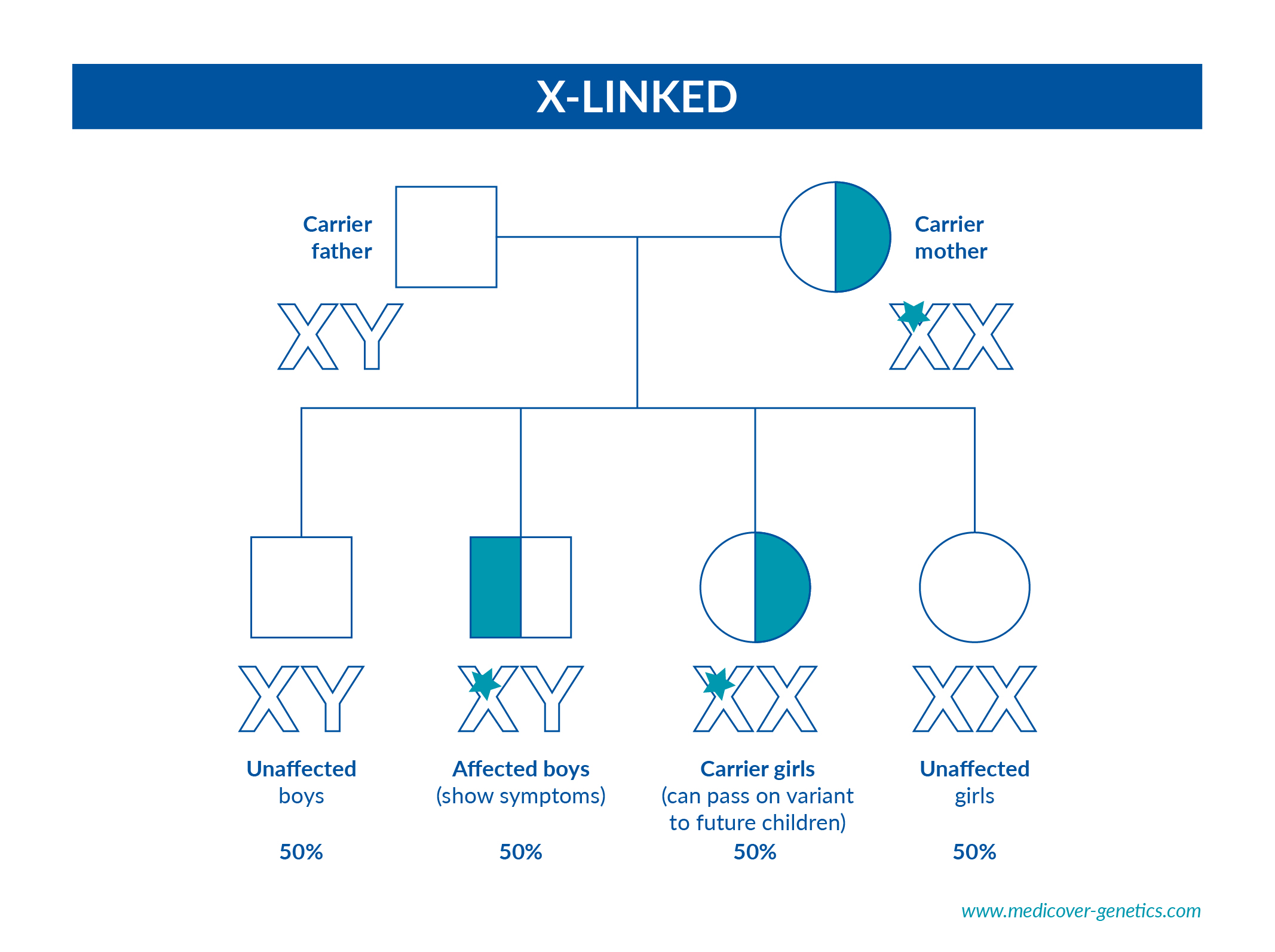](https://medicover-genetics.com/wp-content/uploads/2022/12/X-linked_inheritance.jpg)
### X-Linked Conditions
X-Linked Diseases affect the X chromosome, found on the 23rd chromosome pair
which determines gender.
● 1 in 2 chance of having a carrier daughter. Female carriers may or may not
exhibit disease characteristics due to X-inactivation\*
● 1 in 2 chance of having an affected son. Males who have inherited the mutation are always affected, as they only have one X chromosome.
## Focus Panels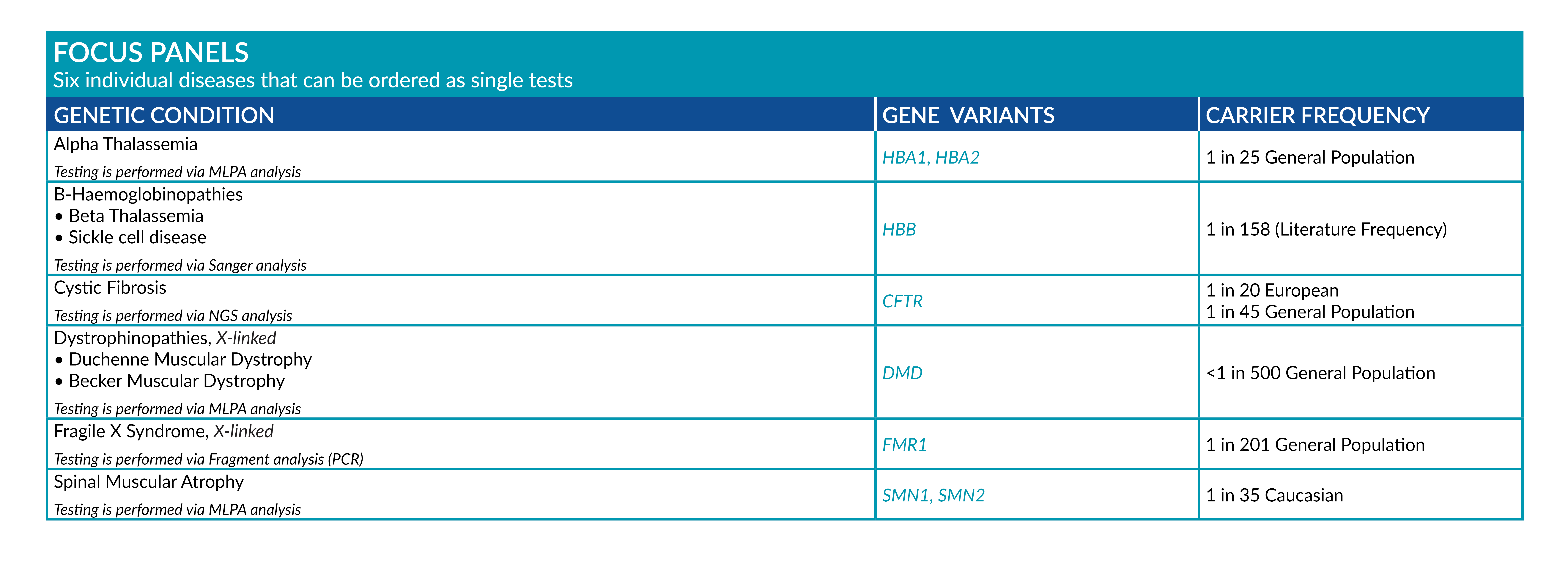
## Focus Panels
Six individual panels for **highly frequent** and **severe** genetic diseases:
● A-Thalassemia
● B-Haemoglobinopathies
● Cystic Fibrosis
● Duchenne Muscular Dystrophy
● Fragile X Syndrome
● Spinal Muscular Atrophy
[Click here to learn more about the focus panels!](https://innermosthealthcare.com/wp-content/uploads/2024/11/Adventia-Focus-Panel.pdf)
## Core Panel (22 gene, 20 conditions)
## Guidelines Core Panel
20 genetic diseases of **high incidence** and **clinical severity**. The Core panel includes all diseases tested in the Focus panels, and other diseases including Phenylketonuria, Fanconi Anemia Group C and Tay-Sachs disease.
[Click here to learn more about the Core Guidelines Panel!](https://innermosthealthcare.com/wp-content/uploads/2024/11/Adventia-Panel-Guidelines-based.pdf)
## Comprehensive Panel (229 conditions)
## Comprehensive Panel
229 diseases that have **moderate to severe**well-defined phenotype and **high cumulative frequency**. The Comprehensive panel includes all diseases of the Core panel, and covers a wide range of metabolic, cardiovascular and hematological diseases, amongst others.
[Click here to learn more about the Comprehensive Pane](https://innermosthealthcare.com/wp-content/uploads/2024/11/Adventia-Panel-Comprehensive-Panel.pdf)l!
## Why Choose Adventia?
Adventia was specifically designed to be a **beneficial** and **comprehensive** test for everyone, regardless of ethnic background and family history. It is based on a **novel** and **powerful technology** and can provide **meaningful results** in a short turn-around time to help you minimize your risk of transmitting a genetic disease to your children. The diseases tested by Adventia:
● have moderate to severe phenotype (characteristics)
● are high in carrier frequency
● can severely compromise quality of life
● may be manageable through early interventions
## When Should I Get Tested?
Adventia carrier screening can be performed by **any individual or couple** when they wish to learn more about their genetic information to minimize the risk of transmitting a genetic disease to their children. Adventia can also be done **during pregnancy** if prospective parents wish to know whether their child has a risk of having a genetic disease.
## What Do The Results Mean?
The Adventia report will have information on the following:
● Results on genes tested
● Thorough interpretation and clinical significance of mutations detected
Adventia reports on pathogenic and likely pathogenic variants.
[Download Positive Report](https://medicover-genetics.com/our-genetic-tests/reproductive-health/carrier-screening/)
[Download Negative Report](https://medicover-genetics.com/our-genetic-tests/reproductive-health/carrier-screening/)
## What Can I Do After Adventia Carrier Screening
Depending on the results, the disease, and whether the test was performed by an individual wanting to know more about their genetic profile or a couple planning their family, we recommend the following:
- Genetic counselling to receive more information on the potential impact of the disease, and discuss their choices on how to minimise the risk of transmitting the disease to children
- In-vitro fertilisation (IVF) and preimplantation genetic testing (PGT-M) to ensure the baby will not have the affected phenotype
- Choosing a compatible gamete donor without the same mutation
- Early intervention, therapies where available, and better clinical management for affected children
- Having prenatal diagnosis during pregnancy, if they wish to know whether their baby is affected or not
**Product categories:** Health & Wellness, Hereditary Genetic Testing (Men & Women), Pregnancy under 24 weeks, Swab Test, Trying to Conceive and Miscarriage
**Product tags:** carrier screening
---
### [BioArray Genetic Carrier Screening Test](https://innermosthealthcare.com/product/bioarray-genetic-carrier-screening-test/)
**Published:** August 7, 2020
**Author:** Claire Donovan
**Excerpt:** BioArray Genetic Carrier Screening Test
The BioArray Genetic Carrier Screening Test is a highly advanced blood test designed to identify carriers of autosomal recessive genetic conditions, including Cystic Fibrosis, Fragile-X, Spinal Muscular Atrophy (SMA), and Duchenne Muscular Dystrophy (DMD). This test examines mutations in 420 different genes, providing extensive coverage to ensure you have a thorough understanding of your genetic health. Results are delivered within 3-4 weeks.
**Content:**
# BioArray Genetic Carrier Screening Test
## The BioArray Genetic Carrier Screening Test is a blood test to identify carriers of autosomal recessive genetic conditions such as Cystic Fibrosis, Fragile-X, Spinal Muscular Atrophy (SMA), Duchenne Muscular Dystrophy (DMD). It looks for mutations in 420 different genes. Reporting tine is 3-4 weeks.
It is useful for those planning a pregnancy or who are currently pregnant who are concerned about the chance of an affected baby. If both parents are carriers then there is a 1 in 4 chance of an affected baby and either prenatal or newborn diagnostic testing is possible. In some cases it may not be obvious that the baby is affected without this carrier information.
[Click here to read more about BioArray Diagnostic Genetics](https://bioarray.es/en/)
[Bioarray Genetic Carrier Screening – Patient Brochure](https://innermosthealthcare.com/wp-content/uploads/2023/08/Bioarray-Carrier-Screening.pdf)
[Bioarray Genetic Carrier Screening – 420 Genes](https://innermosthealthcare.com/wp-content/uploads/2023/08/Bioarray-Advance-Expanded-420-Genes.pdf)
## WHAT IS THE BIOARRAY CARRIER SCREENING PANEL ADVANCE?
The BioArray Genetic Carrier Screening Panel Advance is a genetic test which examines mutations in 420 genes, including CNVs, which are responsible for recessive and x-linked hereditary pathologies.
## WHO IS IT AIMED AT?
- Couples planning a pregnancy with no particular clinical issues in their family medical history who would like to know their probability of conceiving a child affected by a recessive hereditary disease or disorder
- Couples who want more comprehensive assessment for their baby during a pregnancy.
- Couples in which there is consanguinity eg first cousins and, therefore, a greater risk of conceiving a child with a recessive disease.
- People of ethnic backgrounds in which certain recessive diseases prevail.
- Couples which are going to undertake Assisted Reproduction procedures, in order to complement their diagnostic studies.
- In Assisted Reproduction Clinics, this test can be used to select the most suitable sperm/oocyte donors and reduce the risk of transmitting recessive hereditary diseases.
## WHY CHOOSE BIOARRAY
- THE CARRIER PANEL WITH THE GREATEST COMPATIBILITY IN THE MARKET: 420 GENES.
- AUTOMATIC INCLUSION OF DELETIONS AND DUPLICATIONS (CNVs) IN HIGHLY PREVALENT GENES.
- COMPACT AND HIGHLY DIDACTIC REPORTS FOR PATIENTS. TURNAROUND TIME: 21 DAYS.
## BIOARRAY ADVANCE HIGH FREQUENCY
The BioArray Genetic Carrier Screening Panel Advance is based on the same 420 genes but the report includes only those genes with the highest frequency (over 1 / 100) and Fragile-X, being ideal for genetic screening of gamete donors. Then in the case of requiring a subsequent donor-recipient matching, the analysis would be carried out with the full information from the 420 genes.
## BIOARRAY
Parque Científico y Empresarial de la UMH Edificio Quorum III Elche (Alicante), Spain
Te. +34 966 682 500 Fax: +34 966 682 501 info@bioarray.es
[Click here to go to our website page on Carrier Screening](https://innermosthealthcare.com/product/bioarray-genetic-carrier-screening-test/)
**Product categories:** Blood Test, Newborn & Postnatal
**Product tags:** BioArray, Carrier screen, carrier screening, Cystic fibrosis, DMD, Duchenne Muscular Dystrophy, Fragile-X, SMA, Spinal Muscular Atrophy
---
### [Endometrial Biopsy](https://innermosthealthcare.com/product/endometrial-biopsy/)
**Published:** January 5, 2016
**Author:**
**Excerpt:** Endometrial Biopsy
The endometrial biopsy usually takes around 20 minutes to carry out. You’ll be asked to undress from the waist down and lie on a couch, although you can usually remain fully dressed if you’re wearing a loose skirt.
The doctor or nurse will gently put an instrument, called a speculum, into your vagina. This holds the walls of the vagina open so the cervix can be seen.
A fine plastic tube which is inserted through the vagina into the uterus to obtain an endometrial biopsy sample to test for hormonal imbalance, irregular bleeding, women on HRT, abnormal cells and endometrial cancer (uterine cancer). If you are having an endometrial biopsy for fertility issues or recurrent miscarriage you will need an NK Cell Endometrial Biopsy and you can read more about by clicking the link. The procedure is the same but different testing would be done on the sample.
Some women find the procedure a bit uncomfortable or embarrassing, but for most it’s not painful.
Our endometrial biopsies are undertaken by a fully qualified Consultant in Obstetrics and Gynaecology, Dr Bryan Beattie MD FRCOG.
You will always be accompanied by a female chaperone during your test.
**Content:**
# Endometrial Biopsy
The endometrial biopsy usually takes around 20 minutes to carry out. You’ll be asked to undress from the waist down and lie on a couch, although you can usually remain fully dressed if you’re wearing a loose skirt.
The doctor or nurse will gently put an instrument, called a speculum, into your vagina. This holds the walls of the vagina open so the cervix can be seen.
A fine plastic tube which is inserted through the vagina into the uterus to obtain an endometrial biopsy sample to test for hormonal imbalance, irregular bleeding, women on HRT, abnormal cells and endometrial cancer (uterine cancer). If you are having an endometrial biopsy for fertility issues or recurrent miscarriage you will need an [NK Cell Endometrial Biopsy](https://innermosthealthcare.com/product/natural-killer-cells-endometrial-biopsy/) and you can read more about by clicking the link. The procedure is the same but different testing would be done on the sample.
Some women find the procedure a bit uncomfortable or embarrassing, but for most it’s not painful.
Our endometrial biopsies are undertaken by a fully qualified Consultant in Obstetrics and Gynaecology, Dr Bryan Beattie MD FRCOG.
You will always be accompanied by a female chaperone during your test.
**Product categories:** Special Test, Special Test
---
### [Epicheck Bladder Cancer Test](https://innermosthealthcare.com/product/epicheck-bladder-cancer-test/)
**Published:** February 26, 2024
**Author:** Bryan Beattie
**Excerpt:** The Epicheck Bladder Cancer Test is a simple, accurate, non-invasive urine test used to detect bladder cancer. It is designed to reliably detect high-grade bladder cancer at an early stage, which greatly increases the chances of successful treatment. It can be used for the surveillance of bladder cancer recurrence after treatment, or for screening for bladder cancer.
Epicheck Bladder Cancer Test Leaflet
The test is available from our Cardiff Clinic or can be done at home or work anywhere in the UK and Northern Ireland.
**Content:**
The [Epicheck Bladder Cancer Tes](https://www.camclinlabs.co.uk/bladder-epicheck)t is a simple, accurate, non-invasive urine test used to detect bladder cancer. It is designed to reliably detect high-grade bladder cancer at an early stage, which greatly increases the chances of successful treatment. It can be used for the surveillance of bladder cancer recurrence after treatment, or for screening for bladder cancer.
[Epicheck Bladder Cancer Test Leaflet](https://innermosthealthcare.com/wp-content/uploads/2024/05/Trifold-EpiCheck-IHC.pdf "Epicheck Bladder Cancer Test Leaflet")
The test is available from our Cardiff Clinic or can be done at home or work anywhere in the UK and Northern Ireland. The UK laboratory is Cambridge Clinical Laboratory,Endeavour House, Vision Park, Chivers Way, Histon, Cambridge, CB24 9ZR.
## Bladder EpiCheck: A Patient Guide
An advanced non-invasive urine test for bladder cancer detection
### ✅ What is Bladder EpiCheck?
Bladder EpiCheck is a non-invasive urine-based molecular test designed to detect bladder cancer. It analyses DNA methylation patterns at 15 sites associated with bladder cancer development. The test produces a clear positive or negative result and an “EpiScore” to indicate cancer risk.
This test is particularly useful for:
- Monitoring for recurrence after treatment of bladder cancer.
- Investigating urinary symptoms such as blood in the urine (haematuria).
- Health screening in individuals at increased risk.
It is CE-marked in Europe, FDA-approved in the US, and is currently being evaluated in UK NHS clinical trials.
### How Accurate is the Test?
| Measure | Bladder EpiCheck | Cystoscopy |
|---|---|---|
| Sensitivity (high-grade cancer) | ~91–92% | 92–100% |
| Specificity | ~84–85% | ~98–100% |
| Negative Predictive Value (NPV) | 99.3% (rules out cancer) | 98–100% |
| Invasiveness | Non-invasive (urine sample) | Invasive (camera in bladder) |
| Comfort | Painless | May cause discomfort |
| Availability | Private clinics in the UK | NHS and private clinics |
Bladder EpiCheck has an exceptionally high NPV, meaning if the result is negative, it is highly likely that you do not have high-grade bladder cancer.
### How Does It Compare to Cystoscopy?
| Feature | Bladder EpiCheck | Cystoscopy |
|---|---|---|
| Procedure | Urine test | Camera inserted into the bladder |
| Pain/Discomfort | None | May cause pain, discomfort or UTIs |
| Risk of Complications | None | Small risk of bleeding, infection |
| Monitoring Role | Can reduce the number of cystoscopies needed | Gold standard for bladder cancer |
| Detection of Low-Grade Cancer | Less sensitive (~55–60%) | Excellent (~90%+) |
Key takeaway:
Bladder EpiCheck is particularly helpful for reducing the number of follow-up cystoscopies in patients under surveillance for non-muscle invasive bladder cancer (NMIBC). However, it does not replace cystoscopy entirely—a positive result requires cystoscopic confirmation.
### When is Bladder EpiCheck Used?
1. Surveillance: To monitor recurrence in patients treated for bladder cancer, alternating with cystoscopy to reduce its frequency.
2. Symptomatic Patients: To investigate symptoms such as haematuria or urinary urgency.
3. Health Screening: For individuals at higher risk (e.g. smokers, family history of bladder cancer).
### ⚠️ Limitations
- Not yet widely adopted in the NHS due to pending NICE guidance.
- May miss some low-grade bladder tumours, so cystoscopy remains essential for high-risk patients.
- Currently only available privately in the UK
### What Happens if My Test is Positive?
If your result is positive (EpiScore ≥ 60):
✅ You will need a cystoscopy for confirmation and further evaluation.
If your result is negative:
✅ It is highly likely you do not have high-grade bladder cancer, and your healthcare provider will advise when to test again.
### Availability
- Private Testing: Bladder EpiCheck is available at Innermost Healthcare and other private clinics. Samples can be collected at home and sent to Cambridge Clinical Laboratories (CCL).
- NHS Trials: Ongoing at Western General Hospital, Edinburgh.
### Cost
Bladder EpiCheck is not currently covered by the NHS. Patients opting for private testing can spread payments with interest-free plans.
### How Do I Arrange a Test?
1. Speak to your GP or specialist about your suitability or call us on 0345 2303386 to discuss the test.
2. If you decide to go ahead, we will take payment send you a Medical Questionnaire, so we have accurate information and your contact details.
3. You will be asked to provide a urine sample at home or in clinic.
4. Home test kits can be posted to you with prepaid Royal Mail Track 24 postal pack back to the laboratory.
5. Our consultant will ring with your results and discuss them and will email your report.
### Further Information
- Innermost Healthcare: [innermosthealthcare.com](https://innermosthealthcare.com/)
- Cambridge Clinical Laboratories: [camclinlabs.co.uk](https://www.camclinlabs.co.uk/bladder-epicheck)
### Summary
Bladder EpiCheck is a safe, accurate, and non-invasive urine test that can help detect bladder cancer early and reduce the need for invasive cystoscopies. While it is not yet part of routine NHS care, it is a valuable option for private patients or those seeking additional reassurance.
**Product categories:** Uncategorized
**Product tags:** bladder cancer, Epicheck
---
### [TDL Veriseq Express NIPT](https://innermosthealthcare.com/product/tdl-veriseq-express-nipt/)
**Published:** November 13, 2024
**Author:** Bryan Beattie
**Excerpt:** TDL Veriseq Express NIPT
TDL Veriseq Express NIPT requires a single blood draw, which poses no threat to the fetus, and can be done as early as 10 weeks’ gestation with results in 2-4 days. By analysing the proportions of DNA fragments derived from different chromosomes or chromosome regions, NIPT can screen for the presence or absence of specific chromosome disorders.
The test looks to detect the following conditions:
- Trisomy 21 is the most common trisomy at the time of birth. Also called Down syndrome, it is associated with moderate to severe intellectual disabilities and may also lead to digestive disease, congenital heart defects and other malformations.
- Trisomy 18 (Edwards syndrome) and Trisomy 13 (Patau syndrome) are associated with a high rate of miscarriage. These babies are born with severe brain abnormalities and often have congenital heart defects as well as other birth defects. Most affected individuals die before or soon after birth, and very few survive beyond the first year of life.
- Sex chromosome conditions occur when there is a missing, extra, or incomplete copy of the X or Y chromosomes. The NIPT test with sex chromosome aneuploidy panel option can assess risk for XXX, XYY, XXY (Klinefelter syndrome), and a missing X chromosome in a girl (Turner syndrome).
In addition, NIPT can assess fetal sex. This is optional (no additional cost).
NIPT is more accurate than first trimester maternal serum screening and ultrasound in identifying pregnancies with or without these disorders.
Click here to learn more about Understanding NIPT!
**Content:**
# TDL Veriseq Express NIPT
Non-invasive prenatal testing (NIPT) screens for the presence of specific chromosome disorders in the developing fetus. The TDL Veriseq Express NIPT analyses fragments of DNA in maternal plasma that have been released from both maternal and placental cells with results in 2-4 days.
[TDL Veriseq Express NIPT](https://www.tdlpathology.com/specialties/genetics/non-invasive-prenatal-testing-nipt/) requires a single blood draw, which poses no threat to the fetus, and can be done as early as 10 weeks’ gestation. By analysing the proportions of DNA fragments derived from different chromosomes or chromosome regions, NIPT can screen for the presence or absence of specific chromosome disorders.
NIPT is more accurate than first trimester maternal serum screening and ultrasound in identifying pregnancies with or without these disorders.
## About the test
DNA from the fetus circulates in the mother’s blood. Cell-free DNA (cfDNA) results from the natural breakdown of fetal cells (presumed to be mostly placental) and clears from the maternal system within hours of giving birth.
During a pregnancy, cfDNA can be tested to give the most accurate screening approach in estimating the risk of a fetus having a common chromosome condition sometimes called a trisomy. This occurs when there are three copies of a particular chromosome instead of the expected two. The test looks to detect the following conditions:
- Trisomy 21 is the most common trisomy at the time of birth. Also called Down syndrome, it is associated with moderate to severe intellectual disabilities and may also lead to digestive disease, congenital heart defects and other malformations.
- Trisomy 18 (Edwards syndrome) and Trisomy 13 (Patau syndrome) are associated with a high rate of miscarriage. These babies are born with severe brain abnormalities and often have congenital heart defects as well as other birth defects. Most affected individuals die before or soon after birth, and very few survive beyond the first year of life.
- Sex chromosome conditions occur when there is a missing, extra, or incomplete copy of the X or Y chromosomes. The NIPT test with sex chromosome aneuploidy panel option can assess risk for XXX, XYY, XXY (Klinefelter syndrome), and a missing X chromosome in a girl (Turner syndrome).
In addition, NIPT can assess fetal sex. This is optional (no additional cost).
NIPT does not screen for non-chromosome disorders, familial mutations, malformations, fetal growth or fetal viability.
## Risk
The testing is non-invasive: it involves taking a blood sample from the mother. The pregnancy is not put at risk of miscarriage, or from other adverse outcomes that are associated with invasive testing procedures such as amniocentesis.
## Accuracy
NIPT provides fewer false-positive and false-negative results than combined first trimester screening for trisomy 21, 18 and 13.
It is important to note that NIPT is a screening test and does not provide a definitive genetic diagnosis, as NIPT cannot differentiate potential chromosome differences between the placenta and fetus. A definitive genetic diagnosis of the fetus requires cytogenetic analysis of either amniotic fluid or chorionic villus sampling (CVS).
| Accuracy (T21, T18, T13) | Sensitivity\* | False-positive rate\# |
|---|---|---|
\* Proportion fetuses with trisomy correctly identified by the test as high probability of disorder.
\# Proportion of normal fetuses incorrectly identified by the test as high probability of disorder.
##### NIPT Performance data in a general screening population
| Trisomy 21 | >99.9% (95% CI:97.1%) | >99.90% (95% CI:99.63%) |
|---|---|---|
| Trisomy 18 | >99.9% (95% CI:91.4%) | >99.90% (99.64% CI:97.1%) |
| Trisomy 13 | >99.9% (95% CI:87.1%) | >99.90% (95% CI:99.64%) |
| | Detection rate / sensitivity |
## Who can have this test?
NIPT can be ordered by healthcare professionals for women with pregnancies of at least10 weeks’ gestational age. This test can be requested for any singleton or twin pregnancy, including those conceived naturally or by IVF using the patient’s own egg or a donor egg.
Note that, in twin pregnancies, sex chromosome (X and Y) analysis can determine fetal sex but not sex chromosome conditions. This test is not suitable in the case of a vanishing twin. The sex of twins will be reported as one result. If male, one or both of the twins will be male. If female, both twins will be female.
The test does not assess risk for mosaicism, partial trisomies or translocations.
## Limitations of NIPT
The VeriSeq NIPT Solution v2 is not validated for use in pregnancies with more than two fetuses, fetal demise, mosaicism, partial chromosome aneuploidy, triploidy, translocations, maternal aneuploidy, transplant or malignancy. VeriSeq NIPT Solution v2 does not detect neural tube defects. Certain rare biological conditions may also affect the accuracy of the test.
For twin pregnancies, HIGH PROBABILITY test results apply to at least one fetus; male test results apply to one or both fetuses; female test results apply to both fetuses. Due to the limitations of the test, inaccurate results are possible.
A LOW PROBABILITY result does not guarantee that a fetus is unaffected by a chromosomal or genetic condition. Some non-aneuploid fetuses may have HIGH PROBABILITY results. In cases of HIGH PROBABILITY results and/or other clinical indications of a chromosomal condition, confirmatory testing is necessary for diagnosis.
## Results
Results will be ready in approximately 2–4 days. Women still can have their 12-week scan for a detailed examination of the fetal anatomy, including measurement of nuchal translucency, nasal bone and other important factors. In this visit, patients can discuss the DNA and ultrasound results with their obstetricians.
On the basis of the NIPT result and the ultrasound findings, a patient can decide whether or not she wants to have an invasive procedure (for example, CVS or amniocentesis).
The report then summarises the screening assessment for each disorder specified by the requesting doctor (see example below).
##### Example NIPT report
| Trisomy 21 | High probability | Genetic counselling and additional testing |
|---|---|---|
| Trisomy 18 | Low probability | Review result with patient |
| Trisomy 13 | Low probability | Review result with patient |
| Sex chromosome aneuploidy | Not requested | – |
| Fetal sex | Male | Review result with patient |
| Chromosome | Result | Recommendation |
A high probability NIPT result should always be confirmed by amniocentesis or CVS before making any decision regarding subsequent management of the pregnancy.
## Repeat samples
There needs to be enough fetal DNA in the maternal blood to be able to provide a result. If there is insufficient fetal DNA in the sample (which occurs in 2% of cases), another blood sample from the mother may be required. This will be processed in the laboratory at no extra charge.
## If an assessment cannot be provided
On rare occasions, NIPT is unable to provide an assessment of the probability of specific chromosome disorders. This usually reflects the complex biology of genetics and pregnancy, and is not due to a failing in the laboratory.
If NIPT cannot provide a specific assessment, it is not worth repeating the NIPT (unless advised by the laboratory). A decision about other tests (maternal serum screening, detailed ultrasound, amniocentesis or CVS) should be based on the doctor’s assessment of all risk factors identified, and may require specialist consultation.
## What is the process?
Once the mother has taken an independent personal decision that she wants to have the NIPT performed, she will be asked to sign a consent form and her blood sample can be taken from a vein in her arm.
## Who carries out the analysis of the test?
The mother’s sample and completed request form need to be sent to TDL Genetics, where the test is performed on the DNA extracted from her blood sample.
## Will the mother need to have any other tests?
NIPT does not provide information on mosaicism, partial trisomies or translocations, or other rare chromosomal abnormalities. If the ultrasound scan shows a high nuchal translucency or other major physical defects such as brain abnormalities, heart abnormalities, the risk for some rare chromosomal defects may be high. In such cases, the mother may choose to have a CVS or an amniocentesis.
The non-invasive prenatal test does not provide information on other physical defects such as spina bifida, or information on fetal growth. It is therefore advisable that the mother has all the usual ultrasound scans during her pregnancy.
## Sample stability
Samples must be taken in special tubes provided by the laboratory. These samples must not be refrigerated, but stored at ambient temperature.
Samples must arrive at the laboratory within 5 days of sample collection.
Click here to download the [TDL NIPT Patient Information Brochure](https://www.tdlpathology.com/media/jjuok13e/tap5294_tdl_nipt_patient_information_leaflet_180x100mm_v7_web.pdf)
**Product categories:** Blood Test, Blood Test, Blood Test, First Trimester, Pregnancy under 24 weeks, Second Trimester, Third Trimester
**Product tags:** Down Syndrome, Edward Syndrome, Express NIPT, NIPT, Patau Syndrome, TDL
---
### [Natera Panorama Test](https://innermosthealthcare.com/product/panorama-test-natera/)
**Published:** September 8, 2016
**Author:** Bryan Beattie
**Excerpt:** Natera Panorama NIPT Test (Next Generation NIPT)
The Natera Panorama NIPT Test is a prenatal screening test. It provides you with information about the likelihood that your baby has certain genetic conditions based on a maternal blood sample. This blood sample from the mother to analyse DNA from the placenta (afterbirth) for certain chromosome conditions like Down Syndrome, Edward Syndrome and Patau Syndrome that could affect a baby’s health.
NIPT (Non-Invasive Prenatal Testing) FAQs
What is NIPT?
NIPT (Non-Invasive Prenatal Testing) is a blood test performed during pregnancy that analyses small fragments of fetal DNA circulating in the mother’s blood to screen for certain chromosomal conditions.
What conditions does NIPT screen for?
Most NIPT tests screen for Down syndrome (Trisomy 21), Edwards syndrome (Trisomy 18) and Patau syndrome (Trisomy 13). Some expanded panels may also include selected sex chromosome conditions.
When can NIPT be done during pregnancy?
NIPT can usually be performed from 10 weeks of pregnancy onwards. The test involves a simple blood sample from the mother and results are typically available within one to two weeks.
How reliable is NIPT for Down syndrome screening?
NIPT has a very high detection rate for Down syndrome compared with traditional screening tests. However, it is still a screening test rather than a diagnostic test, and positive results are usually confirmed with diagnostic testing.
Can NIPT determine the baby’s sex?
Yes. Most NIPT tests can identify fetal sex by detecting Y-chromosome DNA in the maternal blood sample if parents wish to receive this information.
Why should NIPT be performed through a regulated clinic?
Having NIPT through a HIW-registered clinic ensures that the test is offered with appropriate clinical counselling, safe sample handling and proper follow-up support if results require further investigation.
**Content:**
# Natera Panorama Test
The Natera Panorama NIPT Test is a prenatal DNA screening blood test. It provides you with information about the likelihood that your baby has certain genetic conditions based on a maternal blood sample (a simple blood test from mum-to-be). Non-invasive prenatal testing (NIPT) uses this blood sample from the mother to analyse DNA from the placenta (afterbirth) for certain chromosome conditions such as Down Syndrome, Patau Syndrome and Edward Syndrome that could affect a baby’s health.
Non-invasive prenatal screening can be helpful in learning more about your baby’s health. It can help you to consider all of your options, how to manage your pregnancy and consider if special management or care is needed. Non-invasive prenatal screening is safe and usually involves just a simple blood test. Your results are usually available about 2 weeks after the test. We advise all parents-to-be to learn about prenatal screening before undertaking any test and it is vital that your results are properly communicated and explained.
Here at Innermost Healthcare, our NIPT Panorama Test from Natera includes:
*•* the opportunity to discuss prenatal screening before you undertake the test with an experienced Consultant in Fetal Medicine
*•* the Panorama Test *(learn more about the test below)*
*•* fetal gender *(optional)*
*•* an early viability or growth scan *(scan selection depends on your stage in pregnancy)*
*•* the opportunity to discuss your results with an experienced Consultant in Fetal Medicine
*•* information about your options and support with your choices
> Please make sure that you read all of the information here on on the [first trimester NIPT page.](https://innermosthealthcare.com/info-for-you/first-trimester/panorama/)
#### What does the Panorama Test screen for?
**Singleton pregnancies** *• Trisomy 21 (Down syndrome)
• Trisomy 18 (Edwards syndrome)
• Trisomy 13 (Patau syndrome)
• Triploidy
• Monosomy X (Turner syndrome)
• Sex chromosome trisomies
• Microdeletions, including 22q11.2 deletion syndrome
• Gender (optional)\**
**Twin pregnancies**
• Non identical or fraternal twins
• Trisomy 21 (Down syndrome)
• Trisomy 18 (Edwards syndrome)
• Trisomy 13 (Patau syndrome)
• Gender of each twin (optional)
**If our screening finds that your twins are identical, Panorama can additionally screen for:**
• Monosomy X (Turner syndrome)
• Sex chromosome trisomies
• 22q11.2 deletion syndrome
**Egg donor or surrogate pregnancies** *• Trisomy 21 (Down syndrome)
• Trisomy 18 (Edwards syndrome)
• Trisomy 13 (Patau syndrome)
• Gender (optional)\**
#### Microdeletions
A small, missing piece of a chromosome is called a microdeletion. Unlike Down syndrome, which occurs more frequently in mothers who are 35 and older, microdeletions occur in pregnancies at the same rate for mothers of any age. Panorama screens for up to five microdeletion syndromes associated with serious health problems:
• 22q11.2 deletion (DiGeorge) syndrome
• 1p36 deletion syndrome
• Angelman syndrome
• Prader-Willi syndrome
• Cri-du-chat syndrome
[](https://innermosthealthcare.com/wp-content/uploads/2024/11/IMG_1654-1.jpeg)Conditions Screened for by Panorama Extended (in green)
### **Exclusions**
Panorama NIPT will not work in pregnancies complicated by a vanishing twin.
![]()
**Product categories:** Blood Test, Blood Test, Blood Test, First Trimester
**Product tags:** 1p36, 1p36 deletion syndrome, 22q11, Angelman, Angelman syndrome, Cri Du Chat, Cri-du-chat syndrome, Di George, Down Syndrome, Edward Syndrome, microdeletion, Natera, NIPT, Panorama, Patau Syndrome, Prader Willi, Prader-Willi syndrome, Trisomy 13, Trisomy 18, Trisomy 21
---
### [Medicover VERAgene NIPT Test](https://innermosthealthcare.com/product/medicover-veragene-nipt-test/)
**Published:** October 28, 2024
**Author:** Bryan Beattie
**Excerpt:** Medicover VERAgene NIPT Test
VERAgene NIPT Test and Carrier Screen is the only non-invasive prenatal test (NIPT) that can simultaneously screen for aneuploidies (Down Syndrome, Edward Syndrome, Patau Syndrome) sex chromosome aneuploidy (Turner Syndrome, Kleinfelter Syndrome), microdeletions (22q Deletion or Di George Syndrome) and 100 single gene diseases (Cystic Fibrosis, B-Thalasaemia, Sickle Cell Disease etc). It can also be used to provide basic screening in cases of a vanishing twin.The diseases screened by VERAgene are associated with a moderate to severe health impact on the health, development and quality of life on the baby. By combining detection of aneuploidies and microdeletions with the screening of monogenic diseases, VERAgene provides a comprehensive solution to prospective parents.
It works for single and twin pregnancies, IVF own egg pregnancies and those with a vanishing twin.
VERAgene needs a maternal blood sample, and a buccal swab sample from the biological father. The maternal blood contains cell-free DNA from both the mother and the fetus. This cell-free DNA is isolated and analyzed along with the father’s DNA sample for any potential genetic mutations using next generation sequencing. Sophisticated bioinformatics algorithms are then used to compute the risk of the fetus having a monogenic disease.
Our fee includes either a FREE ultrasound scan in our Cardiff Clinic or a FREE home or work phlebotomy blood sample anywhere in the UK or Ireland.
NIPT (Non-Invasive Prenatal Testing) FAQs
What is NIPT?
NIPT (Non-Invasive Prenatal Testing) is a blood test performed during pregnancy that analyses small fragments of fetal DNA circulating in the mother’s blood to screen for certain chromosomal conditions.
What conditions does NIPT screen for?
Most NIPT tests screen for Down syndrome (Trisomy 21), Edwards syndrome (Trisomy 18) and Patau syndrome (Trisomy 13). Some expanded panels may also include selected sex chromosome conditions.
When can NIPT be done during pregnancy?
NIPT can usually be performed from 10 weeks of pregnancy onwards. The test involves a simple blood sample from the mother and results are typically available within one to two weeks.
How reliable is NIPT for Down syndrome screening?
NIPT has a very high detection rate for Down syndrome compared with traditional screening tests. However, it is still a screening test rather than a diagnostic test, and positive results are usually confirmed with diagnostic testing.
Can NIPT determine the baby’s sex?
Yes. Most NIPT tests can identify fetal sex by detecting Y-chromosome DNA in the maternal blood sample if parents wish to receive this information.
Why should NIPT be performed through a regulated clinic?
Having NIPT through a HIW-registered clinic ensures that the test is offered with appropriate clinical counselling, safe sample handling and proper follow-up support if results require further investigation.
**Content:**
# Medicover VERAgene NIPT **Test**
VERAgene NIPT Test and Carrier Screen is the only non-invasive prenatal test (NIPT) that can simultaneously screen for aneuploidies (Down Syndrome, Edward Syndrome, Patau Syndrome) sex chromosome aneuploidy (Turner Syndrome, Kleinfelter Syndrome), microdeletions (22q Deletion or Di George Syndrome) and 100 single gene diseases (Cystic Fibrosis, B-Thalasaemia, Sickle Cell Disease etc) . The diseases screened by VERAgene are associated with a moderate to severe health impact on the health, development and quality of life on the baby. By combining detection of aneuploidies and microdeletions with the screening of monogenic diseases, VERAgene provides a comprehensive solution to prospective parents.
It works for single and twin pregnancies, IVF own egg pregnancies and those with a vanishing twin.
[](https://innermosthealthcare.com/wp-content/uploads/2024/10/IMG_1653.jpeg)
VERAgene needs a maternal blood sample, and a buccal swab sample from the biological father. The maternal blood contains cell-free DNA from both the mother and the fetus. This cell-free DNA is isolated and analyzed along with the father’s DNA sample for any potential genetic mutations using next generation sequencing. Sophisticated bioinformatics algorithms are then used to compute the risk of the fetus having a monogenic disease.
Click here to learn more about [Understanding NIPT in Pregnancy](https://innermosthealthcare.com/understanding-nipt-in-pregnancy/)
[](https://innermosthealthcare.com/wp-content/uploads/2024/11/IMG_1654.jpeg)
Conditions screened for by Veragene (in pink)
Our fee includes either a complimentary scan in our Cardiff Clinic or a complimentary home or work phlebotomy blood sample anywhere in the UK or Ireland.
**Product categories:** Blood Test, Blood Test, First Trimester, Pregnancy under 24 weeks
**Product tags:** Cystic fibrosis, Medicover, monogenic, NIPT, single gene, VERAgene
---
### [Newborn Screening (Invitae)](https://innermosthealthcare.com/product/newborn-screening-invitae/)
**Published:** June 15, 2021
**Author:** Bryan Beattie
**Excerpt:** Newborn Screening (Invitae)
Invitae Newborn screening is a cheek as swab (DIY home test) or blood test to screen 160 genes linked to 140 inherited genetic conditions in newborn babies. Currently the UK National Newborn Screening Heel Prick Test or Blood Spot Test only identifies 9 conditions as follows:
Most European countries screen for a wider range of conditions and in USA the Department of Health and Human Services advises screening for a much wider panel of core conditions. This Recommended Uniform Screening Panel (RUSP) is now available in the UK.
Each year, an estimated 7.9 million babies worldwide are born with birth defects, many of which appear healthy at birth and come from families with no history of the disorder. Many affected babies are not identified until the appearance of severe and often irreversible symptoms later in life. Detecting a disease at an early stage can enable appropriate and timely medical intervention before more serious and sometimes irreversible health issues are caused.
Following birth, an infant will undergo testing called newborn screening. Approximately a week after birth, a blood sample is collected through a heel prick test. The sample is then sent to the NHS laboratory for testing. At the laboratory, several biochemical tests are performed to screen for a select number of serious, inherited metabolic conditions. If these conditions are identified and treated early, a child usually develops normally and lives a healthy life. Unfortunately, if these conditions are not recognized within a very sensitive time window, it may be too late. Once symptoms appear, they are often irreversible and lead to severe health problems or even death. With early detection, physicians and parents have the opportunity to be proactive and change a child’s life forever.
In USA, the Secretary’s Advisory Committee on Heritable Disorders in Newborns and Children (SACHDNC) recommends screening for 32 core conditions and 26 secondary conditions as identified by the American College of Medical Genetics (ACMG).
Who is the Invitae Newborn Screening Test suitable for:
- Parents in the UK who want a more comprehensive genetic screen for their baby
- Babies in the in the UK who have missed out on regular screening
- Babies from parents in the UK with a family history of inherited disorders or from a population identified as at higher risk for genetic disease
Click here for detailed information on this newborn test
No longer available in the UK - CLICK LINK TO SIMILAR TEST!
**Content:**
# Newborn Screening (Invitae)
Ensure your newborns health with Invitaes comprehensive Newborn Screening test This advanced screening available as a DIY cheek swab or blood test examines 160 genes associated with 140 [i](https://view.publitas.com/invitae-byeex67v6jpk/invitae-metabolic-newborn-screening-confirmation-panel-clinical-description/page/1)nherited genetic conditions
Why Choose Invitae Newborn Screening
Unlike the UK National Newborn Screening Heel Prick Test which detects only 9 conditions Invitaes test offers a broader scope The standard UK test screens for:
- [sickle cell disease](https://www.nhs.uk/conditions/sickle-cell-disease/ "sickle cell disease")
- [cystic fibrosis](https://www.nhs.uk/conditions/cystic-fibrosis/ "cystic fibrosis")
- [congenital hypothyroidism](https://www.btf-thyroid.org/congenital-hypothyroidism "congenital hypothyroidism")
- [phenylketonuria (PKU)](https://www.nhs.uk/conditions/phenylketonuria/ "phenylketonuria (PKU)")
- [medium-chain acyl-CoA dehydrogenase deficiency (MCADD)](https://www.nhs.uk/conditions/mcadd/ "medium-chain acyl-CoA dehydrogenase deficiency (MCADD)")
- [maple syrup urine disease (MSUD)](https://www.nhs.uk/conditions/maple-syrup-urine-disease/ "maple syrup urine disease (MSUD")
- [isovaleric acidaemia](https://www.nhs.uk/conditions/isovaleric-acidaemia/ "isovaleric acidaemia")
- [glutaric aciduria type 1](https://www.nhs.uk/conditions/glutaric-aciduria/ "glutaric aciduria type 1")
Many European countries and the USA recommend a wider range of conditions In the USA the Department of Health and Human Services advises screening for an extensive panel of core conditions through the Recommended Uniform Screening Panel RUSP which is now accessible in the UK.
The Importance of Early Detection
Every year approximately 7.9 million babies are born with birth defects Many appear healthy at birth and come from families with no history of the disorder Without early detection these conditions can lead to severe and irreversible health issues Early intervention can significantly improve a childs health outcomes
Newborn screening typically involves a heel prick test performed about a week after birth The sample is sent to an NHS laboratory for biochemical tests to identify serious inherited metabolic conditions Early detection and treatment are crucial to ensure a child develops normally and lives a healthy life.
Who Should Consider the Invitae Newborn Screening Test
• Parents in the UK seeking a comprehensive genetic screen for their baby
• Babies in the UK who missed regular newborn screening
• Babies with a family history of inherited disorders or those from populations at higher risk for genetic diseases
Learn More
For detailed information on the Invitae Newborn Screening Test click here
Ensure your babys healthy future with Invitaes thorough and reliable newborn screening test Order today and take the first step towards proactive healthcare for your child
**Product categories:** Blood Test, Newborn & Postnatal, Swab Test
**Product tags:** cheek swab, Cystic fibrosis, genetic test, heel prick, Invitae, Newborn, newborn screening, Nova, RUSP
---
### [Invitae Hereditary Cancer MultiCancer (70 Gene)](https://innermosthealthcare.com/product/invitae-hereditary-cancer-multicancer-70-gene/)
**Published:** August 13, 2024
**Author:** Bryan Beattie
**Excerpt:** Invitae Hereditary MultiCancer 70 Gene Test
A DIY saliva home genetic test or blood test for mutations in 70 genes associated with hereditary cancer across eight major organ systems: breast cancer, gynae cancer, gastric cancer, bowel cancer, endocrine, genitourinary cancer, prostate cancer, skin cancer or melanoma, brain/nervous system, sarcoma and haematological cancer.
Invitae Multicancer Test Description
The Invitae Multi-Cancer Panel analyzes genes that are associated primarily with adult-onset, non-syndromic cancer predisposition conditions across major organ systems including, but not limited to, breast, gynecologic (ovarian, uterine/endometrial), gastrointestinal (colorectal or colon cancer, gastric cancer, pancreatic cancer), endocrine (thyroid cancer, parathyroid, pituitary, adrenal glands), genitourinary (renal/urinary tract, prostate), skin (melanoma, basal cell carcinoma), and brain/nervous system. The genetic heterogeneity associated with these cancers can make it difficult to use phenotype as the sole criterion to select a definitive cause. Some genes in this test may also be associated with additional unrelated conditions, which are not included in the list of disorders tested. Genetic testing of these genes may help confirm a clinical diagnosis, help predict disease prognosis and progression, facilitate early detection of symptoms, inform family planning and genetic counselling, or promote enrolment in clinical trials.
This test is specifically designed for heritable germline mutations and is not appropriate for the detection of somatic mutations in tumor tissue.
This test is no longer available in the UK - CLICK ON LINK TO SIMILAR TEST
Rhesus Blood Group
Rhesus blood group is blood test (Pink Top Vacutainer) to determine whether someone is rhesus positive or rhesus negative. It is important to identify women who are rhesus negative when they are pregnant. If a rhesus negative women is carrying a rhesus positive baby there is a risk of the baby developing Haemolytic Disease of the Newborn (HDN) which causes severe anaemia and jaundice.
**Content:**
# Rhesus Blood Group
Rhesus blood group is blood test (Pink Top Vacutainer) to determine whether someone is rhesus positive or rhesus negative. It is important to identify women who are rhesus negative when they are pregnant. If a rhesus negative women is carrying a rhesus positive baby there is a risk of the baby developing Haemolytic Disease of the Newborn (HDN) which causes severe anaemia and jaundice.
**Product categories:** Blood Test, Blood Test, Blood Test, Blood Test, Blood Test
**Product tags:** haemolytic disease newborn, HDN, Rhesus, rhesus negative
---
### [Prolactin](https://innermosthealthcare.com/product/prolactin/)
**Published:** January 4, 2016
**Author:**
**Excerpt:** Prolactin
Prolactin blood test (Gold Top Vacutainer) to measure prolactin levels. High levels of prolactin (hyperprolactinaemia) can interfere with ovulation causing irregular periods (oligomenorrhoea) or absent periods (amenorrhoea) or cause problems with fertility and trying to conceive and may indicate the presence of a prolactinoma or prolactin secreting pituitary tumour.
The pituitary gland is a pea-sized gland found at the base of the brain. It is responsible for controlling and releasing various hormones.
Hormones are produced in a part of the brain called the hypothalamus and are chemicals that carry messages from one cell to another via the blood stream. Hormones control many bodily functions and keep us healthy (Smith 1990, Stanhope 1996).
Prolactin hormone levels usually rise during pregnancy and breast feeding. Other reasons for a raised prolactin level are stress, particularly from having a blood sample taken, various drugs and other disorders such as hypothyroidism and polycystic ovary disease(PCOS).
**Content:**
# Prolactin
Prolactin blood test (Gold Top Vacutainer) to measure prolactin levels. High levels of prolactin (hyperprolactinaemia) can interfere with ovulation causing irregular periods (oligomenorrhoea) or absent periods (amenorrhoea) or cause problems with fertility and trying to conceive and may indicate the presence of a prolactinoma or prolactin secreting pituitary tumour.
The pituitary gland is a pea-sized gland found at the base of the brain. It is responsible for controlling and releasing various hormones.
Hormones are produced in a part of the brain called the hypothalamus and are chemicals that carry messages from one cell to another via the blood stream. Hormones control many bodily functions and keep us healthy (Smith 1990, Stanhope 1996).
Prolactin hormone levels usually rise during pregnancy and breast feeding. Other reasons for a raised prolactin level are stress, particularly from having a blood sample taken, various drugs and other disorders such as hypothyroidism and polycystic ovary disease (PCOS).
**Product categories:** Blood Test, Blood Test, Blood Test, Blood Test, Blood Test
**Product tags:** Fertility, hyperprolactinaemia, Hypothyroidism, infertility, PCOS, Prolactin, Prolactinoma, trying to conceive, TTC
---
### [HBA1C (Haemoglobin A1C) - Diabetes Screen](https://innermosthealthcare.com/product/hba1c-haemoglobin-a1c-diabetes-screen/)
**Published:** January 4, 2016
**Author:**
**Excerpt:** HBA1C (Haemoglobin A1C) - Diabetes
HBA1C (Haemoglobin A1C) - Diabetes blood test (Purple Top Vacutainer) to assess blood sugar control in previous few weeks and helps in detecting or monitoring diabetes.
The gold standard diagnostic test for diabetes is the Glucose Tolerance Test(GTT)
**Content:**
# HBA1C (Haemoglobin A1C) – Diabetes
HBA1C (Haemoglobin A1C) – Diabetes blood test (Purple Top Vacutainer) to assess blood sugar control in previous few weeks and helps in detecting or monitoring diabetes.
The gold standard diagnostic test for diabetes is the [Glucose Tolerance Test](https://innermosthealthcare.com/product/glucose-tolerance-test/)(GTT)
**Product categories:** Blood Test, Blood Test, Blood Test, Blood Test, Blood Test
---
### [Glucose Tolerance Test](https://innermosthealthcare.com/product/glucose-tolerance-test/)
**Published:** January 4, 2016
**Author:**
**Excerpt:** Glucose Tolerance Test (GTT)
Glucose Tolerance Test (GTT) is a fasting blood glucose test (Grey Top Vacutainer) followed by a sweet drink and then a further glucose blood test (Grey Top Vacutainer)) two hours later to screen for diabetes and gestational diabetes.
Click here to read more about understanding the gestational diabetes in pregnancy
**Content:**
# **Glucose Tolerance Test (GTT)**
Glucose Tolerance Test (GTT) is a fasting blood glucose test (Grey Top Vacutainer) followed by a sweet drink and then a further glucose blood test (Grey Top Vacutainer)) two hours later to screen for diabetes and gestational diabetes (GDM).
**Product categories:** Blood Test, Blood Test, Blood Test, Blood Test, Blood Test, First Trimester, Health & Wellness, Pregnancy under 24 weeks, Second Trimester, Third Trimester, Trying to Conceive and Miscarriage
**Product tags:** Diabetes, Gestational diabetes, GTT, oral GTT
---
### [DRVVT (Lupus Anticoagulant)](https://innermosthealthcare.com/product/drvvt-lupus-anticoagulant/)
**Published:** January 4, 2016
**Author:**
**Excerpt:** DRVVT (Lupus Anticoagulant)
DRVVT (Lupus Anticoagulant) blood test (Four Blue Top Vacutainers - analysed or frozen by lab within 4-6 hours) to screen for Lupus Anticoagulant which is one of the causes of Antiphospholipid Antibody Syndrome (APLS). The test is usually repeated twice at least 6 weeks apart. This may be important as a risk factor for miscarriage, poor placental function and intrauterine growth restriction (IUGR).
Click here to learn more about Antiphospholipid Antibody Syndrome and its effects on fertility, miscarriage, pregnancy and general health!
and its effects on fertility, miscarriage, pregnancy and general health!
**Content:**
# DRVVT (Lupus Anticoagulant)
DRVVT (Lupus Anticoagulant) blood test (Four Blue Top Vacutainers – analysed or frozen by lab within 4-6 hours) to screen for Lupus Anticoagulant which is one of the causes of Antiphospholipid Antibody Syndrome (APLS). The test is usually repeated twice at least 6 weeks apart. This may be important as a risk factor for miscarriage, poor placental function and intrauterine growth restriction (IUGR).
[Click here to learn more about Antiphospholipid Antibody Syndrome](https://innermosthealthcare.com/understanding-antiphospholipid-antibody-syndrome-apls-or-aps/) and its effects on fertility, miscarriage, pregnancy and general health!
**Product categories:** Blood Test, Blood Test, Blood Test, Blood Test, Blood Test
**Product tags:** Antiphospholipid Antibody Syndrome, APA, APLS, DRVVT, growth restriction, IUGR, lupus anticoagulant, miscarriage
---
### [Progesterone](https://innermosthealthcare.com/product/progesterone/)
**Published:** January 4, 2016
**Author:**
**Excerpt:** Progesterone
Progesterone is a hormone blood test (Gold Top Vacutainer) to measure progesterone levels. A day 21 progesterone over 30 implies ovulation has occurred in that cycle. Useful for women who are trying to conceive, monitoring in early pregnancy and also sometimes used when there are concerns about ectopic pregnancy.
Progesterone is a hormone that plays a pivotal role in a woman’s reproductive health. Often referred to as the “pregnancy hormone,” progesterone is essential for regulating the menstrual cycle, facilitating ovulation, supporting early pregnancy, and maintaining fertility. Its importance extends to various aspects of reproductive health, including the management of infertility and complications during pregnancy, such as bleeding in early pregnancy.
The PRISM study has shed new light on the use of progesterone in cases of early pregnancy bleeding, providing critical insights that have influenced clinical practices. In this article, we will delve into the multifaceted role of progesterone, its implications for reproductive health, and what the PRISM study reveals about its use in early pregnancy.
The Role of Progesterone
Progesterone is a steroid hormone produced primarily by the corpus luteum in the ovaries after ovulation and, to a lesser extent, by the adrenal glands and the placenta during pregnancy. It plays a crucial role in preparing the body for conception, maintaining pregnancy, and regulating the menstrual cycle. Progesterone is essential for creating a suitable environment in the uterus for a fertilised egg to implant and develop.
As a vital component of the female reproductive system, progesterone’s primary function is to ensure that the endometrial lining of the uterus is ready to support pregnancy. Without sufficient levels of progesterone, the uterine lining would not be thick enough to sustain a pregnancy, leading to difficulties in conception and increased risks of miscarriage.
Click this link to Learn More about Progesterone
**Content:**
# Progesterone
[Progesterone](https://en.m.wikipedia.org/wiki/Progesterone) is a hormone blood test (Gold Top Vacutainer) to measure progesterone levels. A day 21 progesterone over 30 implies ovulation has occurred in that cycle. Useful for women who are trying to conceive, monitoring in early pregnancy and also sometimes used when there are concerns about ectopic pregnancy.
[Click this link to Learn More about Understanding Progesterone](https://innermosthealthcare.com/understanding-progesterone/)
**Product categories:** Blood Test, Blood Test, Blood Test, Health & Wellness, Women's Health and Cancer Screening
**Product tags:** Fertility, infertility, ovulation, Progesterone, trying to conceive, TTC
---
### [B-hCG Blood Test](https://innermosthealthcare.com/product/b-hcg/)
**Published:** January 4, 2016
**Author:**
**Excerpt:** A blood test (Gold Top Vacutainer) to measure the level of the pregnancy hormone hCG (human Chorionic Gonadatrophin or B-hCG).
Early ultrasound scans are unable to identify a heart beat in early pregnancy before about 7 weeks so hCG blood tests are helpful to confirm viability, especially in cases of suspected threatened miscarriage, ectopic pregnancy and molar pregnancy. In a normal intrauterine early pregnancy the levels of hCG or B-hCG double approximately every 2 days. Paired samples taken about 2 days apart are a useful guide to viability.
This test can be taken at our Cardiff clinic or we can arrange for a sample to be taken at your home, work or anywhere in the UK.
Click here to learn more about hCG!
**Content:**
# B-hCG Blood Test
A blood test (Gold Top Vacutainer) to measure the level of the pregnancy hormone hCG (human Chorionic Gonadatrophin or B-hCG).
Early ultrasound scans are unable to identify a heart beat in early pregnancy before about 7 weeks so hCG blood tests are helpful to confirm viability, especially in cases of suspected [threatened miscarriage](https://www.nhs.uk/conditions/miscarriage/), [ectopic pregnancy](https://www.nhs.uk/conditions/ectopic-pregnancy/) and molar pregnancy. In a normal intrauterine early pregnancy the levels of hCG or B-hCG double approximately every 2 days. Paired samples taken about 2 days apart are a useful guide to viability.
This test can be taken at our Cardiff clinic or we can arrange for a sample to be taken at your home, work or anywhere in the UK.
[Click here to learn more about hCG!](https://innermosthealthcare.com/understanding-hcg-human-chorionic-gonadotrophin/)
> [Understanding hCG (human Chorionic Gonadotrophin)](https://innermosthealthcare.com/understanding-hcg-human-chorionic-gonadotrophin/)
**Product categories:** Blood Test, Blood Test, Blood Test
**Product tags:** B-hCG, BhCG, ectopic, ectopic pregnancy, hCG, human chorionic gonadatrophin, miscarriage, molar pregnancy, pregnancy hormone, pregnancy test, QhCG
---
### [BabyCheck Pregnancy Care Package](https://innermosthealthcare.com/product/babycheck-pregnancy-care-package/)
**Published:** August 8, 2019
**Author:** Claire Donovan
**Excerpt:** BabyCheck Pregnancy Care Package
BabyCheck pregnancy care package is a perfect opportunity to have an expert diagnostic early ultrasound pregnancy scan and prenatal Panorama NIPT testing in your first trimester (7 to 13 weeks). During your consultation with Dr Bryan Beattie (Consultant in Obstetrics and Fetal Medicine), you'll have plenty of time to relax and ask all of your questions, talk about any worries or concerns and discuss your plan for your pregnancy.
- Initial consultation and ultrasound scan with Dr Bryan Beattie (Consultant in Fetal Medicine)
- Natera Panorama or Panorama +22q NIPT blood test at 10 weeks with a complimentary sonographer ultrasound scan
- Innermost "Baby Cloud" video clips
NB You can upgrade the NIPT to Medicover Veragene or Fulgent Knova for an additional fee.
**Content:**
# ***BabyCheck Pregnancy Care Package***
***BabyCheck*** pregnancy care package is a perfect opportunity to have an expert diagnostic early ultrasound pregnancy scan and prenatal Panorama NIPT testing in your first trimester (7 to 13 weeks). During your consultation with Dr Bryan Beattie (Consultant in Obstetrics and Fetal Medicine), you’ll have plenty of time to relax and ask all of your questions, talk about any worries or concerns and discuss your plan for your pregnancy.
Our Innermost range of [pregnancy packages](https://innermosthealthcare.com/product/babywell-pregnancy-care-package/) have been specially designed by us to support and empower you in each trimester of your pregnancy, from bump to birth to baby. Each package also includes our exclusive Innermost Scan Support so you’ll be reassured that expert medical review and advice is on-hand if concerns arise during a pregnancy scan with us.
# ***BabyCheck Pregnancy Care Package***
***BabyCheck*** pregnancy care package is a perfect opportunity to have an expert diagnostic early ultrasound pregnancy scan and prenatal Panorama NIPT testing in your first trimester (7 to 13 weeks). During your consultation with Dr Bryan Beattie (Consultant in Obstetrics and Fetal Medicine), you’ll have plenty of time to relax and ask all of your questions, talk about any worries or concerns and discuss your plan for your pregnancy.
- Initial consultation and ultrasound scan with Dr Bryan Beattie (Consultant in Fetal Medicine)
- Natera Panorama or Panorama +22q NIPT blood test at 10 weeks with a complimentary sonographer ultrasound scan
- Innermost “Baby Cloud” video clips
NB You can upgrade the NIPT to [Medicover Veragene](https://innermosthealthcare.com/product/medicover-veragene-nipt-test/) or [Fulgent Knova](https://innermosthealthcare.com/product/fulgent-knova-nipt/) for an additional fee.
**Product categories:** First Trimester
**Product tags:** first trimester, pregnancy, pregnancy care
---
### [Fetal Echo (Screening Cardiac Scan)](https://innermosthealthcare.com/product/fetal-echo-screening-cardiac-scan/)
**Published:** January 5, 2016
**Author:**
**Excerpt:** Fetal Echo (Screening Cardiac Scan)
Cardiac defects also known as congenital heart disease or congenital heart defects occur in about 1 in 200 pregnancies and are are more common than Down Syndrome.. A fetal echo or screening cardiac scan is a transabdominal pregnancy ultrasound scan to screening for cardiac defects by a Consultant Paediatric Cardiologist. This scan will identify most major cardiac defects. About 1 in 3 significant cardiac defects are missed on the routine Anomaly Scan and is complimentary to the anomaly scan.
The scan will examine the baby’s heart function, heart rhythm and heart structure and will be followed by a consultation with the Paediatric Cardiologist to discuss the findings and cardiac implications.
Congenital heart diseaseCongenital heart disease such as cardiac anomalies or heart defects affect about 1% of newborn babies and are the commonest type of structural fetal abnormalities but only about 2/3 of heart defects are routinely detected at the routine Anomaly Scan. When heart defects are present there may be an increased risk of genetic and other developmental abnormalities in the baby. As an example, babies with an AVSD, a hole between the two sides of the heart, have a 50% chance of having Down Syndrome.
Early detection of these heart defects enables early referral to tertiary care centres with adequate expertise so that appropriate investigations can be offered, and plans made for the most appropriate mode, timing and place of delivery especially if the baby will need early cardiac surgery.
**Content:**
# Fetal Echo (Screening Cardiac Scan)
Cardiac defects also known as congenital heart disease or congenital heart defects occur in about 1 in 200 pregnancies and are are more common than Down Syndrome.. A fetal echo or screening cardiac scan is a transabdominal pregnancy ultrasound scan to screening for cardiac defects by a Consultant Paediatric Cardiologist. This scan will identify most major cardiac defects. About 1 in 3 significant cardiac defects are missed on the routine Anomaly Scan and is complimentary to the anomaly scan.
The scan will examine the baby’s heart function, heart rhythm and heart structure and will be followed by a consultation with the Paediatric Cardiologist to discuss the findings and cardiac implications.
Congenital heart disease[Congenital heart disease](https://www.gov.uk/government/publications/congenital-heart-disease-description-in-brief/congenital-heart-disease-information-for-parents-html "Congenital heart disease") such as cardiac anomalies or heart defects affect about 1% of newborn babies and are the commonest type of structural fetal abnormalities but only about 2/3 of heart defects are routinely detected at the routine Anomaly Scan. When heart defects are present there may be an increased risk of genetic and other developmental abnormalities in the baby. As an example, babies with an AVSD, a hole between the two sides of the heart, have a 50% chance of having Down Syndrome.
Early detection of these heart defects enables early referral to tertiary care centres with adequate expertise so that appropriate investigations can be offered, and plans made for the most appropriate mode, timing and place of delivery especially if the baby will need early cardiac surgery.
**Product categories:** Ultrasound Scan - Abdominal, Ultrasound Scan - Abdominal
**Product tags:** cardiac defect, cardiac scan, fetal echo
---
### [Acupuncture - Follow Up Session (1hr)](https://innermosthealthcare.com/product/acupuncture-follow-up-session/)
**Published:** October 2, 2016
**Author:** Bryan Beattie
**Excerpt:** Acupuncture - Follow Up Session (1hr)
Follow up complimentary therapy acupuncture session with complimentary therapist Jenny Pateman.
No longer available at Ashtree Clinic
**Content:**
# Acupuncture – Follow Up Session (1hr)
Follow up complimentary therapy acupuncture session with complimentary therapist Jenny Pateman.
No longer available at Ashtree Clinic
**Product categories:** Complementary Therapies
**Product tags:** acupuncture, Jenny Pateman
---
### [Acupuncture - Initial Session (2hrs)](https://innermosthealthcare.com/product/acupuncture-initial-session/)
**Published:** October 2, 2016
**Author:** Bryan Beattie
**Excerpt:** Acupuncture - Initial Session (2hrs)
Initial complimentary therapy acupuncture consultation and assessment prior to undertaking acupuncture treatment with complimentary therapist Jenny Pateman.
No longer available at Ashtree Clinic
**Content:**
# Acupuncture – Initial Session (2hrs)
Initial complimentary therapy acupuncture consultation and assessment prior to undertaking acupuncture treatment with complimentary therapist Jenny Pateman.
No longer available at Ashtree Clinic
**Product categories:** Complementary Therapies
**Product tags:** acupuncture, Jenny Pateman
---
### [BioArray BRCA Hereditary Cancer Genetic Test (2 gene, 4 cancers)](https://innermosthealthcare.com/product/bioarray-brca-hereditary-cancer-genetic-test/)
**Published:** August 7, 2023
**Author:** Bryan Beattie
**Excerpt:** BioArray BRCA Hereditary Cancer Genetic Test
BioArray Clarity test (hereditary cancer) - A DIY home saliva genetic test for comprehensive analysis of BRCA1 and BRCA2 genes associated with 4 common hereditary cancers - breast cancer, ovarian cancer, pancreatic cancer, prostate cancer and also some other cancers.
BRCA1, BRCA2
Click here to read more about genetic and genomic testing.
Click here to download the Clarity cancer risk genes
Click here to download the Bioarray Clarity test patient brochure
About Hereditary Genetic Testing
All of us have a 1 in 2 lifetime risk of cancer. Most are due to environmental or lifestyle factors and, here in the UK, we have a range of excellent national screening programmes to identify some cancers as early as possible when treatment can often be most effective.
- About 10-15% of cancers are due to inherited genetic mutations and so knowing if you have a genetic mutation can be important in helping to assess your risk of getting cancer (and also of developing cardiovascular disease).
- It also helps you and your clinicians to develop a personalised plan designed to prevent or detect cancers such as breast, ovarian or prostate cancer
- Your family and relatives could also benefit - if you're carrying a genetic mutation then there is a 50% chance that each of your parents, siblings and children could be carrying it too.
Having a test is a straight-forward process:
- the test is based on a saliva sample (a 'spit-test') so there's no need for any blood tests
- if your clinic offers our tests, then you can request it from them (you'll book with them, pay them, they will undertake the test with you and talk to you about your results)
- you can request a test directly from us (you book with us, pay us, we'll send the test kit to you at home, we'll provide a pre-test consultation and talk to you about your results (we can signpost you to other healthcare professionals to discuss your result if it is positive)
This test is provided by BioArray Genetic Diagnostics in Spain and is analysed at their fully accredited and regulated laboratory.
[caption id="attachment_25476" align="alignleft" width="180"] How to do a Saliva Sample[/caption]
**Content:**
# BioArray BRCA Hereditary Cancer Genetic Test
[BioArray Clarity test (hereditary cancer) ](https://innermosthealthcare.com/wp-content/uploads/2023/08/Bioarray-Clarity-test-hereditary-cancer-IHC.pdf)– A DIY home saliva genetic test for comprehensive analysis of the BRCA1 and BRCA2 genes associated with 4 common hereditary cancers – breast cancer, ovarian cancer, pancreatic cancer, prostate cancer and also some other cancers. Only available to adults over 18 years old.
BRCA1, BRCA2
[Click here to read more about genetic and genomic testing.](https://www.nhs.uk/conditions/genetic-and-genomic-testing/)
[Click here to download the Clarity cancer risk genes](https://innermosthealthcare.com/wp-content/uploads/2023/08/Clarity-Genes.pdf)
[Click here to download the Bioarray Clarity test patient brochure](https://innermosthealthcare.com/wp-content/uploads/2023/08/Bioarray-Clarity-test-hereditary-cancer-IHC.pdf)
#### About Hereditary Genetic Testing
All of us have a 1 in 2 lifetime risk of cancer. Most are due to environmental or lifestyle factors and, here in the UK, we have a range of excellent national screening programmes to identify some cancers as early as possible when treatment can often be most effective.
- About 10-15% of cancers are due to inherited genetic mutations and so knowing if you have a genetic mutation can be important in helping to assess your risk of getting cancer (and also of developing cardiovascular disease).
- It also helps you and your clinicians to develop a personalised plan designed to prevent or detect cancers such as breast, ovarian or prostate cancer
- Your family and relatives could also benefit – if you’re carrying a genetic mutation then there is a 50% chance that each of your parents, siblings and children could be carrying it too.
Having a test is a straight-forward process:
- the test is based on a saliva sample (a ‘spit-test’) so there’s no need for any blood tests
- if your clinic offers our tests, then you can request it from them (you’ll book with them, pay them, they will undertake the test with you and talk to you about your results)
- you can request a test directly from us (you book with us, pay us, we’ll send the test kit to you at home, we’ll provide a pre-test consultation and talk to you about your results (we can signpost you to other healthcare professionals to discuss your result if it is positive)
This test is provided by BioArray Genetic Diagnostics in Spain and is analysed at their fully accredited and regulated laboratory.
**Product categories:** Health & Wellness, Hereditary Genetic Testing (Men & Women), Special Test, Women's Health and Cancer Screening
**Product tags:** BioArray, Clarity Test, colorectal cancer, melanoma, ovarian cancer, Pancreatic cancer, prostate cancer, Stomach cancer, uterine cancer
---
### [BioArray Clarity Hereditary Cancer Genetic Test (39 gene, 8 cancers)](https://innermosthealthcare.com/product/bioarray-clarity-hereditary-cancer-genetic-test/)
**Published:** August 2, 2023
**Author:** Bryan Beattie
**Excerpt:**
BioArray Clarity Hereditary Cancer Genetic Test
BioArray Clarity Hereditary Cancer Test - A DIY home saliva genetic test for comprehensive analysis of 39 genes associated with the 8 common hereditary cancers - breast cancer, ovarian cancer, uterine cancer, colorectal cancer, melanoma, pancreatic cancer, stomach cancer, prostate cancer and also some other cancers.
Click here to read more about genetic and genomic testing.
Click here to download see the Clarity cancer risk genes
Click here to download the BioArray Clarity Hereditary Cancer Test Patient Brochure
[caption id="attachment_25476" align="alignleft" width="180"] How to do a Saliva Sample[/caption]
**Content:**
# BioArray Clarity Hereditary Cancer Genetic Test
[BioArray Clarity test (hereditary cancer) ](https://innermosthealthcare.com/wp-content/uploads/2023/08/Bioarray-Clarity-test-hereditary-cancer-IHC.pdf)– A DIY home saliva genetic test for comprehensive analysis of 39 genes associated with the 8 common hereditary cancers – breast cancer, ovarian cancer, uterine cancer, colorectal cancer, melanoma, pancreatic cancer, stomach cancer, prostate cancer and also some other cancers.
APC, ATM, AXIN2, BMPR1A, BRCA1, BRCA2, BRIP1, CDH1, CDK4, CDKN2A (p16INK4a), CDKN2A (P14arf), CHEK2, DICER1,
EPCAM, GREM1, GALNT12, HOXB13, MEN1, MITF, MLH1, MSH2, MSH6, MSH3, MUTYH, NBN, NTHL1, PALB2, PMS2, POLD1, POLE,
PTEN, RAD51C, RAD51D, RNF43, SMAD4, SMARCA4, STK11, TP53, VHL
[Click here to read more about genetic and genomic testing.](https://www.nhs.uk/conditions/genetic-and-genomic-testing/)
[Click here to download the Clarity cancer risk genes](https://innermosthealthcare.com/wp-content/uploads/2023/08/Clarity-Genes.pdf)
[Click here to download the BioArray Clarity Hereditary Cancer Test Patient Brochure](https://innermosthealthcare.com/wp-content/uploads/2023/08/Bioarray-Clarity-test-hereditary-cancer-IHC.pdf)
#### About Hereditary Genetic Testing
All of us have a 1 in 2 lifetime risk of cancer. Most are due to environmental or lifestyle factors and, here in the UK, we have a range of excellent national screening programmes to identify some cancers as early as possible when treatment can often be most effective.
- About 10-15% of cancers are due to inherited genetic mutations and so knowing if you have a genetic mutation can be important in helping to assess your risk of getting cancer (and also of developing cardiovascular disease).
- It also helps you and your clinicians to develop a personalised plan designed to prevent or detect cancers such as breast, ovarian or colorectal cancer.
- Your family and relatives could also benefit – if you’re carrying a genetic mutation then there is a 50% chance that each of your parents, siblings and children could be carrying it too.
Having a test is a straight-forward process:
- the test is based on a simple blood test
- if your clinic offers our tests, then you can request it from them (you’ll book with them, pay them, they will undertake the test with you and talk to you about your results)
- you can request a test directly from us (you book with us, pay us, we’ll provide a pre-test consultation and talk to you about your results (we can signpost you to other healthcare professionals to discuss your result if it is positive) and if you decide to go ahead we will send you a kit, arrange your blood test and ask the lab to arrange collection.
- TAT usually about 4 weeks after arrival in the lab
This test is provided by BioArray Genetic Diagnostics in Spain and is analysed at their fully accredited and regulated laboratory.
**Product categories:** Health & Wellness, Hereditary Genetic Testing (Men & Women), Special Test, Women's Health and Cancer Screening
**Product tags:** BioArray, Clarity Test, colorectal cancer, melanoma, ovarian cancer, Pancreatic cancer, prostate cancer, Stomach cancer, uterine cancer
---
### [Amnio (Amniocentesis)](https://innermosthealthcare.com/product/amniocentesis/)
**Published:** January 5, 2016
**Author:**
**Excerpt:** Amnio (Amniocentesis)
A fine needle is guided by Dr Bryan Beattie (Consultant in Fetal Medicine) using ultrasound through the abdominal wall into the amniotic sac to allow a small sample of amniotic fluid to be taken for genetic tests or other studies. Amniocentesis is usually done after 15 weeks whereas CVS can be done from 11-13 weeks. The miscarriage rate is 0.5%.
**Content:**
# Amnio (Amniocentesis)
A fine needle is guided by Dr Bryan Beattie (Consultant in Fetal Medicine) using ultrasound through the abdominal wall into the amniotic sac to allow a small sample of amniotic fluid to be taken for genetic tests or other studies. Amniocentesis is usually done after 15 weeks whereas CVS can be done from 11-13 weeks. The miscarriage rate is 0.5%.
**Product categories:** Amnio/CVS, Amnio/CVS
**Product tags:** array CGH, chromosomal abnormality, chromosomes, Down Syndrome, Edward Syndrome, karyotype, PCR
---
### [CVS (Chorionic Villus Sampling)](https://innermosthealthcare.com/product/cvs/)
**Published:** January 5, 2016
**Author:**
**Excerpt:** CVS (Chorionic Villus Sampling)
Chorionic Villus Sampling (CVS) involves a fine needle being guided by Dr Bryan Beattie (Consultant in Fetal Medicine) using ultrasound through the abdominal wall into the placenta to allow a small sample to be taken for genetic tests or other studies. It is usually done between 11-13 weeks whereas amniocentesis is after 15 weeks. The miscarriage rate is 0.5%.
**Content:**
# CVS (Chorionic Villus Sampling
Chorionic Villus Sampling (CVS) involves a fine needle being guided by Dr Bryan Beattie (Consultant in Fetal Medicine) using ultrasound through the abdominal wall into the placenta to allow a small sample to be taken for genetic tests or other studies. It is usually done between 11-13 weeks whereas amniocentesis is after 15 weeks. The miscarriage rate is 0.5%.
**Product categories:** Amnio/CVS
**Product tags:** array CGH, chorionic villus, chromosomal abnormality, chromosomes, Down Syndrome, Edward Syndrome, karyotype, Patau Syndrome, PCR
---
### [Testosterone](https://innermosthealthcare.com/product/testosterone/)
**Published:** January 4, 2016
**Author:**
**Excerpt:** Testosterone
Testosterone blood test (Gold Top Vacutainer) to measure the level of the sex hormone Testosterone. Useful in men and women with fertility issues who are trying to conceive (TTC) or with reduced libido and also in women menstrual irregularities, post menopausal reduced libido and it aids the diagnosis of polycystic ovary syndrome (PCOS).
Testosterone is a steroid hormone primarily associated with the development of male characteristics. It belongs to a class of hormones known as androgens and is produced in both men and women, albeit in significantly different amounts. In men, testosterone is primarily produced in the testes, while in women, it is produced in smaller quantities by the ovaries and adrenal glands.
This hormone plays a vital role in various bodily functions, influencing everything from physical development and reproductive health to mood regulation and cognitive abilities.
**Content:**
# Testosterone
Testosterone blood test (Gold Top Vacutainer) to measure the level of the sex hormone [Testosterone](https://innermosthealthcare.com/understanding-testosterone/). Useful in men and women with [fertility](https://innermosthealthcare.com/understanding-infertility/) issues who are trying to conceive (TTC) or with reduced libido and also in women menstrual irregularities, reduced libido after [menopause](https://innermosthealthcare.com/understanding-menopause/) and it aids the diagnosis of [polycystic ovary syndrome](https://innermosthealthcare.com/understanding-pcos-polycystic-ovary-syndrome-pcos/) (PCOS).
[Testosterone](https://en.wikipedia.org/wiki/Testosterone) is a steroid hormone primarily associated with the development of male characteristics. It belongs to a class of hormones known as androgens and is produced in both men and women, albeit in significantly different amounts. In men, testosterone is primarily produced in the testes, while in women, it is produced in smaller quantities by the ovaries and adrenal glands.
This hormone plays a vital role in various bodily functions, influencing everything from physical development and reproductive health to mood regulation and cognitive abilities.
Click on the link below to learn more about Testosterone!
> [Understanding Testosterone](https://innermosthealthcare.com/understanding-testosterone/)
**Product categories:** Blood Test, Blood Test
**Product tags:** testosterone
---
### [Thrombophilia Screen (Extended inc MTHFR)](https://innermosthealthcare.com/product/thrombophilia-screen-extended-inc-mthfr/)
**Published:** January 4, 2016
**Author:**
**Excerpt:** Thrombophilia Screen (Extended inc MTHFR)
Thrombophilia Screen (Extended inc MTHFR) is a blood test (4 Blue, 2 Purple, 2 Gold Top Vacutainers) to assess inherited and acquired tendencies to thrombophilia (clotting). The screen consists of both tests for different aspects of clotting and also gene mutations which affect clotting. This may have implications for deep venous thrombosis (DVT), pulmonary embolism (PE), fertility, recurrent miscarriage, poor placental function, growth restriction and stillbirth.
Click here to read ore about understanding thrombophilia and antiphospholipid antibody syndromClick here to read ore about understanding thrombophilia and antiphospholipid antibody testse!
**Content:**
# Thrombophilia Screen (Extended inc MTHFR)
Thrombophilia Screen (Extended inc MTHFR) is a blood test (4 Blue, 2 Purple, 2 Gold Top Vacutainers) to assess inherited and acquired tendencies to thrombophilia (clotting). The screen consists of both tests for different aspects of clotting and also gene mutations which affect clotting. This may have implications for deep venous thrombosis (DVT), pulmonary embolism (PE), fertility, [recurrent miscarriage,](https://innermosthealthcare.com/product/recurrent-miscarriage-thrombotic-risk-profile/) poor placental function, growth restriction and stillbirth.
The screen includes [lupus anticoagulant,](https://innermosthealthcare.com/product/drvvt-lupus-anticoagulant/) anticardiolipin antibodies (IgG and IgM) where high values indicate APLS (antiphospholipid antibody syndrome) , prothrombin time (PT), activated partial thromboplastin time (APTT), fibrinogen, protein C, protein S, activated protein C resistance, antithrombin III activity, prothrombin mutation, factor V Leiden mutation, methatetrahhydrofolate reductase (MTHFR) mutation.
**Product categories:** Blood Test, Blood Test, Blood Test, Blood Test, Blood Test
**Product tags:** activated partial thromboplastin time (APTT), activated protein C resistance, anticardiolipin antibodies (IgG and IgM), antithrombin III activity, DVT, factor V Leiden mutation, fibrinogen, lupus anticoagulant, methatetrahhydrofolate reductase, MTHFR, PE, protein C, protein S, prothrombin mutation, prothrombin time (PT)
---
### [Urea and Electrolytes](https://innermosthealthcare.com/product/urea-and-electrolytes/)
**Published:** January 4, 2016
**Author:**
**Excerpt:** Urea and Electrolytes
Urea and Electrolytes (U&E) is a blood test (Gold Top Vacutainer) to analyse the urea and electrolytes such as sodium and potassium and chloride in the blood. Abnormal results can occur when there is poor renal function, prolonged vomitting and diarrhoea and a number of other medical conditions.
**Content:**
# Urea and Electrolytes
Urea and Electrolytes (U&E) is a blood test (Gold Top Vacutainer) to analyse the urea and electrolytes such as sodium and potassium and chloride in the blood. Abnormal results can occur when there is poor renal function, prolonged vomitting and diarrhoea and a number of other medical conditions.
**Product categories:** Blood Test, Blood Test, Blood Test, Blood Test, Blood Test
**Product tags:** dehydration, electrolytes, potassium, renal function, sodium, urea
---
### [Thyroid TSH](https://innermosthealthcare.com/product/thyroid-tsh/)
**Published:** August 13, 2020
**Author:** Claire Donovan
**Excerpt:** Thyroid TSH
A blood test (gold top vacutainer) to measure Thyroid Stimulating Hormone (TSH). Thyroid function can affect your general health, infertility and menstrual disturbances.
**Content:**
# Thyroid TSH
A blood test (gold top vacutainer) to measure Thyroid Stimulating Hormone (TSH). Thyroid function can affect your general health, infertility and menstrual disturbances.
**Product categories:** Blood Test, Blood Test, First Trimester, Trying to Conceive and Miscarriage
**Product tags:** l-thyroxine, T4, thyroid, thyroid stimulating hormone, thyroxine, TSH
---
### [Recurrent Miscarriage Thrombotic Profile](https://innermosthealthcare.com/product/recurrent-miscarriage-thrombotic-risk-profile/)
**Published:** December 21, 2021
**Author:** Bryan Beattie
**Excerpt:** Recurrent Miscarriage Thrombotic Profile
Recurrent Miscarriage Thrombotic Profile is a batch of blood tests looking for thrombotic risk factors such as Antiphospholipid Antibody Syndrome (APLS) or thrombophilia in women who have had a miscarriage or recurrent miscarriage. Treatment with Heparin (Clexane, Tinzaparin, Enoxaparin), Aspirin or Folic Acid may improve the outcome in a subsequent pregnancy.
Click here to read more about understanding recurrent miscarriage!
Click here to learn more about Antiphospholipid Antibody Syndrome and its effects on fertility, miscarriage, pregnancy and general health!
Female : 2 Purple, 4 Gold, 3 Blue, 1 Green Vacutainer
Recurrent Miscarriage Thrombotic Profile includes:
1) Lupus Anticoagulant and Anticardiolipin Antibodies (APLS, APS or antiphospholipid antibody syndrome) - please note that both will need to be repeated 6 or more weeks later
2) Extended thrombophilia screen to include Methyl TetraHydrofolate Reductase (MTHFR), Factor V Leiden, Prothrombin 2 Mutation, Protein C, Protein S, Antithrombin III.
**Content:**
# Recurrent Miscarriage Thrombotic Profile
Recurrent Miscarriage Thrombotic Profile is a batch of blood tests looking for thrombotic risk factors such as Antiphospholipid Antibody Syndrome (APLS) in women who have had a miscarriage or recurrent miscarriage. Treatment with Heparin (Clexane, Tinzaparin, Enoxaparin), Aspirin or Folic Acid may improve the outcome in a subsequent pregnancy.
Female : 2 Purple, 4 Gold, 3 Blue, 1 Green Vacutainer
The profile includes:
1\) Lupus Anticoagulant and Anticardiolipin Antibodies (APLS or antiphospholipid antibody syndrome) – *please note that both will need to be repeated 6 or more weeks later*
2\) Extended [thrombophilia screen](https://innermosthealthcare.com/product/thrombophilia-screen-extended-inc-mthfr/) to include Methyl TetraHydroFolate Reductase (MTHFR), Factor V Leiden, Prothrombin 2 Mutation, Protein C, Protein S, Antithrombin III.
[Click here to learn more about Antiphospholipid Antibody Syndrome](https://innermosthealthcare.com/understanding-antiphospholipid-antibody-syndrome-apls-or-aps/) and its effects on fertility, miscarriage, pregnancy and general health!
### What about Patients on Warfarin or Low Molecular Weight Heparin?
When interpreting thrombophilia or antiphospholipid antibody screens, anticoagulation therapy like Warfarin or low molecular weight heparin (LMWH) can affect certain components of the tests. Here’s a breakdown of which components remain valid and which may be affected in these scenarios:
### 1. For a Patient on Warfarin (Vitamin K Antagonist):
Warfarin affects tests that depend on vitamin K-dependent clotting factors, particularly Protein C and Protein S, as well as functional assays.
#### Valid Components on Warfarin:
• Antiphospholipid Antibody Testing:
• Anticardiolipin Antibodies (IgG, IgM)
• Anti-β2-Glycoprotein I Antibodies (IgG, IgM)
• Lupus Anticoagulant (with caution)
• Lupus anticoagulant (LA) testing may be affected as Warfarin prolongs clotting times. However, LA can still be tested using special techniques like a dilute Russell viper venom test (dRVVT) corrected for prolonged INR.
• Genetic Thrombophilia Tests:
• Factor V Leiden Mutation (DNA test)
• Prothrombin G20210A Mutation (DNA test)
• MTHFR Mutation (DNA test)
• Antithrombin III (ATIII):
• Typically unaffected by Warfarin.
#### Components Likely Invalid or Affected on Warfarin:
• Protein C and Protein S Levels:
• Warfarin reduces Protein C and Protein S levels (both are vitamin K-dependent), making these tests unreliable while the patient is on Warfarin.
• Testing should be deferred until Warfarin is stopped for at least 2–3 weeks.
• Activated Protein C Resistance (APCR):
• APCR may also be unreliable in the presence of anticoagulation therapy. Genetic testing for Factor V Leiden is preferred.
### 2. For a Patient on Low Molecular Weight Heparin (LMWH):
LMWH, unlike Warfarin, mainly inhibits Factor Xa and thrombin, and its effects are more limited to clotting cascade activity. However, it can interfere with certain functional assays.
#### Valid Components on LMWH:
• Antiphospholipid Antibody Testing:
• Anticardiolipin Antibodies (IgG, IgM)
• Anti-β2-Glycoprotein I Antibodies (IgG, IgM)
• Lupus Anticoagulant (LA)\*\*:
• Testing may be valid if LMWH is stopped 24 hours before sampling (to avoid interference with clot-based assays).
• Genetic Thrombophilia Tests:
• Factor V Leiden Mutation (DNA test)
• Prothrombin G20210A Mutation (DNA test)
• MTHFR Mutation (DNA test)
• Protein C and Protein S Levels:
• LMWH does not affect these levels, so testing is valid.
• Antithrombin III (ATIII):
• LMWH typically does not alter ATIII levels, so testing is valid.
#### Components Likely Invalid or Affected on LMWH:
• Lupus Anticoagulant (LA):
• LMWH may interfere with clot-based functional tests such as the dRVVT or aPTT-based LA tests. Testing is more reliable if LMWH is withheld for 24 hours before sampling.
### Practical Recommendations:
Timing: For both Warfarin and LMWH, some tests are best performed after discontinuation of anticoagulation therapy. Warfarin requires a washout period of 2–3 weeks, whereas LMWH may require only a 24-hour break.
Alternative Approaches: Genetic Testing (Factor V Leiden, Prothrombin mutation) and antibody-based tests (anticardiolipin and anti-β2-glycoprotein) remain unaffected by anticoagulants and can be reliably performed at any time.
Bridging Therapy: In high-risk patients, anticoagulation can be briefly switched to LMWH to facilitate testing for Protein C and Protein S after stopping Warfarin.
Always consult with a haematologist or specialised lab for the most accurate interpretation of results in anticoagulated patients.
**Product categories:** Blood Test, Blood Test, Trying to Conceive and Miscarriage
**Product tags:** anticardiolipin antibodies, APLS, Factor V Leiden, factor V Leiden mutation, lupus anticoagulant, miscarriage, MTHFR, PROP, prothrombin mutation, recurrent miscarriage, recurrent pregnancy loss, thrombophilia
---
### [Zika Urine PCR Test](https://innermosthealthcare.com/product/zika-urine-pcr-test/)
**Published:** February 20, 2023
**Author:** Bryan Beattie
**Excerpt:** A urine sample to look for Zika virus RNA (rRT-PCR)
Laboratory Testing
Viral (rRT-PCR) – urine collected ≤14 days of illness onset)*
Viral (rRT-PCR) – both serum and urine for early/acute < 7 days after illness onset
A positive ZIKA rRT-PCR result demonstrates current Zika virus infection
Because viraemia decreases over time and recorded dates of illness onset may not be accurate,
a negative rRT-PCR result may not rule out virus infection and IgM antibody testing should be performed.
**Content:**
A urine sample to look for current infection with Zika virus RNA (rRT-PCR)
**Laboratory Testing**
Viral (rRT-PCR) – urine collected ≤14 days of illness onset)\*
Viral (rRT-PCR) – both serum and urine for early/acute < 7 days after illness onset
A positive ZIKA rRT-PCR result demonstrates current Zika virus infection
Because viraemia decreases over time and recorded dates of illness onset may not be accurate,
a negative rRT-PCR result may not rule out virus infection and IgM antibody testing should be performed.
.Couples planning or trying to conceive should refrain from unprotected intercourse for 3 months if concerned about Zika infection (or reinfection from their partner). Zika virus infection can cause congenital abnormalities such as microcephaly and most people who have a Zika virus infection will not have any symptoms hence laboratory testing should be considered if ZIka infection is a concern.
Zika IgM is usually elevated within 14 days of infection.
**ADVICE**
Zika virus (ZIKV) infection is spread by day-biting mosquitoes. The type of mosquitoes that carry Zika virus are not found in the UK. A small number of cases of sexual transmission of ZIKV have also been reported. ZIKV is a flavivirus (similar to dengue) and was first discovered in a monkey in the Zika forest, Uganda in 1947. It is found in parts of Africa, Asia, the Pacific Islands, Central and South America and the Caribbean.All travellers to countries where ZIKV is known to occur are at risk of infection, although determining the actual level of risk is difficult. Travellers who spend a long period in areas where ZIKV is common are at increased risk. However, even short-term visitors may be exposed to the virus.The majority of people infected with Zika virus have no symptoms. For those with symptoms, ZIKV infection is usually a mild and short-lived illness; severe disease is uncommon. Symptoms may include a combination of the following: fever, headache, conjunctivitis (red, sore eyes), joint and muscle pain, a rash, itching and swollen joints. There is no specific treatment; rest, fluids and pain relief are recommended to help relieve symptoms. Serious complications and deaths from ZIKV are not common. However, ZIKV is a cause of Congenital Zika Syndrome ([microcephaly](https://www.who.int/news-room/fact-sheets/detail/microcephaly) and other congenital anomalies) and neurological complications such as [Guillain-Barré syndrome](https://www.nhs.uk/conditions/guillain-barre-syndrome/). Zika virus is found in parts of:
- South and Central America
- the Caribbean
- the Pacific islands
- Africa
- Asia
Travel Information
1. It’s important to check the risk for the country you’re going to before you travel.
2. [Find out more about the Zika virus risk in specific countries on the Travel Health Pro website](https://travelhealthpro.org.uk/countries)
**Product categories:** First Trimester, Health & Wellness, Second Trimester, Uncategorized, Urine Test, Urine Test
**Product tags:** microcephaly, trying to conceive, Zika, zika virus
---
### [Thyroid Profile (T3, T4 & TSH)](https://innermosthealthcare.com/product/thyroid-profile-t3-t4-tsh/)
**Published:** August 13, 2020
**Author:** Claire Donovan
**Excerpt:** Thyroid Profile (T3, T4 & TSH)
A blood test (gold top vacutainer) to measure. Thyroxine (T4), T3 and Thyroid Stimulating Hormone (TSH). TAT 2 days.
Thyroid function is important for general health, fertility and normal menstrual cycle.
**Content:**
# **Thyroid Profile (T3, T4 & TSH)**
A blood test (gold top vacutainer) to measure. Thyroxine (T4), Triodothyronine (T3) and Thyroid Stimulating Hormone (TSH). TAT 2 days.
Thyroid function is important for general health, fertility and normal menstrual cycle.
**Product categories:** Blood Test, Blood Test, First Trimester, Trying to Conceive and Miscarriage
**Product tags:** l-thyroxine, T3, T4, thyroid, thyroxine, TSH
---
### [FSH (Follicle Stimulating Hormone)](https://innermosthealthcare.com/product/fsh-follicle-stimulating-hormone/)
**Published:** January 4, 2016
**Author:**
**Excerpt:** FSH
FSH blood test (Gold Top Vacutainer) to measure Follicle Stimulating Hormone (FSH) and often taken day 2-6 of the menstrual cycle which is important in regulating the menstrual cycle, ovulation, fertility and the menopause. High levels may indicate menopause.
Click here to learn more about FSH!
**Content:**
# FSH
FSH blood test (Gold Top Vacutainer) to measure Follicle Stimulating Hormone (FSH) and often taken day 2-6 of the menstrual cycle which is important in regulating the menstrual cycle, ovulation, fertility and the menopause. High levels may indicate menopause.
[Click here to learn more about FSH!](https://innermosthealthcare.com/understanding-fsh-lh-and-oestrogen/)
**Product categories:** Blood Test, Blood Test
**Product tags:** Fertility, FSH, infertility, TTC
---
### [LH (Luteinising Hormone)](https://innermosthealthcare.com/product/lh-luteinising-hormone/)
**Published:** January 4, 2016
**Author:**
**Excerpt:** LH (Luteinising Hormone)
LH (Luteinising Hormone) blood test (Gold Top Vacutainer) to measure Luteinising Hormone (LH) and often taken day 2-6 of the menstrual cycle which is important in regulating the menstrual cycle, ovulation, fertility and Polycystic Ovary Syndrome (PCOS).
Click here to learn more about LH!
**Content:**
# LH (Luteinising Hormone)
LH (Luteinising Hormone) blood test (Gold Top Vacutainer) to measure Luteinising Hormone (LH) and often taken day 2-6 of the menstrual cycle which is important in regulating the menstrual cycle, ovulation, fertility and Polycystic Ovary Syndrome (PCOS).
[Click here to learn more about LH!](https://innermosthealthcare.com/understanding-fsh-lh-and-oestrogen/)
**Product categories:** Blood Test, Blood Test
**Product tags:** LH, luteinising hormone, PCOD, PCOS
---
### [Oestradiol or E2](https://innermosthealthcare.com/product/oestradiol-or-e2/)
**Published:** January 4, 2016
**Author:**
**Excerpt:** Oestradiol or E2
Oestradiol or E2 blood test (Gold Top Vacutainer) to measure the oestrogen hormone Estradiol or Oestradiol (E2) levels. Useful in cases of problems with menstrual irregularities and problems with fertility and trying to conceive and in monitoring fertility treatments such as IVF, ICSI and Frozen Embryo Transfer.
Click here to learn more about Understanding Oestrogen!
https://innermosthealthcare.com/understanding-fsh-lh-and-oestrogen/
**Content:**
# Oestradiol or E2
Oestradiol or E2 blood test (Gold Top Vacutainer) to measure the oestrogen hormone Estradiol or Oestradiol (E2) levels. Useful in cases of problems with menstrual irregularities and problems with fertility and trying to conceive and in monitoring fertility treatments such as IVF, ICSI and Frozen Embryo Transfer.
[Click here to learn more about Oestrogen!](https://innermosthealthcare.com/understanding-fsh-lh-and-oestrogen/ "Understanding FSH, LH and Oestrogen")
**Product categories:** Blood Test, Blood Test
**Product tags:** E2, Estradiol, Oestradiol, Oestrogen
---
### [B2 Glycoprotein Antibodies](https://innermosthealthcare.com/product/b2-glycoprotein-antibodies/)
**Published:** January 1, 2025
**Author:** Bryan Beattie
**Excerpt:** B2 Glycoprotein Antibodies
A blood test (Gold Top Vacutainer) to screen for B2 Glycoprotein Antibodies (IgG and IgM) which are one of the causes of Antiphospholipid Antibody Syndrome (APLS) and known risk factors for infertility, recurrent miscarriage and adverse pregnancy outcomes.
**Content:**
# B2 Glycoprotein Antibodies
A blood test (Gold Top Vacutainer) to screen for B2 Glycoprotein Antibodies (IgG and IgM) which are one of the causes of Antiphospholipid Antibody Syndrome (APLS) and known risk factors for infertility, recurrent miscarriage and adverse pregnancy outcomes.
Click below to learn more about Antiphospholipid Antibody Syndrome and its effect of fertility, miscarriage, pregnancy and general health!
> [Understanding Antiphospholipid Antibody Syndrome (APLS or APS)](https://innermosthealthcare.com/understanding-antiphospholipid-antibody-syndrome-apls-or-aps/)
**Product categories:** Blood Test, Blood Test, Blood Test, Blood Test
**Product tags:** Anticardiolipin, anticardiolipin antibodies, Antiphospholipid Antibody Syndrome, APA, APLS, APS
---
### [Ovarian Cancer Surveillance (ROCA Test)](https://innermosthealthcare.com/product/ovarian-cancer-screening-roca-test/)
**Published:** September 6, 2016
**Author:** Bryan Beattie
**Excerpt:** Ovarian Cancer Surveillance (ROCA Test)
ROCA Care is a comprehensive surveillance package using the ROCA Test. ROCA Care is designed specifically for women who are between 35 and 83 years old who have tested positive for a BRCA1 or BRCA2 or Lynch Syndrome gene mutations or who have a strong family history that puts then at risk of ovarian cancer and who wish to defer risk reducing surgery. We would advise a formal consultation to assess the personal risk of ovarian cancer before starting the surveillance programme and a formal annual review consultation to discuss risk and benefits of continuing the surveillance.
Any woman interested in having surveillance using the ROCA Test should have an initial consultation with a UK consultant, so that she can understand the latest clinical evidence, and gain an informed view on the benefits and risks of using the ROCA Test. During the consultation, the clinician will discuss your risk of ovarian cancer and your suitability for the test. If you wish to go ahead you can have your blood test taken at our Cardiff Clinic, or we can arrange a kit to be sent to you for a blood draw for you to organise e.g. at your nearest participating Superdrug or via a phlebotomist arranged by us at home or work. We will then arrange a follow up teleconsultation and emailed report when your results are ready.
The ROCA Test should be conducted 3 times a year. More information can be found www.therocatest.co.uk
ROCA Care is available to any woman throughout the UK who is at increased risk of ovarian cancer due to family history, BRCA1/2, or Lynch Syndrome. You can have your blood sample in our Cardiff clinic, arrange your own phlebotomy e.g. at participating Superdrug stores or in your own home or workplace via a private phlebotomist as part of our ROCA Care at Home service.
You can order online here or by talking to our Customer Care Team on 0345 230 3386
Lines open Monday to Friday, 9am – 4pm
Please note: risk reducing surgery is currently the best way of reducing the risk of ovarian cancer and those at increased risk!
**Content:**
# Ovarian Cancer Surveillance (ROCA Test)
ROCA Care is a comprehensive surveillance package using the [ROCA Test](https://www.therocatest.co.uk/roca-test/roca-test-for-ovarian-cancer-overview/). ROCA Care is designed specifically for women who are between 35 and 83 years old who have tested positive for a BRCA1 or BRCA2 gene mutation and who wish to defer risk reducing surgery. It is based on blood samples every 4 months to monitor CA125.
Any woman interested in having surveillance using the ROCA Test should have an initial [consultation](https://innermosthealthcare.com/product/consultation-other/) with a UK consultant, so that she can understand the latest clinical evidence, and gain an informed view on the benefits and risks of using the ROCA Test. During the consultation, the clinician will discuss your risk of ovarian cancer and your suitability for the test. If you wish to go ahead you can have your blood test taken at our Cardiff Clinic or we can arrange a kit to be sent to you for a blood draw at your nearest participating Superdrug or at home. We will then arrange a follow up tele consultation and emailed report when your results are ready.
The ROCA Test blood test should be conducted 3 times a year and you should have an annual review consultation. Sometimes additional blood samples may be required at no additional laboratory cost. More information can be found at [www.therocatest.co.uk](http://www.therocatest.co.uk)
ROCA Care is available to any woman throughout the UK. You can have your blood sample in our Cardiff clinic, you can arrange phlebotomy e.g. at participating Superdrug stores or we can arrange it in your own home or workplace via our ROCA Care at Home service anywhere in the UK or Northern Ireland..
You can order online here or by talking to our Customer Care Team on 0345 230 3386
Lines open Monday to Friday, 9am – 4pm
### **Ovarian Cancer**
Ovarian cancer is the fifth most common cause of cancer-related deaths in women, and is often called the “silent killer” because the symptoms can be vague and difficult to diagnose at an early stage, when the survival rate is high.Read more at [(](http://www.cancerresearchuk.org/health-professional/cancer-statistics/mortality/common-cancers-compared)[ROCA Test) ](https://www.therocatest.co.uk/roca-test/roca-test-for-ovarian-cancer-overview/)The sooner ovarian cancer can be detected, the earlier it can be diagnosed and treated, increasing the chance for survival.
## The ROCA Test
The ROCA Test is a blood test that determines the risk of a woman having ovarian cancer. The test is intended for women with a mutation in the BRCA1 or BRCA2 gene that confers a high risk of developing ovarian cancer. Women with a BRCA1 or BRCA2 gene mutation are generally recommended to consider surgical removal of their ovaries and fallopian tubes. However, this results in early menopause and affects fertility. Hence many women choose to delay this procedure.
### **Test Results**
The ROCA Test reports a numerical score which represents a woman’s risk of having ovarian cancer. With this initial score, a doctor will be able to determine if further tests such as a transvaginal ultrasound scan are needed.
### **Limitations**
Understand the [risks, limitations and contraindications ](https://www.therocatest.co.uk/roca-test/limitations/)of the ROCA Test.
### **Frequently Asked Questions**
Have questions about the ROCA Test? [Get more answers here.](https://www.therocatest.co.uk/roca-test/patient-faqs/)
**Product categories:** Blood Test, Special Test
**Product tags:** Brca, brca1, brca2, ca125, Lynch, Lynch Syndrome, Ovarian, ovarian cancer, ROCA, ROCATEST
---
### [Phlebotomy at Home or Work Anywhere in the UK](https://innermosthealthcare.com/product/phlebotomy-at-home-or-work-anywhere-in-the-uk/)
**Published:** March 27, 2024
**Author:** Bryan Beattie
**Excerpt:** Our “Phlebotomy at Home or Work Anywhere in the UK” service allows us to provide any of our blood tests to anyone over 18 years old in the UK at their home, work or any other address including hotels for international patients visiting the UK. Our phlebotomy services which can be combined with video consultations it means that most of our services are now easily and widely available in England, Scotland, Wales and Northern Ireland. We can also arrange courier or prepaid Royal Mail Track 24 collection depending on the sample type.
This service is free of charge for patients having any of our NIPT tests.
**Content:**
Our “Phlebotomy at Home or Work Anywhere in the UK” service allows us to provide any of our blood tests to anyone over 18 years old in the UK at their home, work or any other address including hotels for international patients visiting the UK. Our phlebotomy services combined with video consultations it means that most of our services are now easily and widely available in England, Scotland, Wales and Northern Ireland. We can also arrange courier or prepaid Royal Mail Track 24 collection depending on the sample type.
This service is free of charge for patients having any of our [NIPT tests.](https://innermosthealthcare.com/nipt-tests/)
**Product categories:** Blood Test, Blood Test, Blood Test, Blood Test, Blood Test, First Trimester, Pregnancy under 24 weeks, Second Trimester, Third Trimester, Trying to Conceive and Miscarriage, Uncategorized, Women's Health and Cancer Screening
**Product tags:** blood sample, Home, NIPT, Phlebotomy, Work
---
### [Ventrilia Hereditary Cardiac Genetic Test (Medicover)](https://innermosthealthcare.com/product/ventrilia-hereditary-cardiac-genetic-test-medicover/)
**Published:** May 10, 2025
**Author:** Bryan Beattie
**Excerpt:**
Ventrilia Hereditary Cardiac Genetic Test
Ventrilia is a cardiac
genetic test based on a DIY buccal swab (cheek swab) test that analyses up to
292 genes to detect mutations that can cause multiple
inherited cardiovascular conditions.
Conditions tested include aortopathy, arrhythmia, cardiomyopathy, thrombophilia, and genetic forms of high blood pressure (hypertension) and high cholesterol (hypercholesterolaemia).
Click here to see the full list of genes covered!
It can be used to identify genetic mutations associated with cardiac and cardiovascular diseases in:
• symptomatic individuals with a clinically diagnosed cardiovascular condition
• presymptomatic individuals with a clinically diagnosed cardiovascular condition
• asymptomatic individuals that belong in high-risk groups or strong family history
Cardiac and cardiovascular disease and death
Cardiovascular disease and cardiac disease are the
leading cause of illness and death worldwide, responsible for 31% of all global deaths*. Previously, assessment of the disease risk was based on the lifestyle of an individual. The role of genetic testing is now becoming increasingly important, as overlapping symptoms make it very challenging to clearly identify the underlying cardiovascular condition. Genetic testing can detect the underlying condition, provide a prognosis and identify at-risk family members, who might be predisposed to the same cardiovascular disease. Identification of a genetic mutation that causes a disease, can lead to an improved prognosis as well as effective clinical management and treatment for many cardiovascular conditions†.
*World Health Organization (Cardiovascular Diseases fact sheets and World Heart Federation (2017)
†Clinical Appropriateness Guidelines – Genetic Testing for Hereditary Cardiac Disease – developed by Informed Medical Decisions, Inc.(2019)
Why get a cardiac or cardiovascular genetic test?
Ventrilia can help for:
• Faster identification of complex cardiovascular and cardiac conditions
• Accurate detection of multiple cardiovascular genetic mutations
• Early identification in asymptomatic patients
• Improved prognostic assessment
What will the cardiac or cardiovascular genetic test look for?
Cardiac and Cardiovascular Disease Panels
Ventrilia tests for autosomal recessive, autosomal dominant, and X-linked cardiovascular diseases
AORTOPATHY PANEL – (48 Genes)
Aortopathy refers to a group of diseases that aect the aorta, causing enlargement, dissection or aortic aneurysm. Aortopathy related diseases include: Marfan Syndrome, Ehlers-Danlos Syndrome, Loeys-Dietz Syndrome, Familial Thoracic Aortic Aneurysms and Dissections, Bicuspid Aortic Valve Disease
ARRYTHMIA PANEL (42 Genes)
Arrhythmia refers to irregular, too fast, or too slow heartbeat caused by the improper working of the electrical impulses that coordinate the heartbeat. Arrhythmia related diseases include: Atrial Fibrillation, Brugada Syndrome, Catecholaminergic Polymorphic Ventricular Tachycardia, Long QT Syndrome, Short QT Syndrome
CARDIOMYOPATHY PANEL (98 Genes)
Cardiomyopathy is a group of diseases of the heart muscle (myocardium) which reduces the efficiency of the heart to pump blood. Cardiomyopathy related diseases include: Arrhythmogenic Cardiomyopathy, Arrhythmogenic Right Ventricular Cardiomyopathy, Cardiomyopathy with onset in neonatal period, infancy or childhood, Dilated Cardiomyopathy, Hypertrophic Cardiomyopathy, Left Ventricular Non-Compaction Cardiomyopathy, Restrictive Cardiomyopathy
CONGENITAL HEART DEFECTS PANEL (80 Genes)
Congenital heart defects are present from birth and affect the heart’s structure and efficiency to function. CHD related diseases include: Atrioventricular Septal defect, Atrial Septal defect, Ventricular Septal defect, Aortic Stenosis, Tetralogy of Fallot
FAMILIA HYPERCHOLESTEROLAEMIA PANEL (11 Genes)
Familial Hypercholesterolemia is a common inherited genetic disorder that causes high levels of LDL cholesterol and could lead to heart disease and heart attacks, if untreated.
PULMONARY HYPERTENSION PANEL (11 Genes)
Pulmonary Hypertension refers to the high blood pressure in the arteries of the lungs and the right side of the heart.
RASOPATHY PANEL (30 Genes)
Rasopathied are a group of genetic conditions that aect the RAS-MAPK pathways and lead to developmental syndromes. RASopathies related diseases include: Cardio-Facio-Cutaneous Syndrome, Costello Syndrome, Legius Syndrome, Neurofibromatosis Type 1, Noonan Syndrome, Noonan with multiple lentigines
COMPREHENSIVE PANEL (292 Genes)
The comprehensive panel includes all 292 genes tested in the individual panels.
When will I get results?
Reporting time 4 weeks based on a home DIY saliva test.
PreSENTIA Hereditary Cancer Test by Medicover (62 genes)
The PreSENTIA Hereditary Cancer Test is a comprehensive DIY saliva genetic test that includes screening of germline mutations in 62 genes.Mutations in the genes tested have been linked to cancer development. The Pan-Cancer panel also screens for germline mutations associated with 24 different predisposing cancer syndromes including breast cancer, ovarian cancer and Lynch Syndrome. Identifying germline mutations associated with cancer susceptibility empowers healthcare providers and patients, as it allows them to take better and more informed decisions. The test can be done on a home saliva test without the need for a blood sample.
Click the link to download Medicover PreSENTIA Patient Brochure
PreSENTIA Hereditary Cancer Test by Medicover (62 genes)
The
PreSENTIA Hereditary Cancer Test is a comprehensive test that includes screening of germline mutations in 62 genes.Mutations in the genes tested have been linked to cancer development. The Pan-Cancer panel also screens for germline mutations associated with 24 different predisposing cancer syndromes including breast cancer, ovarian cancer and Lynch Syndrome. Identifying germline mutations associated with cancer susceptibility empowers healthcare providers and patients, as it allows them to take better and more informed decisions. The test can be done on a home saliva test without the need for a blood sample.
Who is this test for?
You should get tested if you meet at least one of the criteria below:
• You have a personal or family history of a hereditary cancer syndrome
• You have been diagnosed with a type of cancer before the age of 50
• You have several family members on the same side of the family with cancer
• You have family members with early cancer onset
• You have family members with rare cancer types
• You have family members with an unusual type of cancer (breast cancer in a male)
• You have a family member that has been diagnosed with a germline mutation associated with cancer susceptibility
• You have history of previous malignancies
• You belong in specific ancestry groups who have high risk for developing specific types of cancer (e.g Ashkenazi Jewish who have high risk developing breast or prostate cancer)
How many genes are tested in the Presentia Hereditary Cancer Test?
62 genes
Cancer syndromes are associated with the Presentia Hereditary Cancer Test?
24 Hereditary cancer syndromes are associated with this panel. These are:
• Ataxia-telangiectasia syndrome (ATM)
• BAP1 mutation associated disease (BAP1)
• Constitutional mismatch repair syndrome (EPCAM, MSH2, MSH6, MLH1, PMS2)
• DICER 1 syndrome (DICER1)
• Familial Adenomatous Polyposis / Attenuated Familial Adenomatous Polyposis (APC)
• Fanconi anemia syndrome (FANCA, FANCB, FANCC, FANCD2, FANCE, FANCF, FANCG, FANCI, FANCL, FANCM, SLX4, ERCC4, BRCA1, BRCA2, BRIP1, PALB2, RAD51C)
• Hereditary breast cancer and ovarian cancer syndrome (BRCA1, BRCA2)
• Hereditary diffuse gastric syndrome (CDH1)
• Hereditary mixed polyposis syndrome (GREM1)
• Hereditary melanoma-pancreatic cancer syndrome (CDKN2A, CDK4)
• Hereditary Paraganglioma – Pheochromocytoma syndrome (SDHD, SDHAF2, SDHC, SDHB)
• Juvenile polyposis syndrome (SMAD4, BMPR1A)
• Li-Fraumeni syndrome (TP53)
• Li-Fraumeni syndrome 2 (CHEK2)
• Lynch syndrome (EPCAM, MLH1, MSH2, MSH6, PMS2)
• Multiple endocrine neoplasia type 1 (MEN1)
• Multiple endocrine neoplasia type 2 (RET)
• MUTYH-associated polyposis syndrome (MUTYH)
• Peutz-Jeghers syndrome (STK11)
• Polymerase proofreading associated syndrome (POLD1, POLE)
• PTEN hamartoma syndrome (PTEN)
• Retinoblastoma (RB1)
• Von-Hippel Lindau syndrome (VHL)
• Xeroderma Pigmentosum syndrome (DDB2, ERCC1, ERCC2, ERCC3, ERCC4, ERCC5, POLH, XPA, XPC)
References and more information:
- The above information was taken by professional bodies such as NCCN, American Cancer society and National Cancer Institute
- Click here to read more about Understanding Hereditary Cancer
Genes
APC, ATM, BAP1, BARD1, BMPR1A, BRCA1, BRCA2, BRIP1, CDH1, CDK4, CDKN2A, (CDKN2Ap16(INK4A), CDKN2Ap14(ARF)), CHEK2, DDB2, DICER1, EPCAM, ERCC1, ERCC2, ERCC3, ERCC4, ERCC5, FANCA, FANCB, FANCC, FANCD2, FANCE, FANCF, FANCG, FANCI, FANCL, FANCM, GREM1, HOXB13, MEN1, MLH1, MRE11, MSH2, MSH6, MUTYH, NBN, PALB2, PMS2, POLD1, POLE, POLH, PTEN, RAD50, RAD51C, RAD51D, RB1, RET, SDHAF2, SDHB, SDHC, SDHD, SLX4, SMAD4, SMARCA4, STK11, TP53, VHL, XPA, XPC
[caption id="attachment_25476" align="alignleft" width="180"]
How to do a Saliva Sample[/caption]
ALEX² Allergy Explorer Test for Patients with Hay Fever, Asthma, Hives or Food Reactions
What is the ALEX² Allergy Explorer Test?
The ALEX² Allergy Explorer (Allergy Explorer 2) is an advanced blood test that screens for almost 300 allergens, including pollen, foods, animal dander, mites, moulds, venoms and more—including molecular components to clarify cross-reactivity patterns .
Who can benefit?
Best suited for patients experiencing:
- Hay fever (seasonal allergic rhinitis)
- Asthma — especially if linked to allergies
- Chronic hives (urticaria)
- Suspected food allergies, especially in cases of severe or unexplained reactions
It’s ideal when standard testing hasn’t pinpointed the trigger.
Why choose the ALEX² Allergy Explorer?
- Comprehensive screening
Evaluates IgE antibodies to ~295 allergens in one test .
- Molecular precision
Analyses allergen molecules to differentiate true sensitisation from cross-reactivity, critical for foods, pollens and more .
- Convenient sample
Requires only a small blood sample—quick clinic draw or finger‑prick home kit; no need to stop antihistamines or steroids .
- Fast results
Typically available in 5–7 working days .
- Supports treatment planning
Helps in tailoring allergen avoidance, prescribing immunotherapy and guiding dietary advice .
- CE-certified & research-backed
Proven reliable in clinical trials and widely used in precision allergy diagnostics .
What Allergens does the Alex2 Allery Explorer Test For?
- Pollen: Various types that trigger hay fever.
- Mould: Includes Malassezia sympodialis, linked to atopic dermatitis.
- Fungus: Associated with skin diseases.
- Mites: Common in household dust.
- Pets: Proteins from cats, dogs, and other animals.
- Insects: Venoms and other allergens.
- Foods: A wide array of common food allergens.
Click here to see a sample report
**Content:**
# ALEX² Allergy Explorer Test for Patients with Hay Fever, Asthma, Hives or Food Reactions
## What is ALEX² Allergy Explorer Test?
The ALEX² Allergy Explorer (Allergy Explorer 2) is an advanced blood test that screens for almost 300 allergens, including pollen, foods, animal dander, mites, moulds, venoms and more—including molecular components to clarify cross-reactivity patterns .
## Who can benefit?
Best suited for patients experiencing:
- [Hay fever (seasonal allergic rhinitis)](https://www.nhs.uk/conditions/hay-fever/)
- [Asthma — especially if linked to allergies](https://www.nhs.uk/conditions/asthma/)
- [Chronic hives (urticaria)](https://www.nhs.uk/conditions/hives/)
- [Suspected food allergy](https://www.nhs.uk/conditions/food-allergy/), especially in cases of severe or unexplained reactions
It’s ideal when standard testing hasn’t pinpointed the trigger.
## Why choose ALEX² Explorer Test?
1. Comprehensive screening
Evaluates IgE antibodies to ~295 allergens in one test .
2. Molecular precision
Analyses allergen molecules to differentiate true sensitisation from cross-reactivity, critical for foods, pollens and more .
3. Convenient sample
Requires only a small blood sample—quick clinic draw or finger‑prick home kit; no need to stop antihistamines or steroids .
4. Fast results
Typically available in 5–7 working days .
5. Supports treatment planning
Helps in tailoring allergen avoidance, prescribing immunotherapy and guiding dietary advice .
6. CE-certified & research-backed
Proven reliable in clinical trials and widely used in precision allergy diagnostics .
## Who is it for?
- People whose symptoms persist despite standard treatments
- Those who are polysensitised (react to multiple pollen/food types)
- Patients needing clarity on molecular cross-reactivity (e.g., pollen–food syndrome)
- Individuals planning allergen immunotherapy, such as for grass pollen
## What the Alex2 Allergy Explorer Test involves
1. Discuss your symptoms and history with your doctor.
2. Collect a blood sample (clinic draw or home kit).
3. Send your sample to the lab.
4. Receive a detailed PDF report within 5–7 days.
5. Review the results with your doctor for next steps.
## Understanding your results
Your report will show:
- Sensitisation levels (IgE classes 0–4) for dozens of allergens.
- Molecular profiles, showing where sensitisation is genuine or due to cross-reactivity, helping tailor your treatment .
## Advantages for Specific Conditions
| Condition | How ALEX² Helps |
|---|---|
| Hay fever | Identifies specific pollen triggers; supports immunotherapy decisions |
| Asthma | Pinpoints allergy-driven asthma triggers—even from dust mites |
| Hives | Detects hidden allergic sensitisation when skin testing isn’t possible |
| Food reactions | Highlights severe risks vs co‑reactivity (e.g., Bet v 1 & birch‑related foods) |
## Important things to remember
• A positive IgE result = sensitisation, not necessarily true allergy.
• Negative results reduce the likelihood of IgE‑mediated allergy, but don’t exclude non‑IgE causes.
• Results must be interpreted in context—consider medical history and symptoms.
• Further tests (e.g., challenge tests, skin prick, immunotherapy) might be needed
## Summary
The ALEX² Allergy Explorer offers a single, comprehensive blood test to uncover allergies linked to hay fever, asthma, hives and food reactions. It features fast results, minimal disruption and molecular clarity—supporting personalised treatment plans and helping you avoid triggers so you can reduce exposure and minimise allergic reactions.
[Click here to learn more about Understanding Asthma in Pregnancy](https://innermosthealthcare.com/understanding-asthma-in-pregnancy/)
[Click here to learn more about Understanding Hay Fever in Pregnancy](https://innermosthealthcare.com/understanding-hay-fever-in-pregnancy/)
**Product categories:** Health & Wellness, Uncategorized
**Product tags:** allergy, asthma, food allergy, hay fever
---
### [ZIWIG Endotest Endometriosis Saliva Test](https://innermosthealthcare.com/product/ziwig-endotest-endometriosis-saliva-test/)
**Published:** December 22, 2022
**Author:** Bryan Beattie
**Excerpt:** Ziwig Endometriosis Endotest
ZIWIG Endotest® is a new non-invasive diagnostic saliva test for reliable and rapid diagnosis for all types of endometriosis. This video supervised DIY home saliva test relies on Next Generation Sequencing of micro RNA present in saliva and on the use of Artificial Intelligence to analyse the results. Results are available in 4 weeks.
https://youtu.be/T_Yw9fRACi4
Not suitable for women who are not between 18-43, have cancer, HIV or are pregnant
Ziwig Endotest Collection Instructions
[caption id="attachment_25476" align="alignleft" width="180"] How to do a Saliva Sample[/caption]
**Content:**
### ZIWIG Endotest Endometriosis Saliva Test
About 10% of women are affected by endometriosis, with average times for diagnosis of around 8 years. Patients not infrequently see up to 10 doctors before being diagnosed following a range of investigations (MRI, pelvic ultrasound, laparoscopy).
ZIWIG Endotest® is a new non-invasive diagnostic saliva test for reliable and rapid diagnosis for all types of [endometriosis. ](https://www.nhs.uk/conditions/endometriosis/)This DIY home saliva test relies on Next Generation Sequencing of micro RNA present in saliva and on the use of Artificial Intelligence to analyse the results. Results are available in 4 weeks.
EXCLUSIONS – The test is only available for women 18-43 years old who are not pregnant or HIV positive.
#### About Endometriosis
Endometriosis is characterised by the presence of endometrium (the mucous membranes lining the inside of the uterus) outside the uterine cavity, in various organs: ovaries, vagina, rectum, bladder, intestines, lungs. At the time of menstruation, these endometrial fragments found in abnormal locations cannot be removed. This causes a range of symptoms including pain, digestive problems, fatigue, urinary disorders and infertility. It can sometimes be completely asymptomatic and is often only discovered during a consultation motivated by difficulties in becoming pregnant (a significant proportion of patients with endometriosis have problems with fertility).
It is usual for the symptoms of endometriosis and the pain associated with it to get worse over time and it can be the cause of a significant deterioration in quality of life. The pain can lead to sleep disorders, which in turn can cause chronic fatigue and mood changes such as irritability or depression. Family and social relationships can be affected.
#### Traditional Diagnosis and Treatment
MRI scans and pelvic ultrasound scans are often used to diagnose endometriosis with confirmation by a laparoscopy.
Currently, there is no treatment to cure endometriosis. Beyond pain relief, **hormonal treatments are used (**based on the use of oestrogen-progestin contraceptives or continuous progestins) to block menstruation and stop periods. This background treatment usually prevents recurrence and the development of new lesions but some of the medications used can also trigger the menopause is some people, adding symptoms such as hot flashes, mood changes and weight gain. These symptoms can be managed with additional medication.
**Surgical treatment** is considered when medical treatments are insufficient to relieve the pain. Its goal is to remove endometriosis lesions and correct anatomical abnormalities caused by the disease, including adhesions that reduce organ mobility. The procedure is most often performed by laparoscopy.
#### \*\*\* NEW – Non-Invasive Diagnosis with the Ziwig Endotest \*\*\*
The **development of a** **non-invasive**diagnostic **test for endometriosis** is a huge step forward for women. This DIY home saliva test relies on Next Generation Sequencing of micro RNA present in saliva and on the use of Artificial Intelligence to analyse the results. Ziwig Endotest® is an in vitro diagnostic test for diagnosis of endometriosis on salivary samples with reliability close to 100% and at a significantly reduced cost compared to laparoscopy. Results are available in 4 weeks.
Not suitable for women who are not between 18-43, have cancer, HIV or are pregnant
### LEARN MORE
#### [Ziwig Endotest Sample Taking Instructions January 2023](https://innermosthealthcare.com/wp-content/uploads/2023/01/Ziwig-Endotest-Sample-Taking-Instructions-January-2023.pdf)
#### [Ziwig\_Endotest\_Patient\_Booklet\_Feb 2023](https://innermosthealthcare.com/wp-content/uploads/2023/01/Ziwig_Endotest_Patient_Booklet_Feb-2023.pdf)Saliva Test
## Ziwig Endotest Salvia Sample Collection Video
[https://innermosthealthcare.com/wp-content/uploads/2024/09/Process-collection-saliva-EN\_070824.mp4](https://innermosthealthcare.com/wp-content/uploads/2024/09/Process-collection-saliva-EN_070824.mp4)
## ZIWIG Endotest Endometriosis Saliva Test
**Product categories:** Uncategorized
**Product tags:** Endo, Endometriosis, Endotest, Pelvic Pain, ZIWIG, ZIWIG Endotest
---
### [Evartia Newborn Screening](https://innermosthealthcare.com/product/evartia-newborn-screening/)
**Published:** December 22, 2024
**Author:** Bryan Beattie
**Excerpt:** Evartia Newborn Screening Test
Evartia Newborn Screening by Medicover involves taking a cheek swab or buccal swab (DIY home test) to screen 223 genes for inherited genetic conditions and metabolic conditions in newborn babies. Current UK national screening only identifies 9 conditions but in USA they routinely screen for up to 58 conditions. Now this extended screening is available in the UK.
Click here to learn more about Newborn Screening!
Further Information on the Evartia Metabolic Newborn Screening Test
Medicover Evartia Newborn Screening Patient Brochure
Evartia Brochure IHC
Evartia Metabolic Panel
Evartia Clinician Brochure
[caption id="attachment_25457" align="alignleft" width="180"] How to do a Buccal Swab[/caption]
**Content:**
# Evartia Newborn Screening Test
Evartia Newborn Screening by Medicover involves taking a cheek swab or buccal swab (DIY home test) to screen 223 genes for inherited genetic conditions and metabolic conditions in newborn babies. Current UK national screening only identifies 9 conditions but in USA they routinely screen for up to 58 conditions. Now this extended screening is available in the UK.
Each year, an estimated 7.9 million babies worldwide are born with birth defects, many of which appear healthy at birth and come from families with no history of the disorder. Many affected babies are not identified until the appearance of severe and often irreversible symptoms later in life. Detecting a disease at an early stage can enable appropriate and timely medical intervention before more serious and sometimes irreversible health issues are caused.
Following birth, an infant will undergo testing called newborn screening. Approximately a week after birth, a blood sample is collected through a heel prick test. The sample is then sent to the NHS laboratory for testing. At the laboratory, several biochemical tests are performed to screen for a select number of serious, inherited metabolic conditions. If these conditions are identified and treated early, a child usually develops normally and lives a healthy life. Unfortunately, if these conditions are not recognized within a very sensitive time window, it may be too late. Once symptoms appear, they are often irreversible and lead to severe health problems or even death. With early detection, physicians and parents have the opportunity to be proactive and change a child’s life forever.
In USA, the Secretary’s Advisory Committee on Heritable Disorders in Newborns and Children (SACHDNC) recommends screening for 32 core conditions and 26 secondary conditions as identified by the American College of Medical Genetics (ACMG). [Click here to learn more!](https://www.hrsa.gov/advisory-committees/heritable-disorders/rusp/index.html.)
### Metabolic Conditions are Under Recognised and Under Diagnosed
Traditionally regarded as ‘childhood diseases’, the prevalence of adults with metabolic disorders who are undetected is unknown. Metabolic diseases have a **range of symptoms** and **age of onset**, and no specific phenotype. Also, they may have **overlapping symptoms** with neurologic, psychiatric or cardiovascular disorders. Without treatment, they can get progressively worse, cause acute pain, and chronic, irreversible complications.
The path towards identifying a metabolic disease hasn’t been straightforward. If a patient with a metabolic disease is not identified through newborn screening, due to the metabolic disease not being a part of the diseases tested or due to technological limitations, detection depends on the time of symptom onset. This can be anytime from infancy, childhood, adolescence or adulthood . Often, patients have to undergo lengthy and complicated biochemical or enzymatic testing which includes a variety of specimen types such as blood, urine or sweat. Additionally, invasive biopsies from muscle or cerebrospinal fluid may be needed.
With Evartia, you are one genetic test away from taking informed, accurate, and early decisions on the best clinical management.
### **Who is the Evartia Newborn Screening Test suitable for:**
- Parents in the UK who want a more comprehensive genetic screen for their baby
- Babies in the in the UK who have missed out on regular screening
- Babies from parents in the UK with a family history of inherited disorders or from a population identified as at higher risk for genetic disease
**Product categories:** Newborn & Postnatal, Swab Test
**Product tags:** heel prick, Metabolic, Newborn, newborn screening, Nova
---
### [Invitae Carrier Screening Genetic Test](https://innermosthealthcare.com/product/invitae-carrier-screening-genetic-test/)
**Published:** May 12, 2019
**Author:** Claire Donovan
**Excerpt:** Invitae Carrier Screening Genetic Test
The Invitae Carrier Screening Genetic Test is ideal for patients and couples of all ethnicities who want a comprehensive assessment (288 genes) of their risk of having an affected child. It includes the most commonly ordered genes associated with disorders seen across all ethnicities including:
- Cystic fibrosis (CF)
- Duchenne Muscular Dystrophy (DMD)
- Spinal Muscular Atrophy (SMA)
- Fragile X syndrome
- All disorders recommended by the American College of Obstetricians and Gynecologists (ACOG)
- All disorders recommended by the American College of Medical Genetics (ACMG)
- Disorders recommended by national Jewish societies
- Prevalent disorders with an elevated carrier frequency across ethnicities
- Well-defined disorders that may have a severe impact on quality of life
- A selection of disorders found on Invitae extended newborn screen
NO LONGER AVAILABLE IN UK - PLEASE PHONE US ON 0345 2303386 OR EMAIL OFFICE@INNERMOSTHEALTHCARE.COM AS WE AN PROVIDE THIS TEST VIA A DIFFERENT LABORATORY. Click this link to see the BioArray Genetic Carrier Screening Test.
**Content:**
# Invitae Carrier Screening Genetic Test
The [Invitae Carrier Screening Genetic Test](https://www.invitae.com/en/physician/tests/60100/?cat=CAT000239) is ideal for patients and couples of all ethnicities who want a comprehensive assessment (288 genes) of their risk of having an affected child. It includes the most commonly ordered genes associated with disorders seen across all ethnicities including:
- Cystic fibrosis (CF)
- Duchenne Muscular Dystrophy (DMD)
- Spinal Muscular Atrophy (SMA)
- Fragile X syndrome
- All disorders recommended by the American College of Obstetricians and Gynecologists (ACOG)
- All disorders recommended by the American College of Medical Genetics (ACMG)
- Disorders recommended by national Jewish societies
- Prevalent disorders with an elevated carrier frequency across ethnicities
- Well-defined disorders that may have a severe impact on quality of life
- A selection of disorders found on Invitae extended newborn screen
[Click to Read the Invitae Carrier Screen Patient Leaflet](https://innermosthealthcare.com/wp-content/uploads/2019/05/Invitae-Carrier-Screening-Patient-Leaflet.pdf)
**Who should consider Carrier Screening?**
Most people do not know they are a carrier for an inherited genetic disease until they have a child with the disease but carrier screening can identify those at risk of having a baby with one of these conditions so that they can make informed choices. Invitae Comprehensive Carrier Screening can be ordered before or during pregnancy and is ideally suited for couples who want to learn about their genetic status, so that they can make more informed reproductive decisions.
- Individuals or couples who want to know more about their genetic status in order to make more informed reproductive decisions
- Individuals or couples receiving donor sperm or eggs and who want to select a donor that doesn’t carry the same mutation as the member of the couple who will provide the gametes
- People with a family history of a genetic disease or from an ethnic background known to be at risk for certain genetic diseases and who are therefore at higher risk of being carriers for those diseases
- Couples who are already pregnant and who wish to know more about the genetic health of their pregnancy
*Optional addons at no additional cost:*
*BTD: Biotinidase deficiency*
*F11: Factor XI deficiency (Hemophilia C)*
*F2: Prothrombin-related thrombophilia*
*F5: Factor V Leiden thrombophilia*
*G6PD: Glucose-6-phosphate dehydrogenase (G6PD) deficiency*
*GP1BA: Bernard-Soulier syndrome (GP1BA-related)*
*GP9: Bernard-Soulier syndrome (GP9-related)*
*HFE: Hereditary hemochromatosis (HFE-related)*
*HGD: Alkaptonuria*
*MCCC1: 3-methylcrotonyl-CoA carboxylase (3-MCC) deficiency (MCC1-related)*
*MCCC2: 3-methylcrotonyl-CoA carboxylase (3-MCC) deficiency (MCC2-related)*
*MEFV: Familial mediterranean fever*
*SERPINA1: Alpha-1 antitrypsin deficiency*
NO LONGER AVAILABLE IN UK – PLEASE PHONE US ON 0345 2303386 OR EMAIL OFFICE@INNERMOSTHEALTHCARE.COM AS WE AN PROVIDE THIS TEST VIA A DIFFERENT LABORATORY. [**Click this link to see the BioArray Genetic Carrier Screening Test.**](https://innermosthealthcare.com/product/bioarray-genetic-carrier-screening-test/)
**Product categories:** First Trimester, Hereditary Genetic Testing (Men & Women), Trying to Conceive and Miscarriage
**Product tags:** Carrier, carrier screening, Duchenne Muscular Dystrophy, Fragile X syndrome, Spinal Muscular Atrophy
---
### [Vistara Single Gene NIPT Test](https://innermosthealthcare.com/product/vistara-single-gene-nipt-test/)
**Published:** August 7, 2020
**Author:** Claire Donovan
**Excerpt:** Vistara Single Gene NIPT Test
The Natera Vistara Single Gene NIPT blood test looks for small DNA changes, or single-gene mutations that could affect a baby’s health. Like other non-invasive prenatal tests (NIPTs), Vistara analyses DNA from the placenta that is found in a mother’s blood. Especially important if paternal age is over 40.
The Vistara NIPT test:
- screens for serious genetic conditions (caused by single-gene mutations across 30 genes) that affect quality of life and may benefit from medical and/or surgical intervention
- screens for a set of disorders that, combined, occur more frequently than Down Syndrome
- screens for conditions not covered by traditional NIPTs or carrier screening
- is a simple blood test and can be performed as early as nine weeks into your pregnancy
- poses no miscarriage risk to your baby
Screened conditions include:
- Noonan Syndrome
- Achondroplasia
- Osteogenesis Imperfecta
- Rett Syndrome
- 21 other single-gene disorders across 30 genes
Consider Vistara for the following indications:
- paternal age (over 40 years) so worth considering if there is an older dad.
- if you’d like to know as much as possible or as an extra to your Panorama Test, CVS or amniocentesis
- if ultrasound anomalies are identified on your scan (such as shortened long bones, increased NT measurements or cardiac defects)
Click here to download the Vistara Patient Brochure
**Content:**
Vistara Conditions Graph
# Vistara Single Gene NIPT Test
The Natera Vistara Single Gene NIPT blood test looks for small DNA changes, or single-gene mutations that could affect a baby’s health. Like other non-invasive prenatal tests (NIPTs), Vistara analyses DNA from the placenta that is found in a mother’s blood. Especially important if paternal age is over 40.
The Vistara NIPT test:
- screens for serious genetic conditions (caused by single-gene mutations across 30 genes) that affect quality of life and may benefit from medical and/or surgical intervention
- screens for a set of disorders that, combined, occur more frequently than Down Syndrome
- screens for conditions not covered by traditional NIPTs or carrier screening
- is a simple blood test and can be performed as early as nine weeks into your pregnancy
- poses no miscarriage risk to your baby
Screened conditions include:
- Noonan Syndrome
- Achondroplasia
- Osteogenesis Imperfecta
- Rett Syndrome
- 21 other single-gene disorders across 30 genes
Consider Vistara for the following indications:
- paternal age (over 40 years) so worth considering if there is an older dad.
- if you’d like to know as much as possible or as an extra to your Panorama Test, CVS or amniocentesis
- if ultrasound anomalies are identified on your scan (such as shortened long bones, increased NT measurements or cardiac defects)
#### [Click here to download the list of conditions Vistara will screen for.](https://innermosthealthcare.com/wp-content/uploads/2025/04/vistara-non-invasive-prenatal-screen-list-2025.pdf)
**[Click here to download the Vistara Patient Brochure](https://innermosthealthcare.com/wp-content/uploads/2025/04/Vistara-Patient-Brochure-INTL_2023_DOWNLOAD.pdf)**
[Click to view Natera Vistara video](https://www.natera.com/womens-health/vistara-nipt-single-gene-test/)
[](https://innermosthealthcare.com/wp-content/uploads/2020/08/IMG_1823.png)
**Product categories:** Blood Test, Blood Test, Pregnancy under 24 weeks
**Product tags:** Achondroplasia, Advanced Paternal Age, Noonan Syndrome, Osteogenesis Imperfecta, Paternal Age, Rett Syndrome
---
### [Newborn Hip Scan for Developmental Dysplasia of the Hip (DDH)](https://innermosthealthcare.com/product/newborn-hip-scan-for-developmental-dysplasia-of-the-hip-ddh/)
**Published:** September 6, 2020
**Author:** Bryan Beattie
**Excerpt:** Newborn Hip Scan for Developmental Dysplasia of the Hip (DDH)
A newborn hip scan (Graf) using ultrasound to screen for DDH or developmental dysplasia of the hip. It is done ideally around 6 weeks but can be done between 2-12 weeks.
Ensure your baby's hip health with our comprehensive Newborn Hip Scan (Graf) to check for developmental dysplasia of the hip (DDH). Using advanced ultrasound technology, this screening test identifies developmental dysplasia of the hip (DDH) ideally around 6 weeks but can be performed between 2-12 weeks of age.
What is Developmental Dysplasia of the Hip (DDH)?
DDH is a condition where the ball and socket hip joint fails to develop normally. It can occur before birth or in the first months of life. When the ball (femoral head) is not held correctly in place, the socket (acetabulum) may be more shallow, leading to a less stable joint. This instability can result in a "dislocatable" or "subluxatable" hip, and in severe cases, a "dislocated hip." DDH is the most common pediatric orthopedic condition affecting the hip.
Normal Hip Development Variations
Approximately 20 out of every 1,000 newborns have hips that are unstable at birth. While many infants will naturally resolve without treatment, about 2 in 1,000 will have persistent issues requiring medical intervention for significant hip dysplasia.
Risks of Untreated DDH
Undiagnosed or untreated DDH can lead to hip pain during teenage years and osteoarthritis in adulthood. Severe cases may necessitate hip replacement surgery at a young age. Early detection and treatment are crucial for preventing long-term complications.
Babies at Higher Risk for DDH
DDH is more prevalent in:
- Girls and first-born babies
- Babies with a family history of DDH (parents or siblings)
- Babies with additional risk factors such as breech position after 36 weeks, oligohydramnios, club foot, multiple pregnancies, or premature birth.
How DDH is Diagnosed
In the UK, newborns undergo hip checks at birth, six weeks, eight months, and two years as part of the Newborn Infant Physical Examination (NIPE). The Ortolani and Barlow tests are used to detect hip instability. An abnormal examination prompts a Graf DDH Hip Ultrasound Scan, the gold standard for diagnosing hip problems in infants under 6 months.
Limitations of Routine Tests
Routine physical examinations may miss some cases of DDH, as many babies with the condition do not show immediate risk factors. Therefore, universal ultrasound screening is recommended in some European countries for greater accuracy.
Identifying Missed DDH
Since physical exams are not 100% accurate, parents should watch for signs of DDH, including:
- Unequal creases in the buttocks or thighs
- Restricted leg movement when changing nappies
- Dragging a leg while crawling
- Legs of different lengths
- Limping or waddling gait
If any concerns arise, consult a GP or Health Visitor.
DDH Treatment Options
For infants from birth to six months, DDH is typically treated with a fabric harness, such as the Pavlik harness or Van Rosen Splint. This device keeps the baby's hips and knees flexed and outward, promoting normal hip development. Treatment is most effective between 6 to 12 weeks of age and usually lasts for several weeks.
Additional Information on DDH
For more resources, visit the STEPS charity or download their Baby Hip Health Guide. These materials provide detailed information about hip checks, treatment, and maintaining healthy hip development.
Tips for Healthy Hip Development
Avoid practices that restrict hip movement, such as tight swaddling or prolonged use of car seats, to support normal hip growth in your baby.
Click here to go to our website page on Newborn Services!
**Content:**
# Newborn Hip Scan for Developmental Dysplasia of the Hip (DDH)
A newborn hip scan (Graf Scan or DDH Hip Scan) using ultrasound to screen for DDH or developmental dysplasia of the hip. It is done ideally around 6 weeks but can be done between 2-12 weeks.
## *What is Developmental Dysplasia of the Hip (DDH) ?*
*[DDH](https://www.nhs.uk/conditions/developmental-dysplasia-of-the-hip/)* is a condition where the ball and socket hip joint fails to develop normally. It can occur before birth or in the first months of life. If the ball (femoral head) is not held correctly in place, the socket (acetabulum) may be more shallow than usual. Sometimes this makes the joint less stable and the ball may slide in and out of the socket. This is called a “dislocatable” or “subluxatable” hip. If the ball loses contact with the socket and stays outside the joint it is called a “dislocated hip”. The severity of the condition varies and it is the commonest paediatric orthopaedic condition affecting the hip.
## *Is there variation in normal hip development?*
About 20 in every 1,000 children are born with a hip which is not stable at birth. This means that the hip may displace slightly or completely from its socket. Although many will have immature hips that will get better without treatment, in about 2 in 1000 the problem is worse or persists causing varying levels of significant hip dysplasia requiring treatment.
## *What if DDH is missed or untreated?*
Missed or untreated DDH may lead to pain in the hip (usually during teenage years) and the development of osteoarthritis (wear and tear arthritis) in adult life. Severely damaged hips may need replacement as a young adult so it is therefore very important to detect the condition as early as possible and treat it effectively. Routine NHS Newborn Screening relies on examination of the baby’s hips which can miss some babies who would be identified by a DDH Hip Scan. Click here to read more about [NHS Routine Newborn Screening](https://innermosthealthcare.com/understanding-newborn-screening-and-nipe/)
## *Which babies are most likely to get DDH?*
It is more commonly found in the left hip than the right but both can be affected. It is seen more frequently in girls and first born babies and those who have a first degree affected relative (mum, dad, brother or sister) and those with additional risk factors.
## *What are the additional risk factors for DDH?*
1. Breech after 36 weeks (regardless of whether breech or head first at delivery)
2. Oligohydramnios (reduced amniotic fluid) after 36 weeks
3. Talipes (club foot)
4. Multiple pregnancy (twins, triplets etc)
5. Premature birth
## *How do you test a baby’s hips for DDH?*
All children in the UK have their hips checked at birth, at six weeks, eight months and at two years. All babies’ hips are checked at birth and at 6-8 weeks as part of a national screening programme called the [Newborn Infant Physical Examination (NIPE)](https://innermosthealthcare.com/understanding-newborn-screening-and-nipe/). The baby’s hips are gently manipulated to see if they are correctly in joint by tests known as the Ortolani and Barlow Tests. If the examination is abnormal then they will have a Graf DDH Hip Ultrasound Scan. Even if the physical examination is normal NHS guidelines say that any baby’s with additional risk factors should have an ultrasound examination within 6 weeks any way as ultrasound is the gold standard test for detecting hip problems in babies under 6 months
## *Will the routine tests always pick up babies with DDH?*
No. Unfortunately In more than half of cases there are no identified risk factors to trigger an ultrasound scan and the examination misses some. In many European countries ALL babies are therefore offered an ultrasound as it is more accurate than just examining their hips or just scanning when risk factors are present..
## *How would I know if my baby had DDH that was missed?*
The physical examination is not 100% accurate as this only detects hip instability at the time of the examination. This means that some babies might appear to be normal at the tests but develop problems later or that DDH has not been picked up at the initial examination. As routine hip examinations finish after the 6-8 week check, family members are best placed to identify a problem. Early diagnosis gives the best chance for effective treatment as the condition becomes more difficult to treat as child gets older and there is a risk of developing arthritis of the hip at a young age.
There are a number of signs of possible DDH and as the child is unlikely to feel pain even if displaying these signs, parents should watch for signs of DDH such as:
• Deep unequal creases in the buttocks or thighs
• When changing a nappy one leg does not seem to move outwards as fully as the other or both legs seem restricted
• The child drags a leg when crawling
• One leg looks longer than the other
• A limp (if one leg is affected) or a ‘waddle’ if both hips are affected
If you have any concerns you should contact your GP or Health Visitor.
## *Treatment for DDH*
From birth to six months, babies with developmental dysplasia of the hip are usually fitted with a special fabric harness, the most common types being the Pavlik harness or the Van Rosen Splint. The type of harness will vary, depending the treating hospital. The harness keeps the baby’s hips and knees flexed upwards and outwards which encourages the hips to develop more normally. Studies have shown that the best time for this treatment is between the ages of 6 to 12 weeks. The harness needs to be worn for several weeks and in most cases this will correct the condition.
Some babies with an unstable hip in the first few weeks may stabilise themselves without treatment and may just require a follow up scan. Although we have outlined some possible problems, it is important to remember that the great majority of children with an unstable hip at birth grow and develop normally and do not develop early arthritis.
## *Where can I get more information about DDH?*
Click here to read more about [Understanding DDH](https://innermosthealthcare.com/understanding-developmental-dysplasia-of-hip-ddh/) or for more resources, visit the [STEPS charity](https://www.stepsworldwide.org/conditions/hip-dysplasia-ddh/ "STEPS charity") or download their [Baby Hip Health Guide](https://www.stepsworldwide.org/wp-content/uploads/2020/02/Baby-Hip-Health-website.pdf). These materials provide detailed information about hip checks, treatment, and maintaining healthy hip development.
## *What can I do to help my babies hips to develop normally?*
Things that could hinder normal hip development are; tight swaddling or spending long periods of time in car seats. So anything that pulls the hips straight or restricts their natural movement should be avoided.
[Click here to go to our website page on Newborn Services!](https://innermosthealthcare.com/newborn-and-postnatal/ "Newborn")
**Product categories:** Newborn & Postnatal, Ultrasound Scan - Abdominal
**Product tags:** Baby Hip Scan, DDH, Graf, hip scan, newborn hip scan, newborn hip screening, Pavlik
---
### [Invitae Array CGH Genetic Test](https://innermosthealthcare.com/product/invitae-array-cgh-chromosomal-micro-array-test/)
**Published:** May 20, 2022
**Author:** Bryan Beattie
**Excerpt:** Invitae Array CGH Genetic Test
Invitae array CGH blood test (4 ml purple EDTA and 4ml Lithium Heparin sample tubes) or saliva test to identify chromosomal abnormalities that may be associated with developmental disorders including: developmental delay (DD), intellectual disability (ID), multiple congenital anomalies (MCA), dysmorphic features, autistic spectrum disorders (ASD), seizures, epilepsy, 22q deletion syndrome (Di George Syndrome) and others.
NO LONGER AVAILABLE IN UK - PLEASE PHONE US ON 0345 2303386 OR EMAIL OFFICE@INNERMOSTHELATHCARE.COM AS WE AN PROVIDE THIS TEST VIA A DIFFERENT LABORATORY.
**Content:**
# Invitae Array CGH Genetic Test
Invitae array CGH blood test (4 ml purple EDTA and 4ml Lithium Heparin sample tubes) or saliva test to identify chromosomal abnormalities that may be associated with developmental disorders including: developmental delay (DD), intellectual disability (ID), multiple congenital anomalies (MCA), dysmorphic features, autistic spectrum disorders (ASD), seizures, epilepsy, 22q deletion syndrome (Di George Syndrome) and others.
NO LONGER AVAILABLE IN UK – PLEASE PHONE US ON 0345 2303386 OR EMAIL OFFICE@INNERMOSTHELATHCARE.COM AS WE AN PROVIDE THIS TEST VIA A DIFFERENT LABORATORY.
**Product categories:** Blood Test, Hereditary Genetic Testing (Men & Women), Women's Health and Cancer Screening
**Product tags:** Array, array CGH, chromosomal abnormality, chromosome, Invitae, Microarray
---
### [Trucheck Female Health Cancer Screening Test - DISCONTINUED](https://innermosthealthcare.com/product/trucheck-femhealth-cancer-screening-test/)
**Published:** October 20, 2022
**Author:** Bryan Beattie
**Excerpt:** Trucheck FemmeSafe (Breast, Ovaries, Endometrium, Cervix) is a revolutionary multicancer cancer screening test, from Datar Cancer Genetics, is based on a simple fasting blood draw anywhere in the UK and Ireland. It screens for early detection of common female cancers such as breast cancer, cervical cancer, ovarian cancer, uterine cancer or endometrial cancer. The test is suitable for general health screening and especially for those on HRT as HRT can increase the risk of some female cancers. It is recommended as an annual test.
Trucheck Video 2023
Trucheck Femmesafe Patient Information Leaflet
This test has been discontinued - see Trucheck Intelli that includes screening for cancers in Trucheck FemmeSafe!
**Content:**
Trucheck FemmeSafe (Breast, Ovaries, Endometrium, Cervix) is a revolutionary multicancer cancer screening test, from Datar Cancer Genetics, is based on a simple fasting blood draw anywhere in the UK and Ireland. It screens for early detection of common female cancers such as breast cancer, cervical cancer, ovarian cancer, uterine cancer or endometrial cancer. The test is suitable for general health screening and especially for those on HRT as HRT can increase the risk of some female cancers. It is recommended as an annual test.
[Trucheck Video 2023](https://drive.google.com/file/d/1AO_fbFuX7FtnJPts2o92GUs8qa2zR1XO/view?usp=drivesdk)
[Trucheck Femmesafe Patient Information Leaflet](https://innermosthealthcare.com/wp-content/uploads/2023/09/Trucheck_Femmesafe_IHC.pdf)
[Click here to learn more from Cancer Research UK about HRT](https://www.cancerresearchuk.org/about-cancer/causes-of-cancer/hormones-and-cancer/does-hormone-replacement-therapy-increase-cancer-risk)
This test has been discontinued – [see Trucheck Intelli](https://innermosthealthcare.com/product/trucheck-intelli-multi-cancer-screening-test/) that includes screening for cancers in Trucheck FemmeSafe!
**Product categories:** Blood Test, Health & Wellness, Product, Special Test, Uncategorized, Women's Health and Cancer Screening
**Product tags:** breast cancer, cancer screening, cervical cancer, Endometrial cancer, female cancer, female cancers, ovarian cancer, uterine cancer
---
### [BioArrray Pregnancy Loss Miscarriage Genetic Test](https://innermosthealthcare.com/product/natera-anora-pregnancy-loss-bioarray_miscarriage-genetic-test/)
**Published:** August 27, 2023
**Author:** Bryan Beattie
**Excerpt:** BioArray Pregnancy Loss Miscarriage Genetic Test
BioArray Pregnancy Loss Miscarriage Genetic Test helps determine why a miscarriage occurred. Testing is performed on tissue from the pregnancy loss (products of conception) and a maternal blood test.
The test uses next generation sequencing to look for chromosomal abnormalities in the pregnancy and results are typically returned to your doctor within a month of sample receipt. In some cases it may indicate a genetic condition which could have been inherited from the baby’s mother or father in which case further parental testing will help to find out if the loss was sporadic or if there is an increased risk for future pregnancies. It may also help identify a genetic explanation for recurrent miscarriage.
Why choose the BioArray Pregnancy Loss Miscarriage Test ?
The test can identify the reason for a pregnancy loss such as a miscarriage and rule out chromosomal problems as the cause. It can be used on losses that have recently occurred and on previous pregnancy losses or miscarriages (recurrent miscarriage) that took place several years ago if tissue is available..
The BioArray test is a comprehensive chromosome test for finding a genetic cause for a miscarriage and includes a complimentary pre- and post-test consultation.
Download BioArray Miscarriage Products of Conception Test Patient Leaflet
**Content:**
# BioArray Pregnancy Loss Miscarriage Genetic Test
BioArray Pregnancy Loss Miscarriage Genetic Test helps determine why a miscarriage occurred. Testing is performed on tissue from the pregnancy (products of conception) and a maternal blood test.
The test uses next generation sequencing to look for chromosomal abnormalities in the pregnancy and results are typically returned to your doctor within a month of sample receipt. In some cases it may indicate a genetic condition which could have been inherited from the baby’s mother or father in which case further parental testing will help to find out if the loss was sporadic or if there is an increased risk for future pregnancies. It may also help identify a genetic explanation for recurrent miscarriage.
Approximately 15% of pregnancies end up in spontaneous abortion. It is estimated that around 1% of couples, have recurrent miscarriages i.e. three or more consecutive losses during 24 months. The cause of the recurrent abortions can vary (age, uterine pathology, hereditary thrombophilia and even nutritional or environmental factors).
However, genetic factors appear to play the most important role. In many cases, one of the members of the couple has a chromosomal abnormality, of which reciprocal translocations are among the most frequent. Reciprocal translocation carriers don’t present a particular phenotype, however a large number of gametes with unbalanced translocations are produced resulting miscarriage.
This condition is often analysed by techniques such as karyotype and/or FISH. However, both techniques have different limitations (cell culture requirement, selective growth of maternal cells, test specificity etc.) The DACrA array has been specifically designed to identify copy number alterations from abortion remain tissue, multiplying by 10 the resolution of the karyotype and avoiding the need for culturing cells
## Why choose the BioArray Pregnancy Loss Miscarriage Test ?
The test can identify the reason for a pregnancy loss such as a miscarriage and rule out chromosomal problems as the cause. It can be used on losses that have recently occurred and on losses that took place several years ago if tissue is avalable.
The BioArray test is a comprehensive chromosome test for finding a genetic cause for a miscarriage and includes a complimentary pre- and post-test consultation.
[Download BioArray Miscarriage Products of Conception Test Patient Leaflet](https://innermosthealthcare.com/wp-content/uploads/2023/08/Products-of-Conception-chromosomal-microarray-1.pdf)
[At-home collection instructions](https://www.natera.com/wp-content/uploads/2021/02/Womens-Health-Patient-Anora-Instructions-for-At-Home-Collection-of-Miscarriage-Tissue.pdf)
## What conditions can it detect?
- Trisomy—extra or missing chromosomes (e.g., Trisomy 21 (Down syndrome), Trisomy 13 (Patau syndrome), Trisomy 18 (Edward syndrome))
- Triploidy—a complete extra set of chromosomes
- Deletions and duplications—extra or missing pieces of a chromosome
- Uniparental disomy (UPD)—two copies of a chromosome from the same parent with no copies from the other parent
**Product categories:** First Trimester, Newborn & Postnatal, Second Trimester, Special Test, Special Test, Special Test, Special Test, Special Test, Third Trimester, Trying to Conceive and Miscarriage
**Product tags:** array CGH, chromosome, genetic, miscarriage, post mortem, products of conception, recurrent miscarriage, stillbirth
---
### [TDL Fulgent Beacon Carrier Screen](https://innermosthealthcare.com/product/tdl-fulgent-beacon-carrier-screen/)
**Published:** December 1, 2024
**Author:** Bryan Beattie
**Excerpt:** TDL Fulgent Beacon Carrier Screen
TDL offers the Fulgent Beacon Carrier Screen, a comprehensive genetic screen for people of all ethnic backgrounds, and a panel that is optimised for individuals and couples of Ashkenazi Jewish ancestry.
The Fulgent Beacon Carrier Screen is a pan-ethnic screen for more than 400 autosomal recessive and X-linked conditions. Testing includes Cystic Fibrosis, Sickle Cell Disease, Thalassemia and Spinal Muscular Atrophy. These conditions vary in morbidity, mortality and treatment.
The panel examines:
- Sequence variants and small insertions/deletions.
- Deletion/duplications (copy number variants).
- Fragile X: The trinucleotide repeat (CGG) expansion in the 5’ untranslated region of the FMR1 gene.
- Spinal Muscular Atrophy: copy number changes in the SMN1 gene. Point mutations are not detected due to high sequence homology.
- Pseudogenes: carrier mutations in disease genes (such as GBA for Gaucher disease and HBA1/HBA2 for alpha thalassemia) which have highly similar inactive counterparts.
- Bloom syndrome
- Canavan disease
- Cystic fibrosis
- Familial dysautonomia
- Fanconi anaemia group C
- Gaucher disease
- Mucolipidosis IV
- Niemann-Pick disease type A
- Tay-Sachs disease
A full list of diseases covered by these panels is available from the laboratory.
Click on the link to read the Patient Information Leaflet!
Screening can be carried out for individuals or couples.
Male patients will not be screened for X-linked conditions. If an X-linked condition is suspected in a male patient, please contact the laboratory or a genetics specialist about diagnostic testing for that particular condition.
**Content:**
## **TDL Fulgent Beacon** Carrier Screen
**TDL offers the Fulgent Beacon Carrier Screen, a comprehensive genetic screen for people of all ethnic backgrounds, and a panel that is optimised for individuals and couples of Ashkenazi Jewish ancestry.**
The [**Fulgent Beacon Carrier Screen** ](https://web.fulgentgenetics.com/reproductive/beacon-carrier-screening/panels)Panel is a pan-ethnic screen for more than 400 autosomal recessive and X-linked conditions. Testing includes Cystic Fibrosis, Sickle Cell Disease, Thalassemia and Spinal Muscular Atrophy. These conditions vary in morbidity, mortality and treatment.
The panel examines:
- Sequence variants and small insertions/deletions.
- Deletion/duplications (copy number variants).
- Fragile X: The trinucleotide repeat (CGG) expansion in the 5’ untranslated region of the FMR1 gene.
- Spinal Muscular Atrophy: copy number changes in the SMN1 gene. Point mutations are not detected due to high sequence homology.
- Pseudogenes: carrier mutations in disease genes (such as GBA for Gaucher disease and HBA1/HBA2 for alpha thalassemia) which have highly similar inactive counterparts.
A full list of diseases covered by the panel is available from the laboratory.
Screening can be carried out for individuals or couples.
Male patients will not be screened for X-linked conditions. If an X-linked condition is suspected in a male patient, please contact the laboratory or a genetics specialist about diagnostic testing for that particular condition.
### Indications for use
- Pre-pregnancy screening for couples that wish to check if they are silent carriers for a disease that would have serious implications for the future health of any children.
- For patients who are concerned about a family history of a particular disease, where common mutation detections are very high – such as Tay-Sachs Disease.
The report comes with a synopsis of any diseases for which a mutation was found, including prognosis, treatment and mode of inheritance. It includes a risk assessment and recommendations for further testing.

### Limitations
> A normal result does not rule out the possibility that the patient carries a rare mutation not detectible by this particular assay. For this reason, this test is also not appropriate to use as a direct prenatal screen (both parents must be confirmed carriers for a particular disease before we can offer prenatal diagnosis). Screening is not designed to detect somatic mutations.
>
> ### Learn More
>
> [Click on the link to read the Patient Information Leaflet!](https://innermosthealthcare.com/wp-content/uploads/2024/12/Beacon-Carrier-Screening-Information-for-Patients-V5.pdf)
>
> [Click here to read more on the Fulgent Laboratory Website!](https://www.fulgentgenetics.com/beacon-expanded-female-carrier-screening)
**Product categories:** Health & Wellness, Pregnancy under 24 weeks, The Innermost Collection, Uncategorized
**Product tags:** Carrier, Carrier screen, Cystic fibrosis, fulgent, TDL
---
### [Invitae Hereditary Cancer BRCA 1&2](https://innermosthealthcare.com/product/invitae-hereditary-cancer-brca-12/)
**Published:** January 11, 2021
**Author:** Claire Donovan
**Excerpt:** Invitae Hereditary Cancer BRCA 1&2 Test
A DIY home saliva genetic test for mutations in the BRCA1 and BRCA2 genes which are associated with hereditary breast and ovarian cancer syndrome.
**Content:**
# Invitae Hereditary Cancer BRCA 1&2 Test
A DIY home saliva genetic test for mutations in the BRCA1 and BRCA2 genes which are associated with hereditary breast and ovarian cancer syndrome.
#### About Hereditary Genetic Testing
All of us have a 1 in 2 lifetime risk of cancer. Most are due to environmental or lifestyle factors and, here in the UK, we have a range of excellent national screening programmes to identify some cancers as early as possible when treatment can often be most effective.
- About 10-15% of cancers are due to inherited genetic mutations and so knowing if you have a genetic mutation can be important in helping to assess your risk of getting cancer (and also of developing cardiovascular disease).
- It also helps you and your clinicians to develop a personalised plan designed to prevent or detect cancers such as breast, ovarian or colorectal cancer.
- Your family and relatives could also benefit – if you’re carrying a genetic mutation then there is a 50% chance that each of your parents, siblings and children could be carrying it too.
**Having the Test**
Having a test is a straight-forward process:
- the test is based on a saliva sample (a ‘spit-test’) so there’s no need for any blood tests
- if your clinic offers our tests, then you can request it from them (you’ll book with them, pay them, they will undertake the test with you and talk to you about your results)
- you can request a test directly from us (you book with us, pay us, we’ll send the test kit to you at home, we’ll provide a pre-test consultation and talk to you about your results and you’ll have the offer of a free post-test counselling session with a Consultant in Genetics if your result is positive)
#### More Information
NO LONGER AVAILABLE IN UK – PLEASE PHONE US ON 0345 2303386 OR EMAIL OFFICE@INNERMOSTHEALTHCARE.COM AS WE PROVIDE A SIMILAR TEST VIA A DIFFERENT LABORATORY. [See CeGat Disease Prevention Panel.](https://innermosthealthcare.com/product/cegat-genetic-disease-prevention-test/)
[See Color Hereditary Genetic Cancer Test](https://innermosthealthcare.com/product/color-hereditary-genetic-cancer-test/)
**Product categories:** Hereditary Genetic Testing (Men & Women)
**Product tags:** breast cancer, Hereditary cancer, ovarian cancer
---
### [Invitae Hereditary Cancer Breast Cancer 9 Gene](https://innermosthealthcare.com/product/invitae-hereditary-cancer-breast-9-gene/)
**Published:** January 11, 2021
**Author:** Claire Donovan
**Excerpt:** A DIY home saliva genetic test analyses up to 9 well-established genes that are associated with mutations which carry a significantly increased risk of developing breast cancer.
NO LONGER AVAILABLE IN UK - PLEASE PHONE US ON 0345 2303386 OR EMAIL OFFICE@INNERMOSTHEALTHCARE.COM AS WE AN PROVIDE THIS TEST VIA A DIFFERENT LABORATORY. See Cegat Disease Prevention Panel and Color Cancer Test
**Content:**
# Invitae Hereditary Cancer Breast Cancer 9 Gene Test (STAT)
A DIY home saliva test for analysis of up to 9 well-established genes that are associated with a significantly increased risk of developing breast cancer.
#### About Hereditary Genetic Testing
All of us have a 1 in 2 lifetime risk of cancer. Most are due to environmental or lifestyle factors and, here in the UK, we have a range of excellent national screening programmes to identify some cancers as early as possible when treatment can often be most effective.
- About 10-15% of cancers are due to inherited genetic mutations and so knowing if you have a genetic mutation can be important in helping to assess your risk of getting cancer (and also of developing cardiovascular disease).
- It also helps you and your clinicians to develop a personalised plan designed to prevent or detect cancers such as breast, ovarian or colorectal cancer.
- Your family and relatives could also benefit – if you’re carrying a genetic mutation then there is a 50% chance that each of your parents, siblings and children could be carrying it too.
#### Having the Test
Having a test is a straight-forward process:
- the test is based on a saliva sample (a ‘spit-test’) so there’s no need for any blood tests
- if your clinic offers our tests, then you can request it from them (you’ll book with them, pay them, they will undertake the test with you and talk to you about your results)
- you can request a test directly from us (you book with us, pay us, we’ll send the test kit to you at home, we’ll provide a pre-test consultation and talk to you about your results and you’ll have the offer of a free post-test counselling session with a Consultant in Genetics if your result is positive)
#### More Information
NO LONGER AVAILABLE IN UK – PLEASE PHONE US ON 0345 2303386 OR EMAIL OFFICE@INNERMOSTHEALTHCARE.COM AS WE PROVIDE A SIMILAR TEST VIA A DIFFERENT LABORATORY. [See CeGat Disease Prevention Panel.](https://innermosthealthcare.com/product/cegat-genetic-disease-prevention-test/)
[See Color Hereditary Genetic Cancer Test](https://innermosthealthcare.com/product/color-hereditary-genetic-cancer-test/)
**Product categories:** Hereditary Genetic Testing (Men & Women)
**Product tags:** Brca, brca1, brca2, breast cancer, Hereditary cancer
---
### [Cystic Fibrosis Screen](https://innermosthealthcare.com/product/cystic-fibrosis-screen/)
**Published:** January 4, 2016
**Author:**
**Excerpt:** Cystic Fibrosis Screen
Cystic Fibrosis Screen genetic blood test (Purple Top Vacutainer) to check if someone is a carrier of Cystic Fibrosis. Usually both partners would be tested. This test may be advised for a pregnant woman whose unborn baby has echogenic gut.
Click here to read more about understanding carrier screening!
**Content:**
# Cystic Fibrosis Screen
Cystic Fibrosis Screen genetic blood test (Purple Top Vacutainer) to check if someone is a carrier of Cystic Fibrosis. Usually both partners would be tested. This test may be advised for a pregnant woman whose unborn baby has echogenic gut.
**Product categories:** Blood Test, Blood Test, Blood Test, Blood Test, Blood Test
**Product tags:** Cystic fibrosis, Echogenic gut
---
### [Genetic Counselling Consultation](https://innermosthealthcare.com/product/genetic-cancer-counselling/)
**Published:** November 26, 2016
**Author:** Bryan Beattie
**Excerpt:** Genetic Counselling Consultation
Schedule a genetic counselling consultation with a medical genetics consultant, genetics expert, or genetics counsellor to discuss your family's genetic health. This comprehensive consultation covers the relevance of a family history of cancer and cardiovascular disease, the benefits and risks of genetic testing, genetic screening, and interpreting the results of genetic tests such as BRCA1, BRCA2, or prenatal diagnosis.
Why Choose Our Genetic Counselling Consultation
Our expert genetic counsellors provide personalised advice and support, helping you understand your genetic risks and make informed decisions about your health. Whether you are considering genetic testing, need to interpret your test results, or want to understand your family’s genetic health history, our consultation offers the guidance you need.
Key Topics Covered
- Family history of cancer and cardiovascular disease
- Benefits and risks of genetic testing and screening
- Understanding BRCA1 and BRCA2 test results
- Prenatal genetic diagnosis and its implications
Who Should Consider This Consultation
- Individuals with a family history of cancer or cardiovascular disease
- Those considering genetic testing or screening
- Patients with genetic test results seeking expert interpretation
- Expecting parents interested in prenatal genetic diagnosis
Book Your Consultation Today
Gain valuable insights into your genetic health and take proactive steps towards a healthier future. Book your genetic counselling consultation now and receive expert guidance tailored to your unique needs.
**Content:**
# Genetic Counselling Consultation
## Schedule a genetic counselling consultation with a medical genetics consultant, genetics expert, or genetics counsellor to discuss your family’s genetic health. This comprehensive consultation covers the relevance of a family history of cancer or cardiovascular disease or the benefits and risks of genetic testing, genetic screening, and interpreting the results of genetic tests such as BRCA1, BRCA2, or prenatal diagnosis.
### Why Choose Our Genetic Counselling Consultation
Our expert genetic counsellors and consultants provide personalised advice and support, helping you understand your genetic risks and make informed decisions about your health. Whether you are considering genetic testing, need to interpret your test results, or want to understand your family’s genetic health history, our consultation offers the guidance you need.
### Key Topics Covered
– Family history of cancer and cardiovascular disease
– Benefits and risks of genetic testing and screening
– Understanding BRCA1 and BRCA2 or other hereditary cancer genetic test results
– Prenatal genetic diagnosis and its implications
### Who Should Consider This Consultation
– Individuals with a family history of cancer such as ovarian cancer, breast cancer, Lynch Syndrome or cardiovascular disease
– Those considering genetic testing or screening
– Patients with genetic test results seeking expert interpretation
– Expecting parents interested in prenatal genetic diagnosis
### Our Experts
Dr Bryan Beattie MD FRCOG – Consultant in Fetal Medicine – Prenatal Diagnosis
[Professor Adam Rosenthal – Consultant Gynaecologist – Gynae Cancer including Ovarian Cancer](https://innermosthealthcare.com/professor-adam-rosenthal/)
[Professor Gareth Evans – Consultant Geneticist – Breast Cancer](https://innermosthealthcare.com/professor-gareth-evans/)
### Book Your Consultation Today
Gain valuable insights into your genetic health and take proactive steps towards a healthier future. Book your genetic counselling consultation now and receive expert guidance tailored to your unique needs.
**Product categories:** Consultation, Women's Health and Cancer Screening
**Product tags:** Brca, brca1, brca2, breast cancer, cancer genetic test, genetic cancer, genetic counselling, ovarian cancer, prenatal diagnosis
---
### [Color Extended Hereditary Genetic Health Test](https://innermosthealthcare.com/product/color-extended-hereditary-genetic-health-test/)
**Published:** January 11, 2021
**Author:** Claire Donovan
**Excerpt:** Color Extended Test
A DIY home saliva test for comprehensive analysis of 74 genes associated with common types of hereditary cancer, hereditary heart disease and hereditary cardiovascular disease plus genetic medication response. For people who want a more complete understanding of their genes and health and for those who have an identified personal or family history of conditions covered.
This test will no longer be available to providers in the UK from 31st October 2024. Call us on 0345 2303386 to discuss other similar available tests.
**Content:**
# Color Extended Hereditary Genetic HealthTest
A DIY home saliva test for comprehensive analysis of 74 genes associated with common types of hereditary cancer and hereditary heart disease and hereditary cardiovascular disease plus genetic medication response. For people who want a more complete understanding of their genes and health and for those who have an identified personal or family history of conditions covered.
#### About Hereditary Genetic Testing
All of us have a 1 in 2 lifetime risk of cancer. Most are due to environmental or lifestyle factors and, here in the UK, we have a range of excellent national screening programmes to identify some cancers as early as possible when treatment can often be most effective.
- About 10-15% of cancers are due to inherited genetic mutations and so knowing if you have a genetic mutation can be important in helping to assess your risk of getting cancer (and also of developing cardiovascular disease).
- It also helps you and your clinicians to develop a personalised plan designed to prevent or detect cancers such as breast, ovarian or colorectal cancer.
- Your family and relatives could also benefit – if you’re carrying a genetic mutation then there is a 50% chance that each of your parents, siblings and children could be carrying it too.
Having a test is a straight-forward process:
- the test is based on a saliva sample (a ‘spit-test’) so there’s no need for any blood tests
- if your clinic offers our tests, then you can request it from them (you’ll book with them, pay them, they will undertake the test with you and talk to you about your results)
- you can request a test directly from us (you book with us, pay us, we’ll send the test kit to you at home, we’ll provide a pre-test consultation and talk to you about your results and you’ll have the offer of a free post-test counselling session with a Consultant in Genetics if your result is positive)
#### More Information
[Read more about the Color Extended Test](https://www.color.com/providers/products)
This test is provided by Color Genomics USA and is analysed at their fully accredited and regulated laboratory.
This test will no longer be available to providers in the UK from 31st October 2024. Call us on 0345 2303386 to discuss other similar available tests.
**Product categories:** Hereditary Genetic Testing (Men & Women)
**Product tags:** breast cancer, Color, Hereditary cancer, Hereditary cardiovascular disease, hereditary heart disease
---
### [Invitae Genetic Cardiac Screen](https://innermosthealthcare.com/product/invitae-genetic-cardiac-screen/)
**Published:** January 11, 2021
**Author:** Claire Donovan
**Excerpt:** Invitae Genetic Cardiac Screen
The Invitae Genetic Cardiac Screen DIY saliva test or blood test that analyses more than 75 genes related to inherited types of cardiovascular disease that, if detected early, may have effective medical interventions and preventive measures. Conditions tested include aortopathy, arrhythmias, cardiomyopathy, thrombophilia, and genetic forms of high blood pressure (hypertension) and high cholesterol (hypercholesterolaemia).
Hereditary cardiovascular diseases are a significant concern in modern medicine, particularly due to their role in early morbidity and mortality. These conditions, inherited through families, include hypercholesterolaemia, cardiomyopathy, and arrhythmia, each of which presents unique challenges in diagnosis, management, and prevention.
Understanding Hereditary Cardiovascular Disease
**Content:**
# Invitae Genetic Cardiac Screen
The Invitae Genetic Cardiac Screen analyses more than 75 genes related to inherited types cardiovascular disease that, if detected early, may have effective medical interventions and preventive measures. Conditions tested include aortopathy, arrhythmias, cardiomyopathy, thrombophilia, and genetic forms of high blood pressure (hypertension) and high cholesterol (hypercholesterolaemia).
Your family and relatives could also benefit – if you’re carrying a genetic mutation then there is a 50% chance that each of your parents, siblings and children could be carrying it too.
#### Having the Test
Having a test is a straight-forward process:
- the test is based on a saliva sample (a ‘spit-test’) or a blood sample.
- if your clinic offers our tests, then you can request it from them (you’ll book with them, pay them, they will undertake the test with you and talk to you about your results)
- you can request a test directly from us (you book with us, pay us, we’ll send the test kit to you at home or take your blood test in our Cardiff Clinic. We’ll provide a pre-test consultation and talk to you about your results and you’ll have the offer of a free post-test counselling session with a Consultant in Genetics if your result is positive)
**Product categories:** Hereditary Genetic Testing (Men & Women)
**Product tags:** Aortopathy, Arrhythmia, Cardiomyopathy, cholesterol, Hypercholesterolaemia, hypertension
---
### [Innergene Active Screen](https://innermosthealthcare.com/product/innergene-active/)
**Published:** March 8, 2022
**Author:** Claire Donovan
**Excerpt:** Innergene Active Screen
The Active Screen looks for gene mutations which predispose to an increased risk of cardiovascular disease and arrhythmias (the Cardio Screen) and exercise induced Amyotrophic Lateral Sclerosis often called Motor Neurone Disease (the ALS Screen). Our 'Innergene Active Screen' brings both of these together into a single test.
**Content:**
# Innergene Active Screen
The Active Screen looks for gene mutations which predispose to an increased risk of cardiovascular disease and arrhythmias (the Cardio Screen) and exercise induced Amyotrophic Lateral Sclerosis often called Motor Neurone Disease (the ALS Screen). Our ‘Innergene Active Screen’ brings both of these together into a single test.
#### More About the Cardio Screen
This analyses more than 75 genes related to inherited cardiovascular conditions that, if detected early, may have effective medical interventions and preventive measures. Conditions tested include aortopathies, arrhythmias, cardiomyopathies, thrombophilia, and genetic forms of high blood pressure and high cholesterol. Your family and relatives could also benefit – if you’re carrying a genetic mutation then there is a 50% chance that each of your parents, siblings and children could be carrying it too.
> [Read more about the Invitae Cardio Screen](https://www.invitae.com/en/physician/tests/13001/?cat=CAT000043)
#### More About the ALS Screen
This analyses mutations in the C9ORF72 gene to identify those at increased risk of developing exercise induced ALS/MND. Your family and relatives could also benefit – if you’re carrying a genetic mutation then there is a 50% chance that each of your parents, siblings and children could be carrying it too.
The life-time risk of developing ALS/MND is about 1 in 400, but previous studies have suggested it is six times greater in professional football players compared with the general population. MND affects the nerves in the brain and spinal cord. As the disease progresses, messages from the nerves are disrupted and eventually stop reaching muscles, leading them to stiffen and waste. The disease can dramatically impair people’s ability to move their limbs, talk, eat and breathe and is eventually fatal. While about 10% of cases are inherited, the remainder are caused by a complex interaction between genes and the environment. Healthy asymptomatic individuals with a known pathogenic variant (gene mutation) may benefit by avoiding activities such as High Intensity Interval Training and exercise regimes involving more than 15-30 minutes anaerobic exercise more than 2-3 times a week as research shows that these activities can increase the risk of developing ALS/MND.
> [Read more about exercise induced ALS ](https://www.sciencedirect.com/science/article/pii/S2352396421001900)
#### Having the Test
Having a test is a straight-forward process:
- the test is based on a saliva sample (a ‘spit-test’) so there’s no need for any blood tests
- if your clinic or gym or sports club offers our tests, then you can request it from them – you’ll book with them, pay them, they will undertake the test with you and talk to you about your results including signposting to an appropriate medical professional (cardiologist or neurologist) should your result be positive
- you can request a test directly from us (you book with us, pay us, we’ll send the test kit to you at home and we’ll provide a pre-test consultation; we’ll also talk to you about your results and signpost to an appropriate medical professional (cardiologist or neurologist) should your result be positive
**Product categories:** Hereditary Genetic Testing (Men & Women)
**Product tags:** ALS, elite sport, exercise, fitness, gym, heart attack, heart disease, MND, motor neurone disease, sport
---
### [Trucheck Female Health Cancer Screening Test (Copy)](https://innermosthealthcare.com/product/trucheck-female-health-cancer-screening-test-copy/)
**Published:** October 1, 2023
**Author:** Bryan Beattie
**Excerpt:** Trucheck FemmeSafe (Breast, Ovaries, Endometrium, Cervix) is a revolutionary multicancer cancer screening test, from Datar Cancer Genetics, is based on a simple fasting blood draw anywhere in the UK and Ireland. It screens for early detection of common female cancers such as breast cancer, cervical cancer, ovarian cancer, uterine cancer or endometrial cancer. The test is suitable for general health screening and especially for those on HRT as HRT can increase the risk of some female cancers. It is recommended as an annual test.
Trucheck Video 2023
Trucheck Femmesafe Patient Information Leaflet
**Content:**
Trucheck FemmeSafe (Breast, Ovaries, Endometrium, Cervix) is a revolutionary multicancer cancer screening test, from Datar Cancer Genetics, is based on a simple fasting blood draw anywhere in the UK and Ireland. It screens for early detection of common female cancers such as breast cancer, cervical cancer, ovarian cancer, uterine cancer or endometrial cancer. The test is suitable for general health screening and especially for those on HRT as HRT can increase the risk of some female cancers. It is recommended as an annual test.
[Trucheck Video 2023](https://drive.google.com/file/d/1AO_fbFuX7FtnJPts2o92GUs8qa2zR1XO/view?usp=drivesdk)
[Trucheck Femmesafe Patient Information Leaflet](https://innermosthealthcare.com/wp-content/uploads/2023/09/Trucheck_Femmesafe_IHC.pdf)
[Click here to learn more from Cancer Research UK about HRT](https://www.cancerresearchuk.org/about-cancer/causes-of-cancer/hormones-and-cancer/does-hormone-replacement-therapy-increase-cancer-risk)
**Product categories:** Blood Test, Health & Wellness, Hereditary Genetic Testing (Men & Women), Product, Special Test, Uncategorized, Women's Health and Cancer Screening
**Product tags:** breast cancer, cancer screening, cervical cancer, Endometrial cancer, female cancer, female cancers, ovarian cancer, uterine cancer
---
### [CeGaT Genetic Disease Prevention Test](https://innermosthealthcare.com/product/cegat-genetic-disease-prevention-test/)
**Published:** August 30, 2022
**Author:** Bryan Beattie
**Excerpt:** Personalised health care for early detection of your risk of genetic disease
1 in 7 people carry genetic variants that can cause cancer and other medical conditions. There are a range of preventive measures that can often be taken - and early diagnosis and treatment is usually more effective. The CeGat Genetic Disease Prevention Test offers the early detection of genetic risk factors to support early intervention.
Which conditions do the 9 panels cover?
How much does each panel cost?
Choose one panel for £550 or choose 6 or more for £1550 after you book your test.
**Content:**
# CeGat Genetic Disease Prevention Test
*Personalised healthcare for early detection of your risk of genetic disease*
1 in 7 people carry genetic variants that can cause cancer and other medical conditions. There are a range of preventive measures that can often be taken – and early diagnosis and treatment is usually more effective. The [CeGat Genetic Disease Prevention Test](https://www.cegat.com/diagnostics/disease-prevention-panel/) offers the early detection of genetic risk factors to support early intervention for adults over 18 years old.
## What is it and how does it work?
[Click here to see a video about the CeGat Genetic Disease Prevention Test](https://www.youtube.com/watch?v=UJoF2Om3FNM)
After an initial genetic consultation by a qualified specialist, a simple blood test is taken and sent to our partner lab for analysis. CeGaT then sequences all genes in the screening panel using Next- Generation Sequencing. Analysis and interpretation of the sequencing data is followed by preparation of a detailed medical report. Finally a specialist will discuss the findings and recommendations from the genetic test.
———————————————————————-
[CeGaT](https://www.cegat.com/diagnostics/) is a global provider of genetic analyses for a wide range of medical, research, and pharmaceutical applications.
Founded 2009 in Tübingen, Germany, the company combines state-of-the-art sequencing technology with senior medical expertise. For researchers and pharmaceutical companies, CeGaT offers a broad portfolio of sequencing services and tumour analyses. CeGaT’s laboratory is accredited to CAP/CLIA, DIN EN ISO 15189, DIN EN ISO/IEC 17025 and meets the highest international standards.
**Product categories:** Health & Wellness, Hereditary Genetic Testing (Men & Women), Uncategorized
**Product tags:** cancer genetic test, CeGat, genetic test
---
### [BioArray Hearing Loss Congenital Deafness Carrier Screen](https://innermosthealthcare.com/product/bioarray-hearing-loss-congenital-deafness-carrier-screen/)
**Published:** March 4, 2024
**Author:** Bryan Beattie
**Excerpt:** BioArray Hearing Loss Congenital Deafness Carrier Screen
A genetic blood test to screen for mutations in 223 recessive genes that can cause congenital deafness or hearing loss.
The most common cause of congenital hearing loss is genetic and it is recognised that specific genes play an important role in hearing loss and congenital deafness. These mutations can affect the function of the cilia or the auditory nerve. Other causes include infections (CMV, Toxoplasmosis, Rubella, Zika, Syphilis), prematurity , jaundice and alcohol and opioid drugs. All babies in the UK have a hearing test as part of their newborn screening.
What mutations are tested for?
Non-syndromic hearing loss (a.k.a. connexin 26) - GJB2 gene
Non-syndromic hearing loss (a.k.a. connexin 30) - GJB6 gene
Deafness, autosomal recessive 77 - LOXHD1 gene
Deafness, autosomal recessive, 3 - MYO15A gene
Deafness, autosomal recessive 16 - STRC gene
Deafness, autosomal dominant 36, autosomal recessive 7 - TMC1 gene
**Content:**
# BioArray Hearing Loss Congenital Deafness Carrier Screen
## *A genetic blood test to screen for mutations in 223 recessive genes that can cause congenital deafness or hearing loss.*
The most common cause of congenital hearing loss is genetic and it is recognised that specific genes play an important role in hearing loss. These mutations can affect the function of the cilia or the auditory nerve. Other causes include infections (CMV, Toxoplasmosis, Rubella, Zika, Syphilis), prematurity , jaundice and alcohol and opioid drugs.
## What mutations are tested?
ABHD12, ABHD5, ACOX1, ACTG1, ADCY1, ADGRV1, AIFM1, ALMS1, ANLN, ARSB, ARSG, ATP1A3, ATP2B2, ATP6V1B1, BCAP31, BCS1L, BSND, BTD, CABP2, CACNA1D, CCDC50, CD151, CD164, CDC14A, CDH23, CEACAM16, CEP250, CEP78, CHD7, CIB2, CISD2, CLDN14, CLIC5, CLPP, CLRN1, COCH, COL11A1, COL11A2, COL2A1, COL4A3, COL4A4, COL4A5, COL4A6, COL9A1, COL9A2, COL9A3, CRYM, DBH, DCAF17, DCDC2, DFNA5, DFNB59, DIABLO, DIAPH1, DIAPH3, DMXL2, DNMT1, DSPP, EDN3, EDNRA, EDNRB, EFTUD2, ELMOD3, EPS8, EPS8L2, ESPN, ESRRB, EYA1, EYA4, FAM65B, FGF3, FGFR3, FOXC1, FOXI1, GALNS, GATA3, GDF6, GIPC3, GJA1, GJB1, GJB2, GJB3, GJB6, GLB1, GNS, GPSM2, GRHL2, GRXCR1, GRXCR2, GUSB, HARS, HARS2, HGF, HGSNAT, HOMER2, HSD17B4, HYAL1, IDS, IDUA, ILDR1, JAG1, KARS, KCNE1, KCNJ10, KCNQ1, KCNQ4, KITLG, LARS2, LHFPL5, LHX3, LOXHD1, LOXL3, LRP2, LRTOMT, MAN2B1, MARVELD2, MCM2, MEOX1, MET, MITF, MPZ, MSRB3, MYH14, MYH7B, MYH9, MYO15A, MYO18B, MYO3A, MYO6, MYO7A, NAGLU, NARS2, NDRG1, NF2, NLRP3, NOG, OPA1, OSBPL2, OTOA, OTOF, OTOG, OTOGL, P2RX2, PAX3, PCDH15, PCGF2, PDZD7, PEX1, PEX10, PEX11B, PEX12, PEX13, PEX14, PEX16, PEX19, PEX2, PEX26, PEX3, PEX5, PEX6, PEX7, PHYH, PMP22, PNPT1, POLR1C, POLR1D, POU3F4, POU4F3, PRPS1, RAI1, RDX, RMND1, ROR1, RPS6KA3, S1PR2, SCP2, SERAC1, SERPINB6, SGSH, SH3TC2, SIX1, SIX5, SLC12A2, SLC17A8, SLC22A4, SLC26A4, SLC26A5, SLC29A3, SLC44A4, SLC4A11, SLC52A2, SLC52A3, SLITRK6, SMPX, SNAI2, SOX10, SYNE4, TBC1D24, TCOF1, TECTA, TFAP2A, TIMM8A, TJP2, TMC1, TMEM126A, TMEM132E, TMIE, TMPRSS3, TPRN, TRIOBP, TRRAP, TSPEAR, TUBB4B, TWNK, UBR1, USH1C, USH1G, USH2A, VCAN, WBP2, WFS1, WHRN, ZNF469
Non-syndromic hearing loss (a.k.a. connexin 26) – GJB2 gene
Non-syndromic hearing loss (a.k.a. connexin 30) – GJB6 gene
Deafness, autosomal recessive 77 – LOXHD1 gene
Deafness, autosomal recessive, 3 – MYO15A gene
Deafness, autosomal recessive 16 – STRC gene
Deafness, autosomal dominant 36, autosomal recessive 7 – TMC1 gene
**Product categories:** Hereditary Genetic Testing (Men & Women), Uncategorized
**Product tags:** BioArray, Hearing Loss
---
### [Invitae Genetic Health Screen (167 Gene)](https://innermosthealthcare.com/product/invitae-genetic-health-screen-167-gene/)
**Published:** August 13, 2024
**Author:** Bryan Beattie
**Excerpt:**
Invitae Genetic Health Screen (167 Genes)
Why might you choose to have the Invitae Genetic Health Screen?
Our most comprehensive proactive health test which analyses more than 167 genes related to inherited cancers, cardiac and cardiovascular conditions and other conditions that, if detected early, may have effective interventions and preventative measures.
Click here to learn more about Understanding Hereditary Cancer
Read more about the Invitae Genetic Health Screen
Invitae Genetic Health Screen Patient Guide
Having the Test
Having a test is a straight-forward process:
- the test is based on either a saliva sample (a ‘spit-test’) or a blood test
- if your clinic offers our tests, then you can request it from them (you’ll book with them, pay them, they will undertake the test with you and talk to you about your results)
- you can request a test directly from us (you book with us, pay us, we’ll send a test kit to you at home, we’ll provide a pre-test consultation, arrange a phlebotomist if you are having a blood test and talk to you about your results and we can refer you for a post-test counselling session with a Consultant in Genetics if your result is positive)
Test description
This test is intended for use to screen individuals for hereditary conditions that, if detected early, may have effective medical interventions and preventive measures. Conditions tested include:
- cancers
- cardiovascular diseases
- metabolic diseases
- other medically actionable conditions
This is our most comprehensive screening panel, including all the genes analyzed in the Invitae Cancer Screen and Invitae Cardio Screen, as well as other genes associated with medically actionable conditions. All 78 genes identified as medically actionable by the American College of Medical Genetics and Genomics (
ACMG; Miller, et al. 2022) are captured in this panel.
ECG (Electrocardiogram)
An ECG or electrocardiogram is a simple test that can be used to check your heart's rhythm and electrical activity. Sensors attached to the skin are used to detect the electrical signals produced by your heart each time it beats. This ECG trace is taken by a trained technician. Small plastic disks(electrodes) which have wires that hook to an electrocardiograph machine are placed on the chest as you lie on the exam table. The electrical activity is recorded as waves on a graph, with different patterns corresponding to each electrical phase of the heartbeat.
Contact The Independent General Practice to book this test.
**Content:**
# ECG (Electrocardiogram)
An ECG or electrocardiogram is a simple test that can be used to check your heart’s rhythm and electrical activity. Sensors attached to the skin are used to detect the electrical signals produced by your heart each time it beats. This ECG trace is taken by a trained technician. Small plastic disks(electrodes) which have wires that hook to an electrocardiograph machine are placed on the chest as you lie on the exam table. The electrical activity is recorded as waves on a graph, with different patterns corresponding to each electrical phase of the heartbeat.
A consistent heart rhythm and a heart rate between 50 and 100 beats per minute is normal. An irregular rhythm (arrhythmia), slow heart rate, or fast heart rate could indicate underlying conditions. Test results help in detecting structural abnormalities, irregularity in the heart rhythm, inadequate blood flow to the heart, heart attack, or damage to the heart muscle. ECGs are also often performed to monitor the health of people who plan to embark on vigorous sports or fitness programmes, those have been diagnosed with heart problems, to help assess artificial cardiac pacemakers or to monitor the effects of certain medications on the heart.
[Click here to read more about an ECG from the British Heart Foundation](https://www.bhf.org.uk/-/media/files/publications/tests-for-heart-conditions/g965_1117_ecg_web-qg_1217.pdf?rev=53688d9f8f8f4176ba30ebd09e46b625)
**Product categories:** Health & Wellness, Special Test, Uncategorized, Women's Health and Cancer Screening
**Product tags:** cardiac arrest, ECG, electrocardiogram, heart attack, heart rate
---
### [Bile Acids](https://innermosthealthcare.com/product/bile-acids/)
**Published:** December 21, 2021
**Author:** Bryan Beattie
**Excerpt:** Bile Acids
Bile Acids or Bile Salts - a blood test to measure the levels of Bile Acids which are often raised in Intrahepatic Cholestasis of Pregnancy (ICP) or Obstetric Cholestasis (OC). We would usually advise an additional check on liver function tests (LFTs).
Click here to read more about Understanding Intrahepatic Cholestasis of Pregnancy (ICP)
Click here to go to RCOG information on Intrahepatic Cholestasis of Pregnancy.
**Content:**
# Bile Acids
Bile Acids or Bile Salts – a blood test to measure the levels of Bile Acids which are often raised in Intrahepatic Cholestasis of Pregnancy (ICP) or Obstetric Cholestasis (OC). We would usually advise an additional check on liver function tests (LFTs).
[Click here to read more about Understanding Intrahepatic Cholestasis of Pregnancy (ICP)](https://innermosthealthcare.com/understanding-intrahepatic-cholestasis-of-pregnancy-icp/)
[Click here to go to RCOG information on Intrahepatic Cholestasis of Pregnancy. ](https://innermosthealthcare.com/understanding-intrahepatic-cholestasis-of-pregnancy-icp/?amp=1#:~:text=Gynaecologists%20(RCOG)%20%E2%80%93%20ICP-,Guidance)
**Product categories:** Blood Test, Blood Test, Blood Test, First Trimester, Pregnancy under 24 weeks, Second Trimester, Third Trimester
**Product tags:** Bile, bile acids, obstetric cholestasis, OC
---
### [Baby 4D Scan Package](https://innermosthealthcare.com/product/baby-4d-scan-package/)
**Published:** April 7, 2021
**Author:** Claire Donovan
**Excerpt:** Baby 4D Scan Package
Our Expert, Diagnostic 4D Scan Baby Bonding Experience
Ideally 24-30 weeks
- be reassured with a diagnostic scan and check
- benefit from our expert Innermost Scan Support
- take this opportunity to glimpse into the 4D wonder of your baby’s world
- share online on your very own FREE ‘BabyCloud’
- keepsake USB with your images and video clips to plug in and share
What’s included:
- 20 Minute Growth or Well-being Scan with 4D/HDlive glimpse
- Baby Gender Optional
- Diagnostic Check and Report
- 4 x Colour Prints
- Colour Video Clips instantly uploaded to your personal BabyCloud (easy, free, online sharing with friends & family)
- Innermost USB with your images and video clips
- Innermost Scan Support (Consultant Obstetric and Fetal Medicine scan review if concerns arise during your appointment)
**Content:**
### Baby 4D Scan Package
### Our Expert, Diagnostic 4D Scan Baby Bonding Experience
**Ideally from 24-30 weeks**
- be reassured with a diagnostic 4D pregnancy scan and check
- benefit from our expert Innermost Scan Support
- take this opportunity to glimpse into the 4D wonder of your baby’s world
- share online on your very own FREE ‘BabyCloud’
- keepsake USB with your images and video clips to plug in and share
What’s included:
- 20 Minute Growth or Well-being Scan with 4D/HDlive glimpse
- Baby Gender Optional
- Diagnostic Check and Report
- 4 x Colour Prints
- Colour Video Clips instantly uploaded to your personal BabyCloud (easy, free, online sharing with friends & family)
- Innermost USB with your images and video clips
- Innermost Scan Support (Consultant Obstetric and Fetal Medicine scan review if concerns arise during your appointment)
**Product categories:** Second Trimester, Third Trimester
---
### [Upper Abdominal Scan](https://innermosthealthcare.com/product/upper-abdominal-scan/)
**Published:** March 16, 2025
**Author:** Bryan Beattie
**Excerpt:** Upper Abdominal Scan
An Upper Abdominal Scan is a sonographer abdominal ultrasound scan available to male or female patients over 18 years of age to check the organs and structures in the upper abdomen and will examine the following:
Patients who would benefit from this scan:
- abdominal pain
- abnormal gastrointestinal symptoms
- suspected gallstones or gall bladder polyps
- liver disease
- pancreatitis
- men over 64 years old
If you have a higher risk of abdominal aortic aneurysm
If you're not eligible for AAA screening but you think you're at higher risk of getting an abdominal aortic aneurysm, talk to a GP about the possibility of getting a scan.
You may be at higher risk of an abdominal aortic aneurysm if:
- people in your family have had an abdominal aortic aneurysm
- you have high blood pressure, diabetes or chronic obstructive pulmonary disease (COPD)
- you smoke
What it involves:
- 20 minute appointment
- abdominal scan by an experienced sonographer
- written diagnostic report
- instant access to your online images
How to prepare
- Fast for 8 hours before the scan but you can have water and tea or coffee without milk
- Please drink at least 500ml of water 30 minutes before your appointment time.
You can continue to take any medicines prescribed by your doctor.
You should wear comfortable, loose-fitting clothing for your scan - ideally trousers or skirt and a top so the sonographer can easily access your abdomen.
Risks
An Upper Abdominal Ultrasound Scan is a safe procedure with no radiation or X-ray exposure and has no side effects.
**Content:**
# Upper Abdominal Scan
An Upper Abdominal Scan is a sonographer abdominal ultrasound scan available to male or female patients over 18 years of age to check the organs and structures in the upper abdomen and will examine the following:
- kidneys
- gall bladdder
- liver
- biliary system
- pancreas
- spleen
- [aorta (AAA screen to exclude aortic aneurysm)](https://www.nhs.uk/conditions/abdominal-aortic-aneurysm-screening/)
## Patients who would benefit from this scan:
- abdominal pain
- abnormal gastrointestinal symptoms
- suspected gallstones or gall bladder polyps
- liver disease
- pancreatitis
- men over 64 years old
### If you have a higher risk of abdominal aortic aneurysm
If you’re not eligible for AAA screening but you think you’re at higher risk of getting an abdominal aortic aneurysm, talk to a GP about the possibility of getting a scan.
You may be at higher risk of an abdominal aortic aneurysm if:
- people in your family have had an abdominal aortic aneurysm
- you have high blood pressure, diabetes or chronic obstructive pulmonary disease (COPD)
- you smoke
## What it involves:
- 20 minute appointment
- abdominal scan by an experienced sonographer
- written diagnostic report
- instant access to your online images
## How to prepare
- Fast for 8 hours before the scan but you can have water and tea or coffee without milk
- Please drink at least 500ml of water 30 minutes before your appointment time.
You can continue to take any medicines prescribed by your doctor.
You should wear comfortable, loose-fitting clothing for your scan – ideally trousers or skirt and a top so the sonographer can easily access your abdomen.
## Risks
An Upper Abdominal Ultrasound Scan is a safe procedure with no radiation or X-ray exposure and has no side effects.
**Product categories:** Health & Wellness, Ultrasound Scan - Abdominal, Uncategorized, Women's Health and Cancer Screening
**Product tags:** AAA, Abdominal scan, aortic aneurysm, gall bladder, liver, pancreas, spleen
---
### [Zika (IgG and IgM and Urine PCR)](https://innermosthealthcare.com/product/zika/)
**Published:** September 10, 2016
**Author:** Bryan Beattie
**Excerpt:** A blood test (Gold Top Vacutainer) to measure Zika IgG and IgM antibodies to Zika and a urine sample to look for Zika virus RNA (rRT-PCR). REPORTING TIME 165 DAYS
Laboratory Testing
Viral (rRT-PCR) – urine collected ≤14 days of illness onset)*
Viral (rRT-PCR) – both serum and urine for early/acute < 7 days after illness onset
A positive ZIKA rRT-PCR result demonstrates current Zika virus infection
Because viraemia decreases over time and recorded dates of illness onset may not be accurate,
a negative rRT-PCR result may not rule out virus infection and IgM antibody testing should be performed.
Virus-specific antibodies IgM and IgM should therefore also be tested from Day 7
**Content:**
A blood test (Gold Top Vacutainer) to measure Zika IgG and IgM antibodies to Zika and a urine sample to look for Zika virus RNA (rRT-PCR)
**Laboratory Testing**
Viral (rRT-PCR) – urine collected ≤14 days of illness onset)\*
Viral (rRT-PCR) – both serum and urine for early/acute < 7 days after illness onset
A positive ZIKA rRT-PCR result demonstrates current Zika virus infection
Because viraemia decreases over time and recorded dates of illness onset may not be accurate,
a negative rRT-PCR result may not rule out virus infection and IgM antibody testing should be performed.
Virus-specific antibodies IgM and IgM should therefore also be tested from Day 7
\*Urine Better than Blood for Zika Testing CDC says (Medscape 10/05/2016).
Reference Morbidity and Mortality Report (10th May 2016).
**Product categories:** Blood Test, Blood Test, Blood Test, Blood Test, Blood Test, Urine Test, Urine Test, Urine Test, Urine Test, Urine Test
**Product tags:** microcephaly, Zika
---
### [Zika Antibody Test (IgG and IgM)](https://innermosthealthcare.com/product/zika-antibody-test-igg-and-igm/)
**Published:** January 12, 2023
**Author:** Bryan Beattie
**Excerpt:** A blood test (gold vacutainer) to test for antibodies to Zika virus which are usually present from about 2 weeks after a Zika infection. Couples planning or trying to conceive should refrain from unprotected intercourse for 6 months if concerned about Zika infection (or reinfection from their partner). Zika virus infection can cause congenital abnormalities such as microcephaly and most people who have a Zika virus infection will not have any symptoms hence laboratory testing should be considered if ZIka infection is a concern.
Zika IgM is usually elevated within 14 days of infection.
A blood test (gold vacutainer) to test for antibodies to Zika virus which are usually present from about 2 weeks after a Zika infection. REPORTING TIME 15 DAYS.
Couples planning or trying to conceive should refrain from unprotected intercourse for 6 months if concerned about Zika infection (or reinfection from their partner). Zika virus infection can cause congenital abnormalities such as microcephaly and most people who have a Zika virus infection will not have any symptoms hence laboratory testing should be considered if ZIka infection is a concern.
Zika IgM is usually elevated within 14 days of infection.
ADVICE
Zika virus is usually caught by being bitten by an infected mosquito.
Very rarely, you can get the virus by having sex with someone who has it.
Zika virus is found in parts of:
- South and Central America
- the Caribbean
- the Pacific islands
- Africa
- Asia
The type of mosquitoes that carry Zika virus are not found in the UK.
**Content:**
A blood test (gold vacutainer) to test for antibodies to Zika virus which are usually present from about 2 weeks after a Zika infection. Couples planning or trying to conceive should refrain from unprotected intercourse for 3 months if concerned about Zika infection (or reinfection from their partner). Zika virus infection can cause congenital abnormalities such as microcephaly and most people who have a Zika virus infection will not have any symptoms hence laboratory testing should be considered if ZIka infection is a concern.
Zika IgM is usually elevated within 14 days of infection.
**ADVICE**
Zika virus (ZIKV) infection is spread by day-biting mosquitoes. The type of mosquitoes that carry Zika virus are not found in the UK. A small number of cases of sexual transmission of ZIKV have also been reported. ZIKV is a flavivirus (similar to dengue) and was first discovered in a monkey in the Zika forest, Uganda in 1947. It is found in parts of Africa, Asia, the Pacific Islands, Central and South America and the Caribbean.All travellers to countries where ZIKV is known to occur are at risk of infection, although determining the actual level of risk is difficult. Travellers who spend a long period in areas where ZIKV is common are at increased risk. However, even short-term visitors may be exposed to the virus.The majority of people infected with Zika virus have no symptoms. For those with symptoms, ZIKV infection is usually a mild and short-lived illness; severe disease is uncommon. Symptoms may include a combination of the following: fever, headache, conjunctivitis (red, sore eyes), joint and muscle pain, a rash, itching and swollen joints. There is no specific treatment; rest, fluids and pain relief are recommended to help relieve symptoms. Serious complications and deaths from ZIKV are not common. However, ZIKV is a cause of Congenital Zika Syndrome ([microcephaly](https://www.who.int/news-room/fact-sheets/detail/microcephaly) and other congenital anomalies) and neurological complications such as [Guillain-Barré syndrome](https://www.nhs.uk/conditions/guillain-barre-syndrome/). Zika virus is found in parts of:
- South and Central America
- the Caribbean
- the Pacific islands
- Africa
- Asia
Travel Information
1. It’s important to check the risk for the country you’re going to before you travel.
2. [Find out more about the Zika virus risk in specific countries on the Travel Health Pro website](https://travelhealthpro.org.uk/countries)
**Product categories:** Uncategorized
**Product tags:** microcephaly, trying to conceive, Zika, zika virus
---
### [BabyComplete Pregnancy Care Package](https://innermosthealthcare.com/product/babycomplete-pregnancy-care-package/)
**Published:** August 8, 2019
**Author:** Claire Donovan
**Excerpt:** BabyComplete Pregnancy Care Package
Pregnancy care package for those wanting full antenatal care from bump to birth with postnatal support. Includes Veragene NIPT or Panorama NIPT test, Glucose Tolerance Test, Group B Strep screening and regular pregnancy scans throughout the pregnancy under the care of Dr Bryan Beattie MD FRCOG (Consultant in Obstetrics and Fetal Medicine) and a Newborn DDH Hip Scan for the baby after birth.
**Content:**
# BabyComplete Pregnancy Care Package
Pregnancy care package for those wanting full antenatal care from bump to birth with postnatal support. Includes [Veragene NIPT](https://innermosthealthcare.com/product/medicover-veragene-nipt-test/) or [Panorama NIPT](https://innermosthealthcare.com/first-trimester/panorama/) test,[ Glucose Tolerance Test](https://innermosthealthcare.com/product/glucose-tolerance-test/), Group B Strep screening and regular pregnancy scans throughout the pregnancy under the care of Dr Bryan Beattie MD FRCOG (Consultant in Obstetrics and Fetal Medicine) and a Newborn [DDH Hip Scan](https://innermosthealthcare.com/product/newborn-hip-scan-for-developmental-dysplasia-of-the-hip-ddh/) for the baby after birth.
**Product categories:** First Trimester, Second Trimester, Third Trimester, Trying to Conceive and Miscarriage
**Product tags:** pregnancy, pregnancy care, private antenatal care
---
### [VAION NAD+ Injector Pen](https://innermosthealthcare.com/product/vaion-nad-injector-pen/)
**Published:** December 6, 2024
**Author:** Bryan Beattie
**Excerpt:** VAION NAD Injector Pen
The VAION Injector Pen is designed for self injection of Nicotinamide Adenine Dinucleotide (NAD+). The vial in the pen contains 500mg NAD+ per 3ml solution.
NAD+ is a co-enzyme responsible for energy release from food molecules in the form of ATP. Decreased levels of NAD+ result in inefficient energy release and increased weight gain. Optimal NAD+ levels result in improved mitochondrial activity, sirtuin activity, PARP activity, neurotransmission & cellular repair.It may be beneficial in those with reduced energy, elevated stress, cognitive slowing, cell damage (e.g. after a long disease, infection or trauma) and may help to reduce biological ageing.
As any injected substance can cause an anaphylactic reaction we advise the first dose is given in a proper medical clinical setting.
The VAION+ PEN is the most painless, most convenient way to administer NAD+ into the body. With close to 100% bioavailability, the co-enzyme enters the system and immediately tops up your body’s NAD+ levels, helping enhance your physical and mental abilities, lift your mood and repair cellular damage
Click here to see video instructions!.
Contents:
- 2 x 500mg/3ml+ NAD+ vials (15 doses = 30 days worth when taken every other day)
- 20 micro-needles
- 20 alcohol wipes
- 1 x sharps bin
Click on this link to learn more about ways of reducing biological ageing!
**Content:**
# VAION NAD Injector Pen
The VAION Injector Pen is designed for self injection of Nicotinamide Adenine Dinucleotide (NAD+). The vial in the pen contains 500mg NAD+ per 3ml solution.
NAD+ is a co-enzyme responsible for energy release from food molecules in the form of ATP. Decreased levels of NAD+ result in inefficient energy release and increased weight gain. Optimal NAD+ levels result in improved mitochondrial activity, sirtuin activity, PARP activity, neurotransmission & cellular repair. It may be beneficial in those with reduced energy, elevated stress, cognitive slowing, cell damage (e.g. after a long disease, infection or trauma) and may help to reduce [biological ageing](https://innermosthealthcare.com/health-wellness/biological-age-body-clock-test/).
## Key Benefits
- **Physical Performance:** NAD+ is required to release energy from food molecules. Increased energy lets you train harder, for longer.
- **Brain Function:** NAD+ is required to transmit signals from one neuron to another. The faster the signals fire, the sharper your thoughts and your reaction times.
- **Quality of Life:** NAD+ plays a critical role in cellular repair and DNA protection by repairing damage caused in cell replication. Being well maintained at the cellular level adds up to a whole body wellness.
- **Metabolic Regulation:** NAD+ is involved in many metabolic pathways including those that impact heart health, diabetes & weight gain.
- **Physical Appearance:** NAD+ helps cells regenerate, which can be most easily seen in the skin and hair. Healthy regeneration means nourished skin and hair.
- **Mood Boosting:** Healthy NAD+ levels improve blood flow, energy levels and enable serotonin & dopamine release, all of which will help you feel more positive and like the best version of you.
## Side Effects & Precautions
The site of the NAD+ injection may sting when administered. This is normal and will ease over the period of about 5 minutes (patient depending). As with any injected substance there is a risk of anaphylaxis and therefore the first dose must be given in a proper medical clinical environment. Do not use if the solution visual examination shows the solution contains any visible particles, cloudiness or discolouration. The solution should be clear and colourless or a very pale straw colour only.
## Presentation, Dose and Storeage
Multi-dose clear vial(s) containing 500mg NAD+ in solution each. Dosage & directions for use: 0.3ml (30 units on the auto-injector pen dosage dial) to be injected subcutaneously into the fatty layer under the skin.
The NAD+ injection can be re-administered daily or on alternate days with no limit on how long the course of NAD+ should last.
Store between 2°C and 8°C. Do not freeze. Keep out of direct sunlight. Keep out of reach of children.
## Further Information:
[Click here to read more about Biological Ageing](https://innermosthealthcare.com/understanding-how-to-reduce-biological-ageing/) and [How To Measure and Monitor Your Biological Age](https://innermosthealthcare.com/health-wellness/biological-age-body-clock-test/)
Visit the VAION website to learn more about their company, products & services. [www.vaion.io](http://www.vaion.io)
[Click here to see Vaion NAD+ Video](https://www.facebook.com/reel/345242001915780?fs=e&fs=e&s=TIeQ9V)
-
**Product categories:** Uncategorized
**Product tags:** NAD, VAION
---
### [Lipid Profile](https://innermosthealthcare.com/product/lipid-profile/)
**Published:** January 1, 2025
**Author:** Bryan Beattie
**Excerpt:** Lipid Profile
A Lipid Profile blood test (gold vacutainer) to assess Triglycerides Cholesterol HDL Cholesterol LDL Cholesterol Non-HDL Cholesterol
**Content:**
# Lipid Profile
A Lipid Profile blood test (gold vacutainer) to assess Triglycerides Cholesterol HDL Cholesterol LDL Cholesterol Non-HDL Cholesterol
**Product categories:** Health & Wellness, Uncategorized
**Product tags:** cholesterol, HDL, LDL, Lipid
---
### [Universal Health Screen (MOT)](https://innermosthealthcare.com/product/universal-health-screen/)
**Published:** January 30, 2024
**Author:** Bryan Beattie
**Excerpt:** Universal Health Screen (MOT) for Men and Women
A blood test for both men and women which is analysed in a UK based lab to check your general health as an MOT test and includes checks on: anaemia, iron stores, vitamin B12, folate, lipids and cholesterol, thyroid function, bone profile, liver profile, renal profile and diabetes.
**Content:**
# Universal Health Screen (MOT) for Men and Women.
A blood test for both men and women which is analysed in a UK based lab to check your general health as an MOT test and includes checks on: anaemia, iron stores, vitamin B12, folate, lipids and cholesterol, thyroid function, bone profile, liver profile, renal (kidney) profile and diabetes.
Anaemia Profile
- Full blood count
- ESR
- TIBC
- Iron
- Ferritin
- B12 (active)
- Folate
Thyroid Profile
- Thyroxine (T4)
- Thyroid Stimulating Hormone (TSH)
Lipid Profile
- Triglycerides
- Cholesterol
- HDL Cholesterol
- LDL Cholesterol
- Non-HDL Cholesterol
Biochemistry Profile
- Bone Profile
- Liver Profile
- Renal Profile
Diabetes Screen
- HBA1C
- Glucose
Lab Codes ANAE, FT4, TSH, LIPP, DL1, GHB
**Product categories:** Health & Wellness, Uncategorized
**Product tags:** Anaemia, b12, Bone, cholesterol, folate, Iron, Lipid, Renal, T4, thyroid stimulating hormone, thyroxine, TSH
---
### [Universal Hormone Profile](https://innermosthealthcare.com/product/universal-hormone-profile/)
**Published:** January 30, 2024
**Author:** Bryan Beattie
**Excerpt:** Universal Hormone Profile
A blood test for men and women to check male and female hormones which are important for general health, energy, fertility and wellbeing. In premenopausal women the sample should be taken day 2-6 of your cycle. Women concerned about ovulation should also have a day 21 progesterone (not included). Thyroid function tests (T4, TSH) are included in the Universal Health Screen but can be purchased separately.
Hormone Profile
- FSH
- LH
- E2
- Testosterone
- DHEAS
- SHBG
- Free Androgen Index
- Prolactin
Lab Codes ANDP, PROL
Click here to learn more about understanding FSH, LH and Oestrogen!
**Content:**
Universal Hormone Profile for Men and Women
A blood test to check male and female hormones which are important for general health, energy, fertility and wellbeing. In premenopausal women the sample should be taken day 2-6 of your cycle. Women concerned about ovulation should also have a day 21 progesterone (not included). Thyroid function tests (T4, TSH) are included in the Universal Health Screen but can be purchased separately.
Hormone Profile
- FSH
- LH
- E2
- Testosterone
- DHEAS
- SHBG
- Free Androgen Index
- Prolactin
Lab Codes ANDP, PROL
**Product categories:** Blood Test, Blood Test, Health & Wellness, Trying to Conceive and Miscarriage, Women's Health and Cancer Screening
**Product tags:** DHEAS, E2, FREE ANDROGEN INDEX, FSH, LH, Oestradiol, Oestrogen, Prolactin, SHBG, testosterone
---
### [Vitamin D](https://innermosthealthcare.com/product/vitamin-d/)
**Published:** January 4, 2016
**Author:**
**Excerpt:** Vitamin D
Vitamin D blood test (Gold Top Vacutainer) to measure Vitamin D levels and identify those at risk of Vitamin D Deficiency.
**Content:**
# Vitamin D
Vitamin D blood test (Gold Top Vacutainer) to measure Vitamin D levels and identify those at risk of Vitamin D Deficiency.
**Product categories:** Blood Test, Blood Test, Blood Test, Blood Test, Blood Test, Blood Test
**Product tags:** Blood test, vitamin D
---
### [Varicella (IgG and IgM)](https://innermosthealthcare.com/product/varicella-igg-and-igm/)
**Published:** January 4, 2016
**Author:**
**Excerpt:** Varicella (IgG and IgM)
Varicella IgG and IgM is a blood test (Gold Top Vacutainer) to identify Varicella IgG, IgM or IgG and IgM antibodies against the Varicella virus which causes chicken pox. Chicken pox infection in pregnancy can cause damage to an unborn baby.
- Varicella IgM Negative implies no recent infection
- Varicella IgM Positive implies recent infection.
- Varicella IgG Positive implies infection or immunisation in the past.
**Content:**
# Varicella (IgG and IgM)
Varicella IgG and IgM is a blood test (Gold Top Vacutainer) to identify Varicella IgG, IgM or IgG and IgM antibodies against the Varicella virus which causes chicken pox. Chicken pox infection in pregnancy can cause damage to an unborn baby.
[Click here to read more from RCOG about Chicken Pox in Pregnancy](https://www.rcog.org.uk/for-the-public/browse-all-patient-information-leaflets/chickenpox-and-pregnancy-patient-information-leaflet/)
- Varicella IgM Negative implies no recent infection
- Varicella IgM Positive implies recent infection.
- Varicella IgG Positive implies infection or immunisation in the past.
**Product categories:** Blood Test, Blood Test, Blood Test, Blood Test, Blood Test
**Product tags:** chicken pox, IgG, IgM, Varicella
---
### [Urine PCR STI SCREEN (7 STI Screen)](https://innermosthealthcare.com/product/urine-pcr-7-sti-screen/)
**Published:** January 5, 2016
**Author:**
**Excerpt:** Urine PCR Sexually Transmitted Infection Screening Test
Discover a reliable and confidential way to screen for sexually transmitted infections (STIs) with our Urine PCR STI Screening Test. This home test DIY kit is designed to detect 7 common STIs using a simple urine sample. Obtain your results discreetly via confidential text messaging.
Screen for 7 Common STIs:
- Chlamydia
- Gonorrhoea
- Mycoplasma
- Ureaplasma
- Gardnerella
- Trichomonas
- Herpes Simplex I/II
Recognising STI Symptoms:
If you experience any of the following symptoms, it might be time to get tested:
- Unusual discharge from the vagina, penis, or anus
- Pain during urination
- Lumps or skin growths around the genitals or anus
- Rash
- Unusual vaginal bleeding
- Itchy genitals or anus
- Blisters and sores around the genitals or anus
- Genital or anal warts
- Rarely, warts in the mouth or throat
When to Visit a Sexual Health Clinic:
- You have symptoms of an STI
- Your sexual partner shows symptoms of an STI
- You’re concerned after having unprotected sex
- You’re pregnant and showing symptoms of an STI
Remember, many STIs, such as HIV, can be asymptomatic.
The only way to know for sure is through testing.
**Content:**
# Urine PCR Sexually Transmitted Infection (STI) Screening Test
A home test DIY kit for confidential screening tests for common 7 types of [sexually transmitted infection (STI)](https://www.nhs.uk/conditions/sexually-transmitted-infections-stis/) based on a urine sample. The test can also screen for the bacteria that cause [Bacterial Vaginosis](https://innermosthealthcare.com/understanding-bacterial-vaginosis/). Results optionally available by confidential text.
Urine Test Kits will screen for
• Chlamydia
• Gonorrhoea
• Mycoplasma
• Ureaplasma
• Gardnerella
• Trichomonas
• Herpes Simplex I/II
## STI symptoms
The symptoms of an STI can include:
- an unusual discharge from the vagina, penis or anus
- pain when peeing
- lumps or skin growths around the genitals or bottom (anus)
- a rash
- unusual vaginal bleeding
- itchy genitals or anus
- blisters and sores around your genitals or anus
- warts around your genitals or anus
- warts in your mouth or throat, but this is very rare
## Go to a sexual health clinic if:
- you have symptoms of an STI
- a sexual partner has symptoms of an STI
- you’re worried after having sex without a condom
- you’re pregnant with symptoms of an STI
Many STIs have no symptoms at all, like [HIV](https://www.nhs.uk/conditions/hiv-and-aids/). The only way to know for sure is to get tested.
[Find a sexual health clinic](https://www.nhs.uk/service-search/find-a-sexual-health-clinic/)
**Product categories:** Health & Wellness, Urine Test, Urine Test, Urine Test, Urine Test, Urine Test, Urine Test
**Product tags:** Chlamydia, discharge, Gardnerella, Gonorrhoea, herpes simplex, Mycoplasma, Sexually Transmitted Infection, STI, Trichomonas, Ureaplasma
---
### [Urine PCR Chlamydia and Gonorrhea Test](https://innermosthealthcare.com/product/urine-pcr-chlamydia-gonorrhea-test/)
**Published:** January 5, 2016
**Author:**
**Excerpt:** Home DIY PCR Urine Test for Chlamydia and Gonorrhoea
Take control of your sexual health with our Home DIY PCR Urine Test, designed for confidential screening of sexually transmitted infections (STIs) like Chlamydia and Gonorrhoea. This easy-to-use kit allows you to test from the privacy of your home, with results optionally available via confidential text messaging.
What Does the Urine PCR Test Screen For?
Our Urine PCR Test Kit screens for the following STIs:
- Chlamydia
- Gonorrhoea
Key Features:
- Confidential Testing: Perform the test in the privacy of your own home.
- Accurate Results: Reliable PCR technology ensures accurate detection.
- Convenient Results: Choose to receive your results via confidential text for added privacy.
- Simple Process: Easy-to-follow instructions for collecting your urine sample.
Why Test for Chlamydia and Gonorrhoea?
Chlamydia and Gonorrhoea are common STIs that can lead to serious health issues if left untreated. Early detection through screening is crucial for effective treatment and prevention of complications.
Benefits of Home Testing:
- Privacy: No need to visit a clinic or discuss your concerns with a healthcare provider in person.
- Convenience: Collect your sample at a time that suits you best.
- Peace of Mind: Get accurate results and take the necessary steps to manage your sexual health
Order Your Test Kit Today
Ensure your peace of mind with our reliable and confidential home testing solution for Chlamydia and Gonorrhoea. Order your Urine PCR Test Kit now and take the first step towards better sexual health.
**Content:**
# Home DIY PCR Urine Test for Chlamydia and Gonorrhoea
## Take control of your sexual health with our Home DIY PCR Urine Test, designed for confidential screening of sexually transmitted infections (STIs) like Chlamydia and Gonorrhoea. This easy-to-use kit allows you to test from the privacy of your home, with results optionally available via confidential text messaging.
## What Does the Urine PCR Test Screen For?
Our Urine PCR Test Kit screens for the following STIs:
- Chlamydia
- Gonorrhoea
**Key Features:**
- Confidential Testing: Perform the test in the privacy of your own home.
- Accurate Results: Reliable PCR technology ensures accurate detection.
- Convenient Results: Choose to receive your results via confidential text for added privacy.
- Simple Process: Easy-to-follow instructions for collecting your urine sample.
## Why Test for Chlamydia and Gonorrhoea?
Chlamydia and Gonorrhoea are common STIs that can lead to serious health issues if left untreated. Early detection through screening is crucial for effective treatment and prevention of complications.
Gonorrhoea and chlamydia are two of the most prevalent sexually transmitted infections (STIs) worldwide, primarily affecting young adults. Both are caused by bacteria—Neisseria gonorrhoeae for gonorrhea and Chlamydia trachomatis for chlamydia.
### Gonorrhoea
Gonorrhoea is known for its often asymptomatic nature, especially in women. When symptoms do occur, they can include painful urination, abnormal genital discharge, and in men, testicular pain. If untreated, gonorrhoea can lead to serious complications such as pelvic inflammatory disease (PID) in women, which can result in infertility, and epididymitis in men, potentially causing chronic pain and infertility. Gonorrhoea can also spread to the bloodstream, causing disseminated gonococcal infection, which can be life-threatening.
### Chlamydia
Chlamydia is similarly silent, with up to 70% of women and 50% of men showing no symptoms. When symptoms are present, they may include genital pain, abnormal discharge, and burning sensation during urination. Like gonorrhoea, untreated chlamydia can lead to PID in women, increasing the risk of ectopic pregnancy and infertility. In men, it can cause epididymitis. Chlamydia can also cause reactive arthritis, known as Reiter’s syndrome.
## Diagnosis and Treatment
Both infections are diagnosed through nucleic acid amplification tests (NAATs), which are highly sensitive and specific. Treatment typically involves antibiotics—ceftriaxone and azithromycin for gonorrhoea, and azithromycin or doxycycline for chlamydia. Prompt treatment is crucial to prevent complications and further transmission.
## Prevention
Preventive measures include consistent condom use, regular STI screenings, and sexual health education. Early diagnosis and treatment are essential in controlling the spread of these infections and protecting reproductive health.
## Benefits of Home Testing:
- Privacy: No need to visit a clinic or discuss your concerns with a healthcare provider in person.
- Convenience: Collect your sample at a time that suits you best.
- Peace of Mind: Get accurate results and take the necessary steps to manage your sexual health
## Order Your Test Kit Today:
Ensure your peace of mind with our reliable and confidential home testing solution for Chlamydia and Gonorrhoea. Order your Urine PCR Test Kit now and take the first step towards better sexual health.
**Product categories:** Urine Test, Urine Test, Urine Test, Urine Test, Urine Test, Urine Test
**Product tags:** Chlamydia, Gonorrhoea, Sexually Transmitted Infection, STI, urine, urine test
---
### [Toxoplasmosis (IgG and IgM)](https://innermosthealthcare.com/product/toxoplasmosis-igg/)
**Published:** January 4, 2016
**Author:**
**Excerpt:** Toxoplasmosis (IgG and IgM)
Toxoplasmosis (IgG and IgM) Is a blood test (Gold Top Vacutainer) to measure IgG and IgM antibodies to Toxoplasmosis virus. Toxoplasmosis infection in pregnancy can cause significant damage to an unborn baby.
- IgM Negative implies no recent infection
- IgM Positive implies recent infection.
- IgG Positive implies past infection or immunisation.
**Content:**
# Toxoplasmosis (IgG and IgM)
Toxoplasmosis (IgG and IgM) Is a blood test (Gold Top Vacutainer) to measure IgG and IgM antibodies to Toxoplasmosis virus. Toxoplasmosis infection in pregnancy can cause significant damage to an unborn baby.
- IgM Negative implies no recent infection
- IgM Positive implies recent infection.
- IgG Positive implies past infection or immunisation.
**Product categories:** Blood Test, Blood Test, Blood Test, Blood Test, Blood Test
**Product tags:** Toxoplasmosis
---
### [TORCH Screen](https://innermosthealthcare.com/product/torch-screen/)
**Published:** January 4, 2016
**Author:**
**Excerpt:** TORCH Screen
A TORCH screen blood test (Gold Top Vacutainer) is used to screen for viral infections such as Toxoplasmosis, Rubella, Cytomegaovirus (CMV) and Herpes Simplex. The TORCH group of viral infections in pregnancy can cause damage to an unborn baby.
**Content:**
# TORCH Screen
A TORCH screen blood test (Gold Top Vacutainer) is used to screen for viral infections such as Toxoplasmosis, Rubella, Cytomegaovirus (CMV) and Herpes Simplex. The TORCH group of viral infections in pregnancy can cause damage to an unborn baby.
**Product categories:** Blood Test, Blood Test, Blood Test, Blood Test, Blood Test
**Product tags:** Cytomegaovirus, herpes simplex, Rubella, Toxoplasmosis
---
### [Thyroxine (T4)](https://innermosthealthcare.com/product/thyroxine-t4/)
**Published:** July 8, 2021
**Author:** Claire Donovan
**Excerpt:** Thyroxine (T4)
Thyroxine blood test (Gold Top Vacutainer) to analyse thyroid function by measuring T4 (thyroxine). Thyroid function is important for general health, fertility problems, menstrual cycle irregularities and fetal development in pregnancy. A low T4 implies underactive thyroid function (hypothyroidism) and a high T4 implies overactive thyroid function (hyperthyroidism).
**Content:**
# Thyroxine (T4)
Thyroxine blood test (Gold Top Vacutainer) to analyse thyroid function by measuring T4 (thyroxine). Thyroid function is important for general health, fertility problems, menstrual cycle irregularities and fetal development in pregnancy. A low T4 implies underactive thyroid function (hypothyroidism) and a high T4 implies overactive thyroid function (hyperthyroidism).
**Product categories:** Blood Test, Blood Test, Blood Test, Blood Test, Blood Test
**Product tags:** l-thyroxine, T4, thyroid, thyroid stimulating hormone, thyroxine, TSH
---
### [Syphilis](https://innermosthealthcare.com/product/syphilis/)
**Published:** January 4, 2016
**Author:**
**Excerpt:** Syphilis
Syphilis blood test (Gold Top Vacutainer) tests for infection with Syphilis. This is a sexually transmitted infection (STI) that can cause long term major health problems and is harmful to unborn babies due to congenital infection if the mother has an untreated infection in pregnancy. Treatment is highly effective. Although sometimes this may present as a genital blister, many men and women who have contracted the infection may be unaware.
Click here to go to our Sexually Transmitted Infections web page!
**Content:**
# Syphilis
[Syphilis](https://www.nhs.uk/conditions/syphilis/) blood test (Gold Top Vacutainer) tests for infection with Syphilis. This is a sexually transmitted infection (STI) that can cause long term major health problems and is harmful to unborn babies if the mother has an untreated infection in pregnancy. Treatment is highly effective. Although sometimes this may present as a genital blister, many men and women who have contracted the infection may be unaware.
**Product categories:** Blood Test, Blood Test, Blood Test, Blood Test, Blood Test, Health & Wellness
**Product tags:** congenital infection, Syphilis
---
### [SHBG (Sex Hormone Binding Globulin)](https://innermosthealthcare.com/product/shbg-sex-hormone-binding-globulin/)
**Published:** January 4, 2016
**Author:**
**Excerpt:** SHBG (Sex Hormone Binding Globulin)
SHBG is a blood test (Gold Top Vacutainer) to measure Sex Hormone Binding Globulin.This is useful in the investigation of infertility, menstrual irregularities and in polycystic ovary syndrome (PCOS).
**Content:**
# SHBG (Sex Hormone Binding Globulin)
SHBG is a blood test (Gold Top Vacutainer) to measure Sex Hormone Binding Globulin.This is useful in the investigation of infertility, menstrual irregularities and in polycystic ovary syndrome (PCOS).
**Product categories:** Blood Test, Blood Test
**Product tags:** Sex Hormone Binding Globulin, SHBG
---
### [Rubella (IgG and IgM)](https://innermosthealthcare.com/product/rubella/)
**Published:** January 4, 2016
**Author:**
**Excerpt:** Rubella (IgG and IgM) Is a blood test (Gold Top Vacutainer) to measure IgG, IgM or IgG and IgM antibodies to Rubella (German Measles). Maternal viral infection with Rubella can cause major damage to an unborn baby as it is one of the TORCH group of viral infections. Rubella vaccination usually provides immunity against Rubella infection but it can wear off. Women who are trying to conceive should check their Rubella status as vaccination is not possible once pregnant.
- IgM Negative implies no recent infection
- IgM Positive implies recent infection.
- IgG Positive implies infection or immunisation (eg MMR) in the past ie Rubella Immune.
**Content:**
Rubella (IgG and IgM) Is a blood test (Gold Top Vacutainer) to measure IgG, IgM or IgG and IgM antibodies to Rubella (German Measles). Maternal viral infection with Rubella can cause major damage to an unborn baby as it is one of the TORCH group of viral infections. Rubella vaccination usually provides immunity against Rubella infection but it can wear off. Women who are trying to conceive should check their Rubella status as vaccination is not possible once pregnant.
- IgM Negative implies no recent infection
- IgM Positive implies recent infection.
- IgG Positive implies infection or immunisation (eg MMR) in the past ie Rubella Immune.
**Product categories:** Blood Test, Blood Test, Blood Test, Blood Test, Blood Test
**Product tags:** german measles, MMR, Rubella
---
### [Quad Test](https://innermosthealthcare.com/product/quad-test/)
**Published:** January 4, 2016
**Author:**
**Excerpt:** Quad Test
Quad Test is a maternal blood test (Gold Top Vacutainer) to screen for Down Syndrome between 15-20 weeks of pregnancy using maternal age and four blood markers (AFP, BhCg, Oestriol, Inhibin).
If the risk of Down Syndrome is more than 1:150, further testing such as Panorama (NIPT) or amniocentesis is advised.
Click here to read more about prenatal screening and NIPT!
Detection rate 75%, false positive rate 1:30.
Note: The Panorama NIPT Test is much more modern accurate and screens for Down Syndrome, Edward Syndrome, Patau Syndrome and other genetic conditions.
**Content:**
# Quad Test
Quad Test is a maternal blood test (Gold Top Vacutainer) to screen for Down Syndrome between 15-20 weeks of pregnancy using maternal age and four blood markers (AFP, BhCg, Oestriol, Inhibin).
If the risk of Down Syndrome is more than 1:150, further testing such as Panorama (NIPT) or amniocentesis is advised.
Detection rate 75%, false positive rate 1:30.
Note: The [Panorama NIPT Test](https://innermosthealthcare.com/info-for-you/first-trimester/panorama/) is much more modern accurate and screens for Down Syndrome, Edward Syndrome, Patau Syndrome and other genetic conditions.
**Product categories:** Blood Test
**Product tags:** Down Syndrome, NIPT, pregnancy screening, prenatal screening, Trisomy 21
---
### [PSA (Prostate Cancer Screen)](https://innermosthealthcare.com/product/psa-prostate-cancer-screen/)
**Published:** January 4, 2016
**Author:**
**Excerpt:** PSA (Prostate Cancer Screen)
A blood test to measure prostate specific antigen (PSA) screen for men who are concerned about or who are at increased risk of prostate cancer.
Please note there are other more accurate screening tests such as Proclarix and Stockholm3.
Click the link below to learn more about Prostate Cancer and Screening for Prostate Cancer
https://innermosthealthcare.com/understanding-prostate-cancer/
**Content:**
# PSA (Prostate Cancer Screen)
A blood test to measure prostate specific antigen (PSA) screen for men who are concerned about or who are at increased risk of prostate cancer.
Please note there are other more accurate screening tests such as Proclarix and Stockholm3.
[Understanding Prostate Cancer](https://innermosthealthcare.com/understanding-prostate-cancer/)
**Product categories:** Blood Test
**Product tags:** Prostate, prostate cancer, prostatic cancer, PSA
---
### [Parvovirus (IgG and IgM)](https://innermosthealthcare.com/product/parvovirus/)
**Published:** January 4, 2016
**Author:**
**Excerpt:** Parvovirus (IgG and IgM)
Parvovirus (IgG and IgM) is a blood test (Gold Top Vacutainer) to measure IgG, IgM or IgG and IgM antibodies to Parvovirus infection (slap cheek). Parvovirus viral infection in pregnancy can cause miscrriage and severe fetal anaemia, hydrops and stillbirth.
- IgM Negative implies no recent infection
- IgM Positive implies recent infection.
- IgG Positive implies past infection.
Click here to read more about understanding parvovirus infection in pregnancy!
**Content:**
# Parvovirus (IgG and IgM)
Parvovirus (IgG and IgM) is a blood test (Gold Top Vacutainer) to measure IgG, IgM or IgG and IgM antibodies to Parvovirus infection (slap cheek). Parvovirus viral infection in pregnancy can cause miscrriage and severe fetal anaemia, hydrops and stillbirth.
- IgM Negative implies no recent infection
- IgM Positive implies recent infection.
- IgG Positive implies past infection.
**Product categories:** Blood Test, Blood Test, Blood Test, Blood Test, Blood Test
**Product tags:** Anaemia, hydrops, Parvovirus, slap cheek, stillbirth
---
### [PAPP-A](https://innermosthealthcare.com/product/pappa/)
**Published:** December 21, 2021
**Author:** Bryan Beattie
**Excerpt:** PAPP-A Blood Test
First Trimester blood test (Gold Top Vacutainer) to measure PAPP-A a placental hormone around 11-13 weeks of pregnancy. Low levels are a marker for an increases risk poor placental function, growth restriction (IUGR) and stillbirth and thus closer monitoring with regular growth scans. This hormone is measured alongside hCG in those having an NHS Combined Test but is not usually available as a standalone NHS Test.
**Content:**
# PAPP-A Blood Test
A [First Trimester](https://innermosthealthcare.com/first-trimester/) blood test (Gold Top Vacutainer) to measure PAPP-A a placental hormone around 11-13 weeks of pregnancy. Low levels are a marker for an increases risk poor placental function, growth restriction (IUGR) and stillbirth and thus closer monitoring with regular growth scans. This hormone is measured alongside hCG in those having an [NHS Combined Test](https://www.nhs.uk/pregnancy/your-pregnancy-care/screening-for-downs-edwards-pataus-syndrome/) but is not usually available as a standalone NHS Test.
**Product categories:** Blood Test, First Trimester
**Product tags:** growth restriction, IUGR, placenta, placental function, stillbirth
---
### [Natera ANORA Pregnancy Loss Miscarriage Genetic Test](https://innermosthealthcare.com/product/natera-anora-pregnancy-loss-genetic-test/)
**Published:** July 8, 2021
**Author:** Bryan Beattie
**Excerpt:** Natera ANORA Pregnancy Loss Miscarriage Genetic Test helps determine why a miscarriage occurred. Testing is performed on tissue from the pregnancy loss.
Anora can identify the reason for a miscarriage and rule out chromosomal problems as the cause. It can be used on losses that have recently occurred and on losses that took place several years ago.
Anora is the most comprehensive chromosome test for miscarriage and returns a result >99% of the time.
This test is no longer available in the UK - click on this link to read about the BioArray Miscarriage Products of Conception Test.
**Content:**
# Natera ANORA Pregnancy Loss Miscarriage Genetic Test
Natera ANORA Pregnancy Loss Miscarriage Genetic Test helps determine why a miscarriage occurred. Testing is performed on tissue from the pregnancy loss.
Anora tests for chromosomal abnormalities and results are typically returned to your doctor within a week of sample receipt.
## Why choose Anora?
Anora can identify the reason for a pregnancy loss such as a miscarriage and rule out chromosomal problems as the cause. It can be used on losses that have recently occurred and on losses that took place several years ago.
Anora is the most comprehensive chromosome test for miscarriage and returns a result >99% of the time. Other advantages:
- Anora can differentiate between maternal and fetal DNA, enabling maternal cell contamination (MCC) to be ruled out.
- Anora can determine whether a chromosomal abnormality originated in the egg or sperm.
- Anora’s results are returned quickly—in about one week.
- Anora offers complimentary pre- and post-test information sessions with board-certified genetic counselors.
[Download brochure](https://www.natera.com/wp-content/uploads/2020/11/Womens-Health-Patient-Anora-Brochure.pdf)
[At-home collection instructions](https://www.natera.com/wp-content/uploads/2021/02/Womens-Health-Patient-Anora-Instructions-for-At-Home-Collection-of-Miscarriage-Tissue.pdf)
## What conditions can Anora detect?
- Trisomy—extra or missing chromosomes (e.g., Trisomy 21 (Down syndrome), Trisomy 13 (Patau syndrome), Trisomy 18 (Edward syndrome))
- Triploidy—a complete extra set of chromosomes
- Deletions and duplications—extra or missing pieces of a chromosome
- Uniparental disomy (UPD)—two copies of a chromosome from the same parent with no copies from the other parent
**Product categories:** First Trimester, Newborn & Postnatal, Second Trimester, Special Test, Special Test, Special Test, Special Test, Special Test, Third Trimester, Trying to Conceive and Miscarriage
**Product tags:** array CGH, chromosome, genetic, miscarriage, post mortem, stillbirth
---
### [MTHFR (methylenetetrahydrofolate reductase)](https://innermosthealthcare.com/product/mthfr/)
**Published:** January 4, 2016
**Author:**
**Excerpt:** MTHFR (MethyleneTetrahyHydrofolate Reductase)
MTHFR (methatetrahydrofolate reductase) genetic blood test (Purple Top Vacutainer) to identify mutations in the methylenetetrahydrofolate reductase (MTHFR) gene. A double copy of the gene mutation (homozygous) confers a risk of higher than normal homocysteine levels which in turn increases the risk of clots or deep venous thrombosis ( DVT), pulmonary embolism and recurrent miscarriage or pregnancy loss.
Treatment with aspirin, heparin and high dose folic acid significantly reduces these risks.
**Content:**
# MTHFR (MethyleneTetrahyHydrofolate Reductase)
MTHFR (methatetrahydrofolate reductase) [genetic blood test](https://www.nhs.uk/conditions/genetic-and-genomic-testing/) (Purple Top Vacutainer) to identify mutations in the methylenetetrahydrofolate reductase (MTHFR) gene. A double copy of the gene mutation (homozygous) confers a risk of higher than normal homocysteine levels which in turn increases the risk of clots or deep venous thrombosis ( DVT), pulmonary embolism and recurrent miscarriage or pregnancy loss.
Treatment with aspirin, heparin and high dose folic acid significantly reduces these risks.
**Product categories:** Blood Test, Blood Test, Blood Test, Blood Test, Blood Test
**Product tags:** MTHFR, recurrent miscarriage, recurrent pregnancy loss
---
### [High Vaginal Swab](https://innermosthealthcare.com/product/high-vaginal-swab/)
**Published:** January 5, 2016
**Author:**
**Excerpt:** High Vaginal Swab
A high vaginal swab test is undertaken by a healthcare professional in clinic using a speculum to test for infections such as candida (thrush), bacterial vaginosis (BV) or a sexually transmitted infection (STI), which may present with a vaginal discharge.
(Note - Group B Strep Screening uses a special Enriched Culture Medium and a routine vaginal swab test is not appropriate)
**Content:**
# High Vaginal Swab
A high vaginal swab test is undertaken by a healthcare professional in clinic using a speculum to test for infections such as candida (thrush), [bacterial vaginosis](https://innermosthealthcare.com/understanding-bacterial-vaginosis/) (BV) or a sexually transmitted infection (STI), which may present with a vaginal discharge.
(Note – [Group B Strep Screening](https://innermosthealthcare.com/pregnancy/third-trimester/group-b-streptococcus-gbs/) uses a special Enriched Culture Medium and a routine vaginal swab test is not appropriate)
**Product categories:** Swab Test, Swab Test, Swab Test, Swab Test, Swab Test
**Product tags:** bacterial vaginosis, BV, candida, HVS, Sexually Transmitted Infection, STI, vaginal swab, vainal infection
---
### [Midstream Specimen Urine (MSU) for Urinary Tract Infection (UTI)](https://innermosthealthcare.com/product/mid-stream-specimen-urine-msu-for-urinary-tract-infection-uti/)
**Published:** January 5, 2016
**Author:**
**Excerpt:** Midstream Specimen Urine (MSU) for Urinary Tract Infection
A midstream sample of urine (MSU) is used to test for a urinary tract infection (UTI). Often a UTI will present with pain or burning sensation when passing urine or urinary frequency. In pregnancy many women are asymptomatic so a dipstick test is used to screen for blood (haematuria), protein (proteinuria), leucocytes or nitrates which may indicate a urinary tract infection (UTI).
A midstream sample of urine (MSU) is used to test for a urinary tract infection (UTI). Often a UTI will present with pain or burning sensation when passing urine or urinary frequency. In pregnancy many women are asymptomatic so a dipstick test is used to screen for blood, protein, leucocytes or nitrates which may indicate a urinary tract infection (UTI).
Urinary tract infections (UTIs) are common during pregnancy, affecting up to 10% of expectant mothers. This infection occurs when bacteria, typically Escherichia coli (E. coli) from the gastrointestinal tract, invade the urinary system, including the bladder (cystitis) or kidneys (pyelonephritis).
Untreated UTIs in pregnancy can lead to serious complications, including:
- Pyelonephritis: A severe kidney infection that can cause high fever, pain, and potential sepsis.
- Preterm Labor: UTIs increase the risk of preterm labor and low birth weight.
- Hypertension: UTIs are linked to an increased risk of hypertensive disorders in pregnancy, such as preeclampsia.
Click here to read ore about understanding uriary tract infections in pregnancy!
Sample Collection
Click here for advice on how to take a sample!
**Content:**
# Midstream Specimen Urine (MSU) for Urinary Tract Infection (UTI)
A midstream sample of urine (MSU) is used to test for a urinary tract infection (UTI). Often a UTI will present with pain or burning sensation when passing urine or urinary frequency. In pregnancy many women are asymptomatic so a dipstick test is used to screen for blood (haematuria), protein (proteinuria), leucocytes or nitrates which may indicate a urinary tract infection (UTI).
## Understanding Urinary Tract Infections in Pregnancy
Urinary tract infections (UTIs) are common during pregnancy, affecting up to 10% of expectant mothers. This infection occurs when bacteria, typically Escherichia coli (E. coli) from the gastrointestinal tract, invade the urinary system, including the bladder (cystitis) or kidneys (pyelonephritis).
## Why UTIs are More Common in Pregnancy
Several physiological changes during pregnancy increase the risk of UTIs:
1\. Hormonal Changes: Increased levels of progesterone relax the muscles of the urinary tract, slowing urine flow and allowing bacteria to thrive.
2\. Physical Changes: The growing uterus can compress the bladder and urinary tract, causing urinary retention and incomplete emptying of the bladder.
3\. Changes in Urine Composition: Pregnancy alters the composition of urine, including increased glucose levels, which can promote bacterial growth.
## Symptoms of UTIs in Pregnancy
Common symptoms of a UTI include:
– Frequent urge to urinate
– Pain or burning sensation during urination
– Cloudy, strong-smelling, or bloody urine
– Lower abdominal pain or discomfort
If the infection spreads to the kidneys, symptoms may include fever, chills, nausea, vomiting, and back or side pain.
## Diagnosis and Treatment
UTIs are diagnosed through urine tests that detect bacteria, white blood cells, or nitrites. Treatment typically involves a course of antibiotics that are safe for use during pregnancy, such as amoxicillin, cephalexin, or nitrofurantoin. Completing the full course of antibiotics is crucial to ensure the infection is fully eradicated.
### Importance of Treating UTI in Pregnancy
Untreated UTIs can lead to serious complications, including:
– Pyelonephritis: A severe kidney infection that can cause high fever, pain, and potential sepsis.
– Preterm Labor: UTIs increase the risk of preterm labor and low birth weight.
– Hypertension: UTIs are linked to an increased risk of hypertensive disorders in pregnancy, such as preeclampsia.
## Preventive Measures
To reduce the risk of UTIs during pregnancy, consider the following preventive measures:
– Drink plenty of water to flush out bacteria.
– Practice good hygiene by wiping from front to back after urination or bowel movements.
– Urinate frequently and empty the bladder completely.
– Avoid irritants such as harsh soaps or feminine hygiene sprays.
– Wear cotton underwear and avoid tight-fitting pants to promote airflow.
## Conclusion
UTIs are a common and potentially serious concern during pregnancy. Prompt diagnosis and appropriate treatment are essential to prevent complications and ensure the health and safety of both mother and baby. Preventive measures and regular prenatal care can help manage the risk of UTIs, contributing to a healthier pregnancy experience.
**Product categories:** Urine Test, Urine Test, Urine Test, Urine Test, Urine Test, Urine Test
**Product tags:** MSSU, MSU, urine, urine test
---
### [Midstream Sample Urine (MSU) for UTI](https://innermosthealthcare.com/product/midstream-sample-urine-msu-uti/)
**Published:** July 8, 2021
**Author:** Claire Donovan
**Excerpt:** Midstream Sample Urine (MSU) for UTI
Midstream Sample Urine (MSU or MSSU) is a midstream urine test sent for microbiology testing for a urinary tract infection (UTI). Urinary tract infections in pregnancy may not be obvious and hence routine antenatal care involves dipstick tests to check for traces of blood (haematuria), leucocytes, nitrates, protein (proteinuria).
If a UTI is found then the sample will be cultured to try to identify the bacteria causing the UTI and the antibiotics that it would be sensitive to.
Click here for advice on how to take a sample!
Click here to read more about understanding urinary tract infection in pregnancy!
**Content:**
# Midstream Sample Urine (MSU) for UTI
Midstream Sample Urine (MSU or MSSU) is a midstream urine test sent for microbiology testing for a urinary tract infection (UTI). Urinary tract infections in pregnancy may not be obvious and hence routine antenatal care involves dipstick tests to check for traces of blood (haematuria), leucocytes, nitrates, protein (proteinuria).
If a UTI is found then the sample will be cultured to try to identify the bacteria causing the UTI and the antibiotics that it would be sensitive to.
Sample Collection
[Click here for advice on how to take a sample!](https://www.nhs.uk/common-health-questions/infections/how-should-i-collect-and-store-a-urine-sample/)
**Product categories:** Urine Test, Urine Test, Urine Test, Urine Test, Urine Test
**Product tags:** infection, MSU, urinary incontinence, urinary tract infection, urine, uti
---
### [Low Vaginal Swab](https://innermosthealthcare.com/product/low-vaginal-swab/)
**Published:** January 5, 2016
**Author:**
**Excerpt:** Low Vaginal Swab
A low vaginal swab test which can be undertaken in our clinic or at home to test for infections such as candida (thrush), bacterial vaginosis (BV) or a sexually transmitted infection (STI)which may present with a vaginal discharge.
(Note - Group B Strep Screening uses a special Enriched Culture Medium and a routine vaginal swab test is not appropriate)
**Content:**
# Low Vaginal Swab
A low vaginal swab test which can be undertaken in our clinic or at home to test for infections such as candida (thrush), bacterial vaginosis (BV) or a sexually transmitted infection (STI) which may present with a vaginal discharge.
(Note – Group B Strep Screening uses a special Enriched Culture Medium and a routine vaginal swab test is not appropriate)
————————————————————————————
**Patient Guide: How to Perform a Low Vaginal Swab**
Performing a low vaginal swab at home can be a straightforward process if you follow the steps carefully. This guide will help you through the procedure with a focus on cleanliness to reduce the risk of contamination.
**Preparation**
1\. Gather Your Supplies
- Vaginal swab kit (provided by your healthcare provider)
- Clean towel
- Soap
- Warm water
2\. Wash Your Hands
- Wet your hands with clean, running water.
- Apply soap and lather well.
- Scrub your hands for at least 20 seconds. Don’t forget the backs of your hands, between your fingers, and under your nails.
- Rinse your hands thoroughly under clean, running water.
- Dry your hands using a clean towel.
3\. Shower or Wash Your Genital Area
- Taking a shower before performing the swab can help reduce the risk of skin contamination.
- If a shower is not possible, wash your genital area with soap and warm water.
- Wash your genital area gently with soap and warm water.
- Rinse thoroughly to ensure all soap is removed. Pat the area dry with a clean towel.
**Performing the Swab**
4\. Find a Comfortable Position
Choose a comfortable and private location. You can stand with one foot on a raised surface (like a toilet seat or stool) or sit on the edge of a clean chair.
- Open the Swab Kit
- Open the swab kit package carefully.
- Avoid touching the tip of the swab to any surface to prevent contamination.
- Part the Labia
- Use one hand to gently part the labia (the outer folds of skin around the vaginal opening).
- This will help expose the vaginal opening and reduce the risk of skin contamination.
- Insert the Swab
- With your other hand, gently insert the swab into the vaginal opening.
- Rotate the swab for 10-15 seconds to collect the sample.
- Remove and Package the Swab
- Carefully remove the swab from the vaginal opening.
- Place the swab back into its packaging as instructed by your healthcare provider.
**After the Swab**
5\. Wash Your Hands Again. Repeat the handwashing steps outlined earlier to ensure your hands are clean.
6\. Label and Store the Swab
- Label the swab with your name, date, and any other required information.
- Store the swab as instructed by your healthcare provider, usually in a clean, dry place until you can return it to the clinic or lab.
- Return the sample with the completed request form on the same day or next day with request form to the laboratory or clinic in the prepaid pre-addressed pack.
**Follow Up**
- Contact your healthcare provider (Innermost Healthcare 0345 2303386 or email office@innermosthealthcare.com) to let them know your swab has been posted or if you have any other questions.
- Results will be emailed within about 3 working days after swab has arrived in the lab
**Product categories:** Swab Test, Swab Test, Swab Test, Swab Test, Swab Test
**Product tags:** bacterial vaginosis, BVS, candida, Sexually Transmitted Infection, STI, thrush, vaginal infection, vaginal swab
---
### [Liver Function Tests](https://innermosthealthcare.com/product/liver-function-tests/)
**Published:** January 4, 2016
**Author:**
**Excerpt:** Liver Function Tests
A blood test (Gold Top Vacutainer) to assess liver function.
- Bilirubin
- ALT
- AST
- Total Protein
- Alkaline Phosphatase
- Albumin
- Globulin
- Gamma-GT
**Content:**
# Liver Function Tests
Liber function tests (LFTs) blood test (Gold Top Vacutainer) to assess liver function.
- Bilirubin
- ALT
- AST
- Total Protein
- Alkaline Phosphatase
- Albumin
- Globulin
- Gamma-GT
**Product categories:** Blood Test, Blood Test
**Product tags:** Albumin, Alkaline Phosphatase, ALT, AST, Bilirubin, Gamma-GT, Globulin, LFTs, liver function, Total Protein
---
### [Homocysteine (Fasting)](https://innermosthealthcare.com/product/homocysteine-fasting/)
**Published:** January 4, 2016
**Author:**
**Excerpt:** Homocysteine (Fasting)
Homocysteine (Fasting)A fasting blood test (Purple Top Vacutainer) to measure fasting plasma homocysteine. High levels are associated with an increased risk of clotting, DVT, pulmonary embolism and recurrent miscarriage and pregnancy loss. Treatment fir pregnant women is with aspirin, heparin and high dose folic acid (5mg) and other supplements as below.
Treatment for high homocysteine levels will vary depending on the underlying cause. If it is due to a vitamin deficiency, dietary changes or supplements can help decrease the levels.
**Content:**
# Homocysteine (Fasting)
Homocysteine (Fasting) fasting blood test (Purple Top Vacutainer) to measure fasting plasma homocysteine. High levels are sometimes due to a double copy of the MTHFR gene and is associated with an increased risk of clotting, DVT, pulmonary embolism and recurrent miscarriage and pregnancy loss. Treatment fir pregnant women is with aspirin, heparin and high dose folic acid (5mg) and other supplements as below.
Treatment for high homocysteine levels will vary depending on the underlying cause. If it is due to a vitamin deficiency, dietary changes or supplements can help decrease the levels.
The following nutrients may help to lower homocysteine levels:
- betaine – trimethylglycine (TMG)
- folic acid – vitamin B9 5mg daily
- riboflavin – vitamin B2
- pyridoxine – vitamin B6 50mg daily
- cobalamin – vitamin B12
- zinc
People with certain genetic differences or homocystinuria may need to take supplements and also follow a diet that limits protein throughout their lives.
Because researchers are still learning about the link between homocysteine and diseases, it is generally a good idea to take steps to keep levels within a typical range and to look after heart health by:
- eating a balanced and heart-healthy diet
- quitting smoking
- reducing alcohol consumption
**Product categories:** Blood Test, Blood Test
**Product tags:** homocysteine, MTHFR, recurrent miscarriage, recurrent pregnancy loss, Vitamin B12, Vitamin B6, Vitamin B9
---
### [HIV Blood Test](https://innermosthealthcare.com/product/hiv/)
**Published:** September 8, 2016
**Author:** Bryan Beattie
**Excerpt:** A blood test (Gold Top Vacutainer) to screen for HIV, the virus that causes AIDS. (HIV 1 + 2 & P24 ag)
Click here to read more about sexually transmitted infections!
**Content:**
An HIV blood test (Gold Top Vacutainer) to screen for HIV, the virus that causes AIDS. (HIV 1 + 2 & P24 ag)
**Product categories:** Blood Test, Blood Test, Blood Test, Blood Test, Blood Test
**Product tags:** AIDS, HIV, P24
---
### [Hepatitis, HIV and Syphilis Blood Test](https://innermosthealthcare.com/product/hepatitis-hiv-and-syphilis-blood-test/)
**Published:** January 4, 2016
**Author:**
**Excerpt:** Hepatitis, HIV and Syphilis Blood Test
Hepatitis, HIV and Syphilis Blood Test blood test (Gold Top Vacutainer) to screen for Hepatitis, HIV and Syphilis.
**Content:**
# Hepatitis, HIV and Syphilis Blood Test
Hepatitis, HIV and Syphilis Blood Test blood test (Gold Top Vacutainer) to screen for Hepatitis, HIV and Syphilis.
**Product categories:** Blood Test, Blood Test, Blood Test, Blood Test, Blood Test
---
### [Hepatitis C](https://innermosthealthcare.com/product/hepatitis-c/)
**Published:** January 4, 2016
**Author:**
**Excerpt:** Hepatitis C
Hepatitis C blood test (Gold Top Vacutainer) to screen for Hepatitis C
**Content:**
# Hepatitis C
Hepatitis C blood test (Gold Top Vacutainer) to screen for Hepatitis C
**Product categories:** Blood Test, Blood Test, Blood Test, Blood Test, Blood Test
**Product tags:** hepatitis C
---
### [Hepatitis B Surface Antigen](https://innermosthealthcare.com/product/hepatitis-b-surface-antigen/)
**Published:** January 4, 2016
**Author:**
**Excerpt:** Hepatitis B Surface Antigen
Hepatitis B Surface Antigen blood test (Gold Top Vacutainer) to screen for Hepatitis B Surface Antigen.
**Content:**
# Hepatitis B Surface Antigen
Hepatitis B Surface Antigen blood test (Gold Top Vacutainer) to screen for Hepatitis B Surface Antigen.
**Product categories:** Blood Test, Blood Test, Blood Test, Blood Test, Blood Test
**Product tags:** hepatitis B, Hepatitis B Surface Antigen
---
### [Glucose](https://innermosthealthcare.com/product/glucose/)
**Published:** January 4, 2016
**Author:**
**Excerpt:** Glucose
Glucose blood test (Grey Top Vacutainer) to measure a random blood sugar (glucose) level.
**Content:**
# Glucose
Glucose blood test (Grey Top Vacutainer) to measure a random blood sugar (glucose) level.
**Product categories:** Blood Test, Blood Test, Blood Test, Blood Test, Blood Test
**Product tags:** Diabetes, glucose, sugar
---
### [hCG Blood Test (FastTrack)](https://innermosthealthcare.com/product/hcg-blood-test-fasttrack/)
**Published:** August 25, 2024
**Author:** Bryan Beattie
**Excerpt:** hCG Blood Test (FastTrack)
A blood test (Gold Top Vacutainer) to measure the level of the pregnancy hormone hCG (human Chorionic Gonadatrophin or B-hCG).
Early ultrasound scans are unable to identify a heart beat in early pregnancy before about 7 weeks so hCG blood tests are helpful to confirm viability, especially in cases of suspected threatened miscarriage, ectopic pregnancy and molar pregnancy. In a normal intrauterine early pregnancy the levels of hCG or B-hCG double approximately every 2 days. Paired samples taken about 2 days apart are a useful guide to viability.
This test can be taken at our Cardiff clinic or we can arrange for a sample to be taken at your home, work or anywhere in the UK.
FastTrack samples collected before 1200hrs will be reported by midnight on the same day they arrive in lab..
Click here to learn more about hCG!
**Content:**
# hCG Blood Test (FastTrack)
A blood test (Gold Top Vacutainer) to measure the level of the pregnancy hormone hCG (human Chorionic Gonadatrophin or B-hCG).
Early ultrasound scans are unable to identify a heart beat in early pregnancy before about 7 weeks so hCG blood tests are helpful to confirm viability, especially in cases of suspected [threatened miscarriage](https://www.nhs.uk/conditions/miscarriage/), [ectopic pregnancy](https://www.nhs.uk/conditions/ectopic-pregnancy/) and molar pregnancy. In a normal intrauterine early pregnancy the levels of hCG or B-hCG double approximately every 2 days. Paired samples taken about 2 days apart are a useful guide to viability.
This test can be taken at our Cardiff clinic or we can arrange for a sample to be taken at your home, work or anywhere in the UK.
FastTrack samples collected before 1200hrs will be reported by midnight on the same day they arrive in lab..
[Click here to learn more about hCG!](https://innermosthealthcare.com/understanding-hcg-human-chorionic-gonadotrophin/)
> [Understanding hCG (human Chorionic Gonadotrophin)](https://innermosthealthcare.com/understanding-hcg-human-chorionic-gonadotrophin/)
**Product categories:** Blood Test, Blood Test, Blood Test
**Product tags:** B-hCG, BhCG, ectopic, ectopic pregnancy, Gonadotrophin, hCG, human chorionic gonadatrophin, miscarriage, molar pregnancy, pregnancy hormone, pregnancy test, QhCG
---
### [Electrophoresis / Haemoglobinopathy Screen](https://innermosthealthcare.com/product/electrophoresis-haemoglobinopathy-screen/)
**Published:** January 4, 2016
**Author:**
**Excerpt:** Electrophoresis / Haemoglobinopathy Screen
Electrophoresis / Haemoglobinopathy Screen blood test (2 x Purple Top Vacutainer) to screen for inherited anaemia like Sickle Cell Disease and Thalassaemia.
**Content:**
# Electrophoresis / Haemoglobinopathy Screen
Electrophoresis / Haemoglobinopathy Screen blood test (2 x Purple Top Vacutainer) to screen for inherited anaemia like [Sickle Cell Disease](https://www.nhs.uk/conditions/sickle-cell-disease/) and [Thalassaemia](https://www.nhs.uk/conditions/thalassaemia/).
**Product categories:** Blood Test, Blood Test, Blood Test, Blood Test, Blood Test
**Product tags:** Anaemia, sickle Cell, Thalassaemia
---
### [DHEAS (Dehydroepiandrosterone Sulphate)](https://innermosthealthcare.com/product/dheas/)
**Published:** December 21, 2021
**Author:** Bryan Beattie
**Excerpt:** DHEAS (Dehydroepiandrosterone Sulphate)
DHEAS blood test (gold vacutainer) to measure DHEAS (Dehydroepiandrosterone Sulphate) as a means of assessing female hormones which can affect the menstrual cycle (irregular periods) and is important in finding the cause of fertility issues for men and women trying to conceive or help in the diagnosis of polycystic ovarian syndrome (PCOS).
Dehydroepiandrosterone sulphate (DHEAS) is an androgen primarily produced by the adrenal gland, with only small amounts produced by the ovaries in women and testes in men. DHEAS provides an assessment of adrenal function and is indicated in:
- Investigation of suspected androgen excess (clinical signs of hyperandrogenism / increased male sex hormones; presence of adrenal gland mass on scan; suspected Cushings Disease).
- Follow up of significantly raised testosterone levels in a woman (may be associated with evidence of rapid onset hirsutism or signs of virilisation and infrequent or absent periods / amenorrhoea).
Measuring DHEAS levels is important in various clinical contexts:
1. Adrenal Disorders: Abnormally high or low levels of DHEAS can indicate adrenal dysfunction. Elevated levels might suggest adrenal hyperplasia or tumors, while low levels can point to adrenal insufficiency or hypopituitarism.
2. Polycystic Ovary Syndrome (PCOS): Women with PCOS often have elevated DHEAS levels, which contribute to the hyperandrogenic symptoms of the disorder, such as hirsutism and irregular menstrual cycles.
3. Aging: DHEAS levels decline with age, and low levels in elderly individuals have been associated with decreased physical and cognitive function, making it a potential marker for aging-related health issues.
4. Evaluation of Androgen Excess: Conditions such as hirsutism, virilisation, and certain cases of infertility in women may call for the measurement of DHEAS to decide if excess androgen production is a contributing factor.
Click here to go to our website page on Health and Wellness!
**Content:**
# DHEAS (Dehydroepiandrosterone Sulphate)
## DHEAS blood test (gold vacutainer) to measure [DHEAS](https://en.wikipedia.org/wiki/Dehydroepiandrosterone) (Dehydroepiandrosterone Sulphate) as a means of assessing female hormones which can affect the menstrual cycle (irregular periods) and is important in finding the cause of fertility issues for men and women trying to conceive or help in the diagnosis of polycystic ovarian syndrome ([PCOS](https://www.nhs.uk/conditions/polycystic-ovary-syndrome-pcos/)).
Dehydroepiandrosterone sulphate (DHEAS) is an androgen primarily produced by the adrenal gland, with only small amounts produced by the ovaries in women and testes in men. DHEAS provides an assessment of adrenal function and is indicated in:
- Investigation of suspected androgen excess (clinical signs of hyperandrogenism / increased male sex hormones; presence of adrenal gland mass on scan; suspected Cushings Disease).
- Follow up of significantly raised testosterone levels in a woman (may be associated with evidence of rapid onset hirsutism or signs of virilisation and infrequent or absent periods / amenorrhoea).
## Understanding DHEAS and Its Clinical Importance
Dehydroepiandrosterone sulphate (DHEAS) is a sulphated steroid hormone produced primarily by the adrenal glands, with smaller amounts secreted by the testes and ovaries. It serves as a precursor to androgens and oestrogens, the sex hormones that play critical roles in human physiology. As a major circulating steroid in humans, DHEAS levels are often measured in clinical settings to assess adrenal function, diagnose certain endocrine disorders, and monitor health status.
## What is DHEAS?
DHEAS is made from dehydroepiandrosterone (DHEA) through a sulphation process that makes it more water-soluble, thereby extending its half-life in the bloodstream. It acts as a prohormone, meaning it is a precursor that can be converted into more potent Tried to, such as testosterone and estradiol, through enzymatic processes in peripheral tissues.
### Physiological Roles of DHEAS
1\. Hormonal Precursor: DHEAS is a key substrate to produce androgens and estrogens. This conversion is crucial during puberty and other phases of development where sex hormones play a significant role.
2\. Adrenal Function: DHEAS is an indicator of adrenal gland activity, reflecting the gland’s capacity to produce steroid hormones.
3\. Immune Function: Some studies suggest DHEAS has immunomodulatory effects, potentially influencing immune responses and inflammation.
4\. Neuroprotective Effects: DHEAS has been implicated in promoting neural health, cognitive function, and protecting against neurodegenerative diseases.
## Clinical Importance of Measuring DHEAS
### Measuring DHEAS levels is important in various clinical contexts:
1\. Adrenal Disorders: Abnormally high or low levels of DHEAS can indicate adrenal dysfunction. Elevated levels might suggest adrenal hyperplasia or tumors, while low levels can point to adrenal insufficiency or hypopituitarism.
2\. Polycystic Ovary Syndrome (PCOS): Women with PCOS often have elevated DHEAS levels, which contribute to the hyperandrogenic symptoms of the disorder, such as hirsutism and irregular menstrual cycles.
3\. Aging: DHEAS levels decline with age, and low levels in elderly individuals have been associated with decreased physical and cognitive function, making it a potential marker for aging-related health issues.
4\. Evaluation of Androgen Excess: Conditions such as hirsutism, virilisation, and certain cases of infertility in women may call for the measurement of DHEAS to decide if excess androgen production is a contributing factor.
## Interpreting DHEAS Levels
### DHEAS levels can vary widely based on age, sex, and physiological conditions:
– Normal Range: The normal reference range for DHEAS varies, but typically, it peaks in early adulthood and gradually declines with age.
– High Levels: May show adrenal hyperplasia, adrenal tumours, or PCOS.
– Low Levels: Could suggest adrenal insufficiency, hypopituitarism, or age-related decline.
## Conclusion
DHEAS plays a crucial role in human endocrinology as a precursor to sex hormones and an indicator of adrenal function. Measuring DHEAS levels can provide valuable insights into various health conditions, including adrenal disorders, PCOS, and the aging process. Regular monitoring and correct interpretation of DHEAS levels are essential in diagnosing and managing these conditions, contributing to better patient outcomes and overall health management.
**Product categories:** Blood Test, Blood Test, Trying to Conceive and Miscarriage, Women's Health and Cancer Screening
**Product tags:** Dehydroepiandrosterone, Fertility, infertility, PCOS, trying to conceive, TTC
---
### [Cytomegalovirus (CMV IgG & IgM)](https://innermosthealthcare.com/product/cytomegalovirus-igg-igm/)
**Published:** January 4, 2016
**Author:**
**Excerpt:** Cytomegalovirus (CMV IgG & IgM)
Cytomegalovirus (CMV IgG & IgM) blood test (Gold Top Vacutainer) to measure cytomegalovirus (CMV) IgG and IgM antibodies CMV infection can cause severe damage to unborn babies.
**Content:**
# Cytomegalovirus (CMV IgG & IgM)
Cytomegalovirus (CMV IgG & IgM) blood test (Gold Top Vacutainer) to measure cytomegalovirus (CMV) IgG and IgM antibodies CMV infection can cause severe damage to unborn babies.
**Product categories:** Blood Test, Blood Test, Blood Test, Blood Test, Blood Test, Blood Test
**Product tags:** CMV
---
### [COVID ANTIBODY QUANTITATIVE TEST](https://innermosthealthcare.com/product/covid-antibody-quantitative-test/)
**Published:** April 15, 2021
**Author:** Bryan Beattie
**Excerpt:** A blood test that can can signal whether a person has already been infected or effectively vaccinated and has potentially developed immunity to the virus.
If an individual has been vaccinated against SARS-CoV-2, with no history of natural infection, the antibodies they develop are to the spike protein receptor binding domain. Determining the levels of these antibodies could play a role in establishing vaccine efficacy and vaccine-induced immune response.
Click here to find out more about a newer test £T Spot Covid Immunity Test” which is probably more informative.
**Content:**
#### Covid Quantitative Antibody Blood Tests
Roche Elecsys Anti-SARS-CoV-2-S (Spike) IgG/IgM total antibody test now available.
This blood test enables the determination of both the presence and level of antibodies to the SARS-CoV-2 spike protein, which is the target of many COVID-19 vaccines.
It can can signal whether a person has already been infected and has potentially developed immunity to the virus and plays an important part in characterising a vaccine-induced immune response.
Sensitivity 99.8%, Specificity 98.8%
Sample analysis undertaken by The Doctors Laboratory London (a UKAS accredited laboratory).
Results usually available within 2 days of the sample arriving at the laboratory.
Testing should be undertaken 14 days or more following exposure to or the onset of symptoms.
Further Information:
This blood test enables the determination of both the presence and level of antibodies to the SARS-CoV-2 spike protein, which is the target of many COVID-19 vaccines,. It can can signal whether a person has already been infected and has potentially developed immunity to the virus., and plays an important part in characterising a vaccine-induced immune response.
If an individual has been infected with SARS-CoV-2 they may have detectable antibodies to both the Nucleocapsid (N) and the Receptor Binding Domain (RBD) Spike antigens. Baseline antibody tests for both N and RBD antigens are therefore helpful to identify patients who have been previously infected with SARS-CoV-2.
If an individual has been vaccinated against SARS-CoV-2, with no history of natural infection, the antibodies they develop are to the RBD Spike antigen. As this test targets antibodies against the spike protein, the levels of these antibodies could play a role in establishing vaccine efficacy and vaccine-induced immune response.
[Click here to find out more about a newer test £T Spot Covid Immunity Test” which is probably more informative.](https://innermosthealthcare.com/product/t-spot-covid-immunity-test/)
**Product categories:** COVID
---
### [COVID PCR TEST](https://innermosthealthcare.com/product/covid-pcr-test/)
**Published:** January 18, 2021
**Author:** Claire Donovan
**Excerpt:** PCR Antigen Swab Tests
Swab test to see if you have the virus now.
Sensitivity 98%, Specificity 100%
Sample analysis undertaken by The Doctors Laboratory London (a UKAS accredited laboratory).
Results usually available within 24 hours of the sample arriving at the laboratory by email.
**Content:**
#### Covid PCR Antigen Swab Tests
Swab test to see if you have the virus now.
Sensitivity 98%, Specificity 100%
Sample analysis undertaken by The Doctors Laboratory London (a UKAS accredited laboratory).
Results usually available within 24 hours of the sample arriving at the laboratory by email.
Innermost Healthcare offers PCR tests in the following circumstances:
- if you need a test for medical, dental, health or social care reasons
- if you need a test before medical or dental surgery
- if you need a test for work purposes
- if you need a test for school or education reasons
- to confirm a positive rapid antigen test result
Where there is a strong clinical suspicion of an early COVID-19 infection but a negative PCR result, then repeat sampling should be considered 24-48 hours later.
**Product categories:** COVID
---
### [Combined STI Home Test](https://innermosthealthcare.com/product/urine-and-blood-test-sti-home-test-2/)
**Published:** January 5, 2016
**Author:**
**Excerpt:** Combined STI Home Test
A home test DIY kit for confidential screening tests for common sexually transmitted infections (STIs) based on a urine sample and a finger prick blood sample. Results optionally available by confidential text.
Urine sample will screen for the following sexually transmitted infections (STIs)
• Chlamydia
• Gonorrhoea
• Mycoplasma
• Ureaplasma
• Gardnerella
• Trichomonas
• Herpes Simplex I/II
Blood sample will screen for
• HIV
• Hepatitis B
• Hepatitis C
Click here to read more about sexually transmitted infections!
Click here to read about sexually transmitted infections in pregnancy!
**Content:**
# Combined STI Home Test
A home test DIY kit for confidential screening tests for common [sexually transmitted infections (STIs)](https://www.nhs.uk/conditions/sexually-transmitted-infections-stis/) based on a urine sample and a finger prick blood sample. Results optionally available by confidential text.
Urine sample will screen for the following sexually transmitted infections (STIs)
• Chlamydia
• Gonorrhoea
• Mycoplasma
• Ureaplasma
• Gardnerella
• Trichomonas
• Herpes Simplex I/II
Blood sample will screen for
• HIV
• Hepatitis B
• Hepatitis C
• Syphilis
## STI symptoms
The symptoms of an STI can include:
- an unusual discharge from the vagina, penis or anus
- pain when peeing
- lumps or skin growths around the genitals or bottom (anus)
- a rash
- unusual vaginal bleeding
- itchy genitals or anus
- blisters and sores around your genitals or anus
- warts around your genitals or anus
- warts in your mouth or throat, but this is very rare
## Non-urgent advice: Go to a sexual health clinic if:
- you have symptoms of an STI
- a sexual partner has symptoms of an STI
- you’re worried after having sex without a condom
- you’re pregnant with symptoms of an STI
Many STIs have no symptoms at all, like [HIV](https://www.nhs.uk/conditions/hiv-and-aids/). The only way to know for sure is to get tested.
[Find a sexual health clinic](https://www.nhs.uk/service-search/find-a-sexual-health-clinic/)
**Product categories:** Blood Test, Blood Test, Blood Test, Blood Test, Blood Test, Urine Test, Urine Test, Urine Test, Urine Test, Urine Test
**Product tags:** Chlamydia • Gonorrhoea, Gardnerella, hepatitis, herpes simplex, HIV, Mycoplasma, Sexually Transmitted Infection, STI, Syphilis, Trichomonas, Ureaplasma
---
### [CA125](https://innermosthealthcare.com/product/ca125/)
**Published:** January 4, 2016
**Author:**
**Excerpt:** CA125
CA125 blood test (Gold Top Vacutainer) to measure CA125 which is a tumour marker that is raised in some types of cancers like ovarian cancer.
Click here to learn more about understanding ovarian cancer screening!
Click here to learn more about hereditary ovarian cancer!
**Content:**
# CA125
CA125 blood test (Gold Top Vacutainer) to measure CA125 which is a tumour marker that is raised in some types of cancers like ovarian cancer.
**Product categories:** Blood Test, Blood Test
**Product tags:** ca125, Cancer, ovarian cancer
---
### [Blood Test STI (Hepatitis, HIV, Syphilis)](https://innermosthealthcare.com/product/blood-test-sti/)
**Published:** November 14, 2016
**Author:** Bryan Beattie
**Excerpt:** Blood Test STI (Hepatitis, HIV, Syphilis)
A blood test for 5 common sexually transmitted infections (STI):
Blood Test to screen for
- HIV 1
- HIV 2
- Hepatitis B
- Hepatitis C
- Syphilis
Click here to read more about sexually transmitted infections in Pregnancy
**Content:**
# Blood Test STI (Hepatitis, HIV, Syphilis)
A blood test for 5 common sexually transmitted infections ([STI](https://www.nhs.uk/conditions/sexually-transmitted-infections-stis/)) or Sexually Transmitted Diseases (STD) :
Blood Test to screen for
- HIV 1
- HIV 2
- Hepatitis B
- Hepatitis C
- Syphilis
**Product categories:** Blood Test, Blood Test, Blood Test, Blood Test, Blood Test
**Product tags:** hepatitis, hepatitis B, hepatitis C, HIV, Sexually Transmitted Infection, STD, STI, Syphilis
---
### [Blood Group and Antibody Screen](https://innermosthealthcare.com/product/blood-group-and-antibody-screen/)
**Published:** January 4, 2016
**Author:**
**Excerpt:** Blood Group and Antibody Screen
Blood Group and Red Cell Antibody Screen blood test (handwritten Pink Top Vacutainer) to determine ABO blood group and Rhesus blood group. Red cell antibodies in pregnancy can cause haemolytic disease of the newborn (HDN) a cause of anaemia and jaundice.
Click here to read more about Rhesus Disease and anti-D in pregnancy!
**Content:**
# Blood Group
# (and Red Cell Antibody Screen)
ABO Blood Group and Red Cell Antibody Screen blood test (handwritten Pink Top Vacutainer) to determine ABO blood group and Rhesus blood group. Red cell antibodies in pregnancy can cause haemolytic disease of the newborn (HDN) a cause of anaemia and jaundice.
**Product categories:** Blood Test, Blood Test, Blood Test, Blood Test
**Product tags:** ABO, blood group, Haemolytic Disease of the Newborn, HDN, Rhesus
---
### [Antinuclear Antibody](https://innermosthealthcare.com/product/antinuclear-antibody/)
**Published:** January 4, 2016
**Author:**
**Excerpt:** Antinuclear Antibody Screen
A blood test (Gold Top Vacutainer) to screen for Antinuclear Factor (ANF) which may be an important risk factor for pregnancy complications such as miscarriage, growth restriction, stillbirth and for other health problems.
Click here to read more about Understanding Antiphospholipid Antibody Syndrome!
Click here to learn more about APLS and Thrombophilia Blood Tests!
**Content:**
# Antinuclear Antibody Screen
A blood test (Gold Top Vacutainer) to screen for Antinuclear Factor (ANF) which may be an important risk factor for pregnancy complications such as miscarriage, growth restriction, stillbirth and for other health problems.
[Click here to read more about Understanding Antiphospholipid Antibody Syndrome!](https://innermosthealthcare.com/understanding-antiphospholipid-antibody-syndrome-apls-or-aps/)
[Click here to learn more about APLS and Thrombophilia Blood Tests!](https://innermosthealthcare.com/understanding-antiphospholipid-antibody-and-thrombophilia-tests/)
**Product categories:** Blood Test, Blood Test, Blood Test, Blood Test
**Product tags:** ANF, antinuclear factor
---
### [Anticardiolipin Antibodies](https://innermosthealthcare.com/product/anticardiolipin-antibodies/)
**Published:** January 4, 2016
**Author:**
**Excerpt:** Anticardiolipin Antibodies
A blood test (Gold Top Vacutainer) to screen for Anticardiolipin Antibodies (IgG and IgM) which are one of the causes of Antiphospholipid Antibody Syndrome (APLS) and known risk factors for infertility, recurrent miscarriage and adverse pregnancy outcomes. Ideally two samples should be taken at least 6 weeks apart to exclude an abnormal test result.
Click here to learn more about Antiphospholipid Antibody Syndrome and its effect of fertility, miscarriage, pregnancy and general health!
Click below to learn more about Antiphospholipid Antibody Syndrome and its effect of fertility, miscarriage, pregnancy and general health!
Uand its effect of fertility, miscarriage, pregnancy and general health!
**Content:**
# Anticardiolipin Antibodies
A blood test (Gold Top Vacutainer) to screen for Anticardiolipin Antibodies (IgG and IgM) which are one of the causes of Antiphospholipid Antibody Syndrome (APLS) and known risk factors for infertility, recurrent miscarriage and adverse pregnancy outcomes. Ideally two samples should be taken at least 6 weeks apart to exclude an abnormal test result.
Click below to learn more about Antiphospholipid Antibody Syndrome and its effect of fertility, miscarriage, pregnancy and general health!
> [Understanding Antiphospholipid Antibody Syndrome (APLS or APS)](https://innermosthealthcare.com/understanding-antiphospholipid-antibody-syndrome-apls-or-aps/)
**Product categories:** Blood Test, Blood Test, Blood Test, Blood Test
**Product tags:** Anticardiolipin, anticardiolipin antibodies, Antiphospholipid Antibody Syndrome, APA, APLS, APS
---
### [Anti Thyroid Peroxidase Antibodies](https://innermosthealthcare.com/product/anti-thyroid-peroxidase-antibodies/)
**Published:** August 30, 2022
**Author:** Bryan Beattie
**Excerpt:** Anti Thyroid Peroxidase Antibodies
A blood test (gold vacutainer) to measure anti thyroid peroxidase antibodies.
Hashimoto Thyroiditis is an autoimmune condition where the immune system attacks the thyroid gland, causing underactive thyroid (hypothyroidism). This can impact fertility, pregnancy, and postpartum health. Additionally, the presence of anti-thyroid peroxidase (anti-TPO) antibodies, common in Hashimoto, has specific implications for pregnancy outcomes. This guide explains the condition, its impact, and management strategies.
Impact on Fertility
Untreated hypothyroidism can disrupt ovulation and menstrual cycles, reducing fertility and causing infertility. Anti-TPO antibodies, even with normal thyroid function, may negatively affect conception and the success of assisted reproductive technologies (ART). Adequate thyroid hormone replacement therapy improves fertility outcomes and pregnancy chances.
Implications for Miscarriage
Women with Hashimoto’s Thyroiditis or anti-TPO antibodies have a higher risk of miscarriage and pregnancy complications, including preterm birth and preeclampsia. The presence of anti-TPO antibodies may indicate a generalised immune imbalance affecting pregnancy outcomes. However, managing thyroid hormone levels can significantly reduce these risks.
Click here to read more about Understanding Thyroid Function!
Click here to read more about Understanding Hashimotos Thyroiditis in Pregnancy and Infertility
**Content:**
> # Anti Thyroid Peroxidase Antibodies
>
> A blood test (gold vacutainer) to measure anti thyroid peroxidase antibodies.
>
> Hashimoto Thyroiditis is an autoimmune condition where the immune system attacks the thyroid gland, causing underactive thyroid (hypothyroidism). This can impact fertility, pregnancy, and postpartum health. Additionally, the presence of anti-thyroid peroxidase (anti-TPO) antibodies, common in Hashimoto, has specific implications for pregnancy outcomes. This guide explains the condition, its impact, and management strategies.
>
> ## Impact on Fertility
>
> Untreated hypothyroidism can disrupt ovulation and menstrual cycles, reducing fertility and causing infertility. Anti-TPO antibodies, even with normal thyroid function, may negatively affect conception and the success of assisted reproductive technologies (ART). Adequate thyroid hormone replacement therapy improves fertility outcomes and pregnancy chances.
>
> ## Implications for Miscarriage
>
> Women with Hashimoto’s Thyroiditis or anti-TPO antibodies have a higher risk of miscarriage and pregnancy complications, including preterm birth and preeclampsia. The presence of anti-TPO antibodies may indicate a generalised immune imbalance affecting pregnancy outcomes. However, managing thyroid hormone levels can significantly reduce these risks.
>
> [Click here to read more about Understanding Thyroid Function!](https://innermosthealthcare.com/understanding-thyroid-function/)
>
> [Click here to read more about Understanding Hashimotos Thyroiditis in Pregnancy and Infertility](https://innermosthealthcare.com/understanding-hashimotos-thyroiditis-in-pregnancy-and-fertility/)
**Product categories:** Blood Test, Blood Test, Blood Test, First Trimester, Health & Wellness, Second Trimester, Trying to Conceive and Miscarriage
**Product tags:** Hashimoto, T4, thyroid, thyroid stimulating hormone, Thyroiditis, TPO, TSH
---
### [Anaemia Profile Blood Test](https://innermosthealthcare.com/product/anaemia-profile/)
**Published:** August 13, 2020
**Author:** Claire Donovan
**Excerpt:** Anaemia Profile Blood Test
A blood test (2 purple, 1 gold top) to identify anaemia and likely causes including iron deficiency anaemia, vitamin B12 deficiency anaemia and folic acid deficiency anaemia.
(FBC, ESR, IRON, TIBC, FERRITIN, B12, FOLATE)
Click link below to learn more about Understanding Anaemia!
https://innermosthealthcare.com/understanding-anaemia/?amp=1
**Content:**
# Anaemia Profile Blood Test
A blood test (2 purple, 1 gold top) to identify anaemia and likely causes including [iron deficiency anaemia](https://www.nhs.uk/conditions/iron-deficiency-anaemia/), [vitamin B12 deficiency anaemia and folic acid deficiency anaemia.](https://www.nhs.uk/conditions/vitamin-b12-or-folate-deficiency-anaemia/)
(FBC, ESR, IRON, TIBC, FERRITIN, B12, FOLATE)
Anaemia is a common blood disorder that affects millions of people worldwide, including a significant number in the UK. It occurs when the number of red blood cells or the haemoglobin concentration within them is lower than normal, leading to a reduced ability of the blood to carry oxygen. This condition can lead to a range of symptoms, from fatigue and weakness to more serious health complications if left untreated.
In the UK, anaemia is a particularly important consideration during pregnancy, as it can affect both the mother and the developing baby. Understanding the causes, tests, and treatments for anaemia is essential for effective management. This comprehensive guide will explore the different types of anaemia, the interpretation of key blood tests, and the most effective treatment options, including both medical interventions and dietary adjustments.
### Symptoms of Iron Deficiency Anaemia
- tiredness and lack of energy
- shortness of breath
- noticeable heartbeats (heart palpitations)
- pale skin
### Less common symptoms
- headaches
- hearing ringing, buzzing or hissing noises inside your head (tinnitus)
- food tasting strange
- feeling itchy
- a sore tongue
- hair loss – you notice more hair coming out when brushing or washing it
- wanting to eat non-food items, such as paper or ice (pica)
- finding it hard to swallow (dysphagia)
- painful open sores (ulcers) in the corners of your mouth
- spoon-shaped nails
- restless legs syndrome
[Click here to learn more about Understanding Anaemia](https://innermosthealthcare.com/understanding-anaemia/)
**Product categories:** Blood Test, Trying to Conceive and Miscarriage
**Product tags:** Anaemia, b12 deficiency, folic acid deficiency, Iron deficiency, pernicious anaemia
---
### [Progesterone FastTrack](https://innermosthealthcare.com/product/progesterone-fasttrack/)
**Published:** August 25, 2024
**Author:** Bryan Beattie
**Excerpt:** Progesterone (FastTrack)
Progesterone FastTrack is a hormone blood test (Gold Top Vacutainer) to measure progesterone levels.
The Progesterone blood test is useful for women who are trying to conceive, with luteal phase or menstrual irregularities, IVF, monitoring in early pregnancy and also sometimes used when there are concerns about ectopic pregnancy.
A day 21 progesterone in the mid luteal phase of the cycle with a value over 30 implies ovulation has occurred in that cycle.
FastTrack samples collected before 1200hrs in our Cardiff Clinic will usually be reported by midnight on the same day.
This test can also be taken at your home, work or anywhere in the UK and usually reported the next working day.
Click this link to Learn More about Understanding Progesterone
**Content:**
# Progesterone (FastTrack)
Progesterone FastTrack is a hormone blood test (Gold Top Vacutainer) to measure progesterone levels.
Useful for women who are trying to conceive, with luteal phase or menstrual irregularities, IVF, monitoring in early pregnancy and also sometimes used when there are concerns about ectopic pregnancy.
A day 21 progesterone over 30 implies ovulation has occurred in that cycle.
FastTrack samples collected before 1200hrs in our Cardiff Clinic will be reported by [Nationwide Laboratories](https://nwlabs.co.uk/) by midnight on the same day.
This test can also be taken at your home, work or anywhere in the UK and usually reported the next working day.
[Click this link to Learn More about Understanding Progesterone](https://innermosthealthcare.com/understanding-progesterone/)
> [Understanding Progesterone](https://innermosthealthcare.com/understanding-progesterone/)
**Product categories:** Blood Test, Blood Test, Blood Test, Health & Wellness, Women's Health and Cancer Screening
**Product tags:** Fertility, infertility, ovulation, Progesterone, trying to conceive, TTC
---
### [AMH Ovarian Reserve Blood Test](https://innermosthealthcare.com/product/amh-ovarian-reserve-blood-test/)
**Published:** January 4, 2016
**Author:**
**Excerpt:** AMH Ovarian Reserve Blood Test
A blood test (Gold Top Vacutainer) to measure anti-mullerian hormone (AMH) which is useful in assessing ovarian reserve or as part of the Body Clock test.
Click here to read more about understanding AMH!
Why is AMH Important for Fertility?
AMH is one of the best indicators of a woman’s ovarian reserve, which is the capacity of the ovaries to provide eggs that are capable of fertilisation leading to a healthy and successful pregnancy. Ovarian reserve naturally declines with age, leading to a decrease in fertility potential as women get older. By measuring AMH levels, healthcare providers can estimate how many viable eggs a woman has left, thus aiding in the assessment of her fertility potential.
When it comes to fertility, understanding one’s ovarian reserve is paramount. The Anti Mullerian Hormone (AMH) serves as a key marker in assessing a woman’s reproductive potential, making it a critical aspect of fertility evaluation. AMH levels, in conjunction with antral follicle count (AFC), offer invaluable insights into a woman’s ovarian reserve, helping to predict fertility outcomes, particularly in the context of assisted reproductive technologies (ART).
**Content:**
# AMH Ovarian Reserve Blood Test
A blood test (Gold Top Vacutainer) to measure anti-mullerian hormone ([AMH](https://www.tdlpathology.com/tests/tests-a-z/tests-a/antimullerian-hormone-amh-venous/?q=Amh)) which is useful in assessing ovarian reserve or as part of the Body Clock test.
[Click here to read more about understanding AMH!](https://innermosthealthcare.com/understanding-amh-anti-mullerian-hormone/)
## Why is AMH Important for Fertility?
AMH is one of the best indicators of a woman’s ovarian reserve, which is the capacity of the ovaries to provide eggs that are capable of fertilisation leading to a healthy and successful pregnancy. Ovarian reserve naturally declines with age, leading to a decrease in fertility potential as women get older. By measuring AMH levels, healthcare providers can estimate how many viable eggs a woman has left, thus aiding in the assessment of her fertility potential.
When it comes to fertility, understanding one’s ovarian reserve is paramount. The Anti Mullerian Hormone (AMH) serves as a key marker in assessing a woman’s reproductive potential, making it a critical aspect of fertility evaluation. AMH levels, in conjunction with antral follicle count (AFC), offer invaluable insights into a woman’s ovarian reserve, helping to predict fertility outcomes, particularly in the context of assisted reproductive technologies (ART).
**Product categories:** Blood Test, Blood Test
**Product tags:** AMH, anti mullerian hormone, anti-mullerian, Mullerian, ovarian reserve
---
### [Anti-D (with Amnio or CVS)](https://innermosthealthcare.com/product/anti-d-with-amnio-or-cvs/)
**Published:** January 5, 2016
**Author:**
**Excerpt:** Anti-D Injection
Rhesus negative women are advised to have Anti-D injection within 72 hours of an invasive procedure such as CVS or amniocentesis to prevent the development of antibodies which could cause Rhesus Disease (anaemia and jaundice) in the baby. This is a blood product and will need to be ordered before the CVS or amniocentesis is carried out. If you do not know your blood group you will need to book a blood group test at least a week before you plan to have your procedure.
Ring 0345 2303386 to discuss further
**Content:**
# Anti-D Injection
Rhesus negative women are advised to have Anti-D injection within 72 hours of an invasive procedure such as CVS or amniocentesis to prevent the development of antibodies which could cause [Rhesus Disease](https://innermosthealthcare.com/understanding-rhesus-disease-and-anti-d-in-pregnancy/ "Rhesus Disease") (anaemia and jaundice) in the baby. This is a blood product and will need to be ordered before the [CVS](https://innermosthealthcare.com/first-trimester/chorionic-villus-sampling/) or [amniocentesis](https://innermosthealthcare.com/pregnancy/second-trimester/amniocentesis/) is carried out. If you do not know your blood group you will need to book a [blood group test](https://innermosthealthcare.com/product/blood-group-and-antibody-screen/) at least a week before you plan to have your procedure.
Ring 0345 2303386 to discuss further
**Product categories:** Amnio/CVS, Amnio/CVS, Pregnancy under 24 weeks, Treatment, Treatment, Treatment
**Product tags:** anti-D, blood group, HDN, Rhesus, Rhesus Disease
---
### [Anti-D (RADDP) Injection](https://innermosthealthcare.com/product/anti-d-raddp/)
**Published:** January 5, 2016
**Author:**
**Excerpt:** Anti-D (RADDP) Injection
Rhesus negative women are advised to have an anti-D injection (RADDP) in the third trimester to prevent the development of antibodies which could cause haemolytic disease of the newborn (HDN) which causes anaemia and jaundice in the baby. This can be arranged free of charge through your own hospital for NHS patients.
Ring 0345 2303386 to check availability!
**Content:**
# Anti-D (RADDP) Injection
Rhesus negative women are advised to have an anti-D injection (RADDP) in the third trimester to prevent the development of antibodies which could cause [Rhesus Disease](https://innermosthealthcare.com/understanding-rhesus-disease-and-anti-d-in-pregnancy/ "Rhesus Disease") or haemolytic disease of the newborn (HDN) which causes anaemia and jaundice in the baby. This can be arranged free of charge through your own hospital for NHS patients.
Ring 0345 2303386 to check availability!
**Product categories:** Treatment
**Product tags:** anti-D, HDN, Rhesus
---
### [ProClarix Prostate Cancer Test](https://innermosthealthcare.com/product/proclarix-prostate-cancer-test/)
**Published:** February 26, 2024
**Author:** Bryan Beattie
**Excerpt:** The ProClarix Prostate Cancer Test is a next generation blood test from UK based Cambridge Clinical Laboratories to diagnose prostate cancer without the need to have an invasive biopsy. Ideal for those with a Prostate Specific Antigen (PSA) of 2-10 ng/ml and available at our Cardiff Clinic at no additional charge or anywhere in the UK for an additional £85.
CCL Proclarix Prostate Cancer Patient Flyer LH
https://innermosthealthcare.com/understanding-prostate-cancer/
**Content:**
The [ProClarix Prostate Cancer Test](https://www.camclinlabs.co.uk/proclarix) is a next generation blood test from UK based Cambridge Clinical Laboratories to diagnose prostate cancer without the need to have an invasive biopsy. Ideal for those with a Prostate Specific Antigen (PSA) of 2-10 ng/ml and available at our Cardiff Clinic at no additional charge or anywhere in the UK for an additional £85.
[Click here to download CCL Proclarix Bladder Cancer Patient Flyer ](https://innermosthealthcare.com/wp-content/uploads/2024/02/CCL-Proclarix-Patient-Flyer-LH.pdf)
[Click here to learn more about prostate cancer and screening for prostate cancer.](https://innermosthealthcare.com/prostate-cancer-screening/)
## FAQs
### What does Proclarix measure?
Proclarix measures PSA (Prostate Specific Antigen) and two protein biomarkers in the blood (THBS1 and CTSD). This information goes into an algorithm alongside your age to get your risk score. THBS1 and CTSD are proteins which are present in the blood at different levels when there is a tumour, so can indicate the presence of cancer even if your PSA is normal.
### How can I get a Proclarix test?
Contact our office team on 0345 2303386 and we will discuss the test and arrange it for you if you wish to go ahead.
### Do I have to pay for Proclarix?
Unfortunately, Proclarix is not yet covered by the NHS. You will need to pay for the Proclarix test, and you will need to pay a phlebotomy fee to have your bloods taken unless you have the sample taken in our Cardiff Clinic.
### What do the results look like?
Proclarix gives you a risk score, as shown below, where 10% is the recommended cut-off. If your score is green, you are low-risk which helps give peace-of-mind that you are unlikely to need further investigation at this point. If your score is red, you should have further investigation, which will be an MRI scan or a biopsy if you’ve already had an MRI.
To view a sample report, please visit [www.camclinlabs.co.uk/proclarix](http://www.camclinlabs.co.uk/proclarix)
### How will I receive my results?
The results will be sent to the doctor/hospital that requested the Proclarix test for you. They will arrange an appointment with you to discuss the results.
### How accurate is the test?
The test has a 95% Negative Predictive Value, meaning that 1 out of 20 men with a low-risk score will have prostate cancer. In comparison, 1 in 7 men with a normal PSA will have prostate cancer.
### How long has the test been around?
Proclarix was developed by Proteomedix, a Swiss healthcare diagnostics company. Proclarix was launched in Europe in 2020 after many years of research. It is CE-Marked and included in the EAU Guidelines. Private consultants in the UK started using Proclarix in 2023.
### Why does the NHS not use this test?
Proclarix is fairly new to the UK and therefore it is not yet included in the NICE guidelines, which are followed by the NHS. It is hoped that Proclarix, or a similar test, will be introduced into the NHS over the next couple of years.
**Product categories:** Cancer, Health & Wellness
**Product tags:** Prostate, prostate cancer, PSA
---
### [Stockholm3 Prostate Cancer Test](https://innermosthealthcare.com/product/stockholm3-prostate-cancer-test/)
**Published:** August 28, 2024
**Author:** Bryan Beattie
**Excerpt:** Stockholm3 Prostate Cancer Test
Stockholm3 is a blood test that helps to predict risk of clinically significant prostate cancer in men aged 45–75 years with a PSA level greater than 1.5 ng/ml where no previous diagnosis of prostate cancer has been made.
Stockholm3 has been prospectively validated in more than 90,000 men with results published in more than 30 peer reviewed articles. The test provides clear, interpretable results (High risk, Normal risk, Low risk) and treatment recommendations.
Click here to download Stockholm Information Leaflet!
**Content:**
# Stockholm3 Prostate Cancer Test
Stockholm3 is a blood test that helps to predict risk of clinically significant prostate cancer in men aged 45–75 years with a PSA level greater than 1.5 ng/ml where no previous diagnosis of prostate cancer has been made.
Stockholm3 combines PSA with three other protein markers, a range of genetic markers and clinical information to provide a more accurate risk calculation than
PSA alone. The results are personalised on the basis of age and family history, enabling an individual risk assessment. This approach ensures that people who are at high risk, but have a low PSA level, are identified at an early stage through further investigation. This prevents diagnoses from being made too late and
expands the range of potential treatments.
The test includes a clear recommendation for action, which makes it easier to interpret the results and determine the next diagnostic steps.
This means that in most cases patients can be treated safely and in a resource-efficient manner by their GP without being referred to a urologist.
The Stockholm3 test is a blood test for the early detection of prostate cancer.
The innovative test makes it possible to detect prostate carcinoma at a very early stage.
Stockholm3 combines protein markers (free and total PSA, PSP94, GDF15 and KLK2) with a range of genetic markers and clinical data (age, family history of
prostate cancer, previous biopsies, use of 5-alpha-reductase inhibitors) in an algorithm with the aim of detecting aggressive prostate cancer at an early stage
Click the link below to learn more about Prostate Cancer!
> [Understanding Prostate Cancer](https://innermosthealthcare.com/understanding-prostate-cancer/)
**Product categories:** Health & Wellness
**Product tags:** Prostate, prostate cancer, PSA
---
### [Oestradiol or E2 (FastTrack)](https://innermosthealthcare.com/product/oestradiol-or-e2-fasttrack/)
**Published:** August 25, 2024
**Author:** Bryan Beattie
**Excerpt:** Oestradiol or E2 FastTrack
Oestradiol or E2 FastTrack blood test (Gold Top Vacutainer) to measure the oestrogen hormone Estradiol or Oestradiol (E2) levels. Useful in cases of problems with menstrual irregularities and problems with fertility and trying to conceive and in monitoring fertility treatments such as IVF, ICSI and Frozen Embryo Transfer.
This test can be taken at our Cardiff clinic or we can arrange for a sample to be taken at your home, work or anywhere in the UK.
FastTrack samples collected before 1200hrs will be reported by midnight on the same day they arrive in lab..
Click here to learn more about Oestrogen!
**Content:**
# Oestradiol or E2 FastTrack
Oestradiol or E2 FastTrack blood test (Gold Top Vacutainer) to measure the oestrogen hormone Estradiol or Oestradiol (E2) levels. Useful in cases of problems with menstrual irregularities and problems with fertility and trying to conceive and in monitoring fertility treatments such as IVF, ICSI and Frozen Embryo Transfer.
This test can be taken at our Cardiff clinic or we can arrange for a sample to be taken at your home, work or anywhere in the UK.
FastTrack samples collected before 1200hrs will be reported by midnight on the same day they arrive in lab.
[Click here to learn more about Oestrogen!](https://innermosthealthcare.com/understanding-fsh-lh-and-oestrogen/ "Understanding FSH, LH and Oestrogen")
> [Understanding FSH, LH and Oestrogen](https://innermosthealthcare.com/understanding-fsh-lh-and-oestrogen/)
**Product categories:** Blood Test, Blood Test
**Product tags:** E2, Estradiol, Oestradiol, Oestrogen
---
### [Cervical Incompetence Scan](https://innermosthealthcare.com/product/cervical-incompetence-scan/)
**Published:** January 5, 2016
**Author:**
**Excerpt:** Cervical Incompetence Scan
A transvaginal ultrasound pelvic scan to assess the appearance, length and funnelling of the cervix as a risk factor for mid pregnancy miscarriage, premature labour or premature rupture of the membranes.
Important for women who have had extensive treatment to their cervix such as LLETZ which can cause cervical incompetence and lead to late miscarriage and preterm birth.
If there are early signs of cervical incompetence a cervical stitch or cervical suture can be inserted to reduce the risk.
**Content:**
# Cervical Incompetence Scan
A transvaginal ultrasound pelvic scan to assess the appearance, length and funnelling of the cervix as a risk factor for mid pregnancy miscarriage, premature labour or premature rupture of the membranes.
Important for women who have had extensive treatment to their cervix such as LLETZ which can cause cervical incompetence and lead to late miscarriage and preterm birth.
If there are early signs of cervical incompetence a cervical stitch or cervical suture can be inserted to reduce the risk.
[Click here to read our blog on Understanding Cervical Incompetence](https://innermosthealthcare.com/understanding-cervical-incompetence/)
**Product categories:** Ultrasound Scan - Vaginal, Ultrasound Scan - Vaginal, Ultrasound Scan - Vaginal, Ultrasound Scan – Vaginal
**Product tags:** cervical incompetence, Cervical scan, cervical stitch, cervical suture, LLETZ
---
### [Fetal Echo (Detailed Cardiac Scan)](https://innermosthealthcare.com/product/fetal-echo-detailed-cardiac-scan/)
**Published:** January 5, 2016
**Author:**
**Excerpt:** Fetal Echocardiography (Detailed Cardiac Scan)
Fetal echocardiography or a fetal echo is a transabdominal pregnancy ultrasound scan (ideally from 20 weeks) to look for a cardiac defect or rhythm disturbance and it is performed by a Consultant Paediatric Cardiologist. Cardiac defects occur in about 1 in 200 pregnancies are are more common than Down Syndrome.
About 50% of cardiac defects or babies with congenital heart disease are missed on the routine Anomaly Scan. This scan will identify most major cardiac defects.
About 50% of cardiac defects or babies with congenital heart disease are missed on the routine Anomaly Scan. This scan will identify most major cardiac defects.
**Content:**
# Fetal Echo (Detailed Cardiac Scan)
Fetal echocardiography or a fetal echo is a transabdominal pregnancy ultrasound scan (ideally from 20 weeks) to look for a cardiac defect or rhythm disturbance and it is performed by a Consultant Paediatric Cardiologist. Cardiac defects occur in about 1 in 200 pregnancies are are more common than Down Syndrome.
About 50% of cardiac defects or babies with congenital heart disease are missed on the routine Anomaly Scan. This scan will identify most major cardiac defects.
## Understanding Fetal Cardiac Anomalies and the Importance of Early Detection
Fetal cardiac anomalies are structural or functional abnormalities of the fetal heart that occur during development. These anomalies range from simple defects, such as small holes in the heart, to more complex conditions like hypoplastic left heart syndrome. Detecting these anomalies early is crucial for planning appropriate medical management and ensuring the best possible outcomes for the baby.
## Types of Fetal Cardiac Anomalies
Common types of fetal cardiac anomalies include:
1\. Septal Defects: Holes in the heart’s septum, such as atrial septal defect (ASD) and ventricular septal defect (VSD).
2\. Hypoplastic Left Heart Syndrome (HLHS): Underdevelopment of the left side of the heart.
3\. Tetralogy of Fallot: A combination of four heart defects that affect the flow of blood through the heart.
4\. Transposition of the Great Arteries (TGA): The positions of the main arteries leaving the heart are switched.
5\. Coarctation of the Aorta: Narrowing of the aorta, which can obstruct blood flow.
## Detection Rates at the Anomaly Scan
The anomaly scan, typically performed between 18 and 22 weeks of gestation, is a crucial ultrasound examination aimed at identifying structural abnormalities, including cardiac anomalies. Detection rates of fetal cardiac anomalies at the anomaly scan can vary based on factors such as the type of anomaly, the equipment used, and the expertise of the sonographer.
– Detection Rate: The overall detection rate for major congenital heart defects during the anomaly scan is estimated to be between 50-70%. However, this can be higher in specialised centres with advanced equipment and experienced personnel. A fetal echo with a consultant paediatric cardiologist is much higher
– Influencing Factors: Detection is influenced by the position of the baby, maternal body BMI, and the specific anomaly’s characteristics.
## Importance of Early Detection
Early detection of fetal cardiac anomalies is vital for several reasons:
1\. Prenatal Planning: Identifying heart defects early allows for detailed prenatal planning, including monitoring and management strategies tailored to the specific condition.
2\. Delivery Planning: It enables healthcare providers to plan for delivery at a tertiary care centre equipped with specialised neonatal and paediatric cardiac care.
3\. Parental Counselling: Early detection provides an opportunity for genetic counselling and discussions about the prognosis, potential interventions, and long-term outcomes.
4\. Interventions: Some cardiac anomalies may benefit from interventions either before or shortly after birth, improving survival rates and reducing complications.
5\. Emotional Preparation: It helps parents prepare emotionally and logistically for the care their baby will need, enhancing their readiness to face the challenges ahead.
## Conclusion
Fetal cardiac anomalies, while potentially serious, can be managed effectively with early detection and appropriate prenatal care. The anomaly scan plays a crucial role in identifying these defects, enabling timely interventions and comprehensive care planning. Enhanced detection rates and early diagnosis significantly improve the outcomes for babies with congenital heart defects, underscoring the importance of high-quality prenatal screening and specialised fetal care.
**Product categories:** Ultrasound Scan - Abdominal, Ultrasound Scan - Abdominal
**Product tags:** cardiac defects, cardiac scan, Dr Uzun, fetal echo
---
### [Urine PCR Herpes Simplex HSV Test](https://innermosthealthcare.com/product/urine-pcr-hsv-test/)
**Published:** January 5, 2016
**Author:**
**Excerpt:** Urine PCR HSV Test
A DIY PCR urine home test DIY kit for confidential screening tests for Herpes Simplex I HSV-1 and Herpes Simplex 2 HSV-2 which can cause genital herpes and can be a sexually transmitted infection (STI. Results optionally available by confidential text.
Urine Test Kits will screen for
• Herpes Simplex I/II
**Content:**
# Urine PCR Herpes Simplex HSV Test
## A DIY PCR urine home test DIY kit for confidential screening tests for Herpes Simplex I/II which can cause genital herpes and can be a sexually transmitted infection (STI. Results optionally available by confidential text.
Urine Test Kits will screen for
• Herpes Simplex I/II
## Understanding Genital Herpes and HSV
Genital herpes is a common sexually transmitted infection (STI) caused by the herpes simplex virus (HSV). There are two types of HSV: HSV-1 and HSV-2. While HSV-1 is primarily associated with oral herpes, it can also cause genital infections. HSV-2 is more commonly linked to genital herpes.
## Transmission and Symptoms
HSV is highly contagious and spreads through direct skin-to-skin contact, including sexual intercourse, oral sex, and even from mother to child during childbirth. The virus enters the body through mucous membranes or breaks in the skin.
Symptoms of genital herpes can vary widely. Many individuals may remain asymptomatic or have very mild symptoms. When present, symptoms include:
– Painful blisters or sores in the genital area, anus, or surrounding areas
– Itching or burning sensations before the appearance of sores
– Flu-like symptoms such as fever, body aches, and swollen lymph nodes during initial outbreaks
These sores eventually crust over and heal, but the virus remains dormant in the body and can reactivate, causing recurrent outbreaks.
## Diagnosis and Treatment
Genital herpes is diagnosed through clinical examination, viral culture, polymerase chain reaction (PCR) tests, or blood tests for HSV antibodies. There is no cure for herpes, but antiviral medications like acyclovir, famciclovir, and valacyclovir can help manage symptoms, reduce outbreak frequency, and lower the risk of transmission.
## Living with Genital Herpes
Managing genital herpes involves:
– Taking antiviral medication as prescribed
– Avoiding sexual contact during outbreaks
– Using condoms to reduce transmission risk, although they do not eliminate it completely
– Informing sexual partners about the infection
## Psychological Impact
Genital herpes can cause significant emotional distress due to the stigma associated with STIs. Support groups and counselling can help affected individuals cope with the diagnosis and maintain healthy relationships.
## Conclusion
Genital herpes, caused by HSV-1 and HSV-2, is a prevalent STI that can be managed with proper medical care and lifestyle adjustments. While there is no cure, understanding the infection, seeking appropriate treatment, and adopting preventive measures can help individuals lead fulfilling lives despite the diagnosis.
**Product categories:** Urine Test, Urine Test, Urine Test, Urine Test, Urine Test, Urine Test
**Product tags:** Genital herpes, Herpes, herpes simplex, HSV, Sexually Transmitted Infection, STI, urine, urine test
---
### [Pregnancy and Postnatal Massage](https://innermosthealthcare.com/product/pregnancy-massage/)
**Published:** December 7, 2021
**Author:** Claire Donovan
**Content:**
# Pregnancy Massage
Pregnancy massage at Innermost is provided by our wonderful therapist, Jenny Pateman. Jenny is also a qualified (and former practicing) midwife and acupuncturist (and mum!) and is a member of the Federation of Holistic Therapists. During your session, you’ll be able to relax into your treatment and benefit from her pregnancy and preparing for birth hints and tips!
Postnatal massage is also perfect for post-pregnancy, giving you a chance to relax and de-stress with some quiet time.
60 minute session (1 hour)
**Product categories:** Complementary Therapies
---
### [Wellbeing Pregnancy Scan (Over 24 Weeks)](https://innermosthealthcare.com/product/wellbeing-scan-over-24-weeks/)
**Published:** January 5, 2016
**Author:**
**Excerpt:** Pregnancy Wellbeing Scan (Over 24 Weeks)
A Wellbeing Scan is s transabdominal ultrasound pregnancy scan to assess the size and position of the baby, placental blood flow (umbilical artery doppler) and the amount of surrounding amniotic fluid as a guide to overall fetal wellbeing. Repeating the wellbeing scan also allow the accurate tracking of growth. Fetal gender if visible is optional at no extra cost.
Conventional antenatal care based on measuring the bump (symphysis-fundal height or SFH) misses half of the babies who have intrauterine growth restriction (IUGR) small for gestational age (SGA) and in late pregnancy misses a third of babies who are breech (bottom first).
We do not perform Wellbeing Scans after 41 weeks and 3 days of pregnancy as there is an increased risk of stillbirth beyond this time regardless of scan findings and patients should instead discuss the pros and cons of delivery with their healthcare providers.
**Content:**
# Wellbeing Pregnancy Scan (Over 24 weeks)
Transform your pregnancy care with our comprehensive Wellbeing Scan, a transabdominal ultrasound designed to ensure your baby’s optimal health. This detailed scan assesses fetal size, position, placental blood flow (umbilical artery doppler), and the surrounding amniotic fluid to provide a complete picture of your baby’s wellbeing. Regular Wellbeing Scans allow for accurate growth tracking, ensuring your baby is developing as expected.
Our scans can also optionally reveal the fetal gender at no extra cost if visible. Unlike conventional antenatal care methods, which rely on measuring the bump (symphysis-fundal height or SFH) and often miss cases of intrauterine growth restriction (IUGR) or small for gestational age (SGA), our Wellbeing Scans provide more precise information. In late pregnancy, traditional methods miss a third of breech babies; our ultrasound scan offers more reliable detection.
Please note, we do not perform Wellbeing Scans after 41 weeks and 3 days of pregnancy due to the increased risk of stillbirth. At this stage, we recommend discussing delivery options with your healthcare provider.
Invest in your peace of mind with our advanced Wellbeing Scan, ensuring the best care for you and your baby. Book your appointment today!
**Product categories:** Ultrasound Scan - Abdominal, Ultrasound Scan - Abdominal
**Product tags:** breech, growth restriction, IUGR, SGA
---
### [BabyEssentials Pregnancy Care Package](https://innermosthealthcare.com/product/babyessentials-pregnancy-care-package/)
**Published:** January 5, 2021
**Author:** Claire Donovan
**Excerpt:** BabyEssentials Pregnancy Care Package
Our BabyEssentials Pregnancy Care Package is designed to support and supplement your NHS antenatal careNHS antenatal care (which usually includes two pregnancy scans (a booking scan at 12 weeks and an anomaly scan at 20 weeks). Our BabyEssentials Package includes regular pregnancy growth scans and wellbeing scans, glucose tolerance test (GTT) for gestational diabetes and Group B Strep screening - and all supported by expert consultant obstetric and fetal medicine expertise with Dr Bryan Beattie (Consultant in Fetal Medicine).
- First Trimester pregnancy consultation with Dr Beattie and early pregnancy scan
- 16 week growth scan
- 25 week wellbeing scan
- 28 week wellbeing scan and glucose tolerance test to screen for gestational diabetes
- 31 week wellbeing scan
- 34 week wellbeing scan
- 36 week wellbeing scan and birth plan consultation and group B strep screening
- 38 week wellbeing scan
- Innermost "Baby Cloud" plus USB images and video clips
**Content:**
# BabyEssentials Pregnancy Care Package
Our BabyEssentials Pregnancy Care Package is designed to support and supplement your NHS antenatal care[NHS antenatal care](https://www.nhs.uk/pregnancy/your-pregnancy-care/your-antenatal-care/ "NHS antenatal care") (which usually includes two pregnancy scans (a booking scan at 12 weeks and an anomaly scan at 20 weeks). Our BabyEssentials Package includes regular pregnancy growth scans and wellbeing scans, glucose tolerance test (GTT) for gestational diabetes and Group B Strep screening – and all supported by expert consultant obstetric and fetal medicine expertise with Dr Bryan Beattie (Consultant in Fetal Medicine).
- First Trimester pregnancy consultation with Dr Beattie and early pregnancy scan
- 16 week growth scan
- 25 week wellbeing scan
- 28 week wellbeing scan and glucose tolerance test to screen for gestational diabetes
- 31 week wellbeing scan
- 34 week wellbeing scan
- 36 week wellbeing scan and birth plan consultation and group B strep screening
- 38 week wellbeing scan
- Innermost “Baby Cloud” plus USB images and video clips
**Product categories:** First Trimester, Second Trimester, Third Trimester
---
### [Cardiac Scan - (Paediatric Cardiologist)](https://innermosthealthcare.com/product/cardiac-scan-paediatric-cardiologist/)
**Published:** May 28, 2021
**Author:** Claire Donovan
**Excerpt:** Cardiac Scan - Fetal Echo
A maternal transabdominal ultrasound scan of the baby’s heart or fetal echo (ideally from 20 weeks) with a Consultant Paediatric Cardiologist. The scan will examine the baby's heart function, heart rhythm and heart structure and will be followed by a consultation with the Paediatric Cardiologist to discuss the findings and cardiac implications.
Congenital heart diseaseCongenital heart disease such as cardiac anomalies or heart defects affect about 1% of newborn babies and are the commonest type of structural fetal abnormalities but only about 50% of heart defects are routinely detected at the routine Anomaly Scan. When heart defects are present there may be an increased risk of genetic and other developmental abnormalities in the baby. As an example, babies with an AVSD, a hole between the two sides of the heart, have a 50% chance of having Down Syndrome.
Early detection of these heart defects enables early referral to tertiary care centres with adequate expertise so that appropriate investigations can be offered, and plans made for the most appropriate mode, timing and place of delivery especially if the baby will need early cardiac surgery.
**Content:**
# Cardiac Scan – Fetal Echo
A maternal transabdominal ultrasound scan of the baby’s heart or fetal echo (ideally from 20 weeks) with a Consultant Paediatric Cardiologist. The scan will examine the baby’s heart function, heart rhythm and heart structure and will be followed by a consultation with the Paediatric Cardiologist to discuss the findings and cardiac implications.
Congenital heart disease[Congenital heart disease](https://www.gov.uk/government/publications/congenital-heart-disease-description-in-brief/congenital-heart-disease-information-for-parents-html "Congenital heart disease") such as cardiac anomalies or heart defects affect about 1% of newborn babies and are the commonest type of structural fetal abnormalities but only about 50% of heart defects are routinely detected at the routine Anomaly Scan. When heart defects are present there may be an increased risk of genetic and other developmental abnormalities in the baby. As an example, babies with an AVSD, a hole between the two sides of the heart, have a 50% chance of having Down Syndrome.
Early detection of these heart defects enables early referral to tertiary care centres with adequate expertise so that appropriate investigations can be offered, and plans made for the most appropriate mode, timing and place of delivery especially if the baby will need early cardiac surgery.
**Product categories:** Second Trimester
**Product tags:** Alan Pateman, cardiac scan, Dr Alan Pateman, echo, Echocardiogram, fetal echo, Heart defect, heart defects, Heart scan, Prof Uzun, Professor Uzun
---
### [Growth Scan (Under 24 weeks)](https://innermosthealthcare.com/product/growth-scan-under-24-weeks/)
**Published:** January 5, 2016
**Author:**
**Excerpt:** Growth Scan (Under 24 weeks)
A transabdominal ultrasound pregnancy scan to assess the size and position of the baby and the amount of surrounding amniotic fluid as a guide to overall wellbeing. Repeat scans also allow the accurate tracking of growth.
Fetal gender scan for fetal sexing is optional at no extra cost from about 16 weeks depending on fetal position however ultrasound is only about 90% accurate in predicting fetal gender.
Conventional antenatal care based on measuring the bump (symphysis fundal height or SFH) only identifies 50% of babies who are small for gestational age (SGA) or with intrauterine growth restriction (IUGR).
**Content:**
# Growth Scan (Under 24 weeks)
A transabdominal ultrasound pregnancy scan to assess the size and position of the baby and the amount of surrounding amniotic fluid as a guide to overall wellbeing. Repeat scans also allow the accurate tracking of growth.
Fetal gender scan for fetal sexing is optional at no extra cost from about 16 weeks depending on fetal position however ultrasound is only about 90% accurate in predicting fetal gender.
After your scan, you will receive a text link to our Tricefy Baby Scan Photo Service so that you can download and share your images.
Conventional antenatal care based on measuring the bump (symphysis fundal height or SFH) only identifies 50% of babies who are small for gestational age (SGA) or with intrauterine growth restriction (IUGR).
**Product categories:** Ultrasound Scan - Abdominal, Ultrasound Scan - Abdominal
**Product tags:** Gender, growth scan, pregnancy scan, pregnancy ultrasound, viability
---
### [Early CDT Lung Cancer Test](https://innermosthealthcare.com/product/early-cdt-lung-cancer-test/)
**Published:** February 26, 2024
**Author:** Bryan Beattie
**Excerpt:** The Early CDT Lung Cancer Test is a blood test to screen for lung cancer or recurrence of lung cancer and may detect it before routine screening and imaging.
Available in our Cardiff Clinic at no extra charge or anywhewre at home or in work for an additional fee of £85.
Lung cancer has the highest mortality rate and one of the worst five-year survival rates of all cancers. It is especially deadly because symptoms are non-specific. Therefore, by the time people seek medical attention, tumours have often already exceeded a critical size, and the cancer cells may have attacked the lymph nodes or metastasized (spread to other parts of the body). However, if lung cancer is detected early before it causes symptoms, the chances for curative treatment to work are good. When lung cancer is detected in the earliest stages, the five-year survival rate can be as high as 90%.
click here to download the .CCL EarlyCDT Lung Cancer Test patient leaflet 2024
**Content:**
The [Early CDT Lung Cancer Test](https://www.camclinlabs.co.uk/earlycdt-lung) is a blood test to screen for lung cancer or recurrence of lung cancer and may detect it before routine screening and imaging.
Every year around 48,500 people are diagnosed with lung cancer in the UK. It is one of the most common and serious types of cancer. Lung cancer starts in the windpipe (trachea), the main airway (bronchus) or the lung tissue.
Lung cancer has the highest mortality rate and one of the worst five-year survival rates of all cancers. It is especially deadly because symptoms are non-specific. Therefore, by the time people seek medical attention, tumours have often already exceeded a critical size, and the cancer cells may have attacked the lymph nodes or metastasized (spread to other parts of the body). However, if lung cancer is detected early before it causes symptoms, the chances for curative treatment to work are good. When lung cancer is detected in the earliest stages, the five-year survival rate can be as high as 90%.
**Product categories:** Uncategorized
**Product tags:** CDT, lung cancer
---
### [BabyWell Pregnancy Care Package](https://innermosthealthcare.com/product/babywell-pregnancy-care-package/)
**Published:** August 8, 2019
**Author:** Claire Donovan
**Excerpt:** BabyWell Pregnancy Care Package
BabyWell is a pregnancy care package which offers you a series of expert diagnostic pregnancy scans to monitor baby’s wellbeing in your third trimester 926-39 weeks) and help you make your birth plans. During your scans, you’ll have plenty of time to relax and ask of all your questions and your consultation with Dr Bryan Beattie (consultant in Obstetrics and Fetal Medicine) is the perfect time to talk about any worries or concerns you might have and discuss your on-going plan for your pregnancy. You'll also benefit from important Group B Strep Screening and essential preparing for baby support from our experienced midwives.
- 25 week wellbeing scan
- 28 week wellbeing scan and glucose tolerance test to screen for gestational diabetes
- 31 week wellbeing scan
- 34 week wellbeing scan
- 36 week wellbeing scan and birth plan consultation with Dr Beattie and group B strep screening
- 38 week wellbeing scan
- Innermost "Baby Cloud" plus USB images and video clips
**Content:**
# BabyWell Pregnancy Care Package
***BabyWell*** is a pregnancy care package which offers you a series of expert diagnostic pregnancy scans to monitor baby’s wellbeing in your third trimester 926-39 weeks) and help you make your birth plans. During your scans, you’ll have plenty of time to relax and ask of all your questions and your consultation with Dr Bryan Beattie (consultant in Obstetrics and Fetal Medicine) is the perfect time to talk about any worries or concerns you might have and discuss your on-going plan for your pregnancy. You’ll also benefit from important Group B Strep Screening and essential preparing for baby support from our experienced midwives.
Our Innermost range of [pregnancy packages](https://innermosthealthcare.com/info-for-you/pregnancy/pregnancy-packages/) have been specially designed by us to support and empower you in each trimester of your pregnancy, from bump to birth to baby. Each package also includes our exclusive Innermost Scan Support so you’ll be reassured that expert medical review and advice is on-hand if concerns arise during a pregnancy scan with us.
- 25 week wellbeing scan
- 28 week wellbeing scan and glucose tolerance test to screen for gestational diabetes
- 31 week wellbeing scan
- 34 week wellbeing scan
- 36 week wellbeing scan and birth plan consultation with Dr Beattie and group B strep screening
- 38 week wellbeing scan
- Innermost “Baby Cloud” plus USB images and video clips
**Product categories:** Third Trimester
**Product tags:** pregnancy, pregnancy care, pregnancy scan, third trimester, ultrasound scan
---
### [Baby ReAssure Pregnancy Care Package](https://innermosthealthcare.com/product/baby-reassure-pregnancy-care-package/)
**Published:** August 8, 2019
**Author:** Claire Donovan
**Excerpt:** BabyReAssure pregnancy care package is right for you if you're worried about your early weeks of pregnancy, particularly if you've had a previous miscarriage or recurrent miscarriage. During your first trimester weekly transabdominal ultrasound pregnancy scans from 7 to 13 weeks, you'll have plenty of time to relax and ask of all your questions and your consultation with Dr Bryan Beattie (Consultant in Obstetrics and Fetal Medicine) is the perfect time to talk about any worries or concerns you might have and discuss your plan for your pregnancy.
This package includes:
- Early Viability Scan from week 7
- Consultation with Dr Bryan Beattie (Consultant in Obstetrics and Fetal Medicine)
- Weekly Early Reassurance Scans from 8 to 13 weeks
- Innermost Scan Support
- Private Prescription if Required - Cyclogest (progesterone pessaries) reduce the risk of miscarriage for those with prior recurrent miscarriage and bleeding in early pregnancy.
- Your Personal Online BabyCloud and Handy Takeaway BabyUSB of your scan images and video clips
Our Innermost range of pregnancy packages have been specially designed by us to support and empower you in each trimester of your pregnancy, from bump to birth to baby. Each package also includes our exclusive Innermost Scan Support so you’ll be reassured that expert medical review and advice is on-hand if concerns arise during a pregnancy scan with us.
**Content:**
# Baby ReAssure Pregnancy Care Package
***BabyReAssure*** pregnancy care package is right for you if you’re worried about your early weeks of pregnancy, particularly if you’ve had a previous miscarriage or recurrent miscarriage. During your first trimester weekly transabdominal ultrasound pregnancy scans from 7 to 13 weeks, you’ll have plenty of time to relax and ask of all your questions and your consultation with Dr Bryan Beattie (Consultant in Obstetrics and Fetal Medicine) is the perfect time to talk about any worries or concerns you might have and discuss your plan for your pregnancy.
This package includes:
- Early Viability Scan *from week 7*
- Obstetric consultation with Dr Bryan Beattie (Consultant in Obstetrics and Fetal Medicine)
- Weekly Early Reassurance Scans *from 8 to 13 weeks*
- Innermost Scan Support
- Private Prescription if Required – Cyclogest (progesterone pessaries) reduce the risk of miscarriage for those with prior recurrent miscarriage and bleeding in early pregnancy. [Read more about the PRISM Trial](https://www.tommys.org/about-us/charity-news/prism-trial-bleeding-early-pregnancy-and-miscarriage)
- Your Personal Online *BabyCloud* and Handy Takeaway *BabyUSB* of your scan images and video clips
Our Innermost range of [pregnancy packages](https://innermosthealthcare.com/product/babywell-pregnancy-care-package/) have been specially designed by us to support and empower you in each trimester of your pregnancy, from bump to birth to baby. Each package also includes our exclusive Innermost Scan Support so you’ll be reassured that expert medical review and advice is on-hand if concerns arise during a pregnancy scan with us.
**Product categories:** First Trimester, Trying to Conceive and Miscarriage
**Product tags:** Cyclogest, miscarriage, pregnancy, Pregnancy scans, PRISM Trial, Progesterone, recurrent miscarriage
---
### [BabyGrow Pregnancy Care Package](https://innermosthealthcare.com/product/babygrow-pregnancy-care-package/)
**Published:** August 8, 2019
**Author:** Claire Donovan
**Excerpt:** BabyGrow Pregnancy Care Package
BabyGrow pregnancy care package offers you a series of expert diagnostic ultrasound scans to monitor baby's development in your second trimester (14-24 weeks) and complements your NHS anomaly scan at 20 weeks. During your scans, you’ll have plenty of time to relax and ask of all your questions and your consultation with Dr Beattie is the perfect time to talk about any worries or concerns you might have and discuss your on-going plan for your pregnancy.
Please note the cardiac scan has been replaced by a Ueterine Artery Doppler Scan to identify pregnancies at risk of pre-eclampsia and growth restriction.
**Content:**
# BabyGrow Pregnancy Care Package
***BabyGrow*** pregnancy care package offers you a series of expert diagnostic ultrasound pregnancy scans to monitor baby’s development in your second trimester (14-24 weeks) and complements your NHS anomaly scan at 20 weeks. During your scans, you’ll have plenty of time to relax and ask of all your questions and your consultation with Dr Bryan Beattie (Consultant in Obstetrics and Fetal Medicine) is the perfect time to talk about any worries or concerns you might have and discuss your on-going plan for your pregnancy.
Our Innermost range of [pregnancy packages](https://innermosthealthcare.com/product/babywell-pregnancy-care-package/) have been specially designed by us to support and empower you in each trimester of your pregnancy, from bump to birth to baby. Each package also includes our exclusive Innermost Scan Support so you’ll be reassured that expert medical review and advice is on-hand if concerns arise during a pregnancy scan with us.
- Initial consultation and ultrasound scan with Dr Bryan Beattie (Consultant in Fetal Medicine)
- 14 week growth scan
- 16 week growth scan
- 18 week growth scan
- 22 week growth scan
- 24 week growth scan + uterine artery scan (screen for risk of pre-eclampsia or severe growth restriction)
**Product categories:** Second Trimester
**Product tags:** growth scan, pregnancy, pregnancy care, Pregnancy scans, second trimester, wellbeing scan
---
### [COVID ANTIBODY TEST](https://innermosthealthcare.com/product/covid-antibody-test/)
**Published:** January 18, 2021
**Author:** Claire Donovan
**Excerpt:** Antibody Blood Tests
Blood test to see if you’ve had the virus recently
Sensitivity 100%, Specificity 97.5%
Sample analysis undertaken by The Doctors Laboratory London (a UKAS accredited laboratory).
Results usually available within 2 days of the sample arriving at the laboratory.
**Content:**
#### Antibody Blood Tests
Blood test to see if you’ve had the virus recently
Sensitivity 100%, Specificity 97.5%
Sample analysis undertaken by The Doctors Laboratory London (a UKAS accredited laboratory).
Results usually available within 2 days of the sample arriving at the laboratory.
Testing should be undertaken 14 days or more following exposure to or the onset of symptoms.
**Product categories:** COVID
**Product tags:** COVID, COVID-19, COVIDantibodytest
---
### [COVID RAPID ANTIGEN LATERAL FLOW TEST](https://innermosthealthcare.com/product/rapid-antigen-lateral-flow-test/)
**Published:** January 18, 2021
**Author:** Claire Donovan
**Excerpt:** Rapid Antigen Swab Tests (Lateral Flow Tests)
Rapid swab test to see if you have the virus now.
Sensitivity 99.7%, Specificity 96.5%.
Sample analysis undertaken in our medical clinic.
Results usually available in 30 minutes.
**Content:**
#### Covid Rapid Antigen Test (Lateral Flow Swab Tests)
Rapid swab test to see if you have the virus now.
Sensitivity 99.7%, Specificity 96.5%.
Sample analysis undertaken in our medical clinic.
Results usually available in 30 minutes.
If your result is positive, then it is Government advice that you self-isolate and have a follow-up PCR Swab Test to confirm the result.
**Product categories:** COVID
---
### [Roche Rapid Antigen Test (25 Pack)](https://innermosthealthcare.com/product/roche-rapid-antigen-test-25-pack/)
**Published:** January 20, 2021
**Author:** Claire Donovan
**Excerpt:** Rapid Antigen Tests (25 pack) - reliable, rapid chromatographic immunoassay for the qualitative detection of specific antigens of SARS-CoV-2 for Healthcare Professionals only.
**Content:**
### UK Healthcare Professionals ONLY
#### Testing the Quick and Easy Way
***Reliable, rapid chromatographic immunoassay for the qualitative detection of specific antigens of SARS-CoV-2***
- Pack of 25 individually packaged test kits.
- Healthcare professional use only.
- FREE DELIVERY (mainland UK). Not available for international orders.
- This product is non-returnable or exchangeable.
We supply Roche rapid antigen test kits to healthcare professionals for use in your own settings. These ‘lateral flow tests’ offer real benefits:
- quick results within 15-30 minutes
- no need for a follow-up appointment to discuss the result
- easy handling and clear instructions
- no instrument required
- allows decentralised testing or access to testing in areas where laboratory testing is not available
- sensitivity 99.68% and specificity 96.52%
This point of care test is designed to be carried out by clinical professionals only (includes doctors, nurses, midwives and occupational health departments) in settings such as professional sporting facilities, leisure centres, schools, colleges and universities and workplaces. The test is an aid in detecting antigen from the SARS-CoV-2 virus at the time of testing. It is not an antibody test.
The kit is ready for use and contains all equipment needed to perform a test (you will need to provide your own PPE):
- test device (individually in a foil pouch with desiccant)
- extraction buffer tube
- nozzle cap
- sterile swab
- film (can be attached to the test device when performing outdoor testing)
- instructions for use
- quick reference guide
### [ROCHE Quick Factsheet Rapid Antigen Test](https://innermosthealthcare.com/wp-content/uploads/2021/01/ROCHE-Quick-Factsheet-SARS-CoV-2-Rapid-Antigen-Test-FINAL-4-2-1.pdf)
### [Roche Testing Process](https://innermosthealthcare.com/wp-content/uploads/2021/01/Roche-Testing-Process.pdf)
#### [](https://gateway-eu.assetsadobe.com/DMGateway/public-ssl/roche63/_renditions_/bf2/bf2b2a01-23a5-4c9b-9cae-b9c810d8f2a1/avs/cps-video-SARS-CoV-2-Rapid-Antigen-Test-handling-video.mp4-0x720-3000k.mp4)
**Product categories:** COVID
**Product tags:** COVID, COVID-19, Roche
---
### [Mummy MOT](https://innermosthealthcare.com/product/mummy-mot/)
**Published:** December 26, 2016
**Author:** Bryan Beattie
**Excerpt:** Mummy MOT
Mummy MOT is a 1-hour postnatal assessment with a Specialist Women’s Health Physiotherapist (Gillian McCabe) at around 6 weeks post delivery. Consultations and treatments will be at her private clinic in The Old Police Station, St Nicholas, Vale of Glamorgan CF5 6SH
- Checks Pelvic Floor Strength and Tummy gap.
- Assesses any physical problems arising from pregnancy and birth.
- Recommends a bespoke postnatal recovery programme, looking at Posture, Breathing and core activation.
- Checks Pelvic Floor Strength and Tummy gap.
- Assesses any physical problems arising from pregnancy and birth.
- Recommends a bespoke postnatal recovery programme, looking at Posture, Breathing and core activation.
- Checks Pelvic Floor Strength and Tummy gap.
- Assesses any physical problems arising from pregnancy and birth.
- Recommends a bespoke postnatal recovery programme, looking at Posture, Breathing and core activation.
- Checks Pelvic Floor Strength and Tummy gap.
- Assesses any physical problems arising from pregnancy and birth.
- Recommends a bespoke postnatal recovery programme, looking at Posture, Breathing and core activation.
Most women after having had a baby have a weakness in either the tummy or pelvic floor which then creates instability and poor core strength. The result causes back pain, pelvic pain, bladder and bowel weakness. To avoid any long term childbirth related complaints come early and get tummy gap and pelvic floor tested and then start an optimal postnatal recovery programme.
**Content:**
# Mummy MOT
Mummy MOT is a 1-hour postnatal assessment with a Specialist Women’s Health Physiotherapist ([Gillian McCabe](https://www.gillianmccabe.co.uk/)) at around 6 weeks post delivery. Consultations and treatments will be at her private clinic in The Old Police Station, St Nicholas, Vale of Glamorgan CF5 6SH
- Checks Pelvic Floor Strength and Tummy gap.
- Assesses any physical problems arising from pregnancy and birth.
- Recommends a bespoke postnatal recovery programme, looking at Posture, Breathing and core activation.
*Most women after having had a baby have a weakness in either the tummy or pelvic floor which then creates instability and poor core strength. The result causes back pain, pelvic pain, bladder and bowel weakness. To avoid any long term childbirth related complaints come early and get tummy gap and pelvic floor tested and then start an optimal postnatal recovery programme.*
**Product categories:** Consultation, Consultation
**Product tags:** Mummy MOT, pelvic floor, postnatal, rectus, Tummy gap
---
### [Measles (IgG)](https://innermosthealthcare.com/product/measles-igg/)
**Published:** May 11, 2023
**Author:** Bryan Beattie
**Excerpt:** Measles IgG is a blood test (Gold Top Vacutainer) to measure IgG antibodies to Measles, of the TORCH group of viral infections
- IgM Negative implies no recent infection
- IgM Positive implies recent infection.
- IgG Positive implies infection or immunisation (eg MMR) in the past ie Measles Immune.
**Content:**
Measles IgG is a blood test (Gold Top Vacutainer) to measure IgG antibodies to Measles, of the TORCH group of viral infections
- IgM Negative implies no recent infection
- IgM Positive implies recent infection.
- IgG Positive implies infection or immunisation (eg MMR) in the past ie Measles Immune.
**Product categories:** Blood Test, Blood Test, Blood Test, Blood Test, Blood Test
**Product tags:** Measles, MMR, TORCH
---
### [Mumps (IgG)](https://innermosthealthcare.com/product/mumps-igg/)
**Published:** May 11, 2023
**Author:** Bryan Beattie
**Excerpt:** Mumps IgG is a blood test (Gold Top Vacutainer) to measure IgG antibodies to Mumps.
- IgM Negative implies no recent infection
- IgM Positive implies recent infection.
- IgG Positive implies infection or immunity (eg MMR vaccination)in the past
**Content:**
Mumps IgG is a blood test (Gold Top Vacutainer) to measure IgG antibodies to Mumps.
- IgM Negative implies no recent infection
- IgM Positive implies recent infection.
- IgG Positive implies infection or immunity (eg MMR vaccination)in the past
**Product categories:** Blood Test, Blood Test, Blood Test, Blood Test, Blood Test
---
### [Ovarian Cancer Screening (Scan and Blood Test)](https://innermosthealthcare.com/product/ovarian-cancer-screening-scan-ca125/)
**Published:** January 5, 2016
**Author:**
**Excerpt:** Ovarian Cancer Screening (Scan and Blood Test)
A transvaginal ultrasound pelvic scan to check the ovaries and uterus combined with a CA125 blood test to screen for ovarian cancer.
Click here to learn more about ovarian cancer from Cancer Research UK
Click here to learn about Trucheck Fem which is a new screening test to detect early female cancers such as ovarian cancer, uterine cancer, cervical cancer and breast cancer.
**Content:**
# Ovarian Cancer Screening (Scan and Blood Test)
A transvaginal ultrasound pelvic scan to check the ovaries and uterus combined with a CA125 blood test to screen for ovarian cancer.
[Click here to learn more about ovarian cancer from Cancer Research UK](https://www.cancerresearchuk.org/about-cancer/ovarian-cancer)
[Click here to learn about Trucheck Fem which is a new screening test to detect early female cancers such as ovarian cancer, uterine cancer, cervical cancer and breast cancer.](https://innermosthealthcare.com/product/trucheck-femhealth-cancer-screening-test/)
**Product categories:** Ultrasound Scan - Vaginal
**Product tags:** ca125, ovarian cancer, ovarian cancer screening
---
### [Vitamin B12 (active)](https://innermosthealthcare.com/product/vitamin-b12/)
**Published:** June 4, 2022
**Author:** Bryan Beattie
**Excerpt:** A blood test, undertaken at our clinic, to measure active Vitamin B12 levels.
**Content:**
A blood test (Gold Top Vacutainer) to measure active Vitamin B12 levels.
### Vitamin B12
Vitamin B12 is part of the B complex of vitamins alongside vitamin B9 or folate. They are essential vitamins which means that the body is unable to make them itself and must obtain through our diet. Vitamin B12 is required for the formation of red blood cells as well as for forming a coat around nerve cells called myelin.
### Effects of Vitamin B12 Deficiency
Having low or deficient B12 levels can cause anaemia and neurological damage and can lead to a number of symptoms, some of which can be serious. It is important to know that even slightly lower-than-normal levels of vitamin B12 can trigger symptoms. These effects and symptoms are often non-specific and it may not be obvious that they are due to vitamin B12 deficiency. Symptoms include:
- depression
- confusion
- memory problems
- fatigue
- headaches
- mood changes
- difficulty concentrating
- sore tongue
- heart arrhythmias
- anaemia
- numbness and tingling in hands and feet
- difficulty maintaining balance
- infertility and menstrual problems
### Causes of Vitamin B12 Deficiency
Several groups of people may be at an increased risk of vitamin B12 deficiency:
- Vegans face a risk of vitamin B12 deficiency, as their diet excludes animal-sourced food products. Pregnancy and lactation can worsen deficiency in vegans. Unless a vegan diet is carefully planned, it is difficult to get enough vitamin B12 through plant foods alone. For this reason, it is recommended for those following vegan diets to supplement with B12.
- People with pernicious anaemia may lack vitamin B12. Pernicious anaemia is an autoimmune disease that affects the blood. Patients with this disorder do not have enough intrinsic factor (IF), a protein in the stomach that allows the body to absorb vitamin B12.
- Other at-risk groups include people with small intestine problems, for example, someone with a surgically shortened small intestine. Crohn’s disease is also a risk factor for vitamin B12 deficiency due to frequent involvement of the terminal ileum.
- Gastritis, celiac disease, and inflammatory bowel disease (IBD) may lead to a deficiency because these conditions reduce nutrient absorption.
- People with chronic alcohol use may lack vitamin B12, as their bodies may not absorb nutrients efficiently.
- People with diabetes who are treated with metformin should have their B12 levels tested by their healthcare professional regularly. This is because metformin reduces the absorption of vitamin B12.
- Other medications can also cause low vitamin B12 such as proton pump inhibitors and H2 receptor agonists like Omeprazole which are often used for gastritis and peptic ulcer disease.
### Treatment of Vitamin B12 Deficiency
Treatment for vitamin B12 deficiency includes oral vitamin B12 supplements or vitamin B12 injections once any underlying causes have been excluded or treated.
> #### If you are concerned about your B12 levels, please discuss your concerns and the results of any blood tests with your GP or usual healthcare professional
**Product categories:** Blood Test, Blood Test, Blood Test, Blood Test, Blood Test, Health & Wellness, Trying to Conceive and Miscarriage, Women's Health and Cancer Screening
**Product tags:** Anaemia, anemia, b12, Cobalamin, perinicious anemia, pernicious anaemia, Vitamin, Vitamin B12
---
### [Clinic Cancellation](https://innermosthealthcare.com/product/clinic-cancellation/)
**Published:** January 5, 2016
**Author:**
**Excerpt:** Cancellation Policy:
Unfortunately if you have to cancel an appointment with less than one working days notice, we reserve the right to charge a cancellation fee as we will already have booked staff for your visit to our clinic.
**Content:**
# Cancellation Policy:
Unfortunately if you have to cancel an appointment with less than one working days notice, we reserve the right to charge a cancellation fee as we will already have booked staff for your visit to our clinic.
**Product categories:** Miscellaneous, Miscellaneous, Miscellaneous, Miscellaneous, Miscellaneous, Miscellaneous
**Product tags:** Cancellation, Cancellation fee, Cancellation Policy
---
### [T SPOT Covid T Cell Immunity Test](https://innermosthealthcare.com/product/t-spot-covid-t-cell-immunity-test/)
**Published:** October 7, 2022
**Author:** Bryan Beattie
**Excerpt:** ➡️ Check your COVID Immunity
A ‘Covid T Spot’ test is now available with us to check your body’s T Cell immunity to Covid - whether from vaccination or having had Covid - this new blood test complements our Covid antibody test to help give your complete picture.
The T SPOT®. COVID T Cell test measures Covid immunity by qualitative detection of a cell mediated (T cell) immune response to SARS CoV-2 in whole blood. The T SPOT test now includes detection of immune response after vaccine. Its intended use is as an aid in identifying individuals with an adaptive, or acquired, immune response to SARS-CoV-2, specifically the T cell response.
Click here to learn more about T Cell Immunity to Covid 19
**Content:**
The T SPOT®. COVID T Cell test measures Covid immunity by qualitative detection of a cell mediated (T cell) immune response to SARS CoV-2 in whole blood. The T SPOT test now includes detection of immune response after vaccine. Its intended use is as an aid in identifying individuals with an adaptive, or acquired, immune response to SARS-CoV-2, specifically the T cell response.
Antibody testing was seen as crucial to easing lockdown during the pandemic – but antibodies are just one arm of the body’s immune response and in some individuals this response is weak and short-lived. Scientists believe T-cell immunity plays a much greater role in protecting people from future infection,
[Click here to read more about T Cell Immunity to Covid 19 in NATURE scientific journal.](https://innermosthealthcare.com/wp-content/uploads/2022/10/The-T-cell-immune-response-against-Covid-19-SARS-CoV-2.pdf)
Samples must be taken Monday to Friday and received within 24 hours of taking the sample.
Sample type: 1 x Lith Hep (green top) TAT: 3 days. Test code: TCEL
**Product categories:** Uncategorized
**Product tags:** COVID, Immunity, T Cell
---
### [Ferritin](https://innermosthealthcare.com/product/ferritin/)
**Published:** June 23, 2022
**Author:** Bryan Beattie
**Excerpt:** A blood test (gold vacutainer) to measure Ferritin (iron store) levels. Reporting time 2 days
**Content:**
A blood test (gold vacutainer) to measure Ferritin (iron stores) levels. Reporting time 2 days.
Low ferritin and iron can lead to iron deficiency anaemia.
**Product categories:** Blood Test, Blood Test, Blood Test, Blood Test, Health & Wellness
**Product tags:** Anaemia, Ferritin, iron stores
---
### [Invitae Pregnancy Loss Genetic Test (Array CGH)](https://innermosthealthcare.com/product/invitae-pregnancy-loss-genetic-test-array-cgh/)
**Published:** July 8, 2021
**Author:** Bryan Beattie
**Excerpt:** Invitae’s chromosomal microarray analysis (CMA) for pregnancy loss is a genetic DNA-based test on products of conception following a pregnancy loss such as miscarriage or stillbirth and delivers results in more than 92.4%1 of cases in as soon as 10-12 days, on average. No cell culture is required.
Download Brochure
NO LONGER AVAILABLE IN UK - PLEASE PHONE US ON 0345 2303386 OR EMAIL OFFICE@INNERMOSTHEALTHCARE.COM AS WE AN PROVIDE THIS TEST VIA A DIFFERENT LABORATORY. See Natera Anora Test
**Content:**
# Invitae Pregnancy Loss Miscarriage Genetic Test
Invitae’s chromosomal microarray analysis (CMA) for pregnancy loss is DNA-based test on products of conception following a pregnancy loss such as miscarriage or stillbirth and delivers results in more than 92.4%1 of cases in as soon as 10-12 days, on average. No cell culture is required.
**Uncover the cause of recurrent miscarriage**
Approximately one in five clinically recognized [pregnancies ends in miscarriage – Of first-trimester pregnancy losses,](https://innermosthealthcare.com/product/natera-anora-pregnancy-loss-genetic-test/) more than 50% are due to a fetal chromosomal abnormality.
Find answers about an intrauterine [fetal demise (IUFD) or stillbirth – Invitae testing](https://innermosthealthcare.com/product/fetal-rhesus-blood-group-test/) can help determine the cause of second and third-trimester loss to give patients answers to their hardest question: why.
**Benefits of microarray testing**
- Better suited for the analysis of pregnancy loss tissue
- Can be performed on formalin-fixed, paraffin-embedded samples
- No cell culture required
- Simultaneously detects maternal cell contamination without a maternal blood sample
- Readily detects triploidy and molar pregnancies
- Covers more bases to help prevent unnecessary testing
- Allows for appropriate medical management and recurrence risk counseling
**Microarray vs. karyotyping**
| | **Invitae’s microarray** | **Karyotyping** |
|---|---|---|
| **Percentage of cases where results are obtained** | >92.4%1 | 60-80%1-3 |
| **Cell culture required** | No (DNA-based) | Yes (frequent cell culture failure) |
| **Can be performed on formalin-fixed, paraffin-embedded samples?** | Yes | No |
| **Detects submicroscopic gains and losses** | Yes | No |
| **Detects submicroscopic imbalances and molar pregnancy** | Yes | No |
| **Detects maternal cell contamination** | Yes | No |
| **Turnaround time** | 10-12 days on average | ≥2 weeks (if culture is successful) |
NO LONGER AVAILABLE IN UK – PLEASE PHONE US ON 0345 2303386 OR EMAIL OFFICE@INNERMOSTHEALTHCARE.COM AS WE AN PROVIDE THIS TEST VIA A DIFFERENT LABORATORY. [See Natera Anora test.](https://innermosthealthcare.com/product/natera-anora-pregnancy-loss-genetic-test/)
**Product categories:** First Trimester, Newborn & Postnatal, Second Trimester, Special Test, Special Test, Special Test, Special Test, Special Test, Third Trimester, Trying to Conceive and Miscarriage
**Product tags:** array CGH, chromosome, genetic, miscarriage, post mortem, stillbirth
---
### [Group B Strep Screen and Birth Plan Scan (GBSS ECM)](https://innermosthealthcare.com/product/group-b-strep-screen-scan-gbss-ecm/)
**Published:** January 5, 2016
**Author:**
**Excerpt:** Group B Strep Screen (GBSS ECM)
A rectal and vaginal swab test to test for Group B Strep at around 36 weeks of pregnancy for women planning a vaginal birth. If the test is positive then antibiotics can be given to the woman in labour to reduce the risk of infection in the baby or the baby can have closer monitoring after birth for signs of early onset Group B Strep infection. The test uses special enriched culture medium which is more accurate than routine swabs methods.
Also includes a "Birth Plan Scan" or Wellbeing Scan to ensure the baby is head first, well grown, healthy and ready for a vaginal birth. Routine care (measuring and feeling the bump) misses half the babies who are not growing properly and a third who are breech.
Click this link to read more! from the UK GBSS Support Group or Dr Beattie’s article published by the Royal College of Midwives
**Content:**
# Group B Strep Screen (GBSS ECM) and Birth Plan Scan
A rectal and vaginal swab test to test for Group B Strep at around 36 weeks of pregnancy for women planning a vaginal birth. If the test is positive then antibiotics can be given to the woman in labour to reduce the risk of infection in the baby or the baby can have closer monitoring after birth for signs of early onset Group B Strep infection. The test uses special enriched culture medium (ECM) which is more accurate than routine swabs methods.
Also includes a “Birth Plan Scan” or Wellbeing Scan to ensure the baby is head first, well grown, healthy and ready for a vaginal birth. Routine care (measuring and feeling the bump) misses half the babies who are not growing properly and a third who are breech.
[Click this link to read more! from the UK GBSS Support Group ](https://gbss.org.uk/wp-content/uploads/2020/12/Group-B-Streptococcus-GBS-in-pregnancy-and-newborn-babies.pdf)or Dr Beattie’s article published by the [Royal College of Midwives](https://www.researchgate.net/publication/326432286_Guide_to_Group_B_Streptococcus)
**Product categories:** Swab Test, Ultrasound Scan - Abdominal
**Product tags:** birth plan, breech, GBS, Group B Strep, neonatal infection, pregnancy scan, strep, wellbeing scan
---
### [Uterine Artery Scan](https://innermosthealthcare.com/product/uterine-artery-scan/)
**Published:** January 5, 2016
**Author:**
**Excerpt:** Uterine Artery Scan
A transabdominal ultrasound pregnancy scan (20 to 24 weeks) to assess the pattern of blood flow in the uterine arteries (uterine artery doppler) which identifies pregnancies at increased risk of hypertension, pre-eclampsia and severe early onset pre-eclampsia in the mother and growth restriction (IUGR) in the baby.
**Content:**
# Uterine Artery Scan
A transabdominal ultrasound pregnancy scan (20 to 24 weeks) to assess the pattern of blood flow in the uterine arteries (uterine artery doppler) which identifies pregnancies at increased risk of hypertension, pre-eclampsia and severe early onset pre-eclampsia in the mother and growth restriction (IUGR) in the baby.
**Product categories:** Ultrasound Scan - Abdominal
**Product tags:** growth restriction, hypertension, IUGR, pre-eclampsia, Uterine artery
---
### [Group B Strep Screen (GBSS ECM)](https://innermosthealthcare.com/product/group-b-strep-screen-gbss-ecm/)
**Published:** January 5, 2016
**Author:**
**Excerpt:** Group B Strep Screen (GBSS ECM)
A rectal and vaginal swab test to test for Group B Strep at around 36 weeks of pregnancy for women planning a vaginal birth. If the test is positive then antibiotics can be given to the woman in labour to reduce the risk of infection in the baby or the baby can have closer monitoring after birth for signs of early onset Group B Strep infection. The test uses special enriched culture medium which is more accurate than routine swabs methods.
Click this link to read more! from the UK GBSS Support Group or Dr Beattie’s article published by the Royal College of Midwives
**Content:**
# Group B Strep Screen (GBSS ECM)
A rectal and vaginal swab test to test for Group B Strep at around 36 weeks of pregnancy for women planning a vaginal birth. If the test is positive then antibiotics can be given to the woman in labour to reduce the risk of infection in the baby or the baby can have closer monitoring after birth for signs of early onset Group B Strep infection. The test uses special enriched culture medium which is more accurate than routine swab methods.
[Click this link to read more! from the UK GBSS Support Group ](https://gbss.org.uk/wp-content/uploads/2020/12/Group-B-Streptococcus-GBS-in-pregnancy-and-newborn-babies.pdf)or Dr Beattie’s article published by the [Royal College of Midwives](https://www.researchgate.net/publication/326432286_Guide_to_Group_B_Streptococcus)
**Product categories:** Swab Test
**Product tags:** GBS, Group B Strep, neonatal infection, strep
---
### [Full Blood Count (FBC)](https://innermosthealthcare.com/product/full-blood-count/)
**Published:** January 4, 2016
**Author:**
**Excerpt:** Full Blood Count (FBC)
Full Blood Count (FBC) test (Purple Vacutainer) to check for anaemia (low haemoglobin-Hb) and infection (high white cell count - WCC) and low platelets (thrombocytopenia).
**Content:**
# Full Blood Count (FBC)
Full Blood Count (FBC) test (Purple Vacutainer) to check for anaemia (low haemoglobin-Hb) and infection (high white cell count – WCC) and low platelets (thrombocytopenia).
**Product categories:** Blood Test, Blood Test, Blood Test, Blood Test, Blood Test
**Product tags:** Anaemia, blood count, FBP, Hb, platelets, WCC
---
### [Bone Profile](https://innermosthealthcare.com/product/bone-profile/)
**Published:** January 4, 2016
**Author:**
**Excerpt:** Bone Profile
Bone profile blood test (Gold Top Vacutainer) to test for various substances like Calcium, Phosphate etc important in bone metabolism.
- Urea and Electrolytes
- Liver function tests (LFTs)
- Calcium
- Phosphate
- Vitamin D (25 OH)
**Content:**
# Bone Profile
Bone profile blood test (Gold Top Vacutainer) to test for various substances like Calcium, Phosphate etc important in bone metabolism.
- Urea and Electrolytes
- Liver function tests (LFTs)
- Calcium
- Phosphate
- Vitamin D (25 OH)
**Product categories:** Blood Test, Blood Test, Blood Test, Blood Test
**Product tags:** bone profile, calcium, phosphate
---
### [Red Blood Cell Folate](https://innermosthealthcare.com/product/red-blood-cell-folate/)
**Published:** January 4, 2016
**Author:**
**Excerpt:** Red Blood Cell Folate
Red Blood Cell Folate Is a bood test (Purple Top Vacutainer) to measure red cell folate levels.
Red Cell Folate (RBC Folate) is a measure of the body store of the vitamin Folate also known as Folic Acid.
Folate is a water-soluble vitamin, which means you need it in your diet every day because it can't be stored in the body.
Folate is important for the normal production of red blood cells to avoid anaemia, and in prevention of neural tube defects such as spinabifida in unborn babies.
Folate is found in small amounts in many foods. Good sources include broccoli, Brussels sprouts, asparagus, peas, chickpeas and brown rice. Other useful sources include fortified breakfast cereals, some bread and some fruit (such as oranges and bananas).
Most people should be able to get the amount they need by eating a varied and balanced diet with plenty of green leafy vegetables.
**Content:**
# Red Blood Cell Folate
Red Blood Cell Folate Is a bood test (Purple Top Vacutainer) to measure red cell folate levels.
Red Cell Folate (RBC Folate) is a measure of the body store of the vitamin Folate also known as Folic Acid.
Folate is a water-soluble vitamin, which means you need it in your diet every day because it can’t be stored in the body.
Folate is important for the normal production of red blood cells to avoid anaemia, and in prevention of neural tube defects such as spinabifida in unborn babies.
Folate is found in small amounts in many foods. Good sources include broccoli, Brussels sprouts, asparagus, peas, chickpeas and brown rice. Other useful sources include fortified breakfast cereals, some bread and some fruit (such as oranges and bananas).
Most people should be able to get the amount they need by eating a varied and balanced diet with plenty of green leafy vegetables.
**Product categories:** Blood Test, Blood Test, Blood Test, Blood Test, Blood Test
**Product tags:** Anaemia, folate, folic acid, Red cell folate, spina bifida
---
### [Pelvic Scan and Consultation - Dr Bryan Beattie](https://innermosthealthcare.com/product/pelvic-scan-consultation-dr-bryan-beattie/)
**Published:** January 5, 2016
**Author:**
**Excerpt:** Pelvic Scan and Consultation - Dr Bryan Beattie
A transvaginal ultrasound pelvic scan by Dr Bryan Beattie (Consultant in Obstetrics and Fetal Medicine) to check the ovaries and uterus and cervix followed by a consultation. Useful for investigating pain, fertility, hormonal conditions such as PCOS and some female cancers (endometrial cancer or uterine cancer) and in the assessment of early pregnancy, suspected ectopic pregnancy and low lying placenta.
**Content:**
# Pelvic Scan and Consultation – Dr Bryan Beattie
A transvaginal ultrasound pelvic scan by Dr Bryan Beattie (Consultant in Obstetrics and Fetal Medicine) to check the ovaries and uterus and cervix followed by a consultation. Useful for investigating pain, fertility, hormonal conditions such as PCOS and some female cancers (endometrial cancer or uterine cancer) and in the assessment of early pregnancy, suspected ectopic pregnancy and low lying placenta.
**Product categories:** Ultrasound Scan - Vaginal, Ultrasound Scan - Vaginal, Ultrasound Scan - Vaginal, Ultrasound Scan - Vaginal, Ultrasound Scan - Vaginal, Ultrasound Scan – Vaginal
**Product tags:** Consultation, pelvic scan, transvaginal scan
---
### [Fetal Rhesus Blood Group Test](https://innermosthealthcare.com/product/fetal-rhesus-blood-group-test/)
**Published:** January 5, 2016
**Author:**
**Excerpt:** Fetal Rhesus Blood Group Test
A maternal blood sample is taken so that the baby's DNA can be extracted and tested (NIPT) to identify the baby's blood group. Useful when a rhesus negative pregnant woman has red cell antibodies and her partner's blood group is heterozygous or unknown.
If the baby's rhesus blood group is different form the mother, it may be at risk of anaemia and jaundice and anti-D would be advised. If the baby is the same rhesus blood group as the mother then it is not at risk and the mother does not need anti-D.
**Content:**
# Fetal Rhesus Blood Group Test
A maternal blood sample is taken so that the baby’s DNA can be extracted and tested (NIPT) to identify the baby’s blood group. Useful when a rhesus negative pregnant woman has red cell antibodies and her partner’s blood group is heterozygous or unknown.
If the baby’s rhesus blood group is different form the mother, it may be at risk of anaemia and jaundice and anti-D would be advised. If the baby is the same rhesus blood group as the mother then it is not at risk and the mother does not need anti-D.
**Product categories:** Blood Test, Blood Test
**Product tags:** anti-D, blood group, ffDNA, free fetal DNA, NIPT, Rhesus
---
### [Ovarian Reserve (Body Clock Test)](https://innermosthealthcare.com/product/body-clock-test-scan-amh/)
**Published:** January 5, 2016
**Author:**
**Excerpt:** The ‘Body Clock Test’ is based on a blood test to measure the level of Anti-Mullerian Hormone (AMH) and a transvaginal ultrasound scan to looks at the appearance of the ovaries and count the antral follicles within them.
These AMH and antral follicle count give a good guide to your ovarian reserve and how long you may have to successfully conceive.
If the time isn’t right for you to consider having a baby, then you’ll be able to think about other options like egg freezing.
**Content:**
# Ovarian Reserve (Body Clock Test)
The ‘Body Clock Test’ is based on a blood test to measure the level of Anti-Mullerian Hormone (AMH) and a transvaginal ultrasound scan to looks at the appearance of the ovaries and count the antral follicles within them.
These AMH and antral follicle count give a good guide to your ovarian reserve and how long you may have to successfully conceive.
If the time isn’t right for you to consider having a baby, then you’ll be able to think about other options like egg freezing.
### Planning a Pregnancy Later in Life
There are many reasons why you might decide to delay trying for a pregnancy until later in life – illness, lifestyle, career choices, relationships and just not being ready. However, delaying conception until your 30’s and later means that you run the risk of problems with getting pregnant due to your age. Sometimes, it may even be too late.
A healthy 30-year-old woman has about a 20% chance per month to get pregnant, but by the age of 40 the chance is only about 5% per month (these figures are often true for natural conception and artificial reproductive techniques, like IVF).
If you’re thinking about pregnancy and feel it’s time to take control and consider your choices, there are tests and services that can help.
The ‘Body Clock Test’ measures levels of Anti-Mullerian Hormone (AMH) and looks at the appearance of the ovaries and follicles within them on a transvaginal ultrasound scan -together this gives a good guide to your ovarian reserve and how long you may have to successfully conceive.
If the time isn’t right for you to consider having a baby, then you’ll be able to think about other options like egg freezing.
**Product categories:** Special Test, Special Test
**Product tags:** AMH, anti mullerian hormone, body clock, Fertility, menopause, ovarian reserve, premature menopause
---
### [Fetal Fibronectin - FFN (Preterm Birth Screen)](https://innermosthealthcare.com/product/fetal-fibronectin-preterm-birth-screen/)
**Published:** January 5, 2016
**Author:**
**Excerpt:** Fetal Fibronectin - FFN (Preterm Birth Screen)
A special vaginal swab test which is analysed "while you wait" to determine the risk of preterm Labour and delivery. Negative results mean that the chances of delivery are less than 2% in he next two weeks. Ideal for pregnant women or their partners when planning trips abroad and women at increase risk of early delivery or preterm birth.
**Content:**
# Fetal Fibronectin -FFN (Preterm Birth Screen)
A special vaginal swab test which is analysed “while you wait” to determine the risk of preterm Labour and delivery. Negative results mean that the chances of delivery are less than 2% in he next two weeks. Ideal for pregnant women or their partners when planning trips abroad and women at increase risk of early delivery or preterm birth.
**Product categories:** Special Test, Special Test, Swab Test, Swab Test
---
### [Hysterosalpingogram (HSG)](https://innermosthealthcare.com/product/hysterosalpingogram/)
**Published:** January 5, 2016
**Author:**
**Excerpt:** Hysterosalpingogram (HSG)
An HSG is an X-ray dye test to check the patency of the fallopian tubes and the shape of the uterine cavity as part of fertility investigations for those trying to conceive. The procedure is usually performed at the Spire Cardiff Hospital Radiology Department with Dr Kiron Bhal. Please contact his clinic Infiniti Healthcare directly.
**Content:**
# Hysterosalpingogram (HSG)
An HSG is an X-ray dye test to check the patency of the fallopian tubes and the shape of the uterine cavity as part of fertility investigations for those trying to conceive. The procedure is usually performed at the Spire Cardiff Hospital Radiology Department with Dr Kiron Bhal. Please contact his clinic [Infiniti Healthcare](https://www.infinitihealthcare.com/) directly.
**Product categories:** Special Test, Special Test
**Product tags:** Fertility, infertility, recurrent miscarriage, trying to conceive, tubal blockage, tubal damage
---
### [Newborn Screening Pulse Oximetry (Cardiac Screen)](https://innermosthealthcare.com/product/newborn-pulse-oximetry-cardiac-screen/)
**Published:** January 5, 2016
**Author:**
**Excerpt:** Newborn Screening Pulse Oximetry (Cardiac Screen)
A simple non invasive test (pulse oximetry) as a screening test for newborn babies which uses light sensors to measure oxygen levels in the hand and feet. It is used to screen for cardiac defects and some other conditions within a few days of birth.
**Content:**
# Newborn Screening Pulse Oximetry (Cardiac Screen)
A simple non invasive test (pulse oximetry) as a screening test for newborn babies which uses light sensors to measure oxygen levels in the hand and feet. It is used to screen for cardiac defects and some other conditions within a few days of birth.
**Product categories:** Newborn & Postnatal, Special Test
---
### [Baby Massage](https://innermosthealthcare.com/product/baby-massage/)
**Published:** June 9, 2022
**Author:** Claire Donovan
**Excerpt:** A 4-week baby massage course with our qualified therapist (and mum and former midwife) - Jenny Pateman.
**Content:**
> #### A 4-week baby massage course with our qualified therapist (and mum and former midwife!) Jenny Pateman.
>
> Sundays 11am to midday at Innermost Healthcare, Cardiff
Please bring the following items to each session:
- your baby!
- a towel and/or blanket
- baby changing things
- a change of baby clothes just in case
#### About Baby Massage
Baby massage is a lovely way to enjoy time with your baby and also to develop bonding and attachment.
Before babies are able to understand language, we often communicate and comfort them through touch. If a baby cries, for example, parents will hold, cuddle or stroke them. Baby massage is part of this natural impulse. It involves the gentle, rhythmic stroking of your baby’s body using your hands. As part of a massage routine, you might gently manipulate your baby’s ankles, wrists and fingers. You might also talk softly, hum or sing to them while massaging to create a sense of calm and reassurance for your baby.
Baby massage was introduced about 30 years ago in neonatal wards to support the development of premature babies in intensive care units. A study in 2004 found that babies in intensive care units who were massaged spent less time in hospital, had slightly better scores on developmental tests and slightly fewer postnatal complications.
Today, there is widespread belief that baby massage can increase a parent’s awareness of their baby’s needs and support their early bond, as well as support an overall sense of well-being.
Many people talk about the following benefits:
- becoming more confident in handling their child and better at recognising their needs
- improved positive interaction with baby
- a great way for partners, family members and carers to bond with baby
- improved sleep for baby
- easing discomfort such as teething, colic, constipation, excess mucus and congestion, tension, improved relaxation and reduced stress, improved immunity, stimulates major internal systems aiding neurological and physical development
#### When can I start baby massage?
There are no set guidelines regarding the minimum age for when to start baby massage. Although nurturing touch can be given from birth, some babies may find formal, structured massage too stimulating in the very early weeks.
When it comes to baby massage classes, some babies may find a formal class overwhelming in the early weeks. It can also be hard for parents to make it to a class on time or consistently with a newborn. As a result, many parents prefer to wait until their baby is about six weeks old when their routine is more settled and their behaviour is sometimes more predictable.
It can also be helpful to start baby massage after your baby’s six week check so any issues with development, such as hip dysplasia, should have already been identified.
**Product categories:** Newborn & Postnatal
**Product tags:** baby, baby massage, Newborn
---
### [Vitamin B6 (Pyridoxine)](https://innermosthealthcare.com/product/vitamin-b6-pyridoxine/)
**Published:** June 22, 2022
**Author:** Bryan Beattie
**Excerpt:** A blood test (purple vacutainer) to measure Vitamin B6 (Pyridoxine) levels. Reporting time 7 days
**Content:**
A blood test (purple vacutainer) to measure Vitamin B6 (Pyridoxine) levels. Reporting time 7 days.
**Product categories:** Health & Wellness
**Product tags:** B6, Pyridoxine, Vitamin B6
---
### [Serum Folate](https://innermosthealthcare.com/product/serum-folate/)
**Published:** July 3, 2022
**Author:** Bryan Beattie
**Excerpt:** A bood test (Gold Top Vacutainer) to measure serum folate levels.
**Content:**
A bood test (Gold Top Vacutainer) to measure serum folate levels.
Serum Folate is a measure of the folate in the serum.
Folate is a water-soluble vitamin, which means you need it in your diet every day because it can’t be stored in the body.
Folate (folic acid) is important for the normal production of [red blood cells](https://innermosthealthcare.com/product/red-blood-cell-folate/) and deficiency may cause anaemia. It is also important in the prevention of neural tube defects such as spina bifida in unborn babies.
Folate is found in small amounts in many foods. Good sources include broccoli, Brussels sprouts, asparagus, peas, chickpeas and brown rice. Other useful sources include fortified breakfast cereals, some bread and some fruit (such as oranges and bananas).
Most people should be able to get the amount they need by eating a varied and balanced diet with plenty of green leafy vegetables.
**Product categories:** Blood Test, Blood Test, Blood Test, Blood Test, Blood Test
**Product tags:** Anaemia, folate, folic acid, Red cell folate, spina bifida
---
### [Vitamin B12 First Line Test - B12 Society](https://innermosthealthcare.com/product/vitamin-b12-first-line-test/)
**Published:** July 10, 2022
**Author:** Bryan Beattie
**Excerpt:** A home DIY blood test using a finger prick blood sample as first line test for vitamin B12 deficiency as recommended by the B12 Society for those who have symptoms that may be due to vitamin B12 deficiency. The cost includes posting the kit to you and return cost to return it to the laboratory and a £9.99 donation to the B12 Society.
B12 Deficiency (First Line Test)
- Full blood count
- Serum B12
- Serum Folate
- Ferritin (ideally after fasting for 12 hours)
- Thyroid (T4,TSH)
- Vitamin D (25 OH Vitamin D)
**Content:**
A home DIY blood test using a finger prick blood sample as first line test for vitamin B12 deficiency as recommended by the [B12 Society](http://Theb12society.co.uk) for those who have symptoms that may be due to vitamin B12 deficiency. The cost includes posting the kit to you and return cost to return it to the laboratory and a £9.99 donation to the B12 Society.
As Vitamin D deficiency is also common in cases of B12 deficiency this is also included in this panel. It is advised not to take any B12 supplements or foods or drinks fortified with B12 for 4 months before testing as serum B12 may be misleading. It should also be remembered that reference ranges vary and that symptoms can occur even when the B12 levels are in the “normal” range. A second line test may be considered for further information but will require urine sample and a venous blood sample (from your arm)..
**B12 Deficiency (B12 Society First Line Test)**
- Full blood count
- Serum B12
- Serum Folate
- Ferritin (ideally after fasting for 12 hours)
- Thyroid (T4,TSH)
- Vitamin D (25 OH Vitamin D)
**B12 Deficiency (B12 Society Second Line Test)**
A second line test for further information but will require urine sample and a venous blood sample (from your arm).
- Serum active B12 (holo TC)
- Serum Methylmalonic Acid (MMA)
- Urine Methylmalonic Acid (MMA)
- Serum total Homocysteine
- Intrinsic factor Antibodies
- Parietal Cell Antibodies
**What is Vitamin B12 and why is it important?**
Vitamin B12 is part of the B complex of vitamins alongside vitamin B9 or folate. They are essential vitamins which means that the body is unable to make them itself and must obtain through our diet. Vitamin B12 is required for the formation of red blood cells as well as for forming a coat around nerve cells called myelin and deficiency can cause a range of symptoms and effects.
### Causes of Vitamin B12 Deficiency
Several groups of people may be at an increased risk of vitamin B12 deficiency:
- **Vegans** face a risk of vitamin B12 deficiency, as their diet excludes animal-sourced food products. Pregnancy and lactation can worsen deficiency in vegans. Unless a vegan diet is carefully planned, it is difficult to get enough vitamin B12 through plant foods alone. For this reason, it is recommended for those following vegan diets to supplement with B12.
- **Pernicious anaemia** may be due to a lack vitamin B12. Pernicious anaemia is an autoimmune disease that affects the blood. Patients with this disorder do not have enough intrinsic factor (IF), a protein in the stomach that allows the body to absorb vitamin B12.
- **Gut problems**: small intestine problems, for example, someone with a surgically shortened small intestine. **Crohn’s disease** is also a risk factor for vitamin B12 deficiency due to frequent involvement of the terminal ileum.
- **Stomach Problems**. Gastritis, coeliac disease, and inflammatory bowel disease (IBD) may lead to a deficiency because these conditions reduce nutrient absorption.
- **Alcohol**. Chronic alcohol abuse may affect vitamin B12, as those who do may not absorb nutrients efficiently.
- **Diabetes**. Those who are treated with metformin should have their B12 levels tested by their healthcare professional regularly. This is because metformin reduces the absorption of vitamin B12.
- **Medications**. Some medications can also cause low vitamin B12 such as **proton pump inhibitors and H2 receptor agonists** like **Omeprazole** which are often used for gastritis and peptic ulcer disease.
### Treatment of Vitamin B12 Deficiency
Treatment for vitamin B12 deficiency includes oral vitamin B12 supplements or vitamin B12 injections once any underlying causes have been excluded or treated.
**Monitoring when on treatment 3-4 monthly – Do not retest B12**
- Serum Folate
- Ferritin (ideally after fasting for 12 hours)
- Vitamin D (25 OH Vitamin D)
- Magnesium
- Potassium
> #### If you are concerned about your B12 levels, please discuss your concerns and the results of any blood tests with your GP or usual healthcare professional.
**Product categories:** Blood Test, Blood Test, Blood Test, Blood Test, Blood Test, Health & Wellness, Trying to Conceive and Miscarriage, Women's Health and Cancer Screening
**Product tags:** Anaemia, anemia, b12, Cobalamin, homocysteine, Intrinsic Factor, Methylmalonic Acid, MMA, Parietal Cell Antibodies, pernicious anaemia, Vitamin, Vitamin B12
---
### [Vitamin B12 Second Line Test - B12 Society](https://innermosthealthcare.com/product/vitamin-b12-second-line-test/)
**Published:** July 10, 2022
**Author:** Bryan Beattie
**Excerpt:** A urine and venous blood sample test as a second line test for vitamin B12 deficiency as recommended by the B12 Society (also on facebook) for those who have symptoms that may be due to vitamin B12 deficiency and have had the B12 Deficiency First Line Test. The cost includes a £9.99 donation to the B12 Society.
B12 Deficiency (B12 Society Second Line Test)
- Serum active B12 (holo TC)
- Serum Methylmalonic Acid (MMA)
- Urine Methylmalonic Acid (MMA)
- Serum total Homocysteine
- Intrinsic factor Antibodies
- Parietal Cell Antibodies
**Content:**
A urine and venous blood sample test as a second line test for vitamin B12 deficiency as recommended by the [B12 Society](http://Theb12society.co.uk) for those who have symptoms that may be due to vitamin B12 deficiency and have had the B12 Deficiency First Line Test. The cost includes a £9.99 donation to the B12 Society.
It is advised not to take any B12 supplements or foods or drinks fortified with B12 for 4 months before testing as serum B12 may be misleading. It should also be remembered that reference ranges vary and that symptoms can occur even when the B12 levels are in the “normal” range. A second line test may be considered for further information but will require urine sample and a venous blood sample (from your arm)..
**B12 Deficiency (B12 Society Second Line Test)**
A second line test for further information but will require urine sample and a venous blood sample (from your arm).
- Serum active B12 (holo TC)
- Serum Methylmalonic Acid (MMA)
- Urine Methylmalonic Acid (MMA)
- Serum total Homocysteine
- Intrinsic factor Antibodies
- Parietal Cell Antibodies
**What is Vitamin B12 and why is it important?**
Vitamin B12 is part of the B complex of vitamins alongside vitamin B9 or folate. They are essential vitamins which means that the body is unable to make them itself and must obtain through our diet. Vitamin B12 is required for the formation of red blood cells as well as for forming a coat around nerve cells called myelin and deficiency can cause a range of symptoms and effects.
### Causes of Vitamin B12 Deficiency
Several groups of people may be at an increased risk of vitamin B12 deficiency:
- **Vegans** face a risk of vitamin B12 deficiency, as their diet excludes animal-sourced food products. Pregnancy and lactation can worsen deficiency in vegans. Unless a vegan diet is carefully planned, it is difficult to get enough vitamin B12 through plant foods alone. For this reason, it is recommended for those following vegan diets to supplement with B12.
- **Pernicious anaemia** may be due to a lack vitamin B12. Pernicious anaemia is an autoimmune disease that affects the blood. Patients with this disorder do not have enough intrinsic factor (IF), a protein in the stomach that allows the body to absorb vitamin B12.
- **Gut problems**: small intestine problems, for example, someone with a surgically shortened small intestine. **Crohn’s disease** is also a risk factor for vitamin B12 deficiency due to frequent involvement of the terminal ileum.
- **Stomach Problems**. Gastritis, coeliac disease, and inflammatory bowel disease (IBD) may lead to a deficiency because these conditions reduce nutrient absorption.
- **Alcohol**. Chronic alcohol abuse may affect vitamin B12, as those who do may not absorb nutrients efficiently.
- **Diabetes**. Those who are treated with metformin should have their B12 levels tested by their healthcare professional regularly. This is because metformin reduces the absorption of vitamin B12.
- **Medications**. Some medications can also cause low vitamin B12 such as **proton pump inhibitors and H2 receptor agonists** like **Omeprazole** which are often used for gastritis and peptic ulcer disease.
### Treatment of Vitamin B12 Deficiency
Treatment for vitamin B12 deficiency includes oral vitamin B12 supplements or vitamin B12 injections once any underlying causes have been excluded or treated.
**Monitoring when on treatment 3-4 monthly – Do not retest B12**
- Serum Folate
- Ferritin (ideally after fasting for 12 hours)
- Vitamin D (25 OH Vitamin D)
- Magnesium
- Potassium
> #### If you are concerned about your B12 levels, please discuss your concerns and the results of any blood tests with your GP or usual healthcare professional.
**Product categories:** Blood Test, Blood Test, Blood Test, Blood Test, Blood Test, Health & Wellness, Trying to Conceive and Miscarriage, Women's Health and Cancer Screening
**Product tags:** Anaemia, anemia, b12, B12 Society, Cobalamin, homocysteine, Intrinsic Factor, Methylmalonic Acid, MMA, Parietal Cell Antibodies, pernicious anaemia, Vitamin, Vitamin B12
---
### [Vitamin B12 Treatment Monitoring - B12 Society](https://innermosthealthcare.com/product/vitamin-b12-treatment-monitoring-b12-society/)
**Published:** July 10, 2022
**Author:** Bryan Beattie
**Excerpt:** A DIY home fingerprick test 3-4 monthly to monitor treatment for B12 deficiency as recommended by the B12 Society (also on facebook). The cost includes a £9.99 donation to the B12 Society. Do not retest B12
- Serum Folate
- Ferritin (ideally after fasting for 12 hours)
- Vitamin D (25 OH Vitamin D)
- Magnesium
- Potassium
**Content:**
A DIY home fingerprick test 3-4 monthly to monitor treatment for B12 deficiency as recommended by the [B12 Society](http://Theb12society.co.uk) (also on [facebook](https://www.facebook.com/theb12society/)). The cost includes a £9.99 donation to the B12 Society. **Do not retest B12**
- Serum Folate
- Ferritin (ideally after fasting for 12 hours)
- Vitamin D (25 OH Vitamin D)
- Magnesium
- Potassium
**What is Vitamin B12 and why is it important?**
Vitamin B12 is part of the B complex of vitamins alongside vitamin B9 or folate. They are essential vitamins which means that the body is unable to make them itself and must obtain through our diet. Vitamin B12 is required for the formation of red blood cells as well as for forming a coat around nerve cells called myelin and deficiency can cause a range of symptoms and effects.
### Causes of Vitamin B12 Deficiency
Several groups of people may be at an increased risk of vitamin B12 deficiency:
- **Vegans** face a risk of vitamin B12 deficiency, as their diet excludes animal-sourced food products. Pregnancy and lactation can worsen deficiency in vegans. Unless a vegan diet is carefully planned, it is difficult to get enough vitamin B12 through plant foods alone. For this reason, it is recommended for those following vegan diets to supplement with B12.
- **Pernicious anaemia** may be due to a lack vitamin B12. Pernicious anaemia is an autoimmune disease that affects the blood. Patients with this disorder do not have enough intrinsic factor (IF), a protein in the stomach that allows the body to absorb vitamin B12.
- **Gut problems**: small intestine problems, for example, someone with a surgically shortened small intestine. **Crohn’s disease** is also a risk factor for vitamin B12 deficiency due to frequent involvement of the terminal ileum.
- **Stomach Problems**. Gastritis, coeliac disease, and inflammatory bowel disease (IBD) may lead to a deficiency because these conditions reduce nutrient absorption.
- **Alcohol**. Chronic alcohol abuse may affect vitamin B12, as those who do may not absorb nutrients efficiently.
- **Diabetes**. Those who are treated with metformin should have their B12 levels tested by their healthcare professional regularly. This is because metformin reduces the absorption of vitamin B12.
- **Medications**. Some medications can also cause low vitamin B12 such as **proton pump inhibitors and H2 receptor agonists** like **Omeprazole** which are often used for gastritis and peptic ulcer disease.
### Treatment of Vitamin B12 Deficiency
Treatment for vitamin B12 deficiency includes oral vitamin B12 supplements or vitamin B12 injections once any underlying causes have been excluded or treated.
> #### If you are concerned about your B12 levels, please discuss your concerns and the results of any blood tests with your GP or usual healthcare professional.
**Product categories:** Blood Test, Blood Test, Blood Test, Blood Test, Blood Test, Health & Wellness, Trying to Conceive and Miscarriage, Women's Health and Cancer Screening
**Product tags:** Anaemia, anemia, b12, B12 Society, Cobalamin, homocysteine, Intrinsic Factor, Methylmalonic Acid, MMA, Parietal Cell Antibodies, pernicious anaemia, Vitamin, Vitamin B12
---
## MailPoet Page
### [MailPoet Page](https://innermosthealthcare.com/?mailpoet_page=captcha)
**Published:** December 18, 2024
**Author:**
**Content:**
\[mailpoet\_page\]
---
### [MailPoet Page](https://innermosthealthcare.com/?mailpoet_page=subscriptions)
**Published:** July 27, 2021
**Author:**
**Content:**
\[mailpoet\_page\]
---
## Quizzes & Surveys
### [Testing Times Quiz](https://innermosthealthcare.com/qsm_quiz/testing-times/)
**Published:** September 11, 2022
**Author:** Bryan Beattie
**Content:**
# Welcome to your Testing Times Quiz
[](https://innermosthealthcare.com/wp-content/uploads/2022/09/EA9575C5-15BB-4F97-B221-934427A7D2CC-scaled.jpeg)
### Please answer the questions in our fun quiz and enter your details at the end for a chance to win a £50 Amazon gift voucher. The winner will be announced at 1500hrs on Tuesday 19th September on the [Innermost Healthcare Facebook Page. ](https://www.facebook.com/InnermostHealthcare)
### Good Luck!
### *[](https://innermosthealthcare.com/wp-content/uploads/2019/09/bryan-e1569569443418.jpg)Dr Bryan Beattie MD FRCOG*
### *Executive Medical Director,*
### *Innermost Healthcare*
---
**Checkout these links for all you need to know!**
[Panorama Test (NIPT) – Innermost Healthcare](https://innermosthealthcare.com/info-for-you/first-trimester/panorama/)
[Common Genetic Conditions – Innermost Healthcare](https://innermosthealthcare.com/common-genetic-conditions/)
[Carrier Screening – Innermost Healthcare](https://innermosthealthcare.com/info-for-you/pre-pregnancy/carrier-screening/)
[Vistara Test (Single Gene NIPT) – Innermost Healthcare](https://innermosthealthcare.com/info-for-you/first-trimester/vistara-test-nipt/)
---
Which of the statements about prenatal screening in the UK are correct?
Screening is offered for Edward Syndrome
Screening is offered for Patau Syndrome
Screening is offered for Turner Syndrome
Screening is offered for Cystic Fibrosis
Screening is offered for 22q Deletion (Di George) Sydrome
Screening is offered for Down Syndrome
Amniocentesis is offered following a high chance result
The chance of a high risk Combined Test result is 1:20
Amniocentesis carries a 1% risk of miscarriage
Hint
Which statements about test performance are correct?
Accuracy is the same as detection rate
Sensitivity is the same as detection rate
Positive predictive value (PPV) is the chance of having a condition of the test is positive
Sensitivity is the percentage of those who have a condition that are identified by a test
Specificity is the number of people without a condition who are correctly predicted by the test
Hint
Which statements about these common genetic conditions are correct?
Down Syndrome is the commonest condition for which routine screening is offered in the UK
The risk of Down Syndrome increases with advancing maternal age
Cystic Fibrosis is more common the Edward Syndrome or Patau Syndrome
22q Deletion (Di George Syndrome) is more common the Edward Syndrome or Patau Syndrome
The risk of Cystic Fibrosis increases with advancing maternal age
Hint
Which statements about Cystic Fibrosis are correct?
The risk of cystic fibrosis is 1 in 4 if either parent is a carrier
The risk of Cystic Fibrosis is 1 in 4 if both parents are carriers
Diagnostic testing includes CVS and amniocentesis
The Horizon Test is useful in screening for Cystic Fibrosis
Hint
Which statements about 22q Deletion (Di George) Syndrome are correct
The condition can cause spina bifida
The condition can cause heart defects
The condition is due to a microdeletion
The condition is usually identified at birth
The condition can cause seizures
Hint
Which statements about these tests from Natera are correct?
Panorama Test uses AI technology to analyse results
Panorama Test can detect Down Syndrome, Edward Syndrome, Patau Syndrome and 22q Deletion (Di George) Syndrome
NIPT tests are reliable for twin pregnancy
NIPT tests are reliable in pregnancy with a vanishing twin
Horizon is a carrier screening test
Vistara screens for conditions which are less common than Down Syndrome
Single gene disorders occur more frequently with advancing maternal age
Single gene disorders occur more frequently with advancing paternal age
Natera Vistara may be useful when ultrasound scans show short long bones or cardiac defects
Hint
## Click SUBMIT to send your answers.
## Thank you for taking part.
### The winner will be announced at 1500hrs on Tuesday 19th September on the [Innermost Healthcare Facebook Page](https://www.facebook.com/InnermostHealthcare).
Name
Email
Mobile Phone
Institution
Professional Role
 Time’s up
Cancel
---
### [TTBackup](https://innermosthealthcare.com/qsm_quiz/ttbackup/)
**Published:** September 11, 2022
**Author:** Bryan Beattie
**Content:**
# Welcome to your TTBackup
[](https://innermosthealthcare.com/wp-content/uploads/2022/09/EA9575C5-15BB-4F97-B221-934427A7D2CC-scaled.jpeg)
## Please answer the questions in our fun quiz and enter your details at the end for a chance to win a £50 Amazon gift voucher. The winner will be announced at 430pm on Tuesday 19th September.
## Good Luck!
## *Dr Bryan Beattie MD FRCOG*
## *Executive Medical Director, Innermost Healthcare*
## Thank you for taking part.
## Checkout our facebook page to see if you have won the £50 Amazon voucher.
Name
Email
Mobile Phone
Institution
Professional Role
 Time’s up
Cancel
---
## Categories
### [Knowledge Hub](https://innermosthealthcare.com/category/blog/)
---
### [Pregnancy](https://innermosthealthcare.com/category/pregnancy/)
**Description:** Pregnancy
---
### [Trying To Conceive](https://innermosthealthcare.com/category/trying-to-conceive/)
**Description:** Trying To Conceive
---
### [Hormones](https://innermosthealthcare.com/category/hormones/)
**Description:** Hormones
---
### [Genetics](https://innermosthealthcare.com/category/genetics/)
**Description:** Genetics
---
### [General Health](https://innermosthealthcare.com/category/general-health/)
**Description:** General Health
---
### [Cancer](https://innermosthealthcare.com/category/cancer/)
**Description:** Cancer
---
## Tags
### [Gestational Diabetes](https://innermosthealthcare.com/tag/gestational-diabetes/)
---
### [Anaemia](https://innermosthealthcare.com/tag/anaemia/)
---
### [Heartburn](https://innermosthealthcare.com/tag/heartburn/)
---
### [Cervix](https://innermosthealthcare.com/tag/cervix/)
---
### [Caesarean section](https://innermosthealthcare.com/tag/caesarean-section/)
---
### [Amniocentesis](https://innermosthealthcare.com/tag/amniocentesis/)
---
### [ectopic pregnancy](https://innermosthealthcare.com/tag/ectopic-pregnancy/)
---
### [Epidural](https://innermosthealthcare.com/tag/epidural/)
---
### [fetal alcohol syndrome](https://innermosthealthcare.com/tag/fetal-alcohol-syndrome/)
---
### [Piles](https://innermosthealthcare.com/tag/piles/)
---
### [IVF](https://innermosthealthcare.com/tag/ivf/)
---
### [in vitro fertilisation](https://innermosthealthcare.com/tag/in-vitro-fertilisation/)
---
### [Breast](https://innermosthealthcare.com/tag/breast/)
---
### [Miscarriage](https://innermosthealthcare.com/tag/miscarriage/)
---
### [pre-eclampsia](https://innermosthealthcare.com/tag/pre-eclampsia/)
---
### [stretch marks](https://innermosthealthcare.com/tag/stretch-marks/)
---
### [striae gravidarum](https://innermosthealthcare.com/tag/striae-gravidarum/)
---
### [DVT](https://innermosthealthcare.com/tag/dvt/)
---
### [Bacterial vaginosis](https://innermosthealthcare.com/tag/bacterial-vaginosis/)
---
### [Sexually transmitted infections](https://innermosthealthcare.com/tag/sexually-transmitted-infections/)
---
### [HRT](https://innermosthealthcare.com/tag/hrt/)
---
### [Bowel cancer](https://innermosthealthcare.com/tag/bowel-cancer/)
---
### [BRCA1](https://innermosthealthcare.com/tag/brca1/)
---
### [BRCA2](https://innermosthealthcare.com/tag/brca2/)
---
### [Breast cancer](https://innermosthealthcare.com/tag/breast-cancer/)
---
### [down syndrome](https://innermosthealthcare.com/tag/down-syndrome/)
---
### [NIPT](https://innermosthealthcare.com/tag/nipt/)
---
### [GBS](https://innermosthealthcare.com/tag/gbs/)
---
### [Group B Strep](https://innermosthealthcare.com/tag/group-b-strep/)
---
### [GBS Awareness](https://innermosthealthcare.com/tag/gbs-awareness/)
---
### [Infertility](https://innermosthealthcare.com/tag/infertility/)
---
### [Clomifene](https://innermosthealthcare.com/tag/clomifene/)
---
### [Letrozole](https://innermosthealthcare.com/tag/letrozole/)
---
### [Ovulation](https://innermosthealthcare.com/tag/ovulation/)
---
### [Endometriosis](https://innermosthealthcare.com/tag/endometriosis/)
---
### [Laparoscopy](https://innermosthealthcare.com/tag/laparoscopy/)
---
### [Ziwig](https://innermosthealthcare.com/tag/ziwig/)
---
### [Endotest](https://innermosthealthcare.com/tag/endotest/)
---
### [FET](https://innermosthealthcare.com/tag/fet/)
---
### [Donor Egg](https://innermosthealthcare.com/tag/donor-egg/)
---
### [Frozen embryo](https://innermosthealthcare.com/tag/frozen-embryo/)
---
### [Embryo](https://innermosthealthcare.com/tag/embryo/)
---
### [Hyperemesis](https://innermosthealthcare.com/tag/hyperemesis/)
---
### [Nausea](https://innermosthealthcare.com/tag/nausea/)
---
### [Vomiting](https://innermosthealthcare.com/tag/vomiting/)
---
### [Hyperemesis Gravidarum](https://innermosthealthcare.com/tag/hyperemesis-gravidarum/)
---
### [Maternity Leave](https://innermosthealthcare.com/tag/maternity-leave/)
---
### [Maternity Rights](https://innermosthealthcare.com/tag/maternity-rights/)
---
### [Maternity Benefits](https://innermosthealthcare.com/tag/maternity-benefits/)
---
### [Back Pain](https://innermosthealthcare.com/tag/back-pain/)
---
### [FAS](https://innermosthealthcare.com/tag/fas/)
---
### [Alcohol](https://innermosthealthcare.com/tag/alcohol/)
---
### [Smoking in Pregnancy](https://innermosthealthcare.com/tag/smoking-in-pregnancy/)
---
### [Smoking](https://innermosthealthcare.com/tag/smoking/)
---
### [vaping](https://innermosthealthcare.com/tag/vaping/)
---
### [Nicotine](https://innermosthealthcare.com/tag/nicotine/)
---
### [SIDS](https://innermosthealthcare.com/tag/sids/)
---
### [BV](https://innermosthealthcare.com/tag/bv/)
---
### [Gardnerella](https://innermosthealthcare.com/tag/gardnerella/)
---
### [STI](https://innermosthealthcare.com/tag/sti/)
---
### [PGP](https://innermosthealthcare.com/tag/pgp/)
---
### [pelvic girdle pain](https://innermosthealthcare.com/tag/pelvic-girdle-pain/)
---
### [pelvic pain](https://innermosthealthcare.com/tag/pelvic-pain/)
---
### [DDH](https://innermosthealthcare.com/tag/ddh/)
---
### [Developmental Dysplasia Hip](https://innermosthealthcare.com/tag/developmental-dysplasia-hip/)
---
### [Baby Hip scan](https://innermosthealthcare.com/tag/baby-hip-scan/)
---
### [UTI](https://innermosthealthcare.com/tag/uti/)
---
### [urinary tract infection](https://innermosthealthcare.com/tag/urinary-tract-infection/)
---
### [Fertility](https://innermosthealthcare.com/tag/fertility/)
---
### [Constipation](https://innermosthealthcare.com/tag/constipation/)
---
### [Polycystic Ovary Syndrome](https://innermosthealthcare.com/tag/polycystic-ovary-syndrome/)
---
### [PCOS](https://innermosthealthcare.com/tag/pcos/)
---
### [Breech](https://innermosthealthcare.com/tag/breech/)
---
### [eecv](https://innermosthealthcare.com/tag/eecv/)
---
### [Caesarean](https://innermosthealthcare.com/tag/caesarean/)
---
### [Cervical incompetence](https://innermosthealthcare.com/tag/cervical-incompetence/)
---
### [preterm birth](https://innermosthealthcare.com/tag/preterm-birth/)
---
### [Labour](https://innermosthealthcare.com/tag/labour/)
---
### [Induction of Labour](https://innermosthealthcare.com/tag/induction-of-labour/)
---
### [Cyclizine](https://innermosthealthcare.com/tag/cyclizine/)
---
### [Ondansetron](https://innermosthealthcare.com/tag/ondansetron/)
---
### [Prednisolone](https://innermosthealthcare.com/tag/prednisolone/)
---
### [Mertazepine](https://innermosthealthcare.com/tag/mertazepine/)
---
### [GDM](https://innermosthealthcare.com/tag/gdm/)
---
### [macrosomia](https://innermosthealthcare.com/tag/macrosomia/)
---
### [GTT](https://innermosthealthcare.com/tag/gtt/)
---
### [Erbs palsy](https://innermosthealthcare.com/tag/erbs-palsy/)
---
### [Hydration](https://innermosthealthcare.com/tag/hydration/)
---
### [Sunny](https://innermosthealthcare.com/tag/sunny/)
---
### [hot](https://innermosthealthcare.com/tag/hot/)
---
### [weather](https://innermosthealthcare.com/tag/weather/)
---
### [summer](https://innermosthealthcare.com/tag/summer/)
---
### [Fybogel](https://innermosthealthcare.com/tag/fybogel/)
---
### [Lactulose](https://innermosthealthcare.com/tag/lactulose/)
---
### [Travel abroad](https://innermosthealthcare.com/tag/travel-abroad/)
---
### [Vaccinations](https://innermosthealthcare.com/tag/vaccinations/)
---
### [yellow fever](https://innermosthealthcare.com/tag/yellow-fever/)
---
### [malaria](https://innermosthealthcare.com/tag/malaria/)
---
### [stool](https://innermosthealthcare.com/tag/stool/)
---
### [Anusol](https://innermosthealthcare.com/tag/anusol/)
---
### [travel](https://innermosthealthcare.com/tag/travel/)
---
### [Covid](https://innermosthealthcare.com/tag/covid/)
---
### [Tetanus](https://innermosthealthcare.com/tag/tetanus/)
---
### [Flu](https://innermosthealthcare.com/tag/flu/)
---
### [Diptheria](https://innermosthealthcare.com/tag/diptheria/)
---
### [TADP](https://innermosthealthcare.com/tag/tadp/)
---
### [PPROM](https://innermosthealthcare.com/tag/pprom/)
---
### [Dental](https://innermosthealthcare.com/tag/dental/)
---
### [oral](https://innermosthealthcare.com/tag/oral/)
---
### [oral hygiene](https://innermosthealthcare.com/tag/oral-hygiene/)
---
### [Headache](https://innermosthealthcare.com/tag/headache/)
---
### [Migraine](https://innermosthealthcare.com/tag/migraine/)
---
### [aura](https://innermosthealthcare.com/tag/aura/)
---
### [paracetemol](https://innermosthealthcare.com/tag/paracetemol/)
---
### [Healthy Skin](https://innermosthealthcare.com/tag/healthy-skin/)
---
### [Skin Care](https://innermosthealthcare.com/tag/skin-care/)
---
### [Skincare](https://innermosthealthcare.com/tag/skincare/)
---
### [Acne](https://innermosthealthcare.com/tag/acne/)
---
### [melasma](https://innermosthealthcare.com/tag/melasma/)
---
### [Nasal spray](https://innermosthealthcare.com/tag/nasal-spray/)
---
### [Steroids](https://innermosthealthcare.com/tag/steroids/)
---
### [antihistamine](https://innermosthealthcare.com/tag/antihistamine/)
---
### [spinal](https://innermosthealthcare.com/tag/spinal/)
---
### [hynobirthing](https://innermosthealthcare.com/tag/hynobirthing/)
---
### [waterbirth](https://innermosthealthcare.com/tag/waterbirth/)
---
### [TENS](https://innermosthealthcare.com/tag/tens/)
---
### [Menopause](https://innermosthealthcare.com/tag/menopause/)
---
### [oestrogen](https://innermosthealthcare.com/tag/oestrogen/)
---
### [Prolactin](https://innermosthealthcare.com/tag/prolactin/)
---
### [prolactinoma](https://innermosthealthcare.com/tag/prolactinoma/)
---
### [galactorrhoea](https://innermosthealthcare.com/tag/galactorrhoea/)
---
### [hyperprolactinaemia](https://innermosthealthcare.com/tag/hyperprolactinaemia/)
---
### [ectopic](https://innermosthealthcare.com/tag/ectopic/)
---
### [hCG](https://innermosthealthcare.com/tag/hcg/)
---
### [FSH](https://innermosthealthcare.com/tag/fsh/)
---
### [LH](https://innermosthealthcare.com/tag/lh/)
---
### [follicular](https://innermosthealthcare.com/tag/follicular/)
---
### [luteal](https://innermosthealthcare.com/tag/luteal/)
---
### [Progesterone](https://innermosthealthcare.com/tag/progesterone/)
---
### [PRISM](https://innermosthealthcare.com/tag/prism/)
---
### [Aps](https://innermosthealthcare.com/tag/aps/)
---
### [apls](https://innermosthealthcare.com/tag/apls/)
---
### [heparin](https://innermosthealthcare.com/tag/heparin/)
---
### [AMH](https://innermosthealthcare.com/tag/amh/)
---
### [ovarian reserve](https://innermosthealthcare.com/tag/ovarian-reserve/)
---
### [Anti Mullerian Hormone](https://innermosthealthcare.com/tag/anti-mullerian-hormone/)
---
### [Antral](https://innermosthealthcare.com/tag/antral/)
---
### [follicle](https://innermosthealthcare.com/tag/follicle/)
---
### [Testosterone](https://innermosthealthcare.com/tag/testosterone/)
---
### [iron](https://innermosthealthcare.com/tag/iron/)
---
### [ferritin](https://innermosthealthcare.com/tag/ferritin/)
---
### [TIBC](https://innermosthealthcare.com/tag/tibc/)
---
### [folate](https://innermosthealthcare.com/tag/folate/)
---
### [folic acid](https://innermosthealthcare.com/tag/folic-acid/)
---
### [b12](https://innermosthealthcare.com/tag/b12/)
---
### [Thyroid](https://innermosthealthcare.com/tag/thyroid/)
---
### [TSH](https://innermosthealthcare.com/tag/tsh/)
---
### [Cancer](https://innermosthealthcare.com/tag/cancer/)
---
### [brca](https://innermosthealthcare.com/tag/brca/)
---
### [VUS](https://innermosthealthcare.com/tag/vus/)
---
### [Lynch](https://innermosthealthcare.com/tag/lynch/)
---
### [dna](https://innermosthealthcare.com/tag/dna/)
---
### [Echo](https://innermosthealthcare.com/tag/echo/)
---
### [ecg](https://innermosthealthcare.com/tag/ecg/)
---
### [cholesterol](https://innermosthealthcare.com/tag/cholesterol/)
---
### [3](https://innermosthealthcare.com/tag/3/)
---
### [acid reflux](https://innermosthealthcare.com/tag/acid-reflux/)
---
### [indigestion](https://innermosthealthcare.com/tag/indigestion/)
---
### [Cough](https://innermosthealthcare.com/tag/cough/)
---
### [coughs](https://innermosthealthcare.com/tag/coughs/)
---
### [cold](https://innermosthealthcare.com/tag/cold/)
---
### [influenzA](https://innermosthealthcare.com/tag/influenza/)
---
### [Flu vaccine](https://innermosthealthcare.com/tag/flu-vaccine/)
---
### [T4](https://innermosthealthcare.com/tag/t4/)
---
### [T3](https://innermosthealthcare.com/tag/t3/)
---
### [Thyroxine](https://innermosthealthcare.com/tag/thyroxine/)
---
### [Ovarian cancer](https://innermosthealthcare.com/tag/ovarian-cancer/)
---
### [Ashkenazi](https://innermosthealthcare.com/tag/ashkenazi/)
---
### [Mutation](https://innermosthealthcare.com/tag/mutation/)
---
### [RLS](https://innermosthealthcare.com/tag/rls/)
---
### [restless legs](https://innermosthealthcare.com/tag/restless-legs/)
---
### [restless legs syndrome](https://innermosthealthcare.com/tag/restless-legs-syndrome/)
---
### [third trimester](https://innermosthealthcare.com/tag/third-trimester/)
---
### [Thrush](https://innermosthealthcare.com/tag/thrush/)
---
### [candida](https://innermosthealthcare.com/tag/candida/)
---
### [Yeast infection](https://innermosthealthcare.com/tag/yeast-infection/)
---
### [candidiasis](https://innermosthealthcare.com/tag/candidiasis/)
---
### [Pain](https://innermosthealthcare.com/tag/pain/)
---
### [Caesar salad](https://innermosthealthcare.com/tag/caesar-salad/)
---
### [raw egg](https://innermosthealthcare.com/tag/raw-egg/)
---
### [rare meat](https://innermosthealthcare.com/tag/rare-meat/)
---
### [Psa](https://innermosthealthcare.com/tag/psa/)
---
### [prostate cancer](https://innermosthealthcare.com/tag/prostate-cancer/)
---
### [proclarix](https://innermosthealthcare.com/tag/proclarix/)
---
### [stockholm3](https://innermosthealthcare.com/tag/stockholm3/)
---
### [Edward Syndrome](https://innermosthealthcare.com/tag/edward-syndrome/)
---
### [Patau Syndrome](https://innermosthealthcare.com/tag/patau-syndrome/)
---
### [Combined Test](https://innermosthealthcare.com/tag/combined-test/)
---
### [Reflexology](https://innermosthealthcare.com/tag/reflexology/)
---
### [oedema](https://innermosthealthcare.com/tag/oedema/)
---
### [insomnia](https://innermosthealthcare.com/tag/insomnia/)
---
### [Fetal movements](https://innermosthealthcare.com/tag/fetal-movements/)
---
### [breast tenderness](https://innermosthealthcare.com/tag/breast-tenderness/)
---
### [breastfeeding](https://innermosthealthcare.com/tag/breastfeeding/)
---
### [Breast changes](https://innermosthealthcare.com/tag/breast-changes/)
---
### [breast feeding](https://innermosthealthcare.com/tag/breast-feeding/)
---
### [ovulation induction](https://innermosthealthcare.com/tag/ovulation-induction/)
---
### [Clomid](https://innermosthealthcare.com/tag/clomid/)
---
### [colon](https://innermosthealthcare.com/tag/colon/)
---
### [colorectal](https://innermosthealthcare.com/tag/colorectal/)
---
### [STIs](https://innermosthealthcare.com/tag/stis/)
---
### [gonorrhoea](https://innermosthealthcare.com/tag/gonorrhoea/)
---
### [syphilis](https://innermosthealthcare.com/tag/syphilis/)
---
### [hiv](https://innermosthealthcare.com/tag/hiv/)
---
### [hpv](https://innermosthealthcare.com/tag/hpv/)
---
### [Chlamydia](https://innermosthealthcare.com/tag/chlamydia/)
---
### [Hepatitis B](https://innermosthealthcare.com/tag/hepatitis-b/)
---
### [Hepatitis C](https://innermosthealthcare.com/tag/hepatitis-c/)
---
### [Karyotype](https://innermosthealthcare.com/tag/karyotype/)
---
### [robertsonian](https://innermosthealthcare.com/tag/robertsonian/)
---
### [translocation](https://innermosthealthcare.com/tag/translocation/)
---
### [Chromosomes](https://innermosthealthcare.com/tag/chromosomes/)
---
### [semen analysis](https://innermosthealthcare.com/tag/semen-analysis/)
---
### [Sperm test](https://innermosthealthcare.com/tag/sperm-test/)
---
### [Rhesus](https://innermosthealthcare.com/tag/rhesus/)
---
### [Anti-D](https://innermosthealthcare.com/tag/anti-d/)
---
### [HDN](https://innermosthealthcare.com/tag/hdn/)
---
### [Haemolytic Disease](https://innermosthealthcare.com/tag/haemolytic-disease/)
---
### [Jaundice](https://innermosthealthcare.com/tag/jaundice/)
---
### [Immunoglobulin](https://innermosthealthcare.com/tag/immunoglobulin/)
---
### [Gastroenteritis](https://innermosthealthcare.com/tag/gastroenteritis/)
---
### [Omega-3. Omega3](https://innermosthealthcare.com/tag/omega-3-omega3/)
---
### [Omega 3](https://innermosthealthcare.com/tag/omega-3/)
---
### [Oily fish](https://innermosthealthcare.com/tag/oily-fish/)
---
### [chromosomal](https://innermosthealthcare.com/tag/chromosomal/)
---
### [Food safety](https://innermosthealthcare.com/tag/food-safety/)
---
### [Salmonella](https://innermosthealthcare.com/tag/salmonella/)
---
### [food posioning](https://innermosthealthcare.com/tag/food-posioning/)
---
### [Newborn screening](https://innermosthealthcare.com/tag/newborn-screening/)
---
### [hio scan](https://innermosthealthcare.com/tag/hio-scan/)
---
### [metabolic disorders](https://innermosthealthcare.com/tag/metabolic-disorders/)
---
### [heart defects](https://innermosthealthcare.com/tag/heart-defects/)
---
### [Heel Prick](https://innermosthealthcare.com/tag/heel-prick/)
---
### [Blood Spot](https://innermosthealthcare.com/tag/blood-spot/)
---
### [PAnorama](https://innermosthealthcare.com/tag/panorama/)
---
### [Natera](https://innermosthealthcare.com/tag/natera/)
---
### [Genome](https://innermosthealthcare.com/tag/genome/)
---
### [VERAgene](https://innermosthealthcare.com/tag/veragene/)
---
### [Labcorp](https://innermosthealthcare.com/tag/labcorp/)
---
### [Pregnancy](https://innermosthealthcare.com/tag/pregnancy/)
---
### [probiotics](https://innermosthealthcare.com/tag/probiotics/)
---
### [Vitamin](https://innermosthealthcare.com/tag/vitamin/)
---
### [Vitamin D](https://innermosthealthcare.com/tag/vitamin-d/)
---
### [nutrition](https://innermosthealthcare.com/tag/nutrition/)
---
### [Lactobacillus](https://innermosthealthcare.com/tag/lactobacillus/)
---
### [Hashimoto](https://innermosthealthcare.com/tag/hashimoto/)
---
### [Carrier screening](https://innermosthealthcare.com/tag/carrier-screening/)
---
### [cystic fibrosis](https://innermosthealthcare.com/tag/cystic-fibrosis/)
---
### [PIGD](https://innermosthealthcare.com/tag/pigd/)
---
### [Sickle Cell](https://innermosthealthcare.com/tag/sickle-cell/)
---
### [Thalassaemia](https://innermosthealthcare.com/tag/thalassaemia/)
---
### [PKU](https://innermosthealthcare.com/tag/pku/)
---
### [Biological Ageing](https://innermosthealthcare.com/tag/biological-ageing/)
---
### [VAION](https://innermosthealthcare.com/tag/vaion/)
---
### [biological age](https://innermosthealthcare.com/tag/biological-age/)
---
### [eigenetic](https://innermosthealthcare.com/tag/eigenetic/)
---
### [Thrombophilia](https://innermosthealthcare.com/tag/thrombophilia/)
---
### [Antiphospholipid antibody](https://innermosthealthcare.com/tag/antiphospholipid-antibody/)
---
### [Stillbirth](https://innermosthealthcare.com/tag/stillbirth/)
---
### [abruption](https://innermosthealthcare.com/tag/abruption/)
---
### [Preeclampsia](https://innermosthealthcare.com/tag/preeclampsia/)
---
### [NAD](https://innermosthealthcare.com/tag/nad/)
---
### [Fitnesss](https://innermosthealthcare.com/tag/fitnesss/)
---
### [health](https://innermosthealthcare.com/tag/health/)
---
### [Lipids](https://innermosthealthcare.com/tag/lipids/)
---
### [antioxidants](https://innermosthealthcare.com/tag/antioxidants/)
---
### [probioitcs](https://innermosthealthcare.com/tag/probioitcs/)
---
### [prebiotics](https://innermosthealthcare.com/tag/prebiotics/)
---
### [microbiome](https://innermosthealthcare.com/tag/microbiome/)
---
### [Gut bacteria](https://innermosthealthcare.com/tag/gut-bacteria/)
---
### [Lactobacilus](https://innermosthealthcare.com/tag/lactobacilus/)
---
### [geneplanet](https://innermosthealthcare.com/tag/geneplanet/)
---
### [medicover](https://innermosthealthcare.com/tag/medicover/)
---
### [Carpal](https://innermosthealthcare.com/tag/carpal/)
---
### [Carpal Tunnel](https://innermosthealthcare.com/tag/carpal-tunnel/)
---
### [Carpal Tunnel Syndrome](https://innermosthealthcare.com/tag/carpal-tunnel-syndrome/)
---
### [splint](https://innermosthealthcare.com/tag/splint/)
---
### [Paternal](https://innermosthealthcare.com/tag/paternal/)
---
### [paternal age](https://innermosthealthcare.com/tag/paternal-age/)
---
### [Achondroplasia](https://innermosthealthcare.com/tag/achondroplasia/)
---
### [Noonan](https://innermosthealthcare.com/tag/noonan/)
---
### [Cholestasis](https://innermosthealthcare.com/tag/cholestasis/)
---
### [bile acids](https://innermosthealthcare.com/tag/bile-acids/)
---
### [ICP](https://innermosthealthcare.com/tag/icp/)
---
### [LFTs](https://innermosthealthcare.com/tag/lfts/)
---
### [Liver function Tests](https://innermosthealthcare.com/tag/liver-function-tests/)
---
### [Ursodeoxycholic acid](https://innermosthealthcare.com/tag/ursodeoxycholic-acid/)
---
### [UDCA](https://innermosthealthcare.com/tag/udca/)
---
### [OC](https://innermosthealthcare.com/tag/oc/)
---
### [Obstetric cholestasis](https://innermosthealthcare.com/tag/obstetric-cholestasis/)
---
### [Pregnancy safety](https://innermosthealthcare.com/tag/pregnancy-safety/)
---
### [safety](https://innermosthealthcare.com/tag/safety/)
---
### [weedkiller](https://innermosthealthcare.com/tag/weedkiller/)
---
### [insecticide](https://innermosthealthcare.com/tag/insecticide/)
---
### [Flying](https://innermosthealthcare.com/tag/flying/)
---
### [Air Travel](https://innermosthealthcare.com/tag/air-travel/)
---
### [Turner](https://innermosthealthcare.com/tag/turner/)
---
### [X0](https://innermosthealthcare.com/tag/x0/)
---
### [Kleinfelter](https://innermosthealthcare.com/tag/kleinfelter/)
---
### [47XYY](https://innermosthealthcare.com/tag/47xyy/)
---
### [SCA](https://innermosthealthcare.com/tag/sca/)
---
### [Microdeletion](https://innermosthealthcare.com/tag/microdeletion/)
---
### [22q](https://innermosthealthcare.com/tag/22q/)
---
### [Di George](https://innermosthealthcare.com/tag/di-george/)
---
### [SDF](https://innermosthealthcare.com/tag/sdf/)
---
### [sperm DNA fragmentation](https://innermosthealthcare.com/tag/sperm-dna-fragmentation/)
---
### [TPO](https://innermosthealthcare.com/tag/tpo/)
---
### [recurrent miscarriage](https://innermosthealthcare.com/tag/recurrent-miscarriage/)
---
### [recurrent pregnancy loss](https://innermosthealthcare.com/tag/recurrent-pregnancy-loss/)
---
### [Miscarriage clinic](https://innermosthealthcare.com/tag/miscarriage-clinic/)
---
## Product categories
### [Blood Test](https://innermosthealthcare.com/product-category/trying-to-conceive-and-miscarriage/blood-test/)
---
### [Consultation](https://innermosthealthcare.com/product-category/trying-to-conceive-and-miscarriage/consultation/)
---
### [Ultrasound Scan – Vaginal](https://innermosthealthcare.com/product-category/trying-to-conceive-and-miscarriage/ultrasound-scan-vaginal/)
---
### [Urine Test](https://innermosthealthcare.com/product-category/trying-to-conceive-and-miscarriage/urine-test/)
---
### [Swab Test](https://innermosthealthcare.com/product-category/trying-to-conceive-and-miscarriage/swab-test/)
---
### [Special Test](https://innermosthealthcare.com/product-category/trying-to-conceive-and-miscarriage/test/)
---
### [Miscellaneous](https://innermosthealthcare.com/product-category/trying-to-conceive-and-miscarriage/miscellaneous/)
---
### [Trying to Conceive and Miscarriage](https://innermosthealthcare.com/product-category/trying-to-conceive-and-miscarriage/)
**Description:** Trying to conceive and Miscarriage
---
### [First Trimester](https://innermosthealthcare.com/product-category/first-trimester/)
**Description:** First Trimester
---
### [Second Trimester](https://innermosthealthcare.com/product-category/second-trimester/)
**Description:** Second Trimester
---
### [Third Trimester](https://innermosthealthcare.com/product-category/third-trimester/)
**Description:** Third Trimester
---
### [Newborn & Postnatal](https://innermosthealthcare.com/product-category/newborn-screening/)
**Description:** Newborn Screening
---
### [Women's Health and Cancer Screening](https://innermosthealthcare.com/product-category/womens-health-and-cancer-screening/)
**Description:** Women’s Health and Cancer Screening
---
### [Blood Test](https://innermosthealthcare.com/product-category/first-trimester/blood-test-first-trimester/)
---
### [Blood Test](https://innermosthealthcare.com/product-category/newborn-screening/blood-test-newborn-screening/)
---
### [Blood Test](https://innermosthealthcare.com/product-category/second-trimester/blood-test-second-trimester/)
---
### [Blood Test](https://innermosthealthcare.com/product-category/third-trimester/blood-test-third-trimester/)
---
### [Blood Test](https://innermosthealthcare.com/product-category/womens-health-and-cancer-screening/blood-test-womens-health-and-cancer-screening/)
---
### [Consultation](https://innermosthealthcare.com/product-category/first-trimester/consultation-first-trimester/)
---
### [Consultation](https://innermosthealthcare.com/product-category/newborn-screening/consultation-newborn-screening/)
---
### [Consultation](https://innermosthealthcare.com/product-category/second-trimester/consultation-second-trimester/)
---
### [Consultation](https://innermosthealthcare.com/product-category/third-trimester/consultation-third-trimester/)
---
### [Consultation](https://innermosthealthcare.com/product-category/womens-health-and-cancer-screening/consultation-womens-health-and-cancer-screening/)
---
### [Ultrasound Scan - Abdominal](https://innermosthealthcare.com/product-category/first-trimester/ultrasound-scan-abdominal-first-trimester/)
---
### [Ultrasound Scan - Abdominal](https://innermosthealthcare.com/product-category/newborn-screening/ultrasound-scan-abdominal-newborn-screening/)
---
### [Ultrasound Scan - Abdominal](https://innermosthealthcare.com/product-category/second-trimester/ultrasound-scan-abdominal-second-trimester/)
---
### [Ultrasound Scan - Abdominal](https://innermosthealthcare.com/product-category/third-trimester/ultrasound-scan-abdominal-third-trimester/)
---
### [Ultrasound Scan - Abdominal](https://innermosthealthcare.com/product-category/womens-health-and-cancer-screening/ultrasound-scan-abdominal-womens-health-and-cancer-screening/)
---
### [Ultrasound Scan - Vaginal](https://innermosthealthcare.com/product-category/first-trimester/ultrasound-scan-vaginal-first-trimester/)
---
### [Ultrasound Scan - Vaginal](https://innermosthealthcare.com/product-category/newborn-screening/ultrasound-scan-vaginal-newborn-screening/)
---
### [Ultrasound Scan - Vaginal](https://innermosthealthcare.com/product-category/third-trimester/ultrasound-scan-vaginal-second-trimester/)
---
### [Ultrasound Scan - Vaginal](https://innermosthealthcare.com/product-category/second-trimester/ultrasound-scan-vaginal-second-trimester/)
---
### [Ultrasound Scan - Vaginal](https://innermosthealthcare.com/product-category/womens-health-and-cancer-screening/ultrasound-scan-vaginal-womens-health-and-cancer-screening/)
---
### [Urine Test](https://innermosthealthcare.com/product-category/first-trimester/urine-test-first-trimester/)
---
### [Urine Test](https://innermosthealthcare.com/product-category/newborn-screening/urine-test-newborn-screening/)
---
### [Urine Test](https://innermosthealthcare.com/product-category/second-trimester/urine-test-second-trimester/)
---
### [Urine Test](https://innermosthealthcare.com/product-category/third-trimester/urine-test-third-trimester/)
---
### [Urine Test](https://innermosthealthcare.com/product-category/womens-health-and-cancer-screening/urine-test-womens-health-and-cancer-screening/)
---
### [Swab Test](https://innermosthealthcare.com/product-category/first-trimester/swab-test-first-trimester/)
---
### [Swab Test](https://innermosthealthcare.com/product-category/newborn-screening/swab-test-newborn-screening/)
---
### [Swab Test](https://innermosthealthcare.com/product-category/second-trimester/swab-test-second-trimester/)
---
### [Swab Test](https://innermosthealthcare.com/product-category/third-trimester/swab-test-third-trimester/)
---
### [Swab Test](https://innermosthealthcare.com/product-category/womens-health-and-cancer-screening/swab-test-womens-health-and-cancer-screening/)
---
### [Amnio/CVS](https://innermosthealthcare.com/product-category/first-trimester/amnio-cvs-first-trimester/)
---
### [Amnio/CVS](https://innermosthealthcare.com/product-category/second-trimester/amnio-cvs-second-trimester/)
---
### [Amnio/CVS](https://innermosthealthcare.com/product-category/third-trimester/amnio-cvs-third-trimester/)
---
### [Special Test](https://innermosthealthcare.com/product-category/first-trimester/test-first-trimester/)
---
### [Special Test](https://innermosthealthcare.com/product-category/newborn-screening/test-newborn-screening/)
---
### [Special Test](https://innermosthealthcare.com/product-category/second-trimester/test-second-trimester/)
---
### [Special Test](https://innermosthealthcare.com/product-category/third-trimester/test-third-trimester/)
---
### [Special Test](https://innermosthealthcare.com/product-category/womens-health-and-cancer-screening/test-womens-health-and-cancer-screening/)
---
### [Product](https://innermosthealthcare.com/product-category/womens-health-and-cancer-screening/product-womens-health-and-cancer-screening/)
---
### [Treatment](https://innermosthealthcare.com/product-category/first-trimester/treatment-first-trimester/)
---
### [Treatment](https://innermosthealthcare.com/product-category/second-trimester/treatment-second-trimester/)
---
### [Treatment](https://innermosthealthcare.com/product-category/third-trimester/treatment-third-trimester/)
---
### [Miscellaneous](https://innermosthealthcare.com/product-category/first-trimester/miscellaneous-first-trimester/)
---
### [Miscellaneous](https://innermosthealthcare.com/product-category/newborn-screening/miscellaneous-newborn-screening/)
---
### [Miscellaneous](https://innermosthealthcare.com/product-category/second-trimester/miscellaneous-second-trimester/)
---
### [Miscellaneous](https://innermosthealthcare.com/product-category/third-trimester/miscellaneous-third-trimester/)
---
### [Miscellaneous](https://innermosthealthcare.com/product-category/womens-health-and-cancer-screening/miscellaneous-womens-health-and-cancer-screening/)
---
### [Complementary Therapies](https://innermosthealthcare.com/product-category/complementary-therapy/)
**Description:** Complementary Therapy
---
### [Pregnancy under 24 weeks](https://innermosthealthcare.com/product-category/pregnancy-under-24-weeks/)
---
### [Hereditary Genetic Testing (Men & Women)](https://innermosthealthcare.com/product-category/innergene/)
---
### [Uncategorized](https://innermosthealthcare.com/product-category/uncategorized/)
---
### [The Innermost Collection](https://innermosthealthcare.com/product-category/gifts-accessories/)
---
### [COVID](https://innermosthealthcare.com/product-category/covid/)
---
### [Health & Wellness](https://innermosthealthcare.com/product-category/health-wellness/)
---
### [Cancer](https://innermosthealthcare.com/product-category/cancer/)
---
## Product tags
### [urine](https://innermosthealthcare.com/product-tag/urine/)
---
### [urine test](https://innermosthealthcare.com/product-tag/urine-test/)
---
### [Brca](https://innermosthealthcare.com/product-tag/brca/)
---
### [brca1](https://innermosthealthcare.com/product-tag/brca1/)
---
### [brca2](https://innermosthealthcare.com/product-tag/brca2/)
---
### [ovarian cancer](https://innermosthealthcare.com/product-tag/ovarian-cancer/)
---
### [breast cancer](https://innermosthealthcare.com/product-tag/breast-cancer/)
---
### [genetic cancer](https://innermosthealthcare.com/product-tag/genetic-cancer/)
---
### [Cancer](https://innermosthealthcare.com/product-tag/cancer/)
---
### [ca125](https://innermosthealthcare.com/product-tag/ca125/)
---
### [cancer screening](https://innermosthealthcare.com/product-tag/cancer-screening/)
---
### [ROCA](https://innermosthealthcare.com/product-tag/roca/)
---
### [Herpes](https://innermosthealthcare.com/product-tag/herpes/)
---
### [herpes simplex](https://innermosthealthcare.com/product-tag/herpes-simplex/)
---
### [HSV](https://innermosthealthcare.com/product-tag/hsv/)
---
### [STI](https://innermosthealthcare.com/product-tag/sti/)
---
### [Sexually Transmitted Infection](https://innermosthealthcare.com/product-tag/sexually-transmitted-infection/)
---
### [ovarian cancer screening](https://innermosthealthcare.com/product-tag/ovarian-cancer-screening/)
---
### [growth scan](https://innermosthealthcare.com/product-tag/growth-scan/)
---
### [pregnancy scan](https://innermosthealthcare.com/product-tag/pregnancy-scan/)
---
### [Gender](https://innermosthealthcare.com/product-tag/gender/)
---
### [IUGR](https://innermosthealthcare.com/product-tag/iugr/)
---
### [cardiac scan](https://innermosthealthcare.com/product-tag/cardiac-scan/)
---
### [cardiac defects](https://innermosthealthcare.com/product-tag/cardiac-defects/)
---
### [fetal echo](https://innermosthealthcare.com/product-tag/fetal-echo/)
---
### [Dr Uzun](https://innermosthealthcare.com/product-tag/dr-uzun/)
---
### [Uterine artery](https://innermosthealthcare.com/product-tag/uterine-artery/)
---
### [pre-eclampsia](https://innermosthealthcare.com/product-tag/pre-eclampsia/)
---
### [growth restriction](https://innermosthealthcare.com/product-tag/growth-restriction/)
---
### [cardiac defect](https://innermosthealthcare.com/product-tag/cardiac-defect/)
---
### [viability](https://innermosthealthcare.com/product-tag/viability/)
---
### [dating](https://innermosthealthcare.com/product-tag/dating/)
---
### [heartbeat](https://innermosthealthcare.com/product-tag/heartbeat/)
---
### [miscarriage](https://innermosthealthcare.com/product-tag/miscarriage/)
---
### [ectopic pregnancy](https://innermosthealthcare.com/product-tag/ectopic-pregnancy/)
---
### [combined test](https://innermosthealthcare.com/product-tag/combined-test/)
---
### [Nuchal](https://innermosthealthcare.com/product-tag/nuchal/)
---
### [Down Syndrome](https://innermosthealthcare.com/product-tag/down-syndrome/)
---
### [Edward Syndrome](https://innermosthealthcare.com/product-tag/edward-syndrome/)
---
### [Trisomy 21](https://innermosthealthcare.com/product-tag/trisomy-21/)
---
### [Trisomy 18](https://innermosthealthcare.com/product-tag/trisomy-18/)
---
### [Trisomy 13](https://innermosthealthcare.com/product-tag/trisomy-13/)
---
### [Patau Syndrome](https://innermosthealthcare.com/product-tag/patau-syndrome/)
---
### [pregnancy care](https://innermosthealthcare.com/product-tag/pregnancy-care/)
---
### [Consultation](https://innermosthealthcare.com/product-tag/consultation/)
---
### [genetic counsellor](https://innermosthealthcare.com/product-tag/genetic-counsellor/)
---
### [practitioner](https://innermosthealthcare.com/product-tag/practitioner/)
---
### [Fertility](https://innermosthealthcare.com/product-tag/fertility/)
---
### [infertility](https://innermosthealthcare.com/product-tag/infertility/)
---
### [body clock](https://innermosthealthcare.com/product-tag/body-clock/)
---
### [ovarian reserve](https://innermosthealthcare.com/product-tag/ovarian-reserve/)
---
### [recurrent miscarriage](https://innermosthealthcare.com/product-tag/recurrent-miscarriage/)
---
### [RPL](https://innermosthealthcare.com/product-tag/rpl/)
---
### [recurrent pregnancy loss](https://innermosthealthcare.com/product-tag/recurrent-pregnancy-loss/)
---
### [stillbirth](https://innermosthealthcare.com/product-tag/stillbirth/)
---
### [Pregnancy complications](https://innermosthealthcare.com/product-tag/pregnancy-complications/)
---
### [bleeding](https://innermosthealthcare.com/product-tag/bleeding/)
---
### [pain](https://innermosthealthcare.com/product-tag/pain/)
---
### [abnormality](https://innermosthealthcare.com/product-tag/abnormality/)
---
### [genetic](https://innermosthealthcare.com/product-tag/genetic/)
---
### [abnormal scan](https://innermosthealthcare.com/product-tag/abnormal-scan/)
---
### [Blood test](https://innermosthealthcare.com/product-tag/blood-test/)
---
### [vitamin D](https://innermosthealthcare.com/product-tag/vitamin-d/)
---
### [IgM](https://innermosthealthcare.com/product-tag/igm/)
---
### [IgG](https://innermosthealthcare.com/product-tag/igg/)
---
### [Varicella](https://innermosthealthcare.com/product-tag/varicella/)
---
### [chicken pox](https://innermosthealthcare.com/product-tag/chicken-pox/)
---
### [urea](https://innermosthealthcare.com/product-tag/urea/)
---
### [electrolytes](https://innermosthealthcare.com/product-tag/electrolytes/)
---
### [sodium](https://innermosthealthcare.com/product-tag/sodium/)
---
### [potassium](https://innermosthealthcare.com/product-tag/potassium/)
---
### [renal function](https://innermosthealthcare.com/product-tag/renal-function/)
---
### [dehydration](https://innermosthealthcare.com/product-tag/dehydration/)
---
### [TSH](https://innermosthealthcare.com/product-tag/tsh/)
---
### [T4](https://innermosthealthcare.com/product-tag/t4/)
---
### [thyroxine](https://innermosthealthcare.com/product-tag/thyroxine/)
---
### [l-thyroxine](https://innermosthealthcare.com/product-tag/l-thyroxine/)
---
### [thyroid](https://innermosthealthcare.com/product-tag/thyroid/)
---
### [thyroid stimulating hormone](https://innermosthealthcare.com/product-tag/thyroid-stimulating-hormone/)
---
### [DVT](https://innermosthealthcare.com/product-tag/dvt/)
---
### [PE](https://innermosthealthcare.com/product-tag/pe/)
---
### [lupus anticoagulant](https://innermosthealthcare.com/product-tag/lupus-anticoagulant/)
---
### [anticardiolipin antibodies (IgG and IgM)](https://innermosthealthcare.com/product-tag/anticardiolipin-antibodies-igg-and-igm/)
---
### [prothrombin time (PT)](https://innermosthealthcare.com/product-tag/prothrombin-time-pt/)
---
### [activated partial thromboplastin time (APTT)](https://innermosthealthcare.com/product-tag/activated-partial-thromboplastin-time-aptt/)
---
### [fibrinogen](https://innermosthealthcare.com/product-tag/fibrinogen/)
---
### [protein C](https://innermosthealthcare.com/product-tag/protein-c/)
---
### [protein S](https://innermosthealthcare.com/product-tag/protein-s/)
---
### [activated protein C resistance](https://innermosthealthcare.com/product-tag/activated-protein-c-resistance/)
---
### [antithrombin III activity](https://innermosthealthcare.com/product-tag/antithrombin-iii-activity/)
---
### [prothrombin mutation](https://innermosthealthcare.com/product-tag/prothrombin-mutation/)
---
### [factor V Leiden mutation](https://innermosthealthcare.com/product-tag/factor-v-leiden-mutation/)
---
### [methatetrahhydrofolate reductase](https://innermosthealthcare.com/product-tag/methatetrahhydrofolate-reductase/)
---
### [MTHFR](https://innermosthealthcare.com/product-tag/mthfr/)
---
### [Carrier](https://innermosthealthcare.com/product-tag/carrier/)
---
### [carrier screening](https://innermosthealthcare.com/product-tag/carrier-screening/)
---
### [Toxoplasmosis](https://innermosthealthcare.com/product-tag/toxoplasmosis/)
---
### [Rubella](https://innermosthealthcare.com/product-tag/rubella/)
---
### [Cytomegaovirus](https://innermosthealthcare.com/product-tag/cytomegaovirus/)
---
### [testosterone](https://innermosthealthcare.com/product-tag/testosterone/)
---
### [Syphilis](https://innermosthealthcare.com/product-tag/syphilis/)
---
### [Sex Hormone Binding Globulin](https://innermosthealthcare.com/product-tag/sex-hormone-binding-globulin/)
---
### [SHBG](https://innermosthealthcare.com/product-tag/shbg/)
---
### [german measles](https://innermosthealthcare.com/product-tag/german-measles/)
---
### [Rhesus](https://innermosthealthcare.com/product-tag/rhesus/)
---
### [rhesus negative](https://innermosthealthcare.com/product-tag/rhesus-negative/)
---
### [HDN](https://innermosthealthcare.com/product-tag/hdn/)
---
### [haemolytic disease newborn](https://innermosthealthcare.com/product-tag/haemolytic-disease-newborn/)
---
### [Red cell folate](https://innermosthealthcare.com/product-tag/red-cell-folate/)
---
### [folate](https://innermosthealthcare.com/product-tag/folate/)
---
### [folic acid](https://innermosthealthcare.com/product-tag/folic-acid/)
---
### [Anaemia](https://innermosthealthcare.com/product-tag/anaemia/)
---
### [spina bifida](https://innermosthealthcare.com/product-tag/spina-bifida/)
---
### [prenatal screening](https://innermosthealthcare.com/product-tag/prenatal-screening/)
---
### [pregnancy screening](https://innermosthealthcare.com/product-tag/pregnancy-screening/)
---
### [Parvovirus](https://innermosthealthcare.com/product-tag/parvovirus/)
---
### [slap cheek](https://innermosthealthcare.com/product-tag/slap-cheek/)
---
### [hydrops](https://innermosthealthcare.com/product-tag/hydrops/)
---
### [Prolactin](https://innermosthealthcare.com/product-tag/prolactin/)
---
### [Prolactinoma](https://innermosthealthcare.com/product-tag/prolactinoma/)
---
### [ovulation](https://innermosthealthcare.com/product-tag/ovulation/)
---
### [TTC](https://innermosthealthcare.com/product-tag/ttc/)
---
### [trying to conceive](https://innermosthealthcare.com/product-tag/trying-to-conceive/)
---
### [Progesterone](https://innermosthealthcare.com/product-tag/progesterone/)
---
### [hyperprolactinaemia](https://innermosthealthcare.com/product-tag/hyperprolactinaemia/)
---
### [E2](https://innermosthealthcare.com/product-tag/e2/)
---
### [Oestradiol](https://innermosthealthcare.com/product-tag/oestradiol/)
---
### [Estradiol](https://innermosthealthcare.com/product-tag/estradiol/)
---
### [NIPT](https://innermosthealthcare.com/product-tag/nipt/)
---
### [Panorama](https://innermosthealthcare.com/product-tag/panorama/)
---
### [22q11](https://innermosthealthcare.com/product-tag/22q11/)
---
### [Di George](https://innermosthealthcare.com/product-tag/di-george/)
---
### [Prostate](https://innermosthealthcare.com/product-tag/prostate/)
---
### [PSA](https://innermosthealthcare.com/product-tag/psa/)
---
### [prostate cancer](https://innermosthealthcare.com/product-tag/prostate-cancer/)
---
### [prostatic cancer](https://innermosthealthcare.com/product-tag/prostatic-cancer/)
---
### [LH](https://innermosthealthcare.com/product-tag/lh/)
---
### [luteinising hormone](https://innermosthealthcare.com/product-tag/luteinising-hormone/)
---
### [PCOS](https://innermosthealthcare.com/product-tag/pcos/)
---
### [PCOD](https://innermosthealthcare.com/product-tag/pcod/)
---
### [liver function](https://innermosthealthcare.com/product-tag/liver-function/)
---
### [LFTs](https://innermosthealthcare.com/product-tag/lfts/)
---
### [homocysteine](https://innermosthealthcare.com/product-tag/homocysteine/)
---
### [HIV](https://innermosthealthcare.com/product-tag/hiv/)
---
### [AIDS](https://innermosthealthcare.com/product-tag/aids/)
---
### [Zika](https://innermosthealthcare.com/product-tag/zika/)
---
### [microcephaly](https://innermosthealthcare.com/product-tag/microcephaly/)
---
### [Diabetes](https://innermosthealthcare.com/product-tag/diabetes/)
---
### [GTT](https://innermosthealthcare.com/product-tag/gtt/)
---
### [oral GTT](https://innermosthealthcare.com/product-tag/oral-gtt/)
---
### [glucose](https://innermosthealthcare.com/product-tag/glucose/)
---
### [sugar](https://innermosthealthcare.com/product-tag/sugar/)
---
### [Hb](https://innermosthealthcare.com/product-tag/hb/)
---
### [blood count](https://innermosthealthcare.com/product-tag/blood-count/)
---
### [FBP](https://innermosthealthcare.com/product-tag/fbp/)
---
### [WCC](https://innermosthealthcare.com/product-tag/wcc/)
---
### [FSH](https://innermosthealthcare.com/product-tag/fsh/)
---
### [Thalassaemia](https://innermosthealthcare.com/product-tag/thalassaemia/)
---
### [DRVVT](https://innermosthealthcare.com/product-tag/drvvt/)
---
### [Antiphospholipid Antibody Syndrome](https://innermosthealthcare.com/product-tag/antiphospholipid-antibody-syndrome/)
---
### [chromosomes](https://innermosthealthcare.com/product-tag/chromosomes/)
---
### [karyotype](https://innermosthealthcare.com/product-tag/karyotype/)
---
### [Cystic fibrosis](https://innermosthealthcare.com/product-tag/cystic-fibrosis/)
---
### [cholesterol](https://innermosthealthcare.com/product-tag/cholesterol/)
---
### [HDL](https://innermosthealthcare.com/product-tag/hdl/)
---
### [LDL](https://innermosthealthcare.com/product-tag/ldl/)
---
### [calcium](https://innermosthealthcare.com/product-tag/calcium/)
---
### [phosphate](https://innermosthealthcare.com/product-tag/phosphate/)
---
### [bone profile](https://innermosthealthcare.com/product-tag/bone-profile/)
---
### [ABO](https://innermosthealthcare.com/product-tag/abo/)
---
### [blood group](https://innermosthealthcare.com/product-tag/blood-group/)
---
### [pregnancy hormone](https://innermosthealthcare.com/product-tag/pregnancy-hormone/)
---
### [pregnancy test](https://innermosthealthcare.com/product-tag/pregnancy-test/)
---
### [hCG](https://innermosthealthcare.com/product-tag/hcg/)
---
### [BhCG](https://innermosthealthcare.com/product-tag/bhcg/)
---
### [ectopic](https://innermosthealthcare.com/product-tag/ectopic/)
---
### [molar pregnancy](https://innermosthealthcare.com/product-tag/molar-pregnancy/)
---
### [AMH](https://innermosthealthcare.com/product-tag/amh/)
---
### [anticardiolipin antibodies](https://innermosthealthcare.com/product-tag/anticardiolipin-antibodies/)
---
### [APA](https://innermosthealthcare.com/product-tag/apa/)
---
### [antinuclear factor](https://innermosthealthcare.com/product-tag/antinuclear-factor/)
---
### [ANF](https://innermosthealthcare.com/product-tag/anf/)
---
### [acupuncture](https://innermosthealthcare.com/product-tag/acupuncture/)
---
### [Jenny Pateman](https://innermosthealthcare.com/product-tag/jenny-pateman/)
---
### [pelvic floor](https://innermosthealthcare.com/product-tag/pelvic-floor/)
---
### [urinary incontinence](https://innermosthealthcare.com/product-tag/urinary-incontinence/)
---
### [cancer genetic test](https://innermosthealthcare.com/product-tag/cancer-genetic-test/)
---
### [genetic counselling](https://innermosthealthcare.com/product-tag/genetic-counselling/)
---
### [cancer gene](https://innermosthealthcare.com/product-tag/cancer-gene/)
---
### [Natera](https://innermosthealthcare.com/product-tag/natera/)
---
### [Color](https://innermosthealthcare.com/product-tag/color/)
---
### [pregnancy ultrasound](https://innermosthealthcare.com/product-tag/pregnancy-ultrasound/)
---
### [wellbeing scan](https://innermosthealthcare.com/product-tag/wellbeing-scan/)
---
### [private antenatal care](https://innermosthealthcare.com/product-tag/private-antenatal-care/)
---
### [Mummy MOT](https://innermosthealthcare.com/product-tag/mummy-mot/)
---
### [Group B Strep](https://innermosthealthcare.com/product-tag/group-b-strep/)
---
### [hypertension](https://innermosthealthcare.com/product-tag/hypertension/)
---
### [strep](https://innermosthealthcare.com/product-tag/strep/)
---
### [GBS](https://innermosthealthcare.com/product-tag/gbs/)
---
### [neonatal infection](https://innermosthealthcare.com/product-tag/neonatal-infection/)
---
### [birth plan](https://innermosthealthcare.com/product-tag/birth-plan/)
---
### [breech](https://innermosthealthcare.com/product-tag/breech/)
---
### [vaginal swab](https://innermosthealthcare.com/product-tag/vaginal-swab/)
---
### [vaginal infection](https://innermosthealthcare.com/product-tag/vaginal-infection/)
---
### [thrush](https://innermosthealthcare.com/product-tag/thrush/)
---
### [candida](https://innermosthealthcare.com/product-tag/candida/)
---
### [BVS](https://innermosthealthcare.com/product-tag/bvs/)
---
### [bacterial vaginosis](https://innermosthealthcare.com/product-tag/bacterial-vaginosis/)
---
### [BV](https://innermosthealthcare.com/product-tag/bv/)
---
### [vainal infection](https://innermosthealthcare.com/product-tag/vainal-infection/)
---
### [family genetic cancer](https://innermosthealthcare.com/product-tag/family-genetic-cancer/)
---
### [family cancer](https://innermosthealthcare.com/product-tag/family-cancer/)
---
### [anti mullerian hormone](https://innermosthealthcare.com/product-tag/anti-mullerian-hormone/)
---
### [premature menopause](https://innermosthealthcare.com/product-tag/premature-menopause/)
---
### [menopause](https://innermosthealthcare.com/product-tag/menopause/)
---
### [clomid](https://innermosthealthcare.com/product-tag/clomid/)
---
### [clomiphene](https://innermosthealthcare.com/product-tag/clomiphene/)
---
### [follicle](https://innermosthealthcare.com/product-tag/follicle/)
---
### [follicle tracking](https://innermosthealthcare.com/product-tag/follicle-tracking/)
---
### [endometrial](https://innermosthealthcare.com/product-tag/endometrial/)
---
### [hepatitis](https://innermosthealthcare.com/product-tag/hepatitis/)
---
### [newborn screening](https://innermosthealthcare.com/product-tag/newborn-screening/)
---
### [heel prick](https://innermosthealthcare.com/product-tag/heel-prick/)
---
### [tubal damage](https://innermosthealthcare.com/product-tag/tubal-damage/)
---
### [tubal blockage](https://innermosthealthcare.com/product-tag/tubal-blockage/)
---
### [anti-D](https://innermosthealthcare.com/product-tag/anti-d/)
---
### [ffDNA](https://innermosthealthcare.com/product-tag/ffdna/)
---
### [free fetal DNA](https://innermosthealthcare.com/product-tag/free-fetal-dna/)
---
### [Chlamydia](https://innermosthealthcare.com/product-tag/chlamydia/)
---
### [Gonorrhoea](https://innermosthealthcare.com/product-tag/gonorrhoea/)
---
### [Mycoplasma](https://innermosthealthcare.com/product-tag/mycoplasma/)
---
### [Ureaplasma](https://innermosthealthcare.com/product-tag/ureaplasma/)
---
### [Gardnerella](https://innermosthealthcare.com/product-tag/gardnerella/)
---
### [Trichomonas](https://innermosthealthcare.com/product-tag/trichomonas/)
---
### [discharge](https://innermosthealthcare.com/product-tag/discharge/)
---
### [chorionic villus](https://innermosthealthcare.com/product-tag/chorionic-villus/)
---
### [PCR](https://innermosthealthcare.com/product-tag/pcr/)
---
### [array CGH](https://innermosthealthcare.com/product-tag/array-cgh/)
---
### [chromosomal abnormality](https://innermosthealthcare.com/product-tag/chromosomal-abnormality/)
---
### [Chlamydia • Gonorrhoea](https://innermosthealthcare.com/product-tag/chlamydia-•-gonorrhoea/)
---
### [pelvic scan](https://innermosthealthcare.com/product-tag/pelvic-scan/)
---
### [transvaginal scan](https://innermosthealthcare.com/product-tag/transvaginal-scan/)
---
### [postnatal](https://innermosthealthcare.com/product-tag/postnatal/)
---
### [rectus](https://innermosthealthcare.com/product-tag/rectus/)
---
### [Cardiac](https://innermosthealthcare.com/product-tag/cardiac/)
---
### [Nova](https://innermosthealthcare.com/product-tag/nova/)
---
### [Newborn](https://innermosthealthcare.com/product-tag/newborn/)
---
### [Invitae](https://innermosthealthcare.com/product-tag/invitae/)
---
### [Cardiomyopathy](https://innermosthealthcare.com/product-tag/cardiomyopathy/)
---
### [Arrhythmia](https://innermosthealthcare.com/product-tag/arrhythmia/)
---
### [Aortopathy](https://innermosthealthcare.com/product-tag/aortopathy/)
---
### [Hypercholesterolaemia](https://innermosthealthcare.com/product-tag/hypercholesterolaemia/)
---
### [thrombophilia](https://innermosthealthcare.com/product-tag/thrombophilia/)
---
### [cardiovascular](https://innermosthealthcare.com/product-tag/cardiovascular/)
---
### [bowel cancer](https://innermosthealthcare.com/product-tag/bowel-cancer/)
---
### [colorectal cancer](https://innermosthealthcare.com/product-tag/colorectal-cancer/)
---
### [melanoma](https://innermosthealthcare.com/product-tag/melanoma/)
---
### [ROCATEST](https://innermosthealthcare.com/product-tag/rocatest/)
---
### [CMV](https://innermosthealthcare.com/product-tag/cmv/)
---
### [pregnancy](https://innermosthealthcare.com/product-tag/pregnancy/)
---
### [first trimester](https://innermosthealthcare.com/product-tag/first-trimester/)
---
### [second trimester](https://innermosthealthcare.com/product-tag/second-trimester/)
---
### [third trimester](https://innermosthealthcare.com/product-tag/third-trimester/)
---
### [Prader Willi](https://innermosthealthcare.com/product-tag/prader-willi/)
---
### [Angelman](https://innermosthealthcare.com/product-tag/angelman/)
---
### [Cri Du Chat](https://innermosthealthcare.com/product-tag/cri-du-chat/)
---
### [1p36](https://innermosthealthcare.com/product-tag/1p36/)
---
### [1p36 deletion syndrome](https://innermosthealthcare.com/product-tag/1p36-deletion-syndrome/)
---
### [Angelman syndrome](https://innermosthealthcare.com/product-tag/angelman-syndrome/)
---
### [Prader-Willi syndrome](https://innermosthealthcare.com/product-tag/prader-willi-syndrome/)
---
### [Cri-du-chat syndrome](https://innermosthealthcare.com/product-tag/cri-du-chat-syndrome/)
---
### [microdeletion](https://innermosthealthcare.com/product-tag/microdeletion/)
---
### [COVID-19](https://innermosthealthcare.com/product-tag/covid-19/)
---
### [COVID](https://innermosthealthcare.com/product-tag/covid/)
---
### [COVIDantibodytest](https://innermosthealthcare.com/product-tag/covidantibodytest/)
---
### [DDH](https://innermosthealthcare.com/product-tag/ddh/)
---
### [Baby Hip Scan](https://innermosthealthcare.com/product-tag/baby-hip-scan/)
---
### [hip scan](https://innermosthealthcare.com/product-tag/hip-scan/)
---
### [Pavlik](https://innermosthealthcare.com/product-tag/pavlik/)
---
### [newborn hip scan](https://innermosthealthcare.com/product-tag/newborn-hip-scan/)
---
### [newborn hip screening](https://innermosthealthcare.com/product-tag/newborn-hip-screening/)
---
### [Roche](https://innermosthealthcare.com/product-tag/roche/)
---
### [cheek swab](https://innermosthealthcare.com/product-tag/cheek-swab/)
---
### [RUSP](https://innermosthealthcare.com/product-tag/rusp/)
---
### [genetic test](https://innermosthealthcare.com/product-tag/genetic-test/)
---
### [MSU](https://innermosthealthcare.com/product-tag/msu/)
---
### [MSSU](https://innermosthealthcare.com/product-tag/mssu/)
---
### [uti](https://innermosthealthcare.com/product-tag/uti/)
---
### [urinary tract infection](https://innermosthealthcare.com/product-tag/urinary-tract-infection/)
---
### [infection](https://innermosthealthcare.com/product-tag/infection/)
---
### [platelets](https://innermosthealthcare.com/product-tag/platelets/)
---
### [post mortem](https://innermosthealthcare.com/product-tag/post-mortem/)
---
### [chromosome](https://innermosthealthcare.com/product-tag/chromosome/)
---
### [Cardio](https://innermosthealthcare.com/product-tag/cardio/)
---
### [Bile](https://innermosthealthcare.com/product-tag/bile/)
---
### [bile acids](https://innermosthealthcare.com/product-tag/bile-acids/)
---
### [OC](https://innermosthealthcare.com/product-tag/oc/)
---
### [obstetric cholestasis](https://innermosthealthcare.com/product-tag/obstetric-cholestasis/)
---
### [P24](https://innermosthealthcare.com/product-tag/p24/)
---
### [placenta](https://innermosthealthcare.com/product-tag/placenta/)
---
### [placental function](https://innermosthealthcare.com/product-tag/placental-function/)
---
### [STD](https://innermosthealthcare.com/product-tag/std/)
---
### [hepatitis B](https://innermosthealthcare.com/product-tag/hepatitis-b/)
---
### [hepatitis C](https://innermosthealthcare.com/product-tag/hepatitis-c/)
---
### [PROP](https://innermosthealthcare.com/product-tag/prop/)
---
### [ALS](https://innermosthealthcare.com/product-tag/als/)
---
### [motor neurone disease](https://innermosthealthcare.com/product-tag/motor-neurone-disease/)
---
### [MND](https://innermosthealthcare.com/product-tag/mnd/)
---
### [fitness](https://innermosthealthcare.com/product-tag/fitness/)
---
### [gym](https://innermosthealthcare.com/product-tag/gym/)
---
### [sport](https://innermosthealthcare.com/product-tag/sport/)
---
### [elite sport](https://innermosthealthcare.com/product-tag/elite-sport/)
---
### [exercise](https://innermosthealthcare.com/product-tag/exercise/)
---
### [heart disease](https://innermosthealthcare.com/product-tag/heart-disease/)
---
### [heart attack](https://innermosthealthcare.com/product-tag/heart-attack/)
---
### [lung cancer](https://innermosthealthcare.com/product-tag/lung-cancer/)
---
### [bladder cancer](https://innermosthealthcare.com/product-tag/bladder-cancer/)
---
### [female cancer](https://innermosthealthcare.com/product-tag/female-cancer/)
---
### [cancer monitoring](https://innermosthealthcare.com/product-tag/cancer-monitoring/)
---
### [Array](https://innermosthealthcare.com/product-tag/array/)
---
### [Microarray](https://innermosthealthcare.com/product-tag/microarray/)
---
### [Cobalamin](https://innermosthealthcare.com/product-tag/cobalamin/)
---
### [b12](https://innermosthealthcare.com/product-tag/b12/)
---
### [pernicious anaemia](https://innermosthealthcare.com/product-tag/pernicious-anaemia/)
---
### [perinicious anemia](https://innermosthealthcare.com/product-tag/perinicious-anemia/)
---
### [anemia](https://innermosthealthcare.com/product-tag/anemia/)
---
### [Vitamin B12](https://innermosthealthcare.com/product-tag/vitamin-b12/)
---
### [Vitamin](https://innermosthealthcare.com/product-tag/vitamin/)
---
### [baby massage](https://innermosthealthcare.com/product-tag/baby-massage/)
---
### [baby](https://innermosthealthcare.com/product-tag/baby/)
---
### [B-hCG](https://innermosthealthcare.com/product-tag/b-hcg/)
---
### [human chorionic gonadatrophin](https://innermosthealthcare.com/product-tag/human-chorionic-gonadatrophin/)
---
### [QhCG](https://innermosthealthcare.com/product-tag/qhcg/)
---
### [B6](https://innermosthealthcare.com/product-tag/b6/)
---
### [Pyridoxine](https://innermosthealthcare.com/product-tag/pyridoxine/)
---
### [Vitamin B6](https://innermosthealthcare.com/product-tag/vitamin-b6/)
---
### [Ferritin](https://innermosthealthcare.com/product-tag/ferritin/)
---
### [Vitamin B9](https://innermosthealthcare.com/product-tag/vitamin-b9/)
---
### [T3](https://innermosthealthcare.com/product-tag/t3/)
---
### [Fragile-X](https://innermosthealthcare.com/product-tag/fragile-x/)
---
### [Spinal Muscular Atrophy](https://innermosthealthcare.com/product-tag/spinal-muscular-atrophy/)
---
### [Duchenne Muscular Dystrophy](https://innermosthealthcare.com/product-tag/duchenne-muscular-dystrophy/)
---
### [Paternal Age](https://innermosthealthcare.com/product-tag/paternal-age/)
---
### [Noonan Syndrome](https://innermosthealthcare.com/product-tag/noonan-syndrome/)
---
### [Achondroplasia](https://innermosthealthcare.com/product-tag/achondroplasia/)
---
### [Osteogenesis Imperfecta](https://innermosthealthcare.com/product-tag/osteogenesis-imperfecta/)
---
### [Rett Syndrome](https://innermosthealthcare.com/product-tag/rett-syndrome/)
---
### [Advanced Paternal Age](https://innermosthealthcare.com/product-tag/advanced-paternal-age/)
---
### [ultrasound scan](https://innermosthealthcare.com/product-tag/ultrasound-scan/)
---
### [Cancellation](https://innermosthealthcare.com/product-tag/cancellation/)
---
### [Cancellation Policy](https://innermosthealthcare.com/product-tag/cancellation-policy/)
---
### [birth trauma](https://innermosthealthcare.com/product-tag/birth-trauma/)
---
### [Bilirubin](https://innermosthealthcare.com/product-tag/bilirubin/)
---
### [ALT](https://innermosthealthcare.com/product-tag/alt/)
---
### [AST](https://innermosthealthcare.com/product-tag/ast/)
---
### [Total Protein](https://innermosthealthcare.com/product-tag/total-protein/)
---
### [Alkaline Phosphatase](https://innermosthealthcare.com/product-tag/alkaline-phosphatase/)
---
### [Albumin](https://innermosthealthcare.com/product-tag/albumin/)
---
### [Globulin](https://innermosthealthcare.com/product-tag/globulin/)
---
### [Gamma-GT](https://innermosthealthcare.com/product-tag/gamma-gt/)
---
### [Hepatitis B Surface Antigen](https://innermosthealthcare.com/product-tag/hepatitis-b-surface-antigen/)
---
### [APLS](https://innermosthealthcare.com/product-tag/apls/)
---
### [Echogenic gut](https://innermosthealthcare.com/product-tag/echogenic-gut/)
---
### [Balanced translocation](https://innermosthealthcare.com/product-tag/balanced-translocation/)
---
### [translocation](https://innermosthealthcare.com/product-tag/translocation/)
---
### [unbalanced translocation](https://innermosthealthcare.com/product-tag/unbalanced-translocation/)
---
### [Methylmalonic Acid](https://innermosthealthcare.com/product-tag/methylmalonic-acid/)
---
### [MMA](https://innermosthealthcare.com/product-tag/mma/)
---
### [Intrinsic Factor](https://innermosthealthcare.com/product-tag/intrinsic-factor/)
---
### [Parietal Cell Antibodies](https://innermosthealthcare.com/product-tag/parietal-cell-antibodies/)
---
### [B12 Society](https://innermosthealthcare.com/product-tag/b12-society/)
---
### [sickle Cell](https://innermosthealthcare.com/product-tag/sickle-cell/)
---
### [breast cancer screening](https://innermosthealthcare.com/product-tag/breast-cancer-screening/)
---
### [Skin cancer](https://innermosthealthcare.com/product-tag/skin-cancer/)
---
### [iron stores](https://innermosthealthcare.com/product-tag/iron-stores/)
---
### [Factor V Leiden](https://innermosthealthcare.com/product-tag/factor-v-leiden/)
---
### [Dehydroepiandrosterone](https://innermosthealthcare.com/product-tag/dehydroepiandrosterone/)
---
### [Professor Uzun](https://innermosthealthcare.com/product-tag/professor-uzun/)
---
### [Prof Uzun](https://innermosthealthcare.com/product-tag/prof-uzun/)
---
### [Multicancer](https://innermosthealthcare.com/product-tag/multicancer/)
---
### [Hereditary cancer](https://innermosthealthcare.com/product-tag/hereditary-cancer/)
---
### [hereditary heart disease](https://innermosthealthcare.com/product-tag/hereditary-heart-disease/)
---
### [Hereditary cardiovascular disease](https://innermosthealthcare.com/product-tag/hereditary-cardiovascular-disease/)
---
### [Stomach cancer](https://innermosthealthcare.com/product-tag/stomach-cancer/)
---
### [uterine cancer](https://innermosthealthcare.com/product-tag/uterine-cancer/)
---
### [Pancreatic cancer](https://innermosthealthcare.com/product-tag/pancreatic-cancer/)
---
### [folic acid deficiency](https://innermosthealthcare.com/product-tag/folic-acid-deficiency/)
---
### [Iron deficiency](https://innermosthealthcare.com/product-tag/iron-deficiency/)
---
### [b12 deficiency](https://innermosthealthcare.com/product-tag/b12-deficiency/)
---
### [Carrier screen](https://innermosthealthcare.com/product-tag/carrier-screen/)
---
### [Pregnancy scans](https://innermosthealthcare.com/product-tag/pregnancy-scans/)
---
### [Fragile X syndrome](https://innermosthealthcare.com/product-tag/fragile-x-syndrome/)
---
### [Tummy gap](https://innermosthealthcare.com/product-tag/tummy-gap/)
---
### [Cervical scan](https://innermosthealthcare.com/product-tag/cervical-scan/)
---
### [cervical incompetence](https://innermosthealthcare.com/product-tag/cervical-incompetence/)
---
### [cervical suture](https://innermosthealthcare.com/product-tag/cervical-suture/)
---
### [cervical stitch](https://innermosthealthcare.com/product-tag/cervical-stitch/)
---
### [LLETZ](https://innermosthealthcare.com/product-tag/lletz/)
---
### [Colon cancer](https://innermosthealthcare.com/product-tag/colon-cancer/)
---
### [Mesothelioma](https://innermosthealthcare.com/product-tag/mesothelioma/)
---
### [cancer remission](https://innermosthealthcare.com/product-tag/cancer-remission/)
---
### [cancer survivor](https://innermosthealthcare.com/product-tag/cancer-survivor/)
---
### [cancer recurrence](https://innermosthealthcare.com/product-tag/cancer-recurrence/)
---
### [ECG](https://innermosthealthcare.com/product-tag/ecg/)
---
### [electrocardiogram](https://innermosthealthcare.com/product-tag/electrocardiogram/)
---
### [heart rate](https://innermosthealthcare.com/product-tag/heart-rate/)
---
### [cardiac arrest](https://innermosthealthcare.com/product-tag/cardiac-arrest/)
---
### [CeGat](https://innermosthealthcare.com/product-tag/cegat/)
---
### [TPO](https://innermosthealthcare.com/product-tag/tpo/)
---
### [Gestational diabetes](https://innermosthealthcare.com/product-tag/gestational-diabetes/)
---
### [Biological clock](https://innermosthealthcare.com/product-tag/biological-clock/)
---
### [epigenetic](https://innermosthealthcare.com/product-tag/epigenetic/)
---
### [Biological age](https://innermosthealthcare.com/product-tag/biological-age/)
---
### [Clock Foundation](https://innermosthealthcare.com/product-tag/clock-foundation/)
---
### [Steve Horvath](https://innermosthealthcare.com/product-tag/steve-horvath/)
---
### [T Cell](https://innermosthealthcare.com/product-tag/t-cell/)
---
### [Immunity](https://innermosthealthcare.com/product-tag/immunity/)
---
### [Endometrial cancer](https://innermosthealthcare.com/product-tag/endometrial-cancer/)
---
### [cervical cancer](https://innermosthealthcare.com/product-tag/cervical-cancer/)
---
### [female cancers](https://innermosthealthcare.com/product-tag/female-cancers/)
---
### [Cancellation fee](https://innermosthealthcare.com/product-tag/cancellation-fee/)
---
### [Endometriosis](https://innermosthealthcare.com/product-tag/endometriosis/)
---
### [Endotest](https://innermosthealthcare.com/product-tag/endotest/)
---
### [ZIWIG](https://innermosthealthcare.com/product-tag/ziwig/)
---
### [ZIWIG Endotest](https://innermosthealthcare.com/product-tag/ziwig-endotest/)
---
### [Pelvic Pain](https://innermosthealthcare.com/product-tag/pelvic-pain/)
---
### [Endo](https://innermosthealthcare.com/product-tag/endo/)
---
### [zika virus](https://innermosthealthcare.com/product-tag/zika-virus/)
---
### [CTC](https://innermosthealthcare.com/product-tag/ctc/)
---
### [tumour DNA](https://innermosthealthcare.com/product-tag/tumour-dna/)
---
### [Cyclogest](https://innermosthealthcare.com/product-tag/cyclogest/)
---
### [PRISM Trial](https://innermosthealthcare.com/product-tag/prism-trial/)
---
### [Hypothyroidism](https://innermosthealthcare.com/product-tag/hypothyroidism/)
---
### [Measles](https://innermosthealthcare.com/product-tag/measles/)
---
### [MMR](https://innermosthealthcare.com/product-tag/mmr/)
---
### [TORCH](https://innermosthealthcare.com/product-tag/torch/)
---
### [prenatal diagnosis](https://innermosthealthcare.com/product-tag/prenatal-diagnosis/)
---
### [BioArray](https://innermosthealthcare.com/product-tag/bioarray/)
---
### [Clarity Test](https://innermosthealthcare.com/product-tag/clarity-test/)
---
### [SMA](https://innermosthealthcare.com/product-tag/sma/)
---
### [products of conception](https://innermosthealthcare.com/product-tag/products-of-conception/)
---
### [Haemolytic Disease of the Newborn](https://innermosthealthcare.com/product-tag/haemolytic-disease-of-the-newborn/)
---
### [Genital herpes](https://innermosthealthcare.com/product-tag/genital-herpes/)
---
### [Alan Pateman](https://innermosthealthcare.com/product-tag/alan-pateman/)
---
### [Dr Alan Pateman](https://innermosthealthcare.com/product-tag/dr-alan-pateman/)
---
### [Echocardiogram](https://innermosthealthcare.com/product-tag/echocardiogram/)
---
### [echo](https://innermosthealthcare.com/product-tag/echo/)
---
### [Heart scan](https://innermosthealthcare.com/product-tag/heart-scan/)
---
### [Graf](https://innermosthealthcare.com/product-tag/graf/)
---
### [Blue](https://innermosthealthcare.com/product-tag/blue/)
---
### [Pink](https://innermosthealthcare.com/product-tag/pink/)
---
### [Fetal sex](https://innermosthealthcare.com/product-tag/fetal-sex/)
---
### [Boy](https://innermosthealthcare.com/product-tag/boy/)
---
### [Girl](https://innermosthealthcare.com/product-tag/girl/)
---
### [Lipid](https://innermosthealthcare.com/product-tag/lipid/)
---
### [Bone](https://innermosthealthcare.com/product-tag/bone/)
---
### [Renal](https://innermosthealthcare.com/product-tag/renal/)
---
### [Iron](https://innermosthealthcare.com/product-tag/iron/)
---
### [DHEAS](https://innermosthealthcare.com/product-tag/dheas/)
---
### [FREE ANDROGEN INDEX](https://innermosthealthcare.com/product-tag/free-androgen-index/)
---
### [SGA](https://innermosthealthcare.com/product-tag/sga/)
---
### [Epicheck](https://innermosthealthcare.com/product-tag/epicheck/)
---
### [CDT](https://innermosthealthcare.com/product-tag/cdt/)
---
### [Hearing Loss](https://innermosthealthcare.com/product-tag/hearing-loss/)
---
### [Phlebotomy](https://innermosthealthcare.com/product-tag/phlebotomy/)
---
### [Early cancer](https://innermosthealthcare.com/product-tag/early-cancer/)
---
### [cancer blood test](https://innermosthealthcare.com/product-tag/cancer-blood-test/)
---
### [Fertility scan](https://innermosthealthcare.com/product-tag/fertility-scan/)
---
### [Baseline scan](https://innermosthealthcare.com/product-tag/baseline-scan/)
---
### [MaterniT Genome](https://innermosthealthcare.com/product-tag/maternit-genome/)
---
### [genome](https://innermosthealthcare.com/product-tag/genome/)
---
### [prenatal](https://innermosthealthcare.com/product-tag/prenatal/)
---
### [Whole Genome](https://innermosthealthcare.com/product-tag/whole-genome/)
---
### [HVS](https://innermosthealthcare.com/product-tag/hvs/)
---
### [Heart defect](https://innermosthealthcare.com/product-tag/heart-defect/)
---
### [heart defects](https://innermosthealthcare.com/product-tag/heart-defects/)
---
### [DMD](https://innermosthealthcare.com/product-tag/dmd/)
---
### [Oestrogen](https://innermosthealthcare.com/product-tag/oestrogen/)
---
### [blood sample](https://innermosthealthcare.com/product-tag/blood-sample/)
---
### [APS](https://innermosthealthcare.com/product-tag/aps/)
---
### [Anticardiolipin](https://innermosthealthcare.com/product-tag/anticardiolipin/)
---
### [Gonadotrophin](https://innermosthealthcare.com/product-tag/gonadotrophin/)
---
### [Rhesus Disease](https://innermosthealthcare.com/product-tag/rhesus-disease/)
---
### [VERAgene](https://innermosthealthcare.com/product-tag/veragene/)
---
### [Medicover](https://innermosthealthcare.com/product-tag/medicover/)
---
### [single gene](https://innermosthealthcare.com/product-tag/single-gene/)
---
### [monogenic](https://innermosthealthcare.com/product-tag/monogenic/)
---
### [Lynch Syndrome](https://innermosthealthcare.com/product-tag/lynch-syndrome/)
---
### [Express NIPT](https://innermosthealthcare.com/product-tag/express-nipt/)
---
### [TDL](https://innermosthealthcare.com/product-tag/tdl/)
---
### [fulgent](https://innermosthealthcare.com/product-tag/fulgent/)
---
### [VAION](https://innermosthealthcare.com/product-tag/vaion/)
---
### [NAD](https://innermosthealthcare.com/product-tag/nad/)
---
### [Metabolic](https://innermosthealthcare.com/product-tag/metabolic/)
---
### [Mullerian](https://innermosthealthcare.com/product-tag/mullerian/)
---
### [anti-mullerian](https://innermosthealthcare.com/product-tag/anti-mullerian/)
---
### [Thyroiditis](https://innermosthealthcare.com/product-tag/thyroiditis/)
---
### [Hashimoto](https://innermosthealthcare.com/product-tag/hashimoto/)
---
### [congenital infection](https://innermosthealthcare.com/product-tag/congenital-infection/)
---
### [kiney](https://innermosthealthcare.com/product-tag/kiney/)
---
### [uereter](https://innermosthealthcare.com/product-tag/uereter/)
---
### [bladder](https://innermosthealthcare.com/product-tag/bladder/)
---
### [Abdominal ultrasound](https://innermosthealthcare.com/product-tag/abdominal-ultrasound/)
---
### [Kidney](https://innermosthealthcare.com/product-tag/kidney/)
---
### [ureter](https://innermosthealthcare.com/product-tag/ureter/)
---
### [Abdominal scan](https://innermosthealthcare.com/product-tag/abdominal-scan/)
---
### [liver](https://innermosthealthcare.com/product-tag/liver/)
---
### [spleen](https://innermosthealthcare.com/product-tag/spleen/)
---
### [gall bladder](https://innermosthealthcare.com/product-tag/gall-bladder/)
---
### [pancreas](https://innermosthealthcare.com/product-tag/pancreas/)
---
### [AAA](https://innermosthealthcare.com/product-tag/aaa/)
---
### [aortic aneurysm](https://innermosthealthcare.com/product-tag/aortic-aneurysm/)
---
### [allergy](https://innermosthealthcare.com/product-tag/allergy/)
---
### [hay fever](https://innermosthealthcare.com/product-tag/hay-fever/)
---
### [asthma](https://innermosthealthcare.com/product-tag/asthma/)
---
### [food allergy](https://innermosthealthcare.com/product-tag/food-allergy/)
---
### [KNOVA](https://innermosthealthcare.com/product-tag/knova/)
---
### [Concepto](https://innermosthealthcare.com/product-tag/concepto/)
---
### [Home](https://innermosthealthcare.com/product-tag/home/)
---
### [Work](https://innermosthealthcare.com/product-tag/work/)
---
### [Ovarian](https://innermosthealthcare.com/product-tag/ovarian/)
---
### [Lynch](https://innermosthealthcare.com/product-tag/lynch/)
---
### [NK](https://innermosthealthcare.com/product-tag/nk/)
---
### [UNK](https://innermosthealthcare.com/product-tag/unk/)
---
### [Natural Killer](https://innermosthealthcare.com/product-tag/natural-killer/)
---
### [Endometrial Biopsy](https://innermosthealthcare.com/product-tag/endometrial-biopsy/)
---
### [viability scan](https://innermosthealthcare.com/product-tag/viability-scan/)
---
### [early pregnancy scan](https://innermosthealthcare.com/product-tag/early-pregnancy-scan/)
---
### [private pregnancy scan](https://innermosthealthcare.com/product-tag/private-pregnancy-scan/)
---
### [Test](https://innermosthealthcare.com/product-tag/test/)
---
### [GrimAge](https://innermosthealthcare.com/product-tag/grimage/)
---
### [Hovarth](https://innermosthealthcare.com/product-tag/hovarth/)
---
### [Antiphospholipid](https://innermosthealthcare.com/product-tag/antiphospholipid/)
---
### [cervical screening](https://innermosthealthcare.com/product-tag/cervical-screening/)
---
### [HPV](https://innermosthealthcare.com/product-tag/hpv/)
---
### [HPV Self Sampling](https://innermosthealthcare.com/product-tag/hpv-self-sampling/)
---
### [Home HPV Test](https://innermosthealthcare.com/product-tag/home-hpv-test/)
---
### [CD138](https://innermosthealthcare.com/product-tag/cd138/)
---
### [TREGS](https://innermosthealthcare.com/product-tag/tregs/)
---
### [Galleri](https://innermosthealthcare.com/product-tag/galleri/)
---
### [Galleri Cancer Test](https://innermosthealthcare.com/product-tag/galleri-cancer-test/)
---
### [Cancer Test](https://innermosthealthcare.com/product-tag/cancer-test/)
---

